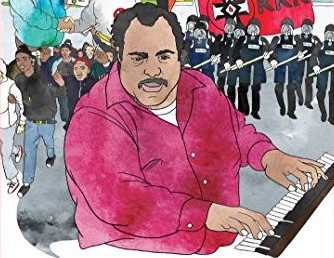
 ACCIDENTAL COURTESY (2016 PBS)
Directed by Matthew Ornstein
I’ve done it, and you have probably done it too: Getting in an argument online with a total stranger over racially charged politics. We live in new times. It’s the era of Trump, Trayvon, and Mike Brown. We live in the years of racial profiling and travel bans. Just when we think we’ve made amazing strides including the first black US president, we seem to be heading backwards just as fast.

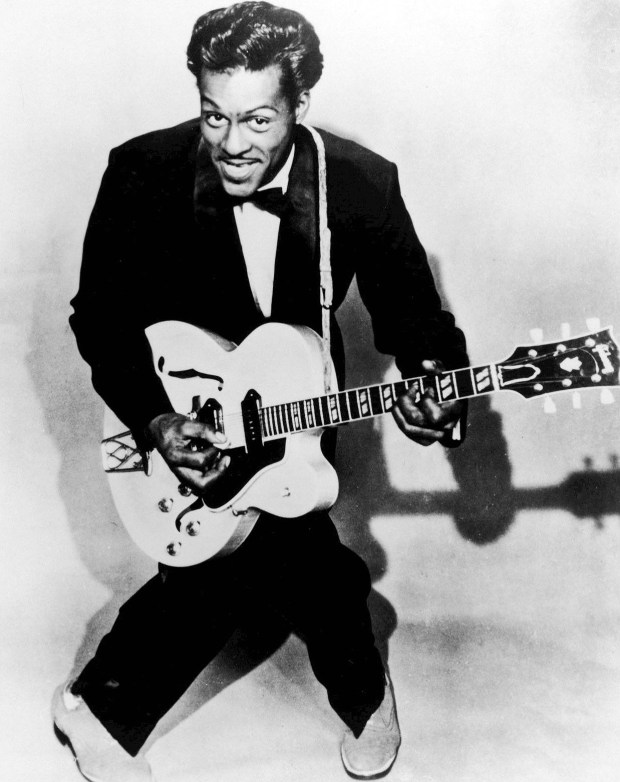
Daryl Davis is a musician. Most notably, he was the keyboardist in Chuck Berry’s band. He’s played with B.B. King, Muddy Waters, Jerry Lee Lewis, the Platters, and knows all the greats. He’s a very talented but also intelligent and compassionate man. Upon watching Accidental Courtesy, I wondered if music really is his first calling. It seems that Davis’ true talents may just be sitting down and talking. “When two enemies are talking, they’re not fighting,” says Daryl.
Although this movie is about a musician, it’s not about the music. Music does play a small role. The first time Davis experienced race-related hate, he was the only black child in an otherwise white marching band, and didn’t understand why things were thrown at him. He thought, maybe they were playing the music poorly. His parents had to explain to him, “They don’t like you because of the colour of your skin.” Life was never the same after that.
Accidental Courtesy isn’t about his music career, but about what Daryl Davis has done with the Ku Klux Klan and other white supremacists. Since 1990, Davis has sat with various members of the KKK, both high ranking and rank-and-file. Very few people can rival Davis for his knowledge of the Klan’s history and practices, so much so that Klan members have even approached him to learn. Over long periods of time, after truly and sincerely befriending Davis regardless of his race, 26 Klansmen eventually turned in their robes to him and gave up the Klan.
It’s bizarre to see men who don’t believe in the mixing of races show up at Davis’ wedding to a white woman, to celebrate with him. His friendship with them trumped their belief system. It’s strange to see a black man invited into a KKK home, and vice versa. It’s certainly unusual to see a fully robed KKK wizard sitting and shaking hands with a black man, simply enjoying conversation and company.
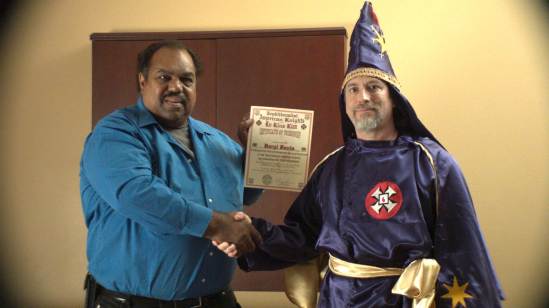
In the film, Davis also sits with the Southern Poverty Law Center, who seem less moved by his “person to person” method of combating hate. They prefer to use a bigger stick. What was surprising is how much flak he took from representatives from Black Lives Matter in Baltimore. Here, he was mocked by two dropout activists for “only” converting 26 KKK members since 1990. What was especially shocking was that the Black Lives Matter reps refused to continue to the conversation. To them, he was worse than a white racist; to them he betrayed the cause. All these white supremacists were willing to sit down and shake hands with Davis, but Black Lives Matter gave him the most difficult time. They actually got up from the table and berated and belittled him before cutting the conversation off completely. He was even treated with more respect by the KKK leader who refused to acknowledge the holocaust and said that blacks should be grateful to whites for freeing them. It’s troublesome to think on what that means.
Certainly not everyone approves of the methods of Daryl Davis. But in this day and age of social media, it’s more important than ever to talk. Not online, not on Facebook, Daryl advises. In person, where people can get to know each other, see each others faces and expressions, actually get to know one another. Talk to each other, instead of talking at each other. In this film, Davis asks questions, but rarely lectures. Davis’ technique is simply to ask what makes people tick. “How can you hate me when you don’t know me?” is a good opener. He finds out what makes them think the way they do. There is always more to the story than appears on the surface. There is always a root cause.
Some felt Daryl did more harm that good with his methods. Some feel he has betrayed his own people. But, as Daryl says in the film, whites and blacks and people of all races must share America together. That’s why we have to talk and figure out how to co-exist. If he could convince an Imperial Wizard to hang up his robes, that is one small step to making the world a better place. Black Lives Matter and the Southern Poverty Law Center have their own methods. That does not negate the inroads that Davis made, just by talking.
There doesn’t seem to be much accidental about Daryl Davis’ courtesy. It’s all very much on purpose. Davis has a rich tapestry of friends behind him, some of whom have given up on hate. If they can, why can’t everybody?
4/5 stars







 mikeladano.com