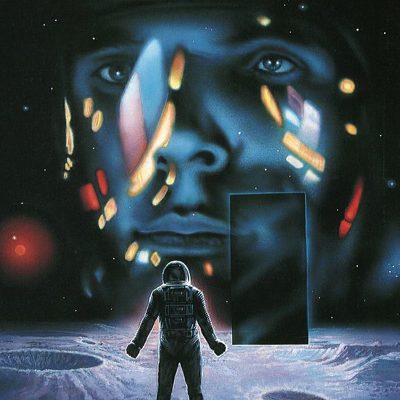
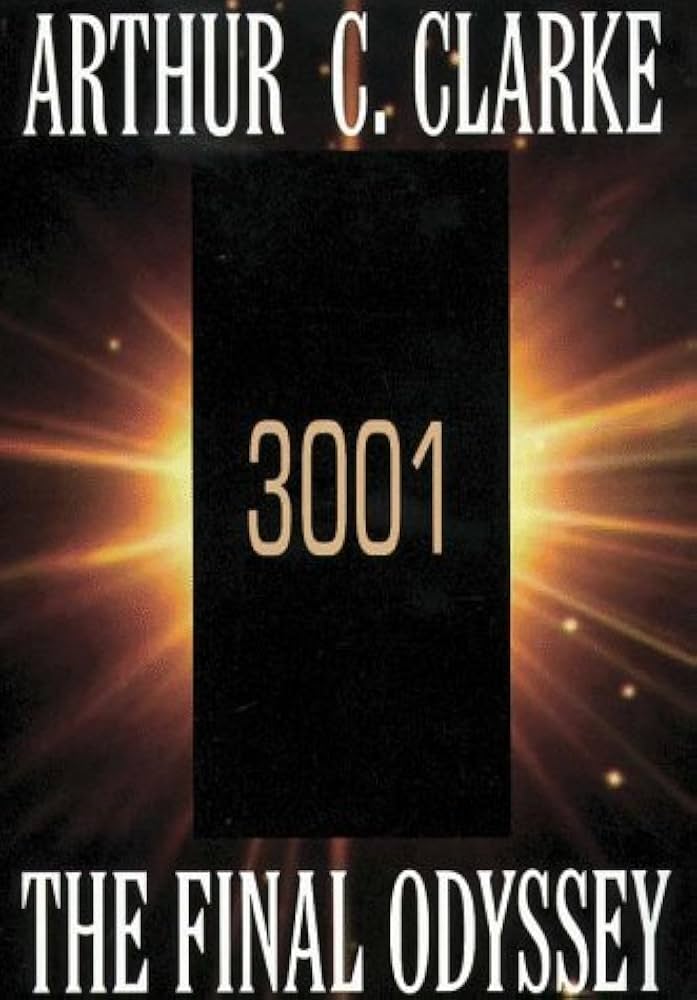
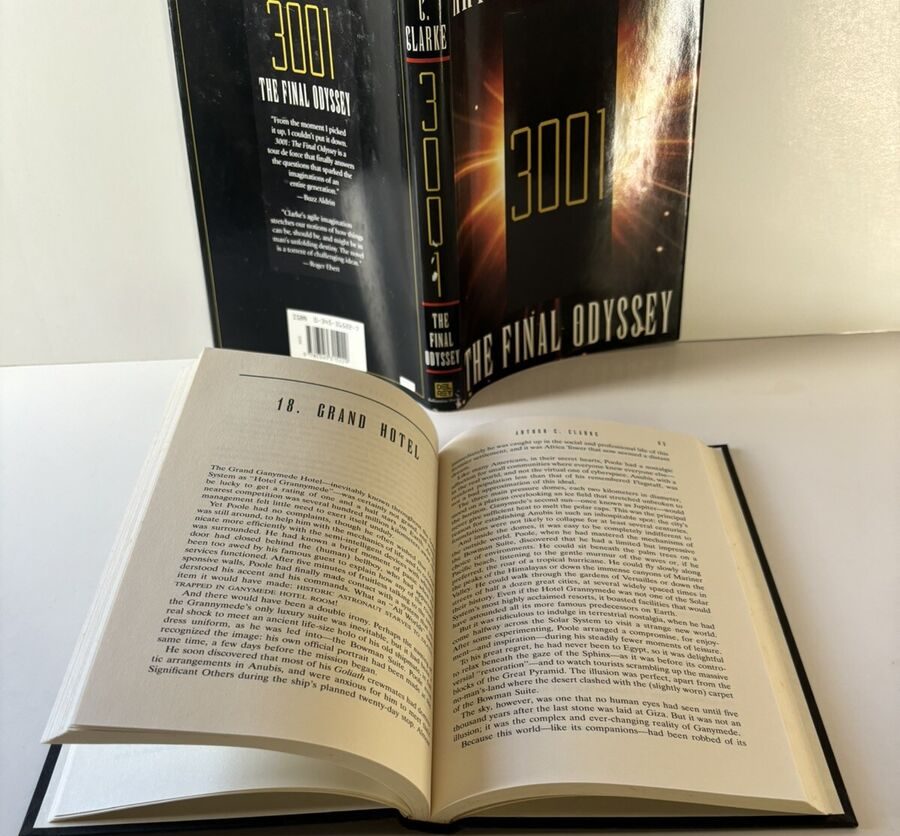
 3001: THE FINAL ODYSSEY (1997 Del Rey Books)
by Arthur C. Clarke
If Arthur C. Clarke had ended his 2001 series as a trilogy with the fine 2061: Odyssey 3, I would have been OK with that. I say that now. I didn’t say that then. Then, I desperately wanted to know what happened next. Now, I’d rather forget.
I pre-ordered this book many, many years ago thanks to a coupon I found inside my PC game Rama. That’s how much of a diehard fan I was. (The book still arrived weeks after it was released!) I read The Final Odyssey in three days, three days of waiting for something monumental to happen. When it finally did, it was a “that’s it?” moment. I said to my friends, “I think Clarke’s lost it. I think it’s time to retire.” They advised me to write him a fan letter expressing my disappointment with his Final Odyssey. I said no. Why put the man through that?
(I will first let you know that, like previous installments such as 3001, Clarke has ret-conned certain events so they no longer happen when they originally did. Since, when he wrote the book, it was obvious we wouldn’t have a moon mission in 2001, he pushed all dates further into the future.)
In 3001, the origin of the monoliths is finally clarified. They were planted here by a spacefaring species who promote intelligence everywhere, in the hopes of improving the odds of survival. We pretty much knew this from previous books. We did not need this spelled out. However, the monoliths are machines, and as such, they can break down.
Millions of years later, the corpse of Frank Poole (from the first book) is discovered and brought back to life. Yes, in the countless empty cubic parsecs of space, they found a needle in the haystack. If you can swallow that tale, then bringing a 1000 year old cadaver back to life shouldn’t be a stretch. The next few chapters of the book are spent acclimating Mr. Poole to the year 3001 and all the wonderful advances we will make by then. Clarke revisits many ideas that he promoted decades earlier, such as space elevators. Much of this felt very similar to the previous Clarke solo work, The Hammer of God, which I felt was superior to 3001.
However, all is not well. The monolith (now capable of only slower-than-light communication, contradicting David Bowman’s journey in the first book) has reported back to its masters, that humans are not worthy of survival. The monolith, therefore must be destroyed. With the help of Halman (the fused personalities of HAL and Bowman) who resides in the monolith, they plan on infecting it with…computer viruses. That’s right. Halman is infected in the process, and somehow stored for a future time if we ever discover how to disinfect him.
And so our tale ends, with the alien monolith masters knowing what has happened and deciding to grant us a reprieve until “the last days”. The book ends with a resounding thud.
Clearly, everything that was needed to be said was said in the first three books. Final Odyssey unfortunately tarnishes an otherwise fine series with an unnecessary anticlimatic ending.
Sadly, I rate this book “Not Full of Stars“. Only 2/5 stars. Only worth reading if you’re diehard.

 mikeladano.com
That’s disappointing.Sent from my iPad
LikeLike
Interesting, Mike. I’m a big fan of the original, less so the sequels. I can’t even remember which of them I own and/or read, except the first sequel which I definitely remember reading and watching the movie. Henry.
Sent from Yahoo Mail for iPhone
LikeLiked by 1 person
2010: The Year We Make Contact. Or, 2010: Odyssey Two. Roy Scheider, Helen Mirren, John Lithgow and a slew of incredible Russian actors too. I reviewed that movie here. Obviously you can’t follow Stanley Kubrick so they went in a different direction while being true to Clarke’s novel. I liked it!
LikeLike