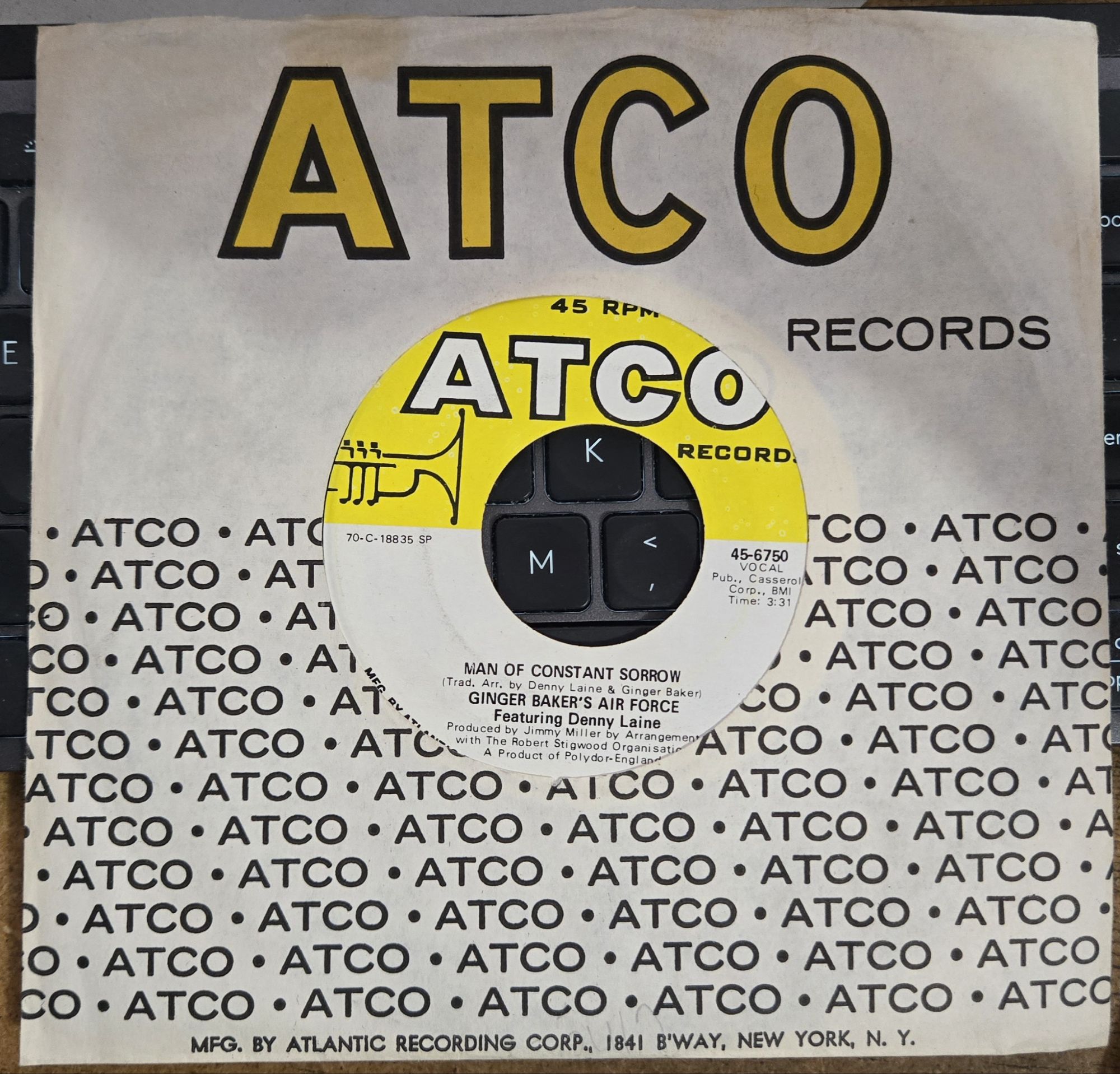
GINGER BAKER’S AIR FORCE – “Man of Constant Sorrow” (1970 ATCO 7″ single)
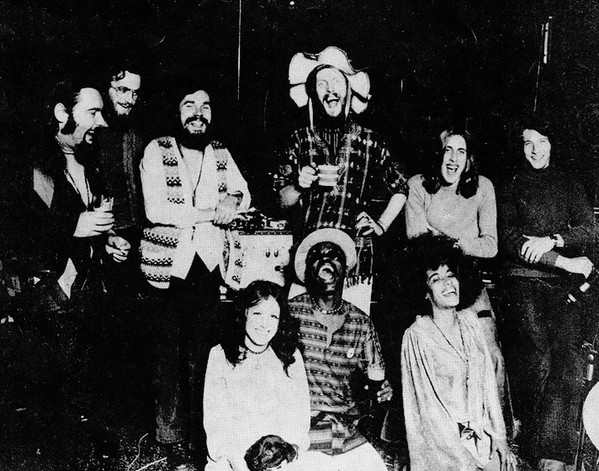
When Blind Faith broke up in 1969, Ginger Baker formed the Air Force featuring musicians such as Steve Winwood, Alan White and Denny Laine. They released two albums, Air Force and Air Force 2, with the debut being a live album recorded at Albert Hall. They also released one single, a studio version of the traditional “Man of Constant Sorrow”. Its live counterpart was on the debut Air Force album, but the 3:31 studio version was only on the single. Today you can buy several compilations and additional live albums, but in 1970 this single would have been one to seek.
Most people today are familiar with the version of “Man of Constant Sorrow” that was released as a single from the soundtrack O Brother Where Art Thou. Based on the same traditional music, Ginger’s version is vastly different, though clearly the same song. Opening with soft electric guitar picking by Denny Laine, Ginger soon comes in with a pitty-patter that is distinctly him. Fiddles join in, and ample soulful backing vocals. Aside from Laine’s emotional lead vocals, the defining characteristic of this song is the bombastic (but not out of place) drum pounding of Ginger Baker. Horns join in at the halfway point, lending the song a celebratory Mardi Gras kind of feel. Though it starts quiet and unassuming, it ends as a magnificent folk-soul monolith.
The single B-side is an instrumental live cut of the original song “Doin’ It” from the debut Air Force. It was recorded 15 January 1970 at the Albert Hall with a ten-piece band including three saxophones and Hammond organs. This is a tribal but funky jam, with the bass by Ric Grech blazing the trail. Like “Man of Constant Sorrow” it builds louder and louder as it goes. This short 3:47 (fade out) jam is in and out before you know it, but works as an intense but fun workout from some of the greatest musicians ever to hit the stage. Certainly, the drums and two additional percussionists are a main focus and worth paying attention to.
Loudness made a distinctly commercial move when giving original lead singer Minoru Niihara his walking papers. They replaced him with American singer Mike Verscera, and on some tracks, they made a turn towards radio-playable rock. Their second record with Vescera was an interesting one. 1991’s On The Prowl features only three new songs, and eight re-writes from their first four Japanese albums. To most listeners, they would be like new songs anyway.
“Down ‘N Dirty” is predictably a hard rocker, slightly sleezy like something Extreme or Bulletboys would have put out. Not a bad song by any means. It surpasses many of its better-known contemporaries by being a bit heavier and by virtue of Vescera’s amazing voice. Having a schooled shredder like Akira Takasaki on lead guitar doesn’t hurt either. But this is a far cry from a “Rock and roll Crazy Night”!
Second track, “Playin’ Games” attempts to go back to the speedy metal of Loudness’ past. It is partially successful. There’s some ripping and shredding going on between Akira and drummer Munetaka Higuchi, who is awesome on this.
Third and last of the new songs, “Love Toys” does compete for “worst title”. Not a bad track actually, with some different playing from Akira, just a bad title. It seemed obvious they were trying for something that worked in America. No songs about crazy doctors this time. Good tune, cool riff, and some great drumming.
Vescera rewrote all the lyrics for the re-recordings. Not all the originals were in Japanese before, but perhaps Vescera was meant to make the lyrics more accessible. “Never Again” was once known as “Silent Sword” (single B-side), a fine ballad indeed, but you can see how the lyrical change would make it a little easier for some to digest. The chorus is also beefed up, massively. Keyboard adornments sweeten the tune further.
“Deadly Player” (formerly “Lonely Player) was an early thrashing diamondback snake in the original days, and it still kicks tremendous ass. There’s a Rush-like quality to the opening, but then Vescera gets a-screamin’. A frantic mixture of disparate metallic parts welded together, this tune is aimed at the brain. Akira even takes a jazzy guitar interlude.
1984’s Disillusion boasted a cool but challenging tune called “Milky Way”; here it is re-titled “Take It Or Leave It” but it is no less slammingly fun. The chorus is probably an improvement, but that’s highly subjective. The playing is awesome.
“Girl” is one of only two tracks not re-titled in some way. This oldie from Devil Soldier is one of the most twisty & turny tunes, with challenging timing. It is faithful to the 1982 original. Though far heavier, it even has a Zeppelin-like flavour to one of the main riff sections. You could picture Page and Bonham jamming on it, but then the track goes full metal (with some serious jazz to the guitars).
1988’s “Long Distance Love” is the most recent track on this album to get the re-recording treatment. From the Jealousy EP, it was never available in the States even though Loudness already had three studio records out in North America. It’s more mid-tempo and melodic than the earlier tracks tackled here. Presumably, Loudness felt it was overlooked. Re-titled “Long Distance”, it came pre-packed with a solid chorus and Van Halen-like hooks.
The legendary “In the Mirror” (no title change) was always one of the early band’s greatest triumphs. Like a lost Judas Priest classic, it combines riff and tempo in that magical way that gets the heads a-bangin’. Vescera’s high pitched screaming (his control is enviable!) adds a modern taste, but the song is just as fortified as ever.
“Sleepless Nights” is now a plural. The original (singular “Sleepless Night”) from The Law of Devil’s Land boasted one of Akira’s very best riffs. Recreated here, with modern production, it is like concrete. Perhaps Minoru Niihara’s original vocal was harder to digest, so here Mike sings with more attention to melodic sensibilities. What a riff though! Let’s not kid ourselves — this song is about the riff. The chorus is different though, and perhaps less of a fit than the original.
The last track is the earliest: “Find A Way” was originally known as “To Be Demon” on the Loudness debut album The Birthday Eve. This classic is half ballad, half monster riff-race! It’s shorter than the original, beginning as a ballad without the speed-rock intro. The vocal melody is completely different and certain memorable sections of the song are missing or altered. While the new version is undeniably more immediate, it might be at a cost. In both versions, Akira slays.
At the end of it all, On The Prowl is mostly an exercise in improved production. Those Japanese albums were not recorded with the kind of expertise that Loudness were able to employ in Los Angeles. The raw appeal of the originals will always be there, but the sonics here are clearly better. That’s On The Prowl‘s strength. Not to mention the new singer was no hack. But there’s a certain commercial slant to new tracks, particularly “Down ‘N Dirty” that feels out of place.
Needless to say, On The Prowl did not reverse Loudness’ fortunes and they were soon without a singer once more. Abandoning the American adventure for the time being, they looked back to Japan for a new singer: E-Z-O’s Masaki Yamada. 1992’s incredible Loudness continued the story, with Yamada even adding “Down ‘N Dirty” to the setlist! Maybe it wasn’t so bad after all?
 GINGER BAKER’S AIR FORCE – “Man of Constant Sorrow” (1970 ATCO 7″ single)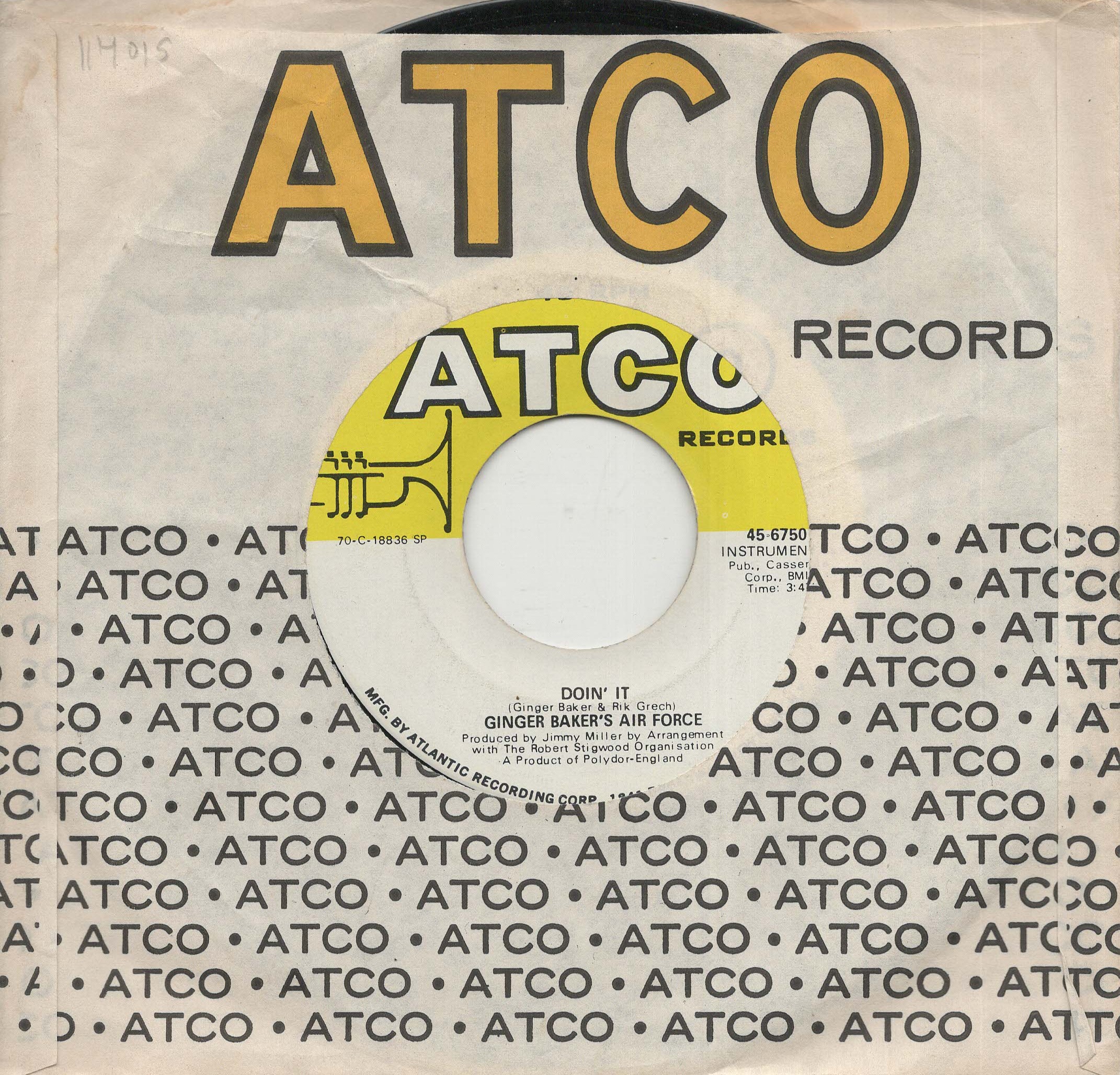




 mikeladano.com