Deep Purple

REVIEW: Deep Purple – Space Vol 1 & 2 (Aachen 1970)

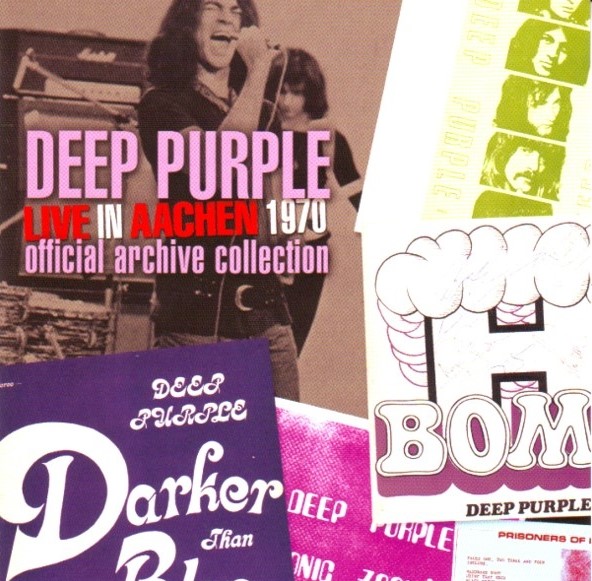
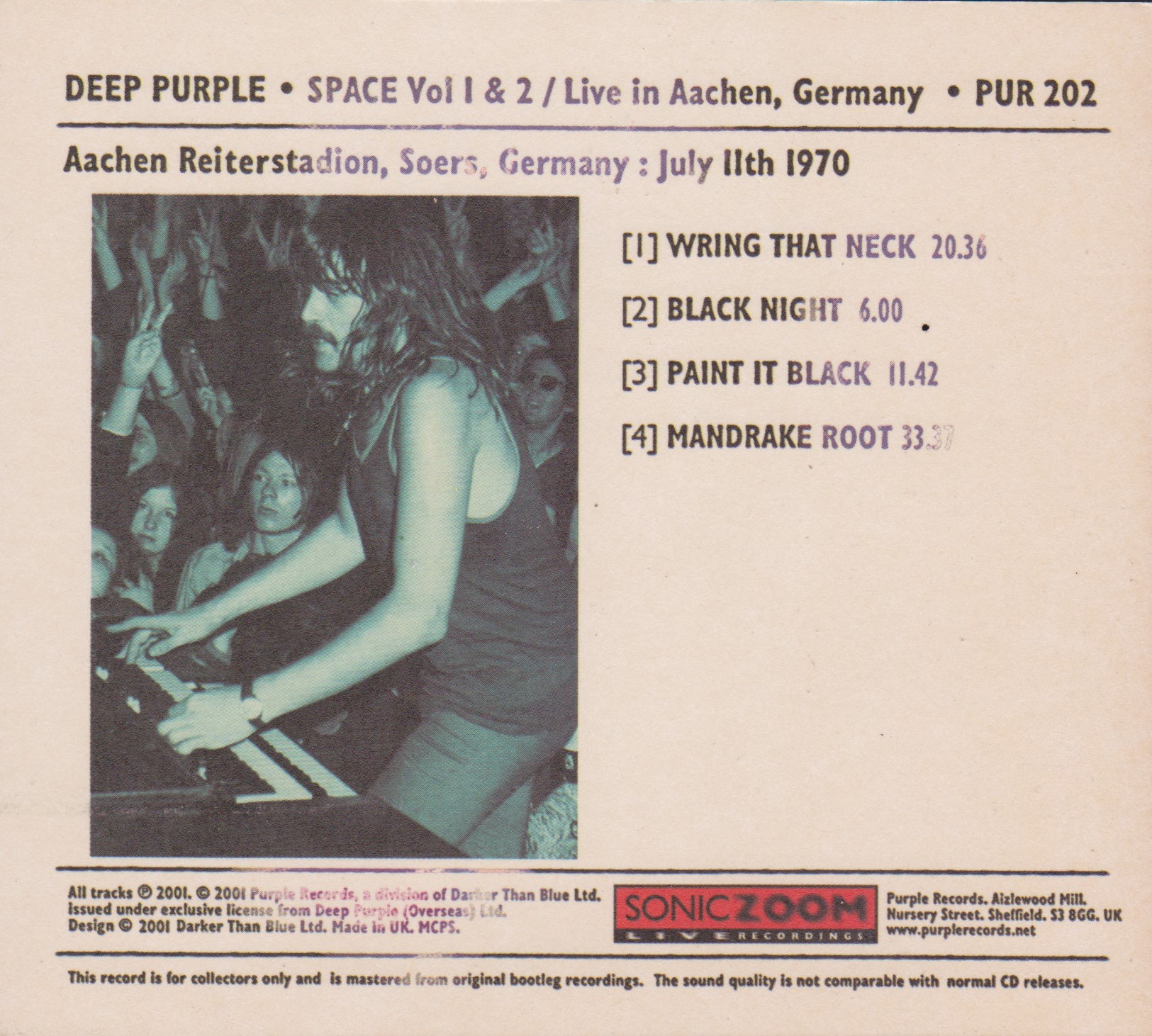
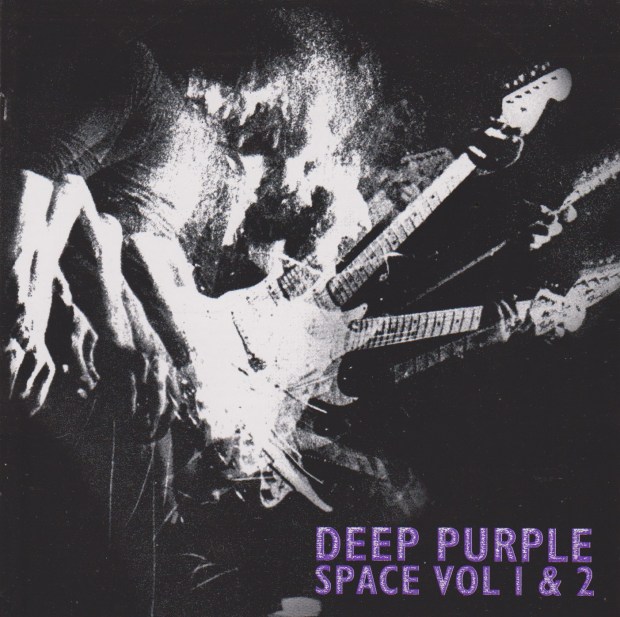
DEEP PURPLE – Space Vol 1 & 2 (Live in Aachen 1970) (2001 Sonic Zoom)

Over the course of the decades, Deep Purple and their official Appreciation Society have found numerous interesting live recordings to release for the fans.  From significant moments to obscure gigs, each disc has had their own points of interest.  It doesn’t hurt that Deep Purple never did the exact same thing twice.

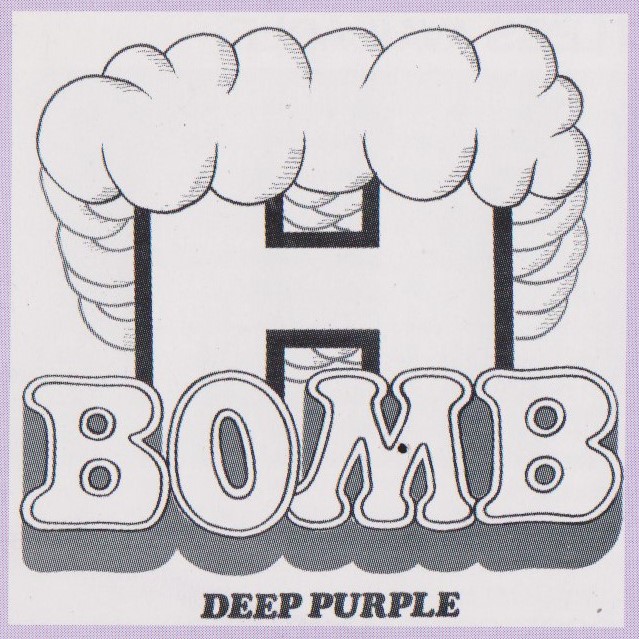
This German gig from 1970 wasn’t well documented or reported on.  Purple were on a large bill including Pink Floyd, Free, Traffic and Tyrannosaurus Rex.  It’s possible but not known for certain that Kraftwerk may have also played that day.  Bootleggers made sure that at least some of it was recorded.  The released bootleg H-Bomb was one of the earliest Deep Purple live recordings available, and has been available in bootleg form since it taped.  According to organist Jon Lord, he heard that the bootleggers sneaked in an eight track mixer inside a Volkswagon, hidden under the stage.  When they had the chance to hear the recordings on LP, the band were actually impressed with the overall quality.

Scan_20160221 (4)

In 2001, Sonic Zoom released the show on CD and called it Space Vol 1 & 2.  Since the original tapes were long lost, Sonic Zoom went back to the earliest vinyl pressings, and cleaned them up, using the best sounding versions of each track.

What you get here is only four longs, but quite a long set, being well over an hour long.  Purple opened with their instrumental “Wring That Neck”, stretched out to include lots of solos and jams.  They tease out recognizable melodies such as “Hall of the Mountain King”, “Jingle Bells”, and a jazzy “Three Blind Mice”, disguised on rock instruments.  Vocals were scarce that evening, perhaps because Ian Gillan was suffering from a sore throat.  As such his vocals don’t come through as well, but they also often sound as if he’s singing into a tin can.  Though most everything else is well recorded enough, when the vocals do happen such as on “Black Night”, they are very rough and tumble.  Jon Lord was also known to be very hard on his Hammond, and like electric whip cracks you often hear the instrument yelping away in the background.

AACHEN

The Stones cover “Paint It, Black” is mostly another excuse to jam on something.  11 minutes of equipment-destroying guitar, drums, bass and organ madness is a lot for anyone to digest.  If you dig drum solos, Ian Paice will keep you mesmerized for many minutes of straight high-velocity rhythmic instructional.  You’ll know it’s over when the other guys finally come back!  That’s nothing, though.  Half an hour of “Mandrake Root” awaits, one of the longest versions known.  Ian spends a lot of it screaming, but when it’s jam time you can hear him on the congas.  The first half of the jam is loose but at least structured.  Lord considered this his best keyboard work that had been captured so far.  Interestingly, part of this jam resembles a future song called “Highway Star”.  Then, the second half descends into pure madness.   Atonal noise, feedback and electric pain dominate these 10 minutes.  It is an endurance challenge to be sure.

It is not known for certain if any other songs were played that day, but because it was a festival it seems likely that Purple played for this hour and nothing more.  According to the only written account of the day, Purple won over the festival crowd by powering over them.  That much is clear from this recording.

3.5/5 stars

Scan_20160221 (2)

REVIEW: Deep Purple – To the Rising Sun…in Tokyo (2 CD/1 DVD + Japanese bonus tracks)

The Deep Purple Project is a massive, ongoing series of in-depth reviews.  This is the last for now as we take a break, but Purple will return.  

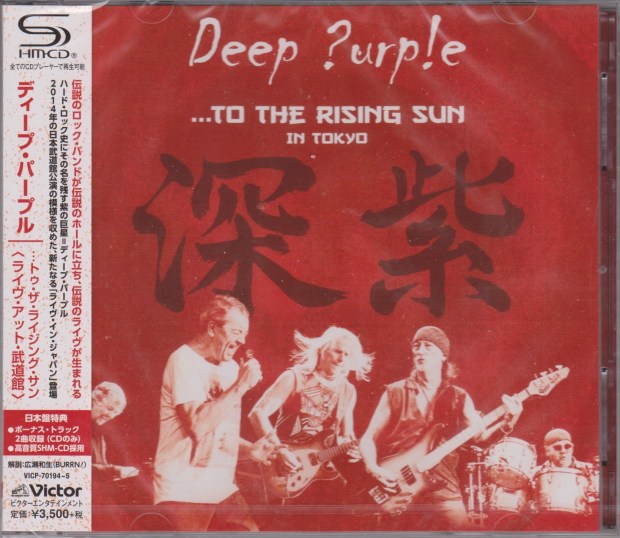
DEEP PURPLE – To the Rising Sun…in Tokyo (2015 Edel 2 CD/1DVD set, Japanese CD with 2 bonus tracks)

Purple live releases have been in strong supply lately.  Last year, Purple released a matching set of double live albums, each with a complete DVD of the show in one package.  The first set, In Wacken, was reviewed yesterday.  Today, we look at In Tokyo.  In order to “get it all”, I added the Japanese 2 CD set with bonus tracks to my collection.  The bonus tracks are on the CD portion of the package.  As we did yesterday, we’ll get the bonus material out of the way first.

The two Japanese extras are instrumental versions of “Hell to Pay” and “Apres Vous”, newer songs from Now What?!  I am happy to report that these instrumentals are not live.  Since both songs are complete and live on the album proper, I was pleased to find these two are instrumental mixes of the studio cuts.  This makes sense, since the instrumental “Hell to Pay” is used as the main menu backing music on the live DVD.  As with any instrumental mix, it is interesting to pay attention to the musical interplay.  Since it’s Deep Purple we’re speaking about, it’s that much more enjoyable.

IMG_20160214_074958

Moving on to the live part of the set, the recorded intro of Holst’s “Mars: Bringer of War” has the Budokan crowd in Tokyo excited for the return of Deep Purple.  The band bravely opened with “Apres Vous”, the new cut from Now What?!  It works surprisingly well by setting a mood.  Ian Gillan keeps it from getting too serious by wearing one of those tuxedo-printed shirts.  I want one of those.

Gillan’s hoarse on “Into the Fire”, but overall he’s stronger than he was in Wacken.  The added grit makes the song tougher and closer to the 1969 original.  Also from way back then is “Hard Lovin’ Man”, a pairing that always works well.  Don Airey takes an extended Hammond solo, and the song gallops in a way that set the basis for Iron Maiden’s career.  Thrills and chills abound, but Morse is smiling so much that you know we’re all in for a good time.  What a contrast with the moody and unpredictable Ritchie Blackmore!  This breathtaking assault of a song absolutely needs to be played live.  It’s no surprise that they need to lay back with something slower after that.  “Strange Kind of Woman” does the trick with that unforgettable groove.  Morse pulls off a jazzy solo that just kills.  This is a far better version than the one in Wacken.  Speaking of women and strangeness, it’s odd that “Woman From Tokyo” wasn’t played this time.

“That was the end of the jazz part of the show,” says Ian.  Back to new songs, “Vincent Price” is rolled out next.  Brought to life on the stage, “Vincent Price” is heavier and chunky.  The spooky keyboards are intact and Gillan injects the song with extra terror.  Steve Morse is on a roll now, and it’s time for his solo.  It’s chopped up a bit compared to how they played it earlier in the year.  “Contact Lost” is still first, but this time that goes into “Uncommon Man”.  I love watching Steve Morse playing volume swells with his pinky on the knob, while hammering out a complex melody.  There are plenty of hand close-ups here.  Copy if you can!  (I can’t.)  When “Uncommon Man” begins, Ian Gillan whispers in Steve’s ear.  I like to think he just said, “That was incredible.”

“Uncommon Man” is powerful live, by the way.  Steve goes again with his playful “The Well-Dressed Guitar”.  The dexterity here is quite unbelievable, but you knew that already.  Once again I’m grateful for plenty of hand close-ups.  I have no prayer of being able to play this but I love to watch and see how it’s done, and just marvel.  During a break in the keyboard part, Don Airey claps and dances along; quite amusing!

The Fireball oldie “The Mule” is always welcome out of the mothballs.  A drum workout, Ian Paice is given a chance to show that time has not lessened his abilities one iota.  It’s a busy drum song, and quickly descends into a mad solo.  At one point, the lights go out and Ian plays with glowing sticks, Sheila E style.  He gets to slow down a little on the Jon Lord tribute “Above and Beyond”.  Jon’s image behind them on the big screens of the Budokan, you can sense the emotion of the moment.  His successor Don Airey plays a Hammond tribute to Jon, before the band return to the sound of “Lazy”.  It’s just a seamless blur of one incredible piece of music after another.

“Hell to Pay” continues to prove its worth as a stage-ready, fun rocker.  You can tell that the formalities are over now, because Gillan has changed out of his tuxedo print shirt!  Don Airey dominates on the Hammond.  He gets a spotlight solo next, a chance to do his own thing.  Like his solo in Wacken, this includes a snippet of “Mr. Crowley”, a song that Don played on way back in 1980, and the ensuing Ozzy Osbourne tours.  His solo runs the gamut from tender piano, to classical passages, to spacey synth.  He quotes the melody of “Woman From Tokyo” which the crowd clearly appreciated.

It’s all business from here.  “Perfect Strangers”, as usual the only song from the 80’s, is as timeless as always.  Back to Machine Head for “Space Truckin'”, Roger Glover seems to be having a great time rocking it for the crowd in Japan.  Gillan’s sounding a bit knackered, but he’s still going for it.  No retreat, no surrender.  The classic riff, “Smoke on the Water” explodes in the Budokan, as we draw close to the end.  You can tell they still have fun playing this song, loose and never the same twice.  Two encores are still to be had:  the medley of “Green Onions”/”Hush”, and “Black Night”.  “Hush” is given a neat slinky jam section, because they’re Deep Purple and why the hell not?  After a brief Glover bass jam, “Black Night” commences as the final song of the night.  Gillan’s sounding tired, but that’s rock and roll.  They’re finally done, Roger lingering to make sure he’s thrown out every last pick.  That too is rock and roll.

These two sets were time consuming but very entertaining.  I think they are both worth having, but if you are not the Purple diehard that needs as much as you can consume, be aware that these are men in their late 60’s.  They are not spring chickens, so don’t expect To the Rising Sun…in Tokyo to be the equal of Made in Japan.

3.5/5 stars

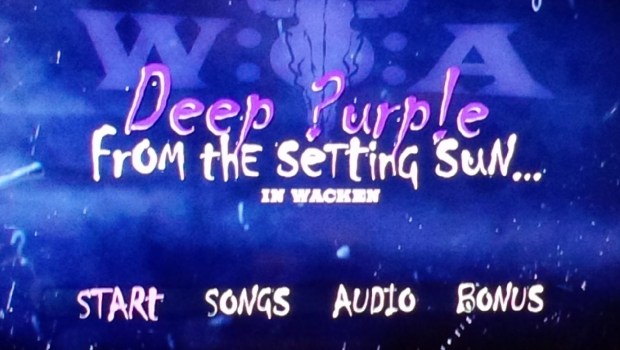
REVIEW: Deep Purple – From the Setting Sun…in Wacken (2 CD/1DVD)

The Deep Purple Project must continue!  Their most recent live releases are next up.

DEEP PURPLE – From the Setting Sun…in Wacken (2015 Edel 2 CD/1DVD set)

“This record is the first of a double release,” says Roger Glover in the liner notes.  The second is called To the Rising Sun…in Tokyo which we’ll examine in a separate review (including the Japanese bonus tracks).  This nicely assembled three disc set has the entire show on both CD and DVD, a 2013 concert at the legendary Wacken Open Air festival.

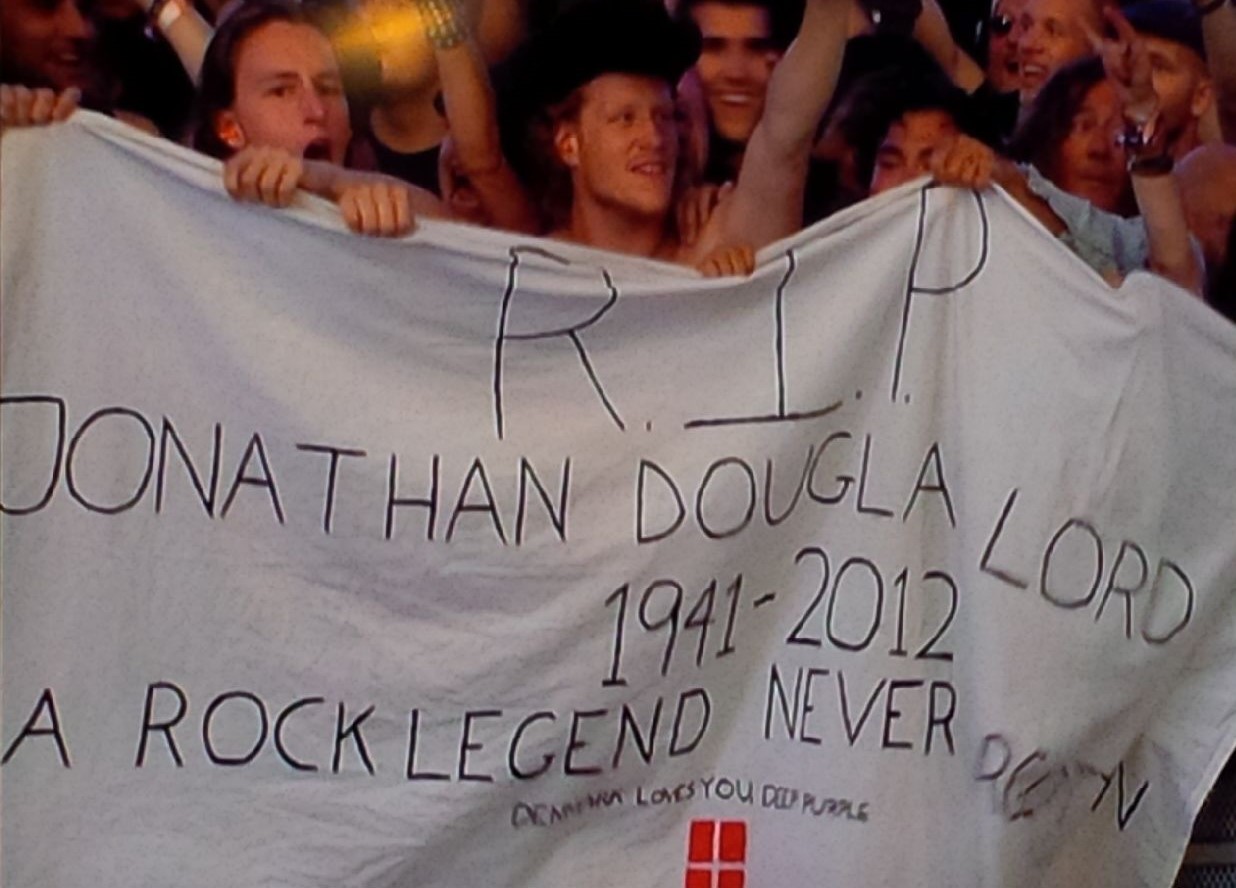
Our friend of ours, Jessie David at 107.5 Dave Rocks, went to Wacken in 2015. “I can say that going to Wacken is truly life-changing. It is an experience like no other: Where every single person there is part of a family.” Roger Glover says the real stars of this show are the audience.

There is one small bonus feature on this DVD to get out of the way before we start the show.  It was surprising to see Deep Purple release a new music video in 2013!  “Vincent Price” was a fun music clip, featuring plenty of band shots.  The horror movie storyline is entertaining and make for a fun video.  Perhaps the actor in the video playing the titular character should also play Governor Tarkin in an upcoming Star Wars anthology film?  This video is not really appropriate for kids, so be forewarned!

Purple’s Wacken set was filmed and recorded for posterity quite well. I don’t know if I have ever seen Deep Purple captured so clearly.  Taking the stage in daylight, we begin with “Highway Star”.

Ian Gillan’s voice is quite thin; this is one of the poorest live Deep Purple releases as far as vocals go.  That’s unfortunate but at least they didnt’ “fix it in the mix” as they say.  Roger Glover seems to be having a blast, pulling faces and poses over on the bass station.  Bathed in the setting sun (hence the album title), the lighting is quite dramatic.  The old In Rock classic “Into the Fire”, rarely played, is up next.  Ian really struggles with his voice, having to affect a nasal tone, but he’s starting to warm up a bit now.  Hey; the man is 70 years old!  Then, directly into “Hard Lovin’ Man” from the same album, another rarely played smoker.  Ian’s on track now!  Organist Don Airey is brilliant on this.

Newish single “Vincent Price”, the same song as the music video, is next in the set.  Because of the spooky keyboards, it does not sound like any of the prior songs, which is great as the sun goes lower on the horizon.  I think new material works best sprinkled in the set at the right times, and that’s the approach Purple took here.  This corker moves directly into “Strange Kind of Woman” somehow, but this oldie is starting to sound a bit tired.  The first solo spot of the show is Steve Morse’s dual guitar solo, “Contact Lost” and “The Well-Dressed Guitar”.  This dramatic scene is a show highlight, as thousands of people wave their hands in the air to the music.  The two musical pieces are brilliant in composition and execution.  Another new single, “Hell to Pay” has to follow this smoke show.  The song always struck me as custom-written for the stage, and this appears to be true in Wacken.

IMG_20160213_105700

Don Airey’s keyboard spotlight on “Lazy” is impressive.  It’s hard to forget the man he replaced in Deep Purple (Jon Lord).  In many ways his solo is a tribute to Lord, as he plays a few cues that Jon wrote.  The band never seems to tire of playing it.  However they stall a bit on “Above and Beyond”, perhaps a song less well adapted to the stage.  “No One Came” on the other hand always kicks ass live.  With Don Airey on keyboards it has some new flavours to it, and then he gets a full-fledged keyboard solo of his own.  He plays all over the musical map, and even hints at “Mr. Crowley”, a song he used to play with Ozzy Osbourne.

“Perfect Strangers” is usually the only song from the 1980’s that Deep Purple still play.  The drama builds as we get closer to the end of the show.  It is dark out now in Wacken but the crowd still bounce along to the music.  I have long felt that “Perfect Strangers” works very well with Steve Morse on guitar, and that was true in Wacken in 2015.  Then we’re off “Space Truckin'”, another song boasting many jawdropping musical moments.

The biggest surprise is the appearance of a wisened Uli Jon Roth on “Smoke on the Water”.  He and Steve Morse have a blast playing off each other.  Think of it:  Two of the most unique and  incredible guitarists in the world on one stage, playing back and forth.  I say this often in my Deep Purple reviews, but what more could you want?  Uli’s solo is pure magic.  He is a force of nature, but so is Steve Morse.  If Uli is wind, then Morse is fire.

Encore time:  Purple started playing “Green Onions” as a prelude to “Hush” a couple years ago.  This is one of the most magical moments in the set.  The energy is palpable.  “Black Night”, which also has a brief segue into Zeppelin’s “How Many More Times”, is the final tune of the night, an otherwise standard take with amazing playing regardless.

It’s a fair bet that Purple won over Wacken in 2013.  Pick up this live set for a taste.

3.5/5 stars

REVIEW: Deep Purple – The Gemini Suite – Live (1970/93)

The Deep Purple Project goes on with a flashback to 1970.

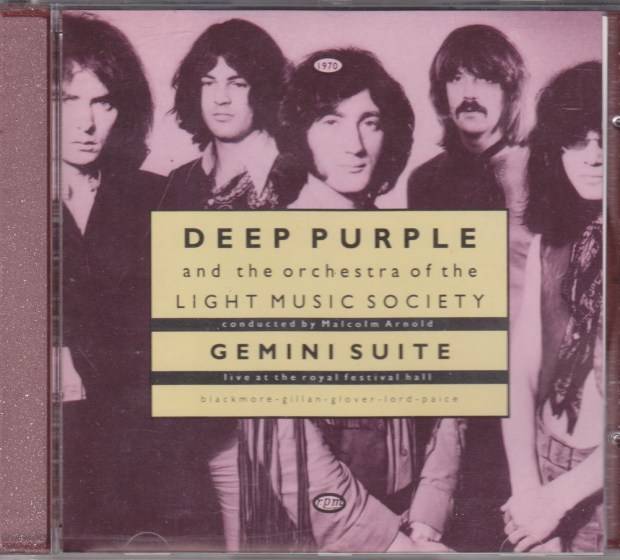
Scan_20160212DEEP PURPLE and the orchestra of the LIGHT MUSIC SOCIETY – The Gemini Suite – Live (recorded in 1970, released 1993 EMI)
Conducted by Malcolm Arnold

Jon Lord’s Concerto for Group and Orchestra put Deep Purple on the map.  An original concerto in three movements written specifically for an orchestra and a rock group together had never been accomplished before.  Headlines and offers to bring the Concerto over to America helped cement Deep Purple’s name in the public consciousness.  The only problem was, public perception was that this was a band who always played with orchestras.  They were not:  Deep Purple wanted to be a heavy rock band.  They did not want to be cornered into playing with orchestras for their career.  There may also have been some internal friction because Lord was being singled out as the band’s leader in the press.  Ritchie Blackmore and Ian Gillan were united in their insistence that the orchestral work cease.  Worse, some in the band suggested that Lord was using the Concerto as a potential launch pad to other projects.  These were accusations of petty youthful jealousy of course, but it led to Lord announcing his intention to leave Deep Purple.

Scan_20160212 (3)Management arranged a sit-down and peace was kept.  They collectively agreed that the way forward was with rock music, not classical hybrids.  There was just one catch, which was that Jon Lord had already been contracted to write a second classical/rock piece for Deep Purple to perform.  This project had to go forward, it was too late to do otherwise, but the band insisted that it was publicized as little as possible.  The new piece was played live by the band, but a Deep Purple album release of the final product, the Gemini Suite, would not happen until 1993!  Instead, Jon Lord recorded and released a studio version of it with other guests and musicians.

Perhaps to assuage some bruised egos, Lord decided to compose his next work around the five members of Deep Purple.  Each movement had time for a member of Deep Purple to shine on his own.  The first goes to Ritchie Blackmore.  The year was 1970, and Deep Purple were working on the Fireball LP.  The quiet moment in Blackmore’s movement is tonally similar to Ritchie’s solo in Purple’s “Fools”.   According to the liner notes, this is one of the last occasions that Ritchie played a Gibson on stage.  Jon Lord goes next with an organ piece (though on the back cover it’s incorrectly listed as the vocal movement).  There are some very cool atonal parts here.  You have to admire the man for his ambition and vision, but as technically brilliant as this is, it doesn’t have the level of impact of the Concerto nor is it as well recorded.  The are fewer memorable themes and instrumental moments, and the end result is that these two movements take some patience to absorb.

It was noted that Ian Gillan had not written the lyrics to his movement until the night of the show.  The lyrics are not really important; what counts is that you’ve never heard Ian Gillan sing like this before.  With an exaggerated falsetto, and an unusual psychedelic melody, Ian really knocked it out of the park.  Halfway through, this gives way to standard Gillan howling.   It’s hard to make out all the words, but this is Ian Gillan in peak voice, totally in control and at the top of his game, backed by a friggin’ orchestra.  What more do you want?  This vocal movement is the highlight of the entire Gemini Suite.  Roger Glover goes next with his bass spotlight.  It’s about as interesting as you imagine a bass spotlight to be, but the orchestra plays it busy in the background.  There’s some great oboe on this movement, which ends on a sudden, awkward note.

Ian Paice goes last.  With military precision, Paice marches forward, leading the orchestra and percussion section.  They answer his drums in interesting ways, making this movement another solid highlight.  The crowd clearly loved it.  Then, there is a long finale (10 minutes) with everybody playing together.  It attempts to tie together the previous movements, but without memorable themes, this is difficult.  The Suite lacks cohesion overall.  There are some absolutely mindblowing moments of musical precision and dexterity, as well as rock thrills (most of them concentrated in the finale).  It is probably well enough that they did not release an LP of this at the time, for it would most definitely have lived in the shadow of its superior predecessor.

3/5 stars

Look at that backstage photo.  Looks like nobody wanted to be there that night, particularly Ian Gillan.

REVIEW: Deep Purple – The Soundboard Series – Australasian Tour 2001 (12 CD box set)

The Deep Purple Project continues!  Here is one big solid chunk of rock majesty.

Scan_20160209

DEEP PURPLE – The Soundboard Series – Australasian Tour 2001 (2001 Thames 12 CD box set)

One day in spring of 2002, I wandered into Encore Records in Kitchener.  I spied this lovely box o’ rock up front in their glass case, where they stored similarly awesome boxes of rock.

“What’s that?!” I asked, and was promptly handed 12 CDs of live Purple.  A quick glance, and “I’ll take it.”  Only a short while before, I bought yet another 12 CD live Deep Purple box set.  When I first noticed this box under the glass, I was hoping it was just a reissue of the same thing; something I already had that I could safely pass on.   It only took one close look to realize that this was a whole other animal completely.  Rather than a collection of bootlegs from the 80’s and up, like the one I had, this box chronicled Deep Purple’s 2001 tour of Australia, Hong Kong and Japan.  What special concerts those must have been.  Read on and you’ll discover why.

Each concert presented in this box is complete, and mixed from the 8-track soundboard DAT tapes.  No audience recordings in this bad boy, which is a good thing, since Purple were touring with numerous extra musicians and accoutrements that require sonic clarity.  Of the six concerts included, four are largely the same.  A lot of Ian Gillan’s song intros are the same from night to night, and the setlists are by and large the same.  Of course where Deep Purple are concerned, that means very little.  Their solos are never the same, and each performance is its own experience.  Steve Morse has never really repeated himself night after night, nor did Jon Lord.

There are some cool surprises in the sets.  One of the best tracks, and one of the most rarely played, is “Mary Long” from Who Do We Think We Are.  This rhythmic monster goes down smashingly well, and it’s a wonder that Purple never tried it any earlier.  There are some true buried gems on those early Purple albums, especially Fireball and Who Do We Think We Are, that were never given a fair shake in their day.  Deep Purple today are able to have more fun with their setlists than they were in the 70’s.  Another such track is “No One Came”, one of the strangest songs in the catalogue.  It benefits greatly from a three piece horn section (the Side Door Johnny’s).  There are versions with horns on some other live albums as well, such as Live at the Olympia ’96, so while horns are not unheard of in Deep Purple, they are rare.  “No One Came” and “Fools” (both from Fireball) are quite a treat any time you get to hear them live, which you didn’t get to do in the 70’s.  They also play the classic B-side “When a Blind Man Cries”, a blues that deserves the spotlight.

Of course Deep Purple always play new material, but what’s really surprising is that they only played one song from their last studio album (1998’s Abandon), and only one time, during the first four concerts!  At the first show, in Melbourne, they played “’69”.  Then it was dropped and the set slightly shuffled.  “Smoke on the Water” was moved from the middle to the second half of the set.  Speaking of “Smoke”, fans familiar with the Steve Morse version of Deep Purple are aware that he really likes to have fun with the intro.  He teases out several classic rock riffs, all instantly recognizable, as he tries to remember which riff is the one he’s supposed to be playing (or so it seems).  AC/DC’s “Back in Black” is the one that really stands out, and it’s remarkable how well it works with Deep Purple.  There are lots more, including “Whole Lotta Love”, “Heartbreaker” and “Stairway to Heaven”, that one normally does not associate with Deep Purple!    Other favourite riffs include “Sweet Home Alabama”, “Little Wing”, and even a Van Halen inspired version of “You Really Got Me”, but the one that surprised me the most was “To Be With You”, by Mr. Big.  Don’t forget, Mr. Big are absolutely huge in Japan, so when they played that little bit in Tokyo, I’m sure everybody knew it.

Also of note, Jimmy Barnes came out for “Highway Star” and “Smoke on the Water” for a couple Australian shows.  Sharp-minded readers will remember that Barnes was one of many singers who auditioned for Deep Purple in the late 80’s before they hired on Joe Lynn Turner.  He seems to have a blast screaming his way through “Highway Star”!  Must be like a dream come true.  Gillan’s in great voice too, by the way!

Scan_20160209 (2)

For more thrills with special guests, we must go to the last two shows, in Japan.  Australia surely had a treat with the Side Door Johnny’s and Jimmy Barnes, but what Japan got was even better.  Fresh off their well-received Live at the Royal Albert Hall album from 2000, conductor Paul Mann joined Purple for two nights in Tokyo.  That meant a full performance of the legendary and almost never performed Concerto for Group and Orchestra, all three movements.  Mann and the New Japan Select Orchestra joined Purple on a number of their songs as well, including “Watching the Sky” from Abandon, but it was only played on the first night.  All that said, there was no greater thrill than the presence of Ronnie James Dio.  As he did on the Albert Hall album, Ronnie sang lead on two songs from the Purple solo catalogue.  He performs Roger Glover’s “Sitting in a Dream” and the delightfully bouncy hippy anthem “Love is All”.  Ian Gillan, meanwhile takes the lead on Jon Lord’s “Pictured Within”.   Dio also returns for “Smoke on the Water”, trading with Gillan, but what’s really special is that Purple actually performed two Dio songs at these shows.  Though Dio and Purple are two very different bands, Purple adapt and do great versions of “Fever Dreams” and “Rainbow in the Dark”.  The drum and keyboard parts are the most different, but nobody’s complaining!  It’s great that they did “Fever Dreams” from Dio’s Magica, a great album that deserved the recognition.  “Fever Dreams” is one of Dio’s best tunes from the latter period.

“Wring that Neck” and “Pictures of Home” were brought out of mothballs for the Tokyo concerts.  “Wring that Neck” is a jazzy version with the horns coming in strong, just like it was on the Albert Hall CD.  Undoubtedly though, the centerpiece is the Concerto itself.  Even though it put Purple on the map in 1969, it wasn’t particularly well liked by the members of the band (Jon Lord aside, obviously, since it was his creation.)  With Steve Morse in the band instead of Ritchie Blackmore, feelings softened and ideas like resurrecting the Concerto were possible.  The music however was lost.  It took Dutch composer Marco de Goeij years to re-create it, but once Lord helped him finish, it could be performed once again.  It’s incredible to think that they were able to take it to Japan and play it for those lucky fans, both nights.  You can absolutely tell the difference from the London version.  It’s fortunate that it was recorded so well (not perfect but damn well good enough!), and released for you to be able to own forever.

There is no point in breaking this down for a disc-by-disc rating.  If the box set could be faulted for anything, it is that there is so much repeat between the first four concerts.  For me, box sets tend to work best in the car.  I put this on a flash drive and took about three weeks to listen to the whole thing in sequence.  In that environment, I don’t bore of the songs.  Instead I enjoyed the slight differences.  “Oh, this is a little different than the way they introduced it, when I heard it a couple days ago.”  Obviously, only a true Deep Purple lover needs to own this.  But every Deep Purple lover should own it.

Discs 1 & 2 – Melbourne, March 9 2001

Discs 3 & 4 – Wollongong, March 13 2001

Discs 5 & 6 – Newcastle, March 14 2001

Discs 7 & 8 – Hong Kong, March 20 2001

Discs 9 & 10 – Tokyo, March 24 2001

Discs 11 & 12 – Tokyo, March 25 2001

4/5 stars
REVIEW: Deep Purple – Live at Montreux 1996 (2006)

The Deep Purple Project continues, from Blackmore to Morse!

Scan_20160128DEEP PURPLE – Live at Montreux 1996 (2006 Eagle)

One of the lovely things about collecting Deep Purple is how much the setlists change over the years.  “Fireball” was rarely played with Blackmore in the band, but with Morse, it opened much of the Purpendicular tour.  It did in Montreux in ’96.  Ian Gillan sounds ragged, but Ian Paice on the double bass drums kicks as much ass as he did in 1971.  This version lacks some of the fire (pardon the pun) of past renditions, mostly because Gillan sounds like he’s struggling a bit.  Roger Glover takes a slightly extended fuzz bass solo, always a treat, but it is Jon Lord on the keys who sets the place alight.  As it often does, “Fireball” ends with a brief snip of “Into the Fire” from In Rock.  Apropos, no?

“Vavoom: Ted the Mechanic” is one of Purple’s greatest triumphs of the Steve Morse era.  Typically for Ian Gillan, it’s about a character he met in a bar.  Followers of the choppy riffing that Steve Morse is known for will dig it, as the rest of us wonder just how the hell he does it.  “Ted the Mechanic” is just fun, so get up and dance.  You won’t have the chance to dance on “Pictures of Home”, one of the heaviest tracks from Machine Head.  Ian can’t hit the screams, but the band is on point.  Listen to Ian Paice swing!  Morse has no trouble welding one of his trademark solos onto this classic.  Another golden oldie, the single “Black Night” is reliable.  Morse and Paice are securely in the drivers seat, but there is no way a modern rendition of “Black Night” will have the adrenaline of the Made in Japan B-side version.  Just sayin’ — and that’s not a knock on Deep Purple today.  Just an observation.  Morse actually takes a very nice jazzy guitar solo that’s a little more laid back.

“Woman From Tokyo” continues the hit parade.  It’s never been Deep Purple’s most remarkable song, but you’d probably miss it if it were not in the setlist.  Gillan’s voice is shredded, probably from givin’ ‘er all night the day before!  I don’t necessarily mean on stage.  A Deep Purple collector will appreciate a live CD with the singer a little more rough than usual, but certainly a first time buyer wouldn’t.  The hit parade comes to a momentary halt, with some deep cuts.  “No One Came” is a treat.  It’s almost spoken word, so it doesn’t matter that Ian was having voice issues.  In fact they enhance the song.  It’s hard to find a live version of “No One Came” without the horn section they sometimes used.  This is the way I remember hearing it when I saw them in Toronto.  Raw, heavy, bouncy, slightly funky and fucking cool!  “When a Blind Man Cries”, the blues B-side of “Never Before”, is the next rare track.  They started playing this one when Morse joined the band, and what is remarkable is how the song is transformed by his hands.  He does not play like Ritchie Blackmore, yet both guys did amazing versions of this song.  Morse plays it spacey, with volume swells and heavenly tones.  The solo is unique to this version, and it’s one of a kind.  This extended take features a long Jon Lord keyboard intro.

Before they got back to playing the greatest hits, Purple performed the newbie “Hey Cisco”.  According to another live set I have (The 12 CD Soundboard Series which you will be reading about soon), it’s a song about Clayton Moore, who played the Lone Ranger.  An elderly Moore was legally barred from doing public appearances as the Lone Ranger, which Ian Gillan was quite upset about, but he couldn’t find the right words to go with “Lone Ranger”!  He changed the character to the Cisco Kid, but the story is the same.  “Can’t open no more supermarkets.”

“Speed King” is always a blast.  Jon and Steve have a beautiful play-off together.  Predictably the set ends with “Smoke on the Water”.   I’m quite fond of Steve Morse versions of this song.   Since it’s a tune they’ve played 3 billion times, it’s loose and free.   Later on, Steve started teasing out classic rock riffs such as “Whole Lotta Love” and “Crosstown Traffic” before “Smoke”, but not on this CD.  Interestingly, Gillan flubs the words!  “When it all was over, h-h-how could I refuse?  Swiss time was runnin’ out, see if we would lose the blues.”

The CD is slightly edited.   Played that night, but not on the disc, was “Cascades: I’m Not Your Lover Now”.  I’m sure between-song banter has also been edited.  Ian is known for his humorous song intros, and there aren’t many here.  Instead of the unedited show, they tossed on two bonus tracks from a 2000 Montreux show.  These are the incredible “Sometimes I Feel Like Screaming”, and the rarely played “Fools” from Fireball.  These are both long bombers, a combined 16+ minutes of bonus music.  Ian was in smoother voice in 2000, and this live version of “Screaming” has to be one of the best.  Then: “Fools”, one of the most impressive Deep Purple deep cuts.  Long, progressive and heavy, “Fools” represents Deep Purple at their very best.  Both Ians are in prime shape, with Paice winning the MVP award for his menacingly perfect rhythms.

3.5/5 stars

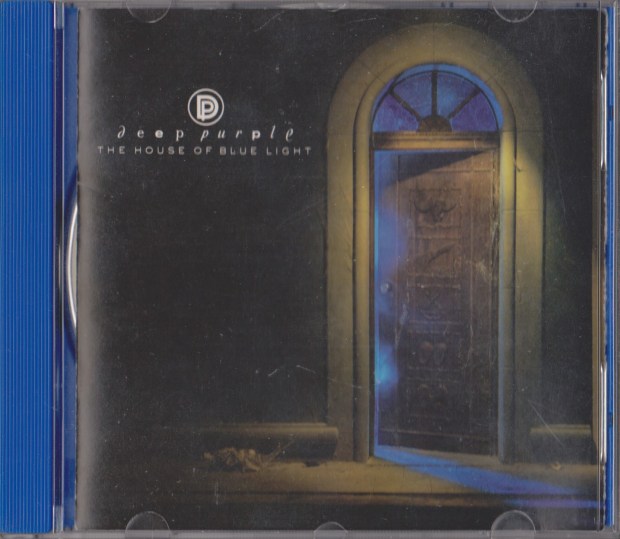
REVIEW: Deep Purple – The House of Blue Light (1987)

The Deep Purple Project continues!  Join me for the next week (plus?) and see more rock majesty than you can shake a purple stick at!

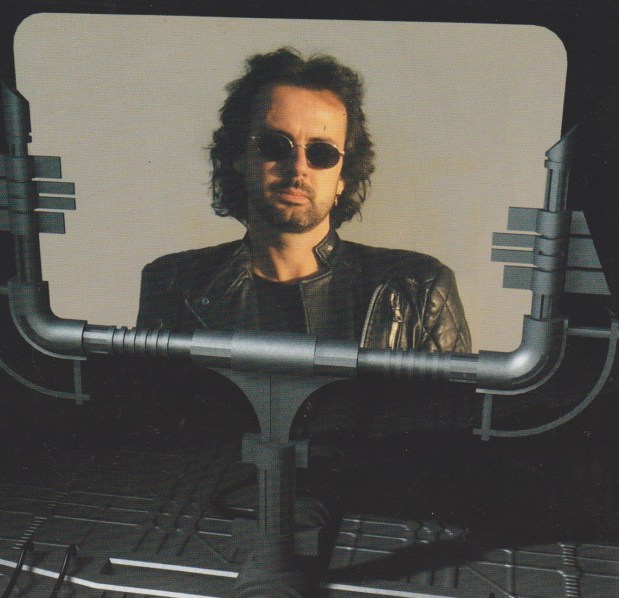
Scan_20160129 (4)DEEP PURPLE – The House of Blue Light (1987 Polygram)

The Deep Purple reunion was the success beyond what anybody hoped for.  The band had revitalized after many acrimonious years apart.  They were fresh and rejuvenated, and the resultant album Perfect Strangers was the proof.   If the live recordings are anything to go by, then the tour was also dynamite.   Obviously the next thing to do would have to be a second reunion album.

According to Ian Gillan’s autobiography Child in Time, things went south very fast.  He found Ritchie Blackmore increasingly difficult to work with, refusing even to record guitar for one song.  Gillan admits he was no treat either, so it was the band that suffered.  Ian compared Deep Purple to a beautiful meal, a plate full of gourmet perfection — that’s Roger Glover, Ian Paice and Jon Lord.  Ian and Ritchie were the fork and knife on either side.

The House of Blue Light (title taken from Little Richard via Purple’s own “Speed King”) was not a fun album for anyone to make.  Some hold it in high esteem today, such as renowned writer Martin Popoff, who rated it 10/10 in Riff Kills Man (as he did Perfect Strangers).  While I believe Perfect Strangers is easily a 10, I don’t find The House of Blue Light to be its equal.  The band may agree; none of its songs have been performed live since this tour.  That also just could be residual hard feelings.

There is no mistaking the organ of Jon Lord on “Bad Attitude”.  What an opening statement this is.  Just as strong as the best songs on Strangers, “Bad Attitude” rules.  It’s all about the spaces between, but Ritchie ensures there is a catchy trademark Deep Purple riff involved.  His solos are exotic delight.  Even in 1987, Purple weren’t afraid to load their single down with solos!  Jon Lord’s synths are perhaps more prominent than they were in ’84.  This is not a bad thing, because Jon Lord makes synth sound good.  Synth and electronics take center stage on “The Unwritten Law”, powerful both because of and in spite of it.  The pulse and beats give it a dramatic chase-like feel.  Its drum outro is very reminiscent of “Chasing Shadows” from album #3 in 1969!  It’s also the only Ian Paice co-write.  In the 80’s, instead of splitting the writing credits five ways as they always had, Purple changed to awarding individual credits (and royalties).  This led to petty squabbles and infighting.

“Call of the Wild” was a single and (pretty terrible) music video, and didn’t really make much of an impact.  Too bad.  It’s one of Purple’s more pop songs, but that’s just fine by me.  Purple have occasionally forayed into commercial songwriting, but have always done so with class.  This one sounds like a Rainbow song circa the Joe Lynn Turner years.  “Mad Dog” blows away all three of the previous songs.  With a killer, choppy Blackmore riff right up front, it sounds vintage.  Gillan gets to play some bluesy harmonica on “Black & White”, a good mid-paced groove but not an outstanding one.  Something like this needs a timeless Blackmore solo to drive it home, but the fire fails to light.

There’s a natural split between side one and side two, which still comes across on CD.  “Hard Lovin’ Woman” (supposedly a sequel to “Hard Lovin’ Man” from In Rock) is one of the few songs that was played live, probably because of its energy.  It has the pace of an old-school Purple rocker, but not the timelessness.  It’s largely forgettable and really only notable because it’s on the live album Nobody’s Perfect.  Back to regal sounding Deep Purple, “The Spanish Archer” could really have been something had they bothered to play it in concert.  It has a drama to it that is one of Purple’s strengths, but a lot of its strength is sapped by 80’s production values.  Glover’s bass doesn’t have enough meat to it, and there is a hint of electronic effects on the drums.

Onto “Strangeways”, the only long song (7:35).  Its vibe is very much in tune with “Hungry Daze” from the previous album.  The lyrics are unusually topical for Gillan and Glover.  “Have you seen the headlines?  Princess engaged.  Three million out of work, but that’s on the second page.”  Its length is taken up by some of Ritchie’s most subtle playing, but if you listen carefully, you can hear Ian Gillan on the congas.  Just like old times.  “Mitzi Dupri” is the one that Blackmore refused to record.  The guitar you hear on the album track is taken from the original demo.  Once Ian came up with the lyrics, Blackmore proclaimed he did not like it and would not participate in recording it for the record.  I think he found the words a bit dirty.  Closing the record is “Dead or Alive”, speedy Purple in the classic fashion.  If only the production of this album were a bit tougher, that song would be mercilessly heavy.

The House of Blue Light is not the equal of its predecessor.  Given some better production and perhaps one or two different songs, it could have been.  Someone in Purple (I think it was Glover) said that every other Purple album was “difficult”.  Perhaps there’s a smidgen to truth to that, because The House of Blue Light does not sound like the same confident band that recorded Perfect Strangers.

3.5/5 stars

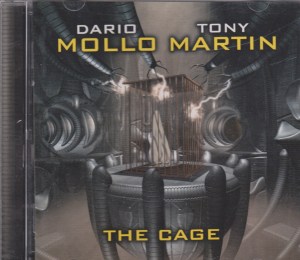
REVIEW: Mollo / Martin – The Cage (1999)

Part one of a two-parter!

Scan_20160109DARIO MOLLO / TONY MARTIN – The Cage (1999 Dreamcatcher)

When Ozzy Osbourne returned to Black Sabbath in 1997, that was undeniably a very exciting moment in heavy metal, and rock in general.  By ’98, original drummer Bill Ward even returned to the band, completing the original lineup.  We were rewarded for our patience with two new Black Sabbath songs called “Psycho Man” and “Selling My Soul” by the original lineup, but otherwise it was the beginning of a long drought.  Though Sabbath toured and played festivals, it was the sparsity of new material that pissed off a few fans, this one included.

Thankfully during this Sabbath ice age, some former members kept the flame alive with new heavy metal music.  Former vocalist Tony Martin, who was ousted for Ozzy’s return, recorded three albums with Italian guitarist Dario Mollo.  1999’s The Cage, featuring Don Airey (Deep Purple) on keyboards, is their first collaboration.  This helped scratch the Sabbath itch during the drought.

A jagged Dio-ish guitar riff commences “Cry Myself to Death”.  The doomy edge is present.  Martin sounds as if in peak voice.  The thirst is quenched.  It’s easy to imagine a song like this could have been on a followup to 1995’s Forbidden.  Dario Mollo is nothing like Iommi, being capable of heavy modern shreddery at maximum velocity.  This is proven on “Time to Kill”.  This time the vibe is like “Lawmaker” from 1990’s Tyr album.  The pace is breakneck, but Don Airey is more than capable of keeping up on the keys.  This is a stunning metal track mixing the spirit of old with the talent of new.  It verges on regal Priest-isms by the solo break, blazing on to the end in a frenzy.

Don Airey plagiarizes his own keyboard part from Judas Priest’s “A Touch of Evil”, for an instrumental intro called “The Cage”.  This serves as the start for a moody Dokken-esque ballad called “If You Believe”.  Don Dokken only wishes he could still write a song this good, a quality dark ballad, perhaps akin to Sabbath’s “Feels Good to Me”.  Then “Relax” also operates on a dark Dokken / Whitesnake vibe.  Mollo’s shredding on this would would make Eddie Van Halen nod in approval.  And speaking of Whitesnake and Cov the Gov, guess what they cover later on in the album?  “Stormbringer”!  Don makes the keyboards a bit too spacey on that one, but it is an otherwise pretty authentic cover, and the guitar solo is virtually note for note.

Scan_20160109 (3)

“Smoke and Mirrors” is pretty lame.  “Some girls, they look really pretty but they tell you lies,” sings Martin.  Well maybe, but some singers sing real good but struggle on the lyrics.  The weakest track so far, “Smoke and Mirrors” has a sleezy rock vibe, like a latter-day Europe track.  Mollo’s playing is the highlight but the song is pretty skippable.  “Infinity” is more Sabbathy, reminding me of “Headless Cross”.  Onto “Dead Man Dancing”, I think of Gary Cherone and Extreme.  The song boasts a soaring Martin chorus and plenty string mangling by Mollo.  Then it’s onto “This Kind of Love”, a dead ringer for Van Hagar.

The album closes on “Soul Searching”, (kind of similar to Sabbath’s “Nightwing”) which is something I wish Dario and Martin had done more of during the writing of this album.  It would be nice to hear more of the sounds of their own personalities rather than songs that remind us of other bands.  That’s rock and roll; the great struggle.  It is not easy to carve out your identity among the thousands of bands who already have.  The Cage is loaded with great music, and the playing is above reproach.  What it lacks is originality.  Even in the guitar playing, I would say that Dario Mollo owes John Sykes a debt of gratitude, though he is certainly no slouch.  I just crave more originality in the tunes.  Yes, part of the appeal of following ex-Sabbath members like Tony Martin into a solo career is to hear a bit more of that sound you loved.  There are just too many moments on The Cage that sound like songs you already know.

3.25/5 stars

REVIEW: Rainbow – Live in Munich 1977 (vinyl)

Thanks for joining me this week for my Deep Purple Project. I admit that this review is a bit of a cop-out. I got dreadfully sick with the flu a week ago and was not able to finish any more Purple reviews for this week. I pulled an old one out of the hopper instead. This is close to Purple,  — the Man in Black himself, and Blackmore’s Rainbow. This review is for music writer Victim of the Fury!

RAINBOW – Live in Munich 1977 (2013 Eagle Rock 180 gram 2 LP set)

Something about listening to classic rock with that rich, warm sound of pristine vinyl played on nice big speakers for the first time…is there anything better?  Dropping the needle on side A, let us begin the ritual of properly listening to a double live album.

This 180 gram was a birthday gift from my sis, knowing my love of all things Ronnie James Dio. Not to be confused with the double CD Live in Germany 1976, this freshly mastered concert was recorded in 1977 for German television.  Dio was one hell of a powerhouse, especially in 1977.  Live in Munich contains what must stand as one of the best Dio performances caught on tape.  This was caught just before the album release for Long Live Rock ‘n’  Roll.  “Kill the King” was a storming opening and the live recording is all but flawless.  If Rainbow could be faulted for anything at this point in their brief life, perhaps they played too many long jams on stage.  “Mistreated”, the Deep Purple concert favourite, is the first of these.  As usual for the Man in Black, Ritchie Blackmore himself, the song is almost 12 minutes in length when stretched out live.

Lets not get into comparing Ronnie James Dio to David Coverdale. There’s no point to that.  As with Black Sabbath, you either like Ronnie’s interpretation or you don’t.  Regardless is it drummer Cozy Powell who detours most noticeable from the Deep Purple original, doing a busier blast than Ian Paice did.  As for Blackmore, his solo spans the entire spectrum delightfully.  He fluffs it for a moment, only to immediately take control and keep going.  This is a brilliant version of a song we have heard many times.  Ritchie then takes center stage for a delicate workout to “Greensleeves”, before blasting into the Rainbow barnstormer.  Once again, this is probably the best live version on tape.

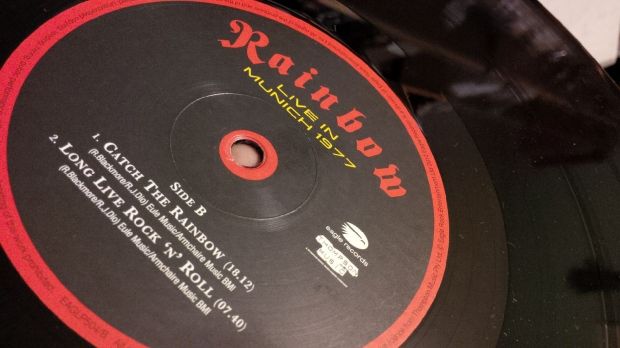
IMG_20151108_111910Flipping the record to side B, we are treated to Ritchie seemingly tuning his guitar…melodically…working his way into a lengthy “Catch the Rainbow” including classical interludes.  There’s more than a little “Little Wing” within “Catch the Rainbow”, which Ritchie plays into.  Bassist Bob Daisley sings the angelic backing vocals, proving why he has been such an integral member to so many bands over the years.  In fact this would have to be one of the strongest Rainbow lineups, period.  Keyboardist David Stone rounded out the quintet, and he is kept busy on “Catch the Rainbow”.  The brand new song “Long Live Rock ‘N’ Roll” is next, and a few people in the crowd indicate they may already know the song!  It is presented more Deep Purple in style (hints of “Black Night”), perhaps a bit more laid back with nice flashes of organ here and there.

The second LP has to shuffle the track order out of necessity.  “Still I’m Sad” is 25 minutes, so it must occupy all of side C, even though it was played after “Man on the Silver Mountain” in concert.  There is something about a side of vinyl that contains one monolithic slab of music in only one track.  It feels like a challenge, a solo-laden endurance challenge.  Once it starts rolling, it becomes one of the most intense versions of the song yet recorded by Rainbow.  Then it goes all over the place as pretty much every member has moments to shine.  It’s way too much and it’s way over the top and taxing even to the staunching rock fans.  It was 1977 and this is the way it went down!

Settling in for the final slab o’rock, side D is also daunting with two tracks of 15 minutes apiece. Purple’s “Lazy” is teased out, as part of “Man on the Silver Mountain”. Lots of soloing and noodling abound, and the big weakness with this period of Rainbow is that they thought we needed this much of it. The segue into “Starstruck” is way more fun. More solos and a frantic “Do You Close Your Eyes” ends the concert. Stone’s keyboard solo is cheesy fun, but overall this is another great over the top performance from Rainbow. You can hear a guitar destroyed at the end of it all.

Double lives are best experienced on vinyl, and pristine 180 gram records fit the bill perfectly. If you’re going to go double live for Rainbow, do it with Live in Munich.

4/5 stars

A
1. “Kill the King”
2. “Mistreated”
3. “Sixteenth Century Greensleeves”

B
1. “Catch the Rainbow”
2. “Long Live Rock ‘n’ Roll”

C
1. “Still I’m Sad”

D
1. “Man on the Silver Mountain”
2. “Do You Close Your Eyes”

REVIEW: Deep Purple – Made in Europe (1976)

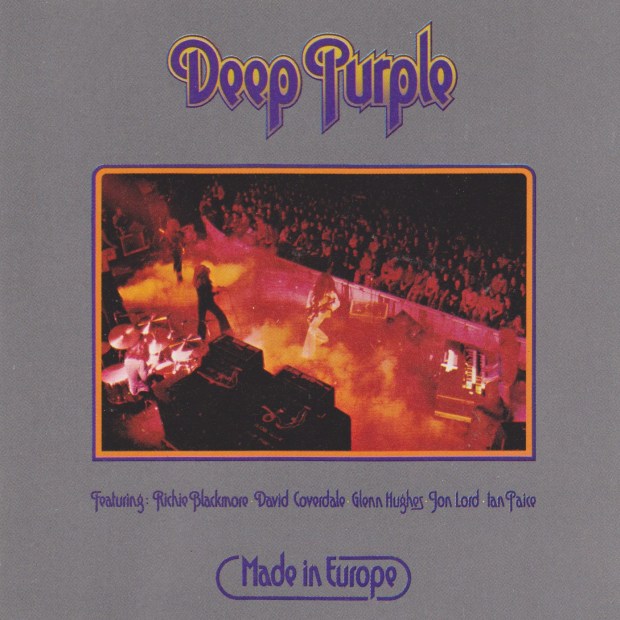
Scan_20160114DEEP PURPLE – Made in Europe (1976 EMI)

In 1976, Deep Purple ended with a thud.

With no desire to carry on, the band split in 1976 after the ill-received addition of Tommy Bolin on lead guitar.  David Coverdale was eager to start a solo career where he could sing, and not “scream his balls off”.  Everybody else was just plain tired of it all.  Dutifully, the record company trotted out live albums and compilations, to keep the cash flowing.  Made in Europe, intended as a followup to Made in Japan, came first.  It was followed by Power House, When We Rock We Rock, Deepest Purple, Last Concert in Japan, Live in London, and many more.  The goal was not to provide fans with good quality unreleased music for them to enjoy.  The purpose was to make more money.

Made in Europe has since been superseded by better releases.  MkIII: The Final Concerts expanded and remixed this material, sourced from their last shows with Ritchie Blackmore.  He had already made the decision to quit, unbeknownst to his bandmates.  More recently, the Official Deep Purple (Overseas) Live Series released full shows of two concerts, Graz and Paris.  It is always preferable to have the full show, rather than a song here or there sloppy edited and mixed into a live album.  Don’t you agree?

With only five songs, Made in Europe was hardly representative of Purple’s set at the time, but it seems a single LP was all that EMI were willing to invest in.  Producer Martin Birch was unable to get the same heavy, crisp sound that he got on Made in Japan.  This one is heavy, but that crisp sound is muffled under a blanket.

“Burn” is an apt opener, and both David and Glenn Hughes were in fine form that night.  Blackmore, Paice and Lord always are.  Yet Deep Purple sound almost…bored?  Playing by rote?  Blackmore’s guitar is also too buried in the mix.  The first of two jams is up next: “Mistreated (Interpolating ‘Rock Me Baby’)”.  While no one questions that this is one of the greatest songs in the Deep Purple MkIII catalogue, the live jam has always dragged.  Ritchie’s playing is still a delight, but they could have trimmed two or three minutes from the song.   That’s followed by a frantic “Lady Double Dealer”, never one of Purple’s finest.  Birch applies an irritating echo to the chorus, but that’s all for the first side.

The second side is dominated by 16 minutes of “You Fool No One”, the second jam.  Jon Lord takes center stage for the organ solo intro, but if you dig cowbell, this song is for you!  Could Ian Paice be the #1 cowbell player on the planet?  “You Fool No One” testifies to that.  He is absolutely the MVP on this track (for his drumming, too)!  Finally, the full gale force of “Stormbringer” brings the proceedings to an end, easily the best track on the disc.

What, no “Smoke on the Water”?  No “Highway Star”?  It appears EMI wanted to avoid song overlap with Made in Japan, so you get MkIII material and only MkIII material!  That the drawback to a set such as this which is really only about half of a proper Deep Purple concert.

3/5 stars

Scan_20160114 (2)