heavy metal

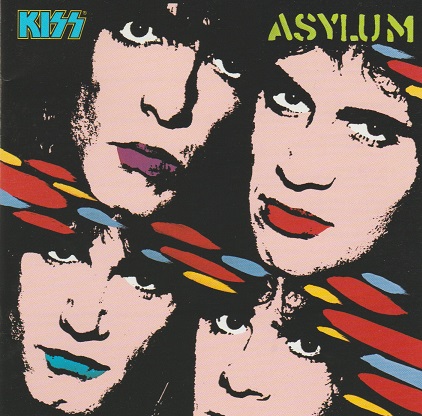
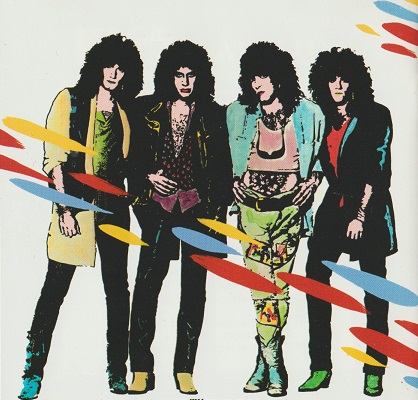
RE-REVIEW: KISS – Asylum (1985)

The KISS RE-REVIEW SERIES Part 28 

 – Asylum (1985 Polygram, 1997 Mercury remaster)

When we last met our heroes, they were a fractured bunch with differing priorities.  Gene Simmons cut his hair and went to Hollywood.  Paul Stanley was steering the Kiss ship singlehandedly.  They were down a guitar player (Mark St. John) but were fortunate to find his replacement in Bruce Kulick.  Not only was Bruce an old acquaintance (his brother Bob played on a number of Kiss tracks) but he was also just what the band needed.  He added a shot of stability and wrote good material.  He has three writing credits on his first album Asylum, and that was just the beginning.

Paul and Gene produced Asylum, in a similar way to how Animalize was recorded.  As had become routine, Gene wasn’t around to record some of the bass parts in Paul’s songs.  Jean Beauvoir returned to fill in, while Paul also played some bass.  Without Gene fully committed, Asylum was the second Kiss album in a row hobbled by his reduced participation.  Animalize was a huge selling album for Kiss having gone platinum.  Asylum sounds like Paul wanted to duplicate that record.

Eric Carr opens the album with a thunderously memorable drum intro.  Carr didn’t have to try to impress anybody; his drumming brought Kiss to a higher level musically.  His double bass work on “King of the Mountain” would make Lars poo his pants.  For Carr fans, “King of the Mountain” surely must be considered one of his brightest moments.  Fortunately the song also kicks ass.  As one of the Kulick co-writes, the new guitarist impresses immediately.  His soloing style was so much smoother than his predecessor Mark St. John.  He had similar speed and ability but better composition when it comes to solos.  Meanwhile, Paul takes this high octane speed rocker and turns it into a rallying call of encouragement.

I’m gonna climb the mountain,
I’m gonna hit the top,
I wanna go where nobody’s ever been,
I’m never gonna stop.

Who needs Shakespeare when you just need a good shake?  “King of the Mountain” is fuel injection for the bloodstream.

Over to Gene.  “Any Way You Slice It” kicks ass.  He had a habit of barking out his lyrics in the 80s, and “Any Way You Slice It” is very bark-y.  The riff really catches air and takes off.  Back to Paul, and a big single.  “Who Wants to Be Lonely” has a chug and a plaintive chorus.  Paul’s vocal abilities were at a peak, but it sounds like Gene was nowhere near the studio when it was recorded.

There are a lot of contributions from outside songwriters on Asylum, from people such as Desmond Child and Jean Beauvoir.  One of the few songs without them is “Trial By Fire” by Gene and Bruce.  Once again the rhythm is a chug, but this simple little rocker is appealing.  There’s nothing wrong with the chorus, but it has never been played live.  Nor has Paul’s “I’m Alive” which just takes the speed thing to an absurd level for this band.  Kiss isn’t a speed metal band and “I’m Alive” isn’t a memorable song.  “I’m hot enough to give you chills.”  I’ll take your word for it, Paul!

Flip the album and you’ll hear “Love’s a Deadly Weapon”, which both Gene and Paul have a credit on.  This is noteworthy, because the pair hadn’t written anything together on Animalize and only one track on Lick it Up and The Elder each.  That’s all the co-writing credits they had together after the infamous Kiss solo albums.  However, “Love’s a Deadly Weapon” isn’t really a co-write.  It’s one of Gene’s songs, with a title and some words taken from a Paul Stanley demo called “Deadly Weapons”.  Again, Kiss takes the speed level to the absurd.  This ironically renders the song powerless.

Fortunately Paul’s big single “Tears are Falling” brings back the quality.  It was one of the few songs from this era to continue to be played live.  It was kept in the set on the Revenge tour, and had been brought back periodically by the current lineup of the band, even appearing on their last album Kiss Rocks Vegas.  That’s because it has a chorus that goes on for days and days.  Bruce’s guitar solo is one his most memorable, which doesn’t hurt either.

Gene’s “Secretly Cruel” shows off his sleazy side, on a likeable but forgettable album track.  He wrote this one solo, just as Paul did for “Tears are Falling”.  And it’s sleazy from there in.  “Radar for Love” is a Paul/Desmond composition with a groove and a chorus that nails it.

And then it’s “Uh! All Night”.  Yes, “Uh! All Night” is the name of a song.

I’ll confess that when I first heard “Uh! All Night” in 1985, I didn’t know what “Uh!” meant.  I figured it meant “partying” or something.  And there was a period when I really liked this song, but that was over 30 years ago and it sure has worn out its welcome.

Kiss went on tour again, never leaving home territory except for one date in Toronto.  This was a step backwards for the so-called “Hottest Band in the World”.  Asylum wasn’t the hit album that Animalize was.  Money was becoming a problem.  These are problems they aimed to solve next time.

The irony is, although Asylum wasn’t as big as Animalize, song for song it’s probably a better album.

Today’s rating:

3.5/5 stars

To be continued…

Original mikeladano.com review:  2012/08/02
#589: Metal 101 – Learning the Basics in the Original School of Rock (Circa 1984-86)

GETTING MORE TALE #589:
Metal 101 – Learning the Basics in the Original School of Rock (Circa 1984-86)

I started getting really serious about rock and roll in the mid-80s. I was 12. Much Music had arrived. I had instant access to so many great bands. Thanks to the Power Hour, I had an hour dedicated to heavy metal every week.  I also had friends like Bob and George who were willing to let me tape things from their collections.  I started buying rock magazines.  But there was a learning curve.

Take Van Halen, for example.  All I knew of them were a couple singles from 1984.  I had seen the video for “Jump”.  I had also learned from my friends that Eddie Van Halen was the greatest guitar player alive.  Since I didn’t know the difference between a guitar and a bass, I assumed Michael Anthony was Eddie Van Halen.  I don’t know why I assumed that, except I probably liked Michael’s beard.  Bob and George corrected me, but I wondered, “How can you tell a guitar from a bass guitar?”

“A bass only has four strings”, they told me.  And you could tell the number of strings by the tuning pegs.  I got it!  Soon I was able to start piecing the rest together.  George bought a bass a few months later.  There is a local musical legend that lived on our street named Rob Szabo.  He is a very talented player, singer and songwriter.  He was starting to put together his own band, and all he needed was a bassist.  George was adamant that he was that bassist.  He decided this before he even bought a bass.  Rob was too nice a guy to tell George that they wanted someone else with more experience.  He didn’t expect George to buy a bass because of the vacancy in the band.  To his horror, that is exactly what George did.  I think he jammed with them once or twice before they let him go.  Maybe not even once.

Undeterred, George learned the instrument by playing along to records.  He put together a couple bands of his own, like Asylum and Zephyr.  His singing was shit, but his bass playing wasn’t bad at all.  He got pretty good at it.  But sadly, in our neighborhood, George might be best remembered for his attempts at singing.

George’s bedroom window was right next to our front step where I hung out a lot as a kid.  Bob and I would be up there listening to music, or even playing GI Joes on the lawn.  Sometimes we’d sit there in just listen to George.  You’d hear him put on a record, start playing along on bass, and when he got singing you’d think a cat was being tortured up there.  It was horrendous, but he seemed to have no idea how awful his singing really was.

George worked at Long John Silver’s which was about a 20 or 30 minute walk.  In the early hours of the morning, I saw George walking down the street alone with his headphones on, heading for work.  Suddenly he burst out:  “ALRIGHT! LOVE GUN!”  Then came the barely recognizable chorus of one of my favourite Kiss songs.  It was the kind of scene that you’d make sure you got on video today.  Another time, he was singing Judas Priest.  We ran into him that time and asked him what’s up?  “It’s Priest Week,” he answered.  He was only listening to Judas Priest that week, it seems.

One time George was over playing his bass, and he asked me if I knew how to pick out a bass line in a song.  I actually did, and I learned it by hearing him play bass along with his records.

Besides Kiss, Priest, and Van Halen, I was learning about bands such as Iron Maiden and Black Sabbath.  Bob had a Black Sabbath tape with a baby devil on the cover.  He brought it over one time, raving about a song called “Zero the Hero”.  We listened to it and it was cool.  I especially liked the spooky music between songs.  That was my first taste of Black Sabbath.  I knew who Ozzy Osbourne was, but I didn’t know he was in Black Sabbath before.  All I knew was the singer of Black Sabbath had long black hair and looked really evil.  Ian Gillan was my first Black Sabbath singer.

George was really cool about letting me tape his stuff, to the point that he’d bring his VCR over so I could even record his videos.  We did this on about two or three occasions, as he had quite a collection of taped videos.  I was interested in getting some more Dio.  I had heard “Holy Diver” and wanted some more, so I got the video for “The Last in Line”.  The clip was a trip to a hellish underworld of monsters and musical vigilantes.  A bit later, we got to a Black Sabbath video for “Neon Nights”.  I recognized the two moustache guys.  But who was that singer?

I timidly asked George, “Hey…did Dio ever have anything to do with Black Sabbath?”

“Yeah, that’s him.”

No way!  My brain expanded about six levels that afternoon.

Sabbath had a singer before the long black haired guy.  Unreal.  George told me that guy (Ian Gillan) was the singer from Deep Purple.  Holy shit!

A few months after that, we were in the park listening to Sabbath’s Paranoid on cassette.  “That’s Ozzy singing!” shouted Bob above the music.  I simply could not believe it.  And not long after that, I was watching Much Music again when they debuted a brand new Sabbath video with yet another singer!  A bearded guy!  Some guy named Glenn Hughes?  Never heard of him before.  He had a beard and a suit.  Not really very rock and roll.  Could you imagine my reaction if I knew at that time that Glenn Hughes was also a singer in Deep Purple?

The circle was becoming complete.  This kind of trivia was like candy to me.  I ate it up, every last morsel that I could absorb.  Band “A” led me to Band “B” and Band “C” via these kinds of connections.  Ozzy even connected back to Quiet Riot, the first “metal” tape I ever bought, via original guitarist Randy Rhoads.  He was about the only guy who could rival Eddie Van Halen in the guitar stakes, according to my friends.  But there was a new up-and-comer that Much Music kept talking about, named Yngwie Malmsteen.

Much was an advantage my neighbors didn’t have.  Neither Bob, nor George, nor Rob Szabo had the channel.  I began growing and developing tastes of my own, though still heavily influenced by my friends.  On my own, I found White Wolf, Sammy Hagar, Savatage, Queensryche, Aerosmith…and Spinal Tap.

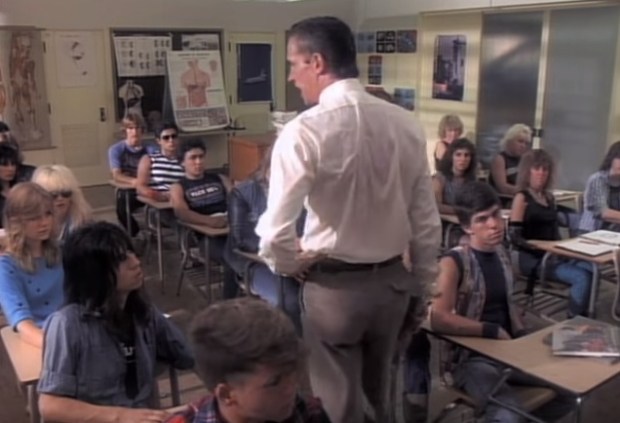
Yes, Spinal Tap.  “Hell Hole” became one of my favourite songs during the summer of ’86.  My sister liked it.  She hated her Catholic school, and as we’d drive by, she’d sing “Don’t wanna stay in this Hell Hole!”  That school was a indeed a “hell hole”.  Shitty teachers and shittier bullies who did not like heavy metal.

It’s true that the teachers gave me hell for wearing a Judas Priest T-shirt.  It is also true that we went to a retreat for a week, where music T-shirts and players were forbidden.  I have always been drawn to music since my earliest memories.  What did these teachers have against music?  I knew.  It was the old myth that these groups were “Satanic” and would drive us to all do drugs and die.  What those teachers didn’t know was that the music made me feel good without drugs.  I was even expanding my vocabulary.  Bands like Judas Priest and Black Sabbath were not simplistic with their lyrics.  I learned words such as “pyre” and “pneumatic”.  Through Iron Maiden, I was learning about literature and history.  I knew stuff that they weren’t even teaching in school, about Alexander the Great, the Gordian Knot, and the Rime of the Ancient Mariner.  How could that be bad?

Fuck ’em.  I trusted myself.  I was smart enough to know better than they did.

I look back at these early days, and I’m not surprised that it’s these bands that the core of my tastes are built around today.  Long live rock and roll.


REVIEW: Dream Theater – Master of Puppets (2009)

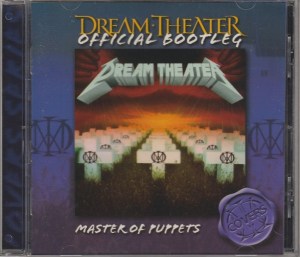
DREAM THEATER – Master of Puppets (2009 Yste Jam)

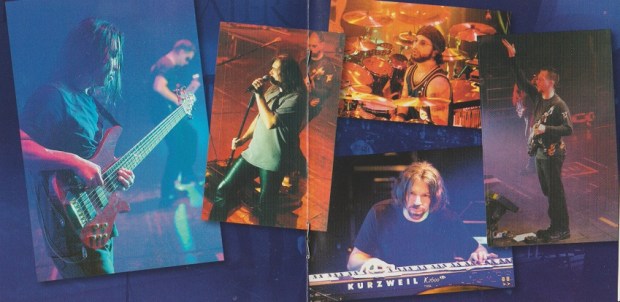
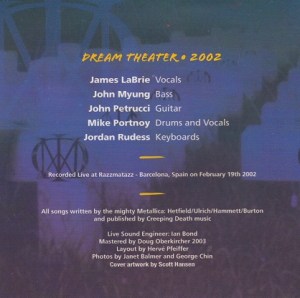
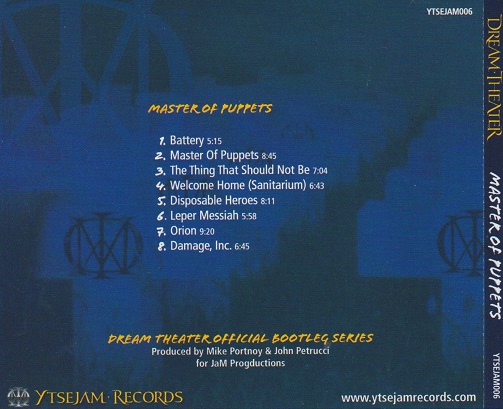
From Dream Theater’s acclaimed self-released series of covers albums, we have before us Master of Puppets.  This was recorded in Barcelona back in 2002.  Just as advertised, it’s Dream Theater doing the whole album live, in sequence, and pretty authentically too.

Dream Theater are a very different band from Metallica.  This is bound to be interesting.

The most obvious difference is that Metallica have two guitar players, while Dream Theater has one and a keyboard player.  On this, Jordan Rudess does aggressive keyboard solos where Kirk Hammett may have laid down one with his axe.  He also plays the acoustic parts on keys.  From time to time, you forget it’s a keyboard.  In short, Rudess turns the prospect of Metallica with keyboards into a lesson on forgetting your assumptions about keyboards!

James LaBrie fits the silhouette of a young James Hetfield.  He sings a convincing Metallica cover indeed!  He cuts loose and goes for it.  Metallica requires a gritty singer, going for it 110%.  LaBrie handles it.  For Dream Theater, doing these cover albums (from a wide variety of bands in fact) must be a lot of fun.  They would have the chance to sing and play in a way that isn’t the usual for them.  Guitarist John Petrucci does not often get to riff on something for five minutes straight like Metallica do.

Lars haters are naturally going to ask “What do Metallica songs sound like with a real drummer?”  Hey, I’m no Lars hater.  (He can play better than I can…)  But in answer to that question I can only respond “fucking awesome”.

Dream Theater cover Master of Puppets without drawing attention to themselves.  Mike Portnoy does not grandstand and overplay.  Nobody does.  If the effort was to do an authentic version of Puppets, as close to note for note as possible, then I say mission accomplished.  Beat for beat, this is stunningly true to the original album.  The keyboards are the most obvious deviation, and that’s minor.  In anything, Dream Theater draw attention to the fact that these are great heavy metal songs.  Are they Metallica’s best-ever set of songs?  Some prefer Kill ‘Em All, some Ride the Lightning.  Any way you slice it, Puppets is metal immortal, a very important record in anyone’s collection.  Dream Theater painstakingly learned the album front to back so they could play it live for a few thousand people.  They did that because it’s a great album on any day.

Dream Theater’s live covers albums (and many, many other releases) can be found on their own Ytse Jam Records website.  Check out the multitude of stuff available (though some are out of print now) and try not to drain your bank accounts.

5/5 stars


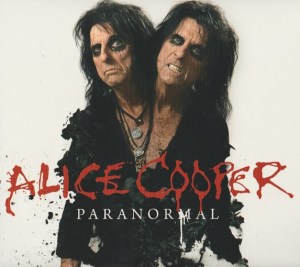
REVIEW: Alice Cooper – Paranormal (2017 2 CD edition)

ALICE COOPER – Paranormal (2017 Edel 2 CD edition)

Both Alice Cooper and Bob Ezrin had a lot to live up to with their latest collaboration Paranormal.  Excluding 2015’s covers album Hollywood Vampires, their last record together was the remarkable Welcome 2 My Nightmare in 2011.  Bob Ezrin has already produced one of the more impressive rock albums of 2017, Deep Purple’s InFinite.  Considering this recent track record, one might say we expect the goods this time too.

Paranormal is a great album, loaded with fantastic Alice Cooper material of different rock and roll styles.  It is not up to the level of brilliance of Welcome 2 My Nightmare.  That album (a concept album sequel) was dense with ideas and composition.  Paranormal is a step towards something less conceptual and more like a traditional album.  The big surprise this time out is the drummer:  U2’s Larry Mullen plays on 9 of the 10 core songs, and you’d never guess that without reading the credits.

The title track is impressive on its own.  It has a haunting guitar hook and vocal, and is built a bit like Alice’s horror material from the 80s.  That’s Ezrin’s pal, Roger Glover from Deep Purple on bass.  Back to the early 70s, get down with some hard rocking “Dead Flies”, but don’t let your guard down.  Relentlessly, “Fireball” blazes down the terrain, kicking aside everything not nailed down.  Alice doesn’t have anything that sounds like “Fireball” on any of his other albums.

The lead single “Paranoiac Personality” (a single worth tracking down for an exclusive live B-side) is similar to “Go to Hell” (from 1976’s Alice Cooper Goes to Hell).  It’s the kind of magic that happens only when Alice Cooper and Bob Ezrin work together.  Memorable Alice Cooper rock, accessible enough for radio play, but within the personality of Alice.

Moving on to sleaze rock, “Fallen in Love” is a strong entry.  If it sounds a little greasy, that’s probably because Billy Gibbons is on it.  It’s followed by a speedy trip called “Dynamite Road” with a neat spoken-word style vocal.  It suits Alice’s storytelling lyrics.  After a couple of heavy bashers, it’s good to get back to a groove on “Private Public Breakdown”.  These are some impressive songs, each different from the other but fitting the whole.

A kickin’ horn section joins Alice on “Holy Water”, a fun and unorthodox rock and roll sermon.  Then there’s a good old fashioned punk rocker called “Rats”.  It might remind you of Michael Monroe’s classic “Dead, Jail or Rock ‘N’ Roll”.  It’s the only song on disc one that Larry Mullen doesn’t play on.  “Rats” has the surviving original Alice Cooper band: Michael Bruce, Neal Smith, and Dennis Dunaway.

Going for a haunting close, there is an understated song called “The Sound of A” to end the album proper.  This truly recalls Welcome to (and 2) My Nightmare.  Original bassist Dennis Dunaway co-wrote and plays bass on the track.  Although he was not in the band during the Nightmare era, that is what immediately comes to mind.  This is the kind of song that has the potential to become an Alice classic a few years down the road.

Cooper has been generous with bonus tracks on his last few albums, and Paranormal has a fully loaded second CD.  There are two more brand new songs featuring the surviving members of the original Alice Cooper band.  Steve Hunter is also on board with some slippery slide goodness.  “Genuine American Girl” is a transgender celebration, the kind of thing that would have been cutting edge in 1972, but today is just timely.  Smith co-write this with Alice and Ezrin, and it’s a remarkably catchy little tune.  “This is no-man’s land and I live here every day” sings a gleeful Alice.  It does sound like something the original band could have played back then.  “You and All Your Friends” (Cooper/Dunaway/Ezrin) is more of an anthem.  A crowd could definitely sing along.  These two tracks serve as reminders to what great players the original band members are.  Neal Smith is absolutely a drumming maniac and Dennis Dunaway is still one of kind.

There are six more bonus tracks, all live cuts from 2016 featuring Alice’s stellar live band.  It’s good to have these, because really the only thing missing from the new songs is guitarist Nita Strauss.  She’s a monster player.  For those hoping to hear Nita on Alice’s new album, at least she’s on the bonus tracks.  The live cuts are a fairly standard selection of 70s hits (all but “Feed My Frankenstein”).  You know what you’re getting:  expertly performed Cooper classics by his gang of professional rock and roll misfits.

Paranormal is yet another late-career triumph by Alice Cooper.  It’s just a hair shy of mind blowing.

4.5/5 stars

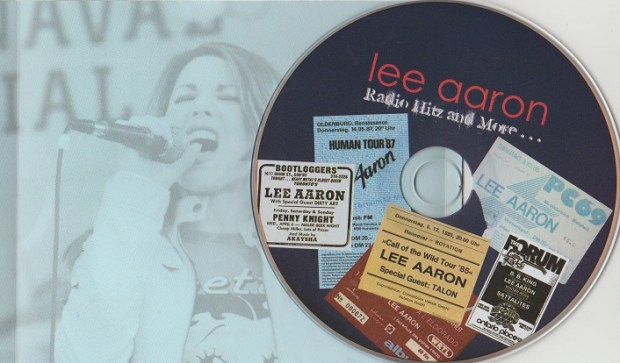
REVIEW: Lee Aaron – Radio Hitz and More… (2012)

LEE AARON – Radio Hitz and More… (2012)

Respect to Lee Aaron!  She’s persisted through the decades with a multi-faceted career, including her early metal roots.  What she really needed was some kind of compilation CD that captured it all.  1992’s Powerline is a good compilation but some of Lee’s most interesting work came after.  Radio Hitz and More… fills in some of the blanks from the past 20 years.  You can only get it via Lee’s website as a promotional item.  I bought a T-shirt and got the CD with it, signed and personalized.*

Even if it haunted her career at times, “Metal Queen” is a damn fine song.  Period, end of sentence.  Today we can see that “Metal Queen” had it all:  killer quintessential riff, howling vocals and a searing solo.  Few metal singers could touch Lee Aaron’s ability.  While the fans knew she could do more than metal, she absolutely owned it on “Metal Queen”.  Hail to the queen.

Lee eventually shifted into a hard rock mold.  “Whatcha Do to My Body” was a big hit, and it’s next in radio edit form.  It delivered big hooks and didn’t require any song doctors.  Lee Aaron and her longtime guitarist John Albini wrote it and were rewarded with loads of MuchMusic video play.  However the two did collaborate with an outside writer on “Powerline” (1987) and that outside writer was surprisingly former Rainbow singer Joe Lynn Turner.  “Powerline” is a bit light and heavily reliant on keyboards, sounding a little like Heart.

The songs included from Lee’s “rock” period are all pretty much hits in Canada.  “Hands On” followed “Watcha Do to My Body” in regular video rotation.  “Sweet Talk” and “Sex With Love” were singles from another big Lee Aaron album, Some Girls Do (1991).  The title track “Some Girls Do” is here and very Van Halen.  Two of Lee’s most stunning ballads are included too.  “Barely Holdin’ On” could be her best song, period.  “Only Human” was from the 1987 pop rock era, but is a strong ballad regardless.  Only a few notable singles are missing.  The always likeable Disco-dis “Shake it Up” is too hard to find out there in the wild.  Another big ballad, “Peace on Earth” is missing in action.  However the space does not go to waste.

In 1996 Lee Aaron resurfaced with a new band called 2preciious.  The lineup included Lee and the three Dons from Sons of Freedom!  A strange combo to be sure, and the alternative-flavoured album they came out with didn’t make waves, though it got decent reviews.  “Mascara” is edgy acoustic rock, completely unlike Lee’s previous work.  There’s even a rare European-only track called “Concrete and Ice” which is a bass-heavy 90s groove rocker.  Great stuff; it’s unfortunate it didn’t gain traction,  because with Alanis Morissette being so big at the same time, perhaps Lee could have tagged along.

The next stage of Lee Aaron’s career was her entry into the jazz world.  2000 saw the release of her album Slick Chick, and in 2004 there was Beautiful Things.  Tracks from both are here, including the instantly likeable “I’d Love To”.  It’s a little jarring to hear “Handcuffed to a Fence in Mississippi” in the middle of a bunch of rock tracks, though.

This compilation is great for gathering together a bunch of Lee Aaron’s diverse hits, but that’s not all.  Track 18 is a little bonus for collectors.  From Sweden Rock, it’s killer track “Baby Go Round” originally from Emotional Rain.  This live version is available nowhere else, which is like catnip for collectors.

77 minutes of music, for free?  How do you spell N-O-B-R-A-I-N-E-R?

4/5 stars

*If ordering, check before assuming they still offer signed CDs.


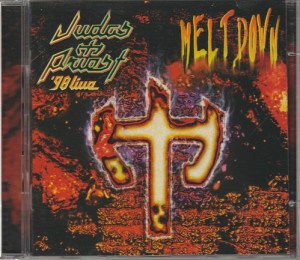
REVIEW: Judas Priest – ’98 Live Meltdown (1998)

JUDAS PRIEST – ’98 Live Meltdown (1998 BMG)

First in a long line of non-essential Priest live albums, here’s ’98 Live Meltdown.  Why did bands at certain points feel the need to add the year to the title?  Warrant – ’96 Belly to Belly – Volume One.  Kind of silly, right?  For fans who know their metal history, 1998 falls in Judas Priest’s Ripper Owens years.  Priest had just released their first album without Rob Halford, Jugulator.  Live Meltdown (let’s leave out that ’98 part for simplicity’s sake) captures the tour that followed, from various uncredited dates.

Fortunately the album is better than its title and awful cover art.  (Shame on you Mark Wilkinson!)  Ripper Owens provided fresh young lungs and with him at the mic, Priest were uber-powerful live.  All the new tunes from Jugulator were better in the live setting too.  “Blood Stained” is devastatingly powerful, and an enthusiastic crowd eats it up.  There are a few extraneous Jugulator tunes.  The world could have lived without “Death Row” and “Abductors”, and maybe the title track could have been thrown in instead.  Fortunately the track list is an otherwise excellent mix of new tracks and old cuts.

Priest deserve points for re-imaging their Joan Baez cover “Diamonds and Rust”.  The acoustic version was completely new for Judas Priest and Ripper could easily handle the heavy and the light.  Even though it’s acoustic, “Diamonds and Rust” represents Sin After Sin on a CD that gives face time to nearly every Priest album.   Rocka Rolla and Ram It Down are shunned as usual, but otherwise the only albums without tracks on this are Turbo and Point of Entry.  There is an emphasis on the classic material from the 70s, solid songs from the early 80s, and four tracks from Painkiller.  It’s a well-rounded album, and by the next live release (2003’s Live in London) they changed it up and added “Turbo” and “Heading Out to the Highway”.

Ripper was a great lead singer for this band during Rob’s absence.  He took one of the hardest jobs in rock and roll and did it with class.  Ripper had the goods.  He could scream the notes.  He added his own slant with guttural growls.  He struggled with “Painkiller” proving he’s a mere mortal but still he got the job done.

Live Meltdown was self-produced by Priest and Sean Lynch, but the guitars are too low in the mix.  The emphasis is on Ripper, but it seems to come at the expense of the volume of the rhythm guitars.  And the packaging is atrocious.  While it is true that most metal bands like Priest found themselves on smaller record labels, this is worse than a 90s indy band.  Fortunately the music and performance justify its existence.

Curious fans are advised to pick up Live Meltdown for the best representation of the Ripper Owens years.  It’s better than Jugulator and Live in London.  Fans are unanimously happy that Rob Halford is back in Judas Priest today, but that shouldn’t be taken as a slight against Ripper.

3.5/5 stars

REVIEW: Ozzy Osbourne – No More Tears (remaster)

“Politicians make decisions, they’re the ones to blame, so don’t blame me.”  — Ozzy Osbourne

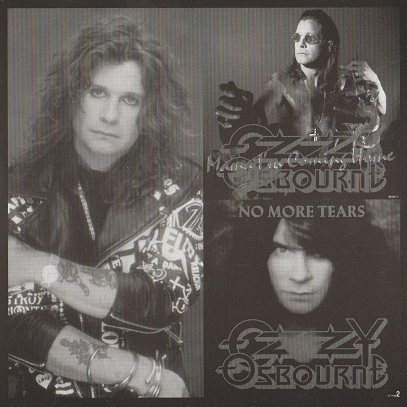
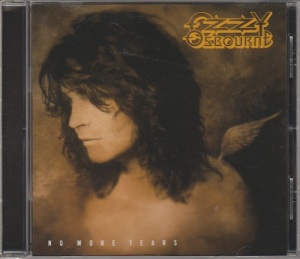
OZZY OSBOURNE – No More Tears (originally 1991, 2002 Sony remastered edition)

No More Tears was a big hit for Ozzy and is usually hailed as a “comeback” and “his best album since Randy Rhoads”. But is it?

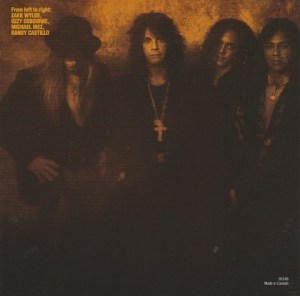
No More Tears certainly offers chills, thrills and new sounds.  Slide guitar on an Ozzy album?  Check out “Mr. Tinkertrain”.  Zakk Wylde was starting to spread out and grow, really exploring his southern roots and adapting that to heavy metal.  No More Tears might be the peak of Ozzy’s collaborations with Zakk, as they really did produce some magic here.  Some of the stuff Zakk does on “Mr. Tinkertrain” alone is career-defining.

Ozzy was also trying to escape his “satanic” image, and No More Tears was his step away from that.  It’s also a step towards the mainstream.  Second track “I Don’t Want to Change the World” is an example of Ozzy’s turn to radio-ready hard rock.  It’s a shame because after the chunky guitar assault of “Mr. Tinkertrain”, a speedy metal track like “Don’t Blame Me” would have been perfect in the second slot.  “I Don’t Want to Change the World” is unfortunately not much better than a Motley Crue filler track.  It’s repetitive and despite Zakk’s squeals and licks, fails to launch.  His solo at least scorches hot.  Then the whole thing gets stuck in the mud.  “Mama, I’m Coming Home” (lyrics co-written by Lemmy) was the hit ballad that I never liked.  “Mama” more than any of the other tracks really represented Ozzy’s desire to break free of the shackles of his own image.  There are better ballads on the album.  “Mama” is so generic it could have been recorded by literally anybody.

Moving past, the album catches a little air due to the groovy chugging riff of “Desire”.  The stock melody doesn’t do it many favours, but momentum is restored.

Ozzy did well by discovering his newest member, bass player Mike Inez who later went on to Alice in Chains.  Inez was a co-writer on the title track “No More Tears” and his bass line has become a signature hook.  “No More Tears” is one of Ozzy’s greatest achievements as a recording artist.  This is a direction he should have explored further.  Even though it’s incredibly memorable and accessible, “No More Tears” has slightly progressive and psychedelic elements mixed in.  Its groove was detuned and modern, but the samples and keys bring it levels above what most other mainstream bands were doing in 1991.  And then there’s Zakk’s slippery slide guitar expertise.  It just doesn’t get any better than “No More Tears”.  Ozzy wanted to move beyond being the clown prince of devilish metal?  Mission accomplished and then some, in a completely fearless 7:24.  Ozzy was an innovator when he was in Black Sabbath, and in 1991 he became that again on “No More Tears”.

Opening side two, “S.I.N.” is great old-school Ozzy metal.  Call it “S.I.N.” or just “Shadows in the Night”, this track has the kind of classic hooks and soaring vocals that Ozzy is so good at delivering.  Ozzy had a core writing team of Zakk and drummer Randy Castillo, who wrote this killer.  Lemmy stepped in to help out on “Hellraiser” which Motorhead recorded as well on 1992’s March ör Die.  “Hellraiser” is too middle of the road to be classic.  Even Motorhead’s version kind of sucks.

A stock ballad called “Time After Time” is a tad better than “Mama, I’m Coming Home”.  It has some pretty sweet melodies and harmonies going for it, and another brilliant Zakk solo.  “Zombie Stomp” brings back the heavy, simply by living up to its name.  You got a name like that, you better stomp, and this one stomps like all the beasts in the jungle are coming for you now.  It’s also plenty of fun.  Surely an underappreciated Ozzy career highlight.  Drummer Randy Castillo had a lot to be proud of on this one, as he took the spotlight for the two minute tribal intro.  When that’s all over, Zakk powers the groove.

More fun ensues on “A.V.H.” (no idea what that stands for).  A little bit of southern pickin’ from Zakk gives way to an adrenaline powered blast.  It’s a shorty compared to some of the more epic lengthy songs.  Finally “Road to Nowhere” ends the album with a retrospective.  “I was looking back on my life, and all the things I’ve done to me.”  It’s easily the strongest ballad on the album and one of Ozzy’s personal best.  “The wreckage of my past keeps haunting me,” wrote Ozzy in 1991, perhaps not knowing that it always will.

There is no arguing the importance of the song “Mama, I’m Coming Home” in the career of Ozzy.  It went top 30, and was huge on MTV.  Would No More Tears be a better album without it?  Should Ozzy have released it as a single or on a movie soundtrack?  Try this.  Remove “Mama” from the album, and put the B-side track “Don’t Blame Me”* in between “Mr. Tinkertrain” and “I Don’t Want to Change the World”. There is something to be said for a good B-side, and Ozzy has done a number over the years.  Yet “Don’t Blame Me” is far too good for that fate.  It combines riff with groove and hooks like nothing else on the album, and just listen to Zakk’s funky pickin’.  Fortunately it’s on the 2002 Sony remastered CD, along with a lesser B-side called “Party With the Animals”.  You might remember it from the 1992 soundtrack Buffy the Vampire Slayer.  “Animals” is definite B-side material.

Back to our original question.  Was No More Tears the “best album since Randy Rhoads”?  It’s quite good and easily his biggest since Randy Rhoads.  But it has filler, and some of that filler is downright annoying.  The remastered edition is the one to get, since you don’t want to miss out on “Don’t Blame Me”.  Bark at the Moon is likely the high water mark since the passing of Rhoads.  No More Tears is still one to own, even if you have the hits, for some killer and underrated album tracks (and one B-side).

3.5/5 stars

* Two early album titles used for this record were Don’t Blame Me and No Dogs Allowed.

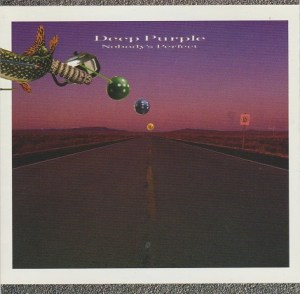
REVIEW: Deep Purple – Nobody’s Perfect (1988, 1999 reissue)

“I’ve been drunk from nine o’clock in the morning, ’til nine o’clock in the morning, because you’ve all been buying me drinks.  You are sensational!”  — Ian Gillan to the audience in Oslo

DEEP PURPLE – Nobody’s Perfect (originally 1988, 1999 Mercury 2 CD reissue)

Deep Purple are more than just a band, they are a legend.  And as such we must judge them a little more stringently than the average band.

In 1988 Deep Purple were celebrating their 20th anniversary, but they were actually broken up for eight of those 20 years.  And as it turns out, they celebrated their 20th by firing lead singer Ian Gillan!  They also released this live album, which failed to excite the general public.  Nobody’s Perfect is little more than a sub-Made in Japan.

It’s important to note, if you’re going to buy Nobody’s Perfect, there is no point in getting anything other than the 1999 2CD Mercury reissue.  Originally, in order to get all the tracks, you had to buy the album on LP and cassette.  The cassette had one exclusive track, “Dead or Alive”, a rarity from The House of Blue Light.  The double LP had its own exclusive, “Bad Attitude”, another rarity from the same album.  Meanwhile the single disc CD release was missing both these tracks and “Space Truckin'” as well.  In other words, definitely do not buy the original single CD release which is the most incomplete of them all.

The big critique levelled at Nobody’s Perfect, then and now, is that the setlist was too safe and a repeat of stuff already released in live form.  Ian Gillan himself was one who voiced that opinion.  The cassette and LP bonus tracks go a long way to add value, since those songs were dropped after this tour.  The only other place you can find live versions of “Bad Attitude” and “Dead or Alive” is the very expensive and out of print Bootleg Series 1984-2000.  Otherwise, Nobody’s Perfect consists of all the same songs as Made in Japan minus “The Mule” and with a small handful of newer songs.  The album is also sourced from many concerts around the world and completely lacks the flow that Made in Japan had (even though it was taken from three concerts itself).

The Deep Purple of 1987-1988 may have had the same members, but they still sounded very different from the Purple of 1972.  Ian Gillan’s voice aged as all human voices do, and is the most notably different.  Just as importantly though, Deep Purple had drastically cut down the soloing.  That’s not a bad thing, but a lot of the shorter jams and solos sounded by rote in the 80s.  One new highlight though is a bit of “Jesus Christ Superstar” in the middle of the “Strange Kind of Woman” solo section.  Gillan was, of course, the original Jesus on the Jesus Christ Superstar album.

Whatever negatives may be applicable, when they rock they rock and when they roll they roll.  “Dead Or Alive”, a new song, smokes the stage.  “Child in Time” is probably the last decent version of the song released.  “Perfect Strangers” and “Knocking at Your Back Door” were fresh and haven’t worn out their welcomes.

Finally there is a “Hush”, a re-recording of Deep Purple’s original 1968 single, captured live in a jam.  This reimagining of the track has been dismissed as unnecessary but that is an unfair assessment.  Ian Gillan and Roger Glover didn’t play on the original, so it’s actually cool to get a nice version with them.  “Hush” in 1988 was a heavier track than “Hush” in 1968, but it’s still playful rock and roll.

As Purple approaches their 50th, Nobody’s Perfect has faded into the backdrop.  As an official live album, it has its place in the discography.  With so many superior official and semi-official live releases since, it is hardly an essential listen.

3/5 stars


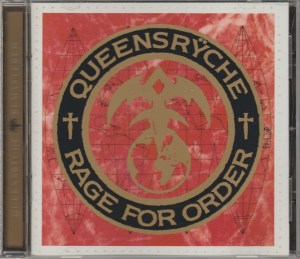
REVIEW: Queensryche – Rage For Order (remastered)

QUEENSRYCHE – Rage For Order (originally 1986, 2003 EMI remastered edition)

Every fan has their favourite Queensryche album.  Whether it be The Warning, MindcrimePromised Land or Empire, there are plenty of great albums in their back catalogue.  I used to seek the warm high of Promised Land when looking to chill with my favourite Queensryche.  Now I look for refuge in the cold, technological sheen of their 1986 album Rage For Order.

Rage For Order was a challenging album in its time and today it is still complex.  In 1986, fans questioned the gothy makeup and hair, not to mention the excessive samples and synths.  Today you can look back and almost call Rage For Order the first progressive industrial metal album.  It certainly has qualities from all three of those genres.  Geoff Tate beat Trent Reznor to the punch by years.  Rage seems to have a vague futuristic concept about a world of technology, revolution, and disconnection.

Although Rage For Order is certainly not an immediate listen, certain key tracks are commercial enough to keep you coming back.  The first is “Walk in the Shadows”, one of the few songs to be played live fairly consistently over the years.  “Walk in the Shadows” could pass as a hard rocking hit.  For the first time Queensryche really proved they were more than a simple metal band.  The slick production was completely different from their first two records, with the edge taken off the guitars and instead given to the computers and sequencers.  They give the whole album a precise, punchy tech sound that is its own form of heavy.  No wonder:  Dave “Rave” Ogilvie was an engineer.

A dense ballad called “I Dream in Infrared” has sorrow, but flowing through the veins of a computer.  Geoff Tate blows minds with his incredible voice and singing ability, layered for maximum effect.  In 1991 it was remixed acoustically for a single B-side, and that version is a bonus track on the remastered edition.  The original was perfect for what it was, but the acoustic mix is more accessible to outsiders.  It ends suddenly and the metallic guitars of “The Whisper” enter, accompanied by clock-like percussion.  Rage For Order has many songs with layered, overlapping vocals and you can hear that on the chorus.  It is a cold, sterile but powerful track.

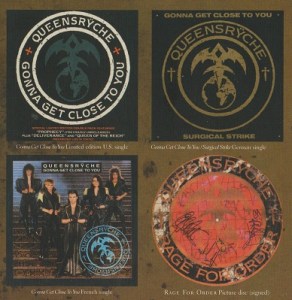
The strangest song was actually the lead single, “Gonna Get Close to You”.  It was the only cover Queensryche ever put on one of their studio albums, a track by Canadian songstress Lisa DalBello.  In the hands of Geoff Tate, it becomes a creepy song of a stalker with a strangely rousing pre-chorus.  “You think I’m a fool or maybe some kind of lunatic?  You say I’m wasting my time but I know what to do with it.  It’s as plain as black and white.  I’m gonna get close to you.”  Cree-hee-eepy!  Which is the point.  The bizarre samples and synths only deepen the macabre.  DalBello’s original is perhaps even creepier, but Tate’s pompous bravado adds its own slant.  “If you knew my infinite charm, there’d be no reason to be so alarmed…”

As an added bonus, a 12″ extended version of “Gonna Get Close to You” is included in the bonus tracks, but like most extended versions from the 1980s, it’s very choppy and awkward.

Along with the technology, there is a theme of loneliness on Rage For Order, and “Gonna Get Close to You” plays into that.  “The Killing Words” contains more heartbreak on the album’s second ballad (third if you count “Gonna Get Close to You”).  Tate’s voice is drenched in pain.  A 1994 acoustic version from the “Bridge” CD single is included as a bonus track.

“Surgical Strike” is a brilliant track, fast and heavy, and working with the technology.  The lyrics are brilliant and quite prescient.

It’s lonely in the field,
that we send our fighters to wander.
They leave with minds of steel,
It’s their training solution.
We’ve programmed the way,
It leads us to Order.
There’s no turning back.

A Surgical Strike.
We’ve taught them not to feel.
performance is their task,
A Surgical Strike,
Its time is arriving now for you.

The plan for the day,
will be swift as the lightning they harness.
The atom display,
It’s not mindless illusion,
At master control, assessment will not,
Be by humans.
There’s no turning back…

It feels like this future is not very far off.

One of the most techy tracks is “Neue Regel”.  Clockwork percussion, strangely computerized lead vocals, and intelligently used samples paint a scene of a future battlefield, complete with bomb-like drum sounds.  The multi-layered chorus is one of Queensryche’s most perfect.  Respect to Geoff Tate.  When the man was at his peak, nobody could touch him, both vocally and as a songwriter.  Of course one must also remember the other side of the equation, which was guitarist Chris DeGarmo.  He has more songwriting credits on this album than Geoff Tate, including two solo credits (“The Whisper” and “I Will Remember”).

The future continues to look cold and dark on “Chemical Youth (We Are Rebellion)”.  “Our religion is technology” is one line, and if only Tate knew how right he was!  There is a still a spark of hope and that is the young.  “Chemical Youth” is one of the heaviest tracks on the album, and sonically very interesting too.  The next ballad “London” fades in with a synthy bass line.  Loneliness returns.  “There’s some things in life I could never face.  The worst is being alone.”

The technology slant hits its peak on the brilliant “Screaming in Digital”.  Describing this song can do it no justice.  It is like listening to Queensryche within the gleaming sterile walls of the dystopian sci-fi classic THX-1138.  There is far too much going on underneath it all to absorb in just a few listens.  You will hear new sounds you never noticed before even 30 years later.  Artificial intelligence has never rocked so heavy.

I am the beat of your pulse,
The computer word made flesh,
We are one you and I,
We are versions of the same,
When you can see what I feel,
Don’t turn your back on me,
Or you might find that your dreams,
Are only program cards.

Fucking chilling!

“Screaming in Digital” must be counted on any list of Queensryche’s best music.  It is sheer genius, far beyond what their hard rock peers were peddling.  It was also years ahead of its time.  By crossing digital techniques with heavy metal in such an intelligent way, Queensryche truly were breaking new ground.

“I Will Remember” is the final song, a ballad that seems to tie it all together.  It has the feel of a lonely ballad, while lyrically tying up the technology concept.  “And we wonder how machines can steal each other’s dreams.”  Another Queensryche classic, including a genius DeGarmo acoustic guitar solo.  Shades of the future “Silent Lucidity” too (also written by DeGarmo).

There are four bonus tracks including the three discussed above.  The last one is a 1991 live version of “Walk in the Shadows”, which appears to be a mix of two different performances judging by the credits.  Whatever the case may be, it’s cool to get a live version of this incredible song as a coda to the album.

Queensryche took the conceptual approach to its logical apex next time out with Operation: Mindcrime.  They ditched the technology and went back to guitars and even added an orchestra.  For that reason, Rage For Order is very unique in the collection.  It was a sound they have never repeated.  Operation: Mindcrime had a sequel, but Rage For Order never will.

5/5 stars


#579: Entering the Asylum

GETTING MORE TALE #579: Entering the Asylum
(Supplement to the  Re-Review series)

Back in Record Store Tales Part 3 (!), we took a nostalgic look at my first ever Kiss albums, that all arrived in one glorious batch.  The year was 1985, but Kiss also had a new album coming out in a matter of days.  Now that I had started on a Kiss collection, I would have to get their newest album too, called Asylum.  I didn’t even know how to pronounce “asylum” correctly, nor did I know what the word meant, but I did understand that it was their third album without makeup.

Next door neighbor George, who was my introduction to Kiss, came over one day talking about the new single “Tears Are Falling” and how much I would love it.  I didn’t have much money but by the time the snow fell, my dad bought me a copy of Asylum on cassette.  We got it at the Zellers store at Stanley Park Mall in Kitchener.

My meager Kiss collection at that point consisted of Alive!, Asylum (cassette) and a bunch of LPs I recorded off George.  I didn’t know much about the discography but George was a good teacher.  George actually named one of his first bands Asylum.  Before long I could name all the albums, in order.  I even predicted that the next single would be “Uh! All Night”.  I didn’t foresee the third single “Who Wants To Be Lonely” because Kiss hadn’t done a third single in ages!

George was only missing two Kiss albums:  The Elder, and Double Platinum.  He was dying to get both and finish the collection.  His record collection was fascinating to me and a goldmine of music to tape and explore.  The album covers, particularly for Kiss and Iron Maiden, had me hooked.

As my interest in Kiss grew, a new kid at school who I later found out was a “liar liar pants on fire” claimed he had “all” the Kiss albums at home.  His name was Joe Ciaccia (pronounced “chee-chaw”).  I asked him if that meant he had The Elder.  He said yes.  I told George I knew a kid who owned it, and he just about shit his pants.  I made arrangements with Joe to meet up at his place on the next Sunday to do a trade.  All I asked for brokering this trade was recording the album.

George was really excited.  “I don’t care what he wants for it, I’m not leaving without that record.”  I distinctly remember a small group of us trudging through the snow to meet Joe at his apartment.  Who came with us?  I can’t remember.  Joe lived on Breckenridge Drive, just down the street from Brian Vollmer of Helix.  One thing that I can remember very clearly was grabbing my Sanyo ghetto blaster loaded with D-cell batteries, my Asylum tape, and rocking while walking to Joe’s.

Listening to a cassette on a ghetto blaster powered by D-cells was a warbly experience that kids today don’t understand.  Our small group lollygagging through the slush listening to “King of the Mountain” on that old Sanyo is an image I’ll always remember.  I carried it through the wet melting snow.  Those Sanyo ghetto blasters were built like tanks!  You could drop them and they’d keep on ticking.

We arrived at Joe’s apartment and buzzed.  No answer.  Buzzed again.  No answer.  I began to realize my fears.  Joe was all talk and no Elder.  We hung out down there a while but there was no sign of Joe.  George was partly crushed and mostly pissed off.  At school, Joe gradually earned a reputation for tall tales.  His were beginning to rival the lies of Ian Johnson – they even lived on the same street.

We flipped the Asylum tape over and began the walk home.  A wasted trip, and Joe dodged me at school the next day.  George kept pestering me to arrange a second hookup with Joe, thinking he still had that copy of The Elder that he wanted so badly.  I realized Joe was full of shit and told George the sad truth.  The record was not there.  Joe was telling stories, trying to seem cool to me for having all the Kiss albums.  Then he got caught in the lie, after going so far as to arrange a trade and giving me the address.  Very un-cool.

George did get a copy of The Elder a few months later, and he still taped me a copy.  It was a strange album, after being immersed in Asylum for many months.  Then, I definitely preferred AsylumAsylum was special to me.  It was my first “new” Kiss album since getting into the band!  I had boarded the Kiss train and I wasn’t getting off!