Welcome back to Halloween Wednesday! Here’s guest writer HOLEN MaGROIN with the next in his series of Halloween themed reviews. He’s got a scarrry one today.
Stanley Kubrick’s The Shining is one of the rare instances where the film greatly surpasses the animal hedge madness of Stephen King’s novel. King reportedly hated the film because it changed the details of his book so dramatically, but all of the changes made to the film serve to not only translate it better to a visual medium, but also to create a deeper and more compelling story with a much more satisfying ending.* Stanley Kubrick’s The Shining is quite possibly the greatest horror movie ever made. It’s a deeply visceral thrill that deals with the supernatural and the psychological, while managing to include enough slasher elements to satisfy those types of horror fans. There’s really something for everyone in this movie, except Stephen King.
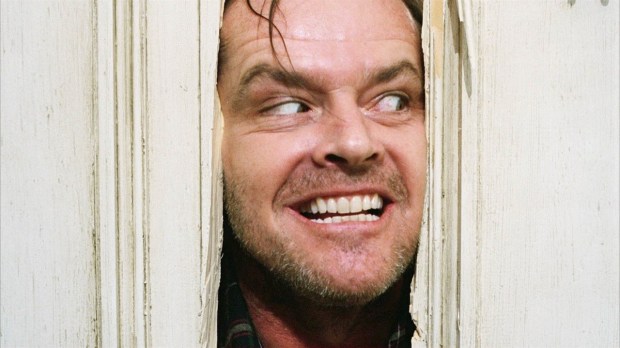
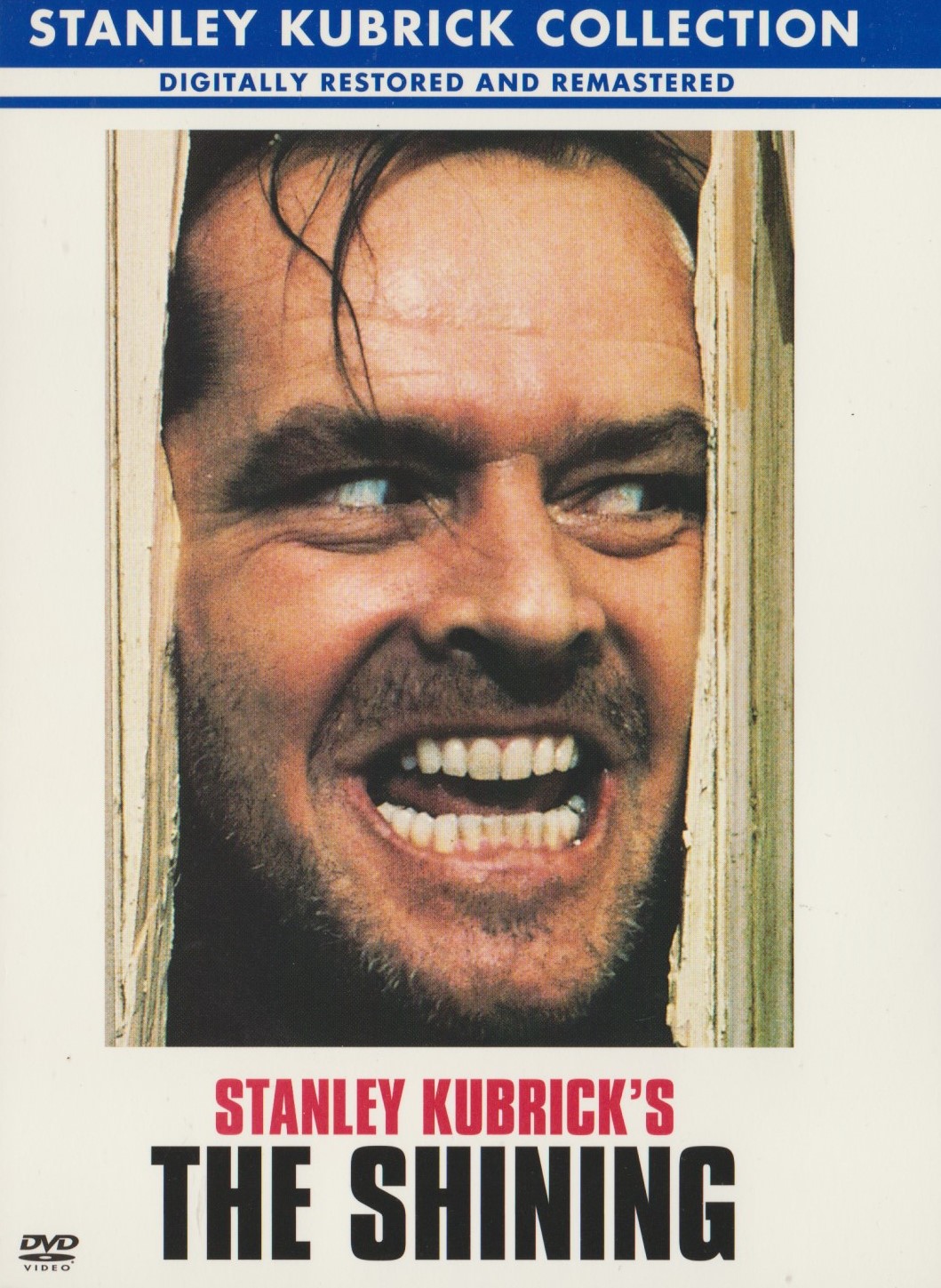
Everyone knows the story by now. Jack Torrance procures a job as winter caretaker of the Overlook Hotel and takes his wife and young son to stay with him, alone in the mountains. Jack is a struggling writer looking for a place to concentrate on his work. One day his wife decides to make seafood, and accidentally under-cooks the crabs. Jack’s intestines are sent into an uproar. Unfortunately for him, someone has locked the bathroom door. He doesn’t want to run to another bathroom and risk more leakage, so he axes down the door. This leads to the iconic image of his face sticking through the bathroom door that has been used as the cover for all recent home video editions. If you look closely, you can see that Jack Nicholson accurately portrays a man that has liquid shit running down his leg into his shoe, a man about to have an anal geyser. It’s an absolutely brilliant performance of such raw ass… I mean raw emotion that has stood as one of the defining performances in any horror movie ever. Is there a greater horror than realizing you’ve just soiled yourself?
Unfortunately for our heroes, all the food in the Overlook Hotel has been stricken with Salmonella, leaving their butts so raw that they are shining, hence the title. The only one immune to the bacteria is Danny, as he has supernatural abilities to digest anything. That’s where the paranormal aspects of the film come in. Danny talks to some ghosts that try to help him save his parents from the torment of toilet time. Danny sends a telepathic message to the old Overlook cook, and he immediately moves hell and earth to get over to the Overlook hotel.
Once the cook arrives he brings new food to last them through the winter, and decides to stay and celebrate the holidays with the Torrance family. They all laugh and dance around the Christmas tree as Jack Nicholson does his Tonight Show impression.
“Here’s Johnny!”
The whole family laughs in wholesome unison as Jack professes his unconditional love for both his wife and child. It’s a tender moment, as the whole family embraces cook Dick Hallorann as the newest addition to the Torrance gang. Dick has secretly bought Danny the new fire truck he’d been wanting before he made his way up to the hotel. On Christmas morning, Danny’s eyes light up as he had not been expecting to get it. The four get together in a loving embrace and their hearts fill with jubilant joy. My God, I’m tearing up just thinking about it!
The horror has been evaded, or so they think. Everything turns around when they receive a package in the mail, despite no one being able to get up to the hotel. Who could have left this package? They open up the package, and find a VHS copy of Bobcat Goldthwait’s debut standup HBO special, Share the Warmth. What’s odd about this movie is that the standup special was not taped until 1987, and this film takes place in 1980. To film the movie, Kubrick actually was able to send the cast and crew into the future to 2012 in order to make it even more eerie by predicting actual world events.** Rather than predicting natural disasters, or sports scores or anything like that, Kubrick became highly intrigued by this Bobcat character, and decided to abandon the novel to make his own piece of art. This is ultimately why King was not satisfied by the movie, and didn’t understand it when it came out in 1980 given that Bobcat had not reached a world stage yet. When the family finds the movie, everything goes off the rails. After watching the VHS together, Danny learns a whole lot of naughty words that should never be used by such young children. They also all immediately become big fans of the man with such Kaufman style talents and his penchant for social commentary. Bobcat’s earliest fans!
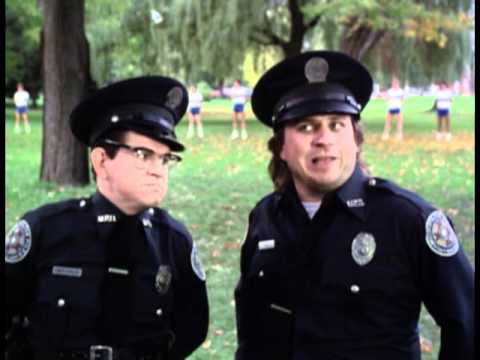
As the weeks go by, the family is pleased to find another VHS of a film called Shakes the Clown in the mail. It’s a lot different than his standup special, and exceptionally strange, but they ultimately enjoy the ride, even if it was not nearly as strong as his standup special. The next week, the family receives the holiday Bill Murray film Scrooged that features Goldthwait as the fired assistant. They determine that the movie ultimately sucks hard, but they love the parts containing Bobcat as the holiday liberator. That’s when the spirits sending the tapes stop being so kind to the family. Next they receive Police Academy 2. Police Academy 2 is easily the shittiest of an incredibly shitty franchise (only speaking for the first three, as that’s when I checked out forever), a series of films Bobcat himself would later call Police Lobotomy. The family is distraught over the wasted talents of Bobcat. Another week goes by and they find instalments 3 and 4 in the mail, and are just as horrified at the glaring examples of shit personified in Police Academy fashion. This is a franchise so shitty that the best joke involving them was actually in Wayne’s World. At this point in the film, Danny and Dick begin to have psychic visions. They can’t make out exactly what’s going to happen the next week, but they begin to have visions of a horse, and Bobcat. The horse seems to be talking. Their worst fears are realized the next week when a fresh copy of Hot to Trot is sent to the house.
The family is so horrified by the turn Bobcat’s career has taken that they all suffer terminal illness, an eerie omen of the five Razzie Awards nominations that this piece of shit would be nominated for. The next week, the critically acclaimed Bobcat film World’s Greatest Dad shows up, proving to be a chilling end to the Torrance family. If they had just hung in one more week, they would have been saved by seeing the great movie.
Years later in the early 1990s, Bobcat shows up at the Overlook Hotel to perform for the guests. He’s greeted by a bell boy, and tells him that it’s nice to perform at the hotel for the first time. The bell boy cryptically replies by saying, “I’m sorry to differ with you sir, but you are the comedian here. You’ve always been the comedian.” Bobcat looks puzzled, and spots a peculiar picture on the wall. He looks at it further and sees the picture on the wall from 1980 of the Torrance family all crying holding Hot to Trot in their hands. Bobcat lets out one of his trademark screams, and the credits role.
Kubrick knows to end the film on such a disturbing note, because he knows how to play his audience. That’s why this film is considered to be one of the most classic examples of modern horror cinema released today. The feelings that you experience watching this movie moves you in such a way that you feel afraid to ever travel to a hotel, or watch one of Bobcat’s many shitty movie decisions from the 1980s. This is the greatest horror movie ever made, and there’s simply nothing else to say.***
5/5 Pumpkins
* LeBrain agrees wholeheartedly and is jealous he hasn’t written this one up yet. But he will. The soundtrack including music by Wendy Carlos is genius too.
** Not to mention the NASA conspiracies.
*** That sure was something! I hope readers get it.
It may be considered a childish holiday, but it’s not about candy! Here’s HOLEN MaGROIN with the next in his series of Halloween themed reviews. For the last, Soundgarden’s Screaming Life/Fopp EPs, click here.
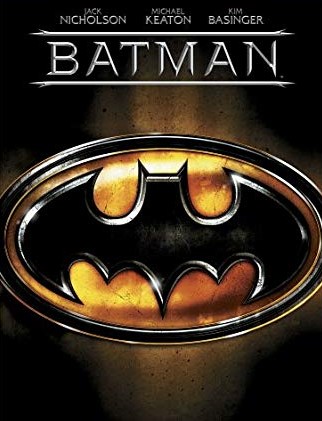
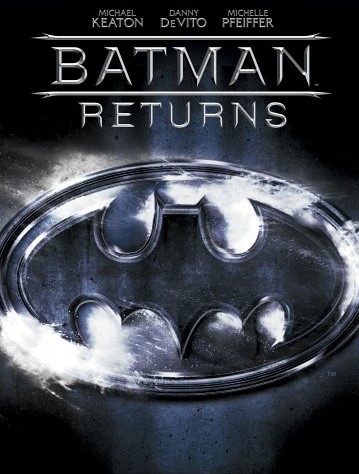
BATMAN(1989 Warner Bros.) BATMAN RETURNS (1992 Warner Bros.)
Directed by Tim Burton
Given the influx of homogenized yet generally consistent MCU movies, and the equally homogenized yet generally inconsistent DCU movies, it’s almost hard to remember a time when superhero films were not guaranteed billion dollar investments, or when they had a shred of character and individuality. The first film that truly hinted at the superhero genre’s potential to be taken seriously was Richard Donner’s Superman. It was a huge financial and critical success, with Gene Hackman giving the movie a professional actor that legitimized the comic book superhero film as an art form, and not just a niche market for children. However, DC was unable to sustain the quality of the Superman franchise, and it slowly fizzled out until crashing and burning with the critically mauled fourth installment The Quest for Peace. The future of comic book movies looked grim. That is until Warner Bros. handed the keys to the Batmobile over to the artsy and dark visionary Tim Burton, who created two acclaimed and commercially successful Gothic Batman films that work great as Halloween viewing.
At this point in his career, Tim Burton had only made two films, the eccentric road comedy Pee Wee’s Big Adventure and the twisted paranormal comedy Beetlejuice. It’s not evident what Warner Bros. saw in those two comedic movies to make them think Tim Burton would be the proper choice to direct a Batman movie, but choosing him to helm the franchise would turn out to be one of the least controversial moves. The much more derided decision would be the casting of Michael Keaton as Batman, an actor primarily known for his comedies. Because of his credentials, physique, and height, many believed that Keaton was the wrong choice to portray the Dark Knight. Thankfully, these fears were unfounded as Keaton would go on to become one of the most beloved actors to don the cape and cowl. Fears were also alleviated by the casting of Jack Nicholson as the Joker, a man who does what Gene Hackman did for Superman in granting the movie a certain ethos just by being present.
To say that Batman was a success would be an understatement; it was a cultural phenomenon. People were getting the bat logo shaved into their head, before anyone had even seen the movie. It became the highest grossing movie of the year in North America in 1989, being beat out internationally by the third Indiana Jones picture.*
The film opens at night as a family of three leaves the theatre, and I’m pretty sure anyone seeing this movie for the first time assumed that they were the Wayne family. No, the movie was playing a trick on you. It’s just a normal family in the present time being mugged, with Batman running to apprehend the criminals as they make their way up to a rooftop to count their loot. As one criminal discusses his fear of being on the roof because of mysterious bat rumors, the other tells him that it’s all hogwash and that he needs to shut his mouth. That’s when Batman glides in behind them, ready to strike. The two criminals look up at a creature that they can’t fully identify. One opens fire and they see the bat creature fall to the ground. The fear reignites in their eyes as they see it menacingly rise off of the ground, presumably from the dead. After incapacitating one of them with a kick to the chest, he grabs the other and holds him above a ledge, as the bat creature asks him to tell all his criminal friends about him, and to be very afraid. “What are you?!” the criminal asks. The creature simply replies, “I’m Batman.” He sees Batman walk off the building, and the criminal scrambles to look over the ledge to see the Batman nowhere in sight.
This opening scene sets the tone for the film, and illustrates the brilliance of Michael Keaton’s Batman. This is a far cry from the campy ‘60s movie. While Adam West was a public servant, and Christian Bale was a ninja, Keaton is a creature that no criminal understands. No one even knows if he’s human, and by allowing himself to get shot, he creates the illusion that he can’t be killed when he rises from the ground. This iteration of Batman is fully committed to theatricality and mystery. Keaton’s portrayal is very effective at representing the tortured soul of Batman, how he feels completely obligated to fight crime because no one else can. He feels the need to avenge his parents, and his dedication to fighting crime has left him lonely and obsessive over his one goal. His motives had never been clearer, and the film also makes the wise call of making Bruce Wayne more of a recluse in this film than a playboy. While it is ridiculous writing that a man as famous as Wayne does not even have a picture on file at the newspaper for reporters to find, the idea of Wayne’s isolation as a character makes perfect sense in this movie. He is a man driven to fight crime no matter the personal sacrifice or threat to his own mental health, which happens to be pretty unstable throughout the movie.
More unstable is main villain Jack Napier, a nasty gangster that is sold out by mob boss Carl Grissom after Grissom learns that Napier is boning his girlfriend. Grissom sends Napier to clean out a front company, and then calls a Lieutenant that happens to be on his payroll to kill Jack. However, Batman turns up and ruins the operation. Napier opens fire at the Batman, who deflects the bullet sending it straight through Napier’s face. Napier then stumbles over a rail above a vat of chemicals. Batman extends his hand in an attempt to save him. In this scene you see a close up of Batman’s eyes. This creates ambiguity. It’s almost as if he recognizes the man that killed his parents, leaving the audience to decide whether he lost his grip or intentionally let the man go as Napier takes the plunge into the chemicals that will turn him from Jack to Joker. This is another point in which Keaton’s acting deserves praise. He’s able to convey so much emotion with only his eyes visible, something that he’d carry over to the next film.**
The film proceeds with a dark atmosphere, reminiscent of a noir story from the 1940s based on the clothing and set design. Gotham City is a very repressive setting because of all the Gothic architecture. The movie is grim. Napier transforms from a nasty gangster into a full on “homicidal artist”. Nicholson sells the material with great conviction, and manages to be simultaneously hilarious and absolutely terrifying. He strikes this crucial balance arguably better than even the late Heath Ledger, a tribute to the ethos Nicholson lends the picture. We see the Joker proceed with his plans of anarchy and death as the world’s greatest detective does all he can to stop him, culminating in a final steeple confrontation.
Since the Batman creates the Joker in this film, and Burton decides to make the flimsy and misguided creative decision to make the Joker the murderer of Wayne’s parents, a fundamental aspect of the movie is how these two characters are connected. They are two sides of the coin as Ace Frehley would say. They’re both highly motivated and highly intelligent characters set on achieving their own goals without any regard for the law, and they’re both a little crazy. Even after all Joker has done to him, after Batman knocks him off the bell tower, he still tries to save him by looking over the ledge, only to be surprised by the Joker and put into a precarious situation. While Joker does end up getting killed, it’s more of his own fault for not telling his chopper to land on the roof so he could detach the rope from his leg.
By no means is it a perfect film, there are some pacing issues with the third act dragging on too long, the Prince songs don’t work particularly well,*** the issue of Batman killing in this movie, and the fact that the cops don’t just arrest the Joker when he held the bicentennial in the streets after he announced it. Main love interest Vicki Vale is also completely disposable, as is proven by her absence in the second film with only a few sentences explaining where she went. Many of the secondary characters in this movie aren’t needed or even interesting, something remedied in the second film. The main draw of these pictures is the adversarial relationship between Batman and the Joker, good and evil. The first two Nolan Batman movies are ultimately better, but this movie has a 1980s charm and a personal directing style that makes it feel uniquely enjoyable, and it still holds up remarkably well today.
The film itself is highly stylized thanks to Tim Burton’s direction. It also has a camp factor that would disappear from superhero movies altogether after Sam Raimi’s very personal and excellent Spider-Man trilogy. Camp isn’t necessarily bad, it’s actually very pleasing to see a movie acknowledge its own ridiculousness, and bask in it. Relish the goofiness in order to make a more entertaining picture. This actually feels like a Tim Burton movie, whereas many superhero movies today are devoid of any style or originality. They take themselves way too seriously, and sacrifice being fun. This movie manages to blend serious story telling while still acknowledging the inherent silliness of a man that fights crime dressed up like a bat.
When the time came for a follow up picture, Burton was initially not interested. He felt he had done all he could with Batman, until the studio offered him total creative control, something that he hadn’t had the first time around. If the first movie felt like a Tim Burton film, this one ups the ante by a factor of 100. This was an improvement in some areas, and a detriment in others. Tim Burton has never been overly concerned about a coherent plot, or the quality of the plot, tending to focus more on characterization and style. Batman Returns is arguably the most polarizing film in the Batman cannon, and it’s really easy to see why. Burton has little regard for the comic book origins of the characters, and decides to make the film in his own way more so than the first one. Because of this fact, both Michael Keaton and Tim Burton have expressed their preference for this sequel over the original.
A creative move like this would never be allowed today. There is no way that a studio would agree to a film so warped, dark and sexually charged. It takes place at Christmas time, to provide an interesting contrast to all the dark mayhem. Burton loves monsters, and his love of freaks is the engine of this second film. Danny DeVito plays the penguin, who is not the sleek slimy opportunist of the comics, but an actual deformed baby with flippers abandoned by his parents and raised by penguins in the sewers under Gotham City. Now, if that sounds absolutely ridiculous it’s because it is. The suspension of disbelief in this movie is very high. As a matter of fact, to enjoy this movie you have to give in and let it all happen. The movie is absolutely absurd, but the imagination and the character development that went into making it is breathtaking and deserves appreciation.
The plot of the movie is ridiculous, and a little dumb. Cobblepot runs for mayor at the suggestion of corporate tycoon Max Shreck (played by Christopher Walken) because Shreck knows he can control the Cobblepot in order to get his power plant built, that will ultimately suck power from Gotham so he can store it and sell it for a higher price. The citizens of Gotham line up behind the Penguin as a serious candidate after his gang creates chaos to make the current mayor look bad. He becomes a heartwarming story around Christmas time as he creates a public image of goodness by forgiving his deceased parents for abandoning him. Batman reveals Cobblepot for the sleazebag he is in public, and the city immediately turns on him. He responds by trying to kidnap their first born sons as he feels betrayed by his fellow humans and has abandonment issues from his parents. This movie isn’t really about the plot; few Tim Burton movies actually are. This movie succeeds in its own way because of the strength of the characters, and the affection with which Burton treats them. Penguin elicits great sympathy despite being an absolutely grotesque monster, because he was never given a chance. Businessman Shreck is the true monster, as the movie makes the point that not all monsters are disfigured, ugly, or even hated by their fellow man. As the Penguin himself puts it to Shreck “We’re both monsters, but you’re a well respected monster, and I am to date…not.” Shreck is the real monster, it is impossible to feel sympathy for him at all. The first time I saw this movie, I disliked it because of the outrageous plot and the high campiness factor despite being an even darker and more Gothic film that its predecessor. However, on subsequent viewings it became clear to me that the story in this movie is really just sandbox for the characters to play in, and they’re the main reason to watch the movie because they’re so damaged and complex. The movie is like a fairytale, ungrounded and not obeying the normal laws that govern reality. While the first Batman movie seemed to be a studio compromise with Burton’s vision, for better and worse Batman Returns is a true Burton piece of work.
Michelle Pfeiffer plays Catwoman, who is licked back to life by alley cats (just go with it) after sifting through confidential files by her boss Max Shreck. There really is no competition, Pfeiffer is the definitive live action Catwoman, and the movie should have focused on her character more in the movie. Her suit in this movie is intimidating, and at the same time strangely alluring. Her antagonistic relationship with Batman is one of the most interesting parts of the movie, and her life as Selina Kyle with Bruce Wayne represents how uncomfortable the two are as themselves. Before becoming Catwoman, Kyle was a ditzy, timid, awkward secretary. Bruce Wayne, when not being Batman, looks uncomfortable in his own skin and the two together seem to sense there’s more to each other than a lonely secretary and a reclusive billionaire. This tension in the relationship comes to a head in the scene where they both show up to a costume party being the only two people seemingly not wearing costumes, because their day personas are their costumes. They both feel more comfortable as Batman and Catwoman than as Bruce Wayne and Selina Kyle. You can see it in Keaton’s face as he stumbles around as Bruce Wayne, but looks right at home in the Batcave. It’s apparent in Pfeiffer when Batman implores her to spare Shreck’s life at the end in order to come and live with him. He rips off his cowl and tries to appeal to Selina Kyle as Bruce Wayne to live a normal life, but Kyle ultimately decides that she has to be Catwoman and “couldn’t live with myself” if she settled down again as the pushover Selina Kyle. The Penguin’s attempts to fit in and be accepted as mayor under his Cobblepot name are also thwarted, and he ultimately only reacts in anger because of the rejection, crying “I am not a human being, I am an animal!” This statement could be equally true for any of them. The three characters find different ways to handle their isolation, and they are all essentially animals that cannot be tamed. Catwoman knows that both she and Batman could never be content living together as Selina Kyle and Bruce Wayne.
Possibly one of the best aspects of this movie I have yet to mention is the score. Danny Elfman brought his absolute best to the first movie, creating the definitive Batman theme and a fantastic score. He ups his game even more for this sequel, creating the perfectly dark and enchanting soundtrack to match the movie that elevates each scene to that surreal fairytale level that Burton seems to be operating on throughout the movie. The soundtrack is absolutely perfect, especially the sections that deal with the Penguin. They generate actual sympathy, and the theme that connects to him is melancholic. It achieves Burton’s goal of making you sympathize with the monster, because even as he commits all these egregious acts of violence and hate, the theme calls back to early in the movie where he was ostracized by his own parents at birth near Christmas time. The theme of the movie seems to be that people can only act in their own nature, and that society’s view of monsters is only skin deep. That is why Penguin can never truly be accepted, and Max Shreck can.
Despite the blatant disregard for the source material, I find both of Burton’s Batman pictures to be thoroughly enjoyable entertainment that contain enough thought provoking content to merit repeated viewings. Some people say that these movies are all style and no substance because of the stunning atmosphere yet underdeveloped plots, but those people fail to realize that the substance in these movies aren’t found in the plot, they lie in the complex characters, their motivations, and the superb acting that goes into portraying them. While I consider the first Batman to be the superior film in a traditional sense, Batman Returns is more enchanting, captivating, visually stunning, personal, and unrestrained. They both have their own merits that make ranking them a tough call. If I’m being objective I’d say…
Batman – 3.5/5 stars
Batman Returns – 3.25/5 stars
If I was to state my personal feelings and attachments to the movies…
Batman – 4/5 stars
Batman Returns – 3.75/5 stars
* The Last Crusade, which ironically LeBrain reviewed for his Grade 11 Film Class essay, comparing and contrasting it with Steven Speilberg’s first film Duel. And I lost a mark for using the word “picture” instead of “film”, which is why I applaud Holen MaGroin for describing it as a “picture”.
** Holen MaGroin has convinced LeBrain to watch these again soon, to pick up on all these things I apparently missed when I was a kid.
*** Before Prince fans get all medieval on Holen, let me point out: he’s right. Every time a Prince song comes on, it causes a mental “skip” in the brain. Like, “Hey, it’s one of those Prince songs from the album.”
 THE SHINING (1980 Warner Bros.)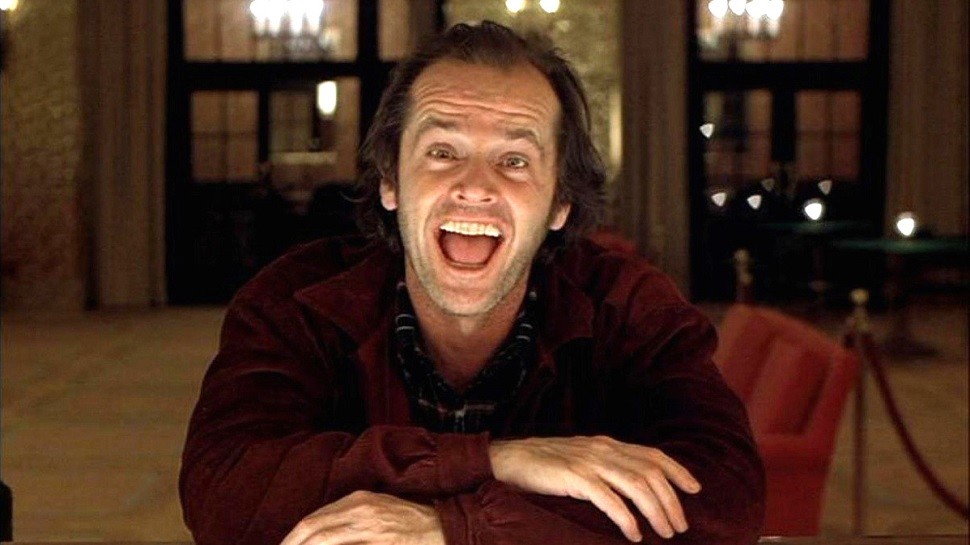
 As the weeks go by, the family is pleased to find another VHS of a film called Shakes the Clown in the mail. It’s a lot different than his standup special, and exceptionally strange, but they ultimately enjoy the ride, even if it was not nearly as strong as his standup special. The next week, the family receives the holiday Bill Murray film Scrooged that features Goldthwait as the fired assistant. They determine that the movie ultimately sucks hard, but they love the parts containing Bobcat as the holiday liberator. That’s when the spirits sending the tapes stop being so kind to the family. Next they receive Police Academy 2. Police Academy 2 is easily the shittiest of an incredibly shitty franchise (only speaking for the first three, as that’s when I checked out forever), a series of films Bobcat himself would later call Police Lobotomy. The family is distraught over the wasted talents of Bobcat. Another week goes by and they find instalments 3 and 4 in the mail, and are just as horrified at the glaring examples of shit personified in Police Academy fashion. This is a franchise so shitty that the best joke involving them was actually in Wayne’s World. At this point in the film, Danny and Dick begin to have psychic visions. They can’t make out exactly what’s going to happen the next week, but they begin to have visions of a horse, and Bobcat. The horse seems to be talking. Their worst fears are realized the next week when a fresh copy of Hot to Trot is sent to the house.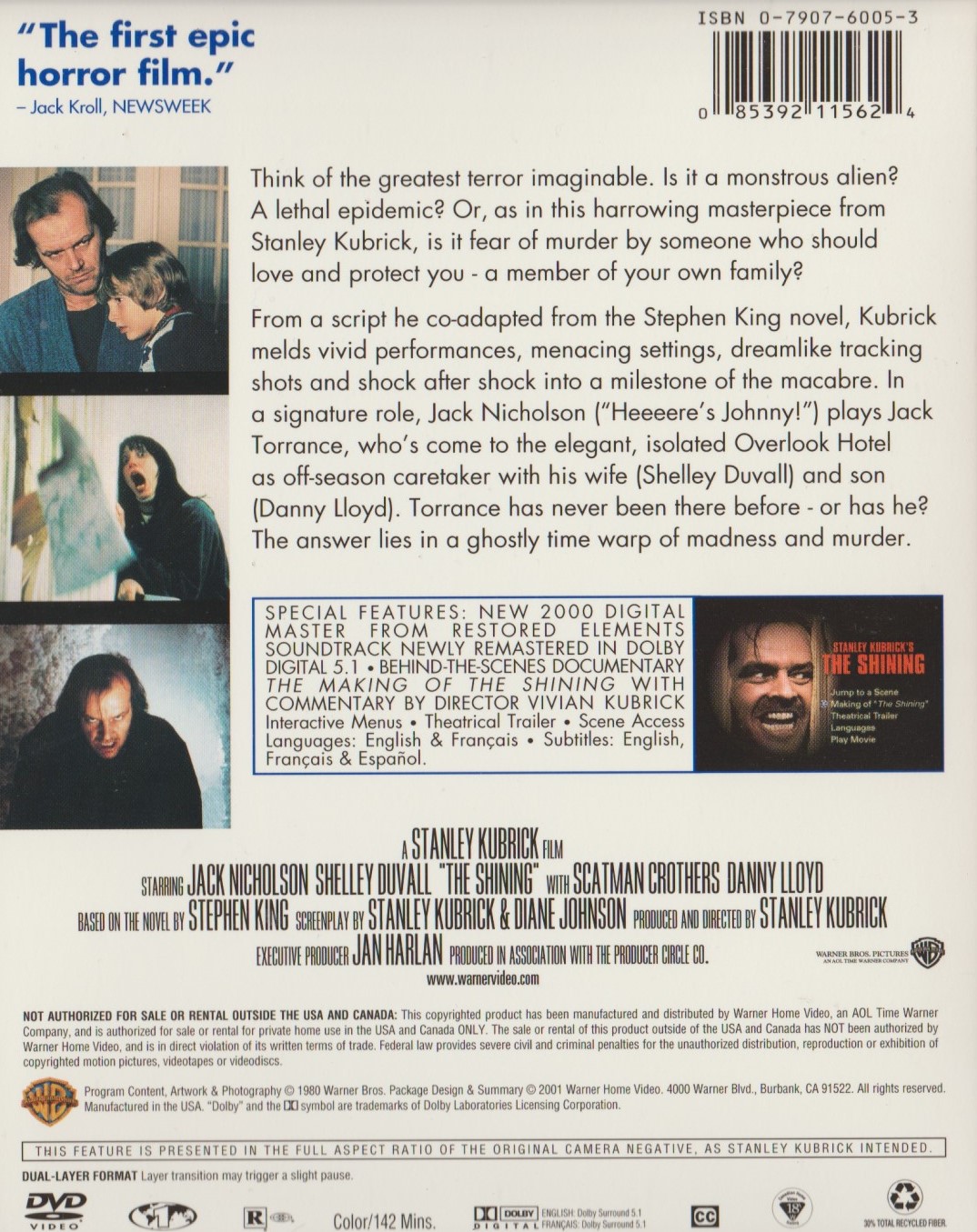




You must be logged in to post a comment.