Jeff Martin

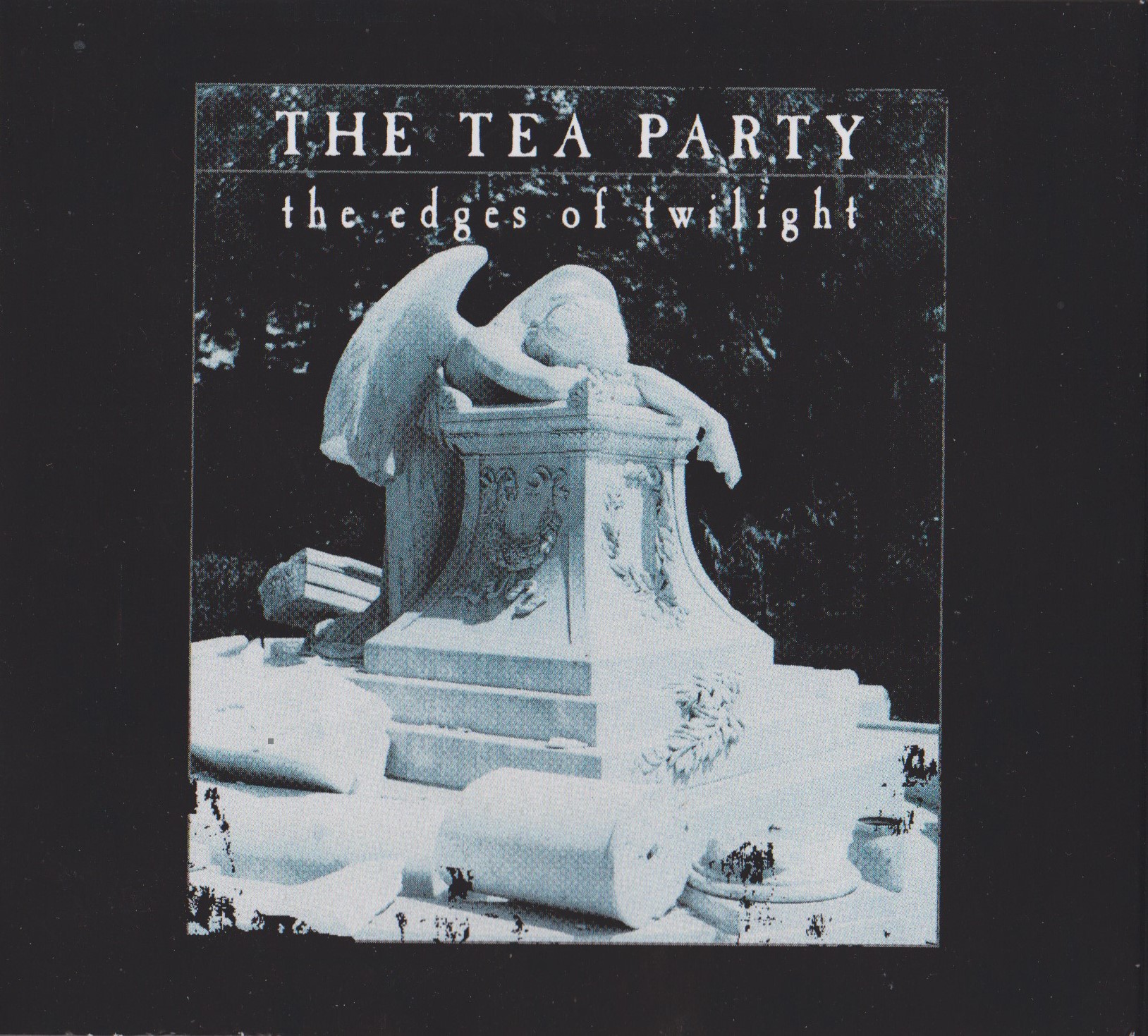
REVIEW: The Tea Party – Transmission (1997)


Scan_20160526THE TEA PARTY – Transmission (1997 EMI)

Tea Party fans are often split on Transmission.  There is little doubt that the previous Edges of Twilight album was a high water mark.  With over an hour of exotic and varied folks-blues-rock hybrids, it’s a favourite for many.  The band took a stark turn on Transmission, embracing electronics.  Jeff Martin produced the album himself, and you could not expect a more opposite album to Twilight.  Thanks to the opening single “Temptation”, the album was another hit.  Most fans seemed OK with the changes.

At first, it doesn’t seem like anything is unusual in Tea Party land.  “Temptation” (the album version anyway) opens with a fair bit of exotic strumming on some sort of stringed instrument, as the Tea Party often do.  Then the samples and looped drums kick in, and they are huge!  Middle Eastern exotics, radio noise, keyboards and a killer riff all combine with loops to create a new kind of Tea Party.  So far so good — the experiment paid off.

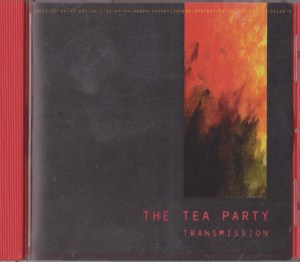
Martin had a penchant for odd song titles on this album, like “Army Ants”.  Vocals furiously distorted, this makes for a heavier Tea Party.  Jeff Burrows is providing some excellent drum backbeats, but at times they are buried under other sounds.  The title track “Transmission” is way better though, burning like electronic incense.  Static, loops and acoustics return for “Psychopomp”, one of the five singles they released.  While it takes a while to get there, “Psychopomp” boasts a powerfully melodramatic chorus, Martin roaring as he does.  “Gyroscope” has a spinning sound, one of the more hypnotic tracks (and also a single).  One of the more impressive singles was the ballad “Release”.  This was eventually given an EP of its own which we’ll look at another time.  A basic keyboard/drum ballad, it is simple and bleak but hard to forget.  It almost reminds of early 80’s Robert Plant.

There isn’t a lot of variety and distinction between the songs.  “Alarum” repeats the formula:  Electronic effects, exotic sounds, roared-out chorus.  This was the disappointing factor with Transmission.  The band had established themselves with a diverse sound, but that sound is narrowed on Transmission.  All the same ingredients are there, but they are focused by the electronic lens, which sharpens them but also bleaches them to all one colour.  “Babylon” is one of the exceptions, with drum & bass elements, and off-kilter song structure.  It was appropriately given a very bizarre music video.  An interesting experiment, but not as affective a song as something simpler like “Release”.

The Tea Party had some fun in other ways too. They like hidden bonus tracks, but this time they didn’t stick one at the end. They stuck an instrumental (dubbed “Embryo”) at the end of track 8 (“Babylon”). It’s actually a cool little piece of music.

Since the Tea Party are an ever-evolving band, it was safe to assume they would not stay in the electronics lab forever. Their next album, Triptych, was different again. Transmission remains their most loop-heavy album to date.  At least they did it at the right time — The Prodigy’s massive mainstream album The Fat of the Land was released mere months before.  The public were ready and hungry for computer-precise beats and samples, and the Tea Party delivered a unique hybrid with their own brand of rock.  For the most part, it worked.

3/5 stars
Scan_20160526 (2)

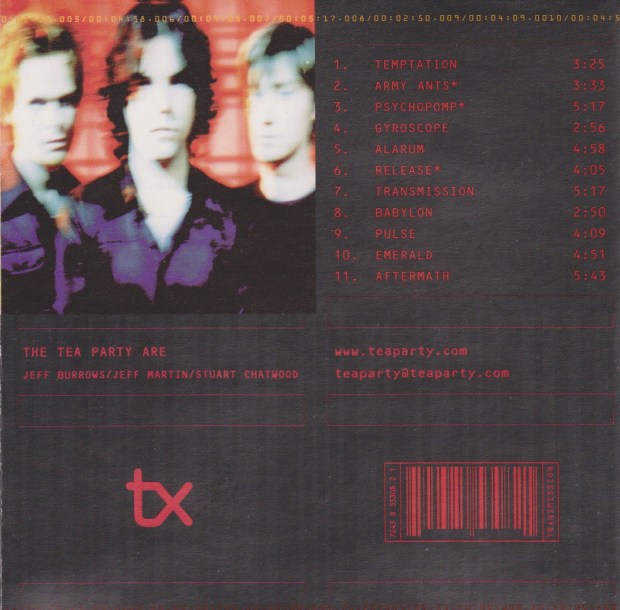
REVIEW: The Tea Party – The Edges of Twilight (20th anniversary deluxe edition)


Scan_20160409THE TEA PARTY –  The Edges of Twilight (20th anniversary Universal deluxe edition, originally 1995)

The Tea Party have long been slagged as derivative.  “They sound too much like the Doors!” screams one corner.  “Zeppelin copy-cats!” cries another.  The first complaint isn’t true; singer Jeff Martin has a Morrison-like vibe but the Tea Party sound nothing at all like the Doors.  The second carries some weight to it, especially when it’s 1995’s The Edges of Twilight we’re talking about.

Due to an early connection with folk singer Roy Harper, a cover of “Train Kept a-Rolling”, and exotic world music influences, the Tea Party have long been compared to the mighty Led Zeppelin.  This was cranked up a notch on The Edges of Twilight.  From dirty electric blues, folksy English-sounding ditties, and and wealth of stringed instruments from all around the world, the Tea Party just went for it.  Though many praise the band’s prior album Splendor Solis (their major label debut) as a high water mark, Twilight exceeds it in almost every way.  I seem to remember reading that the album had something like 50 different instruments on it.  The sheer ambition and skill involved in pulling off an album this complex has to be admired.

That all sounds very heady and sophisticated, but the first single and opening track “Fire in the Head” rocks plenty hard.  A perfect 50/50 mix of the exotic and heavy sides of the Tea Party, “Fire in the Head” is savoury.  The Zeppelin comparisons are unavoidable, but because Jeff Martin is not that kind of singer, it has a darker more ominous ambience.  “The Bazaar” then takes it up a notch and into North Africa.  Still heavy, but with the world music more prominent, “The Bazaar” too was a single and a hit.  Let’s face it, the last major band to combine Gibson Les Pauls and world music in this way was in fact Led Zeppelin.  Is that a reason to criticize the Tea Party?  The answer is no, because they did not choose to do something easy.  They took the hard road with The Edges of Twilight.

There are many excellent songs on the album, including another single “Sister Awake”, one of the most complex tracks.  There are heavy electric blues tracks like “Turn the Lamp Down Low” and “Drawing Down the Moon”, and fully acoustic songs like “Shadows on the Mountainside”.  The best tracks are the most pompous.  Similar to the singles from the CD, tracks such as “Walk With Me” and “Coming Home” are big and bold with loud choruses.  Though not a single, “Walk With Me” is a fan favourite and considered one of their must-haves.

But that’s not all!  After several minutes of silence (oh, the 1990’s!) there is a hidden unlisted bonus track!  “The Edges of Twilight” is a poem written and spoken by Roy Harper backed with music by Jeff Martin.  Having a guy like Harper in the band’s extended family lent them credibility that other bands could not hope for.  And then there’s even another hidden snip of music.  After another silence is a few seconds of a rehearsal of the song “Correspondences”.

Harper also appears on the bonus CD, on a song called “Time” which originally appeared on the 1996 Alhambra EP.  This is a full-on 70 minute Tea Party track with Roy Harper singing instead of Jeff Martin.  Ballady and somber, and then explosively electric, “Time” is a triumph that deserves a second look.  (Other tracks lifted from that EP are acoustic versions of “Inanna” and “Silence”.)  The bonus disc is otherwise loaded with demos, acoustic versions and alternate versions, and live takes.  With the exception of “Time”, this is all purely supplemental stuff and mostly interesting to fans of the band.  The demo versions are remarkable for how near-complete they are.  The band did not need to tinker much with arrangements in the studio.

There are ample liner notes and photos.  Co-producer Ed Stasium praises the CD and says it is one of the top five he has ever been involved in.  Serious praise, but the album deserves it.  The Tea Party took a detour after this into the world of electronica, with 1997’s Transmission.  20 years later, The Edges of Twilight remains the most impressive Tea Party album and the most heady mix of world music and rock and roll.

4.5/5 stars