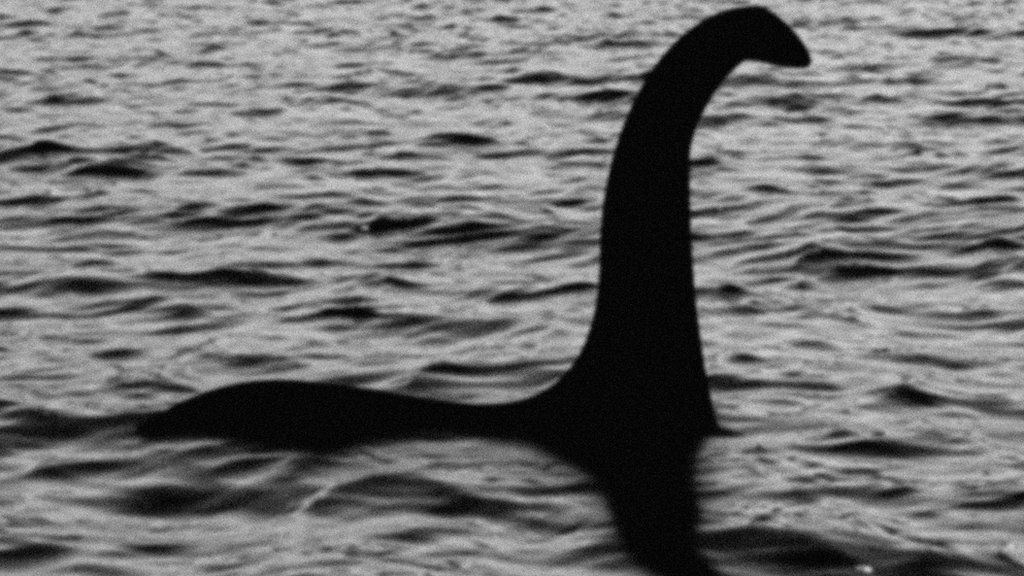
Loch Ness

REVIEW: Judas Priest – Angel of Retribution (2004 CD/DVD)

“Sabbath are heavy, but Priest are metal.” – K.K. Downing
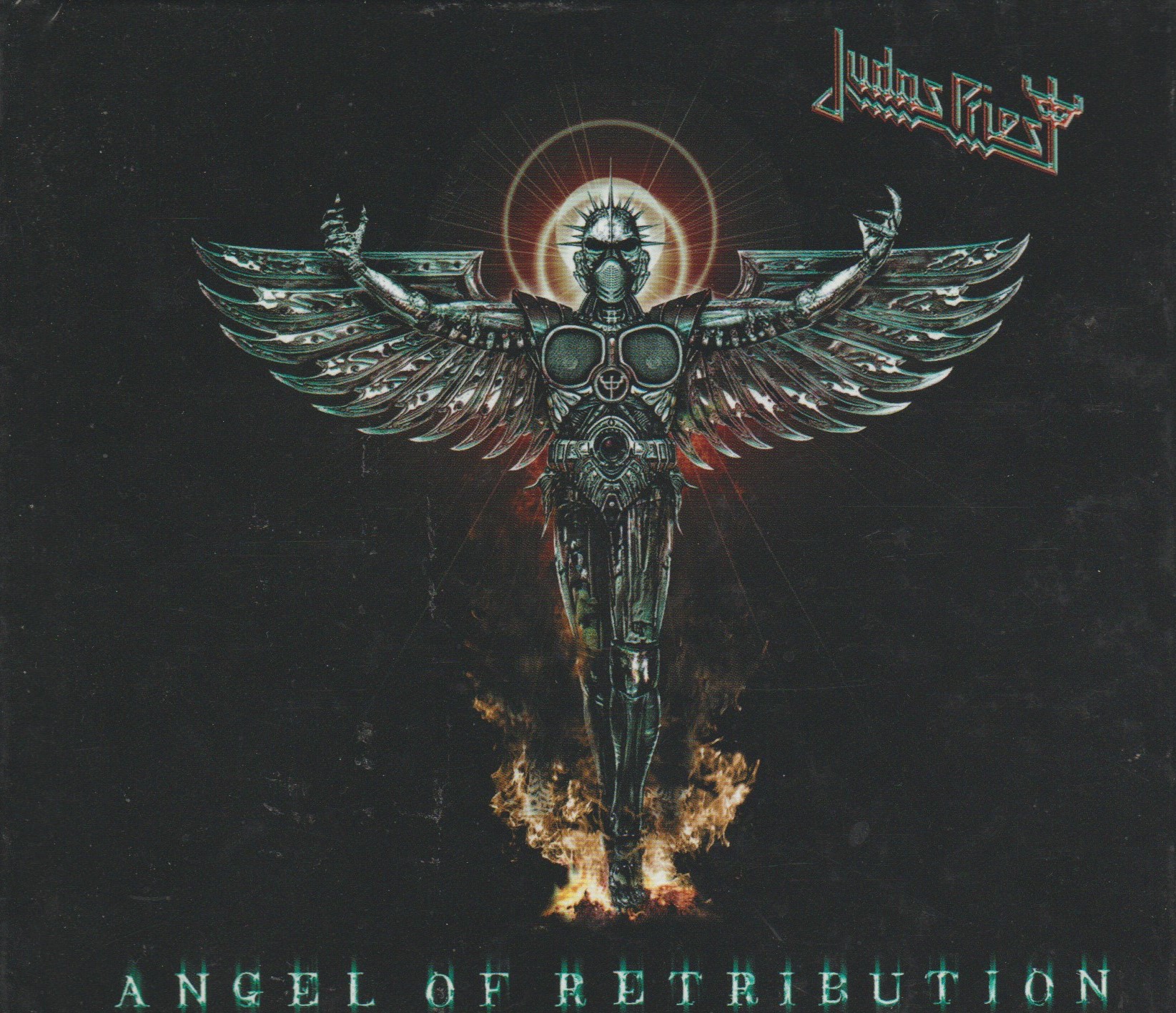
JUDAS PRIEST – Angel of Retribution (2004  Sony CD/DVD deluxe set)

Like Iron Maiden before them, Judas Priest pulled off a successful reunion tour before venturing into the studio to record a new album.  When the new music finally came, a deluxe package was made available featuring live videos from the reunion tour.  In this deluxe-sized review, we’ll take a close look at both the CD and DVD content.


The CD

Pure anticipation preceded the arrival of the Angel of Retribution.  Two underwhelming albums with Tim “Ripper” Owens on lead vocals caused Judas Priest’s star to diminish in the 90s and 2000s.  The return of the Metal God, Rob Halford, meant a reunion of the successful 1990-1991 Painkiller lineup.  The new album cover even featured the return of the Painkiller character, now the Angel of Retribution.  But a long time had passed.  Could Priest hope to live up to the hype, and their legacy?

The answer is mixed.  While Angel of Retribution contains enough classic Judas Priest metal to consider it a success, it also has some truly legendary filler, of sub-Ram It Down quality.  Instead of running through the album track by track, let’s break it down in terms of song integrity.

Priest wrote a natural sounding album, with elements from virtually all eras of Priest past.  They say it came about organically, and it does sound that way.  Some of the best material are the songs that sound like variations of classic Priest.

The opening song “Judas Rising” brings it back to 1976’s Sad Wings of Destiny with that fade-in opener inspired by “Victim of Changes”.  Then it transforms right into the Painkiller era, with something that sounds like a far more intense “Hell Patrol”.  Solid 5/5.

The slightly psychedelic first single “Revolution” ranks among the better songs, although perhaps it’s actually most similar to “Little Crazy” by Rob Halford’s Fight.  It has flavours of Rocka Rolla and Killing Machine, and is far from what anyone expected Priest to put out for a first single.  Dig that slide guitar bit in the solo!  Solid 5/5.

Worth Fighting For” isn’t a ballad; it’s a little harder edged than that.  It’s the one song that is unique in the Priest catalogue, and remarkably strong.  The riff has a nice chug to it, while Rob ably carries the melody to a higher place.  A special song, and a 5/5.

Demonizer” is Jugulator meets Painkiller, faster than a hellriding devil dog (whatever that is), but “the Painkiller rises again!”   So testifies Halford.  It’s so ridiculously over the top that it can only be worth a solid 5/5.  Likewise the similar “Hellrider” on side two.  Both feature double bass so fast that it’s almost a parody of itself, but both rock so hard you’ll break your neck keeping up.  “Hellrider” is also notable as the song where Rob Halford inexplicably name drops “Megatron”.  Similar songs, both solid 5/5’s.

The ballad “Angel” is a little soft, unexpectedly so on an album with so much heavy metal.  Yet, Priest can do anything.  The acoustic “Angel” could be the quietest ballad since the early days.  “Put sad wings around me now,” sings Rob to the angel, an appropriate callback.  As his voice aged it acquired more depth.  That helps make “Angel” a respectable 4/5.

Deal With the Devil” and “Wheels of Fire” fall in a netherworld of pedestrian Priest.  These both feel like filler from Point of Entry or Ram it Down.  Less explosive, less memorable.  The autobiographical “Deal With the Devil” is amusing for its many lyrical callbacks: “Under blood red skies”, “Took on all the world”, references to razor blades.  Likewise the short one, “Eulogy“, which is really an intro for another song that we’ll get to.  “They remain still as stained class”, “Guarded by the Sentinel”, and so on.  3/5 each.

The worst of all songs is “Loch Ness“, a mess so atrocious that we had to devote an entire entry just to that one song.  Combined with its intro “Eulogy”, it’s over 15 minutes of mire that has no reason to exist.  Many people simply stop the album after “Hellrider” and leave this foul turd to rot unheard.  “Loch Ness” could very well be the worst Judas Priest song of all time.  A flaming turd to extinguish all flaming turds.  The worst of all putrid, rancid filler songs ever foisted upon the faithful.  0/5.


“Reunited” DVD

It’s worth getting a copy of this album with the bonus DVD.  For one, there’s a documentary from the Priest Reunited tour.  Secondly, there are seven uncut live songs here for you to enjoy, and it’s the only official video release from the Reunited tour.  The live footage is something to see, especially if you own the robotic Rising in the East DVD.  In that concert, Rob Halford was a stiff mannequin instead of a frontman.  Here, he comfortably in charge and engaged.  The entire lineup is energized.  “Breaking the Law” sees them powered up and working hard.

But how did the seemingly unlikely reunion begin?  According to the documentary, the band and Halford met to discuss the forthcoming Metalogy box set.  Glenn Tipton states that they decided to reunite later the same day.  It was like they’d never been apart.  Terribly British, says Rob.  “Have a cup of tea, see you later.”  Rob does express regret for his actions (reportedly he gave Judas Priest his notice in 1992 by fax), but it seems all was forgiven over time.

Beware which version you buy.  This CD/DVD combo set contains the documentary plus the full live songs:  “Breaking the Law”, “Metal Gods”, “A Touch of Evil”, “Hell Bent for Leather”, “Eletric Eye:”, “Diamonds & Rust”, and “Living After Midnight”.  The DualDisc version does not; it only includes edited fragments of those tracks.  Which is a shame, because the band sounded fantastic and Rob was in full-lunged form.  This is probably the best live version of “A Touch of Evil” available, for example.  Not everyone likes the acoustic version of “Diamonds & Rust”, but it’s certainly different. The only bonus to DualDisc is that you also get the album in “enhanced stereo”.  Avoid that; get this.


Although Angel of Retribution is overall a very strong Judas Priest album, “Loch Ness” is impossible to ignore.  It does serious damage to an album that was otherwise an impressive listen.  In the included DVD, K.K. Downing says they had to pick and choose from an overabundance of songs.  Can you imagine how bad the leftovers are if “Loch Ness” made the album?

3.5/5 stars

#779: Loch Ness

GETTING MORE TALE #779: “Loch Ness” – A Lyrical Analysis

Judas Priest are known not just for their incendiary riffing, but also vivid lyricism.  It’s often a winning combination.  Witness such metal concoctions as “Blood Red Skies” or “Metal Gods”.  When it works, it works.  When it fails, it fails gloriously.  Let’s have a look at Judas Priest’s most epic failure.  That would be the 13:28 long “Loch Ness”, from 2005’s reunion album Angel of Retribution.

Musically, “Loch Ness” is utter garbage; lethargic rock for the sleepy.  The lyrics are a little better, though not enough to save the song.

Judas Priest usually create their own mythology.  Characters such as the Painkiller, the Sentinel and the Jugulator are three such examples.  This time, Priest dipped into cryptozoology and Scottish legends for their subject matter.  Today, the general consensus is that there is no monster in the depths of Loch Ness.  It’s still fun to speculate and imagine what might have been.

The first verse of “Loch Ness” sets the scene.  The loch is the largest (by volume) in the UK, with an incredible depth of 755 feet.  Because of the loch’s depth and murkiness, long has there been uncertainty about what may be down below.  Using sonar and other modern technologies, nothing of any great size has ever been found.  Though legends remain strong today, it is highly unlikely that a large monster lives in Loch Ness.  What say Judas Priest?

Grey mist drifts upon the water,
The mirrored surface moves,
Awakened of this presence,
Dispelling legends proof.

Stories of a beast in the loch date back almost 1500 years.  A definitive modern day sighting would indeed be the proof needed to move the monster from legend to reality.  Rob Halford references the grey mists, and how the movements of the “mirrored surface” can look like a creature is swimming beneath.  This is how most sightings begin.  Then “Nessie” rises from the water:

A beastly head of onyx,
With eyes set coals of fire,
It’s leathered hide glides glistening,
Ascends the heathered briar.

Physical descriptions of “Nessie” the monster vary wildly.  A head attached to a long neck is a defining characteristic.  It is usually described as dark, which Halford here exaggerates as “onyx” (black) in colour.  It’s eyes being “coals of fire” seems to be a Halford invention.  Likewise the hide, which is usually not described in much detail.  Out of necessity, Rob had to elaborate on the myth in order to describe the beast.  An interesting line is “ascends the heathered briar”.  Indeed, in some of the older sightings, the beast is seen climbing onto land – once even crossing a road.  When seen in full, the creature is often described as similar to a plesiosaur.

This legend lives through centuries,
Evoking history’s memories,
Prevailing in eternities,
On and on and on.

More interesting than the physical descriptions of the beast are the old legends. Water beast legends were not uncommon.  Why was Loch Ness always such a hotspot for such tales?  There is no simple answer.  Recently, large eels were filmed in the loch.  A mistaken sighting of an eel could account for many of the stories.  With the advent of modern media in the 1900s, tales of the monster spread worldwide and stories were reported with more frequency.  Proponents of the monster theory point to the oldest legends as proof that there was always something mysterious about the loch, though there is no proof that there is any connection to the “Nessie” of today.

Loch Ness confess,
Your terror of the deep,
Loch Ness distress,
Malingers what you keep,
Loch Ness protects monstrosity,
Loch Ness confess to me.

This chorus is a contender for the worst on any Judas Priest album.  There is nothing here to sing along to.  The words are awkward and juvenile with overly simple rhymes.

The speaker is addressing the loch itself; asking the loch to give up its secrets.  But “Terror of the deep”?  Few today find the idea of the Loch Ness monster to be terrifying .  True, early sightings would have been quite scary. Even if the creature spotted was only an otter or an eel, in the dusk or fog it could have been startling.  As you’ll see, however, it is implied this song takes place in the modern age.

The most interesting word choice here is “malingers”, meaning to pretend to be sick in order to avoid something.  It’s possible the word is being intentionally misused because it simply sounded good.  Insofar as meaning goes, “distress”, “malinger” and “protect” all imply the creature isn’t actually threatening.  Perhaps it or its young need protection.  Halford begs the beast for the truth, but the truth is not to be found.

Somehow it heeds the piper,
From battlements that call,
From side to side it ponders,
In passion in the skirl.

Scottish imagery here, implying that the monster will appear if a piper plays its song.  “Skirl” refers to the shrill sound of bagpipes.  “From side to side it ponders, in passion in the skirl” is a variation of the old saying that music soothes the savage beast.  Otherwise, the connection between the pipes and the monster seem to be a Halford construction.  There is also an old joke:  “Bagpipes and the Loch Ness Monster have two things in common – they both attract tourists and terrify little children.”

This highland lair of mystery,
Retains a lost world empathy,
Resilient to discovery,
On and on and on.

“Resilient to discovery” isn’t the most accurate phrasing.  “Resilient” means to recover quickly.  The Loch Ness monster is more “resistant” to discovery than “resilient”, though the legend certainly is resilient.  It goes on and on regardless of a narrowing scope of possibilities.  “Retains a lost world empathy” probably refers to the age of the beast.  It is so old that it comes from a simple time when people had more empathy than today.

This legend lives through centuries,
Evoking history’s memories,
Prevailing in eternity,
Your secret lies safe with me.

These lines simply refer to the age of the old legends, which will live forever.  Rob assures the beast that if it reveals its secrets, he will not tell.

This creature’s peril from decease,
Implores to mankind for release,
A legacy to rest in peace,
On and on and on.

Finally the last verse goes back to the idea that the creature is in some sort of distress.  It’s unclear what the peril is, but mankind is a part of it.  Is it the call of the pipers?  The monster simply wants to be at peace. Perhaps this is a hint of an environmental message, for conservation.

The lyrics to “Loch Ness” are not overly complex. Their simplicity, combined with slow monotonous music, make the 13 minute song seriously drag.  A few unusual word choices tend to obscure meaning, but “Loch Ness” is otherwise a fairly straightforward Judas Priest lyric.  When sung aloud, it begins to sound a little foolish.  “Loch Ness, confess, your terror of the deep” is not poetry.  It’s something you would have written in highschool English class.  While the words mostly stand up to analysis, they are not resilient to singing aloud.  In this manner (perhaps the only manner in which rock lyrics really matter), “Loch Ness” flounders.

“Loch Ness” has never and will never be played live.  It’s a shame that one of the greatest cryptids in all of legend has been given such a weak heavy metal song!


MOVIE REVIEW: Incident at Loch Ness (2004)

“I’ve always been interested in the difference between fact and truth, and I would call it the ecstatic truth.” — Werner Herzog


INCIDENT AT LOCH NESS (2004 20th Century Fox)

Directed by Zak Penn, written and produced by Zak Penn and Werner Herzog

Joe has a knack for recommending movies that I end up liking.  We have a very similar sense of humour, we both find amusement in the absurd.  Joe got me to buy Werner Herzog’s Grizzly Man as well as Incident at Loch Ness, both from his bargain bin at the price of $5.99 each.  While Incident at Loch Ness has all the appearances of a Herzog film, it’s actually a documentary within a documentary within a mockumentary directed by Zak Penn (The Grand).   Incident At Loch Ness is a wry, smart rib-tickler that many just won’t get.  But I do, and I have watched it a couple dozen times over the years.

Here’s the setup: A camera crew is filming a documentary on noted filmmaker Werner Herzog called Herzog in Wonderland. At the same time, Herzog is embarking on own documentary film called Enigma of Loch Ness.   He will be shooting on location on the loch itself, and he plans to investigate the mythos surrounding it. Herzog is more interested in why people want to believe in monsters, rather than the monster itself. His producer, Zak Penn (Penn, as himself) has different ideas, and will resort to unethical trickery in order to get the blockbuster film he envisions.  The pair travel to Scotland with a film crew, but Herzog is unaware of Penn’s duplicity.

Penn hires a sexy sonar operator (Kitana Baker, as herself) with no sonar experience, and a strange cryptozologist (Michael Karnow, as himself) for comedic relief. Penn makes absurd demands of the crew, such as having the engines on the boat replaced by significantly weaker ones in order to get better sound coverage.  Through the chaos, Herzog just wants to make his movie, but the project is doomed to fail.

Incident At Loch Ness doesn’t try to be profound. Herzog (the character) never finds out just why people want to believe in a modern dinosaur. Herzog (the actor) plays it straight while Penn and Karnow play it for laughs.  The style is largely improvised, and I would rate Incident at Loch Ness equal to some of the better Christopher Guest films.

I also loved the DVD bonus features, which shed a little light (but not too much) on the making of the film. There is a comedic audio commentary track with Zak Penn that takes the gag even further as well, before cutting out abruptly mid-movie. Incident at Loch Ness is a low budget classic that I hope will appeal to those who are sick and tired and the same old comedies. It will especially appeal to fans of Herzog.  As the straight man, he’s absolutely perfect.

5/5  stars

Werner Herzog … Himself/Writer/Producer
Kitana Baker … Herself
Gabriel Beristain … Himself
Russell Williams II … Himself
David A. Davidson … Himself
Michael Karnow … Himself
Robert O’Meara … Himself
Zak Penn … Himself/Writer/Producer/Director
Steven Gardner … Himself

NSS