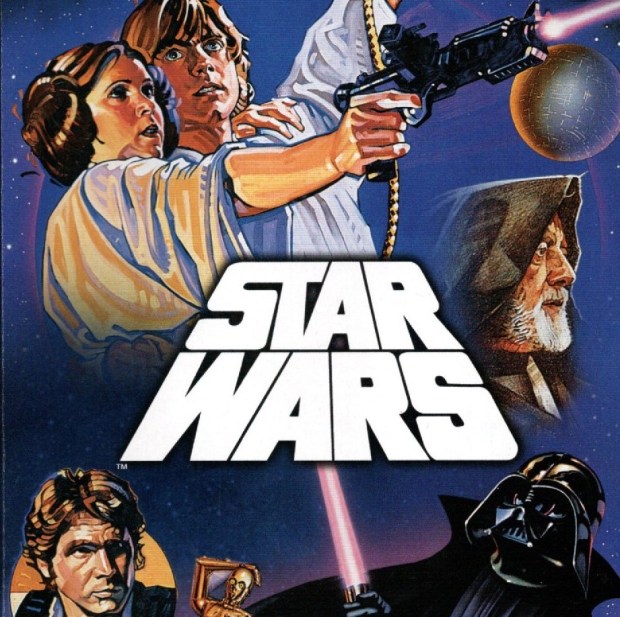
 STAR WARS – Original theatrical (1977) version
As released on the 2006 Lucasfilm Limited Edition DVD
Directed by George Lucas
In 1977 my parents took me to see Star Wars for the first time, like millions of other kids my age. By the end of the year, terms like “The Force” and “Millennium Falcon” were commonly spoken among children like secret code, while remaining merely gibberish to their teachers. Because of the availability of cool action figures and vehicles by Kenner, Star Wars became much more than a mere movie. Its world building potential meant that kids were using the characters and settings to make their own adventures. It became…forever. A part of culture. The image of Darth Vader will be found by future archaeologists the same as ours today find carvings Apollo and Zeus.
We memorized this movie. Lines like “It’s an energy field created by all living things. It surrounds us and penetrates us; it binds the galaxy together.” We could recite them with perfect cadence and intonation, albeit an octave high. But we didn’t understand all the words we were saying, or what it really meant.
Reviewing this movie is like revisiting an old friend to reminisce about the good times.


For the most authentic Star Wars re-watching experience, the 2006 Lucasfilm double DVD edition provides the theatrical version most of us grew up with and knew by heart. There was no A New Hope, no episode number. We saw Star Wars three times in the theatres. After that, everyone had to wait for TV broadcasts or video rental if you wanted to watch Star Wars. Except back then, there were only “fullscreen” tapes available for rental at the local store. For many years, we completely forgot about certain alien creatures that were cropped out for home video! This DVD is a reminder of those times, and how lucky we are today to have so many viewing options available. (Including a new 2019 Disney+ version of the film. I say “Maclunkey!”)
When he conceived Star Wars, George Lucas had plenty of backstory sketched out. He assumed he only had one shot at making it, and so chose what he felt was the best and most exciting part of the overall story. In a way, Star Wars always had a leg up on everything that came later for that reason. The origin story of the farmer boy that leaves home to save the world is a setup taken from classic lore, and put on screen in an original way by turning it into a space fantasy. With the benefit of hindsight, could it even lose?
Actually yes — if the special effects weren’t as convincing as they are. Those artists took Ralph McQuarrie’s crucial conceptual art and turned drawings into filmable 3D objects that look worn, used and real. Using bits of plastic battleship model kids and parts taken from cameras, a universe that looked as real as the world we live in was created. Then they innovated further using blue screens and skill, creating dynamic space battles that surpassed anything we’d seen before. One key innovation was the idea to choreograph the space battles based on actual World War II dogfight footage.
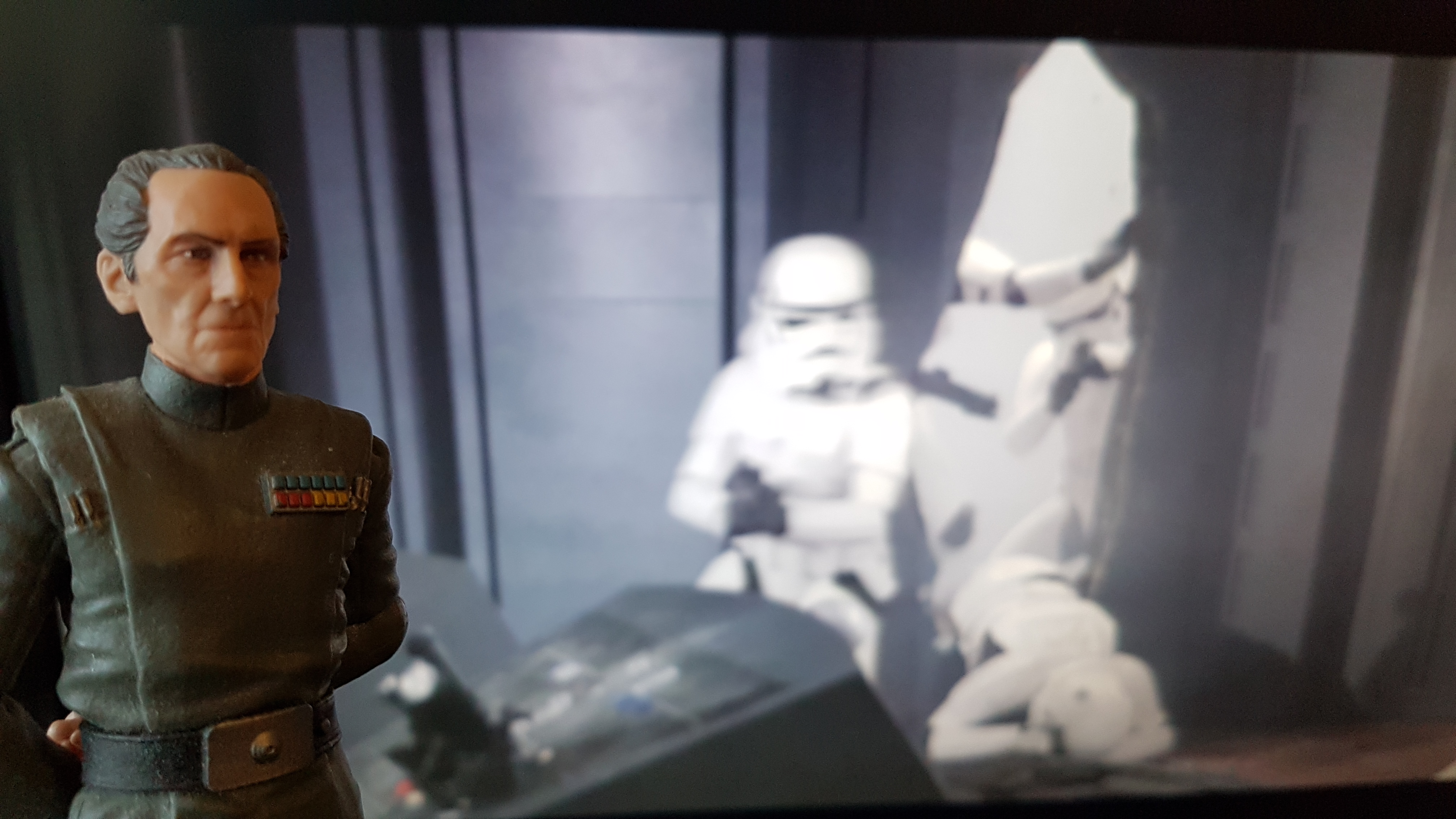
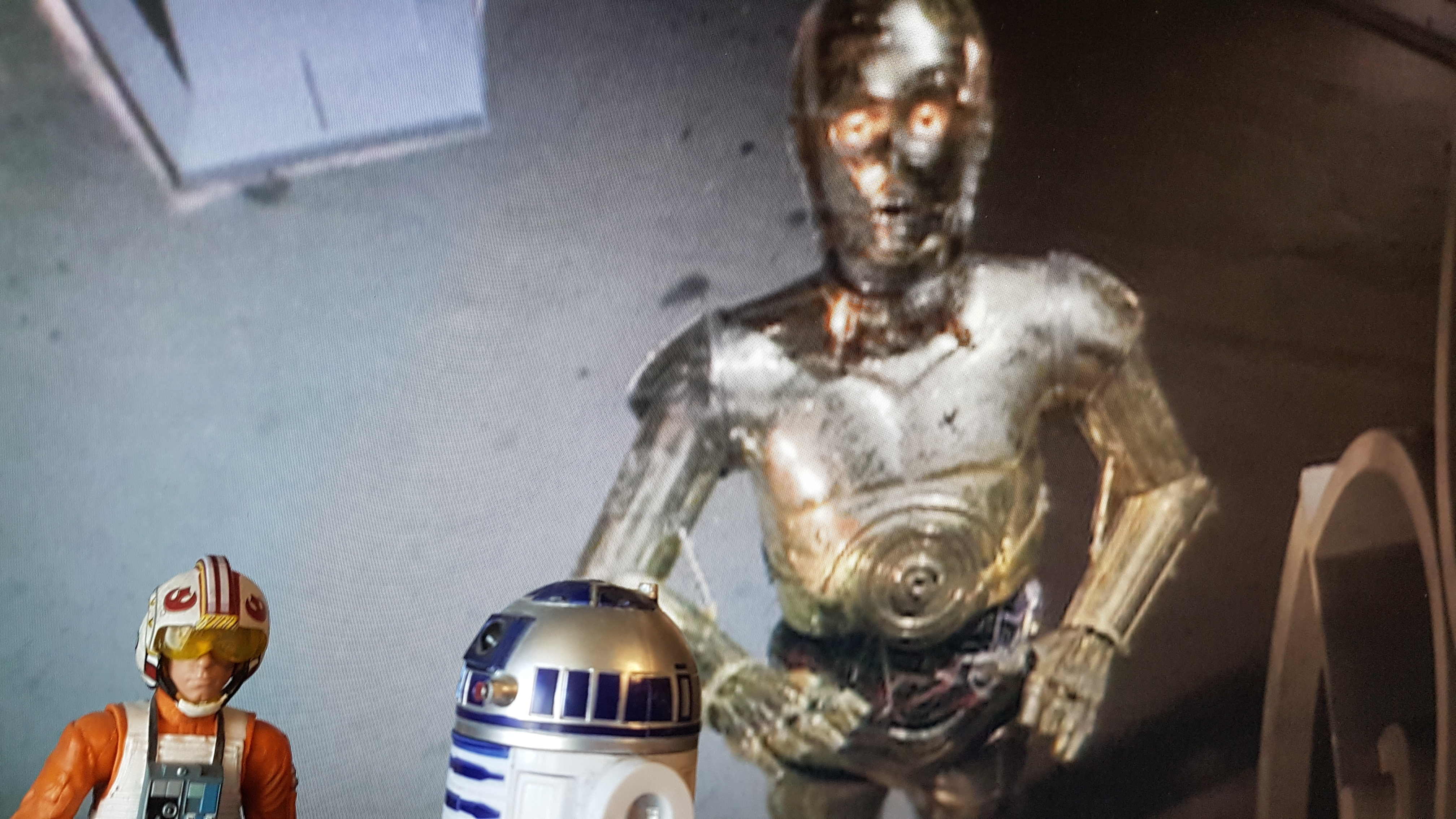
Sir Alec Guinness (Ben Kenobi) and Peter Cushing (Tarkin) were the two most recognizable stars to the parents in the audience, but Harrison Ford was an up-and-comer who impressed everyone that loved George Lucas’ other coming-of-age story, American Graffiti. Even though Cushing and Guinness had no idea what their dialogue was really about, they turned in incredible character performances. The hero trio of Ford, Mark Hamill, and Carrie Fisher were perfectly tuned. Meanwhile, Anthony Daniels and Kenny Baker provided the roles of perspective for the film. Indeed, Lucas said that only C-3P0 and R2-D2 witnessed the events of the entire saga. Finally, Peter Mayhew and David Prowse provided the physical acting necessary for the roles of Chewbacca and Darth Vader. These performances were topped off with sound effects by Ben Burtt and a brilliant Vader voiceover by James Earl Jones.
Lucas has been mocked in his later years for getting terribly wooden performances out of great actors in the prequel trilogy. When he was young, making Star Wars, he was different. His direction is alive and he gets spontaneous feeling performances from the entire cast. Whatever he was doing in 1999 with The Phantom Menace, he was a different director in 1977. Of course, much credit must also be given to the editors who carved this movie out of the celluloid. Yet none of that would have had the same impact without the groundbreaking score by John Williams. Williams is so important to the entire saga that he composed the scores to all nine films.
In other words, Star Wars is all but a perfect film. On its own, without any sequels or prequels, it was already one of the best things ever, and what kid could resist that? On a technical level, it’s a masterpiece achievement. All this contained within a simple, engaging story drawing upon the tenets of classic mythology. Consciously it’s blowing your mind, and subconsciously it’s tugging at your Jungian psyche.
The best part about watching the 1977 theatrical version of Star Wars is simply the ease of slipping into that world and really believing it. When the 1997 special editions hit, the effects may have been improved, but awkwardly jarring additions were made: The insertion of jerkily-moving Dewbacks. An extended entry into Mos Eisley with distractingly fake looking Rontos. A poorly-edited reimaginging of the Greedo faceoff. And of course, Jabba the Hutt himself, perhaps the most hideous of all the additions due to the extremely primitive animation of the 1990s. The rest of the changes, such as a restored Biggs Darklighter scene and an improved Death Star battle, are not so bad. Incidentally, there is nothing wrong with the Death Star battle as it was in ’77. The problem is that every time an addition is made in every reissue of a Star Wars film, it takes you right out of the movie and into reality once again.
Further Observations
When you pull the focus back and look at Star Wars in a greater context, more insight and meaning can be wrenched from the stone. Both in terms of cultural impact, and how it relates to the Skywalker Saga as a whole, we can look deeper into this film and enjoy it even more.
One thing we appreciated a little bit as kids, but I really admire today, is the amount of sheer labour that went into making Star Wars. It’s so much easier to appreciate in this original unrestored version. If you can see the line between matte painting and live set, you realize: oh my God, all of that big portion of the screen is actually a set! And that matte painting is really, really good! The amount of work to do both, and match them as close as they did is quite impressive without the aid of a computer. Also, observe techniques used to make shots more dynamic. The Falcon flying, for example. The actual model isn’t moving much, but the starfield behind it is. That makes it look as if it is really burning some rubber.
Here’s something to think about. One of the biggest action set pieces of this movie involved Luke and Leia swinging across a chasm from a rope. It blew everyone’s brain, that huge looking vertical shaft with the retracted bridges. The Stormtroopers are coming at them from two directions, as Luke takes his leap of faith. While in 1977 we also saw the male and female lead together as a team with possible romantic foreshadowing, today the scene actually has more meaning. Now, it is the children of Anakin Skywalker finally united after two decades of separation. The New Hopes. It’s actually a pretty heavy moment in the whole saga when you think on what that means. Obi-Wan and Yoda hid those children away as babies in the hopes that one day, they would take over the fight. The moment we see them swinging across the chasm, we realize that dream has been realized. From whiny space brat to brave hero in two hours. It’s also clear from her courage and familiarity with a blaster that Leia is a “Force” to be reckoned with too.
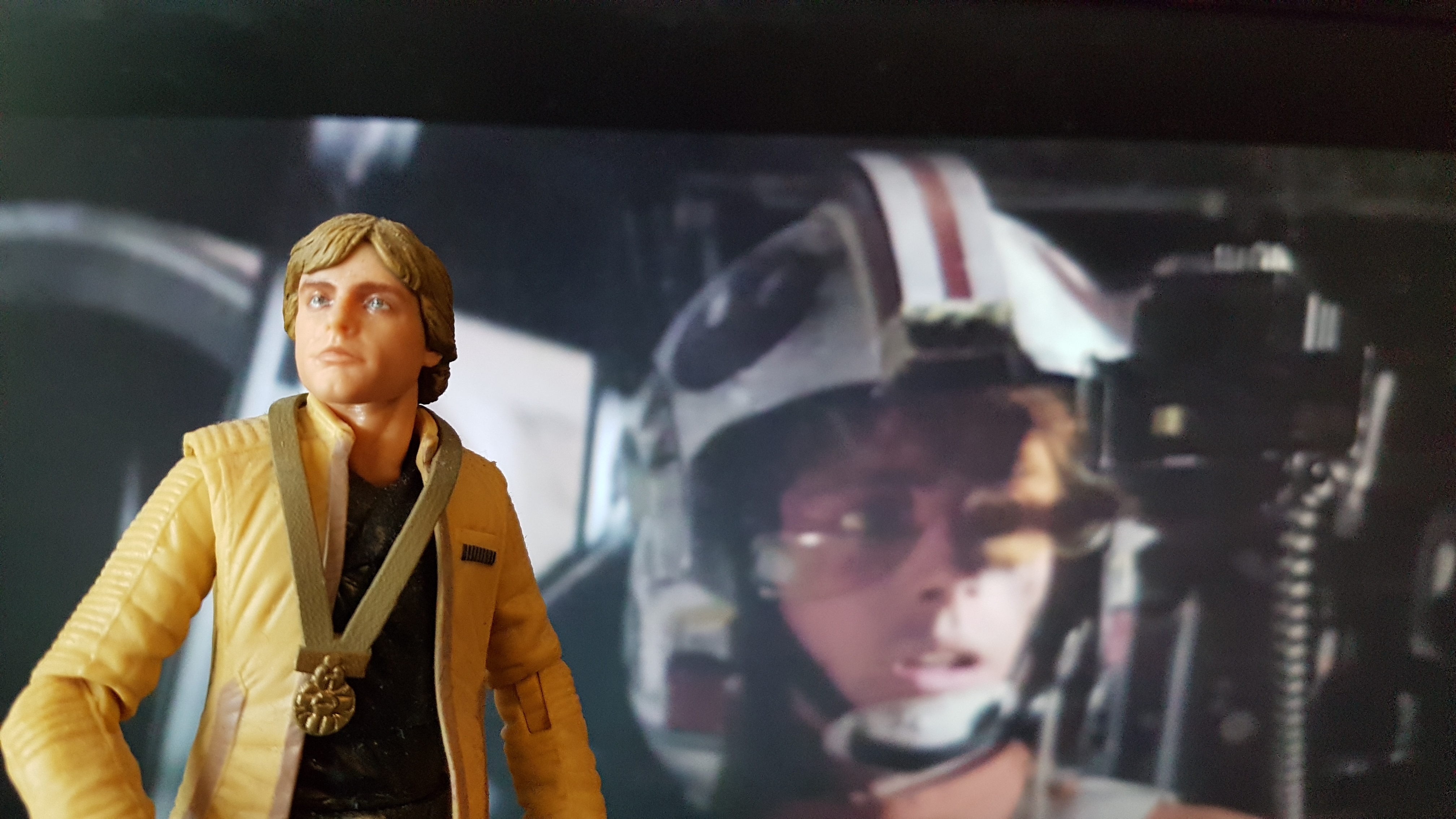
Children loved the adventures but didn’t fully appreciate what Luke was experiencing. You can feel that Uncle Owen tried, but wasn’t the father figure that Luke wanted. Then Luke loses the only parents he ever had, his aunt and uncle, and is whisked off-planet for the first time in his life by a new father figure, Ben Kenobi. In addition he’s told a bombshell of a truth (with a hidden lie): his real father wasn’t a navigator on a spice freighter. His uncle had been lying to him his entire life about who his father really was: a Jedi knight, who fought in a “damn fool idealistic crusade” called the Clone Wars. He then learns, in a second revelation, that the universe itself is more than it seems, and that an all powerful Force is behind everything. And then he loses that father figure almost immediately after! Today that would send most of us into months of therapy, but Luke soldiers on and picks up on this Jedi stuff pretty quickly! In the end battle, he is forced into a leadership position when Red Leader is shot down by Darth Vader. “We’re going in, we’re going in full throttle,” he says to the remaining squad. His older best friend and role model Biggs is on board, and so is hot shot pilot Wedge. “Right with you boss,” he says without hesitation.
A weighty moment is the final (corporeal) meeting of Darth Vader and Obi-Wan Kenobi. A physically imposing David Prowse in the Vader costume has the presence necessary to convey the anger behind the words: “Your powers are weak, old man.” You can almost hear the voice of Hayden Christensen from the Episode III Vader behind the voice of James Earl Jones. The hate, as he now calls the man he once knew as “master” by the epithet “old man”. It was always a foregone conclusion who would win this battle, but we children were amazed when Old Ben disappeared before our very eyes. And what did those final words of his really mean? “If you strike me down I will become more powerful than you can possibly imagine.” Surely a disembodied voice was not the “more powerful” that Ben was referring to? This is something that the oft-criticized sequel trilogy finally delivered and expanded upon, where the prequels did not. In episodes VIII and IX, we learn that powerful Jedi spirits can even interact with the physical world, and join with the living to defeat the ultimate evil. In this way, Obi-Wan Kenobi has a role in concluding the nine-story arc of the Saga (even utilizing the voices of Sir Alec Guinness and Ewan McGregor).
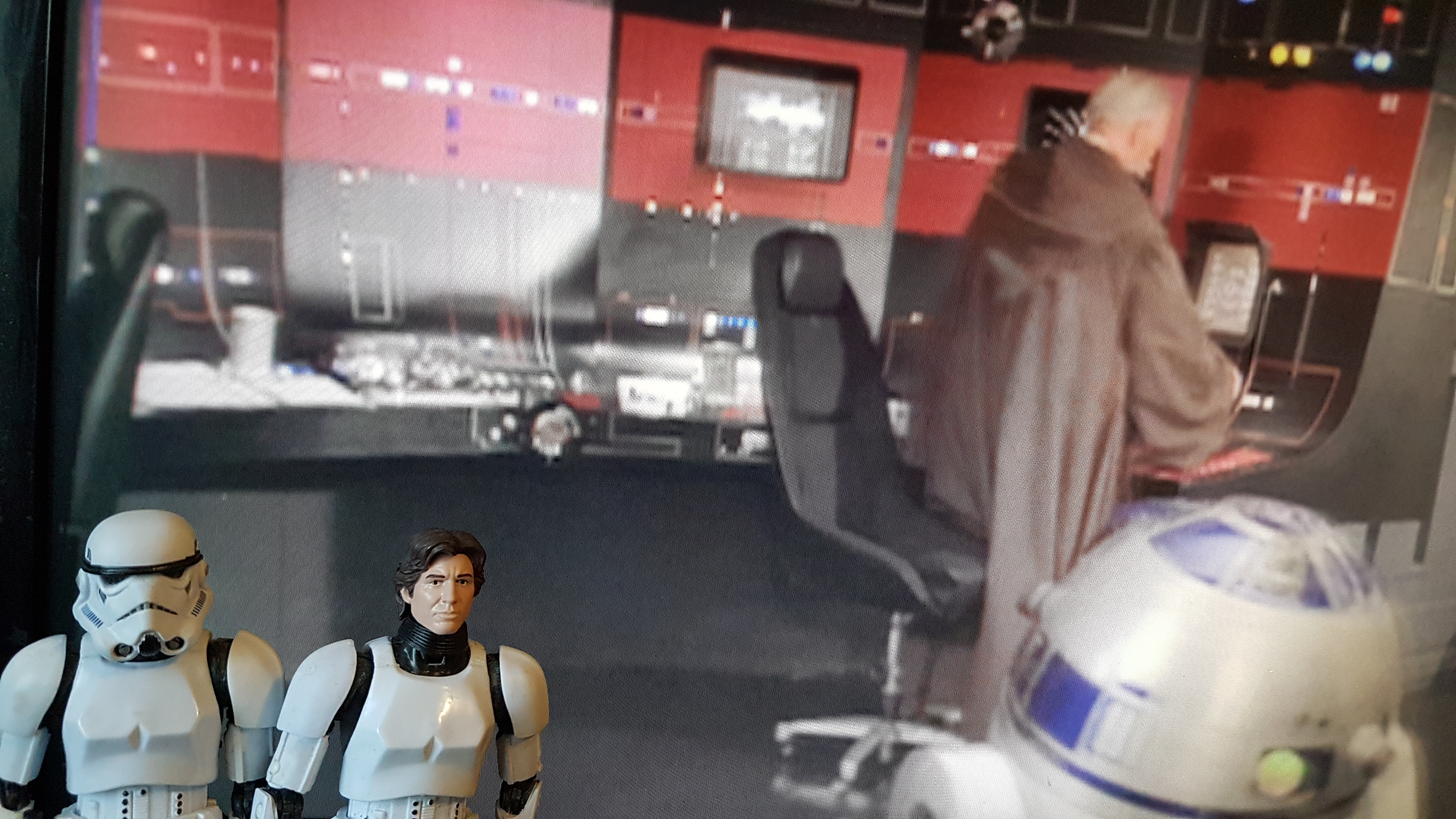
Another minor tie to the sequel trilogy is Han Solo’s offering to Luke Skywalker to come with him instead of joining the Rebellion on their “suicide” mission. The only other person we see him offer to “job” to is Rey in Episode VII. Any viewing of any Star Wars movie is always enriched by watching other Star Wars movies. Last week I watched Rogue One. Since that standalone film was designed to add backstory and blend the saga together even more tightly with the original movie, watching it adds richness and foundation to the original. Knowing what happened to the previous Red Five, for example. All the films have this ability to amplify the others.
Though dense with unfamiliar terms, throwaway dialogue built worlds. The Kessel Run, for example, spawned half of the movie Solo. Some of the most iconic lines in the whole original film were throwaways: “You fought in the Clone Wars?” Apparently so, when he was known as “General Kenobi”! We didn’t learn a damn thing more about the Clone Wars until Episode II, released a quarter century later. And so watching the prequels and even the animated Clone Wars series adds depth to the experience. When Luke asks “How did my father die?” you see the hesitation on his face before Obi-Wan lies to Luke. In that hesitation lies all the prequels and animated series. The line about the Clone Wars planted the seed for pretty much everything about the prequels. The only difference was that as kids, we assumed the clones were the bad guys not the good guys. (Well, I guess they were both but we won’t delve further here.)
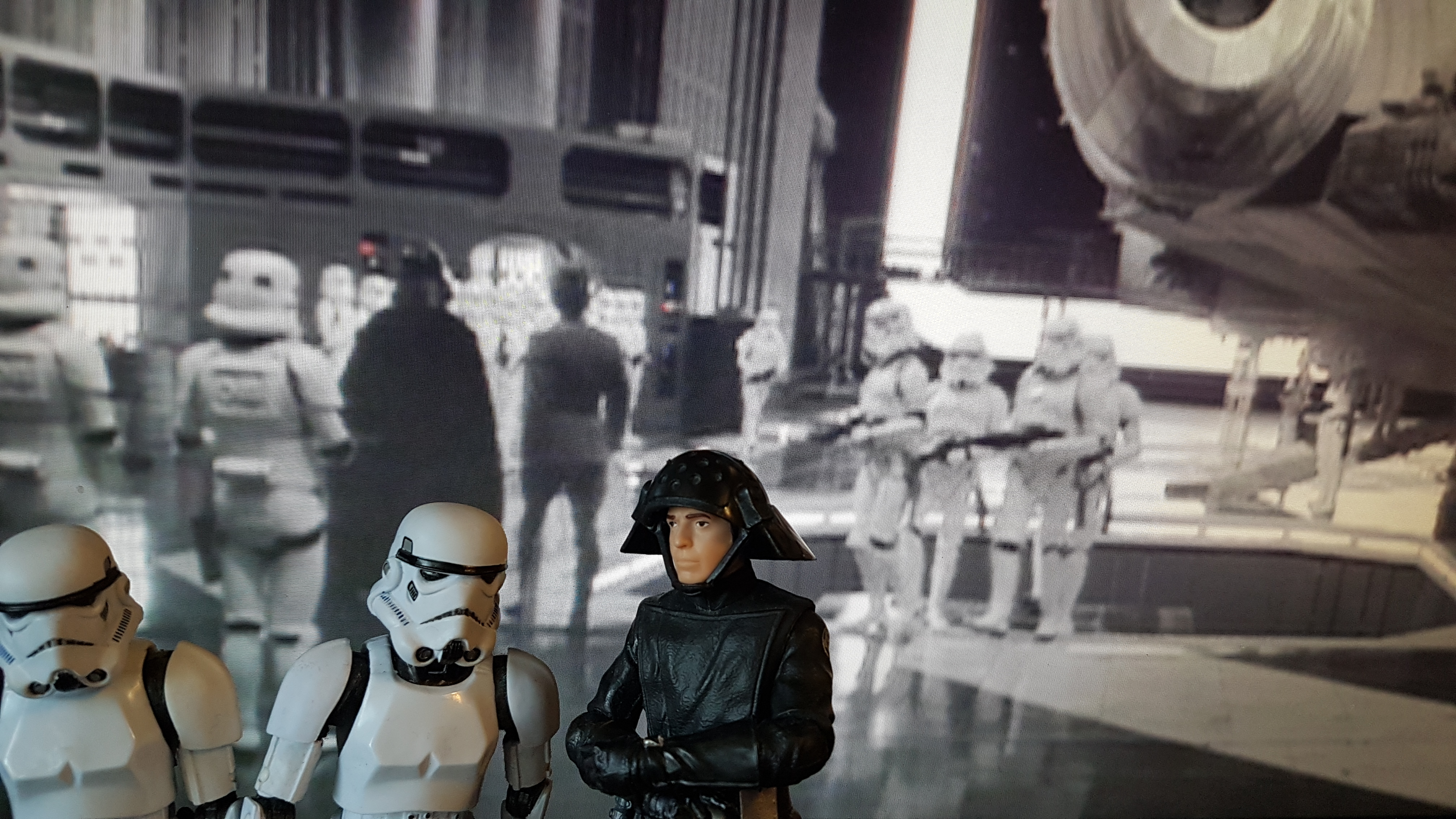
The quality and success of Star Wars were both necessary to launch a thousand imitations. As kids we became familiar with the concept of “knock offs” pretty quickly. Battlestar Galactica seemed like a B-level Star Wars. You could even buy knock off toys at the store like glow-in-the-dark “space swords”. For the real thing, there could be no substitute. We were able to prolong and expand our love of the movie with the Kenner action figure line, the Marvel comics, the John Williams soundtrack records, and even “The Story of Star Wars” on vinyl. This really gave kids a canvas to use their imaginations. Today, some of the kids that played with Star Wars toys in a sandbox are making their visions real in official spinoff shows like The Mandalorian, that hearken back to what we liked about Star Wars in old ’77.
Conclusion
If you really want to recreate the authentic 1977 Star Wars experience, you won’t find it on your Disney+. Even hardened cynics must concede that Disney has done some cool stuff with Star Wars recently, but if they really wanted to do something “Force”-ful, they could reissue the ’77 cut one more time. If they never do, the 2006 DVD is always out there. There’s nothing better than the real thing.
6/5 stars






 mikeladano.com