Ah-OOOOOOO! Little Richard! Predator! OOOOO! Wop bop a loo bop! Get to the choppa!
Who doesn’t love Little Richard? If you answered that question with “me!” then click your “back” button now and go listen to some X Ambassadors or something equally un-rock and roll. Little Richard? Pure rock and roll, baby! You have your rock bands that are based on guitar, but then you have other artists that are based on piano. And let me tell you, when Little Richard (Ah-OOOOOOOO!) starts bangin’ on those keys, you can’t help but boogie woogie.
Richard has an extensive catalogue of albums and singles, and much like any of the other founding fathers of rock and roll, there is so much more to him than just the greatest hits. This album is called The Essential, and it is. There is much, much more. “Can’t Believe You Wanna Leave” isn’t on here, but so many favourites are! (OOOOO, gonna have some fun tonight!)
Commencing in 1955, every single track on this CD (single A’s and B’s) is in the two minute range. Wham bam, thank you ma’am! (No, that’s Dean Martin…) Loaded with piano, sax and Little Richard’s unmistakable voice, every song is incredible. My favourite song is “Jenny Jenny” (OOOO!), which is so damn raw and perfect, sax honkin’ and Richard letting loose with every “Woo” and “Ooo”. His throat is pushed to the limit, running off the rails from time to time, but always perfect. From Lucille to Teddy to Jenny to Miss Ann and Miss Molly, some may notice that there is a certain sameness to the material. That would be missing the point. Richard is like AC/DC. You get what you want, every time. Since the songs are so short none overstay their welcome.
Everybody should know plenty of these songs, whether from movies or TV. At least half the album should be familiar. Even if you haven’t heard Richard’s version of “By the Light of the Silvery Moon”, you probably know it from Etta James, Happy Days, Bugs Bunny, or I Love Lucy. It’s just one of those songs that everybody has heard. (Richard’s version is the best one, if you asked me! Ah-OOOOOO!)
Even though this is an older release, the audio is just fine. According to the booklet, all tracks were remastered from the original mono tapes. Old time rock and roll just sounds better in mono. In mono, it sounds saturated and harder. (WOOO!) The booklet isn’t skimpy and has plenty of old black and white photos.
So, if you have “Heebie-Jeebies” for some “Long Tall Sally”, then “I Got It” for you. You’ll be “Slippin’ and Slidin'” for the whole length of this 45 minute CD, which will be over before you know it. If you wanna “Keep-A-Knockin'”, then just play it on repeat and “Rip It Up”.
5/5 stars
Final note: I will happily give a lollypop to anyone who can tell me where I can buy Richard’s elusive version of “Itsy Bitsy Spider”.
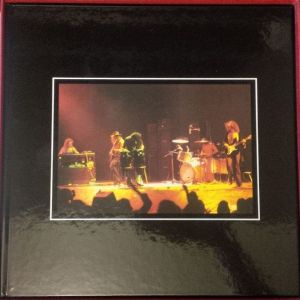
DEEP PURPLE – Made In Japan (2014 limited edition Super Deluxe box set)
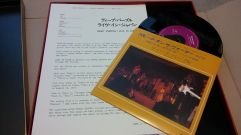
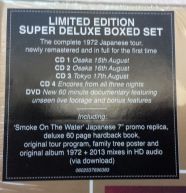
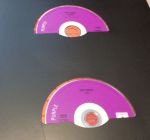
“Smoke on the Water” Japanese 7″ promo. This is a reproduction of a rare Japanese promo single from 1972, sleeve and all. It is pressed on heavy 70 gram vinyl, a treat indeed. It features the promotional single edit of the studio version, and an edit of the Made In Japan version on the other side. The studio edit is available on plenty of releases, such as Singles A’s and B’s. The live edit is one that I don’t think I owned prior to this. I actually enjoy something like this; it’s interesting to see where and how they did the edits, from a technical point of view.
Including a 7″ single in a box set of this size is something I wholeheartedly support. Not only do I love the vinyl format, but when you spend this much money ($115 Canadian) in one place, you deserve something extra. A lot of the stuff included in box sets these days, even in this box set, amounts to nothing more than paper. Music trumps packaging, so I’ll always take something like a bonus vinyl, especially when it has an exclusive track on it.
Interestingly, on this printing, the times for the two tracks are reversed. The live version is the longer, not the shorter as the label suggests.
DVD: Made In Japan: The Rise of Deep Purple MKII and more.
This hour-long documentary consists of new and archival footage and interviews, assembled into a narrative. Old footage of Deep Purple MKI begins our story. The shortcomings of this lineup led the core members of Ian Paice, Jon Lord, and Ritchie Blackmore to seek new bandmates. They had gone as far as they could musically with Nick Simper (bass) and Rod Evans (vocals). In stepped Roger Glover and rock’s greatest screamer, Ian Gillan. Then, the big albums: In Rock, Fireball, and Machine Head.
Strangely, it was a tax loophole that led to Machine Head. It was expected that the fortunes of the band would only rise, but British tax laws would keep them all paupers. If they became tax exiles, and wrote and recorded in mainland Europe, they would not be taxed. This led them to Montreux, Switzerland. According to Claude Nobs, they were planning on recording an album called Made In Switzerland. Nobs invited them to record at the local casino, and the circumstances of this have been well documented. A Frank Zappa concert that night was attended by Deep Purple and Nobs. Someone fired a flare gun into the bamboo ceiling, and the place went up in smoke. This DVD has the audio of Zappa asking the audience to leave!
The place did indeed burn to the ground. Luckily Deep Purple had not yet moved in their gear, or it too would be gone. Next they tried recording in a small theater, but noise complaints caused them to move again. It took almost a week to find the Grand Hotel, which was closed for the winter. Perfect. The results speak for themselves. Machine Head is the classic Deep Purple album. But according to Blackmore, it was Made In Japan that made them a phenomenon. It was a live album that they didn’t want to do, but could not have regretted doing.
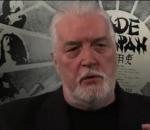
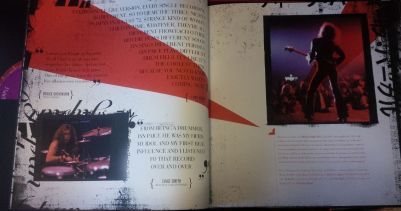
Bruce Dickinson, James Hetfield, Lars Ulrich, and more show up to discuss the impact of Made In Japan on themselves. Dickinson points out that the remarkable thing is that Made In Japan is 100% live. There are no overdubs. Martin Birch managed to capture it raw. There’s a lot of great footage here; live footage, showing the interplay of the band.
Next, the band headed to Rome to record the difficult Who Do We Think We Are.Made In Japan had not even been released in America yet, only Japan, until mass importing of the record forced the label to release it. Unfortunately at the height of their powers, Ian Gillan and Ritchie Blackmore had a massive falling out. Ian resigned. Blackmore and Paice almost formed a trio with Phil Lynott. Glover was fired, which was a condition Blackmore set to stay in Deep Purple. A final Japanese tour was the last commitment of the band. Glover describes a cold atmosphere, and the tension in the air.
Glenn Hughes appears next, remembering a Trapeze gig attended by members of Deep Purple. He sussed out the reason for their attendance. Still, he did not expect to be asked to join. It was an emotional time for Glover. He saw his Deep Purple albums on top of the charts, yet with magazines printing pictures of their new lineup featuring David Coverdale and Glenn Hughes. Hughes reveals he was mistakenly sent awards for albums like Who Do We Think We Are. Glover felt deeply hurt but strove to be a professional.
As a Deep Purple fan who owns a lot of Deep Purple on video, I enjoyed this documentary. Although it has some footage that I had before, it also had a lot that I didn’t, such as interviews that were new to me. Footage from Japan is a highlight. “Smoke on the Water” is presented almost in full (from the 17th), though it is very lo-fi.
Extras include a music video for “Smoke on the Water”, made up of footage from the documentary. “The Revolution” is a short film about rock music and counter-culture, focusing on Deep Purple while at Montreux in 1971. Much of this footage is in the main documentary. A bearded Gillan rips his way through “Speed King”, and the band are interviewed. There’s also a short German documentary from 1972, subtitled of course. I enjoyed the description of their stage attire: “intentionally scruffy hippie uniforms”. Finally, there is a 1973 performance of “Smoke”, but now I’ve really heard the song too many times. It’s the best footage though: full colour, pro-shot. Roger is wearing bright red platform shoes.
This DVD was adequate. The main documentary feature was re-watchable. “The Revolution” and the German doc, not so much. It’s too bad that the video content is only tangendentally related to Made In Japan. The DVD is really not much more than a supplement to the main feature.
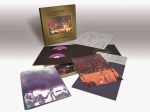
Final words: The box set is rounded out by an excellent booklet, a reproduction of the Japanese tour program, a family tree, and a reproduction press release. Ultimately these things are just pieces of paper. Nobody would go out of their way to buy a reproduction of a press release.
As a boxed set of music, Made In Japan is a home run. This is the way they should have released it back in ’93, instead of the incomplete Live In Japan. I’ll hang onto my old 2 CD anniversary edition of Made In Japan, because I believe in keeping the original mix of something. It’s an historic piece, not to be discarded. When I want a briefer Deep Purple live experience, I’ll play that version of Made In Japan. When I want the full Monty, I’m listening to this box set. Not only is it the best release sonically, but it is the only complete release of all three Japanese shows.
As a celebratory boxed edition of a classic, I’m less satisfied. The DVD and the papers inside are things I will get less enjoyment from. If the DVD had included a feature on the making and remixing of this edition, I would have been more interested.
DEEP PURPLE – Made In Japan (2014 limited edition Super Deluxe box set)
Disc 3: Tokyo, August 17 1972. Finally we arrive at the third night. The band were comfortable by the time they hit Tokyo, but the sound from the venue wasn’t as desirable as the two nights in Osaka. That’s the main reason that most of the Tokyo show was not used on Made in Japan originally. Yes, sonically this is not as crisp nor clear. It seems like a noisier mix, with Gillan’s voice more difficult to make out. However, we have heard plenty of Deep Purple recordings worse than this, and this is still Deep Purple MkII at the top of their game.
The band tune up and say hello before “Highway Star”, a quaint reminder of the way concerts used to be compared to today. Like the other two renditions of “Highway Star”, this is an electric performance. Jon’s organ solo was the highlight for me, Ritchie’s blistering frets notwithstanding. Gillan tells the crowd that the song is about somebody named “Fat Larry” and his automobile.
“Smoke on the Water” begins with Ritchie teasing a bit of “God Save the Queen”. Jon and Ritchie fall out of sync a bit in the beginning of the song, but they quickly lock back into place. Of the three, this is my favourite version of “Smoke on the Water”, just because it is different. The band are looser and willing to play around a bit more. Blackmore’s solo is a highlight as he travels all over the musical landscape.
Always epic, “Child in Time” is greeted by polite applause, a true show of Japanese appreciation. While the August 16 Osaka version may well be Uncle Meat’s favourite because of the guitar solo, I think this one is pretty special due to Jon’s keys. Either way, we’re splitting hairs here. It’s “Child in Time” performed live in Japan in 1972! To talk about favourites at this point is to be speaking in nanometers.
“The Mule” has an entertaining intro; Ian Gillan tells the monitor guy, “Can we have everything louder than everything else?” This is the version from the original Made In Japan. The intro was so legendary that Lemmy paid homage on the live Motorhead album, Everything Louder Than Everyone Else. The song goes absolutely mental at the 2:20 point, before Ian Paice breaks into his drum solo. Not a lot of drummers are interesting to listen to soloing for five minutes. Paicey is.
“Strange Kind of Woman” is another track that is never exactly the same twice. Gillan and Ritchie improvise together, a reminder of a day and age when they (mostly) got along. It’s hard not to smile. According to Ian, this song is about “Terrible Ted” and his “awful lady”.
Diving into newer material from Machine Head comes “Lazy”; always interesting since it too relies on a lot of improvisation. This is the version used on Made in Japan originally, and Jon’s solo (dipping into “Louie Louie”) is familiar and fun. That Hammond howls, and then Blackmore enters. This is one more Deep Purple long bomber. The vocal doesn’t even start until six minutes in!
Finally, “Space Truckin'”. One more amusing song intro: Ian says that this song is about what would happen if space travel and rock and roll ever met, which has not happened. Therefore, this song does not exist. But it sure does slam! The crowd clap along, obviously into it. I love every pick scrape, every drum roll, and every scream. Deep Purple can simply do no wrong at this point. The only flaw is distracting audience (or perhaps crew) noise. You can hear people speaking Japanese around the 13:00 mark.
Disc 4: Encores. This CD comprises all the encores from all three shows. “Black Night” was played first, at all three shows. “Speed King” was played twice, on the 1st and 3rd nights. On the 2nd night the band played Little Richard’s “Lucille” at absolutely breakneck pace. For many years, these encores were largely unavailable. “Black Night” from the 3rd night in Tokyo was released (edited) as a B-side, and then re-released on many compilations such as Power House (1977). The other encores didn’t receive release until the 90’s or later. Now, finally, all the tracks from Japan are collected in one set. I could barely keep track of where to find all the songs from the Japan shows, spread as they were over multiple releases. Now it’s all in one place, as it should be.
After tuning up, Blackmore noodles for a bit. Then “Black Night” crashes to a start. This song is almost a respite for the audience, after a track like “Space Truckin'”. If you remember from Part 1 of this review, Gillan had a case of bronchitis that he was recovering from. He couldn’t stand his performance on the 15th, but you’ll be hard pressed to tell on “Black Night”.
Ian says “good luck, good night,” but it’s just a clever ruse. Much applause results in a return and a noisy take of “Speed King”. There’s quite a bit of feedback, sour notes and noise coming from the guitar. Blackmore was either struggling with it, or abusing it. A knackered Ian Gillan is out of breath at times.
The second version of “Black Night”, from the 16th, is quite different. It’s quite ragged and feedback-laden, and this version reveals human errors that, to me, only add to the live experience. Deep Purple were taking things over the top at these concerts, and sometimes things fall apart. It’s rock and roll.
Once again, the applause of the audience brings Deep Purple back to the stage. Their insane cover of “Lucille” was a pleasant surprise. Deep Purple had been playing this for ages, since Gillan first joined the band. Another version (from London) can be heard on In Concert ’72. That is probably the superior version, though this is no slouch. Almost half of it is just intro! It is stretched over eight minutes. It keeps getting faster and faster, until they’re playing at Ludicrous Speed.
The final show in Tokyo is sonically different, as mentioned at the start of this review. That’s most obvious on this CD when you go straight from Osaka to Tokyo. This time, Deep Purple are introduced in Japanese, before Ian asks for the monitors to be turned down. This is the version used on B-sides and compilations numerous times before, and it is my favourite, probably due to familiarity. This mix allows Jon’s organ to shine a lot better. It is also unedited, which of course is a bonus.
And finally the journey ends with “Speed King”. The band tune up for the last time in Japan, and dive in. Once again, they’re off the rails. I don’t know where Gillan got the energy. Even though he’s tired, he’s still wailing. Jon Lord’s solo is especially enjoyable. I’m exhausted by the end of it. This has been a lot of Deep Purple to digest. But we’re not done yet.

 LITTLE RICHARD – The Essential (1985 Specialty)






 mikeladano.com