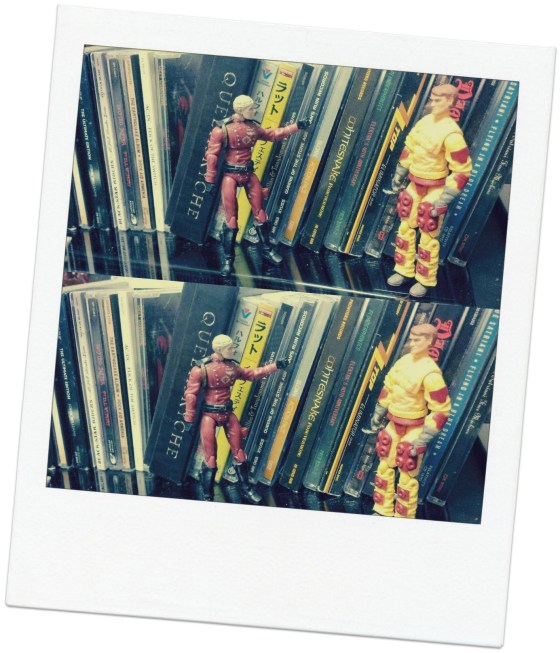
RECORD STORE TALES Part 294: Doubling Up
Readers new and old,
In addition to sharing stories that I hope make you laugh, I also like to share my knowledge from over a decade of Record Store experience. As a manager, I knew customer service was king. It was easy for some stores to beat us on pricing. It was also a given that one or two stores had better stock. Because of location and client base, some stores simply got in cooler used music. These are things you have limited control over. What you can control is your own customer service.
Rule #1: Ask everybody* (in a non-intrusive, non-annoying way) if they need help finding anything.
The reason for this is really simple. People are shy. They’re less likely to ask you for help than they are to leave if they can’t find what they are looking for. If you don’t scare the customer off by being overbearing, you have at bare minimum indicated that you are available for questions if they have any at any time. This invitation can make the difference between a sale and a not-sale.
I have had experiences when I approached people, and it immediately made a difference. I walked up to a guy and asked if he needed help, and he simply responded, “No, thank you.” Then, 30 seconds later, he had a question for me about a CD. A lot of people say “no” immediately as a knee-jerk reaction. Their shields are up and they don’t want to be “sold” anything. But now that they think about it, they can ask you that question about the CD in their hands.
Rule #2: Don’t double up!!
I was out shopping today. I went to two stores: Reebok, and ECS Coffee. I went to both stores having a good idea of what I was looking for. Customer service was pleasant at ECS, not pushy, but a little much for my taste. What I always tried to avoid doing was “doubling up” on a customer. That means, if Suzy asks the customer if they need help, then James should not ask the same customer 5 minutes later. I ran into this at ECS, but they were very pleasant and it was easy to forgive.
Reebok were more aggressive, and I was actually tripled up there, not including the greeter who informed us of their 40% off sale. Sales people were everywhere. At the record store, I really tried to avoid this. Usually we’d have two staff members on duty, so you could easily double up on customers. What I tried to do was co-ordinate it a little better. I’d communicate who I had spoken to. “The guy in the blue there? I’ve already asked him for help, but his buddy in the red I have not.” If I saw a staff member making their way to a customer I’d already asked, I’d try to get their attention before they asked again. I think it worked out pretty well. We reduced the doubling up factor pretty successfully.
Try these tips out in your own stores. Let me know how it works out for you!
* We were allowed to make exceptions in cases such as The Lady in Red.


 mikeladano.com