tom hamilton

REVIEW: Aerosmith – Classics Live! II (1987)

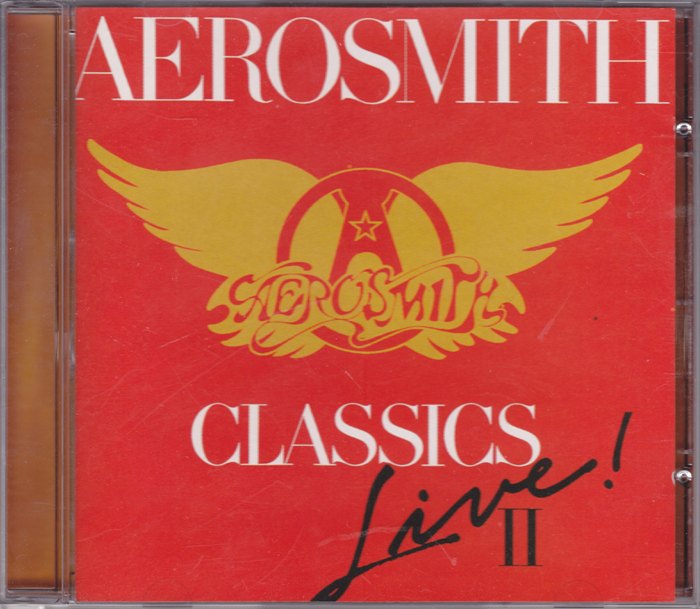
CLASSICS LIVE II_0001AEROSMITH – Classics Live! II (1987 Columbia, 1993 Sony)

Hot on the heels of Classics Live came Classics Live II!  Today you can get them together in one set, because they really are companion albums with no overlap between them.  All songs here were recorded by the classic lineup of Steven Tyler, Joe Perry, Brad Whitford, Tom Hamilton, and Joey Kramer, and there are a couple neat surprises in the tracklist.

“Back in the Saddle” always works as an opening track, especially since this one comes from the 1984 Aerosmith reunion tour.  They truly were back in the saddle, though just as wasted as ever!   It has its sloppy moments and sour notes, but more energy than some of the previous live stuff.  This rendition will never be considered a definitive live take of the song, but it does document that oft-forgotten mid-80’s period.

“Walk This Way” opens with the announcement that it was Tom Hamilton’s birthday!  That would make it their New Year’s Eve gig in Boston in ’84.  Joey’s drums are a little “thuddy” sounding, and I put the blame on producer Paul O’Neill (Savatage) who doesn’t always capture a drum sound to my tastes.  “Movin’ Out” is one of my underdog favourites from the first Aerosmith album and I’ll always dig its slow, heavy drawl.  It’s so great to hear Tyler sing that familiar ad-lib that he does live:  “No-one knows the way but Joe Perry.”  Following that is “Draw the Line”, another brilliant classic done live all loosey-goosey.  “Same Old Song and Dance” follows that same tradition, with a teasing opening to make the crowd go nuts.

“Last Child” brings the funk as always, but my favourite has to be “Let the Music Do the Talking”.  Although it was recorded before Done With Mirrors, this was the first new Aerosmith song to get a live release.  Of course it’s technically a Joe Perry Project song, but Aerosmith’s version kicks that one in the ass.  This live one is pretty awesome.  Closing the album with “Toys in the Attic” guarantees that the ending is just as exciting as the beginning.  Killer version.

The coolest thing to me about Classics Live II is that even though it’s called II, it doesn’t sound like a second volume of a live album.  Considering that “Walk This Way”, “Back in the Saddle”, “Toys in the Attic” and “Same Old Song and Dance” are all on here, it could easily have been the first volume.  It is easily the equal of part I.

3.5/5 stars

AEROSMITH BOX OF FIRE review series:
BOX OF FIRE THUMBDisc 1: Aerosmith (1973)
Disc 2: Get Your Wings (1974)
Disc 3: Toys in the Attic (1975)
Disc 4: Rocks (1976)
Disc 5: Draw the Line (1977)
Disc 6: Live! Bootleg (1978)
Disc 7: Night in the Ruts (1979)
Disc 8: Aerosmith’s Greatest Hits (1980)
Disc 9: Rock in a Hard Place (1982)
Disc 10: Classics Live! (1986)
Disc 11: Classics Live! II (1987)

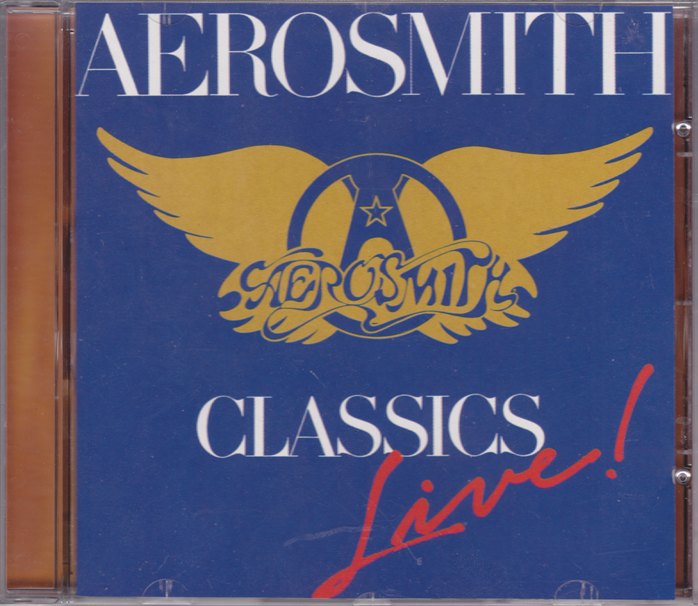
REVIEW: Aerosmith – Classics Live! (1986)

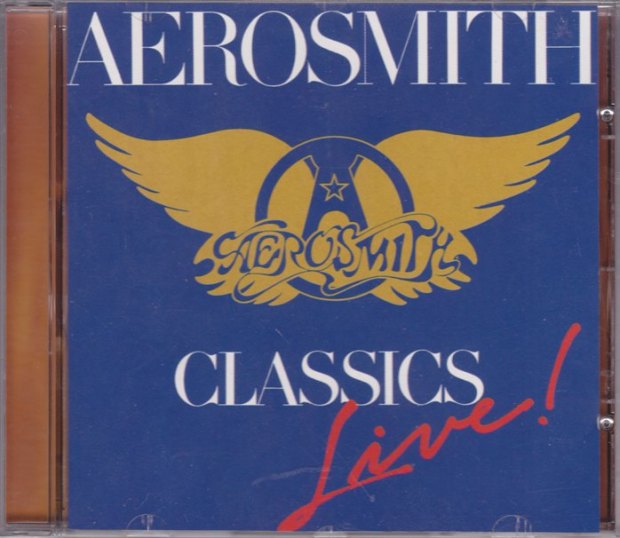
CLASSICS LIVE_0001AEROSMITH – Classics Live! (1986 Columbia, 1993 Sony)

A reunited Aerosmith managed to put it together enough to tour, and record new music.  Now on Geffen, Done With Mirrors was considered a “good enough” album in most circles.  The Box of Fire set, which this series of reviews is really about, doesn’t include any of the Geffen material.  Instead it jumps ahead to the next Columbia release, which came out the year after Done With Mirrors.   Columbia were now able to put out live albums and compilations.  Classics Live! was the first of these.

We have already established that the Live! Bootleg album is simply excellent.  As a double live album, it is one of the essential releases from the 1970’s that serious rock fans should own.  Classics Live is a different beast, a single LP with odds and ends from tours from 1977 to 1983.  There is no indication who is playing on what, but it is known that all four Aerosmith guitarists (Joe Perry, Brad Whitford, Jimmy Crespo, Rick Dufay) play on the album.  They are all pictured inside, but only by ear could you determine who is playing.  For example I think “Train Kept a Rollin'” is a 1983 recording with Crespo and Dufay.

It’s cool that there are songs on Classics Live that were not on Live Bootleg. The most notable of these is “Kings and Queens” which really deserves a lot more praise than it gets.  Aerosmith at their most regal.  The others are a medley of “Three Mile Smile” and “Reefer Headed Woman” from Night in the Ruts.  Joe Perry was definitely out of the band by that time.

CLASSICS LIVE_0003

Of the more familiar tracks, “Sweet Emotion” is a particularly good version with Tyler sounding pretty rough from the night before!  I’m pretty sure there’s some heavy overdubbing going on with this album, if the backing vocals are anything to go by.  “Dream On” is excellent as usual, with exceptional sound quality and a raw sounding performance.  “Mama Kin” on the other hand ain’t so hot.  Pretty sloppy and ragged but a lil’ too much.  “Lord of the Thighs” is solid.

The icing on the cake is the unreleased studio track “Major Barbra”.  This outtake from Get Your Wings saw its very first release on Classics Live.  It’s a slow, mournful, but classy ballad in 3/4 time.  It’s a great song that deserved a spot on an Aerosmith album, so here it is!

3.5/5 stars

AEROSMITH BOX OF FIRE review series:

BOX OF FIRE THUMBDisc 1: Aerosmith (1973)
Disc 2: Get Your Wings (1974)
Disc 3: Toys in the Attic (1975)
Disc 4: Rocks (1976)
Disc 5: Draw the Line (1977)
Disc 6: Live! Bootleg (1978)
Disc 7: Night in the Ruts (1979)
Disc 8: Aerosmith’s Greatest Hits (1980)
Disc 9: Rock in a Hard Place (1982)
Disc 10: Classics Live! (1986)

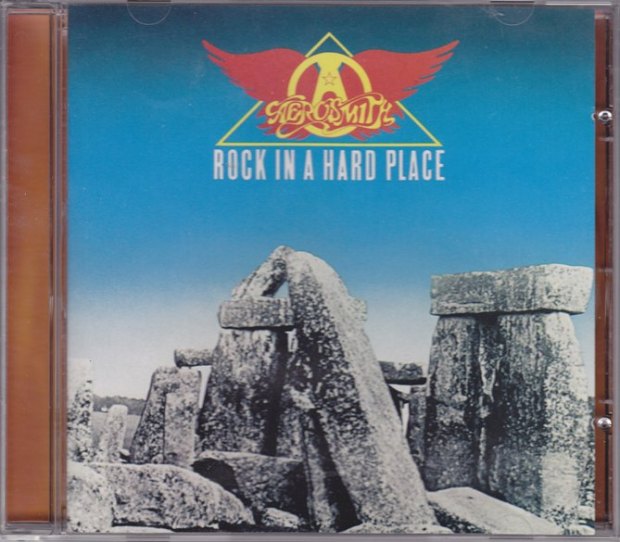
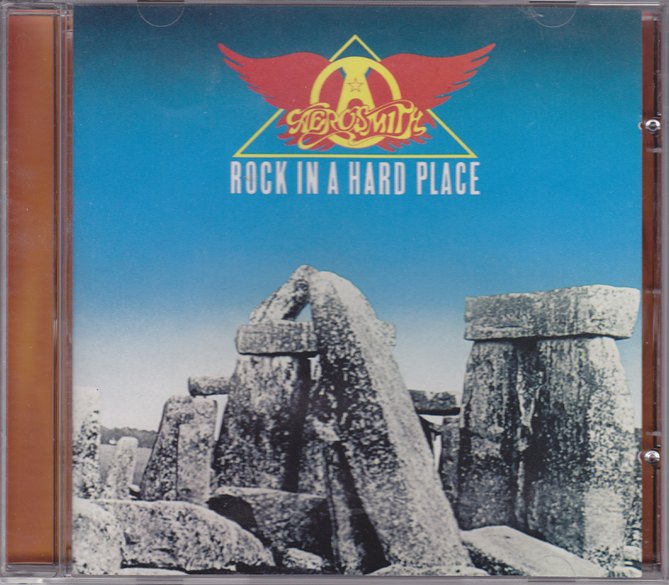
REVIEW: Aerosmith – Rock in a Hard Place (1982)

ROCK IN A HARD PLACE_0001

AEROSMITH – Rock in a Hard Place (1982 Columbia, 1993 Sony)

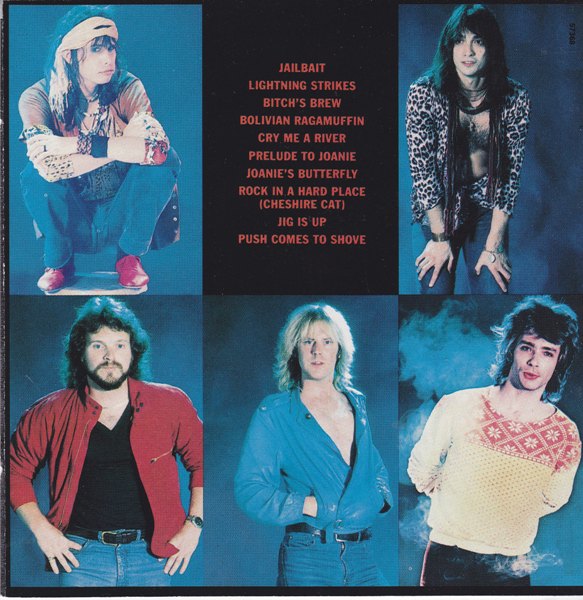
I sometimes wonder what it was like to be an Aerosmith fan in 1982.  Their last album, Night in the Ruts, showed signs of decay.  Then out came Rock in a Hard Place.  Joe Perry and Brad Whitford were both gone*, and in their places were Jimmy Crespo and Rick Dufay.  Both guys are good players and writers, but they are not Perry and Whitford, who were 2/5 of the Aerosmith sound.  Changing two guitar players in the space of an album, especially when you’re losing a guy like Joe Perry, is always risky.  It’s risky because you’re losing a very recognizable member (musically and visually), and you’re changing the creative chemistry of the band.  Whatever was special about the first six albums, there was no guarantee it would carry over to the seventh.  Add to that an unfortunate album cover featuring Stonehenge.  There was nothing wrong with that, until This Is Spinal Tap came out in 1984.  It was a movie that Steven Tyler took very personally. Rock in a Hard Place looked like a joke, now.

Thankfully the record opened with two great songs in a row. The frantic “Jailbait” immediately recalled previous high points like “Toys in the Attic”. New guitar players or not, Hamilton and Kramer were more than capable of laying down that speedy Aero-groove on their own. Unusually for a rhythm section, they have a signature sound together, which makes “Jailbait” naturally sound like Aerosmith. Tyler is a sassy as ever, singing from experience I’m sure. Incidentally “Jailbait” is the only song with a Rick Dufay writing credit. Jimmy Crespo on the other hand co-wrote seven tracks.

Richie Supa, co-writer of “Chip Away the Stone”, returned to help out on the single “Lightning Strikes”. Maybe that’s one factor that makes the song so classic to me. Brad Whitford was still with the band when it was recorded, so that’s him on rhythm guitar instead of Dufay. “Lightning Strikes” was accompanied by a cool music video featuring the new guys. It’s cool how they fit in with the band, looking right at home, smoking on cigs. In the video, the band double as greaser gang bangers, ready to rumble in the middle of the night…when the lightning strikes.

Unfortunately, album quality takes a dip after that!

“Bitch’s Brew” is OK but it’s easy to hear the fatigue. The groove is there and the riff is solid, but there aren’t enough hooks to go around. That’s Crespo on the backing vocals, by the way. “Bolivian Ragamuffin” features some sweet slide guitar and really harkens back to what I like about Aerosmith. It’s just not a good enough song!

“Cry Me a River” is the old Ella Fitzgerald classic, and who but Aerosmith are better at doing unusual classic covers? “Cry Me a River” isn’t one of their best, but it is good. They do it as a smokey, lounge number complete with electric guitars and a monster called Joey Kramer on the drum kit!

Skip “Prelude to Joanie”. What happened here? This song intro is pretty silly.  Did Tyler listen to The Elder and say, “Jeez I have to get more sci-fi and conceptual sounding in my music!” Skip it, and get to the much better “Joanie’s Butterfly”. This sounds fresher. In a way it foreshadows some of the more exotic textures that Aerosmith would try out 15 years later on Nine Lives. It starts acoustic, but when the electric part kicks in, it’s old Aerosmith all over again and it works. It was an ambitious song and for the most part, they pulled it off. It could stand a little more cohesion, but think about the drugs swimming in their veins at the time!

ROCK IN A HARD PLACE_0003“Rock in a Hard Place (Cheshire Cat)” again recalls the good ol’ days, sounding a bit like “Same Old Song and Dance”. Not as good, mind you, but in the ballpark.  “Jig is Up” is an attempt to get back to the funkier Aerosmith vibe, but it’s a completely forgettable track.  Truly filler, B-side material.  (Great guitar playing though.)  “Push Comes to Shove” ends the album on a slower, lounge-y note.  Once again I can’t help but hear the band burned out and running on fumes when I listen.

Aerosmith would tour around, in smaller venues, for the next few years.  Tyler was in some serious shit with his problems, falling down and passing out on stage.  Meanwhile as the band aimlessly toured the country, Joe Perry and Brad Whitford began to talk about what it would take to rejoin the band.  As if fated, Rick Dufay killed his own job with Aerosmith by suggesting to Steven Tyler that getting the other two guys back would be his best option.  Wheels were set in motion.

Record deal with Columbia now done, the label were free to issue live albums and outtakes.  Even as Aerosmith were on tour behind a brand new studio album for Geffen (Done With Mirrors), Columbia ensured there was also a live album on the shelves.  That’s what we’ll be looking at next time.

3/5 stars for Rock in a Hard Place.

* Be sure to check out the Joe Perry Project, and Whitford/St. Holmes.

AEROSMITH BOX OF FIRE review series:

BOX OF FIRE THUMBDisc 1: Aerosmith (1973)
Disc 2: Get Your Wings (1974)
Disc 3: Toys in the Attic (1975)
Disc 4: Rocks (1976)
Disc 5: Draw the Line (1977)
Disc 6: Live! Bootleg (1978)
Disc 7: Night in the Ruts (1979)
Disc 8: Aerosmith’s Greatest Hits (1980)
Disc 9: Rock in a Hard Place (1982)

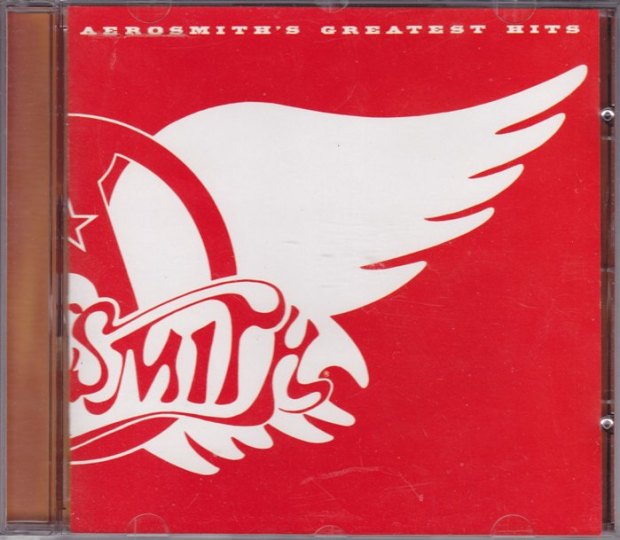
REVIEW: Aerosmith’s Greatest Hits (1980)

AEROSMITHS GREATEST HITS_0001AEROSMITH – Aerosmith’s Greatest Hits (1980 Columbia, 1993 Sony)

When a fan walked up to Joe Perry in 1980 and asked him to sign the brand new record Aerosmith’s Greatest Hits, the guitar player was so out of it that he didn’t even know there was such a record.  Now 35 years later, it has sold 11 million copies and has become that one Aerosmith disc that everybody seems to have.  My wife asked for Aerosmith’s Get A Grip for her birthday in 1993 from her uncle, but he couldn’t find it, so he got her Greatest Hits instead.  She didn’t know a single song but quickly grew to love every one of them.

This album is legendary.  Even though all the Columbia studio albums were already included, Sony still put Greatest Hits in the Box of Fire set.   Two probable reasons for this are 1) the album is now considered a classic hits record, and 2) there are some versions here not on any other Aerosmith albums.  In fact Sony revamped this album again a few years later, re-releasing it as Greatest Hits 1973-1988 with seven more songs including one unreleased rarity.   That’s another review though, not a part of this series.  Since the Box of Fire has the original 10 track version of Aerosmith’s Greatest Hits, then that’s the one we’re going to look at.  This is the album that was released in 1980 to buy the band some time before having to crank out another studio LP…this time without Joe Perry.

AEROSMITHS GREATEST HITS_0003

This was my first album of “old” Aerosmith, just like it was for my wife.  I got mine in the spring of 1991, and while I was familiar with the hits, I had never heard the rest before.  “Dream On” wasn’t new to me, but if it’s new to you, you might be shocked how Steven Tyler’s voice has changed so much over the years.  Even familiar hits like “Walk This Way” sound ancient compared to today!

Aerosmith’s Greatest Hits was perfectly sequenced.  At 10 songs and 37 minutes, it was also the typical length for a single record hits album.  There are very few songs not included that are glaring by their absence.   Even so, they were eventually released on a second volume called Gems in 1988.  If you’re missing “Mama Kin” or “Nobody’s Fault” then you can simply get Gems to fill in the gaps.  On its own, Greatest Hits has material from all six prior Aerosmith albums, including some rare single edits and one non-album cut.

“Come Together”, the Beatles cover, was released as a live version on Live! Bootleg while the studio version (produced by George Martin) was on the soundtrack for Sgt. Pepper’s Lonely Hearts Club Band.  Saving fans the hassle of buying that awful album to get “Come Together” is the kind of thing that greatest hits albums are meant for.

The single edits include “Same Old Song and Dance”, with the line “Gotcha with the cocaine” replaced with “You shady lookin’ loser”.  I didn’t even notice.  “Sweet Emotion” has a different intro and outro.  “Walk This Way” and “Kings and Queens” are single versions, but most probably didn’t notice that either.  “Kings and Queens” is a stunning inclusion.  It’s one of those Aerosmith classics that always deserved more airtime.

In summary:

  1. Great, concise hit-loaded tracklist.
  2. Rare tracks/versions.
  3. Covers all six prior Aero-platters.

For a single record hits compilation, you can’t really ask for more than that.

5/5 stars

AEROSMITH BOX OF FIRE review series:

BOX OF FIRE THUMBDisc 1: Aerosmith (1973)
Disc 2: Get Your Wings (1974)
Disc 3: Toys in the Attic (1975)
Disc 4: Rocks (1976)
Disc 5: Draw the Line (1977)
Disc 6: Live! Bootleg (1978)
Disc 7: Night in the Ruts (1979)
Disc 8: Aerosmith’s Greatest Hits (1980)

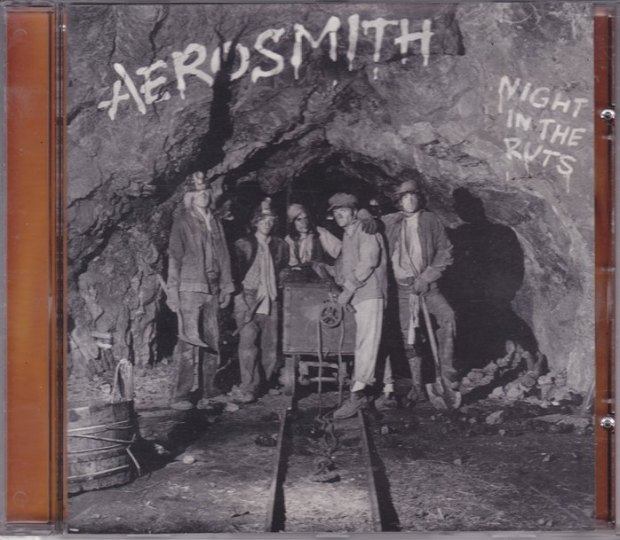
REVIEW: Aerosmith – Night in the Ruts (1979)

NIGHT IN THE RUTS_0001AEROSMITH – Night in the Ruts (1979 Columbia, 1993 Sony)

Forget about the edge of the desert; the drugs had already taken hold. Aerosmith managed to keep it together on Draw the Line long enough to put out an album that was good enough if you squinted. Infighting, missed gigs and long, overbudget recording sessions were the order of business. It’s just another chapter in the same old rock and roll story. It looked like Aerosmith would be one of those bands that just burned out before the end of the 1970’s.

With half the album finished, Joe Perry quit Aerosmith. Packing it in wasn’t an option financially so Jimmy Crespo, a session player, was hired on. A number of guitar players finished the album, Right in the Nuts Night in the Ruts, a collection of songs that probably wouldn’t have been considered for previous albums like Toys in the Attic for reasons of quality.

Things got off to a strong start with “No Surprize”, a song telling the story of Aerosmith’s beginning, and featuring Joe Perry on guitar.  This is a standard 1970’s Aero-rocker, with no surprises (pun intended).  You wouldn’t know anything was wrong with Aerosmith by the sounds of it.  The playing is faultless (particularly drummer Joey Kramer’s) and the song is well constructed.

“Chiquita” is second, and I can’t help it but I always think of bananas. There’s a groove and some catchy brass parts, but nothing that coalesces into an album-quality song. It doesn’t particularly matter though when you’re Aerosmith though! “Chiqita” is a lesser known highlight regardless of its faults.

Because of its placement on the later (and more well known) album Aerosmith’s Greatest Hits, I’m used to “Remember (Walking in the Sand)” being a closing song. I’ve always found it to be a dramatic and classic Shangri La’s cover, but placing it right dead center of side one doesn’t sound right to me. It’s also worth pointing out that this is the first of three covers on Night in the Ruts. Coming up with original material must have been a struggle since the album is 1/3 covers.

“Cheese Cake” piles on the slide guitar, one of Joe Perry’s brightest talents. Because of his eloquent slide work, “Cheese Cake” is one of the best tracks. I’m pretty sure the lyrics are not about cake. For extra coolness, check out the Aerosmith Pandora’s Box set. “Cheese Cake” is sequenced with “Let it Slide”, an instrumental demo highlighting Joe’s guitar work. Onto “Three Mile Smile”, Aerosmith managed to come up with a funky groove but not much of a song. Once again on the box set, it was sequenced with an instrumental demo (“I Love in Conecticut”) that highlights the playing. Too bad they weren’t focused enough to turn it into a killer song.

A blues cover, “Reefer Headed Woman” kills four minutes, but without focus. The thrill is gone. Tyler remembered his harmonica that day at least; he sounds completely out of it otherwise. If you want some of that old Aerosmith chug, then look no further than the vicious “Bone to Bone (Coney Island White Fish Boy)”. For the first time since “Cheese Cake”, it sounds like Aerosmith have ignited the way they used to. “Bone to Bone” hits all the bases, leaving one so frustrated that they couldn’t do it more often on this record.


That’s it for the Tyler/Perry originals. A Yardbirds cover “Think About It” isn’t particularly memorable and Tyler lacks energy. Steven wrote the closing song “Mia” for his daughter, and per the Aerosmith pattern, it’s a piano ballad to close the album. I want to like it more than I do, but like much of Night in the Ruts, it sounds half-finished and tired.

It’s frustrating since the Aerosmith discography up to this point has been largely consistent. Night in the Rights represents the start of the “dark times”, a period where Aerosmith had lost two key members and were in danger of losing their singer to his own demons.

3/5 stars

AEROSMITH BOX OF FIRE review series:

BOX OF FIRE THUMBDisc 1: Aerosmith (1973)
Disc 2: Get Your Wings (1974)
Disc 3: Toys in the Attic (1975)
Disc 4: Rocks (1976)
Disc 5: Draw the Line (1977)
Disc 6: Live! Bootleg (1978)
Disc 7: Night in the Ruts (1979)

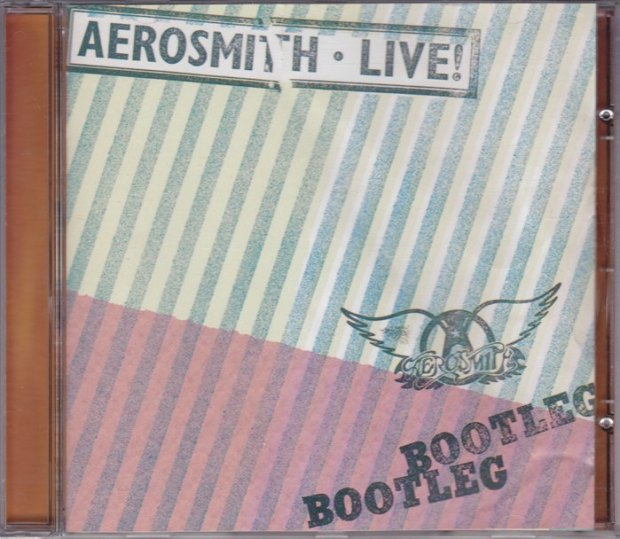
REVIEW: Aerosmith – Live! Bootleg (1978)

LIVE BOOTLEG_0001AEROSMITH – Live! Bootleg (1978 Columbia, 2003 Sony)

Five records in, and it’s time for a double live.  Aerosmith had gained a reputation for their fiery live shows, and bootleggers were ensuring that fans willing to pay had something live that they could buy.  The way to beat the bootleggers was for Aerosmith to put out their own official live album.  Collecting tracks from a variety of live performances and radio broadcasts, including many songs unavailable on album, Live! Bootleg is today one of the best examples of the epic double live.  The intentionally shoddy album art conceals within it a live record of nuclear critical mass.  With liner notes, photos, and even hidden tracks, Live! Bootleg hits all the bases.

“Back in the Saddle” recorded in ’77 is chosen to open the proceedings, which it does with the kind of rawness that only comes with a real live performance.  Unfortunately it’s a thin sounding version, but fear not because “Sweet Emotion” in March ’78 is full of guitar noise.  The liner notes state that there are no synthesizers on the song, just guitars “screaming in pair”.  Then “Lord of the Thighs” from the same gig keeps the momentum going smooth and dirty.  The extended jamming stretches the song out to the seven minute mark, and that is the kind of noisy spontaneity that wasn’t captured on any of Aerosmith’s studio albums.

“Toys in the Attic” was recorded in the boys’ home town of Boston, straining at the leash.  It’s a fevered live take, faster and more reckless.  Then, also from Boston is the Tyler/Whitford classic of Aerofunk tastiness, it’s the “Last Child”.  Live (in a club), it’s funkier and slinkier.  The first surprise rolled out on the album is the Beatles cover “Come Together”, from a secret gig in ’78 at the band’s headquarters the Wherehouse.  It’s very similar to the studio version they did for the Sgt. Pepper’s Lonely Hearts Club Band soundtrack, perhaps a bit slower and more menacing.

Joe Perry dusts off the talk box for an ultra-funky “Walk This Way”.  One reader said, “Joey [Kramer] sets the tone and man he’s driving the bus at break-neck speed.”  That’s it exactly!  This is Aerosmith starring in that movie about the bus that couldn’t slow down!  (I think it was called The Bus that Couldn’t Slow Down.)  As if that isn’t hot enough, a smoking “Sick as a Dog” from ’77 crashes the damn bus over the guiderail and off into the sunset!  Lots of tasty extended soloing here.

Eight songs in and only now we’re hitting the first ballad, and only ballad!  “Dream On” is a necessary outing.  Aerosmith slow it down a bit a-la “Stairway” and let it build.  Look for a surprise f-bomb in the middle of the song.  (I guess Aerosmith were not being recorded for radio broadcast that day, or if they were, Tyler just didn’t give a fuck!)

LIVE BOOTLEG_0006My favourite Aerosmith song of all time is “Chip Away the Stone”, written with Richie Supa.  This brand new song was chosen as the single fron Live! Bootleg.  The studio version was relegated to a B-side!  The live one has less piano, but has just as much boogie.  This is Aerosmith doing that old time rock and roll.  (The current version of Guns N’ Roses has been known to play “Chip Away the Stone” from time to time.)

Bringing back the funk of “Sight for Sore Eyes”, there is no time for rest, and from there it’s straight into “Mama Kin”.  Everything that the first Aerosmith album lacked in out-of-control raucousness is intact on this live version.  Without a breath they tear into “S.O.S. (Too Bad)”, ablaze with the intensity of fully-fuelled Aerosmith.

There’s an awkward transition between “S.O.S.” (recorded ’77 in Indianapolis) and “I Ain’t Got You” (1973 for a radio broadcast).  The younger band sound very different, less wartorn and ragged from the drugs.  They go straight into James Brown’s “Mother Popcorn”, complete with sax.  It’s the funkiest thing Aerosmith have ever done by a long shot.  Material like these tracks are perfect examples why Live! Bootleg is so beloved today.  They were giving you value for your money, and songs that you didn’t have, but didn’t know you didn’t have!

The next surprise is the unlisted “Draw the Line”, a live version so over the top that perhaps it even surpasses the original!  Wait until you get to Tyler’s screams if you don’t believe me.  Checkmate honey!  After a tracklist like this, ending the album with “Train Kept a Rollin'” (Detroit 1978) is one of the only options left.  Probably tired from an energetic set, Tyler gets the audience’s help on the chorus.  Joe Perry’s hanging by a thread but still able to piece together some gratuitous solos.   He throws in a bit of Sinatra’s “Strangers in the Night” for shits n’ giggles too.  Live! Bootleg ends on an overindulgent but perfectly appropriate note.

The radioactive fallout from their double live album bought Aerosmith, burning out fast from the inside, a little more time before being required to produce something new.  Even then they were breaking from the strain.  Something had to give.

Fortunately before imploding, Aerosmith managed to crank out the obligatory double live album that helped seal their place in rock history.  Check that one off the box!

5/5 stars

AEROSMITH BOX OF FIRE review series:

BOX OF FIRE THUMBDisc 1: Aerosmith (1973)
Disc 2: Get Your Wings (1974)
Disc 3: Toys in the Attic (1975)
Disc 4: Rocks (1976)
Disc 5: Draw the Line (1977)
Disc 6: Live! Bootleg (1978)

REVIEW: Aerosmith – Draw the Line (1977)

DRAW THE LINE_0001AEROSMITH – Draw The Line (1977 Columbia, 1993 Sony)

The intial batch of Aerosmith platters (particularly Get Your Wings, Toys In The Attic, and Rocks) are all but undisputably great records. Most agree that, for a couple years anyway, Aerosmith created some of the great most important rock music in America. Draw The Line, Aerosmith’s fifth, was considered at the time to be a drop in quality although it has certainly aged well and fared better in hindsight. Compared to Rocks, perhaps it stumbles behind like a drunk tumbling out of the bar, but it is still a magnificent piece of rock and roll damnation.  And you gotta love the cover art caricature, by Al Hirschfeld.

The drug problems had sunk in, a monkey it would take them another decade to shake, but you wouldn’t be able to tell by the title track. Even though they were basically only recording music in order to keep paying for drugs, they still managed to create some legendary music on the title track.  This is desert island material, one of those songs that I don’t want to live my life without. To this day nobody has written anything as perfectly manic as “Draw The Line” from start to finish. They may have been falling apart, but musically they were capable of cranking out breakneck rock and roll of the highest quality.   It was Van Halen’s frontman David Lee Roth himself who proved the mettle of “Draw the Line” in a scientific way.  When all else failed, he used it to drive a yak heard away in the Himalayas!

And I still have no idea what Steven Tyler is singing after the lead solo break.  This is what it sounds like to me:  “OOOH check mate don’t be late take another pull, that’s right, impossible, when you gotta be yourself you’re the boss of the toss so dice the price baby baby and Draw the Line…”  I’m certain that’s not entirely right, and who knows what the fuck it means, but I’m not going to go and look up the lyrics.  Do you know why?  Because Draw the Line didn’t come with lyrics. If Steven Tyler wanted me to know what the hell he’s singing there, he’d have written it down.

Much like they did with “Nobody’s Fault” from Rocks, thrash metal pioneers Testament covered “Draw the Line”, which was released on their Signs of Chaos compilation.  Once again, it’s a perfect fit for the thrashers.

It doesn’t end there with “I Wanna Know Why” being one of the catchiest of the early ‘Smith rockers.  Those Tyler piano touches and Aerosmith horns make it the most “rock and roll” of the tracks.  It’s brassy, sassy and shows no indication of the decay setting in at all.  “Critical Mass” was also great, a song that grooves along smoothly.

Although Aerosmith fared well in the past marrying funk and rock, “Get it Up” doesn’t work as well.  While the band were playing beyond what you’d expect them to be able to, their songwriting was starting to fizzle.  Joe Perry’s “Bright Light Fright” kicks the decibels, but sounds unfocused and haggard.  The saxophone solo is a highlight, but listening to “Bright Light Fright” is like watching a drunk partying in top gear.  You know the crash is inevitable, and soon.

Turning sharply back towards jaw-dropping quality, “Kings and Queens” is regal and mighty.  Listen for the banjo lying underneath.  Oh if Aerosmith could only achieve lofty heights like “Kings and Queens” today!

“The Hand that Feeds” is a crap song, but “Sight for Sore Eyes” is better.  Aerosmith seemed to be leaning on the funkier side on the latter half of Draw the Line.  They close it with a chugging blues, a cover of “Milk Cow Blues” perhaps showing that Aerosmith didn’t have enough ideas of their own, perhaps not — they have always done covers.  Regardless, “Milk Cow Blues” is well executed, sounding very live and reckless in the studio, just like it should be.

This is impaired Aerosmith, but not entirely off the rails yet!

Yet…

4/5 stars

AEROSMITH BOX OF FIRE review series:

BOX OF FIRE THUMBDisc 1: Aerosmith (1973)
Disc 2: Get Your Wings (1974)
Disc 3: Toys in the Attic (1975)
Disc 4: Rocks (1976)
Disc 5: Draw the Line (1977)

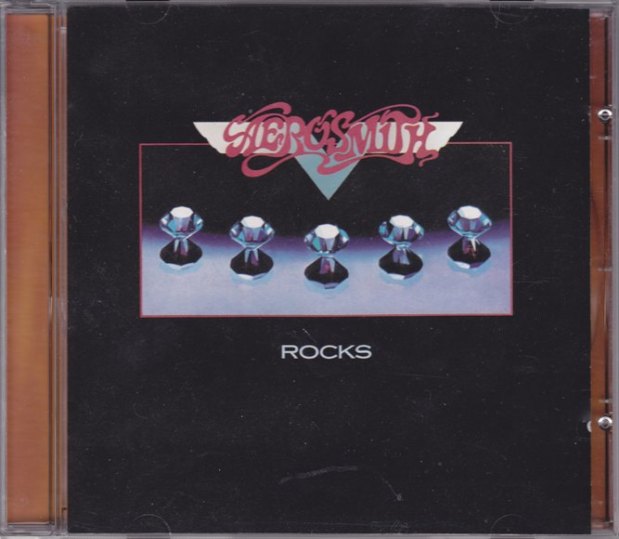
REVIEW: Aerosmith – Rocks (1976)

AEROSMITH – Rocks (1975 Columbia, 1993 Sony)

Packaged clean and sharp, Aerosmith made their intentions clear on the cover art for Rocks.  The album launched a million guitar players and a hundred careers in rock and roll.  It is also notable as being the last album before a major turning point; the point at which Aerosmith let the drugs work against them in a major way.

“Back in the Saddle” is an impressive opener.  The main riff in the song is not a guitar, but Joe Perry playing a six string bass.  Steven Tyler has mastered his own voice by this time, squealing and shrieking in conjunction with the hooks.  In some ways “Back in the Saddle” sounds like the birth of the true Aerosmith.  “Last Child” meanwhile nails the oft-overlooked funky side of Aerosmith.

“Take me back to-a south Tallahassee,
Down cross the bridge to my sweet sassafrassy,
Can’t stand up on my feet in the city,
Gotta get back to the real nitty gritty.”

With the help of an understated horn section, Aerosmith turn “Last Child” into something special.  This unexpectedly fades into the metallic aggression of “Rats in the Cellar”.  A spiritual sequel to the song “Toys in the Attic”, this one’s even meaner and faster.  Somebody said that the goal here was take what the Yardbirds were doing and turn it up.  Harmonica hooks and slide guitar goodness — I’d say they nailed it.

I need something groovy and right in the pocket after that, and “Combination” sung together by Tyler and Perry is one such groove. “Combination” is an album highlight boasting hooks and cool bass licks galore, and listen to Joey Kramer tearing it up on the drums! “Sick as a Dog” is another semi-forgotten classic. I’ve loved this melodic rocker (similar to past tracks such as “No More No More”) since day one. I can’t help but get it in my head every time I actually am sick as a dog. (Knock wood, no major illnesses yet in 2015!)

Perhaps the most important song on Rocks is the Whitford/Tyler composition “Nobody’s Fault”.  Along with “Round and Round”, Whitford has a knack for coming up with some of the heaviest Aerosmith riffs.  Testament covered it in 1988 for The New Order, taking it to an extreme that Whitford couldn’t have predicted.  The post-apocalyptic lyrics fit the concept of the Testament album.

Aerosmith’s original recording of Nobody’s Fault features some of Tyler’s most impassioned howls.  Drummer Joey Kramer considers it to be his best drumming, and I’m sure Whitford feels the same about his guitar work.  Although you can still hear that Aerosmith beat, “Nobody’s Fault” proves the band are versatile and more than just another American blues rockin’ band.

Bringing back the funk, “Get the Lead Out” isn’t particularly a standout except in terms in performance (which, with Aerosmith, is always above reproach).   “Lick and a Promise” returns us to quality, with a stock rocker about Tyler’s favourite subject.  We’re now at the end of the record, and “Home Tonight” continues Aerosmith’s knack for ending an album effectively with a slow number.  A piano ballad with plenty of guitars, “Home Tonight” adds that bit of class that Rocks needed in order to compete with an album like Toys in the Attic.

So how does Rocks compare with Toys in the Attic, anyway?

Too close to call.  Rocks is definitely a heavier record, and Toys in the Attic is closer to the dead-center of Aerosmith’s sound with the horns and strings.  Otherwise, it’s splitting hairs.

5/5 stars

AEROSMITH BOX OF FIRE review series:

BOX OF FIRE THUMBDisc 1: Aerosmith (1973)
Disc 2: Get Your Wings (1974)
Disc 3: Toys in the Attic (1975)
Disc 4: Rocks (1976)

REVIEW: Aerosmith – Toys in the Attic (1975)

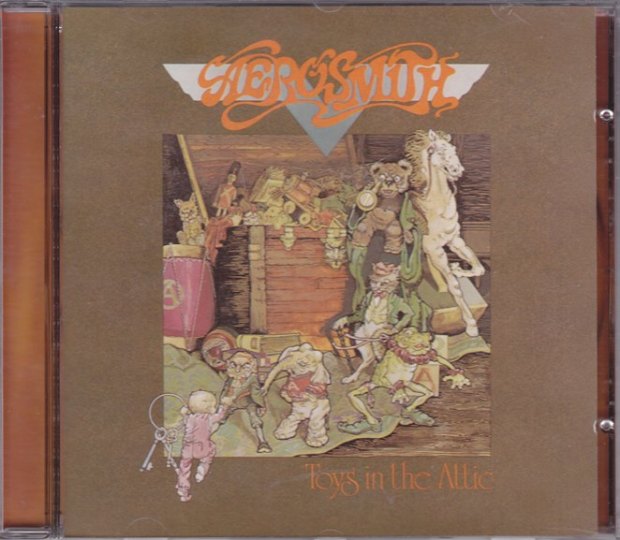
TOYS IN THE ATTIC_0001AEROSMITH – Toys in the Attic (1975 Columbia, 1993 Sony)

What’s your lucky number?  For Aerosmith, maybe it’s 3.  Third album in as many years, Toys in the Attic is considered by some to be the album: “If you’re only going to get one,” the desert island record.  Considering that Rocks was yet to come, let’s withhold judgement until we get there.  For now just be aware there is a lot of Aero-love in the world for Toys in the Attic, and you can hear why.

As if to prove that Aerosmith could keep up with some of their heavier competitors out there, “Toys in the Attic” is a blazing guitarfest careening through the speaker into your skull.  What a way to open an album: it’s a statement.  The band were honed to a razor-sharp edge by producer Jack Douglas.  Joe Perry in particular had grown to be a ferociously good blues-rock player, and “Toys in the Attic” is the evidence.

One of the great joys of listening to Aerosmith is finding the little known album gems that weren’t repeatedly re-released on hits packages.  “Uncle Salty”, a slow crawl through the blues via the neck of a bottle, is one such track.  Also underexposed is “Adam’s Apple”, which shows off Joe Perry’s greasy slide guitar sleaze.  The horn section makes an appearance here too, adding extra sauce.  Then they bring the funk on “Walk the Way”.  Run DMC recognized that funk and knew how to update it in 1986.  In 1975, Tom Hamilton’s rolling bass was the stuff that groove is made of.  This is the kind of song that proves the musical ability of these five gents from beantown beyond the shadow of a doubt.  Then the sassy horns return on “Big Ten Inch Record”, an old R&B classic from 1952.  Remarkably the band pull it off with class and sassafras.

“Sweet Emotion” is one of the band’s best known today, something that Tom Hamilton must be happy about, since it’s one of only a few Tyler/Hamilton co-writes.  It’s no surprise that Hamilton had a hand in its composition since it’s based on another one of his rolling bass lines.  But listen to the way Joey Kramer and Brad Whitford lock into him.  That groove is the foundation on which Aerosmith was built.  On top of that, Steven Tyler has always had a way with melody.  “No More No More” is one of his most irresistible singalongs.

The Sabbathy thunder of “Round and Round” was an unexpected twist.  Tracks like this and the later “Nobody’s Fault” show the metallic side of Aerosmith that usually remains shrouded.  “Round and Round”, though menacing and heavy as a brick, is the least memorable song on Toys in the Attic (only because the competition was so good).  Brad Whitford takes care of the solos on this one, a song he co-wrote (just like “Nobody’s Fault”).

“You See Me Crying” ends the album on a melancholy note but lovely note.  A piano based tune with strings and McCartney-ish melodies, it is truly the kind of classic that Aerosmith will be remembered for.  If it were not for songs like “Dream On”, “Seasons of Wither”, and “You See Me Crying”, then Aerosmith would be just another American rock and roll band playing their version of the blues that the Stones and Zeppelins of the world had already plundered.  “You See Me Crying” was proof that Aerosmith were more than that, and had their own thing going on.  (That’s Whitford playing the solos again, by the way.)

So what’s better?  Toys in the Attic, or Rocks?  Let’s find out next time.

5/5 stars

AEROSMITH BOX OF FIRE review series:

BOX OF FIRE THUMBDisc 1: Aerosmith (1973)
Disc 2: Get Your Wings (1974)
Disc 3: Toys in the Attic (1975)

REVIEW: Aerosmith – Get Your Wings (1974)

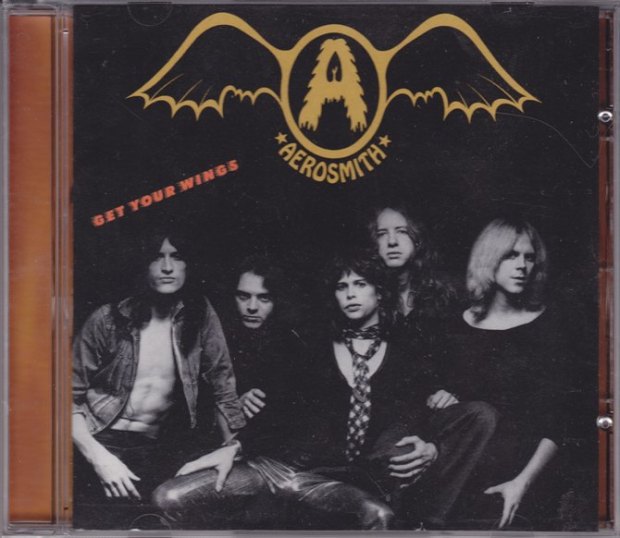
GET YOUR WINGS_0001AEROSMITH – Get Your Wings (1974 Columbia, 1993 Sony remaster)

Only the year after dropping their debut, Aerosmith cranked out another collection of solid bluesy rock tunes, but this time with better production! With Bob Ezrin overseeing the project, Aerosmith made the fateful hookup with Jack Douglas. Although the band had bigger hits under Bruce Fairbairn in the 80’s, Aerosmith made their best albums with Jack Douglas in the 70’s.

Get Your Wings really sounds like the Aerosmith we now know and love. The first album wasn’t all the way there yet. Get Your Wings sounds like my kinda Aerosmith. Surely, the opener “Same Old Song and Dance” is familiar to millions. Horn laden and funky, “Same Old Song and Dance” hits all the Aero-bases.

As a piano player, Steven Tyler usually keeps in simple and rhythmic, and “Lord of the Thighs” is the perfect example of that kind of Tyler piano part. It’s a menacing song, right in the pocket, also boasting some of Joe Perry’s more memorable solos.

One of my favourite songs, and one of the least-known is the sci-fi tale “Spaced”. This is a story about the “last man to survive”. It’s an ambitious tune for Aerosmith, and boasts a number of catchy parts. Another seldom heard track is “Woman of the World” which is also pretty cool. I like the acoustic intro and the smoking Joe Perry licks. “S.O.S. (Too Bad)” is a full-speed-ahead Aerosmith blast of adrenaline, a definite classic. These tracks boast a high level of musical depth and satisfying chops.

Aerosmith covered the legendary Yardbirds song “Train Kept a Rollin'” and managed to make it their own. When it picks up steam at the end, better hold on tight. This song may enduce whiplash. You get to cool down as it fades into the acoustic classic “Seasons of Wither”. As far as I’m concerned, “Seasons of Wither” is almost as brilliant as “Dream On”. It’s that good. It also takes advantage of the fuller production that Jack Douglas brought to the table.*

Although “Seasons of Wither” would have been a fine side closer, a coda is tacked on in the funky “Pandora’s Box”. Double and triple entendres, a rock solid rhythm section, and those soon-to-be-trademark Aerosmith horns n’ piano — what more do you need? While it does feel oddly sequenced, “Pandora’s Box” is every bit as classic as anything else on the album.

Get Your Wings showed significant growth from the band’s debut. Their trajectory had yet to peak…even better things were ahead.

4/5 stars

* I noticed in the photos in the CD booklet, this album was once available in Quad!  Oh, to have a quad version of “Seasons of Wither”!

AEROSMITH BOX OF FIRE review series:

BOX OF FIRE THUMBDisc 1: Aerosmith (1973)
Disc 2: Get Your Wings (1974)