Reviews

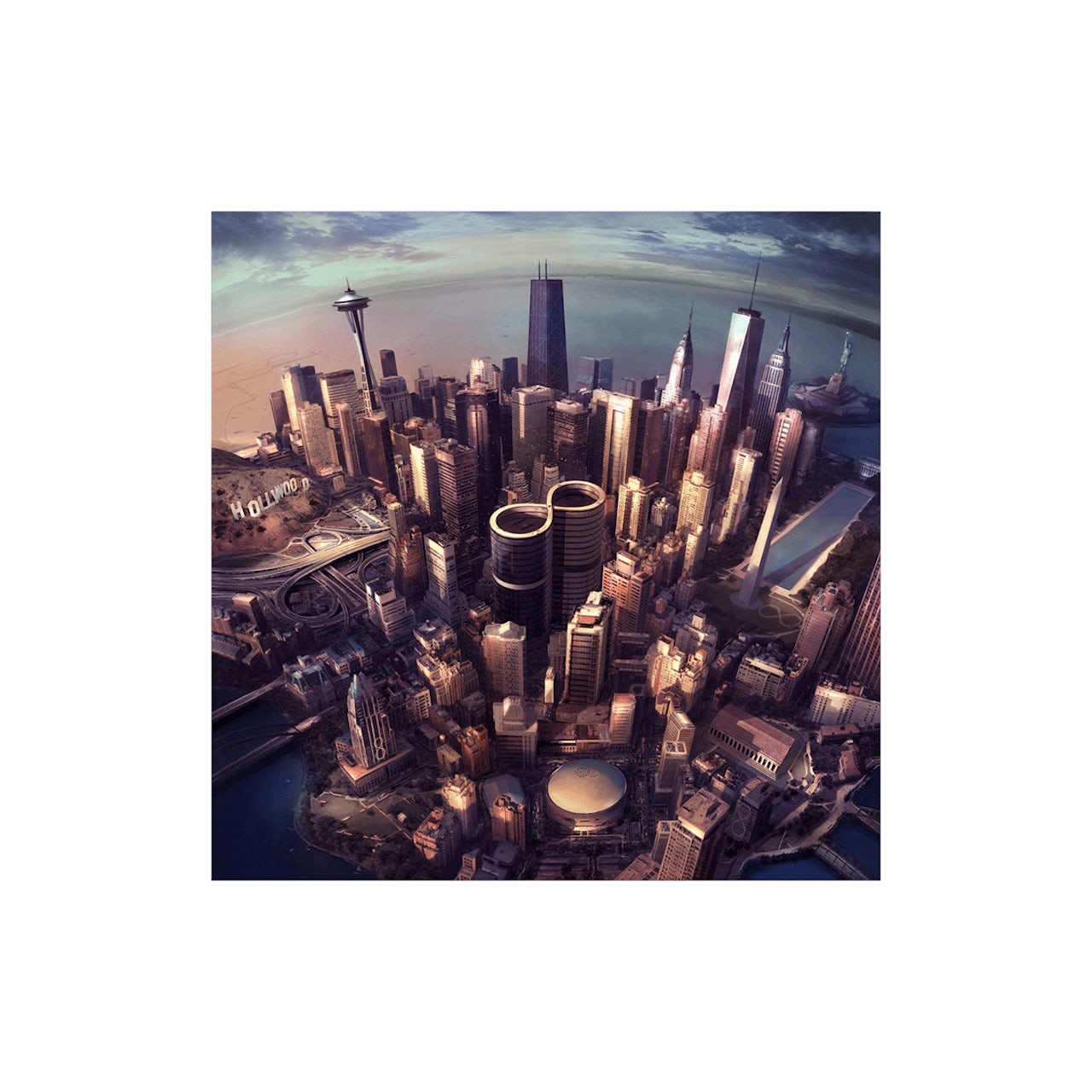
REVIEW: Foo Fighters – Sonic Highways 6 – New Orleans – “In the Clear”

FOO FIGHTERS – Sonic Highways 6 – New Orleans – “In the Clear”

New Orleans.  Streetcars, paddlewheels, big brass and the Foo Fighters.  Let’s rock!

The city is alive with music, all day and all night.  It starts with the jazz, Louis Armstrong all the way down to Harry Connick Jr.  Little Richard transformed it into rock and roll.  Dr. John was born there, and was mentored by Louis Armstrong.  Preservation Jazz Hall was the historic place to be, but could it stand up to the full blast of the Foo Fighters?  The streetfront venue picks up all sorts of crowd noise, from horses to passing musicians.  It’s all part of the charm.

In this installment, Dave speaks to Allen Toussaint, born and raised in New Orleans, in a segregated city.  It was actually illegal for black and white musicians to share a stage together.  “It just seemed jive to me,” says Dr. John, who played with who he wanted to play with regardless of the consequences.   Allen Toussaint wrote one of his biggest hits, “Summer Nights” which was directly inspired by the New Orleans sky at night.  Also from New Orleans came the “first family of funk”, the Meters.  The funk they produced was a new form for New Orleans – the Meters sound.

The Foo Fighters were invited to play the Jazz Festival, an historic event that couldn’t even happen until the end of segregation laws.  Until then, a jazz festival in New Orleans was simply not possible.  It’s an honor to be invited.  New Orleans was a cultural mecca, rich with distinct influences from around the Gulf of Mexico, and Africa as well.  Dave’s also invited to the Hall’s piano player’s house to eat and jam with his family.  It’s a really old fashioned traditional way of life.  Music is more important to the people of New Orleans than any of the other cities they visited.

When Katrina hit, seven of the eight members of the Preservation Hall band lost their homes.  It had a devastating effect but also brought people together.  The people learned to appreciate music just a little bit more.

It’s hard to get Grohl back into the Preservation Hall to work on the chunky, Motley riff of “In the Clear”.  The French quarter has its charms, and he’s busy hanging at the bar across the street with Nate Mendel!  Once they get their shit together, “In the Clear” emerges as a singalong hard rock track.  The lyrics reflect the perseverance  of the city, but the music doesn’t have any of its rich cultural sheen.  For a song inspired by New Orleans, and jamming with these local musicians, it would have been nice for them to shed a bit of the rock.  You can’t hear any influence of the old.

Episode 4/5 stars

Song 2/5 stars (Meat)

Song 3/5 stars (LeBrain)

REVIEW: Foo Fighters – Sonic Highways 5 – Los Angeles – “Outside”

FOO FIGHTERS – Sonic Highways 5 – Los Angeles – “Outside”

L.A.  Home of Pat Smear and the Germs.  Pat wouldn’t live anywhere else.  It’s Hotel California!

Lots of people went to L.A. to make it.  Very few did.  The first that did in the 1960’s had sunny, California sounds.  Then came the excess and rock and roll stylings of Motley Crue.  To a young Duff McKagan, straight off the bus from Seattle, it was “the wild west”.  The desert itself attracted the artist types and a hippy mentality.  Foo Fighters recorded The Color and the Shape there, but on a day off, Dave went into the desert to find an obscure studio called Rancho de la Luna.  It was home of the “desert scene” there.  Daniel Lanois helped set it up.  It’s the weirdest studio you’ve ever seen, loaded with weird, creepy and quaint nicknacks.  It’s tiny. How the fuck are the Foo Fighters going to fit in that room?

That little room necessitates all five players to be in close quarters.  No room for pianos this time, so it has to be a bare arrangement.  In the desert, there is nothing to distract the artists.  Except Joe Walsh, who shows up to lay down a quintessential solo, blowing the mind of Taylor Hawkins, who just gushes.  “That was so fuckin’ RAD!”

Meanwhile, guitarist Pat Smear is eager to hit his old home town.  Rodney Bingenheimer was the DJ you wanted to impress back then, if you wanted to make it big.  He was the first to play Pat on the radio.  He was known as the “mayor of Sunset Strip”, knowing everybody and owning the coolest clubs.  Iggy Pop played there.  Paul Stanley would check it out to see what bands were coming up.  Joan Jett and Lita Ford were regulars.  They formed the Runaways in L.A., and struggled with the sexist assholes and persevered.  Pat Smear ended up as one of their groupies.  Pat formed the Germs with the very disturbed Darby Crash, who influenced Nirvana’s frontman (and Smear’s future bandmate) Kurt Cobain.  They were also the band who convinced Duff McKagan to play music.

As a footnote, Darby Crash purposely overdosed on heroine, in order to be remembered as famous.  Even this backfired when John Lennon was killed the following day, meaning nobody would ever remember the death of Darby Crash.

Josh Homme of Queens of the Stone Age was born in Palm Springs, “on the edge of civilization”.  Mario Lalli, Scott Reeder, and other cornerstones of the stoner rock scene would take a generator out into the desert and play concerts by word of mouth.  They’d take mushrooms and put on a show.  According to Scott Reeder, “there was nowhere for you to play, where you could get that fucked up.”  The environment was “lawless and free”, and that was the beginning of Kyuss.  They were the antithesis of what was happening in metal at the time: the precision and speed. This was more about making a big, heavy detuned noise.  According to Grohl, Kyuss “blew my fucking mind.”  He bought extra copies of Blues for the Red Sun just to give to people.

“Outside” doesn’t sound as much like Foo Fighters as much; Grohl’s voice has a thinner sound this time.  The lyrics recall the openness of the desert.  “There’s a long straight road, out of the cold.”  The chorus is really memorable.  There are certain guitar licks that sound like they were lifted from past Foo Fighters songs such as “Everlong”.  It’s really special on that Joe Walsh solo, where he makes two notes sound more important than any others in the whole song.

Episode 5/5 stars because Kyuss

Song 4/5 stars

REVIEW: Foo Fighters – Sonic Highways 4 – Austin – “What Did I Do?/God as my Witness”

FOO FIGHTERS – Sonic Highways 4 – Austin – “What Did I Do?/God as my Witness”

Austin.  Classic riffs such as “Smoke on the Water”, “Bohemian Rhapsody” and “Stairway” ring out from the studio hall.  “Just something new I’m working on!” somebody says.  Time to record another new Foo Fighters song in another city.

Austin is a little pocket of “different” in Texas.  Gibby Haynes from the Butthole Surfers is not the kind of guy you expect to come out of Texas.  Willie Nelson, though, seems like a natural.  He returned to Texas from Nashville to become an artist in his own right, and in turn he helped but Austin on the music map.  It was now OK to have long hair, and cowboy boots.

Austin City Limits was their version of Grand Ole Opry.  It was the stage you had to be on.  It was one of the few TV shows that made bands sound good instead of weak and thin.  Artists from all genres have played it.  Though Austin City Limits have since moved to a new facility, the old one is still there, and that’s where Grohl wants to set up and play.

Austin was home to the Moving Sidewalks, which housed Billy Gibbons of ZZ Top.  It was also home to the 13th Floor Elevators, adding a psychedelic edge to the music scene.  Roky Erickson of the Elevators invented it, and was behind numerous aggressive spaced-out rock songs.  Townes Van Zandt was another cornerstone of the scene, and Steve Earle went to Austin looking for him.  Jimmie Vaughan formed the Fabulous Thunderbirds there, even though he was told there was no point in forming a blues band.  Stevie Ray came along at age 17 to play with Albert King.  Gary Clark Jr. started out as a kid who started hanging out at Austin City Limits, but could play the blues like devil hisself.

As always, punk came alone.  The Big Boys, the Jesus Lizard, the Butthole Surfers presented an unorthodox but creative front.  These guys listened to both punk and funk, and tried to combine both.  South by Southwest (SXSW) became a critical music festival that gets 10,000 applications from bands a year, to play in only 2300 slots.  The challenge now is that since the scene has grown so much, and got so commercial, how do you keep Austin weird?

Grohl is psyched to find an old piano under a tarp in the studio that had been played by everyone from Jerry Lee Lewis, Fats Domino, and Tom Waits.  He had to have it on the album.  Indeed, it’s right there at the beginning of the song, which soon transmutates into something more typical for Foo Fighters.  There is a lyrical reference to the “13 floor”, and the urethane wheels of the skateboards that were central to the Austin punk scene.  Regardless, “Where Did I Go?” is pretty stock, coming to life a bit more in the second section, “God as my Witness”.  The structure is not unlike “Layla”, and ends better than it starts.  It’s almost gospel at the end, as if the Nashville carried over into the Austin.  Gary Clark Jr. throws down a great classic rock lead on a Gibson SG.

Episode 4/5 stars

Song 3.5/5 stars

REVIEW: Foo Fighters – Sonic Highways 3 – Nashville “Congregation”

FOO FIGHTERS – Sonic Highways 3 – Nashville “Congregation”

Nashville.

“Wow, Kevin Costner has played the Grand Ole Opry.  Rad.” – Pat Smear

Dave sits down to play an acoustic at the legendary Bluebird Cafe.  It’s a daunting task for a rock drummer, to sit and play bare acoustic songs by himself on that historic stage.  He was admittedly a fish out of water, but in a “refreshing way”.  Nashville, according to Foo Fighters, is the coolest city in America.  Dolly Parton says Nashville is all about the songs.  It was the “Hollywood of music, for the south” according to The Black Keys’ Dan Auerbach.  Steve Earle, who arrived in 1974, says Nashville is “university for songwriting.” However some artists like Willie Nelson had to leave Nashville in order to find solo success.

It’s big, big business; a country “hit factory”, from Dolly Parton to Carrie Underwood.  Johnny Cash to Kenny Rogers and Lady Antebellum.  By the time you get to Brad Paisley and Taylor Swift, it doesn’t sound much like what it used to anymore.  Zac Brown is an exception.  Dave Grohl thought it was pretty cool that Zac would barbecue food for his audience before the show.  Brown on the other hand really wanted Grohl to produce them.  And Dave had never even heard one song before, but grew to love his “outsider” stance and lightning guitar licks.  He could be in Slayer, says Grohl, he’s so fast.  He started out picking intricate classical lines on a nylon string guitar.

Grohl became such a fan that he decided to record at Brown’s own studio, one of the oldest in town.  It is a huge beautiful building; a church built in 1901.  The wood paneling inside lends it a cottage-y feel, but it’s also wormy wood that has great acoustics.  The drum sound is once again massive and deep, but the band didn’t have the song ready until they got there and Dave figured out the arrangement in the studio.  Dave was inspired by a beam in light through one of the old church’s music — no shit.

It’s a suitable inspiration.  Cash sang gospel, so did the deeply religious Elvis.  Blues was also an influence to later Nashville artists.  Jukeboxes were a big inspiration.  Pianist Tony Brown first turned on to country via a George Jones song on a jukebox.  Emmylou Harris told him to check it out; the song brought him “to his knees”.  The single was an important format.  An album was essentially just a compilation of previously released singles.

Foo Fighters lead guitarist Chris Shiflett is a country-head, and he had the best time in Nashville.  The barbecue food looks incredibly succulent.    “Congregation” is surprisingly Journey-like, but with Lizzy harmony guitars.  Arena rock: it’s the choice of notes.  The middle section then goes into an odd, jazzy guitar part played by Zac Brown.  “Open your eyes, step into the light!”  This is definitely a hard rock anthem.

Episode 4.5/5 stars

Song 4.5/5 stars

REVIEW: Foo Fighters – Sonic Highways 2 – Washington – “The Feast and the Famine”

Back in 2014, Uncle Meat asked me to sit down with him and write up Dave Grohl’s series / album Sonic Highways episode by episode, song by song.  Eight hour day at minimum.  I said OK.  I took meticulous notes.  Then we never finished it.  So I’m posting them all now, nine years late, as-is and unrefined.

FOO FIGHTERS – Sonic Highways 2 – Washington – “The Feast and the Famine”

Washington DC.  Home of the Bad Brains.  PMA: Postive Mental Attitude.  Time to record another song.

The episode begins with the assassination of Dr. Martin Luther King.  Dave grew up in nearby Virginia, a place that feels like home.  The stark poverty surrounded by the upper crust is the inspiration for “The Feast and the Famine”.  It’s an ugly reality that cannot be ignored.  There was also racial segregation.  The only white people that the kids in Bad Brains saw were their school teachers.

DC didn’t have much of a rock scene in the 70’s, but it did boast some pretty wicked funk.  “The art form that should have been popular instead or rap.”  It’s based on something called the “pocket beat” which switches up the hits to make something new: “Go Go music”.  Pharrell is on hand to offer his perspective of growing up with Go Go funk.  It’s repetitive but irresistible.

Grohl goes to Inner Ear Studios in Virginia, a studio responsible for some early classic Black Flag records with Henry Rollins.  Don Zientara was the producer who was responsible for virtually every punk record to come out of Washington.  Bad Brains bassist Daryl Jenifer says that speed was the key for their brand of punk rock.  Faster and more aggressive, says Rick Rubin. Mike D from the Beastie Boys says that Bad Brains were the best show he’d ever seen.  The original Inner Ear studio was in a house in the suburbs, a crazy juxtaposition of the punk and the normal.  The records were released on Dischord records and other indi labels.  The labels started out of necessity; they cut, folded and glued the record sleeves together themselves.  Ian MacKaye (Minor Threat/Fugazi) has many great stories about the scene at the time.

Virginia band Scream attracted young Dave as a highschool kid.  When they needed a new drummer, Dave gave them a call.  To his surprise, they actually hired him.  He went on to record the pretty crap album No More Censorship, but he was doing it!  When he wasn’t doing that, he was protesting apartheid in Washington.

The new Inner Ear doesn’t seem much bigger inside, but the drum sound that Taylor Hawkins gets is a killer.  It’s the studio that bassist Nate Mendel was most looking forward to, because of all the records he loved that were made there.  The band start working on a stuttery, syncopated riff.  It’s rhythmically interesting, but the melody reeks of punk rock.  It combined the punk/funk relationship in Washington DC.  It has the speed and melody of punk, but with the rhythmic chops of funk.  It’s not a basic, straightforward punk song due to the interesting stuttering rhythm.  To Meat, it sounds like Foo Fighters.

Episode 4/5 stars

Song 4/5 stars

REVIEW: Saigon Kick – The Lizard (1992)

The reviewer formerly known as LeBrain comes out of retirement for this one-time-only event in collaboration with 2loud2oldmusic.comFor John’s excellent review, click here.

SAIGON KICK – The Lizard (1992, Rock Candy Remaster)

Saigon Kick was ahead of the curve compared to most of the spread of 1992 competition.  They were heavy, diverse, unafraid, daring, and extremely skilled.  Boston’s Extreme had similar talents but were treading different waters to Miama’s Saigon Kick.  Going for broke on their second album The Lizard, produced by guitarist Jason Bieler, Saigon Kick really demonstrated they were not messing around.

An opening anthemic bit called “Cruelty” cannot be called an instrumental due to the psychedelic, otherworldly shouts and yelps by singer Matt Kramer.  (Similar to the later work of Canada’s Paul Jago from the Ganharvas.)  This leads into a pounder:  “Hostile Youth”.  Skid Row may have been about the youth who were going wild in 1989, but in 1992, Bieler and Kramer were appealing to the anger of the next generation, complete with lethal, deliberate groove topped by silky smooth Beatles-esque “ooh-oohs” and a buttery guitar solo.  “We don’t like our homes!  It’s nothing but a joke!”

From there into a bass groove.  “Feel the Same Way” mixes singalong hard rock with a slightly psychedelic edge.  Sing along, you might like it.  Upbeat and different from the mainstream.  The aforementioned Extreme do come to mind on “Freedom”, with its funky bass backing and groovy tempo.  The trademark Kramer/Bieler vocal mix sets it apart.  A semi-acoustic number “God of 42nd Street” recalls the Beatles plain and simple, but it also captures them in a way that most bands fail.

A bonkers bit called “My Dog” verges on Faith No More territory, which is not a bad thing, it just proves something about diversity.  It’s over quickly though and supplanted quickly by a stompingly heavy groove called “Peppermint Tribe”.  The lyrics and vocals seem right out of the Dee Snider playbook, but Dee never grooved like this.  There’s even a bit of Smashing Pumpkins in some of the guitars.

At this point, the world stops spinning, for it is the stunning ballad “Love Is On the Way”, and it just feels like 1992 all over in some inexplicable way.  Hard to explain, hard to pinpoint, but the heart knows.  It’s lonely yet triumphant.  Its power is in its restraint.  Where it could wail away like the Scorpions on maximum hairspray, it sticks to an acoustic bass.  The vocals are the power.  Bieler’s solo has a rare touch that only certain guitar players can claim to have mastered.

From there, to one of the heaviest grooves:  “The Lizard”!  Drummer Phil Varone goes for something more tribal while Bieler and Kramer harmonize over the grinding riff.  This is truly Saigon Kick doing their own thing.  This band defies expectation, especially when “The Lizard” goes into Neal Schon territory on the guitar solo.  Things get grimier on “All Alright” which has a biting menace of its own.  Lethal as it may sound, the chorus harmonies really defy it.  Speaking of lethal, the guitar solo might be one of Bieler’s best.

A beautiful guitar instrumental called “Sleep” recalls Joe Satriani’s tender moments.  This serves as an introduction to the fine “All I Want”, which burns bright with an acoustic guitar and loads of cloudy, floaty music.  Naturally this must be followed by something heavy, so it is the choppy blast “Body Bags”.  This one was co-written by Varone, which might explain the tempo.  It cools off a little bit on “Miss Jones”, an excellent deeper cut.

Track 15, second to last on the original running order, is a co-write by bassist Tom DeFile and has an exotic, Eastern flavour.  Plenty of stringed instruments layered differently on “World Goes Around”, a late album highlight.  It has the feeling of a perfect penultimate track.  It takes things down to a simmer.  The surprise is the closer “Chanel”, like something from a barbershop band in the 1930s!  Unexpected yet delightful.  What a strange twist.  Check out the jazzy guitar solo!

Rock Candy CD buyers get the Beatles cover “Dear Prudence” as the final closer.  Very few bands get away with covered the Beatles, but it’s little surprise that Saigon Kick do it so well.  It’s actually a perfect song for them to cover.  I have a feeling they all owned the White Album.

Of course, Rock Candy aficionados know to expect excellent packaging, sound, and liner notes besides the bonus track.  It’s all there for you to dig in.

5/5 stars

You can also dig in to the interview that John T. Snow and I did with Jason Bieler in the summer of 2022!  We discuss The Lizard and much more.

REVIEW: Foo Fighters – Sonic Highways 1 – Chicago “Something From Nothing”

Back in 2014, Uncle Meat asked me to sit down with him and write up Dave Grohl’s series / album Sonic Highways episode by episode, song by song.  Eight hour day at minimum.  I said OK.  I took meticulous notes.  Then we never finished it.  So I’m posting them all now, nine years late, as-is and unrefined.

FOO FIGHTERS – Sonic Highways 1 – Chicago “Something From Nothing”

Chicago.  20 years.  Time to do something special. Something they’d never done before.

The assumption is that the environment in which you record, affects the finished recording.  The history of each city resonates in the grooves.

Buddy Guy, Joe Walsh, Bonnie Raitt, Rick Neilson, Jimmie Vaughan, Billy Gibbons, and more are all on hand to talk about the Chicago blues.  It all started with Muddy Waters – “Muddy was the magnet.”  The blues clubs in Chicago grew into a phenomenon.  Buddy Guy came to Chicago “looking for a dime, but found a quarter”.  These blues roots later influenced the guitar work of Cheap Trick’s Rick Neilson.  Coming up, he played with all the greats before finding his own fame.

The Foo Fighters enter the Chicago studio of producer Steve Albini, a tenacious bastard of a producer clad in coveralls, to see what will happen.  Dave Grohl is a big fan of his drum sound, having worked with him before on In Utero, and he knows he will get a huge drum sound here.  Butch Vig is the producer for the sessions. Albini, though, was initially attracted to Chicago for its infant punk scene.  He was an “annoying kid” who hung out with the band Naked Raygun, who really kicked off the scene.  Even Dave Grohl’s Chicago cousin Tracey had a punk band called Verboten.  Punk was coming up in Chicago.  The record store Wax Trax was critical to the growing scene.  Grohl himself bought records there when visiting his cousins in town.

“Something From Nothing” begins to emerge from that funky “Holy Diver” riff.  Chris Shifflet lays down a noisy, fast guitar solo with the raving encouragement of his bandmates.  Rick Neilson lays down some thick chords, even though the Foo Fighters already have three guitarists!  Lyrically, a lot of the song comes from Buddy Guy’s own story coming up in Chicago.  The record company wanted him to change his name.  “Buddy Guy isn’t a stage name.”  How wrong they were!  Buddy Guy used to make rudimentary musical instruments with buttons and strings, and that made it into the lyrics.

The result is a powerful, epic song of massive proportions.  It snakes its way through multiple riffs and sections, but it’s that “Holy Diver” riff that first hooks you.  “Funky Diver”, maybe.  It’s a clear sonic assault.  This is, by far, Uncle Meat’s favourite Foo Fighters song.

Episode 4.5/5 stars

Song 5/5 stars

Landings Unboxed! Grace Scheele joins Grab A Stack of Rock to talk about her debut cassette EP!

A blast (-off) was had yesterday, taking a look at Landings, the debut EP by electroacoustic harpist Grace Scheele!  It’s a concept EP about the Apollo 11 mission.  If you like science fiction, space, the moon, chilling, or not chilling, this cassette is for you!  Chromed plastic, sleek packaging, bonus tracks, what more could you ask?  And a small quantity is still available if you’d like your own copy!  You can get it at Bandcamp, and I’m getting a second copy while I still can.  Why?

  • Supporting independent artists is important.
  • Each tape comes hand-sealed in silver foil, with a sticker on the seam.
  • Cassette-only bonus tracks on the B-side!
  • Sensational packaging; chromed cassette shell.
  • Music that is truly out of this world.

Grace joined me on an impromptu short episode of Grab A Stack of Rock on Sunday afternoon, where she explained the creative process, the art, and other details.  Why cassette?  You’ll love the answer.  Also, find out what to do with an ornamental electric harp thingy if you want to have some fun with hacking!  Seriously!

Great little mini-episode!  Thank you Grace for sharing your time with us!

Pick up Landings on Bandcamp!


REVIEW: Grace Scheele – landings (2023 – side one)

GRACE SCHEELE – landings (2023 EP – cassette side one, and download)

I’m a sucker for a pretty tape.  This has to be the prettiest tape I’ve ever seen! Limited to 75 copies, I was very happy to participate in a Kickstarter from electroacoustic harpist Grace Scheele.  It’s called landings and, well, I think Grace says it best on her bandcamp:

“landings” centres on the real and imagined experience of the Apollo 11 mission to the moon; wielding bowed harp, electronic fx, and sampling from speeches, newsreels, mission audio, and NASA’s own interviews with those present at the historic newscast.  Ranging from the ethereally ambient to grinding, jarring industrial noise, the seven tracks across this debut EP represents an imagined journey into the darkness of space.

I’d call it a concept EP, based on that alone.  It’s a real listening experience, with elements that remind me of Pink Floyd, Star Trek, and War of the Worlds.  Some of the speeches and dialogue will be familiar, others will be novel.  There are sounds that, in my limited experience, I didn’t know you could make with a harp.  At 22 minutes, landings is easy to digest in a single sitting, and the download comes with a “gapless version” that enables just that.  The layers of harp, samples, and electronic sound build paint a sonic picture.  You can feel the tension of the launch!  I bet this sounds great with headphones.

The track “pomposity” has been getting some exposure, so if you only check out one track, try “pomposity” for a taste of what this is like.

Of course, the cassette itself will be fun once I have it out of the box, and will include three bonus tracks.  You know me and bonus tracks — Can’t wait to hear those!

I can’t wait until I get this tape unboxed, for which I will be joined on a live stream by Grace herself.  We’ll talk about the music, the artwork, the Kickstarter and of course the cassette itself.

Music like this is hard to rate, because I think it’s art, and what’s the point of rating a piece of art?  It either resonates with you or it doesn’t.  I find landings to be an innovative listening experience, unlike anything else in my collection, and I am looking forward to checking it out in different listening environments.  Headphones next, and then this summer, on the front porch of the cottage at sunset.

4.5/5 stars

Youtubin’: The Mighty Mighty Bosstones – “The Rascal King”

When I feel like crap, the Bosstones can fix it.

Today is a stressful day full of appointments and difficult 401 driving. Wish us luck.