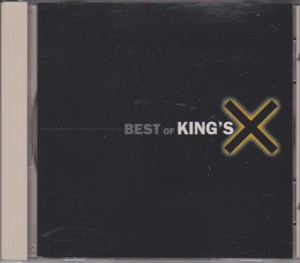
Atlantic

REVIEW: King’s X – Ear Candy (1996)

quiz

Complete studio albums (and more!), part 8


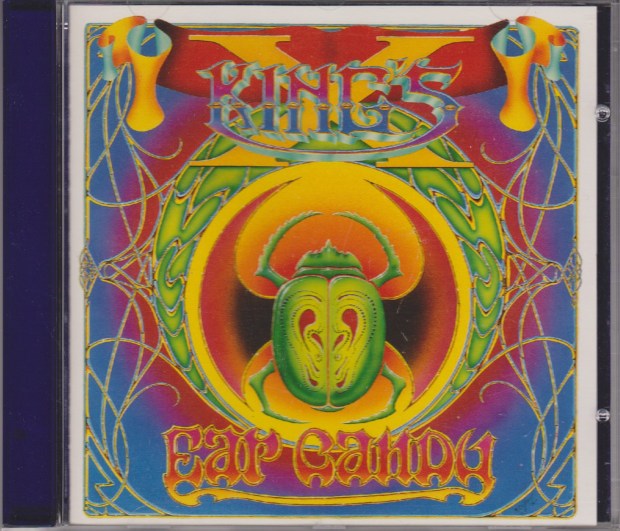
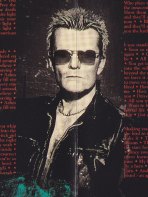
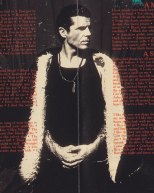
Scan_20151015KING’S X – Ear Candy (1996 Atlantic)

This is actually the album that sparked this review series in the first place.  I had to re-rip it to my PC.  Enamoured, I forged on with an entire series of King’s X, because they deserve it!

By the time King’s X hit album #6, any hope of them being a mainstream success was in the distant past.  1994’s Dogman was an artistic triumph, and considerably heavier than past albums, but still nothing.  King’s X even played the noteworthy, critically acclaimed opening set at Woodstock ’94 (more on that next time), to no avail.

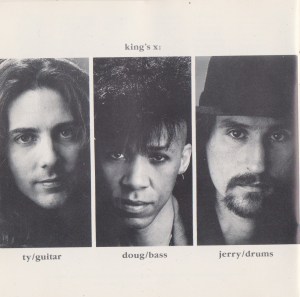
Ear Candy was their last album for Atlantic and I don’t know if it was record company pressure or simply natural creativity, but it was different for the band yet again.  The heavy tunnel-vision sound of Dogman was severely toned down, in favour of melodic composition.  Canadian hitmaker Arnold Lanni was on board for production, his only outing with King’s X.  (The Canadian connection was manager Ray Danniels who was handling King’s X for a brief time.)  Even guitarist Ty Tabor had stepped back up to the microphone, after being notably absent on Dogman‘s lead vocals.  Some fans naturally rejected some of these changes.  For others, Ear Candy was a high water mark.  The 90’s were a confusing time!

This reviewer is in the high water mark category.  Although Ear Candy eschews progressive rock tendencies in favour of catchy tunes, I don’t think the end result was a bad thing.

“Step up and step aboard, your seat is to the left. Leave all your bags and tighten up your metal belt.” That voice is Ty Tabor’s and what better way to usher in his vocals with the first song on the album? “The Train” is a duet between he and Doug Pinnick who sings on the choruses. Classic King’s X trademarks are in place: harmonies, sweet 60’s melodies, hard guitars, and soul. The train is departing on a journey called Ear Candy, and it is a welcoming song.  Continuing with the 60’s vibe, “(Thinking and Wondering) What I’m Gonna Do” is sweet and summery.  Acoustic guitars, tabla, and Doug’s soulful throat are the focus.  Drummer Jerry Gaskill refuses to play anything simple, and so his drums and percussion are spare but unorthodox.  Backwards Tabor guitars add to the psychedelic trip.

One of the draws to King’s X has to be Doug’s 8 and 12 basses.  “Sometime” (another Doug song) has some of the baddest, lowest, most ass-rumbling bass you’ve ever heard.  You have to love the sound of those big phat strings shakin’.  Mid-tempo and sweet, “Sometime” is hard enough but with those Beatles-like harmonies.

There was one single released from this album, the very rare “A Box”.  (This single had a bonus track called “Freedom” that is missing the LeBrain HQ rock library.)  A brilliant selection for a single, “A Box” has that “Goldilox” sound from the first King’s X album. Pinnick had been dealing with his own personal issues and you can hear this in the words. Also worth noting: the drum sound. Arnold Lanni has a knack for finding a killer snare drum sound. Just listen to Our Lady Peace’s first album Naveed. Jerry’s drums have never sounded better than they do on Ear Candy. That snare just snaps!  Then “Looking For Love” blasts.  Doug is not seething in anger, but you can hear it between the lines.  “Religion burned me at the stake,” and  “I guess I lost my faith,” sings the once-devout Christian.  You can also hear it in the tempo; straining at the lead.  Then, following “Looking For Love” is possibly the album highlight…possibly.  Because next is Ty’s “Mississippi Moon”, which is impossible to hate.  Ty sometimes writes these pleasant, 60’s-pop-like songs in his solo material, and with King’s X.  The layered vocals are like a little sugar on top.  Just delightful.  The only stumble is “67”, which is plenty chunky but not memorable.  The freakout guitar noise outro is pretty cool though.

That sounds like a side closer, and the next song “Lies in the Sand (The ballad of…)” would work nicely as a mellow start to a second side.  Ty ballads are sometimes very special, and “Lies in the Sand” is special indeed.  His earnest singing and playing are basically the song; the other two guys take a step back and just let the song pulse.  Things pick up again with “Run”, with Doug sounding cast-down and dejected, but bouncing back again.  The pain also runs through “Father”.  “My brother’s on crack, my sister’s a wreck, our mother she tried, our fathers are lies.”  But the message is clear:  “Every one of us loves every one of us.”  Blood is thicker than water.

Jerry Gaskill takes a rare lead vocal on the ballad “American Cheese (Jerry’s Pianto)”.  The 60’s are recalled once again with a very Beatles-like piano pop ballad.  This sets up “Picture”, possibly the most upbeat pop rock moment on Ear Candy.  It has a drive to it, and instrumental integrity, which takes it levels high and above most examples of pop rock.  Doug sounds happy, and the band rock with glee.  It’s a great precursor to “Life Going By”, the finale.  It has a quality that sounds like a bookend to “The Train” at the start of the album.  Tabor weaves a bright tapestry of acoustic and chiming electric guitars, and also takes the lead vocal for this last song.  Layers of harmonies take us out on a sweet, soulful note.

What an album.  What’s not to like?  Fear not the pop, for King’s X took it back to heavy for 1998’s Tape Head….

5/5 stars

Shortly after Ear Candy, progressive rock fans who craved a little more got their wish partly fulfilled.  Doug Pinnick did an excellent guest appearance on the hella-cool song “Lines in the Sand”, from Dream Theater‘s Falling Into Infinity album from 1997.  Doug sang accompanying vocals with James LaBrie, lending the song an additional edge.  A 10 minute long-bomber, “Lines in the Sand” definitely supplied a taste of the heavy complex rock that fans may have missed.  Even if Doug was just a small part of it, he was an integral part.

KING’S X review series:

Part 1 – Out of the Silent Planet (1988)
Part 2 – Gretchen Goes to Nebraska (1989)
Part 3 – Kings of the Absurd (split bootleg with Faith No More)
Part 4 – Faith Hope Love by King’s X (1990)
Part 5 – “Junior’s Gone Wild” (from 1991’s Bill & Ted’s Bogus Journey soundtrack)
Part 6 – King’s X (1992)
Part 7 – Dogman (1994) + bonus “Pillow” promo single review

REVIEW: King’s X – King’s X (1992)

quiz

Complete studio albums (and more!), part 6


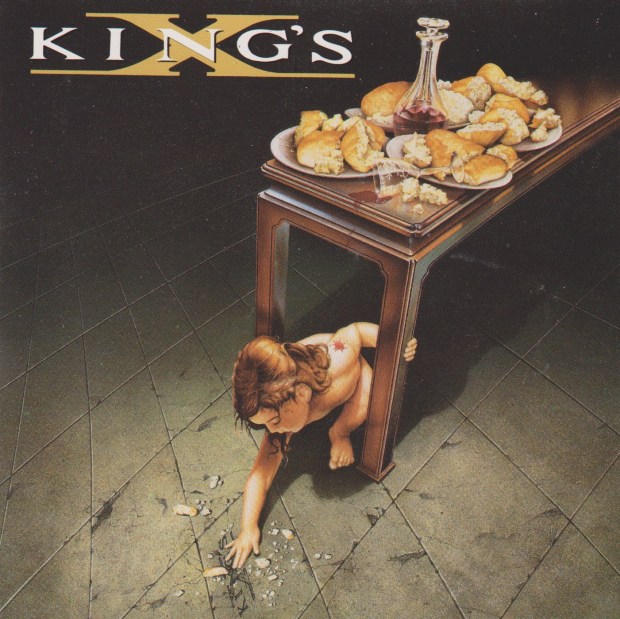
Scan_20151104KING’S X – King’s X (1992 Atlantic)
The end of an era: the self-titled album.  When you self-title a record, it’s usually meant to be a statement.  Who knows if King’s X knew that theirs would be the end of the classic era of the band?  Tensions with producer/manager Sam Taylor were increasing and this would be their last collaboration.

King’s X, the album, seems to hone in on songwriting.  There are no long bombers, just short and taut King’s X songs.  “The World Around Me” exemplifies this.  The main ingredients are intact: Doug’s soulful but pained lead vocals mixed with the lush backing of the other two, the heavy but uniquely constructed riffs, and the diverse assortment of influences.  This song, and the next (“Prisoner”) get in and get out quick, delivering the necessary hooks with integrity.  They don’t spend time noodling or meandering.  The songs are more direct this time, without selling out.  You still can’t mistake what band this is.  There is only one band that sounds like King’s X, and that’s due to a unique vocal blend, and playing that sounds like no one else.

“The Big Picture”, the first ballad, doesn’t sound all too different from the Faith Hope Love material.  Good song, but a retread.  Then we’re “Lost In Germany”, with Doug and Ty Tabor sharing vocals, but this is one song that annoys more than it entertains.  Something about that chorus.  “Germany, lost in Germany!”  Maybe it’s the fact that my old boss at the Record Store used to make fun of this song, or maybe it’s just corny.  It has a tricky little Steve Vai-esque guitar lick, but I don’t want to be “Lost in Germany” any more.  Having found the autobahn, we get off next at the “Chariot Song”.  Accelerating breakneck, this song kicks ass.  Time signatures and keys change left right and center, but it’s a cohesively awesome song.  All I dislike are the self referencing lyrics: “Out of the planet comes Gretchen with faith, hope and love.” You’ll love the psychedelic Beatles section in the middle. Fave tune “Ooh Song” blows out the speakers. The stuttery riff and dark melodies hint at where King’s X were headed. “Ooh Song” and “Chariot Song” are a whopper of a one-two punch, 100% King’s X, no selling out.

“Not Just for the Dead” is uplifting, with hints of piano and sitar. It has a proud, anthemic quality before it too ventures into psychedelia. An album highlight for sure. Then, “What I Know About Love” (the closest thing to a long bomber on this album) has a long Ty Tabor solo section; very cool. “Black Flag” was the lead single but never a favourite of mine. Like “Lost in Germany”, something about the chorus just isn’t happening. Seeing Doug flying around in his underoos, in the music video, is entertaining however. There are also some King’s X puppets — somebody made actual puppets of the guys for props in this video. I sure hope somebody hung onto those!

Winding down the album, Ty’s mellow “Dream in my Life” just kind of sits there. It doesn’t have the drama I crave in King’s X. Fortunately, the closer “Silent Wind” kicks ass completely. The verses and chorus are equally excellent. This is a powerhouse of a song, and though a closer, could have made a much better single than the two they picked!

King’s X created another solid album, but for the first time it felt like they had not progressed. King’s X feels like an amalgam of previous King’s X albums, and maybe that was the point. Still one of the greatest rock bands of all time, they spun their tires a little here. But change was afoot.

4/5 stars

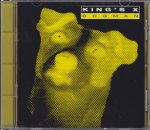
DOGMAN FRONTThe only King’s X album I reviewed prior to this series was Dogman (1994), and that review is the next chapter in this series. You can read it by clicking here now!

As stated above, Kings’s X, the album, was the end of an era. Dogman would be dramatically different. There were no lead vocals by Ty Tabor, and they had gotten much, much heavier. Putting the emphasis more on the groove, and installing Brendan O’Brien at the console, King’s X delivered a punishing sledge of an album. Dogman rates 4.9999~/5 stars, just shy of a full 5/5. Check out the full review for that.  Also previously published is a mini-review for a promotional CD single for the track “Pillow” from Dogman, complete with two then-unreleased live bonus tracks.   Click ’em both.


KING’S X review series:

Part 1 – Out of the Silent Planet (1988)
Part 2 – Gretchen Goes to Nebraska (1989)
Part 3 – Kings of the Absurd (split bootleg with Faith No More)
Part 4 – Faith Hope Love by King’s X (1990)
Part 5 – “Junior’s Gone Wild” (from 1991’s Bill & Ted’s Bogus Journey soundtrack)
Part 6 – King’s X (1992)
Part 7 – Dogman (1994)

REVIEW: King’s X – Faith Hope Love (1990)

quiz

Complete studio albums (and more!), part 4


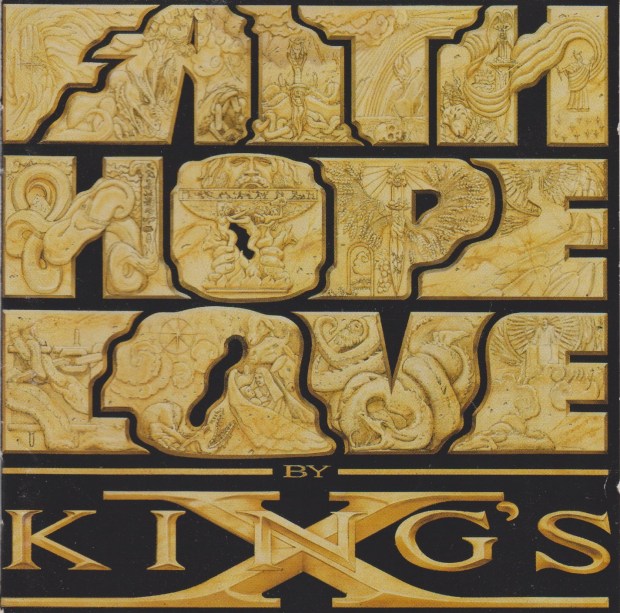
KING’S X – Faith Hope Love by King’s X (1990 Atlantic)

This is where I hopped on board the King’s X train.  It was the quirky video for the irresistible pop rocker “It’s Love”.  It wasn’t the first accessible King’s X single, but it was the first I ever had the chance to hear.  And it was instant.  It was an immediate, “Ah!  So this is King’s X!  I have to get this.”  And I did.  Before then, I had only read about them in magazines.  Their cool cover art, striking album titles, and brilliant reviews had them on my radar.

“It’s Love”, written and vocalized by Ty Tabor, emphasizes the melodic aspects of the band.  They always utilized Beatles-like harmonies over chunky guitars.  This mixture was perfected for the charts on “It’s Love”, and it did make a minor dent.

Although “It’s Love” might be the most instantaneous song on the album Faith Hope Love (the band’s third), it’s not the most impressive.  Not even close.  And that’s saying something!

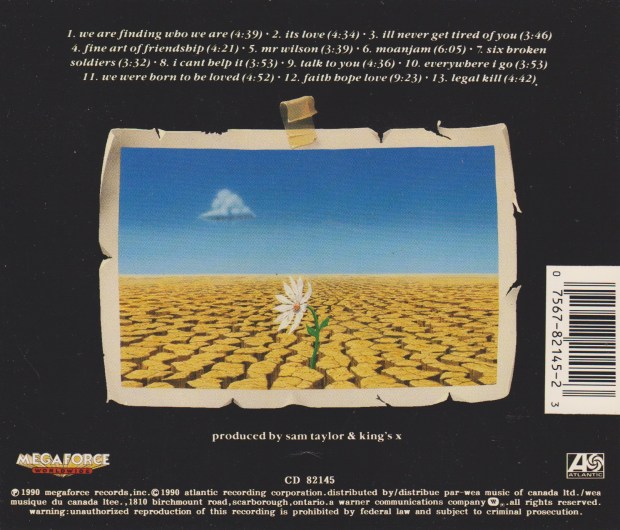
With Faith Hope Love, there was a downshift in intensity but not in quality.  The album is overall a little less edged, but just as challenging.  Indeed, the title track is almost 10 minutes of swirling rock, with dual lead vocalists and startling instrumental integrity.  There is also a song called “We Were Born to Be Loved” with smoking playing, false endings, and enough technical chops to satisfy the most ardent fan.

King’s X have never taken the easy road, lyrically or musically.  “Legal Kill” is abstract but can be interpreted to be about a few sensitive issues in today’s society.  It’s not preachy:  “I only know what I believe, the rest is so absurd to me.”  It’s a beautiful song, a peaceful acoustic ballad.  A song like this could have been a hit for anyone, except King’s X it seems.

Scan_20151023 (3)

Other accessible rock songs include the love song “I’ll Never Get Tired of You”, a beautiful sentiment.  The “Fine Art of Friendship” combines the vocals of Doug Pinnick and Ty Tabor in that patented blend, always so tasty.  Then there is the slow, dark ballad “Everywhere I Go” by Doug.   There aren’t any weak songs on Faith Hope Love, although I find the softies “Mr. Wilson” and “Six Broken Soldiers” (vocal debut of drummer Jerry Gaskill) to be not quite as amazing as the rest of this stunning album.

The centerpiece is “Moanjam”.  By the opening rumble of Doug’s bass and the intense tempo, you might think it’s a Motorhead song.  Proving their diversity, “Moanjam” combines smoking metal riffing, lush harmonies, and Doug’s unmistakable soul singing.  You could put “Moanjam” on an album 10 times and it would still be a hell of an album!  With subtle Christian lyrics (“I sing this song because of You, You’re the glory”), you can headbang to it without thinking too much about the words.   In fact, doing so is quite an enjoyable experience.  It’s also a blast to air-drum to Jerry’s speedy parts; just be sure to catch your breath!

Although Faith Hope Love was their most accessible album yet, in many ways it really wasn’t.  It was over an hour long, containing two long-bombers.   The arrangements are still challenging, and still uniquely King’s X.  There is nobody out there who plays guitar like Ty Tabor does, and nobody who can sing like Doug Pinnick.  Faith Hope Love is a completely unafraid album.  Unfortunately it might also have been their last chance to grab the brass ring.   With grunge around the corner, bands like King’s X were hastily pushed aside.  What a shame.  This record could have been their Revolver.

5/5 stars


Scan_20151023 (4)

KING’S X review series:

Part 1 – Out of the Silent Planet
Part 2 – Gretchen Goes to Nebraska
Part 3 – Kings of the Absurd (split bootleg with Faith No More)

REVIEW: King’s X – Gretchen Goes to Nebraska (1989)

quiz

Complete studio albums, part 2


Scan_20151018KING’S X – Gretchen Goes to Nebraska (1989 Atlantic)

Only a year — one measly year! — after debuting with one of the most dearly beloved first albums in memory, King’s X summoned the muse for a second time.  They went back into the studio with Sam Taylor to repeat the magic.  Repeat it they did, with their original blend of influences and talents, but without backing off one inch in compromise. They did make a couple corny but cool music videos, although the rarity of their airplay must have frustrated everyone involved.

“Over My Head” surely made the band look and sound cool. Their souls-meets-metal-meets whatever they want vibe is concisely summed up in under five minutes. “Grandma used to sing, grandma used to sing, every night when she was prayin'” says Doug, opening up old wounds that he would still be singing about for years. But it’s not dark; instead, the music is as uplifting as a church choir. But only if the church band featured Jimi Hendrix and the Isley Brothers.

Production is improved on Gretchen, and diversity has expanded once again. “Out of the Silent Planet” (the title track for the last album!) opens with sitar, but before too long a very Rush-like riff is enveloped by the lush psychedelic harmony vocals that Doug, Ty and Jerry create so naturally. Clearly the band did not take summer holidays that year because the growth is audible. Layers of guitars, sitars and unknown sounds create a swirl of purple haze. And listen to Doug’s chiming bass on the outro. What’s that you hear? Yeah, it sounds like the bass outro to “Jeremy” to me, too. Jeff Ament of Pearl Jam once said that “King’s X invented grunge”. I don’t think that’s true although it probably indicates that some smart guys in Seattle had good taste in music. I think Doug Pinnick invented the way that he and Ament play bass. If you hear Pearl Jam occasionally in King’s X, I think that’s the part that was tapped by Jeff Ament via Doug Pinnick.

Gretchen may be challenging like Silent Planet was, but King’s X try to make it easy for you to climb aboard the train. The light melodic picking in “Summerland” sound enticing so just come on in. Doug’s soulful wailing brings the clouds but Ty’s harmonies blow ’em back away. “Summerland” is a rock triumph, possessing drama with melody and integrity in a flawless mix. Back to church again on “Everybody Knows a Little Bit of Something” — but only briefly as we are now on funky ground. Accelerated for action, “Everybody Knows a Little Bit of Something” is a pulse-pounder not to be missed. King’s X can do no wrong, especially when combining disparate elements in new ways. Another side of King’s X is the acoustic one often visited by Ty Tabor, and that’s “The Difference”. The setting feels like a chilly fall day but King’s X paint pictures that allow you to see your own images. That’s the beauty of the music.

“I’ll Never be the Same” is more familiar King’s X territory. Never keeping it simple, never making it inaccessible must have been the motto. Their pool of influences seems to come out slightly different each time. Church organ (by Sam Taylor) makes its debut on “Mission”, an appropriate place for it, but that’s a bluff. “Mission” is actually a metallic assault on televangelists. “What is the mission of the preacher man?” asks Doug in an impassioned wail. “Some are true, Some do lie,” he warns. “Fall on Me” will then take your head off with some of the rockingest King’s X on the album. If a record label was looking for an accessible single, here it is. I guess this band really was just too smart for radio, like with the cosmic “Pleiades”.

Far off in the field I see a castle,
Today the people gather at the pole,
He tried to tell us all the world was spherical,
They burned his body but not his soul.

Keep in mind this is a band that is often lumped in with Christian rock!  But what about the riff?  Imagine the love child of Ritchie Blackmore and Jimmy Page.  They had a baby and named it “Pleiades”.

Pinnick brings the soul back on “Don’t Believe It (Easier Said than Done)”.  “This is not the end of the road,” he sings and he’s right — even though it is track 10, it’s not the end.  King’s X beefed up Gretchen with 12 tracks, a rare bounty in 1989.  But this was not a normal band.  These was an inspired trio with thoughts and feelings to get off their collective chests.  “Send a Message” keeps the pace upbeat but not straight; there have to be some twists and turns.  Ty then takes the final track with “The Burning Down” and a mellow ballad.  Floyd meets Rush meets King’s X, and it’s over.

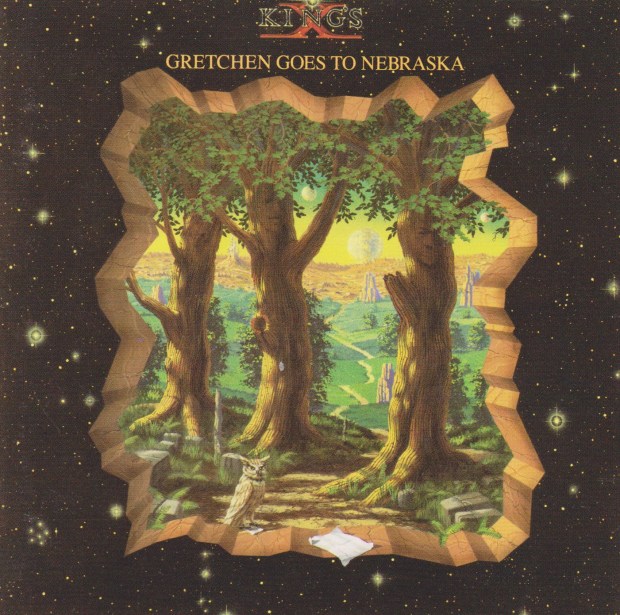
The first two King’s X albums boasted rich and impressive album art.  Gretchen is the best of the pair.  Now that’s an album cover; the LP at least anyway.  On CD it’s much harder to appreciate.  No matter since it’s the music that counts.  It’s rare for a band to grow from an incredible album like Silent Planet to something even bigger like Gretchen.  That’s exactly what King’s X did, even though they did it in obscurity.

5/5 stars

REVIEW: King’s X – Out of the Silent Planet (1988)

QUIZ

SERIES DEBUT

Join us for a serious look at every King’s X studio album!…and more.

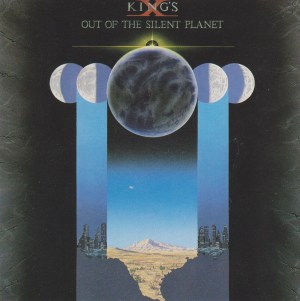
Scan_20151018KING’X – Out of the Silent Planet (1988 Atlantic)

The Texas Trio, the soul-bringers of progressive rock…call ’em what you want (I just did, I made those two titles up), King’s X are too important for you to ignore any longer.  If you have been aboard the King’s X train already, then you know what I am about to tell you.  If not, then realize that this band has been tragically ignored for aeons.  Since 1983 in fact, as Sneak Preview, a glammy rock band who released one record before changing direction and name to King’s X.  Even though Sneak Preview were certainly not hinting that there was more beneath the surface than just some good sounding rock and roll, it was obvious that they had the ability to write and to play.  They made a few music videos, and “Linda” depicts them delivering hooks more typical of Bon Jovi or Van Hagar.

Supposedly, the band were not happy with the way the Sneak Preview album turned out. Of 1000 copies made, half were reportedly destroyed on purpose. Today copies sell for over $200.

Newly christened as King’s X, the band and producer/manager Sam Taylor went into the studio for Megaforce, a division of Atlantic, the label that launched Led Zeppelin. They emerged with one of the most startling and important debut albums of the 1980’s, Out of the Silent Planet.  Starkly original and different, King’s X took the critics by storm.  If only the record buying masses followed their lead.

According to esteemed scholar and Sausagefester Scottie Geffros, “From Out of the Silent Planet right up to Tape Head (1998), there is so much good stuff that the world in general should be embarrassed that ‘music fans’ never caught on to the greatness that is King’s X.” Adds fellow ‘Fester Johnny Cheddar, “I remember the first time listening to Out of the Silent Planet with Dr. Dave…we had been on a music buying mission, and he found an elusive vinyl copy; going cheap if I recall. It was a hard album to come by in those days. I was amazed to hear such a heavy riffy metal sound, but without the sinister vibe that goes with it.”

Starting with a dramatic space rock intro, “In the New Age” soon introduces the core King’s X sound:  The soul, the dual vocal talents of Doug Pinnick and Ty Tabor, and their unique cross of influences.  Ty and Doug have voices on opposite sides of the rock spectrum.  Ty sings high and clean with a hint of Lennon, and Doug goes deep to the howling limits of his soul.  Their trio format, with Jerry Gaskill (another talented singer in his own right) on the drums still allowed them to create expansive rock.  They were not writing anything simple or pandering anymore; “In the New Age” boasts daring changes and a progressive bent that major labels weren’t usually hawking.

The central song might be the ballad “Goldilox”.  On this track, the band have married a knack for a good pop song without compromising their integrity.  “Golidlox” is a spring-like, bright song of hope.  Doug Pinnick has a voice to be envied by anyone, with power and the ability to evoke the classic soul singers of an era gone by.  The other two back him to form a lush curtain of slightly psychedelic harmonies.

“Power of Love” has a pop rock chorus, but punched up by the hard hitting band.  Vocally, this is a soul anthem.  Musically, it’s anthemic rock and roll, good for head-banging or banana-dancing.  It’s up to you — and that’s the “Power of Love”!   Although hard rock songs not unlike this were getting played on the radio, King’s X were probably too smart for radio.  “Power of Love” melds seamlessly into “Wonder”, a song about divisions between us.  “There’s a wall between us, a partition of sorts.”  Yup, too smart for radio.  Chunky like good peanut butter, and still fresh today, “Wonder” is indeed still a wonder.  “This is church, this is state, rock and roll, Amazing Grace.”  Then, “Should I go to the front, should I go to the back?  Should I just pray or should I attack?”  Considering it’s Doug singing (Doug is black), I wonder if some folks of limited intelligence might have found those lyrics just a little scary?  This is some powerful shit.

Doug sounds wracked with pain on “Sometimes”, again tormented by the world he sees around him.  As King’s X progressed, so too would Doug’s subject matter and way of approaching it.  In 1988 he was deeply religious. “I stand here waiting for new Jerusalem, I know it’s greater than the world outside.”  The pain subsides on “King”, which is an incredible high water mark of songwriting…and it’s on a debut album.  Consider that for just a moment.  Again Doug is using Biblical imagery in his words, but King’s X did not seem to preach.  Even if some were starting to suspect that the titular “King” was Jesus Christ himself, hey look an awesome guitar solo!

The rumblin’ bass of Pinnick shakes your teeth on “What is This?”  Heavy and melancholy until the chorus kicks in, “What is This?” nails it again.  “Far, Far Away” ceases the slamming temporarily, for some 60’s textures and dreamy Van Halen-esque chops.  “Shot of Love” has a slight but noticeable jangle to its marching riffage.  Out of the Silent Planet boasted numerous styles of rock on one album but also usually within a single song too.  “Shot of Love” recalls gospel, marches, Queen, Judas Priest and Supertramp.  Finally, “Visions” is heavy on riffage, combined with heavenly choirs of vocals.  Sabbathy riff changes, Motorhead tempos, Eddie Van-shred, and Beach Boys harmonies.  Put that in your pipe and smoke it.

1988 came and went, with King’s X winding up on many critics’ top 10 lists.  As luck or perhaps just taste would have it, that did not translate into sales.  But in 1988 that didn’t mean the end.  That just meant you go back into the studio and make another album.  A better album.

5/5 stars

Scan_20151018 (3)

REVIEW: Skid Row – Slave to the Grind (both versions)

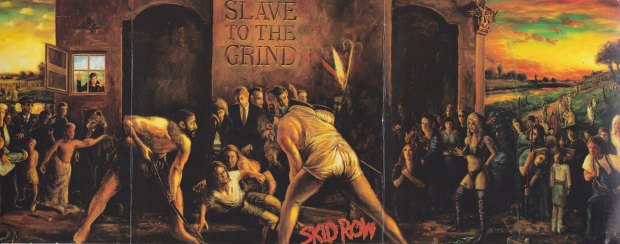
SLAVE TO THE GRIND_0001

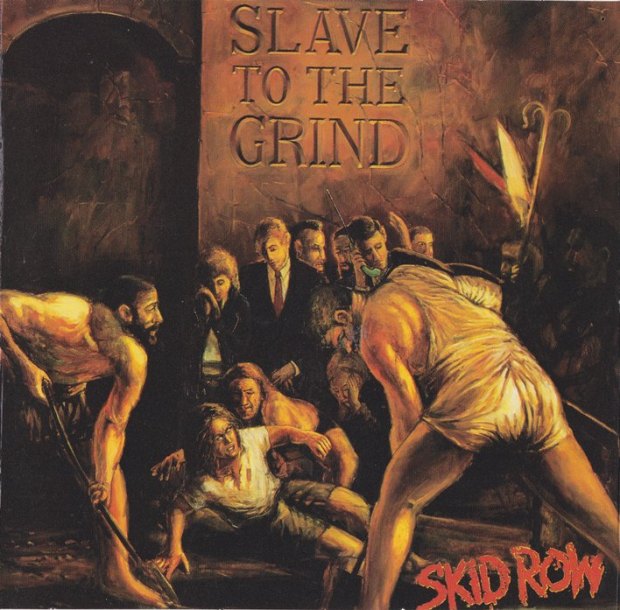
SKID ROW – Slave to the Grind (1991 Atlantic “clean” and “dirty” versions)

The Skids knew the second album had to kill. The band, always heavier live than the first album implied, also knew the second album had to sound more like they did in concert. And following up a huge hit debut, they also demanded the album be all killer, no filler. Raising the bar and ignoring the record company, the band re-convened and kicked every ass in the room. The result is Slave to the Grind, one of the best hard rock albums of ’91 period.

The first single “Monkey Business”, which is essentially just dirty grooves n’ screams, was about as commercial as the album got.   With this as first single, it was clear that Skid Row didn’t care whether they got played on MTV or not.  There was nothing glossy or slick about it.  It’s still obvious that there’s something special here, and I credit that to two factors:  the songwriting talents of Snake Sabo & Rachel Bolan, and the frontman chops of Sebastian Bach.  Bach commands this song.   It’s not just his vocals.  It’s his confidence, his swagger, and his ego shining through.

If “Monkey Business” didn’t scare your little sister, then the second single “Slave to the Grind” definitely did.  For the first time, Skid Row jumped straight into the thrash metal deep end.  Drummer Rob Affuso had the chops to do it, and it really was a natural step to take.  Other bands were getting heavier in 1991 too, but none of them took a turn like this.  Skid Row raised the bar for everyone in their field in ’91.

The other singles from the album were technically “ballads”, although the band were eager to point out that none of them were anything like “I Remember You”.  They were dark and edgy.  The record company execs no doubt shit their pants when they heard the magnificent “Wasted Time”, which I can only describe as epic.   It’s an incredible song, and it’s one of the few that Bach had a hand in writing.  Baz wrenches all the emotions from his soul and that’s what I hear coming from the speakers.   “Quicksand Jesus” and “In A Darkened Room” are only a little less impressive.  They share the same kind of mood and sonic landscape.  There is really nothing commercial about any of them.  They all have headbanging moments and integrity.

Rounding out the album were several very strong deep cuts.  “The Threat”, track 3 on the disc, easily could have been a single.  In fact Terry David Mulligan of MuchMusic asked Sebastian if it was going to be selected as a future video, so I’m not alone in thinking that.  “Psycho Love” is a bangin’ bass groove, laid to waste by Bach’s scorching vocal.  “Livin’ on a Chain Gang” is another standout, an angry one about injustice.  Then you have slow, landmine-infested blasters like “Mudkicker”, and fast smokers like “Riot Act”.  All strong songs.  The only one I’m not keen on is “Creepshow”, a jokey tune about the kind of people you’d see on daytime talk shows.

SLAVE TO THE GRIND_0003Skid Row knew well ahead of time that some markets would not release an album with a song called “Get the Fuck Out” on it.  This fun punk rocker sounds like a Rachel song, but Bach’s attitude nails it.  It’s probably a bit of a novelty, but it’s fun.  “Fuck you if you can’t take a joke!” says Bach in one line.  But it’s OK: if you can’t take the joke, you can buy the version of the album without “Get the Fuck Out”.  Earlier pioneers in the clean/dirty dual releases, Skid Row saved the song “Beggars Day” for the Walmart version of the album.  (Also sold by Columbia House in Canada.)  I think it’s cool that they gave both markets added value with exclusive songs.  This song is more traditional metal (perhaps Priest-like) than the rest of the record, but it’s equally strong.

Michael Wagener produced this album with a raw, unpolished finish.  But there are backing vocals where you need ’em, and the instruments are clear and in your face.  It still sounds heavy today, unlike a lot of other music from the same year.  It just seems like everything clicked, and all the factors were in place.  Slave to the Grind kicks ass with the best of them.

4.5/5 stars

REVIEW: White Lion – The Best Of (1992)

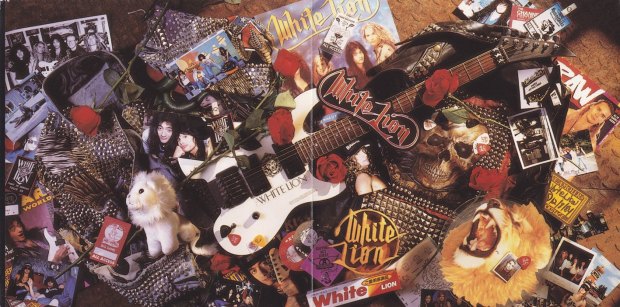
WHITE LION – The Best Of (1992 Atlantic)

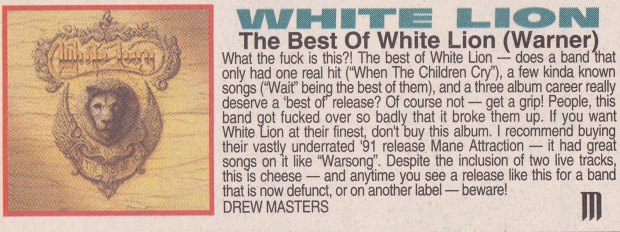
I’m going to keep it short and sweet this time, and defer to a 1992 review by M.E.A.T Magazine’s Drew Masters (issue 38, Nov. 92):

BEST OF WHITE LION_0001

He’s right.  I don’t agree with the single M rating though; these are mostly good tunes.  They’re sequenced awkwardly as fuck though.  The flow on this disc is just completely fucked.  The songs don’t work in the sequence they’re in.  And Drew is correct in inferring that many of White Lion’s prouder, heavier moments are missing.   Vito smokes on the live tracks, but Tramp can’t hit the notes.  Buy Pride, not this.

2/5 stars

REVIEW: The Cult – Beyond Good and Evil (Australian bonus track)

Second of a CULT double shot!  Click here for 1994’s The Cult.

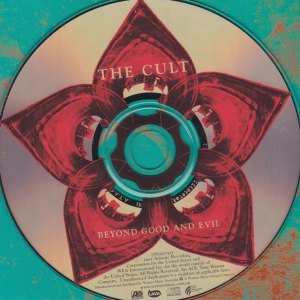
THE CULT – Beyond Good and Evil (2001 Atlantic)

When The Cult finally reunited, the rock world rejoiced.  It felt like a long time, in that post-grunge wasteland, since the world had been blessed with any new Cult music.  Not only had they reunited (with their former drummer Matt Sorum, also formerly of Guns N’ Roses) but they had also reunited with producer Bob Rock, for the third time.   Much like his last outing with the band (1994’s The Cult), this Cult album sounds like none before it.  This time, The Cult have gone full-bore ground-shaking heavy metal.  The template was a song the old band were working on before they split “In the Clouds”, from 1996’s High Octane Cult.  The resemblance is uncanny.

BEYOND THE CULT_0003“War (The Process)” invites you to the stage.  Its weight is astounding; Duffy’s guitars crushing while Sorum attacks his kit as he always has.  Duffy’s guitars have acquired a much heavier metallic tone.  Bob Rock applies them in layers, which has always worked well for The Cult.  When “The Saint” enters, your head could be blown from your shoulders.  This is The Cult at their heaviest, but Billy’s melodic sensibilities are intact, and his guitars always sound like Billy Duffy.  Ian, of course, sounds like Ian, howling at the ghosts.

The single from this album was “Rise”, which is no less brutal than the first two tracks.  Its stuttering de-tuned riff recalls Kyuss or Queens of the Stone Age. Song after song, the album crushes.  “Take the Power” is a rallying crying over a noisy Duffy arrangement.  This time, the layers of guitars form this wall of awesome that threatens to fall on you at any moment.  Astbury is delivering a lot more melody with his lead vocals than he did on The Cult.

BEYOND THE CULT_0005“Breathe” offers a respite, but it’s only brief.  It soon turns into a mid-tempo groove rocker, but a forgettable one.  “Nico” is a highlight, an “Edie”-esque beauty.  It would have been my choice for a single.  Somebody should really start asking me.

No sooner have you had a chance to relax before “American Gothic” smashes through the wall.  This is one of the heaviest Cult songs to date.  Cult bassist Chris Wyse (back in the band today) has a solid groove but is overwhelmed by the sheer weight of the Duffy guitar layers.  “Ashes and Ghosts” too is groove laden and heavy as plutonium.  “Shape the Sky” has a little bit of the old Cult’s prowl, but it’s still pretty heavy like spent nuclear fuel.  Ian has a knack for a cool chorus, and this is one of them.  “Speed of Light” has a bit of that robotic pulse from 1993’s “The Witch” before it descends into a detuned metal riff and chorus.  Then, “True Believers” gives you some breathing room again, although still slammed by electric guitars.  This slow tune is a bit more about the melody than the headache.

BEYOND THE CULT_0004The final song on most editions of Beyond Good and Evil is “My Bridges Burn”.  The Cult bow out on a scorching rocker, blowing the speakers out for those who dare to follow them.   Australia received an additional song, “Libertine”, on which to close.  This song feels like a coda and is powered by an Anthrax-esque stomp.  Top that with a soaring Astbury howl and those patented Duffy guitar melodies and you have a good summation of The Cult 2001.

I think many old-school Cult fans, the kind who think they made a wrong turn on Sonic Temple, would dislike Beyond Good and Evil.  For those of us who don’t mind the Cult when they just fucking rock, I think it’s a brilliant album.  The songs are not designed to be instantly catchy.   They are designed to create a sledgehammer of an album that relentlessly powers its way into your soul.  For me, it worked.  You could listen to it once and say, “Sure, it’s heavy, but there are only a couple memorable songs.”  Keep listening.  Let Beyond Good and Evil pummel you with body blows until all you can do is let it sink in.

4/5 stars

BEYOND THE CULT_0006

REVIEW: White Lion – Big Game (1989)

Before I get started on the review…

BIG GAME_0005

BIG GAME_0001WHITE LION – Big Game (1989 Atlantic)

When Big Game was released in 1989, hard rock was arguably at its 80’s commercial peak.  In comparison to the two-million selling Pride, Big Game was a disappointment at the cash register.  I believe this was an herald of the changing winds of rock, that would fully arrive in 1991.  At the time, it was more considered a sign that Big Game was weaker than Pride.  I don’t think that was the case.  Big Game remains today as enjoyable as Pride is, with plenty of great tunes to spare.

Pride‘s main weakness was its lyrics. Mike Tramp improved enough as a lyricist on Big Game that the words are no longer really an issue. He’s no Bob Dylan, but a lot of the immaturity has gone. An example is the first single “Little Fighter”. My best friend Bob assumed the song was a rallying cry about a person.  Tramp actually wrote it about the Greenpeace ship Rainbow Warrior, which was sunk by France in 1985.  To his credit, Tramp figured out how to bring his politics to hard rock music without making it obvious to those who just want to rock out.

On the other hand, the lyrics to “Broken Home” are awkward and blunt, killing my enjoyment of the album at that moment.  While nobody in their right mind supports child abuse, the stark lyrics are simply not appropriate for a hard rock album like Big Game.  It’s impossible to sing along, impossible to ignore.  Right in the middle of Side One of the album, its momentum crashes and its not because of the music.

Fortunately, musically Big Game has more of that White Lion rock and roll that propelled them to stardom in 1987.  Anthemic rockers, lighter-ready ballads, and brilliant fluttery solos by Vito Bratta are in abundance.  Big Game doesn’t sound as dark as Pride, but it is also less heavy overall.  That said, “If My Mind Is Evil” is one of White Lion’s heaviest tunes.

Highlights:

The brilliant opener “Going Home Tonight”, an irresistible hard rocker.  The bright single “Little Fighter”.  “Living On the Edge”, a fun anthem not at all like the Aerosmith song.  “Don’t Say It’s Over”, a melancholy mid-tempo song that Bon Jovi would have given his left nut to write.  The stunning closer, “Cry For Freedom”, which is lyrically blunt but not as depressing as “Broken Home”.

I even like the Golden Earring cover, “Radar Love”.  The original is a radio classic of course, but White Lion did a pretty decent cover version thanks to Vito’s sublime guitar.  I thought the music video was pretty cool too.  Anything with a car chase, right? Thank God Mike Tramp is wearing jeans in this one. How many people did he scare away with his ridiculous pants (and dancing) in the “Little Fighter” video?

Since the album was considered a bit of a failure in some quarters, White Lion tried to change things up for the next album, Mane Attraction. That too failed to drum up sales, and after some lineup changes, they quickly disbanded.  Look for my Mane Attraction review in a matter of days.

3.5/5 stars

REVIEW: White Lion – Pride (1987)

Enjoy this first of two White Lion reviews. Stay tuned for the second in a couple days!

PRIDE_0001WHITE LION – Pride (1987 Atlantic)

I’ve had some fierce arguments with some rock fans about this album.  Regardless of its flaws, I steadfastly defend it and especially the talents of one Vito Bratta, the best guitarist to never become a guitar hero.  After the breakup of White Lion in 1991, Bratta retreated from public life and music completely.  Some have argued to me, “If he was such a talent, he’d still be around.”  Such talk is ignorant of the facts.  Bratta spent many years as a caregiver to ill parents, and whatever decisions he made have to be respected.

I mentioned that this album is flawed, so I’m going to get that part out of the way first.  There are two things about this album that suck.  One is the production, by the normally awesome Michael Wagener (engineered by Canadian “Gggarth” Richardson).  It’s really muddy, echoey, and annoying.  It is indicative of the times.

The second thing that drives me nuts are the lyrics.  I know Mike Tramp is Danish and English is his second language, but there were three guys from New York (Staten Island and Brooklyn) in the band that could have helped.  As Exhibit A, I present you “Lady of the Valley”:

Lady of the valley
Can you hear me cry
In the stillness of the night
I have lost my brother
In the fights of the war
And my heart has broken down

I always stumble over that “In the fights of the war” line.  That’s one of the “serious” songs, something that White Lion tackled frequently (improving over the years).  For their flaws I’ll at least respect Mike Tramp’s willingness to present a personal point of view on specific issues (“Little Fighter”, “Cry For Freedom”, “Warsong”, “El Salvador”).  Unfortunately Pride is loaded with songs about young girls and what Mike Tramp would like to do with them.  Below, Exhibit B:

Keep your engine running high
When you take my love inside
But hold the trigger on my loaded gun (“Hungry”)

Little miss Dee’s got a dirty mind
All around the boys she’s one of a kind
If you wanna good time you can take her home
Cause everyone knows she is good in bed (“Sweet Little Loving”)

I’ll stop there.

Musically, and performance-wise, Pride is a joy to listen to.  What an untapped well of talent Vito Bratta is.  In the guitar magazines, he was noted for having captured some of the magic of Eddie Van Halen, and I agree with that.  Bratta has definitely mastered the Van Halen book of rock.  His riffs are much like Van Halen’s, with one guitar playing the rhythm and flicking in and out with tricky little licks.  It sounds difficult as hell.  “Hungry” is the most Van Halen-like.  The difference is that Bratta sounds like a much more schooled player.  Everything sounds meticulously planned and written.  When he takes a solo, it’s a combination of Van Halen and neoclassical discipline.  And every song is absolutely loaded with fills and tricks.  Pride is very busy guitar-wise, in a good way.

“Hungry” is a great song, a dark Dokken-esque opener.  Also similar to Dokken is the second track, the mid-tempo “Lonely Nights”.  It’s another strong track, and I find Mike Tramp’s raspy voice similar to Jon Bon Jovi’s from time to time.  Bratta executes a fluttery solo, and then it’s on to the next one, “Don’t Give Up”.  Again, I find the lyrics tedious.  I like positivity, but I don’t find, “Don’t give up, even when it’s tough,” to be very profound.  Thankfully this uptempo banger is another winner musically.  Once again I struggle to keep up with Bratta’s stunning fretwork.

“Lady of the Valley” is pretty impressive.  It’s the “epic” I suppose, 6 1/2 minutes in length.  The riff is choppy and smoking, and the rhythm section of James LoMenzo and Greg D’Angelo is spot-in.  Then Bratta gets his echoey acoustic guitar out and the song mutates.  An anthemic chorus tops a great song.

Side Two of the album was packed with singles:  the hits “Wait”, “Tell Me”, and “When the Chrildren Cry”.  “Wait” and “Tell Me” are both songs that Bon Jovi would have given their nuts to write.  Tramp’s raspy vocals are absolutely perfect, as was his blonde mane, and the girls went wild.  “When the Children Cry” was and still is an impressive acoustic performance.  Even in 1987 I was impressed that White Lion chose to forgo drums and backing instrumentation.  This simple, quiet song is the template for what Extreme would do three years later with “More Than Words”.  Bratta was a guitar player able to pull off such an arrangement without sacrificing integrity.

The album is rounded out by “All Join Our Hands” and “All You Need Is Rock N Roll”, two odes to the greatest music ever invented.  “All You Need Is Rock N Roll” is quite cool, beginning with what sounds like a drunken acoustic jam, and ending with with some killer bluesy playing from everyone.  Both songs are great.  I have always felt that the album tracks were as strong as the singles; like an album of 10 singles.

Shame about the sound and the lyrics, though.

 3.5/5 stars