Guest review by Holen MaGroin
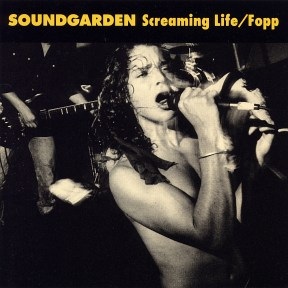
SOUNDGARDEN – Screaming Life/Fopp (1987 & 88 EPs, released combined on Sub Pop CD 1990)
I love Halloween. I love autumn. I love horror films. I love metal. When you combine the four of those things that complement each other so well, it adds up to be one of my favourite times of the year. It may be considered a childish holiday, but to me it’s not about the candy. The entire atmosphere of the world seems to change around and on a holiday. The world almost seems to become more surreal, taking on aspects of life that only seem normal in films. There’s no reason Christmas should feel any lighter or peaceful than a regular day, but it does. Halloween has a certain feel too, an eerie one that goes perfect with metal and horror films, the cooling weather, and the waning sunlight. It’s about the deception, the masquerade, the vaudeville, the showmanship that keeps me intrigued by Halloween. Throughout the month on Wednesday’s I’ll be writing reviews of albums that are important Halloween albums to me, finally culminating on the big day (10/31). I hope you enjoy reading them as much as I do writing them.
1987 was the peak year for mainstream metal*, but it was also the starting point for an underground movement that would upset the entire genre of rock for good. Some call it grunge, but I think that term is as disrespectful as “hair metal”, especially given that the so called ‘big four’ of grunge didn’t sound alike at all. My favourite of those four bands was always Soundgarden. Chris Cornell was easily the best singer out of the bunch, and the group’s songwriting was also superior to the other bands from the same town. None of the other bands came close to writing an album as undeniably badass as Badmotorfinger. They were also the most metal out of the Seattle scene, and Chris Cornell didn’t seem to be a whiny punk like Kurt Cobain or Eddie Vedder. Cornell didn’t shy away from success and intentionally sabotage himself like the other two guys, at least not publically. His passing was one of the few times that a ‘celebrity’ death had actually impacted me, and was a horrible loss to the music world.
In the aftermath of his passing, it makes sense to start back at the beginning to see how he progressed throughout his career. Soundgarden made their debut on Sub Pop with an EP called Screaming Life. They followed it up the next year with the Fopp EP, and they were eventually packaged together on CD in 1990 by Sub Pop under the clever title Screaming Life/Fopp. I bought this CD, and Lynch Mob’s Wicked Sensation at the same time in mid October, so both of these albums have a strong mental link to Halloween for me, but the Soundgarden EPs have more than an emotional attachment to the holiday. This is some evil sounding stuff that fits absolutely perfectly with the time of the year. This is partially because Kim Thayil exhibits a much stronger influence on the band’s music than he would on the last few Soundgarden albums. While on later Soundgarden albums, Chris Cornell wrote a substantial amount of the group’s music as well as its lyrics, here a good share of these early songs were written by guitarist Kim Thayil and original bass player Hiro Yamamoto. All the music on Screaming Life was written by one of the two, with Cornell handling only the lyrics. This is a different sounding band than the group that wrote “Black Hole Sun”. There are some punk roots showing with the obvious Black Sabbath and Led Zeppelin influences.
The aforementioned Black Sabbath influences are blended seamlessly with the brevity and relentlessness of punk in the album opener “Hunted Down”. This is the group’s first of many classics, and was also their first single. It’s an absolutely evil sounding number, with a hypnotic riff that sounds like the band are summoning demons themselves. The lyrics tell the story of a convict escaping prison and being hunted by the authority figures. He copes by changing his face permanently to avoid detection. The band follows the “Paranoid” single mold by making the song less than three minutes, which gives it a lethal efficiency. The melody is somber, and compliments the music accordingly. Chris Cornell was not yet the consummate vocalist that he would become, but his chops here are impressive for a youngster starting out on his first recording. The song was so good that Sub Pop chose it to be their hold music when people would call the label, prompting the group to call them up just to hear their song on the phone.
That Soundgarden classic is followed up by the much more obscure “Entering”, a four minute song that is so doomy that you think it goes on much longer (before checking the CD again, I had originally typed in the review that it was a seven minute epic!). It begins with slow ringing guitar notes that are enchanting in a dark way. It’s unsettling, yet you’re intrigued by it. This is one instance in which the song perfectly mixes with the stark visuals of the black and white cover. The beginning of this song is actually reminiscent of early 20th century horror films. It wouldn’t sound out of place being played on a grand piano in Dracula, Nosferatu, or Frankenstein, that’s how ominous it is. The song then goes through a dynamic shift and is kicked into high gear by the frantic drumming of the great Matt Cameron as Chris Cornell begins to wail with a slap back delay on his vocals that gives the song an energetic live feeling. The production is rough, but the muddiness only helps enhance the songs.
Following a throwaway screeching punk number, the band turns in one of the best songs in the gloomy and slow drop D tuned “Nothing to Say”. This song can only be described as “Electric Funeral” with better vocals updated for the late ‘80s. The group would never again sound this evil excepting their debut album Ultramega OK, which was actually released on Halloween. Perhaps to break up this seriousness, the band included many joke songs on their early albums. “Little Joe” is one of these, a funked up strange number about a Hispanic kid crossing the border. It’s totally disposable, just like all of their joke songs they just take up space and distract from the better music (except “Big Dumb Sex” from Louder Than Love). It’s still slightly demented in a off-putting way, which keeps it from ruining the mood of the EP.
The Fopp section is much lighter, in content and in mood. It contains just three songs and a remix, with only one original Soundgarden tune. The Chris Cornell’s first sole songwriting credit is with “Kingdom of Come”, a fun little tune, that doesn’t amount to much, but sounds good enough when you’re listening to it. The production on this half of the compilation is much clearer than on Screaming Life. The guitars have much more midrange energy, and the most of the muddiness has been cleaned up. If the first EP sounded like a cult ritual, this seems like the light-hearted after party. The set is rounded off by the covers of “Swallow My Pride” and “Fopp”. These are a couple of tunes just like “Kingdom of Come”, in that they’re enjoyable in a fun way, but there’s not a lot of substance underneath them.
Overall, the Screaming Life section is the superior EP, but together the shades of light and dark are an interesting insight into Soundgarden’s later, more developed sound. This is an absolutely wicked sounding release that most be listened to on headphones at night at least once around the Halloween season. While it’s not perfect and still shows a band in development, it is haunting and helps to scratch that horror metal itch if you’ve already exhausted Welcome to My Nightmare and your Black Sabbath collection.
3.25/5 stars

* LeBrain respectfully disagrees and remembers 1989 as the peak year for mainstream metal.
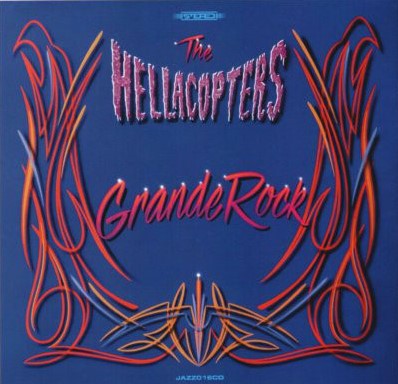 THE HELLACOPTERS – Grande Rock (1999 Sub Pop vinyl edition)



 mikeladano.com