GRETA VAN FLEET – Black Smoke Rising(2017 Republic records EP)
Sometimes a tune just comes outta nowhere and takes over. Greta Van Fleet’s very Zeppelin-like “Highway Tune” is one such song. Who are Greta Van Fleet? Three young brothers and a buddy from Frankenmuth, Michigan of all places! (These guys weren’t even born yet when I was last in Frankenmuth singing Zeppelin karaoke, so I cannot claim to have influenced them at all.) They describe themselves as “a blues influenced rock n roll band picking up where classic rock left off”. Black Smoke Rising is their second EP, after the very rare Greta Van Fleet: Live in Detroit (2014).
They call themselves “blues influenced”, but the truth of the matter is that they sound like the second coming of Led Zeppelin. That’s not a terrible thing, and given their ages, certainly forgivable. They have a whole career ahead of them in which to grow. The good news is that regardless of the various shades of Zep, all four tracks are excellent.
Singer Joshua Michael Kiszka is a born star. At times he’s a dead ringer for young Robert Plant. At others he’s more like Andrew Stockdale. He also shows his own character and lung power. The point is, this guy is special. Not that anyone in the band is a slouch, but there is one obvious immediate standout.
It’s easy to compare these tracks to earlier ones. “Highway Tune” is a bit of an amped-up “The Rover”. Zep bleeds into “Safari Song”. You can hear “Down By the Seaside” and “Your Time Is Gonna Come” at the tail end of “Flower Power”. Their most unique song is closer “Black Smoke Rising”. If anything it sounds more like “Fight the Good Fight” by Triumph than anything like Zeppelin, but it’s more than that. It sounds like a hint of what this band can progress into.
Keep an eye on Greta Van Fleet and by all means, get this EP.
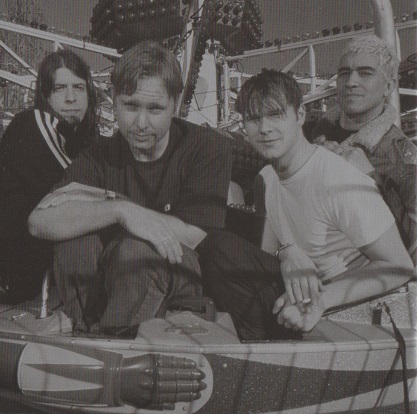
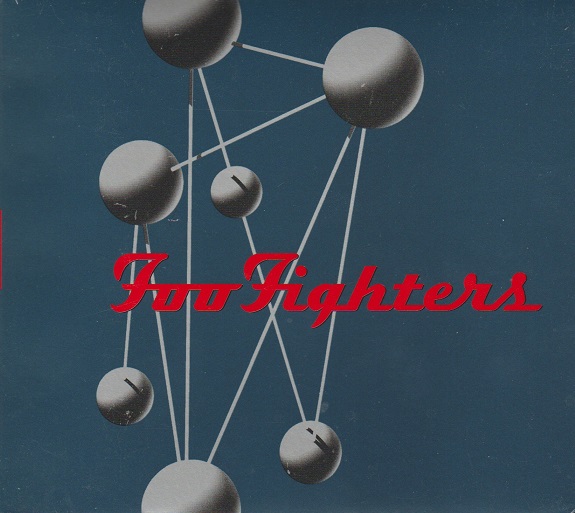
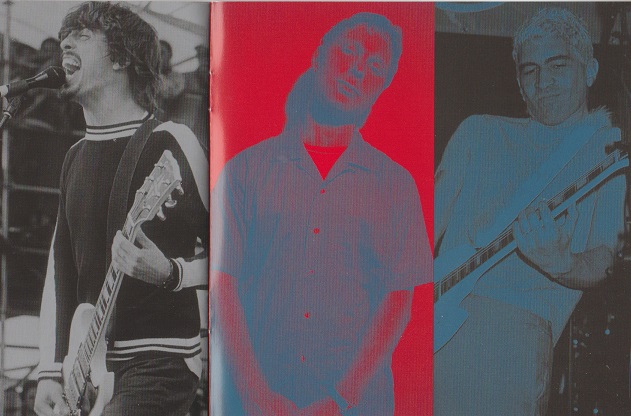
FOO FIGHTERS – The Colour and the Shape(Originally 1997, 2007 Sony Legacy edition)
Sometimes, an album is just perfect. Nothing needs to be added or taken away. It is simply right the first time.
The Foo Fighters got it right the first time when they released The Colour and the Shape in 1997 At 47 minutes, it was already a bit longer than the average album, but what a towering 47 minutes they are! There is a reason that The Colour and the Shape is consistently the album that all others are compared to. It’s that one magical, flawless album that can never be equalled no matter what Dave Grohl & Co. come up with next.
The Colour and the Shape was a product of its time and all the things Grohl was going through. The drummer (William Goldsmith) was fired mid-way and Dave re-recorded all the drums himself, bar two ballads. Maybe that’s one reason that the album is so special. When Dave plays the drums, the energy level goes through the roof and comes out the speakers. That’s what happens on “Monkey Wrench”, “My Hero”, “Everlong”, “New Way Home” and “Hey, Johnny Park!”, five of the most exciting tracks. The energy simply cannot contained. The Law of Conservation of Energy dictates that it all comes out of your body as you rock to this album!
Of one were to give a negative critique to any of this album, it might be Grohl’s screaming on “My Poor Brain” and “Enough Space” among others. It is true: Grohl chips the paint with his voice from time to time. This works though, as an appropriate contrast to the soft melodies of “Walking After You” and “February Stars”. The album is well rounded. It joyfully careens from those heavy blasts, to quiet acoustic bits of pop glory.
The Colour and the Shape has the songs, it has the riffs, and mindblowing drums. It has the vibe, and it reeks of passion. Whatever Grohl was going through at this time, it ended up in the music. The production by Gil Norton is a bright contrast to the lo-fi of the debut album Foo Fighters. It simply cannot be improved upon. Even the lyrics go full circle. Listen to “Doll” and “New Way Home” and see if you catch it.
When Sony Legacy added seven bonus tracks, it beefed the album up to well over an hour. If you listen to the CD as a whole, it completely changes the listening experience, and not in a good way. It’s Coke vs. New Coke. Adding essentially a third side of B-sides doesn’t make it better. It would be advised to collect the original Foo Fighters singles from which these tracks were taken. And if you do, you’ll get more songs that weren’t included on the Sony Legacy, such as live and acoustic versions. Of the bonus tracks, the Gary Numan cover “Down in the Park” is particularly exceptional. The new liner notes by bassist Nate Mendel are quite cool.
The Colour and the Shape is one of the best albums of 1997, if not the very best of that year. It’s tough to beat and adding bonus tracks didn’t do the trick. Therefore, The Colour and the Shape gets two ratings:
So much here to absorb and analyze. It’s clear that the danger this time is that Rey is headed down a dark path. Will be the beacon of hope for the galaxy be extinguished forever?
Still On Fire – Dave Thomas & Anders Holm (1988 Melody Line)
In the 1980s, there were generally no Kiss books on the market. If you found one, you bought it. The only widely known Kiss book back then was 1978’s paperback Kiss by Robert Duncan. I was lucky to find Kiss Still On Fire in Stratford Ontario on December 27, 1990 in a great little store called The Book Vault. Still On Fire is very very unofficial, but it was unequalled in its time: 130 magazine sized pages, mostly in full colour, loaded with pictures, facts and a few errors.
Peppered with old interviews and article snippets, Still On Fire takes a balanced look at the band and isn’t afraid to get critical when it’s warranted. It also attempts to take a crack at who played what on some of those tracks where it wasn’t quite clear. For example, Ace Frehley is pictured on the front cover of Killers, but didn’t play on any of the new songs. Still On Fire quotes a Paul Stanley interview. Was it Bob Kulick playing lead on these tracks? “Bob did come out, yes, but he didn’t play. When I couldn’t handle things — and I don’t consider myself the ultimate lead player — another friend of ours came in and gave us a little help.” The book states this friend was Robbin Crosby of Ratt, a claim that is not backed up in other sources. Did Crosby play on Killers? Who knows, but according to this book, he did. Other books such as Julian Gill’s Kiss Album Focus claim Bob Kulick did play some on Killers. In other words, if you read something interesting in this book that contradicts what you’ve read elsewhere, take it with a grain of salt.
There’s a bit of content here about what Gene was doing in the 1980s outside of Kiss: producing bands such as Black & Blue and EZO. Gene was responsible for EZO’s fantastic single “Flashback Heart Attack”, co-written by James Christian of Simmons Record act House of Lords. Gene was also working on movies but was having trouble finding the time. Apparently Sergio Leone really wanted Gene Simmons for Once Upon a Time in America in the role of Max, ultimately played by James Woods. Can you imagine?
Besides the ample photos, the most impressive feature of Still On Fire is the discography. Though incomplete, Still On Fire attempts to document myriad Kiss bootleg recordings, including cover art. There are also interesting promo and foreign releases, such as the Special Kiss Tour Album and Kiss – The Singles. Side projects and solo albums are included, from major (Frehley’s Comet) to obscure (Bruce Kulick’s band The Good Rats). A variety of singles, picture discs and videos are on display, fully illustrated. All of this was completely new to me then. Not to mention the titles of unreleased songs! What the heck were “Don’t Run” and “The Unknown Force”? (The Elder demos.) This is also where you’ll find the most typos and spelling errors. (I really want to hear this song called “Pick It Up”.)
Still On Fire isn’t definitive nor is it definitely 100% accurate, but it should still prove to be a valuable resource for your Kiss library.
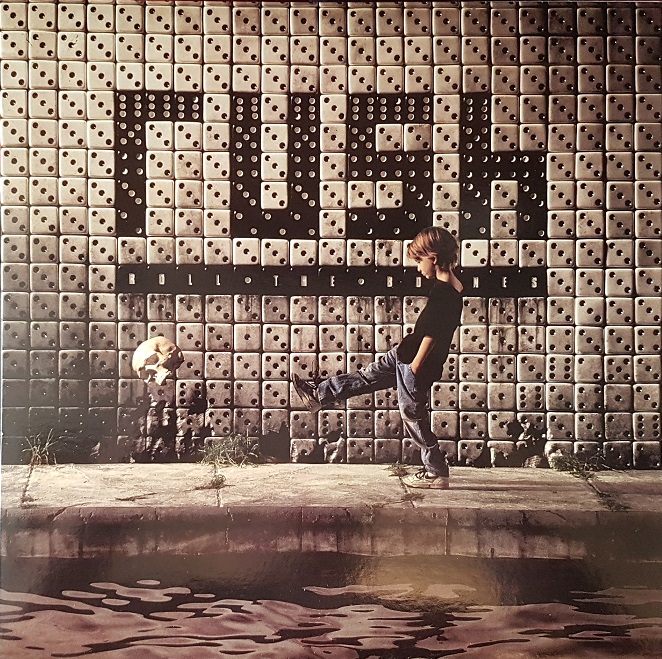
RUSH – Roll the Bones (1991 Anthem, 2015 remaster on 200 gram vinyl)
There was a period in the 1980s when, in some circles, Rush had lost the plot. Writers such as Martin Popoff have been very critical of this era, with its keyboards and shorter songs. In 1989, Rush began to turn the ship around with Presto. It and 1991’s Roll the Bones really ushered in the next phase of Rush, combining new and old. Fans (and Alex Lifeson) were happy that keyboards were toned down, at least in comparison to Hold Your Fire (1986).
The theme of the album is “take a chance”. Roll the Bones starts with a punch called “Dreamline”. Geddy Lee’s pulse pushes this into overdrive. The chorus goes into hyperspace. It’s hard to think of too many other Rush songs that are so concisely hot. “Dreamline” has it all: hooks, licks, force and grace.
Neil Peart is king on “Bravado”*, a sudden change of direction. His drumming, always hard, is unusually sharp. Yet it’s a slow song that might be termed a “ballad”. Whatever — it’s Rush. It’s incredible. It’s powerful in an understated, triumphant fashion. If you know somebody who says they hate Rush, play this.
The title track and first single is a Rush classic, but that rap section sounds dated today. That was always the danger of such an experiment, but fortunately the song is too strong for it to matter much. That’s Geddy rapping incidentally, with his voice lowered and effects added.
Side one also has “Face Up”; fast but not particularly memorable. But it also has “Where’s My Thing?”, a smashing instrumental featuring Geddy and Alex’s flying fingers. It’s subtitled “Part IV, ‘Gangster of Boats’ Trilogy” as a joke on past pretentiously prog-rock titles they’ve employed. Rush have always had a sense of humour, and also fun. “Where’s My Thing” is a fun instrumental, kept short and ever so slightly funky.
The second side of Roll the Bones isn’t as consistent as the first. “Ghost of a Chance” and “You Bet Your Life” are immediate standouts. An appropriate spectre-like keyboard part enhances “Ghost of a Chance” and justifies the use of the instrument. The other three songs (“The Big Wheel, “Neurotica” and “Heresy”) are fine for Rush deep cuts, but may or may not appeal to your specific tastes.
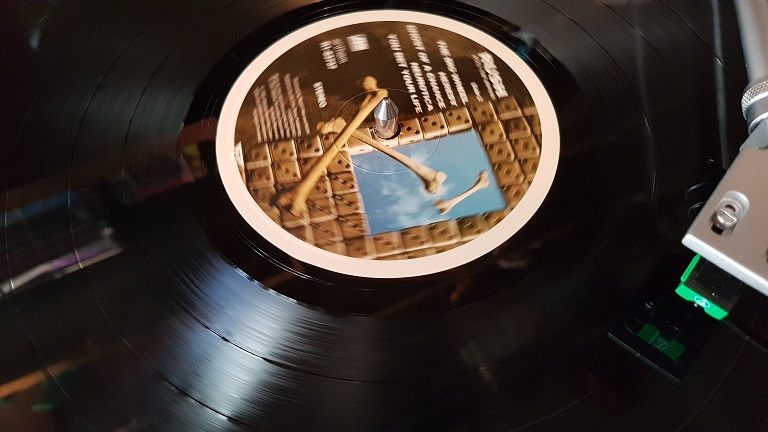
This 200 gram vinyl remaster is exquisite! Keyboard parts previously unnoticed are now audible, as if brand new. The drums have the punch missing on the old CD, and the bass hits the guts. Great dynamics and depth. If you are in the market for remastered Rush, these 200 gram vinyl reissues are pricey but a nice treat.
3.5/5 stars
*At 3:50 of the song, Peart performs a drum roll that I can only describe as pure ecstasy. Chills up the spine.
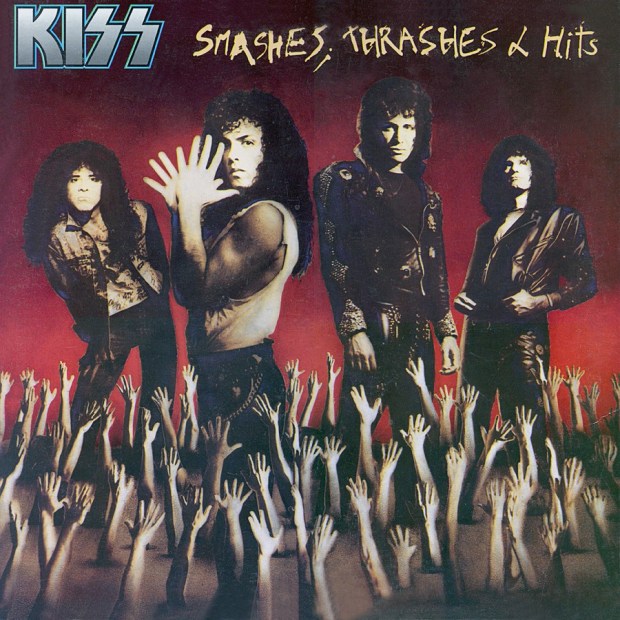
Though hard to believe, in 1988 Kiss needed the money. According to CK Lendt in his book KISS and Sell, they were in trouble financially. Some bad investments and too many expenses, plus the underperformance of Crazy Nights, had the band in a bind. The traditional easy solution is to throw together a “greatest hits” set.
Gene announced this album to Canadian audiences on a trip to the Great White North promoting his record label, Simmons Records. House of Lords were the band he primed to be big, and their debut album is held in high esteem by rock connoisseurs worldwide. It seemed to fans that Simmons was transitioning from Hollywood to businessman. Surely, it was hard to believe him when he claimed Kiss was still his priority.
Greatest hits albums need something new to sell them. This was left to Paul Stanley, who produced two new songs co-written with Desmond Child (and Diane Warren on one). It seems unlikely that Gene cared much at this point. In the music video for one of the new songs, “(You Make Me) Rock Hard”, he can be clearly seen miming the wrong words.
Speaking of music videos, “Let’s Put the X in Sex” was something new for the band (and it wasn’t the lawsuit from the people who owned the building in the video). Suddenly, Kiss were a three-piece backing band with a guitar-less frontman. At least in the videos for Crazy Nights, Paul Stanley wore and danced with a guitar. In “Let’s Put the X in Sex”, he is front and center, without instrument: the frontman. Gene’s just the bass player in these videos, looking completely lost. Paul was doing all the work behind the scenes, therefore he was going to take the spotlight. And why not?
Getting two new Kiss songs on a greatest hits was good in theory. Even back then, we sensed they were more the “Paul Stanley Project” than Kiss. For Kiss, they are too light and glossy. “Let’s Put the X in Sex” has horns (or is it synth?) making it sound vaguely like an Aerosmith outtake from Permanent Vacation. At least Steven Tyler injects a little cleverness into his innuendo. Both Bruce Kulick and Eric Carr rise to the occasion with worthy work, but the tune is a dud.
Likewise with “(You Make Me) Rock Hard”, which passed for a rocker at the time. Neither of the new tracks are as good as the four on Kiss Killers. Paul must have just been out of gas. He states these songs were the best he could do at the time without his partner in crime. “Rock Hard” is just Kiss by numbers.
First two tracks aside, Smashes, Thrashes & Hits contains 13 of the greatest. Most are remixed (ill-advisedly) to bring all the tracks to a standard sonic backdrop. The remixes are from a variety of names in a number of studios: Dave Wittman, David Thoener, Jay Messina for example. Some played it a little more loose with the tracks, others didn’t meddle much. “Love Gun” is an example of a remix that changes things up, but still works. Ace’s solo is given more emphasis by mixing out the vocals. It’s a cool alternate arrangement. Excess echo is added on the drums…you can’t win ’em all. Many of the remixes suffer from drum related issues.
Smashes, Thrashes & Hits takes a scattershot approach to running order. It’s very telling that no tracks from Crazy Nights were included, except in the UK where “Crazy Crazy Nights” and “Reason to Live” were hits. No tracks with an Ace Frehley writing credit were included, and only one from Peter Criss. That’s another gripe that fans have with this album.
“Beth” is included, a throwback to one of Kiss’ biggest hits, which they tended to shun since Peter’s 1980 departure from Kiss. It’s considered a slap in the face to Peter that Eric Carr was called in to re-record the lead vocal. The backing track is identical. Carr never felt comfortable in this role, but had never been featured on an album lead vocal before. It was a hell of a dilemma for the drummer. He’d been in the band for six years and six albums, and never got a lead vocal. He did the best he could. The re-recorded “Beth” didn’t replace the original, and it remains an oddity in the Kiss canon.
One afternoon in the summer of 1990, Bob and I were hanging out with these two girls at his trailer that we were going out with. We were listening to songs, but Bob and I didn’t seem to get much say in what songs. One of the girls said, “I have some Kiss!” and put on Beth. As soon as she did, I had a feeling it wouldn’t be the original. Simultaneously, Bob and I both said, “Oh no, it’s Eric!” The girls had no idea what we were talking about or why it was a big deal.
Smashes, Thrashes & Hits was the first compilation to reconcile the makeup and non-makeup eras of Kiss. The majority are from the makeup years, as it should be, with only three from non-makeup albums. You could argue for this song and that song, but the running order is jarring. “Heaven’s On Fire” into “Dr. Love” is not even as bizarre as “Beth” into “Tears are Falling”. The less familiar remixes don’t help the situation. Incidentally, the only songs untouched by remixers’ hands are “Lick It Up”, “Heaven’s On Fire”, “Tears are Falling” and “I Was Made For Lovin’ You”.
There was no tour for Smashes, Thrashes and Hits. Gene had his label stuff, including a new Canadian band called Gypsy Rose to think about. (Remember “Poisoned By Love” on Simmons Records?) Paul Stanley didn’t want to sit idle, and so did a 1989 solo tour. Kiss family member Bob Kulick returned to his side on guitar. Kiss keyboardist Gary Corbett was there with bassist Dennis St. James and ex-Black Sabbath drummer Eric Singer. The setlist featured a number of old Kiss classics that hadn’t been played live in 10 years, such as “I Want You”. Eric Carr was unhappy about the solo tour, worrying about what it meant. Like most Kiss fans, he wondered if it was the beginning of the end. He also worried that Paul didn’t ask him to be his solo drummer. Paul said it was because two Kiss members wouldn’t be right for a solo tour. Ominously, Eric Carr said about Singer: “That’s the guy who’s going to replace me.”
Fans were confused and some were unhappy. Like they had once before, Kiss were drifting further and further into pop music. This time, it was without Ace Frehley to keep them anchored. Paul Stanley now seemed to be a Bon Jovi-like dancing frontman. These new songs were not easy to stomach, and the Eric Carr vocal felt all wrong. Had Kiss lost all credibility? Smashes, Thrashes and Hits wasn’t winning any back.
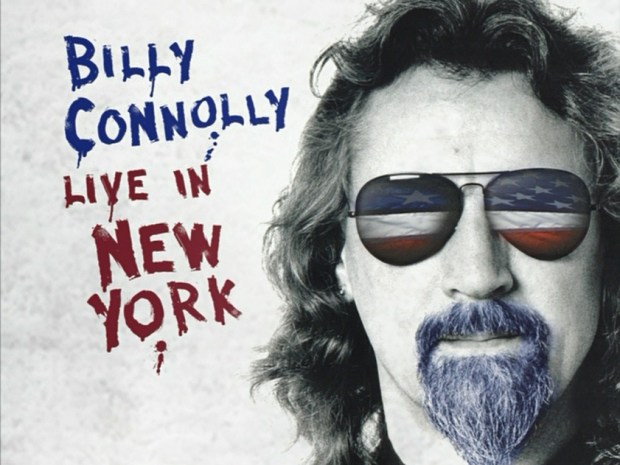
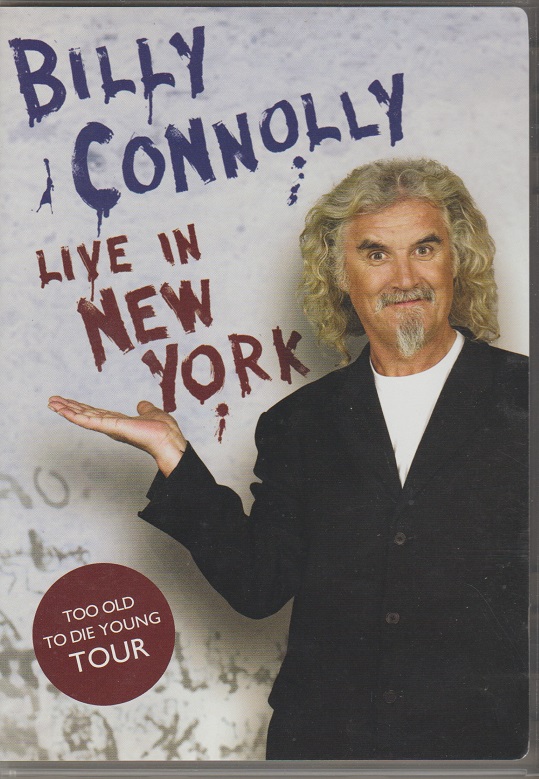
BILLY CONNOLLY – Live in New York(2010 Rykodisc DVD)
There are few funnier than singer/comedian Billy Connolly. My theory is that it’s the Scottish accent. Live in New York is the funniest comedy DVD that I own. I don’t buy a lot of them, because I find they have a limited lifespan before they get old. I have another Billy as well (Erect For 30 Years), which combines his old standup plus interview and documentary footage. From his Too Old to Die Young tour, Live in New York is the one to get; it’s pure gold.
There isn’t much “standing” in Billy’s stand-up. He’s mobile, acting out his scenes, rarely stationary. This was recorded in 2005, before Billy’s Parkinson’s disease diagnosis. What storytelling ability! Like a big beast, every story is recreated on stage for your entertainment.
Even though I have seen some of these bits before (Billy scaring his sister is classic), they all come across as if Billy is telling the stories for the first time. Halfway through a story, he will go off on a tangent. He’ll stop his story mid-breath, pause, and then say, “I just have to tell you about something…” Then he’ll tell another story, and come back to his original story 10 minutes later, to much laughter and applause.
Everything’s funny, but some bits here were absolutely hilarious. They include:
The afforementioned “sister” story which takes 10 times as much time to set up as the story itself.
The stories about his dad who had a stroke. If you have ever had a family member who’s had a severe stroke, then you’ll know. Billy nailed this one on the head, hilariously.
The “thistle” tattoo.
And best of…opera. You’ll know what I mean when you see it. Billy nails everything I love and hate about opera!
Audio is plain stereo, format is full screen. No special features; just the show. Billy may be getting old, his hair may be white, but his humour has lost absolutely nothing over the years. This is, in my humble opinion, the very best DVD that Billy has to offer.
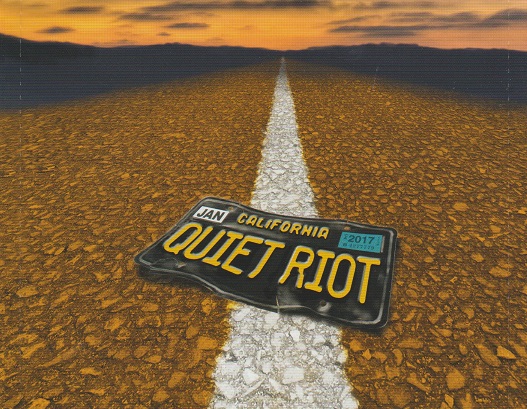
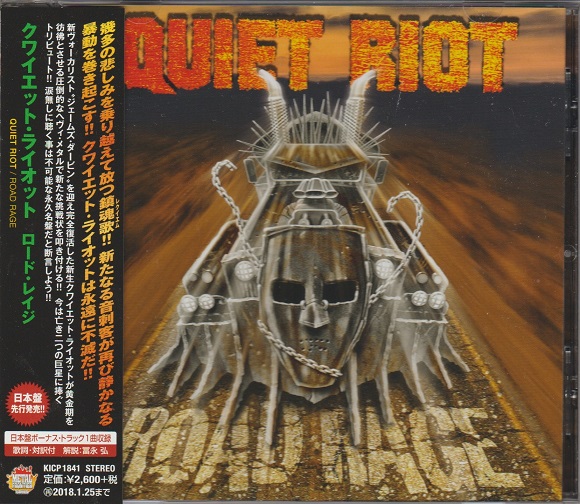
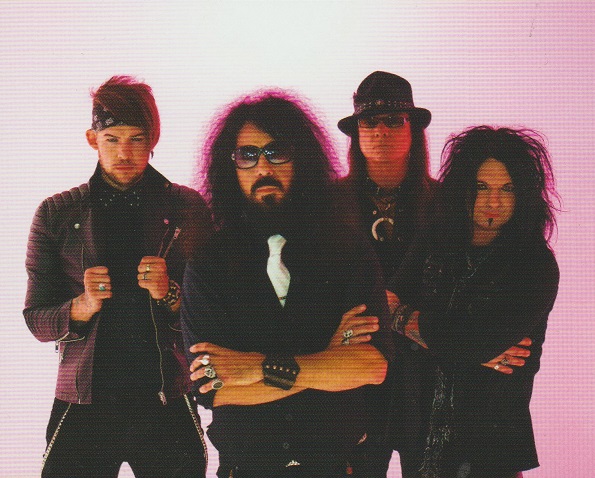
QUIET RIOT – Road Rage (2017 Frontiers Japanese version)
We’ve always been honest but truthful Quiet Riot fans here at LeBrain HQ. We’ve been banging our heads for almost 35 years now, and they included some ups and some downs. The death of Kevin DuBrow was heartbreaking. Some of our Quiet Riot reviews haven’t been the most popular, but we have always maintained an open mind. Frankie Banali’s resurrected Quiet Riot with no original members left a bad taste in the mouth, especially after management attempted to re-write the band’s history on Wikipedia. Pages were edited to indicate that the Metal Health album was Quiet Riot’s debut, seemingly in order to qualify Banali as an original member. Ugly and undignified; but music talks and bullshit walks. Quiet Riot’s first post-DuBrow always was 2014’s 10, with Love/Hate singer Jizzy Pearl taking over as the band’s sixth lead singer. It wasn’t that good and it’s conceivable that the band know it. No physical edition was ever released, and you can’t even buy a download anymore.
So, it’s delightful to be able to say that the new 2017 Quiet Riot album called Road Rage is…not bad at all! Actually quite good!
It’s even been rocky since 10. Jizzy Pearl left amicably, to be replaced by ex-Steven Adler singer Seann Nichols. They recorded a new album, even released one full song online…and then suddenly Nichols was out! American Idol alumnus James Durbin was hired in short order, and re-wrote and re-recorded the entire album.
Skeptics, be silent. Our fair and balanced take on Quiet Riot in the past should speak volumes for the review you are about to read. It would be far easier to mock Quiet Riot for their choice of a TV show contestant as a frontman, but it would be grossly inaccurate.
Durbin’s youthful enthusiasm will either win you over, or leave you complaining that he’s “not enough like DuBrow” and it “doesn’t sound like Quiet Riot”. Here’s the truth — that’s good. We’ve endured one soundalike singer after another. Durbin has a fresh spin, and there’s little question the guy is just pleased as hell to be fronting this band! he gives it all on “Can’t Get Enough”, a new uptempo Quiet Riot party tune. Co-writer Neil Citron must have written the riff with a classic Quiet Riot vibe in mind.
Then it’s down weird street a little bit with the Indian-flavoured intro to “Get Away”. It takes a moment, but once you realize “Hey, this isn’t the same old Quiet Riot”, you will be able to realize that “Get Away” is a damn good song. It’s actually quite melodic rock, but with a Zeppelin groove. Then it’s the pro-weed “Roll This Joint”, which has a seriously decent Zep vibe too. The lyrics are pretty cheesey (“I’m with Cheech and Chong and Willie and Marley!”) but you gotta cut Durbin some slack. He’s young and it’ll connect with some of that crowd.
The thing is, you just can’t dislike Durbin. He wins you over, especially on the lead single “Freak Flag”. This is the most Quiet Riot sounding track of the disc, but with Durbin it’s no carbon copy. “Freak Flag” kicks ass and you can imagine it working great live. Same with “Wasted”. That chorus (“Take a shot!”) grows fast. Even the ballad “The Road” doesn’t suck. Through the 11 tracks, it’s clear who the star on this album is. The new frontman rose to the challenge. In the back, Frankie Banali’s providing the Quiet Riot backbeat; the linkage between past and present. Guitarist Alex Grossi also turns in a worthy performance, and Chuck Wright (bass) has a co-write on the slippy-slidey “Still Wild”. Despite the circumstances in the making of the album, Quiet Riot sound more focused than they have in decades.
Frankie’s revival of Quiet Riot has been going seven years straight, through five singers before getting James Durbin on board. Only the singer has changed; Grossi and Wright have stood by through thick and thin. No matter what, Quiet Riot will continue. Fans should be advise that the first album with Durbin has turned out great, and let’s hope this is a long-term lineup. He’s got the necessary range to sing vintage DuBrow, but in his own voice. And that voice is growing quite compelling. Not every song is killer, but the majority of the album gets the job done. Enough to justify putting your money down.
The Japanese version of Road Rage has an exclusive bonus track. It is an acoustic version of “Make A Way”, one of the heavy album tracks. This isn’t a crappy remix, but an entirely new recording of the song in acoustic arrangement. It’s different enough that it actually seems like a new song. Bonus track: win!*
As Durbin sings, “Take a shot!” Give Road Rage a road test. Just don’t “Knock ‘Em Down”, or you will have to “Get Away”. The quality of this album in terms of sound and songs gives the new Quiet Riot a level of credibility they didn’t have before. Easily their best album since 1993’s Terrified or even before. Let your “Freak Flag” fly, James Durbin!
3.75/5 stars
* Former singer Seann Nichols made a comment in an interview that implied the version of Road Rage with his vocals was released in Japan; this is unfortunately not the case. If you have any Seann Nichols versions of the Road Rage songs, please contact us here. We are dying to review them in contrast to the final album!
A question I often get is “Have you heard ‘x‘ by ‘band y’?” I’m always eager to offer up opinions, but like any other music collector, there are albums I simply have not heard yet. Friends and fellow writers continually offer fantastic suggestions, but time and money are always limited. I like to listen to my old music too, and not just stuff that is new to me all the time. Getting caught up on bands I may have missed is a time consuming process.
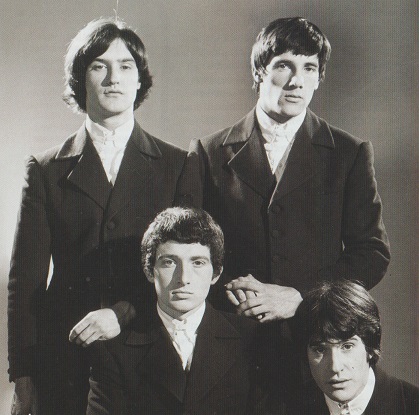
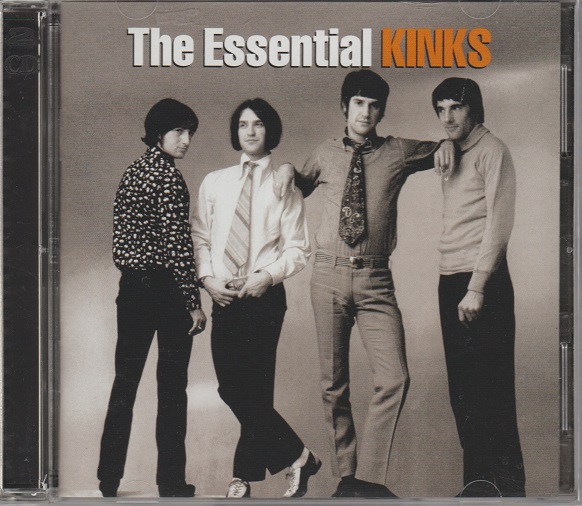
The Kinks are one such band. Growing up as a rocker, I was aware of their hits and the overall narrative of their career. As an adult, I wanted to start with a compilation. When you have a band with a career as long and varied as The Kinks, I very much enjoy getting a snapshot of the whole thing rather than pick off albums one by one. Sony’s double disc Essential Kinks is 48 tracks of rock from 1964 to 1993. It’s a rather monolithic slab, but it does tell a story.
The beginning is hard and ragged British invasion rock and roll, and the road is windy. Whether you know these tunes from movie soundtracks (“Nothin’ in This World Can Stop Me Worryin’ ‘Bout That Girl”) or Van Halen riffs (several), many songs are familiar. Early on, their pop and rock stylings could be compared with equal respect to that of those Beatles. The songs are just as unique, memorable and British. The charismatic vocals of Ray Davies immediately capture the imagination. His knack for melody is uncanny. As time goes on, their music becomes more unique and conceptual, but no less captivating. It is here that I discovered my favourite Kinks song, “Apeman”.
Perhaps I shouldn’t be too surprised that I already knew many of these songs as covers. Queens of the Stone Age did “Who’ll Be the Next in Line”. Def Leppard did “Waterloo Sunset”. The Jam tackled “David Watts”, and made a hit out of him again. I can also hear a lot of Dave Davies’ guitar in the rock bands that followed. There is no denying the influence of the Kinks.
The only imperfection with this compilation is that live tracks are substituted for studio ones on “Lola”, “Till the End of the Day” and “Where Have All the Good Times Gone”. You’ll tell me “just buy the albums, then” and to that I respond, “OK”. (“Lola” live is a single B-side.)
I’ll be lazing on a “Sunny Afternoon” with the Kinks.

 GRETA VAN FLEET – Black Smoke Rising (2017 Republic records EP)
















You must be logged in to post a comment.