TV REVIEW: American Dad – “First, Do No Farm”

AMERICAN DAD! – “First, Do No Farm” (Season 17, episode 14)

American Dad continued to expand its sonic palette in 2020.  In a season that already included The Weeknd, the show pulled off its biggest musical “get” in 2020 with Weird Al Yankovic.

The setup:  Stan Smith thinks his daughter Hayley is getting “soft”.  Fed up with her overly sensitive and lazy ways, he takes inspiration from the humble farmer.  Stan bulldozes the family home and sets up a “micro farm” on the property, with only a shed for everyone to live in.  Everyone adopts the Waltons-like surname “Boy”.  “Steve-Boy”, “Jeff-Boy”, and “Mom-Boy” for example.  Creature comforts are banished.  Violators are shunned.  Needless to say, Roger the alien is the first to be shunned.  He soon takes up with the “varmints” — rabbits.

This, reasons Stan, will make Hayley-Boy “farm tough”.

To make a short story shorter, Stan screws up big time by building a secret basement with all the food, TV and video games you could desire.  He too is shunned, and moves in with Greg across the street.  But he has already created a monster in Hayley.  Yes, she got tough, but she also lost her heart, turning into a cold, farm working machine.  This is not what Stan intended, and so he must undo what has he done.  With sabotage.  Varmint sabotage.  Rabbitage!

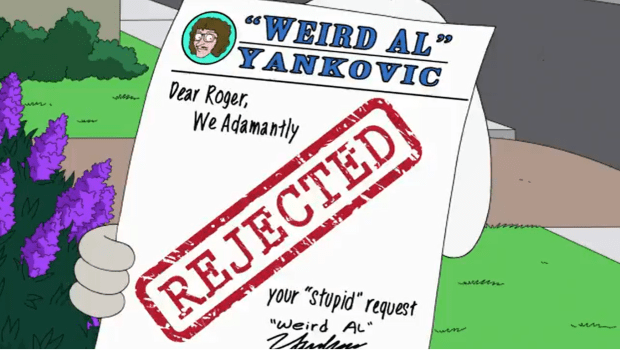
“Let’s do it!” says Roger.  “And do we contact Weird Al’s people?  See if he’s interested in ‘Rabbitage’ as a song idea?”

Cue up Weird Al Yankovic with my favourite Beastie Boys parody yet!

As Al says, he didn’t write the lyrics, but he sure did nail that vocal part!  “Listen all a-y’all it’s a rabbitage!” wails Al, as Roger and his rabbit allies destroy the farm.  Sure makes you wish they recorded a full song, doesn’t it?  Pretty cool collaboration.  Roger, dressed as a rabbit, destroying that farm in sync with Weird Al, is worth a repeat watch.

In the B-story, Klaus the goldfish has joined Scientology, which involves unsubtle Battlefield Earth jokes.  South Park did it first and better.  Scientology jokes are like shooting ducks in a barrel.  Fun, but way too easy.

4/5 stars for the episode

10/5 stars for “Rabbitage”


REVIEW: Triumph – “Spellbound” (1984 special promo 12″)

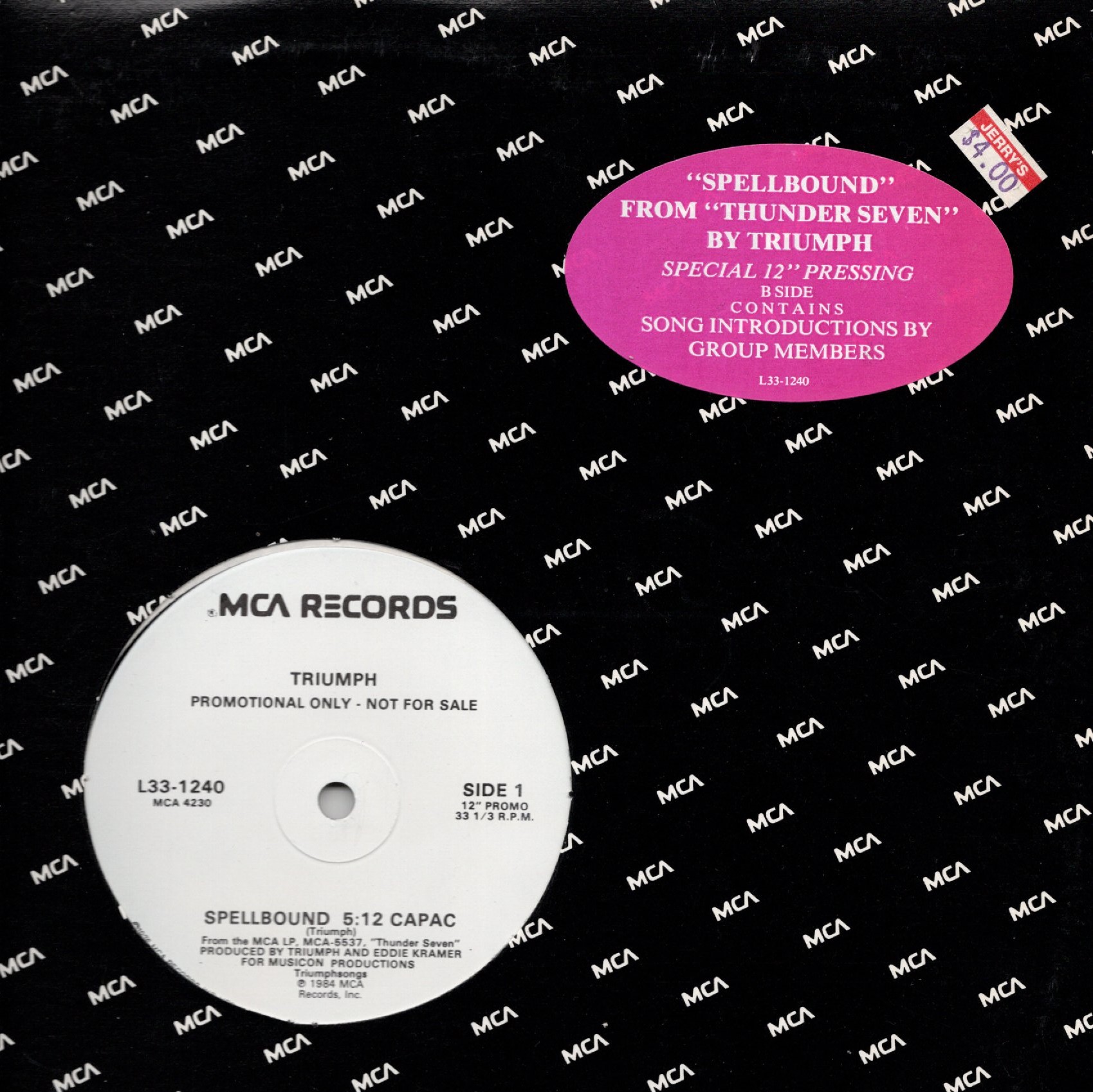
TRIUMPH – “Spellbound” (1984 MCA 12″ radio promo disc)

1984’s Thunder Seven was a big one in Canada, with “Spellbound” and “Follow Your Heart” both hitting the top 100 singles chart.  Triumph singles rarely offered up much in the way of non-album material, but the odd curiosity could be found.  This Triumph single for “Spellbound” was acquired by a friend, from Jerry’s Records in Pittsburgh back in 2013.

On the A-side, the standard 5:12 single version of “Spellbound” without edits.  You can really hear why this was a hit in 1984.  Triumph had learned to marry keyboard and guitar riffs for a bigger radio-ready sound.  With Gil Moore on lead vocals, “Spellbound” had huge chorus.  The track was also made into a cool video.

The B-side was specially designed for radio airplay.  Each track on Thunder Seven is given a brief special intro by the three band members.  You could look at this as an interview disc.  It’s nine minutes in length and not without value.  By listening we learn that “Spellbound”, for example, changed much from conception to release.  It was once titled “White Lies” before it was rewritten.  “Time Canon” was made up of 18 parts over 66 tracks.  Amazing stuff.  Their Canadian accents are adorable.

An excellent purchase for Triumph fans who have it all and need a little more.

4/5 stars

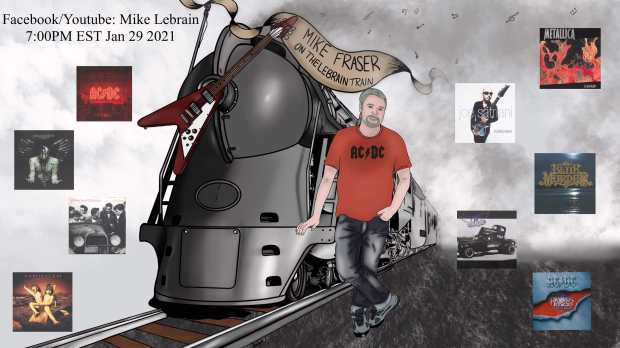
Mike Fraser takes us inside the recording studio on an epic LeBrain Train

“What happened to the guitars? Well put them back the way they were!” – Jimmy Page

A huge, huge, huge thanks to Mike Fraser for hanging out on a Friday night!  Growing up a young rock fan in Canada, we heard legend of Little Mountain studios in Vancouver.  Tonight, Superdekes and I got to ask the questions we wanted to know for over 30 years.  And Mike delivered!

Krokus.  Loverboy.  Honeymoon Suite.  AC/DC.  Aerosmith.  Bryan Adams.  The Cult.  Coverdale-Page.  So much more!  We tackled some of our favourite albums and a few cult classics.  From the Stone Gods to Canadian folksters The Rankin Family, we tried to explore the slightly obscure corners of Mike’s discography.  And we had a blast!  We took a few viewer questions, and if Mike comes back to the show again in the future, then maybe we can ask him the rest.

As I often do, I started early with an unboxing.  Start the video from the beginning if you want to catch that.  If you’re only interested in Mike (couldn’t blame you) then skip to 0:08:00 of the stream.

Make sure you watch all the way to the end to catch the brand new music video by T-Bone Erickson:  “Balls of Steel”.  This song is a tribute to Superdekes, who hooked us up with Mike Fraser for this show.  Thank you Deke, and thank you T-Bone for this awesome premiere video!

Feedback has been saying that this was the best LeBrain Train yet.  Do you agree?

REMINDER: Mike Fraser, Engineer Extraordinaire, on tonight’s LeBrain Train

Just a reminder that Mike Fraser, who has either engineered or mixed just about every album you love, will be on the show tonight!

The LeBrain Train:  2000 Words or More with Mike Ladano

Episode 48

In preparation for tonight, Deke and I have been doing our research, listening to records, and listening to other podcasts that Mike has been on.  While you can count on some AC/DC questions (and other major bands that Mike has worked with) Deke and I have some queries about some other albums off the beaten track.  You can check out some of Mike’s credits at his website.

Please give this a share to your rock buddies, and show Mike a warm welcome on tonight’s LeBrain Train!

January 29 2021. 7:00 PM E.S.T.
Facebook:  MikeLeBrain  YouTube:  Mike LeBrain

Note:  Thank you T-Bone for your understanding.  We original had T-Bone Erickson on the schedule for tonight to debut the latest Current River music video.  That show will now be pushed back to February 5.  T-Bone has graciously agreed to be bumped so we could talk to Mike Fraser.  Mighty fine dude!

REVIEW: The Stone Gods – Silver Spoons & Broken Bones (2008)

THE STONE GODS – Silver Spoons & Broken Bones (2008 Pias UK)

…and from the ashes of the beast came The Stone Gods, and they did lay waste to the land.

The “beast” from whose ashes that the Gods rose was The Darkness, an extremely talented band who were looked upon (either fairly or unfairly, you decide) as a novelty act. They split in twain, with singer Justin Hawkins forming the very Darkness-sounding Hot Leg. The rest of the band (guitarist and brother Dan Hawkins, drummer Ed Graham, and bassist Richie Edwards) stuck it out and renamed themselves The Stone Gods. Edwards, a fine singer in his own right, dropped the bass and became the frontman. New member Toby MacFarlaine was brought in on bass.

The lead single “Burn The Witch” was shocking in its metal ferocity.  This was not expected from 3/4 of the Darkness.

What made this band special is twofold. First, the undeniable writing talents of Dan and the band, proving that Justin was not the be-all and end-all of the Darkness.  Second, the voice of Richie Edwards. He truly has his own unique voice, something unusual in today’s soundalike music scene. It is part Bon Scott, part Halford, with a little bit of early raspy Joe Elliot thrown in, and 100% awesome. As a frontman, he was no Justin, but who is?  (Nobody!)

The band stuck solidly to a hard rock/heavy metal direction.  Ed Graham’s got his trademark cave-man drum fills, and it fits like a glove.  Dan’s guitar howls and shrieks like a thing possessed.  Above it all, Richie wails.  These songs rock.  Some, like “Defend or Die” and “Burn the Witch” are scorchers.  Others are hard rock classics.  Three tracks in particular fully qualify as Darkness-level rock anthems.  “Where You Comin’ From”, “Start of Something”, and “Wasting Time” each boast numerous hooks and arena-level choruses.  A track like “Wasting Time” has suitable weekend-ready lyrics.

My friends have all joined the rat race
It’s all suits, shirts and novelty ties
I’m not a fan of retirement plans
I refuse to change my way of life

Just about every song here is a winner; no losers.  It is important to note, however, that the album takes a turn for the lighter around the halfway point.  Indeed, the first three songs are a pure metal bludgeon.  After that, a few early-Def Leppard moments are thrown in (“Making It Hard”).  However it is never out of place, never too soft, never embarrassing.  It is simply a good time.  A well-rounded rock album with fists-a-flying, then a smoke break, and then some ass-kicking.  If you’re wondering why it sounds so good, I blame Canadian engineer Mike Fraser, who just nailed it.

Shortly after the album’s release, Ed Graham departed and was replaced by Robin Goodridge of Bush fame.  That’s him in the video for “Start of Something”. This great lineup recorded a yet-to-released second album.  But the Hawkins brothers could not be kept apart.  Robin returned to Bush, and the Darkness have enjoyed a very successful second era with brothers Dan and Justin back in action together once again.

Dan has indicated that the second Stone Gods album will eventually see release. If so, then this debut truly was the “Start of Something”.

5/5stars


REVIEW: Lou Reed – Metal Machine Music (1975)

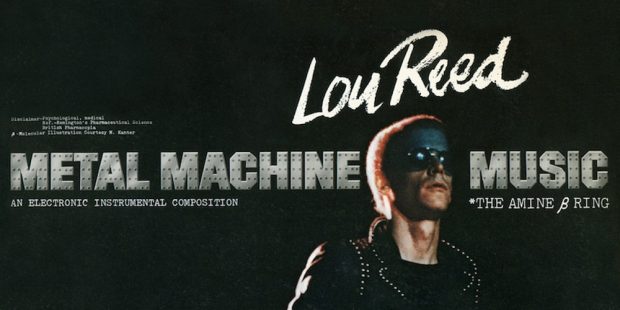
LOU REED – Metal Machine Music (1975 RCA)

Not as bad as advertised.

Music doesn’t have to be written.  Music doesn’t have to be made with conventional instrumentation.  Music doesn’t have to have a beat.  Hell, it doesn’t even have to have a sound.  Lou Reed knew this.  Whether it was simply a middle finger, or a larger experiment, his Metal Machine Music double album defied everyone and everything to become a cult classic.

The fluttery, echoey mess of sounds drone on dissonantly.  Metal Machine Music was initially issued as a two record set, with four tracks at roughly 16 minutes apiece.  The fourth side featured an endless loop, which meant that you could listen to Metal Machine Music for eternity, if you so chose.  There is very little variation in sound over the course of an hour, but interestingly, nothing is repeated and everything is unique.  The random nature of these sounds ensures that recurring “hooks”, or “melodies”, or just “collections of noises that sound good together” never recur.  There are certain peaks and valleys; seconds of slow action before quick snakey violence.

It sounds alien, jittery, intelligent, deep, scary, spontaneous, yet created with deliberate intent all at once.  You are reminded of a signal from a neutron star deep in space, as scientists search for patterns in the noise.  It is not only brilliant and stupid, but it is also the fine line in between.  Why a double album?  Why not just a single LP with the infinite groove at the end?  Why not just a single track?  Therein lies the middle finger aspect of Metal Machine Music.

There have been reams and reams of words written about Metal Machine Music by those far more literate than I, such as David Fricke and Lester Bangs.  It has been performed live by Reed and it has been covered by chamber ensembles.  It regularly makes both extremes of “Best Of” and “Worse Of” lists.  It was released in stereo and quadrophonic, and even on DVD replicating the locked groove and quad mix.  The demand for Metal Machine Music, which was originally deleted after a brief three-week release, has been immense.   From curious onlookers to audiophiles, there is a release of Metal Machine Music for you.  You can boast that you listened to the whole thing.  There is obviously something to it; something our primitive brains can perceive and feed off.  Whether it provides you with nourishment, or if you can’t finish the album, it will leave you with a strong impression.

/5 stars


Engineer Extraordinaire Mike Fraser joins the LeBrain Train – Friday Jan. 29 7:00 PM EST

The LeBrain Train:  2000 Words or More with Mike Ladano

Episode 48

Ever wanted to know what it was like making records with AC/DC, Aerosmith, The Cult, Coverdale-Page, Joe Satriani, Blue Murder and many more? If so, make sure you tune in to this Friday’s episode of the LeBrain Train.

Mike Fraser has worked on so many classic rock albums that your head will spin. There is a 99.999% certainty that you know and love at least one record he’s been involved with. For some of us it’s more a matter of the ones we haven’t heard yet!

A huge thanks to Mike for agreeing to come on our lil’ show and chat music, and an equally big thank-you to Superdekes for hooking it up. This is going to be fun.

January 29 2021. 7:00 PM E.S.T.
Facebook:  MikeLeBrain  YouTube:  Mike LeBrain


VHS Archives #101: The Wisdom of Michael Schenker (1987)

‘Twas the Pepsi Power Hour in 1987, and Erica Ehm asked Michael Schenker a question about fast guitar players.  In just a minute and 15 seconds, he responded with a remarkable amount of wisdom.  From MuchMusic.


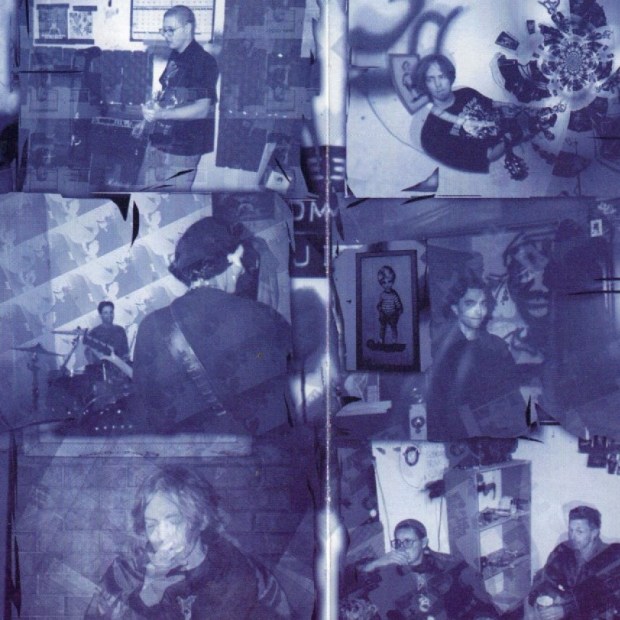
REVIEW: Here Comes Jim – Where Evil is Afraid (1999)

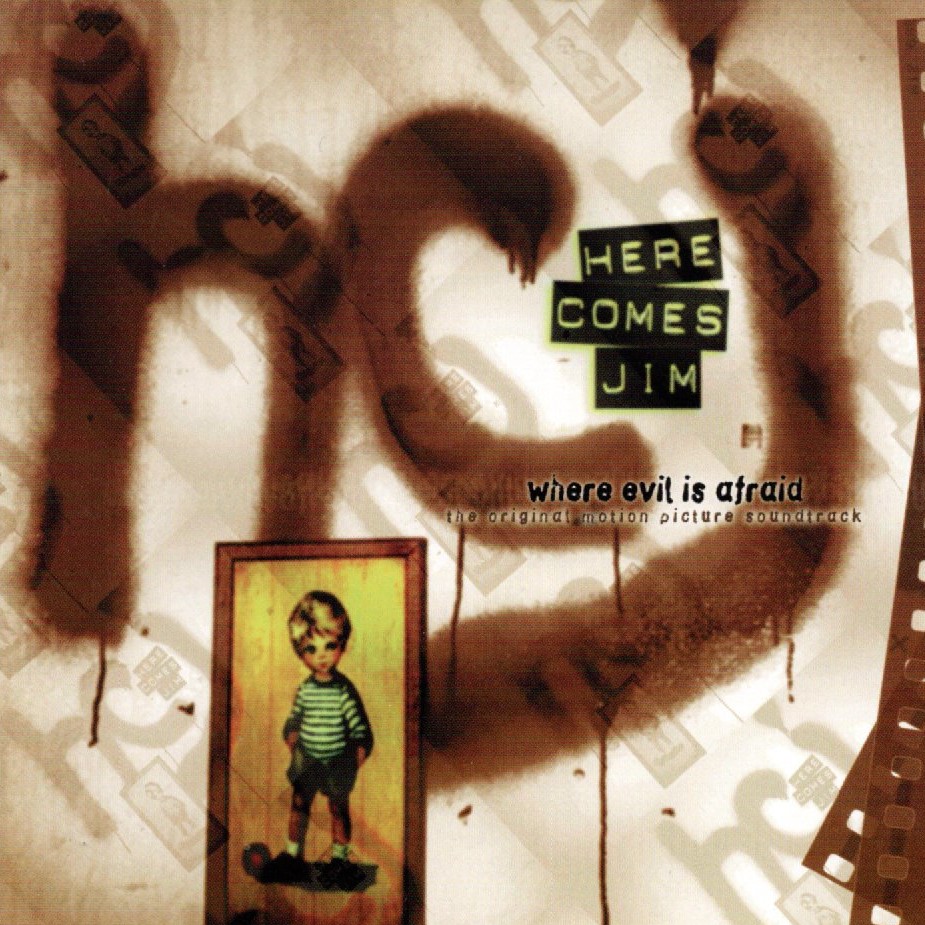
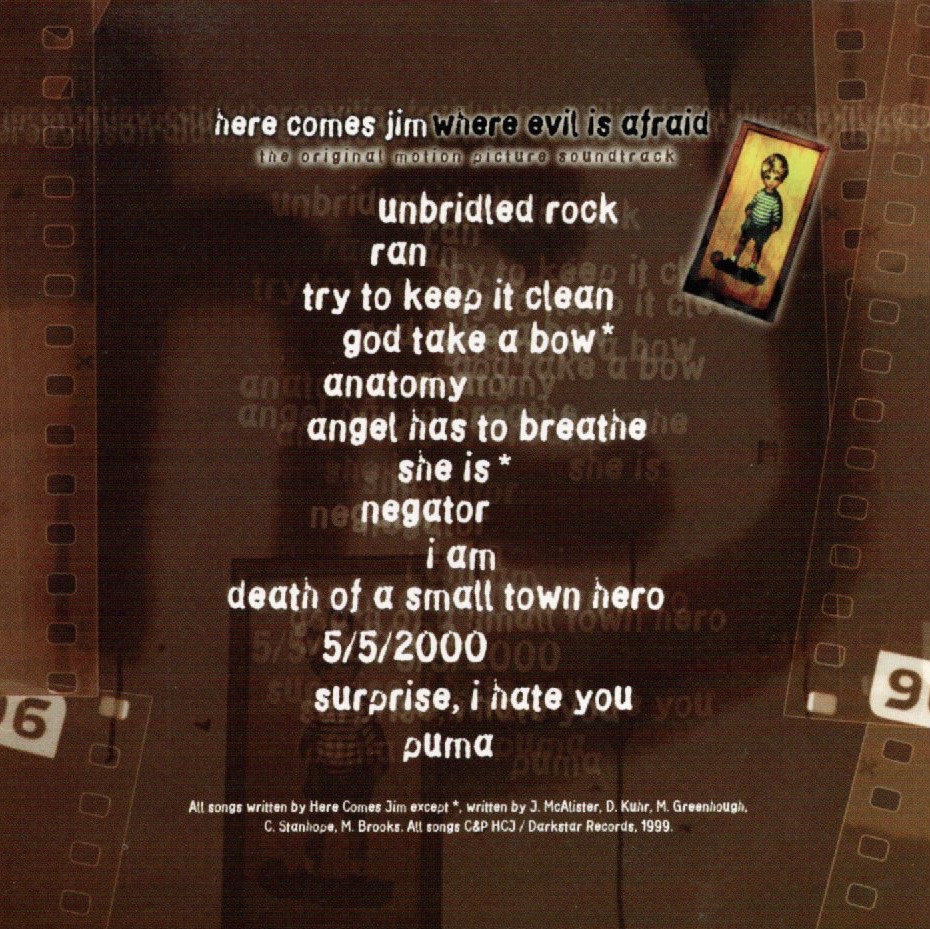
HERE COMES JIM – Where Evil is Afraid – The Original Motion Picture Soundtrack (1999 Dark Star)

Full disclosure:  I used to know this quartet from Cambridge, Ontario Canada.  They were great.  When I first encountered Matt Greenhough and company, Faith No More had broken up and I was looking for something to replace them in my life.  Something heavy, non-mainstream and with bonkers lead vocals.  Here Comes Jim both terrified and delivered!  I wore their T-shirt, I played the CD in store, I flew the flag.  I loved this band.

That was 21 years ago.  I’m no longer the angry young man.  I wonder how this album sounds today?

It’s still sounds fucking great!  It’s noisy — lots of guitars fucking around.  “Unbridled Rock” meanders around but comes in to focus on the chorus.  The cowbell is a nice touch.  As remembered, the vocals really range from quiet sombering to full-on rage.  “Ran” combines a melodic sensibility with a noisy guitar drowning.  It’s a brilliant and unafraid mix of ingredients.

All the songs come flooding back even though I haven’t played this album in almost 20 years.  “Try to Keep it Clean” was always a favourite.  Melodic guitars and vocals against a cloudy backdrop.  Matty G (that’s what we called him) did the clean and shouty vocals equally well but he’s especially good when he’s singing clean.  He has a good handle on melody, but then at other times he just doesn’t give a shit about melody.  Sometimes it’s about volume, sometimes about atmosphere.  Many of the songs…float.  “Angel Has to Breathe” is one such song, hanging uncomfortably over you.  That is until the powerful chorus of “Who will save my soul?  Who will take my shit and go?”

One of my biggest favourites 20 years ago was the slamming “She Is”, perfect for thrashing out on air guitar.  The verses turn quiet and melodic, before the crash of distorted guitars return for an amazing chorus.  Then the next track negates all that with “Negator”, an absolutely insane thrash-o-matic scream-fest…with a drum solo!

“Negator” sample

Fun fact:  the feedback-laden instrumental track “5/5/2000” refers to an old book from the 1980s that claimed the world would end on that date, due to an alignment of the planets.  All I could think was, “Shit…we have to survive Y2k and then yet another doomsday scenario in May?  Come on!  Who comes up with this?”  The song is far more entertaining than the book from which it took its name.

I may not be an angry young man anymore but I get what I liked about Here Comes Jim beyond the friendship.  They wrote good, stabbingly aggressive, intelligent rock far off the beaten path.  I remember putting tracks like “She Is” and “Negator” on mix tapes and (later) CDs.  There are no songs that suck.  Only songs that rock.  Listening to Here Comes Jim is like going into the ring for 10 rounds and coming out with a concussion.

4/5 stars


#874: Impossible to Display

A sequel to Getting More Tale #795:  A Case for Security

GETTING MORE TALE #874: Impossible to Display

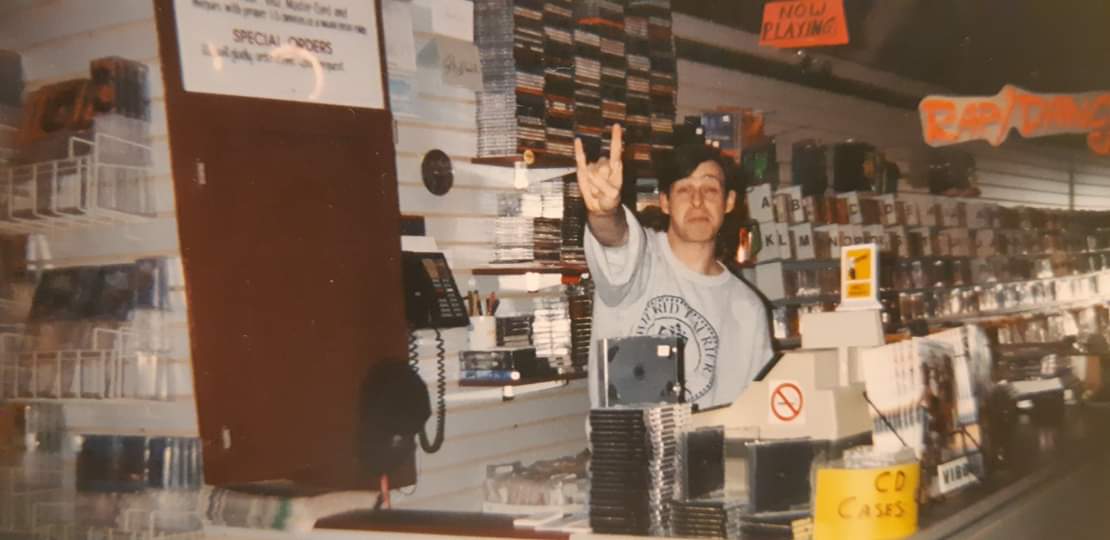
Shoplifting accounts for over a third of inventory shrinkage in retail.*  At the Record Store we had numerous strategies to combat this, as discussed in prior chapters.  An alert staff can stop a staggering amount of theft, but the last line of defence for us was a magnetic security tag system.  Trying to lift a de-tagged item would set off alarms at the store.
Cassettes, one of of our lower-cost items compared with CDs and box sets, were protected with a single magnetic strip hidden on the seam on the shrink wrap.  These had to be de-tagged magnetically with a device — they were single use only and the tag left the store with the product after being disarmed.  Each tag cost five cents, and that added up.  Higher-cost box sets were protected with multiple tags hidden on the edges of the packaging.  CDs, which also carried significant cost but were the majority of our store, were protected by a double-edged sword.  They were housed in an unbreakable and re-usable plastic longbox, with the magnetic tag stuck to an inner edge.  These tags never had to be disarmed.  You just removed the security case with a special key and set it aside for re-use on fresh inventory.

Cassettes were checked weekly to re-secure loose tags.  We kept a close eye on everything and everyone.  Combined with good practices, the security gate at the front of the store prevented a lot of theft.  Still, there were certain items that were unfortunately hard to both a) protect properly and b) display properly at the same time.  Unusual packaging made some albums difficult to stock on the shelves with the rest of the catalogue.

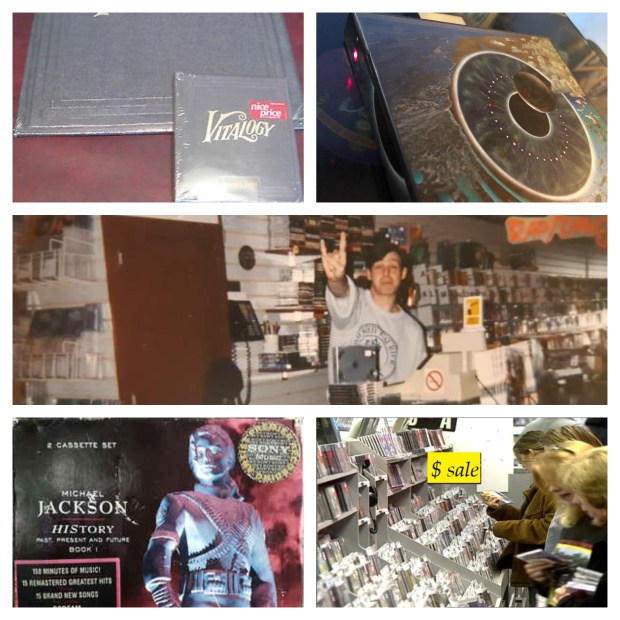
December 6, 1994:  Pearl Jam – Vitalogy compact disc

Although we weren’t equipped to display records, we had no problems when Vitalogy was released on vinyl November 22, 1994.  We sold the five copies we stocked on the first day.  It was the CD release two weeks later that caused us grief because we ordered those en masse.

The CD release of Vitalogy came ensconced in a miniature cardboard book-shaped package.  It had the same dimensions as a normal CD case, just flipped upright on its short side.  You could put them in a CD security box no problem, but T-Rev discovered a weakness in its design.  Because it was thinner and more flexible than a standcard CD case, you could with a little effort force it out of the security box without unlocking it.  This meant we couldn’t safely stock it out on the shelves.

Instead, the boss man set up a small box under close watchful eye at the front counter.  He placed the Vitalogy CDs in it, with every fifth copy turned 45 degrees so he could easily count how many were in there at any given time.  If he knew that he had 20 copies in the box, but suddenly only counted 19, then he would see if anyone in the store was carrying one around to purchase it.  Eventually we just put it back in the security cases, assuming nobody would be as inventive as T-Rev in trying to get one out.
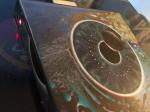
May 29, 1995:  Pink Floyd – p·u·l·s·e compact disc with flashing light diode.

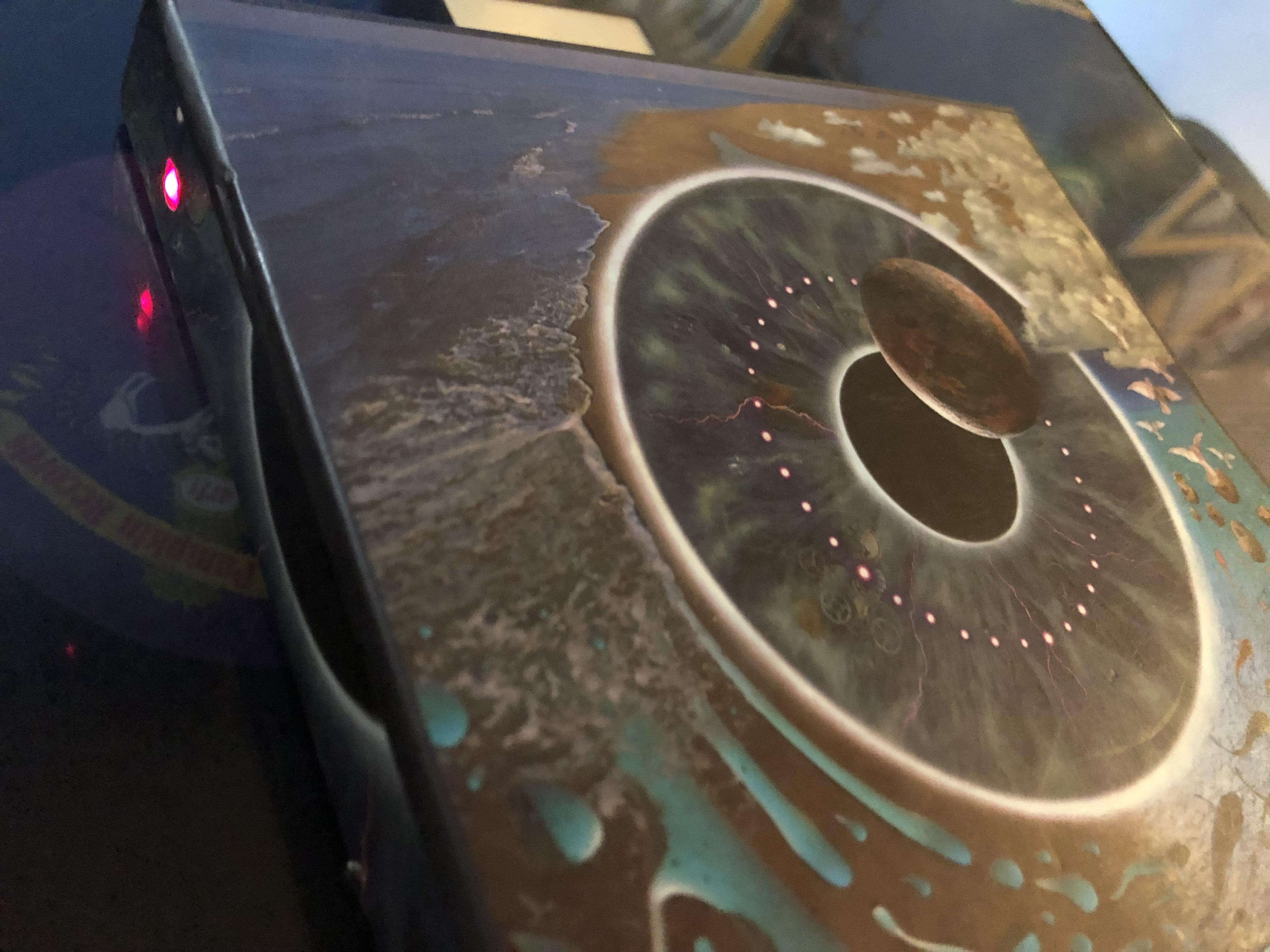
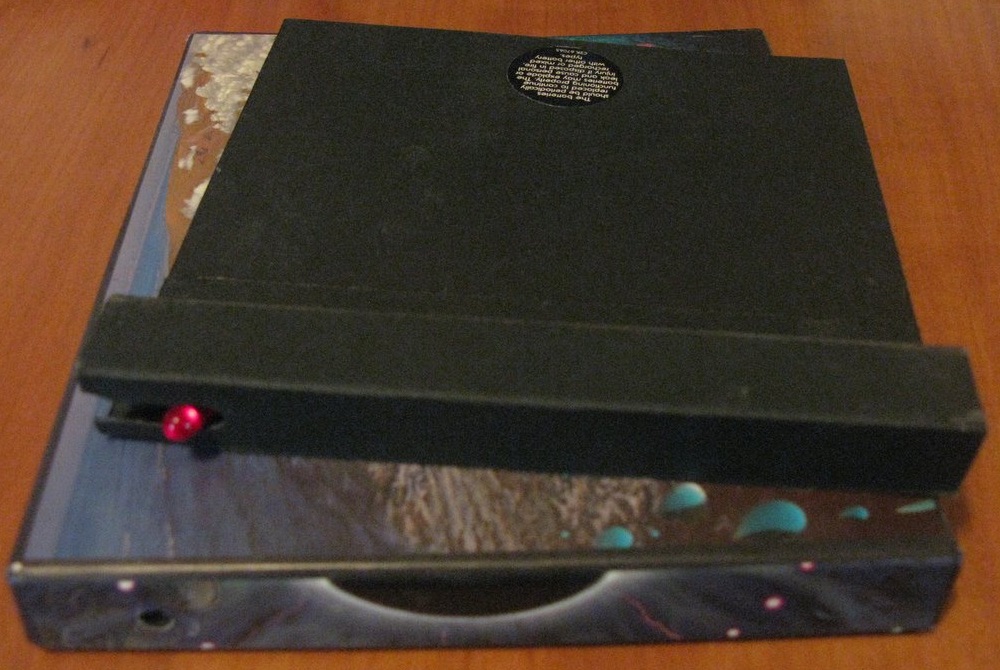
The original CD release of Pink Floyd’s p·u·l·s·e had a unique gimmick.  The oversized cardboard shell contained the 2 CD album in a book-style case, plus a flashing light gimmick powered by two AA batteries in a hidden compartment.  When the CD was reissued without the light and space-consuming batteries, it could fit in a standard size CD security box.  However the full-on, limited edition original was too large to be stored in our shelving.  Once again we had to put them at the front counter, this time stacked in a pile.
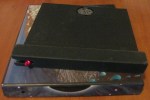
What I remember most about the “pile of p·u·l·s·e” is that flashing light.  However many copies were in that heap at the front counter, the lights flashed incessantly.  You could not turn them off.  Once you purchased the CD, you could remove the batteries from the inside.  Safe in their shrinkwrap on our countertop, they just flashed and flashed away.  Never in synch.  No two copies were ever in synch.  I guess it might have depended on how much juice was still in those batteries.  Copies of p·u·l·s·e flashed for years without a battery change.
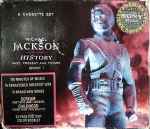
June 20, 1995:  Michael Jackson – HIStory double cassette in cardboard sleeve

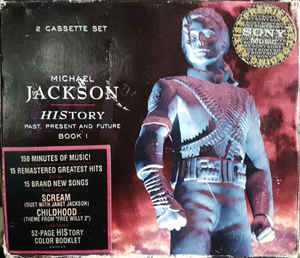
Although cassettes were being slowly phased out, we still had to carry certain big releases on the format.  In 1995, Michael Jackson still sold impressive numbers.  Enough that we carried one cassette copy, which once again, was packaged in such a way that we couldn’t display it on our cassette shelves.  Unlike other doubles, which sometimes came in a “fat” double cassette case (like Phantom of the Opera) or two normal cases packed together (like The Song Remains the Same), Michael Jackson’s HIStory came with the two tapes face up, side by side, in a cardboard box.  It was dimensioned like no tape shelving system known to man.

Too cumbersome to take up valuable front counter space, HIStory was deigned be displayed without fanfare on a shelf behind the desk.  To buy a copy of HIStory on cassette from us, there were only two paths to a sale:

  1. The customer would have to notice it behind the counter when purchasing other items, and ask for it.
  2. The customer would have to ask if we carried it, and not everyone asks.

My solution was clever.  I had just acquired a computer program that enabled me to create perfectly formatted cassette J-cards for my tape collection.  I used it to print a sleeve that said “MICHAEL JACKSON – HISTORY – 2 CASSETTE SET – ASK AT COUNTER”.  I put that in an empty tape case, and filed it with the rest of the Michael Jackson cassettes.  It took forever but it must have sold eventually!  I don’t know if I was responsible because it didn’t happen on my shift.

We had a cramped little space and we made the best of it.  Given that we were constantly battling for every square inch, any time an artist came out with something that was impossible to display, it created a unique little headache for us!


* The other 2/3rds are largely staff theft and errors.