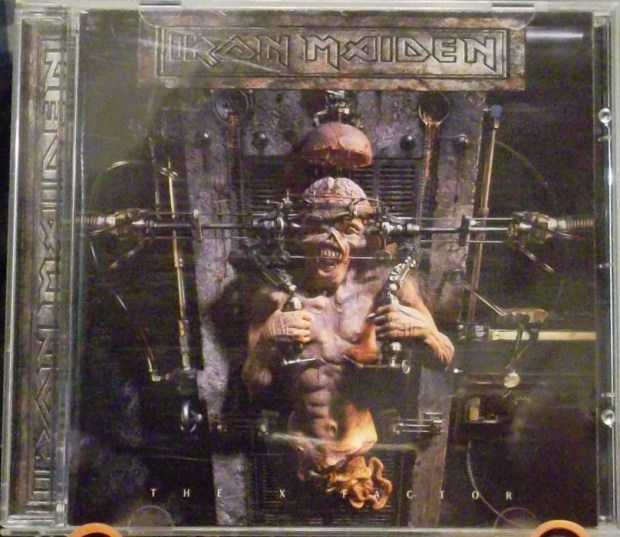
#463: The X Factor Failure


GETTING MORE TALE #463: The X Factor Failure

When Bruce Dickinson left Iron Maiden in 1993, the metal world was rocked yet again by another major defection.  First Vince Neil, then Rob Halford, and now Bruce!  It seemed the old guard of 80’s metal had suddenly fallen from the top of the world, to critical condition on life support.

Some fans gave up.  The loyal waited eagerly for news.  First were the rumours that Paul Di’Anno would come back (quickly shot down by Steve Harris).  Then Michael Kiske from Helloween had his name dropped in a few speculative magazine articles.  Finally in 1994, the identity of the new singer was released:  Blaze Bayley, ex-Wolfsbane.  In North America, the majority  muttered, “Who?”  The fans who still cared, anyway.  Those who did not cut their hair and moved on to Soundgarden and Alice in Chains.

Another long quiet year went by before new Maiden music hit the shelves.  When it did, in the form of the album The X Factor, it was clear that Iron Maiden had changed.  They were now a quieter, darker animal, with a singer to suit that sound.  The departure was not well received.  Fans were not impressed by the long, repetitive songs, nor the lower-voiced singer.  The album failed to make a significant dent in the charts, although it sold well initially in Quebec,  the last stalwart of metal in Canada.  One fan who did accept and embrace the changes was yours truly, Mr. LeBrain, but not without taking flak for it.

When the CD was released, I was already working at the Record Store, so I bought it immediately.  We didn’t stock enough copies to get it in early, or even offer a good price on it.  In other words, we ordered just three copies of the new Iron Maiden CD, with one of those being reserved for me!   That’s how far Maiden had fallen.  It took two or three good listens to adjust to the new softer Maiden, but certain songs jumped out fairly quickly, such as “The Sign of the Cross” and “Lord of the Flies”.  I enjoyed the darkly introspective lyrics on new songs such as “The Aftermath” and “Look for the Truth”.

The girl I was dating at the time was not into rock music; not in the least.  The last CD I bought for her was Much Dance ’95, featuring such hits as “What is Love” by Haddaway, “Saturday Night” by Whigfield, and of course, “Macarena”.  I even took a bullet and listened to it with her, the whole thing.  In turn, she tried to give my Joe Satriani a shot, but she wasn’t particularly interested.   I knew there was no chance she’d be into Iron Maiden, but since I was excited that they had new music out, I was talking about it a lot.  I tried to tell her how much I was enjoying the new lyrics on the album.

That’s when she said the words I will never, ever forget:

“Why are you even listening to new Iron Maiden?  You know they will never be popular again.”


Aye carumba!

Popular?  What true Maiden fan ever bought an album because it was popular?

I was deeply disappointed in her words, and even a little hurt.  I was trying to convey to her that the words and music were impacting me; I was feeling something and wanted to express that.  It is always good when music provokes thoughts and feelings.  I would have loved for the album to be successful, but that wasn’t the point.  I never listened to Maiden to be cool.

She dumped me shortly after I bought the new Lisa Loeb album for her.  Damn you, Lisa Loeb.  Then, she started banging an ex-girlfriend of mine, and her new boyfriend…at the same time.

Let me repeat that for you just in case you missed it.

Then, she started banging an ex-girlfriend of mine, and her new boyfriend, at the same time.  Both of them.

Henceforth, I dove headfirst into that Maiden album to drown my misery, and it became one of several discs that were my soundtrack to that miserable winter for me: Maiden, Ozzy’s Ozzmosis, and Oasis’ (What’s the Story) Morning Glory.  If there is a reason I have a soft spot for The X Factor by Iron Maiden, you can blame that girl who said they’d never be popular again.

While all is forgiven today, I have not forgotten that remark (obviously), and the amazing thing is that she was 100% wrong.  Maiden are more popular today than they ever have been.   Their T-shirts have become fashion statements.  Kids who weren’t even born when Bruce left the band are buying tickets to see them live in 2016!  But much more important than that, they have achieved a level of artistic integrity and consistency that most bands should be envious of.

Maiden, never popular again?  File that under failed predictions from the 90’s, right next to the Y2k scare!  Up the Irons!

SAM_1037

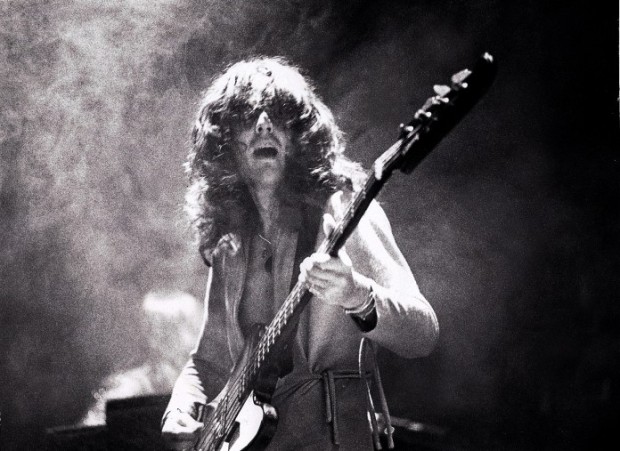
R.I.P. Jimmy Bain

2016, I fucking hate you.

R.I.P. Jimmy Bain, age 68, now the second member of the original Dio to pass.  And yet another Rainbow casualty.

Jimmy rocked.  Listen to some Jimmy today.

DVD REVIEW: Taylor Swift & Def Leppard – CMT Crossroads (2009)

TAYLOR SWIFT & DEF LEPPARD – CMT Crossroads (2009 Walmart exclusive DVD)


“There’s always a first day when you discover a band, be it the Beatles or Taylor Swift, when you hear the name for the first time and then you go and check it out. So we just Googled her, iTuned her, listened to it all and said, ‘Wow’!” — Joe Elliott

“I like to write songs about what’s going on in my life.” — Taylor Swift, stating the obvious

IMG_20160116_192039

Before the Swifties come and tear us apart for what you’re about to read, let’s be perfectly clear. Taylor Swift is very talented and has a genuine love for Def Leppard’s music. She is also an incredibly bright individual, and she has written more hits than Def Leppard in a fraction of the time. Both of them started in their teens, and are guilty of using outside writers. In the included interview footage, she and Def Lep seem like a mutual admiration society. We have nothing against Taylor Swift here, though her brand of pop music is never heard around LeBrain HQ…save this Walmart exclusive DVD release.

How did they hook up? Taylor was on tour with “Tim and Faith” (McGraw and Hill) who’s tour manager was Rick Allen’s brother. She expressed interest in doing an episode of CMT Crossroads with them, and then the phone rang.

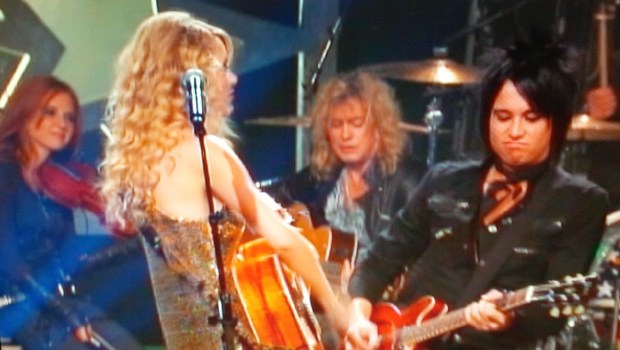
Leppard and the Swift’s band share the stage, dual drummers, umpteen guitar players, and fiddle…but on a heavier track like “Photograph” you can’t really hear her group. Taylor gets the first line (she says she felt like a kid in a candy store to do so); then she and Joe swap. It’s clear that she doesn’t have the power nor the control that Joe Elliot has. Her voice is whispy by comparison. It’s also weird to see a girl in a gold mini-dress and cowboy boots fronting Def Leppard, but talk about dreams come true! I’m sure Def Leppard didn’t mind the national exposure either.

“Picture to Burn” is the kind of candy-coated pop country that irritates so many fans of the old fashioned stuff. Taylor is more at home on her own songs, but Joe has never sounded more awkward. Taylor’s band dominates on this song, with only a few Phil Collen guitar squeals to remind you he’s there. Tellingly, Joe Elliot says of her music, “You take the banjos and fiddles off, and you’ve got pop.” The next Taylor number, “Love Story” is one I’ve heard on pop radio many times, but it’s hard to suffer through. It brings back bad memories of Leppard’s pop disaster, X.

Taylor butchers my favourite Def Leppard ballad, “Hysteria”. The song successfully absorbs the twang, but again, Swift just lacks the vocal power to blast it the way Joe can. Her own ballad “Teardrops on my Guitar” is so laid back that most of the Leppard guys are sitting down for it. The bands mesh well and the song is pretty good, although she has a guitar player who kind of looks like a goth country emo Russell Brand. She’s at home on Leppard’s “When Love and Hate Collide”. Once again the meshing of the two bands works well here. There’s a full string section, plus backing vocalists crowding the already overloaded stage, but that’s what the song calls for and it’s genuinely great version of the well-worn hit. “Should’ve Said No” is a Swift song I don’t know, but it’s one of those pop tracks that just feels like it was written by a computer. It transforms directly into the show closer “Pour Some Sugar on Me”, but…damn. Taylor’s out of breath. She is audibly gasping (a big no-no) between lines and unable to deliver the goods. With the fiddle and extra accouterments added, this one’s a write-off.

IMG_20160116_194451

There are three bonus tracks that weren’t broadcast as part of the show: One Swift, two Leppard. Taylor says she wrote “Our Song” in ninth grade (“three years ago, actually”). That’s exactly what it sounds like, ninth grade pop, but obviously there is a need in the world for that kind of kid-friendly music. Leppard fans won’t find any appeal here. They will however appreciate “Love”, the only new Leppard song in the set. Interestingly it starts with only Taylor and two of her guitarists on stage, then Leppard emerge from the shadows. As a duet, it’s enjoyable, and it’s overall probably the heaviest thing all night. The much-overplayed “Two Steps Behind” is the final bonus track. The fun thing here is trying to count the number of people playing guitar on stage. (Eight plus fiddle and Rick Savage on acoustic five-string.)

Phil Collen gets bonus points for wearing a jacket on stage, dressing up a bit for the television, but he sticks to tradition by having no shirt on underneath.

2.5/5 stars

REVIEW: Rainbow – Live in Munich 1977 (vinyl)

Thanks for joining me this week for my Deep Purple Project. I admit that this review is a bit of a cop-out. I got dreadfully sick with the flu a week ago and was not able to finish any more Purple reviews for this week. I pulled an old one out of the hopper instead. This is close to Purple,  — the Man in Black himself, and Blackmore’s Rainbow. This review is for music writer Victim of the Fury!

RAINBOW – Live in Munich 1977 (2013 Eagle Rock 180 gram 2 LP set)

Something about listening to classic rock with that rich, warm sound of pristine vinyl played on nice big speakers for the first time…is there anything better?  Dropping the needle on side A, let us begin the ritual of properly listening to a double live album.

This 180 gram was a birthday gift from my sis, knowing my love of all things Ronnie James Dio. Not to be confused with the double CD Live in Germany 1976, this freshly mastered concert was recorded in 1977 for German television.  Dio was one hell of a powerhouse, especially in 1977.  Live in Munich contains what must stand as one of the best Dio performances caught on tape.  This was caught just before the album release for Long Live Rock ‘n’  Roll.  “Kill the King” was a storming opening and the live recording is all but flawless.  If Rainbow could be faulted for anything at this point in their brief life, perhaps they played too many long jams on stage.  “Mistreated”, the Deep Purple concert favourite, is the first of these.  As usual for the Man in Black, Ritchie Blackmore himself, the song is almost 12 minutes in length when stretched out live.

Lets not get into comparing Ronnie James Dio to David Coverdale. There’s no point to that.  As with Black Sabbath, you either like Ronnie’s interpretation or you don’t.  Regardless is it drummer Cozy Powell who detours most noticeable from the Deep Purple original, doing a busier blast than Ian Paice did.  As for Blackmore, his solo spans the entire spectrum delightfully.  He fluffs it for a moment, only to immediately take control and keep going.  This is a brilliant version of a song we have heard many times.  Ritchie then takes center stage for a delicate workout to “Greensleeves”, before blasting into the Rainbow barnstormer.  Once again, this is probably the best live version on tape.

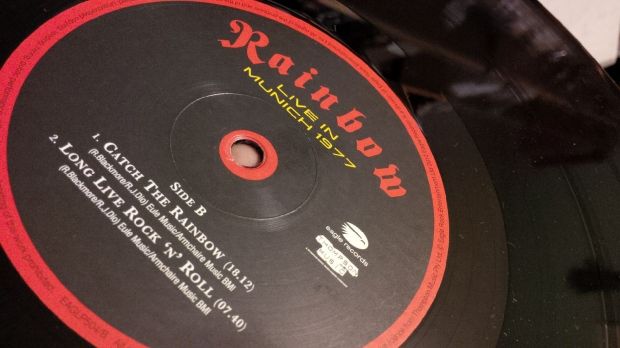
IMG_20151108_111910Flipping the record to side B, we are treated to Ritchie seemingly tuning his guitar…melodically…working his way into a lengthy “Catch the Rainbow” including classical interludes.  There’s more than a little “Little Wing” within “Catch the Rainbow”, which Ritchie plays into.  Bassist Bob Daisley sings the angelic backing vocals, proving why he has been such an integral member to so many bands over the years.  In fact this would have to be one of the strongest Rainbow lineups, period.  Keyboardist David Stone rounded out the quintet, and he is kept busy on “Catch the Rainbow”.  The brand new song “Long Live Rock ‘N’ Roll” is next, and a few people in the crowd indicate they may already know the song!  It is presented more Deep Purple in style (hints of “Black Night”), perhaps a bit more laid back with nice flashes of organ here and there.

The second LP has to shuffle the track order out of necessity.  “Still I’m Sad” is 25 minutes, so it must occupy all of side C, even though it was played after “Man on the Silver Mountain” in concert.  There is something about a side of vinyl that contains one monolithic slab of music in only one track.  It feels like a challenge, a solo-laden endurance challenge.  Once it starts rolling, it becomes one of the most intense versions of the song yet recorded by Rainbow.  Then it goes all over the place as pretty much every member has moments to shine.  It’s way too much and it’s way over the top and taxing even to the staunching rock fans.  It was 1977 and this is the way it went down!

Settling in for the final slab o’rock, side D is also daunting with two tracks of 15 minutes apiece. Purple’s “Lazy” is teased out, as part of “Man on the Silver Mountain”. Lots of soloing and noodling abound, and the big weakness with this period of Rainbow is that they thought we needed this much of it. The segue into “Starstruck” is way more fun. More solos and a frantic “Do You Close Your Eyes” ends the concert. Stone’s keyboard solo is cheesy fun, but overall this is another great over the top performance from Rainbow. You can hear a guitar destroyed at the end of it all.

Double lives are best experienced on vinyl, and pristine 180 gram records fit the bill perfectly. If you’re going to go double live for Rainbow, do it with Live in Munich.

4/5 stars

A
1. “Kill the King”
2. “Mistreated”
3. “Sixteenth Century Greensleeves”

B
1. “Catch the Rainbow”
2. “Long Live Rock ‘n’ Roll”

C
1. “Still I’m Sad”

D
1. “Man on the Silver Mountain”
2. “Do You Close Your Eyes”

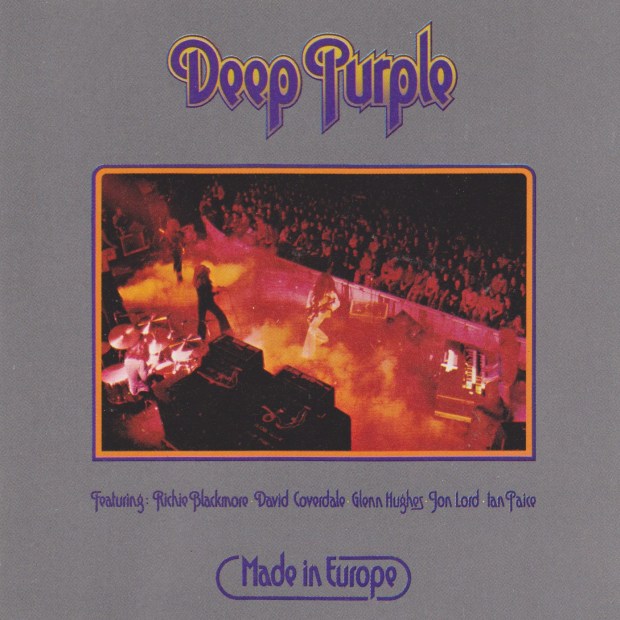
REVIEW: Deep Purple – Made in Europe (1976)

Scan_20160114DEEP PURPLE – Made in Europe (1976 EMI)

In 1976, Deep Purple ended with a thud.

With no desire to carry on, the band split in 1976 after the ill-received addition of Tommy Bolin on lead guitar.  David Coverdale was eager to start a solo career where he could sing, and not “scream his balls off”.  Everybody else was just plain tired of it all.  Dutifully, the record company trotted out live albums and compilations, to keep the cash flowing.  Made in Europe, intended as a followup to Made in Japan, came first.  It was followed by Power House, When We Rock We Rock, Deepest Purple, Last Concert in Japan, Live in London, and many more.  The goal was not to provide fans with good quality unreleased music for them to enjoy.  The purpose was to make more money.

Made in Europe has since been superseded by better releases.  MkIII: The Final Concerts expanded and remixed this material, sourced from their last shows with Ritchie Blackmore.  He had already made the decision to quit, unbeknownst to his bandmates.  More recently, the Official Deep Purple (Overseas) Live Series released full shows of two concerts, Graz and Paris.  It is always preferable to have the full show, rather than a song here or there sloppy edited and mixed into a live album.  Don’t you agree?

With only five songs, Made in Europe was hardly representative of Purple’s set at the time, but it seems a single LP was all that EMI were willing to invest in.  Producer Martin Birch was unable to get the same heavy, crisp sound that he got on Made in Japan.  This one is heavy, but that crisp sound is muffled under a blanket.

“Burn” is an apt opener, and both David and Glenn Hughes were in fine form that night.  Blackmore, Paice and Lord always are.  Yet Deep Purple sound almost…bored?  Playing by rote?  Blackmore’s guitar is also too buried in the mix.  The first of two jams is up next: “Mistreated (Interpolating ‘Rock Me Baby’)”.  While no one questions that this is one of the greatest songs in the Deep Purple MkIII catalogue, the live jam has always dragged.  Ritchie’s playing is still a delight, but they could have trimmed two or three minutes from the song.   That’s followed by a frantic “Lady Double Dealer”, never one of Purple’s finest.  Birch applies an irritating echo to the chorus, but that’s all for the first side.

The second side is dominated by 16 minutes of “You Fool No One”, the second jam.  Jon Lord takes center stage for the organ solo intro, but if you dig cowbell, this song is for you!  Could Ian Paice be the #1 cowbell player on the planet?  “You Fool No One” testifies to that.  He is absolutely the MVP on this track (for his drumming, too)!  Finally, the full gale force of “Stormbringer” brings the proceedings to an end, easily the best track on the disc.

What, no “Smoke on the Water”?  No “Highway Star”?  It appears EMI wanted to avoid song overlap with Made in Japan, so you get MkIII material and only MkIII material!  That the drawback to a set such as this which is really only about half of a proper Deep Purple concert.

3/5 stars

Scan_20160114 (2)

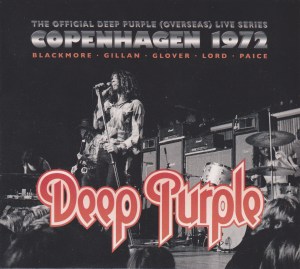
REVIEW: Deep Purple – Copenhagen 1972 (2013)

Scan_20160103DEEP PURPLE – Copenhagen 1972 (2013 Edel)

How many live albums are there from the Machine Head tour in ’72?  I lost count, and I don’t really care.  I’ll buy ’em all!  Copenhagen 1972 represents Purple at their best, in their prime, playing their best songs.  The difference is (there always is a difference) is that this is a particularly pummelling Purple potluck.  As awesome as they were in ’72, it’s rare to hear them play as ferociously as you will here!  This set was previously released by Sonic Zoom as Live in Denmark ’72 in 2002, but technology is constantly improving and it has been given a subtle sonic upgrade.  With restored master tapes, the 2013 release is the definitive one, not to mention it has four bonus tracks over the previous Live in Denmark ’72.  These Sonic Zoom discs seem to be re-released periodically, but these versions from the Deep Purple (Overseas) Live Series are in all cases the ones to own.

“We got the telly here tonight, so we got to be good.”  That explains how this show was recorded so well.  The clown prince Ian Gillan is a dry unorthodox frontman when it comes to banter, and that’s why we love him so.  “Highway Star” herein is one of the best versions of the song you will ever find.  The non-album single “Strange Kind of Woman” follows, extended with Blackmore and Gillan’s interplay.  Behind them, a constant presence, is the growl of Jon Lord’s Hammond.  What a beast!  Lord always tended to improvise on his intro to “Child In Time”, lending it different flavours every time it was played.  The Copenhagen ’72 version has its own personality.  There is a delightful quieter middle section where Jon gets to have some jazzy fun.  Drummer Ian Paice gets his moment on “The Mule”, one of Purple’s most progressive rock moments from 1971’s Fireball.  Paice, being outstanding through the whole concert, dominates this one into submission.  It is remarkable how well recorded these drums are.  Glover’s bass too, which has a shining spot in the mix.  “Lazy” smokes just as hot, but it is “Space Truckin'” that has the honour of being stretched out for over 20 minutes.  With the many live versions of “Space Truckin'” out there, I wonder how many sheer hours of this song that I own?  This one is unique in its own right.

Scan_20160103 (4)

The show continues on CD 2, with “a little bit of fun” called “Fireball”.  With an extended intro I haven’t heard anywhere else before, this version of “Fireball” kills it.  It’s immediately followed by “Lucille” which was a periodic Deep Purple encore back then.  Simply incendiary, over the top, and blazing fast.  The last song of the show is the old single “Black Night”:  that’s right, no “Smoke on the Water”!  I guess they just didn’t play it that night.  Machine Head wouldn’t be out for another three weeks.

CD 2 has four bonus tracks on top of this.  The aforementioned “Smoke” along with more versions of “Strange Kind of Woman” and “Space Truckin'” are included, from New York in ’73.  This version of “Strange Kind of Woman” is unusually funky; more like the Deep Purple Mk III that would emerge in 1974.  “Smoke” is still fresh, but “Space Truckin'” surprises by being only half the length of the version on CD 1.  It’s interesting to hear how the songs evolve from year to year.

The final bonus track is a brief 1971 interview done in Australia.  There is not much here; it’s just an add-on.  It’s fun to hear them talking about the forthcoming new album, Machine Head.

4/5 stars

REVIEW: Deep Purple – Live in Stockholm 1970 (2 CD/1 DVD)

EPIC REVIEW TIME!


DEEP PURPLE – Live in Stockholm 1970 (2014 Edel, 2 CD 1 DVD set)

This is the second time I’ve bought this live album.  Hopefully, this edition from the Official Deep Purple (Overseas) Live Series, with its bonus tracks and DVD represents the last time I need to shell out.  The first was a cheap looking 2 CD set called Live and Rare (1992).  There was also a more official version called Scandinavian Nights.  They’re all pretty much the same, a set of early long long bombers by Deep Purple recorded for radio in 1970.  This remixed (from the master tapes) edition has the set list restored to the correct order, and two bonus tracks from Paris the same year.  It also has a Jon Lord interview and a DVD for a TV special called Doing Their Thing.

The TV broadcast weirdly begins right in the middle of “Speed King”.  Full colour and in stereo, this is some fantastic footage.   It’s shot and edited for excitement.  Ritchie Blackmore assaults his weapon, but with precision.  For a guy who is so technically capable, it’s amazing how physical and visual he gets.  “Child in Time” gives Ian Gillan a chance to both sing and scream.  Strangely there are two small bored looking boys in the audience, right by Roger Glover, and they couldn’t look any less thrilled to be at this taping.  Who are they?  Why are they there?   Who knows!  This is the full unedited “Child in Time” complete with solos.
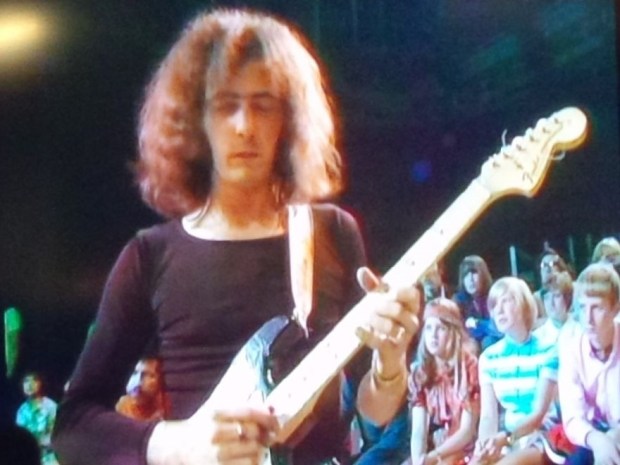
You get ample closeups on Jon, Ritchie and Roger and it’s amazing to see them play so fast, so perfectly.  You can study Jon’s hands and try to figure out what he’s doing.  Ian Paice is in the back, tiny frame creating a huge sound.  The instrumental “Wring that Neck” is soloriffic, and Blackmore is surprisingly friendly with the cameras.  This is very rare for the man in black.  The audience politely clap at his playful solo, and he keeps them guessing to the end.  A rare delight, to see him in such a good mood on stage.  The final track on the DVD is “Mandrake Root”, another song that was really only in the set for them to jam to.   They are in sync, and being able to watch Deep Purple at their peak jamming in this clarity, well that’s really something.  Too bad most of the songs are edited down.

As for the 2 CD set, it has always been a bit of a slog to get to the end.   There are two tracks at 30 minutes a piece.  There is one at 18.  There are three in the 10-12 minute range.  Of all the Deep Purple live albums out there, Stockholm is probably the one that requires the most patience.  This is, however, my first time hearing it freshly mixed and restored for today.

Set commencing with “Speed King” again, this time it’s the full-on 12 minute jam.  Barely hanging together, Purple blast it out with extra heavy energy.  Gillan sounds as if he’s about to burst a blood vessel in his neck.  The audio has more depth than previously releases, but Ian’s voice sounds a bit too low in the mix.  “Do you know what a Speed King is?  A Speed King is somebody who sing at a hundred miles an hour,” sings Ian, not really enlightening us.  “Everybody’s a Speed King when you wanna be,” he adds, confusing things more.  Things quiet down, turn jazzy, and then explode once more.  Not the greatest version of “Speed King” ever recorded, but definitely one of the most frantic.

“Into the Fire” is a rare shot of brevity.   Assailing the skull nonetheless, after “Into the Fire” the band take it back a bit with “Child in Time”.  This full-on 18 minute version is far longer than the better known one from Made in Japan.  The cool thing about Purple is that no two versions of any song are exactly the same, and if you’ve heard “Child in Time” before…you still haven’t heard the 18 minute version from Stockholm.  With all due respect to the Japan version, this one has its own diamonds of brilliance.  How the hell do they keep playing with that rapidity?

Better pee now, because a jazzy “Wring that Neck” is next, over 30 minutes.  Loaded with playing that’ll stop your heart, but not as interesting as the definitive version on Concerto for Group and Orchestra.  This contains a showcase for Jon Lord’s keyboard solos.  Ritchie’s playing is always sublime, and so is Jon’s, but…30 minutes…that’s a lot of jamming.  Like too much crème brûlée.  Ritchie again plays with the audience, teasing out melodies from songs such as “Jingle Bells” and “I’m Looking Over a Four Leaf Clover”. If that wasn’t enough, Deep Purple’s 10 minute cover of the Stones’ “Paint it, Black” is really just an excuse for a long drum solo by Ian Paice!  Gillan took off, making the song an instrumental, which they only stick to for a minute before letting Paice go nuts.

Scan_20160110 (3)

Flip over to CD 2, and get ready for another 30 minute long bomber.  “A thing you can jump around to,” says Ian.  It’s “Mandrake Root” and it’s bouncy.  This is a well-known version of the song, and it even appears on Deep Purple comprehensive box set Listen, Learn, Read On in its complete length.  You can clearly hear Gillan on the congas during the long instrumental break.  You can also hear them quoting the Kinks’ “You Really Got Me Now”.  This jam generates more interest than “Wring that Neck”, but it’s still a chore to finish.  And you get to hear “Mandrake Root” and “Wring that Neck” three times each in this package.

The final song (of a mere seven!) for Stockholm is a reasonably brief one:  “Black Night”.  After so much jammin’ it’s nice to have a single, with a set structure, and more than just occasional lead vocals!  It raises the energy a bit after a very draining concert set.  But you’d better refuel with some coffee, because you’re not finished yet.

The two bonus tracks from Paris sound as if they were recorded in a smaller venue.  They are sonically superior to the Stockholm recordings, but damn, I am all jammed out!  Thankfully, this version of “Wring that Neck” is delightful and unique.  It’s hotter and way, way jazzier.  Blackmore also teases out a bit of a preview of a forthcoming song.  You can hear a teeny bit of the guitar melody to 1971’s “The Mule” in his solo.  He even plays a bit of “God Saves the Queen”, in Paris!  Then on to “Mandrake Root” again, 14 minutes this time, half the length of the last one.  Jon’s solo is incredible, but aren’t they all?  This one has some nice rhythmic choppy bits that are so fun to air-keyboard along to.  The track eventually descends into chaos and noise, as all good Deep Purple jams do.

Finally we have the 1971 Jon Lord interview.  This 11 minute track discusses how Jon joined the band, the early days, the Concerto, and In Rock. The title is misleading however, since the track also contains a few bits with Ian Gillan.  Fun stuff but ultimately nothing here that the fan doesn’t already know.

3/5 stars, simply because I know from experience that this set won’t get much repeat play in your home.

3.5/5 stars when you take the bonus DVD into consideration.

#462: The Deep Purple Project

Scan_20160112

GETTING MORE TALE #462: The Deep Purple Project

If loyal readers know one thing about LeBrain, it is that he owns a lot of CDs.

A LOT.

I haven’t done a count in ages and I’m giving up on keeping track of these things.  I estimate over 3000 CDs are in inventory currently.  Add to that a few hundred tapes, LPs, DVDs and other miscellaneous musical formats.

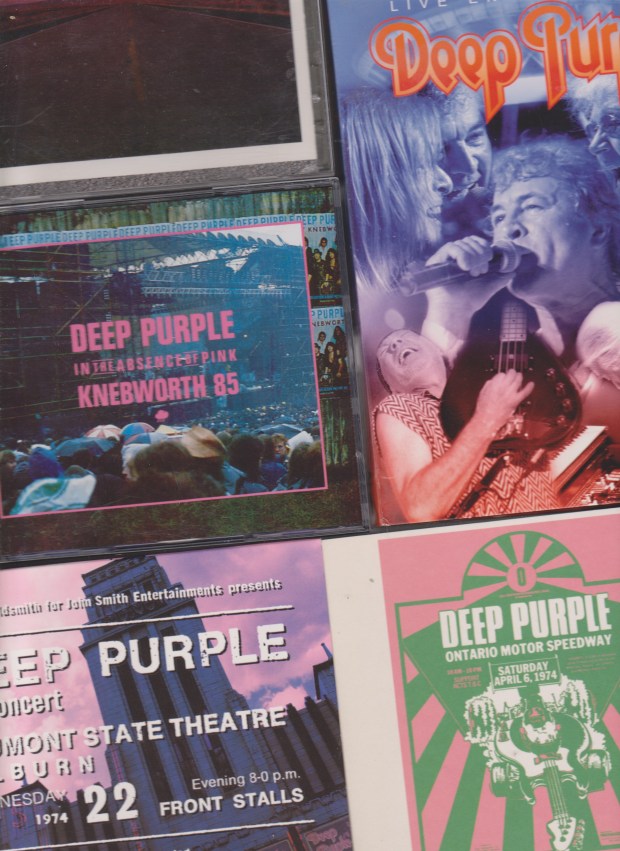
For Christmas this year, I received a number of Deep Purple releases.  Some of these releases would presumably replace older Deep Purple discs in my collection.  For example, I expected the 5 CD box set Hard Road 1968-1969 to replace the first three Purple albums in my collection, and I could retire those discs permanently.  This was not the case.  I began checking, track by track, and it turns out the individual CD versions have tracks that are not on the Hard Road box set.  “Hush” live from US TV is one such track.  There are also BBC Top Gear sessions on the remastered CDs that are not on Hard Road, but I believe all of these are duplicated on yet another Deep Purple CD, BBC Sessions 1968-1970.  On top of all that, there is another CD called The Early Years that covers the same ground, but it too has one exclusive track on it.  That is an alternate take of “Kentucky Woman” that I don’t have elsewhere.  This is crazy!  How can anyone keep track of it all?

I’ve been ripping all the CDs in my collection to the computer in bits and pieces for a couple years.  It didn’t have much rhyme or reason.  If I wanted to listen to something, I ripped it at that time.  If it was a new arrival, I’d rip it to PC on first listen.  This Deep Purple situation got me to go over my entire Purple collection, looking for duplicates and redundant releases.  (I didn’t find any.)   This in turn prompted me to get the rest of my Purple albums ripped and digitized for good.  This has turned out to be a monumental task.

My Deep Purple folder had 74 sub-folders in it, each one an album or a disc from one.  That’s a lot of Purple.  So how many did I have still to rip?

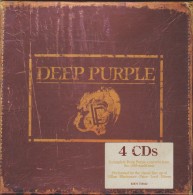
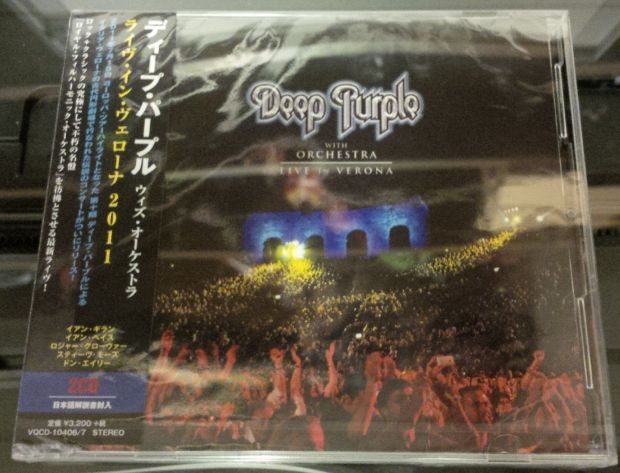
At first count, it was 64 more discs.  That includes 12 discs from a box set called The Soundboard Series (the second of two 12 disc live Purple box sets I have!).  It includes all the multi-disc sets I got for Christmas.  With the exception of the Hard Road box set, these are all live discs, and all official releases!  Then, I had to adjust my count.  I found two more box sets tucked away (as box sets sometimes are, due to their odd shapes):  On Tour MCMXCIII (4 discs), and Live Encounters (2 CDs, plus 2 DVDs too).  Last week, a double live from Japan arrived at LeBrain HQ, called Live in Verona.  Up that count to 72 more discs.  So far, I’ve ripped 25 of them.

This isn’t even all the Deep Purple I have left un-ripped.  I have some things that I don’t particularly need to listen to.  The 3 CD Live in Japan was a great package for its time.  It contained a remixed and expanded version of Made in Japan.  While I always want a unique official remix in my collection, just to have it, I don’t need to listen to it since it has been usurped by the remixed (again) 4 CD deluxe Made in Japan.  Who cares about a remix they did in ’93?  Obviously I only care enough to keep it (for “completion”), not to play it.  There are more like that, such as an earlier mix of California Jam that has since been replaced by a better, more complete version.

Now that you have a glimpse at what Obsessive Compulsive Disorder looks like up close, I’m sure you have one specific question.

“How many versions of ‘Smoke on the Water’ are there?”  Well, it appears that I have 63 versions on CD.  63. Different. Versions. Of.  “Smoke on the Water”.  By Deep Purple.  None of these are covers by other bands.

This, folks, is a shat-ton of Deep Purple!  Won’t you join me each day this week for some live Purple action?

IMG_20160114_171447_edit


REVIEW: Little Richard – The Essential (1985)

Scan_20160106LITTLE RICHARD – The Essential (1985 Specialty)

Ah-OOOOOOO!  Little Richard!  Predator!  OOOOO!  Wop bop a loo bop!  Get to the choppa!

Who doesn’t love Little Richard?  If you answered that question with “me!” then click your “back” button now and go listen to some X Ambassadors or something equally un-rock and roll.  Little Richard?  Pure rock and roll, baby!  You have your rock bands that are based on guitar, but then you have other artists that are based on piano.  And let me tell you, when Little Richard (Ah-OOOOOOOO!) starts bangin’ on those keys, you can’t help but boogie woogie.

Richard has an extensive catalogue of albums and singles, and much like any of the other founding fathers of rock and roll, there is so much more to him than just the greatest hits.  This album is called The Essential, and it is.  There is much, much more.  “Can’t Believe You Wanna Leave” isn’t on here, but so many favourites are!  (OOOOO, gonna have some fun tonight!)

Commencing in 1955, every single track on this CD (single A’s and B’s) is in the two minute range. Wham bam, thank you ma’am! (No, that’s Dean Martin…) Loaded with piano, sax and Little Richard’s unmistakable voice, every song is incredible. My favourite song is “Jenny Jenny” (OOOO!), which is so damn raw and perfect, sax honkin’ and Richard letting loose with every “Woo” and “Ooo”. His throat is pushed to the limit, running off the rails from time to time, but always perfect. From Lucille to Teddy to Jenny to Miss Ann and Miss Molly, some may notice that there is a certain sameness to the material. That would be missing the point. Richard is like AC/DC. You get what you want, every time. Since the songs are so short none overstay their welcome.

Everybody should know plenty of these songs, whether from movies or TV. At least half the album should be familiar. Even if you haven’t heard Richard’s version of “By the Light of the Silvery Moon”, you probably know it from Etta James, Happy Days, Bugs Bunny, or I Love Lucy. It’s just one of those songs that everybody has heard. (Richard’s version is the best one, if you asked me! Ah-OOOOOO!)

Even though this is an older release, the audio is just fine. According to the booklet, all tracks were remastered from the original mono tapes. Old time rock and roll just sounds better in mono. In mono, it sounds saturated and harder. (WOOO!) The booklet isn’t skimpy and has plenty of old black and white photos.

So, if you have “Heebie-Jeebies” for some “Long Tall Sally”, then “I Got It” for you. You’ll be “Slippin’ and Slidin'” for the whole length of this 45 minute CD, which will be over before you know it. If you wanna “Keep-A-Knockin'”, then just play it on repeat and “Rip It Up”.

5/5 stars

Final note: I will happily give a lollypop to anyone who can tell me where I can buy Richard’s elusive version of “Itsy Bitsy Spider”.

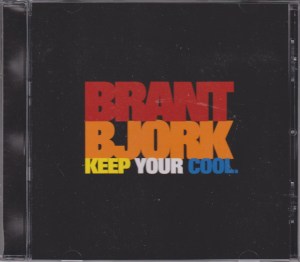
REVIEW: Brant Bjork – Keep Your Cool (2003)

Scan_20151226BRANT BJORK – Keep Your Cool (2003 Duna)

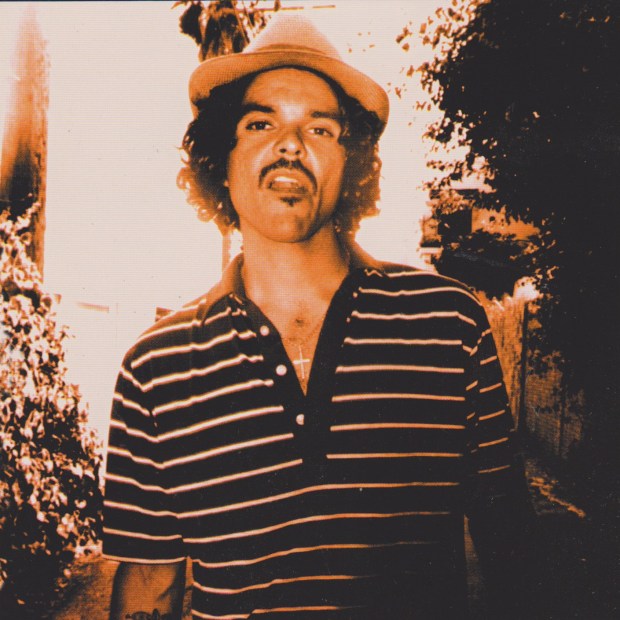
Been a while, cats, since I chilled to Keep Your Cool.  That’s what you do to this record.  Loaded with laid-back latino-influenced stoner rock jams, Keep Your Cool is designed with purpose.  In fact it’s all right there in the opening jam, “Hey, Monkey Boy”, loaded down with congas and one steamy groove.

“Hey, Monkey Boy!  Why you unemployed?” asks one character in the song, voiced by Bjork.

“‘Cause I’m jammin’!” answers Bjork, utilizing a different voice.

Mood now set, “Johnny Called” comes right from the garage: simple, laid back, but infectious.  Back in the Record Store, one of our store managers Joe “Big Nose” used to phone me up and sing it to me:  “Johnny called me up on the telephone, just to tell me I’m not alone!” he melodized.  “Huh?” I asked confused.  So “Big Nose” gave me the record — on LP.  Now we’re grooving.  The amusingly-titled “Rock-N-Rol’e” keeps it coming.  These are basic, sparsely adorned grooves with a nostalgic bent.  “Hey there Mr. DJ, won’t you play, some Rock-N-Rol’e!” sings Brant, in an ode to being a kid with a radio and some cheap wine.  In the blazing outro, you can hear Bjork begging for some ZZ Top or some AC/DC, because he wants his “chick” to hear some rock and roll!  The groove then changes to a stomp on “I Miss My Chick”, closing LP side one.  Brant explains what he misses about his “chick”, but this being a family site I won’t list them here!  This is a smoking jam.

Commencing with the instrumental title track “Keep Your Cool”, the second side begins with a laid-back Jalamanta vibe.  Then Brant’s “Gonna Make the Scene”, and he does this with another snakey, sparse but funky groove.  He takes a rare falsetto vocal on the chorus, recalling early Disco.  Dusky, quiet rolling bass dominates “Searchin'”, very different from prior Bjork songs.  This makes it a highlight of the album and perhaps even the Brant Bjork canon.  The relaxed mood maintains on the final song, “My Soul”, which is also the only long bomber on the record.  It descends into another quiet jam, concluding the record on a serene but appropriate note.

Great album — short, and to the point like a punk record.  Ultimately, not particular a standout given Bjork’s incredible solo discography.  Keep Your Cool is still not a purchase to regret.

4/5 stars