BGO Records

REVIEW: Dennis DeYoung – Back to the World (1986)

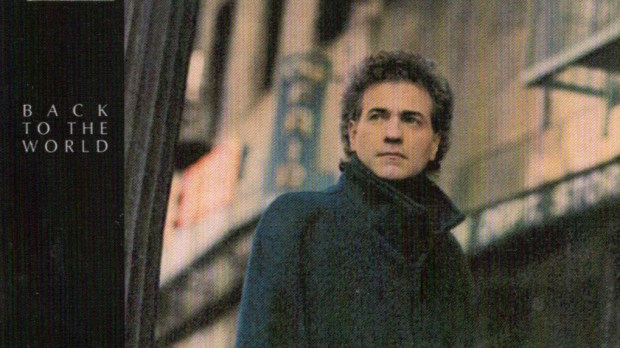
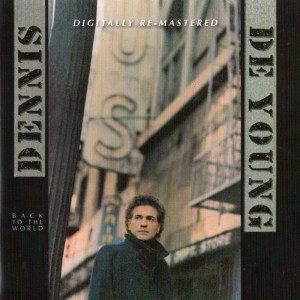
DENNIS DeYOUNG – Back to the World (1986 A&M, 2013 BGO reissue)

Though his solo debut Desert Moon was a moderate hit, Dennis DeYoung took no time off and was back with a second album two years later.  Still using Tom Dziallo on guitar, Dennis also added C.J. Vanston on keyboards.  With Dennis being an acclaimed keyboardist himself, was this too much of the instrument?  Once again, DeYoung wrote everything himself, with no cover tunes this time.

Opening the album is the theme from The Karate Kid II, “This Is the Time”.  Fortunately the song is a lot better than the film.  With emphasis on saxophone and keyboards, this is a pleasant, anthemic light rock theme.  With some exposure, it could have been a minor hit, but fortune was not with Dennis this time.  The track only made it to #93, while the album peaked at #108.

“Warning Shot” has a bombastic Styx-like opening, though with less emphasis on guitar.  Dennis’ singing here is top notch, employing a lovely falsetto when necessary.  When the chorus hits, it feels like this is the Dennis we have been waiting for.  A spectacular guitar solo brings it into a classic rock realm, but really “Warning Shot” is all chorus.  A host of backing singers join in and the song launches into the stratosphere.  It should have been a single.

The biggest hit, the ballad “Call Me”, was the single, which hit #5 on the Adult Contemporary charts, where no Styx fans were likely to hear it.  It has some nice saxophone textures, but it’s unremarkable and will always live in the shadow of Dennis’ better known ballads.  It’s just too light.  “Unanswered Prayers” is better, with some lyrical guitar work in the intro and solo.  This slow number feels like a nice one for a slow dance, but the album needs a jolt of energy and this isn’t it.

Opening side two, “Black Wall” is darker and harder edged.  It’s a slow burner with focus returning to the guitar.  It is not exactly the energy injection we need, but at least it is a change of direction.  The “Black Wall” in the title refers to the Vietnam Veterans Memorial, in Washington D.C.  The powerful music is suitably dramatic and deliberate, with the soulful backing vocalists dominating the chorus.

A bluesy harmonica solo introduces “Southbound Ryan”…but the electronic tom tom drums just jar you when they come in.  Fortunately once that’s out of the way, we’re onto one of the best tracks on the album and the shot of energy we so desperately needed.  A smoking horn section blasts forth, and the tempo is finally hot!  That horn section is like the jelly in a PB&J!  So sweet, so good, just the perfect punch for a song that deserved it.

Fortunately, the tempos and horns remain on the next song, “I’ll Get Lucky”.  We’re definitely in the 80s now, with more keyboards and programming at the forefront.  Notably, C.J. Vanston contributed a rocking instrumental section in the middle.  The song is a bit jerky, going from dense sections to sparse ones, and it feels bumpy compared to the prior one.  Would it have been better had Dennis just played it simple instead of trying to get so clever with the production?  Once again, Dennis produced the album himself.

The final song, “Person to Person” has a Styx-like vocal and might have worked on one of the later albums.  It’s a little too savvy for a pop record, which is a good thing.  Had Styx done it, hopefully it would have less synth and corny toms, but it was 1986 and that was the sound to have.  At least Dennis closed the album on an uptempo note, and a song with a memorable chorus.

Had Dennis employed an outside producer, perhaps his first two studio albums would be more even.  Back to the World and Desert Moon share this problem.  Both albums sag in spots, and despite some awesome songs throughout, there are not enough of them.

3/5 stars


REVIEW: Dennis DeYoung – Desert Moon (1984)

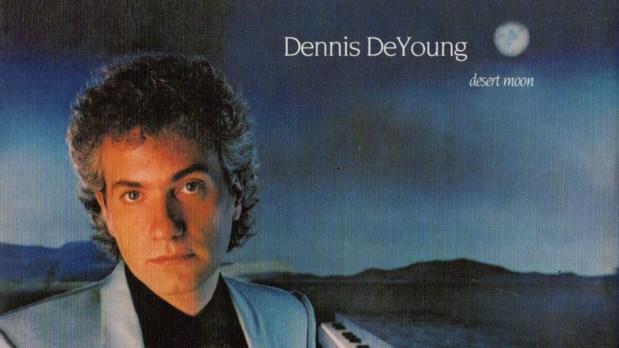
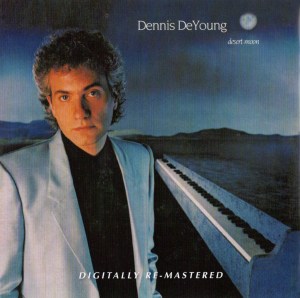
DENNIS DeYOUNG – Desert Moon (1984 A&M, 2013 BGO reissue)

Alas for me in ’83, Styx were coming very close to an end.  Tommy Shaw didn’t want to sing songs about robots (or something) but what it really came down to was Dennis DeYoung’s vision vs. his.  Dennis was the theatrical one, and Tommy was the rocker.  That’s putting it in simplistic terms, but by the end of the tour, Tommy was out.  The other three members of Styx wanted to replace him and carry on, but Dennis was not interested.  In 1984, Styx issued their live album Caught in the Act, and said goodbye.  Less than six months later, Dennis DeYoung was out of the gates with his debut solo album.

Desert Moon demonstrated that Dennis was full of new ideas.  He wrote seven of the eight songs, with a Hendrix cover in the mix, and no co-writers.  Not that Dennis needed co-writers before, but he did often share credits on early Styx tracks with his bandmates.  Guitars on Desert Moon were handled by Tom Dziallo, who also programmed drums when necessary.  Dennis takes care of all keyboard duties, augmented by saxophone on some tracks.

I can distinctly remember watching MuchMusic in 1984, when a new Dennis DeYoung video came on, called “Desert Moon”.   It was a top 10 hit, and a ballad.  I was quite clear in my youth that I did not like Styx for their ballads.  I dismissed Dennis as a solo artist immediately.  I am sure he was broken-hearted that a 12 year old Canadian kid didn’t like his new direction.

I should not have dismissed Dennis so easily.  If I had bought his new album, I would have loved the opening rocker “Don’t Wait For Heroes”.  It could have been a Styx song, the upbeat triumphant kind of single that they were known for pre-“Roboto”.  Styx fans might have considered it a return to form for the singer.  While not as guitar-heavy as the two-guitar band, it does rock, with the drums (by Tom Radtke) in particular driving the song.  The melodies evoke “Don’t Let It End (Reprise)” on Kilroy Was Here, but with more edge.  The end refrain of “get up, get up, get up!” should indeed make you get up.

Guitars come to the forefront on “Please”, with a riff and a chug.  Then on the pre-chorus, Dennis lets the keyboards come out.  “Please” is a duet with Rosemary Butler, a singer with dozens of albums on her resumé.  A tasty guitar solo continues to keep things accessible to Styx fans, but the duet is really impressive.  Butler goes head to head with DeYoung, and blows him away by the end with some incredible high notes.

New wave sounds inflect “Boys Will Be Boys”, which Dennis delivers with spoken-word verses.  The fast beats and bouncing synth recall Devo and bands of a similar nature, not to mention that Alice Cooper ’80 sound.  There is also a clear 1950s influence on the chorus, with that “dip dip dip dip dow!”  The production recalls “Music Time” from the final Styx record Caught in the Act.

You don’t know that you’re listening to a Hendrix cover at first.  It sounds more like a slowed down “Peter Gunn”, but then Dennis sings those lines.  “You don’t care for me, I don’t care about that…”  Only then do you realize you are grooving to “Fire”.  Unlike every other cover of it, Dennis all but rewrites it as a slow rock groove.  While “Fire” is not an album highlight (think about that a moment), it is one of the most interesting versions you’ll ever hear.  It takes guts to reimagine a song like “Fire”, and it takes talent to pull it off so well.

The aforementioned title track “Desert Moon” opens side two.  It was the top ten ballad, and it’s easy to hear why.  It’s a slow, romantic sounding song with a resounding nostalgic chorus about summer nights, innocence and dreams.  The formula worked.  In the liner notes of the BGO edition CD release, Dennis credits the arrangement which emphasizes his voice, and therefore the lyrics.  The guitar solo is also a thing of beauty, with one sustained note that just sings.  A magnificent solo.

Dennis digs into his classic rock and broadway roots for “Suspicious”.  It’s a DeYoung trademark, but in light of exceptional material preceding it, it tends to go unremembered.  It might be a case of too much synth.  “Gravity” uses such electronics as well, but in more upbeat setting.  “I wanna climb Mt. Everest, and find my Shangri-La,” sings Dennis.  The fast New Wave beats during the chorus are fun but the song struggles to find an identity, and the listener has trouble hanging on.

Desert Moon ends on “Dear Darling (I’ll Be There)”, a final ballad, and just not enough to recover the album from a dip in memorability at the end.  It’s simply too much saccharine at the end of the day.  Another upbeat track should have ended the album, though at least there is a fine sax solo to dig into.

Dennis suffered an injury while making a music video and never got to tour Desert Moon properly.  Would it have made a difference?  Unlikely.  While Dennis was more than capable of delivering a good album on his own, left to his own devices, it didn’t have the consistency we were used to with Styx.  Perhaps a co-producer would have made a difference, since Dennis produced this album by himself.  The performances are all excellent, particularly lead vocals, but there needed to be more spark within some of the songs.

3/5 stars

REVIEW: Styx – Edge of the Century (1990)

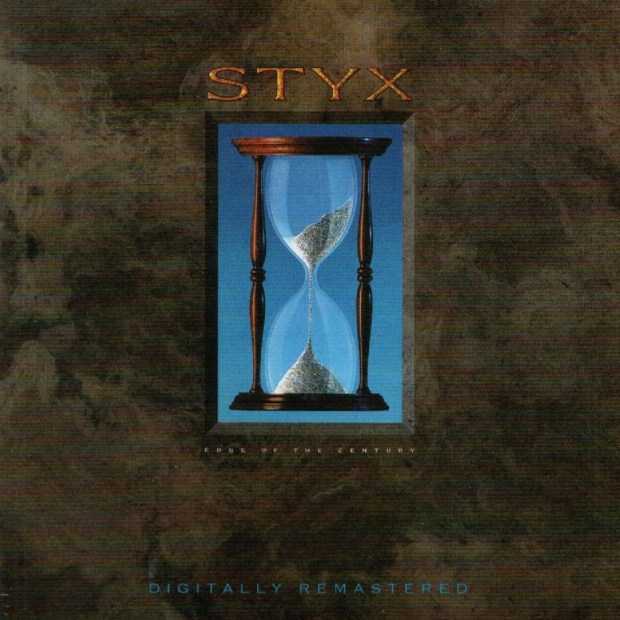
STYX – Edge of the Century (1990 A&M, 2019 BGO remaster)

Kilroy Was Here seemed to be the end of Styx.  Although the album went platinum, it was also divisive.  The band were fractured and the tour was difficult.  Members did not enjoy playing characters on stage.  Was this a rock band or was it Broadway?  Styx split up in ’84, with members embarking on new projects.  Dennis DeYoung did moderately well with his solo debut Desert Moon, and Tommy Shaw had a fairly big hit with Girls With Guns.  James “JY” Young went in another direction on his own City Slicker album with Jan Hammer.  For all intents and purposes, Styx spent the second half of the 80s completely defunct.

In 1990 two interesting things occurred.  First, Tommy Shaw formed a supergroup with Jack Blades (Night Ranger) and Ted Nugent called Damn Yankees.  They came out of the gates with a surprising self-titled hit album that didn’t particularly sound like Styx, Night Ranger or Ted Nugent.  But it spawned a couple hit singles and went double platinum.  When Styx reunited at the same time, it was without Tommy Shaw.  Styx would never record with the classic lineup again.

The Styx reunion we got in 1990 was, frankly, not the Styx reunion we deserved.  A new guitarist, songwriter and singer would be needed and he arrived in the form of solo artist Glen Burtnik.  He was only slightly younger than Shaw, but brought in a modern edge.  He was able to sing Tommy’s high parts, and could write.  The first single, “Love is the Ritual”, was written by Burtnik and partner Plinky Giglio with no other members of Styx contributing.  Clearly, they were trying to turn a page and appeal to a new younger generation, and make people forget all about “Mr. Roboto”, or that dreaded “progressive rock” tag.

The new album was titled Edge of the Century and produced by Dennis, now in control of Styx.  Even so, “Love is the Ritual” sounds like a Winger reject, with full-on Beau Hill production.  You’d never guess it was Styx, and one suspects this is why it was chosen as the lead single.  It was also the first track on the album.

Leading the new album with a song featuring a new unfamiliar singer was a risky move.  The turgid track is a clone of Winger’s “Can’t Get Enuff” and features some stinky synth bass.  The faux-funk of the rhythm track is unpalatable, and only a hint of Dennis DeYoung on backing vocals indicates that this song has anything to do with Styx.  They’re barely in their own music video.  Almost as bad are the cringey lyrics.

The song that should have opened the album, “Show Me the Way”, was a legitimate hit.  A church-like ballad with soaring chorus, it struck a chord with Americans during the first Gulf War.  It has the sound of a true Styx classic and fits well with past ballads.  Dennis is a remarkable songwriter and the chorus on this track is just legendary.

Edge of the Century tends to be remembered for “Show Me the Way”, but good Styx-like material is still buried within.  Burtnik’s back on the title track, but this infectious hard rocker does sound more like Styx.  It fits that slot like a classic Tommy Shaw rocker.  The wicked riff is as memorable as the catchy chorus.

The songs alternate from Glen to Dennis, and DeYoung’s ballad “Love At First Sight” is a traditional 80s power ballad with chiming keyboards.  It sounds exactly like every other power ballad from 1990, but at least it is a good one.  It was the third single and did OK on the charts.

One mark of a good Styx album is a decent acoustic song, and Glen Burtnik has “All In a Day’s Work” for that necessity.  It’s just acoustic guitar, vocals, some keyboards and Dennis’ accordion.  Very Styxian, especially when they sing together.

The second side opens with a traditional rock n’ roller, “Not Dead Yet”, which is a song by a chicago artist named Ralph Covert, sung by Dennis.  It’s DeYoung’s first rocker on the album, and it’s leather jacket cool.  Burtnik’s back on “World Tonite”, the cheesiest song on the album.  This generic rocker with it’s “Girls wanna dance, boys wanna fight” lyric is pretty awful.  Parts of it verge on rap.  Its only saving grace is the harmonica that periodically blasts through.  In no universe would anybody say “That sounds like Styx to me.”

Dennis is really good at ballads, and “Carrie Ann” is surprisingly strong.  Like another “Babe”, it has a strong chorus and memorable hooks.  Did “Babe” need a sequel?  It matters not; “Carrie Ann” is pretty good for what it is.  We’ve had a few ballads now, and an acoustic song, but have you noticed what is missing so far?  James “JY” Young.  He does not check in until the second-to-last tune, “Homewrecker”.  It is a Quiet Riot-like rocker (similar to “Run For Cover”), and unsurprisingly the hardest rocker on the album.  JY was overdue.  That fact that you can really only feel his presence on this one track is one of the major weaknesses to Edge of the Century.  However, they try to make up for it with with a smokin’ guitar solo, and a killer keyboard break from Dennis too.  “Homewrecker” may be derivative but JY hasn’t rocked out this hard on a Styx album since “Half-Penny, Two-Penny” back in ’81.  It’s over all too soon.

Edge of the Century is still missing one key Styx ingredient, and they save it for last:  something big and pompous and overblown.  That is “Back to Chicago”.  Air-shaking blasts of horns and clarinet accompany a huge broadway-ready chorus.  It’s hard to imagine when you start this album on “Love is the Ritual” that you will end it on something as different as “Back to Chicago”.  Styx albums albums are often diverse, with heavy riff rockers butting up against pretentious set pieces.  But they’ve always been cohesive.  By the end of Edge of the Century, any thought of cohesiveness are out the window.  Although the same five guys plays on all 10 songs, it sounds like two or three separate bands.

Edge of the Century is like a lost Styx album.  The band split after a short tour, with the album going Gold but no further.  Due to the sad passing of drummer John Panozzo, this lineup could never exist again.  Styx reunited in 1995 (with Shaw), but they stopped playing “Show Me the Way” when Dennis was let go in 1999.  “Love is the Ritual” continued to be played live when Burtnik was in the band again (on bass filling in for Chuck Panozzo) from 1999-2003.

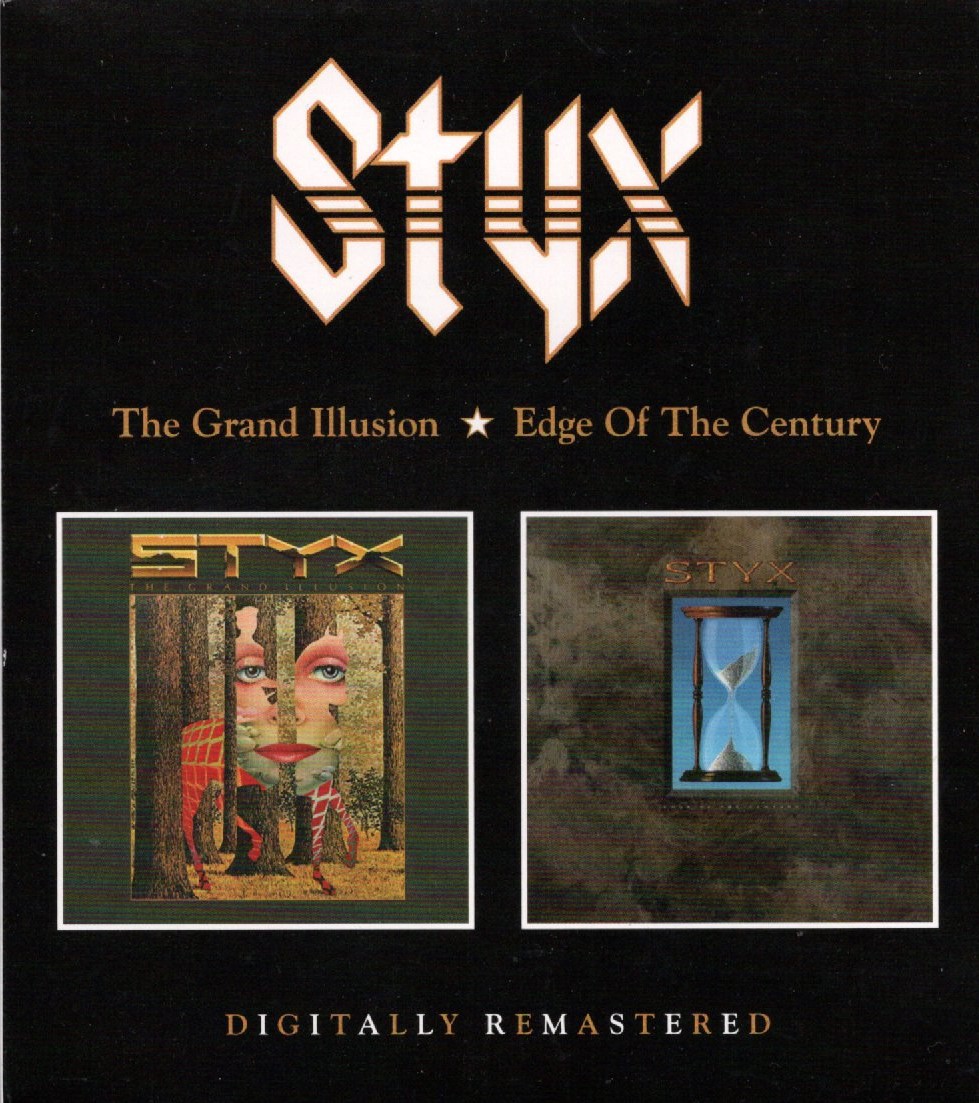
Fortunately, the album can be acquired remastered in a fine reissue on BGO Records, paired in a 2 CD set with The Grand Illusion.  The reissue includes the original lyrics and liner notes, along with an essay detailing Styx history.

3/5 stars

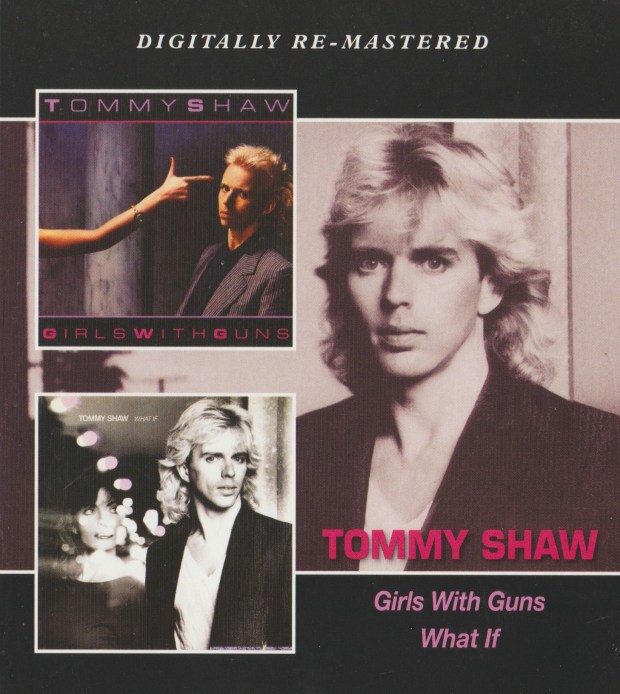
REVIEW: Tommy Shaw – What If (1985)

TOMMY SHAW – What If (1985 A&M, 2013 BGO Records)

Tommy Shaw’s second solo album What If didn’t have a big hit like Girls With Guns.  It did have some solid if lesser known songs.  Production wise, the edges are a little sharper.

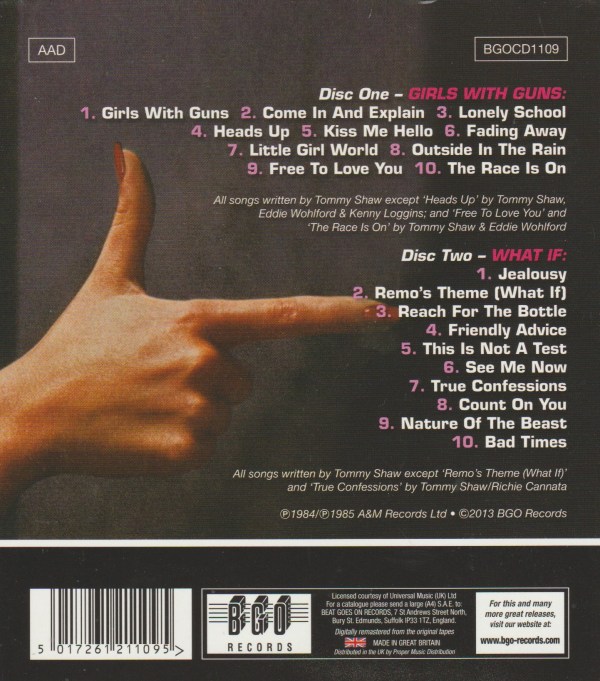
Hot opener “Jealousy” boasts a cool sax solo, and a memorable chorus beefed up with soulful backing vocals.  Second up, “Remo’s Theme” is from the movie Remo Williams, a forgotten film with a decent lead song.  Unfortunately the drums have that electronic gate that indicates samples, but fits the 80s vibe of “Remo’s Theme”.  It sounds like a Miami Vice episode waiting to happen.

Shaw goes for the dusky nightclub scene with “Reach for the Bottle”.  Songs can paint pictures, and this one is made for drinking.  The electro-funk of “Friendly Advice” however just reeks.  Musicians would slap me and point to it as a high point of sheer playing ability, but I’m holding my nose over here.  It gets better on “This is Not a Test”, still lodged deep in the 80s but in a good way.  The subject matter is right out of 1985:  the threat of nuclear war!  This was a popular subject in the 80s, just ask Ozzy.

The second side opened with “See Me Now”, an inspirational energising tune, carefully composed like…layers of gouda on a cheese sandwich.  Dig?  It tastes good, but too much is probably not good for you.  “True Confessions” is similarly a pop guilty pleasure.  God that drum sound is awful!  Moving on, “Count on You” has a Floydian (80s of course) ballad vibe, with more of that tasty sax.  “Nature of the Beast” is another ballad with terrific melodies and more of them drum samples.  Finally “Bad Times” ends the album with a “good time” song.  Loads of saxophone,  upbeat hooks, and less obtrusive drums.

What If is not a bad album, but some the production gets to way too clunky on some tracks.  When it’s played closer to rock and roll, the basic instruments, it works far better.

3/5 stars

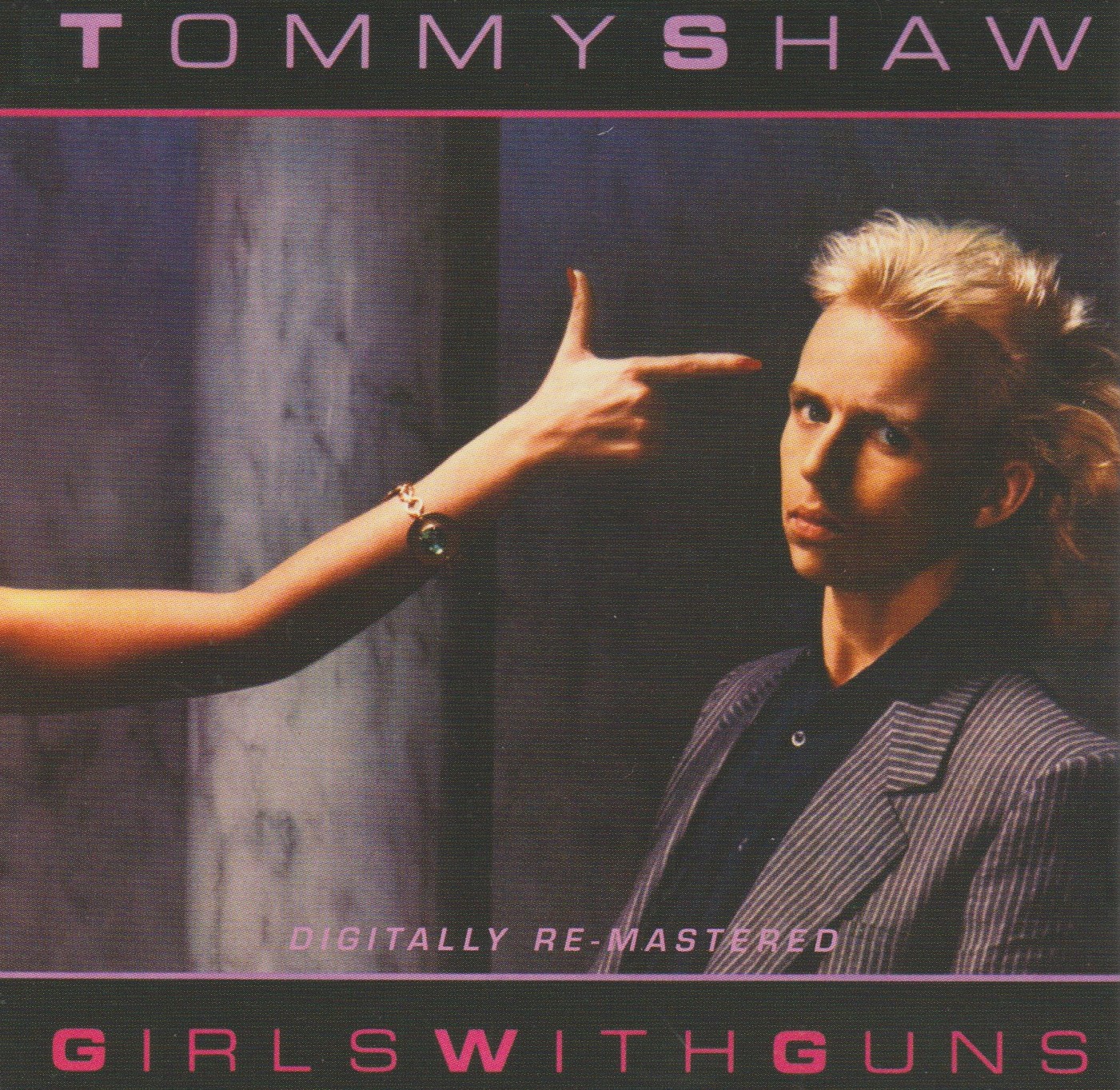
REVIEW: Tommy Shaw – Girls With Guns (1984)

TOMMY SHAW – Girls With Guns (1984 A&M, 2013 BGO Records)

When Styx split, both Tommy Shaw and Dennis DeYoung were quick to release solo albums.  All we had to judge them by was their new singles.  Dennis came out of the gates with a ballad (“Desert Moon”).  As 12 year old kids in 1984, we took no interest in what Dennis was doing. Tommy Shaw, on the other hand, had a bright pop rocker called “Girls With Guns”.  It was loud, fun and featured a great music video all done in a single take.  Neither song sounded like Styx, but “Girls With Guns” sounded more like what we were into.

Dennis’ album outsold Tommy’s, but Tommy’s rocks better.

The title track is of course the main feature.  Dated with 80s keyboards or not, it is still a great song.  This was proven by Tommy when he performed it acoustically without the keys.  It’s just rock with joy, and a great beat.

“Come In and Explain” has a progressive Styx vibe and easily could have worked in that context.  Instead, it’s a great Tommy Shaw solo track.  It has a blue collar groove but highbrow keyboards.  Another great song is the ballad “Lonely School”.  It has a classic sound, albeit a cheesy classic sound.  The album alternates between cool and corny, and some songs that straddle the line.  There’s nothing dreadful.

This CD was a “holy grail” item of mine for years, but was reissued in 2013 as a remastered double CD with Shaw’s second album What If.  The CD also features two extended songs, presumably because vinyl couldn’t hold the full length.  Glad to have Girls With Guns in my collection, though I won’t be racing to play it every week.

3/5 stars

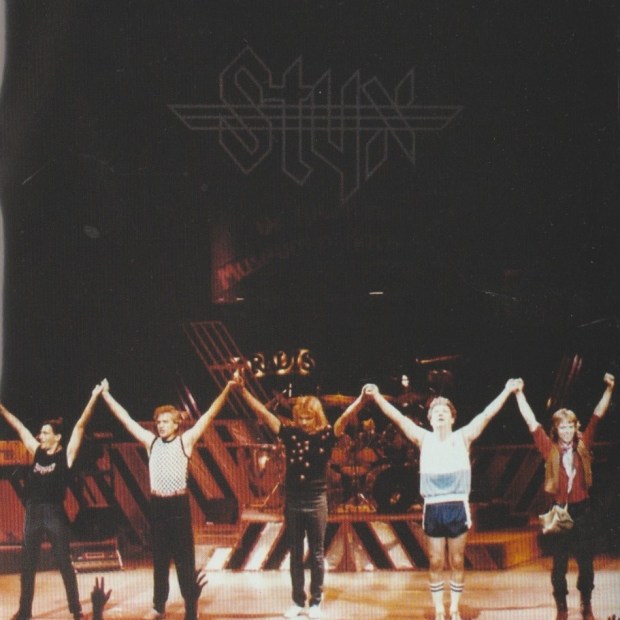
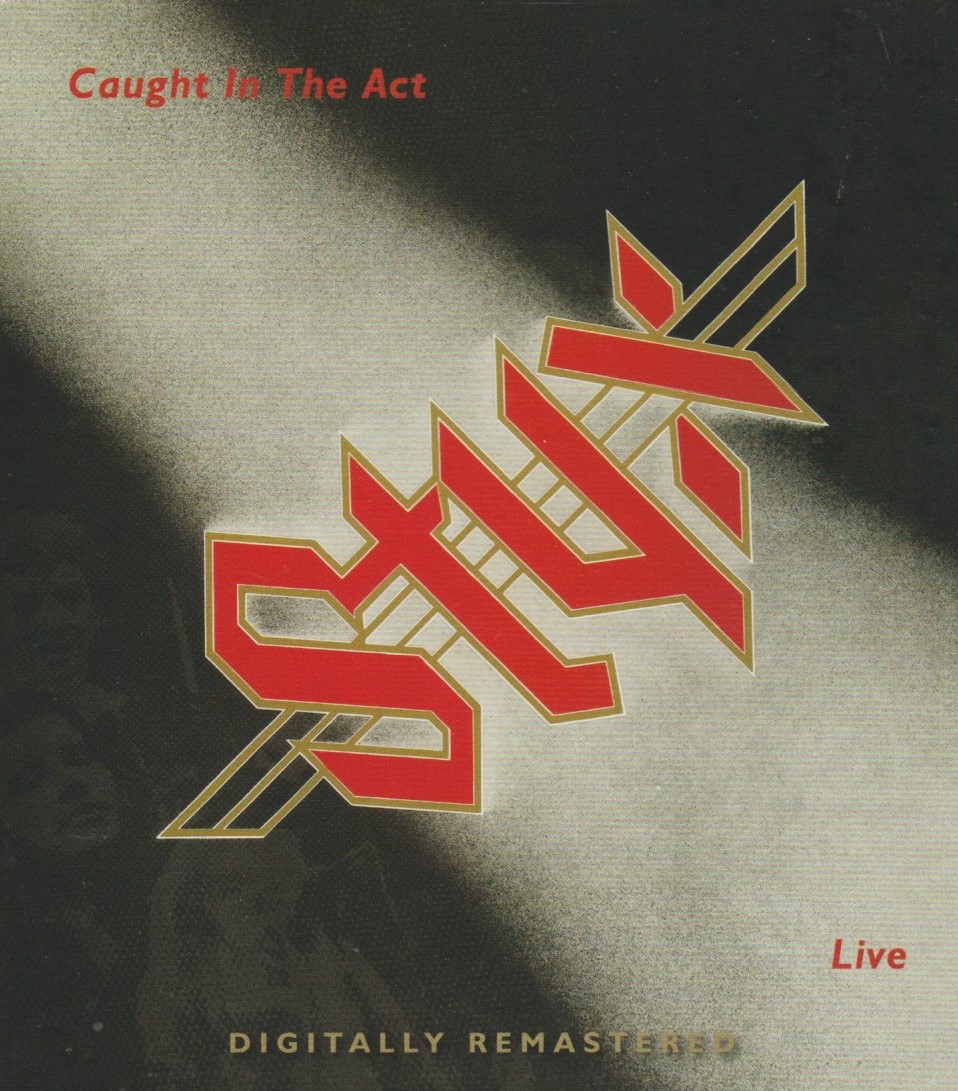
REVIEW: Styx – Caught in the Act – Live (1984)

STYX – Caught in the Act – Live (1984 A&M, 2018 BGO reissue)

“Hey everybody it’s Music Time!”

Sorta, anyway!  Styx were just about toast after “Mr. Roboto“, and Tommy Shaw didn’t want to sing any more songs about androids.  (Mars, however, was fine.)  He departed to check out some Girls With Guns, but not before Styx put out one more product before hiatus.  That would be the traditional double live album, which was actually Styx’s first.

Styx have lots of live albums now, but only two with Dennis DeYoung.  Caught in the Act is essential for a few key reasons.  It sounds great although there are clearly overdubs in places.  It is the only one with the classic lineup of DeYoung/Shaw/James “JY” Young/Chuck Panozzo/John Panozzo.  And it has plenty of classic Styx songs that still shake the radio waves today.

Like many live albums, Caught in the Act contained one new song.  Dennis DeYoung wrote the uppity “Music Time”, a very New Wave single without much of the punch of old Styx.  Shaw was so nauseated that he barely participated in the music video.  “Music Time” isn’t one of Styx’s finest songs.  It’s passable but clearly a misstep.  No wonder it was a final straw of sorts for Tommy Shaw.

With that out of the way, on with the show.  Styx opened the set with “Mr. Roboto”, a mega hit that got a bad rap over the years until nostalgia made it OK to like it again.  Fortunately only two songs from Kilroy Was Here were included, the ballad “Don’t Let It End” being the other.  Live, “Roboto” pulses with energy, far more than you would expect.  The disco-like synthetic beats complement the techno-themed lyrics.  Every hook is delivered with precision.  With the human factor that comes out in a live recording, “Roboto” could be one of those songs that is actually better live.

Styx have always been a diverse act, and this album demonstrates a few sides of the band.  Shaw and Young tended to write rockers, and “Too Much Time On My Hands”, “Miss America”, “Snowblind”, “Rockin’ the Paradise” and especially “Blue Collar Man” are prime examples of the best kind.  Long nights, impossible odds…yet a killer set of rock tunes.  Then there are the ballads.  “Babe” is a slow dancing classic, and “The Best of Times” is even better.  Finally, the tunes that verge on progressive epics: “Suite Madame Blue”, “Crystal Ball” and “Come Sail Away” have the pompous complexity that punk rockers hated so much.  This album is a shining live recreation of some of rock’s most beloved music.

The 2018 CD reissue on BGO Records sounds brilliant with depth, and has a nice outer slipcase.  You’ll also get a nice thick full colour booklet with photos and an essay that goes right up to 2017’s The Mission.  BGO is a well known, respected label.  This reissue is a must.

4.5/5 stars