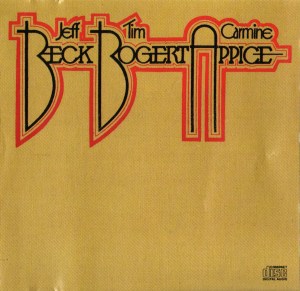
JEFF BECK, TIM BOGERT, CARMINE APPICE – Beck, Bogert & Appice(1973)
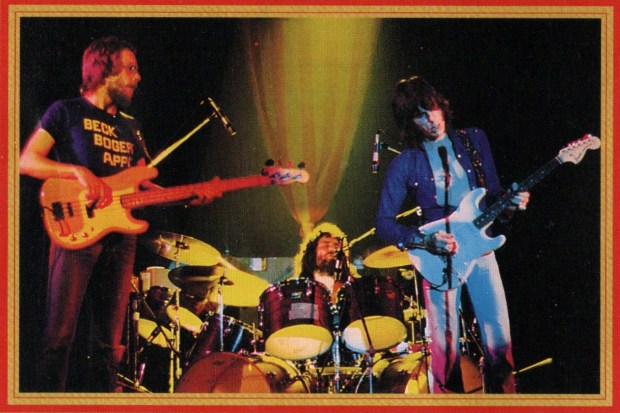
Supergroups often flicker in and out and existence. Beck, Bogert and Appice recorded one self-titled studio album in 1973. That album continues to be cited as an influence on bands, and you can hear it instantly. One listen to Beck, Bogert & Appice and you can immediately hear the echoes of the bands that followed. Beck, Bogert and Appice were touring before the even recorded the album, so they were already well prepared. Jeff Beck came in with a song that Stevie Wonder worked up with him on Talking Book. All three musicians write and sing lead vocals on the album.
“Black Cat Moan” is a Don Nix blues (who also co-produced the album). It sure seems that Rose Tattoo must have ripped it off for “Rock and Roll Outlaw”! It’s marked by a a sting of slide guitar, a wicked blues grind, and Jeff Beck’s understated lead vocals. Carmine Appice plays it pretty straight, but this track just thuds! Bass heavy and weighty like lead, “Black Cat Moan” was some of the heaviest blues on offer this side of Black Sabbath. Stay tuned for some of the slidy-est slide guitar Beck ever recorded.
Appice sings lead on the the gut-busting groove of “Lady”, written with members of Atomic Rooster. Bogert’s melodically thunderous bass takes center stage. The production is so crisp, you can hear every finger pick, even flying at the speed they are. Listen carefully for a quick part in the song that Rush lifted for “2112”. The layered lead vocals sounds like they were taking inspiration from Cream. This track simply smashes everything in its way, letting the bass level the countryside before Beck plants some bluegrass with some twangy guitar licks. Meanwhille, Appice keeps the engine running with a tasty cymbal pattern and earthquake drum fills.
The ballad “Oh To Love You” is also sung by Appice and features piano and Mellotron accompaniment. It sounds like stuff David Coverdale was doing in his early pre-Whitesnake career a few years down the road. Carmine has a really nice swing on the beat, but that Mellotron really takes it home when it comes in.
“Superstition” ends side one with Tim Bogert’s first lead vocal. This version, worked up by Wonder with Jeff Beck, was supposed to come out first, but due to delays, “Superstition” was first heard in its Stevie Wonder incarnation. Once again, a rolling groove dominates the soundscape, with Jeff Beck stabbing guitar licks here and there, drawing blood every time. This arrangement is guitar heavy compared, with none of Stevie’s clavinet or keys of any kind. Beck goes caveman midway, like a prototypical Ace Frehley, who must have been studying every note at home. Then, Jeff Beck takes it high again, laying waste to the land as a guitar innovator like a rarified few before him. Carmine’s drum outro was later ripped off by Kingdom Come on “Get It On”.
The Rolling Stones recorded “Wild Horses” in 1971, and here is Beck , Bogert and Appice opening “Sweet Sweet Surrender” with similar sound. This, however is more a slow soul-rock lament. Carmine sings lead on this side-opener, and Beck colours the blanks with distant guitar. Tim Bogert takes things more upbeat the pop rocker “Why Should I Care”. This is the kind of song that Kiss would strive to write over and over again in the early 1970s.
Things get funky in a heavy on the brilliant “Lose Myself With You”, the vocal melody of which sure sounds a lot like Judas Priest ripped it off for”Saints In Hell”. This is funk of the heaviest order, a rare isotope of plutonium that you can only get with the fusion of these kinds of musicians.
Carmine sings lead for the remainder of the album. “Livin’ Alone” has a vibe not unlike early ZZ Top. Fast, blues based rock with melodic lead vocals. The shuffle sure recalls a few famous bands that would be known for such things later on. This is a potent, energized blast of rock.
Unusually, the album closes on a Curtis Mayfield soul classic: “I’m So Proud”. A slow dancer like this actually works well at this point of the album, because the listening is exhausted, quite frankly!
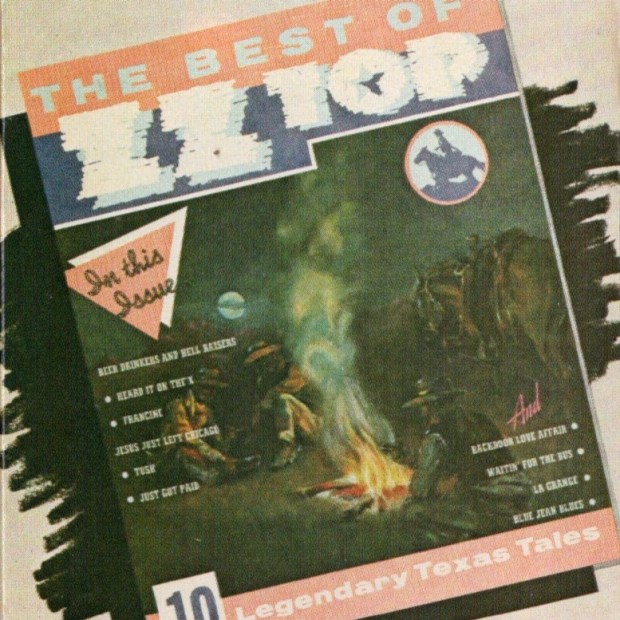
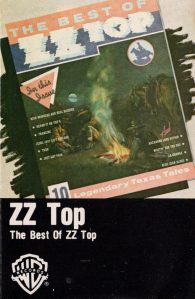
While ZZ Top were on a break between Tejas and Degüello, it made sense to issue the band’s first Best Of. This album was released in 1977 and though it did not chart high, it did eventually go double platinum, selling over 2,000,000 copies in the United States alone.
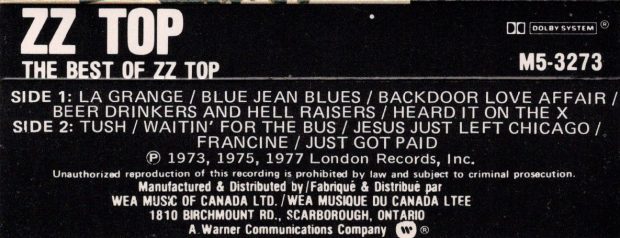
The cassette and vinyl releases had the sides flipped. This cassette copy in hand begins with “La Grange”, which is still a pretty solid opening even if the vinyl says otherwise! “La Grange” is an ode to a house of ill repute somewhere in Texas, and it became the prototype blues/rock shuffle for a generation. This song still burns up the radio today.
One of ZZ Top’s greatest blues had to be “Blue Jean Blues” from Fandango! So slow, so fully soaked in whiskey and gasoline that you can smell it from here. Billy Gibbons is fully in the driver’s seat here, but it is Frank Beard and Dusty Hill’s unobtrusive rhythm section that allows him to emote so well.
From the first album comes the dirty upbeat blues of “Backdoor Love Affair”. It’s a combination of elements: Billy’s distorted take on the blues guitar, mixed with Dusty’s melodic bass and Beard’s perfect punctuation. By the end of the song, it’s a jam around a tasty riff.
The familiar “Beer Drinkers and Hell Raisers” from Tres Hombres is an incendiary duet between between Billy and Dusty. Pedal to the metal, ZZ are off on one of the best rockers from the entire catalogue. This is the kind of song that endeared them to the headbangers. Similarly, “Heard it on the X” hones in on the speedy aspect of ZZ Top’s abilities. This is another duet with Dusty and Billy, and an ode to the Mexican radio stations that informed much of ZZ Top’s upbringing.
Flipping the tape, we are now hearing what is side one of vinyl. “Tush” ain’t a bad way to start. It’s the stuff of legend today. It boasts one of Billy’s best guitar riffs, yet it’s still little more than a basic blues. It’s just a winning combination: the blues progressions played by a rocking band. Billy’s leads are as much of legend as the song itself, stinging little zips of flavour in a bluesy soup of chords and drums.
“Waitin’ For the Bus” is a steady blues. The speed has been shed for this heavy sludgy one, with Billy laying down not just a guitar solo but a harmonica solo too, one after the other like one greasy blues rock statement. Then, just like on the Tres Hombres album, “Jesus Just Left Chicago” follows immediately after. Still blues, but of a different flavour. ZZ Top were always talented at showing us different sides of the genre, while mixing it with the sensibilities of rock guitar distortion.
“Francine” is a belter, a perfect pop rock tune, with more rock than pop. Billy’s little riff is tasty as candy, and the song has the necessary melodic mettle. Even so, it is overshadowed by the slide-drenched closer “Just Got Paid”. One of ZZ’s heaviest tracks, it’s made completely digestible by Billy’s incredible guitar work.
Billy Gibbons described the sixth ZZ Top album Tejas as “transitional”. Modern technology was creeping its way into the recording studio, but ZZ Top were still as bluesy and greasy as ever. Their palette was becoming more colourful, if anything. Not just the browns of desert landscape and beer bottles, but a broadening spectrum of shades.
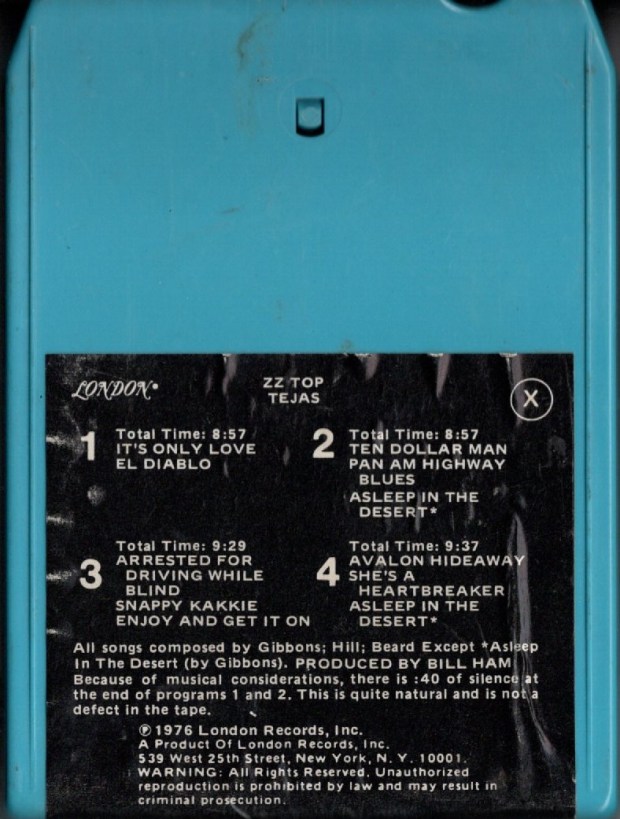
Opening with fan favourite slow groove “It’s Only Love”, we are off to a stunning start. The high twang of the guitars contrast with the low thump of Dusty Hill’s bass, but it is the chorus most of us remember best. Frank Beard’s drums clank along creatively, and the band are cooking. Vocals are shared between Billy and Dusty. Three quarters in, the song shifts into something a little more tense, with a brilliant harmonica solo.
Things sound a little more familiar on the bouncing “Arrested For Driving While Blind”, a solid blue boogie. Listen to Frank shuffle while Billy effortless rips out one of his patented smokers. The grooves turn gently relentless on “El Diablo”, a nocturnal desert tale, with adventurous chord changes and rolling guitar work. Once again Dusty Hill creates a backdrop of low thunder. This ain’t blues, but a sci-fi hybrid. Likewise, “Snappy Kakkie” is not at all standard, nor is it a bizarre Frank Zappa workout. Yet it has certain adventurous and challenging elements that lend it a foot in many worlds. At the end of the day, that hook of “Say hey Snappy Kakkie!” keeps you coming back. The pace picks up on “Enjoy and Get It On”. This track is a serious deep cut; a nice little greasy blues blitz at the end of side one.
“Ten Dollar Man”, with Dusty on vocals, is a ripper. As Frank Beard deftly taps out the beats, Dusty and Billy get down to the business of cooking. A menacing track with plenty of head-bopping potential. Then you better solder your head on straight, for “Pan Am Highway Blues” rips! ZZ Top are never content to just play the blues. They have to throw a few tricks in the bag, and they do, but this song is focused more on the highway and the gas pedal. Billy takes advantage of the studio tech to overlay a few nice slide guitar lines.
Dusty takes the mic on “Avalon Hideaway” which features some tasty, pounding Frank Beard fills. The lead solo by Billy might be the best part, but the slightly funky vibe really makes it a mover. Beard is a busy drummer without sounding busy. “She’s a Heartbreaker” is a classic pop/country/rock/Top tune. The croonin’ melody of the chorus is a classic that will go down as one of ZZ’s best in their vast catalogue. “She’s a heartbreaker, she’s a love taker, but she can break a heart and take all the love she needs…” There’s a hint of violin just to nail that hoedown vibe. As far as Top tunes go, this one’s a masterpiece of musical fusion.
Tejas closes on a brilliant instrumental, “Asleep In the Desert”, which allows Billy to play both electric and acoustic, slow and easy, as the sun sets over the oasis and the sounds of the night begin to emerge…
Many ZZ Top albums can be considered among their best in the catalogue. In 1976, there was concern that ZZ Top was going too far country. Obviously in hindsight, that wasn’t the case, and we can appreciate Tejas for what it was. Because none of its songs were included on 1977’s Best Of ZZ Top, Tejas abounds in great deep cuts. It’s not the kind of album you buy and get all the hits you remember. It’s something far better. It’s an album you buy and learn a bunch of brilliant songs you might not have heard before. It’s a must.
4.5/5 stars
The 8-track release shuffles the track order, but no songs are split between tracks, which is always nice. “El Diablo” coming in second changes the vibe of the listen a bit.
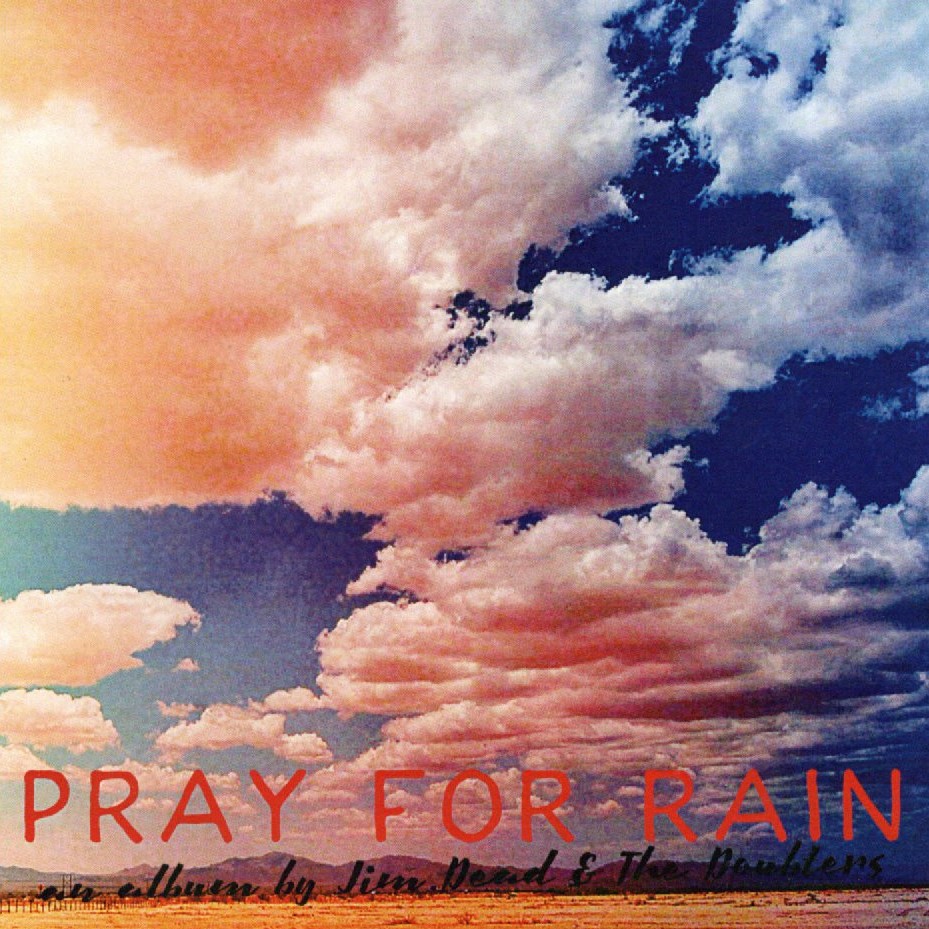
Jim himself will be our guest tomorrow on the LeBrain Train.
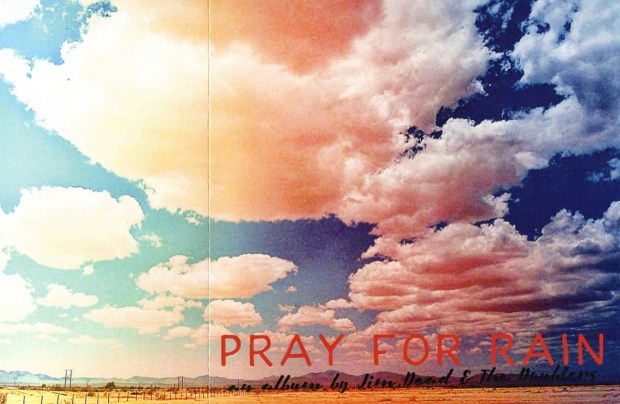
You never know what to expect from Jim Dead. Sometimes he’s mournfully acoustic, sometimes he’s raging electric with a full band. The Doubters are the latter and Pray For Rain is a powerful listening experience traversing blues, rock and country.
Opener “Wooden Kimono” is a relentless electric blues. Jim sounds tormented, as any good blues singer should. Sabbathy guitar bends on “May the Road Rise” show that this band is not afraid to mix influences. This is rock — like the better parts of Pearl Jam distilled. Blues and granite mingle gladly on the title track. It must be stated that the drums on this album are most excellently powerful.
On down the line, the album straddles the blues/rock lines, travelling all the way to the Stone Temple of grunge on “Lovesick Blues”. The brief “Trains” goes somewhere else completely different, something from the old west but in the 2000s. The leads into “Crows on the Wire”, the only overtly country song. A welcome reprise from the rising tides of heaviness.
The greatest track on the album could be “Home”, a quiet dusky number which erupts with heartfelt lead vocals that rends the soul to slivers. Echoes of Tom Waits, but not Tom Waits. This is chased by some wicked slide on “You Coulda Said” and finally, acoustic melancholy on the closer “I’m Not Lost”. A magnificent end.
Pray For Rain is an intense album. It’s heavy with feeling, and guitars. Some of the lead work is outstanding and the vocals are always fierce…yet tender. It’s focused and raw. Pray For Rain was recorded in a couple of days but the payoff is that you’ll want to listen to it for years.
What a strange time the dawn of the compact disc was. Even at the end of the 1980s, vast catalogues of music had yet to be released on CD. It was a hit and miss affair, with some early discs sounding wonderful and others sounding like a thin, tinny facsimile of the original vinyl. The longer running time of CD was a bonus that many bands took advantage of, while other heritage groups were considering the ways they could re-release their music on this new format.
Before Jimmy Page took his first crack at remastering the Led Zeppelin catalogue for CD, ZZ Top took a different route.
Now, granted, ZZ Top’s music spans a longer time period than that of many of their rivals. They’re also notable for starting the 1970s as a dirty raw blues and ending the 80s as clean space-age rock. While this took them from one success to an even more massive one, it unfortunately meant that the ZZ Top camp felt it necessary to “update” their music for the CD age. Make the catalogue sound more on an even keel with Eliminator and Afterburner.
And so the six ZZ Top albums that were so-far unreleased on CD were remixed: First Album, Rio GrandeMud, Tres Hombres, Fandango!, Tejas, and El Loco. Only Degüello was spared, having been released on CD earlier.
Apparently, updating the ZZ Top catalogue for CD was of “overriding concern” for all parties involved. ZZ Top were aware that there were complaints about early CD transfers for classic albums. The goal was “return to the original analog tapes and consider what steps were needed to render the music appropriate to contemporary digital playback equipment without compromising integrity.”
The answer was none. No steps were necessary. The remixes were not what the old fans wanted to hear on their brand new CD players. Rhythm tracks were updated with sequencers, drums treated digitally, and the whole thing came out sterile and flat. Adding echo didn’t add depth. Doing an A/B test with a remix vs. an original track makes you wonder why you even own the ZZ Top Six Pack.* It just…doesn’t sound right. Like a disorienting time displacement.
As of 2013, you can get all the original ZZ Top albums on remastered CD as they should have always sounded.
While it is nice to have six ZZ Top albums on just three CDs, and there is no denying the booklet is hot, you do not need the ZZ Top Six Pack anymore. The charm of the originals is that they are a document of those hot Memphis studios where ZZ Top laid down the original tracks fast and dirty. The remixes sound like a digital mixing board trying to tame a wild animal. Wrong, and unnecessary. “Francine” is actually awful.
The booklet is truly valuable (nonsense justifying the remix aside) and worth a point on its own. The ZZ Top songs in and of themselves are always incredible, so they too are worth a point.
2/5 stars
* It was a gift from Kevin. He also rates it 2/5 stars. I asked him for a quote for this review. All he had to say about the ZZ Top Six Pack was: “I’m glad Mike took this crap off my hands.”
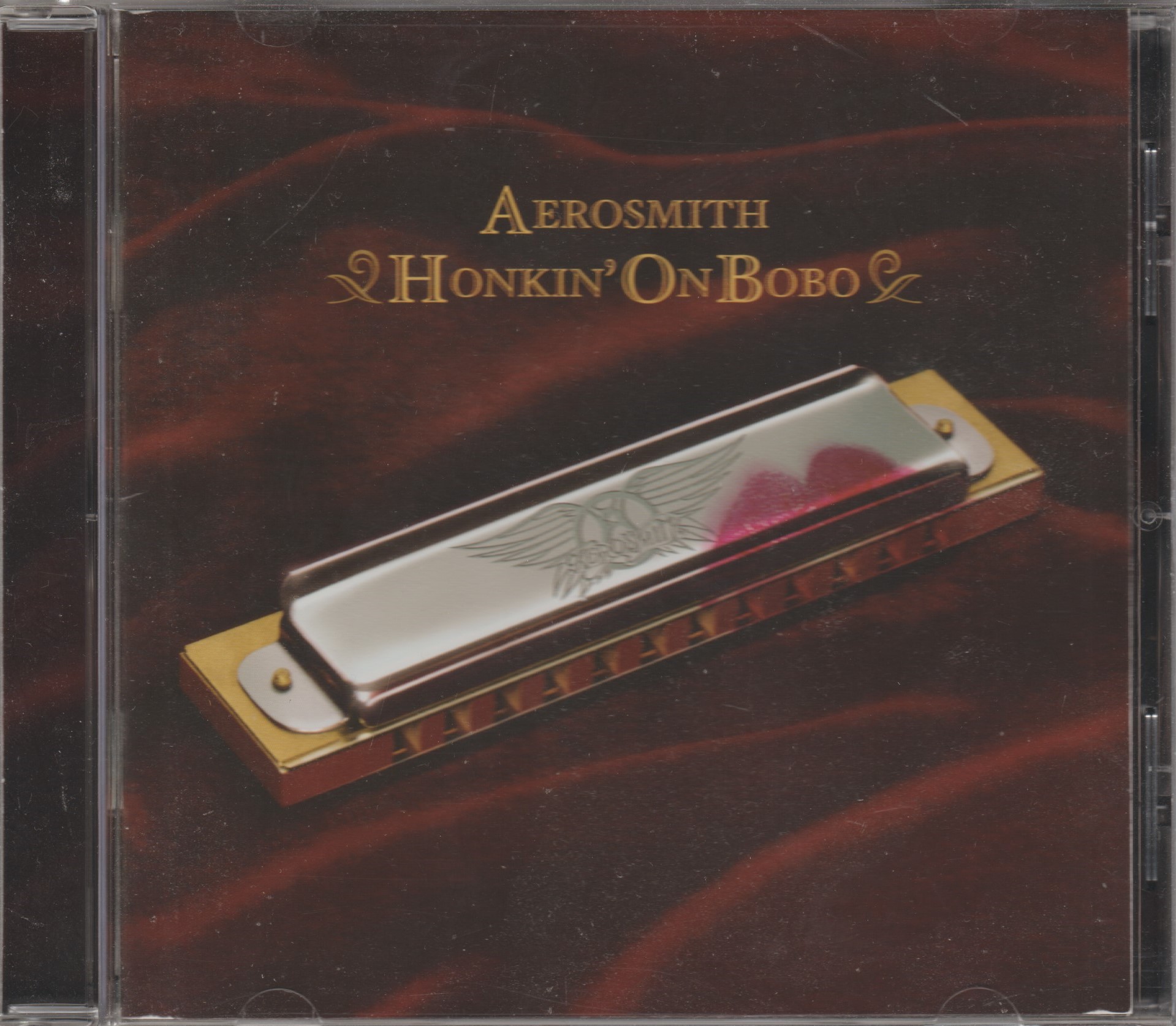
Sometimes we take one for the team. For no reason other than to get it done, we take out albums we strongly dislike just for the sake of writing them up. Sometimes there are pleasant surprises and time has been kinder than our memories have been. And sometimes you’re just Honkin’ on Bobo, whatever the fuck that means. It could be code for Sucking the Big One.
Necessary background: After 2001’s putrid Just Push Play, Aerosmith were eager to strip it back to basics and record an album live in the studio. They returned to producer Jack Douglas and picked an album’s worth of blues covers to Aero-fy. This is a formula that rarely works out well for rock bands, and Aerosmith fell into the blues cover trap with both feet.
The only exception is one new original, a ballady blues called “The Grind”. It happens to be one of the best tracks, though firmly within that Aerosmith bluesy ballad niche that they carved out for themselves in the early 90s with “Cryin'” and “Blind Man”. That this is an album highlight is a warning as sure as a watchman yelling “iceberg dead ahead!” We’re about to take on water, and there aren’t enough lifeboats.
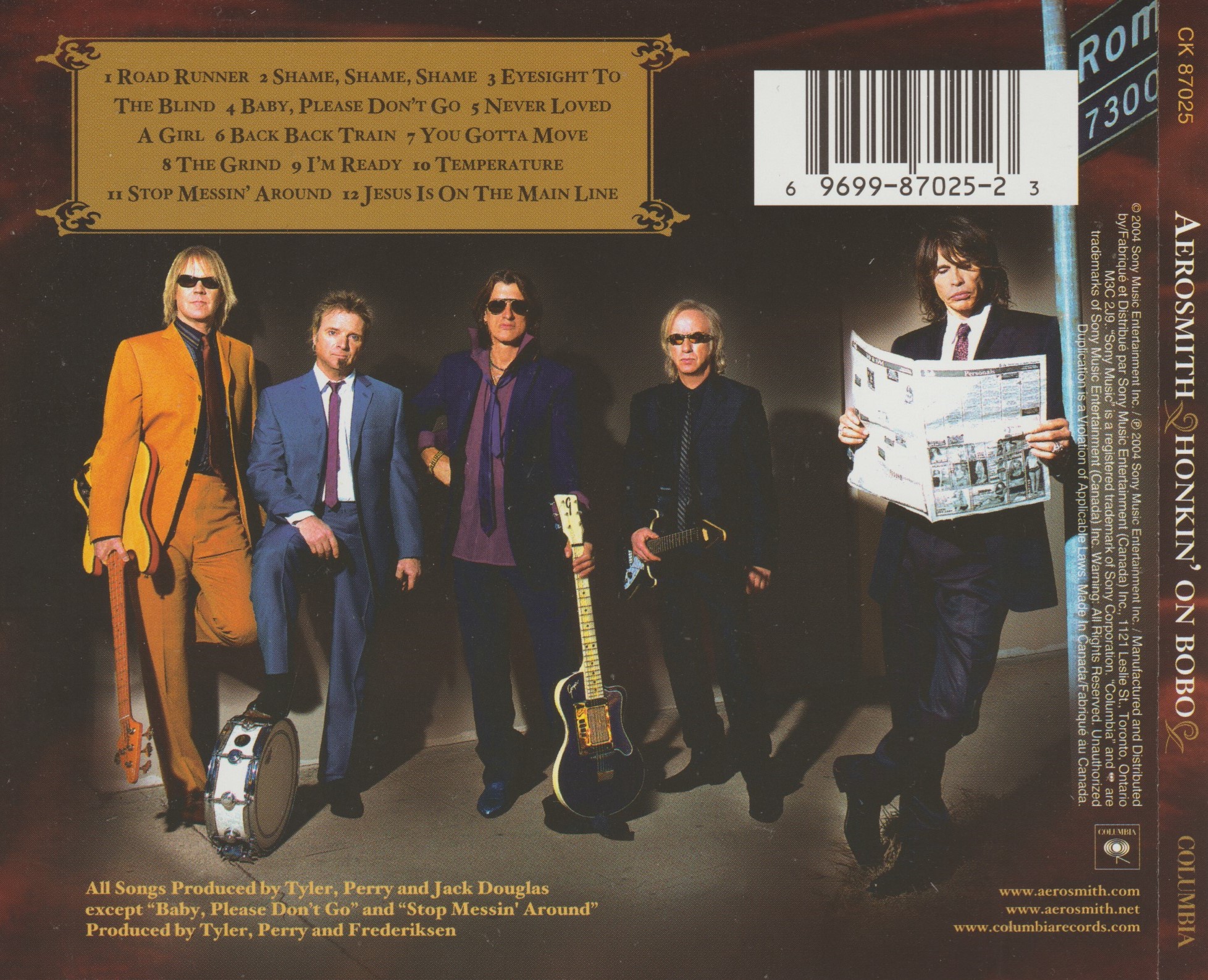
One of Aerosmith’s issues since the mid to late 90s is how they’ve become a caricature of themselves. Bob Diddley’s “Road Runner” is thick with Aerosmith clichés to the point that it sounds like an Aerosmith covers band filling their set out with standards. “Road Runner” isn’t limber, it’s thick in the thighs with thuddy rock tropes. Joey Kramer injects some life into “Shame, Shame, Shame” but it only makes you wish Aerosmith had tackled the track in 1974 instead of 2004 so it wouldn’t sound so contrived. “Eyesight to the Blind” (Sonny Boy Williamson) isn’t convincing, as Tyler huffs through the song like a burlesque singer. “Baby Please Don’t Go” makes you crave AC/DC’s superior version, although the groove on this one is positively unearthly. It’s an unbelievable groove that perhaps should have been made into an Aerosmith original rather than a throwaway cover.
Aretha’s “Never Loved a Man” is transformed into “Never Loved a Girl”, and with the Memphis Horns on board there’s some value to it, but compared to Aretha they sound like rookies. Like an amateur artist copying a master with crayons. “Back Back Train” is actually OK, and it might be that Joe Perry is a more appropriate vocalist for a blues classic. Tyler’s histrionics wear thin on this album, but Perry’s laid back singing works better. Tyler surely doesn’t aid the sluggish “You Gotta Move”.
A dreary “I’m Ready” (Muddy Waters) is still a long way from the end. “Temperature” also drags along, Tyler turning it into a parody. Fleetwood Mac get the Aero treatment on “Stop Messin’ Around”, at least the second Mac cover that Aerosmith have done after “Rattlesnake Shake”. Please welcome Joe Perry back to the microphone on “Stop Messin’ Around”, and please keep Tyler away! Unfortunately it’s a boring tune (blazing fretwork aside), and so is the closer “Jesus is on the Main Line”.
Even the most stalwart defender must concede that Honkin’ On Bobo isn’t a blues album for a blues lover. It’s a blues-rock forgery that occasionally captures the odd highlight for posterity, but is otherwise expendable. In other words if you’re in a Zombie apocalypse looking for CDs to chuck at the undead, Honkin’ On Bobo can be flung guilt-free.
1.5/5 stars
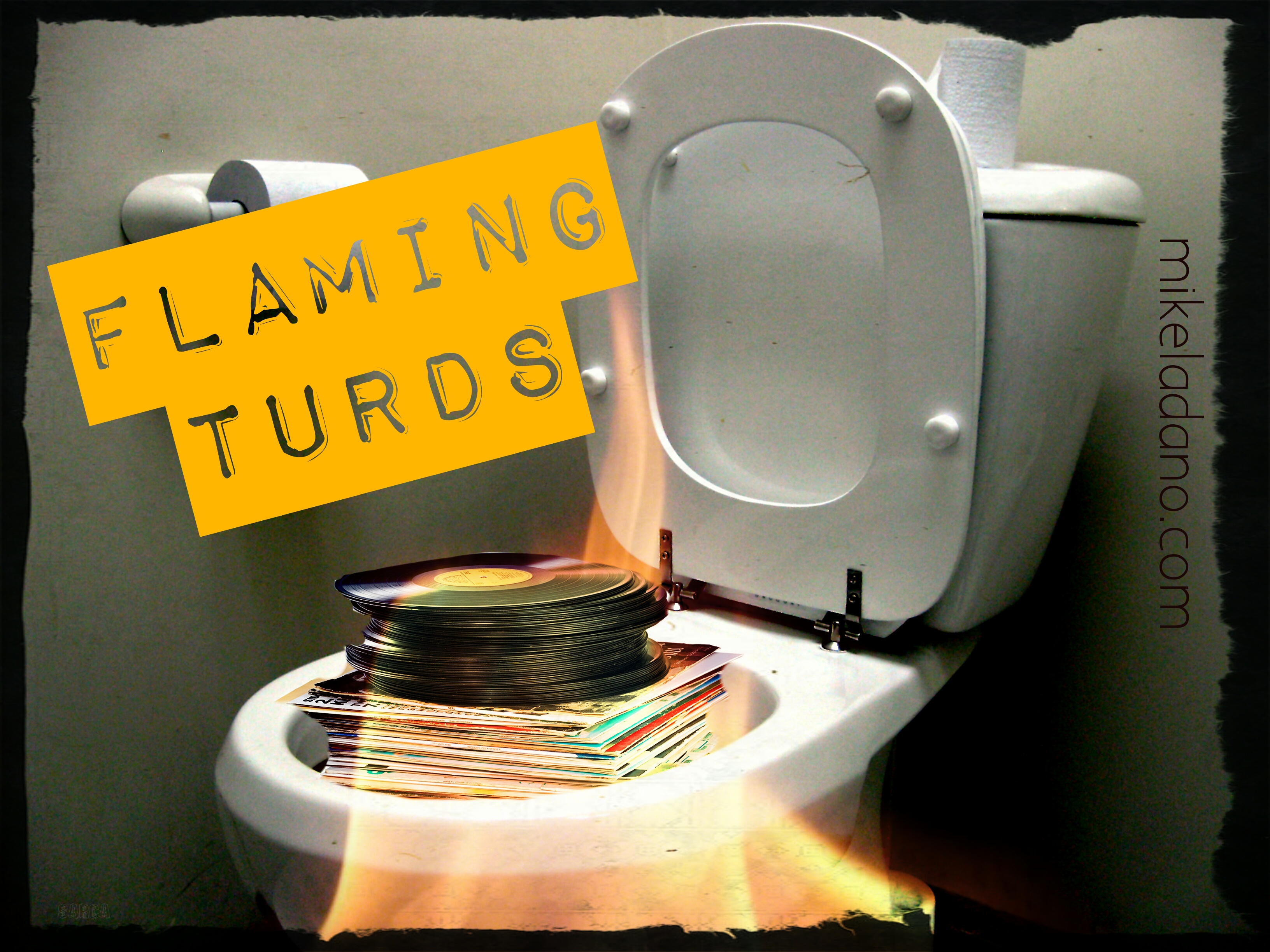
And once again, it’s the return of the dreaded flaming turd!
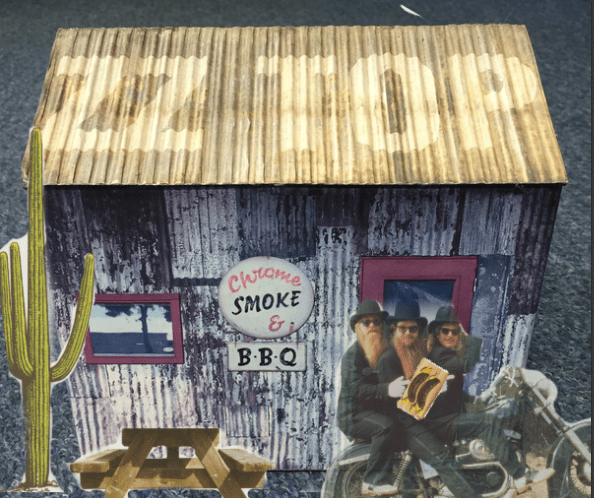
ZZ TOP – Chrome, Smoke & BBQ (2003 Warner limited edition BBQ shack version)
Though it seems an outlandish thought today, there was once a time when if you desired to hear original ZZ Top music, you couldn’t do that on CD. You had to purchase original ZZ Top LPs. In 1987, most of the original ZZ Top albums were issued on CD as part of the ZZ Top Six Pack, which featured remixed percussion to make them sound more like Eliminator and Afterburner. Needless to say this was a very unpopular idea, though it didn’t stop the Six Pack from selling. The original ZZ Top albums were finally given a CD reissue in 2013. Until then, your best bet on compact disc was to buy the 4 CD Chrome, Smoke & BBQ anthology.
Because Chrome, Smoke & BBQ features original mixes and a helping of rarities, it still makes for an enjoyable listen and valuable collectible today. The limited edition version came housed in a box like a little BBQ shack, but both have the same four discs of bluesy, greasy ZZ rock. A well-assembled anthology can make for a great listen even well after its expiry date, and this is one such set.
Disc 1 of Chrome, Smoke & BBQ features three tracks from Billy Gibbons’ first band the Moving Sidewalks. The guitar work is brilliant even in Billy’s youth. These tracks are notably more psychedelic than ZZ Top. The year was 1969, the same year as the first ZZ Top single “Miller’s Farm” / “Salt Lick”. This early version of ZZ Top (credited as “embryonic ZZ Top”) was a transition from Moving Sidewalks and didn’t feature Frank Beard nor Dusty Hill. Organ on a ZZ Top song is an unusual sound, and it’s quite prominent on “Miller’s Farm”. It’s a pretty standard blues with the emphasis on the keys and with one foot solidly in 60s rock. “Salt Lick” has a bit more of the mid-tempo ZZ groove, but the with the organ still part of the whole. Chrome, Smoke & BBQ remains the easiest way to obtain this rare single.
ZZ Top’s First Album takes the spotlight next with three tracks including “Brown Sugar”, the first “real” ZZ Top track. An impactful one it is, and so obviously ZZ Top. It seems by the time the right three guys got together, the ZZ Top sound was born. “Brown Sugar” is so essential to the ZZ Top sound that maybe the box set should have opened with it, chronology be damned! Dusty’s pulse on bass is already present, and Frank’s sheer style adds some much needed character. Then “Just Got Back From Baby’s” has the spare nocturnal blues that is a ZZ signature.
The next three ZZ Top albums – Rio Grande Mud, Tres Hombres and Fandango! are featured much more prominently with seven tracks apiece. This part of the set is deep with essential music. “Francene”, obviously “Francene”, the catchiest song during this part of history, is present and accounted for. (Even in Spanish!) For relentless groove, ZZ Top never nailed one as hard as “Just Got Paid”, slide guitar right in the pocket. “Chevrolet” showed how they could just lay back. For shuffles, “Bar-B-Q” got the spice you need. “Sure Got Cold After the Rain” covers the sad, spare blues that Billy’s guitar can evoke. The music goes on, and on: “La Grange”, “Beer Drinkers & Hell Raisers”, “Heard It on the X”, “Blue Jean Blues”, “Tush”. Though the songs in between are all excellent as well, it’s hard to ignore the hit power of these tracks.
Six tracks from Tejas feature on this set, still more than half the album. The ZZ Top direction was gradually making tentative steps towards modernizing. “It’s Only Love”, a bluesy country pop, sounds like something new. They hadn’t left anything behind though, as told by the menacing “Arrested for Driving While Blind”. It’s a cleaner, more studio-driven sound, as heard on “El Diablo” with its subtle overdubs and dynamics. “Enjoy and Get it On” is a nice sentiment, with the slide all greased up and ready to go. Two of the most interesting of the Tejas tracks are the quiet instrumental “Asleep in the Desert” and the twangy “She’s a Heartbreaker”.
At this point ZZ Top took a break to decompress after years of consecutive touring and recording. The Best of ZZ Top came out during this break, but what was going on behind the scenes was to be far more important down the road. ZZ Top’s image began its final evolution when Gibbons and Hill returned from vacation with matching full length beards. Their next album Degüello allowed the music to evolve as well. Six songs from Degüello represent this period, along with a rare radio spot advertising the album.
ZZ Top’s cover of Sam & Dave’s “I Thank You” is iconic enough that many people probably assume it’s an original. What was original was “Cheap Sunglasses”, a staggering hangover of a track — the new ZZ Top. Same with “Maniac Mechanic”, a track so bizarre that you could mistake it for Zappa. Meanwhile “I’m Bad, I’m Nationwide” has the laid back, cruisin’ ZZ Top vibe that fans always loved. “A Fool For Your Stockings” showed that Gibbons could still play the blues, too.
Another six tracks from El Loco account for the last hits before the MTV generation took hold. “Leila”, a 50s inspired ballad is clearly an experiment albeit a successful one. As is the surf rocker “Tube Snake Boogie”, a track unlike any ZZ Top ever attempted before. Another ballad, “It’s So Hard” is not out of place, with its roots in soul music. “Pearl Necklace” has surf vibes but is most memorable for its dirty double entendre. “Heaven, Hell or Houston” is even weirder than “Maniac Mechanic”. It’s quite clear that ZZ Top were stretching out, while still maintaining a foot in their bluesy, rock and roll roots.
And then came MTV, the music videos, the car, and the girls. The music was laden with sequencers and electronic percussion, but this unlikely combination is the one that really struck oil. Black gold, Texas tea, and platinum records. Eight tracks from Eliminator are included here, almost the whole album minus three. Only “Thug”, “I Need You Tonight” and “Bad Girl” are left behind. So you get all the hits, and then some. “I Got the Six” had to be on here, a dirty but slick little favourite from the day. “Dirty Dog” is a fun also-ran too, but didn’t need to be on a box set.
When ZZ Top found their successful formula, they really ran with it, right into the next album Afterburner. As we know a sequel rarely tops an original, but the album still features eight songs, and this is where Chrome, Smoke & BBQ begins to stumble. By featuring so many songs from this period, the box set is really unfairly weighted. Surely another few tracks could have been included from ZZ Top’s First Album instead of so many from Afterburner and Recycler. “Can’t Stop Rockin'” and “Woke Up With Wood” could have been dropped, but let’s keep “Sleeping Bag”, “Stages”, “Rough Boy”, Delirious, “Velcro Fly”, and “Planet of Women”. Around Afterburner, ZZ Top had taken their music to its most commercial extreme. They decided to reduce, though not remove, technology on the third album of the MTV trilogy Recycler. Notable from this period: “Concrete and Steel”, “My Head’s In Mississippi”, “Give It Up”, “2000 Blues” and “Doubleback”.
ZZ Top switched from Warner to RCA for their next studio album 1994’s Antenna, and nothing from that era onwards is included. There is still some more music on this box set to enjoy. In 1990, ZZ Top recorded a cover of “Reverberation (Doubt)” by Roky Erickson for the tribute album Where the Pyramid Meets the Eye. Gratefully, this ZZ Top rarity is included here. You can note the Recycler-era sequencers, but they compliment the psychedelic track nicely. This is followed by the two “new” songs that ZZ Top recorded for 1992’s Greatest Hits. “The corniest Elvis song ever” is “Viva Las Vegas”, sung by Dusty Hill, and overproduced to the gills. Huge hit of course. “Gun Love” is also included.
Disc 4 ends with six “medium rare” tracks. Some are actually super rare. These include a spanish version of “Francene” with Dusty Hill singing. It sounds like thie audio could be taken from an actual vinyl single. A live version of “Cheap Sunglasses” comes from a 1980 promo-only single, and it smokes. Then there are some dance mixes from 12″ singles, easily the most skippable part of this box set. None of these will be played regularly by you, the listener. Especially not “Viva Las Vegas”.
The booklet included with Chrome, Smoke & BBQ is impressive on its own. It’s packed with music and text, including a track by track commentary by the band. “Seems like all our songs are about dicks and pussies,” says Frank Beard.
Limited edition box sets are fun to get while they last. Chrome, Smoke & BBQ boasts its box shaped like a steel shack, including corrugated roof. (It’s actually great because it doesn’t collect dust!) Include the box, all four CDs are safely housed in individual jewel cases. If you dig inside a little more you’ll find cut-out characters to add to your BBQ shack display. You could scan and print these cut-outs yourself. Enjoy a picnic table, ribs, sausages, cacti, and of course the guys from ZZ Top themselves (on a bike, or disembarked). Also hidden in the box is an animated flip-book. See the video below for a quick demonstration.
As with many box sets, tracklists could use a little tweaking and everybody will have their own ideas for how to fix that. Perhaps instead of dumping all those remixes at the end, they could have been included chronologically so the set doesn’t end on such a…tepid concept as the extended dance remix. The set could certainly use some balancing away from Afterburner and Recycler with more focus on the earlier stuff. The exclusive rarities are adequate and appropriate for a set of this stature. Not too few, not too many. The ZZ Top completist will want this set for them and will still enjoy giving it a complete spin from time to time.
The regular edition will do nicely, but if you can find a complete limited version for a good price, don’t hesitate to snag it.
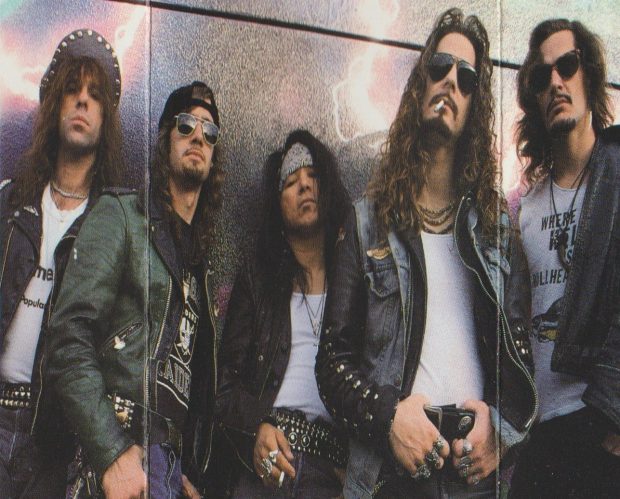
I missed their first EP, Name Your Poison. None of the local record stores knew who Little Caesar were, but rock magazines like Hit Parader were already tootin’ their horn. When their major label debut Little Caesar hit the shelves, it was none other than Bob Rock in the producer’s chair. “Chain of Fools” was selected for the lead single/video, which was probably a mistep. It did show off Little Caesar’s knack for crossing Skynyrd’s southern rock innards with soul, but a more mainstream rocker like “Down-N-Dirty” would have been less of a shock to the uncultured longhairs of 1990.
Soulful blues rock was all the rage in 1990, with the likes of the Black Crowes and The London Quireboys hitting the charts. Was Little Caesar just one too many bands? They didn’t have the impact of the other two, though they certainly stacked up in the quality department. Lead howler Ron Young’s lungs are enviable, with a southern gritty drawl and authenticity to go.* The rock continues through “Hard Times”, which puts out a killer street rock vibe, able to tangle with any Hollywood competition. “Chain of Fools” serves to show off Young’s limitless talents, but as a hard rock adaptation, falls shy of their original.
Diversity points are earned for a stellar ballad called “In Your Arms”, delivering on a solid soul vibe. Young’s voice is the focus, revealing depth track after track. There’s a darker turn on “From the Start”, foreboding but with anthemic chorus. The first side’s closer puts you in a “Rock and Roll State of Mind” with a harmonica-inflected blues burner.
Gotta big monkey and he’s on my back, It’s warmer than China, it’s better than crack, It’s burnin’ like fire, it’s takin’ my soul, yeah, So damn addicted to rock ‘n’ roll.
You may as well call this one my theme song. The history of rock is delivered in under five minutes.
White boys stole it back in ’55, Turned in to disco in ’75, Said it all started with “Blue Suede Shoes”, yeah, For years brothers called it just rhythm and blues.
Tell it how it is, brother!
Money can’t buy it ’cause it can’t be sold, If you say it’s too loud, then you’re too fuckin’ old.
Flip the tape. “Drive it Home” takes the car/sex metaphors to a dirtier level. On, Ron, I bet you’d like to drive it home! Another dusky ballad called “Midtown” changes the mood and the groove. A ballad with balls and a banjo? Then, “Cajun Panther” is its own descriptive, but the slippery guitar will hook you right in. Greasy slidey goodness from Creedence county. The next song, “Wrong Side of the Tracks” is actually closer to the mainstream and doesn’t stand out amongst more unique material. Unique like “I Wish It Would Rain”. It may be another ballad but its southern flavouring make it clearly different from anything on the radio in 1990. “Little Queenie” nails the soul-rock vibe one last time, going out in style, but also with a song that doesn’t really sound like a closer. Perhaps a little song shuffling would have put “Little Queenie” in a better spot to showcase its strengths.
Sonically, since this is a Bob Rock production, you already know what it sounds like. It’s a big sounding album that captures the band in top shape and presents them in an appropriately dressed frame. It’s a 12 track album and although that was becoming the norm, Little Caesar would have been a more effective debut if it were 10 songs, focusing on the ones that made it unique.
3.5/5 stars
* Tragically, Ron Young was killed in 1991 by a time-travelling Arnold Schwarzenegger, in Terminator 2: Judgement Day. ** ** Fake News. But he was in the movie and did get his ass kicked.
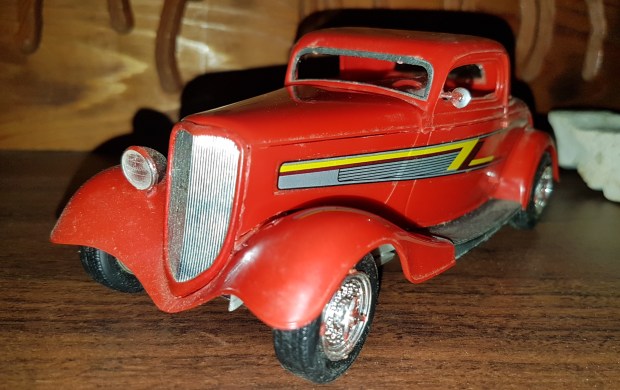
I saw Eliminator was now a one-eyed cyclops car. A headlight came off and was nowhere in sight. It’s gone. If it had simply fallen off, it would be on the shelf, next to the car. I only had two suspects. One of the two was more credible, while the other claims to know nothing. I know it was my dad!
GETTING MORE TALE #782: Eliminated Headlight Restored
The old cottage bedroom isn’t the safe storage space it used to be!
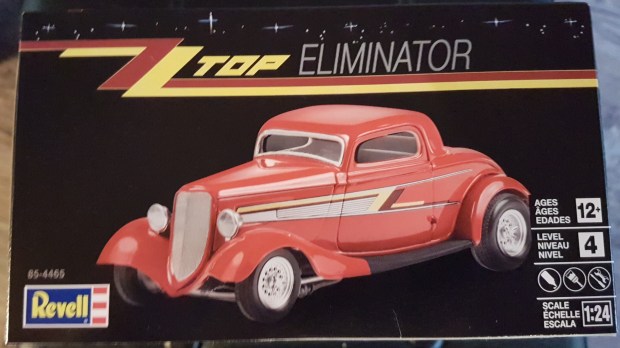
For over 30 years, my old Monogram model kit of ZZ Top’s “Eliminator” car sat undisturbed. The shelf it occupied was shared by a stunningly beautiful red Ferrari Testarossa, some old books, and several Lego battle droids. Eliminator’s structure held sound, with only minor repairs needed over the years to keep it intact.
Then one day in 2019 a headlight went missing. We didn’t need a confession to know that my dad did it while puttering around!
I thought the story was over, but a few weeks ago my dad said to me “I found your headlight”.
What? Did it just fall behind the bed?
“No, I got you a new one!”
Right on, thanks dad! Did you find an old model kit on Ebay?
“No, I saw a brand new one at the hobby store and picked it up for you!”
I couldn’t believe my luck! But what are the chances the kits are the exact same? Could I simply swap out an old headlight for a brand new one?
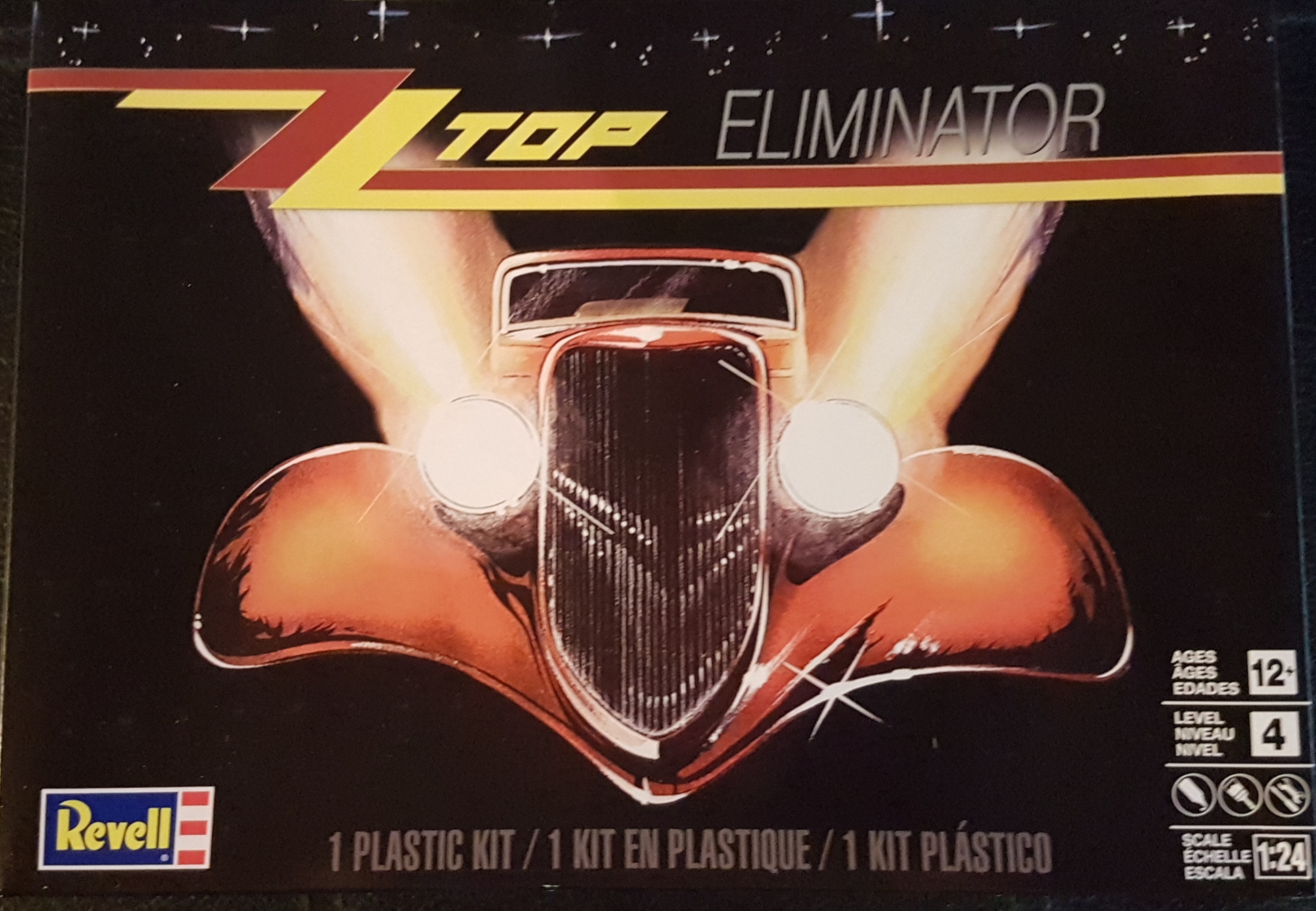
Turns out, I can. Both kits are 1/72 scale, and though the new one is made by Revell instead of Monogram, they are identical. Revell actually bought out Monogram in 2007, so they must have acquired these old molds and reissued the exact same kit.
Opening the kit and seeing the exact parts, I found myself at a crossroads. I did a good job back in 1987-88 when I built my original Eliminator. There are some things I would change; I would have painted the red engine block to be more accurate if I had another crack at it. And now I do. Or, I could just glue the new headlight onto the old car and leave it be.
Pros to building a new car:
Fixing mistakes I made as a kid, like the engine colour.
A higher budget, better tools, access to more paints.
Cons:
Possibly screwing up and wrecking a new model kit.
I hate, hate, hate water decals.
Realising I’m not as good at this as I used to be.
“You know my hands aren’t as steady as they used to be,” I told my dad.
“Fuck your hands!” he responded.
I turned to my mom and asked if she just heard what he told me to do. She did and said I should write about it.
Betcha didn’t expect that’s where this story would go at the start! I neglected to take my father’s advice, but vowed to tell the tale in my own way.
The end.
The ZZ Top Eliminator Project will continue in Summer 2020. What would you do with the model kit? Let us know in the comments below.
As children, we were told many stories of what being a kid was like in the 1940s and 50s. The greatest toy was Mecanno. (My dad’s Mecanno #7 set was a treasured possession.) Movies were 12 cents on Saturdays, and you could stay as long as you like. (Once my dad went to go see Red Rider with his pal Jerry Irwin. He stayed for four — well, three and a half — showings. Then his father phoned the theatre looking for him, as he was supposed to home a long time ago! Boy did he catch hell at home!) One thing my dad always emphasized to us was how sad he was that all his childhood toys were gone. His little brother wrecked some, and his dad threw out the rest. He says they’d be priceless today. All gone; somewhere in a Guelph landfill.
When kids move away from home, they don’t take everything with them. Things like old toys get left behind. That’s how my dad lost all his stuff. I had trust in him that the same wouldn’t happen to me, and my sister. The number of times we had to hear about his lost toys, his Mecanno #7 set, and all that stuff…I assumed he wouldn’t do that to us.
I assumed incorrectly.
A few months ago my sister was over at his house, went down into the basement to look at the board games…our old childhood board games…and they were gone.
We found some of them in a storage bin, but the rest had been thrown out. That included my copy of Chopper Strike, a turn based combat strategy game that came with intricate little pieces and a massive two-level board. I bought it at a garage sale for a couple dollars in the early 80s. It was complete. The game came with an army of plastic jeeps and helicopters. The copters had rotating blades, and the jeeps had moving anti-aircraft guns. Lots of easily lost components. Rare for an such an old game (1976). We played it over and over and over again as kids. I thought it would remain safely stored at the old house. It cost over $50 to replace it with a complete one again (thanks, Mom).
At least my dad saved some of the obviously valuable games, like our original Star Wars and Transformers. Everything else from Admirals to Careers ended up in the trash, lost forever. Feeling bad, my mom bought my sister a new Careers game on Ebay (and replaced my Chopper Strike).
I thought that was it. I thought the point was made. I thought our possessions were safe again.
Wrong again.
Some of my old model kits are at the cottage. The cottage is a great place to build a model. My ZZ Top Eliminator kit has safely lived at the cottage for 30 years. A few years ago I took it out, dusted it off, and secured a few loose pieces with glue. The last time I saw Eliminator, it was fine.
This time, I noticed a few things on my shelves had been moved. When I returned them to their proper places, I saw Eliminator was now a one-eyed cyclops car. A headlight came off and was nowhere in sight. It’s gone. If it had simply fallen off, it would be on the shelf, next to the car. I only had two suspects. One of the two was more credible, while the other claims to know nothing. I know it was my dad!
“You can always pretend it was in an accident,” said my sister.
I used to think my stuff was safe in the hands of my dad. Now I realize I need to keep valuables far, far away from him!
 JEFF BECK, TIM BOGERT, CARMINE APPICE – Beck, Bogert & Appice (1973)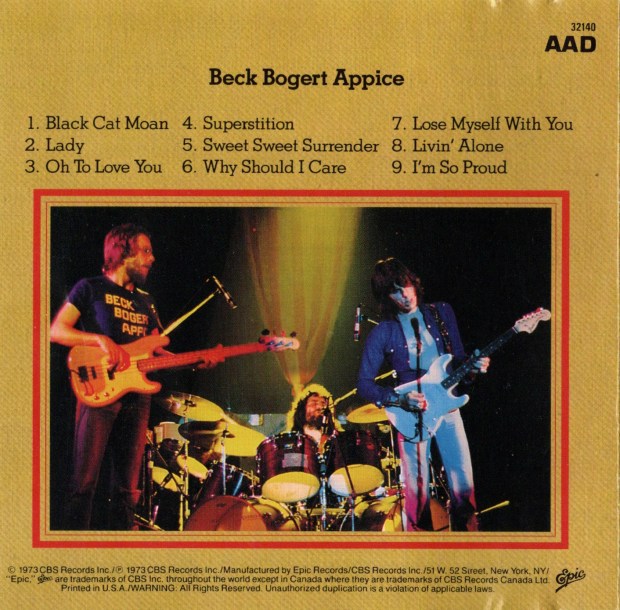



















 mikeladano.com