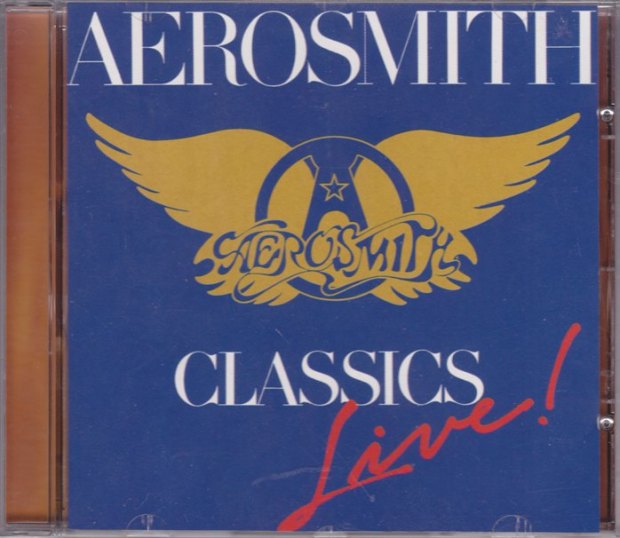
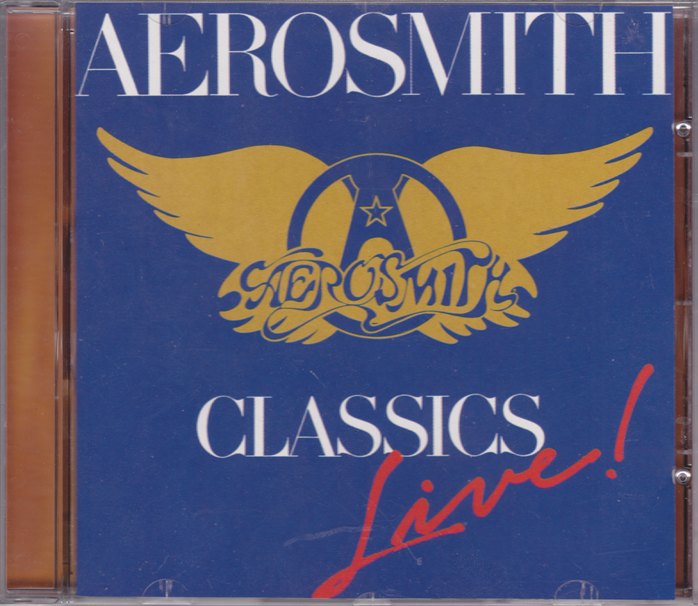
A reunited Aerosmith managed to put it together enough to tour, and record new music. Now on Geffen, Done With Mirrors was considered a “good enough” album in most circles. The Box of Fire set, which this series of reviews is really about, doesn’t include any of the Geffen material. Instead it jumps ahead to the next Columbia release, which came out the year after Done With Mirrors. Columbia were now able to put out live albums and compilations. Classics Live! was the first of these.
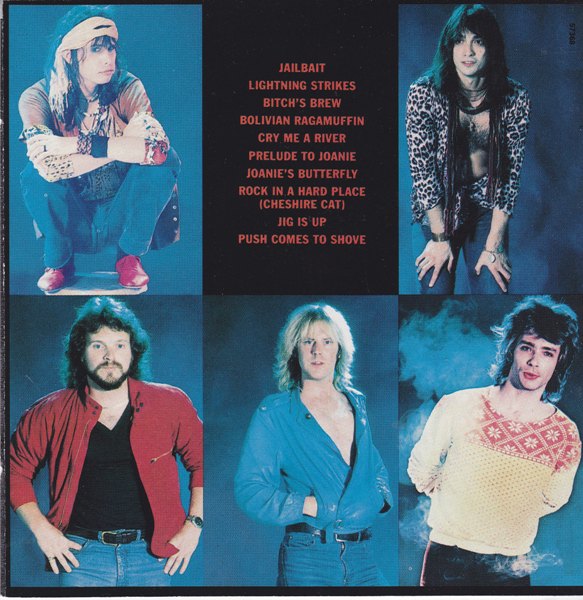
We have already established that the Live! Bootleg album is simply excellent. As a double live album, it is one of the essential releases from the 1970’s that serious rock fans should own. Classics Live is a different beast, a single LP with odds and ends from tours from 1977 to 1983. There is no indication who is playing on what, but it is known that all four Aerosmith guitarists (Joe Perry, Brad Whitford, Jimmy Crespo, Rick Dufay) play on the album. They are all pictured inside, but only by ear could you determine who is playing. For example I think “Train Kept a Rollin'” is a 1983 recording with Crespo and Dufay.
It’s cool that there are songs on Classics Live that were not on Live Bootleg. The most notable of these is “Kings and Queens” which really deserves a lot more praise than it gets. Aerosmith at their most regal. The others are a medley of “Three Mile Smile” and “Reefer Headed Woman” from Night in the Ruts. Joe Perry was definitely out of the band by that time.
Of the more familiar tracks, “Sweet Emotion” is a particularly good version with Tyler sounding pretty rough from the night before! I’m pretty sure there’s some heavy overdubbing going on with this album, if the backing vocals are anything to go by. “Dream On” is excellent as usual, with exceptional sound quality and a raw sounding performance. “Mama Kin” on the other hand ain’t so hot. Pretty sloppy and ragged but a lil’ too much. “Lord of the Thighs” is solid.
The icing on the cake is the unreleased studio track “Major Barbra”. This outtake from Get Your Wings saw its very first release on Classics Live. It’s a slow, mournful, but classy ballad in 3/4 time. It’s a great song that deserved a spot on an Aerosmith album, so here it is!
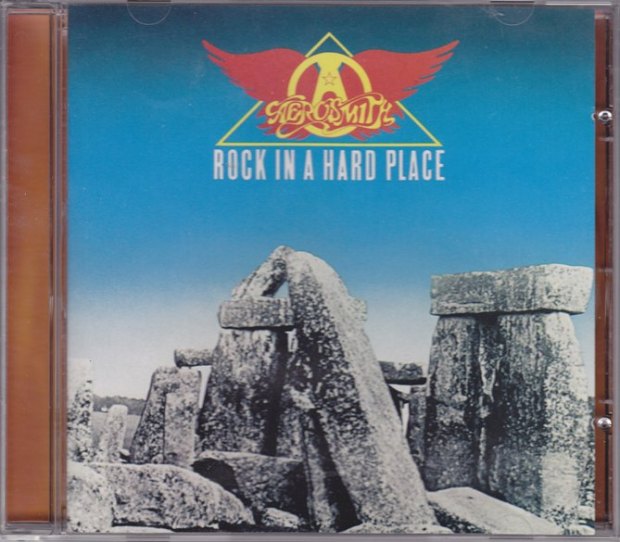
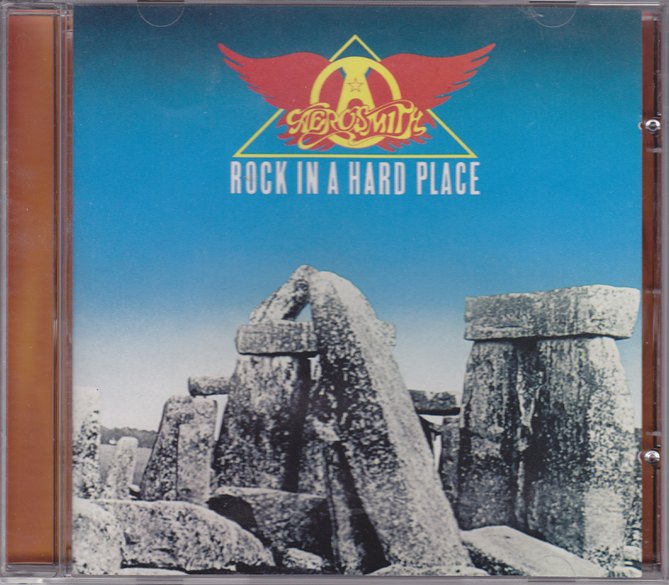
AEROSMITH – Rock in a Hard Place (1982 Columbia, 1993 Sony)
I sometimes wonder what it was like to be an Aerosmith fan in 1982. Their last album, Night in the Ruts, showed signs of decay. Then out came Rock in a Hard Place. Joe Perry and Brad Whitford were both gone*, and in their places were Jimmy Crespo and Rick Dufay. Both guys are good players and writers, but they are not Perry and Whitford, who were 2/5 of the Aerosmith sound. Changing two guitar players in the space of an album, especially when you’re losing a guy like Joe Perry, is always risky. It’s risky because you’re losing a very recognizable member (musically and visually), and you’re changing the creative chemistry of the band. Whatever was special about the first six albums, there was no guarantee it would carry over to the seventh. Add to that an unfortunate album cover featuring Stonehenge. There was nothing wrong with that, until This Is Spinal Tap came out in 1984. It was a movie that Steven Tyler took very personally. Rock in a Hard Place looked like a joke, now.
Thankfully the record opened with two great songs in a row. The frantic “Jailbait” immediately recalled previous high points like “Toys in the Attic”. New guitar players or not, Hamilton and Kramer were more than capable of laying down that speedy Aero-groove on their own. Unusually for a rhythm section, they have a signature sound together, which makes “Jailbait” naturally sound like Aerosmith. Tyler is a sassy as ever, singing from experience I’m sure. Incidentally “Jailbait” is the only song with a Rick Dufay writing credit. Jimmy Crespo on the other hand co-wrote seven tracks.
Richie Supa, co-writer of “Chip Away the Stone”, returned to help out on the single “Lightning Strikes”. Maybe that’s one factor that makes the song so classic to me. Brad Whitford was still with the band when it was recorded, so that’s him on rhythm guitar instead of Dufay. “Lightning Strikes” was accompanied by a cool music video featuring the new guys. It’s cool how they fit in with the band, looking right at home, smoking on cigs. In the video, the band double as greaser gang bangers, ready to rumble in the middle of the night…when the lightning strikes.
Unfortunately, album quality takes a dip after that!
“Bitch’s Brew” is OK but it’s easy to hear the fatigue. The groove is there and the riff is solid, but there aren’t enough hooks to go around. That’s Crespo on the backing vocals, by the way. “Bolivian Ragamuffin” features some sweet slide guitar and really harkens back to what I like about Aerosmith. It’s just not a good enough song!
“Cry Me a River” is the old Ella Fitzgerald classic, and who but Aerosmith are better at doing unusual classic covers? “Cry Me a River” isn’t one of their best, but it is good. They do it as a smokey, lounge number complete with electric guitars and a monster called Joey Kramer on the drum kit!
Skip “Prelude to Joanie”. What happened here? This song intro is pretty silly. Did Tyler listen to The Elder and say, “Jeez I have to get more sci-fi and conceptual sounding in my music!” Skip it, and get to the much better “Joanie’s Butterfly”. This sounds fresher. In a way it foreshadows some of the more exotic textures that Aerosmith would try out 15 years later on Nine Lives. It starts acoustic, but when the electric part kicks in, it’s old Aerosmith all over again and it works. It was an ambitious song and for the most part, they pulled it off. It could stand a little more cohesion, but think about the drugs swimming in their veins at the time!
“Rock in a Hard Place (Cheshire Cat)” again recalls the good ol’ days, sounding a bit like “Same Old Song and Dance”. Not as good, mind you, but in the ballpark. “Jig is Up” is an attempt to get back to the funkier Aerosmith vibe, but it’s a completely forgettable track. Truly filler, B-side material. (Great guitar playing though.) “Push Comes to Shove” ends the album on a slower, lounge-y note. Once again I can’t help but hear the band burned out and running on fumes when I listen.
Aerosmith would tour around, in smaller venues, for the next few years. Tyler was in some serious shit with his problems, falling down and passing out on stage. Meanwhile as the band aimlessly toured the country, Joe Perry and Brad Whitford began to talk about what it would take to rejoin the band. As if fated, Rick Dufay killed his own job with Aerosmith by suggesting to Steven Tyler that getting the other two guys back would be his best option. Wheels were set in motion.
Record deal with Columbia now done, the label were free to issue live albums and outtakes. Even as Aerosmith were on tour behind a brand new studio album for Geffen (Done With Mirrors), Columbia ensured there was also a live album on the shelves. That’s what we’ll be looking at next time.
3/5 stars for Rock in a Hard Place.
* Be sure to check out the Joe Perry Project, and Whitford/St. Holmes.
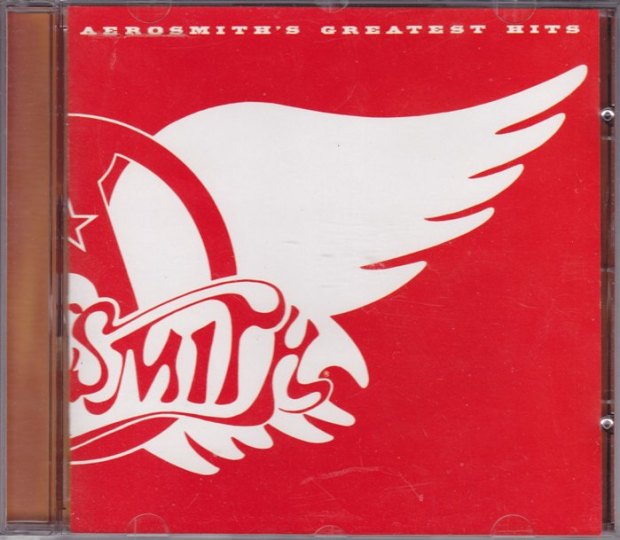
When a fan walked up to Joe Perry in 1980 and asked him to sign the brand new record Aerosmith’s Greatest Hits, the guitar player was so out of it that he didn’t even know there was such a record. Now 35 years later, it has sold 11 million copies and has become that one Aerosmith disc that everybody seems to have. My wife asked for Aerosmith’s Get A Grip for her birthday in 1993 from her uncle, but he couldn’t find it, so he got her Greatest Hits instead. She didn’t know a single song but quickly grew to love every one of them.
This album is legendary. Even though all the Columbia studio albums were already included, Sony still put Greatest Hits in the Box of Fire set. Two probable reasons for this are 1) the album is now considered a classic hits record, and 2) there are some versions here not on any other Aerosmith albums. In fact Sony revamped this album again a few years later, re-releasing it as Greatest Hits 1973-1988 with seven more songs including one unreleased rarity. That’s another review though, not a part of this series. Since the Box of Fire has the original 10 track version of Aerosmith’s Greatest Hits, then that’s the one we’re going to look at. This is the album that was released in 1980 to buy the band some time before having to crank out another studio LP…this time without Joe Perry.
This was my first album of “old” Aerosmith, just like it was for my wife. I got mine in the spring of 1991, and while I was familiar with the hits, I had never heard the rest before. “Dream On” wasn’t new to me, but if it’s new to you, you might be shocked how Steven Tyler’s voice has changed so much over the years. Even familiar hits like “Walk This Way” sound ancient compared to today!
Aerosmith’s Greatest Hits was perfectly sequenced. At 10 songs and 37 minutes, it was also the typical length for a single record hits album. There are very few songs not included that are glaring by their absence. Even so, they were eventually released on a second volume called Gems in 1988. If you’re missing “Mama Kin” or “Nobody’s Fault” then you can simply get Gems to fill in the gaps. On its own, Greatest Hits has material from all six prior Aerosmith albums, including some rare single edits and one non-album cut.
“Come Together”, the Beatles cover, was released as a live version on Live! Bootleg while the studio version (produced by George Martin) was on the soundtrack for Sgt. Pepper’s Lonely Hearts Club Band. Saving fans the hassle of buying that awful album to get “Come Together” is the kind of thing that greatest hits albums are meant for.
The single edits include “Same Old Song and Dance”, with the line “Gotcha with the cocaine” replaced with “You shady lookin’ loser”. I didn’t even notice. “Sweet Emotion” has a different intro and outro. “Walk This Way” and “Kings and Queens” are single versions, but most probably didn’t notice that either. “Kings and Queens” is a stunning inclusion. It’s one of those Aerosmith classics that always deserved more airtime.
In summary:
Great, concise hit-loaded tracklist.
Rare tracks/versions.
Covers all six prior Aero-platters.
For a single record hits compilation, you can’t really ask for more than that.
We temporarily interrupt the Aerosmith series in order to bring you this…
NEW RELEASE
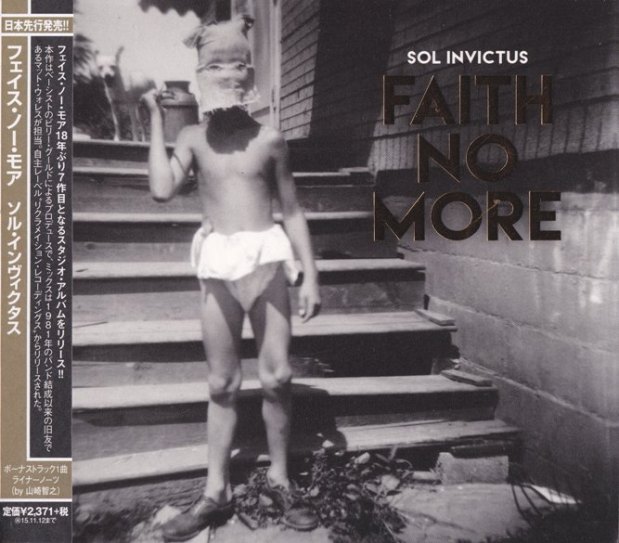
FAITH NO MORE – Sol Invictus (2015 Reclamation, Japanese import)
When I worked at the Record Store, I used to tell the younger folks, “If you like bands such as Korn, System of a Down, or Incubus, then you need to check out Faith No More. They were doing what those bands did way back in the early 90’s.” I still maintain that to be true. Faith No More have been there, done that, and moved onto Sol Invictus, their first studio album in 18 years.
Every Faith No More album requires multiple listens to “get”, usually somewhere between three and a dozen listens. There is no shortcut to this. The only way to appreciate Faith No More is to give each record the time and focus that it deserves. Faith No More is not background music nor have they ever been. Scott from Heavy Metal Overload said in his Sol Invictus review, “…On initial spins it seemed like Faith No More were playing it too safe. The material and delivery seemed lazy and half-baked.” I had the same impression. The songs seemed too laid-back and passive at first. Then the album began to sink in, as I absorbed its shadowy intensity.
As a fan since 1990, I tried to keep my expectations reasonable in 2015. In my heart, I knew that if Faith No More were to live up to their past, the new album must meet the following criteria at minimum:
1. The album had to continue to straddle many genres of music, as they always have — preferably within the same song. They have done this again, blending exotic moods and textures together into a contiguous whole. Diversity is not an issue.
2. I needed Mike Patton to blow me away with his singing again. I know his voice has changed (as voices do!) but he is such a unique, innovative vocalist that I couldn’t settle for anything less than manic intense awesomeness. Once again, Patton has risen to the occasion. Utilizing gutteral grunts, Tom Waits’ low grumbles, and sandpaper screams, he uses his voice as an instrument. Just listen to that “Go! Go! Go! Go!” hook in “Superhero”. There is no better way to describe it than vocals as a bizarre instrument.
3. A Faith No More album must be bracing, even if the songs are slower and quieter. I found 1997’s Album of the Year (the last album, and the only other one with guitarist Jon Hudson) to be tame by comparison to their prior work. Not Sol Invictus. Even on slower, more melodic tracks like the excellent “Sunny Side Up”, they bristle with tension. There’s an emotional intensity to every track.
4. Faith No More have to sound like they mean it — and they do. I hate when a band reunites, but do not add anything to their legacy when they do it. Sol Invictus has a purpose; you can hear the blood sweat and tears in the songs.
5. This one was a given. The musicianship had to be top notch. No worries there. In addition I feel like I’m “getting to know” guitarist Jon Hudson for the first time, due to his diverse work here. Heavy Metal Overload also laid kudos at the feet of keyboardist Roddy Bottum, and he does deserve credit for creating the textures and atmosphere.
I have to admit I was worried about this album. I didn’t care for the first two singles, “Superhero” and “Motherfucker”. Because of this, I purposely did not play them again, until the album came out. I know that Faith No More are not the kind of band you can always appreciate from a single. I was concerned that the first two singles didn’t leave an impression, but I knew that the context of a full album would do them good, and I was right.
My favourite track of the album cuts is “Rise of the Fall”. This singular song combines elements from all eras of Faith No More into one. At times it sounds like a Mosely-era track from Introduce Yourself. At others, one of the more humid and tropical moments on King For A Day. Then a track like “Matador” reminds me of how “Zombie Eaters” from The Real Thing builds, and builds, and builds. It stands out to me for those reasons, but it is impossible for me to ignore any of these songs. Each one has a personality of its own, and there are none I haven’t grown to like. I look forward to listening to Sol Invictus this summer, and allowing the songs to unfold on their own, and reveal their colours.
The Japanese version of this CD has a fantastic bonus track — a remix called “Superhero Battaglia”. Because I normally dislike remixes, you can trust me when I say this is a good’un. The song is intensified and made more exotic. I like it better than the original. “Superhero Battaglia” was originally the B-side to “Superhero”, logically enough. This leaves one B-side, a J.G. Thirwell remix of “Motherfucker”, still on my “want” list. (It was the B-side to the Record Store Day single for “Motherfucker”.)
Sol Invictus is the first contender for album of the year. (Pun intended.)
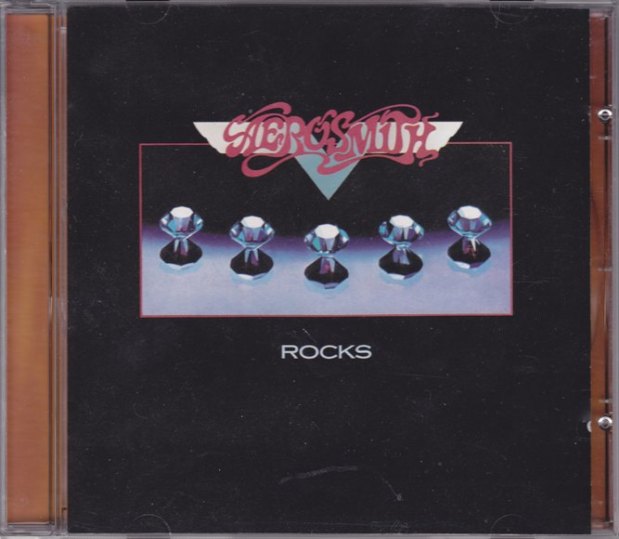
Packaged clean and sharp, Aerosmith made their intentions clear on the cover art for Rocks. The album launched a million guitar players and a hundred careers in rock and roll. It is also notable as being the last album before a major turning point; the point at which Aerosmith let the drugs work against them in a major way.
“Back in the Saddle” is an impressive opener. The main riff in the song is not a guitar, but Joe Perry playing a six string bass. Steven Tyler has mastered his own voice by this time, squealing and shrieking in conjunction with the hooks. In some ways “Back in the Saddle” sounds like the birth of the true Aerosmith. “Last Child” meanwhile nails the oft-overlooked funky side of Aerosmith.
“Take me back to-a south Tallahassee, Down cross the bridge to my sweet sassafrassy, Can’t stand up on my feet in the city, Gotta get back to the real nitty gritty.”
With the help of an understated horn section, Aerosmith turn “Last Child” into something special. This unexpectedly fades into the metallic aggression of “Rats in the Cellar”. A spiritual sequel to the song “Toys in the Attic”, this one’s even meaner and faster. Somebody said that the goal here was take what the Yardbirds were doing and turn it up. Harmonica hooks and slide guitar goodness — I’d say they nailed it.
I need something groovy and right in the pocket after that, and “Combination” sung together by Tyler and Perry is one such groove. “Combination” is an album highlight boasting hooks and cool bass licks galore, and listen to Joey Kramer tearing it up on the drums! “Sick as a Dog” is another semi-forgotten classic. I’ve loved this melodic rocker (similar to past tracks such as “No More No More”) since day one. I can’t help but get it in my head every time I actually am sick as a dog. (Knock wood, no major illnesses yet in 2015!)
Perhaps the most important song on Rocks is the Whitford/Tyler composition “Nobody’s Fault”. Along with “Round and Round”, Whitford has a knack for coming up with some of the heaviest Aerosmith riffs. Testament covered it in 1988 for The New Order, taking it to an extreme that Whitford couldn’t have predicted. The post-apocalyptic lyrics fit the concept of the Testament album.
Aerosmith’s original recording of Nobody’s Fault features some of Tyler’s most impassioned howls. Drummer Joey Kramer considers it to be his best drumming, and I’m sure Whitford feels the same about his guitar work. Although you can still hear that Aerosmith beat, “Nobody’s Fault” proves the band are versatile and more than just another American blues rockin’ band.
Bringing back the funk, “Get the Lead Out” isn’t particularly a standout except in terms in performance (which, with Aerosmith, is always above reproach). “Lick and a Promise” returns us to quality, with a stock rocker about Tyler’s favourite subject. We’re now at the end of the record, and “Home Tonight” continues Aerosmith’s knack for ending an album effectively with a slow number. A piano ballad with plenty of guitars, “Home Tonight” adds that bit of class that Rocks needed in order to compete with an album like Toys in the Attic.
So how does Rocks compare with Toys in the Attic, anyway?
Too close to call. Rocks is definitely a heavier record, and Toys in the Attic is closer to the dead-center of Aerosmith’s sound with the horns and strings. Otherwise, it’s splitting hairs.
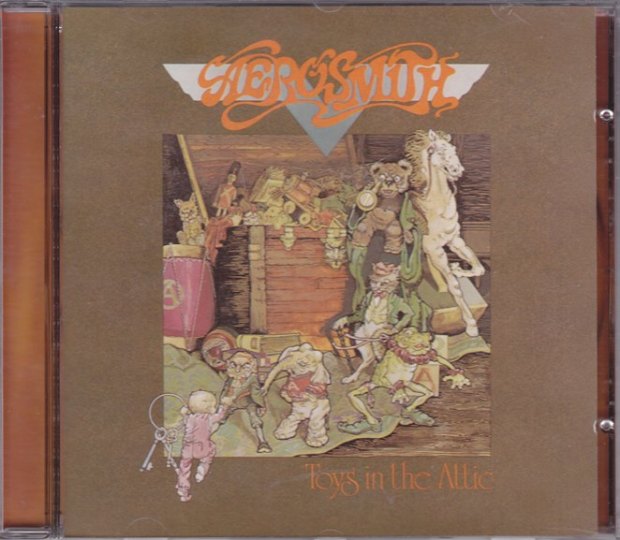
AEROSMITH – Toys in the Attic (1975 Columbia, 1993 Sony)
What’s your lucky number? For Aerosmith, maybe it’s 3. Third album in as many years, Toys in the Attic is considered by some to be the album: “If you’re only going to get one,” the desert island record. Considering that Rocks was yet to come, let’s withhold judgement until we get there. For now just be aware there is a lot of Aero-love in the world for Toys in the Attic, and you can hear why.
As if to prove that Aerosmith could keep up with some of their heavier competitors out there, “Toys in the Attic” is a blazing guitarfest careening through the speaker into your skull. What a way to open an album: it’s a statement. The band were honed to a razor-sharp edge by producer Jack Douglas. Joe Perry in particular had grown to be a ferociously good blues-rock player, and “Toys in the Attic” is the evidence.
One of the great joys of listening to Aerosmith is finding the little known album gems that weren’t repeatedly re-released on hits packages. “Uncle Salty”, a slow crawl through the blues via the neck of a bottle, is one such track. Also underexposed is “Adam’s Apple”, which shows off Joe Perry’s greasy slide guitar sleaze. The horn section makes an appearance here too, adding extra sauce. Then they bring the funk on “Walk the Way”. Run DMC recognized that funk and knew how to update it in 1986. In 1975, Tom Hamilton’s rolling bass was the stuff that groove is made of. This is the kind of song that proves the musical ability of these five gents from beantown beyond the shadow of a doubt. Then the sassy horns return on “Big Ten Inch Record”, an old R&B classic from 1952. Remarkably the band pull it off with class and sassafras.
“Sweet Emotion” is one of the band’s best known today, something that Tom Hamilton must be happy about, since it’s one of only a few Tyler/Hamilton co-writes. It’s no surprise that Hamilton had a hand in its composition since it’s based on another one of his rolling bass lines. But listen to the way Joey Kramer and Brad Whitford lock into him. That groove is the foundation on which Aerosmith was built. On top of that, Steven Tyler has always had a way with melody. “No More No More” is one of his most irresistible singalongs.
The Sabbathy thunder of “Round and Round” was an unexpected twist. Tracks like this and the later “Nobody’s Fault” show the metallic side of Aerosmith that usually remains shrouded. “Round and Round”, though menacing and heavy as a brick, is the least memorable song on Toys in the Attic (only because the competition was so good). Brad Whitford takes care of the solos on this one, a song he co-wrote (just like “Nobody’s Fault”).
“You See Me Crying” ends the album on a melancholy note but lovely note. A piano based tune with strings and McCartney-ish melodies, it is truly the kind of classic that Aerosmith will be remembered for. If it were not for songs like “Dream On”, “Seasons of Wither”, and “You See Me Crying”, then Aerosmith would be just another American rock and roll band playing their version of the blues that the Stones and Zeppelins of the world had already plundered. “You See Me Crying” was proof that Aerosmith were more than that, and had their own thing going on. (That’s Whitford playing the solos again, by the way.)
So what’s better? Toys in the Attic, or Rocks? Let’s find out next time.
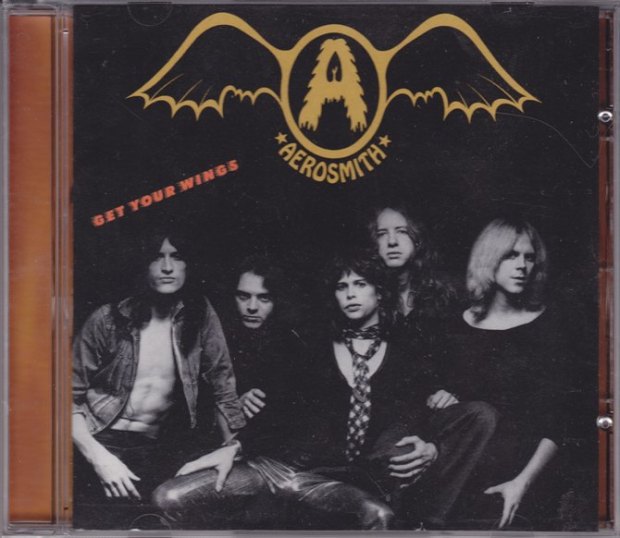
AEROSMITH – Get Your Wings (1974 Columbia, 1993 Sony remaster)
Only the year after dropping their debut, Aerosmith cranked out another collection of solid bluesy rock tunes, but this time with better production! With Bob Ezrin overseeing the project, Aerosmith made the fateful hookup with Jack Douglas. Although the band had bigger hits under Bruce Fairbairn in the 80’s, Aerosmith made their best albums with Jack Douglas in the 70’s.
Get Your Wings really sounds like the Aerosmith we now know and love. The first album wasn’t all the way there yet. Get Your Wings sounds like my kinda Aerosmith. Surely, the opener “Same Old Song and Dance” is familiar to millions. Horn laden and funky, “Same Old Song and Dance” hits all the Aero-bases.
As a piano player, Steven Tyler usually keeps in simple and rhythmic, and “Lord of the Thighs” is the perfect example of that kind of Tyler piano part. It’s a menacing song, right in the pocket, also boasting some of Joe Perry’s more memorable solos.
One of my favourite songs, and one of the least-known is the sci-fi tale “Spaced”. This is a story about the “last man to survive”. It’s an ambitious tune for Aerosmith, and boasts a number of catchy parts. Another seldom heard track is “Woman of the World” which is also pretty cool. I like the acoustic intro and the smoking Joe Perry licks. “S.O.S. (Too Bad)” is a full-speed-ahead Aerosmith blast of adrenaline, a definite classic. These tracks boast a high level of musical depth and satisfying chops.
Aerosmith covered the legendary Yardbirds song “Train Kept a Rollin'” and managed to make it their own. When it picks up steam at the end, better hold on tight. This song may enduce whiplash. You get to cool down as it fades into the acoustic classic “Seasons of Wither”. As far as I’m concerned, “Seasons of Wither” is almost as brilliant as “Dream On”. It’s that good. It also takes advantage of the fuller production that Jack Douglas brought to the table.*
Although “Seasons of Wither” would have been a fine side closer, a coda is tacked on in the funky “Pandora’s Box”. Double and triple entendres, a rock solid rhythm section, and those soon-to-be-trademark Aerosmith horns n’ piano — what more do you need? While it does feel oddly sequenced, “Pandora’s Box” is every bit as classic as anything else on the album.
Get Your Wings showed significant growth from the band’s debut. Their trajectory had yet to peak…even better things were ahead.
4/5 stars
* I noticed in the photos in the CD booklet, this album was once available in Quad! Oh, to have a quad version of “Seasons of Wither”!
AEROSMITHBOX OF FIRE review series:
Disc 1: Aerosmith (1973)
Disc 2: Get Your Wings (1974)
It’s time for another series here at mikeladano.com! It’s been a while since I’ve tackled something this big, but for the last two weeks I’ve been writing and listening to a band that I hadn’t been spending a lot of time with in recent years. That band isAEROSMITH and it’s time to look at every original classic Aerosmith album on Columbia Records. The scope of the series is really simple: I’m reviewing all 13 discs in 1994’s massive Box of Fire collection — the entire box set from start to finish!
If you’re not into Aerosmith, I apologize, but that’s what I’ve got for the next couple weeks. To use the words of my friendAaron, I just had to give’r.
You ready? As Steven Tyler might say, “Oooh-wha-ga-ga-ga-GOW!” Let’s go!
AEROSMITH – Aerosmith (1973 Columbia, 1993 Sony remaster)
Who woulda thunk that the band of young kids on this shitty album cover would become one of the biggest rock bands in history? Nobody, that’s who!
I love this album. I love its simplicity, its raw sound, basic production and youthful glee. I love the built-in musical maturity that seemed to bloom fully formed. I love the interplay of the whole band, their chemistry already intact. Everything you love about the way that Perry and Whitford make their guitars mesh with bassist Tom Hamilton, and how Hamilton syncs in with Joey Kramer on drums — it’s already here. Meanwhile, Steven Tyler had yet to discover all of his sass, but he was well on his way. All Aerosmith (1973) is missing is great production, something the band would develop with Jack Douglas on the next album Get Your Wings.
It’s easy to draw comparisons between Aerosmith’s and Kiss’ first records. Both records exhibited a more “rock n’ roll” vibe, and tame production values, with a band straining at the leash to really play like they do live. Ultimately it took both bands a few years to capture that.
The two massive hits on Aerosmith are two of their best known and beloved: “Dream On” and “Mama Kin”. Think about that for a second. One album with both “Dream On” and “Mama Kin”! What more do you want?
You’ll also get six other great early Aero-gems. “Walkin’ the Dog”, a Rufus Thomas cover, is one that Aerosmith still drags out in concert occasionally. A decade later Ratt covered Aerosmith’s version, well before Guns N’ Roses made covering Aerosmith the cool thing to do, as they did with “Mama Kin”!
Hidden gem: “Movin’ Out”, based on a couple really cool Joe Perry riffs. There’s also a killer, even more raw alternate version on the Pandora’s Box set. Aerosmith recently dusted this one off again, and it sounded amazing.
I don’t think there is a weak song on the album. There aren’t a lot that are “greatest hits”, but each one is great in its own way. “Write Me”, “Somebody”, “Make It” and “One Way Street” are all catchy little blues rock tunes, nothing to write home about but plenty to shake your ass to.
Incidentally, with the benefit of 20/20 hindsight, Aerosmith also contains the greatest opening line of any debut album ever: “Good evening people welcome to the show…”
Long story short: Aerosmith is a tasty blend of all the great Aerosmith ingredients that I love. Electric rock and blues form a perfect blend, and Steven Tyler was the perfect singer to front this band. Throw in some of his harmonica, piano and mellotron and you have a potent mix. But keep in mind, greater things came in very short order. Aerosmith, solid as it is, was only a precursor to true greatness.
THE CULT – Sonic Temple (1989 Polygram limited edition hologram cover)
The Cult went into 1989’s Sonic Temple with nothing but promise. New hotshot producer Bob Rock had struck it rich with Kingdom Come the year before. Critics raved about his drum sound and other Zeppish tendencies on that album. The Cult themselves were following up the incendiary Electric album, a stripped back record produced by Rick Rubin. Anticipation ran high. Considering that Robert Plant was quoted as saying that “Led Zeppelin is being continued by The Mission and The Cult”, I think a few people expected Sonic Temple to be the second coming.
Some fans hoping for another Electric or even another Love were disappointed by the mainstream rock direction of Sonic Temple. Mainstream though it may be, Sonic Temple burns with the same middle finger up attitude of old Cult, just with the edges sanded off and sound enhanced by Bob Rock. Rock’s production is similar to that of Dr. Feelgood released the same year.
You couldn’t ask for a better double-whammy than the opening salvo of “Sun King” and “Fire Woman”. Even though The Cult were able to score a major hit with “Fire Woman” it’s still a tough little song based on a killer Billy Duffy guitar hook. Both songs have aged well, as has “American Horse”, a slow Cult stomper. I love the interplay on the verse riff between Duffy and bassist Jamie Stewart. Stewart, a member since the band became The Cult, departed after this tour and moved to Canada. Here he produced a few up and coming bands such as Gut-Sonic. I think Jamie Stewart was the underappreciated Cult member. His grooves (with session drummer Mickey Curry*) are a part of Sonic Temple‘s drive.
The big hit ballad was the dramatic “Edie (Ciao Baby)”. Here they really benefit from Bob Rock’s lush rock production values. Strings and acoustics ring crisp. Add in a howlin’ Ian Astbury chorus and you have one hell of a song.
“Sweet Soul Sister” was the third single (after “Fire Woman” and “Edie”) and another killer Cult song it is. You can really hear Bob Rock’s touch on the layered vocals for better or worse. It’s a touch that I find dated today, but the bare organ intro is magical! Unfortunately it gets dicey after “Sweet Soul Sister”.
I wouldn’t call any of the songs that follow “Sweet Soul Sister” poor or filler. None of them lack hooks or massive Billy Duffy guitars. Yet compared to the first side of the album, everything from “Soul Asylum” onwards fails to ignite like that. There are certainly lots of memorable moments, such as the breakneck “New York City” featuring an Iggy Pop cameo. It’s a good song, and so is “Soldier Blue” and the rest of the tunes…just not as good as side one. (By the way, if any song on Sonic Temple recalls Led Zeppelin, it the massive “Soul Asylum”, which is basically The Cult’s “Kashmir”.)
My copy of Sonic Temple is a limited edition with mirrored hologram cover. I bought it from this guy Todd, who worked at the HMV store at the mall. A buddy of mine had a crush on his sister, or something, and that’s how I knew him. He treated me right when I shopped at his store, and I returned the favour when he sold his stuff to us. That’s how I got this, and also how I got the Sonic Temple Collection 3 CD set complete with mail-away box.
I still like Sonic Temple today, but I only love side one.
3.75/5 stars
*Eric Singer played on the demos, released as part of the Rare Cult Demos box set. Ex-Tori Amos drummer Matt Sorum appeared in the music videos and played on the tour, where he fatefully met Guns N’ Roses, and the rest was history.
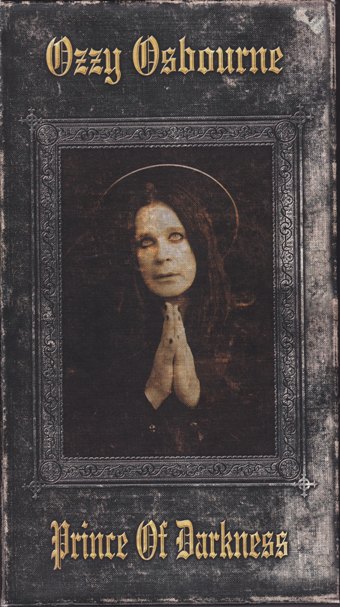
Let’s pretend that you’re involved with Ozzy Osbourne’s management or record label. When it comes time to release that first “definitive” box set, I’m sure you’d have your own ideas for making it the best box that Ozzy could release. Ozzy Osbourne in 2005 had eight mostly great studio albums, numerous live records, and more rarities than you could shake a stick at. They certainly had a lot of music to choose from. I greeted the eventual release of Prince of Darkness with great excitement at these rarities…but tremendous disappointment at the overall listening experience.
A 4-CD box set is a lot of listening and in order to keep it riveting from end to end, you have to pick the right tracks and sequence them for maximum firepower. Somebody at Sony’s box set department didn’t get my memos on that, obviously, because Prince of Darkness is one of the most annoying box sets to listen to in its entirety. They decided to do two discs “anthology” style, with live and rare tracks mixed in. The third disc is a questionable collection of Ozzy collaborations. The final CD is the worst of all: covers that Ozzy recorded and later released on their own album, Under Cover! A CD that was released only months after Prince of Darkness itself — with additional bonus tracks to milk it further, forcing the completist to buy it again!
I have so many complaints about this set that I felt it best to list them all off in point form.
1. Never, ever start your box set off with a live track. Even if that live track is “I Don’t Know” from Randy Rhoads Tribute.
2. Because this set was released in 2005, you are hearing the re-recorded bass and drums on all the songs from Blizzard and Diary…not the classic original versions.
3. Same with the tunes from Bark at the Moon. These are the remixed versions found on the 2002 reissue of that album. There are only two songs from that album anyway. “Bark” itself is an unreleased live version.
4. Two CDs is not enough space to represent Ozzy’s album output in a box set, especially when you include the studio albums, live albums and rare tracks too. The early Randy Rhoads material makes up the bulk of disc one, leaving the Jake E. Lee years under represented. There are no songs from The Ultimate Sin at all, only the three live tracks originally for the Ultimate Live Ozzy EP.
5. There are a few baffling exclusions, such as “Miracle Man” (first single with Zakk) and “I Just Want You”, in favour of also-rans such as “Spiders”.
6. The collaborations disc is a total mess. “Purple Haze” is just a Hendrix cover from the No Rest For the Wicked era, by Ozzy’s band. It’s not a collaboration, just a cover they did for the Make A Difference Foundation CD called Stairway To Heaven/Highway To Hell. It’s a real challenge to listen to this whole CD in one sitting. One moment you’re rocking out to a killer version of “N.I.B.” with Primus, the next you’re barfing through a piece of crap with Tony Iommi and Wu-Tang Clan. From Was Not Was to Miss Piggy, at least the CD is diverse, and it does collect a lot of Ozzy’s singing from albums I don’t have. I already had the Miss Piggy track but not the cover of “Stayin’ Alive” by Dweezil Zappa! Nor did I have “I Ain’t No Nice Guy” by Motörhead, from the mediocre March ör Die. This disc is too jokey and not at all consistent.
7. Even though the third disc collects a variety of tracks from a number of CDs, I am certain that Ozzy fans who buy this kind of box set already had some of them. Including “Psycho Man” by Black Sabbath (not even a single remix version) from the Reunion CD (2008) is odd. Many Ozzy and Sabbath collectors already have the Nativity in Black CDs, where the Primus and Therapy? tracks come from.
8. “Nowhere to Run (Vapor Trail)” by DMX, Ozzy Osbourne, Ol’ Dirty Bastard, The Crystal Method and Fuzzbubble is edited! This track was from the South Park album and still features Isaac Hayes’ introduction, as “Chef”. For reasons I cannot explain at all, the swearing and “n” words are blanked, and there were a lot of them. It’s also missing ODB’s rant at the end, which itself was edited off later versions of the South Park CD. (I have an earlier version with the rant intact.)
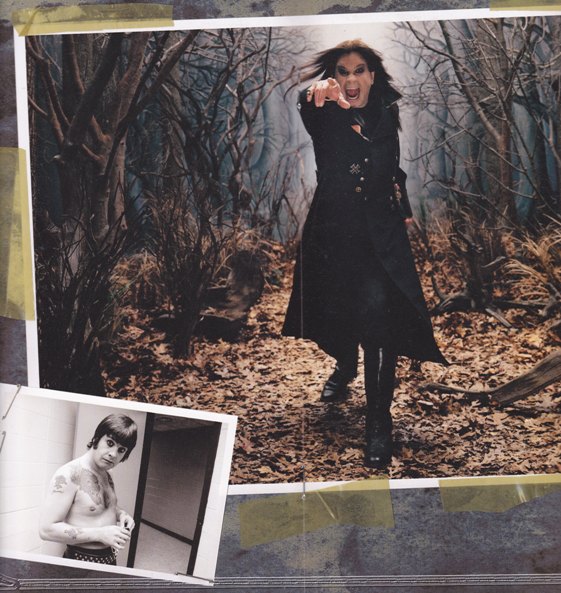
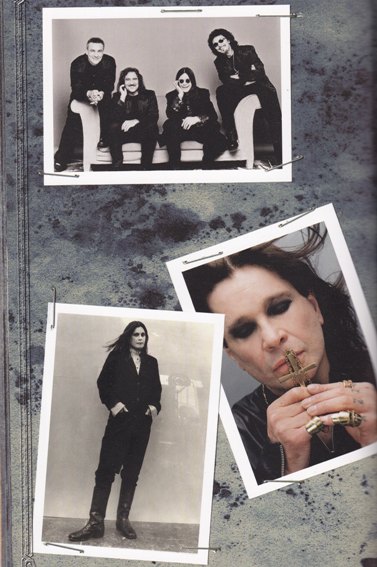
9. The packaging leaves a hell of a lot to be desired. Inside the box which is just book-style, you will find a nice big booklet that just sits loose inside. There is no way to secure it in, so it’ll fall out any time you pick it up!
10. Speaking of that booklet, the liner notes suck. Ozzy has a brief note about each song, but not necessarily any useful information. For example, regarding that South Park track, all we’re told is that Ozzy bit the head off Kenny. Nothing about how that random assortment of artists was assembled. The book is padded out with lyrics and shoddy credits that aren’t very accurate. “Bark at the Moon” live for example was recorded in 1982-1983 according to the notes. Come on, guys! Not good enough for a box set.
11. The entire fouth CD sucks. You can read my review of the expanded Under Cover version of it here. (Long story short: 1/5 stars.) The only difference is that the box set includes Kelly Osbourne’s duet with daddy, on “Changes”. This song was only included on the Japanese version of Under Cover but not the regular domestic.
Fortunately, Prince of Darkness is not a total bust. Some of the unreleased tracks are real treasures, such as the demo of “S.I.N.” called “Won’t Be Coming Home”. I prefer this to the album version from No More Tears by a long shot, as I do the twangier “I Don’t Want to Change the World”. I also love the demo for the emotional ballad “See You On the Other Side”, which features previously unheard saxophone accompaniment. I appreciated that they included the live version of “Perry Mason” from the Ozzfest 1 CD, which enabled me to sell off that pretty crappy album.
It’s easy to bitch and complain (don’t I know it?) but if I were to make a 4 CD Ozzy box from the same period, I would have done it very differently. The covers CD would be axed completely and the rarities set aside to a disc all their own. The first two “anthology” discs would be strictly studio versions, and original studio versions at that, with only a sprinkle of tracks from Randy Rhoads Tribute. I would try to squeeze in more rare tracks from B-sides and EPs, and I would definitely try to mix them in with the collaborations so that you’re not left listening to so many of those novelty tunes in a row.
Buyer beware — Prince of Darkness is not the feast you were hoping for. This is a poorly executed package. When you have an artist like Ozzy Osbourne, you really gotta screw up bad to put out a set that is this hard to listen to. Prince of Darkness is going back on the shelf, for a good long while.
 AEROSMITH – Classics Live! (1986 Columbia, 1993 Sony)


 Disc 1: Aerosmith (1973)














 mikeladano.com