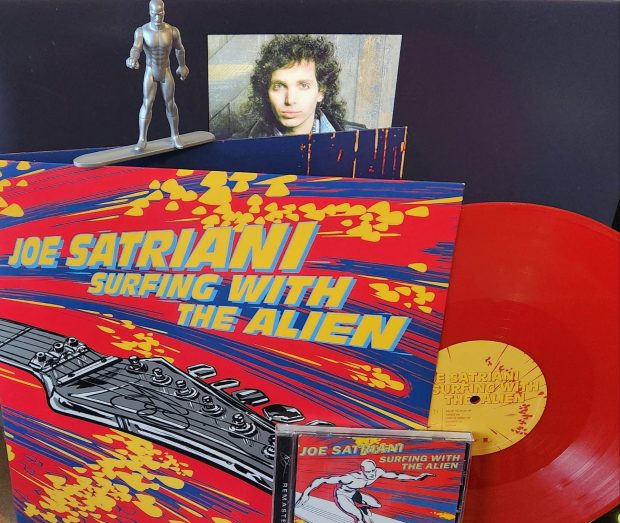
 JOE SATRIANI – Surfing With the Alien (1987, 1999 Sony remaster, 2017 RSD Epic 2 LP reissue)
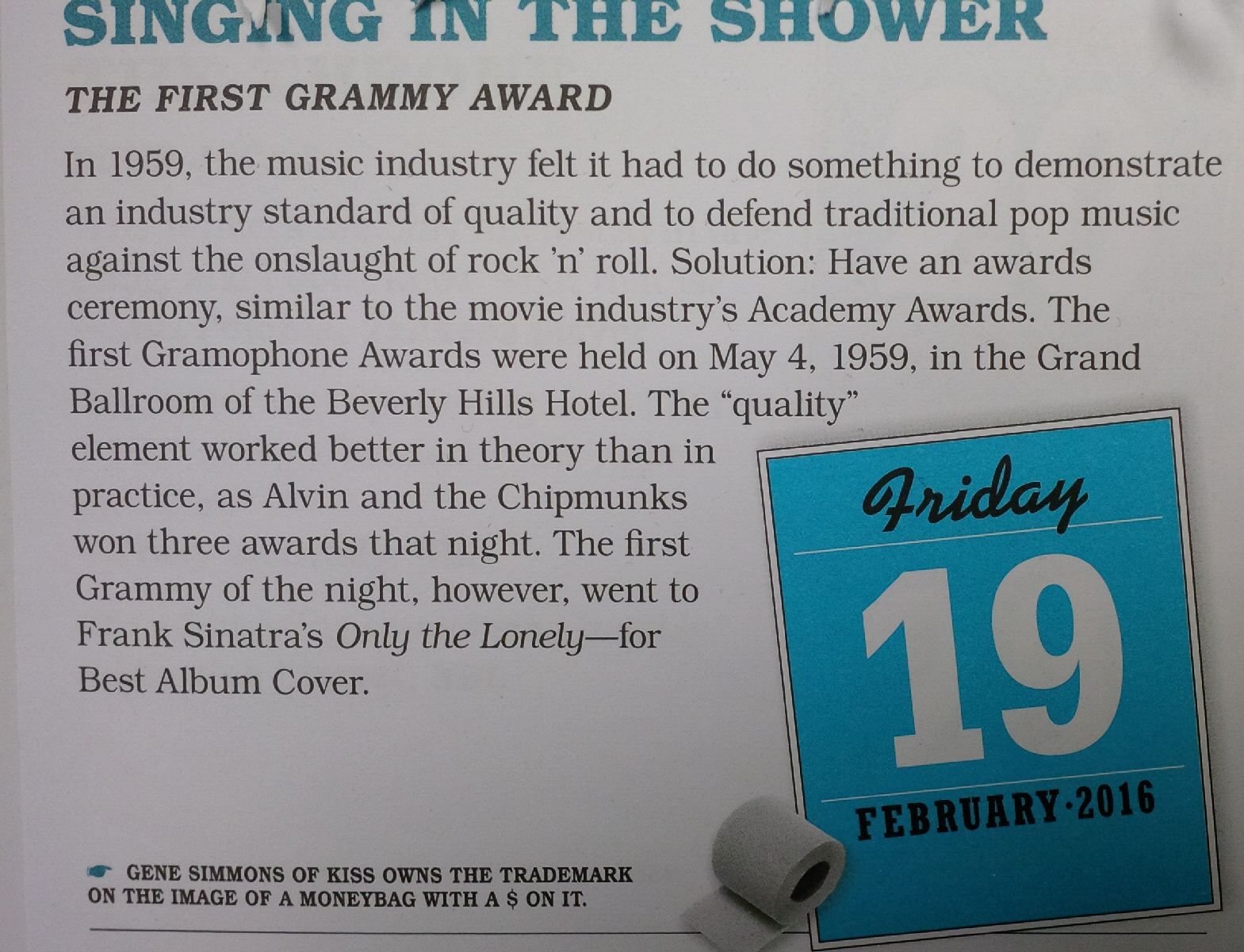
On October 15 1987, the face of rock music was shaken when a little instrumental album called Surfing With the Alien started making waves. The record eventually went platinum, and its songs found itself used on radio and TV for decades to come. Why? Possibly because of Joe’s impeccable attention to songwriting. Though his guitar playing put him on the map, it was his knack for writing catchy rock songs that made this album so special. Satriani’s songs are written as if the lead guitar is the lead singer. There are verses and choruses, and attention to structure and melody. That must be why Surfing With the Alien was nominated for two Grammys in 1988.
Opening with the title track, a striking little chugging riff starts the show. But then Joe’s melodic lead guitar kicks in, and you realize it’s exactly like if a singer was leading the show! You can literally sing along to Joe’s guitar and a little wah-wah effect doesn’t hurt. And then the shred begins, and you feel like, “OK, I get it now. This guy is an actual genius.”
Yet it’s all accessible. He may throw in licks as fast as greased lightning, but you can still follow. Your brain still picks out notes and melodies that satisfy those musical needs.
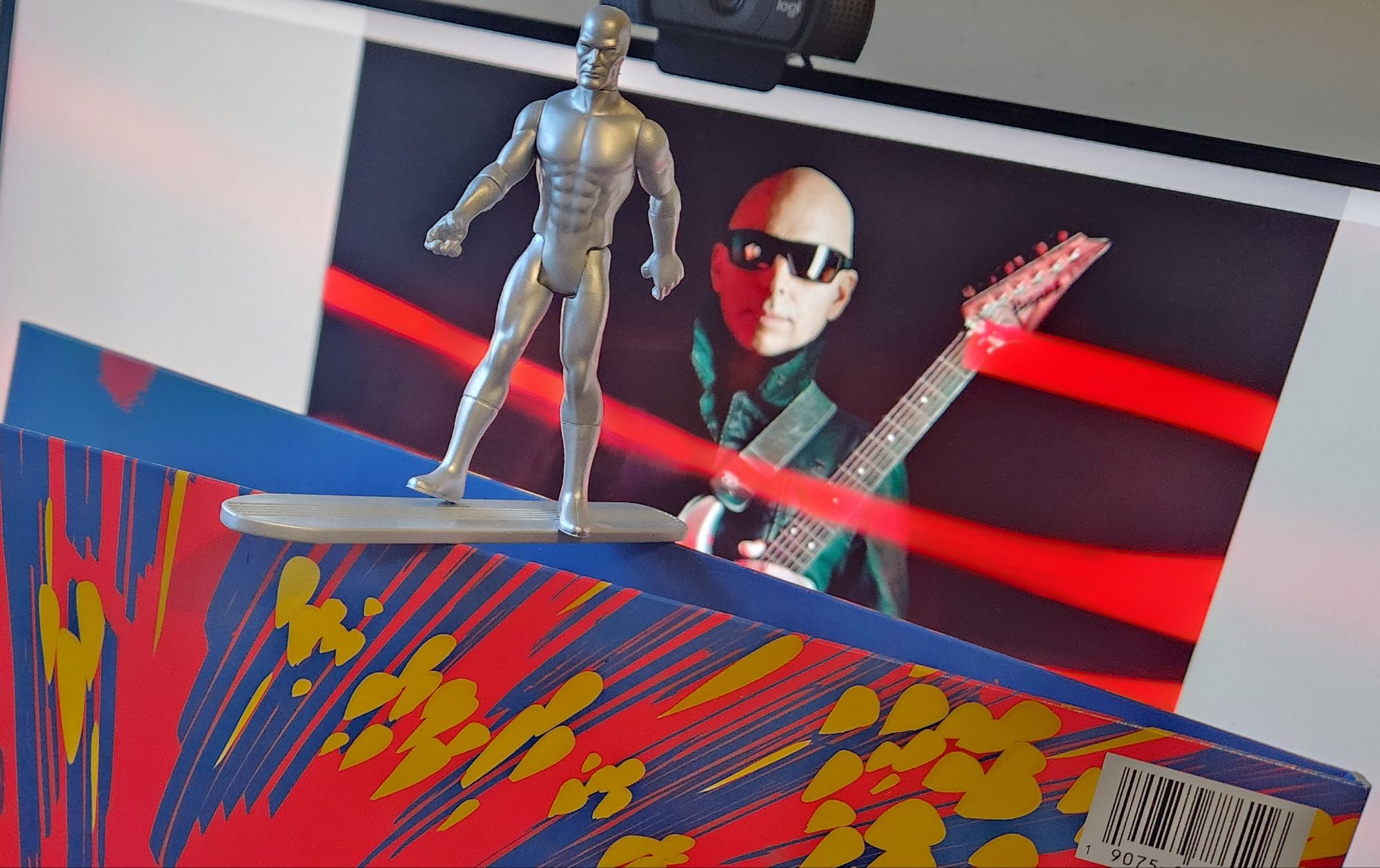
The cool “Ice 9” is a funky groove (Joe on bass) with a slick melody on top. Joe can work with mid-tempo grooves just as well as high-speed blazes. Solos with different sounds and guitar tones add diversity. A fun tune, but the third song “Crushing Day” has more tension and urgency as the tempo is turned up once again. The variety of solos, melodies and riffs in one short song is quite remarkable. Joe’s guitar tone is bright and shimmery, like the Silver Surfer himself.
Incidentally, regarding the striking album cover featuring the titular Marvel character from Silver Surfer #1 (1982), Joe lost the licensing for him at some point in the 2000’s. This is why the 2017 RSD reissue has different artwork, without him. (Look carefully at the new art, and you will see that they replaced the yellow streaks with yellow guitar picks!) Hopefully Joe doesn’t feel too badly about losing the Surfer art. Marvel comics repaid him for the popularisation of the character outside the comic world by naming a planet after him.
The beautiful ballad “Always With Me, Always With You” might be considered the most famous song. It received three Grammy nominations in three separate years (live versions, you see) and was prominently featured in an American Dad episode. It is hard to describe exactly what makes it so special, without you listening for yourself. The guitar is lyrical and memorable, and it worked so much better than it would have with a lead vocal. This is an instrumental ballad, made magical.
“Satch Boogie” is arguably just as popular. Deep Purple played it during the brief period when Joe Satriani was in the band post-Blackmore and pre-Morse. It has been used on TV, radio and video games. It is indeed a boogie! It taps into the Van Halen vibe a-la “Hot For Teacher”, but burns straight through without stopping to talk. Mid-song, there’s a jaw-dropping solo that is pure tapping nirvana.
An ominous and brief interlude (“Hill of the Skull”) paints an apocalyptic picture. The programmed drums don’t detract, as it is all about the tale that the guitar is telling, with layered wails. This serves to set up “Circles”, one of the most interesting tracks. Echo is employed to great effect on this mellow but dark ballad. Without pause, the striking chimes of “Lords of Karma” enter the picture, a pounding guitar rocker with drums by Jeff Campitelli. (Drums on this album are a mix of live and programmed.) Much like “Crushing Day”, “Lords of Karma” is a bit faster and more intense.
A lovely classical sounding interlude called “Midnight” sets up the final track. “Midnight” features techniques that an expert will have to identify, except to say it sounds remarkable and innovative. The spotlight is never really on Joe’s fingers though – just on the notes and sounds he magically produces with them (and an array of effects). Then the thud of bass opens “Echo”, the last song on this important album. It’s unlike the previous ones, with the bass so prominent. The song sounds as if it’s always just bubbling under. Perhaps it would come as a surprise that the final song on this album of guitar showcases is so much about feel and restraint.
That’s one thing about Surfing that does make it special. Like any good album, it is sequenced as a full listen, not as a collection of shreds. Even without the shreds, it’s still not bad.
 That’s what the 2017 Record Store Day deluxe vinyl edition is all about. A bonus LP is included, with all the lead guitar stripped off. This allows you, the ambitious home player, to try to solo over the bed tracks. For the rest of us, it just allows us to listen a little bit differently to an album that is very familiar.
The drums seem more prominent on the title track, allowing us to better hear Jeff Campitelli’s fills. Mostly though, you can still bang your head, and maybe sing along to an imaginary vocal melody. “Ice 9” is particularly fun in this guise, sounding a bit like an “80s dance remix” even though it’s not. “Always With Me, Always With You” is still delicate and beautiful. You get the picture. These tracks, though needing the lead guitar to be whole, are perfectly listenable without. Only “Circles” and “Midnight” seem completely barren. You don’t have to be a guitar player to enjoy this bonus record. You just have to be interested in music, and how it is constructed in the mix. You can hear melodies and accents, even on “Always With Me”, that you might have missed on the album version all these years!
There are many ways to acquire copies of this impactful album, that opened the charts to Steve Vai and others a few years later. There is a 1999 Sony remaster with liner notes and nice packaging. There is a deluxe edition with a live DVD from the 1988 Montreux Jazz Festival. The version with the most actual audio tracks, however, is the limited 2017 Record Store Day reissue. You don’t get the lovely Silver Surfer artwork, but you do get the bonus record of stripped tracks, and red & yellow coloured vinyl.
No matter what choice you make, Surfing With the Alien in any form is an essential addition to a serious rock fan’s collection. Some may argue it’s the best rock instrumental guitar album ever made.
5/5 stars





 mikeladano.com