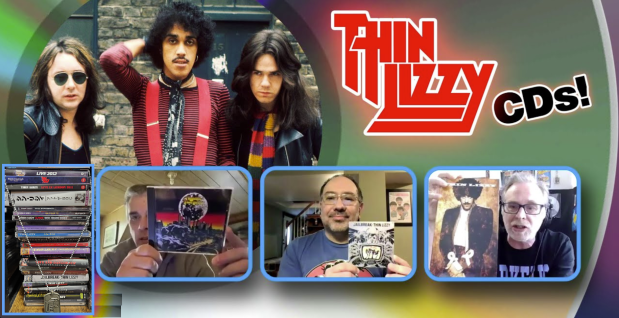
It has been 40 years since we lost Phil Lynott. To mark the occasion, Tim Durling recruited myself and John the Music Nut to meticulously document our Thin Lizzy CD collections on video, once and for all. While I clearly had the biggest collection (and size does indeed matter), I still need three box sets to “complete” my Lizzy CD collection.
Please join Tim, John and myself as we go through every album one by one, and discuss the history of Thin Lizzy from the beginning right to the John Sykes and Ricky Warwick eras of the band. We have physical CDs to marks several post-Lynott lineups, and loads of compilations and box sets too. A truly comprehensive episode, and probably the best single-episode overview on the Lizzy discography that you’ll find on YouTube. Enjoy!
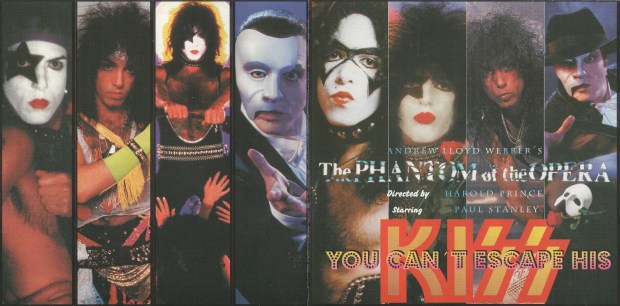
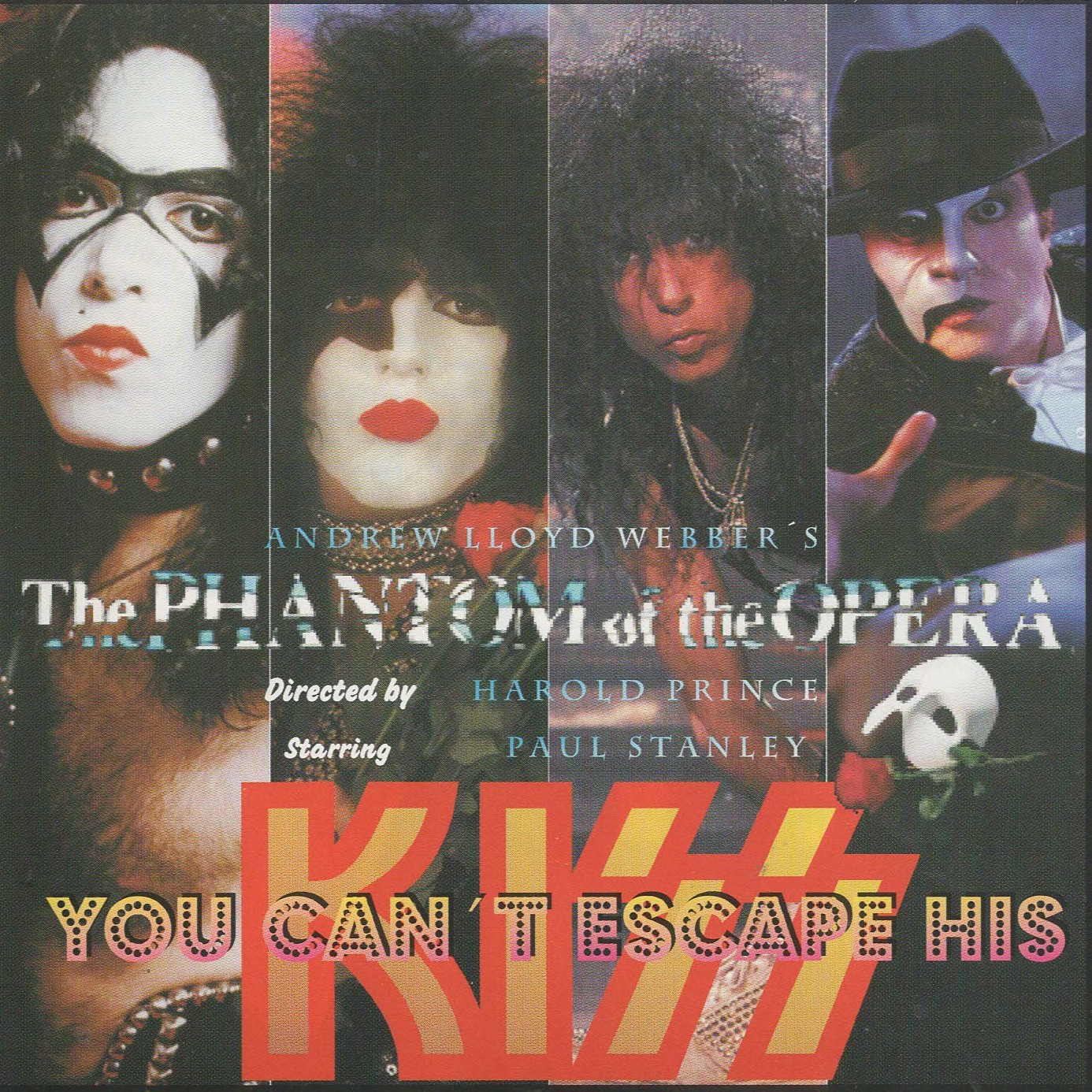
Andrew Lloyd Webber’s THE PHANTOM OF THE OPERA – Toronto Cast Recording featuring Paul Stanley (1999 Phantom Music bootleg CD You Can’t Escape His KISS)
Seeing Paul Stanley perform as the titular Phantom in Andrew Lloyd Webber’s Phantom of the Opera was an experience I’ll never forget. It was fall, 1999. I remember hearing an ad on the radio on the way to work that the show was being extended due to popular demand – six more weeks! I remember jumping around at the Beat Goes On (Cambridge location) chanting “SIX MORE WEEKS! SIX MORE WEEKS!” I knew I wasn’t going to miss Paul as the Phantom. There were a lot of leather jackets in the audience. A few Kiss shirts. Not the usual Pantages crowd, but that’s what Paul did for Phantom of the Opera. He crossed barriers with it. A little later on, I was gifted a genuine Paul Stanley autograph from DJ Donnie D, who bumped into Paul on the streets of Toronto. I had a program, an autograph, and the live experience. All I needed was a CD of the show.
“They’d be stupid not to release a CD version of Phantom with Paul,” I reasoned. The London and Canadian cast CD releases were bestsellers for us, despite their prices. A Paul Stanley release would cross over to the rock crowd. An official CD never came, but fortunately somebody in the audience was recording one of of those shows, and bootlegged it. The date is unlisted, the CD says “Made in Japan” while the sleeve says “Printed in USA”. (The number on the CD, 27/110/99 does not refer to a date as the ended on Oct 31 1999.) This CD bootleg was gifted all the way from Australia, by the Mad Metal Man Harrison Kopp, who knew I had been seeking it a long time. From Canada to Australia and back to Canada again.
A single CD release with unrelated bonus tracks, this disc focuses on the musical numbers that involved Paul and skips the rest. This is probably sufficient for Kiss fans.
Being an audience recording, quality is all subjective. There is some tape warble, which may or may not hinder your enjoyment. There are people coughing in the audience; the usual sonic flaws. You can clearly hear that Melissa Dye, Paul’s co-star playing Christine, is a professional while Paul is not. He often resorts to a “rock frontman” voice to exclaim certain lines. However, Paul also does an admirable job. His tenor voice was no longer at its peak in 1999. He was still up to the task, insofar as a rock star goes. A tenor like Paul would never have made it to the starring role without his name marquee value. That doesn’t actually matter when you consider that Paul helmed this show from May to October, to positive reviews. Of course, there is more to it than just singing. There is also the acting; the stage performance in costume and makeup. You don’t get to see that here, but I can assure that Paul knew something about performing to music on stage in costume and makeup. He brought the same bombast to the physical role as he did the vocal part.
The most memorable musical moments on this CD are the “Phantom of the Opera” and “Music of the Night”, which most people will be familiar with. Paul’s performance on both is a knockout. This bootleg recording serves as a reminder that Paul might have been an unorthodox Phantom, but he was still capable, and did the job well…even if you can hear the Kiss frontman in him, from time to time.
The track list on the back of the CD is incorrect. There are 25 tracks total, provided below. The bonus material includes four of the 1989 Paul Stanley solo demos: “When 2 Hearts Collide”, “Don’t Let Go”, “Best Man For You” and the familiar “Time Traveler”. These are followed by a 1978 interview in seven parts. An odd potpouri of bonus material to be sure, but such is the liberty of bootleg recordings.
“When 2 Hearts Collide” belies the late 80s recording date with its ballady keyboard direction. It sounds like a Journey ballad, but it wouldn’t have done Kiss much good back then, when fans were tiring of ballads. Good chorus and would probably benefit from a quality official release so we can really appreciate Paul’s singing. “Don’t Let Go” is another ballad, but more in that “power ballad” mold, with a blaring chorus. Just like every band was doing in 1989. It could have been a hit, or it could have been forgotten. Either way, Paul should do his own “Vault” release and get this stuff out there in better quality. “Best Man For You” is, you guessed it, a ballad. It sounds like something related to “Reason to Believe” from Crazy Nights. Fortunately, the last and best song “Time Traveler” did get an official release on the Kiss Box Set. This one actually rocks! In that late 80s way, with a drum machine thudding away where you wish it was Eric Carr. The tape sounds slightly sped up from the official release. (It happens when it’s tape-based bootlegs.)
Finally the 1978 Paul interviews aren’t too action-packed. They lack the question portions of the recordings. The subject is Paul’s 1978 solo album, and what Paul was looking to accomplish. (Sing more, apparently!) He was also hoping to appeal to all Kiss fans, and new fans too. He also hopes that none of the four solo albums would disappoint the fans. That didn’t happen, but then there is some praise for the late great Bob Kulick and the other players on the record. He also prophesizes that one day, Kiss will become an institution. Was he right? In total, it’s 8 and a half minutes of interview.
A worthwhile purchase if you can find a copy. There isn’t much in terms of 1999 Phantom recordings out there, and this might be the best of them.
3/5 stars, balancing collectability and sound quality. Still a must for Paul fans.
1. Overture
2. Angel Of Music / The Mirror / Phantom of the Opera
3. Music of the Night
4. I Remember / Stranger Than You Dreamt It
5. The Phantom’s Instructions
6. The Phantom Threats
7. The Phantom Attacks
8. All I Ask Of You
9. Masquerade
10. Wandering Child
11. Let My Opera Begin
12. The Point of No Return / All I Ask Of You
13. Down Once More
14. Finale
15. Paul Stanley – When 2 Hearts Collide
16. Paul Stanley – Don’t Let Go
17. Paul Stanley – Best Man For You
18. Paul Stanley – Time Traveler
19. Paul Stanley Interview 1978 Pt. 1
20. Paul Stanley Interview 1978 Pt. 2
21. Paul Stanley Interview 1978 Pt. 3
22. Paul Stanley Interview 1978 Pt. 4
23. Paul Stanley Interview 1978 Pt. 5
24. Paul Stanley Interview 1978 Pt. 6
25. Paul Stanley Interview 1978 Pt. 7
Like ships passing in the night, once again I cannot seem to hook up with Logan Collins at the same time and place! Logan and I did, however, contribute to this fantastic episode of Tim’s Vinyl Confessions.
With the loss of Ace Frehley fresh in our minds, the three of us go through our Ace Frehley CD collections. There are certain items in my collection you may not have seen before, such as a promo single for “Do Ya”. We engaged in deep discussion on each album, the key tracks, and the specific versions we have on display. Most of us, we miss the Ace and spend most of our time just talking about how great he was.
Check out this episode of Tim’s Vinyl Confessions, which will premiere later today.
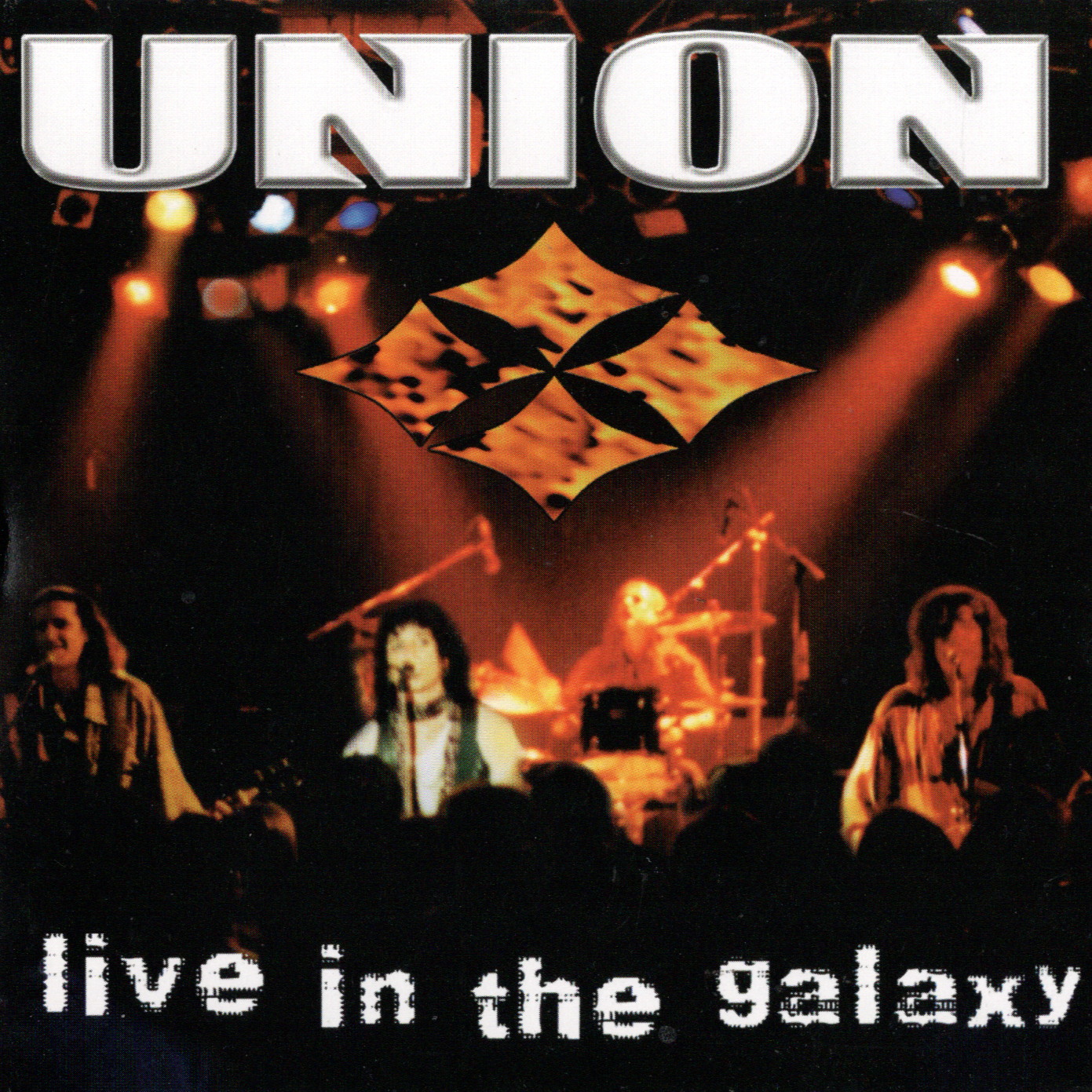
This great, forgotten Union live album should be added to the collections of any fans of John Corabi or Bruce Kulick. Packed with great songs from Union, Motley Crue, Kiss, the Scream, and even Cheap Trick and the Beatles, this live album delivers on every level. 11 tracks live, plus two bonus studio songs. Power to the music indeed!
There are no specifics about recording dates, but regardless the album has been well sequenced, opening with Union’s own album opener, “Old Man Wise”. Very much a continuation of the Motley and Kiss albums of 1994 and 1997 respectively. Mix them up with riff and groove sauce, you’d get something like “Old Man Wise”. Bruce’s playing is always fascinating and “Crabby” was in top voice. Grit and power are the words of the day. This song pounds, and Bruce absolutely rules. We go straight into the equally grooving but more upbeat “Around Again”. Union had an excellent self-titled album out at the time, and it makes up the bulk of the album. Fortunately the band’s original songs set a high bar. Bruce Kulick doesn’t put out crap. A third song from the debut, “Heavy D…” might be called a ballad, but really it’s a quiet song with heavy parts. Or is it a heavy song with quiet parts? It is performed with gusto in either guise.
“We’re gonna do something from Carnival of Souls! This is called the ‘Jungle’, baby!” Then Jamie Hunting comes in with that rolling bassline, originally played on album by Bruce himself. Kulick’s past with Kiss makes an appearance on “Jungle”, a song Kiss never performed live, so quite a treat. John Corabi’s spin on a Paul Stanley vocal is full of raspy power yet still appropriate. Hearing this makes one wish that Kiss did have the balls to play it live.
That’s a lot of heavy rock in a row, and to lighten the mood, it’s the Union original “Love (I Don’t Need It Anymore)”, which is dedicated to a certain someone who was involved with a current event in the news at the time. It’s a little more upbeat, a little more “Motley” and absolutely one of the best Union songs from the debut. The chorus kills like a classic from Dr. Feelgood. Corabi then takes us back to his earliest catalogue, The Scream’s “Man In the Moon”. The Scream were a sort of musician’s super group, featuring Bruce Bouillet and John Alderete from Racer X. The Scream was more mainstream than that. This is a melodic rocker with a bluesy twist, and the band do a slamming job of it.
Bruce Kulick takes center stage on another Kiss song that was never played live, and his vocal debut: “I Walk Alone”, which he wrote with Gene Simmons. It begins with a short, Zeppelin-esque guitar exercise from Bruce. As for the vocals, you gotta give Bruce credit for not going back and fixing things. This is Kulick’s voice raw and exposed and imperfect and yet…perfect for the album. In many ways, this is better than the Kiss version, as Bruce adds a really sweet guitar outro.
A fun unexpected cover next: Cheap Trick’s “Surrender”! The backing vocal abilities of the entire band enable them to easily pull this off. You’d look at it on paper and scratch your head a bit, but it’s short work for these pros. It’s all about the vocals.
A dramatic “Pain Behind Your Eyes” brings to the stage another soft/hard hybrid with wicked drumming and vocals. However this is just a prelude to one of the heaviest Motley Crue songs ever: “Power to the Music”. Corabi takes center stage doing some screamin’ and preachin’ to the crowd. The demanding song is handled ably by Corabi, seemingly relishing playing this awesome song live on the stage again. They probably would have blown Motley off the stage doing the same song.
After some band intros, we get some Kulick solo wailing right into the final song “Tangerine”. Nothing like the Zeppelin song, this is a riff-rocking groover with excellent melodic delivery by John Corabi. Union were a melodic band, but John’s approach added the grit and grime that is like rock candy going down. This song slays with a resilient groovy riff.
Bonus studio tracks are two: an acoustic rendering of “October Morning Wind” from the debut, and a Beatles cover that blows away the more well know Oasis version. First up though, the rich acoustics of “October Morning Wind” really bring warmth to a cold subject. “My pain is measured by a sky that is old and grey,” sings John in a song that may well be about seasonal affective disorder. Then, the Beatles cover is handled with ease. “You’ve Got to Hide Your Love Away” benefits from similar acoustic warmth. It sounds live in the studio, and again the lead and backing vocals make it work seemingly without effort!
Union really made a strong impression with their first two releases, the debut and the live album. Was it too soon for a live album? When you look at the setlist, absolutely not. They had enough material with which to build a very strong set of songs, needing only one true cover (the Cheap Trick song). The bonus acoustic tracks are icing.
My old friend and collaborator Tommy Morais passed away in 2024, but miraculously, I found this 2015 email from him. It contained a complete review of Twisted Sister’s Love Is For Suckers album that we never published, and a memorial for Twisted Sister drummer A.J. Pero, who had recently died. I am please to finally publish this final review that Tommy sent me to post. Rest in peace Tommy.
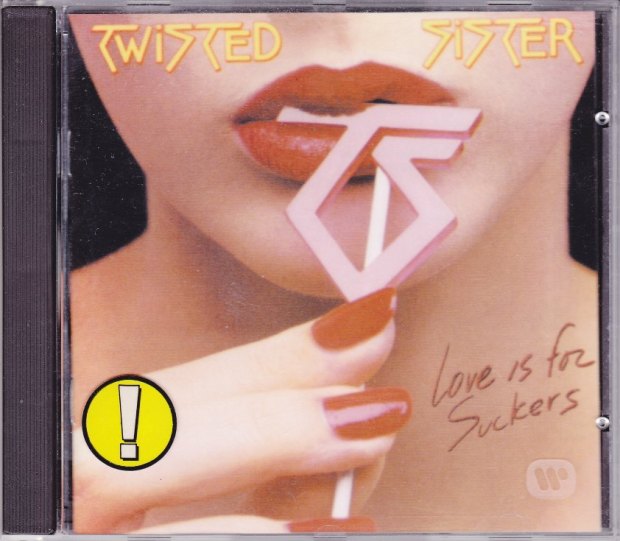
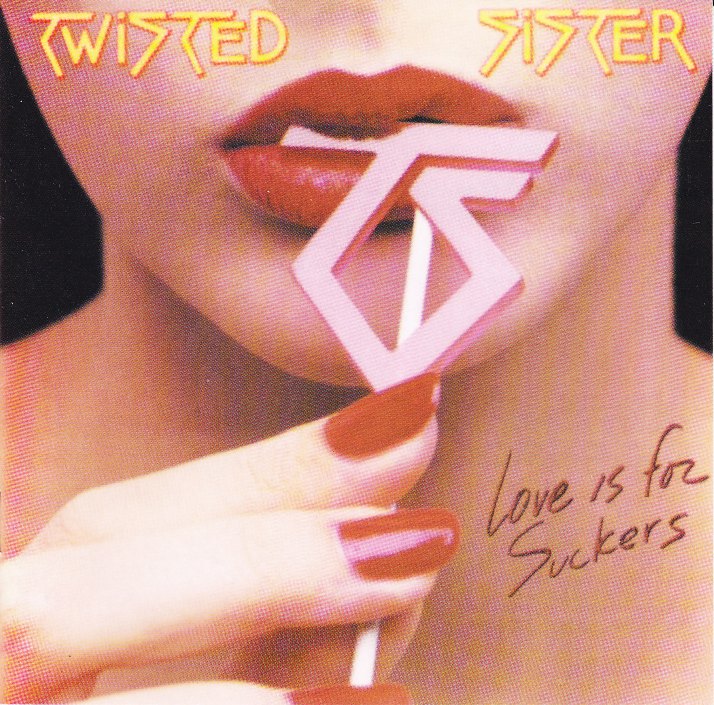
TWISTED SISTER – Love Is For Suckers (1987 Atlantic)
by Tommy Morais – written March 28, 2015
“The ‘Soft & Filler’ album…” Bought in 2012 in France for something like 17 euros!
Twisted Sister’s fifth and final studio album Love Is For Suckers (unless you count the band’s 2004 Still Hungry, a collection of re-recordings of Stay Hungry) is one that tends to divide people. Some hardcore fans dismiss it as too pop and lacking much substance, while others have a soft spot for it and thought it was an enjoyable release at the time. There’s some claims to be made about both opinions. The main problem with with Love Is For Suckers is that it really isn’t a Twisted Sister album. “Wake Up The Sleeping Giant” is deceiving in that it almost sounds like classic TS. Yet only Dee Snider as an original member remains, and then there’s Joey “Seven” Franco who was in the current lineup on drums. It really should have been a Dee Snider solo album which is what it was intended as and truly was, but instead the record company pressured this to be released as a Twisted Sister album.
Then it is plagued by a few big issues, besides the absence of the classic lineup. Did you ever see Reb Beach and Kip Winger receiving credits on a Twisted Sister album? Well, they played on this. Probably not a happy thought for most Twisted Sister fans, as it ended up taking an ultimately softer and a more pop direction. Then you have to consider that it may have been competitive and cutting edge in 1987, but Love ls For Suckers has not held up well with time. Also for an album title that claims love “sucks”, it’s ironic that most of these songs are well… love songs.
What’s with the drum sound?! The songs are wimpy but with a thunderous, big drum sound which leads to question that maybe Joey was a good drummer who ended up playing on the wrong album. The production by Beau Hill is about what you’d expect, very “1987” and time has not been too kind to its sound.
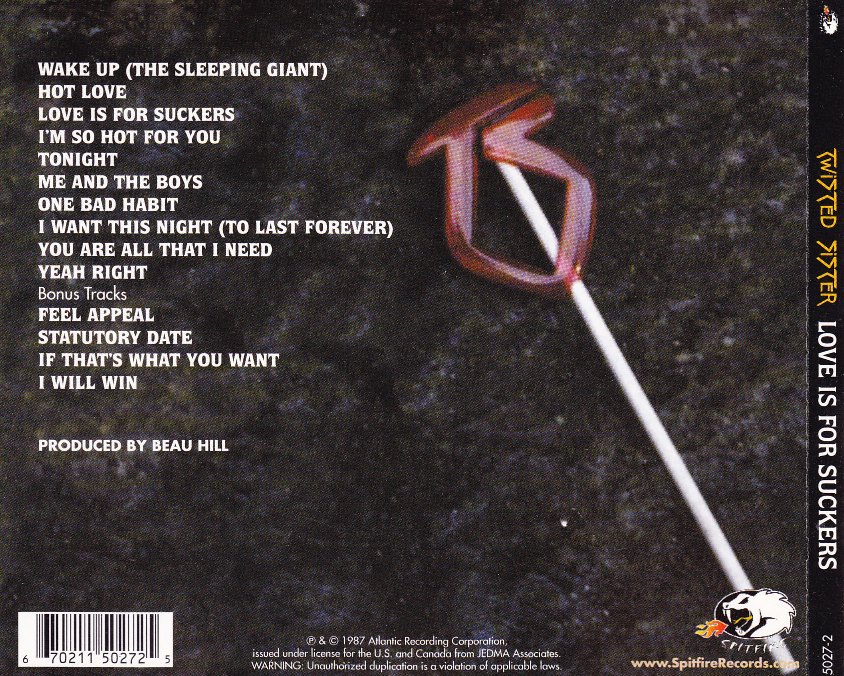
Opener “Wake Up The Sleeping Giant” is misleading. 1) It sounds like Twisted Sister and 2) It’s the best song on the album, and it leads you to think (and hope) the rest may be up to this standard. “Hot Love” was and is a great candy rock piece tailored for 1987; cheesy but fun and a good overall choice of single. It’s one of the most memorable songs (remember the video that went along?). The title track is actually not a bad rocker at all, it’s consistent as Snider does a good vocal performance and it’s somewhat catchy. This is where the album takes a slide in the quality department with “l’m So Hot For You” and “Me And The Boys” (this one especially is embarrassing) being generic filler tracks that halt any momentum the album had going for it. Sandwiched in between those songs is the slightly better rocker “Tonight” which showcases some aggression; not a bad tune at all. “One Bad Habit” is more filler material. “I Want This Night To Last Forever” has a Van Hagar feel to it, especially during the chorus but is nothing to write home about either. “You’re All That l Need” tried to be a big power ballad but it failed during the chorus, even though it had a nice build up. The keyboards prevent it from being a strong ballad like “The Price”, and as a result it sounds a little too soft and thin. The closing “Yeah Right” ends thing on a more positive note. It’s a solid upbeat rocker and one of the heaviest songs on an album that could’ve used more songs of this calibre.
I own the remastered version with four extra songs. “Statuary Date” is the worst of the bunch. “Feel Appeal” is better than some of the songs that made it onto the actual album, it’s more straight up rock and a little catchier. “I Will Win” is rocking but the chorus doesn’t get it right; close but no cigar. “If That’s What You Want” became “Me And The Boys” although it’s earlier incarnation was stronger and had better lyrics. If you ask me this version should’ve made the album instead!
There you have it. Any way you slice it, Love Is For Suckers is definitely, without a doubt, the worst Twisted Sister album. It suffers from the production, is full of fillers and it doesn’t feature Jay Jay French, Eddie Ojeda, Mark Mendoza, A.J Pero (who left before this was released), even though the liner notes say they were a part of it (minus Pero, replaced by Joey Franco). The first two songs, and the album cover, are the only things that are truly memorable about LIFS. The rest is really unfocused and sub-par. Twisted Sister’s decline had already begun with their previous effort, 1985’s Come Out And Play which would show cracks of the band’s implosion, but this one was a commercial disappointment failing to reach gold status or chart successfully. Simply put, Twisted Sister was no longer a band at this point and the album did nothing to stop them from breaking up and was quite frankly just not very good.
It was grade six. I was 11 years old, and it was the Friday before a holiday, which meant the whole class got to do nothing but chill and watch a movie. For the rest of the day our teachers let us hang out and do nothing. We each brought pop, chips or both to share. One of my friends Maxime brought one of his dad’s CDs. That CD? Twisted Sister’s greatest hits. He asked the teacher if he could play it for us, and the rest is history. I was introduced to my first taste of Hard Rock and Metal. I distinctively remember telling one of my friends “this is not bad huh?”, to which he agreed. I glanced at the album cover. It said “Twisted Sister Big Hits & Nasty Cuts“. Then l proceeded to tell Maxime that this (ugly) “girl band” was pretty good. I wasn’t familiar with Glam/Hair/80’s metal at that point and even less so with the look. Truth is l had been exposed to some AC/DC, Loverboy and Metallica prior to that but this was the first time it really clicked. Maybe it was just just the right age, the right time. There you have it, Twisted Sister was the first band I recall really taking a liking to. From then on l discovered my dad and his brother’s LPs and played them on the turntable (I remember digging the first Van Halen a lot). I definitely have a soft spot for Twisted Sister.
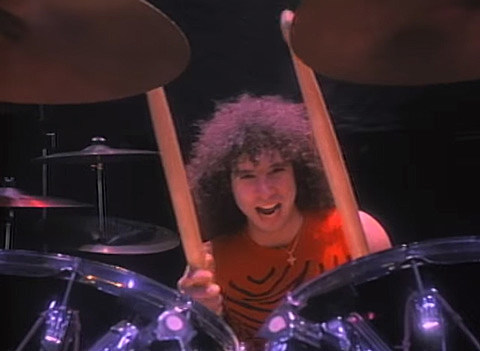
It is with sadness that I learned of longtime drummer and classic lineup member A.J. Pero’s unfortunate passing. Pero was a crucial part of the band and its sound, and a great drummer too. I approached Mike about maybe doing something Twisted Sister related on his blog to which he was very enthusiastic. I wanted to review something AJ played on, like Come Out And Play as l plan to review all of TS’s material in the upcoming days, but with time restraints l had to settle for my (still brand new) Love ls For Suckers. The band has said that were to make some big announcement next week. One can only assume that it is regarding Twisted Sister’s future as a band. Jay Jay said on social media that they were already thinking about hanging it up prior to Pero’s passing. Then Dee Snider said it would be profitable to the Pero family if the band kept playing and that they were thinking about winding down in 2016 for the band’s 40th anniversary. I’m not against them continuing performing live and going out on a final tour to honour AJ and the anniversary of the band just as l am not opposed to the band calling it quits. I have a feeling they’ll at least play a few more shows and maybe do one last concert CD/DVD (that would be cool). Rest in peace A.J., the rock world lost a great drummer.
Please join Tim Durling and myself for this deep dive into Night Ranger’s fabulous 2014 album, High Road. This is a really special CD to me, with some great tracks including the title song, “I’m Coming Home” and “Don’t Live Here Anymore. Jack Blade, Brad Gillis, Kelly Keagy, Joel Hoekstra and Eric Levy really made a special album with this, and a pinnacle of the reunion era if you asked me.
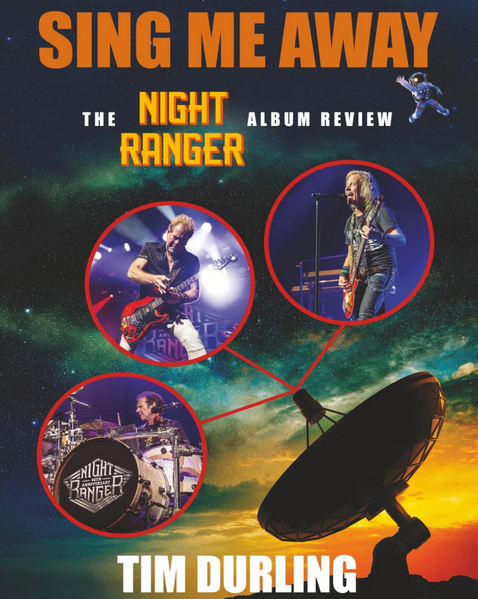
Tim is doing this series of deep dives to celebrate his new book, Sing Me Away: The Night Ranger Album Review. You can get it on your local Amazon and check out an analysis of every Night Ranger album from a panel of experts. Including me!
Check out this episode of Tim’s Vinyl Confessions, which will premiere later today.
GEDDY LEE – My Favourite Headache (2000 Atlantic, 2024 Anthem reissue)
As a Rush fan, Geddy Lee’s solo album My Favourite Headache never quite clicked. The lyrics seemed inferior and the music immemorable. In 2024, Geddy reissued the album with two bonus demo tracks. This is a perfect time to revisit the album and see if time has been kinder than I was in my original review. It has been a number of years since last listen; perhaps even a decade.
The phrase “my favourite headache” means making music to Geddy Lee. The art of crafting songs is a headache, but he would not trade it for the world. That is what the title means. For historical context, this album was made when Rush were on a serious hiatus. Neil Peart was dealing with tragic loss and nobody knew if the band would ever reunite, including Neil. From that soil grew My Favourite Headache, which Geddy recorded with drummers Matt Cameron of Pearl Jam and Soundgarden, and Jeremy Taggart of Our Lady Peace (on one song). Geddy plays the lion’s share of instruments with Ben Mink and other guests also contributing.
As it should, “My Favourite Headache” opens with some heavy bass, Geddy’s fingers flying. Then, it degenerates into a dissonant and hard guitar riff with throws the listener for a loop: it’s not at all like Rush. It might be the bass player and singer from Rush, but this does not sound like Rush. Which is good; which is the point. It takes a moment to adjust. “My Favourite Headache” slows to a lush section with piano, violins and violas by Mink. The lyrics are fascinating. “I watch TV, what do you want from me?” There is a lot to unpack here now that Geddy is able to express himself verbally in his music.
More Rush-like is “The Present Tense”, a song about living in the now. It bounces from heavy choruses to softer acoustic verses, which is perhaps a different approach from a Rush one. Perhaps by doing something more streamlined, Geddy wrote a catchier song here. His bass sings full, but not over-dominant. Cameron is an apt companion on drums; while not attempting to play like Peart, he is more than capable of navigating the tricky changes and fills.
“Window to the World” has a more exotic feel in its light chords, and Geddy uses his bass to deliver some delightful trills and hooks. It has some of those jarring dissonant guitars from the title track, but not as prominent. This song is melodic, largely easy to digest, and it delightfully careens from soft to hard, with interesting keyboard textures.
Heavier is “Working on Perfekt”. This might be the most enticing of all Geddy’s songs. Tense verses are broken by a sparser chorus. Electronic sounds aside, this is a very Rush-like song. You can almost image what Alex and Neil would do with it, but as Geddy’s song, it is rich in tones and deep, tense hooks.
“Runaway Train” is one of the brightest, most upbeat songs. Mink’s keys and violins add a light, airy feel above Geddy’s hammering bass. His playing is always eloquent and entertaining, if you choose to focus on the bass. Between the electronics and Mink’s rich contributions, there is a lot you can listen to. Or just enjoy the song. It’s a good one. Perhaps I misjudged this album before.
The first mistep might be “The Angels’ Share”, which some may love, but fails to launch for me. It’s a lighter song, but Geddy’s bass ensures it’s like lead. Ben Mink provides some really interesting soloing and backing, but the song itself never quite takes off. In hindsight it sounds like Clockwork Angels-era Rush. While we are in this perceived rut, Geddy throws his worst lyric out in the next song: “Say goodbye to suburbia, you don’t have to cut the lawn.” That’s from “Moving to Bohemia”, which is actually a pretty catchy song. It’s pretty upbeat for this album, and Geddy’s bass playing is at its most thumping.
Geddy turns up the funk on the magnificently weird “Home on the Strange” (with Taggart on drums). What the hell is this? It’s crazy, it’s like Geddy pulled out all funkiest records in his collection and combined them. The lyrics here are also quite fun: “He’s a Canadian icon, he sleeps with his clothes on.” Is it autobiographical? “And he don’t like change, you may think he’s deranged, but he’d rather be home, home on the strange.” Once you get used to its groove, this song won’t let go.
Back to the light, with “Slipping”, which relies on acoustics and piano for a gliding kind of feeling. This is followed by “Still”, which is unusually sparse and simple. An acoustic ballad, with an upbeat tempo, it’s a beautiful song. It certainly sounds autobiographical. “Still halfway up that hill, my fingers may bleed but I’ve got to get there still.” This song strikes me as the best, musically and lyrically, on the album. Strange that it never jumped out at me before.
Closer “Grace to Grace” remains an exceptional song, and one that really ends the album on familiar territory. A burning guitar and driving bass are the focus, as if to say “Hey guys, I’m always going to rock. Thanks for joining me on this trip. Here’s a song I think you’ll like.”
Of course, on this new reissue, Geddy treats us to two previously unreleased demo versions. If you haven’t bought the album before, you may as well go for this edition. True, I usually criticize albums for being a bit on the long side, and My Favourite Headache is a bit long, but demo bonus tracks are added value that you don’t have to include if you just want to listen to the “album” for the experience. There doesn’t seem to be any recording information about these two demos, “My Favourite Headache” and “Home on the Strange”. These are full realized arrangements, though without all the vocals. “My Favourite Headache” might surpass the album track for its live sounding rawness. Maybe it should have been an instrumental with only a chorus? The demo is great. Same with “Home on the Strange”. These tracks are worth the listen, and the re-buy.
Ultimately, My Favourite Headache requires the listener to set aside any thoughts of Rush, no matter how much Geddy and his bass will always sound like Rush. It’s a challenge, but once you get there, it is easier to appreciate the songs and the experiment. It takes time to absorb, as it is actually a very dense production, even for Geddy. Ben Mink’s contributions are priceless textures that help transport yourself away from a Rush mindset. Listen to those; focus on Mink and appreciation will come.
3.5/5 stars
Check out my autographed copy of My Favourite Headache by clicking the thumbnail.
Check out Grant Arthur and Davey Cretin as they get this album all wrong on the Warehaus tonight. 8 PM EST June 23 2025
In 2025 we have seen spectacular new releases from The Darkness and Ghost, but have Harem Scarem topped them all? Chasing Euphoria could be the album of the year.
Harry Hess (vocals), Pete Lesperance (guitar/bass), Darren Smith (backing & lead vocals), and Creighton Doane (drums) have created a magnificent hard rock masterpiece in Chasing Euphoria, an album that sounds like a brother record to Mood Swings. A record we’ve been waiting for, for a long time. The logo and cover art match the Mood Swings era.
While it is a disappointment that Darren doesn’t play any drums on the album, you can’t really tell. (Bassist Mike Vassos is pictured in the booklet but does not appear on the album, while drummer Creighton Doane plays drums on every song but isn’t depicted inside.) Joining the band are ex-Honeymoon Suite keyboardist Ray Coburn, and Coney Hatch bassist Andy Curran (on “Better Than the Devil You Know”). The ten new songs here are among the best written by this band. The Japanese release includes four bonus acoustic renderings, plus a DVD with two music videos and an exclusive “Making Of” video. The album was, as usual, self produced by Harry and Pete.
One of Harem Scarem’s trademark sounds is the blend of Harry Hess’ vocals, layered in with Darren and the band. The opening title track is thick with that sound on the impactful chorus. Like classic Harem, this one boasts dark but still uplifting melodies with powerful hard rock. Importantly, Pete’s guitar tone is right in the pocket of what we loved about him back in 1993. His solo here could have fit on Mood Swings without a blink.
The upbeat “Better Than the Devil You Know” is a brighter song, with softer verses and a regal chorus. It brings warm feelings and nostalgia of happy days. Pete’s solo on this song is lyrical and dexterous. “Better the devil you know, than you angel you see,” advises Harry Hess.
Chunkier riffing characterizes the speedy “Slow Down”, but what I really like about it is the way Pete goes from rhythm guitar to tricky fills, seamlessly. This rocker is an album highlight, on a record filled with nothing but. The chorus is surprising when it hits, and catchy as the flu. Pete’s solo is an album highlight.
Darren Smith makes his only lead vocal on “Gotta Keep Your Head Up”, a mid-tempo groove with impact. Darren’s voice is a bit raspier than Harry’s, but they blend so well on the choruses. This is one of those inspirational rock songs about not giving up or backing down. The subtle backing keyboards really add texture. Another winner.
The first ballad of the album is “World On Fire”, which would be the side one closer in a vinyl world. This is a sentimental song very much like early Harem Scarem, possibly fitting best into the Voice of Reason era (1995). In a near-perfect album, this song ranks near the bottom, which isn’t really a bad thing on an album like this. The layers of backing vocals plus Pete’s solo adds some meat to the bones.
“In A Bad Way” returns the chunky Pete rhythm guitar to the forefront. The roaring chorus of “I’m in need of your love in a bad way,” is the song highlight. Pete’s solo is a little different, and a lot cool.
Softer is “Reliving History”, but it’s not a ballad. Even when Harem Scarem write a song that is a little more laid back, they manage to inject it with power. This is a Leppard-like song circa Adrenalize.
The heaviest song is “A Falling Knife”, a fast rocker with Harry giving it all vocally, sometimes breaking into a hoarse rasp, but without ever losing control. This is probably the only song that has a late-90s Harem Scarem vibe. It could fit on albums like Karma Cleansing or Big Bang Theory as well as this one. The lush backing vocals are a Harem Scarem trademark and the backing organ thickens the soup.
“Understand It All” dials the heaviness back a tad, and compensates with great verses and an absolutely killer chorus, dense with those Harem Scarem vocals. Pete’s guitars balance the rhythm parts with catchy fills in a tasty way, and his solo is killer as ever.
It’s all over before you know it. “Wasted Years” is the highspeed closer, an album highlight and an absolute smoker. It has the tension and the melodic power that classic Harem Scarem has always embodied. One of the best tracks, in an album with nothing but “best tracks”.
It’s all over before you know it, but Harem Scarem always give the Japanese releases a little extra. This release comes with four stripped back acoustic versions: “Better Than the Devil You Know”, “Slow Burn”, “In A Bad Way” and “Reliving History”. It has been said that if you want to know if you wrote a good song, play it acoustically and see. All these songs pass the acoustic test, though the album versions will remain the mainstays. These acoustic tracks are a nice coda. They give you a little extra, without compromising quality by including filler songs. It’s like a comedown after a wild ride, though Pete’s acoustic solos sure have spark.
The Japanese album also includes a brief DVD with videos for “Chasing Euphoria” and “Better The Devil You Know”. In an interesting twist, Darren Smith mimes the drums in these videos, even though Creighton Doane played them. Mike Vassos does appear on bass in these videos. There is also a “Making Of” feature that you will probably watch once. It’s nice to get these bonuses, but how often will you pop in this DVD? Rarely, because you need a multi-region player to see it.
Harem Scarem have made a lot of great albums over the years, that have been forgotten and swept under the carpet. This one deserves a better fate than that.
5/5 stars. Best album by Harem Scarem in a long time.
Fresh in today’s mail, it is the latest KISS Off the Soundboard CD, Asylum Tour 1985, in Texas!
“But Mike,” you query. “I thought that was a vinyl exclusive, and I thought it sold out too.”
True, it was a stupid coloured 3 LP set, exclusive to the KISS store, and now sold out except in bundles with a shirt.
The Japanese record company said いいえ and issued it on CD anyway. They did a smashing job of it! Some fans received a free sticker; I did not. Inside the cardboard gatefold sleeve was a mini KISS poster, and 2 CDs, each one within its own plastic sleeve within its own printed paper sleeve. The design for this album was a little different from the previous five in that this time there is a picture on the outer cover.
The CD sounds great, and it’s classic fastfastfast 80s Kiss with the unforgettable Eric Carr on drums. That’s why you only see CD 2 in this photo. CD 1 is in the deck! This could have been released officially in 1985.
Don’t try to do any math and figure why Rush 50 is out in 2025 instead of 2024. What matters is: Rush 50 is out. It is stunning, both sonically and visually. The box art by Hugh Syme fits right in that Rush mold, akin to Chronicles. That’s to say nothing of the hardcover book inside, which we will discuss later on. The design is excellent. In the back, the CDs peek out of thee sleeve like golden coins. It’s just a really cool looking, and sounding, box set. The remastering here is terrific. Geddy’s bass is wonderfully separate from the guitars, and you can really hear the details as you remember them. Brilliant job here.
Rush 50‘s four discs follow roughly chronologically. They include a generous number of live tracks, which is not at all to the detriment of this set. Some of the live tracks come from other box sets, from live albums, and some are rare or unreleased versions. “Garden Road” is one long desired by Rush fans, though “Fancy Dancer” is conspicuous by its absence. (Don’t assume this is the last collection that Rush will release.)
In the days of downloading via Bittorrent, I found crappy vinyl rips of Rush’s first single “Not Fade Away” / “I Can’t Fight It”. I burned them to a CD, and lamented that this would likely be the only “physical” copy of the single that I would ever own. 15 or 20 years later, this new anthology-style box set Rush 50 includes the single as the first two tracks on disc one. To finally have these songs, officially, physically, and sounding so full and rich compared that that old CDr, it scratches that itch that I have as a collector. If I could afford that first single, I’d have it already. This will do even better, because it’s clean and digitally perfect. It’s also quaint. The almost psychedelic echo on “Not Fade Away” is a detail I didn’t remember.
Similarly, about 15 years ago Rush released the “Vault Edition” of the track “Working Man” for a limited time on iTunes. I burned that to a CD too. Now it is here physically, along with another “Vault Edition” of “The Trees” that I was unaware of. Now we have both on CD. Itch scratched once again.
Wisely, Rush made sure some of the biggest hits that people want are studio versions: “Closer to the Heart”, “Tom Sawyer”, and “Subdivisions” for example. Joe Average, who just wants a cool box set instead of all the albums, often ends up complaining when bands out live versions instead of studio versions of the songs they really wanted. (Trust me, I worked at the Beat Goes On for 12 years.) The other thing is, the live versions they did select are superb. Let me tell you, the Bonham-esque drums on the jammy “Before and After (live)” sound absolutely massive. It’s certainly appropriate for a band of this reputation to include so many live versions. Most of disc two is live.
With equal wisdom, Rush ended this box set with the last songs plays at the their last ever concert. Going back to the very beginning, Rush end the anthology with those final live takes of “What You’re Doing/Working Man”, with just a smidgen of “Garden Road”. It’s an emotional way to end the journey, and this box set is indeed a journey. That’s the wonderful thing about anthology style sets.
The remarkable Hugh Syme worked overtime to produce the art for the hardcover book. Yes, not only do you get words and photos, but also brand new double-page artwork for most of the songs on Rush 50. It is the kind of box set that will give you enjoyment every time you listen to it, because you can crack open that book and just study. My study has barely begun; I have not really been able to look at each and every piece of art yet. Rest assured though, Hugh Syme provides all the justification for the price of this set, with the book alone. If this were a hardcover sold in a store on its own, it would probably be at least $60 bucks as a book.
A massive career like Rush’s deserves a massive box set. You won’t believe it until you hold it in hand. This thing is monolithic; a purchase that will not be regretted.