Jerry Marotta

REVIEW: Lawrence Gowan – …but you can call me Larry (1993)

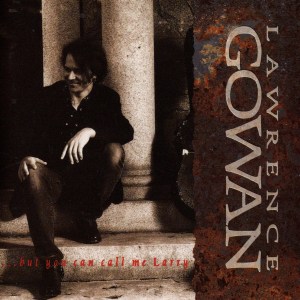
LAWRENCE GOWAN – …but you can call me Larry (1993 Anthem/Columbia)

Lawrence Gowan was clearly making changes for his first album since 1990’s Lost Brotherhood.  He was now going by his full name, Lawrence Gowan, though long-timers had a hard time not just calling him Gowan.  He assembled an ace crew of musicians including Robert Fripp and Tony Levin from King Crimson, Ken Greer from Red Rider, Jann Arden, and drummer/producer Jerry Marotta, who goes back with Levin.  The result is a more organic album playfully called …but you can call me Larry.  The sound is pure 1993, in the best possible way.

Tinkling acoustics open “Soul’s Road”, a far cry from from the synthesizers of a decade ago.  This great song soon kicks into gear on the chorus with the crackling electric guitars and the cry of a pedal steel (by Greer).  It reverts back to acoustics and piano on the verses.  Gowan employs just a touch of rasp in his voice for an earthy vibe.  It has just the right balance between hard and soft.  Great opening track, and should have been a hit.

“When There’s Time (For Love)” features Colin Linden on guitar, and stays in the acoustic zone.  This slow song is loaded with melody and passion, and once again really comes to life on the excellent chorus.  This is a ballad for a quiet night in, but it isn’t lifeless at all.  The drums keep it moving, and the musicianship on all instruments is absolutely stunning.  Such a full, rich mix.  You can really feel the bass.  That’s Paul Northfield’s mixing work, done at Morin Heights in Quebec, where the album was recorded.

Co-written with Jim Vallance, “Innocence” goes for a different vibe, with a tense little piano line soon giving way to a powerful chorus.  Tony Levin shares bass duties with Terry Gowan, who is currently touring with his brother in Styx.  This rocker still maintains a touch of acoustic guitar in the background, but this is a rock song with just a hint of nocturnal menace.

Back to ballad territory, “Your Stone Walls” has a folksy sound, beginning with minimal instrumentation and letting the acoustic guitar carry the weight.  It gradually builds, adding organ and drums, but the folksy sound remains.  It’s an exceptionally beautiful song, especially as it continues to grow into something more epic, with soulful backing vocals and keyboards.

Things really pick up on the moving “Dancing On My Own Ground”.  Levin’s bass has a lot to do with why this one moves with such an incredible pulse.  Upbeat and bright, this acoustic rocker is probably the album highlight for those who like feel-good music.  There’s a violin solo to boot.  Gowan’s music always includes outstanding musicians, often from the progressive rock genre.  It’s no wonder he ended up in Styx with that kind of experience.

By contrast, “Cry On My Shoulder” is the opposite; a somber piano ballad.  (Was the idea of having two “On My…” song titles in a row a coincidence?)  This one features ample cello parts, and a stunning slide guitar part by Ken Greer.

Things go suddenly retro on “Moonchild’s Psychedelic Holiday”.  Using sitar became more common in the early 9os, and of course that combined with the word “psychedelic” means we’re going back to the era of free love.  There are only slight Beatles-isms incorporated, but Jim, both Hendrix and Morrison, are cited in the lyrics.  It feels a little corny and contrived, but others may think it’s the best thing on the album.  Enjoy some purple haze and see what you think.

The somber acoustics of “You Never Let Go” feels like we’re back on track.  Yet, it’s poweful.  The lyrics tell a tale of a friend, a bad seed, that Gowan can see the other side of.  Even though it is mostly a quieter song, there is an undercurrent.  A drive.  A power.  A tension.  It’s all released at the halfway point when the electric guitars kick in.  One of the more impressive songs on the album.

Larry goes upbeat again on “(In The) Wild Summer Night”.  It never goes too hard or heavy, but this rocker has some rhythmic piano, great drums, and a bouncing chorus to keep the party going.  If you can criticise …but you can call me Larry for anything, it would be that the album gets burning too rarely.  There is nothing here as bouncing as “Strange Animal” obviously, but “(In The) Wild Summer Night” gets the blood flowing.  The soul singing comes back for the outro, as the drums just light it up.  Get out of your chair!

“Last Laugh” features Jann Arden, slide guitar, dobro, and hand percussion.  This laid back acoustic song really breathes when Jann joins Lawrence on the second verse.  Most songs on this album seem to have a feature or two that makes them stand out from the others.  In this case it’s Jann Arden.  Though it is not a loud song, it’s very powerful.  “We’ll have the last laugh, now…” they sing.

Album closer “Little Face” is the one with Robert Fripp.  Even so, I would have held this song for last anyway.  It is meant to be a closer, with a tension that builds and builds as the song goes on.  Impressive drums here, and a dark powerful vibe with exceptional guitar work by the King Crimson mastermind.  A burning closer with a great chorus.  “Little Face” is the cherry on top of an impressive record.

One look at the covers, front and back, and you know immediately that the design is by Hugh Syme.  Hugh did a number of albums in 1993 with similar fonts and marble designs:  Rush, Coverdale-Page, and Def Leppard too.  In fact this CD layout is virtually identical to Retro-Active by Def Leppard.  Hey, if it works…

4.5/5 stars

Thank you Aaron for this copy!


REVIEW: Gowan – Strange Animal (1984)

GOWAN – Strange Animal (1984 CBS)

Strange Animal was only Lawrence Gowan’s second solo album, and one of his best sellers.  It’s also one of his most dated sounding, with programming and production honed in on the 1980s.  Regardless, you can’t knock the musicians:  Tony Levin (bass/Chapman Stick), Jerry Marotta (drums), and Chris Jarrett & David Rhodes (guitars).  Gowan basically lifted his studio band from Peter Gabriel.

Opener “Cosmetics” was a single, though just shy of cracking the Top 40.  It’s terribly dated sounding, with that wretched brittle synthetic sound that even Queen resorted to at one point.  So you might love it!  The piano is delectable and Gowan is as smooth as pie.  “Desperate” is darker, but I sure do hate synth hand-claps!  Fortunately this is a great song, akin to 80s Phil Collins.  Another really smooth one is “City of the Angels”, like a waltz at midnight.  Progressive rock invades “Walking on Air”, which lightly tip-toes from gentle rock to more aggressive guitars.

A delicate but powerful “Burning Torches of Hope” sits right at the middle of the album, and it is so very 80s.  Levin makes some animalist noise on “Keep the Tension On”, which sounds much like its title.  Taut, powerful, and even heavy in a certain way.  It’s melds right into a march on “Guerilla Soldier”, a killer song with terrific verse hooks.  Massive song!  It feels like this album builds to a close.  Especially when you consider the last two songs.

Finally, at the end of the album comes the familiar hits.  First:  a huge Chapman Stick groove, on the poppy upbeat title track.  “Strange Animal” is an awesome song: strictly fun, and incredibly so!  The melody stays in your head for days, and you’re hooked.  Ominous spiritus, ahh!  And then it’s his most famous song, “A Criminal Mind”, otherwise known as “the one that Styx play live”.  Solo, in the studio, “A Criminal Mind” is just as haunting, just as powerful, and just as unforgettable.  It also had one of the most disturbing music videos we had seen as young kids, and our reaction was revulsion.  On album, it is a capstone of a pretty terrific record.  It really feels like it should have opened.

Though ultimately it is up to the listener, unless you grew up with Strange Animal in the Walkman nestled in your back pocket, the programming and 80s-isms are a bit distracting.  It’s also strange how Gowan left all the big firepower stacked at the end of the album.  In the CD age, it just makes the whole thing more rewarding at the end!

3.5/5 stars


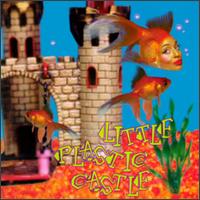
REVIEW: Ani DiFranco – Little Plastic Castle (1998)

Part 3 of the Aaron Challenge:  He has challenged me to get out of my comfort zone.  Together, we will be reviewing some of the albums he bought in Toronto during Record Store Excursion 2012.  I’ve never heard any of these albums before, in fact I know almost nothing about most of these bands.  But I do know I sold a lot (a lot!) of Ani DiFranco during my time at the record store.

Aaron paid $2.99 for this, at Sonic Boom Music.

Check out his review here!

Ani_DiFranco_-_Little_Plastic_Castle

ANI DIFRANCO – Little Plastic Castle (1998 Righteous Babe)

I remember working at the store back in ’98, and the general reception from Ani DiFranco fans to this album was positive, but mildly critical.  There was a vibe that she had sold out for bigger success.  That was just what I was hearing.

Having not heard the previous albums, all I can say is good music is good music.  Yes, the production is lush and not what you’d think of “indy”.  Listen to those mariachi horns on the title track.  Not exactly low-fi.  But it sounds great!  What an upbeat, entertaining track.  Awesome.  Not to mention her guitar work is excellent.  The lyrics seem to be about public perception of what she should and should not be.

“Fuel” is one I’d heard before from Aaron.  I liked that one too.  I like when she’s goofy. This is beat poetry with a backing band.  Normally I go for a lead vocal with melody, but this works due to Ani’s well-composed expression.  From there it’s on to “Gravel”, a fast melodic one with more dexterous picking from Ani.  Another great tune, with melody to spare.    It’s a sparse arrangement, just guitar and voice with some percussion, and that’s it.

Drums introduce “As Is”, a soft pleasant song with barely audible keyboards in the background.  It’s laid back and slightly mournful but also playful, and pretty much perfect as is (pun intended).  “Two Little Girls” is dark, a tale of a difficult childhood.  Ani’s excellent picking, and a bouncy backing bassline, makes it entertaining, but lyrically it seems loaded with pain.

“Deep Dish” is the first song I didn’t enjoy.  It features samples and long spoken word bit, and is very rhythmic.  It did nothing for me, though.  Sorry Ani.  Nothing personal!  “Loom” however is a brief (under 3 minutes) explosion of drums and acoustic picking, more along the lines of what I like.  “Pixie” follows, one I didn’t click with.  Ani sings in a soft whisper, expressive as ever, I just didn’t like the song.  It didn’t have enough melody or punch for me.

A long song, “Swandive”, is a bit of a change of pace since most of the previous tunes were in the 4 minute range.  This one builds slowly.  “I’m gonna do my best swan dive, into shark infested waters,” sings Ani, while picking more of those great guitar parts.  “Glass House” totally changes the pace, with a bouncy wah-wah infested bass melody intro.  This is great.  I didn’t see that coming, nor the weird caterwauling trumpet that followed it!  Ani then whispers the lyrics, underlined by a pulsing bass, with the odd electronic effect.  Then just as you’re getting used to it, the drums kick in, accelerating the tune forward, and the vocals get angry.  Ani is nothing if not diverse, I’m learning, even within one song.

“Independence Day” is a beautiful song, melodic and passionate, slow and pretty.  A hit song in any just world.  The final song, “Pulse”, is another slow builder, with a beat poetry vibe to the verses.  It’s not brief either!  14 minutes!  It sounds a bit like a jam, but I wonder, since the whole album has more of a vibe of being carefully assembled rather than jammed out.

Little Plastic Castle is an excellent sounding album.  The guitars are lush, full and clear.  The snare drum sound is perfect. Production-wise, it’s a total triumph (and self-produced by Ani).  I think the album tends to sag a bit in the middle, after such a fine start, but it’s still a great album.

4/5 stars

MIKE AND AARON GO TO TORONTO