Joe Lynn Turner

REVIEW: Deep Purple – Slaves and Masters (1990)

Get some Epic Review Time right here for your weekend!

DEEP PURPLE – Slaves and Masters (1990 BMG)

The much ballyhooed Deep Purple MkII reunion came to a crashing halt when Ian Gillan was fired in 1988. Just as the band released their first double live in aeons (Nobody’s Perfect) and a new single (a remake of “Hush”) to celebrate their 20th birthday, Gillan was out again. Except this time he was fired. And this time, Roger Glover did not go with him.  Even his friend Glover said to him, “Ian you have gone too far this time.”  His drunkeness and anger towards Ritchie Blackmore had gotten the better of him.

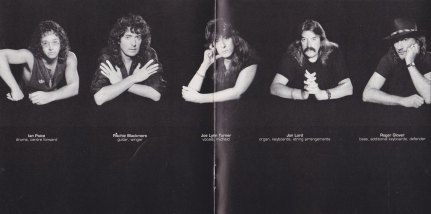
Blackmore briefly considered reforming Rainbow, or launching a new Blackmore-Turner Blues Band.  He was however reluctant to break up Purple, liking the current chemistry he had with the other musicians.  After inviting a singer named Bill Mattson from up-and-comers Tangier to try out for Deep Purple, the band reluctantly gave former Rainbow singer Joe Lynn Turner a shot.  They eventually invited him to join.  According to Turner, “I had to sit down with the boys in Purple and say, ‘Are we going to be true to Purple? Are we going to have the hard rockin’ blues image come out?  I really don’t want to scream.”  Turner would get his wish.  According to him:

“The guys told me, ‘We’ve never really had a singer.’  I go, ‘Well you had Ian Gillan.’  They go, ‘He’s not a singer’s singer. He’s a stylist.’  I go, ‘Ahh, I see what you mean, a stylist as opposed to a singer — it’s two different things.’  They wanted someone who can really sing and write songs, like what we did on this record, as opposed to The House of Blue Light record, which was no songs and really yielded nothing they could bring to the stage.”

Call it what you like:  Deep Rain Snake, Deep Rainbow, or just Deep Purple Mk V. Blackmore, Lord, Paice, and Joe Lynn Turner added a new album to the Purple canon called Slaves and Masters, with Roger Glover once again producing.  With most of the music already written by Blackmore, it fell to Turner and Glover to take those riffs and turn them into songs.  But what would it sound like?  Would it sound like Deep Purple, or Rainbow?

Slaves and Masters is a regal disc, different from everything else in the Purple catalogue, but beautiful in a subtle, understatedly powerful way. The first track and single, “King of Dreams” for example gives you an idea of the what the rest of the album sounds like. It is a rock song, based on the bass guitar groove, but mellow. It’s in the pocket. The power in the song comes from the groove and the soulful and smooth vocal by Turner. The lyrics are a subtle rebuttal to Ian Gillan’s scathing 1973 song “Smooth Dancer”, which was a backhanded attack on Blackmore. “King of Dreams” takes Gillan’s lyrics and turns them on their head:

“I’m a real Smooth Dancer, a fantasy man, master of illusion at the touch of my hand.”

If you think “King of Dreams” is too mellow, fear not. “The Cut Runs Deep” is second up, and after a brief deceptive piano intro, the old Hammond organ kicks in backed by some ferocious riffing by Blackmore. When Ian Paice picks up the pace (a fast “Kickstart My Heart” drum beat), you’re out of breath and beaten. All you can do is submit to it and take the body blows of drums and guitars.

“Fire in the Basement” is acceptable, a blues shuffle that serves its purpose.  Most of the album tends to be balanced between groove rockers in the “King of Dreams” mold, and ballads. There are quite a few ballads on this record: “Foretuneteller”, “Truth Hurts”, and “Love Conquers All”, which is fully 1/3 of the record.  That is not to say these are bad songs, for all three are actually quite excellent. “Foretunteller” is particularly wonderful, with some beautiful fingerpicked chords as only Ritchie can play. These are not ‘power ballads’; rather these are powerful ballads, dark and moody. After all, this is Ritchie Blackmore; and the man in black himself could never turn in pop trash.

The band were sure to end the album wisely on a 6 1/2 minute jam called “Wicked Ways”.  This is pedal to the metal Purple with Turner’s smooth rasp on top.  You can hear Blackmore letting loose with his pick scrapes and pyrotechnics, but they are unfortunately too low in the mix to come through.  Obviously Purple were going for a radio-friendly sound even on the heavy rockers, because you could remix this one heavy as hell if you had the master tapes!
SLAVES AND MASTERS_0003

I remember listening to this album for the first time at the cottage.  I had rented the CD (remember that?) from a local video store in Kincardine, and I was recording it.  When “Wicked Ways” came on, my dad said, “Who is this group?”  Deep Purple, I said.  “They are obviously a musician’s band,” he said.  Normally he’d come up with one of his wisecracks like, “Why is the singer screaming so much, is he sick?”  Not with Deep Purple.  Upon “Wicked Ways” he bestowed one of his rare compliments.

There are only two poor tracks on the album: The lame-titled “Breakfast In Bed”, and “Too Much is Not Enough” which was written by Turner and outside writers. Otherwise, this is strong music. It is arguably not a Deep Purple album except only in name, but I think today most Purple fans are also fans of Rainbow.  It could have used a ballsier mix.

Regardless of the quality of the album, the tour was a reportedly a bit of a disaster. Having Joe in the group did enable them to play a few rarer tracks, such as “Burn” which was originally sung by Coverdale, but this wasn’t enough to sell tickets or convince fans that Joe was “the singer” for Deep Purple.

The band began work on a second Deep Purple Mk V album, but regardless of any progress made, Gillan came back for The Battle Rages On in 1993, ending this brief era of Deep Purple’s history.  But if you like Turner era Purple, there are still a few more rare tracks to be had.  They are as follows:
  • NEW LIVE“Slow Down Sister”, a single B-side, which was since reissued on a remastered version of Slaves and Masters.  It can also be found on the Shades 1968-1998 box set.  It cleverly recycles the riff from “Stormbringer” into a new song with a similar groove, although way more commercial.  This does not sound much like Deep Purple at all, and the funky bass does not sound like Roger Glover playing.
  • “Fire, Ice & Dynamite”.  This is apparently from a movie soundtrack called Fire Ice & Dynamite that I have never heard of.  I however have it on a Purple DVD called New, Live and Rare (2000).   This song is a Blackmore/Turner/Glover original, but Jon Lord did not play on it.  I believe Glover plays keyboards, and Paice was also present.  It is a pretty straightforward hard rock song, not too different from material on The House of Blue Light.  Decent song, and an uber-rarity.

Final note: this album just sounds better on headphones.  I don’t know why.

Check out Slaves and Masters for one of those lost Purple platters that, with a few listens, you could grow to love.

4/5 stars

REVIEW: Rainbow – Finyl Vinyl (2 CD edition)

RAINBOW – Finyl Vinyl (1986, 2 CD Rainbow Remasters edition)

Finyl Vinyl was the third Rainbow album I bought, right after Rising and Straight Between the Eyes. The year was ’96, and the place was Dr. Disc.  I bought it on vinyl initially, because the original CD edition omitted two tracks for space limits (a major flaw with double albums issued in the early CD age). However what I did not know until recently was that the vinyl also omitted a song: “Street Of Dreams” which was only available on cassette!

This complete 2 CD remaster contains all the songs from all the versions.  For sheer portability reasons, it made sense for me to own this.  I have filed my vinyl copy away, and I now rely entirely on this new Universal CD version.

I love Finyl Vinyl and even though it was issued posthumously and consists mostly of unreleased live songs, I think it’s one of the most enjoyable Rainbow albums to listen to. It contains music from all three of the original Rainbow eras: Dio, Bonnett, and Turner. It leans most heavily on the Joe Lynn Turner era, with only a couple songs from the Ronnie James Dio era. Graham Bonnett also appears on two songs, and there is an instrumental B-side from his Down To Earth era as well. It is worth noting that the B-sides contained herein have been issued on other albums since.

Finyl Vinyl contains a lot of my favourites, and in great versions too: “I Surrender” and “Miss Mistreated” sound great live. Pop rock goodness, made classy as only Blackmore/Turner can do it.  “Jealous Lover” is a standout midtempo burner from the Joe Lynn era.  Blackmore’s picking is resplendent.  Unfortunately the two Dio-era songs don’t have the fidelity of the later Turner recordings, but you can’t have a Rainbow collection without representing Ronnie James.  That is done via unreleased 1978 live versions of “Man on the Silver Mountain” and “Long Live Rock ‘N’ Roll”.

My only complaint: The photos inside are too damn small and blurry. One of my favourite things about the vinyl release was that there were pictures of almost every incarnation of Rainbow, but here you can barely tell who’s who. Too small, too blurry like a bad scan; the booklet should have been expanded. Also, the credits still contain some errors that were never corrected from the original vinyl issue (see Wikipedia).

Still, great music, and finylly (ha ha) complete!

4.5/5 stars

REVIEW: Deep Purple – Shades 1968-1998 (box set)

DEEP PURPLE – Shades 1968-1998 (Rhino 1999 box set)

I was really excited about this 1999 box set when it came out, but what it came down to was this: I paid “x” amount of dollars for just two songs that I didn’t have on other recent Deep Purple CDs. One song, “Slow Down Sister”  by Deep Purple Mk 5 was only available here. It’s since been reissued on the Slaves and Masters deluxe edition.  The other is a very rare and very great 1971 live version of “No No No” from a compilation called Ritchie Blackmore/Rock Profile Vol. 1. So there’s your bait.

Unfortunately, the booklet and discography is loaded with errors. This was disappointing. The packaging is nice, with that sheet metal looking embossed cover. It opens kind of awkwardly though, making it hard to handle. And man, there are so many Deep Purple box sets out there now! I have Listen, Learn, Read On which is six CDs dedicated entirely to just 1968-1976. Obviously you can’t squeeze Deep Purple’s career onto just four discs. This set covers 1968-1998, which is a huge chunk.  It’s almost the entire Jon Lord tenure.  It skimps in some places and confounds me in others. Usually, Rhino do such a great job, but I felt this one didn’t live up to their other products.

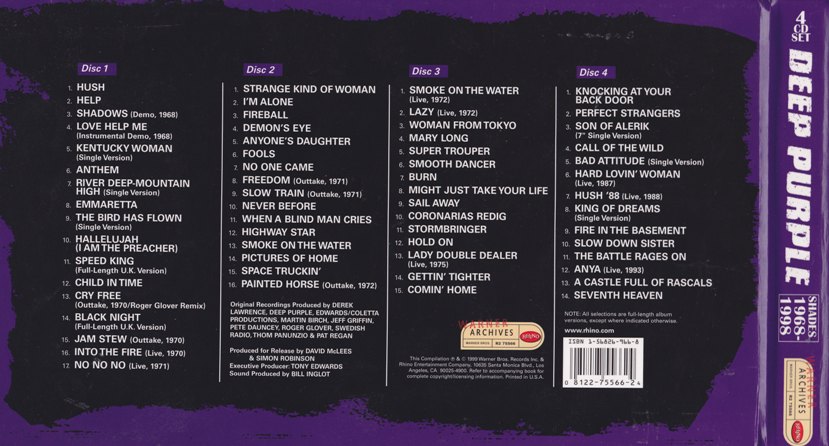
SHADES_0003Disc one covers 1968 to 1971 (Shades Of to Fireball). The tracks listed here as demos or rarities are from the Deep Purple remastered CDs, all except for the aforementioned “No No No” which really is awesome. If you have the great Singles A’s & B’s and the Deep Purple remasters, you have all this stuff. Except maybe the edit version of “”River Deep, Mountain High”, I’m not certain about that one. You get a good smattering of favourites on here, like “Kentucky Woman”, “Speed King”, “Child In Time” and so on, but it’s not really sequenced all that well. The slow-ish Deep Purple Mk I material fits awkwardly with the Mk II.  Other songs of note include non-album singles and B-sides such as “Hallelujah” (first recording with Ian Gillan) and “The Bird Has Flown”.  The version of “Speed King” included is the full UK cut, with the crazy noise intro.

Disc two is 1971 to 1972: more Fireball, and Machine Head. All these tracks can be found on Deep Purple remasters. There  are some excellent tracks here, such as the rare “Painted Horse” and “Freedom”. “Painted Horse”, a personal favourite, has been available for decades on an album called Power House. I guess Blackmore didn’t like them at the time, so they languished until the band broke up before the record label released them. “I’m Alone” was rare for a long time, and “Slow Train” was completely undiscovered until the Fireball remaster. I like that “Anyone’s Daughter” is on here, a very underrated song.  Of course you will hear all the big hits on this disc: The studio versions of “Smoke on the Water”, “Fireball”, Highway Star” and “Space Truckin'”. This will be many people’s favourite disc.

The third CD continues with Mk II.  It starts off with the Made In Japan live version of “Smoke” which is fine, but now you’ve heard it twice.  Soon, it’s  “Woman From To-kay-yo”, “Mary Long”, and the scathing “Smooth Dancer”.  Then Gillan and Glover are out, and in comes Coverdale and Hughes  One rarity on this disc is the instrumental “Coronarias Redig”, which dates from the Burn period. It also includes some of Mk III’s most impressive work, including two of the best tunes from Come Taste The Band. Conspicuous by their absence is the epic “You Keep On Moving”, and Blackmore-era fave “Gypsy”. You will, however get “Burn”, and “Stormbringer” from Stormbringer itself.

SHADES_0005The fourth CD is the one that ticks me off the most. This covers the reunion era, from 1984 to the then-most recent album Abandon in 1998. The hits are here, “Perfect Strangers” and “Knocking’ On Your Back Door”, as well as some singles from the Joe Lynn Turner era. What ticks me off here is the song selection. “Fire In The Basement”? What? That song kind of sucks, why not “The Cut Runs Deep”? Only one song from The Battle Rages On is included, only one from the excellent Purpendicular, and only one from the recent Abandon? And not even the best songs? That makes no sense.

To short-change the later era of Deep Purple only serves to short-change the listener.  The band were revitalized and rejuventated by Steve Morse, and made some really good, well received music. I saw them live with Morse in 1996.

From The House of Blue Light era, a single edit of “Bad Attitude” is included, which is probably rare.  What you won’t get is the full, 10 minute + version of the instrumental “Son Of Aleric”. This is one of the best lesser known tunes from the reunion era. Instead, you get the truncated 7″ single version. That makes the 10 minute version frustratingly hard to get. It was originally released on a 12″ single, which you may be able to find. You might have better luck finding it on the European version of Knocking at Your Back Door: The Best of Deep Purple in the 80’s. It was included there, replacing “Child In Time” from the US version. I managed to get it thanks to my mom & dad who bought it for me at an HMV store in Edinburgh (along with Restless Heart by Whitesnake).

SHADES_0004Mick Wall’s liner notes offer the Morse years a mere mention, and end on a nostalgia note of “bring back Blackmore.”  Come on. Let’s focus on the present of a band that shows no signs of slowing down, shall we? But this box set short changes the present, and by picking it up you won’t hear such awesome later songs as “Sometimes I Feel Like Screaming” or “Fingers to the Bone”.

I know many reviews of this set are glowing, and each reviewer has their own reasons for doing so. I can’t. This band is too important, too vital, and dammit, still alive! This box set simply doesn’t do them justice. I was ticked off when I bought it and realized I owned almost all the “rare and unreleased” material. Collectors won’t find much here worth the coin spent, and rock fans who just want a great box set of Deep Purple won’t get to hear enough Morse.

Somebody dropped the ball on this one! 2/5 stars.

SHADES_0002

REVIEW: Lee Aaron – Lee Aaron (1987 remastered)

LEE FRONT

LEE AARON – Lee Aaron (1987 Unidisc Music)

Lee Aaron: Canada’s “Metal Queen”. It is a name she will never live down despite the credible jazz career.  Try as she did to distance herself from the Metal Queen tag, Lee’s seems to embrace it more recently, even throwing a funky jazz-tinged version into her sets, as a mash-up with “Mysterious Ways” by U2!  And it works!

In the late 80’s, Lee (aka Karen) was less comfortable than today with being the Metal Queen, and her 1987 self-titled disc is possibly the best example of this.  All shades of metal were dropped; what was left is a mainstream pop rock record co-written with professionals such as Marc Ribler and Joe freakin’ Lynn Turner.

Growing up in Canada, you basically had two mainstream choices in female rock singers: Lita Ford, or Lee Aaron. That was all MuchMusic would play.  OK, sure the odd Joan Jett track too, after her resurgence with Up Your Alley.  That was it.  Otherwise the Pepsi Power Hour was pretty much devoid of regular female rock heroes.  There were the odd flashes in the pain — Vixen, Madame X — but Lee and Lita were the only two to get regular play year in year out.  Lee of course had the trump card labelled CanCon in her deck.

I got this album for Christmas 1987, and I was so disappointed. The sound — plastic, turgid, processed, synthetic, with hardly any guitars. The songs — commercial pop designed to get played on the radio and not a hint of metal to be found anywhere.  John Albini (now blonde all of a sudden?) is still her guitarist and co-writer, but there’s much less guitar on this album.  There are also some truly awful, awful songs on here, most notably “Don’t Rain On My Parade”. I won’t tell what that rains smells like, but it don’t smell good.

The single/ballad “Only Human” is a decent song, very soft, but not too far off from stuff the Scorpions would do later on!  (Lee actually sang backup vocals on “The Rhythm of Love” by the Scorps in ’88.)  The best track is actually the pop keyboard rocker, “Powerline”.  The guitar is not as dominant as the keyboards, but it does at least have some guitar.  It has Joe Lynn Turner’s melodic sensibilities and songcraft, hooks galore, and a smashing chorus.

But then you get tripe like “Goin’ Off the Deep End”, “Dream With Me”, and…ugh.  There was just no way, as a 15 year old, I was going to let anybody catch me listening to those songs.  People might have thought I’d stolen my sister’s Tiffany tapes or something.

Turns out that Lee, despite that powerful voice, just wasn’t cut out to be a Metal Queen. She’s doing great as a jazz singer, and I think that’s just fine.

1/5 stars

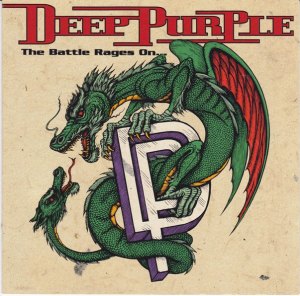
REVIEW: Deep Purple – The Battle Rages On… (1993)

TBRO FRONT

DEEP PURPLE – The Battle Rages On… (1993 BMG)

After the ill-fated (but personally enjoyed) Slaves and Masters, Deep Purple realized the only way forward was with Mk II screamer Ian Gillan back at the mike. With a full album’s worth of material already written with former singer Joe Lynn Turner, all Gillan had to do was turn up and re-write the melody and lyrics. Much to Blackmore’s chagrin! Blackmore had no qualms telling Gillan that he preferred the original lyric and melody to “Time To Kill”.

Much heavier than Slaves and Masters, The Battles Rages On is much more in line with albums such as Fireball, Perfect Strangers and Machine Head. Lord’s Hammond organ is much more in the forefront. However, a vintage sound does not a great album make. The Battle Rages On has 10 tracks, 5 of which are good and 5 of which are filler. This was disappointing for me personally, but some (M.E.A.T. Magazine and Martin Popoff included) have rated this album very high.  Joe Lynn Turner derisively calls this album The Cattle Grazes On.

The five tunes I like: “The Battle Rages On”, “Anya”, “Time To Kill”, “Ramshackle Man”, “Solitaire”.

The title track is absolutely monstrous. I remember hearing it on the radio and thinking, “Bloody well right!” Big beefy riff, angry lyrics!

“Annihilation, kill ’em all. Capitulation, watch the mighty fall. The road to glory is lined in red, and though the reason now is gone…The Battle Rages On!”  (Always wondered if this was about Gillan and Blackmore.)

The song is a Purple epic, along the lines of “Perfect Strangers” or “Knockin’ At Your Back Door”. Just an awesome track.  I understand that in 2013 they have actually returned it to the set.

“Anya” is a keyboard driven rocker, Jon Lord style, lots of drama. “Time To Kill” is sort of a heavy pop rocker with Gillan trying to get philosophical with the lyrics, which Blackmore hated. “Ramshackle Man” is blues rock, pure and simple as Purple have specialized in. “Solitaire” is mournful, sad, kind of unlike anything Purple had really done before.  Gillan’s droning melody seals the deal.

The rest of the songs just do nothing for me. Some, like “One Man’s Meat” have decent riffs and parts, but weak melodies and lyrics.  As songs, they don’t add up to a satisfying listen.  It is a shame, given the strength of the good songs on the album.

Blackmore left in the middle of the tour.  Joe Satriani filled in, and there was talk that he wouldn’t mind joining Purple full time.  His time proved to be temporary, and Steve Morse has been in the band almost 20 years now. When Joe Satriani was in the band, they did an awesome version of “Ramshackle Man”, which I have on a video bootleg from the European tour.  There was an official live album with Blackmore from the tour, called Come Hell Or High Water.  As well, you could buy official bootlegs with both Morse and Blackmore in a box set called Collector’s Edition: The Bootleg Series 1984-2000.  And let’s not forget the Come Hell Or High Water video, with Blackmore throwing that water bottle in Gillan’s general direction…

Check out Satriani’s outro solo starting at about 7:07…smokin’!

To me, Purple’s true comeback was 1996’s Purpendicular. Having said that, the five good songs on The Battle Rages On are worth the purchase at a reasonable price. And hey, maybe Popoff was right, and I’m just not getting it. You decide.

3/5 stars

And check out these cool supplementary releases, all of which deserve their own individual reviews.