progressive rock

REVIEW: Savatage – Edge of Thorns (1993)

By special request of reader Wardy, it’s Epic Review Time!

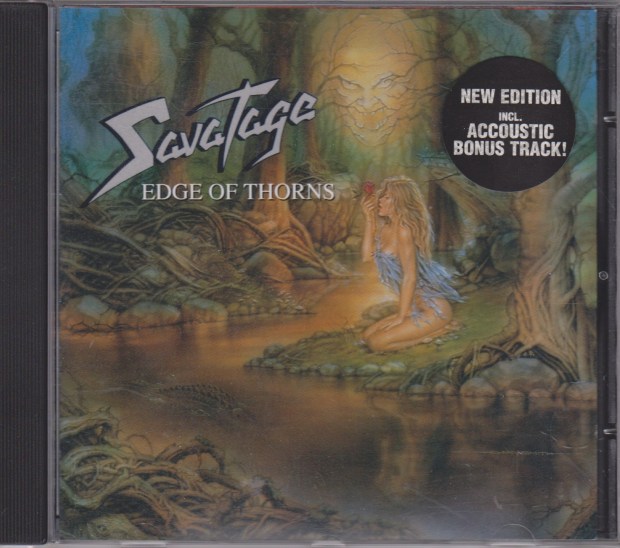
SAVATAGE – Edge of Thorns (1993 Edel & 2002 Steamhammer)

Sava-fans were shaken.  Even though 1991’s Streets: A Rock Opera was a complete artistic triumph, singer and co-founder Jon Oliva quit the band.  Side projects and home life had become priorities.  He would not, however, ever truly leave Savatage.  Even though he was no longer the singer, Jon Oliva co-wrote every track with his brother Criss and producer Paul O’Neill.  He even personally selected his replacement, Zachary Stevens, and tutored and coached the new young singer.   He also continued to play all the piano parts in the studio, although this time he would not tour.  It was certainly an unusual situation, but also an ideal one.   Fans knew that Jon was not really gone, and they easily embraced Stevens as the new frontman.  Oliva had stated that Savatage needed a voice like Zak’s in order to continue.  He knew his own voice was not commercial enough to get on the radio.  With Stevens they had a shot.

The press glowed with reviews, praising the new direction of the band.  They had successfully combined the later piano-tinged Savatage that wrote complex operatic songs and ballads, with the earlier riff-driven metallic Savatage.  Stevens was praised for his voice, and comparisons to Geoff Tate, James LaBrie and Ray Alder were tossed around.  I found a copy of Edge of Thorns in Michigan, and it was with great anticipation that I ripped the shrink wrap off the cassette and placed it in my Walkman.

Anyone who has heard the now-classic title track “Edge of Thorns” can’t forget the haunting piano that descends at the beginning of the album.  At this early stage, Stevens was very much singing like a progressive rock singer, and throwing in screams at key moments.  His range and power here are impressive, and very different from the Mountain King’s style.  “Edge of Thorns” was a great choice for an opening track and new singer.  Not only is it one of the most immediate songs that Oliva/Oliva/O’Neill had yet composed, but it also combines both sides of the band.  The soft piano intro reflects Streets, but then it kicks into overdrive with a riff, heavy bass and dramatic guitar solos. It possesses the pure rock drama of “Gutter Ballet”. It is the whole package.

I have always been drawn to the words.

I have seen you on the edge of dawn,
Felt you here before you were born,
Balanced your dreams upon the Edge of Thorns,
…but I don’t think about you anymore.

I don’t think about you…anymore,
Anymore…

But clearly, he does, and intensely so.

“He Carves His Stone” begins as if a ballad, but the patented snake-y Criss Oliva guitar riff drags us back to the metallic origins of the band.  The combination of riff and chorus are a winning one.  More intense is the borderline thrash metal of “Lights Out”, a smoking track that shows what Zak Stevens can do with the rougher side of his voice.  Hang on tight and shout along to the chorus, because this one is a ride.

Back to the dark, dramatic side that Savatage do so well, it’s “Skraggy’s Tomb”, a brilliant song bursting with ominous heaviness.   Just let it assault your skull, don’t fight it.  Fear not — “Labyrinths” is a quiet piano piece, with Jon accompanied by Chris on guitar.  This cascades in traditional Sava-fashion into a fully-blown dramatic intro similar to “Gutter Ballet”.  It is a suitable and essential part of the song it is attached to, “Follow Me”, the side one epic.

His whole life was written,
Written there inside,
The new weekly Bible,
His modern TV Guide,
Every night he stares back at the screen.

There is no way to sum up the pure excellence, drama, and chills that “Follow Me” delivers. Zak’s vocals make it accessible enough, the power is undeniable. “Follow Me” is among the greatest songs of the Zak Stevens era. A quiet piano piece appropriately titled “Exit Music”* works as an outro. Together with intro and outro, “Follow Me” is almost 10 minutes of pure Savatage adrenaline, with a Criss Oliva solo that still gives me chills.

The second side opens exotically with “Degrees of Sanity”, and Savatage fans know that sanity of one of Jon Oliva’s favourite lyrical subjects!  Criss’ guitar parts are lyrical and enticing.  Slowly it chugs, building and building.  With Criss firmly at the helm, the ship steers through craggy riff after craggy riff until it gives way to the next song, also clearly dealing with sanity:  “Conversation Piece”.  The subject person of the song thought he had been doing better, lately.  “I haven’t thought about you for a while,” he claims.  But even so, he has not let it all go yet.  “I keep your picture hidden a file, of favourite one-act plays.  Like pieces of myself, cut off in desperation, as offerings to thee.  I’ll leave them on the shelf, they’re good for conversation over a cup of tea.”  The melodramatic lyrics of Savatage have always appealed to me (I don’t know what that says about me).  Thanks to Stevens’ impassioned delivery, you can feel every word, while Criss Olivia chugs behind.  Remind me not to visit for tea!

Scan_20150816 (6)

Delicate is “All That I Bleed”, a pretty piano ballad with a rocking conclusion.  Demonstrating the versatility of his voice, Stevens sings smooth and light, until the end.  Perhaps it is all coincidence, but the songs do seem connected.  Both “All That I Bleed” and “Conversation Piece” deal with a letter and difficult emotions.  I like to think of the two songs as alternate endings to the same story — one in which the person does not send the letter (“Conversation Piece”) and one where he does (“All That I Bleed”).    Regardless, “All That I Bleed” has everything you would want in a ballad.  Had in come out in 1989 it would have stormed the charts and MTV would have played it non-stop.  1993 was a very different year from 1989, but Savatage had never expressed any interest whatsoever in musical trends (the mis-step that was Fight for the Rock notwithstanding).

“Damien” appears next, a choppy heavy rock tune with bouncy piano doubling the guitar riff.  Following this fine song is the even finer “Miles Away”, a melodic heavy rocker that is easy to like.  It has a brightness to it, and Steve “Doc” Wacholz kicks the drums right in the ass.  Unexpectedly the album closed with a quiet acoustic song, “Sleep”.  It feels like a sunrise after the stormy night, and perhaps that’s the intention.

There are plenty of bonus tracks on different editions of Edge of Thorns.  I can only review the bonus tracks I have, which are:

  1. “Shotgun Innocence”, originally a Japanese bonus track.  This is a glossy hard rock song with an emphasis on melody.  Though certainly heavy enough, its direct rock vibe doesn’t fit the mood of Edge of Thorns, which I’m sure is why it was saved for a bonus track.  Good song though, and it certainly shows off the pipes of young Mr. Stevens.
  2. “Forever After”, the second Japanese bonus track.  Probably the weakest song of the batch.  It sounds a bit like an unfinished Ozzy outtake, circa the Jake E. Lee period.
  3. “Conversation Piece (Live in rehearsal 9/24/1994)” is recorded really poorly, but the sweat and rawness are captured.  Since it is live in rehearsal, and it is known that Doc Wacholz did not tour, I assume this is with Jeff Plate on drums.  That would also have to be Alex Skolnick from Testament on guitar.  This track is on the 2002 Steamhammer/SPV remastered edition.
  4. “Believe (Acoustic)” is part of a series of acoustic versions Savatage did for another batch of reissues.  This is Zak Stevens’ version of the closing ballad from Streets, but with acoustic guitar instead of piano.  It is a fascinating alternative version, but the original always kills me.  This is on a German printing on Edel records.

As fate would have it, this would be the final time Jon and Criss would make music together.  On October 17, 1993 Criss was killed by a drunk driver with seven prior DUI’s.  Rather than let this crush him, Jon survived by pouring himself into music.  Savatage would not die, even if with half its heart ripped out.  Edge of Thorns remains Criss Oliva’s capstone, and a bright apex it is.

5/5 stars

*The really interesting thing about “Exit Music” is that it is entirely piano.  Therefore no “official” members of Savatage appeared on it!

REVIEW: Rush – Chronicles (1990)

It’s the final instalment of GREATEST HITS WEEK! All week we were examining some pretty cool greatest hits albums.  I saved the best for last — one of the very greatest, Greatest Hits albums ever. Once again, thanks to Aaron over at the KMA for the idea (which I stole).  For his original Greatest Hits Week, click here! 

If you missed a prior review, here they all are:

Monday:  EXTREME – The Best of Extreme: An Accidental Collication of Atoms? (1997)
Tuesday: JUDAS PRIEST – The Best of Judas Priest (1978/2000 Insight Series)
Wednesday: JUDAS PRIEST – Greatest Hits (2008 Steel Box)
Thursday: HELIX – Over 60 Minutes With… (1989)


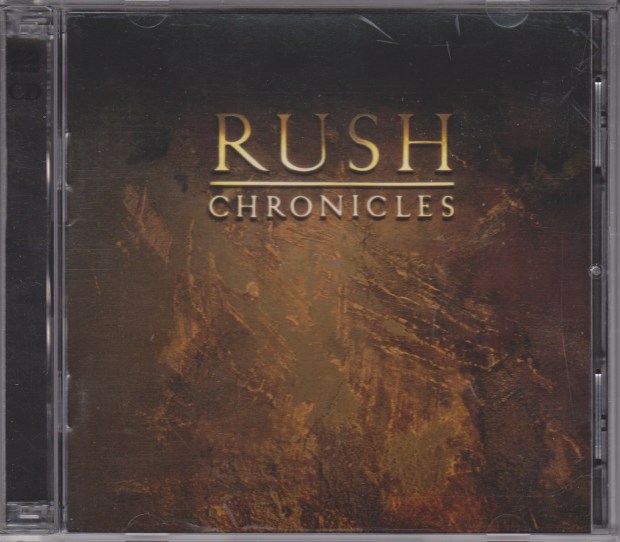
RUSH – Chronicles (1990 Anthem)

Yeah, oh yeah!
Ooh, said I, I’m comin’ out to get you
Ooh, sit down, I’m comin’ out to find you
Ooh, yeah
Ooh yeah
Findin’ my way!

I just can’t stress how important this album is to me.  I had always followed Rush, and been interested in what they were up to.  I had never taken the plunge and bought any albums.  I wouldn’t have had a clue where to begin anyway.  In July 1994, I was hired at the Record Store thus kicking off the exponential growth of my music collection (and tastes).  With birthday money, I finally acquired my first Rush:  Chronicles, the massive 2 CD set that was released for Christmas of 1990.

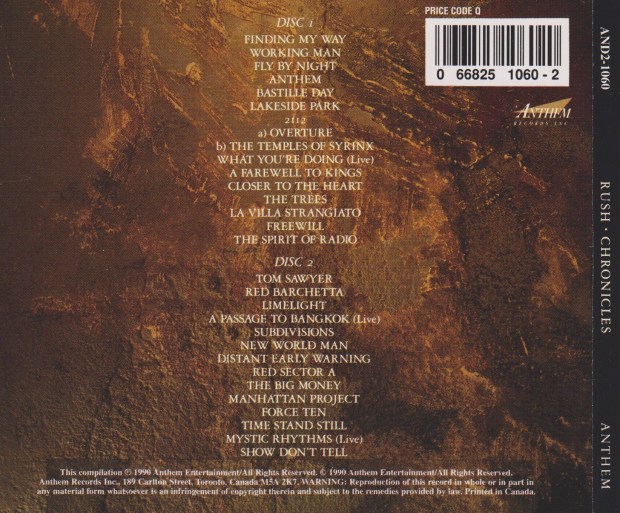
For my first listen, I didn’t play the whole thing from front to back.  I picked out the songs I liked best, and programmed the CD player.  I revisited favourites like “Tom Sawyer” and especially “Subdivisions”, and then the next day, listened to the whole thing.  One song jumped out at me immediately:  “Red Sector A”.  Holy shitballs!  “The Temples of Syrinx” was the next one that grabbed me on second listen, along with “Freewill”, “Limelight”, “The Trees” and “What You’re Doing”.  I had feared Rush would be a bit over my head if consumed in this quantity, but it turned up to be just my poison.

Even though Chronicles is the first Rush “greatest hits” compilation, and has arguably been replaced by the three volumes of Rush Retrospective, I still think that it is a perfect entry point.  I think back to my early experience of trying to figure out where to start with this band.  They seemed to have a lot of different sounds over the years.  I know today that anybody looking to buy their first Rush album can comfortably start with Moving Pictures.  But what about those who want a little bit more music than that, in the form of a detailed sampling?  Then Chronicles is the one.

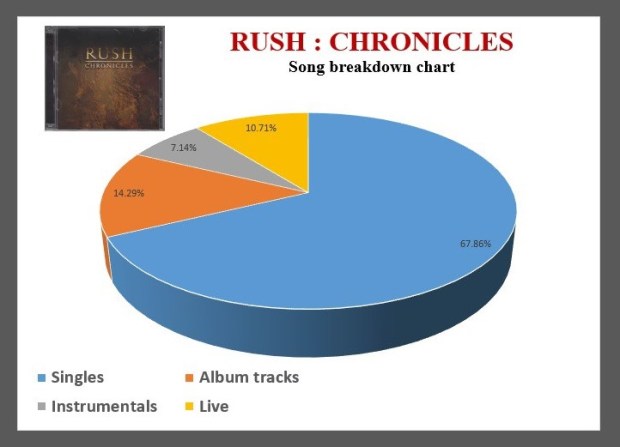
Appropriately, Chronicles goes chronologically which works for a band like Rush.  Their evolution over the years has been very natural and organic, not at all jumpy.  That makes for a smooth listen.  Each studio album gets two tracks, with a few exceptions:  Moving Pictures is represented by three, while the most recent Presto has one.  Additionally, 2112 has one track, albeit actually the first two parts of “2112” itself.  The neat thing, though, is that for its time Chronicles actually had three rare live tracks too.  Back in the early days of CD, they couldn’t get as much music onto the disc as they can today.  “What You’re Doing”, “A Passage to Bankok”, and “Mystic Rhythms” were all cut from their respective CD releases for time reasons.  They were released on Chronicles, on CD, for the first time ever.  All three are brilliant versions, especially the electrifying “What You’re Doing” from All the World’s a Stage.

I was hooked.  Using the tracks and liner notes from Chronicles as a guide, I began adding more Rush to my collection: 2112, Signals, Moving PicturesA Show of Hands, plus the more recent Counterparts and Roll the Bones too.  I see no reason that new fans today can’t use the album as a gateway the same way I did.  It’s still in print, even though the more recent Rush compilations are readily available.

There are minimal exclusions missing from Chronicles.  Some notable songs are absent, such as later singles “Superconductor” and “The Pass” from Presto.  This isn’t hard to understand.  Rush wouldn’t have wanted to compete with the current studio album they were still promoting!  The price is the only issue.  Even after all these years, Chronicles is still found for over $20, unless you go for a used one, much like I did!

5/5 stars

RUSH CHRONICLES

Scan_20150810 (3)

REVIEW: Jethro Tull – Songs From the Wood (Remaster)

For JT!

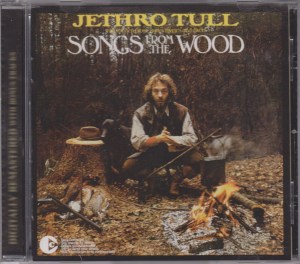
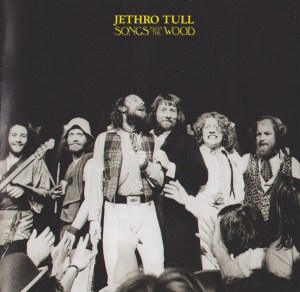
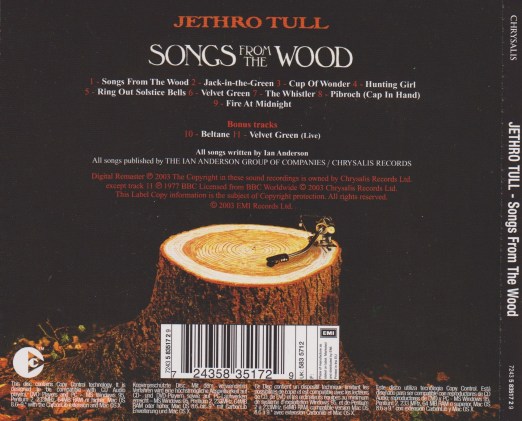
Scan_20150807JETHRO TULL – Songs From the Wood (1977, EMI 2003, remaster)

I love the jaunty, lighter side of Jethro Tull.  One of the reasons I started listening to Tull was that acoustic side.  It’s unique among rock bands.  They could still be pompous, but in a fun kind of way.  The critics called it “folk rock”, but that is misleading. It’s much more complicated than that.  Songs From the Wood might be considered the epitome of this kind of Tull music.  It was also the first for keyboardist David Palmer as an official member of the band, and perhaps that has something to do with the direction of the album.

The title track begins things immediately with this type of soft playful Tull song.  A multi-layered Ian Anderson sings harmonies with himself, and then the band come in backing him with gleeful but complex music.  Palmer’s synthesizer is immediately obvious, as he doubles down with John Evan, also on keys.  Certainly Barriemore Barlow has to be one of the most underrated drummers in rock, and his work here is as excellent as it is difficult.

Ian plays all the instruments himself on personal favourite “Jack-in-the-Green”.  This character from old English folklore is usually associated with the coming of spring, and the music is appropriate for that kind of imagery.  This kind of song was in part inspired by the countryside that Ian had relocated to.  While there he read a book on folklore, and that made its way into the music.  It’s hard not to like “Jack-in-the-Green”, unless you’re just a Grinch.  “Cup of Wonder” is brilliant, a celebration with orchestration and bright melodies.

“Hunting Girl” is the first song that delivers a big heavy riff (thank you Martin Barre). The song has a gallop to it, as if you are riding horseback with the Hunting Girl herself.  Martin’s guitar solo is a delight, a brief moment of rock genius.  Up next is a song that was re-recorded many years later for The Jethro Tull Christmas Album:  “Ring Out Solstice Bells”.  It doesn’t feel at all out of place on Songs From the Wood.  It fits the direction and lyrical concept of other songs, with the solstice theme.  Barrie Barlow’s drums on the outro are something else!

Scan_20150807 (2)

Side two of the album opened with “Velvet Green”, a very percussive song.  Of the tracks thus far, it is the least instantaneous.  It’s one of the longest track at six minutes, and has a very progressive bent.  “The Whistler” on the other hand is pretty instant.  I used to mis-hear the lyrics.  I thought Ian was singing, “I have a pipe, and I’ve come to play.”  I prefer my words to the actual ones, “I have a fife and a drum to play.”  This brilliant little song is about as bright and jaunty as Tull get.  “Pibroch (Cap in Hand)” gives Martin Barre a chance to make a lot of cool noises…weirdly Kiss-like, actually.  “Pibroch” is a long bomber (8:35) and a bit too long at that, but the moments of brilliance shine through, as always.  Especially enjoyable are the quaint “Dr. Who” sounding keyboards near the end.  Just great stuff.  The closer is “Fire at Midnight”, a title that Blackmore seems to have ripped off for his Fires at Midnight album.  It is a brief mostly-acoustic number that returns to the bright spring-like sound that commenced the album.

The Jethro Tull remaster series has been excellent.  Songs From the Wood only has two bonus tracks, which is a darn shame.  “Beltane” shares lyrical themes with other songs on the album.  I don’t know if it’s a B-side or what have you, but it’s clearly from these sessions.  It boasts some of Ian’s best flute work on the disc.  It’s of excellent quality, a worthy bonus track for a great album.  The other extra is a live version of “Velvet Green”, every bit as complex as its studio counterpart.  It’s a bit more lively, perhaps.

People who like Tull would probably love this album because it emphasizes a lot of traits that are unique about Jethro Tull.  Those who hate “folk rock” or progressive rock, or whatever else Tull gets pigeonholed as (classic rock?*) should keep their distance from Songs From the Wood.

4/5 stars

Scan_20150807 (4)

* Hey, they won a Grammy as a “heavy metal” band.

REVIEW: Queensryche – Take Cover (2007)


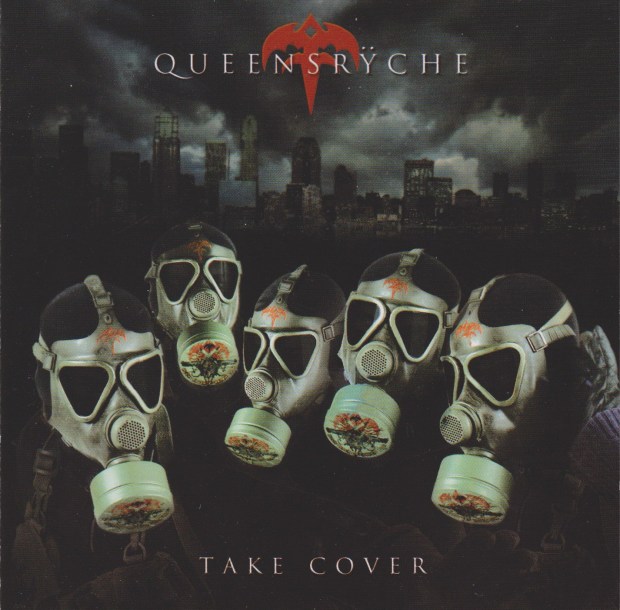
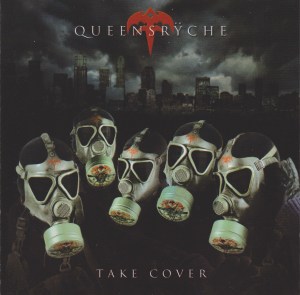
Scan_20150801 (4)QUEENSRYCHE – Take Cover (2007 Rhino)

As bad as things got at the end of the Tate era for Queensryche (cabaret, anyone?), Take Cover was a musical low.  Queensryche were busy in 2007, with a double live performance of both Mindcrime albums (Mindcrime at the Moore),  a double best-of (Sign of the Times featuring a new song called “Justified”), and Take Cover, a covers album.  Considering the number of releases in 2007 (double CDs no less), Take Cover looks all the less necessary.

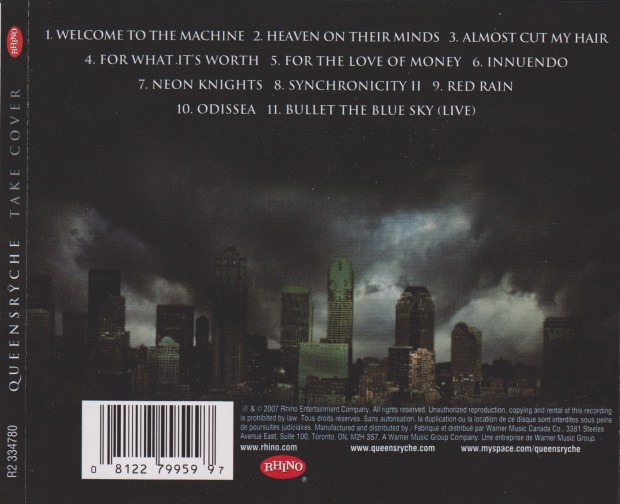
The five members of Queensryche each chose some songs for the album, and you have to admit that most of these choices are pretty cool.  Where things go sideways is in the recording of them, and it usually comes down to Geoff Tate’s voice.  Floyd’s “Welcome to the Machine”, which opens the album, should have been a slam dunk.  The dark musical backbone is there, but Geoff’s shaky multi-layered vocals do not send shivers up the spine the way Gilmour’s did.  It’s nice that Geoff threw some of his trademark sax in here, and the solos (Michael Wilton and Mike Stone) are great.  The problem is the vocal and that’s a big problem.

“Heaven on Their Minds”, from Jesus Chris Superstar, was chosen by Mike Stone, who left the band after this album.  Musically this works, and I never would have guessed its origin just from its metallic riff.  Thumbs up for this one, no complaints about the singing.  CSNY’s “Almost Cut My Hair” is a dud though, and they should have left well enough alone. Following that is a flat “For What It’s Worth” (Buffalo Springfield), a double whammy of stinky renditions of hippy anthems.  Thanks Geoff, for picking those two….

When I spoke to Eddie “edbass” Jackson back in 2001, he told me “I love funk, I really like a really hard driving sound. I tend to focus more on the sonic end of it than the performance end.” That’s a great way to describe his take on the O’Jays “For the Love of Money”. Even Geoff’s sour singing fails to sink it, such is the relentless groove. Queen’s “Innuendo” is another brave choice. Long I have loved this Zeppelin-esque Queen classic. This masterwork of beauty, elegance and strength is rendered limp as a noodle by the vocal chords of Mr. Jeffrey Wayne Tate. This is painfully bad. It reminds me of Bad News’ version of “Bohemian Rhapsody”. Now my head hurts, and I must now do an ear-cleanse by playing the immaculate original as sung by Freddie Mercury. [Note: I’m not kidding, that’s exactly what I did! Here you go.]

From Freddie Mercury to Ronnie James Dio, there are some difficult vocalists here to cover. Right there are two of the greatest of all time, without question. Geoff struggles a little less with the Dio approach on “Neon Nights”. But he’s absolutely screwed on “Syncronicity II” by The Police. Scott Rockenfield, who I have always thought must have been a Stewart Copeland fan, picked this song. One of the things about the original was how effortlessly Sting sang it. He hit each note perfect and cleanly. Geoff is wavering all over the place, and it robs the song of all its biggest hooks.

Geoff Tate recovers on “Red Rain” by Peter Gabriel…oh man, what a song! Edbass shines on this one, as does Scotty Rock. “Red Rain” is one of the album highlights. Tate then indulges his every fantasy on “Odissea”, part of an Italian opera. It’s up to you whether you hit the skip button or not. Just keep in mind what Geoff Tate did to poor defenceless Freddie Mercury. He sings in Italian, so kudos for him for doing this, but the end result is an experiment that doesn’t need repeating. Finally, the live take of U2’s “Bullet the Blue Sky” is by far the best song. This is a recording from the Q2k era featuring Kelly Gray on guitar before he was replaced by Mike Stone. It’s a 10 minute extended workout complete with an epic Tate rant.  “Don’t step outside of that box!  Don’t step outside of that box!  It’s dangerous there…outside that box.”

As much as Take Cover is a slog to get through, “Bullet the Blue Sky” is arguably enough to make it worth it.

2/5 stars

Scan_20150801 (5)

REVIEW: Max Webster – High Class in Borrowed Shoes (1977)

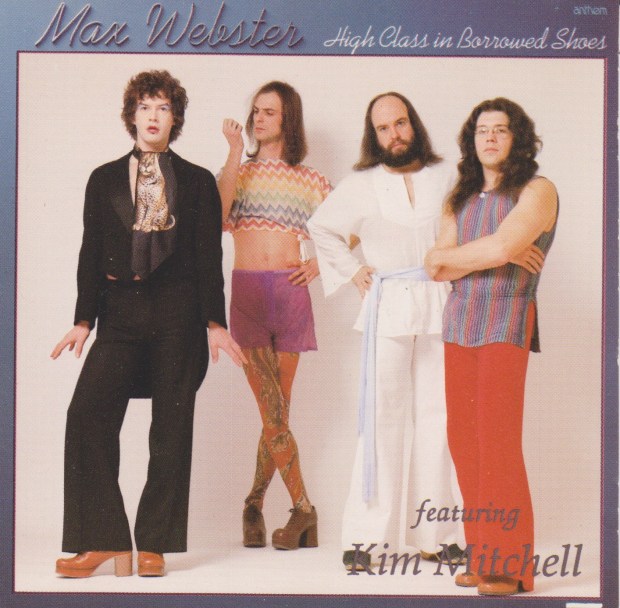
Scan_20150730MAX WEBSTER – High Class in Borrowed Shoes (1977 Anthem)

It’s only the second Max Webster album, but the band were so tight and perfect that they got three radio classics off it.  “Diamonds Diamonds”, “Gravity” and the title track are all three radio staples, and “On the Road” a live classic that Kim Mitchell occasionally plays unplugged.  Every fan has a favourite Max album, and I think I probably know a couple who would put High Class in Borrowed Shoes as numero uno.

The album opens with the impressive “High Class in Borrowed Shoes”, a blaster that sounds to me like a Canadian Van Halen!  Max had tamed some of their wackier tendencies (“Toronto Tontos”, anyone?) and focussed their chops.  Not that the new Max (now featuring legendary drummer Gary McCracken) was normal by any definition.  Just listen to the lullaby-like “Diamonds Diamonds”.  Great song, but very different for a rock band.  Its dreamlike mood is heightened by the surreal lyrics by Pye Dubois.  Not to mention there are only six lines to the words!

“Gravity” would make my top five Max tracks in a heartbeat.  “What do I know?  I sat under a cloud.  I looked up, afraid to look down.”  Kim sounds like a little boy speaking the words, to great effect.  The chorus is a big one, backed by a Kim’s riffing.  I have no idea what this song is about, but to me the line “Forget that fear of gravity, get a little savagery in your life,” says everything.  Don’t be afraid to take chances.  As Pye’s friend Neil Peart once said, just roll the bones.  That’s what it means to me, anyway.

Proving he has always been capable of tender ballads, “Words to Words” is one of Kim Mitchell’s first.  The keyboards of Terry Watkinson keep it just a little left of center, but Kim’s acoustic work is impeccable and excellent.   Pye Dubois’ lyrics are magical and stirring.  It’s hard to overstate just how quality this song is.  However ballads are usually best followed by scorchers, and that’s “America’s Veins”.  Killer solos, smoking drums, and a chorus built for the concert stage: it’s here in one complete package.

“Oh War!” is an incredible monument of rock.  AC/DC did a song with a similar vibe called “Little Lover”, but “Oh War!” is a completely different animal.  The gonzo solos are more in the “Z” section of the rock aisle, as in “Zappa”.   And check out the words!  “‘Cause I say fuck you instead of thank you, your choice under your breath.”  Yes, that’s what Uncle Kim, Canada’s favourite king of the summertime, just said!  OK, so it wasn’t going to get on the radio with those words…but damn, it should have been.  This song could have been almost as big as “Battle Scar” had it been.

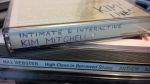
I have a tape here of Kim Mitchell doing “On the Road” live in the MuchMusic studios, acoustically, on their Intimate and Interactive show.  This is what you might call “campfire rock”, but that sells it far too short.  “On the Road” is more than a song that would sound good played live around a fire, it has genuine soul that you can feel.  It’s an incredible song, and once again, I wonder why Max Webster wasn’t friggin’ huge.  “Rain Child” is next in line, which I would describe as a slow burner.  Terry Watkinson’s keys take center stage, never intruding.  “Rain Child” is a classic album track, and perfect for winding down the album.

IMG_20150730_182836

Max Webster went mad on the last track, “In Context of the Moon”.  This is the second of four “Moon” songs on the first four records:  “Coming Off the Moon”, “Beyond the Moon”, and “Moon Voices” are the others.  “In Context” can’t be described easily, because it spans many styles and tempos in just five measly minutes!  How?!  You have to play this one a few times just to get everything that is happening.  It’s certainly one of the most challenging pieces of music Max have recorded.  The four musicians must have rehearsed the shit out of this one.  Anyway, at all times, it smokes.  Whether it’s the bright intro guitars, or the metal riffs that follow them, or the sheer madness (including bass solo) that ensues, “In Context of the Moon” is always riveting.  It’s just non-stop even though by the time you get to the end of it, you’ll wonder how you got there!

Final note:  My good buddy T-Rev, who has guest written here a couple times before, met Gary McCracken after he moved to Sarnia.  He was working at Fastenal when in came a guy to pick up an “order for Gary McCracken.”  T-Rev pondered a bit before enquiring, “I hope you don’t mind me asking, but were in a band called Max Webster?”  Yes, he had.  It was that Gary McCracken, and he was cool.  I love little stories like that.  Gary McCracken was Trevor’s biggest influence as a young drummer!

Popoff's awesome book

Popoff’s awesome book

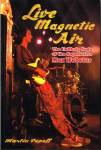
There is nothing more to be said in just a single review.   For the whole enchilada, get the book from martinpopoff.com!  And be sure to get High Class in Borrowed Shoes for your collection.

5/5 stars

REVIEW: Max Webster – Universal Juveniles (1980)

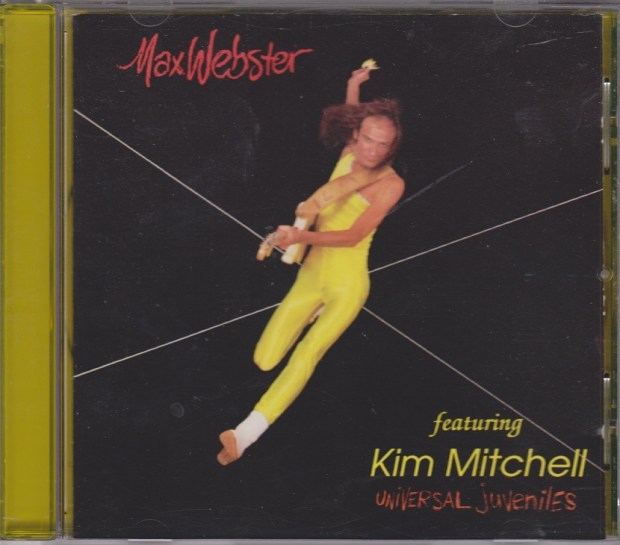
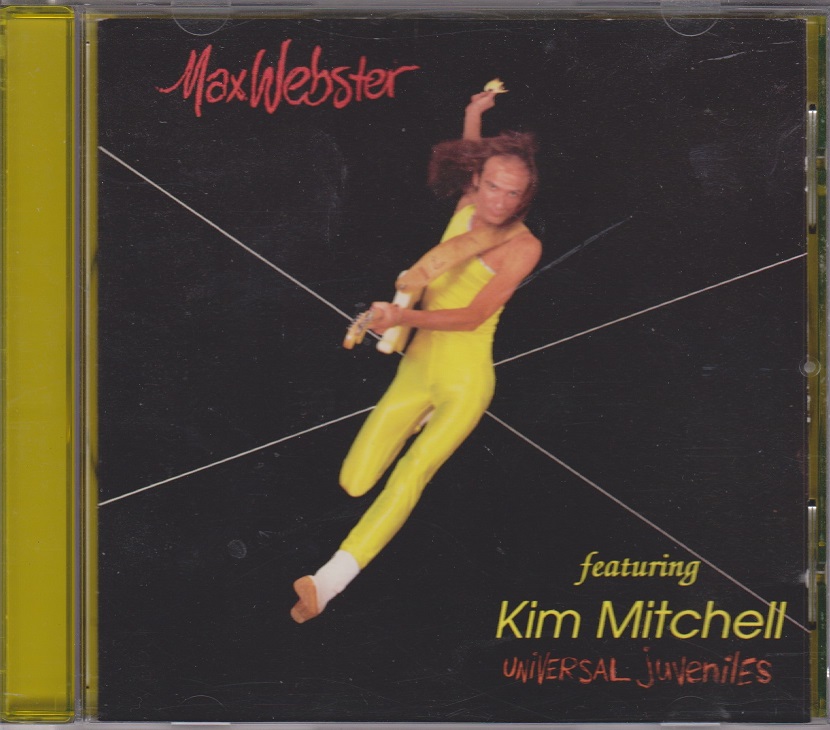
Scan_20150717 (3)MAX WEBSTER – Universal Juveniles (1980 Alert)

“1980 will be a year long remembered.  It has seen the end of Max Webster, and will soon see the end of Led Zeppelin.” — Darth Vader

All good things must indeed come to an end.  If there was one band — just one band! — out of the Great White North that truly deserved better things, it was Max Webster.  Much like their soul mate, Frank Zappa, Max Webster had successfully inserted humour into complex progressive rock songs.  The big difference was that Max tended to keep it to guitar-bass-keyboards-drums.  Their musicianship was unimpeachable.  Much like Bubbles shouted out “Geddy Lee! Neil Peart! Alex Lifeson!” to emphasize the awesomeness of Rush, I shout “Kim Mitchell! Terry Watkinson! Gary McCracken!”

Maybe it was the skinny balding front man in the tights, the weird but deep lyrics, or the goofy keyboards.  One way or another, Max Webster never saw the success that their friends Rush did, and Universal Juveniles would be the last Max record.  Genius keyboardist Terry Watkinson was out of the band, although he did play on the album.  Kim Mitchell folded the band mid-tour after the record, unable to hack it any longer.

Kim’s smoking chops open “In The World of Giants”, perhaps the world that Rush occupied and Max failed to enter.  Max sound stripped back, with minimal piano and keyboards.  What a song though.  Surely “In the World of Giants” is one of Max Webster’s most breakneck rock songs, albeit with the complexity of riff and licks that you would expect.  At the same time, do I sense a certain amount of fatigue, between the grooves?

There’s no detectable tiredness on “Check”, which will wake you right the fuck up!  There’s nothing like a good, joyous, loaded-with-all-the-guitar-fixin’s Max Webster romp.  Want some shredding?  “Check this out!”  At only 2 1/2 minutes, “Check” is all it needs to be — in and out, the mission of kicking ass all complete.  Yet Max Webster was not about simply rocking, so “April in Toledo” brings some funk.  The classic refrain of “I wanna run to Niagara, I’ll cry and cry in the dark” is joined by gleeful guitars, to create the picture perfect mixture of Max confection perfection.  I’m still sitting here scratching my head wondering how Kim got that weird guitar sound in the solo so perfect, but I’m soon distracted by another awesome chorus.

“Juveniles Don’t Stop” is a Max party anthem; not as memorable as “The Party” itself, but still good to crank with some cold ones.  Don’t get too loaded though — you don’t want to miss the double barrelled blast that is “Battle Scar”.  What could be more epic than a duet with Rush vocalist Geddy Lee?  Oh, how about doing the whole song with Rush — a double trio!  That’s two bass guitars opening the song.  That’s Neil Peart and Gary McCracken providing the dual beats.  (You sure can tell when it’s Neil doing a drum roll, that’s for sure!)  That’s Alex Lifeson accompanying Kim Mitchell in a legendary guitar team-up.  Geddy Lee, in peak voice, provides the vocal chills necessary to top off such an epic alignment.  Truly, “Battle Scar” is not just an important song for Canadian rock, but a track that any serious rock fan should seek out and own.  You simply owe it to yourself to do so.

There’s some sneaky understated goodness in “Chalkers” but I find it to be one of the less memorable tracks.  It’s notable for containing the phrase “universal juveniles” in the lyrics, lending it for the album title.  “Drive and Desire” is a bigger song, a sizeable rocker with a nice bluesy vibe.  McCracken’s drums on this one are purely delicious.  Even better is the slow mournful “Blue River Liquor Shine”.  It foreshadows some of the songs on Kim’s excellent solo EP, Kim Mitchell.  A proud achievement, “Blue River Liquor” does indeed shine with Max classics of the past.

“What Do You Do With the Urge” is a wreckless Max party rocker, just in time to set us up for the final Max Webster song — the last one ever, sadly.  “Cry Out for Your Life” lurches like a wounded soldier crawling to the warmth of safety.  Loads of Max class abound, but there does seem to be less glee, less shimmer.  Perhaps the end was inevitable.  Although Kim and the gang turned in another jaw dropping Max Webster record, something was wrong and it sounds somewhat forced at times.

Kim Mitchell had tremendous success with his solo career in Canada.  Anthems such as “Go For Soda” have been immortalized in our memories, and on our TV sets.  Who can forget the moment in Season 7 of Trailer Park Boys, when Bubbles goes to “rock a piss”, and Ricky responds, “You go rock a piss, I’m gonna get ‘er going with the Mitchell!”  Then: Bubbles peeing to the tune of “Go For Soda”, bopping his head in time with the music!  Just classic.  On the more sentimental side, Kim appealed to the adults in the crowd with “Patio Lanterns” and “Easy To Tame”.  He really aimed to please everybody….

…Except the fans of old, goofy Max progressive rock.  Universal Juveniles is its capstone.

4.5/5 stars

REVIEW: Marillion and the Positive Light – Tales From the Engine Room (1998)

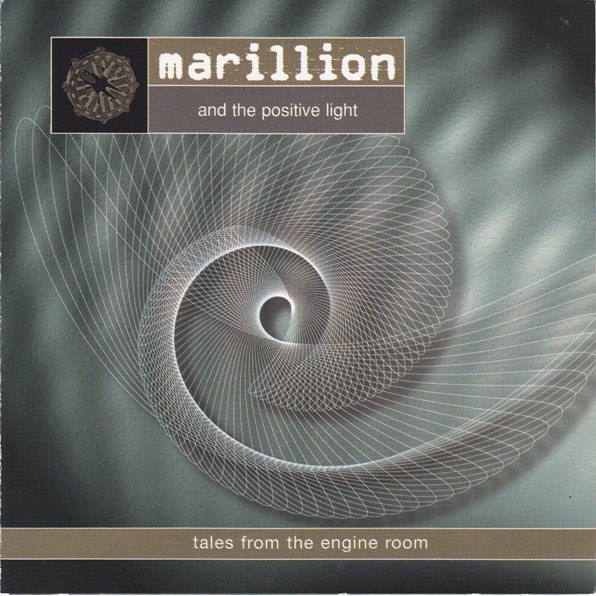
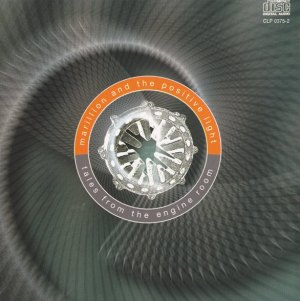
TALES FROM THE ENGINE ROOM_0001MARILLION and the POSITIVE LIGHT – Tales From the Engine Room (1998 Big Eye)

Remix projects: Often dicey, usually over-indulgent cash-grabs. I always give Marillion the benefit of the doubt where integrity is concerned. In the liner notes, singer Steve “H” Hogarth says that the art of the remix at its best is to produce a cerebral trip, and I think that was the aim here. He refers to this as a “reconstruction” and that sounds about right.

Having just completed the This Strange Engine album, Marillion handed over the master tapes to The Positive Light (Marc Mitchell and Mark Daghorn) for creative reconstruction. The duo had impressed them with some early work on “Estonia” so they decided to go all-in. That track is the first on the CD, Tales From the Engine Room. It’s a swirly, heavenly version but not a drastic departure. Hogarth’s vocal isn’t chopped to bits, the melodies remain the same, and the overall structure is unchanged. It is as if the body of the song were played by Jean Michel Jarre instead of Marillion.

“Estonia” folds neatly into “The Memory of Water”. This experiment turns the song into a light dance number. It’s not nearly as great as the pounding “Big Beat Mix” on the Radiat10n CD.  This version just kind of circles around without going anywhere.  It’s always risky, extending a three minute song to almost ten!  Sorry Positive Light, I have to give you a D on “The Memory of Water”.

TALES FROM THE ENGINE ROOM_0002If you like long bombers then you’ll love “This Strange Engine”, all 20+ minutes of it!  That’s not too much of a stretch, since the original is over 15.  Of this one, Hogarth says, “[it] reduced me to tears.  I would advise you to listen to it on a Walkman whilst walking through the town on a Saturday afternoon.  It makes everyone move in slow motion!”  While it is cool, it has never given me that exact effect.  It really starts to swell into dramatic waves when it gets into that “tall tales of Montego Bay,” section.  A solidly trippy remix.
Onto “One Fine Day”, which was never one of the strongest tracks.  With the Positive Light, it acquires a trippy jazzy slant.  I don’t know what “Face 1004” is, except perhaps a Positive Light original?  It bears no resemblance to the fine Marillion song “Man of 1000 Faces”, but it’s a beat-heavy dance track much in the style of the rest of this CD.

The original CD ended with track 5; reissues also contain “80 Days”.  Since there’s no point in buying an incomplete version, you may as well look for the reissue.  “80 Days” is far removed from its jaunty, celtic origins.  Now replete with electronic beats and tribal singing, it is still a celebration of touring the world.

Tales From the Engine Room turned out to be an apt title for a successful experiment.  The Positive Light took the songs down to their cores without losing what made them the songs that they are.  They re-presented the tunes in a new way, in a different genre.  While this is far from an essential purchase, it will be appreciated by fans of latter-day Marillion.

3/5 stars

#413: Just for the record, Meat’s gonna put it down (Guest shot)

RECORD STORE TALES MkII: Getting More Tale
#413: Just for the record, Meat’s gonna put it down

By special request of Aaron at the KMA, yesterday I ranked all the Marillion studio albums in order of preference (see #412: Just for the record, I’m gonna put it down).  It’s not an easy thing to do, because any band with two distinct phases (and lead singers) is going to have lovers and haters of both, as well as fans who can accept both equally.

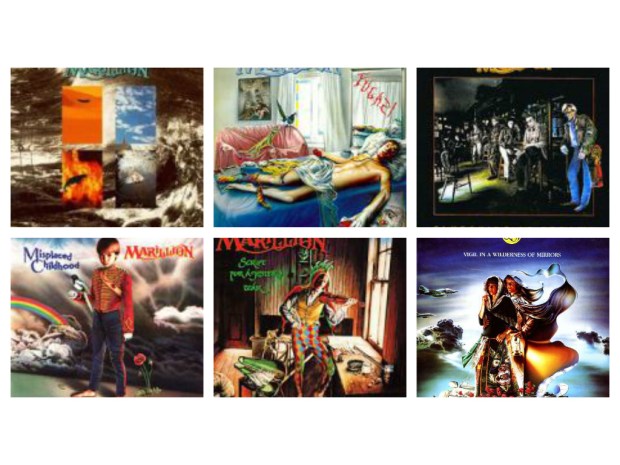
During Sausagefest weekend 2015, I discussed my already-completed list with Uncle Meat, who also wanted to take part.  He has his own feelings about Marillion’s discography.  In fact he only listed six albums.  Meat is very much a “Phase One” fan, a follower of Fish who had a hard time accepting the changes that occurred after Seasons End.  It’s important to note that Seasons End was mostly written (musically) with Fish.  After that album, the band had to come up with new material for the new singer, and that is when they started to write very differently from before.  It’s not Steve Hogarth’s fault, in Meat’s eyes, just the way the band wrote for and with him.

Here are Uncle Meat’s top Marillion albums, without commentary.  He’s going top down:

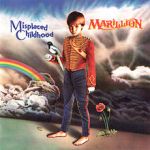
MISPLACED1. Misplaced Childhood (1985)

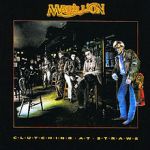
CLUTCHING2. Clutching at Straws (1987)

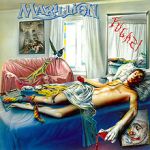
FUGAZI3. Fugazi (1984)

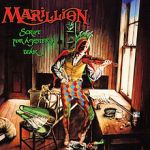
SCRIPT4. Script For A Jester’s Tear (1983)

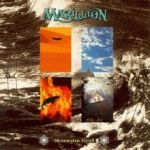
SEASONS5. Seasons End (1989)

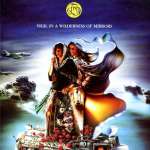
6. Vigil In A Wilderness of Mirrors – Fish (1990)

How’s that for a “Big Wedge”? More Marillion tomorrow!
#412: Just for the record, I’m gonna put it down

RECORD STORE TALES MkII: Getting More Tale
#412: Just for the record, I’m gonna put it down

By special request of Aaron at the KMA.

Marillion have 16 studio albums: Four with original poet and singer Fish, and 12 (going on 13) with Steve “H” Hogarth. (I’m not counting the album of acoustic versions called  Less Is More.) Like any band who have had more than one beloved singer, it is very difficult to try to arrange their albums in any sort of rated order. How can you compare an album like Brave to Fugazi? They are nothing alike. They share similar DNA, and the ambition to play intelligent rock music, but to say one is better than the other? I wouldn’t want to do that.

But I must. This was a request. I have to oblige.

Starting from the bottom, here are Marillion’s studio albums from weak to strong.

SOMEWHERE ELSE16. Somewhere Else (2007). Following an album like Marbles (2004) is damn near impossible. Somewhere Else has never completely clicked with me and it remains foggy in my memory.  Incidentally, the vinyl version has three live bonus tracks and a slightly shuffled song order, as well as a warm sound that benefits the listening experience.
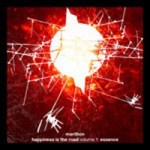
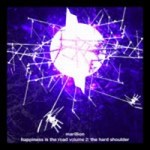
 

HAPPINESS ESSENCEHAPPINESS HARD SHOULDER15. Happiness is the Road (2008). Consisting of a massive eight sides of vinyl (!), Happiness is the Road is broken into two albums: Essence, and The Hard Shoulder. While both discs contain memorable songs such as “This Train is My Life”, the set is too sprawling and slow to be enjoyed frequently.  (The vinyl version contains bonus live tracks from the album Happiness is Cologne.)
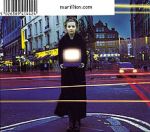
 

DOT COM14. marillion.com (1999). I love that the band were digging into trip-hop and writing catchy poppy songs, but as a whole the album doesn’t rank higher than…
 

HOLIDAYS13. Holidays in Eden (1991). Some like it, some consider it too commercial. I fall into the second category.


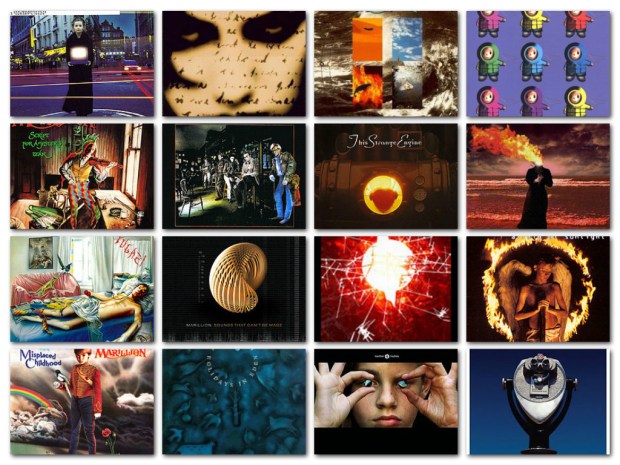
THIS STRANGE12. This Strange Engine (1997). I still like this mostly acoustic album (I own three copies), but it’s a departure. Iron Tom Sharpe calls this “the one that sounds like Hootie and the Blowfish”. It retains progressive moments but also stretches out into celtic folky sounds and tropical celebrations.
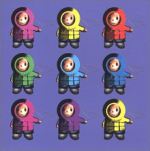
 

ANORAKNOPHOBIA11. Anoraknophobia (2001). A decent album, a bit long winded but a progression over 1999’s marillion.com
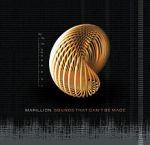
 

SOUNDS10. Sounds That Can’t Be Made (2012). I think Marillion really grabbed this album by the balls. It’s fearless.
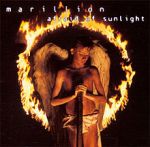
 

AFRAID9. Afraid of Sunlight (1996). This middle grouping of albums on the list are really so close it’s meaningless. It’s splitting hairs to put them in a meaningful order. Afraid of Sunlight scores high due to the excellent title track.
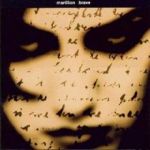
 

BRAVE8. Brave (1994). This is where Marillion-with-Hogarth really came into their own. It is still one of the most ambitious Marillion albums and an emotional roller coaster of a concept record.  There’s also a heavy 10 minute jam released as a B-side called “Marouette Jam” that necessitates buying of the remastered 2 CD edition.
 

SEASONS7. Seasons End (1989). The most difficult album of a career is gonna be the first album with the new singer. By retaining their classic sound with a few new twists and a new charismatic frontman, Marillion successfully rode through the transition.


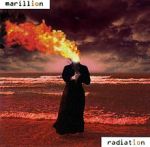
RADIAT10N6. Radiation (1998). I love this noisy reject of an album. It’s brilliant.


SCRIPT5. Script For a Jester’s Tear (1983). Fish finally makes his first appearance on this list with the very first Marillion album. Genius poetry but complicated tunes make this one a jagged-edged favourite.


MARBLES4. Marbles (2004). Marillion’s first double CD studio album, never wearing out its welcome. Like Brave, but grilled to perfection and with all the accouterments.
 

FUGAZI3. Fugazi (1984). Fugazi is not an easy album to get into, with a pugnaciously opaque second side. The first side is pure genius.


MISPLACED2. Misplaced Childhood (1985). The record company shit their pants when they heard that Marillion were doing a concept album for their third record. The band had written two 20+ minute pieces of music tentatively titled “side one” and “side two”. After honing it live, they unleashed Misplaced Childhood to the stunned masses.


CLUTCHING1. Clutching At Straws (1987). It not difficult to put Clutching at Straws as #1. It is one of Marillion’s most beloved, and Fish’s favourite. The dark poetry and sharp songwriting makes it a timeless perennial favourite, never stale, and always revealing new facets to its personality. An utter classic.


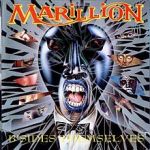
THIEVING BSIDESMarillion have numerous live albums (I lost count but well over 50 or 60) and greatest hits with exclusive material to boot. Ranking those is all but meaningless. Having said that, one essential purchase for a serious Marillion fan is their first double live, The Thieving Magpie (1988). This epic contains a full performance of Misplaced Childhood, as well as non-album cuts like “Freaks”. Another great record to own is B’Sides Themselves (also 1988), containing some of Marillion’s most memorable B-sides.  These include the 18 minute epic “Grendel”, and more concise classics such as “Tux On” and “Market Square Heroes”.

Dig into some Marillion and see what the frak you’ve been missing!

REVIEW: I Mother Earth – Blue Green Orange (1999)

This one goes out to Patrick Dynamite!

I MOTHER EARTH – Blue Green Orange (1999 Mercury)

When Edwin left I Mother Earth for a solo career, many fans (myself included) were disappointed with his wishy-washy not-rock of his solo debut, Another Spin Around the Sun.  Sure the song “Alive” was incredible and epic, but the rest of the album was so middle-of-the-road and lukewarm.  It was with great relief that I Mother Earth only went from strength to strength by hiring on unknown singer Brian Byrne to replace him.

I Mother Earth didn’t scale the top of the charts with Blue Green Orange, but what an album it is!  Byrne has enough of the rasp and power that Edwin possesses, so he is a natural fit and the sound is pure IME.  The opener “Love Your Starfish” immediately proclaims that the band are back!  Back to playing longer, more complex song structures with interesting drum patterns, bellowing vocals, and riffs.

But it’s not all just hammering away.  “All Awake” brings back the spacey, quiet side of I Mother Earth.  The psychedelic textures and exotic percussion are reminiscent of a song like “So Gently We Go” from the first album.  Drummer Christian Tanna is joined by longtime I Mother Earth percussionist Daniel Mansilla, and Armando Borg on additional percussion.  Jagori Tanna remains one of the most underrated and interesting guitarists to come from the Great White North, and his work here is exemplary.  His willingness to explore reminds me of other progressive players such as Steve Rothery.

“Gargantua” is one of the shortest songs at 4:34.  Most of them are in the five to six minute range.  Appropriately “Gargantua” is the most radio-friendly.  Its pop melodies and straightforward beats make it the most immediate, all it lacks is a great chorus.  For that, go for the ballad “When Did You Get Back From Mars?”  I don’t know if we can call it a “ballad” but it’s a quieter acoustic tune with a plaintive chorus.


Video edit version of “Summertime in the Void”

You wouldn’t usually pick out a track that is seven minutes long for a first single, but that’s “Summertime in the Void”, one of the best tunes on the album.  It’s also one of the most rocking, though like all I Mother Earth tunes it’s full of twists and turns including loads of percussion.  I’m a big fan of Bruce Gordon’s intricate bass.  Even so, I do have a favourite bass player in the world, and that’s Geddy Lee.  And guess who turns up on the song “Good for Sule”?  Geddy frickin’ Lee!  (Alex Lifeson played on the previous IME album, Scenery & Fish.)  “Good for Sule” may well be the best tune on the album.  Gentle piano helps make it the most laid back track on the disc.

I’ll stop here — I don’t want to review Blue Green Orange song by song, because it’s all variations of “wicked guitars”, “awesome percussion”, and “challenging twists and turns”.  Blue Green Orange is not an instant pleasure, but one that reveals layers the more you listen.  As such it’s my second favourite I Mother Earth album, after Dig. Reception was mixed at the time however.  Some fans did not embrace the new album, others preferred the old singer.

The packaging for this CD is cool.  You could choose between blue, green or orange covers.  The inside booklet is layered with pages of different sizes and lyrics for all the songs.  Packaging like this on a standard edition CD is something we collectors appreciate.

4/5 stars