Movies

MOVIE REVIEW: Runaway (1984 – The KISS Re-Review Series)

The KISS RE-REVIEW SERIES Part 27:  Bonus movie review!

RUNAWAY (1984 Tristar)

Directed by Michael Crichton and featuring Gene Simmons

Being in  was never enough for Gene Simmons.  Dating Cher and Diana Ross gave him a taste of Hollywood stardom.  He saw movies as his next mountain to climb.  Gene secured an audition with novelist and sometimes director Michael Crichton.  Crichton asked Gene to communicate, without saying any words, his desire to kill him.  Whatever Gene did worked, and he scored the role without even having to read for it.

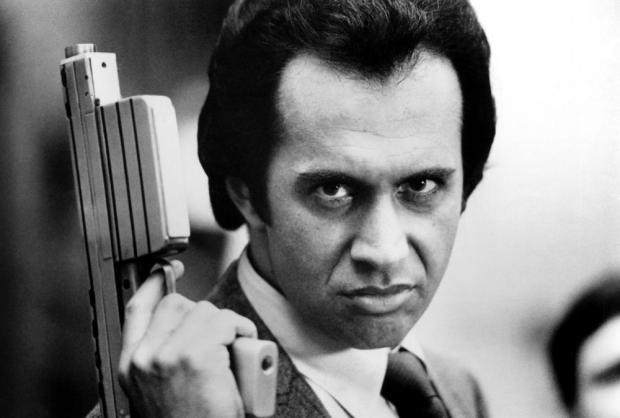
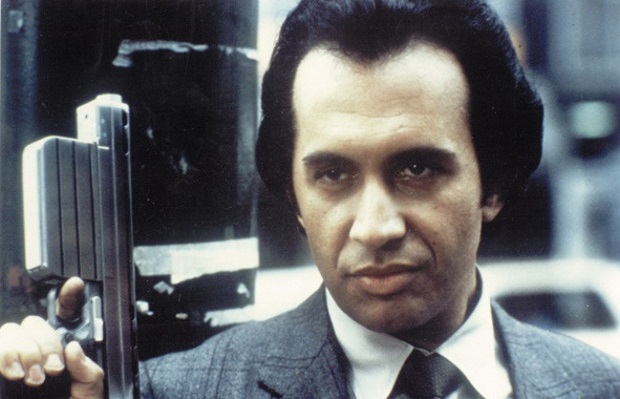
Crichton’s next film Runaway was a Tom Selleck sci-fi vehicle and Gene played the villain Dr. Charles Luther.  Turning his back on Kiss and leaving Paul Stanley to do all the heavy lifting, Simmons cut his hair and got filming.

Set in the “near future”, Runaway depicts an America in which robots are commonplace.  Every household has some, and they have failsafes built in to protect humans.  Selleck played Jack Ramsay, a veteran cop now on the “runaway squad”, a quiet department dedicated to capturing errant robots.  His latest case is a shocker.  A robot has committed the first ‘bot-human homicide in history.  What caused it to malfunction and deliberately kill its owners?  Ramsay discovers a strange chip inside designed not only to override its safety protocols, but also to order the robot to kill.  But who would do such a thing?

Who else?  The evil Dr. Charles Luther played by the God of Thunder himself.

Dr. Luther developed new templates that allow robots to identify and assassinate specific humans.  They are worth a fortune on the black market, and so Luther killed his partners and went rogue.  However his ladyfriend Jackie (Kirstie Alley) doublecrossed him and stole the chips.  When Ramsay and his cop partner Karen find Jackie, they narrowly escape Luther who was tracking her.  Not only does he have killer robots, but also a huge-ass handgun that has homing bullets that can even turn corners.  They try to set up him by having Jackie return the stolen chips, but in one of his best scenes, Gene Simmons stabs her in the back in the middle of a kiss.

Jackie didn’t turn over all the chips.  Ramsay still has some.  Being the evil genius that he is, Luther hacks the police computers and finds out where Ramsay lives.  This leads to a very typical final confrontation, in which Luther kidnaps Ramsay’s son and brings him to an under-construction skyscraper.  Of course he would.  It’s a standard movie cliche involving elevators and heights.  Conveniently, the movie establishes early that Ramsay has a fear of heights.  Of course he does!

Luther does have one neat gadget for this long and fairly boring ending.  He has robotic spiders that spit acid, programmed to kill anything that comes down from the building.  Tom Selleck eventually bests Gene Simmons as you knew he would, but Gene also gets one of the cheesiest movie after-deaths you will ever see.  You know those scenes when you think the villain is dead, but he’s not?  Gene gets to make a funny face and go “RAAAAHHHHH!” before dropping down dead for real this time.

Michael Crichton was certainly a fine science fiction writer, with titles like Jurassic Park and The Andromeda Strain to his credits.  As a movie director, he was less successful.  The Great Train Robbery (1979) starring Sean Connery and Donald Sutherland, and based on his own novel, was his best work.  Others point to Westworld (1973) as his best work as a director.   The main point is, nobody looks to Runaway for movie gold.  It’s sluggish, clunky and at times pretty goofy.  As a science fiction film, it utilized intelligent concepts and envisioned a future that was very different for the cinema in 1984.  Runaway had a story idea.  Jack Ramsay was a complicated character, with a cliche but workable back story.  It was just poorly executed.  One redeeming value is its Jerry Goldsmith score, which was his first all-electronic soundtrack.

While Runaway isn’t considered Michael Crichton’s best film, it might be Gene’s.  His next roles were less flattering.  He played a transvestite villain in Never Too Young to Die with John Stamos.  There was a cameo in the horror cult classic Trick Or Treat.  Opposite Rutger Hauer, he played a stereotypical terrorist in Wanted: Dead or Alive.  His last film before returning to Kiss full-time was an early George Clooney film called Red Surf.  Gene was a friendly weapons dealer.

Meanwhile in Kiss, Paul Stanley had clearly taken over leadership.  All the singles were his.  Since Gene had short hair, he wore a pretty silly wig on stage with Kiss.  None of this helped his image in the eyes of fans.  He did earn a good review for Runaway from Roger Ebert, but otherwise the movie was a dud.

2/5 stars
To be continued…


MOVIE REVIEW: Jon Bon Jovi – Destination Anywhere – The Film (1997)

Vintage review from the archives.

JON BON JOVI – Destination Anywhere – The Film (1997)

Directed by Mark Pellington

I bought this on VHS when it first came out. I watched it once, put it away for a decade, and finally sold it at a garage sale for 50 cents. Why? Because this is one of the most boring pieces of vanity projects ever foisted upon the loyal. You can see all the JBJ fanboy-esque reviews on Amazon:  “The Destination Anywhere film is perfect…something to have if you are a true Bon Jovi fan. Good movie plot too…enjoy!”

True Bon Jovi fans need not apply except for “the collection”.  Let’s please be objective.

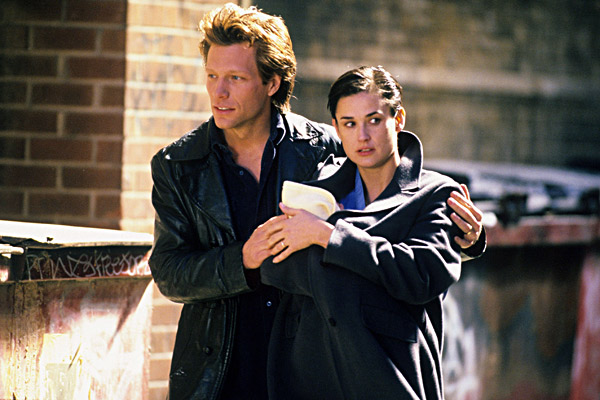
This vanity project was very loosely based on the Jon Bon Jovi solo album of the same title. As such, the music from that movie acts as the soundtrack. The music is the best thing about this film. Sure, the actors are all great — Kevin Bacon, Whoopi, Demi — but there’s no script here worth filming.

Jon Bon (“Jon”) and Demi Moore (“Janie”) are struggling with alcoholism and the death of a child. A dark film, Destination Anywhere mostly just follows Jon around town while he tries to figure things out. The characters he runs into offer various pieces of advice, but there are no epiphanies. The film sadly falls flat, sitting there purposeless, and smelling like something that Jon thought would elevate his movie career. It didn’t, and I think that’s the proof in the pudding.

1/5 stars. Boring as hell.

MOVIE REVIEW: Accidental Courtesy (2016)

ACCIDENTAL COURTESY (2016 PBS)

Directed by Matthew Ornstein

I’ve done it, and you have probably done it too:  Getting in an argument online with a total stranger over racially charged politics.  We live in new times.  It’s the era of Trump, Trayvon, and Mike Brown.  We live in the years of racial profiling and travel bans.  Just when we think we’ve made amazing strides including the first black US president, we seem to be heading backwards just as fast.

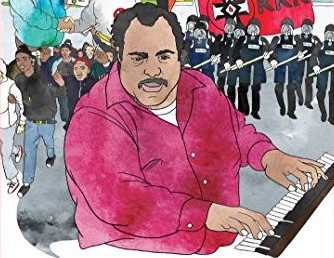
Daryl Davis is a musician.  Most notably, he was the keyboardist in Chuck Berry’s band.  He’s played with B.B. King, Muddy Waters, Jerry Lee Lewis, the Platters, and knows all the greats.  He’s a very talented but also intelligent and compassionate man.  Upon watching Accidental Courtesy, I wondered if music really is his first calling.  It seems that Davis’ true talents may just be sitting down and talking.  “When two enemies are talking, they’re not fighting,” says Daryl.

Although this movie is about a musician, it’s not about the music.  Music does play a small role.  The first time Davis experienced race-related hate, he was the only black child in an otherwise white marching band, and didn’t understand why things were thrown at him.  He thought, maybe they were playing the music poorly.  His parents had to explain to him, “They don’t like you because of the colour of your skin.”  Life was never the same after that.

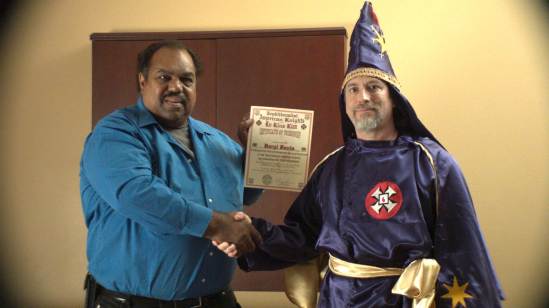
Accidental Courtesy isn’t about his music career, but about what Daryl Davis has done with the Ku Klux Klan and other white supremacists.  Since 1990, Davis has sat with various members of the KKK, both high ranking and rank-and-file.  Very few people can rival Davis for his knowledge of the Klan’s history and practices, so much so that Klan members have even approached him to learn.  Over long periods of time, after truly and sincerely befriending Davis regardless of his race, 26 Klansmen eventually turned in their robes to him and gave up the Klan.

It’s bizarre to see men who don’t believe in the mixing of races show up at Davis’ wedding to a white woman, to celebrate with him.  His friendship with them trumped their belief system.  It’s strange to see a black man invited into a KKK home, and vice versa.  It’s certainly unusual to see a fully robed KKK wizard sitting and shaking hands with a black man, simply enjoying conversation and company.

In the film, Davis also sits with the Southern Poverty Law Center, who seem less moved by his “person to person” method of combating hate.  They prefer to use a bigger stick.  What was surprising is how much flak he took from representatives from Black Lives Matter in Baltimore.  Here, he was mocked by two dropout activists for “only” converting 26 KKK members since 1990.  What was especially shocking was that the Black Lives Matter reps refused to continue to the conversation.   To them, he was worse than a white racist; to them he betrayed the cause.  All these white supremacists were willing to sit down and shake hands with Davis, but Black Lives Matter gave him the most difficult time.  They actually got up from the table and berated and belittled him before cutting the conversation off completely.  He was even treated with more respect by the KKK leader who refused to acknowledge the holocaust and said that blacks should be grateful to whites for freeing them.  It’s troublesome to think on what that means.

Certainly not everyone approves of the methods of Daryl Davis.  But in this day and age of social media, it’s more important than ever to talk.  Not online, not on Facebook, Daryl advises.  In person, where people can get to know each other, see each others faces and expressions, actually get to know one another.  Talk to each other, instead of talking at each other.  In this film, Davis asks questions, but rarely lectures.  Davis’ technique is simply to ask what makes people tick.  “How can you hate me when you don’t know me?” is a good opener.  He finds out what makes them think the way they do.  There is always more to the story than appears on the surface.  There is always a root cause.

Some felt Daryl did more harm that good with his methods.  Some feel he has betrayed his own people.  But, as Daryl says in the film, whites and blacks and people of all races must share America together.  That’s why we have to talk and figure out how to co-exist.  If he could convince an Imperial Wizard to hang up his robes, that is one small step to making the world a better place.  Black Lives Matter and the Southern Poverty Law Center have their own methods.  That does not negate the inroads that Davis made, just by talking.

There doesn’t seem to be much accidental about Daryl Davis’ courtesy.  It’s all very much on purpose.  Davis has a rich tapestry of friends behind him, some of whom have given up on hate.  If they can, why can’t everybody?

4/5 stars

MOVIE RE-REVIEW: KISS Meets the Phantom of the Park (1978)

A huge thanks to old buddy Scott who hooked me up with a DVD rip of this movie, taken from the original VHS release.

The KISS RE-REVIEW SERIES Part 11:  

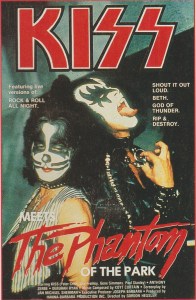
Meets the Phantom of the Park (1978 Hanna-Barbera TV movie)

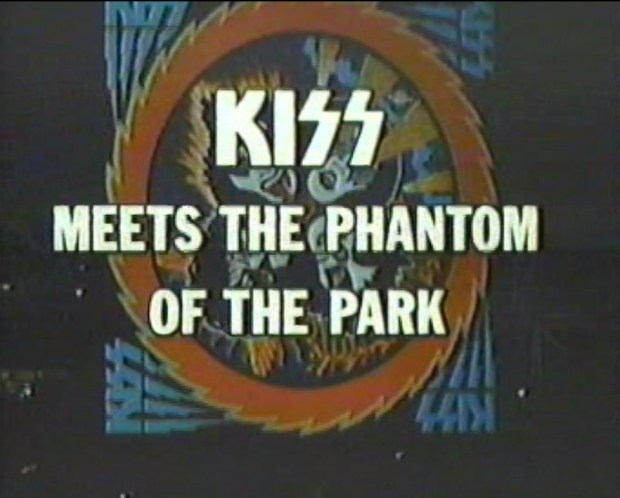
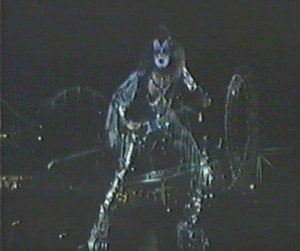
A monster-sized, semi-transparent Gene Simmons prowls above a rollercoaster.  Ace Frehley and Peter Criss fly about on a floating amusement park ride, and Gene says “hello ladies” from the top of the rollercoaster.  Paul Stanley dances up a storm, all to the tune of the original “Rock and Roll all Nite” from Dressed to Kill.  This is how it all happened on October 28, 1978 when NBC broadcast the TV movie Kiss Meets the Phantom of the Park.

The sheer hubris of Kiss and their enablers in 1978 was out of control.  The band had always intended to conquer TV screens, and silver ones too.  When Gene hyped the proposed Kiss movie as the best thing since either Jaws or Star Wars, skepticism would be justified.   Kiss had a ready-made image for spinoffs, and Marvel comics had first dibs on illustrated Kiss.  But their ambition caught up with their abilities with Kiss Meets the Phantom of the Park.  Nobody in the band could act.  The script was being changed on a daily basis.  The special effects were a joke.  Stunt doubles looked nothing like the real Kiss.  Jokey fight scenes are accompanied by cartoony music from the Hanna-Barbera archives.

There is a superior European cut of this film called Attack of the Phantoms.  The cartoon fight music is replaced by actual Kiss songs, and it is generally just a better version.  It can be found in the Kissology II DVD set.  The cut that most of us saw on television has been issued on VHS, but never DVD.  For a complete breakdown of every difference between every version of Kiss Meets the Phantom, be sure to get Dale Sherman’s thoroughly incredible reference book, Black Diamond 2.

It is summer in sunny California at Magic Mountain amusement park.  Over the loudspeakers, an announcement is made:  “Kiss is in concert, starting tonight, for three great nights!”  The security guy, Sneed,  is worried about a riot.  Park owner Calvin Richards only sees dollar signs.  And there is a third party too:  Abner Deveroux (the acclaimed actor Anthony Zerbe in his most embarrassing role ever).  Deveroux built the rides and all the park’s robotic animatronics, but things are starting to break down.   Devereux fancies himself a scientist and can’t deal with his budget cuts while money is being spent promoting the Kiss concert.  Throw in a group of thugs (Chopper, Slime and Dee) and you have a potentially dangerous situation.  When Devereux’s assistant Sam goes missing, his girlfriend Melissa goes looking for him.  And, for some reason, she needs Kiss’ help.

Minute after agonizing minute, we sit through clumsy dialogue and wooden lines, as we wait and wait for Kiss to finally show up.  A creepy tour of Devereux’s underground robot-filled laboratory reveals he’s completely nuts, always a good thing to have in the designer of a kids’ amusement park.  He has the will and the means to exact his revenge on those who cross him…and he also has the missing Sam!  But when will Kiss show up?  Not for an incredibly slow moving 30 minutes…and that’s not including commercials.

Kiss’ grand entrance (to the tune of “Rocket Ride” from Alive II) is the first time the audience is given one vital piece of information.  Kiss, apparently, have superpowers.  They can shoot laser beams from their eyes, breath fire, teleport and more.  Why they have chosen to use their powers for rock and roll is never revealed  beyond “you got to have a party”.

The concert continues with “Shout it Out Loud” and “Black Diamond”.  Peter Criss’ drum kit elevates and fireworks explode.  When the movie first aired, it was the first time kids could could see what a Kiss concert was like from the comfort of home.  The concert footage is far too short, but all is not well with the park.  Abner Devereux is fired from his job (yet he’s not removed from the premises, and continues to work in his underground lab)!  He sets into motion a plan to get his revenge…on Kiss!   Fortunately, Paul can shoot a star thing out of his eye that lets him read minds.

“You’re looking for someone.  But it’s not Kiss.”

When Gene seemingly attacks two security guards at night, Kiss is questioned in the classic “pool scene”.   There used to be an urban legend that Peter Criss did voices for cartoons such as Superfriends.  The origin of this is Kiss Meets the Phantom.  Supposedly Peter Criss refused to overdub his lines (as is standard procedure for any show due to the flawed nature of on-location audio) so voice actor Michael Bell was called in.  Many fans never knew Peter Criss’ real speaking voice for years, since Bell’s was the only one we heard.  Worse, Ace Frehley barely had any dialogue at all, beyond yelping “Ack”.  The writers who were hired to follow Kiss around to get a feel for their personalities didn’t pick up much from Ace beyond odd noises.  Lines has to be added for Ace at the last minute when he flipped out over his lack of verbiage in the film.  Therefore, he also got “Hi, Curly!”  Most of Gene’s lines are just lion-like roars.

The plot thickens:

Calvin Richards:  “Look, someone vandalized our park last night, smashed some of our buildings, and injured a few of our guards.  Well Gene, they think it was you.”

Guard #1:  “Think!?  It was him!”

Guard #2:  “Or his twin!”

Peter Criss:  “Gene’s brother was an only child.”

Paul Stanley:  “Easy, Catman, they are serious.”

The best part is that Guard #1 is played by the then-unknown Brion James of Blade Runner and Fifth Element fame.

When Melissa returns (still looking for the missing Sam), Kiss reveals to her the truth behind their powers:  They possess talismans that grant them superhuman abilities…and now an eavesdropping Devereux knows, too!  The second Kiss concert goes off without a hitch.   An exciting “I Stole Your Love” features the band descending from elevating side stage platforms.  The song is edited for length, but Gene blows fire at the end.  What Kiss don’t know is that Devereux has sent Sam, who he now controls, to steal their talismans!

After the concert, Gene, Paul, Peter and Ace are joined by Melissa, heartbroken over Sam.  Neither Gene, nor Paul, nor Ace and Peter attempt to sleep with her.  No, instead, they serenade her to a very special version of “Beth”.  Some in fandom feel that this version is the best ever version of “Beth”.  It has Peter Criss’ vocal from the album, and a single acoustic guitar.  (Paul mimed this guitar part for the movie, though Peter felt it should have been Ace.)  Meanwhile, Sam is thwarted from stealing the talismans by a force field, but Kiss can sense that something is up.  They decide to check out the park and look for Devereux.

Cue that funky fight scene music, white cat!  Four white cat-like people get the drop on Kiss!  “They’re not real, they’re robots!” says Paul.  “It’s all unreal!”  The cats are followed by samurai, wielding lightsaber-like swords. But Devereux is not so easily beaten.  Sam, now equipped with a ray gun from Devereux, has stolen the talismans!  Kiss follow him into the spooky Chamber of Thrills, where they are attacked and captured by even more robots.  These campy fight scenes are either intolerably awful, or the highlight of the movie, depending on your point of view and level of intoxication.

The climax is an epic battle between Kiss and their evil robotic alter-egos, built by Devereux!  Devereux sends the phony Kiss-bots on stage to use music to incite the crowd to riot and destroy the park.  Changing the words to “Hotter Than Hell”, the Kiss-bots almost succeed.

It’s time for everyone to listen good,
We’re taking all we can stand,
You’ve got the power to rip down these walls,
It’s in the palm of your hand!

Rip, rip, rip and destroy!
You know the hour’s getting late.
Rip, rip, rip and destroy!
Break it down and seal your fate.

Can the real Kiss recover the talismans, beat the bots and retake the stage?

Other Kiss tracks heard in the movie include “Christine Sixteen” and “God of Thunder”, but let’s face it, Kiss Meets the Phantom is a shit-show.  It was an opportunity for fans to see Kiss on TV, but it did little to convert anyone to the Kiss cause.   The concert footage is fantastic, although songs are severely edited.  Its greatest value today is as a camp classic, but without a beverage of some kind, it is a lethargic undertaking.  The fact that Anthony Zerbe has this movie on his resume is astonishing; the fact that Kiss have yet to release this version on DVD is not.

1978 was a rocky year for the Kiss army.  Though the Alive II tour started the year on a high, and the Marvel comic was a pretty cool thing, fans were now being fed more product.  Double Platinum (up next) left some feeling exploited for their dollars, and Kiss Meets the Phantom could be considered a complete write-off.

Today’s rating:  1/5 stars

To be continued…
Original mikeladano.com review:  2012/08/09

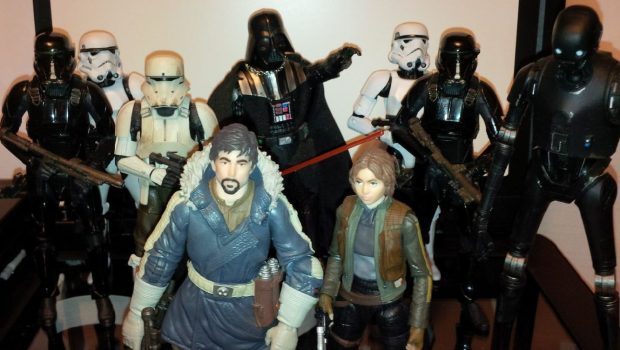
ROGUE ONE: A Star Wars Story trailer “Trust”

It is a period of civil war. Rebel spaceships, striking from a hidden base, have won their first victory against the evil Galactic Empire.

Rogue One will be out in 19 days.  Get ready.

MOVIE REVIEW: Mad Tiger (2016)

“When you create something, it doesn’t matter if it’s art or music…there is always suffering attached to the creative process.” — Peelander Purple (Akiteru Ito)

mad-tigerMAD TIGER (2015 Film Movement)

Directed by Jonathan Yi and Michael Haertlein

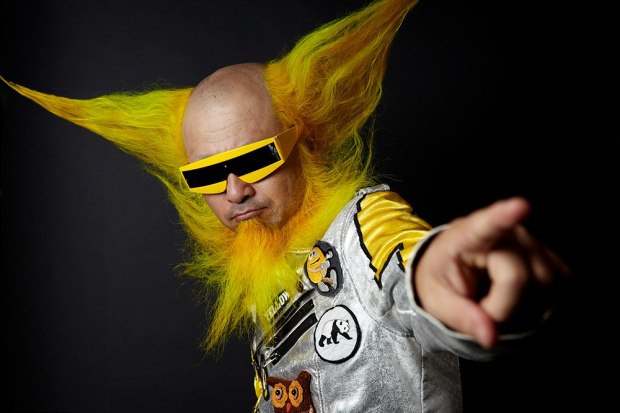
Peelander-Z is a Japanese-born punk band, via New York City, sort of a cross between Gwar and Japanese science fiction.  In their own words, they are a “Japanese Action Comic Punk band hailing from the Z area of Planet Peelander”.  They have been releasing music to a cult following since 1999.  Their hits include “Mad Tiger” and “Ninja High School”.  Music is only 10% of what they do, with elaborate stage shows, stories, monsters and characters to go with it.  Like many Japanese super-teams, they are all completely colour coordinated.  Their founding leader is Kengo Hioki, or Peelander Yellow.  His partly-shaved head is always dyed yellow, and his costumes match.  According to his wife Peelander Pink (keyboards), Kengo first had to learn how to play guitar standing up in order to form a real punk band.

Their music is meant to be fun, to bring happiness.  The music itself is not serious, but Yellow takes his band very seriously.  When original drummer Peelander Blue left the band in 2008, he was replaced by Peelander Green who helped bring the music to a more professional level.  Bassist Peelander Red (Kotaro Tsukada) was the lynchpin, being the member who was the most physical on stage and able to do the stunts that Yellow could not.  A new stunt involved him riding a unicycle in a squid suit and crashing into the stage.  He’d often be the member who was climbing on top of things, and hanging from the ceiling by his legs.  Other gags include human bowling a-la Jackass, and chair fights like WWE wrestling.  Red’s physicality was essential to this.

The atmosphere around Peelander-Z is bubbly and celebratory, but inside, there is tension.  Red has decided to leave the band and open a bar in New York.  A final show for Red is a big deal, an emotional event for the members — each one changed colours to red for this special show.  For Yellow, it means not only losing a close friend, but having to create a new character for a new member to play.  Another friend, Akiteru “Eatman” Ito, is flown in from Japan to play bass.  His musical style is different from Red’s, and different from what Yellow is used to.  He becomes Peelander Purple, a rhino-headed bass behemoth, and they prepare for their first show together.

While this movie is ostensibly about a unique punk band with a 15 year history, it is more so a look at Kengo Hioki, a born entertainer who was facing a crossroads in his life with the departure of Red.  We get to visit his family in Japan, his devoutly Christian father and his siblings.  We get a sense of what friendship and commitment means to Kengo, especially in regards to the tensions between his partners in Peelander Z.  Watching the band seemingly fall apart while he was working hard to build  it back up is poignant. Filmmakers Jonathan Yi and Michael Haertlein chose to leave in raw, emotional footage that Kengo wanted to sum up in animated form.

The songs are silly and fun, but the passion is genuine.  Check out Mad Tiger.

4.5/5 star-z

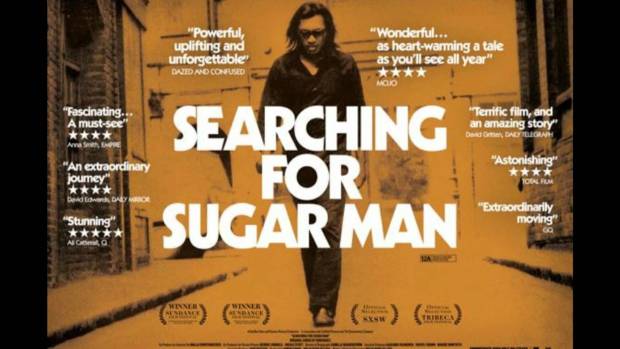
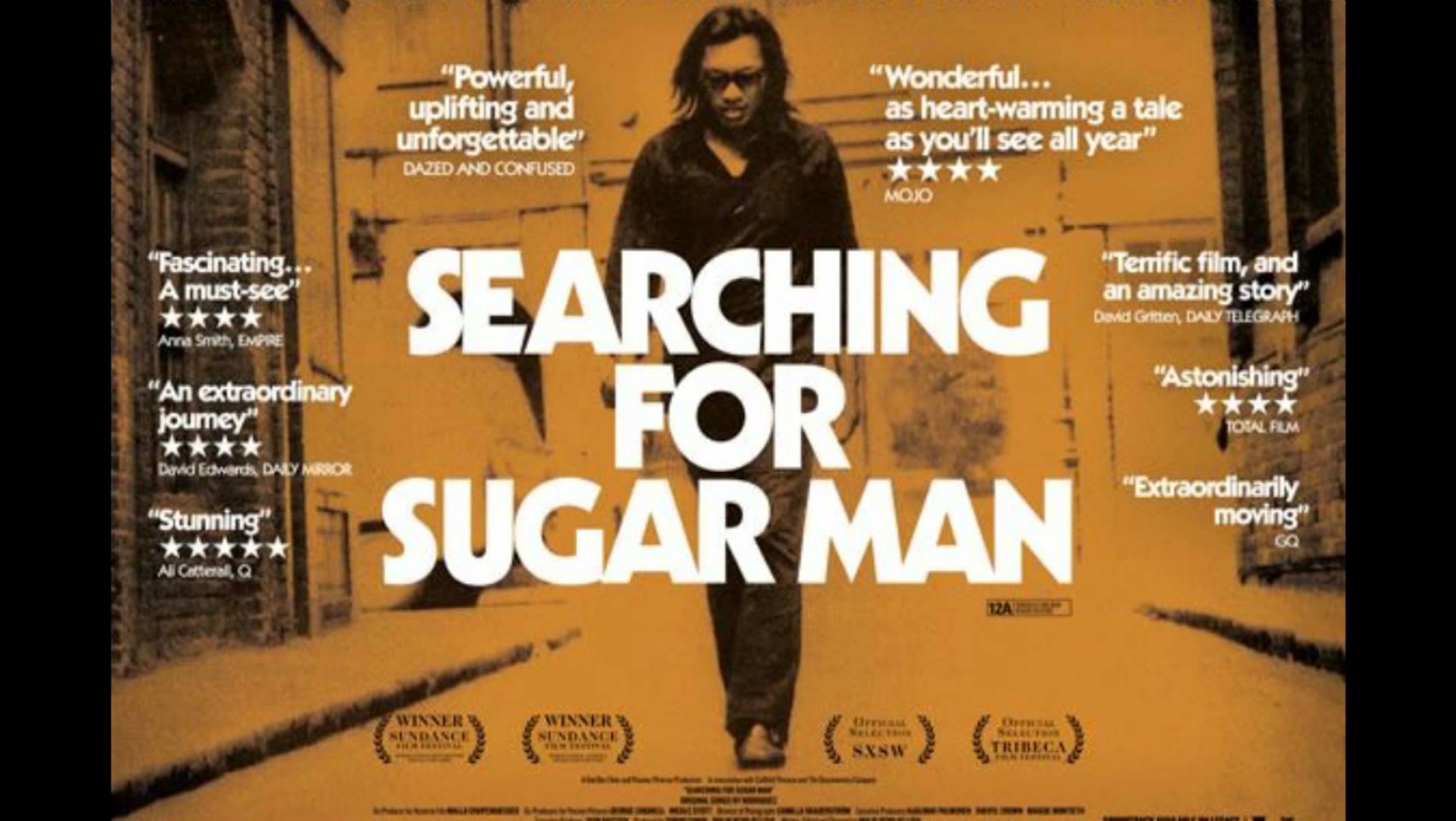
MOVIE REVIEW: Searching For Sugar Man (2012)

Looking for something to watch on Netflix this weekend? Look no further.

SIXTO

SEARCHING FOR SUGAR MAN (2012 Sony)

Directed by Malik Bendjelloul

Like the rest of the world outside of South Africa (and Australia), I had never heard of the American singer Sixto Rodriguez.

If I had, I could all but guarantee I would have been a fan.  With a rare songwriting ability often compared to Bob Dylan, the artist known only as Rodriguez released two albums in the early 70’s.  He sounded something like Dylan hanging out with Neil Diamond and Johnny Cash, with the sadness of Nick Drake.  His voice, like those of Dylan and Cash, communicated volumes of emotion.  After he was dropped by his label, he disappeared completely.  What he did not realise is that change was coming to South Africa that he would one day be a part of.

They think his music first arrived in Apartheid-era South Africa via a bootleg tape that made the rounds.  Cold Fact (1970) and its followup Coming From Reality (1971) were of a remarkable quality, but with socially conscious lyrics that struck a chord.  Rodriguez became immensely popular among the people, who were tired of racism and felt Rodriguez’ music was valid to their country.  Some songs were banned completely.  The government didn’t like it, and scratched the songs out of the records so they could not be played.  But no government lasts forever.

Nobody in South Africa even knew who Rodriguez was.  Even his full name wasn’t obvious.  His albums had credits with names such as “Jesus Rodriguez” and “Sixth Prince”, but nothing confirming the artist’s identity.  The story was he killed himself in a spectacular fashion, on stage.  The tale wasn’t consistent.  In one version, he doused himself with gasoline and set himself alight.  In another, he shot himself on stage.  These stories helped propel his popularity in South Africa to a level beyond even Elvis or the Beatles.  And he had no idea any of this was happening.

Hard core fans and musical detectives were determined to find out what happened to Rodriguez.  They followed the money, but nobody was paying the artist for South African CD reissues.  They poured through his lyrics for clues as to his whereabouts.  References to Amsterdam were misleading, and clues scarce.  “How did Rodriguez die?” was the only question on the searchers’ list.  Imagine their surprise when Rodriguez’ daughter in Detroit Michigan discovered the searchers online, and contacted them to tell that Rodriguez was alive and well and living modestly in the city!  Many South Africans thought this impossible, and fully expected it to be a hoax.  Only when he arrived and played a series of concerts in the country did they realise this was no impostor.  It was akin to Elvis returning for a comback today.

Searching For Sugar Man maintains the mystery.  That seems to be the way Rodriguez wants it.  Now that his fame in South Africa has finally caught up with him, he gives most of his newfound wealth away to family and friends.  The voice is intact, and so is the mystique.  The movie has given him a second chance in music, and he has returned to the stage for the first time since a brief tour in Australia in 1979, where he maintained a small pocket of fandom.  Rodriguez will be playing the Centre in the Square in Kitchener Ontario, on Sept 10.

5/5 stars

A rare of example of bass clarinet in popular music.

DVD REVIEW: Rushmore (The Criterion Collection) #WesAndersonBlogathon

Join Sean Munger & friends for…

wes-anderson-blogathon-2

#WesAndersonBlogathon


Scan_20160807 (2)RUSHMORE (1998/1999 Criterion DVD)

Directed by Wes Anderson

Whether they know it or not, everybody has their first Wes Anderson movie.  Mine was Rushmore, an easy entry point, and I had never seen anything like it before.  It has a genuine quality, an old-fashioned look, and a killer soundtrack — all Wes Anderson trademarks.

The Criterion Collection (“a continuing series of important classics and contemporary films”) deliver some of the best colour transfers, and that is necessary for any Wes Anderson film.  Soaked in dark but rich colours, Anderson fills his work with vibrancy.  His visual trademarks are apparent right from the first scene, a hilarious fantasy sequence introducing our main protagonist Max Fischer (Jason Schwartzman).  Max is more than a dreamer though.  He is a doer.  He dreams things and makes things happen.  As such he is the founding (and sometimes sole) member of multiple clubs at Rushmore Academy.  He writes, produces and directs lavish school plays with no thought given to compromise, or safety.  Unfortunately, Max doesn’t dream much of his own schoolwork, and never seems to get it done.  He is on notice.  Fail one more class, and he’s expelled from the school he loves so much.  Brian Cox (Super Troopers) is excellent as Dr. Guggenheim, the school principal.

Max soon meets steel magnate Herman Blume (Bill Murray), to the tune of “Making Time” by The Creation (1967).  The retro music and formal dress at Rushmore Academy gives the movie a timeless feel.  Could it be the 90’s?  The 80’s?  The 70’s?  Sure, why not.  Instead of working at getting his grades up, Max continues to dream.  He dreams of saving the Latin program in school (for no real reason other than just to do it), and of new teacher Miss Cross (Olivia Williams).  He’s a charmer, but often with ulterior motives.  He and Blume manage to find a bond together.  That is, before Blume himself falls for Miss Cross.

This leads to a strange rivalry between Max and Blume, with each jockeying for position in the Miss Cross stakes, with little thought given to how she feels about the whole thing.  It also sets up some pretty amusing situations, such as Max trying to build a school aquarium for Miss Cross.  He almost succeeds, too.  Max is a hard character to read, as he often wants to make certain impressions.  Blume, on the other hand, is clearly depressed, living in a sham of a marriage with two barbarian sons he doesn’t even seem to like. As their rivalry grows in intensity, so does the music, culminating in The Who’s epic live version of a “A Quick One While He’s Away” from the deluxe version of Live at Leeds.  Wes Anderson has a knack for a musical montage too, and Cat Stevens’ “Here Comes My Baby” is host to one such montage.  (Stevens also appears later on with “The Wind” in another song-appropriate scene.)   The Stones’ “I Am Waiting” is more great music for marking the passage of time.

Max might not have been the best student, but genius does not always get good grades.  His plays have an epic scope, and his aquarium does too:  $35,000 cost, just for the initial plans.  (Some of the aquatic movie footage that Max views may foreshadow a future Anderson film, The Life Aquatic with Steve Zissou, starring Bill Murray).  He’s also a perfectionist.  When it comes to his plays, every line matters.  “Don’t fuck with my play!” he screams to the star of his version of Serpico, right before getting punched right in the nose.  Finally young Max possesses a razor sharp wit, which he uses at will especially when it comes to those he considers love rivals, like Peter Flynn (Luke Wilson).

Rushmore is an ode to the creative mind.  After some humbling experiences, Max learns to use his inventiveness to bring people together.  His final triumph, to the strains of “Ooh La La” (The Small Faces), is to bring all the film’s characters (even the bully student Magnus) together in solidarity.  It’s all done with plenty of laughs, smiles and a few tears.

Wes Anderson utilizes a cast of talents he would work with repeatedly, with Bill Murray being the most obvious.  Kumar Pallana as Mr. Litteljeans, the groundskeeper, was an Anderson regular.  Brian Cox, who also participated in The Fantastic Mr. Fox, brings a sour delight to Dr. Guggenheim.   Secret weapon in this movie however is Mason Gamble as Max’s ally Dirk Calloway.  Another Anderson trademark is that each frame possesses astonishing detail and visual information.  Like beautifully painted and impossibly detailed storyboards, his scenes have a life and tell a million stories in the background.  Much like one of Max’s plays, actually.

Without a doubt, one of the best special DVD features is a selection of play adaptations by the Max Fischer Players, from the 1999 MTV Movie Awards.  The players do their own on-stage takes of:  Armageddon, The Truman Show, and Out of Sight.  MTV were producing some very funny bits for their movie award shows at the time, and these are some of the best. Utilizing the original cast and familiar music from the film, these feel like a fairly natural extension of Rushmore.

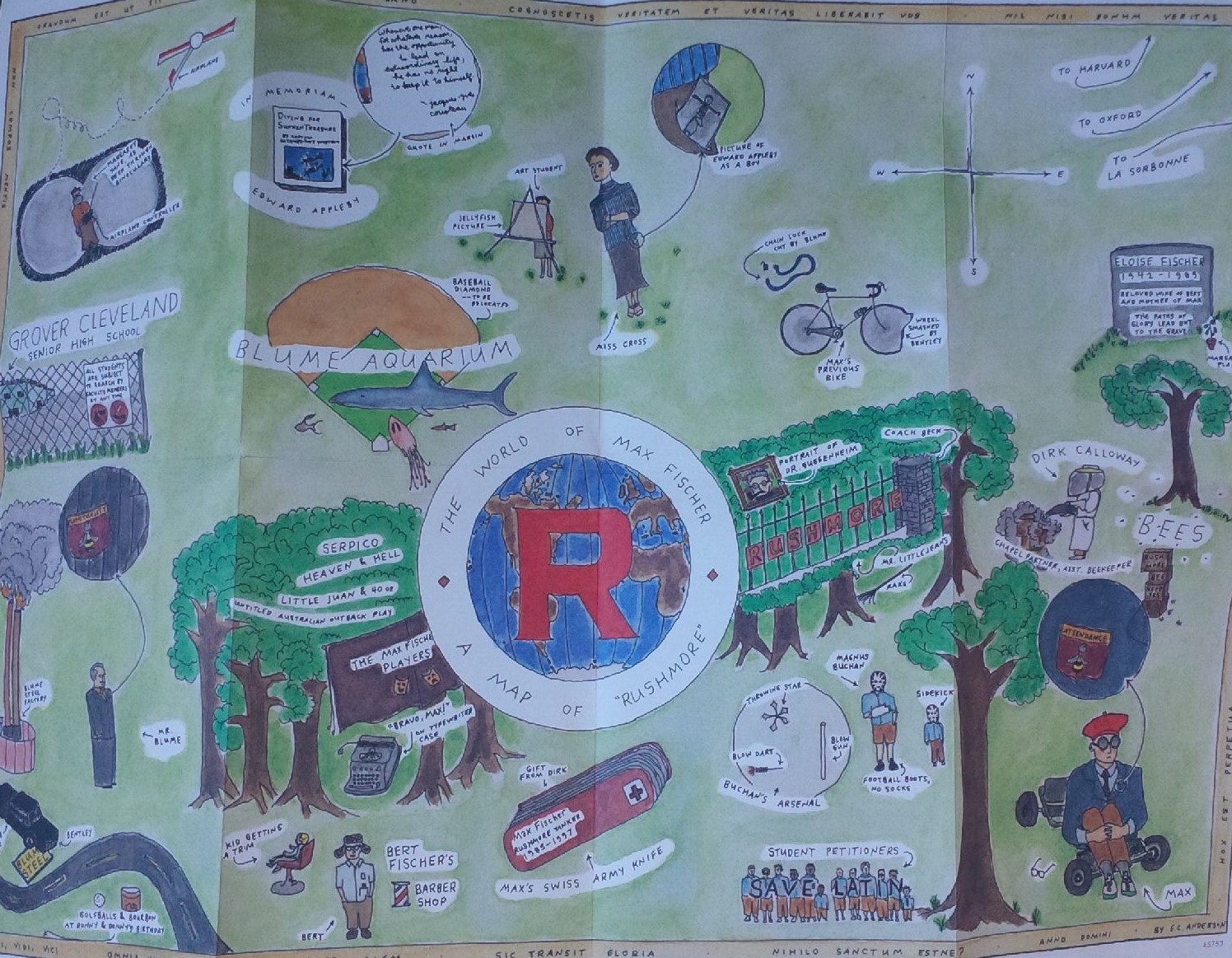
Other valuable trinkets include an on-screen program for Max’s Vietnam drama Heaven & Hell, and his adaptation of Serpico.  Of course there must be an audio commentary and that is by Wes Anderson, co-writer Owen Wilson, and star Jason Schwartzman.  There are also the requisite making-of featurettes and supplements.  The biggest selling feature of this Criterion edition for those who value physical products is the giant fold-out map.  From here you can follow the events of the movie on a delightful full colour sketch by movie artist (and director’s brother) E.C. Anderson.  In fact all the packaging for this DVD was designed by Anderson.

5/5 stars

RUSHMORE MAP

DVD REVIEW: Superbad (2007)

SUPERBAD (2007 Columbia unrated extended edition)

Directed by Greg Mottola

While the Apatow Company’s best films are behind them now, in 2007 they were coming off the dual hits 40 Year old Virgin, and Knocked Up.  Those films featured a core of recurring actors, including Bill Hader, Seth Rogen, Jonah Hill, James Franco and the whole gang that we are all familiar with today.  Then, this kind of comedy was fresh.  Today, Superbad is the only Apatow I can still watch regularly and laugh like it’s the first time.

I love a movie with a great rock soundtrack, and Superbad features Van Halen (“Panama”), Motorhead (“Ace of Spades”), and Ted Nugent (“Stranglehold”).  There’s even The Roots! Even better, and incorporated into the comedy, is the Guess Who’s “These Eyes” as performed by Michael Cera.  It is a case 0f mistaken identity and Cera’s character Evan is in a spot.  I’m cracking up thinking about it. “He’s Jimmy’s brother, the guy! The singer! He’s the guy with the beautiful voice that I was telling you about!” And then, “My brother came all the way from Scottsdale Arizona to be here tonight. And you’re not going to sing for him? You sing, and sing good!” The last song I would have chosen to sing under such circumstances would have been “These Eyes”, but that’s why this is a comedy movie.

Seth (Jonah Hill) and Evan (Michael Cera) are highschool versions of Seth Rogen and Evan Goldberg, who wrote this movie, but were too old to play the parts. It’s the end of highschool, and together with their friend Fogell aka “McLovin” (Christopher Mintz-Plasse, who absolutely nails it in his film debut), they aim to score some liquor for a party. Once they have booze, they will be like heroes to Jules (Emma Stone) and Becca (Martha MacIsaac) at the party, and possibly score some coitus. McLovin has the fake ID, but acquiring the alcohol is only the first of many stumbling blocks.

Seth Rogen and Bill Hader play incompetent cops, but their intentionally stupid scenes will make you groan rather than laugh. Bad decisions by all the characters may have you shaking your head asking “why?”, but you have to put your mind in the hormones of a highschool kid aiming to get his first touchy feely. Guys do stupid things not unlike the people in this movie. I know guys who’ve done things like this when they were kids. I’ve made plenty of stupid decisions while chasing someone of the fairer sex. Granted, I’ve never been hit by a car and then talked into not calling the cops in exchange for going to a badass party where I can steal some booze. That exact situation has never happened to me or anyone I know. But it’s fucking hilarious.

The most enjoyable comedy usually comes from the banter between Hill and Cera. Their blunt vulgarity has a certain art to it. I can still quote lines from this movie, and people know which ones I’m talking about. “Something like 8% of kids do it, but whatever.”

In this film, Seth and Evan are going to different colleges and there is a tension between the two characters over this.  Both of them feel differently about it, and this is the most relateable part of the movie.  The end of highschool feels like the top of the world for a brief moment, but then in the fall friendships split up, sometimes forever (until Facebook came along anyway).  Superbad  is basically a movie about two guys trying to get some, but the tension in the friendship is ultimately what drives the story to its conclusion.  Cera and Hill are funny indeed, but the friendship they portray seems real.

The unrated edition is loaded to the gills with bonus features, and honestly a good chunk of them are worth checking out. You can skip the “Cop Car Confessions”, but definitely watch “Everyone Hates Michael Cera – The Unfortunate True Story”. And of course, don’t miss “The Music of Superbad” either. Bootsy Collins and Lyle Workman put together an unexpectedly cool soundtrack.

4/5 stars

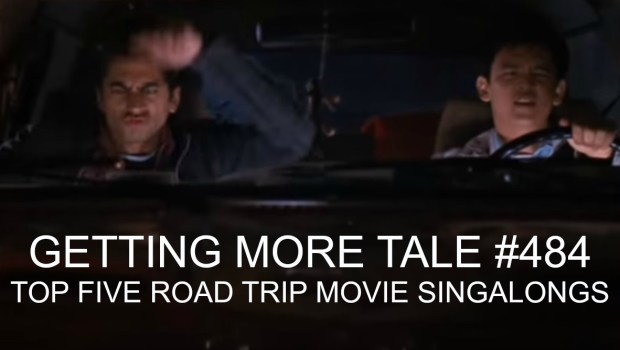
#484: Top Five Road Trip Movie Singalongs

HAROLD AND KUMAR

Sometimes-contributor Thussy and I came up with a list of our Top Five Favourite Road Trip Movie Singalongs!  The five songs below are forever associated with these films in my mind.  Like any other list, I’m sure you’ll have plenty that we forgot.  These are some of our favourites.  What are yours?


#5: Harold and Kumar Go to White Castle – “Hold On”

Once our heroes Harold and Kumar finally best the Extreme Sports Assholes, they not only steal their ride but also their “Extreme Mix Vol. 5” tape! Kumar and Roldie then enjoy a hearty singalong to Wilson Phillips’ “Hold On”.  So extreme!


#4: Dumb & Dumber – “Mockingbird”

“Radio?  Haha!  Who needs a radio!  Ready Harry?”


#3: Planes, Trains and Automobiles – “Three Coins in the Fountain”, “Meet the Flintstones”

Double whammy with this classic movie!  Steve Martin attempts to get a bus full of people to sing the 1954 theme song from the romance film Three Coins in the Fountain, with no success.  Much to his chagrin, John Candy’s irritating (though lovable) character Del Griffith got plenty of response to his “Meet the Flintstones”.


#2:
 The Hangover – “Three Best Friends Song”

The Hangover featured two great original songs:  “Doug” performed on piano by Ed Helms, and “Three Best Friends” sung by Zach Galifianakis. “Three Best Friends” gets the nod, because the other took place in a hotel room.  Come on, sing along folks…


#1:  Wayne’s World – “Bohemian Rhapsody”

Technically not a road movie, but they did make a trip from Aurora to Milwaukee in the film.  This iconic scene had to be #1.  There really were no other competitors.  We’re not worthy!