Reviews

REVIEW: Mr. Big – Ten (2024 Canadian CD version)

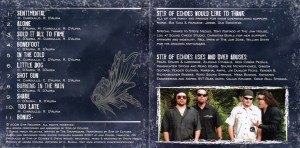
MR. BIG – Ten (2024 Frontiers)

Pat Torpey was such an important part of Mr. Big.  Drumming, singing, writing: Pat did it all, and that’s why Mr. Big have found him so difficult to replace.  His death from Parkinson’s disease was shattering to the band.  They carried on with Matt Starr for a while, but they needed someone who could sing.  Enter:  Nick D’Virgilio from Spock’s Beard.  Not just a legendary progressive rock drummer, but also a singer in his own right, Nick was an unexpected but appropriate choice for Mr. Big to record their final (?) album Ten.

Though some fans seem unwilling to allow bands to age and change, Mr. Big has done so without missing a beat.  Sure, Eric Martin doesn’t sound 28 years old anymore (because he’s 63), but there is nothing wrong with his voice here.  Just a little rasp, and a little less range.  He has aged better than most 63 year olds you can name in the rock biz.  He is still top notch, first class, and also a key songwriter here, along with Paul Gilbert and Andre Pessis.  Absent from the credits is Billy Sheehan.  That might explain why this album is less bass-y.  Even so, in 2024 Mr. Big have come up with one of their best albums, up there with Hey Man.

The Gilbert-penned first track “Good Luck Trying” has a definite “Manic Depression” vibe.  It’s a blues-rock classic, authentically rocking as if it came from another decade.  It’s like a time machine, and the Hendrix inspiration is undeniable.  A solid start.

Much like Hey Man and “Take Cover”, the best track is the second one.  “I Am You” will be in your head for days.  There’s a subtle acoustic guitar part, which is something of a recurring feature on this album.  “I Am You” boasts a powerful chorus, but with an anthemic meloncholy vibe.  Too bad a lyric sheet is not included, as this one has cool soul-baring words.  Everything about this song is perfect, from impassioned vocals to mighty chorus.  Sometimes it’s worth buying an album for one song.  This is one of those songs, no hyperbole.  It’s just a little different for this band, but it’s also a total pop rock anthem, and one of best Big songs in years.

We get a Zeppelin vibe on “Right Outta Here”, with bluesy verses and exotic choruses.  Anytime you hear chords that we might refer to as “exotic”, Zeppelin comes to mind.  Expect those Middle Eastern melodies on the guitar, and more acoustic backing.  Nick doesn’t necessarily play like John Bonham, but there are the odd big hits that recall him.

In a fun twist, “Sunday Morning Kinda Girl” contains the lyric “big finish”, the name of their current tour.  This song has a hard rock vibe mixed with 60s melodic sensibility.  Definite Beatles vibes in the melodies, though the song is far harder than the Fab Four.  Their green-tinted sixties minds must have been in tune for this song.  Again, acoustic guitars can be heard in the background, but check out Paul’s very Queen-like guitar solo.

There are a few ballads on Ten.  Ballads have been a thing with Mr. Big since the first album, but obviously “To Be With You” made them far more important.  “Who We Are” is an electric ballad, with a bluesy style.  Not as memorable as some past Big ballads, but a good song regardless.  Great chorus here, and superb drum fills.

“As Good As It Gets” is uptempo acoustic/electric fun.  Like “I Am You”, very different for this band and an easy album highlight.  Once again, the drum work and fills here are stunning.  It’s almost Rush-like.  Paul brings in a very sweet guitar melody, with layers of guitar tracks thickening up the soup.  This song also has one of the few Billy Sheehan bass solos on the album.

The boogie of “What Were You Thinking” has some wicked slide guitar by Paul Gilbert, housed within an uptempo rocker.  Maybe the fastest tune on the album, but it’s not to be compared to old Big like “Addicted to that Rush”.  This is just rock and roll.  The lyrics reference Star Trek with “phasers on stun”, and you just have to love that.  Another possible album highlight.

If there is a weak link, it’s “Courageous”.  It’s a mid-tempo song, but not a ballad.  It has some wonderful guitar, but doesn’t move the Earth.  What does shake the Earth is the opening drum beat on “Up On You”.  A hard rock party rocker, this features the return of the slide!  Just because it’s a hard rock song with slide guitar, there is a slight Motley vibe (circa Dr. Feelgood), but only slight.  Some boogie piano also helps keep things moving, but this is the most 80s rocker on the album.

Closing an album (sort of) with another ballad is daring.  Yet “The Frame” is the softest of them, and a totally appropriate closer.  It’s not “To Be With You”; there is no campfire rock on this album.  There is plenty of music with an emotional weight, and “The Frame” has that and more.  It takes a few listens to sink in, but it’s not really goodbye.  There is a bonus track on all versions of the album.

Some countries got an instrumental track (to be reviewed later), but the bonus track in Canada is different from the one in the US and Japan.  Here we get a blues cover, “8 Days on the Road”.  Easily another album highlight, with someone else (Paul Gilbert?) singing lead on a bluesy drawl.  Brilliant track and playing.  Talk about going out with a bang!  If this really is the end, then “8 Days on the Road” is a brilliant capstone.  It showcases the kind of playing that Mr. Big built their reputation on.

Though Mr. Big albums have been spotty through their career, Ten is among the better records.  It may go down with albums such as Hey Man as a cult classic.

4.5/5 stars


Tim’s Vinyl Confessions: Ep. 548: Mr. Big (Ten review) [VIDEO]

Today on Tim’s Vinyl Confessions, we deep dive into the new (final?) Mr. Big album called Ten.  Shockingly, it’s their tenth studio album.  I know, right?  It’s also a few firsts:  the first album with no songwriting from bassist Billy Sheehan, and debut Mr. Big album for new drummer Nick D’Virgilio.  It has been eight long years since their last album, Defying Gravity, which wasn’t bad at all.  Did they top it?  Did they go out on a good note?

My written review will go up tomorrow.

REVIEW: KK’s Priest – Sermons of the Sinner (2021)

KK’S PRIEST – Sermons of the Sinner (2021 EX1 Records)

You can hear from the sound of this album, KK Downing is pissed off.  He wants to prove himself.  He wants to out-Priest Judas Priest.  To that end, he’s recruited former Priest singer Tim “Ripper” Owens for this metal feast, with the emphasis on “metal”.  Everything about this album is about competing with Judas Priest, from getting their younger singer, to initially recruiting Les Binks on drums (replaced by Sean Elg), to song titles, and musical throwbacks.  The end result verges on the territory of “heavy metal bullshit”:  music contrived to sound a certain way, evoking a certain image from a certain time, resulting in generic songs.

Right from the opening “Incarnation”, KK is doing those noisy guitar roars from Priest’s “Sinner”, his trademark solo.  Then we get Elg doing similar double bass work as Scott Travis, and Ripper Owens with a big Priestly scream.  Enter:  “Hellfire Thunderbolt”!  To his credit, Ripper is singing more to the Priest vibe here than he did on either of his actual Judas Priest albums.  “Hellfire Thunderbolt” is equivalent to much of Priest’s current catalogue, and it sure is nice hearing KK wail.  We did miss KK’s sound, no matter how good his replacement is.  It’s not just a single guitar band, with AJ Mills joining KK in a dual solo.  “Hellfire Thunderbolt” is a pretty good, very Priest-like song (right now to the thunder-cracks, very similar to Ram It Down) though not as memorable.

The title track “Sermons of the Sinner” has a title that recalls KK’s signature song, and opens with an impressive drum flurry and a really good riff.  Ripper takes the screaming to the nth degree, and the guitars absolutely shred.  Unfortunately the song is a little faceless, with the focus on speed and not much else.  There’s a great middle section where things slow down, allowing the guitar melody to breathe, but it’s over quickly and then we’re back into a chaotic metal hailstorm, shards of steel hitting your ears in unpleasant ways.

“Sacerdote y Diablo” keeps the pedal to the metal, but does not satisfy the craving for memorable riffing or hooks.  KK’s soloing is starting to sound like razorblades, as he just keeps going for it, and going for it, proving he’s more “metal” than Priest, or something.  “Raise Your Fists” is more like it.  Mid-tempo with melodies you can sing along to, bringing some needed variety to the album.  It’s not a classic, but it could be given time and reception.  Some of the guitar melodies are almost Maiden-y.  The lyrics are just an ode to the experience of a heavy metal concert, a tired concept.  “Brothers of the Road” is another good tune, this time with more groove and chug.  This album is better when KK allows variety to creep into the songwriting.  “Brothers of the Road” isn’t packed to the gills with hooks, but it’s definitely an album highlight.  As great as Ripper is at screaming, this allows him to sing more melodically.

Though the music that opens “Metal Through and Through” is delicate and cool, the title is tiresome.  Perhaps Rob Halford wrote too many epics about metal over the years, and this is just a redundant theme now.  Lyrically, it’s KK paying tribute to the fans, and frankly, to himself.  “And our legacy will prevail”.  Unfortunately the song sounds like a bunch is disjointed bits mashed together, including one that sounds like Accept.  It’s an attempt at an epic, short of the mark by a fair margin.  Considering that all songs are solely credited to KK, this is where we start to really miss the songwriting input of Glenn and Rob.  An unnecessary eight minutes, with an out-of-place fade-out.

“Wild and Free” is back to breakneck.  “We’re rule breakers! We’re hell raisers!” announces Ripper.  Great for headbanging or driving real fast, with some rhythmic recollections back to “Freewheel Burning” right before the chorus.  Intentional?  Probably.  “Freewheel” is a far better song, and there are times when Ripper’s vocals get to be a bit much.

“Hail For the Priest” (this is getting tiresome) opens with a melody aped from “Sign of the Cross” by Iron Maiden.  Though almost certainly a coincidence, the similarity is unmistakable.  Some of  Halfords lyrics are cribbed (“terrifying scream” from “Painkiller”), but once the riff kicks in, we’re off the races.  Nice bass work here from Tony Newton.  The drum pattern is a little less busy, and leaves a little bit of space on the verses.  These factors help make it one of the better songs on the album.

The final track is nine minutes of metal “Return of the Sentinel”.  How do you out-do Priest?  Write the sequel to one of their best tunes, I suppose.  There are references to “Tyrants” and appropriate musical recollections directly lifted from the original “Sentinel”.  Some cool dual guitar work ensues, and an acoustic guitar break brings texture.  Unfortunately there is no proper ending, just a fade out that leaves it feeling unfinished.  Still a pretty good song, though like many sequels, it is more more indulgent, yet still a shadow of the original…and unnecessary.

On his debut, KK stakes out his territory, claiming his slice of the pie.   It is a strong and bold statement, but without the songwriting that we have grown to expect from this heavy metal pioneer.

3/5 stars

REVIEW: Dream Theater – “Hollow Years” (1997 CD single)

DREAM THEATER – “Hollow Years” (1997 Warner Music Germany)

I always found something about 1997’s Falling Into Infinity to be underwhelming.  Yes, we had the stunning Doug Pinnick cameo in “Lines in the Sand” and a wickedly heavy “Burning My Soul”, but the album didn’t have the same impact or longevity as Awake or Scenes From a Memory.  It wasn’t for lack of effort.  They recruited Desmond Child and Kevin Shirley, and released singles.  The album never broke the top 50 in Canada and received mixed reviews.  A later-released demo version of the album revealed what the band would done if not influenced by Shirley and Child.  One of those demos was first released on the 1997 “Hollow Years” single.

First track on this single is a 4:15 edit of “Hollow Years”, with more than a minute and a half edited out.  The shame is that it didn’t become an instant hit.  With the Spanish guitar melody and subtle keyboard accents, it could have and should have done better for the band.  There is a very pretty piano melody after the chorus by Derek Sherinian, in his last of two outings with Dream Theater.  Yet it’s still Dream Theater, not some ballad band.  John Myung’s fretless bass sets it apart, and Mike Portnoy is always Mike Portnoy no matter the style of music.  The premature fade on the edit version, however, is extremely annoying.  Even if you don’t already know the song, it sounds like a premature fade.  The ending is so good; a song highlight!  The full length version, uncut and as intended, is really the only version to listen to.

“You Or Me” is a version of “You Not Me” from the album, before Desmond Child helped them tweak it.  It opens with the sound of a radio changing stations, and then a cool synth rhythm.  John Petrucci’s riff soon kicks in, and it’s clear Dream Theater were trying new things that might be perceived as more appealing.  Ultimately, the version that ended up on the album is probably the better of the two.  It’s definitely catchier.

The final track is “The Way It Used To Be”, a long non-album song with a Marillion-like guitar melody.  It could have been lifted directly from Seasons End.  Petrucci is the star on this one, as he also employs cool harmonics.  Definitely a cool and valuable bonus track.  If it wasn’t almost eight minutes long with plenty of musical prowess, it might have been a worthy hard rock hit on its own.

Great little CD single, but those edit versions are never as cool as they are collectible.

3.5/5 stars

VIDEO: Deep Purple =1 Super Deluxe Box Set Unboxed by Mike and the Mad Metal Man

Here it is: One of the biggest rock album events of the summer! We have the Deep Purple =1 Super Deluxe Box Set in hand, and we go through all its contents. Have a watch.

REVIEW: Ratt – Rarities (2024)

RATT – Rarities (2024 Deadline)

Now that Ratt has ceased to exist as a band, we seem to be getting better and better reissues.  There was that Atlantic Albums CD set that came out recently with cool bonus tracks, and a forthcoming LP reissue with that set with an additional recently-discovered unreleased track.  Too bad Stephen Pearcy didn’t dig that one up in time to issue on 2024’s Rarities album, a nine track compilation of unreleased versions spanning 1982 to 1989.  These include the classic lineup of Peacy, Robbin Crosby, Warren DeMartini, Bobby Blotzer and Juan Crocier.  There is also one previously unheard song written by Pearcy and Crosby to add some extra value.

We open with a 1983 version of “Tell the World” from the 1984 Ratt EP.  It is a less polished version of the same, complete with shouted backing vocals and echo effects.  The most notable differences are the prominent busy Blotzer drum fills.  This is followed by a 1982 rehearsal tape of the hit-to-be, “Round and Round”.  Of course the sound quality is what should expect for a 1982 rehearsal tape.  It’s garage quality and probably recorded by a boom box in a really loud room.  That said, it’s still a fun listen since the band is so tight and the song was years away from the charts.  It’s actually unfinished; about 90% there.

Do you know how many songs Ratt have about wanting something?  We already have “I Want A Woman” and “I Want To Love You Tonight”, which might be why “I Want It All” didn’t make an album.  “I Want It All” is an undated demo from the 80s that was later finished up with new bassist Robbie Crane on 1997’s Collage.  This older version is rougher but otherwise the same arrangement.  It’s a little different for Ratt, opening with acoustic guitars.  It’s a good sassy mid-tempo Ratt track that would have fit on any number of albums post-Out of the Cellar.

The next batch of tunes are live.  “In Your Direction” from Cellar is from 1987, as is “Round and Round”, “Body Talk” and “Drive Me Crazy”, though “Body Talk” is also noted as being live in Germany.  “In Your Direction” is bootleggy, most likely an audience recording.  “Round and Round” is clearer but a little by rote.  You can hear Juan’s backing vocals clearly, and Stephen even drops an F-bomb that would have been edited out had it been released in the 80s.

“Body Talk” and “Drive Me Crazy are a pair from Dancing Undercover.  The intensity of “Body Talk” is impressive, though some of it gets washed out in the thrashy tempo.  The greatest sin, however, is the premature fadeout during the guitar solo.  There is no such fade on “Drive Me Crazy” which fares well live.  The backing vocals are a bit ragged, but it all holds together in a stampeding Ratt romp.

Back to a 1985, “Wanted Man” from Cellar is the last of the live songs.  The bass drum is a bit thuddy, and nothing’s particularly clear (especially Robbin), but the performance is spot on.  Listen, we all like buying bootlegs, don’t we?  You should have no issue with the sound quality so long as you understand in advance, none of these recordings were intended for release.

The final song is the previously unheard “Love on the Rocks” from 1989, which did not make the Detonator record.  Written by Stephen and Robbin, it’s a pretty damn solid Ratt song and one of the best sounding tracks on the album.  The chorus is decent and a properly produced version would have been polished-up album worthy.  As it is, it’s a good B-side or bonus track.

While not essential, this Ratt compilation is a solid addition to any collection.  It’s for the fan that has everything but wants a little (back for) more.  But that cover artwork?  Surely they could have done better than that.

3/5 stars

REVIEW: Polaris Cover Sessions No. 2 feat. Arkells, Joel Plaskett & Zaki Ibrahim (2016 10″ EP)

POLARIS COVER SESSIONS No. 2 (2016 coloured 10″ EP, CBC Music)

Collecting Arkells odds & ends on physical formats is an expensive prospect.  This cool 10″ EP features the Hamilton band, along with Nova Scotia’s Joel Plaskett and Toronto’s Zaki Ibrahim.  The three artists cover Canadian songs on this EP, from artists both famed and obscure.  It is a beautiful transparent blue EP, with a basic cover design.  The names of the featured artists are on the front, with the names of the artsists covered on the back.  The tracklist and credits are inside, on a coloured insert.  More on that in a minute.

Here is a breakdown of the tracks.


ARKELLS – “I’m Not Afraid”

Mississauga’s Owen Pallett has a career going back over two decades, previously under the name Final Fantasy.  They play violin and other instruments.  Here’ the Arkells cover of a tune called “I’m Not Afraid”, a powerful tune taking full advantage of their instrumental prowess.  Augmented by a sax section, the song opens with a synthesizer drone, and then a pulsing bassline over it.  It starts off tense and sparse, and takes a little while to launch as the arrangement slowly builds.  It explodes 90 seconds in, with singer Max Kerman breaking into a falsetto on the chorus.  The sax-soaked tune really flies at this point, propelled by drummer Tim Oxford, the engine of the Arkells.  The best word to describe this song is simple – it really cooks.

JOEL PLASKETT – “Bittersweet Memories”

Calgary’s Leslie Feist is better known on the world stage simply as Feist.  Joel Plaskett chose “Bittersweet Memories” to cover.  Plaskett plays everything but the Rhodes keys (by Erin Costelo).  Like Kerman before, he breaks into falsetto at times, but this gentle ballad has a steady beat and a vintage 70s easy listening vibe.  It’s an excellent song, with lyrics that paint a picture.  Here’s the main thing:  Feist really knows how to write a song, and Joel’s no slouch on everything he plays!

ZAKI IBRAHIM – “Show Me the Place”

The final artist to get the cover treatment is the legendary Leonard Cohen.  Zaki Ibrahim chose a song of recent vintage, “Show Me the Place” from 2012’s Old Ideas.  There’s a very low-key and soulful arrangement featuring piano, synth, drum programs and cello.  Though all of this forms a cloudy-yet-vivid atmosphere, it is Ibrahim’s vocals that really make it shine.  Her layered vocals on the chorus sound are stirring and foreboding.  It’s an incredible vocal performance in totality, featuring both restraint and expression.  This is easily an EP highlight.

Here’s the amusing thing about this EP.  There is obvious care put into both the music and the detailed sleeve notes, but they got the track listing wrong.  They switched the Arkells and Plaskett tracks.  In reality, Arkells are on side A, and Plaskett and Ibrahim are on side B.  The sleeve notes are repeated on both sides of the insert, French and English, and both are wrong.  It makes sense for the Arkells track to occupy an entire side by itself, since it is the longest at 5:19.  Funny how these mistakes get made.  The actual label on the record is correct.

A very enjoyable EP, with tracks that should be cherished by fans of all three artists.

4/5 stars


ARKELLS

  1. Jackson Square (2008)
  2. Michigan Left (2011)
  3. High Noon (2014)
  4. Morning Report (2017)
  5. Rally Cry (2018)
  6. Campfire Chords (2020)
  7. Blink Once (2021)
  8. Blink Twice (2022)
  9. Laundry Pile (2023)
  10. Disco Loadout Volume One (2024)

…and more to come


REVIEW: Deep Purple – “Pictures of You” (2024 CD single from new album =1)

DEEP PURPLE – “Pictures of You” (2024 EARmusic)

Deep Purple’s first new album with Simon McBride on guitar will be out July 19.  Called =1 (“equals one”), the music seems to heading into a riffy direction.  The band have just released a new CD single, something of a tradition for them during the Bob Ezrin era in this late part of their career.  This single includes two tracks from the album, including the recently released “Portable Door”, and two live tracks with Simon recorded in 2022.  Let’s have a listen and hear what the Purples have in store.

Track one, “Pictures of You” has a pretty cool and weighty riff.  Backed by Don Airey’s organ, it’s one of Purple’s catchiest riffs in recent years.  The chorus follows the riff melody.  “These pictures of you are too good to be true,” sings Ian Gillan.  Ian’s voice is pushed to its current limits, which is often the thing you hear people moaning about the most, but it’s really no issue.  Simon comes in with a wicked catchy solo, before the whole song detours into a dainty Don Airey piano part with Simon doing volume swells overtop.  Though only 3:50 long, “Pictures of You” packs a lot into a short time.

Without a gap, the band breaks into something completely different, ominous and heavy:  “Portable Door”.  Ian Paice is the backbone, always smooth, always identifiable, infallible. With Ian Paice on drums, Deep Purple will always sound like Deep Purple.  Don Airey’s organ really dominates the solo section, as it should, and Simon’s guitar work is sublime.  As for the tune itself?  Top notch.

The live tracks were recorded October 17 2022 in Milan, Italy.  These tracks will not be on the deluxe box set version of =1, and are exclusive to the single.  First up is the classic blues “When A Blind Man Cries”, and we get to hear Simon do what Simon does.  Perhaps more interesting though, the arrangement includes a new lounge-y into with piano.  “Blind Man” feels slower than usual, but Ian Gillan is in fine voice.  Simon takes center stage on the guitar solo, and it’s so phenomenal that you can hear the audience break into applause at its conclusion.  It’s slow and passionate until he lets rip.  Having Don Airey follow is almost anti-climax.  Welcome to Deep Purple, Simon McBride!

The more recent “Uncommon Man” closes the disc, with a beautiful guitar solo backed by heavenly keyboards.  As one of Purple’s more regal songs, it sounds great on stage.  Roger Glover gets a little bit of the spotlight just before Simon’s solo, but this is a pretty faithful version.  Most importantly, it is good to see that Deep Purple do not drop songs from the latter part of their career out of the setlist.  (There are three other live versions of this song with Steve Morse available on other releases:  Celebrating Jon Lord the Rock Legend, To the Rising Sun in Tokyo, and the Now What?! Live Tapes Vol. 2)

With only 5000 copies worldwide, this is sure to be a collector’s item.

4.5/5 stars

REVIEW: Lawrence Gowan – …but you can call me Larry (1993)

LAWRENCE GOWAN – …but you can call me Larry (1993 Anthem/Columbia)

Lawrence Gowan was clearly making changes for his first album since 1990’s Lost Brotherhood.  He was now going by his full name, Lawrence Gowan, though long-timers had a hard time not just calling him Gowan.  He assembled an ace crew of musicians including Robert Fripp and Tony Levin from King Crimson, Ken Greer from Red Rider, Jann Arden, and drummer/producer Jerry Marotta, who goes back with Levin.  The result is a more organic album playfully called …but you can call me Larry.  The sound is pure 1993, in the best possible way.

Tinkling acoustics open “Soul’s Road”, a far cry from from the synthesizers of a decade ago.  This great song soon kicks into gear on the chorus with the crackling electric guitars and the cry of a pedal steel (by Greer).  It reverts back to acoustics and piano on the verses.  Gowan employs just a touch of rasp in his voice for an earthy vibe.  It has just the right balance between hard and soft.  Great opening track, and should have been a hit.

“When There’s Time (For Love)” features Colin Linden on guitar, and stays in the acoustic zone.  This slow song is loaded with melody and passion, and once again really comes to life on the excellent chorus.  This is a ballad for a quiet night in, but it isn’t lifeless at all.  The drums keep it moving, and the musicianship on all instruments is absolutely stunning.  Such a full, rich mix.  You can really feel the bass.  That’s Paul Northfield’s mixing work, done at Morin Heights in Quebec, where the album was recorded.

Co-written with Jim Vallance, “Innocence” goes for a different vibe, with a tense little piano line soon giving way to a powerful chorus.  Tony Levin shares bass duties with Terry Gowan, who is currently touring with his brother in Styx.  This rocker still maintains a touch of acoustic guitar in the background, but this is a rock song with just a hint of nocturnal menace.

Back to ballad territory, “Your Stone Walls” has a folksy sound, beginning with minimal instrumentation and letting the acoustic guitar carry the weight.  It gradually builds, adding organ and drums, but the folksy sound remains.  It’s an exceptionally beautiful song, especially as it continues to grow into something more epic, with soulful backing vocals and keyboards.

Things really pick up on the moving “Dancing On My Own Ground”.  Levin’s bass has a lot to do with why this one moves with such an incredible pulse.  Upbeat and bright, this acoustic rocker is probably the album highlight for those who like feel-good music.  There’s a violin solo to boot.  Gowan’s music always includes outstanding musicians, often from the progressive rock genre.  It’s no wonder he ended up in Styx with that kind of experience.

By contrast, “Cry On My Shoulder” is the opposite; a somber piano ballad.  (Was the idea of having two “On My…” song titles in a row a coincidence?)  This one features ample cello parts, and a stunning slide guitar part by Ken Greer.

Things go suddenly retro on “Moonchild’s Psychedelic Holiday”.  Using sitar became more common in the early 9os, and of course that combined with the word “psychedelic” means we’re going back to the era of free love.  There are only slight Beatles-isms incorporated, but Jim, both Hendrix and Morrison, are cited in the lyrics.  It feels a little corny and contrived, but others may think it’s the best thing on the album.  Enjoy some purple haze and see what you think.

The somber acoustics of “You Never Let Go” feels like we’re back on track.  Yet, it’s poweful.  The lyrics tell a tale of a friend, a bad seed, that Gowan can see the other side of.  Even though it is mostly a quieter song, there is an undercurrent.  A drive.  A power.  A tension.  It’s all released at the halfway point when the electric guitars kick in.  One of the more impressive songs on the album.

Larry goes upbeat again on “(In The) Wild Summer Night”.  It never goes too hard or heavy, but this rocker has some rhythmic piano, great drums, and a bouncing chorus to keep the party going.  If you can criticise …but you can call me Larry for anything, it would be that the album gets burning too rarely.  There is nothing here as bouncing as “Strange Animal” obviously, but “(In The) Wild Summer Night” gets the blood flowing.  The soul singing comes back for the outro, as the drums just light it up.  Get out of your chair!

“Last Laugh” features Jann Arden, slide guitar, dobro, and hand percussion.  This laid back acoustic song really breathes when Jann joins Lawrence on the second verse.  Most songs on this album seem to have a feature or two that makes them stand out from the others.  In this case it’s Jann Arden.  Though it is not a loud song, it’s very powerful.  “We’ll have the last laugh, now…” they sing.

Album closer “Little Face” is the one with Robert Fripp.  Even so, I would have held this song for last anyway.  It is meant to be a closer, with a tension that builds and builds as the song goes on.  Impressive drums here, and a dark powerful vibe with exceptional guitar work by the King Crimson mastermind.  A burning closer with a great chorus.  “Little Face” is the cherry on top of an impressive record.

One look at the covers, front and back, and you know immediately that the design is by Hugh Syme.  Hugh did a number of albums in 1993 with similar fonts and marble designs:  Rush, Coverdale-Page, and Def Leppard too.  In fact this CD layout is virtually identical to Retro-Active by Def Leppard.  Hey, if it works…

4.5/5 stars

Thank you Aaron for this copy!


REVIEW: Potensic ATOM SE GPS Drone

Disclaimer:  This review is from the perspective of a drone rookie.  I recently plunged into the hobby, and found it easy and inviting.  Here’s what I have learned in my three weeks as a drone pilot.

Buy the ATOM SE Drone on Amazon!

Potensic ATOM SE GPS Drone With 4K Single-Axis Camera

When I was a young kid, I would come to the beach and watch this older kid fly his remote control airplane over the lake.  He never landed it without crashing, with either major or minor damage.  I thought it would be cool to fly an RC plane like that, but it looked difficult and expensive.  Then, at some point decades later, my dad bought an indoor drone for me.  Just a toy.  Impossible to control, and it went flying off my wife’s head.  Nope, flying things isn’t the hobby for me.  Onto the next thing.

Then, one day after browsing Amazon, I decided to buy a real drone and see what difference it would make.  You only live once.  I chose the ATOM SE by Potensic, which came with two batteries, a remote, all the cables you need to charge and connect it, and a spare set of propellers (with the appropriate screwdriver).  It all came in a nice, padded travel case that holds everything.  It really is an all-in-one package.  You can buy accessories too, including spare batteries and a charger that can do three of them at once (plus the remote).  I also recommend picking up a landing pad, which helps keep your drone propellers out of the grass and/or sand.  The only thing you will need to provide separately is a micro SD card so you can record all that lovely 1080p video you’re going to capture.

My only complaint:  No paper manual.  All you get is a pdf file.  I gave it a read, but I learn by doing, so one Saturday morning when nobody was around, I took my drone over to the park.  Within minutes I was in the air.  (Of note:  This drone is light enough that it does not require a license, so you are good to go.)

It is intuitive and easy to fly.  You just plug your phone into the remote, to act as a screen.  Everything fits perfectly.  The camera is crisp and clear.  For those with a higher budget, the next model up has a 3-axis camera, but this one just moves up and down.  I found this plenty good enough.  The controller has two (removeable) joysticks (with a clever storage solution).  Everything is ergonomic.  The left stick controls altitude, and rotates the drone.  The right stick controls all movement forwards and backwards, and side to side.  It moves equally well in all four directions.

This drone is steady as a rock.  Even in a light breeze, it barely moves from where you want it.  I took it up to its maximum ceiling of 190 feet, and then right down again to land, and it had only moved about a foot.  There are automatic flying modes, such as one where it circles a waypoint (with camera always pointed at the center, a cool feature) and one where it follows you.  You can set a home point for it to automatically return to.  However, I am more comfortable being in control.  That shows you how easy this thing is to use, that I prefer manual controls to automatic.

It’s a fast little drone, and zips right over your head going over 13 mph.  It stops on a dime, and is extremely responsive.  It is also capable of beautiful, slow movements.  The resultant videos are always quality.

When I first bought this drone, a few people were asking me what the heck I would do with it?  Check out the videos below and tell me I’m not having fun!

This is an easy 5/5 stars and a solid gateway into a fun hobby.  You can get an ATOM SE Drone on Amazon.

Save at Capitol One Shopping, at this link.