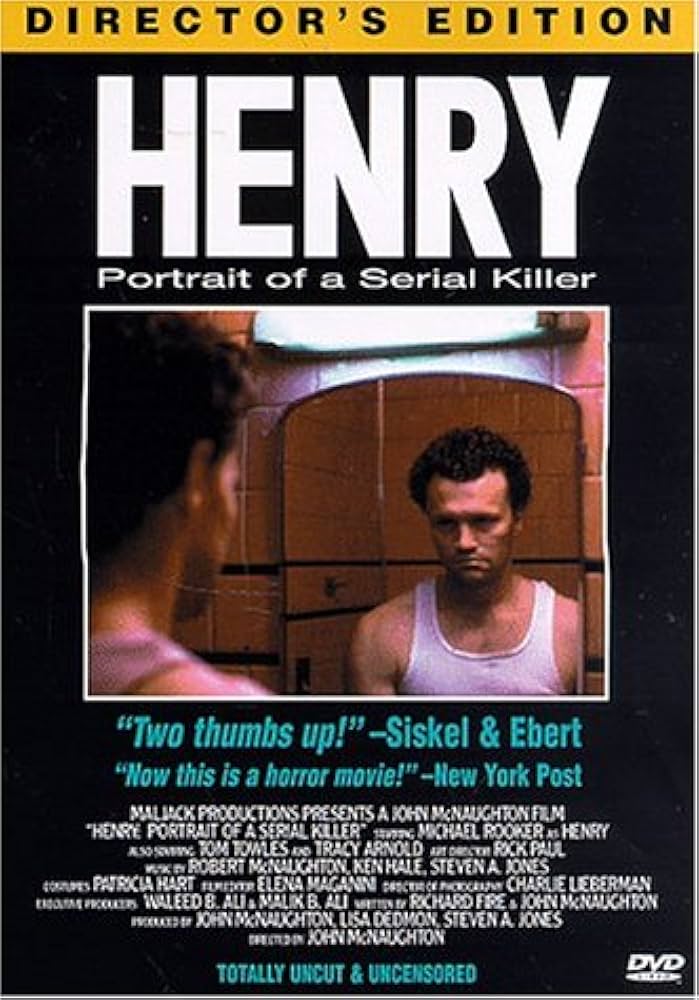
HENRY: PORTRAIT OF A SERIAL KILLER (1986 Maljack Productions)
Directed by John McNaughton
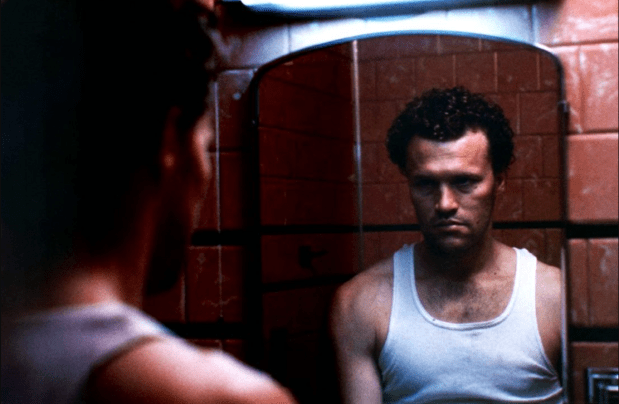
Originally shown at the Chicago International Film Festival in 1986, this controversial low budget portrait of a serial killer took until 1990 to see a wider release. Saddled with the onus of an X rating, the indignation of puritans, and the schlock tagline “he’s not Freddy, he’s not Jason… he’s real,” you’d be excused for dismissing it as exploitative trash from a distance. However, you’d be remiss not to change that opinion after watching the thing.
The film was met with lavish praise from most prominent critics at the time, something few horror movies can ever claim. It’s a bleak, stark, and clinical look at violence and psychopathy. Henry: Portrait of a Serial Killer is a high brow look at a low brow existence of purposeless violence and squalor.
Michael Rooker plays the titular killer with icy perfection. There’s nothing exploitative about it, Henry doesn’t even seem to particularly enjoy the killings. It’s just something to do, a compulsion. He lives with his old prison buddy Otis, an oaf who eventually joins him on his homicidal streak. Unlike Henry, Otis gets off on the killing, giving him a sense of power and thrill. There are times Otis wants to kill out of frustration or passion, but Henry has to hold him back, informing him that’s the easiest way to get caught.
Henry’s modus operandi is to appear as if he has none. His killings are random with a different weapon every time, living as a vagabond to avoid any police suspicion. Otis lacks the discipline to play by Henry’s demented rules for an extended period, and the relationship begins to turn sour.
Joining them in the dynamic is Otis’ sister Becky who comes to live with the two of them. Henry feels protective of her, and she begins to fall for Henry. Incapable of reciprocating any healthy emotional bond with another person causes things go sour between them as well, although Becky doesn’t have the sense to realize this before it’s too late. He comes to view her as dead weight, baggage that will hold him down, and his lifestyle requires that he travel often and light.
Shot on grimy looking 16mm film, the haggard and grainy look compliments the frigid nature of the piece perfectly. When the two leads acquire a camcorder and begin to film the murders, it lends itself even more to a documentary feel. It’s easy to sensationalize material like this, but this grounded approach and the cast’s nuanced performances bring a disturbing verisimilitude. It’s a perfect watch if you’re looking for a psychological approach to ultra violence this Halloween, and it works as a grim character study any other time of year as well.
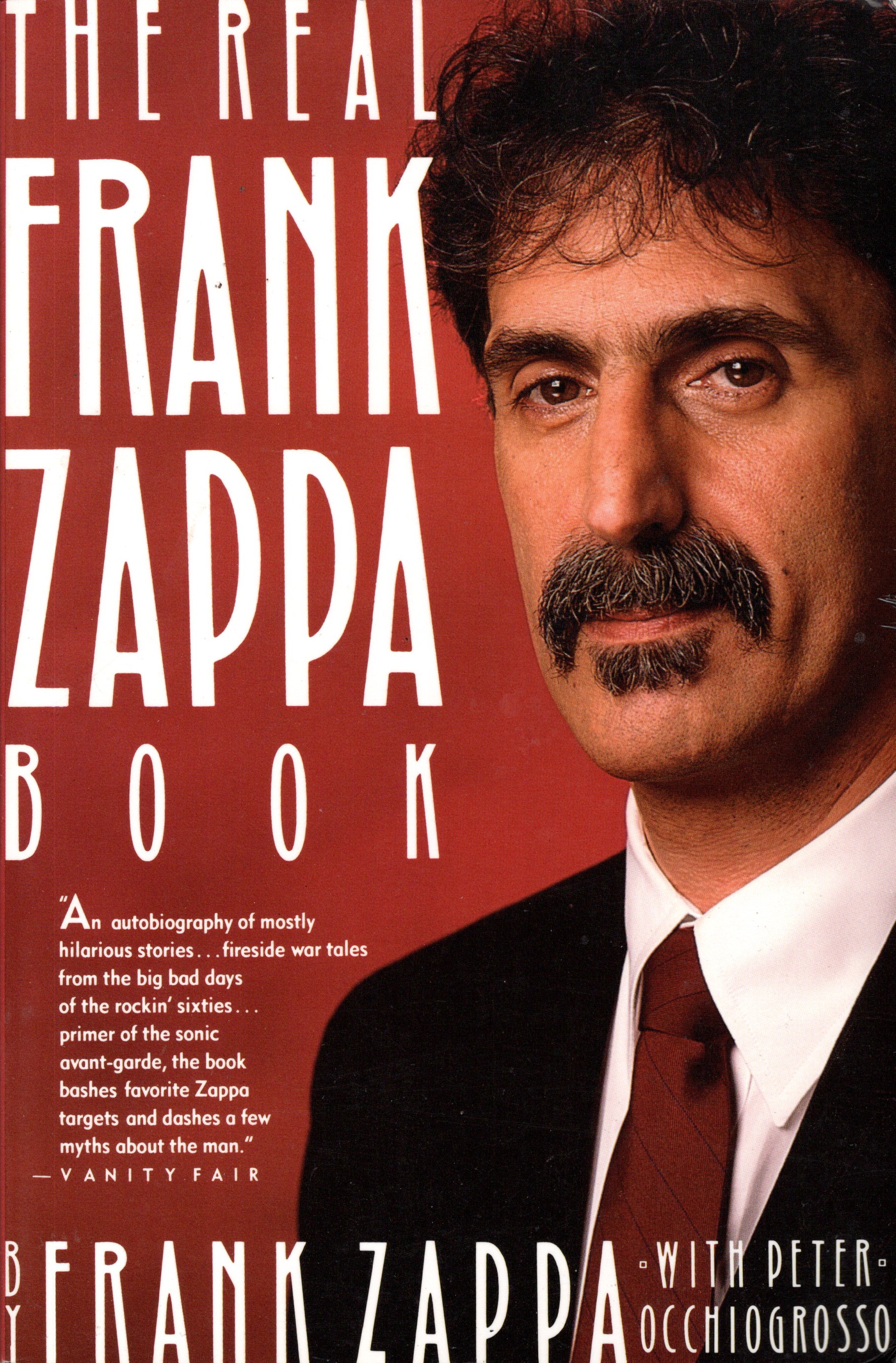
FRANK ZAPPA with Peter Occhiogrosso – The Real Frank Zappa Book (1989 Simon & Schuster, New York)
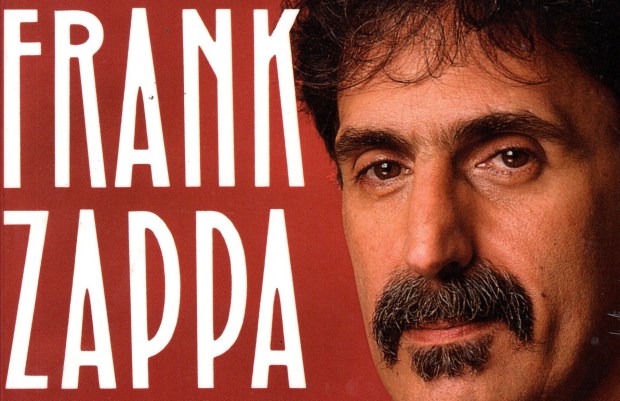
We’ve had enough rock story books. When not one but two members of Ratt have their own books out, we have hit a point of rock book saturation. Debauchery, studio fights, groupies and record companies…you can fill a tour bus full of those books! Instead, dig back a few decades to when Frank Zappa was a pioneer, not only in music, but in text. The Real Frank Zappa Book is the music book you need when you’re sick to death of music books. To wit: not only did Frank dedicate his book to his family, but also to Stephen Hawking, and someone named Ko-Ko, the identity of whom is lost to time. If you’re in the mood for the eclectic and the educational, The Real Frank Zappa Book is for you.
One of the most interesting chapters to rock historian might be “Porn Wars”, which details Frank’s conflict with the Parent’s Music Resource Center (PMRC) in the early 1980s. Everyone remembers Dee Snider making a fool of the politicians, but some are not aware that Frank Zappa was just as devastating. It includes his entire Statement to Congress, September 19, 1985, with lots of text written in CAPSLOCK for emphasis. Indeed, Zappa makes liberal use of caps and boldface whenever he wants, which can be a little offputting. Couple this with frequent illustrations between paragraphs. Yet Zappa was a musical rulebreaker, so why not a literary one too? This informative section will be the meat of the book for most readers.
Like standard rock books, Frank starts at childhood. He notes that he became interested in drums around 1952, before rock and roll was even invented, simply because he was fascinated by the idea of making noises by hitting things. He became interested in orchestral percussion and the works of Edgard Varèse, partially because Varèse looked something like a mad scientist on the cover of The Complete Works, Volume I. Zappa was curious to hear a composition called “Ionisation” because it had been panned in a review as “all drums”, and “dissonant and terrible”. Young Frank simply had to hear it! It is clear that Frank Zappa was Frank Zappa, from a very young age. Frank even called Varèse on the phone at age 15, and Varèse told the teenager about new music he was working on.
Zappa describes befriending Don Van Vliet, the future Captain Beefheart. There is a short-lived first marriage, and playing in gigging bands. There are 10 days spent in jail for “conspiring to commit pornography”. His career is given a fair overview in about the first 120 pages or so: gigs, albums, the GTOs, and even more brushes with the law. A transcription of a 1975 court appearance in England is quite entertaining, as he is asked to explain his lyrics. “What was the concept of the song ‘Would You Go All the Way?'” is the beginning of a discussion on band “members” and “groupies”, all in formal court-speak. Entertaining as hell.
After running through the gigs and albums and adventures, Frank waxes philosophical on family, drugs, food, the music business, censorship, religion, and life in general. There are far too many topics and sub-topics to list. A chapter called “All About Music” will be fascinating to the musically educated and laymen alike. From dots on pages to a living breathing orchestra, Frank walks us through his processes. He also describes recording, mixing and the history thereof, an interesting segment. Consider: Whatever you hear on a record is not the sound heard by a pair of ears in the recording room. There are specific microphones placed in carefully selected places, to pick up all the instruments as loud and clear as they can be captured. Then, those sounds are mixed down, adjusting for volume and placement, and placed in a stereo field. It’s a completely artificial sound, whereas if you were in the room, standing close to the drums, your living experience of the music would be drastically different. Just fascinating thoughts from the brain of Frank Zappa.
The Real Frank Zappa Book is quirky, funny, educational, preachy, and utterly unique. Frank is not content to talk just about what you want to hear. He’s going to sit you down and talk about what he wants. He doesn’t get too personal, and keeps aspects of his life guarded. Instead, he brings you into the recording studio, acts as your tour guide, and your school professor. The ironic thing is that Zappa was not too keen on post-secondary education for himself, but sounds like the coolest teacher you’d ever have. The one you wanted to have.
Since I’ve been covering horror films of old the last two weeks, I thought it apt to cover one more contemporary. As contemporary as it gets as a matter of fact, as I just got out of an opening night showing a few hours before writing this. If you’re unfamiliar with the Terrifier saga, it focuses on serial killer/demonic supernatural entity Art the Clown. Initially appearing in short films and an anthology, he was granted a feature length excursion in 2016, the little indie movie that could, Terrifier. Made for around just $50,000, the film was panned critically, but garnered enough of a cult following to warrant a sequel.
Terrifier 2 was released in 2022 with a budget of just a quarter of a million dollars. However, the film was a surprise hit, making fifteen million dollars at the box office and garnering a number of positive reviews. Fifteen million may not sound like a lot these days, but bear in mind that this is an independent film series so violent that each entry has been released unrated.
And oh: the violence. Director Damien Leone received offers from major studios after the success of the second film to finance the third, but he had the integrity to turn them all down because he knew they’d try to censor his vision. These films make standard slasher flicks look like Walt Disney. Reports of people fainting, vomiting, and leaving the theaters in droves have accompanied the release of each film. None of that happened at my screening of Terrifier 3. The place was packed and people were glued to their seats. I was amused at how many guys were there with reluctant looking dates, possibly getting their girlfriends back for dragging them to something like Anyone But You earlier this year in the cruelest way possible.
It’s not all gruesome macabre gore though. These movies have a spirited sense of humor, and they’re only getting stronger each time out. Art is mute, but unlike other slasher villains, he’s incredibly emotive. David Howard Thorton imbues his performance with the grace, physicality, and body language of a silent film star, leading to moments of genuine hilarity. Whether he’s mocking his suffering victims or eroding their guard before hacking them to pieces, Thorton is perfect and totally committed. I was worried they wouldn’t be able to top sadistic comedy of the salt and bleach scene from 2, but I’m happy to report I laughed as much during 3 than I have at any comedy I’ve seen in years.
Another impressive aspect of 2 and 3 is the introduction of Sienna Shaw in the former film as the main protagonist. Played by real life martial artist, stunt performer, smokeshow, and general badass Lauren LaVera, we’re gifted a likable character to root for against Art. I say this is impressive because the film manages to have its cake and eat it too. A criticism levied at many slasher movies is that the one dimensional personalities of the victims makes the audience root for the killer, or at least see the movie through their point of view. The film does have its number of anonymous one dimensional meat bags for Art to cut through, but we have someone fundamentally good (angelic even) we hope to see triumph over him. Only after watching him creatively waste the supporting cast of course.
Art disposed of most of Sienna’s friends and family in a Halloween massacre during the second film, and she’s understandably having a hard time coping with that at the beginning of this one. Taking place five years after the previous film, Art being believed dead, Sienna is discharged from a mental institution to the care of her aunt and uncle where she hopes to spend a quiet Christmas with them and her young cousin, Gabbie. Art, who’s simply been dormant, is awakened in a condemned building by a demolition crew. Dispersing them in skin peeling fashion, he now has access to their van and all the goodies inside it.
Lauren LaVera crushes it here. She played a high schooler in one of those high schools where everyone looks like they’re pushing 30 in Terrifier 2, but here she’s convincing as a traumatized woman that fights every moment to stay strong for those around her. Haunted by violent hallucinations of the people she couldn’t save, LaVera navigates the precarious balancing act of portraying a damaged character that still has her innate toughness.
There are supernatural elements to Art and Sienna explored more in this film I don’t intend to spoil here. The imagery is not subtle, but in a film like this, subtle doesn’t really play. I’ve heard criticism that the plot is somewhat aimless compared to the first two with the addition of all the additional mythos. I can understand boring people considering some of Art’s kills to be unnecessary from an economic writing standpoint, but one of the main reasons people see these movies is for the spectacle of those inventively grotesque murders. Being so hyper-focused on plot is missing the forest for the trees. Besides, Art being on screen is guaranteed gold every time, and I was never bored or felt like the story was dragging when we cut to Sienna, because I liked her as a character and wanted her to prevail.
Admittedly, you need the right mindset or physical constitution to endure or enjoy this thing. Maybe I’m a sick fuck, but I had an absolute blast seeing this in the theater. So far each film has been a step up from its predecessor, and its cliffhanger ending has me excited for part four whenever it’s released. Damien Leone has assembled a group of very talented people, and his direction rises to their level. The film has reportedly already earned fifteen million dollars, which I hope ensures the production of the next one.
Review dedicated to the donor of this CD, Mr. Harrison Kopp. I hope I like it. I am writing this review “live” so to speak, on first listen.
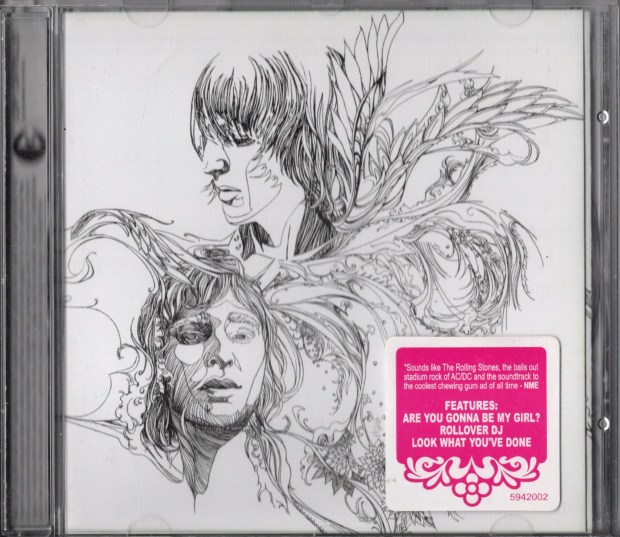
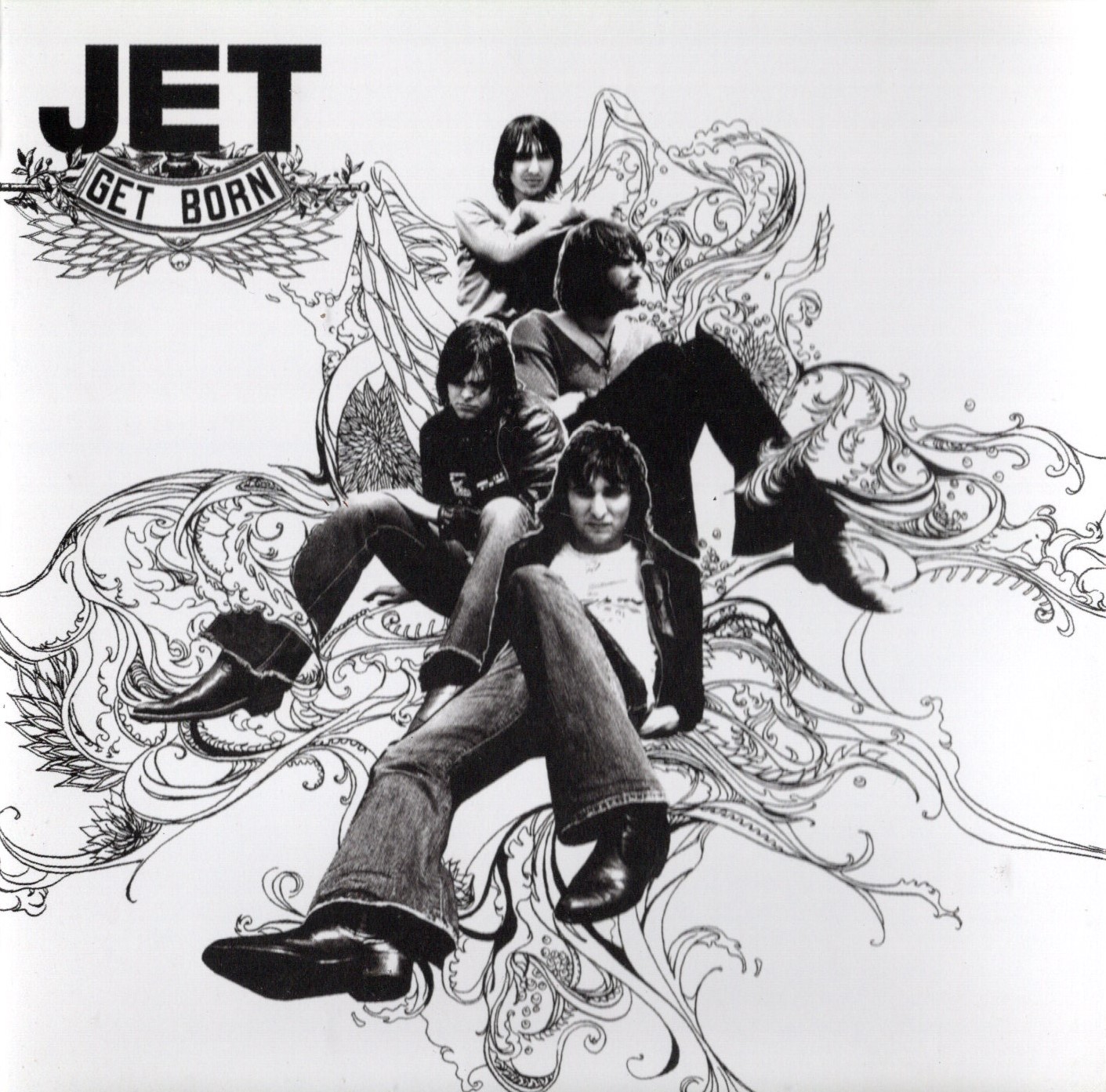
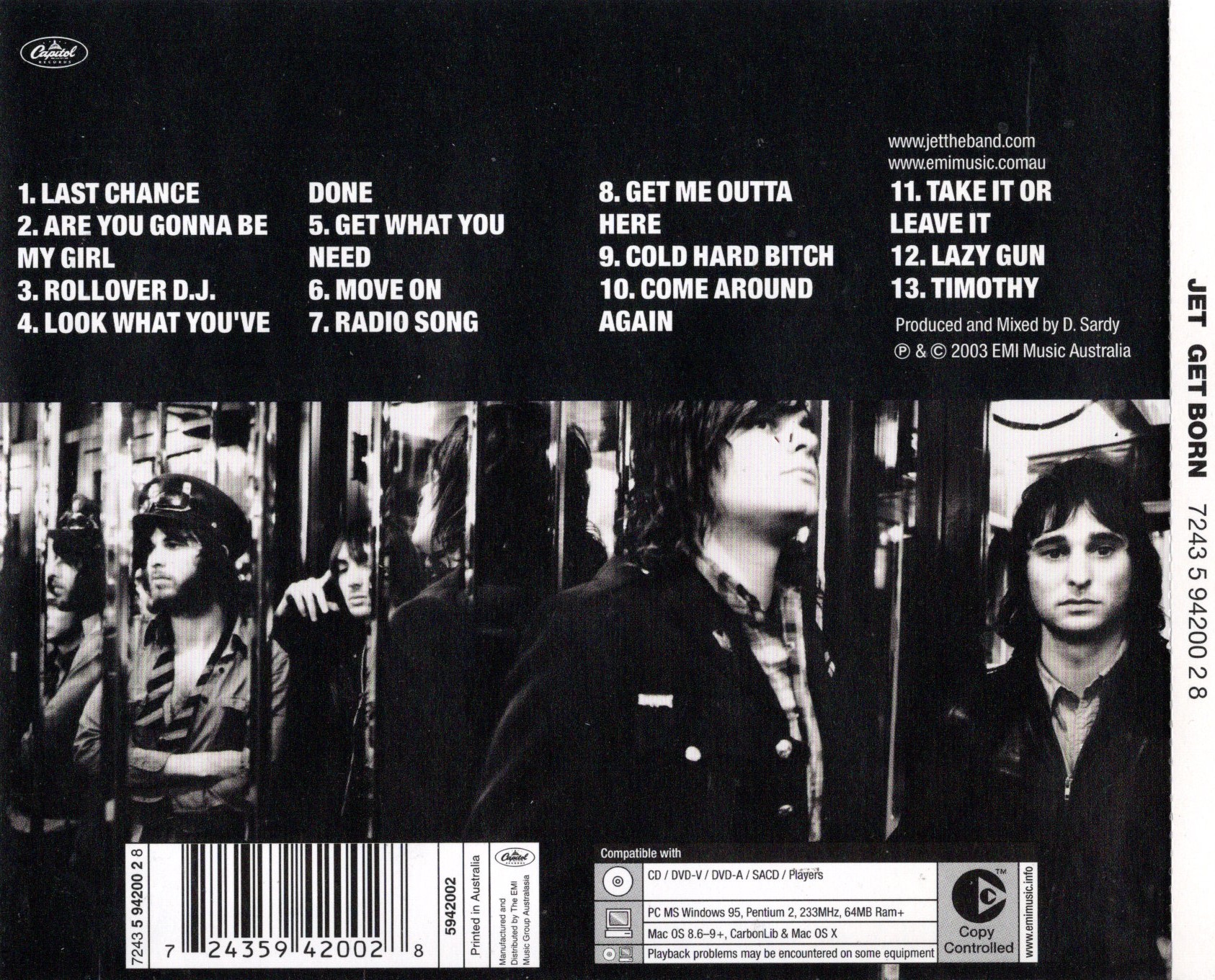
JET – Get Born (2003 EMI)
Get Born is Jet’s first LP, only two years after forming, and after one 4-track EP. Let’s listen and find out how adept this band got at writing songs after only two years. You already know track 2, “Are You Gonna Be My Girl”, the one that everyone says is “Lust For Life” re-written. Both songs utilize Motown beats, though the Jet song has more frantic energy. Plagiarism is excusable in some cases. In this case, I’m still undecided. Is the rest of the album more original?
Many of these songs are fast and short. Opener “Last Chance” doesn’t even break two minutes. It possesses a strong riff, reminiscent of AC/DC in their Bon Scott heyday. Lead singer Nic Cester is quite adept at “Yeahs!” and “Woos!” which will suffice. This leads directly into the signature bassline on “Are You Gonna”, which we don’t need to review. You already have your opinion, and mine is that you can’t tell me those guys never heard “Lust For Life”. That kind of thing always has a subliminal influence, intentional or not. The only question I have is how much was intentional, but I really stopped caring 20 years ago. It is, admittedly a good song if overplayed on radio (still).
“Rollover D.J.” hits right off the bat with bass and guitar, and sounds great in that second it smashes you in the face. Then it lays back a bit, in a Def Leppard-y way, when they used to rock. The chorus is punkier, but feels somehow incomplete. “Look What You’ve Done” switches up to a piano ballad, an unexpected twist. This tender song has an Oasis quality without the snot-nosed BS. This means, yes, you can hear a Beatles influence. Nic Cester demonstrates a smoother side to his singing. I didn’t want to like it, but the truth is, if this was on one of the first three Oasis albums, I would have liked it anyway. A keeper.
A nice rock n’ roll riff brings in “Get What You Need”, and one must admire the nice thick bass tone on this album. This song is all about the guitars. The melodies are inconsequential. It’s all the guitars, and the bass.
In another surprise, “Move On” opens with the distant sound of a steel guitar, before an acoustic intro. This western tinted ballad might be too soon after the previous ballad, but it’s a good song! Very much like the way the Stones would throw those acoustic numbers on their albums. It’s now clear that Jet are not interested in breaking new musical ground. They are focused on writing and recording classic sounding songs that fall within a certain boundary. That’s allowed.
Another surprise: acoustics and piano return on “Radio Song”, a moody trip that has me questioning everything I just wrote. Lead vocals by guitarist Cameron Muncey. I can hear some Radiohead, but the irony is the chorus: “This won’t be played on your radio, tonight.” It’s as if they knew “this is the song where we’re going to experiment a bit.” It’s different, and it has an audible heart to it. It goes epic by the ending, but not too much. Not into Guns N’ Roses bombast. Still sticking to the core instruments. An album highlight.
Back to rocking. A stock riff occupies the necessary space on “Get Me Outta Here”, which fortunately compensates for it with verse and chorus power! Really great work here, with all the singing parts hitting the spot, satisfying a certain craving for a song that’ll be in your head long afterwards.
AC/DC’s fingerprints are all over “Cold Hearted Bitch”, though with drums more out of the Who school of crashes and smashes. Unfortunately, momentum is lost on “Come Around Again”, another Stones-y ballad with piano and twang. It takes time to build, but the reward is brief. The mellotron and organ are the most interesting parts.
Energy returns on the punk-surf-rock-blast of “Take It Or Leave It”, like a shot of pure adrenaline to the album. By this stretch of the album, the “Yeah’s!” are getting a bit tiring and the schtick is wearing thin. “Lazy Gun” has a completely different vibe, with a Gary Glitter sound, and an unexpected secondary section that may or may not fit the first part. We’re over 40 minutes into the album now, and this, the longest song, shouldn’t be track 12. Ear fatigue is setting in.
Finally, “Timothy” is an acoustic ballad to close the album. It sounds extraneous, though with a psychedelic rock twist. I like the chorus, “It’s not what it seems, but it is…” but it seems the song never builds to anything bigger.
Two takeaways: 1) Jet is more diverse than I expected. 2) I don’t think they have a lot of character on this album. Nothing strikes me as unique. Further listens are warranted, but…
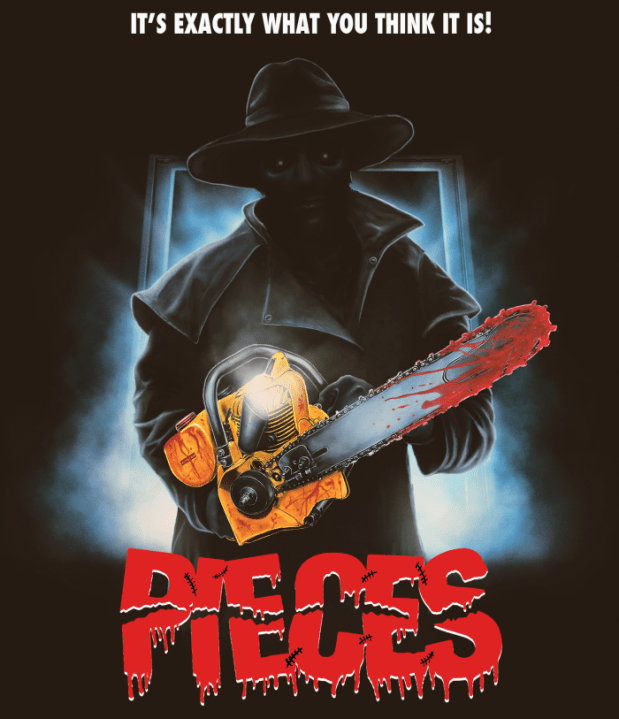
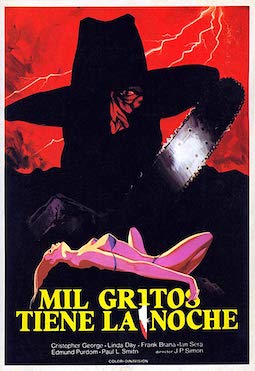
Here’s a video that nasty casual horror fans may not know. Too hardcore for the UK, Pieces is a Spanish-American slasher gore fest, one of the most violent of the ’80s. Fortunately, the film mitigates the viscera with a cheeky sense of humor. By no means would I call it a horror/comedy, but it does sacrifice logic and plot consistency for entertainment. I still have no idea how one suspect is cleared of being the killer; he just shows up free of the police a few scenes later and everyone acts like it’s normal.
Much of the humor comes from poor taste: extremely poor taste. The opening scene presents us with a young boy completing a pornographic puzzle, then butchering his abusive mother with an axe before dismembering her body. When the police arrive, the boy is witty and manipulative enough to pretend to be traumatized and oblivious. It’s a nice touch when your slasher is smart enough to stay out of jail or the loony bin.
The plot picks up decades after the opening scene at a college where the students have a nasty habit of getting disembowelled in creative ways. The cops send in an undercover operative (Mary “the MILF” Riggs) to be the women’s tennis instructor, and keep an eye out for the killer. She’s aided by the one student in the know, Kendall James. Kendall also desperately wants to get in Mary’s tennis shorts, despite the huge age gap.
Graphic hijinks ensue as they piece together the mystery while more bodies drop. One murder leads into an acting moment so astonishingly powerful, it brings tears to my eyes to this day.
And the word “bastard” will send me into a fit of hysterical laughter forevermore. The plot in a film like this doesn’t matter much. You can probably figure out who the real killer is in the first ten minutes. That’s never been the appeal of a video nasty though. As schlocky, stringy, sinewy entertainment, it does its job well. The kills are some of the best of the decade, it’s funny both intentionally and unintentionally, and it’s got that low budget grime that your Halloweens and Friday the 13ths don’t that only make the film feel that much naughtier. Give it a shot if you’ve got the stomach!
RECORD STORE TALES #1159: A Mighty Wind & A Million Vacations
As fall starts to take hold, I need to be mindful. Mindful of dark thoughts and feelings. And so, on Friday night when we departed for the lake, I focused. The music must be bright, for it will be dark out soon. We must keep the spirits up, for it is that time of year again. By this time in 2022, I was already suffering from my seasonal disorder. In 2024, I’m doing OK so far.
In preparation for Friday night’s episode of Grab A Stack of Rock (the first indoor show at the lake in a year), we played the soundtrack to A Mighty Wind in the car. It has us singing and smiling along. We followed that with Max Webster’s A Million Vacations. The drive up was relatively uneventful. We were almost killed at the St. Jacobs roundabout by a white minivan who turned left from the right lane, but hey, it’s all good. I hit the brakes in time enough for the guy behind us not to rear-end my car. Thanks a lot of for the sudden jump in stress, but we made it alive in one piece. Along the way we spotted a cute cat in the bushes. We even arrived by 7:00 pm, which meant I had an hour to prepare for the 8:00 pm show, including some daylight time. The show went off without a hitch. Non-stop laughs, love and deep analysis. Just how I like it.
Saturday was a beautiful day, but we have different priorities in the fall compared to summer. Instead of going out and buying the best meat and veggies, we have to start using up what’s left in the freezer. I tried some experiments, but nothing was particularly successful. We ate some frozen steaks that had been sitting around all year, but they were tough and lined with gristle. I tried cooking some leftover corn in a pan with some onions and mushrooms, but the overall flavours didn’t mix well. I was left with something that tasted like shepherd’s pie, which was not what I was aiming for. The sweetness of the corn didn’t mix with the funkiness of mushrooms. After a summer of so many food experiment successes, it was alright to have one failure in 2024.
Saturday night, a mighty wind began to blow. We didn’t have too many storms in 2024, so this was more than welcome. Strangely, it remained warm outside. The rain came in spurts. We never got properly drenched. We just remained inside and enjoyed it.
We didn’t get as much done this weekend as we hoped. We always plan for more than we have time to do, but we didn’t let any time go waste. We made some great meals, had a nice fire outside, took the drone up, and Jen got to watch all her sports games.
On the way home, I began to feel that sadness creep in. I fought it off with Van Halen and David Lee Roth: 5150, and Skyscraper. 5150 did not do the trick. Skyscraper did. With Dave as the cheerleader and nostalgia in the music, Roth kept my spirits upbeat. It was the magical mixture.
Once home, I ordered an amazing deep dish pizza from a local place called Franklin’s. It was my first deep dish pizza, with the cheese running so gooey and the sauce so tangy. It wasn’t super deep, so next time I want to try something even bigger. Either way, bucket list item checked off the list.
Was this our last trip to the lake in 2024? We don’t know, but what I do know is that we did it right this time.
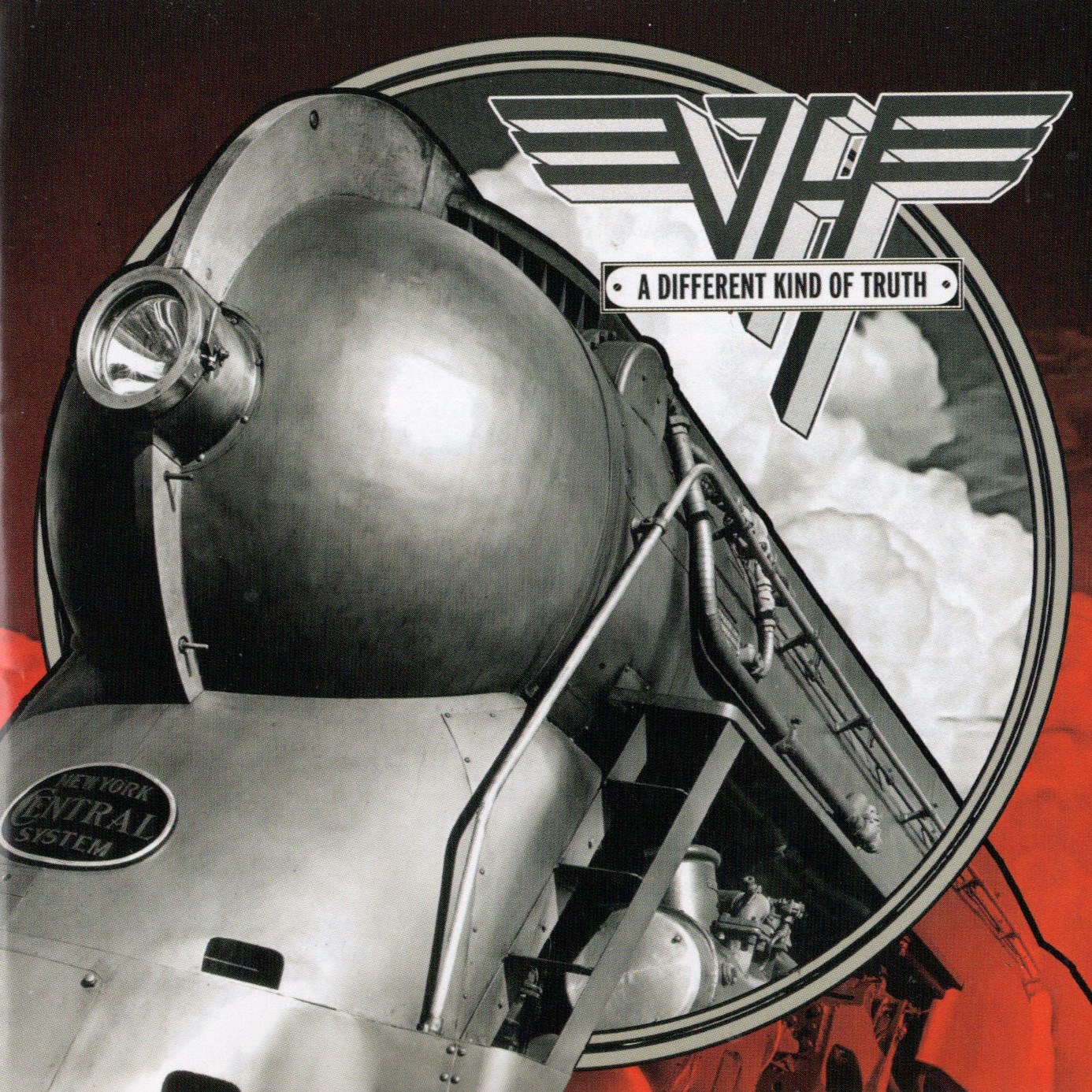
VAN HALEN – A Different Kind of Truth (2012 Universal CD/DVD set)
When this album was released in 2012, we all wanted Van Halen to win. Eddie had been through some tough times, but he finally did what the fans demanded: get back together with David Lee Roth, and record a new album. Sure, we all lamented that Michael Anthony was gone, but it was new bassist Wolfgang Van Halen that made it happen. Without Wolf, there would be no final Van Halen album. Just VHIII, and we know how most of you feel about that.
Working with new producer John Shanks in neutral territory, Van Halen managed to crank out a new album in just three years, starting with jams in 2009.
Wolf knew that Van Halen had to get back to a “classic” sound for their first new album with DLR since 1984. In addition to new music, Wolf dug back into Van Halen’s archive of unreleased material, and picked seven songs that rework and re-write. Roth called it a “collaboration with the past”, which is a good way of putting it. No, it does not sound exactly like old Van Halen; that would be impossible. It does, however sound like Van Halen with Roth.
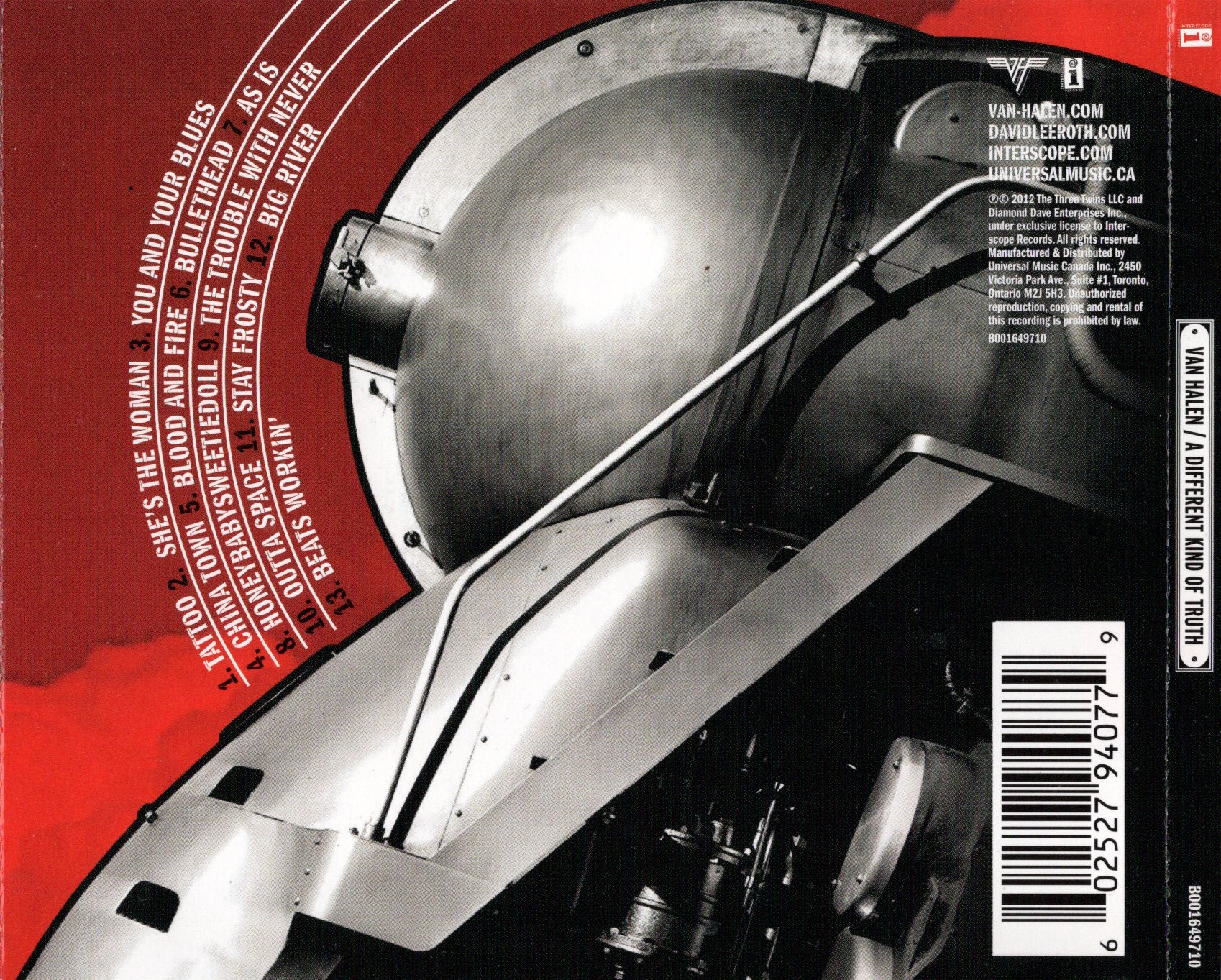
Opener “Tattoo” was the first single and weakest track. It’s also the only one with audible keyboards (by Dave), though just for texture. Roth said the multi-layered chorus was inspired by artists such as Rhianna, but that chorus is actually the annoying part of the song. Eddie’s fills and Dave’s verses are fine and entertaining, as is Wolfie’s fuzzy bass. The chorus is the weak link, perhaps even worse than the lyrics: lines such as “tramp stamp tat” and “mousewife to momshell”. I like tattoos as much as the next guy, but I’ll never use the word “momshell” except when discussing this album.
The real banger is the second single, “She’s the Woman”, a pretty close approximation of the original Van Halen song (pre-debut album). Wolfie’s playing is monstrous, with a catchy circular bassline that proved the kid had the talent to be in this band. His dad must have loved jamming with him. Ed’s solo really brings us back to classic Van Halen, while Alex’s drums have that sound that we all missed. I hate to say it, but this rendition is probably superior to the original lineup’s version.
“You And Your Blues” has that choppy Eddie guitar we love, and those “ahh, ahh” backing vocals that scream Van Halen, even without Mike. Dave’s lower voice works well on the verses, though he is stretched out on the high notes in the chorus. A great Van Halen album-quality song. (If you’re fortunate enough to have a CD/DVD combo set, you’ll be treated to a cool acoustic version of “You And Your Blues” with loads of storytelling from Roth.)
“China Town” has some of the best shredding on album. From Wolfie’s crazy capo bass to the lightning fast tempo, all four members of Van Halen are on fire. If any song can be said to take the classic sound and launch it into orbit, it’s “China Town”, and Wolf is the star. The bass is not overly high in the mix, but when you listen to it and isolate it in your head, you realize that this guy has brought a new side to Van Halen: bass shred. Additionally, it’s a great song in every way.
Going back to 1984 and an instrumental section called “Ripley”, “Blood and Fire” was reworked in 2000 for an aborted reunion with Roth. Interestingly “Blood and Fire” actually sounds more like Hagar era Van Halen. It does contain one of Dave’s favourite concert phrases: “Well look at the all of the people here tonight!” If this track had been on 5150, it would have fit like a glove, though it would have been one of the more rocking tunes. Edward himself is the star on this one, as he rips, shreds, and tears as if it really was 1984 again.
“Bullethead” sounds new, and also goes back to the 2000 sessions. Van Halen speed and Dave “charasma” are held together by the rhythm section of Al and Wolf. It contains the lyric “Got a different kind of truth”, from which the album takes its title. Ed’s effect-laden solo is no less cool, though nobody will list “Bullethead” in their top 20 Van Halen songs. A cool album track it is, but that’s all.
One of the coolest tunes would have to be “As Is”. Opening with some Alex drum intensity, it breaks into a slow heavy riff, before finally accelerating into a powerhouse Van Halen smokeshow. That running riff sounds so classic, you could swear they injected Ed with youth serum. He sounds like a man reborn, both in terms of shred but also in fun. Ed gets to play with many different sounds and tempos on “As Is”, while Dave also gets to enjoy himself with singing and that spoken word stuff he does so well. Most of this is done very fast.
This sounds like a natural side break. “Honeybabysweetiedoll” (another 2000 track) comes across like a side two opener. Ed is experimenting with new sounds, like he used to, and you’ve never heard Ed sound or play like this before. He goes for a middle-eastern vibe, but with the kind of intensity that other bands do not have the mettle to muster. Dave’s lyrics about soccer moms don’t quite hit the spot where the music is concerned, but nobody’s listening to this song for the lyrics. It’s the guitar that makes the biggest impact here. You can imagine the Ed diehard fans just pounding their fists in celebration when they heard what Ed was up to, before they tried to figure out how he got that sound.
“The Trouble With Never” might be the only track that doesn’t seem like it goes anywhere. You also miss Michael Anthony the most on backing vocals here. It’s just a song. Not a great one, not a bad one…but with one hell of a cool bassline.
“Outta Space” originated in the mid-70’s as “Let’s Get Rockin'”. The riff is classic even though it never made an album before. Dave sings in his highest voice, which is actually cool after a lot of lower pitched songs. As you’d expect for a song originally called “Let’s Get Rockin'”, it smokes from start to finish, top speed and loaded with cool Eddie licks. It’s fun to hear the rhythm guitar drop out during his solo, just as it used to in 1978. Ed wasn’t fond of that sound, but it certainly evokes an era and a vibe. It’s like a warm sweater. Maybe Ed would appreciate that sometimes the absence of a guitar can also speak.
Dave plays acoustic guitar on the fun “Stay Frosty”, an old song that certainly recalls “Ice Cream Man” in every way. There’s one lyric that Dave liked to point out: “If you wanna be a monk, you gotta cook a lot of rice.” Hey, it’s not untrue. Let me put it this way: If you imagined a sequel to “Ice Cream Man”, it’s “Stay Frosty”. Not quite as good, but hits all the same beats that you want to hear.
“Big River” sounds like an older song. It has a cool curly guitar opening, before laying into this awesome guitar/bass groove. More a groove than a riff. Dave’s lyrics and singing are top notch on this song. Classic Van Halen. The surprise is that halfway through the song, for the solo section, it transforms into a completely different groove. This section has some of Eddie’s best playing too. It reverts back to the original riff for the last third of the song. All the while Wolfie is playing the most incredible bass fills, but never stepping on his dad’s toes. Think about that for a second. In the mix, you have the greatest guitar player in the world playing over this awesome riff, but the bass player still manages to throw a whole bunch of cool fills in there, without getting in the way. That’s a band, and that’s family, and that’s talent. If this song had been on an album like Fair Warning, people would still remember it today.
The closing song “Beat’s Workin'” starts with a cascade of Alex Van Halen drums, gone gonzo. It then breaks into a fun riff and a good time album-ender. A song called “Beats Workin'” should sound like a celebration. I get a bit of a Max Webster vibe, though heavier, along with a hint of Aerosmith. Once again the rhythm guitar drops out when Eddie goes solo, but then Wolf gets a moment in the spotlight too. His fuzz bass tone is very much unlike Michael Anthony’s. There’s a moment here when he and Alex are just playing while Ed does his thing, and it feels beautiful, especially now, knowing the family will never be reunited. But let’s not get too somber. It’s a party, after all.
The bonus DVD also includes acoustic versions of “Panama” and “Beautiful Girls”. They are alright. Valuable to have in your collection. You might not go back to listen to them very often. Another reason to own this physically is the lyric sheet, with cool sketches for each song. This is a Dave touch.
Final thoughts:
The album cover, though a cool picture of a train, just doesn’t feel like classic Van Halen. Then again, what does? They’ve had so many different kinds of covers.
The production on this album slams.
Though Eddie is the star, and we’re all listening to every note he plays, it doesn’t sound like an EVH solo album like VHIII did. It sounds like a real band album.
John Shanks and David Lee Roth did the best they could with what remains of Dave’s voice, and did a fine job of it by doing more of that speak-sing thing.
The flow on this album is excellent. There is hardly any filler, and every song works in its given slot, especially the closing trio of “Stay Frosty”, “Big River” and “Beats Workin'”.
Welcome boys and ghouls to Holen’s Halloween Extravaganza 2024! Throughout the month of October, yours truly will be supplying you with reviews of hellish horror every week. We begin with not one film, but five! I’ve decided to review Alice Cooper’s top 5 horror films according to an interview in NME.
In order to avoid a mammoth length approximating the intimidating size of the LeSausage*, I’ll keep each of these as concise as my loquacious heart will allow. The films are as such in the order that Cooper lists them.
5.SALEM’S LOT (1979)
A TV miniseries based on a Stephen King book as directed by Texas Chainsaw Massacre’s own Tobe Hooper? Sign me up. Featuring some of the greatest and most disturbing vampire makeup ever put to film, the parts that focus on him are the strongest moments of the film. That said, there’s too much fat in the runtime that focuses on the mostly uninteresting townspeople. It could have maintained the slow burn anticipation of revealing the vampire while cutting the three hour run time down to a standard ninety minute feature. Still, the vampire scenes rule.
3.5/5
4.SUSPIRIA (1977)
An iridescent Italian horror classic from Dario Argento. It’s a visually stunning piece with a masterful grip on tension. An American dancer travels to Germany to join a prestigious dance studio, only to learn it’s a front for a coven of witches. Ah, poop. Like several horror movies, it lacks narrative cohesion and momentum, but the visuals, mystery, and creatively graphic kills keep you interested in the ride.
4/5
3.THE HAUNTING (1963)
Black and white psychological terror. One of the all time great haunted house movies. The cinematography is immaculate, light and shadow coalesce with a classic story to foster a genuinely chilling atmosphere. The story isn’t particularly unique, with a scientist visiting a haunted house with several volunteers to prove the existence of ghosts, only to bite off more than they can chew. It’s just executed about as well as you could do so.
4/5
2.THE EVIL DEAD (1981)
Sam Raimi’s feature directorial debut, and Bruce Campbell’s big screen debut. It’s a feature length remake of a 1978 Raimi short film called Within the Woods which served as a demonstration to obtain funds for the full version here. Joel Coen was the assistant editor on The Evil Dead, and was inspired by this approach, opting to shoot a trailer for Blood Simple to secure funding for that film. No Evil Dead, maybe no Fargo, Big Lebowski, or No Country for Old Men either. How about that?
As for the film at hand, it’s a classic cabin in the woods story with gore aplenty and a kinetic campy style. Raimi’s visual style is antithetical to boredom when he’s directing anything except Kevin Costner’s worst baseball movie. The Evil Dead is good clean American fun, but would ultimately be improved upon in every way by the absolutely bonkers sequel Evil Dead II.
4.5/5
1.CARNIVAL OF SOULS (1962)
Perhaps the most overlooked movie on the list, it’s a haunting paranormal thriller with a somewhat predictable twist, but that’s not the point. A black and white haunting miracle of unease and gothic dissidence. The main character even plays a church organ! It excels in the quiet moments, as it builds to its tragically horrific but inevitable conclusion. Shoutout to director Herk Harvey, who also directed the greatest work safety film ever, Shake Hands With Danger.
5/5
Nice picks, Alice! His list meets the Holen seal of approval. Tune in next week kids for something completely different…
* That’s just a rumour. One I started myself. Flattery will get you everywhere, Holen! – Mike
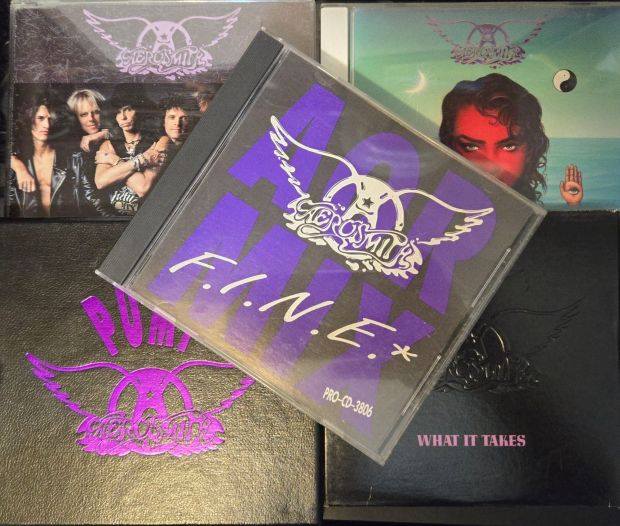
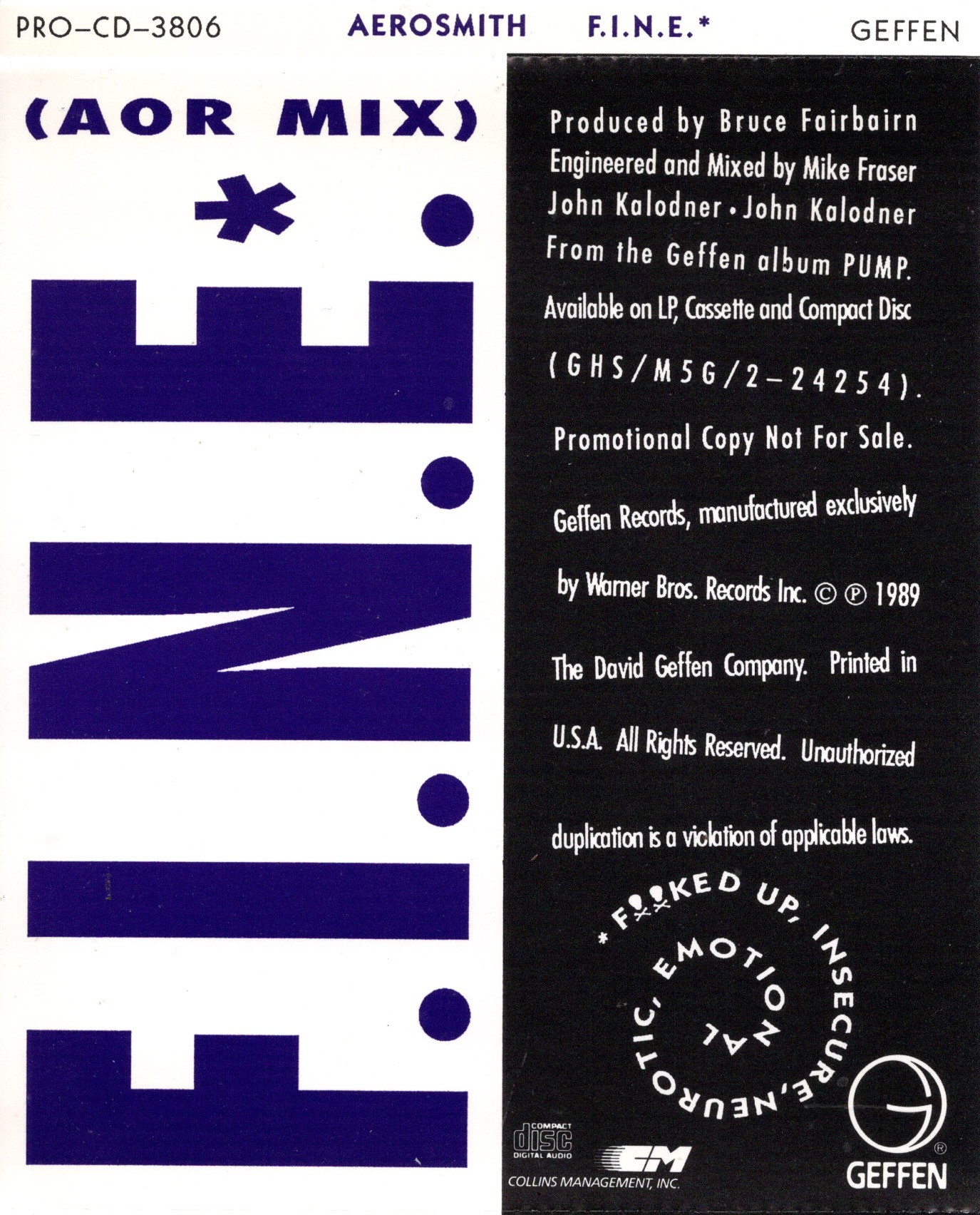
“AOR” equals “Album Oriented Rock”, a radio format established in the 1960s that essentially means “classic rock” by today’s standards. Therefore, this Aerosmith single would be a remix aimed specifically at those kinds of radio stations. Frequently and historically, many of these remixes are barely different at all from the album version. Additionally, “F.I.N.E.” from 1989’s Pump album was not really considered a single. It wasn’t available to buy commercially, and it wasn’t made into a music video. It was a radio single only. At 4:08, this track is not edited.
“F.I.N.E.”, which was track 2 on the album, is considered one of Aerosmith finer rock moments from the Geffen years. It was always focused on a biting heavy Aero groove, a melodic Tyler vocal, and that irresistible chorus of “It’s aaaaaaaalright!” This remix is hardly different at all. If anything, the bass might be coming through more clearly.
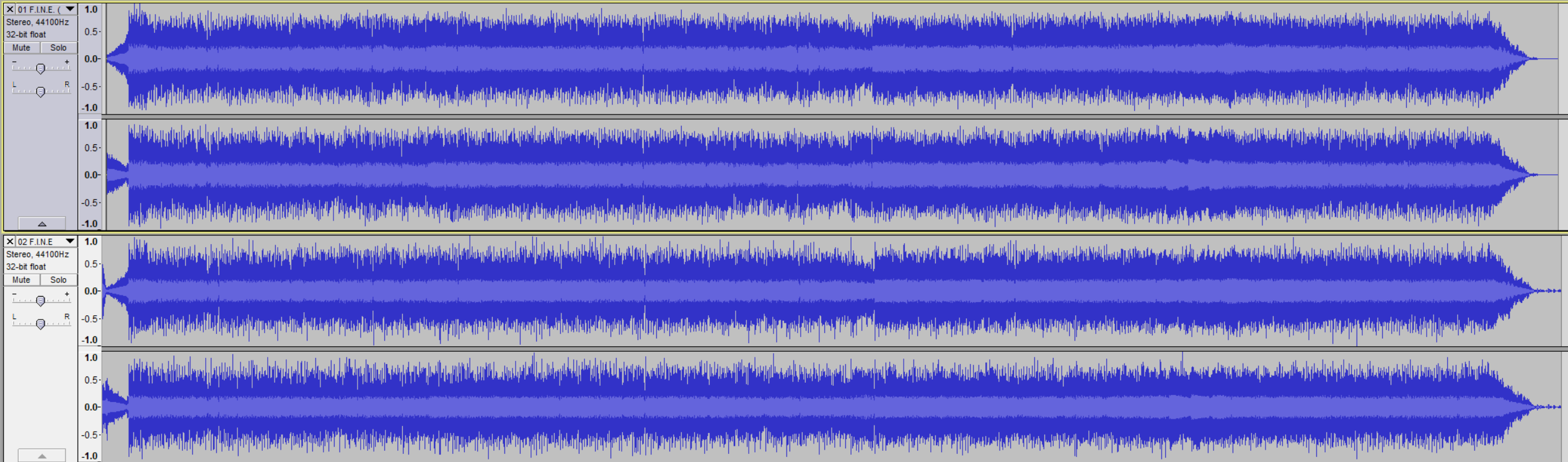
If you have a look at the waveform file below, you can see there isn’t much difference, though some are visible. The AOR mix is at top, the original 1989 CD file at bottom.
I don’t feel there’s any point in rating a promo CD single like on a scale of 5, because what’s the point? This CD is valuable as a collectible to fans and hoarders alike. It has an exclusive remix, and whether you can hear a difference isn’t the point to a collector. Sometimes obscure AOR mixes get reissued on greatest hits or box sets, but to date, this one has not.
“Joe Perry says I’m aaaaallright!”
Thanks again to Ash from Australia for sending me this CD which I shall file with my Pump collection!
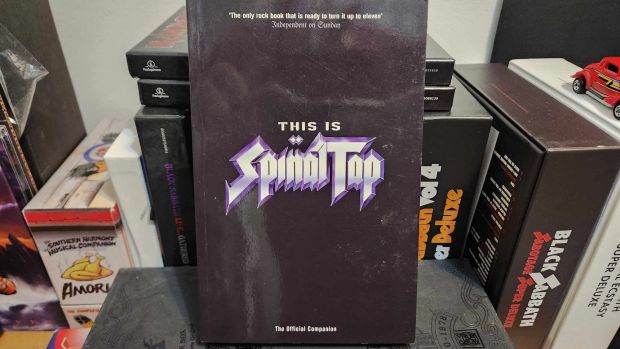
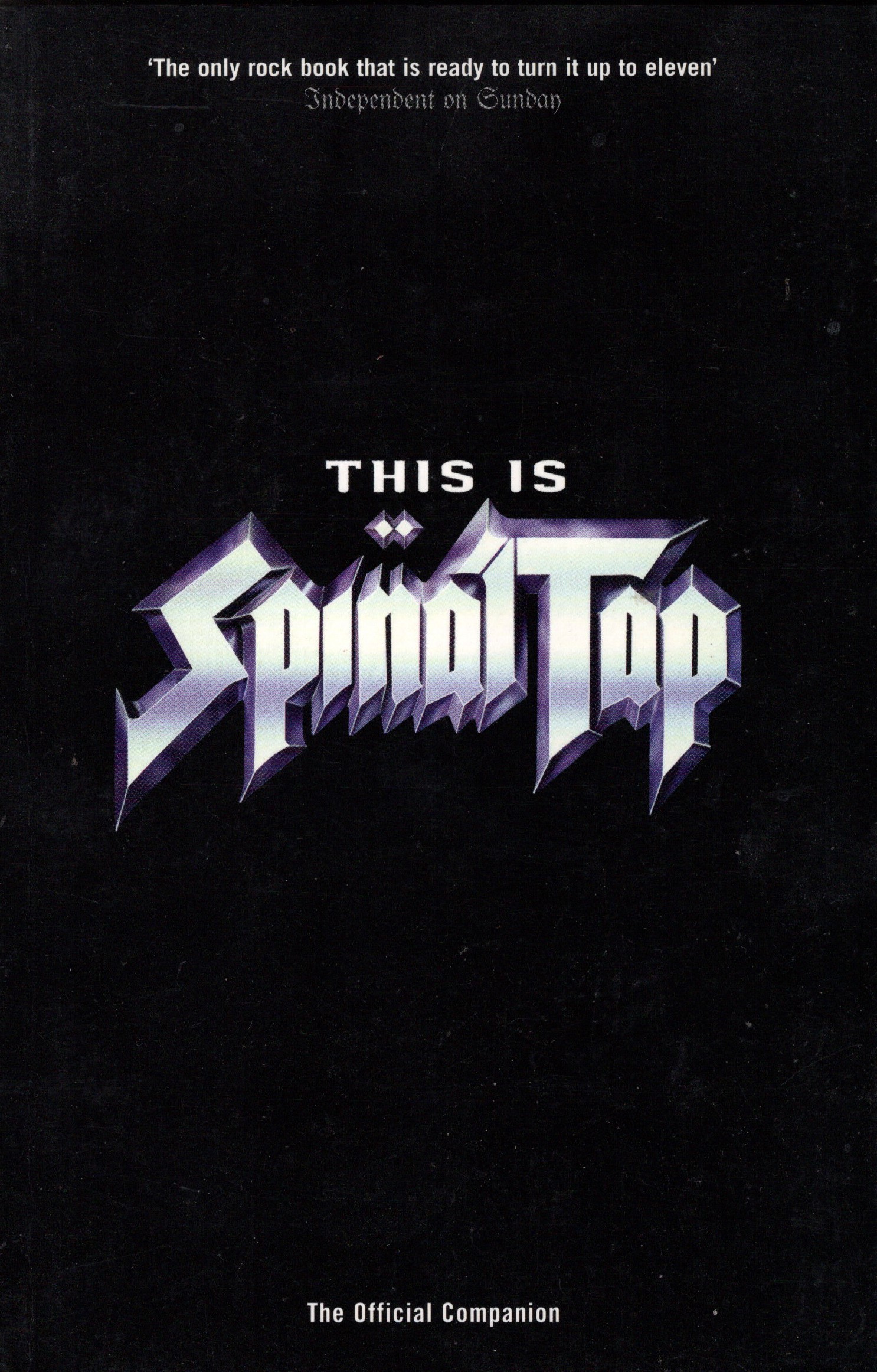
THIS IS SPINAL TAP – The Official Companion(2000, Bloomsbury, London)
You have the soundtrack. You have the DVD (maybe even the Criterion edition). You have the breakfast cereal. What else do you need? The Official Companion book, that’s what!
We begin with a “Prepilogue” by Michael McKean, who plays David St. Hubbins, offering some background on how Spinal Tap came to be, in the real world. From a 1979 TV appearance, to a 1982 demo film (not a script, like most movies, but a demo film!) to the 1984 finished masterpiece, McKean sums up the history and his gratitude from the start.
Next up is one of the funniest and most essential chapters. “Tap’istory” is a fictional timeline of Spinal Tap, from Derek Smalls’ birth in 1941, to a 2000 appearance with Mick Fleetwood on drums, and a remixed and remastered version of the film. This section is fascinating as it has release years for all of Spinal Tap’s fictional albums, including Brainhammer, Nerve Damage, and Blood to Let.
I found this book in the screenplay section of the book store, but Spinal Tap didn’t have a screenplay like most movies do. Instead of a screenplay, the bulk of the book is made up of a cool transcription of the film. This is done to extreme accuracy, to the point of transcribing Nigel’s final line, “wh-wh-what are the hours?” exactly as you read it here. If you ever wanted to quote This Is Spinal Tap as a hobby, this is how you do it to perfection. At the conclusion of the film transcription are several deleted scenes, such as David St. Hubbins meeting up with his now-punk rocker son.
Then we get to the lyrics, for basically every Tap song, including obscurities like the then-unreleased “Celtic Blues”, and stuff I’ve never heard like “Just Spell My Name”. Following this is an incredibly detailed glossary of everything Tap related you can imagine, including Rob Reiner, Steve Lukather, lukewarm water, and Walter Becker (who scribed the liner notes to Break Like The Wind, also included here).
For those Spinal Tap fans unable to read, the book also includes some full colour photo pages, with behind the scenes shots and rare promotional photos.
For any seasoned fan of Spinal Tap, this is an obvious augmentation to your collection. Tap into your local bookstore today and ask for a copy.
 HENRY: PORTRAIT OF A SERIAL KILLER (1986 Maljack Productions)

















You must be logged in to post a comment.