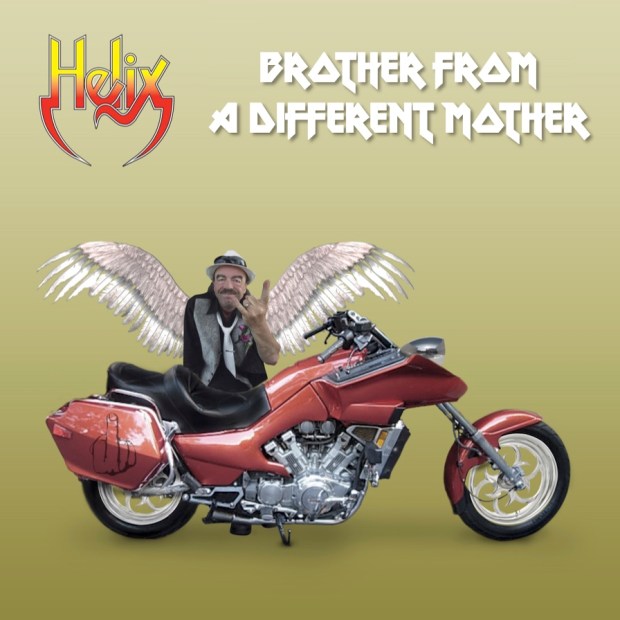
HELIX – “Brother From A Different Mother” (2022 download single)
In 2021, Helix recorded a new song called “Brother From A Different Mother”, about a good friend of singer Brian Vollmer. It was released in 2022 as a download, complete with “NFT’s” which…I don’t know what you do with that, but the mp3 file can be downloaded and played like any other!
The song “Brother From A Different Mother” is one of the heaviest Helix tunes. Fast as a shark, and heavy as a rock! The chorus is as memorable as any other Helix single, but the guitar playing is stellar. From solo to riffs, the guitar provides the undeniable hooks. There’s a slow breakdown in the middle with piano, and amazing gritty backing vocals by Cheryl Lescom.
Brian’s lyrics are heartfelt and sincere. You can tell this was a friendship he really valued. Let us hope for a physical release, be it a single or an album.
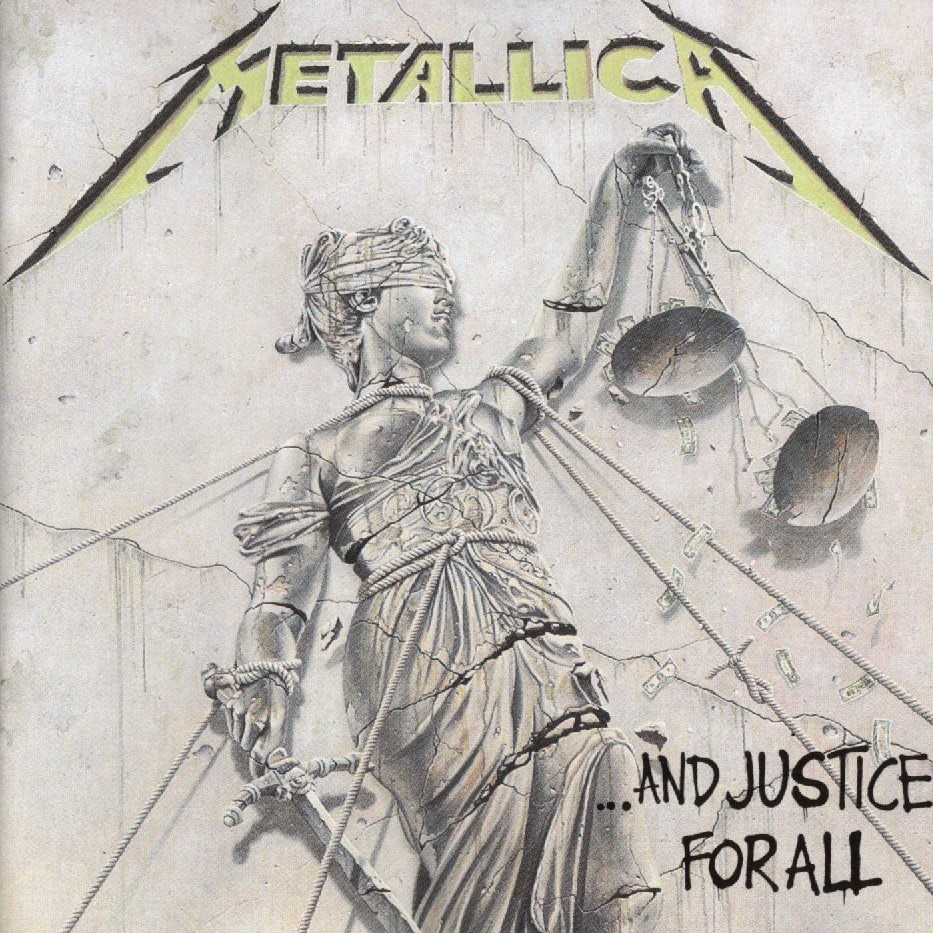
As I cast my mind back to 1988, the omnipresence of Metallica’s …And Justice For All cannot be ignored. For one thing, the band’s new studio album was a double album, which was all but unheard of at that time. The cover art was striking. The band were now on TV, after stubbornly avoiding music videos for years. “One” was the name of the song, and it was even more stark and impactful than the album art. If the band wanted their first-ever music video to be influential and monumental, they succeeded. However despite all the praise, the cries of “sell outs!” echoed on the “letters to the editor” section of various rock magazines. How dare Metallica make a music video. One letter in Hit Parader magazine compared Justice to Bon Jovi. It’s hard to imagine a reaction like that from the perspective of today, but as much as Justice was Metallica’s most successful album to date, there were thousands of fans who resented them for it.
The other elephant in the room is the production and mix of the album, which is brittle and lacks bass. There were various stories, such as hazing the “new kid” Jason Newsted by removing the bass, but today Lars and James largely blame themselves, saying their hearing was burned out and they just kept turning everything up until you couldn’t hear the bass. There are other stories and other parties who received blame at various points of the timeline, but the thing is this: Justice has sonic issues. We all are aware of this by now.
Let’s dig into this hour-plus album and hear what the fuss was all about.
A backwards guitar harmony fades in from the start, a striking and cool effect. Then immediately the riff and drums kick in, and the snare is loud. It dominates the mix, with the riff itself chugging away behind. James Hetfield awakens the dead, and this could have been his vocal peak, in terms of grit combined with sheet lung power. “Blackened” is a blast, like Metallica of old, and though the pace is breakneck to start, it soon switches up to a deliberate march. Lars is absolutely bangin’ away, and there are so many wicked riffs and licks that you’ll want to go back and take notes. This is a textbook course in writing metal, with a dose of complexity and catchy challenges. Kirk Hammett really plays some cool stuff in the solos as well, demonstrating his experimental side just a tad. “Blackened” is the only song on the album with a Newsted co-writing credit.
The title track is second, almost 10 minutes in length and loaded with riffs and tempos. Hetfield growls like a beast of the social ills of the world. Lars’ drum parts are almost out of the jungles. It’s a cool track, undoubtedly powerful and a peak for a certain kind of Metallica track. They had come a long way from their New Wave of British Heavy Metal / punk rock hybrid sound of old. But, much like Iron Maiden at the same time, Metallica were becoming more interested in progressing musically. You can actually hear some bass on this track ,and Jason’s really playing some wild stuff.
At this point of the album, we’re getting acclimated to the frigid cold mix and brittle guitars. Kirk’s wild solos are an anaesthetic to the constant cutting of James’ rhythm guitar.
On vinyl, this is where side one would have flipped to side two, opening with “Eye of the Beholder”. Cool, underrated opening riff to this song, and again Lars sounds like a jungle beast. James is singing lower, but with the same ferocity. Lyrically, James tapped into the angst and frustration that their fanbase felt in their lives. He was able to articulate for them, the things that they were seeing in their world. And they were pissed off. Kirk’s solo comes from a more exotic locale, but fits in regardless.
“Beholder” ends somewhat abruptly, and then the opening machine gun fire of “One” announces the arrival of the coming hit single. The clean guitars that open the track actually sound pretty good, though the snare drum is a sharp contrast to them. Though not Metallica’s first foray into softer tones of metal, “One” was top-notch. There’s no need to go into details on the lyrics as that could be a post unto itself. Like many classic metal bands before them, Metallica took inspiration from literature, though via a film interpretation. The anti-war word resonated with the audiences of 1988. The video, using dialogue and visuals from the film Johnny Got His Gun, was all but universally lauded. As a song, “One” doesn’t need the video to stand up. It builds until it eventually turns into a musical battlefield, with machine guns made of bass drum hits, and explosions from snares. Then Kirk’s solo tells a story of its own, a manic tale of fight-or-flight tension. “One” is every bit as good as they say it is.
This is where vinyl, or even cassette, has their advantages. This is a good place to give your ears a break, at the end of side two. Ear fatigue will set in if you don’t take a moment here! So, on your CD player or streaming service, take a pause. For vinyl, just keep flippin’.
Side three opened with “The Shortest Straw”, another hammering riff, and then Metallica take it for a twist. Hetfield is barking mad on this one! It is not the most memorable of the Justice nine, but it doesn’t play it simple or safe either. The chorus is one you can shout to, and Kirk’s solo is certainly unorthodox.
“Harvester of Sorrow” became a concert standard, and it is a bit of a needed slower moment after the brutality was that “Shortest Straw”. The riff is simpler, more deliberate and to the point, and melody is present in the vocal growls! It’s one of their more accessible moments, but for some irate Hit Parader reader to call stuff like this “Bon Jovi” is utterly ridiculous. It’s slow but stomping. James’ vocals would still raise the dead.
Side three’s closing track is the lesser known “The Frayed Ends of Sanity” and I still hate that “oh-wee-oh” bit (“March of the Winkies”) from The Wizard of Oz that opens it. Totally out of place, and I could swear New Kids on the Block or somebody like that used the bit in one of their songs too. Anyway. The band never played it live until 2014, making it the last song from Justice to make it into the live set. That’s not to say it’s a bad song – there’s a really cool middle section that just builds and builds, and then unleashes an absolute monster of a riff, like Iron Maiden on speed.
The final side features Cliff Burton’s last writing credit, “To Live Is To Die”. Almost 10 minutes in length, this largely instrumental track features the appearance of the Metallica acoustic guitars, which soon give way to robotic hammering and a monumental set of riffs. Solo work by both James and Kirk is extraordinary. There are left turns, and it all serves to set up the closing blast of “Dyer’s Eve”.
“Dyer’s Eve” is a thrash blast of metal; so fast that it’s the only “short” song on the album at 5:12. It comes in suddenly and after a brief cascade of metal madness, and goes full thrash, pedal to the metal, all burners on full. It’s so much, packed into such a short space. It’s one of the most effective songs on the album for that reason, and a bit of a cult classic. “Dyer’s Eve” is one of the deep cuts that just scream for more exposure.
Justice is a trip, a journey, a series of chapters in a larger story. It deserves the scrutiny given to its mix but conversely, it also deserves as much attention as your ears are able to pay to it. Despite the lack of bass, there are things here your mind can dissect down to some brilliant performances if you give them the focus. Justice is not an easy listen, but they don’t all have to be. The cool thing with it is, as you grow with it over the years, different songs become your favourites. Maybe 30 years ago, it was “One” or “Blackened”. Then after a while, maybe “Beholder”, then “Dyer’s Eve” and “Shortest Straw”! The album will never cease to have favourite moments if you love Metallica.
It would be easy to give it a 5/5 stars, but the issues with the bass cannot be ignored.
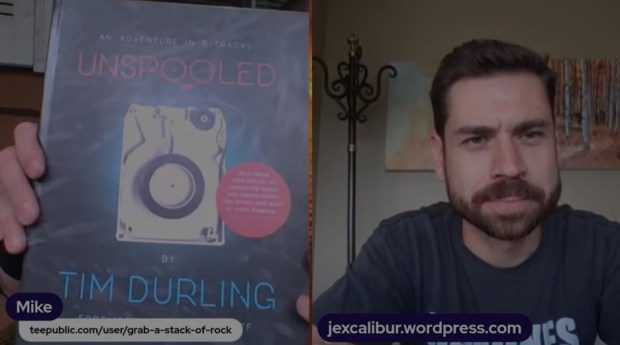
What a show! Thanks for watching! Jex and I had a blast going through a selection of my favourite rock (and a couple other) books. What a variety of books too! Many genres of music, and a few outside the musical box. Jex’s books are currently in storage, so what we did instead was watch a Youtube video from his channel CineBrosSupreme. In 2016, Jex went through his music book collection, and we screened that and commented on it as well. (Jex has not aged since 2016, and a few viewers mentioned this!)
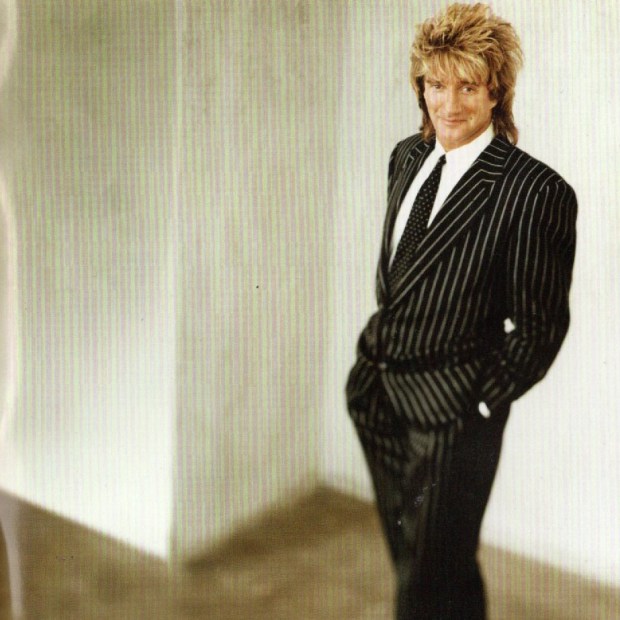
ROD STEWART – The Definitive Rod Stewart (2008 Warner)
Compilations, eh? You get one, and it’s great, but…it doesn’t have all the songs that you like, does it? In this case, I was craving some Rod (now now!) and I really wanted to hear one from my youth: “Infatuation”! I was craving that hook! “Oh no, not again! It hurts so good, I don’t understand!” Jeff Beck: lead guitar! I searched my library and I was missing that track. What to do about it?
Rod Stewart has numerous compilations to choose from, going back to 1973’s Sing It Again Rod. (That one’s interesting for the inclusion of “Pinball Wizard” from the London Sympony version of Tommy.) You could go any number of ways. 1989’s Downtown Train had “Infatuation” on it, as well as “People Get Ready”.
I could have sought out the original album it was on, Camouflage, but I don’t recall liking the album much. I decided instead to augment my collection with another 2 CD compilation: 2008’s Definitive. It’s extremely similar to the 2001 set, The Story So Far, but with a slightly better track list. This time we get “Passion”, “Infatuation”, “My Heart Can’t Tell You No”, and “Stay With Me” (The Faces) among the rest of the 70s, 80s, and 90s hits. We lose “Don’t Come Around Here” which is a good thing. Unfortunately we also lose the Stones cover “Ruby Tuesday” and “All For Love” with Sting and Bryan Adams. There’s no such thing as a perfect compilation. You’re always going to have to get a couple, and even then, you’re still missing the amazing Robbie Robertson cover, “Broken Arrow”.
This set goes all the way up to MTV Unplugged. Rod made great music after that, but a lot of the albums were his American Songbooks of standards, that not everybody needs. The cool thing is, there’s also a bonus track from 1998. “Two Shades of Blue” is an outtake from his excellent rock album, When We Were the New Boys (the one with the Oasis cover “Cigarettes and Alcohol”). This ballad might not have been necessary on that record, but it’s actually quite good if a bit generic. Interestingly it features a sample from a Russian opera, so it’s not exactly ordinary either. The actual cool thing is that it is a Rod sole-written original, not a cover or something written for him. Rod’s a great songwriter when he wants to do it!
This album won’t tick all of your Rod Stewart boxes, but it’ll cover most.
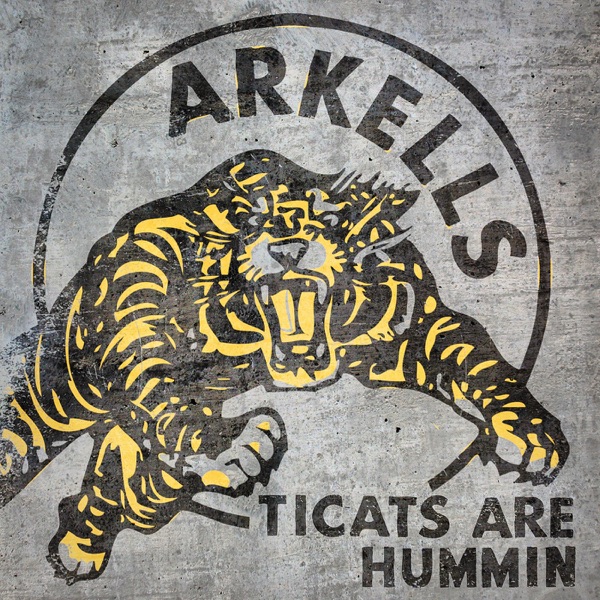
ARKELLS – “Ticats are Hummin'” (2012 iTunes single)
Disclaimer #1: I hate all sports.
Disclaimer #2: Of all the sports, I hate football the most.
I do love the Arkells, and for them, I’ll download a song about football, and dang it, I’ll even enjoy it.
“Ticats are Hummin'” is a tribute to the Arkells home team, the Hamilton Tiger-Cats. They have a rivalry with the Toronto Argonauts. And that’s about all I can tell you about the Ticats. I do like this song. Alot! It is a bright, boppy and upbeat tune with a guitar and piano delivering the main musical hooks. Of course, there are plenty of those patented “woah, oh oh!” vocals that Arkells fans adore.
Saw some old friends, From down in T.O., But old Queen Lizzy, Will take them back home!
They look so sad, At the end of the night, Blown out like Pink Floyd back in ’75!
“Queen Lizzy” refers to the Q.E.W. – the Queen Elizabeth Way, a major highway connecting Toronto and Hamilton. I sometimes wonder if the Arkells staunch commitment to local references in their lyrics has held them back from international success. I think these references only enrich the music and add to their down-home vibe.
“Ticats are Hummin'” would have been one of the band’s first recordings with new keyboardist Anthony Carone. It preceded their excellent High Noon album by a couple years, but you can hear elements of where they were going, with the indelible pop melodies.
This track was released to iTunes with proceeds going to the Boys and Girls Club of Hamilton. It also received a physical release, on a rare 2 CD compilation called Everybody Dance Now – Songs From Hamilton, Volume 8. Be on the hunt.
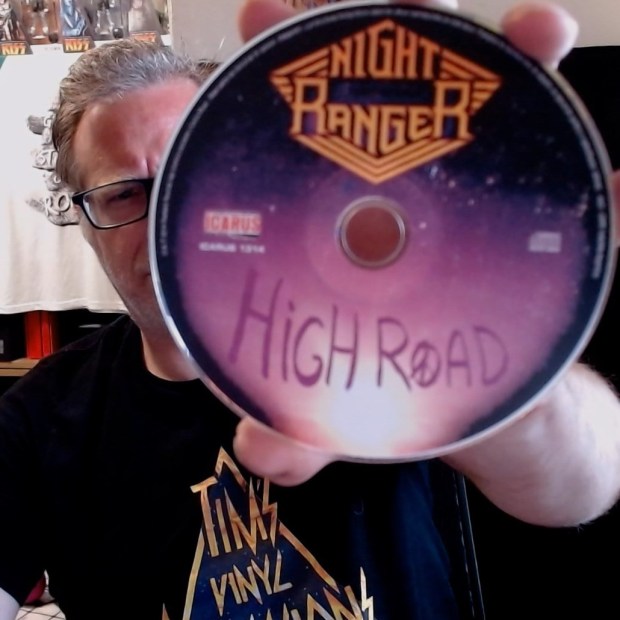
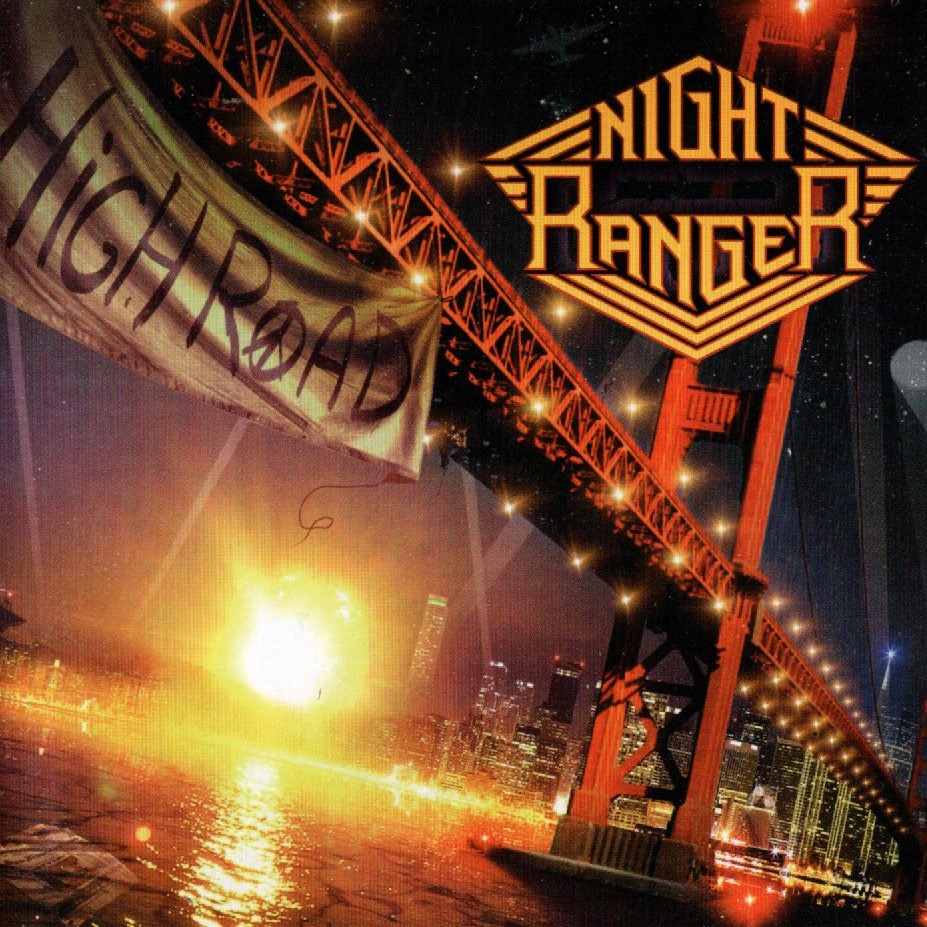
This is the second of three Night Ranger albums given to me by Tim Durling, and the second I have reviewed “live” with him. It is also the second, and last album to feature Joel Hoekstra on guitar who was soon off to join Whitesnake, where he remains today.
The title track “High Road” opens with some highbrow keyboards and an immediate melody. There’s a nu-country vibe to the chorus, but Jack Blades keeps it in rock territory. Tim Durling says he hears Damn Yankees, and I get that too, but I do hear that twang. “No the **** you don’t,” says Tim. The Gillis guitar solo is absolutely mental, tickling all my fancies. Great song…even if I’m hearing something that isn’t there. Sounds like summer to me.
Per Tim: “Here’s the problem with “new country” – most of it is just 80s rock with a slight twang – therefore, when a band like Night Ranger that legit came from the 80s makes new music, and it’s not super heavy, it could easily slide into that…and I HATE THIS!” Me too buddy, and that’s probably what I’m hearing.
The opening guitar of “Knock Knock Never Stop” recalls “Poundcake”, but this track could have worked on a certain 1983 by a British band from Sheffield…perhaps it already did! That’s the ballpark we’re in. It’s a popular place. Heavier guitars roll in on the groover “Rollin’ On” which sounds like a Morse/Airey-era Deep Purple classic. Not a sound you hear often, so bring it on.
“Don’t Live Here Anymore” is the first slower tune, but it’s got blues in the vocal and passion in the soul. Amazing vocal, just right in the pocket with grit and heart. Perhaps there’s a Whitesnake vibe here. Coverdale could easily “coverversion” this song. Then suddenly it picks up, and we’re in a Rainbow riff, kicking asses and scorching minds. This wouldn’t be a ballad, but an epic — because suddenly here are the angelic Night Ranger harmonies. If that wasn’t enough…it’s solo time! Epic, just epic, in arrangement, performance, production, mix…head to toe epic. The centerpiece.
A fun guitar riff opens “I’m Coming Home”, and I’m getting light progressive vibes overall. This track rocks in an 80s way, but not simple or straightforward. There’s tension, release, and pounding melodies. Midway, Jack throws down a neat bassline, right before a ripping solo tears your head off.
“X Generation” continues the hammering vibes, but in a modern context. It’s the first song that is failing to connect. Nothing bad about it, just didn’t have the same impact as the previous five tunes. Sounds like a number of bands from the Night Ranger era, making it work in the 2000s. Skid Row with Sollinger on lead vocals, perhaps.
“Only For You Only” is a lovely piano ballad with Jack singing, something akin to what some people expect from Night Ranger. These guys can really sing and that’s what sells it. For some steam, check “Hang On”! Slow and grooving with keyboard accents and a chugging bass, this song is boiling hot. Killer tune, delivering the heaviness without having to go full bore. Solos that burn. Awesome sauce.
Then, the spirit of Eddie Van Halen comes to the house on the intro to “St. Bartholomew”, an absolutely scorching song, at Fahrenheit 451. Once again, the vocals make it uniquely Night Ranger. Other bands may attempt songs of this nature, but few have the combination of chops and vocals that Night Ranger has. Unique dual solo here too with Brad and Joel Hoekstra trading licks.
The “standard” track list shows 10 songs, with “Brothers” being an acoustic closer. Definite Shaw-Blades vibes here. Hippies singing in a field, with a guy playing an electric guitar with the sun blazing behind him…that’s what I see. As per Tim, “and anyone stepping within twenty feet of any of them gets a huge contact high.” They were definitely spinning “Hey Jude” before they wrote this ending.
Then we have the two “bonus tracks”, though we don’t know why! They do sound separate from the album because “Brothers” is an ideal closer. “L.A. No Name” is an acoustic workout, with the two guitarists playing a beautiful classical and Spanish influenced number that could have been a textbook workout for expert students! This is not lightweight, not by any stretch.
The last song is bonus track “Mountain Song” which really shows off Jack’s creativity as a writer of basslines. It has an “Eye of the Tiger” vibe, but far heavier and punchier. Tim: “It’s similar to “Halfway to the Sun” from 1988’s overlooked Man in Motion album.”
A solid 4/5 stars. The first “side” is stronger, but there’s nothing to skip.
Journey began scoring hits when they acquired powerhouse vocalist Steve Perry on Infinity (1978) and Evolution (1979). Why not issue a compilation sourced from the band’s first three Perry-less records, with new cover art that ties into their present? Seems like a no-brainer. And so we have Journey’s first compilation album (and a double length at that) called In The Beginning. Thank you Tim Durling for gifting this copy for the collection and for review.
In The Beginning contains five of the seven tracks from Journey’s self-titled debut. It begins with three. As on the original LP, “Of A Lifetime” opens. The long organ and guitar-drenched opening gives way to a slow and passionate Gregg Rolie lead vocal. Were Iron Maiden influenced by this song when they wrote “Strange World” for their own debut? Probably just coincidence, but it can be heard. The main hook in “Of A Lifetime” was the unmistakable guitar hook. At this early stage, Journey boasted two guitar players: Neal Schon and the late George Tickner. They have to share the spotlight with an absolutely raging Aynsley Dunbar on drums and Rolie tearing it up on the synth. Undervalued bassist Ross Valory also must be mentioned, playing concrete but melodic foundations under the feature players.
George Tickner’s instrumental “Topaz” goes second, starting slow and then taking on a jamming, progressive jazz rock fusion vibe. This complex track is not to be taken lightly. Just absorb every different section as they hit you. Once again, Dunbar is a monster. Third is “Kohoutek”, the memorable Schon/Rolie instrumental that was also track three on the debut album. On vinyl, in both cases, it closed Side One. It’s another challenging track with a cool galloping section. (There’s a reason I’ve heard Dunbar referred to as an octopus – he sounds like he’s playing with eight arms!)
Rolie’s “On A Saturday Night” from album #2, Look Into the Future is a completely different style from the first three progressive sprawls. Under four minutes with a bopping piano, this is just great rock and roll! Tickner was out and the band was reduced to a quartet with Schon as the sole six-stringer. Shades here of where the band would head once they figured out their future direction. Schon’s solo is an example of melodic composition. The Beatles cover “It’s All Too Much” from Look Into the Future follows. It fits this new concise straightforward Journey sound, and it is quite excellent. Rolie was the perfect guy to sing a George Harrison song, and the backwards ending is suitably trippy. The blues “In My Lonely Feeling/Conversations” takes us back to the debut album. This Rolie/Valory composition scorches with passionate fretwork. Not surprisingly, the bass is the foundation. Also from the debut, “Mystery Mountain” closes side one. A short, but jamming track with subtle use of the wah-wah pedal.
Opening (cassette) Side Two, “Spaceman” from Next (album #3) was a melodic single. Journey were honing in on that simple pop rock ballad. “Spaceman” is one of their first. As it did on album, “People” follows “Spaceman”, featuring synth and acoustics. Very psychedelic for Journey. The back to album #2, “Anyway” rocks hard and slow, like a monumental Whitesnake track from the 70s. (Dunbar later joined Coverdale & Co. for 1987.) From the same record, “You’re On Your Own” switches from slow and bluesy verses to a pounding chorus, enabled by Aynsley. There’s a Beatles influence here in “I Want You (She’s So Heavy”).
We’re into the last tracks here, as vinyl listeners would have been flipping to side four for “Look Into the Future”, a brilliant ballad and one of the band’s early best. “Nickel and Dime”, a legendary jam from Next feels like a throwback to the first album and for good reason: it’s a leftover Tickner co-write! And finally, In The Beginning closes with the epic “I’m Gonna Leave You”, the same song that closed the debut Journey. Coupling some killer organ with with a heavy riff, this bluesy rocker also boasts some of Rolie’s best vocalizin’. Legendary!
For those who only know Journey as a lovin’, touchin’, squeezin’ band of crooners and balladeers, this compilation would come as a shock to the system. But a shock can be a good thing. In The Beginning is a great way to get many of the key tracks from the first phase of Journey in one purchase. This stuff doesn’t usually make it onto regular Journey compilations. It’s a good set to own.
My introduction to Flash Gordon goes back to the Fall of 2005. November, I believe it was. At this point in time, I worked at a gas station, and to kill time when it was slow, I would browse through the magazine rack. I would go through the TV Guide week after week and look for any airings of 80s movies for me to tape. My VCR was still very active in 2005, and I would constantly tape movies off of TV and cut out all of the commercials.
On this particular week, I saw that Boston-based network UPN 38 (a.k.a. “WSBK”) was airing a 1980 film called Flash Gordon that upcoming Saturday afternoon. I was familiar with the character and the name Flash Gordon, I was even familiar with FLESH Gordon at this point, but I had never heard of this adaptation from 1980.
So, that night after work, I went online to find a trailer of it to watch. Keep in mind, in 2005 YouTube hadn’t completely taken off yet, so I relied on IMDb to find these old movie trailers.
I was immediately hypnotised by the visuals I was seeing: Conflict, lasers, explosions, a villain with crazy eyebrows, hawk-like men flying in a brightly colored sky, and of course, Flash Gordon cruising through space on this flying scooter-looking thing. All of this accompanied by a song that went like so: “FLASH!! AHH-AHH!”. Then, after showing the title and credits, the trailer ends with a title card that reads these three words: Music by QUEEN.
That was it. I was instantly sold. I knew I’d be taping this movie. So, that Saturday afternoon, I sat in front of the TV in my parents’ basement, recordable VHS tape loaded in the VCR, remote control in hand, and I experienced Flash Gordon for the very first time.
Now, one thing I should note is that this specific airing was cut down to fit a two-hour time slot. I had cut out the commercials, and the final runtime was around 90 minutes. The actual runtime of Flash Gordon is 110 minutes, which means this version I saw for the first time, and that I now had on tape, was missing approximately 20 minutes of footage. I haven’t seen this cut in almost two decades, but I’d be curious to watch it again and see exactly what portions were cut out.
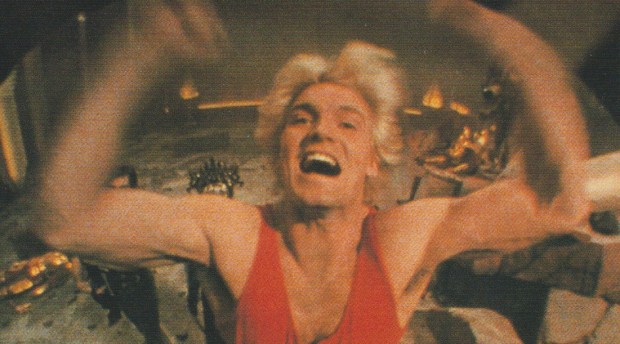
All cuts aside, my initial reaction upon watching this movie was generally positive. I thought the movie was quite cheesy, especially in the acting department, but that’s right up my alley. I was also impressed by the visual presentation of the movie: The sets, costume design, the use of colors… Flash Gordon is a visually beautiful movie, and I still feel that way when I watch it now.
I still had the desire to see the full, UNCUT version of Flash Gordon, so off to Ebay I went, in hopes to find an official copy. Unfortunately for me, in 2005 Flash Gordon hadn’t reached the cult status it holds today. Copies were few and far between on Ebay. VHS copies were pricey, as was the case with the initial DVD release, distributed by Image Entertainment, that came in a cardboard “snapper case” rather than the traditional plastic DVD case.
So, I gave up on trying to find an official copy of Flash. Fast Forward to 2007, and Universal Pictures announces that they’ll be releasing a new DVD edition of Flash Gordon, dubbed the Saviour of the Universe Edition. Now, by this time, my interest in finding a copy of the film had died down, but I would eventually pick up a copy for $9.99 at Zellers in 2009, and I’m glad I did: The presentation on this DVD is glorious, and the film looks absolutely fantastic.
In my opinion, I think that the availability of this edition, plus all of the Flash Gordon references in Seth MacFarlane’s 2012 film Ted (where Sam J. Jones appears in a cameo as an exaggerated version of himself) have introduced the film to a new generation, a new audience and have propelled it to super cult status.
Having recently watched the film again for this review, I can safely say that, while the film is not without its flaws (the aforementioned acting, not to mention occasional humor that feels forced), it’s still a highly enjoyable film that keeps the viewer’s attention all the way through, mainly due to the wonderful cinematography.
I definitely felt an Italian-style of filmmaking here, and while doing research I found out why I got this impression: much of the crew for the film was Italian. But to get more specific, I got vibes of Federico Fellini while I was watching. Which is funny, because I’ve never actually watched any of his films, but I know enough about him and his style of filmmaking to be able to detect a similarity. Come to find out, Fellini was actually one of the first choices (if not THE first choice) to direct the film. They even make a reference to him early on in the film: When we first see Princess Aura (Ornella Muti), she is pulling a little person (Deep Roy) using a leash, and she says “Come, Fellini”.
An important part of the film which is also worth mentioning is the fantastic soundtrack by Queen, which acts like a character on its own. It really helps amp up the action sequences, and the film wouldn’t have been the same without it.
I would recommend this film to any fan of science-fiction, particularly fans of the original Star Wars, a big inspiration for Flash Gordon, which incidentally was released almost six months after the release of The Empire Strikes Back.
My rating: 3/5
FLASH GORDON (1980)
Directed by: Mike Hodges
Produced by: Dino De Laurentiis
Starring: Sam J. Jones, Melody Anderson, Max Von Sydow, Topol, Ornella Muti, Timothy Dalton, and Brian Blessed.
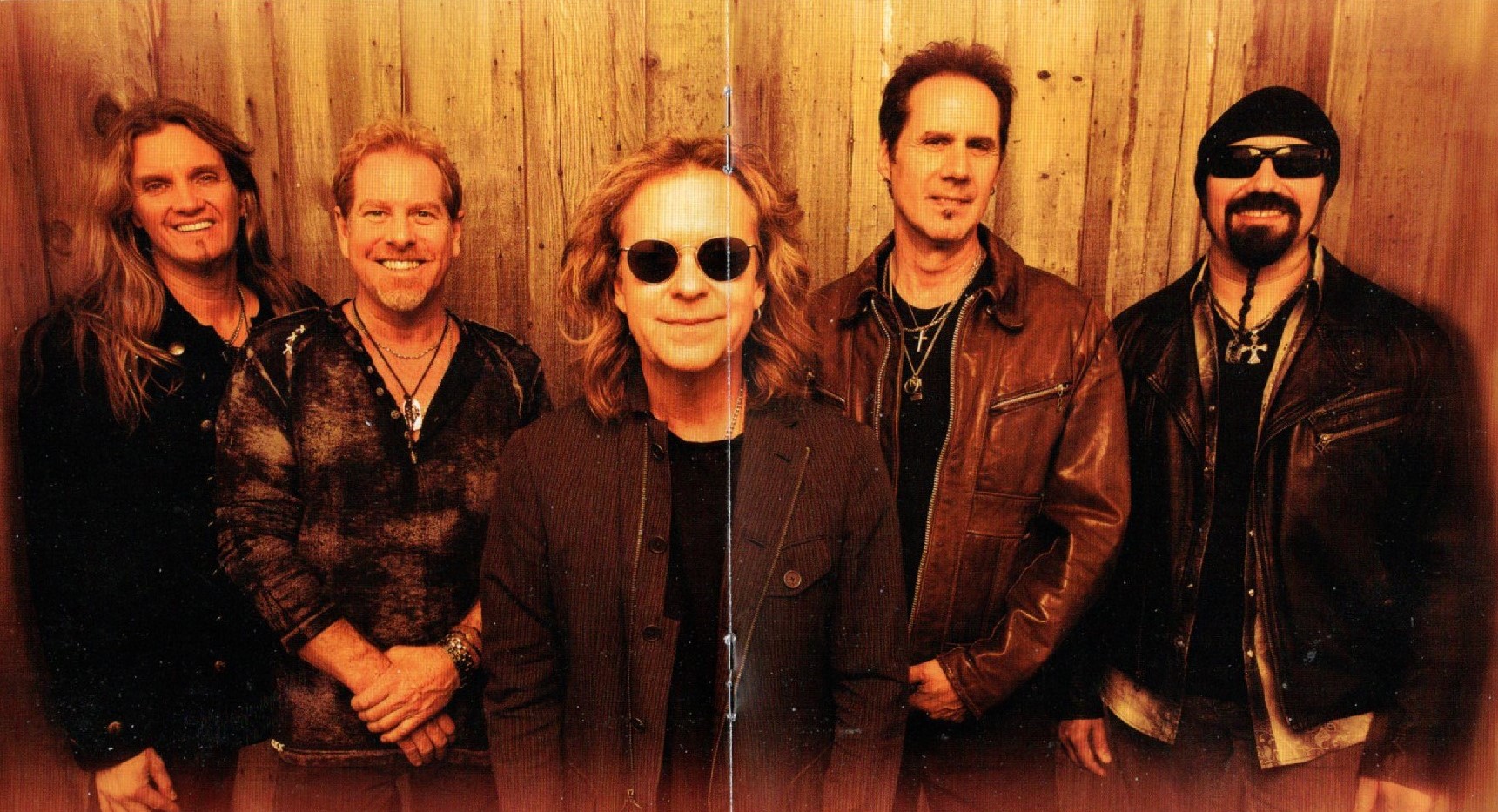
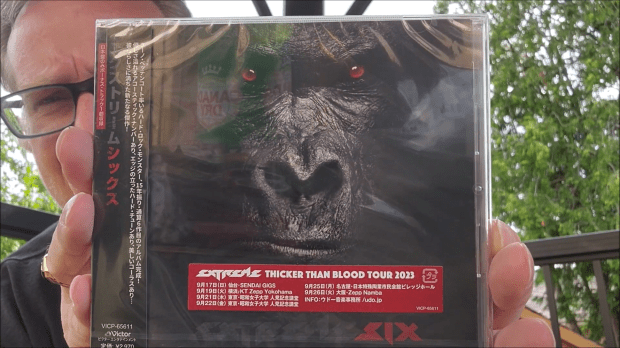
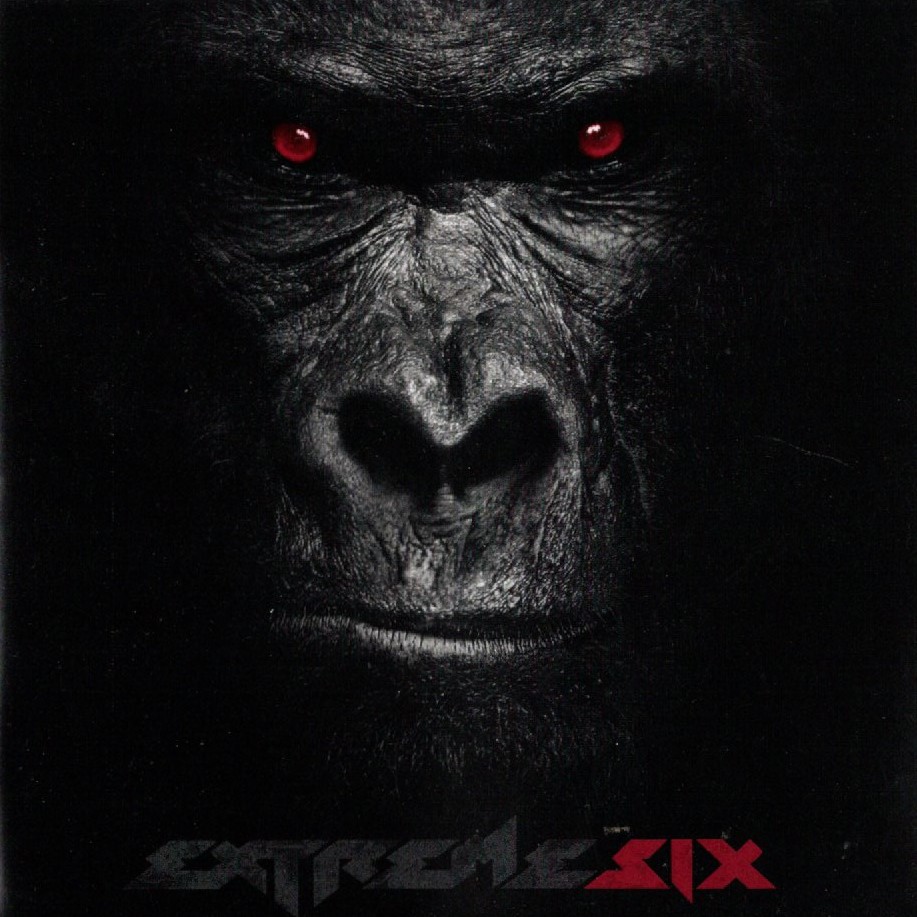
Extreme fans never stopped believin’. We’re delighted that people dig the new album Six, but we always knew. Saudades was great. Punchline was great. We have always boasted about what Nuno was capable of, and it’s hard not to love Gary Cherone. This is a band you just want to kick ass, and they do on their sixth (studio) album, shockingly titled Six. There’s no dip in quality – there hasn’t been a dip in quality since their embryonic debut back in 1988. It’s been nothing but peaks since then, though always different from one another. Reviewing Six is less about praising it (which is easy) and more about seeing what Extreme are doing differently this time.
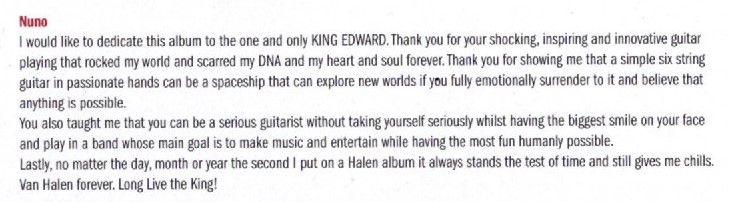
We talk a lot about riffs here, but rarely have Extreme riffs been as direct and heavy as the one on “Rise”. This, by the way, is the song with the solo that seems to have taken the world by storm. The spirit of Van Halen was definitely in the room when Nuno laid it down, and it’s an undeniable highlight of the song. The solo is as impressive and hooky as a song unto itself. Another figure that people are starting to notice is drummer Kevin Figueiredo. It’s hard to stand out when you’re Mike Mangini’s replacement in Extreme, but Kevin kicks it! (Joke intentional – die hard Extreme fans know.) “Rise” could be the heaviest Extreme song to date.
Riffing continues on “#Rebel” (pronounced “hashtag rebel”), another contender for heaviest to date. The riff is definitely a monster, and Nuno augments it with those tasty licks he’s known for. Gary Cherone, meanwhile, sounds to be in better voice than he was back in the 1990s when he joined Van Halen. He doesn’t seem to have to push as hard, no longer going overly gritty when he’s givin’ ‘er. The solo is another marathon workout, and just a pleasure to bang along to from start to finish. Like most great solos, this is a fully composed piece of musical performance.
Third standout riff in a row, “Banshee” is yet another butt-kickin’ banger. It’s not fully pedal to the metal this time, with the verses being a little less loud, allowing Gary to get slinky. Bassist Pat Badger forms a formidable groove with Kevin here, which gives Nuno room to play around. The solo, once again, is thought out like a miniature song within a song.
Finally on track four, we get a breather! A brilliant acoustic song called “Other Side of the Rainbow” is just a thing of beauty. The vocal harmonies of Gary and Nuno gel better here than anywhere else on Six. This is pure pop, as Extreme have occasionally done (and done so well) on albums past. There are elements of Extreme II and Waiting for the Punchline here. It somehow sounds like a lost remnant from the decade of the 90s. One of the best Extreme songs in the entire canon, and a brilliant Queen-like performance from Gary.
Continuing down the acoustic road, the ballad “Small Town Beautiful” definitely recalls the softer moments on Punchline. The blend of vocals here is really special; those trademark harmonies. Things shake up once again on the bass heavy “The Mask”, with co-lead vocals by Nuno Bettencourt, a rare treat. Gary takes over on the choruses, while Nuno takes the verses in an affected voice. “Rip off the mask, I’ll show you who I am!” howls Gary on the menacing chorus.
The unusual “Thicker Than Blood” has an industrial tint, but actually is closer to a reflection of Nuno’s 1997 solo album Schizophonic. It absolutely could have come from that album, but it would have been one of the better tracks if it had. The solo here is a wicked little number. They take it down to a heavy grind on “Save Me”, another song with a downtuned 90s flavour, but a searing chorus. It’s two completely different moods, verse and chorus. Quality remains high. Variety continues.
Another soft acoustic number called “Hurricane” sounds like Simon and Garfunkel, and there’s nothing wrong with that. Extreme could do Simon and Garfunkel a hell of a lot better than Disturbed. Nuno takes a rare acoustic solo here. A very special song. Extreme throw another curveball on the effects-heavy “X Out”. We’re reminded, perhaps, of “Evilangelist” from Punchline, but with more of that industrial synthy vibe. There’s an undeniable Stranger Things vibe to the synth line.
A complete 180° will spin your head on “Beautiful Girls”, a light tropical summery number about…shockingly…beautiful girls. It’s just pop, pure and simple, and there’s nothing to feel guilty or shameful about. (There’s only one line I dislike – “California Girls, I wish they all could be” – gimme Canadian girls any time!) Bottom line, Extreme have never been shy about going way outside the box. “Beautiful Girls” represents the furthest they’ve gone since Extreme II back in 1990. The guitar solo is pure Brian May, 100%. There’s no denial, except for that wicked burnout at the end! Some might say, “This sounds like Sugar Ray!” I say, “Sugar Ray could never sing nor play like Extreme do.” Interesting that on an album with Extreme’s heaviest rockers, we also find their their most pop song.
The acoustic guitars remain out for album closer “Here’s To the Losers”, another brilliant tune that goes in another different direction. It has an anthemic shout-along of “Get up! Chin up! Drink up!” (Your beverage of choice, of course!) It’s like a rallying cry and it’s a terrific closer. The key change at the end is really nice.
The sequencing of this album is really interesting. Though the first three songs sell it as a heavy monster, the diversity soon comes into play, and then we run into multiple acoustic songs in a row. It’s unexpected but it works. The Japanese CD has its bonus track of course, and it’s a simple radio edit version of “Rise” that allows the CD to end heavy, if you prefer it that way. The edit version of “Rise” is a full minute shorter, but wasn’t really necessary except to satisfy radio formats. Fortunately the solo is still a main feature of the song.
Extreme Six was expertly produced by Nuno Bettencourt. The man’s talent knows no bounds. In fact Extreme are one of the most talented bands to come from the 80s, end sentence. Six is among their very best albums, which is to say, all of them but the debut. The streak continues. Extreme are the champions.
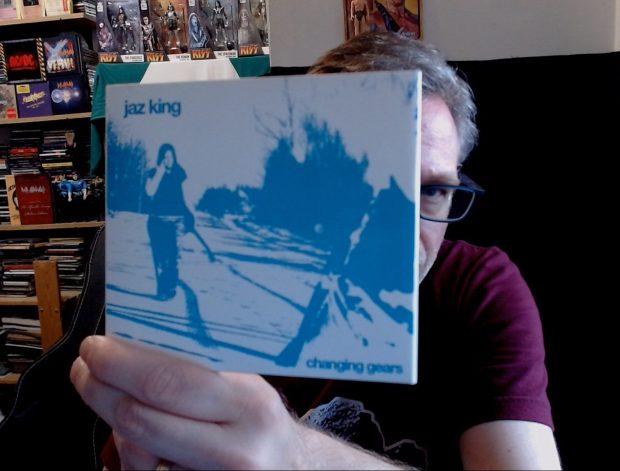
How refreshing it is to purchase a CD in this day and age that doesn’t say “ProTools by…” in the liner notes. That’s the kind of CD that Changing Gears, by newcomer Jaz King, is. It’s earthy without being too rough. Miss King is a young Canadian singer/songwriter who’s been writing her own material for over half a decade. It’s easy to be cynical in these days of Canadian Idol, and think that any young female coming out can’t write or play her own instruments. Contrary to the norm, King sings, writes, and plays guitar and piano. She’s backed by Steve Foley on guitar and drums, and Jon Van Wingerden on bass.
On first listen it would be easy to lump King in with the likes of early Jewel or Dayna Manning. However, her voice is more breathy, more human. Dare I say it; it’s darker. The occasional high note does remind us Dayna Manning, but King’s material is not nearly as pop. Whereas most mainstream artists overpolish their music in the studio, King has wisely left the arrangements to the basics performed by herself and her studio band. The acoustic guitar parts are lush, reminding us of Jim Cuddy. There is some nice electric guitar as well, the parts on “Close Your Eyes” reminding us of Ty Tabor. During the intro to “Southbound” there’s some nice soft electric guitar that you can only get from a tube amp and it sounds perfectly appropriate. The drum parts courtesy of Steve Foley fill in all the gaps, providing enough interesting fills without being overpowering. Background vocals (uncredited) are complimentary and don’t cramp the mix. Unfortunately the bass is mixed a little too low, which is sad as it’s the kind of dexterous playing that this reviewer loves. If it only it were cranked a little higher. Care to do a remix for us, Miss King?
King’s songwriting is definitely above average, demonstrating her years of working on her craft. Her melodies are memorable and original. Where she really shines, however, is in her lyrics. “October” is sweet, dark, bitter and bright all at once. This is something that some songwriters take years to achieve, but King has arrived on the scene as a fully developed lyricist.
The best track, without a doubt, is “All I Have”, which she wisely left for last. Featuring King alone on piano and vocals, it stands out from the other tracks, but ends abruptly. Whether she did this knowing the listening would wish the album wasn’t over yet isn’t clear, but it was a wise move. Too many bands make the mistake of putting too much material on their debuts. This tires out the listener, but King leaves them wanting more. A very clever move. Intentional? Perhaps, or maybe that’s just the way the song sounded in her head. Or both.
Clocking in at 35 minutes, Changing Gears gives you better value for the money than the average Weezer album. Let’s not forget that in the storied old days of vinyl (remember vinyl?) 35 minutes represented a long album. These nine tracks don’t overstay their welcome, though it would’ve be nice to hear King and her band do a nice bright fast one. The packaging is extremely pro, a nice white & blue digipack. All the photos inside and out follow an automobile motif (Changing Gears, get it?) and this follows through to the stickshift design on the disc itself. There is a full colour four page booklet, which unfortunately suffers from the kind of pixilation you get from a bubblejet printer. Because of this it’s hard to read the handwritten lyrics inside, which is tragic.
The great thing about a debut album like this is that usually it only hints at what the artist is capable of. In the future, King should be able to carve out her own identity. She has the necessary playing skills and songwriting ability to grow with each release. An artist like this would benefit from a University tour, giving her a chance to build a national fanbase and her chops at the same time. Let’s hope Jaz King gets that chance.

















 mikeladano.com