Reviews

REVIEW: Iron Maiden – Senjutsu (2021)

IRON MAIDEN – Senjutsu (2021 Parlophone)

Out of the wild blue yonder, Iron Maiden have returned with a new album to allow us to temporarily escape from our pandemic woes.  Once again, it is a 2 CD monster, boasting 82 minutes of music.  With only 10 songs, you can do the math and figure out that most are long-bombers.  The tunes recall all sorts of flavours of Iron Maiden, from Seventh Son to Virtual XI and the Dickinson reunion era.  New influences emerge as well, on this beefy but steadfast Maiden album.  Maiden turned a corner on The X Factor, incorporating quieter atmospheric sections with the riffing, and Senjustu utilizes this technique on many of the tunes.  Senjutsu might be the most Blaze-era-like of the Dickinson albums.

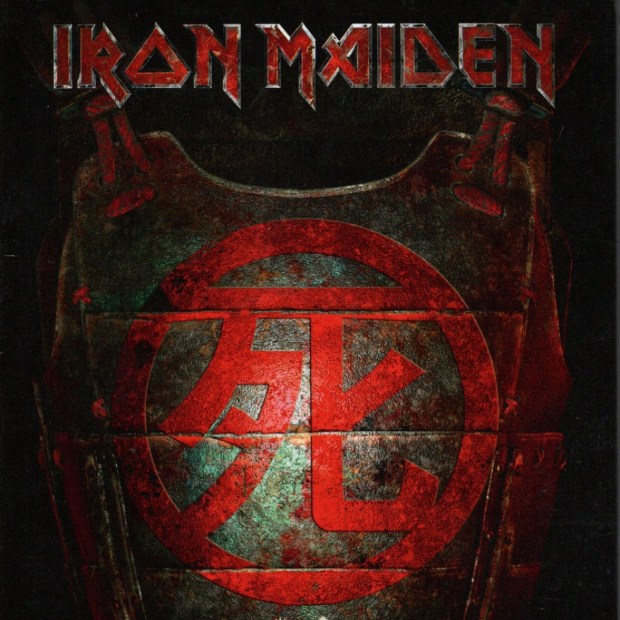
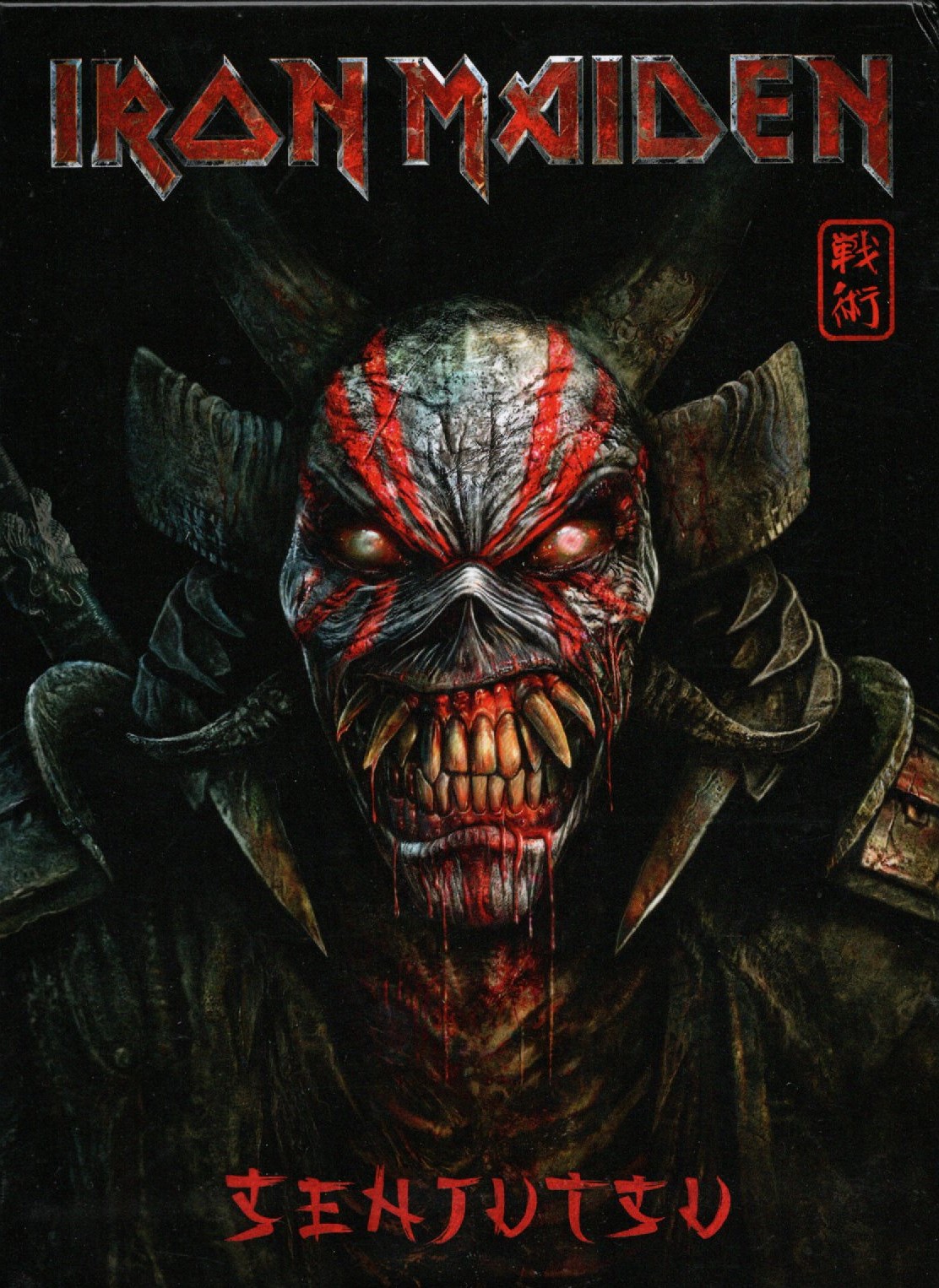
This time Maiden have gone for a Samurai motif with the album artwork, and this is reflected in the opening title track “Senjutsu” (Smith/Harris).  Only the second time, after The Final Frontier, that Maiden have opened with a title track.  It actually has a similar vibe at first to that opener, with stomping drums (which tie into the lyrics).  Nicko McBrain is a superstar on this album.  Then Bruce Dickinson heralds his own return with an exotic melody and still powerful lungs.  Range be damned, he goes for it on every song.  “Senjutsu” is a varied track that relies mostly on a pounding rhythm and is a little different from typical Maiden.
Onto a short 5:00 firecracker, “Stratego” (Gers/Harris) is like a Brave New World song.  To the point, steady gallop, heavy on melody.  Heavy keyboard backing, which is consistent on Senjutsu.  An album highlight if only because there are so few short songs, but strong regardless.

First single “The Writing On the Wall” (Smith/Dickinson) opens with a western motif, a new side to Iron Maiden.  It’s a little drawn out for a single, and takes a few listens to digest.  You could almost say it’s closer to Led Maiden.  In the latter half, Adrian Smith rips out one of those solos that is almost a song unto itself.

Long bomber “Lost In A Lost World” (Harris) unfortunately recalls Spinal Tap’s “Clam Caravan” at the outset.  At the 2:00 mark it drops the Tap and gets to the riff, which is a kicker.  The song meanders a bit, perhaps a little too much, recalling some the Blaze-era’s musical excesses.

“Days of Future Past” (Smith/Dickinson) sounds like reunion-era Maiden, hooky and wailing.  It’s the shortest tune at only four minutes and wastes no time getting to the point.  The effective Smith riff forms the bones of the song, in the tradition of something like “Wicker Man”.

The closer on disc one is called “The Time Machine” (Gers/Harris) and is not based on the movie, nor is it typical Iron Maiden, at least until the gallop returns.  The vocal melody is quite different and keyboards are prominent.  This track could work really well live for those times they want to get the crowd bouncing.

The sound of seagulls and crashing ocean set the stage for “Darkest Hour” (Smith/Dickinson).  Dark, understated, and brilliantly performed by Bruce.  Summoning all the panache he can muster.  The chorus goes full power, and Smith’s solo is something else, a mini composition.  Then Dave Murray comes in with a complementary one, as good as any the duo did in the 80s.

Senjutsu might be defined by its closing trio of songs, all in excess of 10 minutes and all written by Steve Harris.  Indeosyncratic Harris songs, and if you know Iron Maiden then you know what to expect.  Bass intros, soft keyboards, gentle guitar and bashing riffs!

“Death of the Celts” sounds like a sequel to “The Clansman” from Virtual XI (both songs written by Harris).  It lacks the unforgettable cry of “freedom!” but instead has a glorious long instrumental section, and some incredible guitar solo work from Janick Gers, Dave Murray and Adrian Smith in a single row.
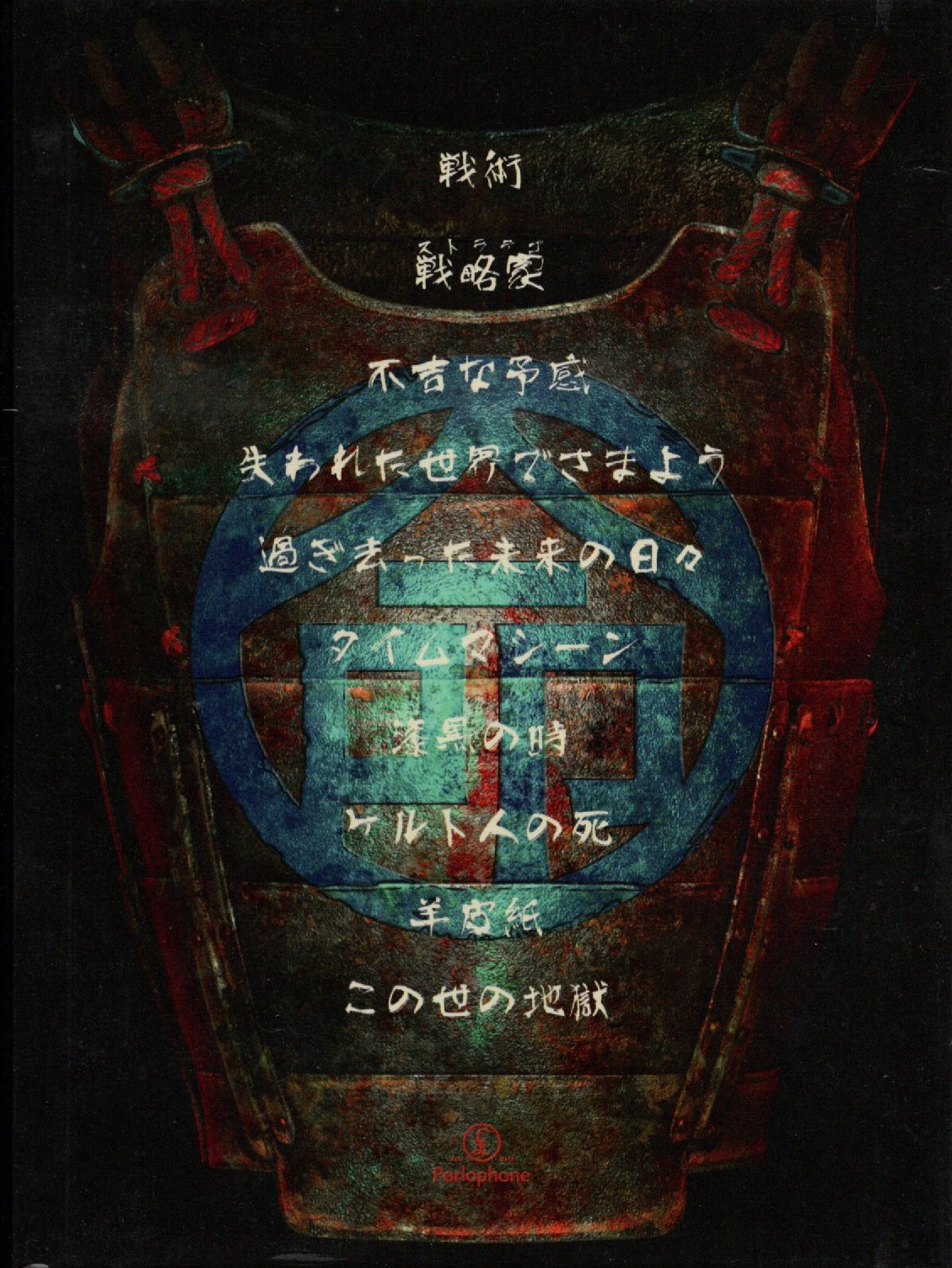
A different kind of dark bass intro brings us “The Parchment”, then WHAM!  A riff blasts you in the face.  It’s a little exotic and a lot Iron Maiden.  Think “To Tame a Land” without the Kwisatz Haderach.  Of the Steve epics on this album, “The Parchment” might be the most perfect.  It is definitely the longest.  A big part of its being is a series of great Janick guitar solos, but also a sense of tension.

Finally, “Hell On Earth” is a remarkable closer, as the music goes on and on for a while before Bruce starts singing.  But that music is awesome — textured, powerful, and memorable.  Then Bruce delivers a melody a little left of center, and the song becomes another Maiden classic to be enjoyed years from now, every single time.  So much packed into 11 minutes.  The Maiden March, some wicked Murray soloing, riffs and more.  The total package.  It fades out, and that’s the album.

Janick Gers really shines on this album, as his solos repeatedly jump out of the speakers on tracks like “Stratego”, “The Parchment” and “Death of the Celts”.  Sadly there are no Dave Murray co-writes this time.  Dickinson continues to impress, as he staves off the ravages of time better than many of his contemporaries.  Nicko is a relentless machine, and Adrian and Steve turn in performances as good as the ones they are famous for.

Senjustu, the surprise album that we didn’t see coming, is Iron Maiden doing what they do.  There are a few twists and turns, but this is the album we would have expected from them if we knew they were making one!  There are fans who miss the old days and wish Maiden would put out an old fashioned heavy metal album one more time.  They tried that once with No Prayer for the Dying and it didn’t work.  Maiden have been a metal band with a foot in progressive rock for a long time now, and they show no interest in abandoning this direction.  Long songs with Maidenesque writing and structure is what you will get.  And most of us will just be grateful for it.

4.5/5 stars

REVIEW: Blaze Bayley – Alive In Poland (2007)

BLAZE BAYLEY – Alive In Poland (2007 Metal Mind Productions)

Blaze Bayley had the honour of fronting Iron Maiden for two albums, and he’s not about to let you forget it.  Six of the 15 tracks on the double Alive In Poland are Maiden.  No fault there, if you were in Maiden you’d play those songs too, and probably more of them.  What Blaze did with his selection is quite adventurous.  Two of them were never played live by Iron Maiden — ever.

It’s no mercy, high octane, pedal to the metal from the get-go.  “Speed of Light” requires no description beyond the title.  It is what it says!  Throw some wicked Maiden-esque guitar harmonies on top.  Blaze is in great voice, full power, and with passionate delivery.  That goes for the entire show.

“The Brave” is borderline thrash but still with a Maiden-y flavour never too far away.  From there Blaze goes into a cranked-up version of “Futureal”, way faster than Maiden played it.  The double bass parts are insane.  It almost goes off the rails but stays intact.  The guitar harmonies somehow sound richer than the original.

One of the fun aspects of this live album is that Blaze was very talkative on stage that night.  Before “Alive”, he goes off on a great rant about a record label who advised him, “Don’t go out on tour Blaze, it doesn’t sell CDs.”  Thankfully he didn’t listen and this album is the fruit of his hard work.  “Alive” is a brilliant track, slowing it does to a mean groove like something out of the early 1990s.  From rhythm to riff, this thing just grinds along with an irresistible beat.  Dig those dissonant chords.

Wolfbane’s “Steel” is retitled “Tough As Steel”, but it’s the same track, only heavier!  Like Grim Reaper, Accept and Loudness rolled into one.  That rolls right into Maiden’s “Man On the Edge”.  Trying to get the festival crowd going, Blaze blasts ’em.  “Fucking wake up!  The gig has started, we have your money now and we don’t give a shit!”  That gets them up, and Blaze plays a pretty faithful version of the Maiden single.  No bassist sounds like Steve Harris, but Blaze’s bassist David Bermudez is able to play the challenging part.  Another lesser known Maiden single, “Virus“, is a total surprise.  This is the full length version with the long intro.  Not one of Maiden’s finest songs, “Virus” is much better live.  It has more life and Blaze really bites into the lyrics.

Disc 2 continues the spree of Maiden songs.  “Two Worlds Collide” was one of the better tunes from Virtual XI and one that Maiden only played on that tour.  “Look For the Truth” from The X Factor, on the other hand, has never been played live.  A shame that is, since the “Oh, oh, oh” refrain works best live.

Back to originals, “Kill and Destroy” is as heavy as it gets.  Post-Maiden, Blaze was unafraid to take things heavier.  Yet there’s still a melodic edge.  Changing pace, “Silicon Messiah” from Blaze’s first solo album is a prescient warning about technology, delivered with pure gusto and intent.  Choppy of riff, loaded with brilliant performances.  Into the brutally heavy “Tenth Dimension”, Blaze is still not letting up one iota.  He just keeps going at 11 the whole way.

A more direct arrangement of Maiden’s “Sign of the Cross” is the first sign of weakness in the voice of mighty Bayley.  He falters at the quiet intro, but recovers when bellowing the verses and chorus.  As the penultimate track, “Sign of the Cross” sets up “Born As A Stranger”, the wicked closer.  Good enough to be a Maiden tune itself, it’s a great track to go out on.  A solid banger, especially the outro.

Alive In Poland certainly isn’t Blaze’s only great live album.  The Andy Sneap-produced As Live As It Gets is also highly rated, where you’ll hear “Dazed and Confused” instead of “Look For the Truth”.  Both have their strengths, but Alive In Poland has a number of tracks that are not on the prior live album.  Buying one doesn’t make the other redundant.

4.5/5 stars

REVIEW: Paul Laine – Stick it in Your Ear (1990)

PAUL LAINE – Stick it in Your Ear (1990 Elektra)

A remarkable album by a singular talent.  Paul Laine came equipped with buckets of ability and a hell of a team.  Laine wanted Bruce Fairbairn at the producer’s desk, and through sheer determination, that’s who he got.  His debut album Stick it in Your Ear was compared to Bon Jovi, but Paul had more youthful innocence and exuberance.  Similarities are inevitable, but you can hear the difference when he starts to sing.

If you want to play the comparison game, the long dramatic intro to the song “One Step Over the Line” is similar to Bon Jovi’s “Lay Your Hands On Me”.  This tough little mid-tempo rocker gives Paul a chance to belt.  The cool keyboard accents are from an era when rockers were unafraid of a little sweetening.  It goes a bit Deep Purple during the long instrumental break — the track is over seven minutes long.

Things really kick into gear on “We Are the Young”, a legitimate rock anthem.  Laine was just a kid, so when he sang it, he meant it.  In the middle is a progressive rock keyboard break, proving Paul had many dimensions already.  Then he goes all Robert Plant in the outro!

After two pretty epic tracks in a row, Paul’s big hit “Dorianna” makes its appearance.  This irresistible little pop rocker is replete with organ intro (edited out of the single version) and shimmering guitar harmonies.  Not to mention that chorus, which will stay in your head for the rest of the day.

A power ballad, “Is It Love”, represents that best that the genre has to offer.  If you thought you’ve already heard every ballad that is worth hearing, then make room for one more.  The power chorus nails it, and that backing piano must be a Fairbairn twist.  This is followed by the most “Bon Jovi” of any of the songs, “Heart of America”.   But only if Bon Jovi could sing like a screamin’ hurricane, because the truth is, this songs blows away any of Jon’s in terms of power.  Corny lyrics, but what’s a kid from Canada going to write about?

“Main Attraction” opens a bit like Van Halen, showing off the shredding, and then breaks into a dash.  It’s the least individual of the songs, sounding the most generic, but it’s not a bad tune by any means.  Just the least impressive of nine pretty awesome tunes.

Things take a striking turn on the blues “Doin’ Time” featuring a jam with James Cotton on harmonica.  Beginning authentically, Paul soon breaks into a wicked screamin’ blues.  When James Cotton starts blowin’, the thing just goes to another level.  One of the best rock-blues tracks you’re likely to find this side of Badlands.

A big anthemic ballad called “I’ll Be There” blows the nuts off anything Jon Bon has cooked up over the years.  It’s more like Holidays In Eden era Marillion, two years early.  But that’s just a preamble to the finale:  “Break Down the Barricades”, a massive tune with enough hooks to feed an entire nation of hungry rock n’ rollers all their vitamins and minerals.

Stick it in Your Ear might be the last great debut album of the hard rock age.  While the genre suffered from too much similar product on the shelves, and was destined to be supplanted by something more edgy, this is one album that deserved a shot.  More so than some of its contemporaries by established bands entering slumps at the same time.  This is simply a very special album that started Laine on a long career that continues today.

4.5/5 stars

REVIEW: Tesla – Time’s Makin’ Changes – The Best of Tesla (1995)

TESLA – Time’s Makin’ Changes – The Best of Tesla (1995 Geffen)

Tommy Skeoch:  you’re out!  According to the band, Tommy had some drug issues and they drew a line.  He went “Steppin’ Over” that line and was fired for it.  Thus, the sole unreleased song on Tesla’s very first greatest hits album is an ode to their breakup:  “Steppin’ Over”.  It was recorded as a four-piece, and the last thing they did together until a 2000 reunion.

The 90s were not kind to hard rock bands, and many of them came to the end of their record deals.  Compilations and live albums rolled out to fulfil obligations.  Time’s Makin’ Changes – The Best of Tesla is a sad example of one such contractual obligation.  As if the bland cover was not warning enough, the skimpy booklet is the dead giveaway.

What it has:

Key tracks such as “Modern Day Cowboy”, “Gettin’ Better”, “Little Suzi”, “Love Songs”, “Signs”, “Edison’s Medicine”, “The Way It Is”, and “What You Give”.

What it lacks:  “Hang Tough”, “Shine Away”, “Change in the Weather”, “Call It What You Want”, “Freedom Slaves”, “EZ Come EZ Go”, “Comin’ Atcha Live”, and an unedited “Heaven’s Trail”.  The edited version included here is missing too much of the opening.

There are a couple questionable inclusions:  “Song and Emotion”, a lengthy tribute to Def Leppard’s Steve Clarke, seems more like deep-cut material.  When it comes to the last Tesla album on Geffen, 1994’s Bust A Nut, who can say which tracks the most important.  It seems like the album might have been better represented by edgier material like “Rubberband”, or “Solution”.  Might have livened things up too.

It’s also kind of deceiving that the two live tracks included are not advertised as live.  “Signs”, well, no worries, because it was only ever recorded live.  But “Paradise” is also from the Five Man Acoustical Jam album.  This is probably done so not to confuse first time Tesla buyers who didn’t realize all this time that “Signs” is a live song.

As for the new song “Steppin’ Over”, it sounds like Tesla even though they were down to one guitar player.  It doesn’t sound new or different, just a continuation of the Bust A Nut sound, including the sad wisdom.  It takes a neat Zeppelin-y turn around the 2:18 mark but otherwise it’s not what you’d call a greatest hit.

It’s a shame how the Tesla story went down, but you’d do well by at least adding the first three albums to your collection.

2.5/5 stars


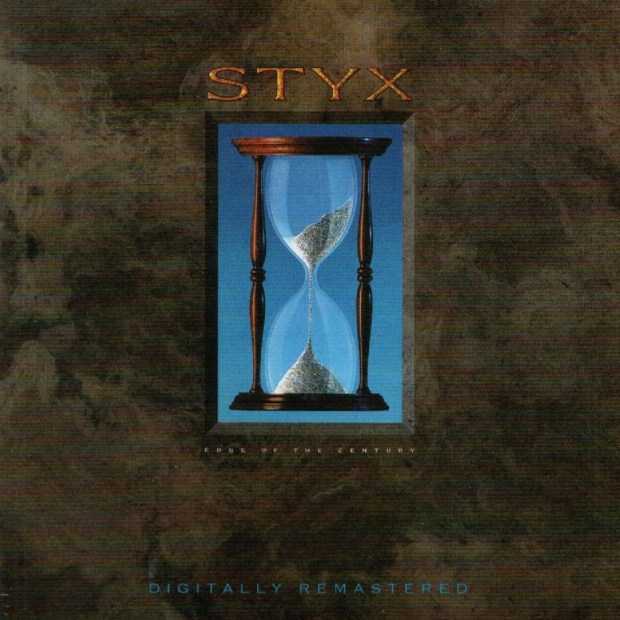
REVIEW: Styx – Edge of the Century (1990)

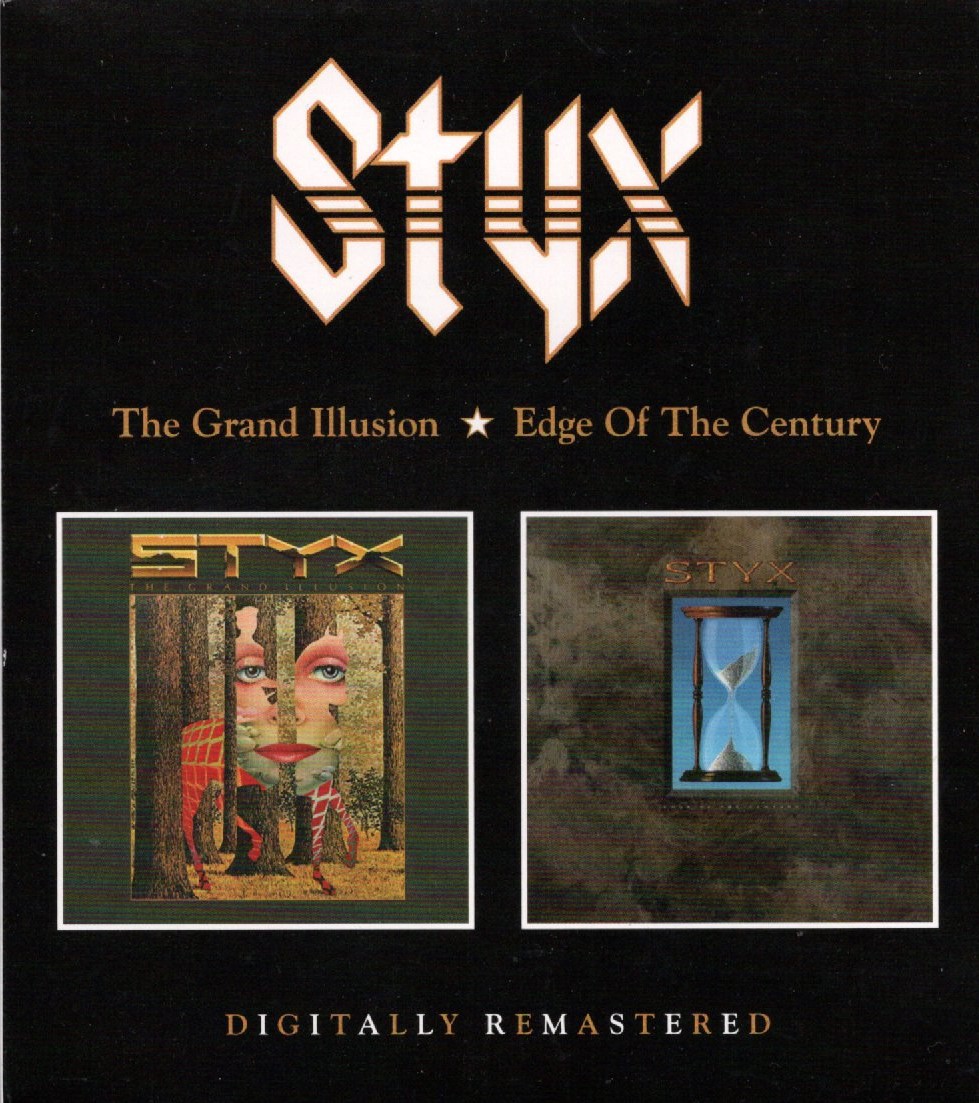
STYX – Edge of the Century (1990 A&M, 2019 BGO remaster)

Kilroy Was Here seemed to be the end of Styx.  Although the album went platinum, it was also divisive.  The band were fractured and the tour was difficult.  Members did not enjoy playing characters on stage.  Was this a rock band or was it Broadway?  Styx split up in ’84, with members embarking on new projects.  Dennis DeYoung did moderately well with his solo debut Desert Moon, and Tommy Shaw had a fairly big hit with Girls With Guns.  James “JY” Young went in another direction on his own City Slicker album with Jan Hammer.  For all intents and purposes, Styx spent the second half of the 80s completely defunct.

In 1990 two interesting things occurred.  First, Tommy Shaw formed a supergroup with Jack Blades (Night Ranger) and Ted Nugent called Damn Yankees.  They came out of the gates with a surprising self-titled hit album that didn’t particularly sound like Styx, Night Ranger or Ted Nugent.  But it spawned a couple hit singles and went double platinum.  When Styx reunited at the same time, it was without Tommy Shaw.  Styx would never record with the classic lineup again.

The Styx reunion we got in 1990 was, frankly, not the Styx reunion we deserved.  A new guitarist, songwriter and singer would be needed and he arrived in the form of solo artist Glen Burtnik.  He was only slightly younger than Shaw, but brought in a modern edge.  He was able to sing Tommy’s high parts, and could write.  The first single, “Love is the Ritual”, was written by Burtnik and partner Plinky Giglio with no other members of Styx contributing.  Clearly, they were trying to turn a page and appeal to a new younger generation, and make people forget all about “Mr. Roboto”, or that dreaded “progressive rock” tag.

The new album was titled Edge of the Century and produced by Dennis, now in control of Styx.  Even so, “Love is the Ritual” sounds like a Winger reject, with full-on Beau Hill production.  You’d never guess it was Styx, and one suspects this is why it was chosen as the lead single.  It was also the first track on the album.

Leading the new album with a song featuring a new unfamiliar singer was a risky move.  The turgid track is a clone of Winger’s “Can’t Get Enuff” and features some stinky synth bass.  The faux-funk of the rhythm track is unpalatable, and only a hint of Dennis DeYoung on backing vocals indicates that this song has anything to do with Styx.  They’re barely in their own music video.  Almost as bad are the cringey lyrics.

The song that should have opened the album, “Show Me the Way”, was a legitimate hit.  A church-like ballad with soaring chorus, it struck a chord with Americans during the first Gulf War.  It has the sound of a true Styx classic and fits well with past ballads.  Dennis is a remarkable songwriter and the chorus on this track is just legendary.

Edge of the Century tends to be remembered for “Show Me the Way”, but good Styx-like material is still buried within.  Burtnik’s back on the title track, but this infectious hard rocker does sound more like Styx.  It fits that slot like a classic Tommy Shaw rocker.  The wicked riff is as memorable as the catchy chorus.

The songs alternate from Glen to Dennis, and DeYoung’s ballad “Love At First Sight” is a traditional 80s power ballad with chiming keyboards.  It sounds exactly like every other power ballad from 1990, but at least it is a good one.  It was the third single and did OK on the charts.

One mark of a good Styx album is a decent acoustic song, and Glen Burtnik has “All In a Day’s Work” for that necessity.  It’s just acoustic guitar, vocals, some keyboards and Dennis’ accordion.  Very Styxian, especially when they sing together.

The second side opens with a traditional rock n’ roller, “Not Dead Yet”, which is a song by a chicago artist named Ralph Covert, sung by Dennis.  It’s DeYoung’s first rocker on the album, and it’s leather jacket cool.  Burtnik’s back on “World Tonite”, the cheesiest song on the album.  This generic rocker with it’s “Girls wanna dance, boys wanna fight” lyric is pretty awful.  Parts of it verge on rap.  Its only saving grace is the harmonica that periodically blasts through.  In no universe would anybody say “That sounds like Styx to me.”

Dennis is really good at ballads, and “Carrie Ann” is surprisingly strong.  Like another “Babe”, it has a strong chorus and memorable hooks.  Did “Babe” need a sequel?  It matters not; “Carrie Ann” is pretty good for what it is.  We’ve had a few ballads now, and an acoustic song, but have you noticed what is missing so far?  James “JY” Young.  He does not check in until the second-to-last tune, “Homewrecker”.  It is a Quiet Riot-like rocker (similar to “Run For Cover”), and unsurprisingly the hardest rocker on the album.  JY was overdue.  That fact that you can really only feel his presence on this one track is one of the major weaknesses to Edge of the Century.  However, they try to make up for it with with a smokin’ guitar solo, and a killer keyboard break from Dennis too.  “Homewrecker” may be derivative but JY hasn’t rocked out this hard on a Styx album since “Half-Penny, Two-Penny” back in ’81.  It’s over all too soon.

Edge of the Century is still missing one key Styx ingredient, and they save it for last:  something big and pompous and overblown.  That is “Back to Chicago”.  Air-shaking blasts of horns and clarinet accompany a huge broadway-ready chorus.  It’s hard to imagine when you start this album on “Love is the Ritual” that you will end it on something as different as “Back to Chicago”.  Styx albums albums are often diverse, with heavy riff rockers butting up against pretentious set pieces.  But they’ve always been cohesive.  By the end of Edge of the Century, any thought of cohesiveness are out the window.  Although the same five guys plays on all 10 songs, it sounds like two or three separate bands.

Edge of the Century is like a lost Styx album.  The band split after a short tour, with the album going Gold but no further.  Due to the sad passing of drummer John Panozzo, this lineup could never exist again.  Styx reunited in 1995 (with Shaw), but they stopped playing “Show Me the Way” when Dennis was let go in 1999.  “Love is the Ritual” continued to be played live when Burtnik was in the band again (on bass filling in for Chuck Panozzo) from 1999-2003.

Fortunately, the album can be acquired remastered in a fine reissue on BGO Records, paired in a 2 CD set with The Grand Illusion.  The reissue includes the original lyrics and liner notes, along with an essay detailing Styx history.

3/5 stars

REVIEW: Triumph – Allied Forces (40th Anniversary Box Set)

TRIUMPH – Allied Forces 40th Anniversary Box Set (Originally 1981, 2021 Round Hill Records RSD set)

Triumph is under-celebrated.  That’s a fact.  To the unknowing, they were “the other Canadian power trio with the high voice”.  To the Allied Forces, they were Rik, Mike and Gil:  Triumph!  And really incomparable to Rush except in superficial ways.  Finally, some of their back catalogue has received the treatment it deserves and that is Allied Forces, for its 40th anniversary.  Overseen by Andy Curran,* this vinyl box set (no CD) features some exclusive music and a wealth of goodies packed within.  The usual content like booklets and reprints, but also a little surprise awaits you inside.  Released for Record Store Day back in May, limited quantities were later made available for the schmucks like us who couldn’t snag one in time.


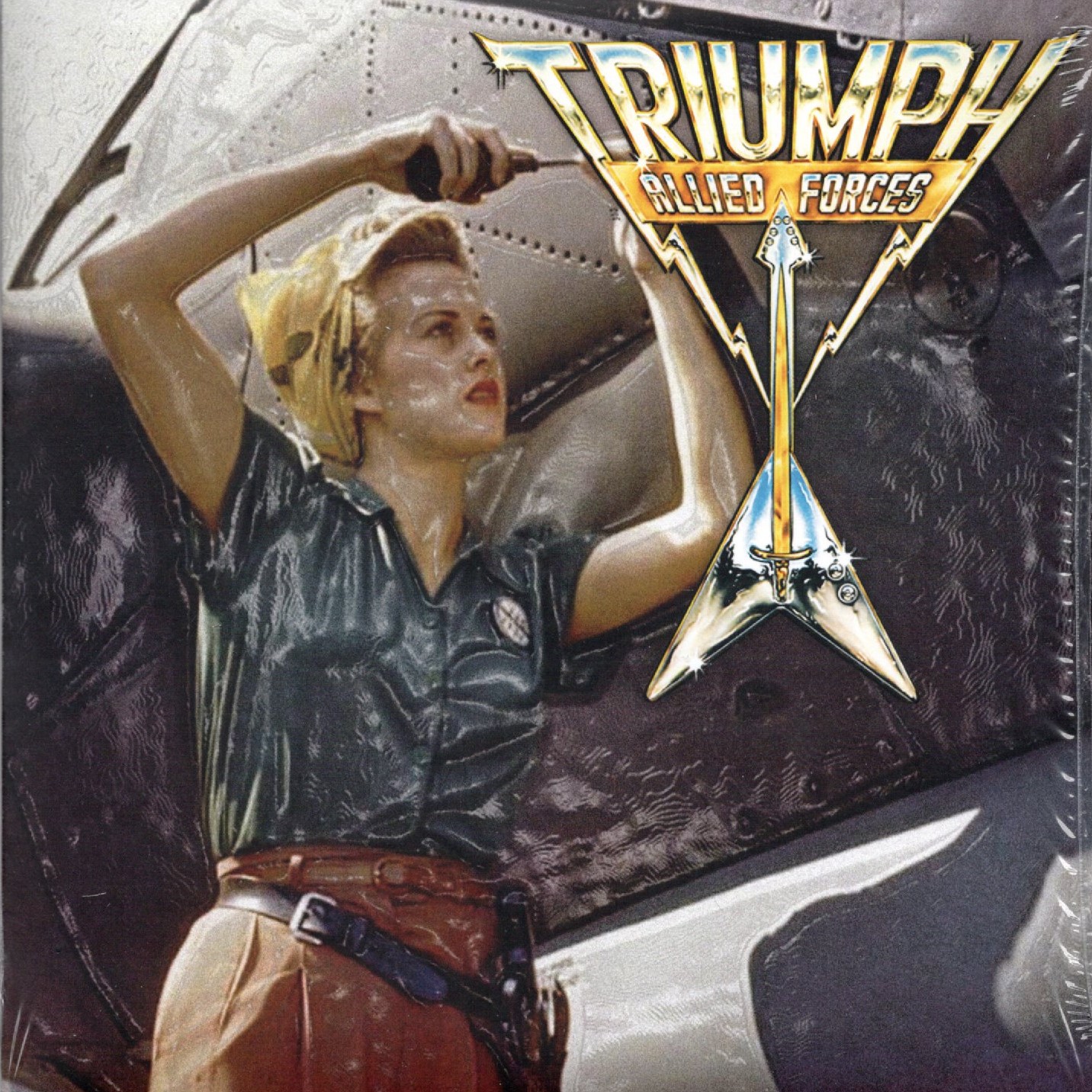
Allied Forces itself is pressed on a picture disc.  The brilliant yellow A-side shows bullet belts and a Spitfire.  Vibrant imagery that only serves to enhance the tunes you’re about to hear.  Opening with “Fool For Your Love”, the beautiful picture disc sounds great with low surface noise.  Rik Emmett goes deep with some wicked slide guitars, on a good time rocker sung by Gil Moore.  In the luxurious liner notes, Rik explains that there are four tracks of guitar layered.  Indeed, Canada’s greatest guitarist sounds nice and thick with a delectable crunch.  With a nice tasty riff to bite down on, this opener stands as one of Triumph’s most enjoyable pure rockers.

The iconic #8 single “Magic Power” introduces Rik’s acoustic contemplative side.  Triumph succeeded in marrying all their facets on Allied Forces, and “Magic Power” is a fine example of this.  It has a quaint folksy vibe, but when the electric guitar kicks in, it becomes a pop rock classic.  With lyrics about drawing a “magic power” from music on the radio, what could be fitting?  Mike Levine’s big Hammond B3 is the ultimate accoutrement.

“Air Raid” is an interlude, a sonic experiment honed at the band’s new home studio, Metalworks.  It serves as a war-like intro to “Allied Forces”, one of Triumph’s heaviest.  A rallying cry for the live setting.  According to Uncle Rikky, it’s Triumph letting out their Deep Purple side, and you can certainly hear “Speed King” and “Highway Star” in its DNA.  Gil Moore rips it up on drums and vocals.  Triumph at their most Purple, and powerful.  But to end the side properly, they go for a good-time party rocker in “Hot Time (In This City Tonight)”.  Of course in the live setting, this enabled Triumph to honour their host city every night.  Just change the words to “Hot time in Cleveland tonight,” as we’ll see!  With a hot boogie behind him, Rik Emmett sings some ongodly high notes and wails away a fresh solo laden with wicked licks.

Flipping the record over, Side B depicts a triumphant B-17 bomber dropping its massive payload.  A strong graphic statement.  “Fight the Good Fight” is the clear album centerpiece.  Built upon Rik’s 12-string depth, it boasts many strengths.  Gil Moore’s complex beat and Mike Levine’s keyboards accent the song and build upon its heart.  Emmett’s solo is a sub-composition until itself, as they often are with him.  It has peaks, valleys and hooks of its own.  Adding to the true weight of “Fight the Good Fight”, the liner notes add the wrinkle that the song was inspired by a battle with cancer.

“Ordinary Man” is one likely to split opinions.  Fans of the progressive side will love the choir and acoustic arrangement.  Rawkers will say, “bah, pombous prog bullshit!”  Gil expresses regret that they didn’t play it live; it certainly would have been a challenge.  Queen-like vocals and guitar layers would be hard to perform by a power trio.  Speaking of power, that kicks in around the three-minute mark.  That’s when the riffing starts; full-on metal mode.

In the penultimate position, Rik’s classical instrumental (a Triumph institution) is “Petite Etude”, which also boasts some jazzy chords if you listen carefully.  Finally Rik ushers in the album closer “Say Goodbye” with more of that juicy slide guitar.  A pop rocker in the truest sense, and a Rik construction.  Mike and Gil seem a little cool on it in the liner notes.  It might not seem like the kind of song that fits on Allied Forces, but it does close the album on a really bright note, which is not a bad thing.  Mike’s Hammond B3 returns to add some integrity.

And that’s Allied Forces, a great album with no weak songs.  A solid 4.5/5 on a bad day.  But this box set has so much more to go.


“Magic Power” (Live in Ottawa 1982) is an exclusive 7″ single.  The A-side is the live version of the Triumph classic, unavailable elsewhere.  With the Triumph logo emblazoned on the right, a female mechanic services a World War II-era warplane on the sleeve.  As for the track, it’s a brilliantly energetic performance although you sure do miss that Hammond B3.  Still you can’t beat it for the electricity in the air.

The B-side was a bit of a mystery until we did a little digging.  “Allied Forces 2021” is not a re-recorded version by Triumph.  It is a new version by former Triumph guitarist Phil X, reportedly for an upcoming tribute album that’s in the works.  Phil’s version is way heavier, but he sings it pretty good and the solo work is absolutely wicked.  It doesn’t seem to say anywhere in the box that this version is by Phil X, but the RSD site credits the Bon Jovi guitarist properly.  It’s certainly far heavier than anything coming out of Jon’s camp these days.

A nice little bonus single here, and a nod to Phil X who helped keep Triumph going in the early 90s.


Live In Cleveland – 1981 will be the serious bonus here for many fans.  Although this concert was released on CD in 1996 as King Biscuit Flower Hour (In Concert), this is its first vinyl release and remastered at Metalworks.  By the time Triumph hit Cleveland, they were on their fifth studio album and had plenty of great material to play; all now classics.  Only a few tracks from Allied Forces had worked themselves into the set, the bulk of which is still made up of earlier material and long instrumental stretches.

From the previous album Progressions of Power, “Tear the Roof Off Tonight” opens on a Zeppelin-y party rock note.  Before you can say “Rock and Roll”, they’re into the second track “American Girls” from 1979’s Just A Game.  A nice tasty riff with bite, and two Gil Moore tunes in a row, the drummer working extra hard.  Dig that break into “The Star-Spangled Banner” right before the incendiary solo.

Rik’s up with the first epic of the night, “Lay It On the Line”, 12-string majesty ringing clear and true.

“Same old story, all over again.  Turn a lover into just another friend.  I wanna love you, I wanna make you mine…won’t you lay it on the line.”

Then Rik misses the mark and there are a couple extra power chords before he picks up the vocal where he left off.  Things that only happen on true untampered live recordings.  This passionate version of “Lay It On the Line” has some of Rik’s most incredible singing ever captured.  Period.

First new song of the night is “Allied Forces”, Gil going in extra hard on the lead vocals.  Rik screamin’ in the back.  Triumph were frickin’ hot in 1981.  “Allied Forces” is a work-out before Triumph lets loose some more serious epic material.  “Fight the Good Fight”, impressive itself, is followed by “Blinding Light Show / Moonchild”.  This is just a solid 15 minutes of compositional and instrumental brilliance.  Not to mention a lead vocal tour-de-force from Rik.  Serious drum thunder from Moore on “Moonchild”, and Mike Levine relentlessly laying down a melodic rhythm the whole time.

Gil demonstrations his ability to scat out a wicked song intro on “Rock ‘N’ Roll Machine”.  It ain’t easy to front a band from behind the drum kit but here he does a song intro to rival Paul Stanley.  They blast through that tune, complete with Rik’s signature solo, and then “I Live For the Weekend”.  It’s Triumph at their most Van Halen, boogying and soloing with the big boys.  Then it’s “Nature’s Child”, a drum solo, and an instrumental jam.  They exit on “Rocky Mountain Way” and “Hot Time (In Cleveland Tonight)”, two live standards.

Live In Cleveland is not the definitive live Triumph album.  That will remain to be Stages, which had a better song/solo ratio.  This is however the heaviest live Triumph album and its rawness and unpolished veridity make it the perfect one to accompany this box set.  Listen to the whole thing in one sitting, is my recommendation.


There is a treasure trove of relevant Triumph goodies included inside.  Box sets sold in Canada included an exclusive replica poster for Triumph live at Maple Leaf Gardens, New Year’s Eve 1981.  For a show at the Gardens, it’s pretty ballsy for them to use a picture of Rik Emmett wearing a Habs shirt.  This box set is loaded with Rik in the Habs shirt!

Deke and I also received a Rik Emmett 2021 guitar pick taped to the front shrinkwrap of our sets.  Picks are the kind of added bonus we really appreciate.  Something material.  The included replica backstage pass is also cool, as it looks better than just a piece of paper.

There are lots of paper goods inside too including:  a massive 24″ x 36″ poster, three lyric sheets, three sketches, the booklet and Allied Forces replica tour book.  Plenty of photos and text to sift through.  There are interviews with Rik, Mike and Gil, and a song-by-song breakdown.  Everything about the making of Allied Forces from to the music to the iconic cover.

Hopefully the powers that be continue to honour Triumph’s history as it deserves to be.  Allied Forces is a triumph indeed but it’s ridiculous that it was released in such limited numbers.  Let all the fans have a chance to get one.

5/5 stars

Personal note:  This box set was released June 12 2021, for Record Store Day.  Deke and I tried mightily but were interviewing Andy Curran at the exact moment the box was released.  Having failed to buy the box, Curran advised us not to pay inflated second-hand market prices to get it.  “Something special is planned,” he hinted.  A few weeks ago, the remainder of stock was made available via Rock Paper Merch.  A kind viewer left a comment here with the link to buy, and both Deke and I managed to get one.  Thank you Andy, and thank you viewer!  It goes great with my official Triumph hockey jersey.

#928: Rockin’ the Computer From Then to Now

RECORD STORE TALES #928: Rockin’ the Computer From Then to Now

It’s funny to think about my parents being on the cutting edge of technology, but back in the day, we had all the cool stuff.  In my earliest memories we had a Lloyd’s Pong machine.  It came with two paddles and a really cool light gun assembly that you could customise with a stock or silencer.  It was primitive but very few people had video games in the home back then.

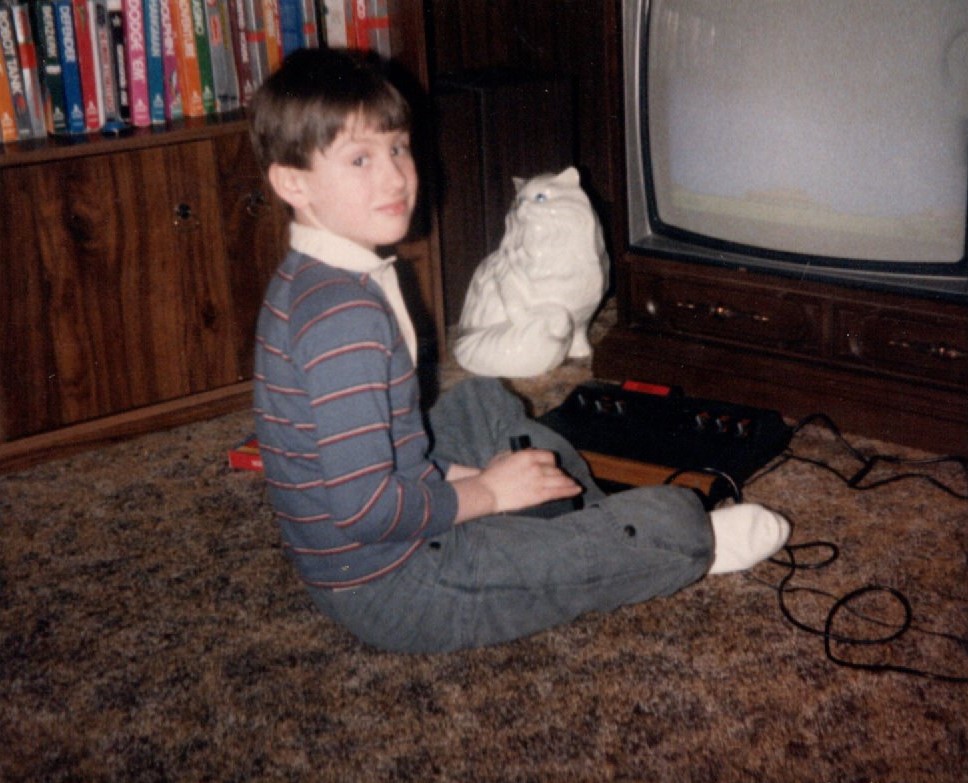
You wouldn’t call the Lloyd’s a “computer”, but our next device was specifically marketed as a “video computer system”. The Atari 2600 console was beloved by our family for many years.  There was a big sale.  You could get the console with two games (Combat and Space Invaders), two joysticks, and two paddles.  Our family grabbed one as did everyone else in the neighbourhood.  While the games were not as sophisticated as those in the arcade (or any other home entertainment system), they were the most popular.  And then one day in 1984, in front of that Atari 2600, I had the musical epiphany that changed the course of my life.  Iron Maiden and Snoopy & the Red Baron collided in such a way that my life would never be the same.  From that point forward, computers and music would be intertwined in my life.  Music enhances everything from gaming to homework.

Cousin Geoff “Captain Destructo” wrecking our Atari joysticks while playing Snoopy & the Red Baron on the 2600

I had always been into soundtrack music, but when I was given a Fisher Price mono tape recorder as a young kid, I was able to record whatever I wanted.  I made a compilation of all my favourite Atari 2600 musical themes.  My sister and I would walk around the house humming those game tunes, so I recorded them for us to enjoy.  Ms. Pac Man in particular had a good musical theme.

The next evolution in our computing lives was when my dad got an IBM PC through work.  Not one but two 5 1/4″ floppy disc drives.  Monochrome monitor.  The ability to copy games from friends.   That computer kept us going for many years until the early 90s when I wanted something new that could handle modern word processing for school.  Not a very good computer, but a new one at least.  It was regular upgrades from there:  a modem, and finally the near-mythical CD-ROM drive.

Dad at the original PC

The first thing I did as soon as we got a CD-ROM drive was to buy something that truly combined the world of computers and music.  In a way, CD-ROM was a new format in music, an upgrade from simple CD.  Having a drive on the computer opened up my world to things I couldn’t play before, such as Queensryche’s Promised Land.  (I first bought Alice In Chains’ Jar of Flies CD-ROM but couldn’t get it to work, so I exchanged it for another Seattle band.)  There I sat at the keyboard, clicking on my mouse and virtually touring Big Log, the island studio that Queensryche recorded the album in.  The CD-ROM also included a video game, and the prize for winning the video game was a brand new song.  Queensryche specially recorded “Two Mile High”, an acoustic song, for the game.  I never won the game, but I figured out what file the song was, and recorded it to a tape deck via the PC’s audio-out jack.  And let me tell you, I thought it was pretty cool to gain an exclusive song by expanding my tech to play a new format.  Collectors are kind of nuts that way.

When I started working at the Record Store, Trevor and I would check out CDs that had exclusive CD-ROM content, such as Tales from the Punchbowl by Primus.  There was a special “enhanced” reissue that included visual content for your computer.  This became common practice in the 1990s.  And so, it became important to always have a computer able to keep up with the newest releases.

Ozzy had screen savers.  The Tea Party had exclusive videos.  I never found out what Alice In Chains had.  We learned quickly at the Record Store that these “enhanced” CDs gave some people problems with playback, especially if they tried to play the album on an older computer.  We had many returns.  The alternative was to exchange the disc for a version manufactured by Columbia House.  They usually lacked the enhanced content for your computer, which was causing some customers the playback issues.  The feedback we received was that the Columbia House versions played fine!

With the advent of cheaper memory and better computers, my collection began the ongoing migration to digital copy.  Having a decent computer is more important than ever.  In fact now I do most of my listening right here in front of the screen.  The subwoofer gives me plenty of depth.  This is something I could never have imagined, even back in the early CD-ROM days.  Only in the last 10 years has listening to music on the computer been smooth and decent sounding.  Tech got faster and cheaper and now the computer is my main station.

I’ve had so many computers over the years that I’ve lost track of them all.  The new laptop I bought doesn’t have an optical media drive at all, which alarmed me.  I will always need the ability to have my CD collection interact with my digital machine.  Will my future be external drives that play increasingly obsolete formats?  Kang only knows, as this ride has been unpredictable so far.  I guess we’ll see what changes in the next 10 years.  I just know that it will change.

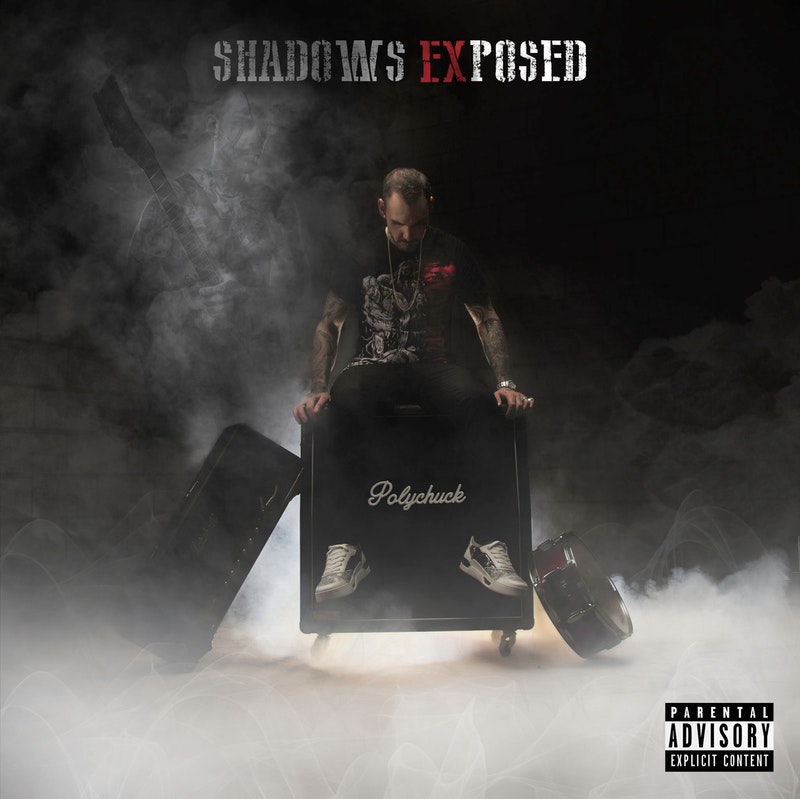
REVIEW: Polychuck – Shadows Exposed (2021 EP)

POLYCHUCK – Shadows Exposed (2021 EP)

Who’s Polychuck?  He’s just getting started.

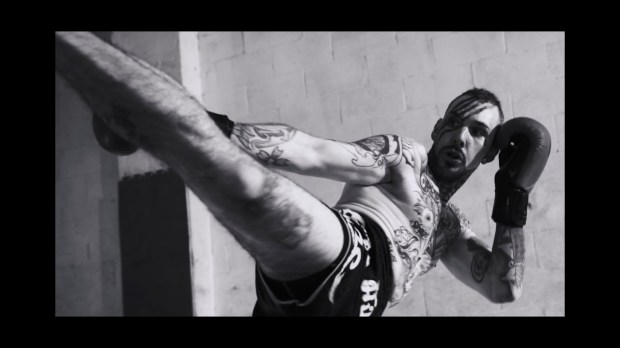
From Montreal, with a do-it-yourself attitude and all the know-how, Polychuck is ready to be heard.  His new EP Shadows Exposed has something for everyone, and that’s not just a cliche this time.  Five deeply personal songs, from the wellspring of modern popular music, heavy metal, progressive rock, and all the classics.  Polychuck is a musically intelligent individual who pulls no punches on guitar, lyrically, or in the ring.  He’s also an MMA fighter!

Lead track “Beating Myself Down” has the vintage piano bop vibe, complete with scratchy vinyl playback.  Before you mistake it for a Billy Joel record, Polychuck brings in the modern influences and blunt lyrics.  Synth horns give you an idea of where Polychuck is coming from.  Performed on keyboards this time, he wants to use a real horn section on his next album.  Creative use of vocoder, and a smoking guitar solo with some insane sounds are the icing on a very sweet cake.

“Exposure” has a modern urban feel, before the heavy metal drum beats kick in.  This is augmented by some pretty awesome record scratching.  The Styx-like keyboard solo reveals Polychuck’s progressive side, which he also wishes to explore further next time out.

Another strong tune, “In the Dark”, binds the heavy beats, some creative keyboard construction, and a solid guitar riff.  This riff transforms into a wailing solo.  Fans of Linkin Park will find something to love here.

Light beach-ready guitar plucks away on “Driving Me Mad”, a song for the summer that sounds like a holdover hit from ages past.  What sets it apart is, again, the guitar.  At one point Polychuck hits upon a melody something like “Rough Boy” by ZZ Top, and it’s the perfect fixture for the song.

The last song “Lights Out” tackles a number of subjects:  the inner critic, nostalgia, old friendships,  and more.  Light 80s keyboard is paired with heavy drums and guitar, ending the EP on a positive note.

When Deke and I talked to Polychuck, he told us he was very much looking forward to making everything bigger next time out, with more real instruments and much more prog.  We look forward to what he has in store, but check out the EP for a taste.  It’s available on iTunes and all the usual streaming platforms.  Shadows Exposed makes a splash but it’s just the inception.  More to come from this gifted artist.

4/5 stars