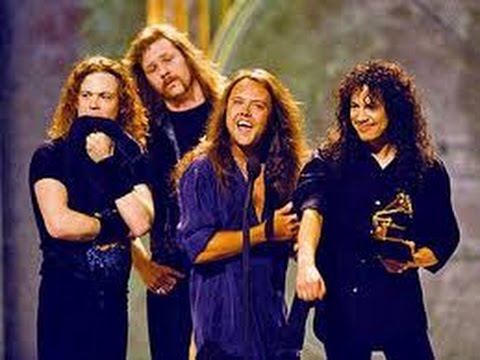
#471: Canadian Rawk

STRAT

GETTING MORE TALE #471: Canadian Rawk

What do you think of when you read the words “Canadian rock”?  Perhaps you imagine the vocal shrieks and drum thrills of Rush?  If you have a negative impression of Canadian music, no doubt your mind drifts to the sultry sounds of Nickelback.  Landmark artists from the golden age that you know would include Neil Young, the Guess Who, Bachman-Turner Overdrive, Joni Mitchell, Steppenwolf and countless more.

Canada has always had an inferiority complex when it comes to our southern neighbours, the Americans.  In the music world, this is manifested in “CanCon”.  Simply put, Canadian radio broadcasters must play at least 40% Canadian content.  Starting in 1968, fears that American artists would flood our airwaves resulted in the first CanCon rules.  If you have ever bought a Canadian CD, perhaps you have seen the letters MAPL on the back.  MAPL is an acronym that determines if content does indeed qualify as Canadian.

MAPL

M:  Music.  Did a Canadian write the tune?
A:  Artist.  Is the primary artist a citizen of the Great White North?
P:  Performance.  Was the recording made in Canadian, in a Canadian studio?  Or for live albums, was the concert on Canadian soil?
L:  Lyrics.  Separate from the music qualifier, this determines if the lyrics were written by a Canadian.

Controversy erupted in 1991.  Bryan Adams had the biggest record of his career, Waking Up the Neighbors, which was co-written by Robert John “Mutt” Lang and recorded overseas.  Under the MAPL rules (since tweaked to avoid this situation), Adams did not qualify as CanCon.  His manager Bruce Allen was quite vocal against these rules.  Allen was never one to mince words, but he sparked a discussion on CanCon rules and how they ultimately hurt Canadian artists.  Flooding the airwaves with Canadian songs that weren’t that good was one issue commonly discussed. Another was that some international artists qualified for CanCon by recording in Canada with some of our most in-demand hit-makers such as Jim Vallance or Bruce Fairbairn.   Finally, these rules implied a lack of confidence in the strength of our own music.

Some feel that there is a stigma in being Canadian.   Though controversial, some feel there is such thing as a “Canadian sound”.  While this is obviously not universal, I do think there is something to it.  There is a commonality in Canadian bands that defies description.  To my ears, the Tragically Hip sound Canadian.  BTO and the Guess Who sound Canadian.  So does Bryan Adams.  I can’t explain it nor do I want to open that can of worms.  I think the roots of Canadian rock, going back to Neil Young and the Guess Who, are basic folksy traditional origins.  I think this has somehow been passed on in our DNA.  This is not always considered a good thing.  The alternative rock band I Mother Earth put out their debut album Dig in 1993, utilizing Mike Clink as producer and hoping to break open in the American market.  They were hyped as “the next Jane’s Addition”, but they did not want to be openly identified as Canadian in promo materials.  They felt that there was indeed a Canadian stigma and they would have more success if their citizenship wasn’t brought up.  M.E.A.T Magazine covered this story but were firmly in the pro-Canadian camp.

Here at mikeladano.com, we don’t have to follow CanCon rules, but Canadian content has dominated regardless.  I believe that our music is strong enough to stand proudly on its own.  We have so much talent in this country.  So many incredible songs have emerged from the frozen tundra.  Countless incredible, under-appreciated, creative artists:  VoiVod, Paul MacLeod, Sloan, Death From Above 1979, Blue Rodeo, Strapping Young Lad, the Trews, Sarah Harmer, Big Sugar…the list truly is endless because great new performers emerge every day.  When I worked at the old Record Store, we were fiercely proud Canadians.  We put a little Canadian flag sticker on the header cards of every Canadian artist.  A lot of customers would say, “I didn’t know that singer was Canadian!”

This week, join me each day for a close look  at some good Canadian Rawk albums that you may have missed over the years.  Trust me, you do not want to miss these reviews or you may miss a future favourite record.  Grab a Timmies or a wobbly pop and get ready to rock!


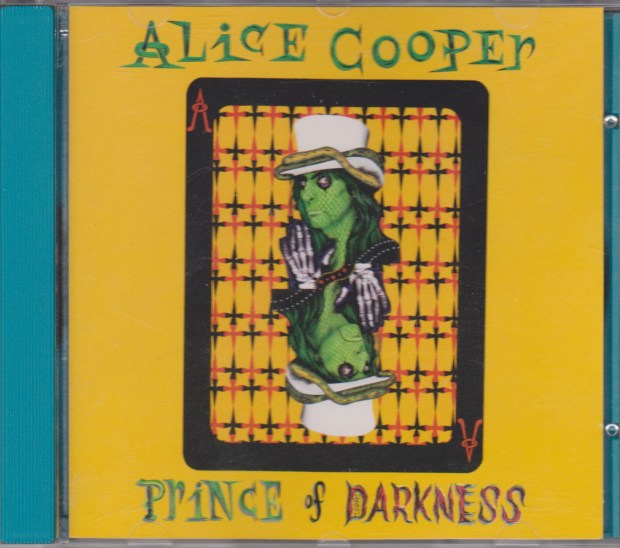
REVIEW: Alice Cooper – Prince of Darkness (1989)

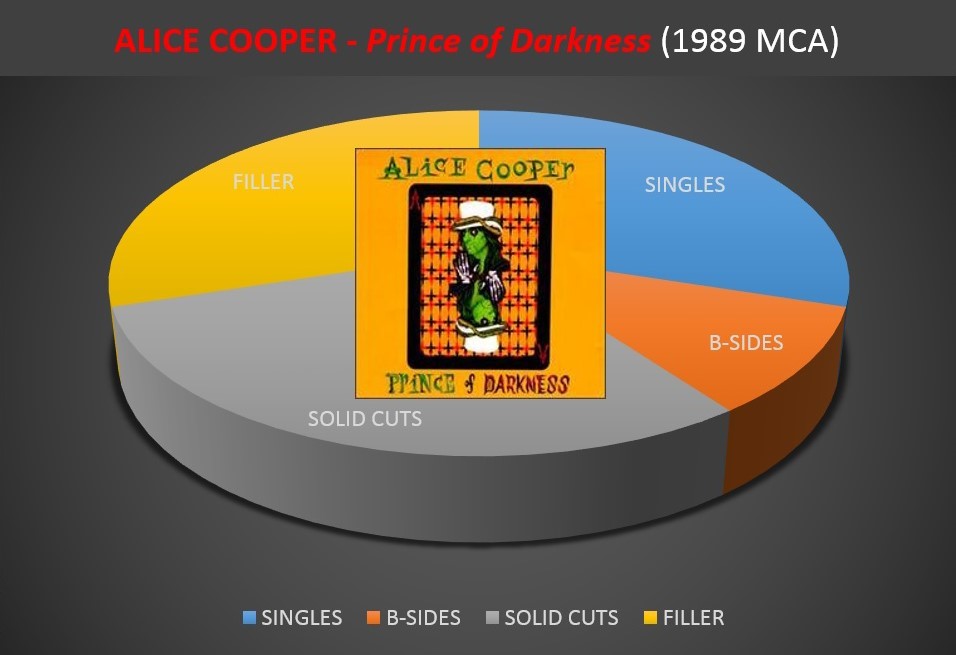
ALICE COOPER – Prince of Darkness (1989 MCA)

Even though Alice hadn’t produced anything as timeless as “School’s Out” during his 1980’s comeback, his profile rose greatly.  Clean, sober and focused, Alice Cooper was very active in the last part of the decade.  The same year as his final MCA album Raise Your Fist and Yell, he had memorable appearance at Wrestlemania III.  In the corner of “good guy” Jake the Snake Roberts, Cooper had the honour of draping Roberts’ snake named Damien all over the Honky Tonk Man.  After that, even my dad knew who Alice Cooper was.

Cooper only had a two record deal with MCA:  Constrictor was the first in ’86; also the first album in the comeback period.  Having re-established himself with MCA, Alice then signed with Epic and had a genuine smash success with 1989’s Trash.  With a dream team of writers and collaborators (including hitsmiths Desmond Child, Jon Bon Jovi, Richie Sambora, Steven Tyler, Joe Perry and many more), Alice scored a platinum album.

While Trash was still charting and producing singles, MCA put out a competing record:  Prince of Darkness, a 10 track compilation of Cooper’s material for that label.  Normally these kinds of releases are throw-aways, but Prince of Darkness is not and this review will tell you all about it.

It is not unfair to state that Constrictor and Raise Your First were mixed affairs.  You had to wade through a significant amount of filler to reach a disproportionate amount of modern classics.  Prince of Darkness does a great service by collecting some of the best material together on one CD.  It is well sequenced and even includes one rare track, an exclusive on compact disc.

A grand opening is the dark and metallic “Prince of Darkness”, a theme song from a movie of the same name.  This ominous and menacing track is one of the more memorable from this era, a heavy monument.  It works amazingly well as an opening track, and “Roses on White Lace” follows by going faster and heavier.  It was surprising to hear Alice creep this close to thrash metal, but what a track!  A distorted vocal adds to the creep factor, making this one of the better samples of Cooper’s music during his “splatter horror” period.  The 1986 single “Teenage Frankenstein” would be a must-own for any fan, and there it is in the #3 position.  The big single from this era was “He’s Back (The Man Behind the Mask)”, a synthpop classic quite unlike the prior metal material.  Right here is an easy and simple way to get this classic track, without having to buy Constrictor.  Same with “Teenage Frankenstein”.

A nice little track here is a 1976 live recording of “Billion Dollar Babies”!  This was a B-side from the “He’s Back (The Man Behind the Mask)” single, but Prince of Darkness is the only CD with it.  The track itself sounds heavily remixed (remixing is credited to Garth Richardson) but it is indeed a B-side that is easy to acquire by getting this disc.  Ignore the annoying, screaming overdubbed crowd and just dig the vintage performance of one of Alice Cooper’s most timeless numbers.

There are a few filler tracks on side two.  “Lock Me Up” was fun, but not particularly memorable.  Feel free to skip “Simple Disobedience” and “Thrill My Gorilla”, and go straight to “Life and Death of the Party”.  Alice steps back into the shadows for a chilling horror number, mid-tempo and overcast.  We are over and out with “Freedom”, another great single and dangerously close to thrash metal again.  Prince of Darkness serves as the most effective way to get this one.

That’s why I recommend Prince of Darkness to any fan who wants to get a slice of Alice in the late 80’s — but just a slice.  The whole cake is for diehards.

4/5 stars
COOPER

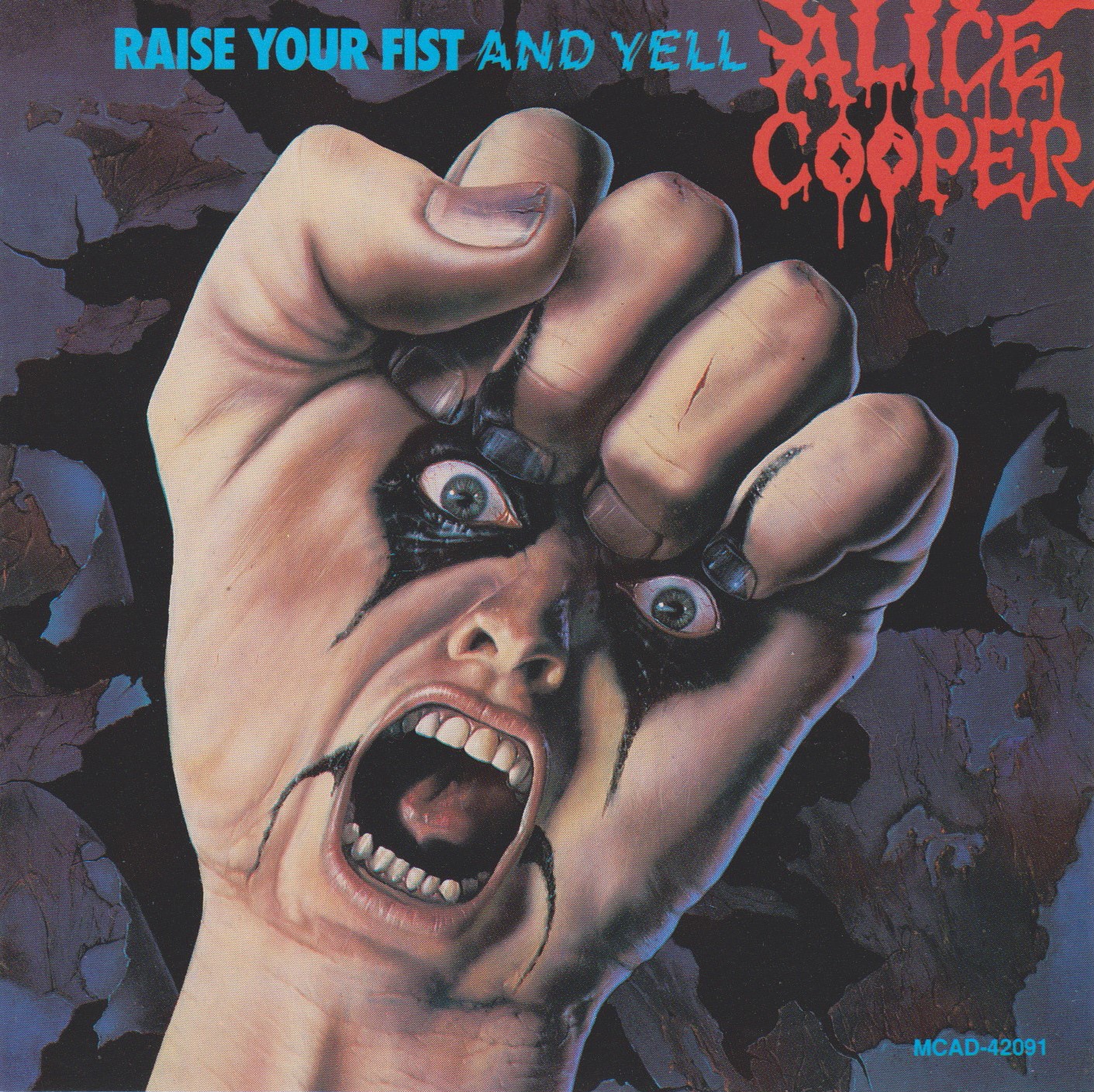
REVIEW: Alice Cooper – Raise Your Fist and Yell (1987)

Scan_20160303ALICE COOPER – Raise Your Fist and Yell (1987 MCA)

And lo!  The beast named Alice reincarnated with a slab of wax, and they called it Constrictor.  Slithering into the spotlight again was a triumph of will:  Alice battled his demons (including the bottle), found some new young band members and started fresh on a new label.    Though the music was merely OK, at least the man himself was doing just fine.  As fans, I believe we genuinely wish our rock star heroes to be healthy and happy, so even if the music wasn’t the greatest, we could be glad that Alice was back.

In the 70’s and early 80’s, Alice Cooper maintained a breakneck release schedule.  This slowed down a bit in the second phase of Cooper’s career, but he still managed to follow Constrictor a mere 12 months later with Raise Your Fist and Yell.  I probably don’t need to tell you this, but look at the cover:  certainly one of the worst to ever envelope a major label release.  The guilty party is a fella named Jim Warren who must hate this cover as much as I do, because just look at it.

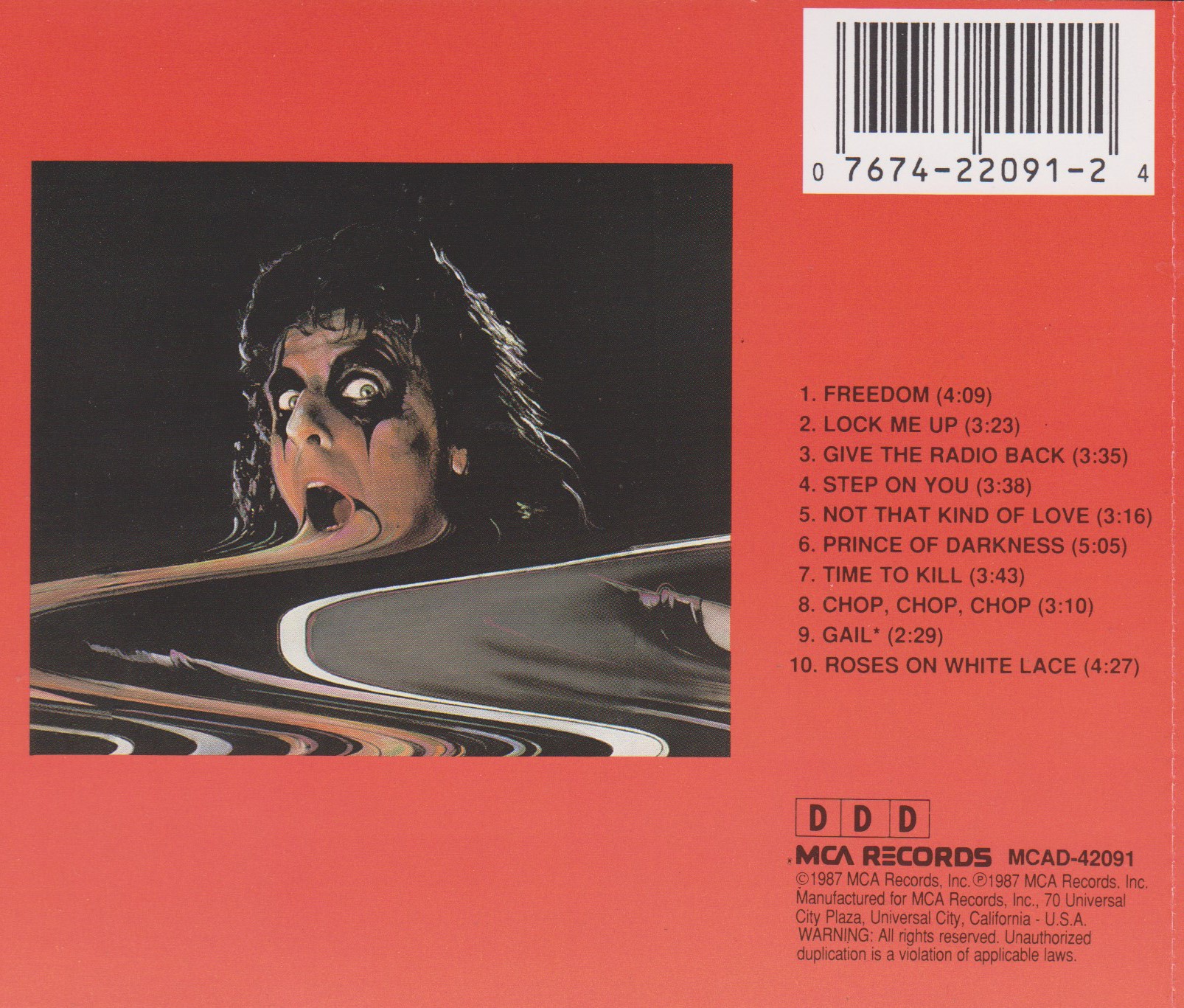
It continued with the same shock-rock horror-splatter-movie theme, but turned up louder.  Indeed, the lead single “Freedom” was the fastest most thrash-like track that Alice had yet performed.  Censorship was a big target in Alice’s sights.  “Freedom” was his ode to the PMRC:  “You want to rule us with an iron hand, you change the lyrics and become big brother.  This ain’t Russia!  You ain’t my dad or mother.”  Lemme tell you, when “Freedom” came out, the PMRC seemed a genuine threat.  Dee Snider and Frank Zappa were testifying in front of the senate and stores were refusing to stock records.  “Freedom” was an anthem we could all get behind.  I don’t think anybody expected him to go so heavy!

The video was interesting. Kane Roberts looks like he’s not sure if he’s at a bodybuilding competition or a music video shoot. There were some new guys in the band; that’s not Kip Winger on bass. On drums is Ken Mary, later of House of Lords. Most interesting is the guy dressed as a priest. You can see him up close during the lyric “Back off preacher I don’t care if it’s Sunday.” They looked like the biggest bunch of misfits assembled. Perhaps this is what Alice was going for?

During this period, Alice was writing a few goofy rock songs.  “Lock Me Up” is silly, but fun.  It has a beat and you can headbang to it.  “Take the Radio Back” sounds like a predecessor to “Hey Stoopid”, but not quite.  “Give the radio back to the maniac!” sings Alice.  Is he begging for airplay?  It’s OK, but “Step on You” isn’t really.  There are moments here and there, but these are mediocre songs.  “Step on You” has an interesting atonal instrumental section but it doesn’t fit the song at all.  “Not That Kind of Love” continues the heavy rock, but without hooks.

Back to quality, “Prince of Darkness” is a heavy metal horror movie theme, from the film of the same name in which Alice had a cameo.  Menacing and intense, this tune scores high marks on both the Cooper Scale of Rock Thrills and Chills, and the Cooper Scale of Heavy.  Kane Roberts’ lead solo is pure pointless 80’s excess, but the song is what counts and it’s a good’un.  The acoustic outro is perfection.

“Time to Kill” keeps things above the bar.  “Chop, Chop, Chop” does not.  I know — you’re surprised, right?  A song called “Chop, Chop, Chop” isn’t a diamond of the highest carat weight?  Nor is it a turd, but certainly well below the watermark.  It does serve as a lead-in to “Gail”, a high quality also-ran that recalls Alice in the year 1975.  It is the only Kip Winger co-write on the album, and he’s responsible for its eerie keyboard vibe.  Finally it’s “Roses on White Lace”, another borderline thrash metal track that absolutely rips every head in the room off.  This track, firmly in the splatter film world, is an excellent example of Alice at his heaviest.  For its entire duration, it’s breakneck speed.  Bold song to end an album with.

Post album, Kip Winger and keyboardist Paul Taylor bailed, and formed another band you might have heard of.  Michael Wagener produced this record, and while heavy, the album is definitely lacking sonically in comparison to its contemporaries.  All told there are four songs worth buying the album for:  “Freedom”, “Prince of Darkness”, “Roses on White Lace”, and Gail.  Three of those four songs can be found on the MCA compilation Prince of Darkness.  So…your move.

2.5/5 stars

Scan_20160303 (3)


REVIEW: Warrant – The Best of Warrant (1996)

WARRANT – The Best of Warrant (1996 Sony)

Whooboy.  Look, I’m sure Warrant are a nice bunch of guys, and poor Jani sure suffered his demons.  I’ve always considered Warrant a bit of a jokey band, and that was certainly true for the first two albums.  Even when I did love ’em (that would be August and September of 1989), I always sensed that they weren’t taking anything very seriously.   I had their live video, Dirty Rotten Filthy Stinking Rich – Live. Lemme tell ya, they were just too jokey and inconsistent live. I outgrew Warrant pretty fast. Which in a way was too bad, because the next album after our “breakup” was the critically acclaimed third record Dog Eat Dog.

All this being said, their first Best Of (1996) was actually a reasonably solid collection of songs, if a bit long at 57 minutes.  You get the three big hits from album #1, including “Down Boys”, “Sometimes She Cries”, and “Heaven”.  Decent also-rans from that album include “32 Pennies” and “Big Talk”.  Nothing but pure stink is “D.R.F.S.R.”, a song I never understood the popularity of among Warrant fans.  I guess the joke is still funny to some?

Album #2, Cherry Pie, was a mixed bag like its predecessor.  The title track of course was the biggest steaming pile of crap released by a rock band in the year 1990.  Having said that, there is video evidence of a young LeBrain rocking out to it, but I didn’t really know what Jani was singing about!  We all have our musical skeletons in our closets, I believe.  Mine is that there is a VHS tape in my house right now with footage of me, age 18, lip synching to “Cherry Pie”.  I cannot lie about that.

Cherry Pie didn’t suck all the way through, however.  It was a step up in sound, and boasted some cool tunes.  “Uncle Tom’s Cabin” is the one Warrant song that really still stands up today as a great single.  “Mr. Rainmaker” is also a pretty memorable rocker, with chorus built to please.  I like that they included two single B-sides on this set.  The pop rock track “Thin Disguise” was always better than most of the album tracks.  Perhaps it was too middle of the road?  Not quite ballad, not quite rocker, but pretty classy nonetheless.  And please note, “classy” is not a word often used to describe a Warrant song.  The other B-side was the acoustic version of “I Saw Red”, which was actually released as its own music video.

Things seemed to get most interesting with Warrant on their third album.  By 1992, Warrant were absolutely buried by the new wave of grunge rock bands that swept in between their albums.   They were also playing catch-up with the biggest metal albums of the period, Metallica and Slave to the Grind (Skid Row).  These high-charting smash hits were much heavier than Warrant’s general output.  They had to heavy up; they really had no choice.  They started wearing Doc Marten boots and growing facial stubble.  It all seemed so very contrived, and according to Jani Lane, it was.  Even though he was the soul songwriter, he later claimed to strongly dislike the new heavier direction Warrant took.  He quit Warrant briefly after this album to explore mellower Mellencamp-esque songs and ballads.  It was all very shocking and confusing, considering that Warrant’s heavy and choppy single “Machine Gun” was so fucking awesome.  Not that it mattered.  Nobody but die-hards were listening to Warrant in 1992.  I only ever saw the video for “Machine Gun” on TV once.  Once!  Compare that to the mega-exposure that “Heaven” and “I Saw Red” once had.

What Sony should have done with this CD is end it there.  But no, they tacked on one more useless song at the end, the horrendously putrid cover of “We Will Rock You”.  This was done for a really early Cuba Gooding Jr. movie called Gladiator.  Warrant actually had two songs on the soundtrack, but this one was released as a single.  In my opinion, if you choose to cover “We Will Rock You”, then you are doomed.  Warrant were doomed before they even set foot in a recording studio.

Overall, not a bad little Best Of.  You get the requisite non-album tracks, and they are generally good (“We Will Rock You” being the big exception).  All the big songs are included.  You have to wade through a little bit of poo, but otherwise The Best of Warrant is pretty solid.

3.5/5 stars


REVIEW: Vince Neil – Exposed (1993)


Scan_20160216

VINCE NEIL – Exposed (1993 Warner)

When Vince Neil finally unleashed his first solo album Exposed in 1993, it looked like he was the early winner in the great battle:  Vince vs. Motley.

As is par for a volatile band like Motley Crue, the acrimony behind the split was intense and overshadowed any music either party was about to come out with.  Even after reading Motley’s book The Dirt, it’s not really clear what happened.  Vince was complaining that he wasn’t into the new Motley music they were working on.  “Like 4th rate Physical Graffiti outtakes” he once commented in Metal Edge, with too much emphasis on keyboards and backing singers.  Crue, meanwhile, felt the lack of dedication coming from the singer.  He had missed a few rehearsals.  After driving through a torrential rainstorm making him late at the studio, he was confronted.  “We’re thinking about having new lead singer auditions again,” said Nikki Sixx to Vince Neil.  The band put out a bogus statement saying Neil was diverting his focus to race cars, and Vince was battling from the bottom again.

After working on one tune with the Damn Yankees (three out of four anyway, minus Ted Nugent) called “You’re Invited (But Your Friend Can’t Come)” for the opening song of the Encino Man soundtrack, it was time to put together a new band.  An early lineup consisted of ex-Ozzy Osbourne bassist Phil Soussan, but that didn’t last.  When Soussan left, newcomer Robbie “Ichabod” Crane (a nickname he pretty much stopped using immediately) switched from rhythm guitar to bass, while the legendary Steve Stevens of Billy Idol fame was the main shredder.  Vik Foxx from Enuff Z’nuff was hired on drums, and another newcomer named Dave Marshall took over the vacant rhythm guitar spot.  Vince wanted two guitars, unlike Motley’s one.

With the ex-Billy Idol axeman by his side, Vince Neil already had everything he needed to make an incredible album.  The help of Stevens, Soussan, and Tommy Shaw & Jack Blades from Damn Yankee meant he had a songwriting dream team.  Fired up and motivated to prove everybody in the music business wrong, Vince was in the zone, and the chemistry was working.  He also beat Motley to the punch by 11 months.

The last thing I expected from a new Vince Neil song would have been a six minute epic with more guitar action than Motley Crue had packed into six albums.  Vince was in great voice at this time, and his singing on this album is exemplary.  On every track, he sounds like he means it.  Crisply captured by producer Ron Nevison, the song is driven forth by the relentless Vik Foxx (sounding like he’s doing his best Rush impression) and the space-age technique of Steve Stevens.  It’s an exotic metal groove, with flash and tricks like you have never heard before.  I don’t know how Stevens does some of the things he does, but that’s why he’s the guitar hero and not me.  If record labels weren’t scared shitless of releasing a six minute single, then this should have been the single.

Instead “Sister of Pain” was the single, a song that does not make as strong an impression.  It’s a hard boned sleezy cock rocker in the Motley fashion, which is probably what they were going for.  Vince felt that since Motley were changing styles, it was up to him to keep the old Crue sound alive.  That’s “Sister of Pain”, a catchy and satisfactory rock single, although still five minutes due to the intense soloing. This is one of the tunes that Vince wrote with Shaw and Blades.

“Can’t Have Your Cake” has a neat slippery riff, and it too was used as a single.  This fits the niche of the “fast Motley rocker”, like (say) “Kickstart My Heart”, though it’s not as heavy.  Thankfully it’s a song to its own, thanks to Stevens’ creative licks.  I like “Fine, Fine Wine” better.  Vince is as dirty as ever, proving he doesn’t need Nikki Sixx to write a sleezy rock lyric.  It’s just a kicking groovy guitar song, perfect for playing air instruments to.

Stevens fans know his flamenco work is incredible.  He gets to show it off for the first 30 seconds of “The Edge”, finally a song about Vince’s supposed true passion — racing!  Not an instantaneous song in any way, “The Edge” has a lot going on but it’s worth the challenge.  This kind of technical rock was beyond Motley Crue before, but with guys like Steve Stevens, Vince was able to show them up a bit.  There’s more of Stevens’ incredible classical guitar on the ballad “Can’t Change Me”, a sentiment I have always identified with.  This is the kind of pop ballad that would have made Vince the king of radio only two years earlier.  Not surprisingly it’s a Tommy Shaw co-write, because that’s exactly who it sounds like.

Scan_20160216 (2)Nothing like a cover to kick off side two, and “Set Me Free” by the Sweet is basically the original “Kickstart my Heart”.  May as well go back to the original and amp it up a bit with some slippery Steve Stevens fretwork.  It’s a heavy, layered presentation of guitars and ass kicking drums, and we can certainly forgive Vince for putting a cover on his album.  Besides, the next track “Living is a Luxury” has a nocturnal, smoky vibe that makes it one of the most interesting cuts.  The jazzy guitar is like nothing on any Motley Crue album.

Then we’re down to a remake of “You’re Invited (But Your Friend Can’t Come)” from Encino Man.  Damn Yankees played on the original, and sonically and vocally, that is the one I prefer.  The album version of course has more guitars.  It’s too bad they couldn’t add that one in as a CD bonus track, but the Encino Man soundtrack was on Hollywood, not Warner.  Regardless of which version we’re listening to, this is still a dynamite blast of adrenaline that seems over way too soon.  I used to play the soundtrack version on repeat in the car.  Rewind and go again.

“Gettin’ Hard” is a great mid-paced rock tune, but what’s odd is that the lyrics in the booklet are nothing like the actual song, except for the choruses.  It’s as if they changed the words at the last minute but forgot to tell the people who print the CD sleeves!  A strange little oddity to go with a grooving cool song.  Out come the acoustics again for the last track, “Forever”, a really sweetly made ballad.  The layers of shimmery guitars make it a class above most ballads of this ilk.  It ends the album on a glowing nostalgic note.

Unfortunately for Vince, he was unable to follow this album with anything decent.  We realistically knew that Steve Stevens wasn’t going to hang around long, but what hurt Vince most was his ill-advised attempt to cross over, getting the Dust Brothers to produce.  1995’s Carved in Stone failed to make any impression whatsoever.  Meanwhile, his former cohorts in Motley Crue quietly cooked up a beast of an album with Bob Rock.  1994’s Motley Crue was about the only thing that could have topped Exposed.

4.5/5 stars

Scan_20160216 (3)

Scan_20160220 (5)

#470: Awards

GETTING MORE TALE #470: Awards

Do you watch award shows?  I don’t — not anymore, anyway.  In the Record Store days,we had to keep an eye on this sort of thing.  If somebody swept the Grammys, we had to be prepared with inventory.   The day after an award show, the requests would circle around the winners and headline-makers.  The same still happens today, with much of the post-show sales being downloads.  Adele is most grateful.

As a child I was aware that award shows didn’t seem to recognize any music that I liked, but I also knew that didn’t mean squat.  It’s nice when a talented artist is honoured for their music, but the Grammys are the same organization who awarded Milli Vanilli with “best new artist”.  To even call such commercial product “art” at all is such a deception.  They were manufactured from the ground up as a money-making endeavour and nothing more.  That was 1990, but the year before was another titanic embarrassment for the besieged awards.

I didn’t watch the ’89 awards but I heard all about it the next day.  The following morning, my mom asked me, “Who is Jethro Tull?”  I had to confess I didn’t really know.  Old guys.  “They won best heavy metal,” my mom explained.  Who?  I was a metal fanatic but I never heard any of their music.

The actual category was best “Hard Rock/Metal” and it was introduced in 1989.  The nominees included a couple actual hard rock and heavy metal artists:  AC/DC, Tull, Metallica, Jane’s Addiction, and Iggy Pop.  Of those bands, I think only two can be consider unambiguously “hard rock” or “heavy metal”.  I’m sure the members of Jane’s Addiction didn’t consider themselves either.  God knows what Iggy Pop thinks of his music as, since he’s been all over the board.  With the benefit of hindsight, we know today that the most important album historically in that category was …And Justice For All by Metallica followed by Jane’s Nothing’s Shocking.  Tull’s Crest of a Knave was a good, solid return but hardly “hard rock”.  Ian Anderson was gracious but befuddled by it all.  Metal fans declared it highway robbery.  To them, Metallica was clearly the only band who deserved that trophy that year, and with all due respect to AC/DC and Jane’s Addiction, it is hard to argue with that.  …And Justice For All was one of the most challenging albums for the genre, real art, yet it sold millions.  Not to mention overcoming the personal tragedy of losing Cliff Burton in that crash a few years before.  Plainly, Metallica deserved that award.  Fans were livid.

The Grammys furthered their embarrassment by contritely awarding Metallica the “best metal” award for the three years in a row that followed, even when it was not deserved.  In 1990 they split “hard rock” and “metal” into two awards, and gave Metallica a trophy for “One”.  The real head-shaker was 1991, when Metallica won again for a cover of Queen’s “Stone Cold Crazy” (from Rubáiyát: Elektra’s 40th Anniversary).  This little-heard cover beat out stunning new albums by Judas Priest, Anthrax and Megadeth.  A single Metallica cover from an obscure compilation CD beat Rust in Peace by Megadeth?  Yeah, right.  You could not take this seriously.  Their streak continued into 1992, when they won the prize for the Black album, Metallica, once again beating Anthrax and Megadeth (and Motorhead and Soundgarden).

Here are some other stunningly bad decisions the Grammys  made that you may not be as familiar with.  The same year of the Tull debocle, the awards introduced a “best rap” category, but chose not to air them.  The Fresh Prince Will Smith compared it to graduating high school but not being allowed on stage to accept your diploma.  Not to mention, the “best new artist” award is often a curse.  Just ask Hootie and the Blowfish, Debby Boone, Marc Cohn or Milli Vanilli.  Then there was the year that Steely Dan beat Radiohead’s Kid A and the Marshall Mathers LP.

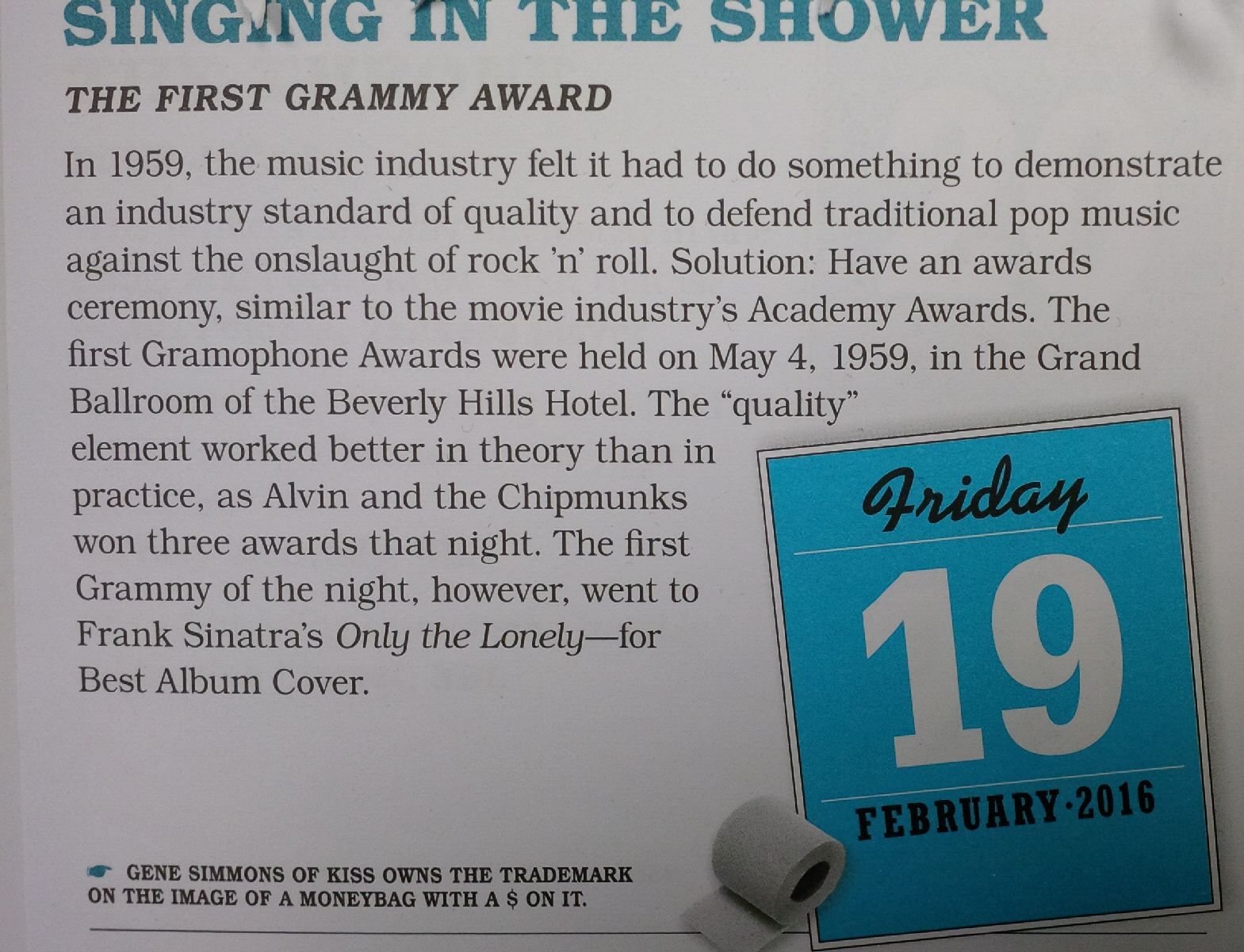
What you may not realize is that the Grammy awards were never designed to recognize the raucous and rebellious artists of rock and roll.  In fact, they were created to stem the tide.  In order to protect “quality” and tradition against the rockers of the 1950’s, the Grammys were created in the mold of the Oscars.  And on their very first night, their mission to promote and honour quality music was blown spectacularly.  Check out this tale from my Uncle John’s desktop calendar:

IMG_20160219_154927_edit

Hey, at least Frankie won.  But the awards remain as troubled today as when they began.

It’s nice to see artists and albums that you like win awards for their work.  Ultimately however the impact is zero.  How the music makes you feel is everything.

DVD REVIEW: A Serious Man (2009)

“When the truth is found to be lies, and all the joy within you dies…then what?” — Rabbi Marshak


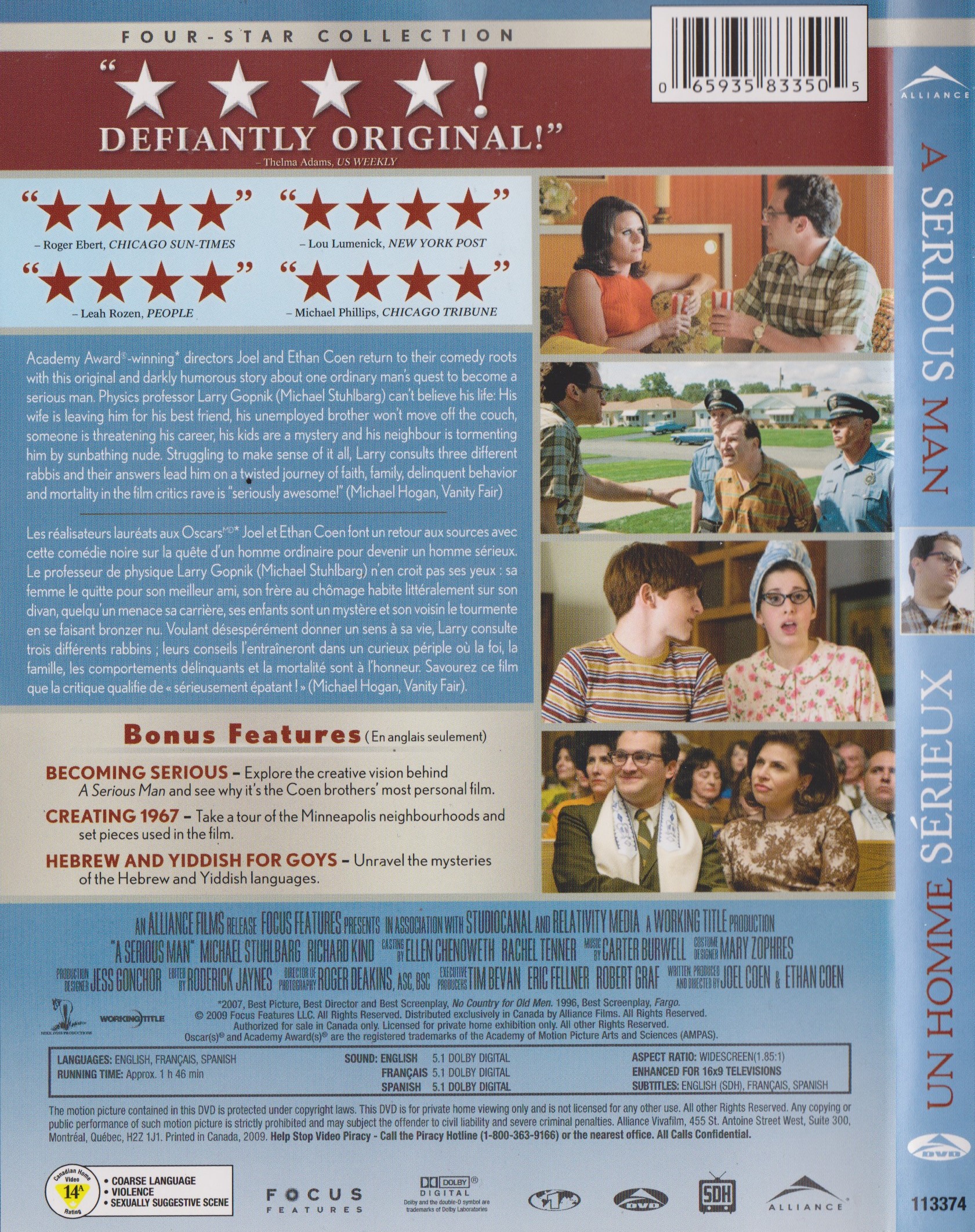
Scan_20160215A SERIOUS MAN (2009 Alliance)

Directed by Joel and Ethan Coen

A Serious Man is a black comedy about Larry Gopnik, a Jewish mathematics professor, age unspecified, who realizes one day that his life seems to be falling apart. The setting is a very convincing 1967 in Minnesota.

His brother is sleeping on the family’s couch and constantly nursing a monstrous (but never seen, thank God) cyst on his neck. Then he learns that his wife is leaving him for his friend Sy Ableman. His son Danny is smoking pot and signed up for the Columbia Record Club, under dad’s name.  Santana’s Abraxas was automatically mailed but no payments have been sent!  Danny’s selling the records for drug money, but he’s more worried about taking a beating from Mike Fagel (“a fucker”) over a $20 pot debt when he should be worried about Hebrew school and his upcoming Bar Mitzvah.  (“Studying Torah, asshole!”)   His daughter Sarah is always either washing her hair or out with her friends. Within this setting, innumerable irritants and stumbling blocks fall in his way, usually within the same scene. Jefferson Airplane’s “Somebody to Love” is the opening and recurring music to a heap of problems the characters get in.  (Rock fans also take note: Jimi Hendrix shows up later.)

All that Larry (Michael Stuhlbarg) wants is to make something of his life, and become “a serious man”. Expectations, demands and obligations seem to obstruct him at all times.  Confusing advice from Rabbis, a neighbor who seems to tease him by sunbathing topless, a South Korean exchange student offering him bribes, another neighbor seemingly encroaching on the property line, his card-counting brother, and his own faith seem to taunt him at every turn. It’s not a complex story: it is character driven, comedic, dramatic and nostalgic all at once. In other words, typical Coen fare.  I love the ironic but authentic touches like a doctor lighting up a cigarette in his office.

The recurring theme of the movie is (or isn’t) Shroedinger’s paradox.  Larry’s about to get tenure at work even though everything else is falling apart.  “Even I don’t understand the dead cat,” says Larry near the beginning of the film, but it is clear that actions do have consequences.  All Larry needs are answers, but they are not forthcoming.  He thinks that perhaps the reclusive Rabbi Marshak can help him, but he knows that the math says you can’t ever know anything with certainty.

As is par for the course with Coen films, special features are sparse. There is a brief bit explaining all the Jewish terminology in the film done as entertainingly as possible. There’s a great feature on how they made the neighborhood look exactly like 1967, and how they got the cars, costumes and locations. Finally there is a feature with the Coens and actors on the film itself, what it means, and what inspired it.

I particularly enjoyed the unconnected short story that opened the movie.  Jewish folklore and the vivid minds of Coens collided and this short story is the result. I think it’s designed to set a mood, but also to act something like an opening cartoon which used to precede movies in the 60’s.  This tale of the returned dybbuk is subtitled and presented in the old fullscreen format instead of wide.

Look for The Big Bang Theory‘s Simon Helberg in a small role as Rabbi Scott.

5/5 stars

Scan_20160215 (2)

#469: Stump LeBrain (Getting More Retro!)


GETTING MORE TALE (Retro) #469: Stump LeBrain Week, by Aaron!

“Getting More Retro” is a sub-series of my music stories Getting More Tale.  I posted this back in March in 2012, when nobody was reading except Aaron and my old boss from the Record Store.  Before that, Aaron posted it on the KeepsMeAlive (Feb. 19).  And now, for the third time, here’s Stump LeBrain Week!

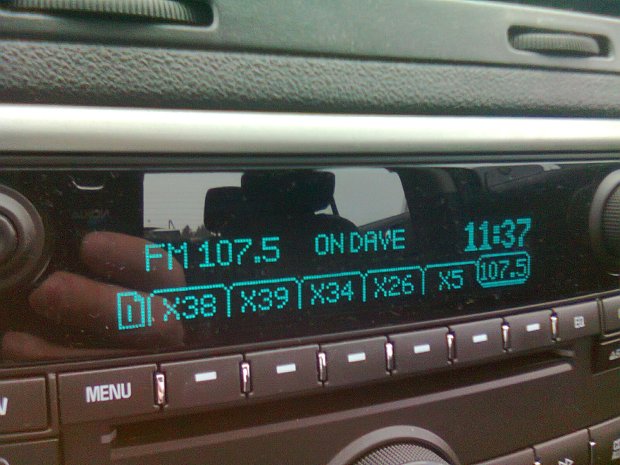
I had become such a dominating force on the 4 O’Clock 4-Play, my favourite music contest on 107.5 Dave Rocks, that listeners were now writing in 4-Play quizzes specifically to stump me!  For a while there it seemed everybody wanted to be the one to put an end to LeBrain’s reign!

Craig had me in the studio for the contest, live on the Craig Fee show, during what he dubbed “Stump LeBrain Week”.  Each day that week, I came in at 4 o’clock in order to play the contest on the air.  Craig selected five 4-Plays, one for each day.  If I answered correctly, I won the prize (I Mother Earth tickets).  If I was stumped, the person who wrote the 4-Play question would win the prize.

At the end of the week, I sent Aaron audio CDs of all my appearances minus commercials.  He was kind enough to document it in the written word for history.  Since very few saw this when I re-posted it at the launch of this site, I’m re-posting it once again for you!  Re-use and recycle, baby!

Big thanks to Aaron for listening to all five shows and writing it down, and of course thanks to Craig for giving me the opportunity!  Here we go.  Ready?


Four-Play #1 (submitted by Chris Cottingham)

01 Motley Crue – Shout At The Devil

01 Mike’s Guess: ‘tracks that were not singles’ (no)

02 Rolling Stones – Brown Sugar

02 Mike’s Guess: ‘bands that have toured with guns ‘n roses’ (no)

03 Bruce Springsteen – Cover Me

03 Mike’s Guess: ‘special lp packaging’ (no)

04 Loverboy – Working For The Weekend *

04 Mike’s Guess: ‘album covers featuring pants’ (yes!)

* at this point, before Mike’s last guess, it was exposed that the Motley Crue song was supposed to have been Live Wire, which changed everything, and he got it from there.

Comment: He still got it, even with a wrong song played. Improbable? Never! The man is a machine.

Score: Mike is 1/1.


Four-Play #2 (submitted by The Crook in Elmira)

01 Motorhead – Ace Of Spades (live)

01 Mike’s Guess: ‘artists who’ve done duets with Ozzy Osbourne’ (yes!)

02 Alice Cooper – School’s Out

03 Dio – Holy Diver

04 Lita Ford – Kiss Me Deadly

Comment: He nailed this one before the first song was even over. Jeez.

Score: Mike is 2/2.

Four-Play #3 (submitted by Kathryn Ladano, Mike’s sister)

01 Rush – Subdivisions

01 Mike’s Guess: ‘album covers with dogs on them’ (no)

02 Neil Young – Rockin’ In The Free World

02 Mike’s Guess: ‘all Canadian artists’ (no)

03 Guess Who – Runnin’ Back To Saskatoon

03 Mike’s Guess: ‘songs about Canadian cities’ (no)

04 Loverboy – Turn Me Loose

04 Mike’s Guess: ‘all artists who sang on Tears Are Not Enough’ (yes!)

Comment:

Broadcasted live from Chicopee ski resort. This was not the Four Play that Kathryn had wanted played, so her confidence at being able to stump her brother was pretty low, at the outset. It shocked me that Mike had never heard the Guess Who song before. I thought everybody knew that song.

Score: Mike is 3/3.

Four-Play #4 (submitted by Greg Laughtenschlager)

01 Megadeth – Hangar 18

01 Mike’s Guess: ‘science fiction, aliens, conspiracy theme’ (no)

02 Quiet Riot – Mama We’re All Crazy Now

02 Mike’s Guess: ‘books (1984, Roswell)’ (no)

02 Mike’s Extra Guess: ‘stripey pants’ (no)

03 Iron Maiden – The Trooper

03 Mike’s Guess: ‘bands that opened for Sabbath’ (no)

04 Dio – Rainbow In The Dark

04 Mike’s Guess: ‘all four albums covers were paintings with mascots’ (yes!)

Comment: Definitely a HEAVY set, which I thoroughly enjoyed. And Mike nails it. So cool.

Score: Mike is 4/4.

Four-Play #5 (submitted by Nick Byerjean sp?)

01 KISS – Beth

01 Mike’s Guess: ‘songs that originated as b-sides’ (no)

01 Mike’s Extra Guess: ‘no members of the band played on the track’ (no)

01 Mike’s Extra Guess: ‘crappy songs from great albums’ (no)

02 Guns ‘N Roses – Used To Love Her

02 Mike’s Guess: ‘single monikered album titles’ (no)

02 Mike’s Extra Guess: ‘songs with unusual percussion’ (no)

02 Mike’s Extra Guess: ‘songs people think is about one thing, but it’s about something else” (no)

02 Mike’s Extra Guess: ‘acoustic ballads’ (no)

03 Aerosmith – Angel

03 Mike’s Guess: ‘bands led by duos’ (no)

03 Mike’s Extra Guess: ‘bands who shortened their name from something longer (no)

03 Mike’s Extra Guess ‘all are bands from America’ (no)

04 Slash with Andrew Stockdale – By The Sword

04 Mike’s Guess: ‘songs released in even numbered years’ (no)

04 Mike’s Extra Guess: ‘all albums released in leap years’ (no)

04 Mike’s Extra Guess: ‘songs released in Canadian-hosted Olympic years’ (yes!)

Comment: OK, that was RIDICULOUS. Hearing him work through that last one was incredible. Even with all the extra guesses, that answer was from so far out of left field. Wow.

REVIEW: Alice Cooper – Constrictor (1986)

EPIC REVIEW TIME.

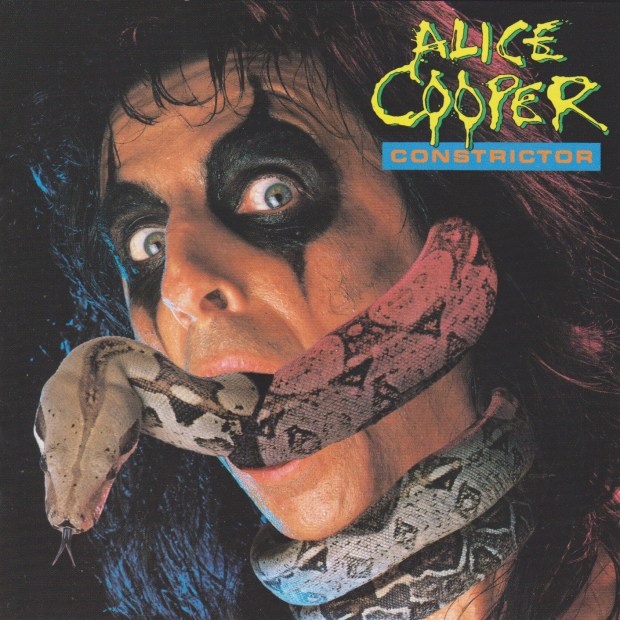
Scan_20160207 (2)ALICE COOPER – Constrictor (1986 MCA)

Alice Cooper’s bizarre DaDa album was the end of an era.  It marked the last album Alice recorded for his Warner Brothers contract, now complete.  It was also the end of his experimental period that ran from 1980’s Flush the Fashion through to DaDa.  It was the the last album Alice would make that he couldn’t remember making.

Alice mostly disappeared for the next three years.  His activities were so low key that most people didn’t even notice them.  He was hospitalized for cirrhosis of the liver caused by his blackout drinking.  He got sober, for good.  He also dealt with a divorce.  Musically there was very little going on.  In 1984, Alice starred in a very low budget horror movie called Monster Dog.  He recorded two songs for the soundtrack:  “Identity Crisises” and “See Me in the Mirror”.  These two tracks are very much the conclusion to Alice’s early 80’s art-rock persona.  “Identity Crisises” has a lo-fi, garage-y Iggy Pop sound.  “See Me in the Mirror” is in the synthpop direction of DaDa:  creepy, atmospheric and mostly electronic.  These two songs were finally released for purchase on the legendary Life and Crimes of Alice Cooper boxed set in 1999.

Alice next emerged with one of the bands he inspired:  Twisted Sister.  Along with Brian Setzer, Clarence Clemens and Billy Joey, Cooper accompanied Twisted Sister on their single “Be Chrool to Your Scuel”. A very clever zombie-filled big budget horror-inspired music video was made for the song, which Alice co-starred in, as did Bobcat Golthwait (who was also in Sister’s “Leader of the Pack” clip).  It should have been a big deal, with Alice getting equal screen time with Dee Snider.  Unfortunately hardly anyone saw the video. MTV barely touched it. As a result it did nothing to aid Alice in terms of a comeback.  It was good to note that Alice looked healthier than he had in years.

Alice regrouped and re-invented himself in a new persona. Taking inspiration from his Welcome to My Nightmare period, Alice went into “slasher film” mode. He recruited a massive muscle-bound heavy metal guitarist and songwriter, Kane Roberts, to be his co-pilot for this adventure. Also along for the ride was a hot new bassist and singer named Kip Winger, whose large mane hid the fact that the man was a classically trained musician. With producer Beau Hill, they made an album in tune with what was happening in 1986, and that meant heavy metal. Alice had always been a diverse, experimental artist, but this time the mission was pretty simple and the lines were clear.

Another horror film served to launch the next official Alice Cooper music: Friday the 13th Part VI: Jason Lives. Alice appeared in a brief cameo, but more importantly contributed two new songs to the movie soundtrack. They were the anthem “Hard Rock Summer”, and “He’s Back (The Man Behind the Mask)”, which served as the movie’s theme song. “Hard Rock Summer” was a bit of a throwaway, and was not used on the next Alice album. You can really hear the backing vocals of Kip Winger and Kane Roberts on it, but a classic it is not. “He’s Back”, and its very cool music video became synonymous with this new period of Alice Cooper’s life.

The new album, Constrictor, was finally released in September of ’86. With a snake in his mouth on the cover (not really; you can see it’s cheaply cut and pasted) it was pretty clear that Cooper was going for the scares. Opening track “Teenage Frankenstein” continues the horror theme, but combines it with Alice’s teen anthem style from the early 1970’s. “Teenage Frankenstein” is essentially an “I’m 18” for 1986. It’s not as memorable, inventive, or as good, but it gets the job done. It’s an Alice Cooper heavy metal anthem for pounding your fist to in concert. In lieu of a proper music video, a clip from his live show The Nightmare Returns was used, featuring Alice building a living robot monster on stage, which then turns against him!  Alice was still one of the best live acts in the world.

It’s funny that DaDa is remembered as Alice’s “drum machine” album when it’s clear on “Give it Up” that a lot of the beats are programs and samples.  “Give it Up” is a radio friendly hard rocker, nondescript but at its core not that different from the music Alice made in the 70’s.  It’s even has some rock and roll piano.   It’s just dressed up for the 80’s.   There’s not much going on with “Thrill My Gorilla”, just a forgettable song with the shrill production that was so popular in the 80’s.  Much better is the somewhat epic “Life and Death of the Party”.  Slower, creepier and much more effective, “Life and Death of the Party” is the kind of song I like to point to as proof there was some mighty good material during this period.  Unfortunately “Simple Disobedience” isn’t among that material.  Like “Thrill My Gorilla”, there is little here to attract listeners today.  The electronics and samples really are a drag.  It is like there is a layer of distraction over the song that you have to penetrate through.

Flipping the record over (or pretending to since I own this on CD), “The World Needs Guts” isn’t a bad start to the second side.  It could have been much heavier.  It verges on the speedy power metal tendencies of bands like Accept, but the production keeps it from going all the way.  As such it kind of sounds like a thin Judas Priest Turbo outtake with the synths stripped off.  “Trick Bag” may sound familiar.   It actually started life as “He’s Back (The Man Behind the Mask)”.  There’s a demo version of “He’s Back” on the aforementioned Alice Cooper box set musically identical to “Trick Bag”.  “He’s Back” was re-written, but the original music ended up as “Trick Bag”.  It’s a decent album track but like much of Constrictor not particularly classic.  “Crawlin'” is pretty close.  With all the melody and hooks of an old 70’s Alice Cooper track circa Goes to Hell, “Crawlin'” is pretty good stuff.

“The Great American Success Story” is fantastic for two reasons.  One is that it was originally written for the Rodney Dangerfield classic Back to School.   Second, it’s like an updated “School’s Out” for the 80’s.  Instead of celebrating the end of school, this time we are celebrating going to school.  “He’s gonna take that plunge, gonna jump back in there.”  Which, if you’ve seen the movie, you know is also a reference to Dangerfield’s character joining the diving team.  “He thinks about the teacher in his literary class,” and I don’t blame him; it was Sally Kellerman!  “Always been a brat, don’t get no respect” is another obvious reference to Dangerfield.  But it’s a good song! It really should have been a single, and it probably would have been if it were in the movie.

Closing the album, we go full circle back to Friday the 13th and “He’s Back”.  There’s little question that “He’s Back” is the best song on Constrictor.  It actually bears more similarity to the synth-pop of DaDa than it does to the rest of the album.   It’s brilliant because they stripped the song down to a very basic frame, which is a creepy digital pulse.  There’s a little guitar but it’s mostly just horror pop of the finest quality.  Ch-ch-ch-ha-ha-ha…don’t turn out the lights.

Part of the problem with Constrictor is that Alice had a faceless, fairly bland group backing him.  Kane Roberts can play guitar, and Kip Winger can play the bass, but did they have their own identities?  No.  Dennis Dunaway played bass on those early Alice Cooper albums like no other bassist in the world.  Michael Bruce, Steve Hunter, Dick Wagner, and the other great players Alice worked with all had their own sound.  There is none of that on Constrictor.

I want to give Alice and company an A for effort: for finally getting sober, for finally getting back there on tour, and also for going heavy this time.  Unfortunately Constrictor was a comeback album that needed a bit more comeback in it.  The good news is that Alice did eventually get back to full quality, but Constrictor is only about half an album.  Therefore:

2.5/5 stars

Scan_20160207 (3)

REVIEW: Deep Purple – To the Rising Sun…in Tokyo (2 CD/1 DVD + Japanese bonus tracks)

The Deep Purple Project is a massive, ongoing series of in-depth reviews.  This is the last for now as we take a break, but Purple will return.  

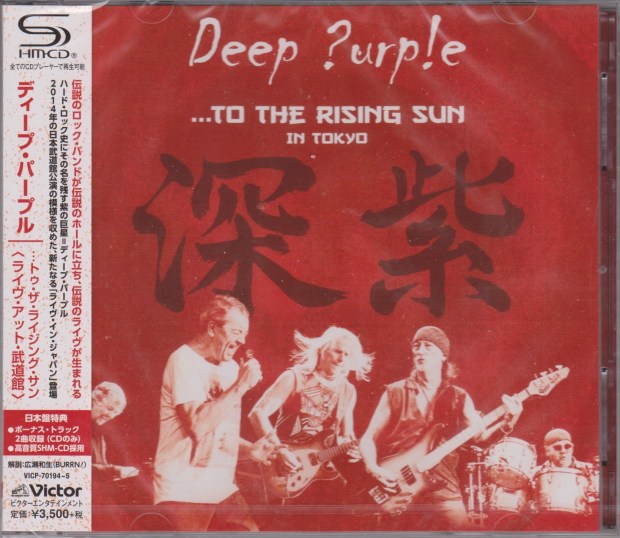
DEEP PURPLE – To the Rising Sun…in Tokyo (2015 Edel 2 CD/1DVD set, Japanese CD with 2 bonus tracks)

Purple live releases have been in strong supply lately.  Last year, Purple released a matching set of double live albums, each with a complete DVD of the show in one package.  The first set, In Wacken, was reviewed yesterday.  Today, we look at In Tokyo.  In order to “get it all”, I added the Japanese 2 CD set with bonus tracks to my collection.  The bonus tracks are on the CD portion of the package.  As we did yesterday, we’ll get the bonus material out of the way first.

The two Japanese extras are instrumental versions of “Hell to Pay” and “Apres Vous”, newer songs from Now What?!  I am happy to report that these instrumentals are not live.  Since both songs are complete and live on the album proper, I was pleased to find these two are instrumental mixes of the studio cuts.  This makes sense, since the instrumental “Hell to Pay” is used as the main menu backing music on the live DVD.  As with any instrumental mix, it is interesting to pay attention to the musical interplay.  Since it’s Deep Purple we’re speaking about, it’s that much more enjoyable.

IMG_20160214_074958

Moving on to the live part of the set, the recorded intro of Holst’s “Mars: Bringer of War” has the Budokan crowd in Tokyo excited for the return of Deep Purple.  The band bravely opened with “Apres Vous”, the new cut from Now What?!  It works surprisingly well by setting a mood.  Ian Gillan keeps it from getting too serious by wearing one of those tuxedo-printed shirts.  I want one of those.

Gillan’s hoarse on “Into the Fire”, but overall he’s stronger than he was in Wacken.  The added grit makes the song tougher and closer to the 1969 original.  Also from way back then is “Hard Lovin’ Man”, a pairing that always works well.  Don Airey takes an extended Hammond solo, and the song gallops in a way that set the basis for Iron Maiden’s career.  Thrills and chills abound, but Morse is smiling so much that you know we’re all in for a good time.  What a contrast with the moody and unpredictable Ritchie Blackmore!  This breathtaking assault of a song absolutely needs to be played live.  It’s no surprise that they need to lay back with something slower after that.  “Strange Kind of Woman” does the trick with that unforgettable groove.  Morse pulls off a jazzy solo that just kills.  This is a far better version than the one in Wacken.  Speaking of women and strangeness, it’s odd that “Woman From Tokyo” wasn’t played this time.

“That was the end of the jazz part of the show,” says Ian.  Back to new songs, “Vincent Price” is rolled out next.  Brought to life on the stage, “Vincent Price” is heavier and chunky.  The spooky keyboards are intact and Gillan injects the song with extra terror.  Steve Morse is on a roll now, and it’s time for his solo.  It’s chopped up a bit compared to how they played it earlier in the year.  “Contact Lost” is still first, but this time that goes into “Uncommon Man”.  I love watching Steve Morse playing volume swells with his pinky on the knob, while hammering out a complex melody.  There are plenty of hand close-ups here.  Copy if you can!  (I can’t.)  When “Uncommon Man” begins, Ian Gillan whispers in Steve’s ear.  I like to think he just said, “That was incredible.”

“Uncommon Man” is powerful live, by the way.  Steve goes again with his playful “The Well-Dressed Guitar”.  The dexterity here is quite unbelievable, but you knew that already.  Once again I’m grateful for plenty of hand close-ups.  I have no prayer of being able to play this but I love to watch and see how it’s done, and just marvel.  During a break in the keyboard part, Don Airey claps and dances along; quite amusing!

The Fireball oldie “The Mule” is always welcome out of the mothballs.  A drum workout, Ian Paice is given a chance to show that time has not lessened his abilities one iota.  It’s a busy drum song, and quickly descends into a mad solo.  At one point, the lights go out and Ian plays with glowing sticks, Sheila E style.  He gets to slow down a little on the Jon Lord tribute “Above and Beyond”.  Jon’s image behind them on the big screens of the Budokan, you can sense the emotion of the moment.  His successor Don Airey plays a Hammond tribute to Jon, before the band return to the sound of “Lazy”.  It’s just a seamless blur of one incredible piece of music after another.

“Hell to Pay” continues to prove its worth as a stage-ready, fun rocker.  You can tell that the formalities are over now, because Gillan has changed out of his tuxedo print shirt!  Don Airey dominates on the Hammond.  He gets a spotlight solo next, a chance to do his own thing.  Like his solo in Wacken, this includes a snippet of “Mr. Crowley”, a song that Don played on way back in 1980, and the ensuing Ozzy Osbourne tours.  His solo runs the gamut from tender piano, to classical passages, to spacey synth.  He quotes the melody of “Woman From Tokyo” which the crowd clearly appreciated.

It’s all business from here.  “Perfect Strangers”, as usual the only song from the 80’s, is as timeless as always.  Back to Machine Head for “Space Truckin'”, Roger Glover seems to be having a great time rocking it for the crowd in Japan.  Gillan’s sounding a bit knackered, but he’s still going for it.  No retreat, no surrender.  The classic riff, “Smoke on the Water” explodes in the Budokan, as we draw close to the end.  You can tell they still have fun playing this song, loose and never the same twice.  Two encores are still to be had:  the medley of “Green Onions”/”Hush”, and “Black Night”.  “Hush” is given a neat slinky jam section, because they’re Deep Purple and why the hell not?  After a brief Glover bass jam, “Black Night” commences as the final song of the night.  Gillan’s sounding tired, but that’s rock and roll.  They’re finally done, Roger lingering to make sure he’s thrown out every last pick.  That too is rock and roll.

These two sets were time consuming but very entertaining.  I think they are both worth having, but if you are not the Purple diehard that needs as much as you can consume, be aware that these are men in their late 60’s.  They are not spring chickens, so don’t expect To the Rising Sun…in Tokyo to be the equal of Made in Japan.

3.5/5 stars