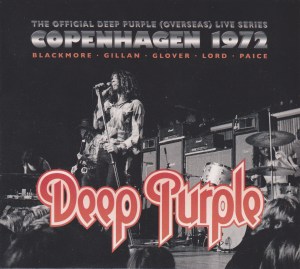
REVIEW: Deep Purple – Copenhagen 1972 (2013)

Scan_20160103DEEP PURPLE – Copenhagen 1972 (2013 Edel)

How many live albums are there from the Machine Head tour in ’72?  I lost count, and I don’t really care.  I’ll buy ’em all!  Copenhagen 1972 represents Purple at their best, in their prime, playing their best songs.  The difference is (there always is a difference) is that this is a particularly pummelling Purple potluck.  As awesome as they were in ’72, it’s rare to hear them play as ferociously as you will here!  This set was previously released by Sonic Zoom as Live in Denmark ’72 in 2002, but technology is constantly improving and it has been given a subtle sonic upgrade.  With restored master tapes, the 2013 release is the definitive one, not to mention it has four bonus tracks over the previous Live in Denmark ’72.  These Sonic Zoom discs seem to be re-released periodically, but these versions from the Deep Purple (Overseas) Live Series are in all cases the ones to own.

“We got the telly here tonight, so we got to be good.”  That explains how this show was recorded so well.  The clown prince Ian Gillan is a dry unorthodox frontman when it comes to banter, and that’s why we love him so.  “Highway Star” herein is one of the best versions of the song you will ever find.  The non-album single “Strange Kind of Woman” follows, extended with Blackmore and Gillan’s interplay.  Behind them, a constant presence, is the growl of Jon Lord’s Hammond.  What a beast!  Lord always tended to improvise on his intro to “Child In Time”, lending it different flavours every time it was played.  The Copenhagen ’72 version has its own personality.  There is a delightful quieter middle section where Jon gets to have some jazzy fun.  Drummer Ian Paice gets his moment on “The Mule”, one of Purple’s most progressive rock moments from 1971’s Fireball.  Paice, being outstanding through the whole concert, dominates this one into submission.  It is remarkable how well recorded these drums are.  Glover’s bass too, which has a shining spot in the mix.  “Lazy” smokes just as hot, but it is “Space Truckin'” that has the honour of being stretched out for over 20 minutes.  With the many live versions of “Space Truckin'” out there, I wonder how many sheer hours of this song that I own?  This one is unique in its own right.
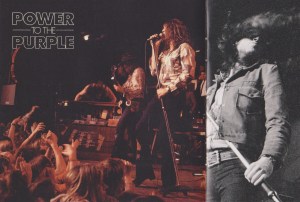
Scan_20160103 (4)

The show continues on CD 2, with “a little bit of fun” called “Fireball”.  With an extended intro I haven’t heard anywhere else before, this version of “Fireball” kills it.  It’s immediately followed by “Lucille” which was a periodic Deep Purple encore back then.  Simply incendiary, over the top, and blazing fast.  The last song of the show is the old single “Black Night”:  that’s right, no “Smoke on the Water”!  I guess they just didn’t play it that night.  Machine Head wouldn’t be out for another three weeks.

CD 2 has four bonus tracks on top of this.  The aforementioned “Smoke” along with more versions of “Strange Kind of Woman” and “Space Truckin'” are included, from New York in ’73.  This version of “Strange Kind of Woman” is unusually funky; more like the Deep Purple Mk III that would emerge in 1974.  “Smoke” is still fresh, but “Space Truckin'” surprises by being only half the length of the version on CD 1.  It’s interesting to hear how the songs evolve from year to year.

The final bonus track is a brief 1971 interview done in Australia.  There is not much here; it’s just an add-on.  It’s fun to hear them talking about the forthcoming new album, Machine Head.

4/5 stars

REVIEW: Deep Purple – Live in Stockholm 1970 (2 CD/1 DVD)

EPIC REVIEW TIME!


DEEP PURPLE – Live in Stockholm 1970 (2014 Edel, 2 CD 1 DVD set)

This is the second time I’ve bought this live album.  Hopefully, this edition from the Official Deep Purple (Overseas) Live Series, with its bonus tracks and DVD represents the last time I need to shell out.  The first was a cheap looking 2 CD set called Live and Rare (1992).  There was also a more official version called Scandinavian Nights.  They’re all pretty much the same, a set of early long long bombers by Deep Purple recorded for radio in 1970.  This remixed (from the master tapes) edition has the set list restored to the correct order, and two bonus tracks from Paris the same year.  It also has a Jon Lord interview and a DVD for a TV special called Doing Their Thing.

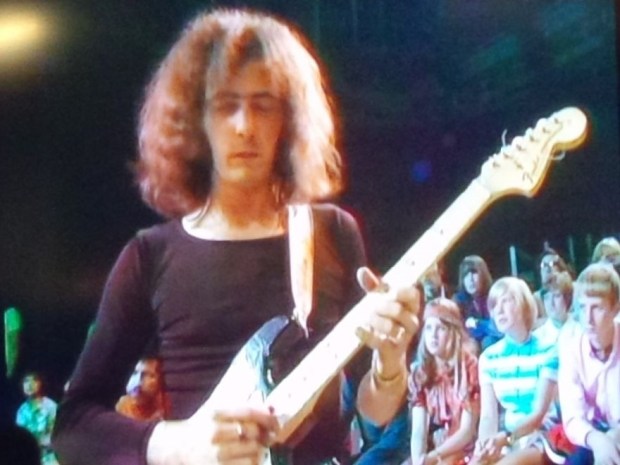
The TV broadcast weirdly begins right in the middle of “Speed King”.  Full colour and in stereo, this is some fantastic footage.   It’s shot and edited for excitement.  Ritchie Blackmore assaults his weapon, but with precision.  For a guy who is so technically capable, it’s amazing how physical and visual he gets.  “Child in Time” gives Ian Gillan a chance to both sing and scream.  Strangely there are two small bored looking boys in the audience, right by Roger Glover, and they couldn’t look any less thrilled to be at this taping.  Who are they?  Why are they there?   Who knows!  This is the full unedited “Child in Time” complete with solos.

You get ample closeups on Jon, Ritchie and Roger and it’s amazing to see them play so fast, so perfectly.  You can study Jon’s hands and try to figure out what he’s doing.  Ian Paice is in the back, tiny frame creating a huge sound.  The instrumental “Wring that Neck” is soloriffic, and Blackmore is surprisingly friendly with the cameras.  This is very rare for the man in black.  The audience politely clap at his playful solo, and he keeps them guessing to the end.  A rare delight, to see him in such a good mood on stage.  The final track on the DVD is “Mandrake Root”, another song that was really only in the set for them to jam to.   They are in sync, and being able to watch Deep Purple at their peak jamming in this clarity, well that’s really something.  Too bad most of the songs are edited down.

As for the 2 CD set, it has always been a bit of a slog to get to the end.   There are two tracks at 30 minutes a piece.  There is one at 18.  There are three in the 10-12 minute range.  Of all the Deep Purple live albums out there, Stockholm is probably the one that requires the most patience.  This is, however, my first time hearing it freshly mixed and restored for today.

Set commencing with “Speed King” again, this time it’s the full-on 12 minute jam.  Barely hanging together, Purple blast it out with extra heavy energy.  Gillan sounds as if he’s about to burst a blood vessel in his neck.  The audio has more depth than previously releases, but Ian’s voice sounds a bit too low in the mix.  “Do you know what a Speed King is?  A Speed King is somebody who sing at a hundred miles an hour,” sings Ian, not really enlightening us.  “Everybody’s a Speed King when you wanna be,” he adds, confusing things more.  Things quiet down, turn jazzy, and then explode once more.  Not the greatest version of “Speed King” ever recorded, but definitely one of the most frantic.

“Into the Fire” is a rare shot of brevity.   Assailing the skull nonetheless, after “Into the Fire” the band take it back a bit with “Child in Time”.  This full-on 18 minute version is far longer than the better known one from Made in Japan.  The cool thing about Purple is that no two versions of any song are exactly the same, and if you’ve heard “Child in Time” before…you still haven’t heard the 18 minute version from Stockholm.  With all due respect to the Japan version, this one has its own diamonds of brilliance.  How the hell do they keep playing with that rapidity?

Better pee now, because a jazzy “Wring that Neck” is next, over 30 minutes.  Loaded with playing that’ll stop your heart, but not as interesting as the definitive version on Concerto for Group and Orchestra.  This contains a showcase for Jon Lord’s keyboard solos.  Ritchie’s playing is always sublime, and so is Jon’s, but…30 minutes…that’s a lot of jamming.  Like too much crème brûlée.  Ritchie again plays with the audience, teasing out melodies from songs such as “Jingle Bells” and “I’m Looking Over a Four Leaf Clover”. If that wasn’t enough, Deep Purple’s 10 minute cover of the Stones’ “Paint it, Black” is really just an excuse for a long drum solo by Ian Paice!  Gillan took off, making the song an instrumental, which they only stick to for a minute before letting Paice go nuts.

Scan_20160110 (3)

Flip over to CD 2, and get ready for another 30 minute long bomber.  “A thing you can jump around to,” says Ian.  It’s “Mandrake Root” and it’s bouncy.  This is a well-known version of the song, and it even appears on Deep Purple comprehensive box set Listen, Learn, Read On in its complete length.  You can clearly hear Gillan on the congas during the long instrumental break.  You can also hear them quoting the Kinks’ “You Really Got Me Now”.  This jam generates more interest than “Wring that Neck”, but it’s still a chore to finish.  And you get to hear “Mandrake Root” and “Wring that Neck” three times each in this package.

The final song (of a mere seven!) for Stockholm is a reasonably brief one:  “Black Night”.  After so much jammin’ it’s nice to have a single, with a set structure, and more than just occasional lead vocals!  It raises the energy a bit after a very draining concert set.  But you’d better refuel with some coffee, because you’re not finished yet.

The two bonus tracks from Paris sound as if they were recorded in a smaller venue.  They are sonically superior to the Stockholm recordings, but damn, I am all jammed out!  Thankfully, this version of “Wring that Neck” is delightful and unique.  It’s hotter and way, way jazzier.  Blackmore also teases out a bit of a preview of a forthcoming song.  You can hear a teeny bit of the guitar melody to 1971’s “The Mule” in his solo.  He even plays a bit of “God Saves the Queen”, in Paris!  Then on to “Mandrake Root” again, 14 minutes this time, half the length of the last one.  Jon’s solo is incredible, but aren’t they all?  This one has some nice rhythmic choppy bits that are so fun to air-keyboard along to.  The track eventually descends into chaos and noise, as all good Deep Purple jams do.

Finally we have the 1971 Jon Lord interview.  This 11 minute track discusses how Jon joined the band, the early days, the Concerto, and In Rock. The title is misleading however, since the track also contains a few bits with Ian Gillan.  Fun stuff but ultimately nothing here that the fan doesn’t already know.

3/5 stars, simply because I know from experience that this set won’t get much repeat play in your home.

3.5/5 stars when you take the bonus DVD into consideration.

#462: The Deep Purple Project

Scan_20160112

GETTING MORE TALE #462: The Deep Purple Project

If loyal readers know one thing about LeBrain, it is that he owns a lot of CDs.

A LOT.

I haven’t done a count in ages and I’m giving up on keeping track of these things.  I estimate over 3000 CDs are in inventory currently.  Add to that a few hundred tapes, LPs, DVDs and other miscellaneous musical formats.

For Christmas this year, I received a number of Deep Purple releases.  Some of these releases would presumably replace older Deep Purple discs in my collection.  For example, I expected the 5 CD box set Hard Road 1968-1969 to replace the first three Purple albums in my collection, and I could retire those discs permanently.  This was not the case.  I began checking, track by track, and it turns out the individual CD versions have tracks that are not on the Hard Road box set.  “Hush” live from US TV is one such track.  There are also BBC Top Gear sessions on the remastered CDs that are not on Hard Road, but I believe all of these are duplicated on yet another Deep Purple CD, BBC Sessions 1968-1970.  On top of all that, there is another CD called The Early Years that covers the same ground, but it too has one exclusive track on it.  That is an alternate take of “Kentucky Woman” that I don’t have elsewhere.  This is crazy!  How can anyone keep track of it all?

I’ve been ripping all the CDs in my collection to the computer in bits and pieces for a couple years.  It didn’t have much rhyme or reason.  If I wanted to listen to something, I ripped it at that time.  If it was a new arrival, I’d rip it to PC on first listen.  This Deep Purple situation got me to go over my entire Purple collection, looking for duplicates and redundant releases.  (I didn’t find any.)   This in turn prompted me to get the rest of my Purple albums ripped and digitized for good.  This has turned out to be a monumental task.

My Deep Purple folder had 74 sub-folders in it, each one an album or a disc from one.  That’s a lot of Purple.  So how many did I have still to rip?

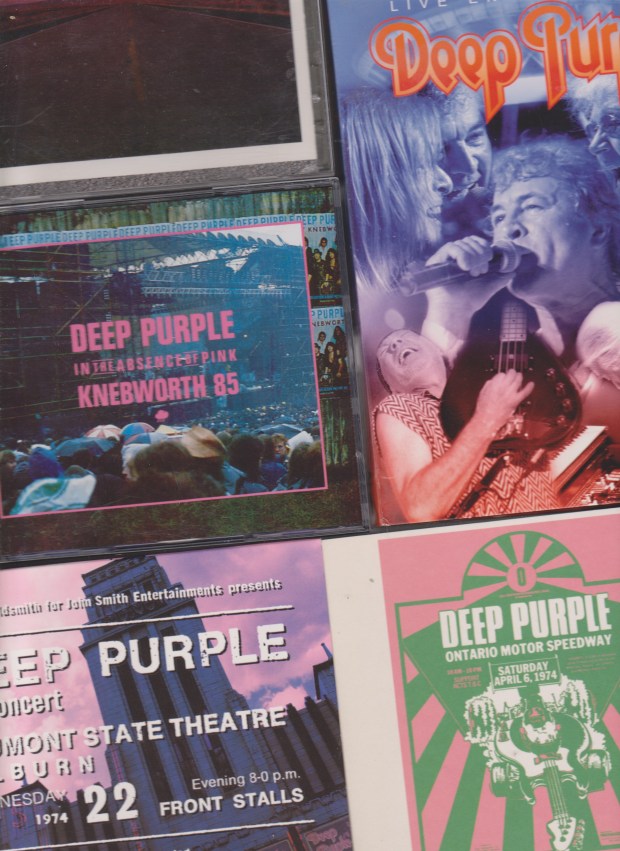
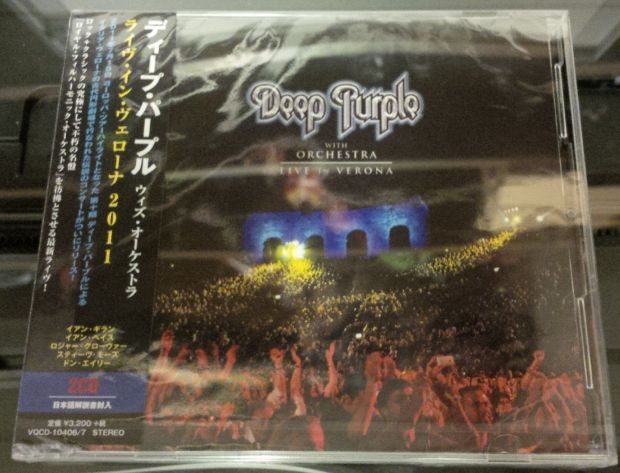
At first count, it was 64 more discs.  That includes 12 discs from a box set called The Soundboard Series (the second of two 12 disc live Purple box sets I have!).  It includes all the multi-disc sets I got for Christmas.  With the exception of the Hard Road box set, these are all live discs, and all official releases!  Then, I had to adjust my count.  I found two more box sets tucked away (as box sets sometimes are, due to their odd shapes):  On Tour MCMXCIII (4 discs), and Live Encounters (2 CDs, plus 2 DVDs too).  Last week, a double live from Japan arrived at LeBrain HQ, called Live in Verona.  Up that count to 72 more discs.  So far, I’ve ripped 25 of them.

This isn’t even all the Deep Purple I have left un-ripped.  I have some things that I don’t particularly need to listen to.  The 3 CD Live in Japan was a great package for its time.  It contained a remixed and expanded version of Made in Japan.  While I always want a unique official remix in my collection, just to have it, I don’t need to listen to it since it has been usurped by the remixed (again) 4 CD deluxe Made in Japan.  Who cares about a remix they did in ’93?  Obviously I only care enough to keep it (for “completion”), not to play it.  There are more like that, such as an earlier mix of California Jam that has since been replaced by a better, more complete version.

Now that you have a glimpse at what Obsessive Compulsive Disorder looks like up close, I’m sure you have one specific question.

“How many versions of ‘Smoke on the Water’ are there?”  Well, it appears that I have 63 versions on CD.  63. Different. Versions. Of.  “Smoke on the Water”.  By Deep Purple.  None of these are covers by other bands.

This, folks, is a shat-ton of Deep Purple!  Won’t you join me each day this week for some live Purple action?

IMG_20160114_171447_edit


REVIEW: Little Richard – The Essential (1985)

Scan_20160106LITTLE RICHARD – The Essential (1985 Specialty)

Ah-OOOOOOO!  Little Richard!  Predator!  OOOOO!  Wop bop a loo bop!  Get to the choppa!

Who doesn’t love Little Richard?  If you answered that question with “me!” then click your “back” button now and go listen to some X Ambassadors or something equally un-rock and roll.  Little Richard?  Pure rock and roll, baby!  You have your rock bands that are based on guitar, but then you have other artists that are based on piano.  And let me tell you, when Little Richard (Ah-OOOOOOOO!) starts bangin’ on those keys, you can’t help but boogie woogie.

Richard has an extensive catalogue of albums and singles, and much like any of the other founding fathers of rock and roll, there is so much more to him than just the greatest hits.  This album is called The Essential, and it is.  There is much, much more.  “Can’t Believe You Wanna Leave” isn’t on here, but so many favourites are!  (OOOOO, gonna have some fun tonight!)

Commencing in 1955, every single track on this CD (single A’s and B’s) is in the two minute range. Wham bam, thank you ma’am! (No, that’s Dean Martin…) Loaded with piano, sax and Little Richard’s unmistakable voice, every song is incredible. My favourite song is “Jenny Jenny” (OOOO!), which is so damn raw and perfect, sax honkin’ and Richard letting loose with every “Woo” and “Ooo”. His throat is pushed to the limit, running off the rails from time to time, but always perfect. From Lucille to Teddy to Jenny to Miss Ann and Miss Molly, some may notice that there is a certain sameness to the material. That would be missing the point. Richard is like AC/DC. You get what you want, every time. Since the songs are so short none overstay their welcome.

Everybody should know plenty of these songs, whether from movies or TV. At least half the album should be familiar. Even if you haven’t heard Richard’s version of “By the Light of the Silvery Moon”, you probably know it from Etta James, Happy Days, Bugs Bunny, or I Love Lucy. It’s just one of those songs that everybody has heard. (Richard’s version is the best one, if you asked me! Ah-OOOOOO!)

Even though this is an older release, the audio is just fine. According to the booklet, all tracks were remastered from the original mono tapes. Old time rock and roll just sounds better in mono. In mono, it sounds saturated and harder. (WOOO!) The booklet isn’t skimpy and has plenty of old black and white photos.

So, if you have “Heebie-Jeebies” for some “Long Tall Sally”, then “I Got It” for you. You’ll be “Slippin’ and Slidin'” for the whole length of this 45 minute CD, which will be over before you know it. If you wanna “Keep-A-Knockin'”, then just play it on repeat and “Rip It Up”.

5/5 stars

Final note: I will happily give a lollypop to anyone who can tell me where I can buy Richard’s elusive version of “Itsy Bitsy Spider”.

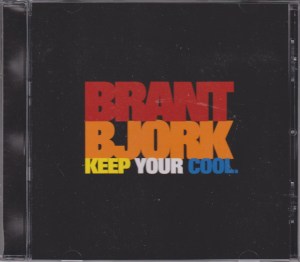
REVIEW: Brant Bjork – Keep Your Cool (2003)

Scan_20151226BRANT BJORK – Keep Your Cool (2003 Duna)

Been a while, cats, since I chilled to Keep Your Cool.  That’s what you do to this record.  Loaded with laid-back latino-influenced stoner rock jams, Keep Your Cool is designed with purpose.  In fact it’s all right there in the opening jam, “Hey, Monkey Boy”, loaded down with congas and one steamy groove.

“Hey, Monkey Boy!  Why you unemployed?” asks one character in the song, voiced by Bjork.

“‘Cause I’m jammin’!” answers Bjork, utilizing a different voice.

Mood now set, “Johnny Called” comes right from the garage: simple, laid back, but infectious.  Back in the Record Store, one of our store managers Joe “Big Nose” used to phone me up and sing it to me:  “Johnny called me up on the telephone, just to tell me I’m not alone!” he melodized.  “Huh?” I asked confused.  So “Big Nose” gave me the record — on LP.  Now we’re grooving.  The amusingly-titled “Rock-N-Rol’e” keeps it coming.  These are basic, sparsely adorned grooves with a nostalgic bent.  “Hey there Mr. DJ, won’t you play, some Rock-N-Rol’e!” sings Brant, in an ode to being a kid with a radio and some cheap wine.  In the blazing outro, you can hear Bjork begging for some ZZ Top or some AC/DC, because he wants his “chick” to hear some rock and roll!  The groove then changes to a stomp on “I Miss My Chick”, closing LP side one.  Brant explains what he misses about his “chick”, but this being a family site I won’t list them here!  This is a smoking jam.

Commencing with the instrumental title track “Keep Your Cool”, the second side begins with a laid-back Jalamanta vibe.  Then Brant’s “Gonna Make the Scene”, and he does this with another snakey, sparse but funky groove.  He takes a rare falsetto vocal on the chorus, recalling early Disco.  Dusky, quiet rolling bass dominates “Searchin'”, very different from prior Bjork songs.  This makes it a highlight of the album and perhaps even the Brant Bjork canon.  The relaxed mood maintains on the final song, “My Soul”, which is also the only long bomber on the record.  It descends into another quiet jam, concluding the record on a serene but appropriate note.

Great album — short, and to the point like a punk record.  Ultimately, not particular a standout given Bjork’s incredible solo discography.  Keep Your Cool is still not a purchase to regret.

4/5 stars

REVIEW: Triumph – Edge of Excess (1992)

Bought in Taranna at Kops for $2.50!


Scan_20160102TRIUMPH – Edge of Excess (1992 Virgin)

When Triumph split in ’87, Rik Emmett went off in a pop direction leaving his two bandmates with no singer/guitar player, and without their most recognizable member.  As bassist Mike Levine said in M.E.A.T Magazine, “We couldn’t just be Duo-umph”.  Since Triumph always had two lead singers in Rik Emmett and drummer Gil Moore, this time Gil simply stepped up and sang everything.  Then they needed a guitar player.  Gil and Mike Levine wrote and recorded most of Edge of Excess with Mladen Zarron in Toronto, before hiring ex-Frozen Ghost (current Bon Jovi) shredder Phil X.  Five years after the split, the new Triumph emerged with a heavier and darker album, Edge of Excess.

Triumph boldly opened the album with a whole minute of nothing but bluesy guitar noise.  If there was a stronger way to say “We don’t need Rik,” I don’t know what that would be.  This guitar noise serves as an intro to the first Triumph song without Emmett, “Child of the City”, a harder edged Triumph song with the same kind of hooks.  It’s hard to determine who is playing lead guitar, Mladen or Phil X, but rest assured that whoever it is has laid waste to the land.  Rik Emmett wasn’t just a shredder, but a talented player who composed his solos with class and ability.  Mladen and Phil have done the same, but without emulating Rik.  (Phil’s going to have his work cut out for him in Bon Jovi, though.)

The rip-roaring “Troublemaker”, easily the fastest and heaviest Triumph track to date, was featured on the soundtrack to Hellraiser III, and it’s easy to see why.  It’s as close to speed metal as Triumph have been, and I shouldn’t need to tell you that again the solos shred.  Who’s playing?  Fucked if I know, there are three guys credited on the song.  The song is actually very close to high-octane Whitesnake and it would be easy to imagine Coverdale’s crew doing it.

Lest you think that ballads were a thing of Triumph’s past, “It’s Over” has a country & western feel. Unfortunately of the two singers, Moore had the less commercial voice.  This is where Gil’s voice reveals its limitations.  On backing vocals, some big names are on hand such as Fred Coury of Cinderella and Steve DeMarchi of Sheriff, to help beef up the big chorus.  It’s not enough to make a memorable song.  They cook up some groove on the title track, tapping the vein of Van Hagar.  But without Rik Emmett, Triumph lost part of what made their unique sound.  On Edge of Excess it’s too easy to compare them to contemporaries.  “Turn My Back on Love” is better, occupying a dirty mid-tempo groove, and with Phil X handling all the guitars himself.  The big chorus is the closest thing to old Triumph on the album.

That’s the side; the second one opens with “Ridin’ High Again”, a sleezy rocker that sounds like Don Dokken emigrating to Canada.  Phil X really can shred though, and anyone who’s curious what he can do should check it out.  I don’t think Phil will be able to play to his strengths in his new band, so give this a listen and hear the guy blaze like Vai meets Van Halen.  “Black Sheep” starts as a total surprise; a blues right in the middle of the album.  No drums, just claps.  Sadly instead of sticking with this, it transforms into a stock hard rocker.  “Boy’s Nite Out” has a grammatically incorrect title:  The lyrics are clear that it is not a boy’s night out, but “the boys”, plural.  It should therefore be called “Boys’ Nite Out”.  Here I am bitching about the grammar and not the word “Nite”…anyway, back to the song.  Standard rocker.  Plenty of great shreds, but this album is far too burdened by generic rockers.  Rik Emmett used to bring a variety of influences to the table, and their albums with him may have had their weaknesses, but they were more diverse than Edge of Excess.  Without enough identity, Triumph forged a batch of largely forgettable bluesy hard rock songs.  Lots of crunch, not enough stick-to-your-brain hooks.

Fortunately the classy power ballad “Somewhere Tonight” helps wind things up properly.  Identity is still a problem, but at least this is a break in the rut the album had been in.  Right back into the rut for “Love in a Minute”, the last in a batch of heavily generic rock songs that sound like about a dozen bands…none of them Triumph.

Like any fan, I was pleased that Triumph kept going despite such a huge setback as losing your main guy.  Unfortunately the album they produced in ’92 was not up to par, and I guess that’s why it took me 23 years to finally buy it!  A couple good songs early in the album, but not much more.

2.5/5 stars
R.I.P. The Thin White Duke

Yesterday the world lost David Bowie, to cancer, at age 69.  While I own absolutely no Bowie in my collection (aside from covers of his music and guest appearances on Queen albums) I have always admired the man’s creativity.  He goes to places I don’t even understand, and maybe that’s why I never “got” David Bowie.  While recognizing his genius I was unable to penetrate beyond the singles.  Perhaps I should try again.

In the meantime, plenty of folks far and wide have posted tributes to the man, his music and even his movies.  Rather than pretend I know what I’m talking about, I’ll let these fine writers do it instead.  Rest in Peace, David Bowie.

And fuck you, cancer.

Last and not least,

  • Joe at 1537 – David Bowie R.I.P. (“The planet is, without a doubt, a touch poorer than it was yesterday.”)


BOWIE

He always looked so young.


TV REVIEW: American Dad – “Why Can’t We Be Friends?”


AMERICAN DAD! – “Why Can’t We Be Friends?”
(Episode 5, season 9)

Seth MacFarlane’s American Dad is a very musical show.  That’s why this is the second episode I’ve reviewed so far.  It’s rare to find a cartoon with so much musical integrity.  From an episode based on a song by Wax Fang, to another showcasing the band My Morning Jacket and their lead singer Jim James, they really stuff the show full of tunage.  Not to mention they also use plenty of original music!  There was one episode featuring Cee-Lo Green as a talking, singing hot tub.  For real!  Then there’s the original song  “He’s Got a Kink”,  with a dirty, dirty message!

You’ve got a kink,
You’ve got a kink,
Don’t be afraid to put a finger in the stink!

While the episode “My Morning Straightjacket” was probably one of the most musical episodes of any comedy show anywhere, it was “Why Can’t We Be Friends?” that earns top marks at LeBrain HQ.  Why?  Rush. 2112!

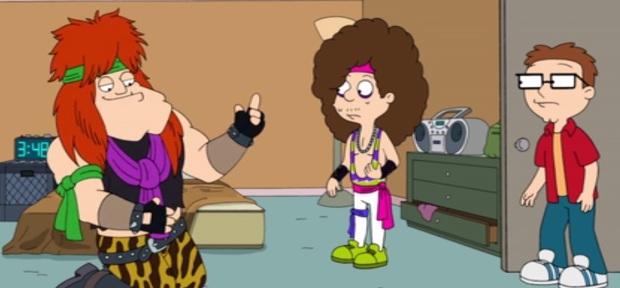
With Steve Smith dressed as a glammed-up Alex Lifeson, and his best friend Snot Lonstein as Geddy, the episode opens with the two best friends rocking out in the garage, playing air guitar to Rush’s immortal epic “2112”.  When Steve’s dad Stan comes home, he is none too amused by the tight costumes, wigs and finger-flicking.  “I-I don’t know where to start.  Look at you two.  Best case scenario, you’re telling me you’re gay with each other,” complains Stan.

AMERICAN DAD 2

Steve and Snot defend the air guitar, but a furious Stan smashes Snot’s tape deck and forbids Steve from seeing him again.  Of course this does not work, so Stan does the obvious thing to get rid of Snot.  He stages a fake mafia hit in front of the young kid, and then takes him away to be in the CIA witness protection program…forever.

Snot goes into hiding (the apartment building is #2112).  While delivering Snot his weekly groceries, Stan finds that he actually likes the kid.  They begin to hang out.  When Steve finally figures out what his dad has done, he tracks Snot down…only to find him playing air guitar to “2112” with a wigged-out Stan!

The episode is dedicated to “BFFs everywhere”, and I admit I get the feels at the end.  In an homage to Say Anything, Snot and Steve reunite, with a glorious air-guitared version of “Always With Me, Always With You” by Joe Satriani.  Yes, the episode is a tribute to best friends.  I think it is also a tribute to the pure joy that is air guitar.  The two things go together.  I played many many hours of air guitar with my best friend Bob, and nothing can erase the sheer happiness we had doing so.  I identify with this episode!  Not the dad breaking up the friendship part, but the friendship itself.

Highly recommended for nostalgic air guitarists everywhere.

5/5 stars

AMERICAN DAD 3


#461: From Dial-Up to Light Speed

GETTING MORE TALE #461: From Dial-Up to Light Speed

My my, how technology has changed!  The last 20 years have been a blur.  Let me give you some examples from the Record Store days!
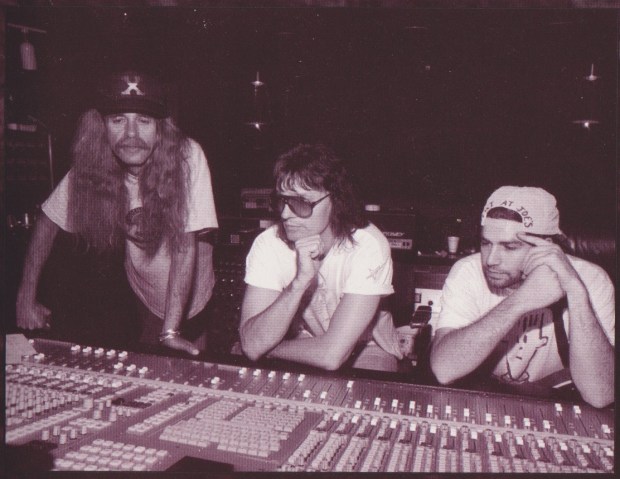
Back when I first began slinging the rock in 1994, we only had one phone line (with call waiting).  Our VISA/Mastercard machine ran on the same phone line.  You couldn’t ring through a credit card transaction if you were on a call.  If the call waiting went off while you were doing a transaction, it would be cut off and you’d have to start again!  In ‘95, we got a dedicated line for the VISA machine.  Customers often seemed interested in the sounds our VISA machine made when connecting.  That digital “handshake” sound reminded some customers of connecting to the internet.  Same basic technology!

In the late 90’s, we finally got the internet!  It was dial-up.  But some of the staff didn’t know how to use it.  One store manager, Joe “Big Nose”, thought that the only way to disconnect from the internet was to restart your computer!  On a bad day, it was so slow as to be useless.  I remember I had one poor girl trying to help out a really bitchy customer.  She was trying to look up some info online and it was taking forever.  “I’m sorry,” she said, “But my computer is running really slow.”  The customer kindly responded, “Well I’m running fast, so hurry up!”  It’s that kind of customer that wore me down – wore us all down, daily.  If you’re in that much of a hurry, maybe you shouldn’t be stopping to shop for music?

Technology also changed how we backed up our data.  Our computers held a complete inventory of our store’s stock, which changed daily.  This had to be backed up nightly in case we lost it all.  As discussed in Record Store Tales Part 187: Closing Time, in the early days the technology wasn’t up to snuff.  We began by backing up to 3 ¼” floppy.   Our data grew quickly and that was not sufficient for long.   We “upgraded” to a tape backup system.  At this time, tapes could hold about 2 gig.  What we gained in capacity, we lost in speed and reliability.   Staff that were closing the store were supposed to wait until the backup tape had finished before they left, but as our data continued to grow, it took longer and longer.  45 minutes to an hour later, it might be finished.  Obviously you can’t make a staff member stay that long unpaid, so nobody did.  Thankfully we never had any critical crashes that caused us to lose everything.

This was later fixed, by backing up to another computer’s hard drive instead of a tape.  This became fully automated, so staff wouldn’t have to worry about it anymore.  Ultimately this was the only real long-term solution, although we did also experiment with zip discs.

Before we had our own website, some customers were dying to be able to browse our stock from home.  If they could do that, we wouldn’t have to take so many phone calls, searching for long lists of CDs one by one.  When we first opened the store that I managed in ‘96, one customer asked me, “ Can you print out your inventory for me?  It would really help me with my shopping!”  He lived out of town and wanted to take a list home and browse it.

The problem, as I tried to explain, was that any list I printed for him would be out of date too quickly to be useful.  “By the time this is done printing, which will take a few hours by the way, it’ll already be out of date.  Used stock goes fast, and most of the good titles, we only have one copy of at a time.  A list isn’t going to help you very much I’m afraid.”  Plus, it would take all day to print on an old dot matrix printer.  More than that, we didn’t even have a way to print an inventory list that didn’t show our own cost on it!  Can’t exactly be handing that out to every customer that walked in the door.  He was really insistent and I actually had to get the Boss Man involved to explain it to him!

Am I ever pleased that technology has caught up with the needs of the on-the-go music shopper!  A couple clicks on Amazon, CD Japan, or Discogs and the music you need will be delivered to your door in days.  It’s actually quite amazing how quickly you can get your music in the mail.  With Amazon, I typically get my order within a business day or two, and that’s with free shipping.  A CD from Japan takes a week.  I never even dreamed of a day when I could have virtually any Japanese release within a week.  To an old timer like me, it’s unbelievable.

What’s next for technology and music sales?

  1. A way to beam music straight into your brain?
  2. Amazon will be able to read my mind and pre-order albums that I want as soon as they’re up. Then they’ll ship them to me by drone!
  3. U2 will find a way to upload their next album onto every device you own, and even ones you don’t!

I for one welcome our new music overlords!

LIGHT SPEED

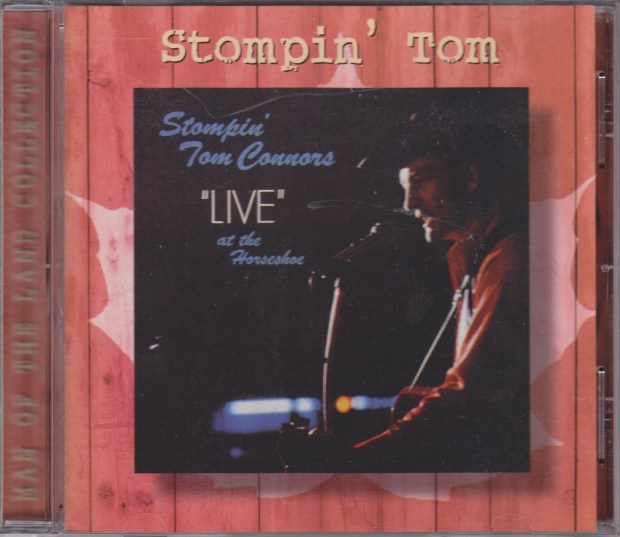
REVIEW: Stompin’ Tom Connors – “Live” at the Horseshoe (1971)

STOMPIN’ TOM CONNORS – “Live” at the Horseshoe (1971 EMI)

Since this is the first Stompin’ Tom review ever here at mikeladano.com, we need to step back and take a quick look at the bio of a Canadian hero that may be completely unknown to most overseas readers.

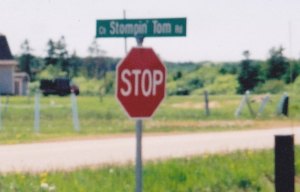
Charles Tom Connors was born in Saint John, New Brunswick in 1936.  A restless young Connors frequently hitch hiked and got into trouble down the east coast, and at one point wound up in Skinner’s Pond, Prince Edward Island.  This is a place that has come to be associated with Stompin’ Tom over the years.  I visited there myself in 2002, and saw his childhood home.  I took a photo of the street sign of what is now officially called Dr. Stompin’ Tom Road.

PEI_0006

Tom’s break happened while drifting through Timmins Ontario.  Short on change for a beer at the local watering hole, the bartender told him he’d let him have the beer for whatever coins he had in his pocket, as long as he’d get up and sing a song or two.  Tom got out his guitar and that turned into a 14 month stand.  Before too long he had recorded eight singles.

Stompin’ Tom sang idiosyncratic Canadian songs.  He was not interested in commercialism in music whatsoever.  He stubbornly wrote and played often comical songs about the things he’d seen and done hitch hiking around the country.  He became known as “Stompin’ Tom” by providing his own backbeat.  Like a folk country Angus Young, he would pound his booted left foot on the floor, keeping time.  He eventually had to provide his own “stomping board” because bar owners were complaining about damage to their stage.  He would stomp right through the board periodically and have to replace it.

In 1971, a concert film called Across This Land With Stompin’ Tom Connors spawned the album release “Live” at the Horseshoe and became a part of Canadian history. The Horseshoe Tavern in Toronto was a legendary establishment. Now with four studio albums and one Christmas record under his belt, the legendary Horseshoe set was recorded for posterity and became a television staple for years. This live album is culled from that show, though heavily edited for single-length LP time. The original set was 90 minutes and 30 songs.  My dad showed me the special as a kid.  I loved it.

When EMI issued the album on CD, they retained the original LP 12 song running time.  Even the nicely packaged 1998 Man of the Land series edition is only 12 tracks.  The album is a mix of originals and better-known covers.

Newcomers may find Stompin’ Tom’s nasal twang unpalatable, but when that left foot starts stompin’, it’s hard to resist.  “Happy Rovin’ Cowboy” introduces Tom’s band to the crowd.  He bills himself as from “the potato fields of Prince Edward Island”.   Then it’s his hit about the “best man in Ottawa”, Mufferaw Joe.  “Big Joe Mufferaw” is a Canadian folk classic and this version from the Horseshoe is definitive.  According to the lyrics, Big Joe put out a raging forest fire near Smiths Falls with just five spitballs!  Just stomp along!

“Come Where I’m At” is a “Newphie” phrase, and the song beckons you to come home to Newfoundland, “So don’t stay where you’re to, come where we’re at!”  It’s not Yoda-speak, it’s just Canadian!  Tom then covers “The Green, Green Grass of Home”.  “Now it’s almost time I sung an American song,” begins Tom.  “This here is a song that made so many singers famous, that I just thought if I turned my golden Prince Edward Island voice to it, I’d prob’ly become famous too!”  Probably not — Tom does it with exaggerated twang and irreverent comedic flare.  Then, he covers his friend “Gordie” Lightfoot, with “Spin, Spin”, another Horseshoe regular.  This time his plays the song “straight” with due respect but still with the stomp.  It’s a wonderful upbeat song so feel free to stomp along.  “Muleskinner Blues” has one of Tom’s most legendary vocal hooks, and it goes something like “aw wha wha wha wha wha whoo”, though it varies!  This is the kind of song that people loved Tom for.

The second LP side began with an ode to all the big drinkers at the Horseshoe, with “Horseshoe Hotel Song”.  You can hear them hootin’ and hollerin’ and drinking along.  He pokes fun at himself in the tune, claiming he can’t really sing, he’s just another getting slushed at the Horseshoe Hotel.  They eat it up, loving every witty line.  Another cover, “I’ve Been Everywhere”, is one that Tom could almost claim as his own, considering its hitch hiking subject matter!

The rest of the album is all original.  “Sudbury Saturday Night” is a favourite that was later covered by Kim Mitchell.  Sudbury is famous for its nickel mines, and Inco was the big one.  So the lyrics go:

“Well the girls are out to Bingo,
And the boys are gettin stinko,
We’ll think no more of Inco,
On a Sudbury Saturday Night.”

Once again, this version is definitive.  The song is best heard with an audience hollering along.  “Big Bus to Nashville” is a pleasant song that name-drops the Horseshoe, and features that boot stomping again.  “Luke’s Guitar” is a story about a man who had to choose between his wife and his guitar.  Again it has one of those classic Tom vocal hooks, and it goes something along the lines of “Clang-clang a-deedle dang a-deedle”.  It’s hard to resist so don’t try and just go with it.  Ending the album is “Bud the Spud” from the bright red mud, of Prince Edward Island.  According to Tom this came by request about “150,000 times” that night.  Because of the filming and recording of the live album, Tom was to stick to a strict set list and couldn’t do requests.  However he went ahead and played “Bud the Spud” anyway, and it made the final album!  Like several of the other tracks, this recording is definitive.

In the movie Wayne’s World, the character of Wayne Campbell, played by Canadian Mike Myers, claimed that people in the subburbs got copies of Frampton Comes Alive in the mailbox with boxes of Tide.  Sadly that is not so, but in Canada, everybody should be issued a copy of this live album with their birth certificate.  This album in my ears defines the country that I live in.  Others may disagree and they are welcome to do that, but I believe that “Live” at the Horseshoe is a history lesson about the country that we live in as much as it is an amazing live album.

5/5 stars