bonus tracks

#1218: When Did You Get Your First CD Player?

RECORD STORE TALES #1218:  When Did You Get Your First CD Player?


When I seriously got into music in 1984, cassette was the dominant format in my demographic.  I was 12.  Older kids and adults still bought a lot of records, but when we gathered in the streets, our music was played on portable tape decks:  “ghetto blasters”.  Whether tethered by electrical cords or running free with weak C and D cell batteries, cassette dominated.  Then, one morning, CBC radio was doing a special on a new format:  the compact disc.  Host Clyde Gilmour had the longest running show on Canadian radio, and was known for playing classical and jazz music.  Gilmour’s Albums was the first time I ever heard a CD, but over the radio, it could not be properly appreciated.

In 1987 my cousin and his family came to visit.  They brought with them a CD player and the soundtrack to Good Morning Vietnam.  My biggest takeaway after seeing the format in person myself was there were no side breaks on CDs.  It was a one-sided format.  I had never considered such a thing before.  I didn’t have the imagination to picture a live album without side breaks.  Such a thing had never existed.

It didn’t take me long to discover the temptation of compact disc:  the “bonus track”.  Van Halen’s OU812 was the first CD I spotted with a bonus track called “A Apolitical Blues”.  The Columbia House music catalogue, which we signed up for in 1989, always listed when a format had a bonus track.  Very few records did, but many cassettes and many more CDs did as well.  It was a way of taking advantage of a longer running time without breaks, and to tempt people to make the switch.

For that reason, I officially adapted CD as my newest musical format on Christmas Day, 1989.  My first CDs were Alice Cooper’s Trash, Motley Crue’s Dr. Feelgood, Whitesnake’s Snakebite, and Winger’s debut – with bonus track.  Bob and John Schipper came over to visit during the holidays.  I demonstrated the sound of a CD by putting in Dr. Feelgood, cuing up Time For Change, and letting them listen to the silence at the of the fade.  I cranked it to max.  “No hiss!” I explained.  They didn’t appreciate it the way I did.  Cuing up songs by demand was also a treat.  I remember using it to isolate the track “Ride Cowboy Ride” by Bon Jovi and recording it on its own for cassette.

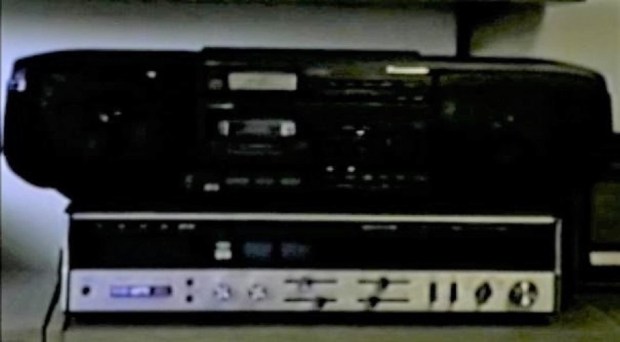
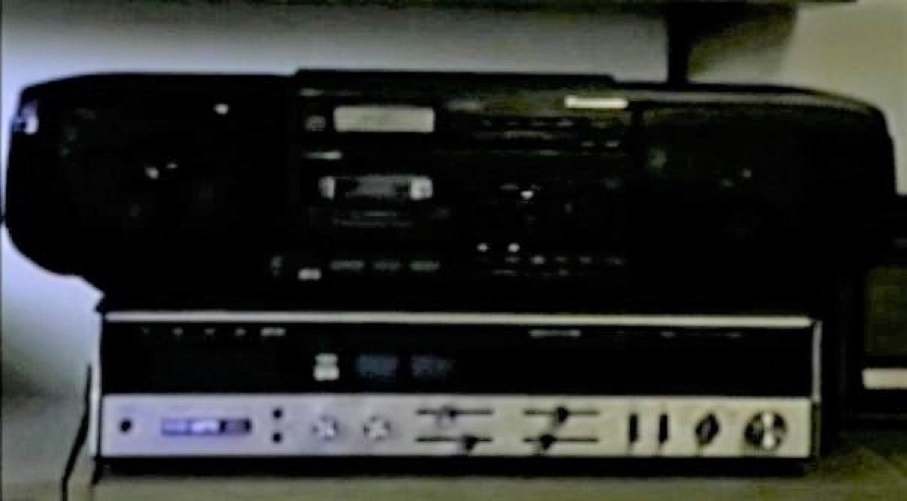
My first was the Panasonic seen below, atop my parents’ old 8-track deck.  The first of countless many.
I asked some friends for their stories about their switch to CD.  They answered the call, some with pictures.


bicyclelegs:

1990 I think, but I don’t remember the make or model.  By 1990 it was getting harder to find new releases on vinyl in Australia, so my hand was forced to a certain extent. But it was also a financial thing: before 1990 I simply couldn’t afford a CD player.

Dan Chartrand:

Same here for the bonus tracks! Mind you, some cassettes had bonus tracks…and even vinyl had bonus tracks…wish the internet was around to investigate more… My first CD was Dio’s Lock Up the Wolves due to the bonus track that wasn’t on the cassette or vinyl.

Melissa Nee:

I am thinking 87. It was super early.  I started getting CDs from Columbia House before buying in stores. They were pricey.  I think Bon Jovi was $16.

Chris Preston:

1988 for me.  quite honestly it was mostly because a bunch of my friends had CDs and they raved about how great they were. Peer pressure! I had also stopped buying vinyl by that point and I was growing tired of the poor quality of cassettes. It was time to embrace the future with CDs!
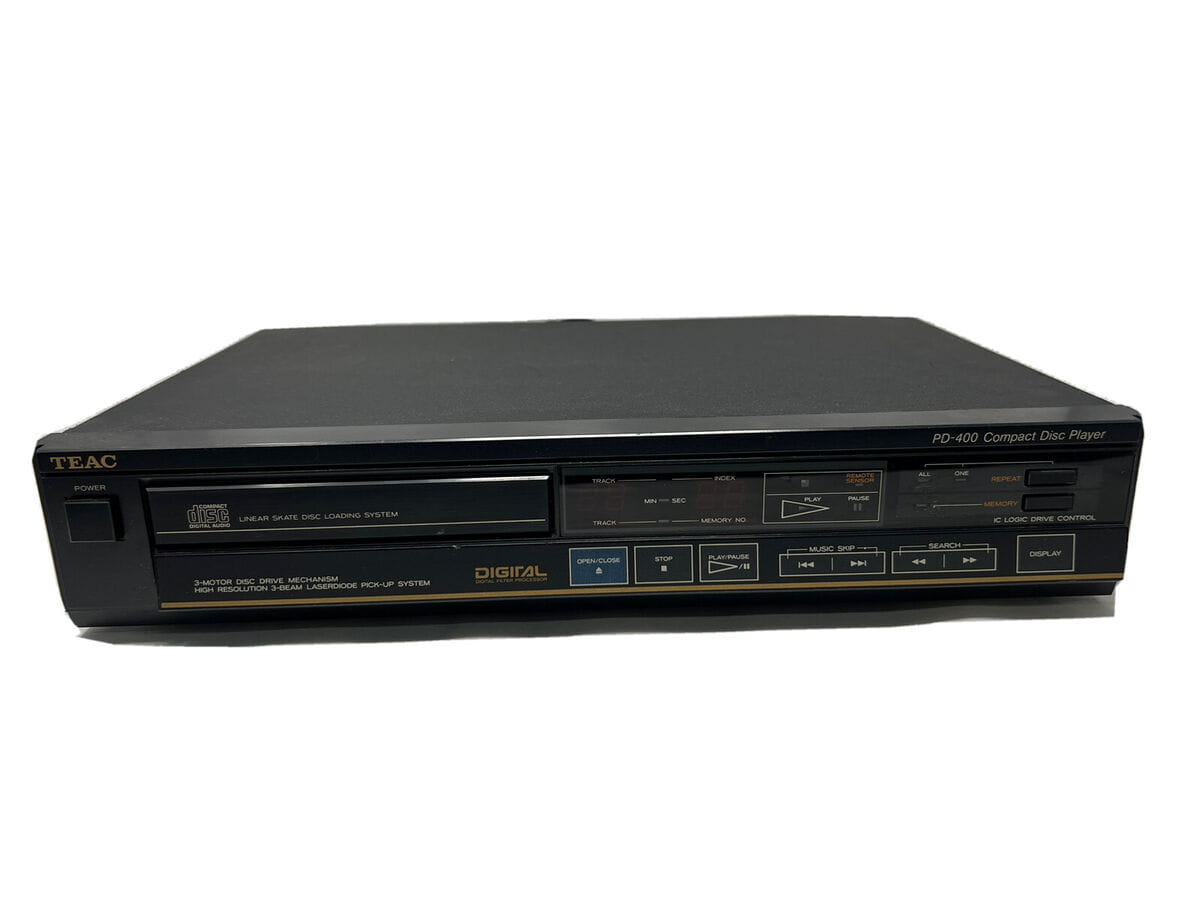
Erik Woods:

It was this. Got it some time in the early 90s.
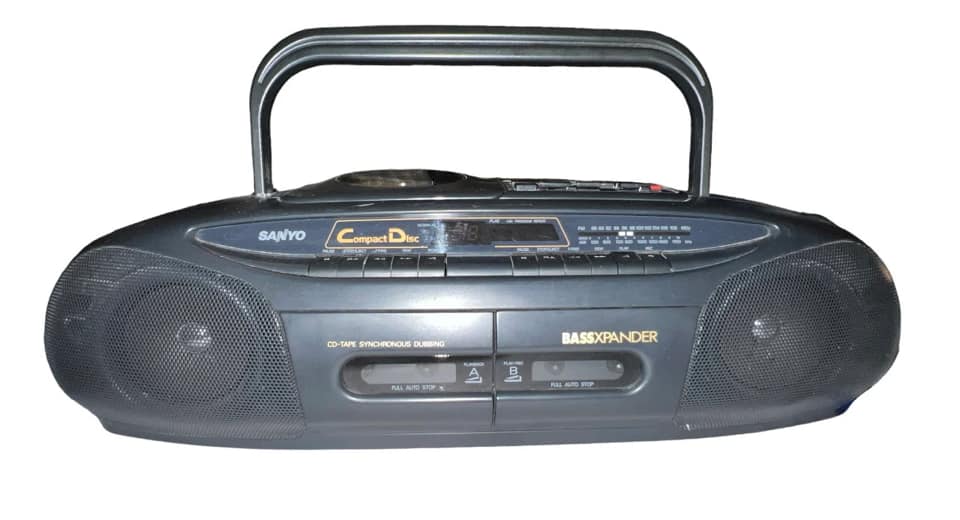
Henry Wright:

I got my first CD player in June 1992. It was a college graduation present from my parents, I think. I had only cassette for many years but already had about 5-10 CDs before I got the player as I had started buying them around 1990-91, I think. Some of them were things I couldn’t find on cassette (typically from the UK), others were just favourite releases I wanted to upgrade. Before I got the player I would make a tape copy for myself on a friend’s. I don’t know if I thought cassettes were an endangered species but I always disliked how often they wore out or were chewed up by the machines and so I was pretty excited about the new format. I never heard of a bonus track until later although I do recall that new CDs often had the same “extra” tracks that cassettes did unlike the LP or 8-track versions.

Matt Phillips:

Summer of 1993; got my first guitar the same month. And it was the Panasonic with the flip top and the jog dial and the ability to skip to the next song on cassettes. This model:
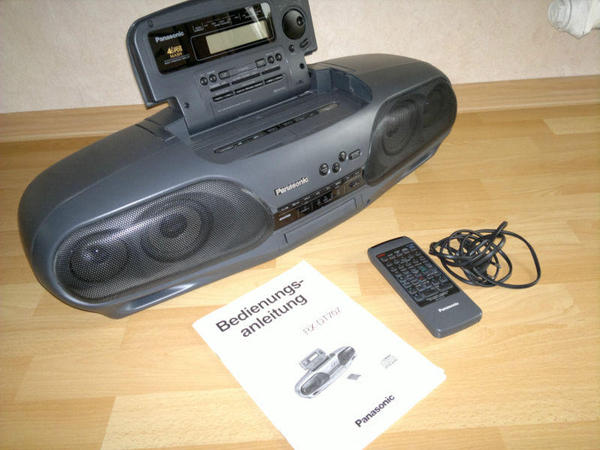
Larry Russwurm:

1988. Most people in residence in Toronto had them already. Someone in residence had one as early as 1986.

Frank Schenker:

The first CD I ever purchased was Surveillance by Triumph. I also bought the cassette tape at the same time in November 1987 and I didn’t even own a CD player. I the spring of 1988, I purchased a Sanyo boom box with a CD player and cassette tape deck.

Rex Smetzer:

1988.  I just have always loved music & was in college at the time, & got it for Christmas.

Todd Evans:

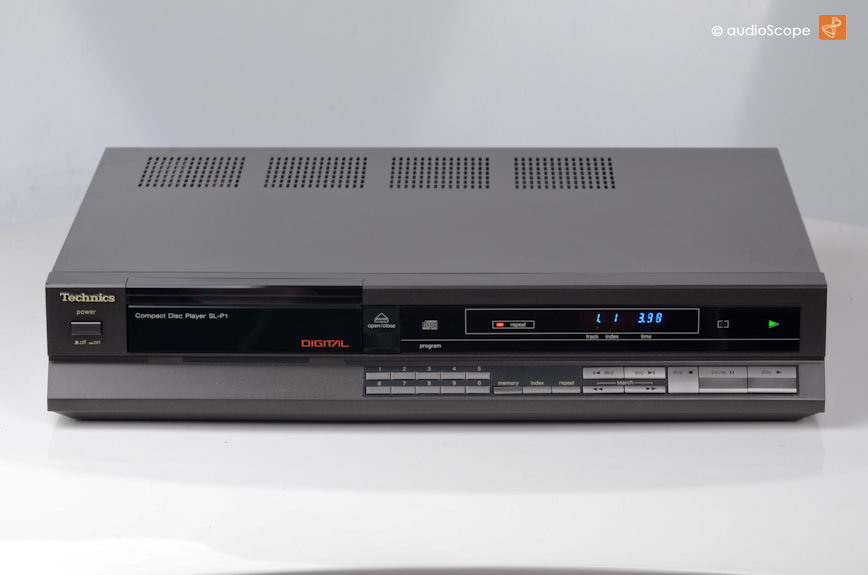
December, 1984. Technics SL-P1.  In early 1984 a local department store had a Magnavox FD1000 on display that you could demo. They had one CD – Rush Moving Pictures. I must have played with that thing for an hour! My parents bought me one for Christmas that year. I remember that a friend bought me two of my first CDs as a Christmas gift – Asia’s first album and Thompson Twins Side Kicks. My parents bought me one to go with the player, but I can’t remember what it was.

It is warming to see some folks embrace the bonus track as I have.  The CD certainly changed our lives when we made the change.  When and why did you make the switch to CD?  Leave your story in the comments below.

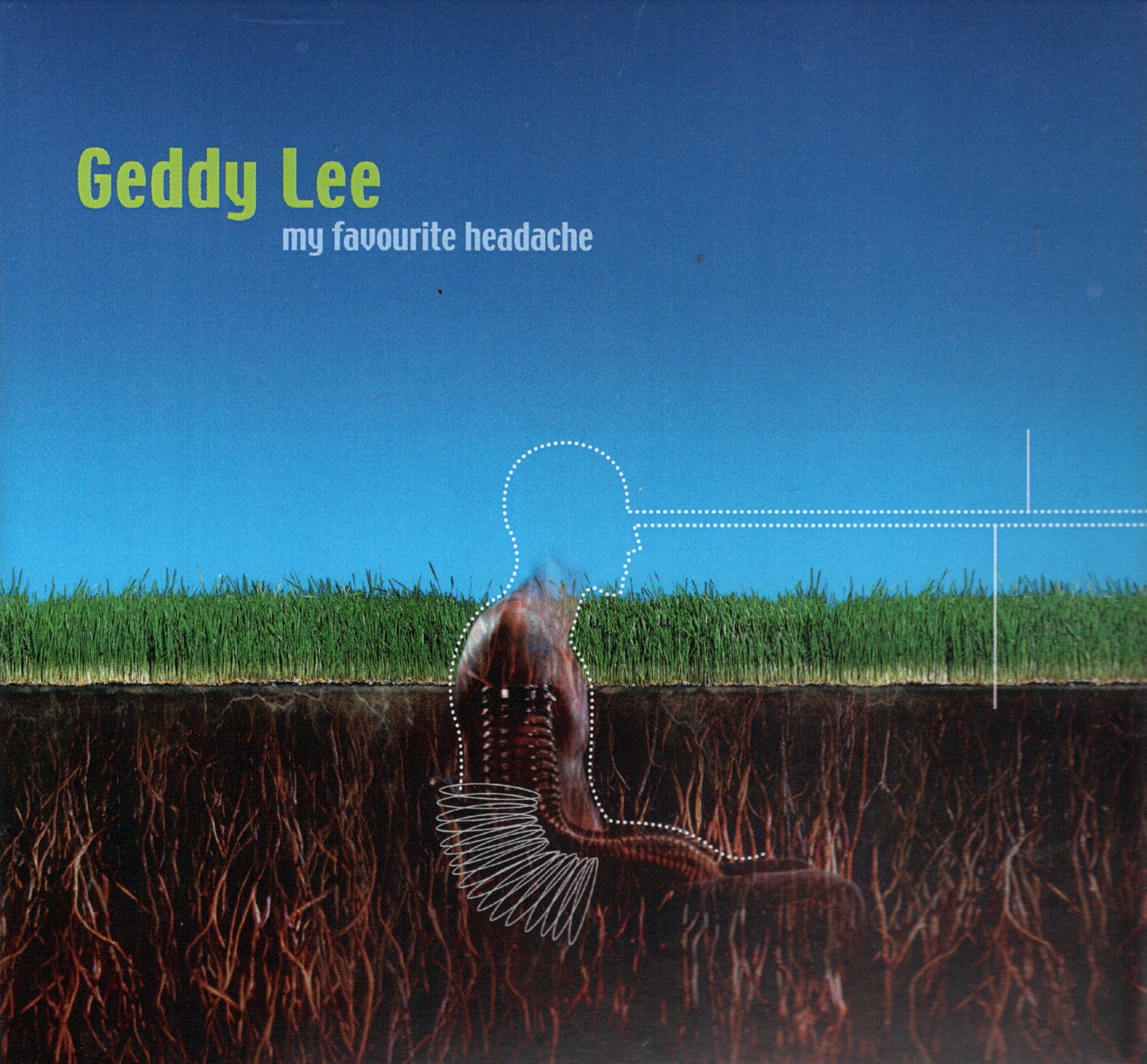
RE-REVIEW: Geddy Lee – My Favourite Headache (2000, 2024 reissue with bonus tracks)

GEDDY LEE – My Favourite Headache (2000 Atlantic, 2024 Anthem reissue)

As a Rush fan, Geddy Lee’s solo album My Favourite Headache never quite clicked.  The lyrics seemed inferior and the music immemorable.  In 2024, Geddy reissued the album with two bonus demo tracks.  This is a perfect time to revisit the album and see if time has been kinder than I was in my original review.  It has been a number of years since last listen; perhaps even a decade.

The phrase “my favourite headache” means making music to Geddy Lee.  The art of crafting songs is a headache, but he would not trade it for the world.  That is what the title means.  For historical context, this album was made when Rush were on a serious hiatus.  Neil Peart was dealing with tragic loss and nobody knew if the band would ever reunite, including Neil.  From that soil grew My Favourite Headache, which Geddy recorded with drummers Matt Cameron of Pearl Jam and Soundgarden, and Jeremy Taggart of Our Lady Peace (on one song).  Geddy plays the lion’s share of instruments with Ben Mink and other guests also contributing.

As it should, “My Favourite Headache” opens with some heavy bass, Geddy’s fingers flying.  Then, it degenerates into a dissonant and hard guitar riff with throws the listener for a loop:  it’s not at all like Rush.  It might be the bass player and singer from Rush, but this does not sound like Rush.  Which is good; which is the point.  It takes a moment to adjust.  “My Favourite Headache” slows to a lush section with piano, violins and violas by Mink.  The lyrics are fascinating.  “I watch TV, what do you want from me?”  There is a lot to unpack here now that Geddy is able to express himself verbally in his music.

More Rush-like is “The Present Tense”, a song about living in the now.  It bounces from heavy choruses to softer acoustic verses, which is perhaps a different approach from a Rush one.  Perhaps by doing something more streamlined, Geddy wrote a catchier song here.  His bass sings full, but not over-dominant.  Cameron is an apt companion on drums; while not attempting to play like Peart, he is more than capable of navigating the tricky changes and fills.

“Window to the World” has a more exotic feel in its light chords, and Geddy uses his bass to deliver some delightful trills and hooks.  It has some of those jarring dissonant guitars from the title track, but not as prominent.  This song is melodic, largely easy to digest, and it delightfully careens from soft to hard, with interesting keyboard textures.

Heavier is “Working on Perfekt”.  This might be the most enticing of all Geddy’s songs.  Tense verses are broken by a sparser chorus.  Electronic sounds aside, this is a very Rush-like song.  You can almost image what Alex and Neil would do with it, but as Geddy’s song, it is rich in tones and deep, tense hooks.

“Runaway Train” is one of the brightest, most upbeat songs.  Mink’s keys and violins add a light, airy feel above Geddy’s hammering bass.  His playing is always eloquent and entertaining, if you choose to focus on the bass.  Between the electronics and Mink’s rich contributions, there is a lot you can listen to.  Or just enjoy the song.  It’s a good one.  Perhaps I misjudged this album before.

The first mistep might be “The Angels’ Share”, which some may love, but fails to launch for me.  It’s a lighter song, but Geddy’s bass ensures it’s like lead.  Ben Mink provides some really interesting soloing and backing, but the song itself never quite takes off.  In hindsight it sounds like Clockwork Angels-era Rush.  While we are in this perceived rut, Geddy throws his worst lyric out in the next song:  “Say goodbye to suburbia, you don’t have to cut the lawn.”  That’s from “Moving to Bohemia”, which is actually a pretty catchy song.  It’s pretty upbeat for this album, and Geddy’s bass playing is at its most thumping.

Geddy turns up the funk on the magnificently weird “Home on the Strange” (with Taggart on drums).  What the hell is this?  It’s crazy, it’s like Geddy pulled out all funkiest records in his collection and combined them.  The lyrics here are also quite fun:  “He’s a Canadian icon, he sleeps with his clothes on.”  Is it autobiographical?  “And he don’t like change, you may think he’s deranged, but he’d rather be home, home on the strange.”  Once you get used to its groove, this song won’t let go.

Back to the light, with “Slipping”, which relies on acoustics and piano for a gliding kind of feeling.  This is followed by “Still”, which is unusually sparse and simple.  An acoustic ballad, with an upbeat tempo, it’s a beautiful song.  It certainly sounds autobiographical.  “Still halfway up that hill, my fingers may bleed but I’ve got to get there still.”  This song strikes me as the best, musically and lyrically, on the album.  Strange that it never jumped out at me before.

Closer “Grace to Grace” remains an exceptional song, and one that really ends the album on familiar territory.  A burning guitar and driving bass are the focus, as if to say “Hey guys, I’m always going to rock.  Thanks for joining me on this trip.  Here’s a song I think you’ll like.”

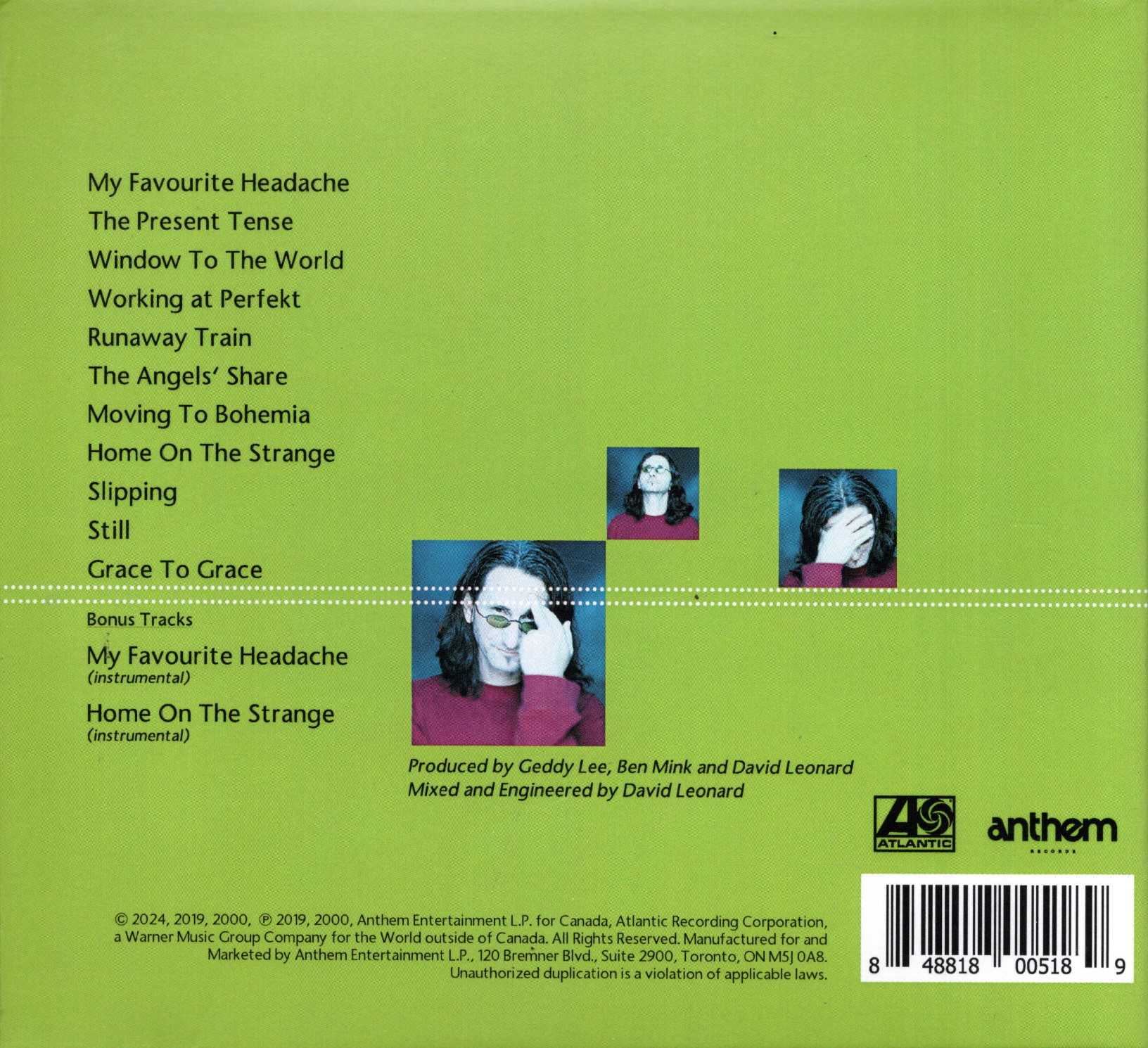
Of course, on this new reissue, Geddy treats us to two previously unreleased demo versions.  If you haven’t bought the album before, you may as well go for this edition.  True, I usually criticize albums for being a bit on the long side, and My Favourite Headache is a bit long, but demo bonus tracks are added value that you don’t have to include if you just want to listen to the “album” for the experience.  There doesn’t seem to be any recording information about these two demos, “My Favourite Headache” and “Home on the Strange”.  These are full realized arrangements, though without all the vocals.  “My Favourite Headache” might surpass the album track for its live sounding rawness.  Maybe it should have been an instrumental with only a chorus?  The demo is great.  Same with “Home on the Strange”.  These tracks are worth the listen, and the re-buy.

Ultimately, My Favourite Headache requires the listener to set aside any thoughts of Rush, no matter how much Geddy and his bass will always sound like Rush.  It’s a challenge, but once you get there, it is easier to appreciate the songs and the experiment.  It takes time to absorb, as it is actually a very dense production, even for Geddy.  Ben Mink’s contributions are priceless textures that help transport yourself away from a Rush mindset.  Listen to those; focus on Mink and appreciation will come.

3.5/5 stars

Check out my autographed copy of My Favourite Headache by clicking the thumbnail.

Check out Grant Arthur and Davey Cretin as they get this album all wrong on the Warehaus tonight.  8 PM EST June 23 2025

Tim’s Vinyl Confessions Ep. 653: The Darkness (Dreams on Toast bonus tracks)

My written review of the Darkness’ new album Dreams On Toast will take some time, as there are 29 tracks to discuss.  29 tracks?!  Why yes, including the five studio bonus tracks, six live ones, and eight acoustic demos.  Nevermind that it’s one of the best new releases of 2025.  These things take time!

Don’t worry though.  Tim Durling has you covered.  On Tim’s Vinyl Confessions, they already reviewed the album, and now I’m here to tell you about the bonus tracks.  Let’s rip through ’em all like something that’s hot on your tail.  Check this video for all the bonus track details for Dreams On Toast!


Who better to talk about extra songs than Mr. Bonus Tracks himself, namely Mike Ladano of @GrabAStackofRocK! We attempt to sort through the various paths and travels one must make to procure all of the Darkness goodness of 2025. Or something like that.

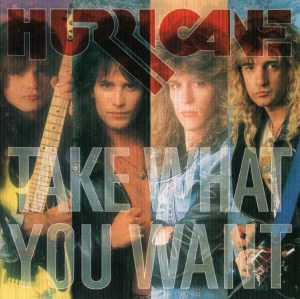
REVIEW: Hurricane – Take What You Want (1985 EP, 1989 reissue with bonus tracks)

HURRICANE – Take What You Want (1985 Enigma EP, 1989 reissue with bonus tracks)

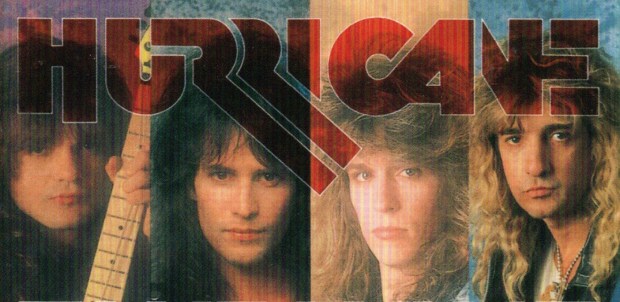
Hurricane attracted my attention initially because I was a Quiet Riot fan.  I considered Hurricane to be a “brother” band to Quiet Riot.  Bassist Tony Cavazo’s brother Carlos was in Quiet Riot.  Guitarist Robert Sarzo also had a brother, in Rudy.  I loved that Carlos played bass, and Robert played guitar.  I just knew that they chose those instruments so they could have jammed with their brothers, on guitar and bass respectively.

Perhaps Hurricane are best known as a band that launched its members into higher orbits.  Robert Sarzo has been a member of Geoff Tate’s Queensryche.  Drummer Jay Schellen is in Yes.  Singer Kelly Hansen is with Foreigner.  Big names!

Their debut EP was not a bad start.  It boasted one single/video that impressed me as a kid, but we’ll get there.  The original EP opened with “Take Me In Your Arms”, a tough little rock crooner with a great chorus.  Right from the get-go, it’s the singer that impresses.  The production buried him a bit too far back in the mix.  It may be a case of “too many cooks”, as Kevin Beamish, Mike Clink and Hurricane all get co-production credits, with Bob Ezrin in an executive role!  The swampy backing vocals don’t really help, but fortunately Hansen was more than capable of driving a chorus home.  It was also obvious that Jay Schellen was going to go places.  His drumming here is far from simplistic, standard rock cliches.

The second track gives Tony and Jay a chance to jam a bit before Robert comes in with some squealing guitar.  “The Girls Are Out Tonight” is not especially remarkable, but like the preceding song, it has a great little chorus to go with some pretty poor lyrics.  “Laughin’ and talkin’ about the boys, with whom you want to be seen.”  You don’t see the word “whom” in rock lyrics very often, I’ll concede.  The MVPs on this track are Tony Cavazo with a rollicking bassline, and Robert Sarzo with some great 80s excess on guitar.

The title track “Take What You Want” goes third, with an ominous little riff to open it.  There’s a vibe here somewhere between Journey and Kiss.  Hansen impresses thoroughly with those pipes!  The mood of the song isn’t consistent however, going for a more cliched rock vibe on the verses, while the chorus just smokes.  Almost a great song, but not quite.

Hurricane’s eponymous track was the single/video back in the day, and immediately impressed with the riff.  Traditional metal with a hint of exotic, “Hurricane” was my favourite song for two weeks straight.  “You’re like a hurricane comin’, you don’t forgive!”  Get pumped up and rock this tune on repeat.  It’s great.

“It’s Only Heaven” features Robert Sarzo and Tony Cavazo making really cool, atmospheric sounds with their instruments.  Then Schellen comes in with a classic drum beat, followed by Kelly Hansen.  This ballad could have been a Scorpions song, perhaps.  Vocally it’s very different from the Scorps, but Klaus can sing anything he wants.  Though slow, this ballad could have gone down in history like similar songs by Dokken…except for a really bad key change almost six minutes into the song.  Otherwise, it’s pretty epic and spectacular.  Somebody should have chopped the last minute and a half of it though.

Back to the hard rockin’, “Hot and Heavy” was the closing song on the original EP.  It gets the job done.  It’s fast, rippin’ with shout along hooks, and ready to tear it down.  Robert Sarzo illuminates the sky with guitar pyrotechnics.  Good little tune.  Nothing remarkable of course, but adequate for the task.  The whole EP is above average, because of the skill of the players and some occasional production goodness.  It’s just a nose above the rest of the bands that didn’t quite have the same level of musicianship.

Old CD copies came with a bonus track, “La Luna”, a beautiful classical guitar piece by Sarzo.  There is some really clever backwards guitar mixed in with the forwards.  It’s almost like next level Randy Rhoads.  The entire band got credited for writing, which means the band had an agreement to split writing credits.

This CD reissue has three bonus tracks, all from the next album Over the Edge.  The first is a single version of “Over the Edge” itself.  This hard rocker opens and closes with cool acoustic guitars, which caught my ear back in the day.  I loved this tune.  The production is still a bit wanting, but you can hear the talent shine through.  Schellen’s got a great groove going, and Kelly was so underappreciated as a singer back in the day.

“I’m On To You” was another great single from that album.  This is just an edit version.  This “super stormin’ hook edit” opens straight away with the chorus, which may or may not be to your taste.  “Na na na na na na, I’m on to you!” croons Kelly Hansen.  You’ll love it or hate it.  Finally, the CD ends with “Baby Snakes” (not a Zappa cover)…and finally it’s an instrumental version, without the phone call stuff!  That part of the song was amusing for a few minutes, but hindered re-plays.  This instrumental version remedies that!

Hurricane could have gone further than they did.  Unfortunately for them, Robert Sarzo departed after Over the Edge, replaced by a guy named Doug Aldridge that you might know from some other bands.  They started using outside writers, and that’s rarely a good sign.   They have since reunited, but never with this original lineup again.  An album and an EP was all we got.  At least they were both decent.

3/5 stars for the original EP
3.5/5 stars with bonus tracks

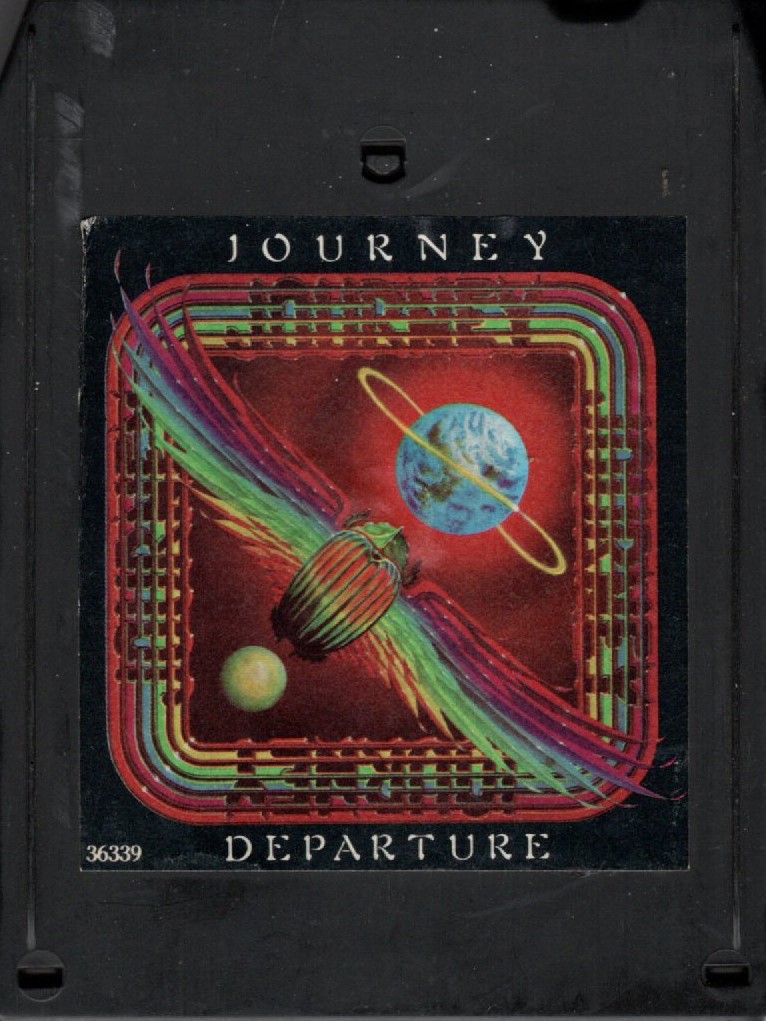
REVIEW: Journey – Departure (1980, Remastered CD & 8-track) – Happy birthday Neal Schon!

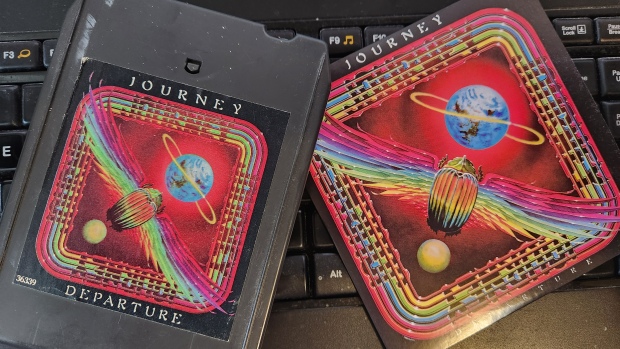
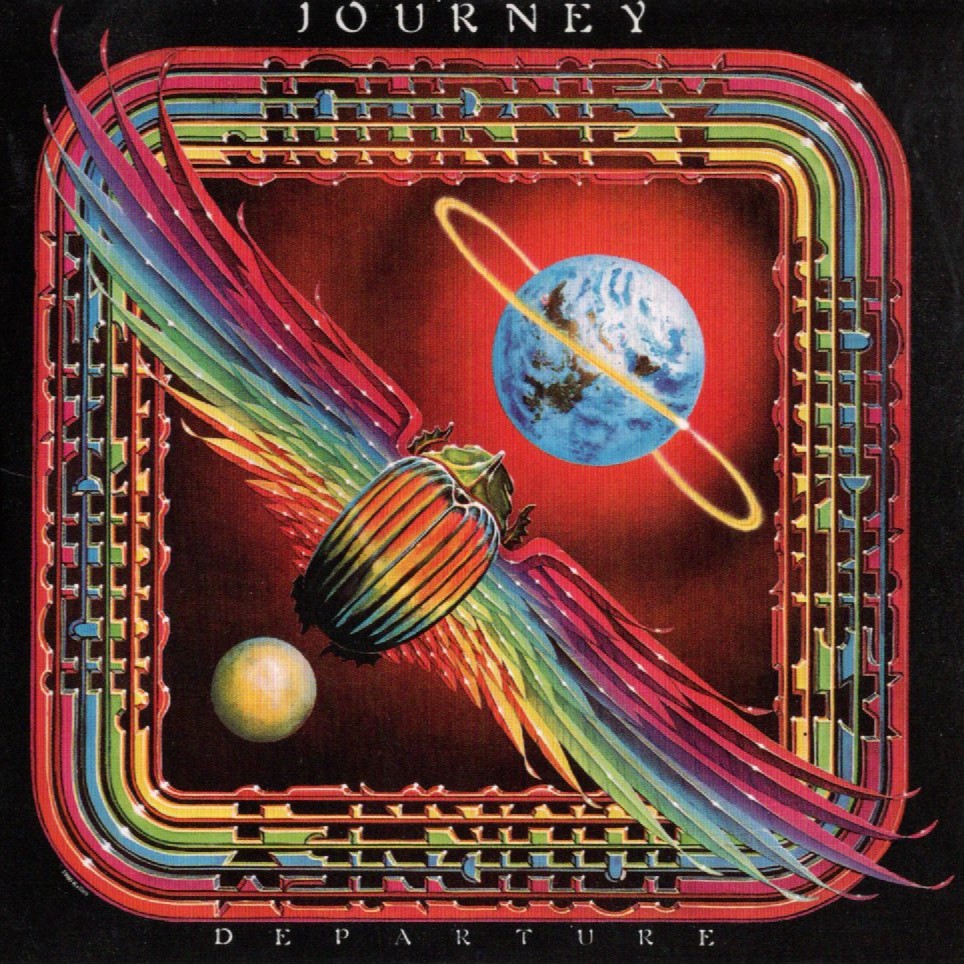
JOURNEY – Departure (1980 CBS 8-track, Remastered 2010 Sony CD)
CD from the set 3 Original Album Classics

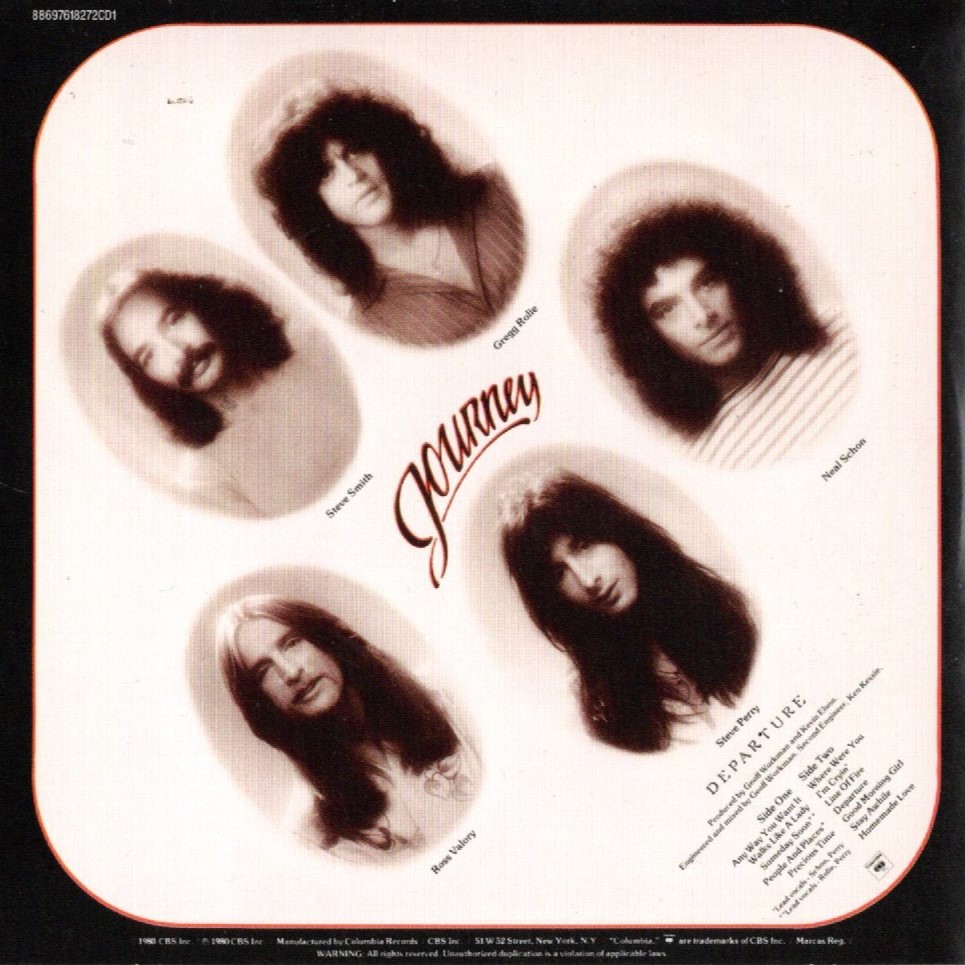
Changes were afoot in Journey, and alluded to on Departure.  Aside from the Japan-only soundtrack Dream, After Dream, this was the last stand for Gregg Rolie.  While he would also appear one more time on the Captured live album, he was not there for the new studio track included.  For all intents and purposes, Departure is his “last album”, to use an inaccurate but easy term.  For the man who once was Journey’s only lead singer, Departure only has one of Rolie’s lead vocals, and only two co-writes.  (In the discography, Departure directly followed 1979’s compilation of early material, In the Beginning, featuring early material and a large number of Rolie vocals.)

With Steve Perry leading the charge, Departure commences with the party anthem “Any Way You Want It”.  Those who don’t know it, know it.  It has been featured in the Simpsons, twice!  A rare honour, and mega-exposure, for good reason.  Perry’s impeccably arranged chorus is irresistible.  Rolie’s organ is the perfect accompaniment to keep in the realm of classic rock and roll.  Of course Schon’s solo is also tasty as heck, but this song is know for its party-hardy chorus.  For those who like to dig deeper, Ross Valory’s pulsing bassline goes underappreciated today, and Steve Smith’s smooth cymbal work is often taken for granted.

A surprising twist is taken on track two, the laid back blues pulse of “Walk Like A Lady”.  Sounds like Smith is playing with brushes, and Neal really plays it classy.  Then, a jab of organ and the players are off to indulge themselves.  “Oooh yeah!” shouts Perry, as if enjoying the jamming himself.  Soulful harmony vocals by the band really take this out on an authentic note.

Third song, third musical direction:  power balladeering!  Rolie sings a duet with Perry backing him on “Someday Soon”, a melancholy but punchy ballad.  Though it was not a single, perhaps it should have been.  There’s a cool, unique angelic vocal section near the end that nicely complements Steve Smith’s drum fills.

“People and Places” is like an exercise in creative vocal arrangements, if not showing off.  Neal Schon sings lead with Steve Perry on this complex track.  It’s more like the Dream, After Dream material than a lot of Departure.  If only the modern Journey were unafraid to create more unique music like this.  It still has room for a powerful melody and some warming cascades of guitar.  This song moves directly into “Precious Time”, which has a vibe like the still-in-the-future track “Liberty”.  Lyrically it foreshadows the “Line of Fire” on side two, and also has Rolie on harmonica.  It turns into a more typical Journey rocker by the midpoint.  Lots of tasty Schon guitars to be savoured here.

Unusually for an album of 1980, Departure had 12 tracks:  five on the first side, and seven on the second.  This is where we’d flip.

The big concert rocker “Where Were You” kicks off the back end of Departure.  This one pounds the pavement with beats, riffs and boppin’ piano.  It too could have been a single, though it did open their concerts on tour.  Then, a completely different mood drops:  “I’m Cryin'” hits like a cold wave of grief, though not without its musical thrills.  Soon it’s over and the rockin’ “Line Of Fire” brings the party back.  There’s no better way to describe it than a fast, good time rock and roll song.  “So don’t go sayin’ Steve is a liar!” warns Perry to some young lady who done him wrong.  “Bye bye bye Susie, so long girl!”  (He sure got over what was bothering him on “I’m Cryin'” pretty fast.)  Take note of Schon’s technical solo work here.

“Departure” / “Good Morning Girl” is softly progressive, with strings and light guitar, and little else.  This is over quickly, and then it’s the ballad “Stay Awile”, one of the sweetest songs Steve Perry or Journey have ever done.  Once again, listen to the bass and drums for a different perspective.  Perhaps the only thing better than Perry’s lead vocals are when he does it live.

Fortunately, Journey had the wisdom to end the album on a rocker:  “Homemade Love”.  Some of Perry’s worst words accompany some of his most acrobatic singing.  Still, at least it’s a good jam to go out on, with some fretboard burning fingerwork by Neal.

Interesting, the 8-track tape might have what would be called a bonus track here:  a reprise of “Line of Fire”.  It’s here mostly for timing reasons; there are no songs split between tracks anywhere on this album.  So, 8-track buyers got an uninterrupted listen, plus a reprise of “Line of Fire”.  Information is scarce, but it would be fun to hear the tape this way,

On remastered CD, we got some slightly more interesting bonus tracks than 8-track offered.  “Natural Thing” is a bluesy B-side, which was later released as the B-side to “Don’t Stop Believin'”.  Chronologically though, it is from this era and is as strong as any similar material on the album.  Funny how some tracks don’t make the cut when others do.  If you were told this was a standalone single, you wouldn’t have a reason to doubt it.  The CD also includes “Little Girl” from Dream, After Dream which is a difficult album to find and Rolie’s studio farewell.  It is a string-laden power ballad, very progressive, and far darker than anything on Departure.

Departure features an unusually rougher sound than other Journey albums.  The production seems unpolished despite the complexities of some tracks, with the vocals sometimes occupying a strange space that’s not quite in front of the music.  Still, a classic album is a classic album and there are so few flaws with Departure that it’s easy to dismiss them all.

5/5 stars

Our Journey Collections, on Six Formats (With Tim Durling) – Happy Birthday Jon Cain! – Grab A Stack of Rock Special Edition!

GRAB A STACK OF ROCK With Mike and Tim Durling

Special Edition Episode:  Our JOURNEY Collections


Happy birthday to Jonathan Cain of JOURNEY, as we celebrate his discography today with Tim Durling on this very special episode of Grab A Stack of Rock!  We look back at the entire discography of the legendary rock band, all the lineup changes, all the big songs, and a bunch of deep cuts as well.  On six different formats, I show you the entire catalogue, with help from Tim to fill three holes in the official collection.  (There’s still one or two essential things I need to get, but you’ll have to watch the video to find out.)

Tim Durling is what I would call a “Journey expert”.  He knows the facts and the sales numbers and the singles, and he was essential in this video coming to be.  Not just the live albums I’m still missing, but also the knowledge and personal history.  I was late getting into the band, in the late 1990s.  Tim had 10 years on me.  Thank you Tim for helping me make this video!

Together we presented CDs, cassettes, vinyl, 8-tracks, Blu-rays and DVDs of all the essential Journey.  We looked at imports from Japan, Europe, the US, and Mexico as well as different pressings with different bonus tracks.  A wide variety of Journey CD editions are here for you to examine.

Thank you Tim and thank you Journey for the music!


Discography included:

  • Journey (1975)
  • Look Into the Future (1976)
  • Next (1977)
  • Infinity (1978)
  • Evolution (1979)
  • In The Beginning (1979)
  • Departure (1980)
  • Dream, After Dream (1980)
  • Captured (1981)
  • Escape (1981)
  • Frontiers (1983 and 2023 40th Anniversary editions)
  • Raised on Radio (1986)
  • Greatest Hits (1988)
  • Time3 (1992 boxed set)
  • Trial By Fire (1996)
  • Greatest Hits Live (1998)
  • Arrival (2000-2001)
  • The Essential Journey (2001)
  • Red 13 (2002)
  • Generations (2005)
  • Live In Houston 1981: The Escape Tour (2005)
  • Turn the Page (Live Bootleg w/ Jeff Scott Soto (2006)
  • Revelation (2008)
  • Live in Manilla (2009)
  • Eclipse (2011)
  • Greatest Hits 2 (2011)
  • Escape & Frontiers Live In Japan (2019)
  • Freedom (2022)
  • Live In Concert Lollapalooza (2022)
  • Alive In America (2022 booteg)
  • Neal Schon’s Journey Through Time (2023)

REVIEW: Grace Scheele – landings (2023 cassette, plus bonus tracks on Side B)

GRACE SCHEELE – landings (2023 EP – cassette side two – bonus tracks)

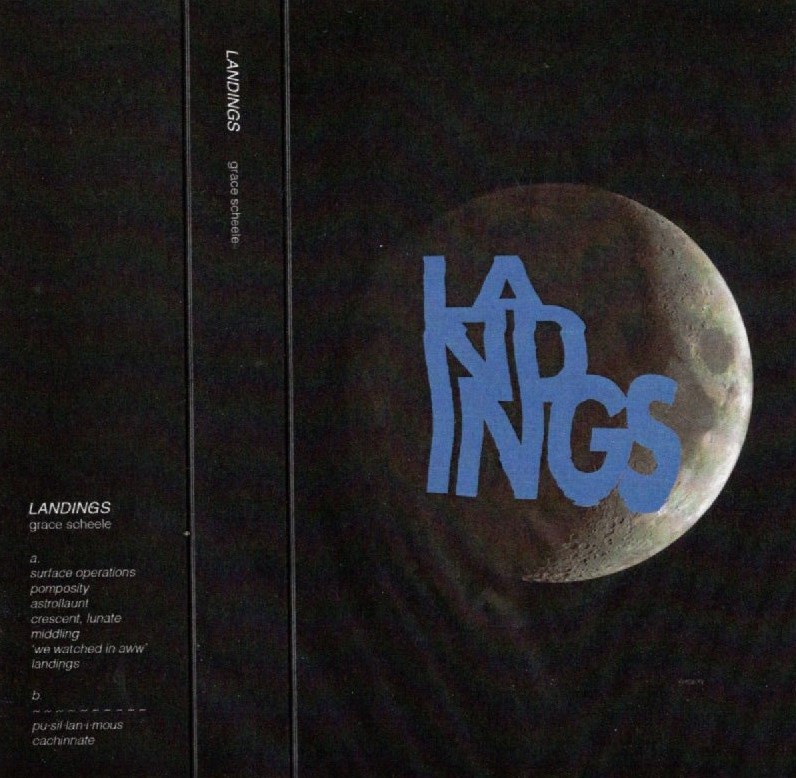
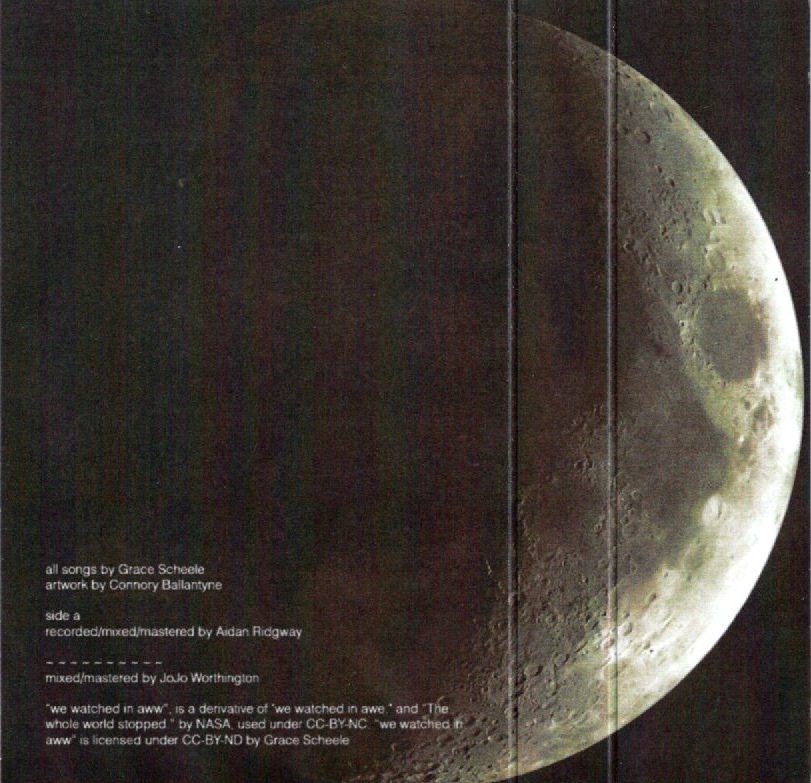
Last year we reviewed Grace Scheele’s concept tape about the moon landing called, bizarrely enough, landings!  Today we listen to the three bonus tracks that make up side two of the tape.  For your convenience, the original cassette review is included below.

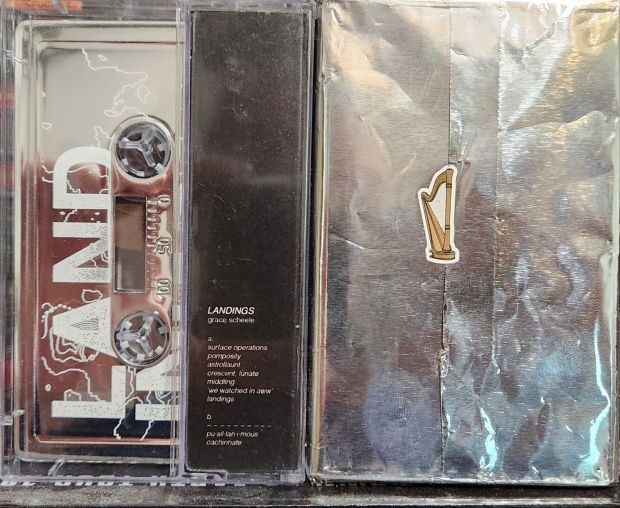
Grace loves the cassette format and understands the desire to own physical music.  Therefore, she was wise to include bonus music on side two.  If you want to hear this, you have to be one of the folks who own a cassette, of which I have two.  There are three bonus tracks on the B-side.  Check out these titles:

1.  “- – – – – – – – – -”  (10:16)

2.  “pu-sil-lan-i-mous” (7:46)

3.  “cachinnate”  (3:48)

The first bonus track (I’m gonna call it “lotsa dashes”) features flute-like keys to open it.  This relaxing piece is enjoyed best with eyes closed.  The time actually flies despite its length.  This is vastly different from the music on the A-side which largely featured soundscapes and space sounds.  This is just notes: pure music, and it sounds largely improvised.  It’s like a lovely backdrop to a quiet night, drifting along to a book of your choice.  (Something science-y would be good.)

Bonus track #2 “pu-sil-lan-i-mous” is in a completely different direction from the first.  This time, the harp takes its time entering the scene over some gentle keys.  But that harp ain’t gentle at all!  With an abrasive scream, the calm is violently pierced by an instrument you do not associate with violence.  It continues to tickle the ear in unexpected ways.  A bassline underlines the music while Grace makes her harp speak, and even sound like feedback.

Percussive sounds introduce the third track “cachinnate”, and strings pluck away satisfyingly while loops ebb and flow.  This is the most “traditional” sounding harp piece on the tape, but electronics take it to another unexpected level.

This music is for those who want to be challenged every once in a while.  This is for the curious, who want to hear the lengths to which you can take a musical instrument without breaking it.  Grace Scheele’s landings is a remarkable release, perfect for open ears or ears that wish to be opened!

The original review for Side A is below.


From Grace’s bandcamp page:

“landings” centres on the real and imagined experience of the Apollo 11 mission to the moon; wielding bowed harp, electronic fx, and sampling from speeches, newsreels, mission audio, and NASA’s own interviews with those present at the historic newscast.  Ranging from the ethereally ambient to grinding, jarring industrial noise, the seven tracks across this debut EP represents an imagined journey into the darkness of space.

I’d call it a concept EP, based on that alone.  It’s a real listening experience, with elements that remind me of Pink Floyd, Star Trek, and War of the Worlds.  Some of the speeches and dialogue will be familiar, others will be novel.  There are sounds that, in my limited experience, I didn’t know you could make with a harp.  At 22 minutes,  is easy to digest in a single sitting, and the download comes with a “gapless version” that enables just that.  The layers of harp, samples, and electronic sound build, painting a sonic picture.  You can feel the tension of the launch!  I bet this sounds great with headphones.

The track “pomposity” has been getting some exposure, so if you only check out one track, try “pomposity” for a taste of what this is like.


Each tape comes in chromed silver with white printing — absolutely stunning!  They also come hand-wrapped in aluminium foil, and packed with personalized goodies.  Mine came with stickers, hand-drawn art, and even a package of Pop Rocks candy.


4.5/5 stars


Tune in this Friday on Grab A Stack of Rock for a special cassette episode with one of Grace’s teachers, Dr. Kathryn Ladano!

REVIEW: Whitesnake – Here I Go Again: The Whitesnake Collection (2002)

WHITESNAKE – Here I Go Again: The Whitesnake Collection (2002 Universal)

Back in the days before David Coverdale began lovingly curating his 80s catalogue with expansive box sets and assorted compilations, the record labels were doing it for him.  And, all things considered, they were milking it pretty hard with very little in terms of added value to the fans who already had a decent collection.  2002’s Here I Go Again: The Whitesnake Collection might have been the first one really worth buying.

At its moment of conception, it was probable and perhaps likely that a large number of Whitesnake fans didn’t already own all three of the Geffen albums on CD.  Perhaps they just owned Greatest Hits, or 1987.  Rather than force fans to buy (or re-buy) a three disc set for all that material, Universal gathered 24-bit remasters of the three albums with some associated bonus tracks and released it all as more affordable two disc set.  It offered good value for fans looking to get those albums digitally, or those just trying to acquire the bonus tracks.

Starting off with the rare “Radio Remix” of “Here I Go Again”, a familiar song leads the charge.  This unusual version has Dan Huff on guitar, Denny Carmassi on drums, and Bill Cuomo on keyboards.  It’s shorter without that long “keyboard heaven” opening.  As a radio remix, it has choppier guitars, more keyboards, and prominent female backing vocals.  Huff’s solo is refreshing after being used to Adrian Vandenberg’s for so long.

From there, the compilation delves into the albums, in their US mixes and running orders.  Therefore, Slide It In kicks off with “Slide It In” just as I remember it.  It will always be debated which version of Slide It In was superior, the original UK or the partially re-recorded US mix.  I have long maintained that the US had more punch, and I still prefer it.  John Sykes was a powerful force, and his modern guitar squeals helped push Whitesnake into the 80s (for better or for worse).  From there the album runs through the big singles “Slow An’ Easy” and anthemic “Love Ain’t No Stranger”.  These two songs alone are worth buying the album for, but the deep cuts are strong.  “All or Nothing” and “Gambler” are darker, while “Guilty of Love has an upbeat rock singalong power.  “Hungry For Love”, “Give Me More Time” and the cheeky “Spit It Out” are all memorable, but the dramatic “Standing In the Shadow Of Love” remains one of the most impressive Whitesnake closers to date.

There are no Slide It In-era bonus tracks included, but the next album 1987 is augmented with plenty.  We already had the radio remix, so the disc dives in with opener “Crying In the Rain”, actually a re-recording of a track from Saints & Sinners, just like “Here I Go Again” itself.  The CD runs through all of Side One of 1987 and partly into Side Two, with “Children of the Night” being the last song on the disc.  This is the one and major flaw with The Whitesnake Collection:  the oddly timed split between Discs One and Two.  “Here I Go Again” (the album version) was meant to close Side One of 1987, but these things can’t be helped.

After you blast through that remarkable album and all the John Sykes guitar fireworks it contains, you are treated to a number of extras.  UK-only songs “You’re Gonna Break My Heart Again” and “Looking For Love” should have been on the US album.  One rocker and one ballad, they aren’t really like any of the other songs and could easily have strengthened an already mighty album.  Then, for the fans that have always wanted to hear the one and only solo that Vivian Campbell recorded with Whitesnake, you are given the single mix of “Give Me All Your Love” (1988).  An odd choice for a single originally when better songs were available, but significant due to Vivian’s tenure with the band.  His solo is more whammy-inflected and shreddy, but it is still memorable and fitting.  Weirdly, Campbell is not credited in the booklet though Sykes and Vandenberg are.  The final bonus track of this era is the lovely keyboard ballad B-side “Need Your Love So Bad”, a re-recording of a Slide It In-era B-side.  A song that could have even been a single!  This showcase for David’s vocals features only keyboards and the man himself; no other instruments.

Some fans would stop the disc here and hit eject, for the controversial Steve Vai era is next with Slip of the Tongue.  An acquired taste, or perhaps not acquirable at all, Slip of the Tongue was a left turn.  Going even slicker and more modern, Coverdale eschewed the blues for the most part and took his band of pirates space truckin’.    For Steve Vai fans, this album features his most commercial playing, for he didn’t write any of the songs.  Adrian did, but was sidelined by injury.  Now with Rudy Sarzo and Tommy Aldridge on bass and drums, the band was completely different from the 1987 version!  David was pushing his voice into a higher register and it never quite sounded the same ever since.  Though Slip of the Tongue was a powerful statement in the world of inventive guitar fireworks, it ultimately proved unpopular with those who preferred when David was singing the blues.  Results may vary, but the perennial Vai-era bonus track “Sweet Lady Luck” closes the disc as it should.  It does not have the Chris Lord-Alge remix of “Now You’re Gone”, but hey.

There are minimal liner notes and photos, and it’s amusing to read the notes from the perspective of a time when Whitesnake was no longer a band.  (They reunited in 2003.)  However the value here is getting all this music and relevant bonuses all in one place for a good price.  It just made sense.

4/5 stars


Whitesnake’s The Purple Album (Gold Edition) – Taking a look at all my Whitesnake “Colour” Albums – Red, White, Blues, Purple and more! [VIDEO]

For a good review (if I do say so myself) of the original 2015 releases of The Purple Album, click here!


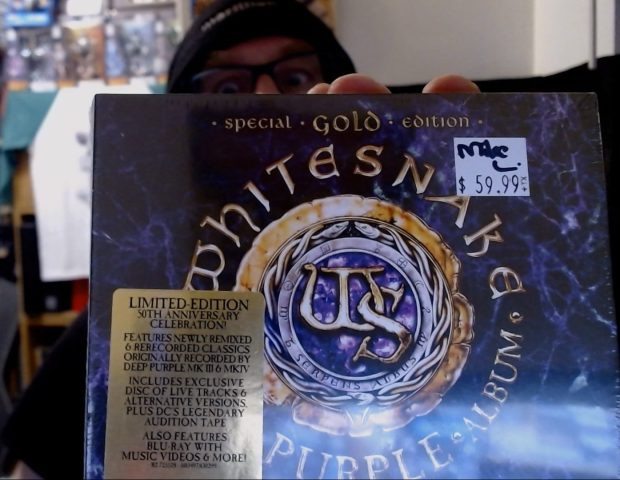
David Coverdale has been remix-happy of late.  Nothing wrong with that, I just have a hard time overcoming my passion for original versions of songs that I spent time living and loving for many years.  Obviously I can’t have too much issue with it if I keep throwing money at him.  Thank you Encore Records for holding this pricey item for me.  $60 for 2 CDs and a Blu-ray disc.  Details in the scans below, along with images of my other related Whitesnake discs.

Enjoy the video below, taking a gander at all the different colours of Whitesnake!


Unboxing and Admiring the new JOURNEY – FRONTIERS 40th Anniversary Vinyl