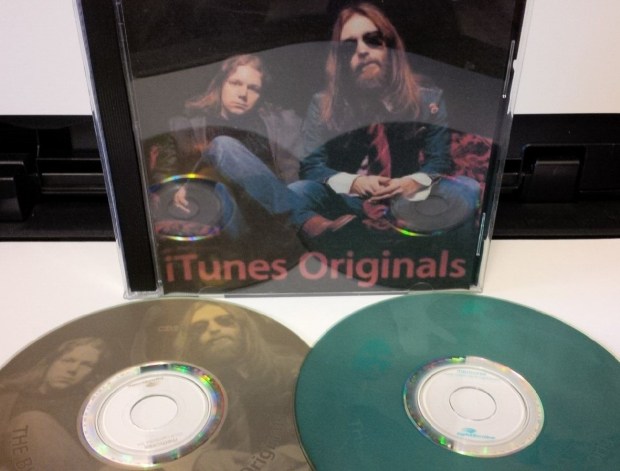
If you ever spy these iTunes Originals sets from bands you like, then have a gander at the track list. The Black Crowes’ edition contains original hits, but also has unreleased exclusive versions. There is also a long interview session (spread through the set) with Chris and Rich Robinson, a good and revealing chat. In total the set runs over an hour and a half. Chris and Rich are vivid storytellers and the interviews are good enough to want to listen to more than once. They surprisingly reveal that punk was a strong early influence. Rich recalls seeing Corrosion of Conformity which opened up a new world for the brothers Robinson. The punk shows gave the band a “try anything” attitude in concert, including playing brand new songs that they didn’t have words for yet. But their influences also stretched deep into indi rock, folk, jazz and beyond.
“Twice As Hard” from the debut album is the first hit song presented, and damn if it isn’t still as fine as the day it dropped in 1990. That simple classic British blues rock sound gave the Crowes the springboard they needed to drive them on to greater achievements. It was different for the time. Yet the ballad “She Talks to Angels” was really special and that’s here too. With the interviews in between explaining the journey, iTunes Originals plays like an audio documentary. The story and the music get more interesting as you go. Each album brings something new to the table. By Your Side was a “strange place”, says Chris, but its title track still rouses the senses.
It’s a light sprinkling of hits and album cuts moving forward through the discography of the Crowes. The main thing for long time fans is the exclusive material, all acoustic versions recorded by Rich and Chris. The Otis Redding cover “You Don’t Miss Your Water” is a song they’ve been singing together for years, but never recorded until now. What a lovely song, and what harmonies. From Three Snakes and One Charm, “Good Friday” is rendered slower and sadder. The stripped down approach of these acoustic recordings lends “Welcome to the Good Times” from By Your Side a new appeal.
The Crowes split up for a bit in the early 2000s, but you can’t keep the Robinson brothers apart for too long. War Paint (2008) was their reunion as the Crowes. With new and returning members, the band felt revitalized. “Oh Josephine”, another acoustic exclusive, is as pretty as “She Talks to Angels” 18 years earlier. The last of the exclusives is “Goodbye Daughters of the Revolution” which also closes the set. Upbeat gospel rock and roll works as well electric as it does acoustic. “Goodbye Daughters of the Revolution” was one of the finer moments on War Paint and it’s perfect for ending this iTunes Originals.
TALAS – If We Only Knew Then What We Know Now… (1998 Metal Blade)
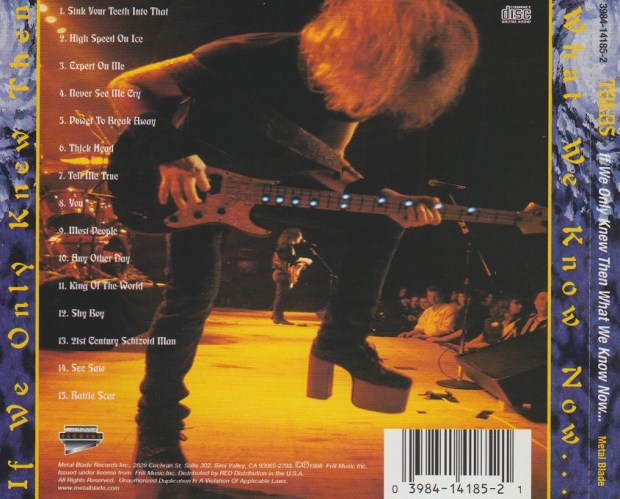
The Talas story did not end with the breakup of the band. Of course not; bands both famous and obscure like to reunite for nostalgia shows. Talas did that in 1997 with the original power trio lineup: Billy Sheehan on bass, Paul Varga on drums, and Dave Constantino on electric guitar. With classic material (from the first two Talas albums) and a few unreleased songs, they memorialized their reunion with a brand new live CD. Billy even pulled his old platform boots out of the closet for this one.
As usual the set opens with “Sink Your Teeth Into That” and an enthusiastic home town crowd. Talas only sounded better with age. The original voices are there and just as strong as they were in 1982. It actually sounds like everyone has improved over the years. A speedy “High Speed on Ice” is in the second spot ensuring no loss of momentum. Material from the first self-titled Talas album is included too (unlike the last live album Live Speed on Ice). “Expert on Me” is very pop in construction, but clearly not as great as the songs from album #2, Sink Your Teeth Into That. Speaking of which, the slow rumbler “Never See Me Cry” is brilliantly adapted to the stage.
“Power to Break Away” is one of the previously unrecorded songs, and it kicks it just as hot as anything from Sink Your Teeth Into That. It’s taut with hooks and the prerequisite bass workouts. “Tell Me True” is the second unreleased song, a slow non-descript dirge ballad that takes a while to get going.
Imagine Billy Sheehan plowing his bass right through a funky Led Zeppelin riff. That’s “Thick Head”, an awesome track from Talas (1979). “You” has a cool vibe, almost like an unheard Aerosmith demo from the Done With Mirrors era. A few other tunes from the first Talas (“Most People”, “Any Other Day” and “See Saw”) are adequately entertaining. Back to Sink Your Teeth Into That, “King of the World” is still one of the best Talas tunes, overshadowed by only a few like “Shy Boy”. Here, “Shy Boy” is preceded by a Paul Varga drum solo. The sheer velocity of “Shy Boy” itself makes me wonder how Varga did it. It’s just pedal to the metal, blurring the lines and smoking the minds.
Nothing like a good cover to help draw a live album to a close. Talas did two: “21st Century Schizoid Man” and “Battle Scar”. The King Crimson cover is a daring one to attempt. They somehow manage to strip it down and pull it off with integrity. As for “Battle Scar”? Total surprise there! Max Webster were just across the border from Buffalo, and Billy Sheehan nearly joined Max at one point late in their career. Introduced by a Billy Sheehan bass solo, this Max/Rush cover is the set closer. As a final addition, “Battle Scar” surely makes this one hell of an album for the history books. (The Japanese version has a bonus track called “Doin’ It Right” — this shall be reviewed at a later date. Our copy is on order but will not arrive for several weeks.)
Since this is a more recent release on a well known label (Metal Blade), it turns out that If We Knew Then What We Know Now is an easy CD to find in the shops. Fortunately this is a good first Talas album to add to any collection.
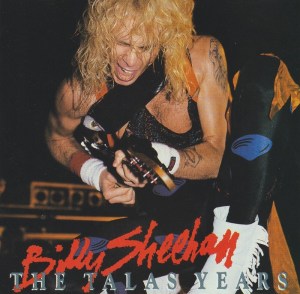
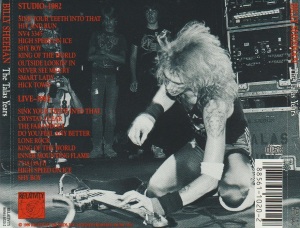
Second in a two-part review of the 1989 compilation CD, Billy Sheehan – The Talas Years. Part one is here:Sink Your Teeth Into That. More Talas tomorrow!
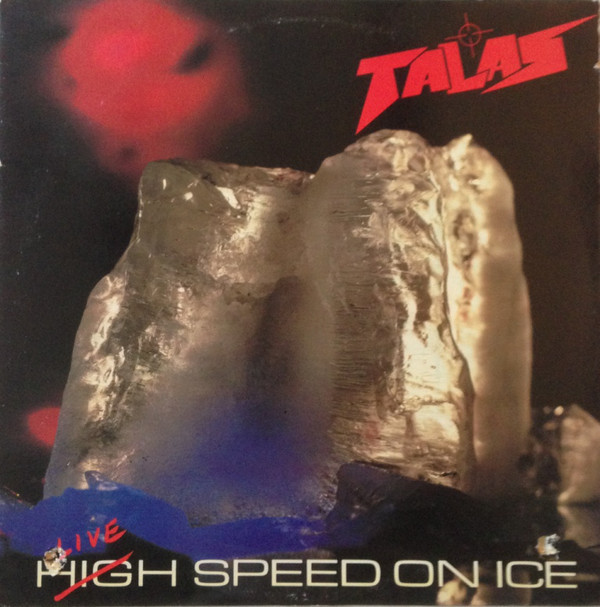
BILLY SHEEHAN – The Talas Years (Part Two of Two) (1989 Relativity) TALAS – Live Speed on Ice(1983 Relativity)
When we last met Talas, they were a power trio. On their 1984 live album, they were a quartet. Billy Sheehan was the only remaining member of the original lineup, with some hot talent behind him: Mark Miller on drums, Mitch Perry (MSG) on guitar, and the hugely talented Phil Naro singing. Naro has been around, including a stint with Peter Criss. (You can hear a number of his performances on Mitch Lafon’s Kiss tribute CD A World With Heroes.)
There is little question that Naro’s voice brings the songs to another level. “Sink Your Teeth Into That” benefits from his young rasp. Mitch Perry throws in a more articulated guitar solo for an extended section leaving Billy to hold down the riff. Second in line is a new song, “Crystal Clear” which has a biting Police guitar riff. The busy bass holds down the melodic center as Naro soars on top. Live Speed on Ice has great value, since much of its material was actually brand new and never released on anything else. “The Farandole” is another new one, an instrumental of jaw-dropping ability. Dueling bass and guitars dance and parry while the drums hit the heavy blows.
More new tunes: “Do You Feel Any Better”, “Lone Rock”, and “Inner Mounting Flame” continue the ass-kicking streak. Each has their own groove, but “Inner Mounting Flame” truly is live speed on ice. A few older tracks from the album are solid winners: “King of the World”, “High Speed on Ice” and of course “Shy Boy”, the one Talas song that people know today thanks to David Lee Roth. Billy’s signature bass solo is also performed live (and extended), but cleverly retitled. While “NVH 3345” meant “SHEEHAN” upside down, “7718 (3A17)” means “BILL (LIVE)”. With the freedom of the live setting, Bill took his time to showcase some unheard of chops and effects.
Any album that has Billy Sheehan on bass is bound to include a thousand notes of pure thrills, and any record with Phil Naro is going to sound awesome vocally. Therefore, Live Speed on Ice should be a welcome addition to the discerning rock fan’s personal library. The easiest way to get it is on CD combined with Sink Your Teeth Into That as the 1989 compilation Billy Sheehan – The Talas Years. Either way, you win.
A two-part review of the 1989 compilation CD, Billy Sheehan – The Talas Years.
BILLY SHEEHAN – The Talas Years (Part One of Two) (1989 Relativity) TALAS – Sink Your Teeth Into That(1982 Relativity)
Fans of David Lee Roth are probably already aware of Talas via their incredible bassist Billy Sheehan, an innovative genius of the four-string rumble. His first recordings were with Talas (1979-1983), a Buffalo power trio. With Roth, he re-recorded the Talas track “Shy Boy” on Eat ‘Em And Smile. The Talas original can be found on their second LP Sink Your Teeth Into That, or the compilation The Talas Years.
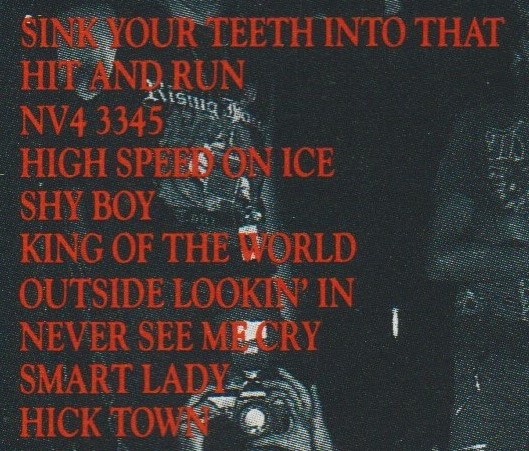
The focus is immediately and obvious on the bass. Billy plays it simultaneously as a lead instrument, and the rhythmic foundation. “Sink Your Teeth Into That”, the title track boasts not only insane playing, but sounds that had never been heard before from a bass guitar. And the song’s pretty good too. It’s raw 80s hard rock, no more no less, except for that bass. “Hit and Run” is just as strong. Talas were not just a bass showcase, but a band that could actually write good songs. These are unpolished and rough songs, with the band (Dave Constantino on guitar and Paul Varga on drums) alternating lead vocals.
The centerpiece of the album is the bass solo “NVH 3345”. Write that down and turn it upside down: it spells “SHEEHAN”. It has been said before that as Eddie Van Halen’s “Eruption” was a game changer on guitar, “NVH 3345” is the “Eruption” of the bass guitar. It is hard to imagine more sheer technique stuffed into 2:21. For anyone who is a serious collector of hard rock heroes, “NVH 3345” must find a way into your collection.
“High Speed On Ice” returns to a hard rocking momentum, like “Highway Star” via Buffalo New York. Then “Shy Boy” which needed David Lee Roth and Steve Vai to finally perfect it. Think of this version as a prototype. It is hard to believe that David Lee Roth did not write the line “Gotta keep things movin’ ’til my personality starts it groovin'”, but Roth made it sound like he meant it.
“King of the World” and “Outside Lookin’ In” occupy the mid-tempo range, and that would be Billy singing those high screams. Both good songs with the memorable hooks to go with the bass hijinks. Shadows fall on “Never See Me Cry”, a darker side of Talas but still with the hooks intact. Second to last song “Smart Lady” is the only loser. There isn’t room for songs that just don’t cut it. “Hick Town” ends the album on a better note, with bass pyrotechnics and thrills to go.
Sink your teeth into Talas, and come back tomorrow for a look at Live Speed on Ice.
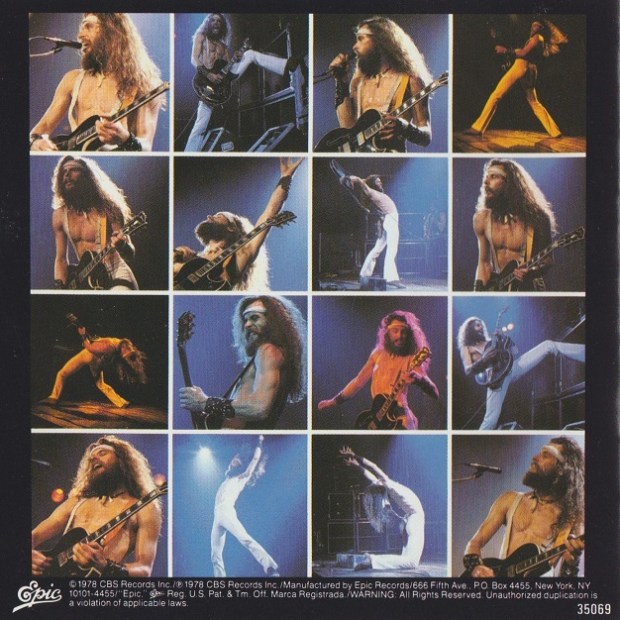
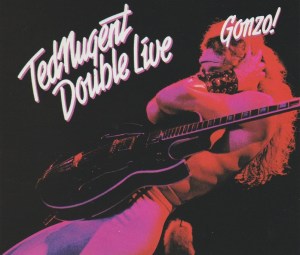
Ted Nugent has expressed his displeasure with Double Live Gonzo! I wish I still had the 1990 magazine interview where he trashed the record, because I have to strongly disagree. To these ears, Double Live Gonzo! is another one of those incredible 1970s cornerstone live albums that every self respecting rocker should listen to at least once. It’s the album that spawned the name “Nashville Pussy”, and houses the definitive live take of “Great White Buffalo”.
Double Live Gonzo! was recorded at multiple shows. The shout-outs to Nashville and San Antonio (“suck my bone-i-o!”) make that obvious, but it’s not a detriment to the LP. With Derek St. Holmes on guitar and vocals, Ted and the gang bring the rock and roll noise to the best party in town. All you have to do is hit play and hold on tight. It’s an intimidating track list at first: three songs run over 10 minutes, with the majority over 5:00. There is Terrible Ted on the front cover, covering his ears as if in pain from the powerful feedback contained inside.
Ted’s hits are present (“Catch Scratch Fever”, “Stranglehold”, “Yank Me Crank Me”) but are overshadowed by more epic rock orgasms. “Great White Buffalo” and its incredibly dexterous riff is the main attraction. Though this song was originally recorded by Nugent’s Amboy Dukes, the live version is the most important. Love Ted or hate him, no serious rockers should have to live without “Great White Buffalo” in their collections. It’s all about that riff, which is hard to duplicate but impossible to forget.
The Indian and the buffalo, They existed hand in hand, The Indian needed food, He needed skins for a roof, But he only took what they needed, baby, Millions of buffalo were the proof.
But then came the white man, With his thick and empty head, He couldn’t see past the billfold, He wanted all the buffalo dead, Everything was so sad.
The Amboy Dukes’ “Hibernation” grandstands with some equally impressive musical chops (as do all the songs). Almost as good as “Hibernation” itself is its live intro. Ted introduces his guitar to the crowd: “This guitar right here is guaranteed to blow the balls off a charging rhino at sixty paces,” he claims. “You see this guitar definitely refuses to play sweet shit, you know, it just refuses.” However “Hibernation” is pretty sweet, as far as rock n’ roll goes.
If you are looking for some “Wang Dang Sweet Poontang”, then Terrible Ted has your prescription: it’s “Just What the Doctor Ordered”. The Nuge has done a few live albums over the years, but none as beloved as Double Live Gonzo! For its minor faults (it could sound beefier with less crowd noise), Double Live Gonzo! serves the needs of the masses looking for some full bluntal Nugentity. His gut-busting guitar playing can’t be touched and with Derek St. Holmes in the house, you also don’t have to listen to Ted singing lead on every track.
Double Live Gonzo! isn’t just for guitar players, but guitarists will absolutely dig Ted’s incredible licks and control of feedback. Few guitarists can command the instrument like Ted does. Players will find much to examine, while the average listener can just look forward to a double serving of 1970s live rock. No lyrical messages, just brutal sonic massages.
4.5/5 stars
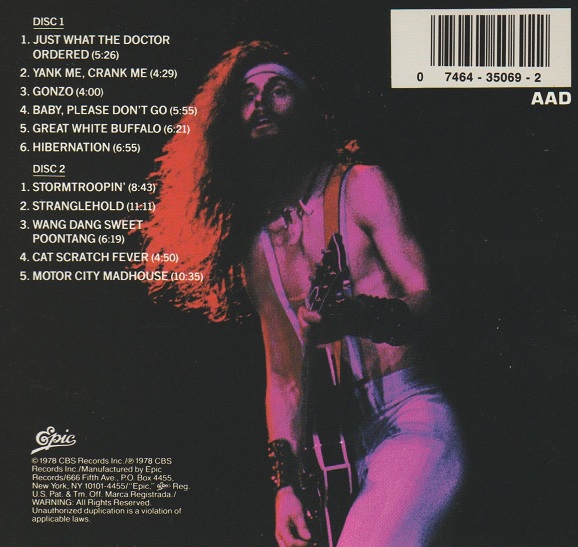
The back cover has a mis-print. “Hibernation” is 16:55 long, not 6:55.
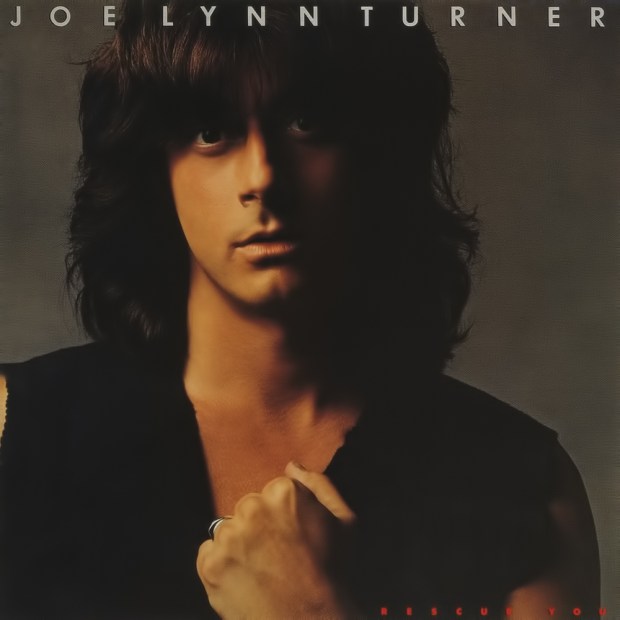
Post-Rainbow, Joe Lynn Turner embarked upon a solo career. With the last Rainbow drummer Chuck Burgi on hand, Joe debuted his solo self with Rescue You in 1985 on Elektra. Roy Thomas Baker, best known for his work with Queen, worked on the production. All songs were written by Joe and guitarist Alan Greenwood. The direction was heavy on keyboards, and sampled drum sounds. The only thing in common with Rainbow is the voice.
That voice cannot be mistaken. Nobody can sing soul-driven broken hearted AOR rock like Joe Lynn Turner. Opening track “Losing You” fits this description like a glove. The samples and keyboards are occasionally distracting, but the melodies are strong. Joe has always been a fine writer. Perhaps Journey should have knocked on Joe’s door for some help when they were struggling to come up with Raised On Radio. The second song, “Young Hearts” is pure pop rock like Steve Perry did on Street Talk in 1984.
“Endlessly” was the single/video, a keyboard rock ballad, and a decent one at that, but it is overwhelmed by the title track. “Rescue You” is once again very keyboard heavy, but rocks better than anything else on the album. It has a European flavour, sounding a bit like some of the material Glenn Hughes was doing in the 1980s. Back to the Americas, “Feel the Fire” is a bit limp, but sounds like something that could have been played on radio.
The LP continued on side two with “Get Tough” which isn’t that at all. The toughest thing about it is Burgi’s excellent drumming at the start. The bassline sounds like “Livin’ on a Prayer” but before that song was ever conceived. One gets the feeling that many of these songs could have been hits if only recorded by someone more famous. “Eyes of Love” is a decent moody mid-tempo song, and Joe sounds awesome on it. “On the Run” is a bit more upbeat, boasting a strong chorus that’s as good as anything on Slippery When Wet. Moving into Purple territory, “Soul Searcher” could have fit in well on their Slaves and Masters LP. One almost aches to hear what Blackmore and Lord would have added to it. Going into the closer, “The Race is On” really has the life sucked from it with the keys and samples. You can distinctly hear a heavy blazing rocker desperately trying to get out. The recorded song sounds half-arsed, with those unnecessary keys taking up valuable sonic ground.
Not a bad solo debut from Joe, but certainly inferior to the Rainbow that came before and the Purple that came after.
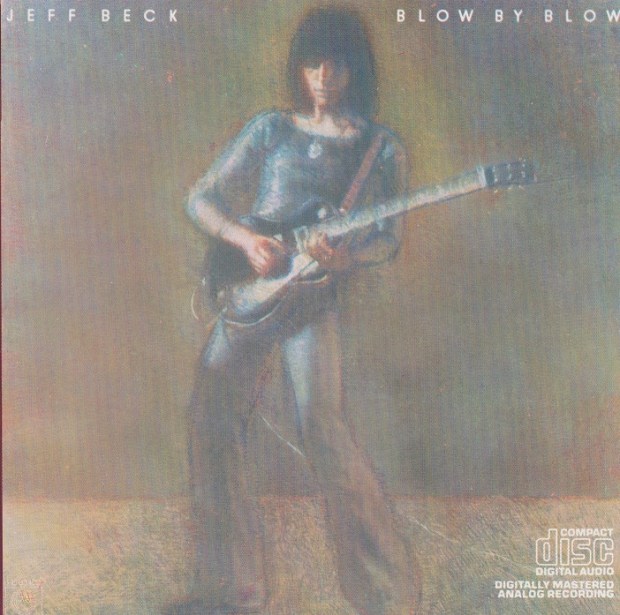
Jeff Beck’s first solo album, Blow By Blow, was co-produced by George Martin. The talents of both need no elaboration. A guitar god and “the” producer’s producer were bound to make something special together. With an ace quartet (Max Middleton on keyboards, Phil Chen on bass and drummer Richard Bailey), there were no weak links.
Blow By Blow spans many musical genres, all augmented with Jeff’s sharp and slippery fingerwork. Funk, jazz, blues, Carribean and progressive rock all collide in the grooves. The songs are instrumental hybrids of styles, but Jeff keeps it consistent. His guitar speaks. There really isn’t a better way to describe what he does with tone, technique and technology. There is even an uncredited Stevie Wonder cameo on “Thelonius”. If you can’t get enough funky clavinet, you’ll love Blow By Blow.
This albums is tops in almost every conceivable measure. The drum rhythms and bass grooves are hard hitting and relentless. Musicianship like this is rare and valuable. Without Jeff Beck there could be no Steve Vai — this, I firmly believe.
Play Blow By Blow, and then play it again. Thanks to George Martin’s fine musical sensibilities, it reveals new nuances each time. A complete triumph.
5/5 stars
This has been a 200 word review in the tradition of the#200wordchallenge.
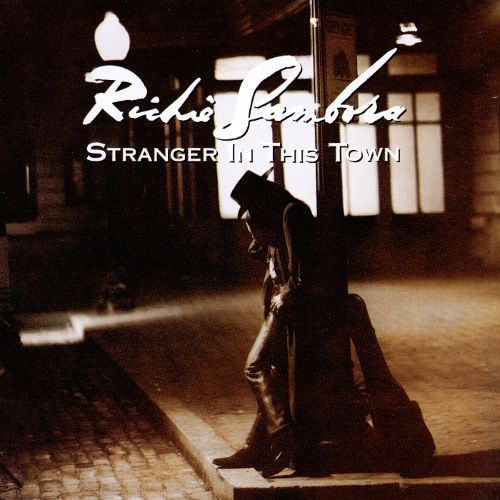
RICHIE SAMBORA – Stranger In This Town (1991 Mercury 2 CD deluxe)
Bon Jovi went on hiatus after the lengthy New Jersey tour. Their future appeared uncertain. Jon had released his first solo album, a soundtrack called Blaze of Glory. Alec John Such was reportedly opening carwashes in Hungary, although that was probably a joke answer in a magazine interview. Meanwhile, the rest of Bon Jovi (Richie Sambora, David Bryan and Tico Torres) gathered in the studio to record. With Tony Levin on bass and Chapman Stick, the group assembled Richie’s first solo album, Stranger In This Town. Although fans were worried about a possible split, there was much excitement for Richie to have a chance to sing his own songs. Adding to the hype, Eric Clapton appeared as a special guest. (Randy Jackson played bass on one song, “One Light Burning”.)
Sambora seemed to determine to fly his own colours. Predominantly, that’s blue, as in the blues. He also mixed in soul, pop, and rock to create an album that wouldn’t alienate any Bon Jovi fans. David Bryan contributed songwriting, and there is even one Bon Jovi song in the mix. It’s not a guitar album, although it need not be stated that the guitar playing on this album is brilliant. Richie went for feel and atmosphere rather than flash.
This is apparent on opening track “Rest in Peace”. It’s not really a full-fledged song, but more an introduction to the album. It even has listening instructions: “Turn down the lights…light a candle…welcome.” That doesn’t sound very rock and roll, does it? But it is good advice. That’s the kind of album this is. “Rest in Peace” is loaded with soul, and this merges with the pop rock on “Church of Desire”. A song like this wouldn’t have worked with Bon Jovi. It has more soul, and its quiet production lets the music breathe more than Bon Jovi songs do. It’s a brilliant track, and Richie’s solo just blasts. Different from Bon Jovi, but accessible for Bon Jovi fans: it’s an ideal song for a first Sambora album.
The blues single “Stranger In This Town” sounds like something Richie had been aching to do for years. Backed by a choir of vocalists, this is Richie fulfilling some musical dreams. Both blues fans and rock fans should enjoy the middle ground where they meet on “Stranger In This Town”. As a single, it seemed to represent the image Richie was going for. This album has three singles in a row, making the first side a little more consistently strong. “Ballad of Youth” was the debut single, combining Bon Jovi’s anthemic melodies with Richie’s new laid-back vibe. It even has a Bon Jovi-like positive message. “Don’t waste your life away, thinkin’ ’bout yesterday’s blues.” The excellent third single was the synth ballad “One Light Burning” which almost sounds like Richie Sambora joined the Cars. For the programmed sounds and percussion, Richie said they had “about 100 computers” networked together. Oh, 1991! Though a ballad, it’s the centerpiece of the album.
It’s possible they intended “Mr. Bluesman” to be the centerpiece, but the lyrics are difficult to digest. When you write a song as a tribute to your hero, such as this tribute to Eric Clapton, lyrics are always the trick. Thankfully Mr. Clapton’s guest guitar appearance, though brief, does tell us the story. Hearing him rip on this blues ballad is like a searchlight cutting through the murky haze. But here’s the weird thing. Didn’t Eric find Brian May’s tribute song “Blues Breaker” embarrassing? Yet he appeared on this ballad?
“Rosie” is a Bon Jovi song that was heavily bootlegged, from the fruitful New Jersey sessions. It sounds like Bon Jovi, but Richie’s version has way more guitar. Unfortunately the Bon Jovi version has never been released. It was mysteriously not included on the Sons of Beaches demos that came out in 2014, even though the other songs were. One has to assume Jon didn’t include it on his set because Richie already had his version out. The next track “River of Love” is a title that has nothing to do with the Bon Jovi demo of the same name. This is the first and last really greasy rocker on the album.
It’s ballads from there out, but terrific songs nonetheless. “Father Time” (written with Desmond Child) is a melancholy rock ballad that Jon probably wishes he wrote. It’s a powerful song, like an amped up “One Light Burning”. Guitars burn up and down your spine while Sambora soothes your ears with his soulful croon. Tico and David provide the solid base upon which the song is built. Their expert chops are essential parts of the entire album. Things draw to a close on “The Answer”, an acoustic lullaby-like song that has a lot of heart. A sentimental ballad asking existential questions is an unconventional way to end an album, which is part of what makes it special.
Mercury did something unusual for the era, but very common today. They released Stranger In This Town as a single CD, and a 2 CD deluxe edition. The deluxe is housed in a long box, and has two bonus tracks. At the end of CD is “The Wind Cries Mary”, which saves fans from having to buy the atrocious Ford Fairlane soundtrack on which it originated. It’s a smoking Hendrix cover, and the best tune on that soundtrack. On the second CD you will find an almost 20 minute interview with Richie discussing the songs on this album. No revelations here; it’s really just an extended promo for the album. Half of it is music anyway…snippets of the same music from disc one! An OK extra, but the real bonus is “The Wind Cries Mary”.
The final extra, usually missing on the second hand market, is the metal guitar pick shaped pendant. It has Richie’s solo logo on it, but nobody’s going to be wearing this thing. All this is packed in the box, which is a beauty but awkward to store.
As an introduction of the “real” Richie to the fans, Stranger In This Town was a success. He differentiated himself from Bon Jovi, and also proved he could sing an entire album easily. Critically and commercially, the album was less successful. There were mixed reviews, with the rock press hung up on the soft songs. With the benefit of 25 years’ hindsight, Stranger has aged well, better than Bon Jovi itself.
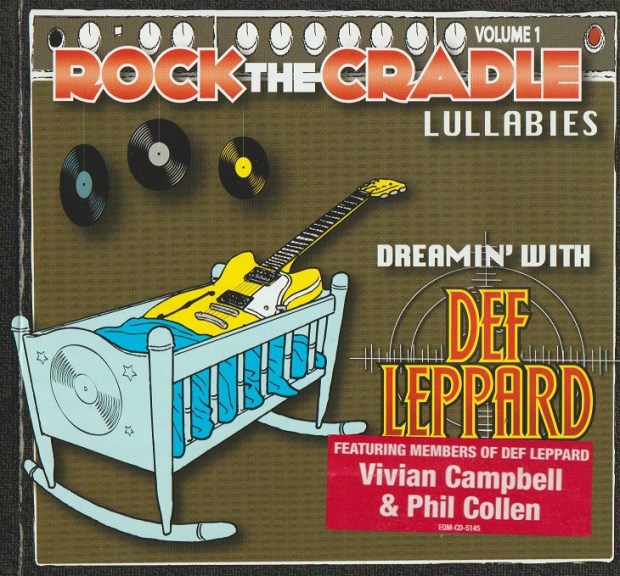
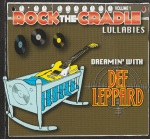
ROCK THE CRADLE LULLABIES volume 1 – Dreamin’ with Def Leppard (2011 Happiness Records)
They call these lullabies, but I’m not so sure about that word. Bon Jovi did an actual album like this, and titled it This Left Feels Right, I believe.
Slowed down, acoustic bluesy and laid back instrumental versions of Def Leppard songs will be found on this CD, easily digestible by anyone. Their effectiveness as lullabies has not been tested under lab conditions but for casual listening in any age group, it should be well received. As stated on a sticker on the front, Vivian Campbell and Phil Collen from Def Leppard make guest appearances (three songs each).
The liner notes state that the technique for “lullification” of these hits involved distilling them down to their core melodies. That makes the songs both easily identifiable and readily enjoyable. A mellow slide guitar often fills in for a lead singer. Phil and Vivian’s work should be identifiable for fans to pick out. Ballads tend to work better than rock songs like “Photograph” or “Pour Some Sugar”, and there are even a few surprising selections from outside the usual Pyromania and Hysteria suspects. “Stand Up (Kick Love Into Motion)” is a particularly good mellow treat.
DEEP PURPLE – This Time Around – Live in Tokyo ’75(2001 EMI)
This shouldn’t have been the “last concert in Japan”!
Many of the old, post-breakup-issued Deep Purple live albums are virtually impossible to find today on CD. One of those is Last Concert In Japan, which was originally released only in that country. It featured the Mk IV lineup of Deep Purple: David Coverdale, Glenn Hughes, Ian Paice, Jon Lord, and the late Tommy Bolin on lead guitar. As a matter of historical releases for my collection, I also own the original Last Concert in Japan on both LP and CD.
The tragic story goes that while some members of Purple were rejuvinated with the fresh blood that Bolin donated, others were dead tired of it all. Reviews were spotty and word was spreading that Deep Purple were over. Both Bolin and Hughes were in the throes of serious drug habits. On the night of the recording of Last Concert in Japan, Bolin was shooting up and caused his arm to go numb. Frantic attempts to get him stageworthy worked and he managed to barely play the show. Guitar parts are sloppy and that’s what people remember because it went on LP. The original one-record set from the show has now been expanded to two lengthy CDs, 17 tracks. It’s been remixed and remastered. Production was supervised by Purple expert Simon Robinson, so you know that the quality level is about as good as it could be. Because of the fully expanded tracklist, some of the finer live Deep Purple moments have been restored to this album, such as a 16 minute “Gettin’ Tighter” which was too long to include on a single record.
Some flaws do remain of course. Tommy’s guitar is now barely audible in the “Burn” riff as opposed to non-existent. However the overall experience is very listenable. It’s a darkly interesting album to own, because within months Purple disbanded, and a year later Tommy Bolin would be dead.
If you already own Last Concert In Japan, this purchase gives you over an hour more of unreleased music. Even so, all of it has been remixed, so you are still in for a fresh listen with open ears. If you already own dozens of Deep Purple live albums (believe me, it’s possible), this one has five songs that you can’t get elsewhere in live versions. It’s even a better listen than In Concert/King Biscuit Flower Hour (aka, On The Wings Of A Russian Foxbat) with stronger vocals. Plus you get Tommy singing on “Wild Dogs”. Worth the double-dip.
 THE BLACK CROWES – iTunes Originals (2008)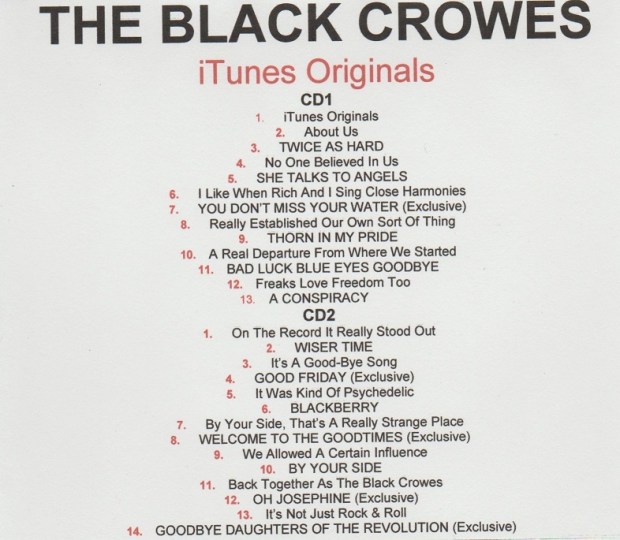







 JOE LYNN TURNER – Rescue You (1985 Elektra)







 mikeladano.com