hard rock

REVIEW: The Darkness – Live at Hammersmith (2018)

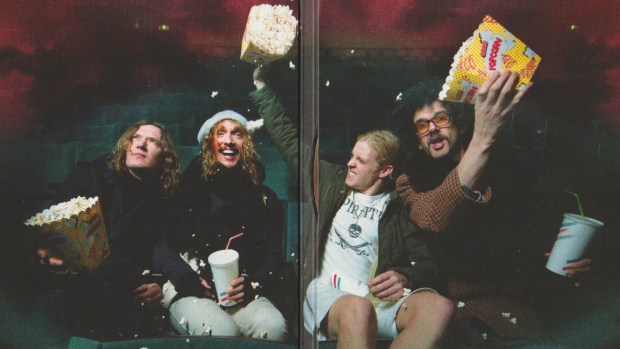
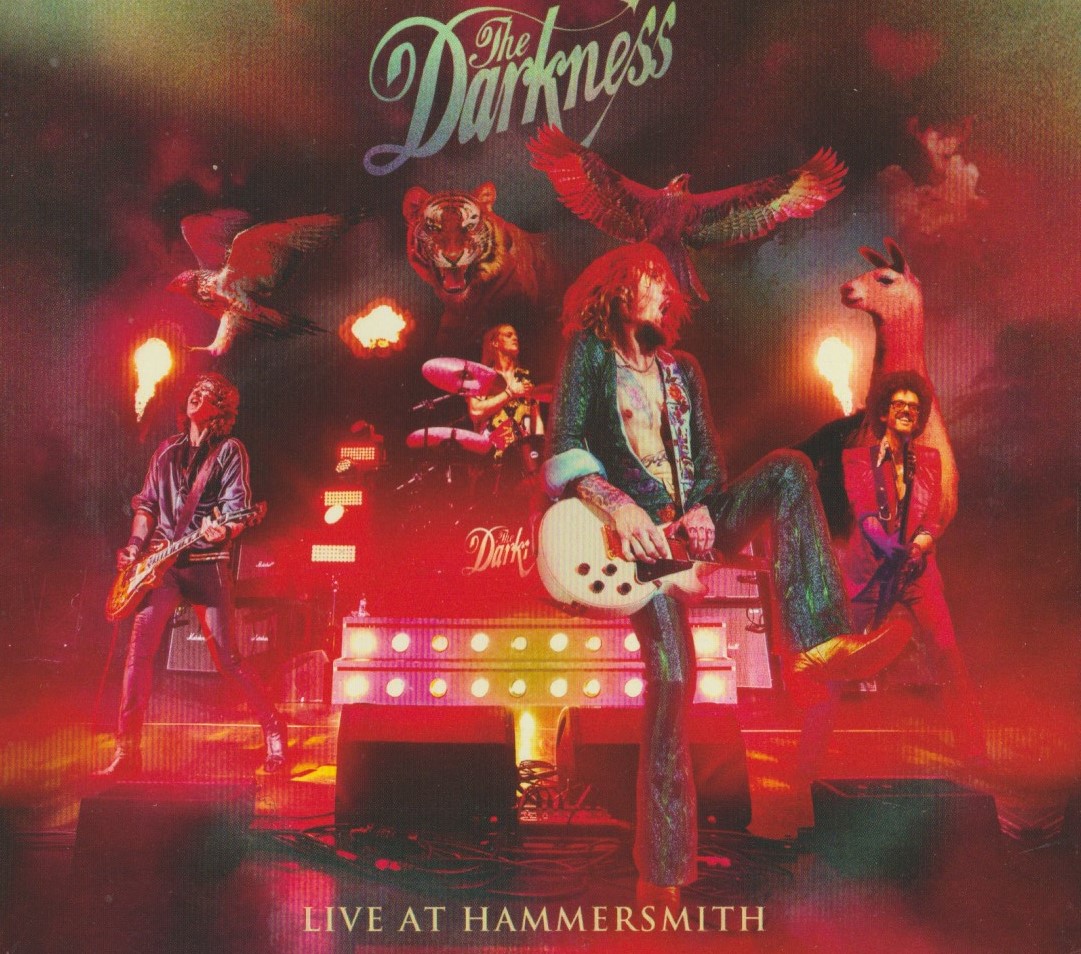
THE DARKNESS – Live at Hammersmith (2018 Canary Dwarf)

“Gimme a D!  Gimme an arkness!”  It’s long overdue, but the world is now the better for it:  the first live album by The Darkness!  Including a few quality B-sides, The Darkness had enough strong songs for a live album back in 2006.  Time waits for no band, but now they’ve got an even hotter selection of hits and deep cuts to draw from, and Live at Hammersmith boasts 19 of ’em on a single CD.  Sorry Japan, no bonus tracks for you.

All five Darkness albums and some classic non-LP singles are sourced, and what a collection it is.  A lot of the newer material on stage consist of the heaviest songs:  “Buccaneers of Hispaniola”, “Southern Trains” and “Barbarian” are like lead, but propelled at the speed of sound!  The oldies span all shades of Darkness, from the hardest cut stones (“Black Shuck”) to the cushioning of a ballad (“Love is Only a Feeling”).

It seems to be, by and large, all the best stuff.  “Givin’ Up”, “Growing On Me”, “One Way Ticket”, “Friday Night”, and the two big hits “Get Your Hands off My Woman” and “I Believe in a Thing Called Love” are present and accounted for.  The last three albums are also represented, and as good as they are, it’s the old stuff that thrills most.

That includes “Christmas Time (Don’t Let the Bells End)” from this seasonal Hammersmith gig.  Maybe it’s those giant dual guitars, but this one has always seemed to work all year ’round.  It’s just a glorified Thin Lizzy riff with a high-pitched singer, and that works winter, spring, summer and fall.

Speaking of the singer, Justin Hawkins has maintained his one-of-a-kind voice and range over all these years, unlike virtually every other homo sapiens on the planet.  Let’s start a conspiracy theory right here that he is an alien, because the voice is just inhuman.

Would have loved “Last of Our Kind”, though that’s a minor complaint.

Hammersmith fell to the Darkness that night.  Now you can relive it in your headphones, or home theatre, as it were.

4.5/5 stars


REVIEW: Styx – Caught in the Act – Live (1984)

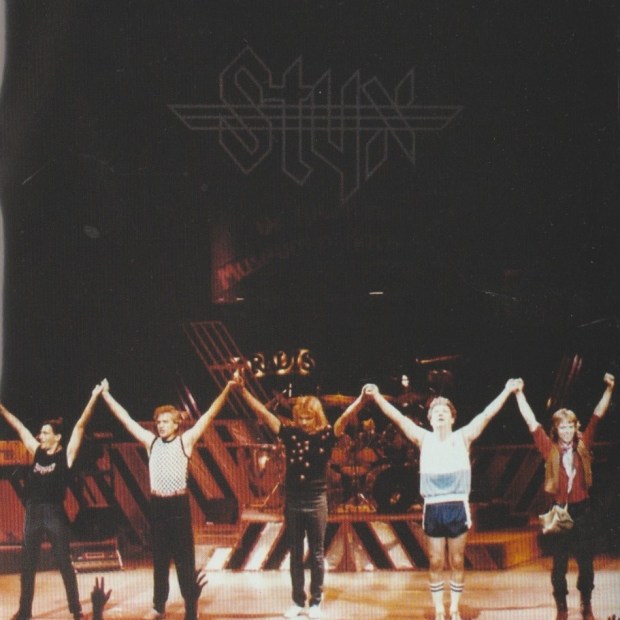
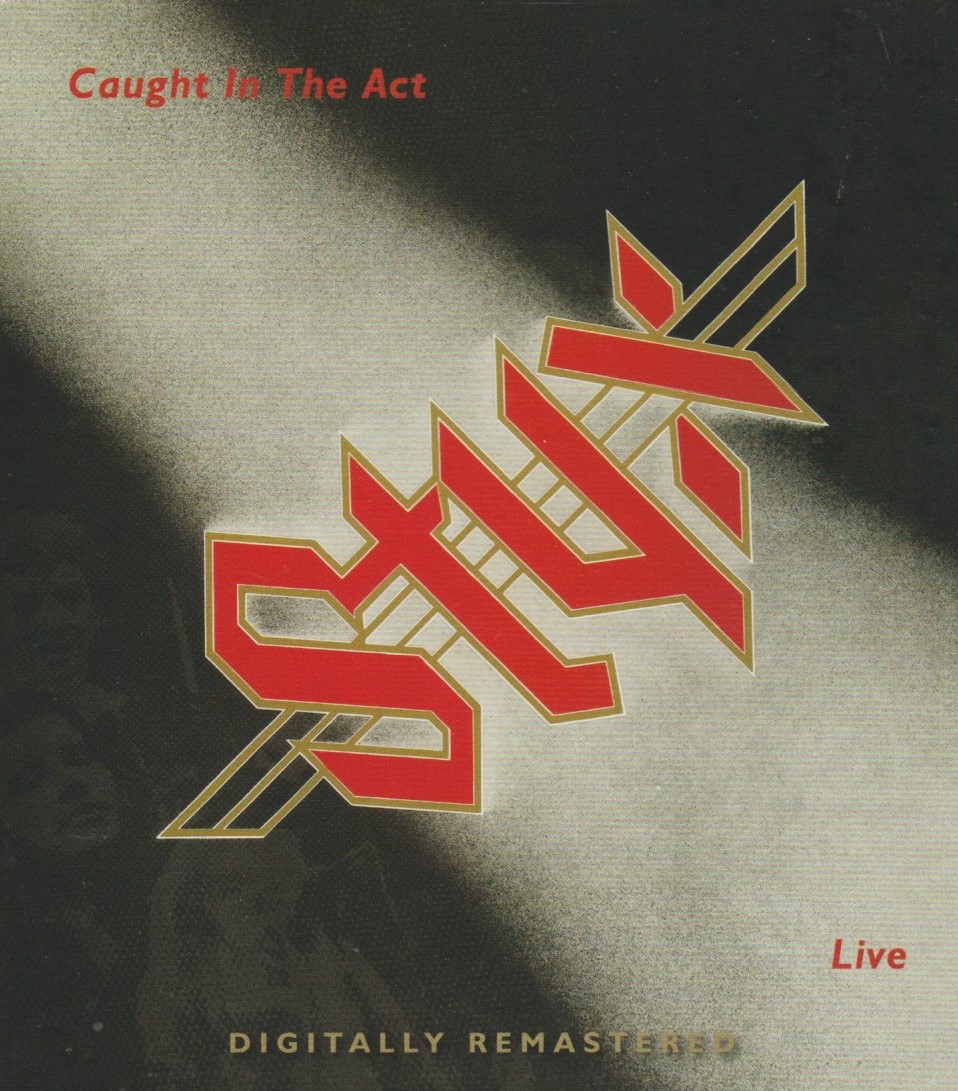
STYX – Caught in the Act – Live (1984 A&M, 2018 BGO reissue)

“Hey everybody it’s Music Time!”

Sorta, anyway!  Styx were just about toast after “Mr. Roboto“, and Tommy Shaw didn’t want to sing any more songs about androids.  (Mars, however, was fine.)  He departed to check out some Girls With Guns, but not before Styx put out one more product before hiatus.  That would be the traditional double live album, which was actually Styx’s first.

Styx have lots of live albums now, but only two with Dennis DeYoung.  Caught in the Act is essential for a few key reasons.  It sounds great although there are clearly overdubs in places.  It is the only one with the classic lineup of DeYoung/Shaw/James “JY” Young/Chuck Panozzo/John Panozzo.  And it has plenty of classic Styx songs that still shake the radio waves today.

Like many live albums, Caught in the Act contained one new song.  Dennis DeYoung wrote the uppity “Music Time”, a very New Wave single without much of the punch of old Styx.  Shaw was so nauseated that he barely participated in the music video.  “Music Time” isn’t one of Styx’s finest songs.  It’s passable but clearly a misstep.  No wonder it was a final straw of sorts for Tommy Shaw.

With that out of the way, on with the show.  Styx opened the set with “Mr. Roboto”, a mega hit that got a bad rap over the years until nostalgia made it OK to like it again.  Fortunately only two songs from Kilroy Was Here were included, the ballad “Don’t Let It End” being the other.  Live, “Roboto” pulses with energy, far more than you would expect.  The disco-like synthetic beats complement the techno-themed lyrics.  Every hook is delivered with precision.  With the human factor that comes out in a live recording, “Roboto” could be one of those songs that is actually better live.

Styx have always been a diverse act, and this album demonstrates a few sides of the band.  Shaw and Young tended to write rockers, and “Too Much Time On My Hands”, “Miss America”, “Snowblind”, “Rockin’ the Paradise” and especially “Blue Collar Man” are prime examples of the best kind.  Long nights, impossible odds…yet a killer set of rock tunes.  Then there are the ballads.  “Babe” is a slow dancing classic, and “The Best of Times” is even better.  Finally, the tunes that verge on progressive epics: “Suite Madame Blue”, “Crystal Ball” and “Come Sail Away” have the pompous complexity that punk rockers hated so much.  This album is a shining live recreation of some of rock’s most beloved music.

The 2018 CD reissue on BGO Records sounds brilliant with depth, and has a nice outer slipcase.  You’ll also get a nice thick full colour booklet with photos and an essay that goes right up to 2017’s The Mission.  BGO is a well known, respected label.  This reissue is a must.

4.5/5 stars


#704: Battle of the Bands

A kinda-sorta retelling from a different perspective of Part 258:  Uncle Meat

GETTING MORE TALE #704: Battle of the Bands

Poor George.  He really wanted to be in a band.  Rob Szabo had a band.  He was just starting out with one of the neighbour kids.  He even had two original tunes (I remember one was called “The Stroll” and I can still hum it).  George really wanted to be in Rob’s band.  He hung out at their basement rehearsals and watched them play.  Rob would teach him things.  They needed a bass player.

George secretly saved his money, and eventually bought a bass.  Rob was horrified.  He didn’t want George in his band, he wanted a musician who already knew how to play music.  He didn’t want to have to teach the bass player how to play bass.  He also felt terribly guilty, because George bought the bass specifically because Rob needed a bass player!

I can remember George playing Rob’s tape to the girl he liked.  “That’s us!” he said.  “That’s my band.”  He wasn’t on the recording at all.

Like a kid who didn’t know how to break up with his girlfriend, Rob took a while to tell George he was “out” of the band.  When he did, George was not deterred.  He just went it alone.  He taught himself how to play by playing along to records.  He studied Steve Harris and Gene Simmons who quickly became his favourite bassist.  He practiced all the time.  I know, because we could hear him from our house.  We laughed about it, because George also attempted to sing.

He eventually got pretty good at bass; good enough anyway for the bar band scene.  He would never be any good at singing, although that hardly stopped him, and you have to respect that.

In the summer time, George took his amp outside and played for anybody who happened to be around.  He loved to play, “Guess this song from the bassline!”  Not an easy game when I didn’t know many songs yet myself.  I had a few albums, but I’d only been into rock and roll for a couple years.  Every bassline sounded the same to me.

“Guess this one”!  Durm durm durm durm.  Durm durm durm durm.

“Uhh, I dunno, ‘Shout It Out Loud’?”

“No, it’s ‘Love Gun!'”

George finished highschool, but I was just beginning.  It was there I saw my first Battle of the Bands.  I sat with Bob Schipper, Rob Daniels and the gang at lunch watching the bands play.  Rob Szabo had a band called Under 550 — the total body weight of the four members.  Even in highschool, it was obvious Rob had real talent.  There were all the other bands, and then there was Under 550.  He was levels above the others.  He could play “YYZ”.  I’d never even heard of “YYZ” (though I’d seen those letters on my parents’ luggage tags).  There was only one clear winner and that was Under 550.  It was obvious to everyone.  They would be going to the regionals at the Humanities Theatre.

Rob Szabo on the left

Bob and I got our tickets.  We went with neighborhood friends Scott Peddle and Todd Meyer.  The four of us sat together and waited giddily.  Not only was Rob Szabo playing, but so was George.  He joined a band called Zephyr (no relation to the other Zephyr), and they were on the bill.  I planned my catcalls.

George always told me he wanted to play “I Love It Loud”, and introduce it by saying to the crowd:  “How do you like your music?  Well I love it loud!”  I hoped and prayed he was going to do that.

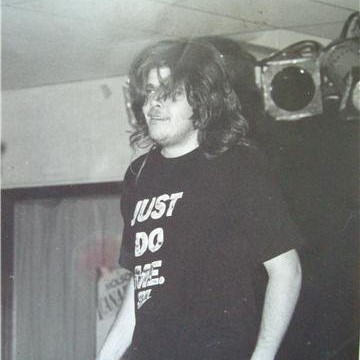
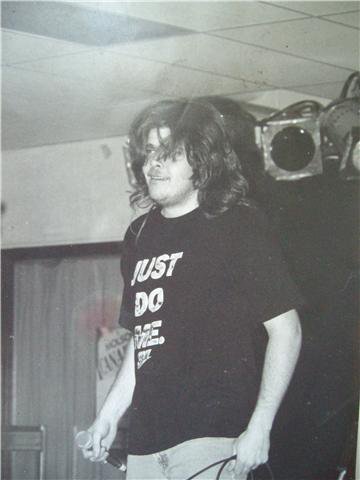
Each band got two songs.  We waited through noise bands like Stomach Acid and F.U.H.Q., who had the plug pulled early for swearing.  We waited through boring acoustic and pop crapola.  There was one group that rocked really fucking hard.  I wasn’t into thrash, and these guys were heavy.  A group of bangers came down to the front row and started banging their heads to the thrash!  You could see the long hair flailing.  I didn’t know the singer, but many years later I found out his name was Eric.  But nobody calls him Eric.  Today they just call him Uncle Meat.  The Legendary Uncle Meat.

Meat

Truth is, his band was too scary for a 14 year old me!

On came Zephyr.  “You suck George!” I yelled, with Scott joining me.  He ignored us, or couldn’t hear us.  It didn’t matter, Scott and I were laughing so hard!

Sadly, George did not play “I Love It Loud”.  Zephyr disbanded a little after, with George again going solo.

Rob stacked the deck for the regionals.  Under 550 added a lead singer, and became Over 550 for this one night.  Though they didn’t win, they ranked high.  Uncle Meat and George went home empty-handed, but with memories etched forever.

The winners of that event? The now-somewhat-but-not-really-legendary Gordie Gordo and the G Men, featuring Sausagefester Scottie G, on the not-very-well played guitar! $100 dollar first prize which went promptly towards a mic stand.

We laughed on the way home at our witty catcalls like “Don’t fall over George!”

And that, friends, is why my highschool years were better than yours.


REVIEW: Styx – Come Sail Away: The Styx Anthology (2004)

STYX – Come Sail Away: The Styx Anthology (2004 A&M)

Styx need to get their albums remastered and reissued pronto.  In the meantime, you can Come Sail Away with The Styx Anthology.

The great thing about the Styx Anthology is that it covers virtually all Styx history, even the first four albums on Wooden Nickel records.  Each one of those early albums is represented by a track (two for Styx II).  Those early albums had some good material on them that usually only diehards get to hear.  “Best Thing” and “You Need Love” are bright and rocking, just like you expect from Styx.  “Winner Take All” and “Rock & Roll Feeling” are consistent toe-tappers.  The jovial harmonies, and lead vocals (by Dennis DeYoung and James “JY” Young) on these tracks could easily be mistaken for later, more famous Styx.  Don’t forget the original version of “Lady” from Styx II, their first big ballad.  Styx’s flair for the dramatic was there right from the first.  (Remember “Lady” as performed by the Dan Band in the movie Old School?)

Shortly thereafter Styx signed with A&M.  1975’s Equinox boasted hits galore.  You should know “Light Up” and “Lorelei”.  But Equinox was their last with founding guitarist John Curulewski.  He was replaced by a guitarist with prodigious talent and a voice to go with it:  Tommy Shaw.  Shaw’s “Crystal Ball” is one of the best songs from the album of the same title.  “Mademoiselle” and “Shooz” are not far behind.

Styx enjoyed an abnormally long period of great, classic albums in a row.  After Crystal Ball came The Grand Illusion, Pieces of Eight, Cornerstone and Paradise Theatre.  With a solid lineup they continued to crank out radio staples.  Their music became grander and more conceptual thanks to Dennis DeYoung.  Tommy Shaw and JY tended to provide balance with rockier songs.  Songs like Dennis’ “The Grand Illusion” are balanced out by Young’s “Miss America” and Shaw’s “Renegade”.  Sure, Shaw could write a ballad or two, but his are more rootsy like the acoustic “Boat on a River”.

Through “Come Sail Away”, “Babe”, “The Best of Times” and “Too Much Time on My Hands”, it is impossible to understate how hit-laden this CD set is.  “Blue Collar Man”, “Rockin’ the Paradise”…it’s seemingly endless!

Until it ends, right after “Mr. Roboto”.  Though their lineup was stable, Styx were volatile.  DeYoung was fired at one point for being too controlling.  Shaw threatened to quit if the song “First Time” was ever released as a single (it wasn’t and it’s not on here).  It came to a head for real with “Roboto”, from 1983’s Kilroy Was Here.  Though it went to #3, the tour did poorly and the band were not happy with DeYoung and his rock operatics.  Tommy Shaw stated that he couldn’t get into songs about robots (long before he wrote an album about Mars).  The Styx Anthology cuts you a break by not subjecting you to their last single before splitting, “Music Time”.

When Styx reformed in 1990 it was without Shaw, who was doing very well in the supergroup Damn Yankees.  He was replaced by singer/guitarist Glen Burtnik.  Burtnik’s single “Love is the Ritual” is a jarring change.  The seven years between it and “Roboto” are audible, as Styx forged a clear hard rock sound with the single.  Sporting synth bass and shouted “Hey!’s”, you couldn’t get further from the core Styx sound than “Love is the Ritual”.  With the new member singing, it’s hard to hear any similarity to Styx at all.  Dennis’ “Show Me the Way” has proven to be a more timeless song.  Although it resonated with Americans at the time of the Gulf War, today it is just a great song about keeping the faith.

Styx split again, but reformed with Shaw in 1995.  Unfortunately, founding drummer John Panozzo died from years of alcohol abuse and was replaced by the incredible Todd Sucherman.  “Dear John” is Sucherman’s first appearance on the disc, a tribute to Panozzo.  The somber Tommy Shaw ballad (from 1997’s Return to Paradise) simply had to be included on a Styx anthology.  The only Styx studio album ignored on the set is 1999’s Brave New World, and rightfully so.  Instead we leap ahead in time for the final song, featuring yet another lineup change, and one of the most significant.  Dennis DeYoung was let go and replaced by Canadian solo star Lawrence Gowan.  This has proven to be a fortuitous undertaking for both Styx and Gowan.  Gowan plays keyboards on “One With Everything” (from 2003’s Cyclorama), an epic six minute Tommy Shaw progressive workout.  It’s a brilliant song, and a perfect indication that for Styx, a whole new chapter had opened.*

Do yourself a favour. Go and buy Styx’s new album The Mission, and put The Styx Anthology in the basket too.  Then enjoy, and congratulate yourself for a great start on your Styx collection!

5/5 stars

* Two more lineup changes:  when bassist Chuck Panozzo fell ill, he became a part time bassist for Styx.  Glen Burtnik returned on bass this time and played on Cyclorama.  When he left again, he was replaced by Ricky Phillips from Coverdale-Page.


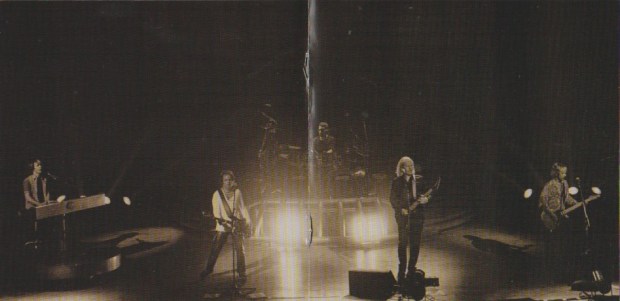
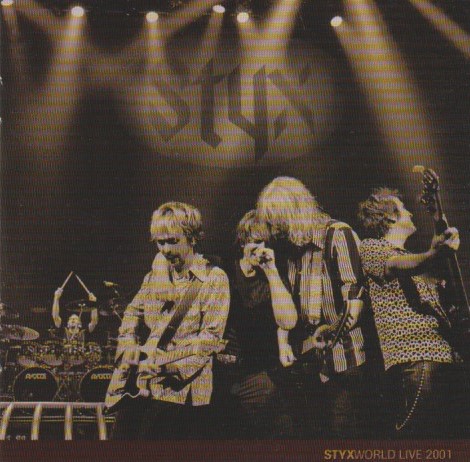
REVIEW: Styx – Styxworld Live 2001

STYX – Styxworld Live 2001 (2001 Sanctuary)

There are plenty of live Styx albums, the majority with current singer Lawrence Gowan.  2001’s Styxworld is as entertaining as the title implies.  It really does represent the world of Styx:  oldies, solo hits, and obscure tracks too.  Because the Styx lineup in 2001 included guitarist/singer Glen Burtnik, there are a couple songs he wrote that Styx don’t play anymore.

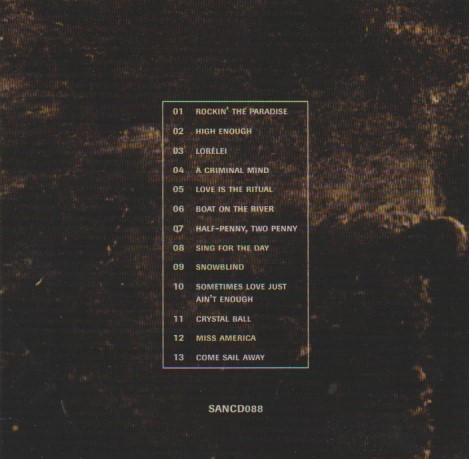
Styx have had a credible career, post-Dennis DeYoung.  Adding Gowan, a solo star in Canada, was a brilliant move.   Though Gowan and DeYoung don’t sound alike, Lawrence is capable of performing Dennis’ more dramatic hits like “Come Sail Away”.   You wouldn’t want that song dropped from the set!  But Gowan also adds his own solo material:  “A Criminal Mind” (from 1985’s Strange Animal) is more than welcome.  A great song is a great song, and “A Criminal Mind” has since become a part of Styx.

Credit should be heaped for including lesser-heard classics like “Boat on a River” in the set, just as good as any of the missing songs.  You’ll also hear “Rocking the Paradise”, “Miss America”, “Sing for the Day”, “Crystal Ball”, “Half-Penny, Two-Penny” and “Lorelei” (James “JY” on lead vocals).  Essentially the setlist was whittled down to songs co-written by Tommy Shaw or James Young, with “Come Sail Away” being the only solo DeYoung-written song.

You could fill a whole other album with missing songs like “The Grand Illusion” or “Renegade” but what makes Styxworld strong are the songs included in their place.  Like it or not “Love is the Ritual” was a minor hit for Burtnik-era Styx, and an effort seems to have been made to include everybody’s material.  A big hit (though not by Styx!) is “Sometimes Love Just Ain’t Enough” by Patty Smyth and Don Henley…written by Smyth and Burtnik.  It’s cool to have a Styx version though it’s shortened for the stage.  Of course there’s “Criminal Mind” by Gowan, and even the ballad “High Enough” by Tommy Shaw’s Damn Yankees.  Though it seems like a ballad-heavy set, there is plenty of rock and roll.

Check out Styxworld for a taste of this period of Styx history.  If you like Gowan, it’s a win.

4/5 stars


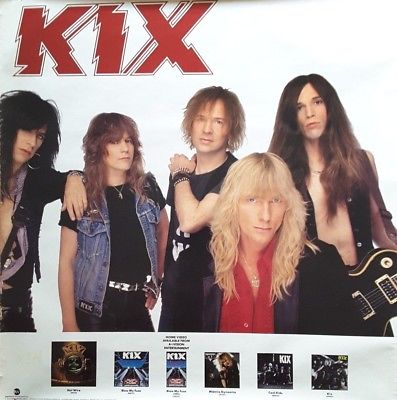
GUEST REVIEW: Kix – Hot Wire (1991)

Guest review by Holen MaGroin – part 5 in his KIX series

KIX – Hot Wire (1991 Atlantic)

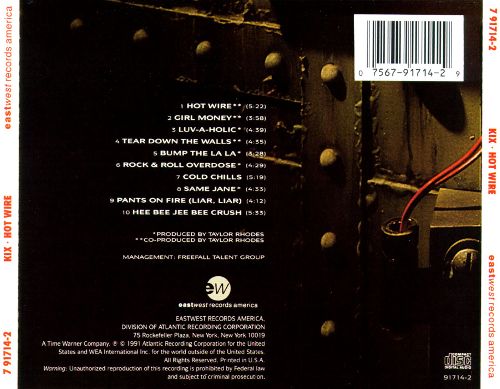
It took the almighty Kix three years to follow up their commercial breakthrough Blow My Fuse. When they did, they had a new record contract, and an assload of debt from their first three albums. Being that this was 1991, the clock was ticking before that putz from Seattle would change the face of rock music forever by replacing talented musicianship and fun with glorified punk songs about deodorant. The resulting album Hot Wire was the band’s heaviest album to date, with their hard rock influences taking over their sound completely. While Hot Wire is still an entertaining listen, it’s not as consistent as the albums that preceded it, and is a little derivative at times.

Hot Wire is jumpstarted by the title track, which starts off with a riff that sounds like Ted Nugent’s “Just What the Doctor Ordered”, and ends with a loving homage to “Have a Drink on Me”. The sonic annihilation in between is a whole hell of a lot of fun, and has Kix playing some of the most aggressive music of their career. Steve Whiteman in particular is taking no prisoners with an absolutely electrifying vocal performance that commands attention and respect. The song juggles the head banging verses with a trademark melodic Kix chorus that will blow your mind. Maybe Kurt Cobain was listening to this when his Kurt Cobrains hit the floor in April of 1994. It’s a great choice to open the album with, as it dispels any notion that Kix has become less hungry as a result of their platinum success.

Kix follows it up with what could only be described as a tribute to AC/DC’s “Big Balls”, complete with a Bon Scott impression. In lead single “Girl Money”, Whiteman channels Scott while talking about a woman of low moral fibre across the bar. The chorus is an absolute explosion of melody, literally. If you listen carefully, you can hear cannons going from the left to the right speaker after the lyrics “bang boom party”. The attention to detail is not only amusing, but it reflects the sonic identity of the record. The production on this album serves to polish the rough edges while retaining all the sonic power that Kix have to offer. It sounds good, but there are no frills to be found. This is a rock and roll record, and the band is going to treat it as such. No more Cool Kids new wave pandering, the group is out to rock your world.

 The fourth slot on the album is left to “Tear Down the Walls”, a weak ballad that was probably recorded to capitalize on the success of “Don’t Close Your Eyes”. It’s pleasant enough, but one can’t help but compare it to superior ballads on past Kix records. While it’s not nearly as iconic or enjoyable as “For Shame”, “Walkin’ Away”, or “Don’t Close Your Eyes”, it’s still a much better decision to listen to it than to marry Courtney Love, in my opinion only of course.

Kix only has one ballad again, and gets away with it by preceding it with the hook laden “Luv-A-Holic”, which has a similar structure to “Get It While It’s Hot” from the previous record, done in a heavier style that is more representative of the Hot Wire sound.  It’s one of the best songs on the album, and the deal only gets sweeter when “Rock & Roll Overdose”, (a song title I believe Kurt took too literally) greets the listener after the lacklustre ballad. One of the heaviest tunes Kix have ever done, it’s a nice ode to rock and roll itself with Whiteman bringing back his powerful raspy vocals from the title track. Guitarists Ronnie “10/10” Younkins and Brian Forsythe really get to shine on this track with each getting a chance to show off their solo chops. It’s much more enjoyable than listening to nursery rhyme melodies over three chord punk songs and pretending like you hate any band that has reached any kind of success, including your contemporaries that praise you.

What sinks the album is a sense of monotony. Some of the lesser tunes begin to sound the same, and some of them are lyrically lacking. “Hee Bee Jee Bee Crush”, “Bump the La La”, and “Same Jane” were in desperate need of penmanship reform. There’s also not as much variety as you would normally expect from a Kix album, as they seem to be firmly rooted in a hard rock sound. Choruses lack some of the staying power that they had on earlier albums, and the songs begin to run together.

While by no means a bad album, Hot Wire comes as a bit of a disappointment after the quality of the two previous outings. Unfortunately, due to shifting (shitty) tastes, Kix would only release one more album on their major label (1993’s appropriately titled Contractual Obligation Live!) before being pushed to the indie world. The mighty titans would regroup for one more studio album with the original lineup.  They disappeared for the better part of twenty years before reemerging with a new bassist as strong as ever.  As for Hot Wire…

3.5/5 stars
Authors note: I don’t really hate Nirvana, but they’re just so easy to poke fun at. I would take Badmotorfinger, Ten, & Ritual de lo Habitual over Nevermind any day of the week though.

GUEST REVIEW: Kix – Blow My Fuse (1988)

Guest review by Holen MaGroin – part 4 in his KIX series

KIX – Blow My Fuse (1988 Atlantic)

When Kix released their fourth album on Atlantic, the band would finally receive the recognition and popularity that they deserved. Blow My Fuse is one of the most fun hard rocking albums of the late ‘80s without the guilty feeling that you get listening to the other “hair bands” that were dominating MTV. You could blast this record in a way that you couldn’t with say, Warrant, and not care who heard you, because Kix aren’t a hair band. They’re a hard rock band. These glorious Maryland hicks with a collective explosion fetish crafted a glorious hard rock album in the mold of AC/DC, with the pop hooks necessary to get proper attention on the radio, without ever watering down the rock. Produced by Tom Werman (with help from Duane Baron and John Purdell), Kix finally teamed up with a production team that knew how to turn their material into charting hits without diluting it.

Album opener “Red Lite, Green Lite, TNT” displays Jimmy “Chocolate” Chalfant reclaiming his territory after an Anton Fig substitution due to a broken arm on the end of the last album. Pounding away with a simple but effective beat, he sets the stage for the duo of Brian Forsythe and Ronnie “10/10” Younkins to blanket the track with midrange guitar goodness. The production on this album is really outstanding. The power of Kix clearly shines through, but with a new sheen to polish some of the rough edges. Steve Whiteman builds anticipation with restraint in his singing at the beginning of the song. Kix are masters of both tension and dynamics. They know just how long to string the listener along before delivering the heavy payoff. The twin guitar duo comes in with the song’s main riff, and Steve Whiteman pumps on the gas taking his vocals full throttle with rasp and power. Note the background vocals before the chanted chorus, which add some killer harmonic melody to the blistering hard rock. A call and response section between the harmonica and the guitar build off each other to end the song leaving the listener with his ass bruised and sore from being kixed for four euphoric minutes.

After taking a minute to ice the destroyed rectum, “Get It While It’s Hot” starts with a synthesizer run and some backwards vocals that recall their new wave roots. However, this is a clever ruse. Soon the guitars come in and betray the intro. This is another full on rock tune with the drums really in the driver’s seat during the verses. The guitarists play a few chords, rest, and then play a few chords, then rest; each phrase expanding upon the last to complete the picture at the end of five measures. It’s a tension building technique Kix would use again. The chorus drastically changes things up, but the energy level doesn’t dip at all. At this point we’re greeted by the song’s hook. With some era appropriate multi-tracked backing vocals, it drives the point across well.

Even with all the fantastic tunes, the reason that this album went platinum was because of the ballad “Don’t Close Your Eyes”. A number eleven hit in America, the song put the band on map, and on MTV. However, it wasn’t originally released as a single. When Kix were on tour with Great White, their manager Alan Niven asked the band why the song hadn’t been released as a single. Niven, despite being the manager for Great White, called up Doug Morris (president of Atlantic Records at the time) and told him they were sitting on a massive hit. They released it, and the rest is history. As for the song, it’s not a typical fluffy power ballad of the late ‘80s. It has more in common with “Dream On” than it does “Home Sweet Home”. The song is an anti-suicide PSA, a reassuring topic that proved Kix had more on their mind than just sex and explosions. It’s a great song, haunting and emotional. The lyrics and the conviction with which Whiteman sings them makes the hairs on your arm stand up. “Don’t Close Your Eyes” is a powerful song that has probably saved more than one or two lives as well, and is one of the most respectable power ballads of the 1980s.

But who cares when they’re singing about sex when the music backing it is of such high caliber? “Cold Blood” was the first single, and it sold much better after “Don’t Close Your Eyes” became huge. This song deserved to be a huge hit. It’s a stone cold classic. Starting out with a riff sounding like Electric-era The Cult, and progressing to total pop harmony payoff, this one is definitely one of the band’s best tunes. It also received moderate MTV airplay, and became the band’s second most popular song, a place only challenged by the album’s title track. A very fun and electrifying number about singer Steve Whiteman getting his fuse blown, his tower shook, his wires crossed, his hair lit up, his senses overloaded, and his juice felt. The lyrics speak for themselves; this one is another genre classic.

The album is rounded out with several other dynamic hard rock tunes, and a supernatural ability to insert pop melodies into them without diminishing the power one iota. There is no filler on this album, every song is a keeper. A 30th anniversary edition remixed by Beau Hill was announced earlier this year. Start off with the original that has been serving the public well for three decades now. If you were only to buy one Kix album, this is the one.

5/5 stars

GUEST REVIEW: Kix – Midnite Dynamite (1985)

Guest review by Holen MaGroin – part 3 in his KIX series

KIX – Midnite Dynamite (1985 Atlantic)

In 1985, Kix returned after two commercially unsuccessful albums, with what they consider to be their magnum opus, Midnight Dynamite. This is where the new wave styles of the first two records take a backseat to the hard rock influences. Later on, they’d completely shun their new wave influences by kicking them out of the car, and making new wave watch hard rock shag its girlfriend. For now, the blend was still somewhat apparent, but with the mix changed.

Produced by Lebrain’s favorite producer of all time (Beau Hill), Midnight Dynamite definitely sounds like its era, much more so than the debut or Cool Kids. For the first time we get some electronic percussion thrown into the mix and it is the first album by Kix to feature synthesizers in a prominent role. This could have been disastrous, but luckily Kix utilizes them to color the sound and they don’t diminish the hard edge of the guitars one iota. This is a hard rock record first and foremost, and with Ronnie “10/10” Younkins back in the mix, the guitar duo of the first album is reestablished. Pressured once again to work with outside writers, the primary guy for the job is Bob Halligan Jr. If the name sounds familiar, it could be because he wrote two songs for Judas Priest (“Take These Chains” & “Some Heads Are Gonna Roll”), and co-wrote with Icon on their second album Night of the Crime. Boasting some impressive credentials, the songwriting takes a step up this time around. Nearly all the songs are collaborations between bassist Donnie Purnell and Halligan.

The album is jump started by the title track. A slow and heavy number, it was a bold choice to open an album with.  Fortunately for Kix, it completely works. The intensity of the verses builds up tension for the ridiculously catchy harmonies in pre-chorus, where we finally get the big payoff during the chorus. This is melodic hard rock done right, without the frills that are usually associated with AOR or other bands of the time period. Kix made sure that the material had balls, something that many other bands of the time period eschewed for chart success. The intensity of the title track is followed by the erotic “Red Hot (Black & Blue)” with a sleazy stuttering riff. The production on this song is a little heavy handed with the reverse reverb in the verses, but it’s nothing that ruins the impact. Another song with dynamics, the verses stutter along with spunk, until the chorus where that Kix fire is unleashed. Some pretty cheesy lyrics, but if you weren’t prepared for that then why would you be reading a Kix review?

One of Beau’s buddies Kip Winger earns himself a writing credit on track number 3, “Bang Bang (Balls of Fire)”. As you can tell by the title, it’s one of the more generic rock songs on the album. It’s one of the least substantial, but it’s still an enjoyable tune. “Layin’ Rubber” is much better, as all the elements that make up the Kix sound are blended masterfully. Obviously more hard rock orientated than material of the past, the track features bubblegum pop chants before launching into a hard rock riff, while the intensity of the music elevates as the song goes on. Each section of the song’s structure is composed to perfectly transition into the next. One of the best tracks on the album, it manages to be damn brutal, and also catchy as shit.

The rest of the album proceeds in this manner, blistering hard rock tunes with undeniably catchy melodies that are never too sugary enough to make you sick to your stomach. There is only one ballad “Walkin’ Away”, which is built on synthesizers, but has enough of a kick to be enjoyable. “Cold Shower” was the other single, which features some rap like vocals in the verses and singer Steve Whiteman hitting some glass shattering notes before the chorus. It’s one of the most eccentric tunes on the album, and I’m surprised it was picked as a single.

Surprising songs or not, this album is one of the most underrated of the era. It’s a mystery as to why it didn’t sell better than it did. Label indifference? If you’re a fan of the rock music, you owe it to yourself to pick up this album and the even better follow up Blow My Fuse.

4.75/5 stars
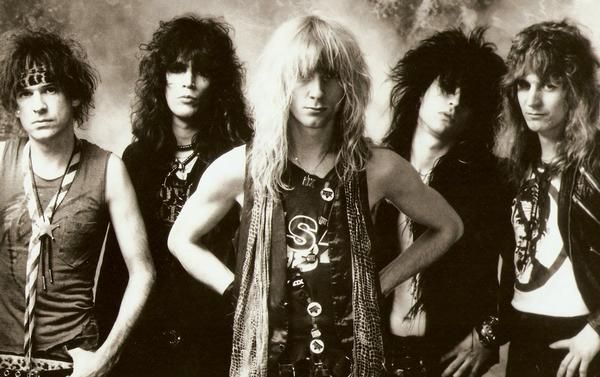
A note for Kiss fans, Anton Fig plays drums on the last two tracks because Jimmy “Chocolate” Chalfant had broken his arm.

REVIEW: Yngwie Malmsteen – Trial By Fire: Live in Leningrad (1989)

YNGWIE MALMSTEEN – Trial By Fire:  Live in Leningrad (1989 Polydor)

Walk up to the well-schooled rock fan in your group of friends and ask, “What do you think of Yngwie J. Malmsteen?”

Even the ones who don’t like the Swedish Speed Demon’s albums will admit, “except for that one with Joe Lynn Turner; that was pretty good.”

The short-lived Turner lineup did release a live album in 1989.  Trial By Fire: Live in Leningrad was accompanied by home video of the same name with more tracks.  By 1990, Malmsteen already had a new album and singer named Göran Edman, but only Joe Lynn Turner had the marquee value to bring Yngwie a Billboard top 40 charting record (#40 with Odyssey).

Although Turner can act as a gateway to hear Yngwie for the first time, his stuff can still be pretty off-putting.  Just look at the pompous “thank you’s” on the inside sleeve.  Sprinkled in with the regular names are da Vinci, Bach, Beethoven, Paganini, HP Lovecraft and Monty Python’s Flying Circus.  Come on, Yngwie!

Joe is a versatile singer, which is one reason he’s always been sought after.  He effortlessly imbibes the old Yngwie tracks with his own attitude:  “Liar”, “Queen in Love”, and “You Don’t Remember” are better with Joe singing.  Unfortunately this is marred by a too-loud audience and Yngwie’s always excessive shredding.  More often than not, he overplays.

When it works, it works.  “Heaven Tonight”, “Queen in Love” and “Deja Vu”, the most melodic songs, click.  The instrumentals are good too, like demonstrations of immaculate neo-classical rock.  “Far Beyond the Sun” is tightly composed and arranged, though live Yngwie lets the strings fly even more.  Listen for some Deep Purple right in the middle of “You Don’t Remember, I’ll Never Forget”, and some Rainbow on “Crystal Ball” too.

Yngwie produced Live in Leningrad himself, and it’s a rather shrill affair with obvious backing tapes on some of the choruses like “Heaven Tonight”.  The problem with many Yngwie albums is that you can only listen to so much before ear fatigue sets in.  Live in Leningrad is one such album.  By the end your brain is exhausted and you have to listen to something from a different end of the spectrum.  Even Joe Lynn Turner can’t blunt the aural razorblade effect.

3/5 stars

#S18-2: Day One is Done

I sit here writing this on Saturday morning, the coldest I’ve ever been at Sausagefest.  From heat wave to chill.  Uncle Meat slept in the car.  No tent for him.  Too cold.

7:30 am.  As the sun moves into position, it’s starting to warm.

We had a great first night, though I had some lower body pain and had to lie down.  I spent two hours in the tent listening to the Countdown.

Tool.  Priest.  Willie.  Rush. Sheavy.  ‘Tallica.  Beasties.  Five Alarm Funk.  Much more.  Amazing tunes last night.

There was one hiccup.  My brand new tent broke immediately out of the box.  Not impressed.  Gorilla tape to the rescue.   My tent looks like the stunted stepchild of everybody else’s tent.

I slept well, and I will do better tonight.  Let’s do it!