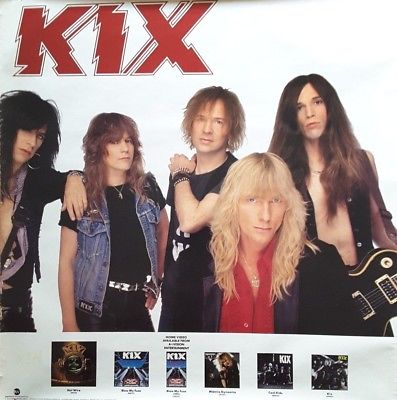
Kix

GUEST REVIEW: Kix – Hot Wire (1991)

Guest review by Holen MaGroin – part 5 in his KIX series

KIX – Hot WireΒ (1991 Atlantic)

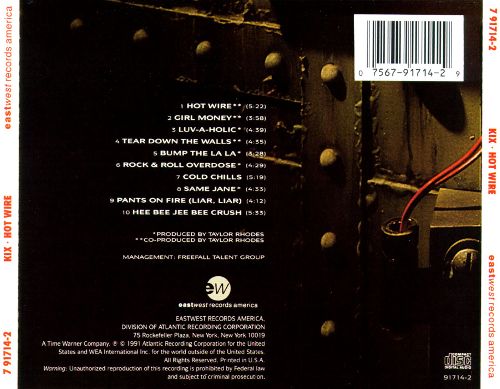
It took the almightyΒ KixΒ three years to follow up their commercial breakthroughΒ Blow My Fuse. When they did, they had a new record contract, and an assload of debt from their first three albums. Being that this was 1991, the clock was ticking before that putz from Seattle would change the face of rock music forever by replacing talented musicianship and fun with glorified punk songs about deodorant. The resulting albumΒ Hot WireΒ was the band’s heaviest album to date, with their hard rock influences taking over their sound completely. WhileΒ Hot WireΒ is still an entertaining listen, it’s not as consistent as the albums that preceded it, and is a little derivative at times.

Hot WireΒ is jumpstarted by the title track, which starts off with a riff that sounds like Ted Nugent’s β€œJust What the Doctor Ordered”, and ends with a loving homage to β€œHave a Drink on Me”. The sonic annihilation in between is a whole hell of a lot of fun, and hasΒ KixΒ playing some of the most aggressive music of their career. Steve Whiteman in particular is taking no prisoners with an absolutely electrifying vocal performance that commands attention and respect. The song juggles the head banging verses with a trademark melodicΒ KixΒ chorus that will blow your mind. Maybe Kurt Cobain was listening to this when his Kurt Cobrains hit the floor in April of 1994. It’s a great choice to open the album with, as it dispels any notion thatΒ KixΒ has become less hungry as a result of their platinum success.

KixΒ follows it up with what could only be described as a tribute to AC/DC’s β€œBig Balls”, complete with a Bon Scott impression. In lead single β€œGirl Money”, Whiteman channels Scott while talking about a woman of low moral fibre across the bar. The chorus is an absolute explosion of melody, literally. If you listen carefully, you can hear cannons going from the left to the right speaker after the lyrics β€œbang boom party”. The attention to detail is not only amusing, but it reflects the sonic identity of the record. The production on this album serves to polish the rough edges while retaining all the sonic power thatΒ KixΒ have to offer. It sounds good, but there are no frills to be found. This is a rock and roll record, and the band is going to treat it as such. No moreΒ Cool KidsΒ new wave pandering, the group is out to rock your world.

Β The fourth slot on the album is left to β€œTear Down the Walls”, a weak ballad that was probably recorded to capitalize on the success of β€œDon’t Close Your Eyes”. It’s pleasant enough, but one can’t help but compare it to superior ballads on pastΒ KixΒ records. While it’s not nearly as iconic or enjoyable as β€œFor Shame”, β€œWalkin’ Away”, or β€œDon’t Close Your Eyes”, it’s still a much better decision to listen to it than to marry Courtney Love, in my opinion only of course.

KixΒ only has one ballad again, and gets away with it by preceding it with the hook laden β€œLuv-A-Holic”, which has a similar structure to β€œGet It While It’s Hot” from the previous record, done in a heavier style that is more representative of theΒ Hot WireΒ sound.Β Β It’s one of the best songs on the album, and the deal only gets sweeter when β€œRock & Roll Overdose”, (a song title I believe Kurt took too literally) greets the listener after the lacklustre ballad. One of the heaviest tunesΒ KixΒ have ever done, it’s a nice ode to rock and roll itself with Whiteman bringing back his powerful raspy vocals from the title track. Guitarists Ronnie β€œ10/10” Younkins and Brian Forsythe really get to shine on this track with each getting a chance to show off their solo chops. It’s much more enjoyable than listening to nursery rhyme melodies over three chord punk songs and pretending like you hate any band that has reached any kind of success, including your contemporaries that praise you.

What sinks the album is a sense of monotony. Some of the lesser tunes begin to sound the same, and some of them are lyrically lacking. β€œHee Bee Jee Bee Crush”, β€œBump the La La”, and β€œSame Jane” were in desperate need of penmanship reform. There’s also not as much variety as you would normally expect from aΒ KixΒ album, as they seem to be firmly rooted in a hard rock sound. Choruses lack some of the staying power that they had on earlier albums, and the songs begin to run together.

While by no means a bad album,Β Hot WireΒ comes as a bit of a disappointment after the quality of the two previous outings. Unfortunately, due to shifting (shitty) tastes,Β KixΒ would only release one more album on their major label (1993’s appropriately titledΒ Contractual Obligation Live!) before being pushed to the indie world. The mighty titans would regroup for one more studio album with the original lineup.Β  They disappeared for the better part of twenty years before reemerging with a new bassist as strong as ever.Β  As forΒ Hot Wire…

3.5/5 stars

Authors note:Β I don’t really hate Nirvana, but they’re just so easy to poke fun at. I would take Badmotorfinger, Ten, & Ritual de lo Habitual over Nevermind any day of the week though.
GUEST REVIEW: Kix – Blow My Fuse (1988)

Guest review by Holen MaGroin – part 4 in his KIX series

KIX – Blow My Fuse (1988 Atlantic)

When Kix released their fourth album on Atlantic, the band would finally receive the recognition and popularity that they deserved. Blow My Fuse is one of the most fun hard rocking albums of the late β€˜80s without the guilty feeling that you get listening to the other β€œhair bands” that were dominating MTV. You could blast this record in a way that you couldn’t with say, Warrant, and not care who heard you, because Kix aren’t a hair band. They’re a hard rock band. These glorious Maryland hicks with a collective explosion fetish crafted a glorious hard rock album in the mold of AC/DC, with the pop hooks necessary to get proper attention on the radio, without ever watering down the rock. Produced by Tom Werman (with help from Duane Baron and John Purdell), Kix finally teamed up with a production team that knew how to turn their material into charting hits without diluting it.

Album opener β€œRed Lite, Green Lite, TNT” displays Jimmy β€œChocolate” Chalfant reclaiming his territory after an Anton Fig substitution due to a broken arm on the end of the last album. Pounding away with a simple but effective beat, he sets the stage for the duo of Brian Forsythe and Ronnie β€œ10/10” Younkins to blanket the track with midrange guitar goodness. The production on this album is really outstanding. The power of Kix clearly shines through, but with a new sheen to polish some of the rough edges. Steve Whiteman builds anticipation with restraint in his singing at the beginning of the song. Kix are masters of both tension and dynamics. They know just how long to string the listener along before delivering the heavy payoff. The twin guitar duo comes in with the song’s main riff, and Steve Whiteman pumps on the gas taking his vocals full throttle with rasp and power. Note the background vocals before the chanted chorus, which add some killer harmonic melody to the blistering hard rock. A call and response section between the harmonica and the guitar build off each other to end the song leaving the listener with his ass bruised and sore from being kixed for four euphoric minutes.

After taking a minute to ice the destroyed rectum, β€œGet It While It’s Hot” starts with a synthesizer run and some backwards vocals that recall their new wave roots. However, this is a clever ruse. Soon the guitars come in and betray the intro. This is another full on rock tune with the drums really in the driver’s seat during the verses. The guitarists play a few chords, rest, and then play a few chords, then rest; each phrase expanding upon the last to complete the picture at the end of five measures. It’s a tension building technique Kix would use again. The chorus drastically changes things up, but the energy level doesn’t dip at all. At this point we’re greeted by the song’s hook. With some era appropriate multi-tracked backing vocals, it drives the point across well.

Even with all the fantastic tunes, the reason that this album went platinum was because of the ballad β€œDon’t Close Your Eyes”. A number eleven hit in America, the song put the band on map, and on MTV. However, it wasn’t originally released as a single. When Kix were on tour with Great White, their manager Alan Niven asked the band why the song hadn’t been released as a single. Niven, despite being the manager for Great White, called up Doug Morris (president of Atlantic Records at the time) and told him they were sitting on a massive hit. They released it, and the rest is history. As for the song, it’s not a typical fluffy power ballad of the late β€˜80s. It has more in common with β€œDream On” than it does β€œHome Sweet Home”. The song is an anti-suicide PSA, a reassuring topic that proved Kix had more on their mind than just sex and explosions. It’s a great song, haunting and emotional. The lyrics and the conviction with which Whiteman sings them makes the hairs on your arm stand up. β€œDon’t Close Your Eyes” is a powerful song that has probably saved more than one or two lives as well, and is one of the most respectable power ballads of the 1980s.

But who cares when they’re singing about sex when the music backing it is of such high caliber? β€œCold Blood” was the first single, and it sold much better after β€œDon’t Close Your Eyes” became huge. This song deserved to be a huge hit. It’s a stone cold classic. Starting out with a riff sounding like Electric-era The Cult, and progressing to total pop harmony payoff, this one is definitely one of the band’s best tunes. It also received moderate MTV airplay, and became the band’s second most popular song, a place only challenged by the album’s title track. A very fun and electrifying number about singer Steve Whiteman getting his fuse blown, his tower shook, his wires crossed, his hair lit up, his senses overloaded, and his juice felt. The lyrics speak for themselves; this one is another genre classic.

The album is rounded out with several other dynamic hard rock tunes, and a supernatural ability to insert pop melodies into them without diminishing the power one iota. There is no filler on this album, every song is a keeper. A 30th anniversary edition remixed by Beau Hill was announced earlier this year. Start off with the original that has been serving the public well for three decades now. If you were only to buy one Kix album, this is the one.

5/5 stars

GUEST REVIEW: Kix – Midnite Dynamite (1985)

Guest review by Holen MaGroin – part 3 in his KIX series

KIX –Β Midnite Dynamite (1985 Atlantic)

In 1985,Β KixΒ returned after two commercially unsuccessful albums, with what they consider to be their magnum opus,Β MidnightΒ Dynamite. This is where the new wave styles of the first two records take a backseat to the hard rock influences. Later on, they’d completely shun their new wave influences by kicking them out of the car, and making new wave watch hard rock shag its girlfriend. For now, the blend was still somewhat apparent, but with the mix changed.

Produced by Lebrain’s favorite producer of all time (Beau Hill),Β MidnightΒ DynamiteΒ definitely sounds like its era, much more so than the debut orΒ Cool Kids. For the first time we get some electronic percussion thrown into the mix and it is the first album byΒ KixΒ to feature synthesizers in a prominent role. This could have been disastrous, but luckilyΒ KixΒ utilizes them to color the sound and they don’t diminish the hard edge of the guitars one iota. This is a hard rock record first and foremost, and with Ronnie β€œ10/10” Younkins back in the mix, the guitar duo of the first album is reestablished. Pressured once again to work with outside writers, the primary guy for the job is Bob Halligan Jr. If the name sounds familiar, it could be because he wrote two songs for Judas Priest (“Take These Chains” & “Some Heads Are Gonna Roll”), and co-wrote with Icon on their second albumΒ Night of the Crime. Boasting some impressive credentials, the songwriting takes a step up this time around. Nearly all the songs are collaborations between bassist Donnie Purnell and Halligan.

The album is jump started by the title track. A slow and heavy number, it was a bold choice to open an album with.Β Β Fortunately forΒ Kix, it completely works. The intensity of the verses builds up tension for the ridiculously catchy harmonies in pre-chorus, where we finally get the big payoff during the chorus. This is melodic hard rock done right, without the frills that are usually associated with AOR or other bands of the time period.Β KixΒ made sure that the material had balls, something that many other bands of the time period eschewed for chart success. The intensity of the title track is followed by the erotic β€œRed Hot (Black & Blue)” with a sleazy stuttering riff. The production on this song is a little heavy handed with the reverse reverb in the verses, but it’s nothing that ruins the impact. Another song with dynamics, the verses stutter along with spunk, until the chorus where thatΒ KixΒ fire is unleashed. Some pretty cheesy lyrics, but if you weren’t prepared for that then why would you be reading aΒ KixΒ review?

One of Beau’s buddies Kip Winger earns himself a writing credit on track number 3, β€œBang Bang (Balls of Fire)”. As you can tell by the title, it’s one of the more generic rock songs on the album. It’s one of the least substantial, but it’s still an enjoyable tune. β€œLayin’ Rubber” is much better, as all the elements that make up theΒ KixΒ sound are blended masterfully. Obviously more hard rock orientated than material of the past, the track features bubblegum pop chants before launching into a hard rock riff, while the intensity of the music elevates as the song goes on. Each section of the song’s structure is composed to perfectly transition into the next. One of the best tracks on the album, it manages to be damn brutal, and also catchy as shit.

The rest of the album proceeds in this manner, blistering hard rock tunes with undeniably catchy melodies that are never too sugary enough to make you sick to your stomach. There is only one ballad β€œWalkin’ Away”, which is built on synthesizers, but has enough of a kick to be enjoyable. β€œCold Shower” was the other single, which features some rap like vocals in the verses and singer Steve Whiteman hitting some glass shattering notes before the chorus. It’s one of the most eccentric tunes on the album, and I’m surprised it was picked as a single.

Surprising songs or not, this album is one of the most underrated of the era. It’s a mystery as to why it didn’t sell better than it did. Label indifference? If you’re a fan of the rock music, you owe it to yourself to pick up this album and the even better follow upΒ Blow My Fuse.

4.75/5 stars

A note for Kiss fans, Anton Fig plays drums on the last two tracks because Jimmy β€œChocolate” Chalfant had broken his arm.

GUEST REVIEW: Kix – Cool Kids (1983)

Guest review by Holen MaGroin – part 2 in his KIX series

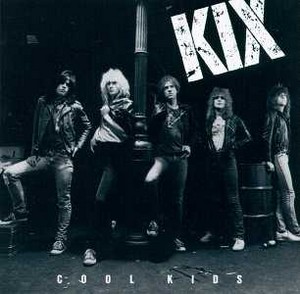
KIX – Cool KidsΒ (1983 Atlantic)

Coming off the heels of their unsuccessful debut album,Β KixΒ returned to the studio with new producer Peter Solley to shell out what would be their most polarizing and least rocking album.Β Cool KidsΒ is the most commercial album thatΒ KixΒ every recorded, pressured by Atlantic to deliver a hit after the failure of the debut to find an audience. This was 1983, just before Pyromania broke through the stratosphere to make melodic hard rock/heavy metal a viable commercial direction. Atlantic still had no idea how to marketΒ Kix, and also didn’t know what direction to push them in order to find an audience. For this album, they decided to push them towards the new wave aspects of their sound, forcing them to work with outside writers for the first time.

The production ofΒ Cool KidsΒ is much more slick and pop-orientated than the rough and ready production of the debut. It’s obvious that the band was pressured into this direction, as a lot of the time they don’t sound comfortable in their own skin. Signer Steve Whiteman’s voice lacks its usual power and grit on this recording, likely being asked to hold back for the songs by producer Peter Solley. Another notable change to the band’s sound is the presence of new guitar player Brad Divens, temporarily replacing Ronnie β€œ10/10” Younkins. This is the onlyΒ Kix album to feature Divens, as Younkins rejoined them by their next albumΒ MidnightΒ Dynamite.Β Cool KidsΒ lacks the fiery and spontaneous edge of Younkins’ playing, and contributes even more to the album feeling sterile.

Despite these flaws, this is still aΒ KixΒ album. There are still enjoyable moments throughout the record, quite a few actually. They are however, overwhelmed by the material that doesn’t work on this album. Opener β€œBurning Love” doesn’t introduce the set of tunes with a lot of power.Β KixΒ always has energy, but it seems to be counteracted with the sterile production and addition of keyboards. That being said, it’s a perfectly serviceable melodic rock tune, but there’s nothing genuinely exceptional about it. With it’s bouncy keyboards and lazy riff, it doesn’t sound much likeΒ Kix. This is one of the tunes that wasn’t written by the band. The title track follows it in a similarly sleek fashion, but is ultimately more enjoyable because it is more guitar-driven, and the band’s natural energy pushes through much more. It was also written by outside writers, but it is a very catchy tune. I’d say it’s a great melodic rock song for the early β€˜80s. Unfortunately, it doesn’t sound much likeΒ KixΒ either.

After two tracks that fail to encompass theΒ KixΒ sound, the first band-written track is up with β€œLove Pollution”. One of the only straight-up rockers on the disc, it’s also one of the best songs on the album. Written by Whiteman and Forsythe, the song burns along with a killer guitar riff and a lot of attitude, and accompanied by piano in the chorus that actually helps the song. A truly killer tune, one that I think represents the direction that this whole album should have gone in. It has a sound similar to that of the genre defying debut, but in a harder rocking vein. You can tell already thatΒ KixΒ wanted to toughen up their sound, though the shiny production doesn’t help that point across.

Next up is the outside penned β€œBody Talk” which used talk box three years before Bon Jovi, and also has one of the absolute worst music videos of all time. What the hell was the director thinking?Β KixΒ playing at what looks like a high school gym with only girls working out doing weird-ass synchronized exercise dances? Yeah, they really dropped the ball with this one. I find it strange that with this promotion Atlantic was confused about why the band weren’t doing well commercially. Luckily for them,Β KixΒ were still obscure enough that hardly anyone has ever seen that video. As for the song, it’s an uncharacteristic new wave workout, and a co-lead vocal between Steve Whiteman and drummer Jimmy β€œChocolate” Chalfont. It’s a catchy pop tune, but it couldn’t be further from theΒ KixΒ sound. Atlantic definitely missed the mark by making them record this one.

And if you didn’t think they could fall further into Flock of Seagulls territory, we get β€œLoco-Emotion”, penned by bass player Donnie Purnell. Steve Whiteman gets to play saxophone on this song, and for the verses it’s easily the weirdestΒ KixΒ song ever. While the chorus contains a get up and go kick in the pants, the verses are just off-putting. Their first album used Devo primarily for what little new wave influence they had, but now they were courting the sound of several shittier new wave bands. Fortunately, from here on out everything was penned by the band, and there is nothing as jarring as this song.

However, a lot of these songs penned by Purnell are strange, and not up to his usual standards. β€œMighty Mouth” is a powerful rock tune that gets bogged down by a very awkward and annoying chorus with Whiteman screaming the title. It seems a bit too cheeky for its own good, but is nothing compared to the campy β€œNice on Ice” and the absolutely awful β€œGet Your Monkeys Out”. These songs lean hard on the bubblegum pop equation that was blended so successfully on albums before and after this with hard rock. Here, thanks to the shiny production, they sound cheesy and downright embarrassing. Thankfully, the album is redeemed with the two closing tunes.

KixΒ break the general rock standard of having the penultimate song be the worst on the album, by having the penultimate song be the best on the album. β€œFor Shame” is an acoustic ballad years before β€œWhen the Children Cry”, or β€œPatience”, or β€œMore than Words”. Beginning to see a trailblazing pattern? Yes, this is a heartfelt ballad that relies more on a nostalgic feeling than a sappy one. It uses the emotion of regret as the basis of the tune, which is an effective emotional connector. Whereas other love ballads seem derivative, this one seems genuine. The lyrics are very simple, but powerful. They detail summertime love that is lost with the passing of the seasons, with the two lovers unable to find each other afterwardsΒ GreaseΒ style. Thankfully, this song is stripped of the excess production that plagues most of the rest of the album, which keeps it sounding real, unlike other synthetic love tunes of the era. β€œFor Shame” is a fantastic ballad, one thatΒ KixΒ would only surpass with a #11 hit on the Billboard charts (more on that when we get there).

They round the album out with the spiritual brother of β€œLove Pollution”. The other hard rocking song on the album, it features a writing credit from everyone in the band. It’s a speedy number the glides by ending the album on a high note. β€œRestless Blood” is an energetic kick in the pants to conclude the record with grace.Β Cool KidsΒ is arguably the least essentialΒ Kixrecord, as it’s sound is the result of the label pressure. For the most part, it doesn’t represent theΒ KixΒ sound, and a lot of the songs that do represent that sound, don’t get the equation as balanced as on the debut or any of their later albums. Thankfully,Β KixΒ would not let us down again. Atlantic finally realized that they had their hands on a hard rock band after this record tanked as bad as the first one. Our heroes would resurface again stronger than ever in 1985 with possibly the greatest album of their career. If this was the stepping stone that madeΒ MidnightΒ DynamiteΒ possible, so be it.

2.5/5 stars


GUEST REVIEW: Kix – Kix (1981)

Guest review by Holen MaGroin

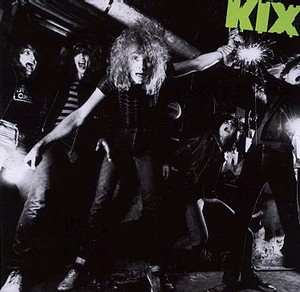
KIX – Kix (1981 Atlantic)

Kix: one of the most beloved and influential rock bands of the time that only made it big after years of great albums, legendary live performances, and a work ethic that never failed them. Unfortunately, they only seemed to stay there for the album/tour cycle of their classic Blow My Fuse. While over the years they’ve returned to being more of a cult act than a mainstream rock group, the effect the left on rock culture shouldn’t be dismissed. It’s common knowledge that Bret Michaels liked the group enough that he decided to β€œborrow” some moves from singer Steve Whiteman. Anthony Corder from Tora Tora called Kix a huge influence on the development of their second album Wild America. Despite all their influence, the band never seemed to secure a position as one of the most popular acts of the day. Bad management, label indifference, and being a little ahead of their time prevented them from becoming the multi-platinum success they deserved to be on every one of their albums.

As far as being ahead of their time, this eponymous debut was released on a major label in 1981, when even MΓΆtley CrΓΌe were still grinding it out on LeathΓΌr Records. Kix were one of the first hard rock acts signed from the decade, but were hardly acknowledged for it. This debut album sold very poorly, and original prints are tough finds out in the wild today. 1981 may have been just too early for a release like this to find widespread success. It’s also possible that Atlantic didn’t know how to market the band, as their debut album is an interesting and masterful blend of hard rock, new wave, and bubblegum melodies that sound like they could have come from the 1950s.

Produced by Tom Allom (Judas Priest, Black Sabbath, Def Leppard), the album is given a very punchy and dynamic sound. The drums sound big and chunky, and everyone is audible in the mix. Anyone familiar with the Kix of the later β€˜80s may find this release a bit jarring at first. There’s a certain quirkiness to the songs that isn’t as prevalent later on in their career. This would be the new wave sensibilities. Not all the guitars are overdriven in a way that you’d expect from a hard rock record. There are a number of songs that glide by with clean guitars, and still manage to rock with a ton of energy thanks to the contributions of drummer Jimmy β€œChocolate” Chalfont, and the contagious exuberance of singer Steve Whiteman. Of course, not all the record is this style, there are songs where the guitars have plenty of distortion, and they’re power loaded with midnight dynamite force.

The album opens with the scorcher and fan favorite β€œAtomic Bombs”. Starting with air raid sirens and some tasteful drum fills, the suspense of the song builds as a riff that Poison probably ripped off for β€œLook What the Cat Dragged In” tethers the song, and keeps it from completely going out of control. The first Kix song about blowing things up (a favorite topic of these Maryland hicks), it sets the tone for the album. It’s a relentless hard rock number with dynamics, and a nice solo that manages to create a feeling of the impending chaos of fallout. Opening with a rocker was a good choice; it gets people’s attention so that they’ll be more open-minded about what’s to come.

β€œLove at First Sight” is the first of the quirky Kix tunes. It’s a bouncy new wave influenced song, without any keyboards. If the thought of new wave scares you, it really shouldn’t because it’s so skillfully blended with these songs. It’s more Devo than it is Flock of Seagulls, and it shouldn’t turn off anyone even if they don’t enjoy new wave. The song gets a kick in the ass from guitarists Ronnie β€œ10/10” Younkins and Brian Forsythe, as the distortion kicks in and the guitar solo gives the song the kick it needs to succeed. They were never the flashiest or greatest players of the β€˜80s, but they were melodically wise, and knew what fit the song.

At this point in the record we get yet another change of pace, the β€˜50s heart throb tune β€œHeartache”. With a bubblegum melody bound to get stuck in your head, that goddamn Kix band gives another change of pace. Rarely do audiences get this much diversity from a record of any genre. Kix would never release another album as eclectic as this one. Bass player Donnie Purnell locks in perfectly with the guitars and drums to give this tune an infectious energy that seems to fuel this entire album. The song builds with the addition of more guitars. The band has mastered dynamics, and knows just how to play them for the benefit of the song. The album is filled with tunes that blend each of these styles, some in which they are blended so seamlessly it’s impossible to pick what style is dominant. Take β€œThe Itch”, the riff and song structure sounds similar to the underrated AC/DC tune β€œWhat’s Next to the Moon”. They’ve somehow taken that song structure and turned it on its head. Giving it breezy rock verses that build in intensity until the chorus which delivers another catchy melody complete with claps and gang backing vocals. The blend of styles shown on this album is seriously impressive for such a young group.

In case that wasn’t impressive enough, Kix closes the album with concert favorite β€œYeah, Yeah, Yeah” (not an Alice Cooper cover). It’s a hard rock tune that lasts seven minutes, featuring the infamous rant from Steve Whiteman, complete with crowd noise. Steve is upset because the woman he’s been seducing has puked all over his floor. That’s a big mistake. Don’t puke on Steve Whiteman’s floor. Go outside and do that. The subject matter is juvenile, but this is rock and roll. It closes the album on a fast tempo upbeat note. Every song on here could be considered upbeat, no ballads, the energy never lets up.

As the album finishes a look at the liner notes reveals that this is the only Kix album in which they weren’t pressured to work with outside writers (at least of the ones on Atlantic). It can be concluded that this album is the purest distillation of the Kix sound. While I like some of their more hard rocking albums later down the line better, this album is interesting because of the fact that it and its much lesser follow up Cool Kids (the only Kix album I’m not overly fond of), contain a new wave style that the band would never return to. It’s interesting hearing the young Kix and what their original vision is. Some people consider this the best Kix album. Not me, but it’s still pretty damn good.

4/5 stars

REVIEW: Twisted Sister – Love Is For Suckers (1987)

Bought in 1997 at an unknown HMV store in Calgary Alberta, on import, for like $25. Β For Aaron’s take on this CD, click here!

TS_0001TWISTED SISTER – Love Is For Suckers (1987 Atlantic, Spitfire reissue)

If the year was 1987, I would have given this CD 5/5 stars easily. When it came out in the summer of ’87 I was really into it. My best friend Bob and I used to play it all the time during that long hot summer, we had all the lyrics memorized. Unfortunately this album has not aged well, certainly not compared to their classic early albums.

One problem with the record is that it’s not actually by the band Twisted Sister! Even as a kid I wondered why people with names like “Reb Beach” or “Kip Winger” were listed in the credits. That’s because Love is For Suckers was written and recorded as the first Dee Snider solo album. Record company pressure forced Dee to release this as the next Twisted Sister album, even though no Twisted members appear on it (aside from new drummer Joey Franco). This only hastened the breakup of Twisted Sister in October of that year.

TS_0003

The album is produced by Beau Hill, a guy also known for Warrant and Winger albums (that’s why Reb and Kip are on here). Beau Hill is one of my least favourite metal producers of all time. He over-produces, uses too many samples, and glosses everything up. As such I find most of his albums pretty hard to listen to today. On Love is For Suckers, all the drums are samples and you sure can tell by that awkward gated sound, and identical snare hits.

Like when we used to climb the rope in gym class

As an 80’s glam metal album, the songs are not that bad. “Wake Up (The Sleeping Giant)” could have been a Twisted Sister song with its themes of rebellion and youth angst. “Hot Love”, the first single, was the song that got me to buy this album. A catchy pop-rocker with irrestible guitars courtesy of maestro Reb Beach, “Hot Love” was as commercial as it gets. Other standout songs included “Me And the Boys”, which was our theme song that summer. “I Want This Night (To Last Forever)” was a Van Hagar sounding pop-rocker with another great chorus. I think, if anything, Love is For Suckers sounds mostly like 5150-era Van Hagar, but with gang vocals and way more glossed up.

Love is For Suckers was reissued a while ago with 4 bonus tracks, demos from these sessions that fit right into the sound of the album. They’re just not as good. “Statuatory Date” for example suffers from extremely bad lyrics. Β One of them, “If That’s What You Want” is an early version of an album song, in this case “Me And the Boys”. Β Consider looking into these 4 bonus tracks when you’re choosing to purchase Love is For Suckers.

As an added little “insult to injury” following this album’s failure, producer Beau Hill took Dee Snider’s scream from one song, “I Want This Night (To Last Forever)”, and used it as the opening scream on Warrant’s smash hit album Cherry Pie. Β Uncredited! I’m sure 99.9% of Warrant fans assume it’s Jani Lane.

If this album description sounds good to you, check it out. You may enjoy it as much as I did all those years ago. Β For me, the years have not been kind.

2.5/5 stars

More TWISTED SISTER at mikeladano.com:

TWISTED SISTER – Live at the Marquee (2011 Rhino Handmade)
TWISTED SISTER – Stay HungryΒ (25th Anniversary Edition)
TWISTED SISTER – Under The BladeΒ (1985 remix)
TWISTED SISTER – β€œWe’re Not Gonna Take It” (1984 Atlantic single)