WELCOME TO THE DUNGEONS! It’s Part One of the Early Savatage series!
SAVATAGE – Sirens (1983 Music for Nations)
Welcome to the early Savatage series! The first two Sava-platters, Sirens and The Dungeons are Calling, were recorded together in one day. The 15 songs could not fit on a single record, and so the songs were released on an album and an EP. Did you know you have to buy four separate CDs just to get all the bonus tracks?
The Savatage catalogue is a mess of reissues and bonus tracks, all but impossible to keep track of. The worst of them for scattershot releases are Sirens and The Dungeons are Calling. As part of this series, we will examine the first album, the EP, and all the associated bonus tracks & where to find them. Today, let’s have a listen to Sirens.
Low budget, borderline thrash metal — that’s Sirens. There are no hints of the progressive rock to come, but plenty of Criss Oliva riffs, a treasured commodity that we haven’t had any of since his untimely death in 1993. The title track packs in slick lightning guitar licks with a concrete riff. You can certainly hear the outlines of massive songs to come, like “Hall of the Mountain King” and “Gutter Ballet”, but this is straightforward headbangin’ metal, with a slow section in the middle to catch your breath. Beware the “Sirens” or you too might end up on the rocks!
“Holocaust” delivers an atom bomb riff, the kind only Criss OIiva could write. A nuclear apocalypse was reliable 80s subject matter for metal lyrics. “What will 2000 bring? The war of a billion things.” I sure wish I could go back in time and tell Jon Oliva about Y2k, the disaster that wasn’t! Good song though, with lots of punch courtesy of original bassist Keith Collins, and Steve “Dr. Killdrums” Wacholz. The end of the world continues on “I Believe”, humanity’s search for their next homeworld. Another great metal tune, made effective by the hard core metal shrieks of Jon Oliva blasting over the riffs of his brother Criss. When they hit the warp speed, “I Believe” becomes Starship Motorhead! The metal blitz ends the first side on “Rage”, a song that sounds exactly how you think it should.
Mid-paced metal dominates “On the Run”. It’s the first less-than-impressive song on the album, but worse is the BDSM-flavoured speed metal farce “Twisted Little Sister”. Filler without hooks. “Living for the Night” delivers some thrills via the splendid riffage, as does “Scream Murder”. The second side is clearly inferior to the first, but fortunately it ends on a ballad called “Out on the Streets”. They would later re-record this song for the ill-fated Fight for the Rock album, but the original has an innocence and vibrancy the re-recording doesn’t.
Everyone will have their own takeaways from Sirens, but to these ears, there are a few songs in the middle of the album that should have been replaced with others. If Sirens and Dungeons are Calling were distilled into a single 10 track LP, it could have been a landmark of the genre. (We’ll look at the EP next time.) Instead we have an album you’d call “good”. Not “great”, simply “good”. Which is a shame because the tunes “Sirens”, “Holocaust”, “I Believe” and “Out on the Streets” really are great.
Don’t worry – this Box of Scorpions cannot hurt you! If fact if you allow yourself to be stung, you will find your reality injected with musical ecstasy.
This isn’t a box set to buy if you are looking for unreleased treasure. It’s strictly a compilation, although you may be able to get a few tracks you didn’t have before. Box of Scorpions covers every album from the debut Lonesome Crow, beyond 1999’s Eye II Eye, going as far as 2002’s Bad For Good: The Very Best of Scorpions. That compilation CD included two new songs called “Bad For Good” and “Cause I Love You”. They were recording specifically for Bad For Good, but it makes sense to get them on the beefier Box of Scorpions instead.
The first disc of this set is inaugurated by “I’m Going Mad”, the same technicolor workout that opened their first album. The early psychedelic Scorpions songs are only represented by a couple, with “Fly to the Rainbow” being the second. Stone cold classics form the bulk of the disc, with “Speedy’s Coming” being an obvious focal point. “In Trance”, “Steamrock Fever”, “We’ll Burn the Sky”, and “Virgin Killer” are all essential cuts. You can’t fit ‘em all in, of course, but the live album Tokyo Tapes fills in some of the most obvious blanks. “Top of the Bill”, “Dark Lady” and “Robot Man” are great live inclusions. The disc ends with the first steps into the modern Scorpions sound with a pair from 1979’s Lovedrive.
Disc two showcases the 80s and all the big Scorpions hits. The band streamlined their sound. Some may say “dumbed down”. The Scorpions of the 80s were massive, but certainly were not challenging your grey matter with complex music like the 70s band were prone to. They also lost the regality of the Uli Roth era, something his guitar brought to the band. It was replaced by solid 4/4 hard rock, with plenty of hits. There is only one live song (from World Wide Live) here, “Another Piece of Meat”. The rest are all studio originals: “Big City Nights”, “Still Loving You”, “Rhythm of Love”, “The Zoo”, “No One Like You”, and of course that unstoppable “Hurricane”! Deeper cuts like “Coast to Coast” and “Dynamite” provide some serious meat. This disc would make a pretty good standalone compilation.
The third disc concentrates on the 90s, which saw the Scorpions reborn by the success of “Wind of Change”. Unfortunately, this ushers in a slew of ballads. The few rockers like “Tease Me, Please Me”, “Alien Nation” and “Don’t Believe Her” are almost drowned by the ballads. There are some songs you may have missed the first time around. In addition to the aforementioned “Bad For Good” and “Cause I Love You”, you’ll also get “Over the Top” and “Life Goes Around” which were released in 1997 on Deadly Sting: The Mercury Years. “Cause I Love You” is really the only keeper of these four obscurities. It was originally written in 1978 for Lovedrive, and recorded in 2002. That’s how it sounds, too. As for the rest, at least getting by these songs all in one place, you don’t really need the other two compilations. Disc three also contains the unfortunate “Mysterious” from the dreadful Eye II Eye album, and the soul live song “Hurricane 2000” from Moment of Glory with the Berlin Philharmonic. Neither are really essential though “Hurricane 2000” has its fans.
Box of Scorpions adds up to a good set with plenty of value and a few minor surprises. If you don’t own all the albums already, this is a good buy. Be sure to get a copy with the outer plastic slipcase still intact!
“Like many projects featuring multiple singers, the album called Iommi is a mixed bag but with more gems than turds.”
IOMMI – Iommi (2000 Virgin)
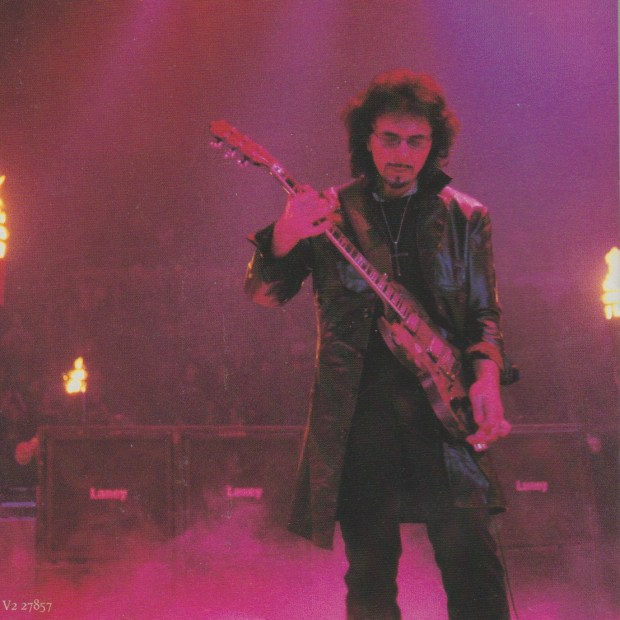
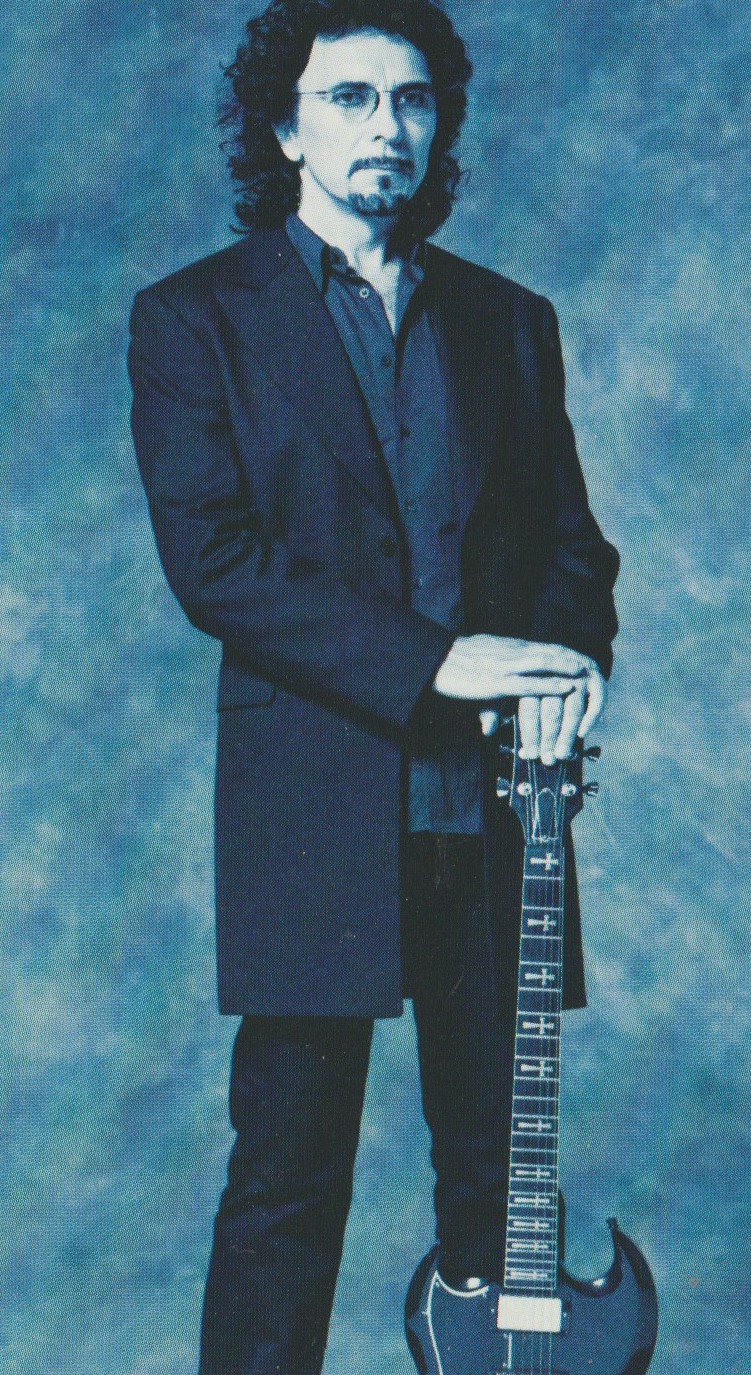
Iommi is the first released solo album by Tony Iommi, but actually the third recorded. The first was 1986’s Seventh Star, released as “Black Sabbath featuring Tony Iommi”, with Glenn Hughes on vocals. 10 years later, Tony recorded another album with Hughes often referred to as “Eighth Star“, which was released in 2004 (after the drums by Dave Holland were re-recorded by Jimmy Copley) as The 1996 DEP Sessions. Then finally in 2000, Tony took a page from the successful Santana formula book and did an album with various lead singers called Iommi.
Like many projects featuring multiple singers and assorted musicians, the album called Iommi is a mixed bag, but with more gems than turds. The guitarist picked an interesting assortment of vocalists, mostly artists big in the 90s. It’s telling that Tony’s good buddy Glenn Hughes isn’t one of them (though Hughes returned on 2006’s Fused). Clearly commercial interests were most important when it came to selecting the singers and songs.
The inimitable Henry Rollins gets the enviable opening slot with “Laughing Man (In the Devil Mask)”. Rollins sounds best with a heavy riff behind him, and this one is pure grunge. Producer-de-jour Bob Marlette co-wrote almost every song, and there’s little doubt that this is how Iommi acquired its “modern” edge. Rollins creates a swirl chaotic rock around him, but the riff alone would have sunk without Hank. Iommi seldom writes such atonal, monotonous guitar parts as “Laughing Man (In the Devil Mask)”.
Skin (Skunk Anansie) is surely one hell of an underrated singer, and her track “Meat” howls. Iommi’s solos and riffs sound much more like what comes naturally from him. Then, it’s the unfortunate sound of 90s drum loops and samples. It’s Dave Grohl’s tune “Goodbye Lament”. Because as soon as one thinks of Iommi or Grohl, we think of drum loops, am I right? Fortunately Grohl has ex-Sabbath bassist Lawrence Cottle and Queen maestro Brian May on his track. He plays the drums when they finally do kick in. Three of those four guys played on Headless Cross! The drum loops suck and date the song to a certain period in time, but fortunately Grohl knows how to write good melodies so it’s not a total bust.
Phil Anselmo (Pantera) takes the very Sabbathy “Time is Mine”. That riff sounds like it may have been later used on an actual Black Sabbath record. The track simmers with fury, then Phil lets it rip loose. The only way to make Sabbath heavier than Sabbath is to include a singer like Anselmo. Drumming is Seattle legend Matt Cameron.
The expressive Serj Tankian (System of a Down) lets his pipes have their way with “Patterns”, amidst more of those annoying samples. It absolutely sounds more System than Sabbath, which is fine since both are heavier than fuck.
The one guy that pulls off a truly Black Sabbath-sounding song is the guy you’d least expect: Billy Corgan. Yet his “Black Oblivion” comes closest to the spirit of classic Black Sabbath, in terms of length and epic riffage. Billy plays bass and guitar on the track as well — what a phenomenal bassist! (The drummer, Kenny Aronoff, knew Corgan from the 1998 Smashing Pumpkins tour on which he played, and then Aronoff went on to play on two more Iommi solo discs.)
The Cult’s Ian Astbury makes Iommi sound like — who else? — The Cult! Brian May returns for some guitar (with Cottle and Cameron on bass and drums). The Cult rarely employ such monolithic riffs, but the chorus is pure Cult.
“Flame On! I used to bleed like a suicide mother, Flame On! And now I breath in this dirty black summer, Flame On! I bought the truth in the mouth of my brother, Flame On! I used to bleed like a suicide motherfucker.”
Shame about the damn loops, like something discarded from Chinese Democracy. They also infect “Just Say No to Love” featuring the late Peter Steele of Type O Negative. Like Astbury, he makes Iommi sound like his band, which already sounded a bit like a Black Sabbath parody.
The biggest disappointment on the album is second to last. “Who’s Fooling Who” is a virtual Black Sabbath reunion, with Ozzy Osbourne and Bill Ward returning to the fold. On bass is Lawrence Cottle, making it 100% Sabbath alumni, 3/4 original. And it’s easily the most boring song on the album. The best thing about it is Bill Ward, the first drummer who didn’t sound like a session guy. A muffled Ozzy phones in his part, but Bill puts some effort into composing the percussion. The best part is the instrumental burnout.
And then, a surprising finish: Billy Idol, with a monstrous “Into the Night”. Idol should consider doing heavy riffy metal like this more often — he’s good at it. Though he effectively snarls his way through the slow riff, his punky side comes out when things get fast. The contrast between riffs and tempos is half the fun.
With Iommi freshly consumed and digested anew, it’s obvious that good portion of what you heard was purposefully geared towards the nu-metal Ozzfest crowd. The selection of musicians was clearly slanted post-80s, but it’s the loops and samples that really blow. The blame must be laid on producer Bob Marlette, especially considering some of the loops sounded exactly like another band he produced: Rob Halford’s Two. The whole thing sounds like a “product”, though at least with some pretty incredible riffs behind it.
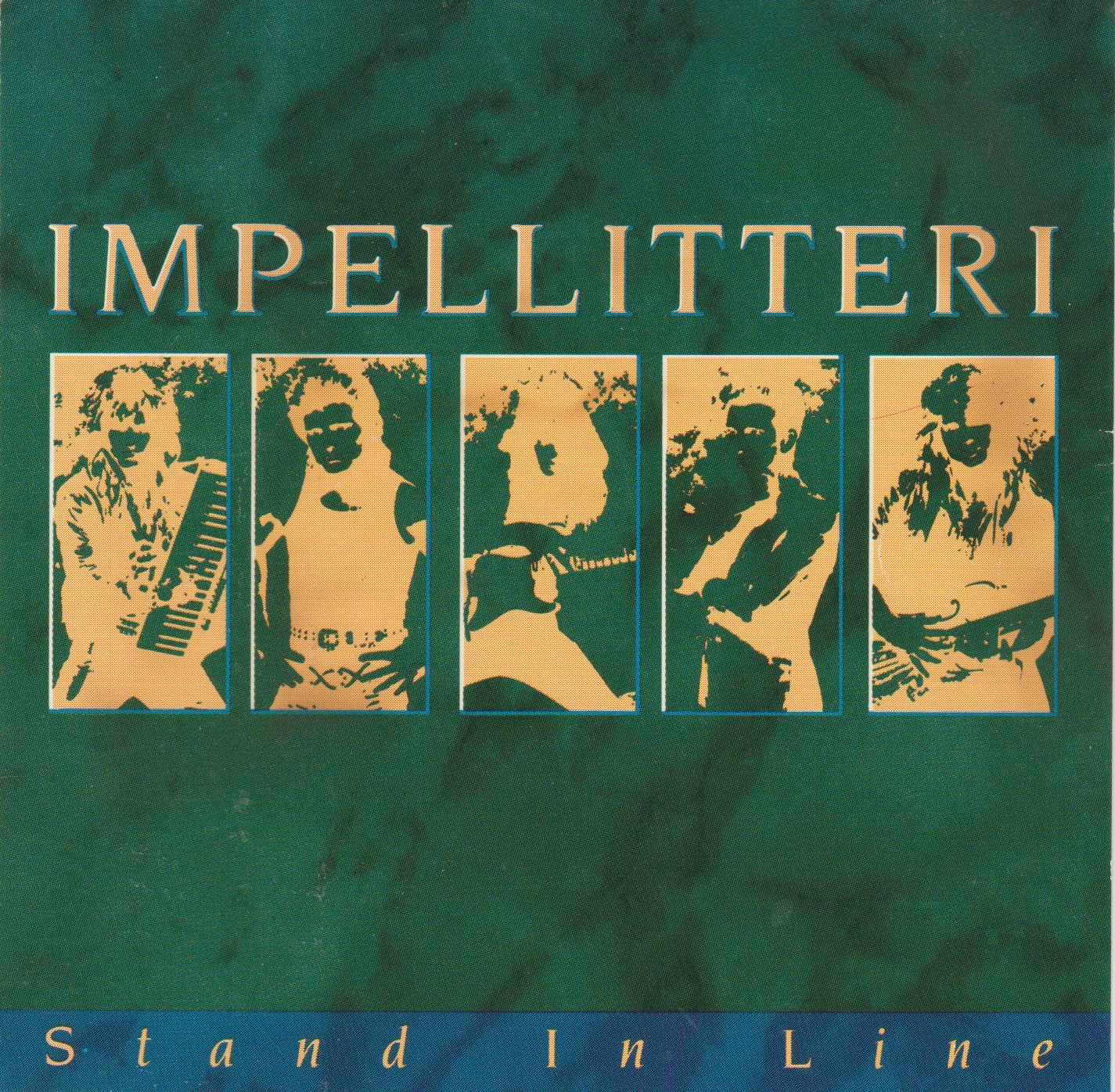
There was a time when I’d buy any “supergroup” with members that I knew. Impellitteri had three: Graham Bonnet (Rainbow – vocals), Chuck Wright (Quiet Riot – bass) and Pat Torpey (Mr. Big – drums). This release on Relativity records is basically a showcase for guitarist Chris Impellitteri, and unfortunately that’s exactly what it sounds like. In the credits, Chris states “I promise that my guitar solos will only get faster”. That should tell you everything you need to know about Stand in Line.
Sounding indistinguishable from an Yngwie album, the title track goes first. It boasts some pretty mean Graham Bonnet vocals, but the song sounds exactly like Malmsteen to a “tee”. And it’s one of the best songs. The star is actually Pat Torpey (rest in peace, rock soldier) who rarely got to drum so heavy.
A couple misguided covers don’t do this album any favours. The new version of “Since You Been Gone” metalizes the Rainbow original, and it can’t stand up under the weight. (Interesting note: this track features Randy Rand from Autograph on bass.) It’s too stiff, too schooled, too…supergroup-y. Same with “Over the Rainbow”, which has some beautiful runs, but is otherwise overplayed. Squealing solos don’t compensate for Ritchie Blackmore, or a tight band.
Highlights: “Stand In Line”, “Tonight I Fly”. Turds: “White and Perfect”, a song about colonialism!
Credit where it’s due: Chuck Wright plays some unison lines in sync with Chris Impellitteri, showing off abilities that he doesn’t often exploit. Likewise with Pat Torpey. Unfortunately Stand in Line is too generic (if you can call “Yngwie” an actual genre), and there’s already one neo-classical shredder on the top of the pile. Impellitteri spices his playing up with some Van Halen-esque tricks, but all I can hear is Yngwie, and you will too, right down to the production. Most of the pleasure derived from this album is courtesy of Graham Bonnet, but chances are you already own this if you’re a Bonnet obsessive-compulsive!
2/5 stars
Side note: This CD was salvaged by me, as it had been close to ruined by a house fire! Somebody sold me his stinky CD collection, many of which were scorched. The smell (burned paper and plastic) was unholy. This was one of the lesser-destroyed albums, but you can still see some browning on the top edge of the inside cover, where the smoke and heat got to it. With a lot of effort and gentle cleaning products, I eliminated of the smell and most of the stains.
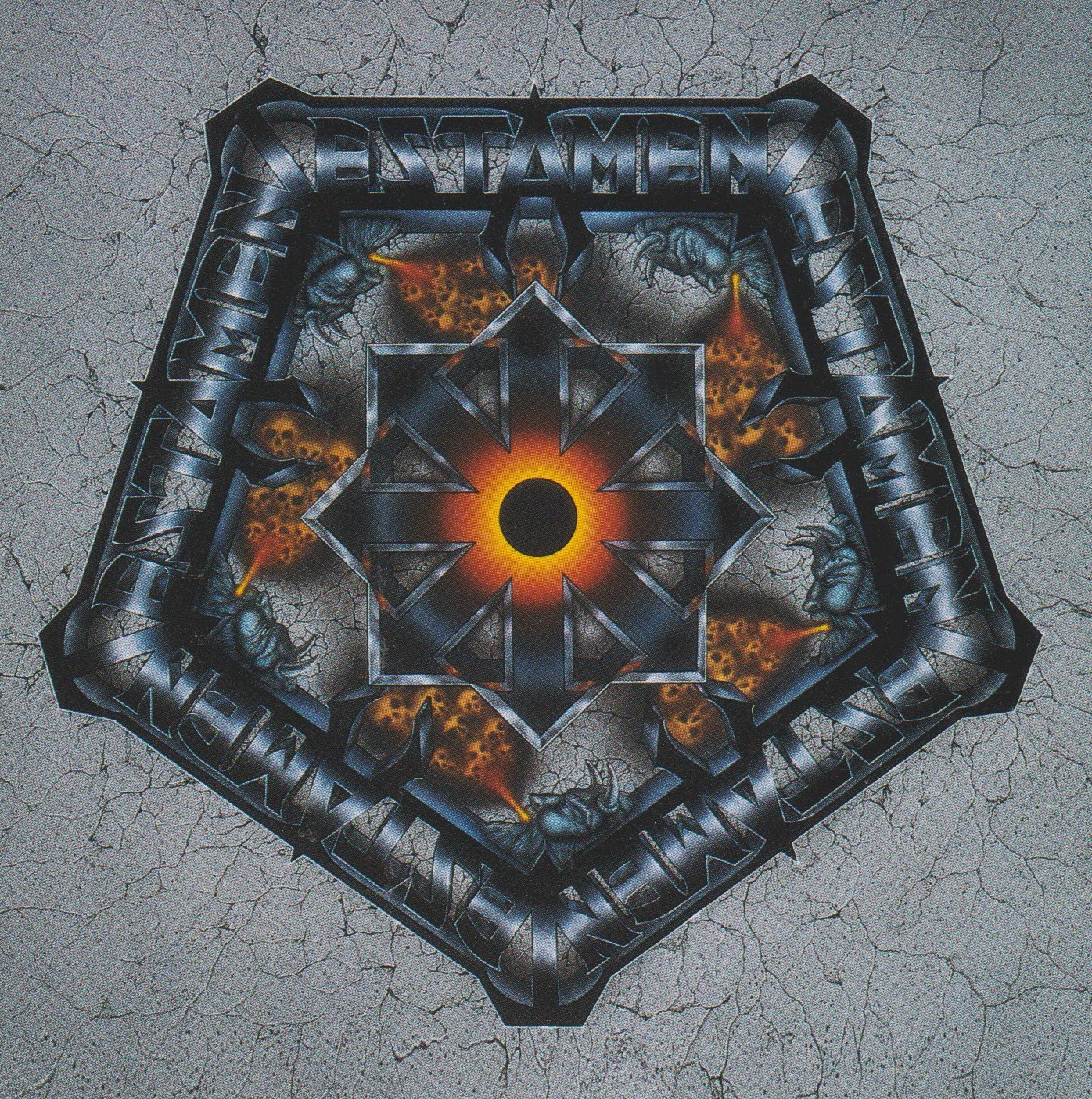
This may have been the first thrash metal album I ever bought. I was late to the mosh pit, but I think I chose a good first thrash. Lead video “Electric Crown” was in rotation on the Power 30, and I loved the speed combined with melody and a virtuoso guitarist. To me, “Electric Crown” blew away any of the Metallica singles I’d heard so far. It was way superior to the overly simplistic “Enter Sandman”.
One of the coolest sounds I ever heard came from Alex Skolnick’s guitar. In that melodic, four-note descending lick, the fourth note…just shakes. I sat there in my bedroom with my guitar, trying to make the same sound, failing every time. Skolnick was increasingly interested in jazz, and you can hear that in some of the soloing and tubey tone.
The Ritual is the most commercial Testament album. That made it an easy gateway to thrash. Did they sell out? By all accounts, The Ritual is the album on which Alex Skolnick stepped up in terms on contributions. As a schooled musician he wanted to try some different things, and indeed he left the band shortly after to grow as a player. This isn’t a sellout, but it’s the album on which the guy who was trained by Joe Satriani had a lot more influence. (After he left, the band went hard back to the extremes of thrash with Low and Demonic.)
Not a sellout, then. But there are definite parallels to the contemporary Metallica album. The slower metal chug of “So Many Lies” is this album’s “Sad But True”. The Ritual also has a modern, crisp production (by Tony Platt) though not as fully stuffed as Metallica.
Immediately after “So Many Lies”, drummer Louie Clemente goes into a gallop on “Let Go Of My World”, an angry testament to independence. See what I did there? The longest song on the album is the title track, an anti-drug anthem that rocks it slow and forboding. “Kill yourself, killing time.” Vocalist Chuck Billy has a mighty set of lungs, the kind that make you listen up. These lungs are put to great effect on “Deadline”, the mid-tempo banger that finishes side one. There’s something just slightly different about the beat and there’s nothing equivalent on the Metallica album. “Deadline” is arresting, kickin’ and menacing all at once.
“As the Seasons Grey” continues the blistering metal, not as fast as yesteryear but more measured. Dig that false ending. “Agony” and “The Sermon” offer some variety, but Testament are best when served fast. Right? Right? No – check out the ballad “Return to Serenity”! Testament were of course no strangers to ballads. “The Ballad” and “The Legacy” worked out well for them previously, but “Return to Serenity” blows them away. Alex Skolnick’s clever, echoey guitar hook is spellbinding. This incredible ballad really should have been a hit. That’s why they included it again on 1993’s Return to the Apocalyptic City EP. It should be as well known as hit ballads by another big name thrash band. The Ritual closes on a stampeding “Troubled Dreams”, an album highlight and as persistent as the wandering nomad in the lyrics.
There are more important Testament albums than The Ritual, such as their landmark Practice What You Preach. It still remains a high water mark in the catalogue.
“Sabbath are heavy, but Priest are metal.” – K.K. Downing
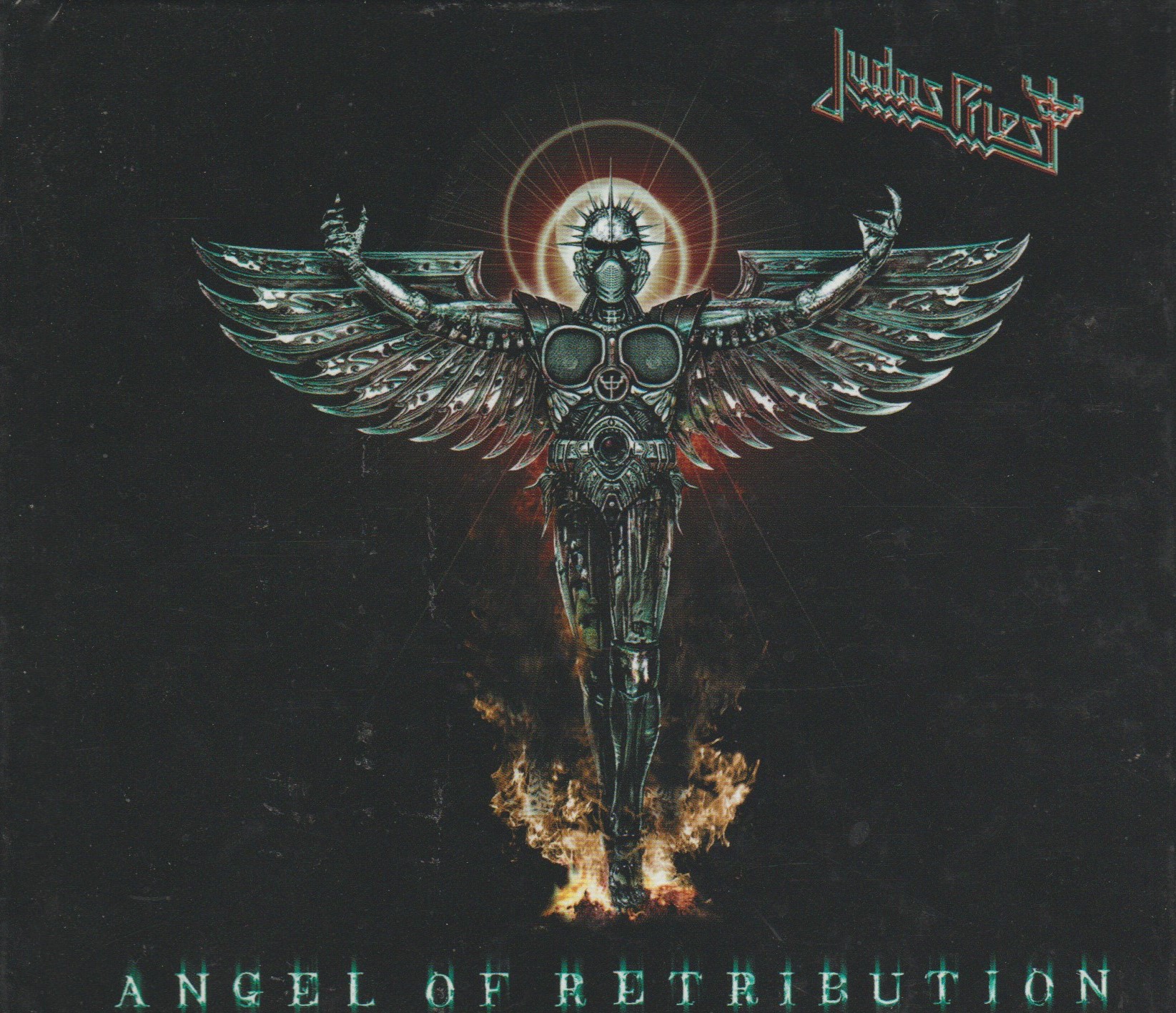
JUDAS PRIEST – Angel of Retribution (2004 Sony CD/DVD deluxe set)
Like Iron Maiden before them, Judas Priest pulled off a successful reunion tour before venturing into the studio to record a new album. When the new music finally came, a deluxe package was made available featuring live videos from the reunion tour. In this deluxe-sized review, we’ll take a close look at both the CD and DVD content.
The CD
Pure anticipation preceded the arrival of the Angel of Retribution. Two underwhelming albums with Tim “Ripper” Owens on lead vocals caused Judas Priest’s star to diminish in the 90s and 2000s. The return of the Metal God, Rob Halford, meant a reunion of the successful 1990-1991 Painkiller lineup. The new album cover even featured the return of the Painkiller character, now the Angel of Retribution. But a long time had passed. Could Priest hope to live up to the hype, and their legacy?
The answer is mixed. While Angel of Retribution contains enough classic Judas Priest metal to consider it a success, it also has some truly legendary filler, of sub-Ram It Down quality. Instead of running through the album track by track, let’s break it down in terms of song integrity.
Priest wrote a natural sounding album, with elements from virtually all eras of Priest past. They say it came about organically, and it does sound that way. Some of the best material are the songs that sound like variations of classic Priest.
The opening song “Judas Rising” brings it back to 1976’s Sad Wings of Destiny with that fade-in opener inspired by “Victim of Changes”. Then it transforms right into the Painkiller era, with something that sounds like a far more intense “Hell Patrol”. Solid 5/5.
The slightly psychedelic first single “Revolution” ranks among the better songs, although perhaps it’s actually most similar to “Little Crazy” by Rob Halford’s Fight. It has flavours of Rocka Rolla and Killing Machine, and is far from what anyone expected Priest to put out for a first single. Dig that slide guitar bit in the solo! Solid 5/5.
“Worth Fighting For” isn’t a ballad; it’s a little harder edged than that. It’s the one song that is unique in the Priest catalogue, and remarkably strong. The riff has a nice chug to it, while Rob ably carries the melody to a higher place. A special song, and a 5/5.
“Demonizer” is Jugulator meets Painkiller, faster than a hellriding devil dog (whatever that is), but “the Painkiller rises again!” So testifies Halford. It’s so ridiculously over the top that it can only be worth a solid 5/5. Likewise the similar “Hellrider” on side two. Both feature double bass so fast that it’s almost a parody of itself, but both rock so hard you’ll break your neck keeping up. “Hellrider” is also notable as the song where Rob Halford inexplicably name drops “Megatron”. Similar songs, both solid 5/5’s.
The ballad “Angel” is a little soft, unexpectedly so on an album with so much heavy metal. Yet, Priest can do anything. The acoustic “Angel” could be the quietest ballad since the early days. “Put sad wings around me now,” sings Rob to the angel, an appropriate callback. As his voice aged it acquired more depth. That helps make “Angel” a respectable 4/5.
“Deal With the Devil” and “Wheels of Fire” fall in a netherworld of pedestrian Priest. These both feel like filler from Point of Entry or Ram it Down. Less explosive, less memorable. The autobiographical “Deal With the Devil” is amusing for its many lyrical callbacks: “Under blood red skies”, “Took on all the world”, references to razor blades. Likewise the short one, “Eulogy“, which is really an intro for another song that we’ll get to. “They remain still as stained class”, “Guarded by the Sentinel”, and so on. 3/5 each.
The worst of all songs is “Loch Ness“, a mess so atrocious that we had to devote an entire entry just to that one song. Combined with its intro “Eulogy”, it’s over 15 minutes of mire that has no reason to exist. Many people simply stop the album after “Hellrider” and leave this foul turd to rot unheard. “Loch Ness” could very well be the worst Judas Priest song of all time. A flaming turd to extinguish all flaming turds. The worst of all putrid, rancid filler songs ever foisted upon the faithful. 0/5.
“Reunited” DVD
It’s worth getting a copy of this album with the bonus DVD. For one, there’s a documentary from the Priest Reunited tour. Secondly, there are seven uncut live songs here for you to enjoy, and it’s the only official video release from the Reunited tour. The live footage is something to see, especially if you own the robotic Rising in the East DVD. In that concert, Rob Halford was a stiff mannequin instead of a frontman. Here, he comfortably in charge and engaged. The entire lineup is energized. “Breaking the Law” sees them powered up and working hard.
But how did the seemingly unlikely reunion begin? According to the documentary, the band and Halford met to discuss the forthcoming Metalogy box set. Glenn Tipton states that they decided to reunite later the same day. It was like they’d never been apart. Terribly British, says Rob. “Have a cup of tea, see you later.” Rob does express regret for his actions (reportedly he gave Judas Priest his notice in 1992 by fax), but it seems all was forgiven over time.
Beware which version you buy. This CD/DVD combo set contains the documentary plus the full live songs: “Breaking the Law”, “Metal Gods”, “A Touch of Evil”, “Hell Bent for Leather”, “Eletric Eye:”, “Diamonds & Rust”, and “Living After Midnight”. The DualDisc version does not; it only includes edited fragments of those tracks. Which is a shame, because the band sounded fantastic and Rob was in full-lunged form. This is probably the best live version of “A Touch of Evil” available, for example. Not everyone likes the acoustic version of “Diamonds & Rust”, but it’s certainly different. The only bonus to DualDisc is that you also get the album in “enhanced stereo”. Avoid that; get this.
Although Angel of Retribution is overall a very strong Judas Priest album, “Loch Ness” is impossible to ignore. It does serious damage to an album that was otherwise an impressive listen. In the included DVD, K.K. Downing says they had to pick and choose from an overabundance of songs. Can you imagine how bad the leftovers are if “Loch Ness” made the album?
GETTING MORE TALE #779: “Loch Ness” – A Lyrical Analysis
Judas Priest are known not just for their incendiary riffing, but also vivid lyricism. It’s often a winning combination. Witness such metal concoctions as “Blood Red Skies” or “Metal Gods”. When it works, it works. When it fails, it fails gloriously. Let’s have a look at Judas Priest’s most epic failure. That would be the 13:28 long “Loch Ness”, from 2005’s reunion album Angel of Retribution.
Musically, “Loch Ness” is utter garbage; lethargic rock for the sleepy. The lyrics are a little better, though not enough to save the song.
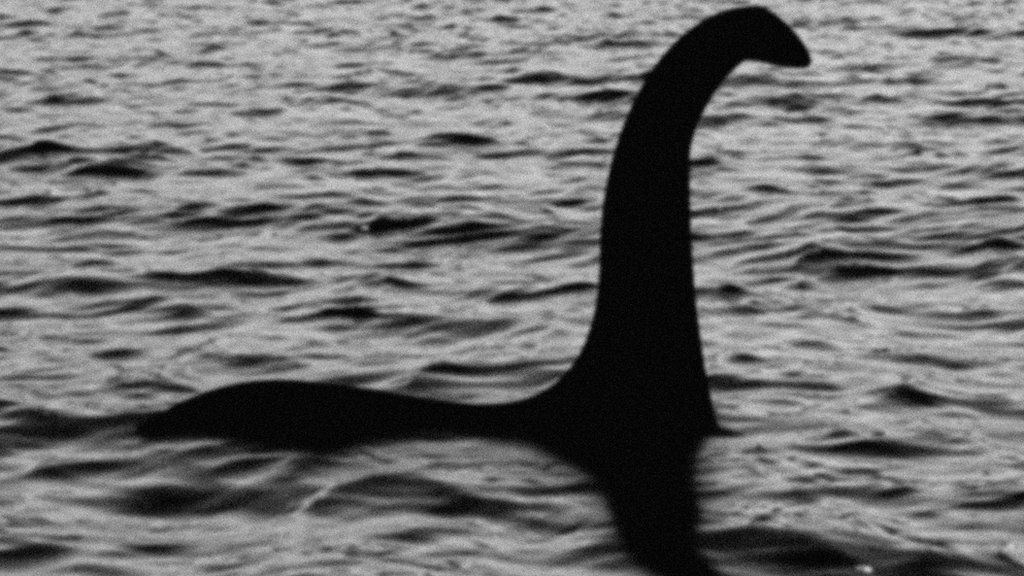
Judas Priest usually create their own mythology. Characters such as the Painkiller, the Sentinel and the Jugulator are three such examples. This time, Priest dipped into cryptozoology and Scottish legends for their subject matter. Today, the general consensus is that there is no monster in the depths of Loch Ness. It’s still fun to speculate and imagine what might have been.
The first verse of “Loch Ness” sets the scene. The loch is the largest (by volume) in the UK, with an incredible depth of 755 feet. Because of the loch’s depth and murkiness, long has there been uncertainty about what may be down below. Using sonar and other modern technologies, nothing of any great size has ever been found. Though legends remain strong today, it is highly unlikely that a large monster lives in Loch Ness. What say Judas Priest?
Grey mist drifts upon the water, The mirrored surface moves, Awakened of this presence, Dispelling legends proof.
Stories of a beast in the loch date back almost 1500 years. A definitive modern day sighting would indeed be the proof needed to move the monster from legend to reality. Rob Halford references the grey mists, and how the movements of the “mirrored surface” can look like a creature is swimming beneath. This is how most sightings begin. Then “Nessie” rises from the water:
A beastly head of onyx, With eyes set coals of fire, It’s leathered hide glides glistening, Ascends the heathered briar.
Physical descriptions of “Nessie” the monster vary wildly. A head attached to a long neck is a defining characteristic. It is usually described as dark, which Halford here exaggerates as “onyx” (black) in colour. It’s eyes being “coals of fire” seems to be a Halford invention. Likewise the hide, which is usually not described in much detail. Out of necessity, Rob had to elaborate on the myth in order to describe the beast. An interesting line is “ascends the heathered briar”. Indeed, in some of the older sightings, the beast is seen climbing onto land – once even crossing a road. When seen in full, the creature is often described as similar to a plesiosaur.
This legend lives through centuries, Evoking history’s memories, Prevailing in eternities, On and on and on.
More interesting than the physical descriptions of the beast are the old legends. Water beast legends were not uncommon. Why was Loch Ness always such a hotspot for such tales? There is no simple answer. Recently, large eels were filmed in the loch. A mistaken sighting of an eel could account for many of the stories. With the advent of modern media in the 1900s, tales of the monster spread worldwide and stories were reported with more frequency. Proponents of the monster theory point to the oldest legends as proof that there was always something mysterious about the loch, though there is no proof that there is any connection to the “Nessie” of today.
Loch Ness confess, Your terror of the deep, Loch Ness distress, Malingers what you keep, Loch Ness protects monstrosity, Loch Ness confess to me.
This chorus is a contender for the worst on any Judas Priest album. There is nothing here to sing along to. The words are awkward and juvenile with overly simple rhymes.
The speaker is addressing the loch itself; asking the loch to give up its secrets. But “Terror of the deep”? Few today find the idea of the Loch Ness monster to be terrifying . True, early sightings would have been quite scary. Even if the creature spotted was only an otter or an eel, in the dusk or fog it could have been startling. As you’ll see, however, it is implied this song takes place in the modern age.
The most interesting word choice here is “malingers”, meaning to pretend to be sick in order to avoid something. It’s possible the word is being intentionally misused because it simply sounded good. Insofar as meaning goes, “distress”, “malinger” and “protect” all imply the creature isn’t actually threatening. Perhaps it or its young need protection. Halford begs the beast for the truth, but the truth is not to be found.
Somehow it heeds the piper, From battlements that call, From side to side it ponders, In passion in the skirl.
Scottish imagery here, implying that the monster will appear if a piper plays its song. “Skirl” refers to the shrill sound of bagpipes. “From side to side it ponders, in passion in the skirl” is a variation of the old saying that music soothes the savage beast. Otherwise, the connection between the pipes and the monster seem to be a Halford construction. There is also an old joke: “Bagpipes and the Loch Ness Monster have two things in common – they both attract tourists and terrify little children.”
This highland lair of mystery, Retains a lost world empathy, Resilient to discovery, On and on and on.
“Resilient to discovery” isn’t the most accurate phrasing. “Resilient” means to recover quickly. The Loch Ness monster is more “resistant” to discovery than “resilient”, though the legend certainly is resilient. It goes on and on regardless of a narrowing scope of possibilities. “Retains a lost world empathy” probably refers to the age of the beast. It is so old that it comes from a simple time when people had more empathy than today.
This legend lives through centuries, Evoking history’s memories, Prevailing in eternity, Your secret lies safe with me.
These lines simply refer to the age of the old legends, which will live forever. Rob assures the beast that if it reveals its secrets, he will not tell.
This creature’s peril from decease, Implores to mankind for release, A legacy to rest in peace, On and on and on.
Finally the last verse goes back to the idea that the creature is in some sort of distress. It’s unclear what the peril is, but mankind is a part of it. Is it the call of the pipers? The monster simply wants to be at peace. Perhaps this is a hint of an environmental message, for conservation.
The lyrics to “Loch Ness” are not overly complex. Their simplicity, combined with slow monotonous music, make the 13 minute song seriously drag. A few unusual word choices tend to obscure meaning, but “Loch Ness” is otherwise a fairly straightforward Judas Priest lyric. When sung aloud, it begins to sound a little foolish. “Loch Ness, confess, your terror of the deep” is not poetry. It’s something you would have written in highschool English class. While the words mostly stand up to analysis, they are not resilient to singing aloud. In this manner (perhaps the only manner in which rock lyrics really matter), “Loch Ness” flounders.
“Loch Ness” has never and will never be played live. It’s a shame that one of the greatest cryptids in all of legend has been given such a weak heavy metal song!
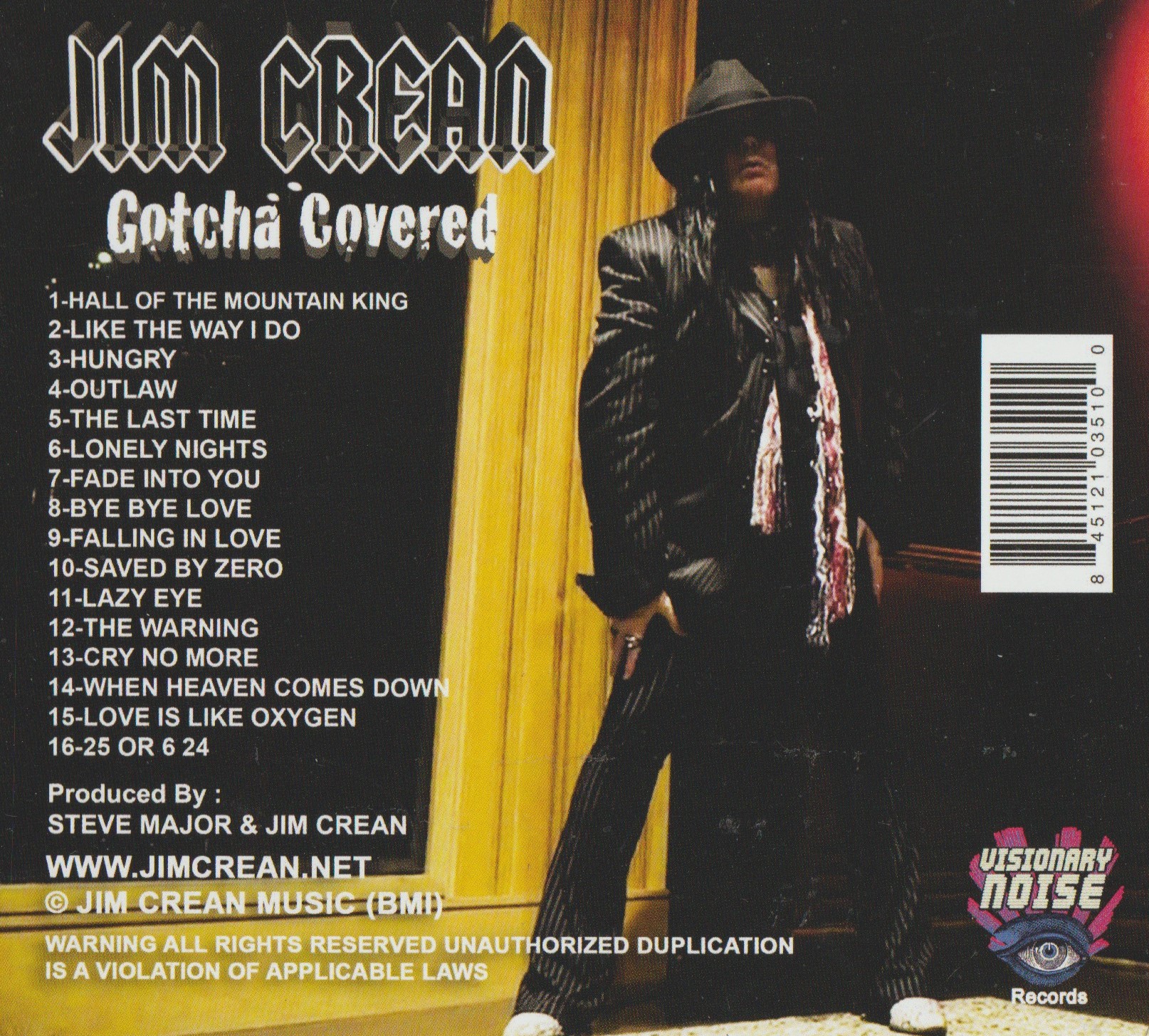
Jim Crean is steeped in hard rock tradition. He’s worked with some of the legends, and he’s covered the rest of ’em. Atypical covers. Not the usual “hits” but interesting tracks you might know and remember, or will be exposed to for the first time. In 2019, Crean’s come out with an original album The London Fog, and a covers CD called Gotcha Covered. Lets see what surprises there are in store.
Right out of the gates, it’s a shocker: “Hall of the Mountain King”. You don’t hear Savatage covers every day, and fortunately Crean has the necessary scream abilities. He sounds like a man possessed by lust for the Mountain King’s gold!
Unpredictability is the theme for this album. Up next: Melissa Etheridge. It’s an oldie from her landmark first debut, “Like the Way I Do”, and you’ve never heard it so heavy. It sounds as if it was written to be played this way because it’s completely natural. White Lion are a little more centerfield, and “Hungry” is a killer choice. Jim Crean can easily handle mid-80s Mike Tramp songs, as they are right in his pocket. John Corabi is another singer who Crean is naturally suited to cover. The Scream’s “Outlaw” is definitely an obscure but inspired choice. Tasty riff. Badlands get the next nod, with “The Last Time”, the first single from the second album Voodoo Highway. The high notes are no problem, and the chorus goes on for lightyears.
Then it’s back to left field, with Bryan Adams’ old (pre-Reckless) classic “Lonely Nights”. You don’t hear Adams covers very often, and usually they suck. Not this one. Crean transforms it into a hard rock anthem, something Sammy Hagar could have recorded. Another shocker is Mazzy Star’s “Fade Into You”, converted into a classy rock ballad, utterly different from the original. The Cars’ “Bye Bye Love” is another brilliant choice (not that you can go wrong with any Cars). It works well as hard rock. “Falling In Love”, a Scorpions oldie written by Herman Rarebell, adds a heavy kick at the right time.
“Saved By Zero” is the only track that doesn’t sound overly metalized. The Fixx cover reveals some more new wave roots, and a good song choice it is. The complex backing vocals sound fantastic. Crean does justice to his hometown boys The Goo Goo Dolls next with “Lazy Eye”. This non-album Goos song was on the soundtrack for the ill-fated Batman & Robin. As you’d expect, it boasts a strong chorus, but the chunky riff may surprise you. Another obscurity is “The Warning” by Victory, a strong 80s chug. Onto the 90s next: Ratt’s Stephen Pearcy and Cinderella’s Fred Coury had a band called Arcade. “Cry No More” is a ballad from their debut.
The last few songs include Dokken’s slow burning “When Heaven Comes Down”. Nothing wrong with some Back for the Attack era Dokken. The Sweet’s classic “Love Is Like Oxygen” brings that pop edge back. But it’s the closer, Chicago’s “25 or 6 to 4” that really slams it home. No horns, just guitars and heavy beats. The original arrangement is untouchable, but a heavy rock version? Sure, why not.
A good covers album is hard to come by. It all comes down to song selection. In this regard, Jim Crean knocked one out of the park.
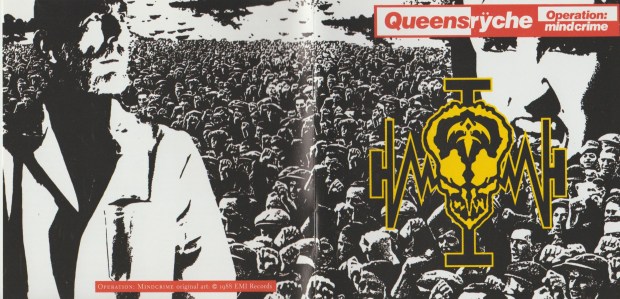
After Pink Floyd made history by releasing The Wall in 1979, concept albums fell out of fashion. Almost a decade later, two heavy metal albums brought the artform of the full-length story back: Iron Maiden’s Seventh Son of a Seventh Son, and Operation: Mindcrime by Queensryche. Of the two, Mindcrime had the more coherent linear story, but both remain high water marks for each band.
The Queensryche album sold slowly at first, as the band refused to make music videos to let the album speak for itself. They changed course in 1989 when “Eyes of a Stranger” made it to MTV and MuchMusic. Fortunes changed dramatically for Operation: Mindcrime. The album eventually went platinum.
The reason Mindcrime was better suited as an album than music videos was the connected storyline running through each song. Employing a classic frame technique, we begin at the end with “I Remember Now”.
“I remember now. I remember how it started. I can’t remember yesterday. I just remember doing what they told me…”
The anti-hero Nikki is an angry, aimless addict who fell in with a radical political group called Operation: Mindcrime. He is a disheartened young American. “The rich control the government, the media, the law.” Mindcrime’s modus operandi? Using drugs and brainwashing, would-be assassins are sent out to kill strategic political targets, building to revolution. Inequality, corruption and the media have made the country an ugly place. Dr. X, the mastermind behind Mindcrime, has total control over Nikki. He also uses the nun Mary, a former prostitute, to feed Nikki’s needs. Nikki and Mary grow closer until he receives the order: “Kill her.” She knows too much.
The first two tracks are just setup before you get to the meat. “I Remember Now” and “Anarchy-X” create a powerful set of images, with anthemic guitars and the sound of massive crowds rallying to a cause. “Revolution Calling”, the first real song, begins the narrative. “Then I heard of Dr. X, the man with the cure, just watch the television, yeah you’ll see there’s something going on.”
Nikki is indoctrinated on the title track, an ominous riffy behemoth of a song. Dr. X uses Nikki’s drug addiction to control him. With nothing to lose, Nikki falls for the doctor’s words. “There’s a job for you in the system boy, with nothing to sign.” Nikki has no use for the government or politicians. It all sounds good to him. On “Speak” he receives his first assignment. “I’m the new messiah, death angel with a gun.” On a blazing fast track with a thick chorus, Nikki falls into his new life. “Eradicate the fascists, revolution will grow.” On “Spreading the Disease”, another kickass track with a chorus that goes on for miles, Nikki tells the story of Mary and his distaste for the church. “Religion and sex are power plays, manipulate the people for the money they pay. Selling skin, selling God, the numbers look the same on the credit cards.”
Queensryche take it slower (though not soft) on “The Mission”, as Nikki starts to feel disillusionment. “I look around, my room is filled with candles, each one a story but they end the same.” He keeps telling himself that he’s doing what’s right. “My mission saved the world, and I stood proud.” But then he is given the order he dreads: Kill Mary. This instruction opens album epic “Suite Sister Mary”, 10 full minutes of riffs, choir and orchestra (by Michael Kamen). The riff alone stands like a monolith. Vocalist Pamela Moore sings a duet with Geoff Tate as the character of Sister Mary. As for that riff? Chris DeGarmo was the master riff composer in this band, a hole they have never quite filled.
The second half of the story commences with “The Needle Lies”. Nikki wants out, but finds that it doesn’t work that way. There is no “out”. Meanwhile Queensryche strafe the speakers with a thrashy blitzkrieg. Drummer Scott Rockenfield cannot be contained. Then on the quiet filler track “Electric Requiem”, Nikki discovers that Mary had made his choice to disobey orders irrelevant. Dead by her own hand, Nikki is broken and tailspins into a mad depression. This is portrayed on “Breaking the Silence”, another stone cold winner of a song with a mighty chorus. The chunky guitar riff is to die for.
With his memory failing him, Nikki doesn’t even know if he killed Mary himself or not. He questions everything on the ever-cool single “I Don’t Believe in Love”, one of the most remarkable of all Queensryche songs. Once again the writing partnership of Tate and DeGarmo struck heavy musical gold. Two shorter tracks (“Waiting for 22” and “My Empty Room”) fill in some story points, and Nikki is eventually caught.
Operation: Mindcrime’s biggest song is its final track and first single, “Eyes of a Stranger”. Memories are but fragments. “I raise my head and stare into the eyes of a stranger.” It’s one of Queensryche’s most incredible recordings, a perfect storm of guitars, vocals and melody. It’s neck deep in drama, with Geoff Tate at his most emotive. The story ends with some questions left unanswered. At least until 2006’s unnecessary Mindcrime II….
Operation: Mindcrime took Queensryche to an artistic level that fans and critics always knew they could achieve. Their debut EP showed promise. They didn’t live up to that potential until Mindcrime. Though good, The Warning album wasn’t a stunner like Mindcrime. Rage For Order was brilliant but alienating. Even when it was first released, Mindcrime did not blow all the critics away. Only after it had been digested slowly over time did the masses realize they were sitting on something very special. Queensryche had done conceptual work before, but more abstract. Nothing as well-hewn as Mindcrime. Musically it was like they distilled everything they had accomplished thus far, and concentrated it into pure rock majesty.
The 2003 CD reissue had two live B-sides as bonus tracks. “The Mission” was originally released in 1991 on the B-side to “Silent Lucidity”. It is a different recording from that on the live album Operation: LIVEcrime. “My Empty Room” is a later acoustic recording, released in 1995 as a B-side to “Bridge”. It’s interesting for its acoustic setting and percussion, but is best heard in the context of the “Bridge” single with its other acoustic counterparts.
Is Operation: Mindcrime a masterpiece? The story is a bit Hollywood and a tad juvenile, but the broad strokes are remarkably still valid today. Mindcrime is rivalled by only a few. It’s a worthy, nay, important addition to any metal collection.
Sometimes a reissue is done so right you just gotta “Take Hold of the Flame”.
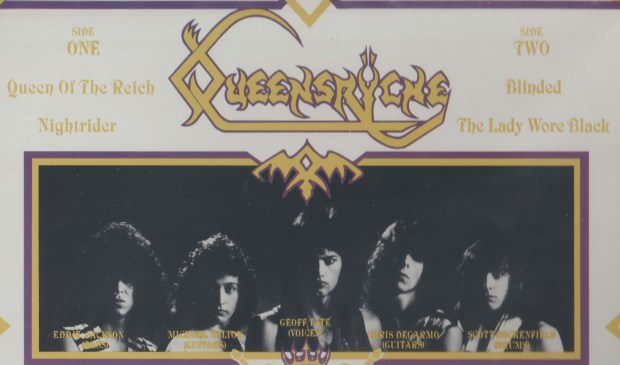
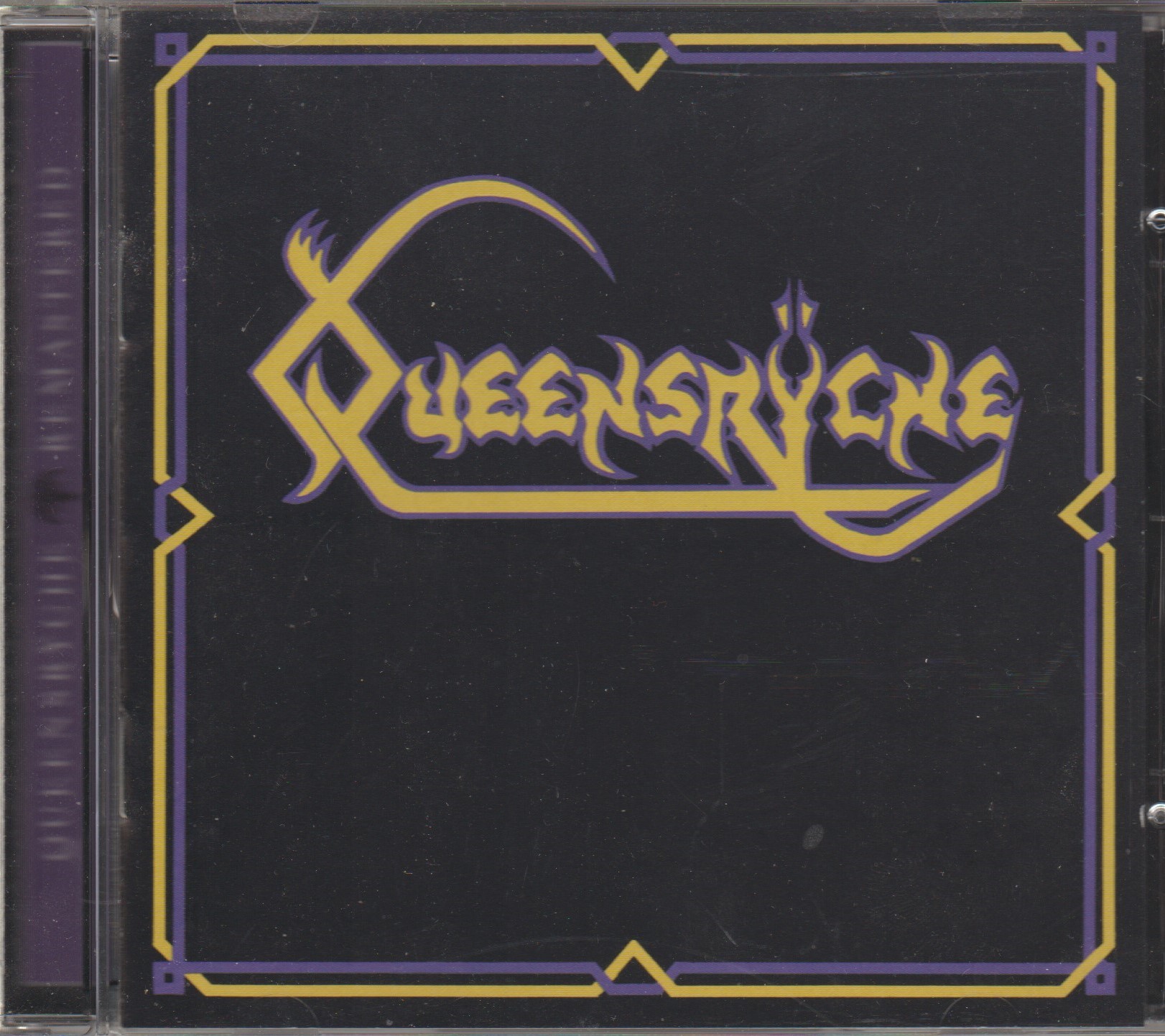
The 1984 debut EP by Queensryche is one such release. The original vinyl runs shy of 18 minutes, leaving plenty of space for bonus tracks. For this, they included the audio for all 10 songs from their first home video, Live in Tokyo. Wishes fulfilled.
The original four track EP put the quintet from Seattle on the map. Opening with “Queen of the Reich”, the young band showcased their knack for riffs and screaming vocals. Geoff Tate’s opening scream cannot be touched. Tate seemed embarrassed of these songs later on (all written by Michael Wilton and Chris DeGarmo with one lyric by Geoff). Though the songs are clearly a starting point, they’re nothing to be embarrassed by. “Queen of the Reich” remains simple, majestic and powerful.
The “Nightrider” sails away but the riffs go on with pneumatic precision. Early Queensryche were not that dissimilar from early Iron Maiden, but at least they were doing that sound well. Curiously enough this self-produced EP was not recorded with the intention to release it. Queensrÿche is actually just a demo, but the band were starting to make waves on the live scene and so the four songs were released as an EP. It eventually went gold; very rare for an EP.
Flipping over to side two, “Blinded” is screamy and raw. Not one of the bands’ most memorable tunes, but soon arrives “The Lady Wore Black”. This is a metal ballad in the classic vein of “Beyond the Realms of Death” or “Remember Tomorrow”. Tate’s voice cascades while the band weave a backing track of guitar thunder. Along with “Queen of the Reich”, it still turns up on live setlists.
The live set in Tokyo, recorded in 1984, contains all the tracks from the EP, a non-album song called “Prophecy”, and several from the debut full-length album The Warning. Opening with the “Nightrider”, Queensryche don’t let up through a generally fast and heavy set. “Prophecy” keeps up the brisk pace, with a chorus that is miles ahead of “Nightrider”. And this DeGarmo-penned smoker was a non-album track! “Deliverance” from The Warning follows in its ashy footsteps. It’s an onslaught of Warning tracks: “Child of Fire” and “En Force” rolled out in heavy fashion. This trio of Warning songs might be considered the slow part of the set. They have a soundalike vibe as they steamroll the ears.
“The Lady Wore Black” brings a slower, dark atmosphere. Tate’s sustain is unbelievable! Then it’s a blast of classics to close the set: “Warning”, “Take Hold of the Flame” and “Queen of the Reich”. Magnificent metal through and through, with “Take Hold” being an unequivocal high point. From Tate’s vocal to the exalted riffing, Queensryche nail it.
Don’t just get the EP. Make sure to get the 2003 CD reissue with the glorious Tokyo show included. You’ll be happy you did.

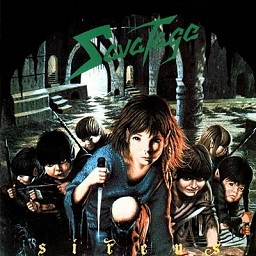 SAVATAGE – Sirens (1983 Music for Nations)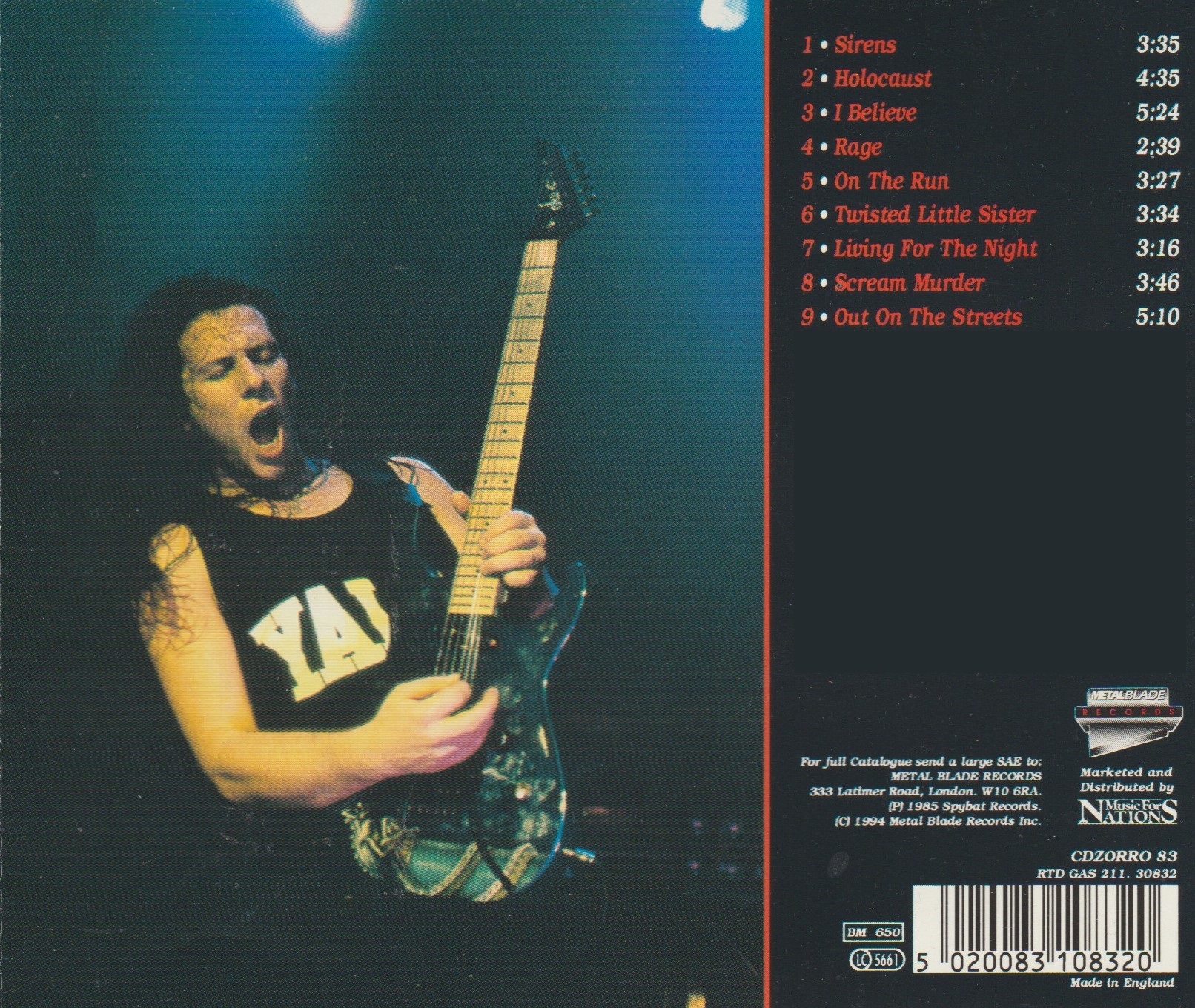


















 mikeladano.com