heavy metal

REVIEW: Motley Crue – Quaternary (1994 Japanese EP)

MOTLEY CRUE – Quaternary (1994 Elektra Japanese EP)

For me, undoubtedly the most heavily anticipated new album of 1994 was the new Motley Crue.  Originally titled ‘Til Death Do Us Part, the self-titled ’94 Crue disc was their first with new singer/guitarist John Corabi.  They holed up with producer Bob Rock and knuckled down, creating what could have been the most important album of their careers.  The long wait (five years between studio albums) and cryptic remarks from the studio indicated that this would be the heaviest Motley album ever, and their most ambitious.  The new, serious Motley for the 90’s had, as always, written plenty of extra material too.

In addition, producer Bob Rock had an idea for getting creative juices flowing.  He asked each of the four members of Motley Crue to write and record a solo track with no input from the other members.  This was slightly historic:  the first time Nikki Sixx, Mick Mars, Tommy Lee or John Corabi had done anything solo.  With all the numerous outtakes recorded for the Motley Crue LP, there was now plenty of extra material to put out as a bonus EP.
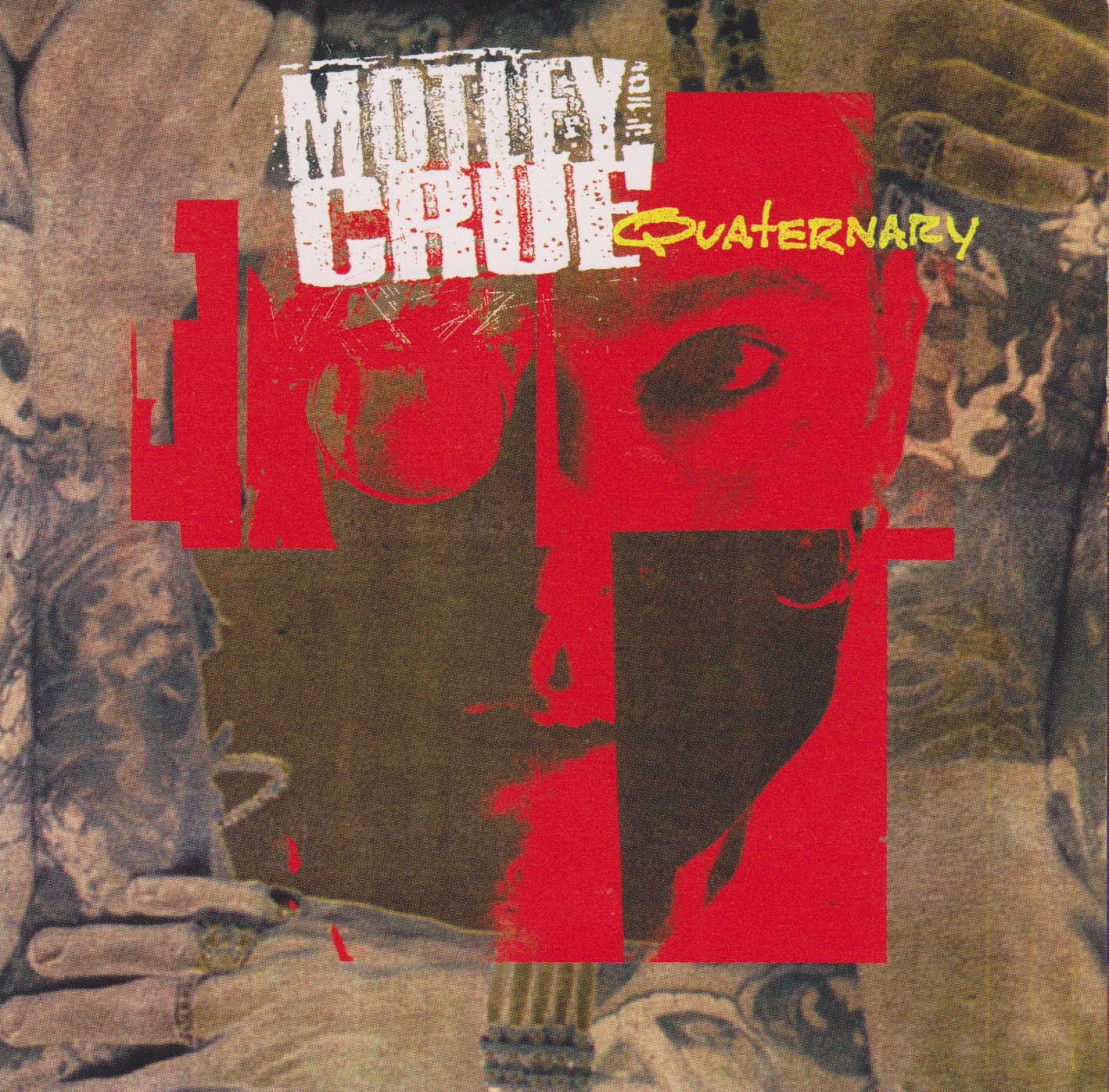
Scan_20160612A mail-away coupon inside the Motley Crue CD alerted fans that five more tracks were available by mail order only.  20,000 copies of the original EP were pressed.  They included all four solo tracks and a new Motley Crue song called “Babykills”, featuring fifth Beatle Billy Preston on clavinet!

Still, the lucky fans in Japan didn’t have to mail away for anything.  They were able to buy Quaternary right on their store shelves, and because it’s Japan, they also got bonus tracks.  The Japanese version of Quaternary was not a five song EP, but more like a nine-song mini-album.  I had no idea such a thing existed until finding one at Sam the Record Man in Toronto in the summer of 1996.   It still has the price tag:  I paid $49.99, for a total of three songs that I did not have before.

Today, every one of these songs can be found on the box set Music to Crash Your Car To: Volume II, along with even more bonus mixes.

Quaternary commences with industrial noises and studio dialogue:

Tommy Lee:  “I can’t play with fuckin’ clothes on man, this is bullshit.”
Bob Rock: “Play naked.”
Tommy Lee: “Fuckin’ jeans on, a fuckin’ shirt…what up with that?”
Bob Rock: “What, do you work in a bank?”

The industro-rap metal of Tommy Lee’s “Planet Boom” is a track he had been working on for years. An early version made its debut in the background on the 1992 home video release Decade of Decadence. Even though the words “industro-rap” and “Tommy Lee” don’t really sound good together, “Planet Boom” kicks ass. Tommy played all the instruments, utilising a simple, detuned Sabbathy riff and a relentless drum loop. The strength of his vocal came as a surprise, as did the song in general. A few years later it was remixed for Pamela Anderson’s movie Barb Wire. (Stick with this original.)

After a brief studio discussion with Mick Mars about hemorrhoids (?), his blues instrumental “Bittersuite” blows your ears off. Motley fans know that Mick Mars is the most musically talented member, considered an underrated and under appreciated rock god. The blues-rock of “Bittersuite” isn’t as satisfying as I imagine a pure blues offering to be, but there is no doubting Mick’s talent here. Both as a writer and a player, Mick hit it out of the park (Chris Taylor played drums). Mick’s goal was to pay tribute to rock-blues greats like Beck, Hendrix and Blackmore. Mission accomplished. His guitar tone is beautiful and so are his emotive licks.

Nikki Sixx goes third, with another industrial-metal cross. “Father” is one angry fucked up track. It’s heavy and direct, on-trend for 1994, and very abrasive. The riff and song are simple, but Nikki’s anger leaks through. “Father — where were you?” Backwards guitars, electronics and loops on top — you can tell Nikki and Tommy were listening to the same kinds of music at the time!

New kid John Corabi goes last, and in the liner notes he says that “Friends” is his first piano song. He meant to go acoustic, but “Friends” just came out of him. It’s a pretty Queen-like ballad with lovely harmonies in the middle. Although Mick Mars’ song is probably a greater technical achievement, “Friends” is my favourite of the solo tracks. When a guy like Corabi gets going on a ballad, it’s usually going to be amazing anyway. Throw in the Queen elements, and I’m just a sucker for it! It’s really a shame that Motley did not continue with John beyond this. The potential for greatness was always there.

After more studio chatter, we break into “Babykills”, the Billy Preston collaboration. “Babykills” is fun and funky hard rock, probably the heaviest thing Preston ever played on. Unfortunately his part is little more than an added topping. Great tune though; probably far too good to lie hidden away on an obscure mail-order EP.

An impromptu jam that seems to be called “I Just Wanna Fuck You (In the Ass)” ends the original EP on a jokey note.  “What the fuck do you want, for fuck all?”

Scan_20160612 (3)

As mentioned, the Japanese had bonus tracks.   These are tracks that did not make the finished Motley Crue album, since they had recorded so much extra material.  “10,000 Miles Away” is a cool blues ballad, showing off more of Mick’s fine fingerwork.  It was obviously too much of a standard sounding song to fit in with the experimental Motley Crue album.  Not that the album stood a chance in hell after grunge cleared the decks, but you do wonder if it would have been better received if some of these more digestible songs were included on it.

The one track on the Japanese release that is easy to skip is the Skinny Puppy remix of “Hooligan’s Holiday”.  This track was already available on the “Hooligan’s Holiday” single and it’s since been re-released in other places too.  It’s long — over 11 minutes.  Dave “Rave” Ogilvie remixed it with Dwayne Goettel and cEvin Key, so it is of possible interest to Skinny Puppy collectors.  The thing that bugs me about it is that it strikes me as lazy.  The song is pretty much the same as always for the first three minutes, and then the remixing begins.  The whacked out and frankly boring remixed part goes on for almost seven more minutes, before transitioning back to the standard song.  In other words, what Skinny Puppy did here was edit out the middle section and guitar solo of the song, drop in seven minutes of remixed barf, and then put the ending back on.

Two demos round out the CD:  “Hammered” (which did make the album) and “Livin’ in the No” (which did not).  The “Hammered” demo is structurally the same as the album version, no radical departures.  It sounds like much of it is live in the studio, and it’s clear that Motley were focusing on grooves.  It’s all about the four guys being locked in.  Finally “Livin’ in the No” is in the standard hard rock mold.  Again, a track like this fits in less well with the unorthodox LP, but might have made it more accessible for fans.  Even so, a guy like Vince Neil would never have been able to sing “Livin’ in the No” and make it sound good.

There is little question that the Motley Crue album deserves its 5/5 star rating.  This being a collection of outtakes, the same cannot be expected.  Still, it does deserve a very respectable:

4/5 stars

Get the complete EP including all Japanese bonus tracks on Music to Crash Your Car To: Volume II. That set also contains more remixes originally from single B-sides of the era: “Misunderstood” (Guitar Solo/Scream Version), “Hooligan’s Holiday” (Derelict Version), “Misunderstood” (Successful Format Version), “Hooligan’s Holiday” (Brown Nose Edit).

Scan_20160612 (5)

REVIEW: Wes Craven’s Shocker – The Music (1989)


MOVIE SOUNDTRACK WEEK

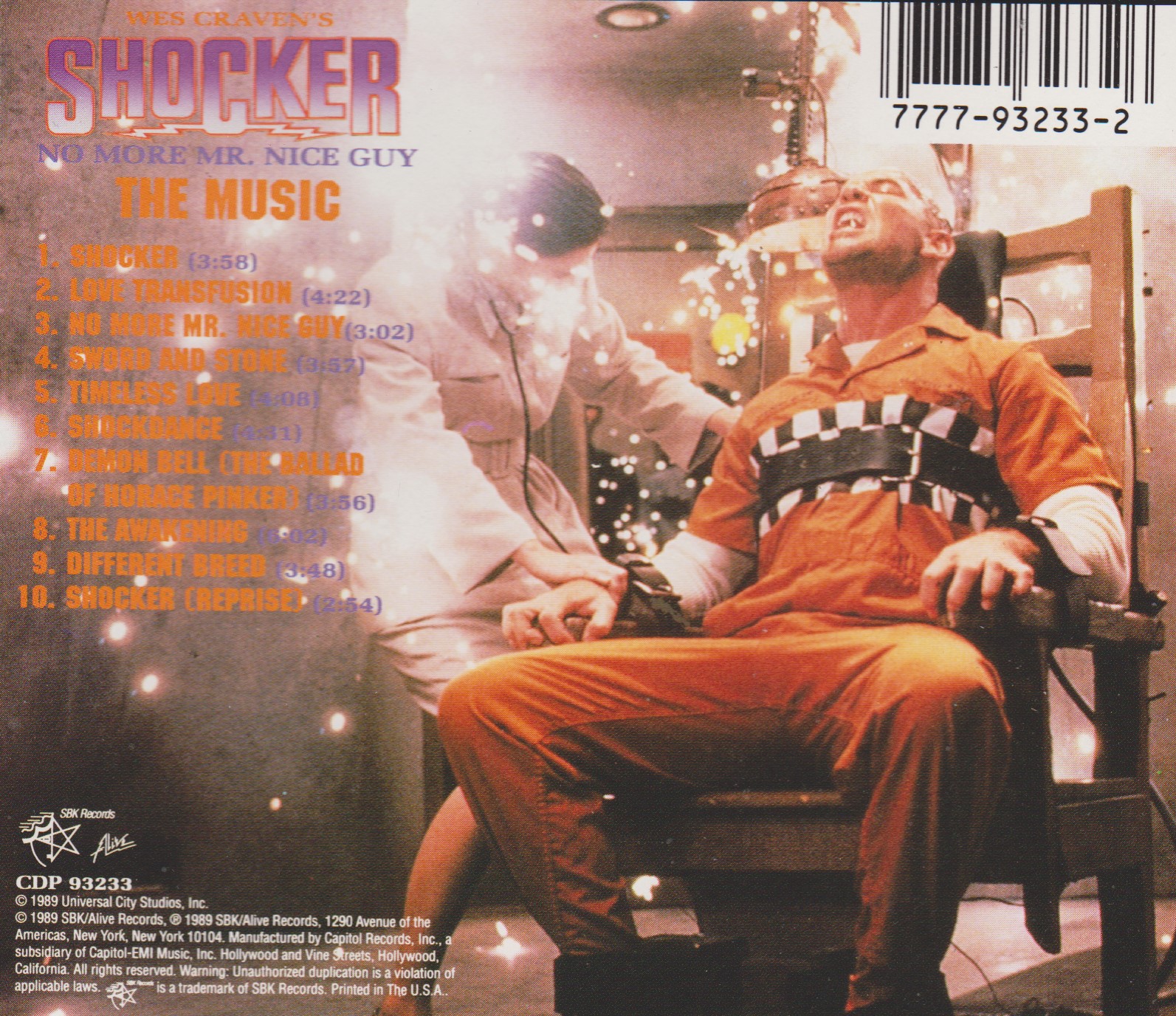
Scan_20160607Wes Craven’s SHOCKER – No More Mr. Nice Guy – The Music (1989 SBK)

1989’s slasher film Shocker was Wes Craven’s attempt to introduce a new character to the pantheon of horror.  Unfortunately, Horace Pinker and the movie he rode in on were quickly forgotten.  Also forgotten was the heavy metal soundtrack, so let’s have a gander and see what you may have missed.

Ever heard of The Dudes of Wrath?  This temporary “supergroup” consisted of various members from track to track, but the best song they did was “Shocker” itself.  With lead vocals by Paul Stanley and Desmond Child, it’s a must-have for Kiss maniacs.  If that’s not enough, Vivian Campbell, Tommy Lee and Rudy Sarzo also play on it.  It’s like a collision of some of those bands — Kiss, Dio, Motley.  The anthemic outro will slay you.

Desmond’s writing is all over this album, and he co-wrote a track with Alice Cooper that ended up being recorded by Iggy Pop called “Love Transfusion”.  Sub out the saxophone for guitars and you could easily imagine this being a Trash B-side.   In fact I wouldn’t be surprised at all if the backing track is from the Cooper sessions, because this sounds exactly like an Alice Cooper song with Iggy Pop overdubbed.  All the musicians are guys from the Trash album.  Do the math.

It’s hard to imagine a weirder team up than Desmond Child and Megadeth.  Dave Mustaine was deep into the powders at the time, and he recorded “No More Mr. Nice Guy” with a three piece Megadeth.  The late Nick Menza had joined the band already, but Marty Friedman was yet to be hired.   Most Megadeth fans are familiar with this track, since it was re-released on their Hidden Treasures EP.  Certainly not the band’s finest moment.

Paul Stanley reappears in a writing capacity on “Sword and Stone”, performed by Bonfire.   Paul wrote it for Kiss’ Crazy Nights LP with Desmond Child and Bruce Kulick.  If it had been on Crazy Nights, it might well have been the best tune on there.  Paul’s demo has yet to be released in an official capacity, but it’s been heavily bootlegged.  Bonfire’s version is fantastic, but it only makes me hungry for a fully recorded and mixed Kiss version.  One day….

Another version of The Dudes of Wrath appear on side two, this time with Alice Cooper on vocals.  “Shockdance” sounds like little more than a slowed down variation of the “Shocker” riff, with Alice and actor Mitch Pileggi rapping over it. Just terrible stuff, actually. Thankfully Desmond redeemed it a little bit with the song he wrong with Dangerous Toys, “Demon Bell”. Like Guns N’ Roses galvanized and electroplated, “Demon Bell” slays.

Voodoo X were the band of Jean Beauvoir, who Kiss fans know from his many co-writes and guest appearances on their records. He only made one record as Voodoo X, and his song “The Awakening” is damn fine indeed. At first you’re thinking, “Oh it’s just another crap ballad”. Then a riff kicks in, and it blasts right off. It’s a bit like 80’s Kiss meets Top Gun. The last band up is Dead On, pretty pedestrian thrash metal, and one of the few songs without any involvement of Desmond Child. The angry elf vocals are hilarious, but the song is almost a parody of bad metal. The album ends with a reprise of the title track “Shocker” from the first side. Basically what this means is that you get to hear Paul Stanley singing for another two or three minutes, when he was really able to hit some seriously high notes. Cool!

The worst track is probably the ballad “Timeless Love” by Sandi Saraya.  Guess who wrote this putrid sappy swath of heartbreak?  Desmond Fucking Child!

Shocker isn’t the greatest soundtrack, but it’s a hell of a lot better than the movie that spawned it!

2.5/5 stars

The helpful back cover doesn't even tell you who's on it.

The helpful back cover doesn’t even tell you who’s on it.

REVIEW: Bean – The Album (1997 soundtrack)

MOVIE SOUNDTRACK WEEK


BEAN – The Album (1997 Mercury)

Every once in a while, you just have to buy an album for one song!

Never mind that Randy Newman’s classic “I Love L.A.” isn’t on the CD, even though it was the most memorable song in the Bean movie.  Included instead is “I Love L.A.” as performed by…O.M.C.!  Remember him?  “How Bizarre”!  His one hit had expired and I guess somebody thought they could re-work the “magic” on “I Love L.A.”.  Maybe because both guys have a kind of flat voice, somebody assumed it would work.  It does not!  Why this would have been recorded, instead of simply using the Newman classic, I have no idea at all.


NOT INCLUDED.

You can also safely skip Boyzone (boy band crap but at least with a 70’s groove), somebody just called “Louise” (70’s-sounding easy listening), Thomas Jules Stock (barf-inducing pop), another person just called “Gabrielle” (60’s sounding soul), “Blair” (really stinky rap), and Code Red (saccharine soul pop).  Some of these tracks aren’t even in the movie.  If you want to hear some soul or funk, just put on an actual album by an original artist.
Songs you may want to give a moment to listen to include the campy 80’s classic “Walking on Sunshine” (Katrina and the Waves).  You never know when you might need that song in a collection.  Another good one to have is “I Get Around”, the original surf classic by the Beach Boys.  From 1964, the Boys were in perfect voice, singing Brian Wilson’s genius melodies.  Unfortunately it is interrupted in the fade by Peter MacNicol with movie dialogue.  There are a number of tracks with this issue.  Wet Wet Wet do a surprisingly decent version of “Yesterday” (in the movie, sung by Peter MacNicol).  It’s too sweet and shopping market ready, but hey:  it’s “Yesterday”.  Movie dialogue spoils this one too, at the start of the track.  Why do that?  I’m not familiar with the Wet Wet Wet discography, but this song does seem to be exclusive to the soundtrack (or at least was at the time).  What a way to ruin a track for the fans.

Worth noting is loop-laden “Stuck in the Middle With You” by Susanna Hoffs.  This funky version is worth having for Hoffs fans, but everyone else can safely stick with the Steeler’s Wheels original.  Also fun is “Art for Art’s Sake”, the 1975 original by art-rock band 10cc.  In the movie, Mr. Bean works at an art gallery.  Get the connection?

So what’s the one song I bought this album for?  A rarity.

BEAN AND BRUCEBack in 1992, Bruce Dickinson was working on solo material with the UK band Skin.  The album would eventually become Balls to Picasso, but it was a long way getting there.  I’m not sure what led Bruce to Mr. Bean.  Divine intervention perhaps?  Two of England’s finest exports had to meet, I suppose, and when they did, they covered “Elected” by Alice Cooper.  This was done for a music video coinciding with the general election that year.  As a final track, the Bean soundtrack reissued this hard to find single.  Bruce sings the vocals rather straight, very raspy, very much like his 1990 No Prayer for the Dying voice.  Rowan Atkinson in character as Mr. Bean reviews his campaign promises between Bruce’s growls.  “To help the Health Service, I promise never to get ill.”  Other promises include stopping everyone in Dover from going to the toilet (cutting pollution).  “I’m the nice one in the tweed jacket,” he says.  “Well it was a present actually.”

I’m a Mr. Bean fan, but there is little of appeal on this CD.  After all, Mr. Bean’s gimmick is that he rarely speaks.  Therefore, the movie dialogue stuff isn’t necessary.  It’s a shame they ruined tracks by putting dialogue on the fades.  If they had included the Randy Newman track, I might’ve been able to bump this CD up by half a star.

1/5 stars

Sorry Mr. Bean.  Your CD gets the dreaded Flaming Turd!


REVIEW: Varga – Prototype (1993)

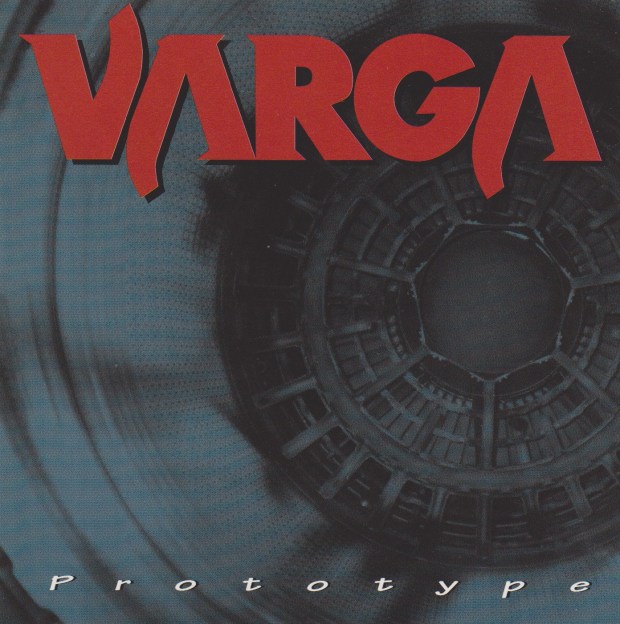
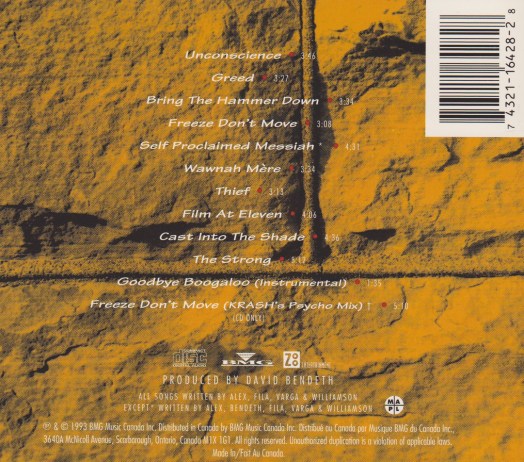
VARGA – Prototype (1993 BMG)

Joe Varga and crew started off as a Toronto-area thrash metal band.  There was a thriving thrash scene in the late 80’s and early 90’s, and Varga’s contribution were songs like “Mad Scientist” and “Shark Attack”.  They released an indi album (cassette only) called Multiple Wargasms.  As the 90’s progressed, Varga established a prototypical industrial metal direction, something perfectly mundane today, but new for the time.  Like some bizarre cross between thrash metal and ZZ Top, Varga attempted to bridge the gap between machine and man.  They signed to BMG and got David Bendeth to produce them, who had just worked his magic with Sven Gali.

Varga’s major label debut was called Prototype.  As promised, it boasts a mixture of metal and industrial.  Live drums, guitars and bass mix are augmented with samples and loops.  While Varga embraced technology, it didn’t seem fully incorporated into the music.  The songs are, for the most part, metal tracks with samples and effects added for embellishment.  Varga took the unusual step of listing everybody that inspired them in the credits.  Metal outnumbers industrial bands by 12-2.  Pornography had more influence on Varga than Nine Inch Nails and Ministry, according to this!

When it works, it works.  “Greed” is a prime example.  Had it been a typical fast-forward thrash metal song, it still would have been good.  The electronics and looped rhythms turbo-charge the whole thing.  “Freeze Don’t Move” seems built around the loops, and features rapping and a sung chorus.  Hearing it today, I think “Hello, Linkin Park!”  But there was no Linkin Park in 1993.  These two tracks were the singles, and they are easily the best two songs on the album.   Additionally, “Freeze Don’t Move” was remixed and extended by somebody called “KRASH” (all caps).  The original is all you need, but the remix is included as a CD-only bonus track.  (Quaint concept today!)

Prototype chugs along, like a finely tuned streamlined machine.  The musicianship is fine and dandy; Varga did not forsake guitar solos and there are several hot ones to choose from, not to mention diverse moments of instrumental brilliance.  “The Strong”, “Unconscience”, “Thief”, “Self Proclaimed Messiah” and “Wawnah Mère” are pretty good, and “Bring The Hammer Down” is galvanized metallic.  Recommended for metal historians and fans of the industrial metal sound.

4/5 stars

Scan_20160518 (3)

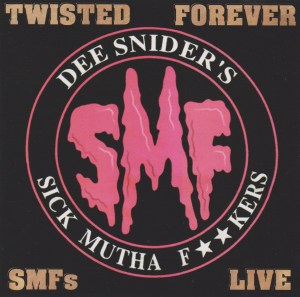
REVIEW: Dee Snider’s S.M.F.s – Live / Twisted Forever (1997)

Scan_20160602DEE SNIDER’S S.M.F.s – Live / Twisted Forever (1997 Pulse)

When Twisted Sister split in 1987, I don’t think anybody ever really expected there to be enough demand for a reunion.  How wrong we were!  During the downtime when the band was acrimoniously separated, Dee Snider carried on with a low-key solo career.  Widowmaker’s Blood & Bullets (featuring Al Pitrelli and Joey Franco) was heavy as fuck even compared to early Twisted Sister, but failed to make any sales impact.

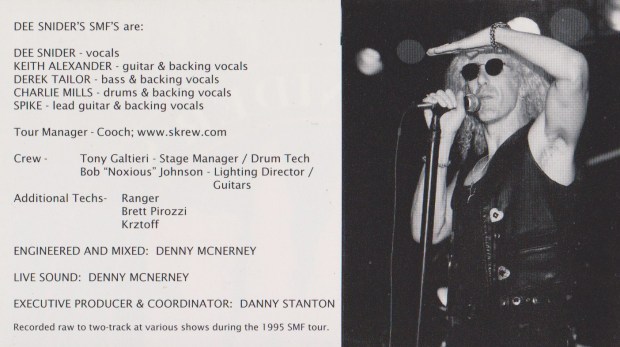
A few years later (1995), Dee went on the road with the S.M.F.s (Sick Mutha Fuckers, of course) playing nothing but classic Twisted Sister.  It went almost completely unnoticed, but a live album (recorded raw, straight to two track tape) was recorded and released as Twisted Forever.  This hard to find disc is well worth having.  Dee played a variety of Twisted material, some of which you’ll probably never hear live again.  It was a surprisingly good album on some fly by night label, and an easy must-have for any Twisted fan that finds it in good shape.

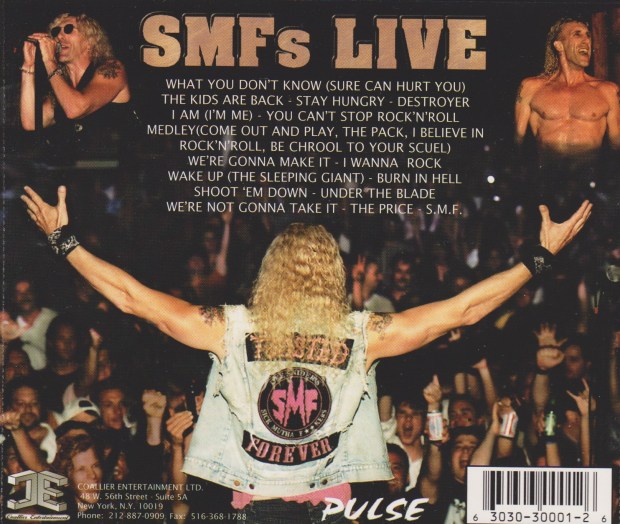
Just like the good old days at the Marquee in England, Dee opened with “What You Don’t Know (Sure Can Hurt You)”, one of the fastest tunes in the Twisted catalogue.  Only the true fan will realize by listening alone that the band is not Twisted Sister.  I don’t know any of these guys, but they are more than up to the task.  As for Dee, the year may as well be 1981 for all the ferocity he pours into every shriek and every scream.  With a double shot of early Sister, “The Kids Are Back” lives up to its name, and the crowd are behind Dee 100 fucking percent.  “Stay Hungry” only gets them going more and more.  The audio quality is good enough for rock n’ roll.  Think of it as a great bootleg, a desk mix.  You can hear the bass clearly, not always true for bootlegs, and the vocals are clear as a bell.  What is also clear is that this is 100% live.

Scan_20160602 (5)

Dee Snider never changes and there is plenty of time for lightning-fast stage rants!  “Am I in your way?  Oh that’s OK, now the fucking BEER comes through here!  NO!  This is my fucking stage, do me a favour, and get the fuckin’ beer off the stage!”  Then, “Yes, but I’ve mellowed with fuckin’ age.  No I haven’t!”  It’s true, though his schtick is probably at least partly done because it’s expected of him.  (Later, he does a Cornholio impression, and rips into Al Gore.  Ah, the 1990’s!)  Dee even does some of the same song intros, such as “Destroyer”.  “You got hands!  Use ’em!” screams Dee as the riff begins.  Now you can bring that tough New York street vibe into your living room.

Hit after hit, and fan favourites galore, Twisted Forever is especially desirable for some more obscure songs.  1985’s Come Out and Play was the album that more or less did Sister in.  Dee can’t seem to remember when he recorded it (1987 he says).  The Come Out and Play medley is an eight minute stream of tunes includes parts of the title track, “Leader of the Pack”, “I Believe in Rock ‘N’ Roll” and “Be Chrool to Your Scuel”.  A little bit later in the set is the awesome “Wake Up (The Sleeping Giant)” from 1987’s controversial Love is For Suckers.  Dee says they do those tunes due to relentless demand from the fans.  I believe it:  “Sleeping Giant” is one of those hard rock songs that should have been a classic.  All these tunes are heavier than the somewhat limp album versions, and Dee could still hit all the notes.

Scan_20160602 (4)

I think Twisted Sister is a band that were always better than people assumed they were.  Their new film, We Are Twisted Fucking Sister, demonstrated just how driven they actually were, with care and craft put into their reckless music.  These are songs that might not be known to the masses, but should be.  I’d rather hear “You Can’t Stop Rock ‘N’ Roll” on the radio than the oft-played “We’re Not Gonna Take It”.  There is so much emotion on this album.  At one point, Dee stops to tell the crowd, “I’d appreciate it, if everybody would stop smiling for the next 30 minutes or so.  You’re making it very hard for me to act mean on stage.”  This particular moment is from a home gig in Long Island, and it sounds like a family reunion of the twisted kind.  The climax of the CD is Twisted’s signature ballad “The Price”, and Dee didn’t even need to sing, the crowd could have done it all for him.  All that’s left after a song like that is “S.M.F.”, over and out!

For my money you can’t beat a good raw live album recorded in a small club.  Twisted Forever delivers.  It might not be Twisted Sister…but when I listen to it I honestly don’t care!

4/5 stars

Scan_20160602 (2)

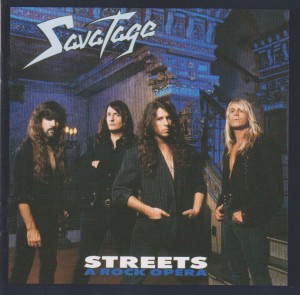
REVIEW: Savatage – Streets: A Rock Opera (1991, 2002 remaster)

I haven’t reviewed much of my Savatage collection, and the reason for this is actually their fault.  There are so many different versions with different bonus tracks that I cannot keep any of it straight.  I have no idea what I have or what I’m missing at this point concerning bonus tracks.  I like to be thorough when reviewing an album, providing some commentary on all the different tracks available.  In Savatage’s case, I give up.  I can’t keep up with the bonus tracks, but I’m going to review the albums anyway.  Streets: A Rock Opera is the Savatage album closest to my metal heart.  And that means it’s Epic Review Time!

Scan_20160523SAVATAGE – Streets: A Rock Opera (1991, 2002 Steamhammer remaster)

The origins of Savatage did little to hint at what they could become.  Little more than a thrash band with remarkable riffs and throat, Savatage truly began to grow when they hooked up with producer/co-writer Paul O’Neill.  He had already been working on an idea for a musical called Gutter Ballet.  Savatage liked his ideas;  singer Jon Olivia used the title for his song “Gutter Ballet” (unrelated), after being inspired by Phantom of the Opera.   Their next project was determined to be the O’Neill musical, which now needed a new title:  Streets (with Ghost in the Ruins being O’Neill’s preferred, un-used title).   One song was already used:  “When the Crowds are Gone” was recorded by Savatage for their 1989 LP.  Other songs would also have to be trimmed, such as “Desirée”, and “This is Where We Should Be” which later emerged as bonus tracks elsewhere.

A children’s choir opens the title track “Streets”, before the tinkling of creepy piano.  “Streets” acts as introduction to the story, setting the scene with Jon Olivia as your narrator.  The song turns very metal to let us know this story is going to be a heavy one.  “These streets never sleep, still they never wake,” goes the ominous tune.  Jon’s brother, guitarist Criss Oliva, rips up and down the neck for a solo section that evokes hope instead of fear.  I feel chills on my arms.

Streets contains very little dialogue.  A man begging for a quarter introduces himself.  “I ain’t no bum or nothin’.  I used to live uptown once before too you know.”  He lights up a cigarette.  Lots of characters down here.  But there was one character who made it out of here:  D.T. Jesus.  He was a drug dealer, “Downtown Jesus”, or “Detox” to his friends.  Streets is his story, and this is the intro to “Jesus Saves”.


“Jesus Saves”…

The interesting thing about “Jesus Saves” is that there is an alternate version out there that wasn’t used, called “DT Jesus”.  Lyrically it’s identical, but musically it’s gospel rock.  Don’t ask me to choose a favourite; I can’t.  The gospel version has an incredible power that the album version, “Jesus Saves”, does not.  However Savatage are a metal band, and even if this is a rock opera, “Jesus Saves” works better for a metal album.  It’s exactly what is needed for the start of this album:  a short, hard shot right in the face, guitars exotically dancing and Jon Oliva shrieking the best he can.  D.T. Jesus may have been a low-life, but that wasn’t his future.  “Bought himself a cheap guitar, started playing bars, kids came in their cars.”


…and “DT Jesus”. Which do you prefer?

Fame comes.  T-shirts, radio interviews, headline concerts.  It was not to last for D.T. Jesus.   “He started missing shows, the band came down to blows, but Jesus just didn’t care.”  Even when he quits the band, his fame won’t disappear.  The story of the musician who could not kick his demons resonated with Jon Oliva who went through his fair share of powders and pills before Streets.  There are probably several kernals of truth within his vocals and that is one thing that makes Streets so unforgettable.

“Tonight He Grins Again” refers to the monkey on his back:  addiction.  “Still he is my only friend, and tonight he grins again.”  The power in this piano/metal hybrid is undeniable.  During the quiet passages, Oliva’s voice quavers; then he shouts hauntingly on the choruses.   Mid-tempo guitars kick in for “Strange Reality”, and the story begans to turn.  Jesus sees a filthy man on the streets.  “That could be me,” he begins to think to himself.  Is it a sign or a warning?  D.T. comes to this realization and then begins a confessional on “A Little Too Far”.  A pretty piano ballad like “A Little Too Far” may seem out of place, but it is only the first of several.  “A Little Too Far” is very special, raw and penetrating.  Towards the end it lightens up, and this is my favourite verse on the whole album:

“And who’s to say what it’s about,
When John Wayne caught the last train out?
And Spock and Kirk have had enough,
And no-one’s left to beam me up?…”

Drummer Steve “Doc” Wacholz used to play with a United Federation of Planets banner on his bass drum.

The mood lightened, D.T. Jesus goes for a comeback.  “You’re Alive” is the most “pop-metal” of all the songs, like Sava-Journey, indicating this is it:  this is D.T.’s moment.  “The crowd they came in just to see a man back from the dead.”  Triumphant hard rock it is, victorious and fist-pounding.  But it’s too soon for a happy ending. “You’re Alive” ends abruptly.  Enter:  Sammy.

“Sammy and Tex” is old-school Motor-metal.  The heavy chug interrupts the celebration.  Oliva screams rapid-fire from the left speaker, as the character of Sammy, an old acquaintance from the drug days.  He’s come looking for an old drug debt: $30,000, plus interest:  “Now I would have said duck it, but with the money by the bucket, I hear you’re raking in…”  A struggle ensues, but D.T.’s manager Tex hears the commotion and enters the room.  Sammy pulls a knife, and Tex is dead.

Musically, “Sammy and Tex” is the most hard core Savatage metal on the album.  Shreddery and riffs collide with the kind of speed metal tempos that they mastered on their earliest albums.  Relentless and without pause, “Sammy and Tex” perfectly accompanies the words.  The struggle is over in a blur.  Sammy makes a run for it leaving D.T. with Tex’s dead body.

The first side of the album closes with the sorrowful “St. Patrick’s”.  Not knowing where to turn, D.T. enters St. Patrick’s church, begging for answers.  The statues and paintings provide no answers.  “Surely, you must care, or are you only air?” asks D.T. in frustration.  The music turns dramatic, and then explodes as D.T. breaks down.  He then apologizes for his outburst: “Didn’t mean to doubt what it’s all about, seems I forgot my place.  But if you find the time, please change the storyline.”

SAVATAGE STREETS

Side two opens in a different mood, a dreamy landscape of echoey drum bursts and light guitars.  “Can You Hear Me Now” drops a heavy Criss Oliva riff at the halfway mark and then it starts to rip.  D.T. Jesus seems haunted by people from his past as he tries to fall asleep.  Hitting the streets again, “New York City Don’t Mean Nothing” begins as an out-of-place acoustic song.  Here we meet some other unsavoury street characters, as the song begins to accelerate.  First a fast bass beat, then chunky electric guitars join in and the song blasts off.  All sorts of advice is offered to our lead character, but none is really useful.

It sounds like Savatage ripped off the opening guitars from Def Leppard’s “Die Hard the Hunter” on the next track, “Ghost in the Ruins”.  I all but expect Joe Elliot’s voice next.  It goes heavy instead, painting a picture of the bad side of town at night.  D.T. then begins to question what the world would be like if he didn’t exist anymore.  Would anybody care?  “If I Go Away” goes full-on power ballad mode.  It is one of the most powerful songs on the album, anthemic and beautiful, but sad.  It has become a bit of a classic to Savatage fans today, often considered among their best ballads.

D.T.’s demons will not die, and the urge to go back to the drugs once again speaks on “Agony and Ecstasy”, the last of the heavy tracks on the album.  With a chugging Criss riff, this one blasts like a train fueled by Van Halen (not Van Hagar) albums!  “Just remember, if you ever need me…I’m here,” ends the song.  Then the story gets a little fuzzy, but thankfully the band included a narrative that helps explain events.  The album closes with a trio of piano ballads, each building upon the other to a satisfying climax.

Fair warning here:  Much of Savatage’s conceptual music has Christian overtones, but none more obvious than on these three tracks.  According to the story, D.T. finds a homeless man in the streets who is dying.  D.T. feeds him and clothes him.  This would be during the ballad, “Heal My Soul”, the first of the ballad trio.  It is based on a Welch lullaby called “Suo Gân”.  With just piano and the voice of Oliva, you can imagine D.T. singing this to comfort the man as he passes away.  The children’s choir then returns, adding a pretty but haunting quality.


“Believe”

According to the story, D.T. witnesses a luminous spirit emerge from the homeless man, who he follows up several flights of stairs to a roof of a building.  On “Somewhere In Time”, D.T. seems to have come to a spiritual realization and confesses all his regrets and mistakes.  “I’ve been grasping at rainbows, holding on to the end, but the rain is so real lord, and the rainbows pretend.”  The music goes upbeat with a hard rocking middle section, guitars squealing as if possessed by St. Halen himself.  Then, finally D.T. opens his heart and gets his answers:  “Believe” is the perfect ending to an epic emotional journey.  With all the power that Savatage can muster, overblown, dramatic, and pompous, “Believe” ends a rock opera properly.  Interestingly, it retains a simply epic section that was lifted directly from “When the Crowds are Gone”, excised from the story when it was used on the Gullet Ballet album.  So epic is this segment, that Savatage had to re-use it.  Then later, on another Savatage album later in 1994 called Handful of Rain, part of it was re-used again, along with other parts of “Believe”.  Its positioning on that album was the same:  it was part of the closing track.  Only on Handful of Rain, it was on a song called “Alone You Breathe” that was a tribute to Criss Oliva, who was killed by a drunk driver.

“Believe” ends the album on the bright up-note that you want a story to end with, your soul awash with light and musically uplifted.  Reading the story and words, it’s really hard to avoid the obvious message.  Listening to the music purely as an album, you can probably live life completely ignorant of the story.  But as soon as they put A Rock Opera in the title, that makes the listener try to follow along.  I think it’s pretty obvious, in the final song “Believe”:  “I am the way, I am the light, I am the dark inside the night…”   Paul O’Neill, who wrote the musical on which this album was based, is openly Catholic, and there’s nothing wrong with that.  There’s nothing wrong with writing what you know and what interests you and what makes you feel something.  But some…probably a minority of listeners…just flat out won’t like it.  They will consider the call of “I’ll be right there, I’ll never leave, and all I ask is believe,” to be heavy-handed preaching, and fair enough.  That’s why I’m putting it out there — for readers to make up their own minds.


A later, Zak Stevens-sung version of “Believe” done acoustically.

So, on to this lovely Steamhammer remaster…with “bonus tracks”.

Two bonus tracks are listed:  “Jesus Saves” and “Ghost in the Ruins” live.  One issue:  There are no bonus tracks on this CD.  None.  Nada.

There is a recent release with narration between all the songs, and a previously unreleased track called “Larry Elbows”.  That’s probably a good one to have.  There is a 2011 remaster with unreleased acoustic songs.  There was a 1997 release with a Zak Stevens-sung version of the outtake “Desirée”. Or you could go with the original 1991 release if you’re so inclined, because there are more flaws with this Steamhammer package.

One is that all the artwork is blurry in comparison to an original release.  The other is that the narrative story isn’t included in the booklet.  It was in the original, along with the lyrics.  Steamhammer only brought over the lyrics.  In compensation, they do include an 11 page (very small print) segment detailing every aspect of the making of this album and the tour that followed.  In the end, Jon Oliva resigned from the band, citing exhaustion.  His replacement was the young and able Zak Stevens for 1993’s followup Edge of Thorns.

Savatage’s Streets: A Rock Opera was their first full-length concept album, the first of many:  Dead Winter Dead, The Wake of Magellan, and Poets and Madman all followed after a brief period of non-conceptual work.  That’s some heavy competition, but Streets remains their most passionate.

5/5 stars

but 1/5 for Steamhammer!

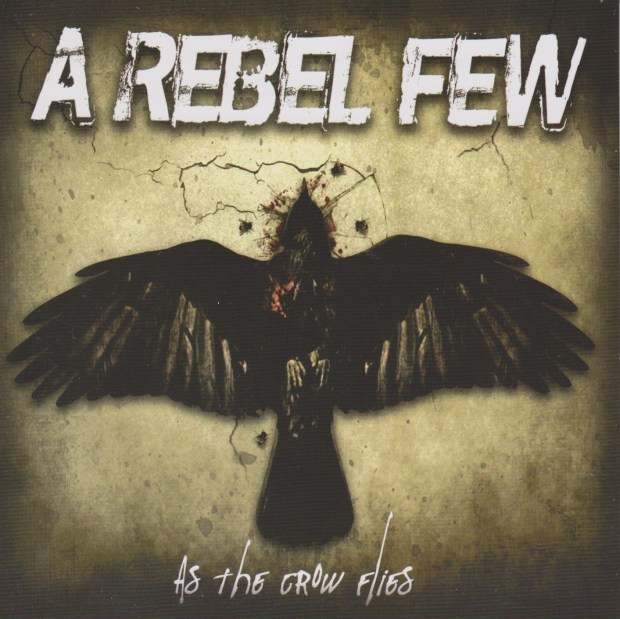
REVIEW: A Rebel Few – As the Crow Flies (2016)

A multi-site event: Let us introduce you to A REBEL FEW.

KeepsMeAlive – Aaron’s review
BoppinsBlog – Boppin’s interview with ADAM SHORTREED of A REBEL FEW
BoppinsBlog – Boppin’s review

Scan_20160422A REBEL FEW – As the Crow Flies (2016 A Rebel Few)

Now here’s a local success story in the making!  Four guys with nine songs headed south to record their debut album in Texas with producer Sterling Winfield, whose name you might recognize.  He has Pantera, Damageplan, and Hellyeah albums on his resume, so it seems obvious that A Rebel Few were going for a heavy sound.  What they ended up with is one of the best sounding indi heavy rock albums you’ll likely get to hear.

There are Pantera influences, and you can hear some Zakk Wylde too.  What sets these guys apart is singer Raposo (just Raposo).  He’s more than just another melodic growler.  The world is full of those.  We have enough.  Raposo has depth and control, as well as expression.  He can do a smooth voice, not just the growls.  He’s world class.  He fits the band, who combine shredding with riffs, groove, heavy bass and drums.

All the songs are good, but there are some that really stand out.  “A Rebel Few” hits the highway with anti-matter propulsion, so furious it is.  Many of the riffs on this album sound Sabbathy in origin, and “Born Again” is one such moment.  “Empires Fall” is radio-ready riff rock.  There is some seriously good shit on this album, and it’s all crunchy and heavy on the low end.  What it lacks in originality, is made up for by the vocals.  Listen carefully; you will hear a serious amount of vocal quality that you don’t get out of the general rock herd.  When Raposo really gives’er, he almost sounds like a young John Bush.

This album will give you a burst of energy like one of those awful caffeine drinks…but good for you!  If you are not air-drumming or air-bassing or air-guitaring along, then you are not doing it right.  This review is taking longer than average to write, because you can’t type while you’re furiously air-drumming along with Chris Spiers.   As for the air-guitar part, I find lead shredder Barry Marton on his way to developing into a monster.  He can play it bluesy, he can play it slick.  The raw material is there and you can hear glimmers of depth between the blurs of notes.

The big surprise is saved for last, and it’s a doozy.  “Pure Revolution” would be a good title for a speedy rock number, but it’s just the opposite.  Touches of piano and light guitar introduce the only power ballad on the album, and it’s a good’er.  Maybe calling it a power ballad isn’t right, but it has ballady moments, and also powerful riffs, so why not?  There are heavy Dio guitar chugs, but also those quiet spaces where the vocals really get to come out.  Either way, it’s a kick-ass song.

Get this CD.  Use your fingers, Google the band “A Rebel Few”, and do what you gotta do to get this music in your ears today.

4/5 stars

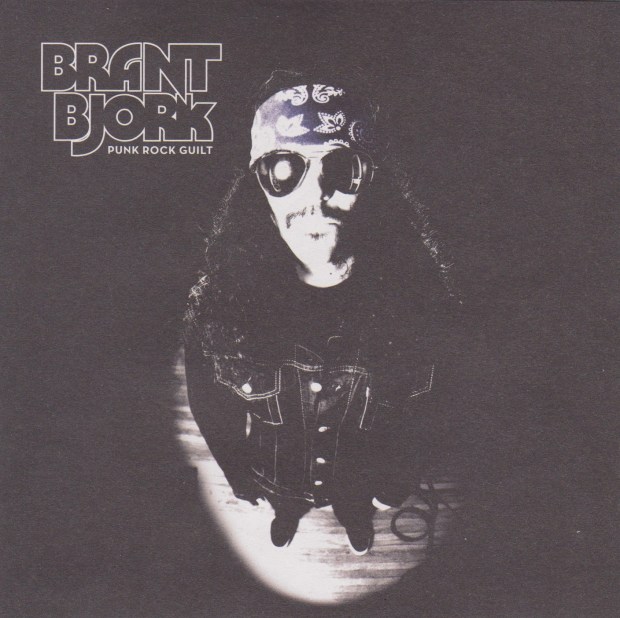
REVIEW: Brant Bjork – Punk Rock Guilt (2008)

Purchased for $7.99 at Vertigo Records in Ottawa.

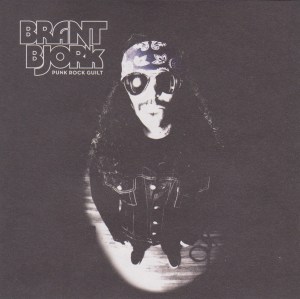
Scan_20160415BRANT BJORK – Punk Rock Guilt (2008 Dine Alone Records)

Brant Bjork is one prolific mo-fo.  Whether it’s solo or with bands such as the Bros, the Operators, or Ché, Bjork always maintains a high level of quality. Punk Rock Guilt is undoubtedly a solo album. All music was written and performed entirely by Bjork. He’s a talented multi-instrumentalist with a wide variety of influences from all over the music spectrum. When they collide in the grooves of the wax, it’s audio ecstasy.

What’s surprising is that an album called Punk Rock Guilt is loaded with both short songs and long bombers.  Maybe that’s the guilt part?  Sitar commences the album on an Indian note with “Lion One”, the first of the lengthy tracks.  At over 10 minutes, the challenge is to keep things interesting, and Bjork does.  When the song settles into a slow bass-heavy groove, I’m immediately reminded of his first excellent solo album Jalamanta.  The vocals don’t even kick in until the 3:00 mark, and then with a semi-spoken Lou Reed direction.  As a long song of this nature should, it picks up speed come solo time.  “Lion One” is outstanding rock as it rises and falls in waves.

The next is the shortest song, “Dr. Special”, and already much rock ground has been covered.  “Dr. Special” has a funky 70’s porn soundtrack vibe but heavy and sparse.  (This sounds like it’s a lot of fun to play.)  Over to “Punk Rock Guilt”, which is surprisingly classic rock.  The melodic riffs and catchy vocals give it something in common with Boston, but without leaving the Bjork sound behind.

“This Place (Just Ain’t Our Place)” returns to the Bjork groove, laid back, heavy and probably stoned.  There is no lyric sheet included but I’m pretty sure Bjork has returned to one of my favourite lyrical subjects:  UFOs!  The guitar solo has a spacey sound.  On vinyl (a double record set for its total 46 minute length), this closes LP 1.  The second record commences with a riff and “Shocked by the Static”.  Even though the copy here is a CD, you can hear this is a natural spot for a side break.  Lacking any major hooks, the way to enjoy “Shocked by the Static” is to focus on the groove and just air drum along.

The surprise of the album is “Born to Rock”, starting light and airy like some U2 outtake.  Clean guitars and Lynott-like vocals do the trick:  this is a killer.  Contrasting this is “Plant Your Seed” which has Sabbathy guitar tones and a singular groove.  Finally it’s another 10 minute tune, “Locked and Loaded”, to finish the album.  “It’s a hijack groove, electric boogaloo, and bloodshot eyes are watching you.”  Not sure what that means, but the groove is ZZ Top’s from “I Thank You”.  Cool vibe on which to end a cool album.

4/5 stars

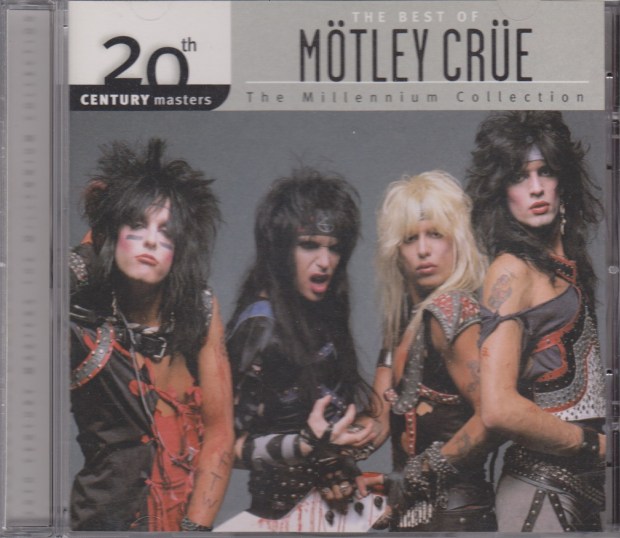
REVIEW: Motley Crue – 20th Century Masters – The Millennium Collection

MOTLEY CRUE – 20th Century Masters – The Millennium Collection (2003 Universal)

As a change of pace, this review focuses not on what is on the album, but what was left off.  This 20th Century Masters is more than a little shoddy, as this series can often be.  So let’s talk about what it is not.

  • Too Fast For Love

“Piece of Your Action” is a great little ditty from the debut record Too Fast For Love. What you’re missing though: the speedy single “Live Wire”!  It makes little sense to have this one without “Live Wire”.

“Shout at the Devil” and “Too Young to Fall in Love”: Great choices. Both are classic 80’s metal. What you’re missing is hit single “Looks that Kill”.  But as Meat Loaf says, two out of three ain’t bad.

“Home Sweet Home” is Motley’s biggest hit ballad ever, but where is the Brownsville Station cover “Smokin’ in the Boys Room”?  Can you believe it’s not on here?  And it’s not because it’s a cover, because, well, we’ll get there.

  • Girls, Girls, Girls

The title track makes good sense to include, but why is “All in the Name Of…” on here instead of “Wild Side”? Also missing, but understandably so, is the ballad “You’re All I Need” which never made much impact.  “Wild Side” though remained a concert staple to the end, so that’s one you’ll need to find elsewhere.

  • Dr. Feelgood

There were five singles on this album, and of course you can’t include them all on a 20th Century Masters CD. What you do need are the title track and lead single “Dr. Feelgood”, and obviously “Kickstart My Heart”.  “Kickstart” was an explosive statement by the band, proving they were as mighty as ever without the drugs.  Those two songs embodied the album, but there’s no “Feelgood” here. Inexplicable!  Certainly one of the biggest oversights on this disc.


Great song!  Not on this CD!

  • Decade of Decadence

For reasons that are unexplained and perhaps best left that way, instead of including any of the above better known songs, 20th Century Masters has the far less famed “Rock ‘N’ Roll Junkie”, and Sex Pistols cover “Anarchy in the UK”. “Junkie” is a Feelgood outtake, original released on The Adventures of Ford Fairlane soundtrack in 1990. “Anarchy” was recorded for Motley’s first greatest hits, Decade of Decadence. Neither song is essential, and both are on Decade. Why are they here? “Primal Scream”, which was a powerful single, is a must have. But it’s not here.  Yet another song you’d still have to get elsewhere, because it’s awesome and important.

No complaints here.  “Hooligan’s Holiday” is included from 1994’s self-titled album with John Corabi on vocals. Nice to see this single represented instead of ignored.

At this point, for a compilation like 20th Century Masters, I don’t think you need to explore the 90’s. But, from 1997’s dreadful Generation Swine comes the title track. Not the minor hit single “Afraid” mind you, but the title track which did nothing and went nowhere.  Baffling!

Ending the album with “Hell on High Heels” brought the compilation up to date for its 2003 release date. Unfortunately, there was nothing on New Tattoo worth bringing to the table. Tommy Lee had left and there was a serious dip in quality, even after Generation Swine.  Although it was the only Motley album featuring late drummer Randy Castillo, New Tattoo is simply a turd with no songs that are up to snuff. Crappy way to close a pretty crap compilation, though.  Motley Crue’s instalment of 20th Century Masters sounds as if it’s a single disc from a double CD compilation, and the other CD’s been lost.  Sorry Motley, this CD gets the dreaded Flaming Turd.

1/5 stars

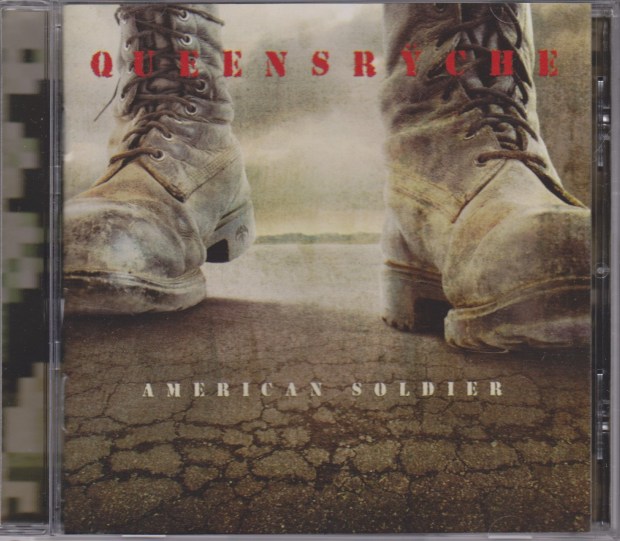
REVIEW: Queensryche – American Soldier (2009)

Scan_20160511QUEENSRYCHE – American Soldier (2009 Rhino)

There is no doubt that a decade and a half of war has dramatically changed the United States.  In 2009, Queensryche decided to deal with their feelings by writing a concept album on the subject.  It’s something that they do very well, and American Soldier, the finished product, was another ambitious piece of work.  Although the album was mostly written by Geoff Tate and his friends Jason Slater and Kelly Gray, in reality it’s the last good album the band made with Tate.

The band interviewed soldiers for this album, and their words are a huge part of the record.  The track “Unafraid” opens like this, creating a hauntingly serious atmosphere.  At times, the music is toned down, allowing the dialogue to speak.  It’s an interesting effect and certainly it works in creating the mood that the band were going for.  I think it is also a token of appreciation to the soldiers who defended the country.  They had a chance to speak their minds, and be immortalized in music.  That’s pretty cool.

The end result is a good album that is not necessarily easy to listen to.   There is no “fun” in this music, it is dead serious the whole way through.  The intensity burns and you can hear that Tate was focused like a laser on this project.   The songs are fine; not Mindcrime quality but I don’t think that anthemic progressive rock would have fit American Soldier.  The single misstep is the vocal by Tate’s daughter Emily on “Home Again”.  What was meant to be a dramatic, emotional focal point is instead distracting.

Scan_20160511 (2)

Among the best tracks are “Sliver”, a cool opener featuring an actual soldier (A.J. Fratto, a 14 year vet) barking orders with the music.  Fratto ended up touring with the band in support of this album.  Well done, sir!  “Hundred Mile Stare” is slow and intense.  The hundred mile stare in the song is a variation of the thousand yard stare — a distant look in the eyes a soldier gets after they’ve been in the field too long.  “A Dead Man’s Words” is another complex highlight, middle-eastern in style and clearly about conflict in that region.  This one is perhaps the most “Queensryche” of the songs, in the sense that you can hear their classic sound at play.  This includes a Tate sax solo, something I wished he did more of with the band.  Then, for choruses, I have to go with “The Killer”.  For sheer intensity, it’s the soldier’s story on “If I Were King”.  If you want heavy ‘Ryche, then “Man Down!” is the track for you.

One disappointing factor in American Soldier only hits you when you open the booklet.  Great artwork aside, it’s really too bad that Tate relied so heavily on his buddies to make this album rather than his band.  Drummer Scott Rockenfield has two co-writes, and that’s it.  Damon Johnson from Brother Cane has just as many co-writes.  The rest of the credits are variations of Tate, and producers Jason Slater and Kelly Gray.  Queensryche were down to four members at this point, so Johnson and Gray subbed on guitars.

Although Promised Land was probably the most deeply personal Queensryche album, American Soldier is likely the runner up.  At least for Tate and his collaborators, there is obviously a lot of their hearts and souls invested in this.  Unsurprisingly, it is not an immediate album.  It requires time, but it also requires space between listens.  There’s no glory here, just stark reality, so take your time.

3.5/5 stars

Scan_20160511 (3)