hugh syme

50 Years of IRON MAIDEN episode 19: Best of the Beast & Virus

50 Years of IRON MAIDEN episode 19: Best of the Beast & Virus

GRAB A STACK OF ROCK #111

Iron Maiden’s first official compilation album came at an interesting time.  Many bands release such albums after a massive success, to keep capitalizing upon it and keep the artist on the charts.  In Maiden’s career, the first compilation came during the dark times of the 1990s, when sales were lower and tickets were not flying out the door.  Welcome to Best of the Beast, available in several configurations.  There was a single CD (which we ignore for the purposes of this episode), a beefed up double CD, and a Holy Grail 4 LP set with exclusive extra tracks.

Taking a roughly reverse-chronological approach, Best of the Best contained a new single called “Virus”, unreleased live tracks, and the Soundhouse Tapes reissued.  Harrison and I cover every single track, what might have been missing, and all the B-sides to the “Virus” single.  We also take a deep dive into the artwork for the album, single, and postcards included.  The album itself was a deluxe package with plenty of Eddies to enjoy.

Have you decided that you don’t need Best of the Beast because it is “merely” a compilation?  Harrison and I will convince you otherwise, tonight on 50 Years of Iron Maiden.

Friday August 1 at 7:00 P.M. E.S.T.  Enjoy on YouTube.


Past episodes:

Handy YouTube Playlist:

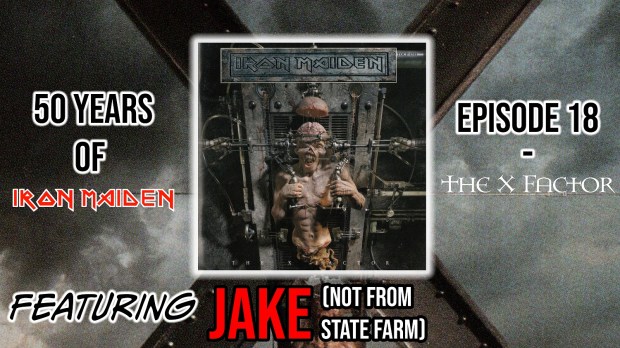
50 Years of IRON MAIDEN episode 18: The X Factor with Jake (Not From State Farm)

50 Years of IRON MAIDEN episode 18: The X Factor

With special guest Jake (Not From State Farm)

GRAB A STACK OF ROCK #109

For weeks we have been building to this moment.  The Fear of the Dark era ends, and a new singer is required.  After considering Doogie White, who went on to success with Ritchie Blackmore’s Rainbow, Iron Maiden chose Wolfbane’s Blaze Bayley as their new lead singer.  While Blaze had a connection opening for Maiden, his selection was a surprise to some.  A power baritone, Blaze was not an operatic singer like Bruce Dickinson.  Nor was he a complex punky shouter like Paul Di’Anno.  What would the new Iron Maiden sound like?  We tackle that subject and much more on tonight’s epic episode of 50 Years of Iron Maiden.

For the first time since No Prayer for the Dying back in the beginning of June, Harrison and I are joined by a special guest to dissect this album.  You may know Jake (Not From State Farm) from his appearance with me on John Clauser’s Music Corner.  Jake asked for these episodes (the pair of Blaze studio albums) because of his deep love for this era.  Both Jake and Harrison come at this album from the perspective of having a special connection with the music of Blaze.  Mike on the other hand is more simply an Iron Maiden fan, and provides a sense of balance.  We hope.

This is the longest episode of 50 Years of Iron Maiden to date!  Why?  Because we have so much to discuss:

  • 14 original studio songs including three Japanese bonus tracks (B-sides elsewhere)
  • Two cover songs (B-sides:  The Who and UFO)
  • The cover art by Hugh Syme (two versions)
  • A deep analysis of the lyrical themes
  • Our personal stories and connections with The X Factor
  • Facts and trivia
  • The tour and setlist
  • The Blaze Bayley interview tracks (B-sides) of which we have five segments to play for you

As usual you can expect us to be comprehensive, and we do not disappoint in this episode.

We hope you can make the premiere tonight where I always try to interact in the comment section!  Up the irons, and into the unknown!


Friday July 18 at 7:00 P.M. E.S.T.  Enjoy on YouTube.

* I wanna shoot myself for saying the “STATE” of Quebec instead of “PROVINCE” in this episode. UGH. What a mis-speak. So embarassing!


Past episodes:

Handy YouTube Playlist:

REVIEW: Rush – Rush 50 (2025)

RUSH – Rush 50 (2025 Mercury)

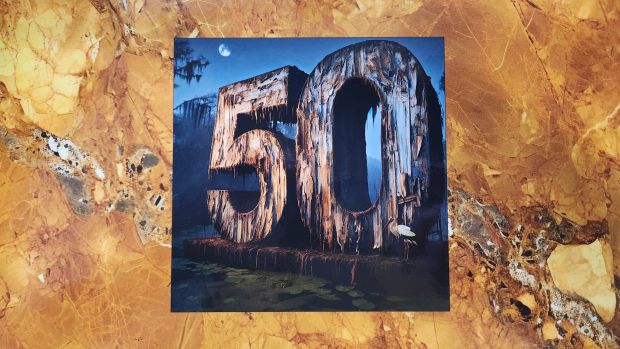
Don’t try to do any math and figure why Rush 50 is out in 2025 instead of 2024.  What matters is:  Rush 50 is out.  It is stunning, both sonically and visually.  The box art by Hugh Syme fits right in that Rush mold, akin to Chronicles.  That’s to say nothing of the hardcover book inside, which we will discuss later on.  The design is excellent.  In the back, the CDs peek out of thee sleeve like golden coins.  It’s just a really cool looking, and sounding, box set.  The remastering here is terrific.  Geddy’s bass is wonderfully separate from the guitars, and you can really hear the details as you remember them.  Brilliant job here.

Rush 50‘s four discs follow roughly chronologically.  They include a generous number of live tracks, which is not at all to the detriment of this set.  Some of the live tracks come from other box sets, from live albums, and some are rare or unreleased versions.  “Garden Road” is one long desired by Rush fans, though “Fancy Dancer” is conspicuous by its absence.  (Don’t assume this is the last collection that Rush will release.)

In the days of downloading via Bittorrent, I found crappy vinyl rips of Rush’s first single “Not Fade Away” / “I Can’t Fight It”.  I burned them to a CD, and lamented that this would likely be the only “physical” copy of the single that I would ever own.  15 or 20 years later, this new anthology-style box set Rush 50 includes the single as the first two tracks on disc one.  To finally have these songs, officially, physically, and sounding so full and rich compared that that old CDr, it scratches that itch that I have as a collector.  If I could afford that first single, I’d have it already.  This will do even better, because it’s clean and digitally perfect.  It’s also quaint.  The almost psychedelic echo on “Not Fade Away” is a detail I didn’t remember.

Similarly, about 15 years ago Rush released the “Vault Edition” of the track “Working Man” for a limited time on iTunes.  I burned that to a CD too.  Now it is here physically, along with another “Vault Edition” of “The Trees” that I was unaware of.  Now we have both on CD.  Itch scratched once again.

Wisely, Rush made sure some of the biggest hits that people want are studio versions:  “Closer to the Heart”, “Tom Sawyer”, and “Subdivisions” for example.  Joe Average, who just wants a cool box set instead of all the albums, often ends up complaining when bands out live versions instead of studio versions of the songs they really wanted.  (Trust me, I worked at the Beat Goes On for 12 years.)  The other thing is, the live versions they did select are superb.  Let me tell you, the Bonham-esque drums on the jammy “Before and After (live)” sound absolutely massive.  It’s certainly appropriate for a band of this reputation to include so many live versions.  Most of disc two is live.

With equal wisdom, Rush ended this box set with the last songs plays at the their last ever concert.  Going back to the very beginning, Rush end the anthology with those final live takes of “What You’re Doing/Working Man”, with just a smidgen of “Garden Road”.  It’s an emotional way to end the journey, and this box set is indeed a journey.  That’s the wonderful thing about anthology style sets.


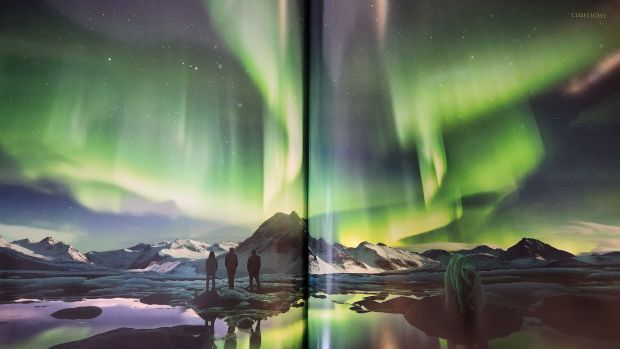
The remarkable Hugh Syme worked overtime to produce the art for the hardcover book.  Yes, not only do you get words and photos, but also brand new double-page artwork for most of the songs on Rush 50.  It is the kind of box set that will give you enjoyment every time you listen to it, because you can crack open that book and just study.  My study has barely begun; I have not really been able to look at each and every piece of art yet.  Rest assured though, Hugh Syme provides all the justification for the price of this set, with the book alone.  If this were a hardcover sold in a store on its own, it would probably be at least $60 bucks as a book.

A massive career like Rush’s deserves a massive box set.  You won’t believe it until you hold it in hand.  This thing is monolithic; a purchase that will not be regretted.

5/5 stars

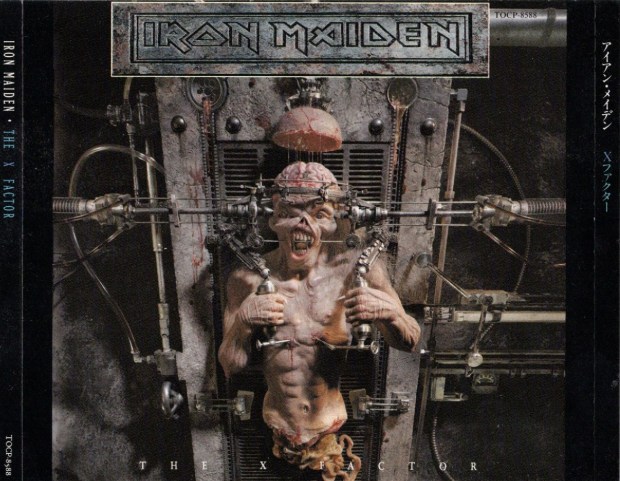
RE-REVIEW: Iron Maiden – The X Factor (1995 2 CD Japanese import)

IRON MAIDEN – The X Factor (1995 EMI Japan 2 CD limited edition)

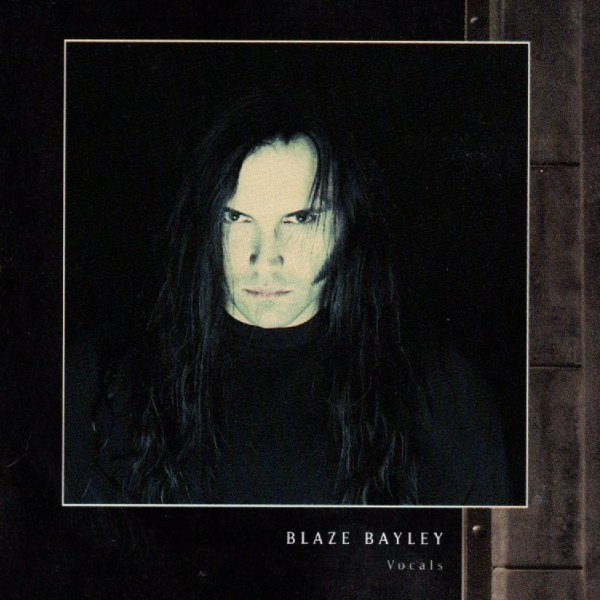
For this revisit, we will take a deep dive on the Japanese version of Iron Maiden’s controversial 1995 album The X Factor.  As the first new studio album in three years, anticipation ran high.  There was also a minor problem that needed sorting out.  Longtime vocalist Bruce Dickinson quit to go solo after more than a decade in Iron Maiden, leaving the remaining band with an air raid siren-sized hole to fill.  The band had already been rocked by the 1990 departure of guitarist Adrian Smith, whose songwriting and melodic solo construction was missed.  That’s not a knock on the guy who replaced him, Janick Gers.  Gers was a different kind of player, and the elements that Smith used to bring to the band were gone.  Fans had to endure an even more serious change when Wolfsbane vocalist Blaze Bayley was chosen to replace Bruce.

Virtually unknown in North America, Blaze Bayley was a powerhouse baritone who wasn’t known for hitting the highs of Bruce Dickinson.  However, Maiden seemed to like change and the 1990s were a darker time.  In that context, Bayley was a better fit.  Bruce’s style of singing was on its way out, while Bayley could have fronted a grunge band had he chosen to go that way.  At the same time, Steve Harris was dealing with losses in his life, and Bayley’s voice suited the more pensive tone of the new music.  In another major change, producer Martin Birch stepped down leaving Steve Harris and co-producer Nigel Green to their own devices, for better or for worse.  You’ll notice the mix is quite bass-heavy….
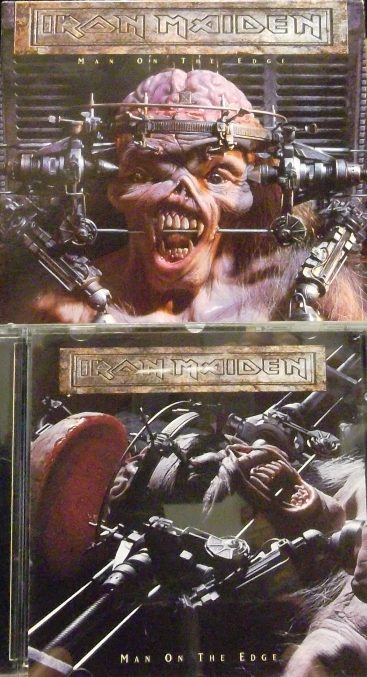
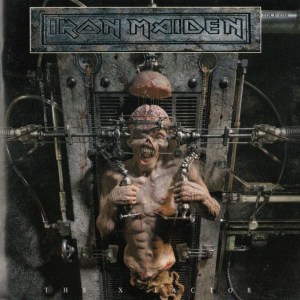
The X Factor was released in October of 1995 to a lot of indifference.  Even the new cover art by Hugh Syme turned off some fans.  It was the longest Maiden album so far by a long shot at over 70 minutes.  In Japan, the CD came with a bonus disc of three original B-sides, boosting the length to over 82 minutes.  Maiden rarely recorded original material for B-sides (“Total Eclipse” notwithstanding), but this time they had 14 tracks to choose from in total.  A bumper crop of creativity.

“Sign of the Cross” has to be one of Maiden’s most impactful openers, though it takes a minute to get going.  If you thought you bought a CD of Gregorian chants (very big in 1995; even Van Halen used ’em), then that’s forgivable.  Maiden jumped on the chant bandwagon for the 11 minute epic opener, a very unique track in the catalogue.  A bass intro begins the song proper, and if there’s one flaw on The X Factor, it’s too many bass intros (see above comment about “left to their own devices”).  The clean guitars backing the bass are a nice touch, and there is no question that The X Factor is a brilliant sounding album.  The vocals finally kick in almost three minutes into the song, kicking the song into a slow determined march.  The evocative imagery recalls dark corners of Catholic history while the music goes through multiple thrilling sections, from speedy manic solos (Janick proving his worth to a song like that) to more complex rhythms.  The song eventually resolves as it began, in quiet contemplation accompanied by bass.  “Sign of the Cross” was considered good enough to keep in the set even after Dickinson returned to Iron Maiden at the end of the 90s.

Wisely picking up the pace for the next track, the single “Lord of the Flies” kicks it into higher gear.  The speedy riff rocker barrels along steadily, with a slamming chorus.  Co-written by Gers, you can hear his influence.  Blaze sinks his teeth into the meaty verses and the chorus delivers the kind of hooks that we’re used to from Iron Maiden.  Once again, Bruce sang this song when he returned.  In this case, Dickinson was able to elevate the tune by using his air raid siren to boost the chorus.  That’s not a knock on Blaze, who owns the tune with grit and bite.
“Man on the Edge” is an interesting song not because it was the poorly chosen first single.  It’s interesting because just six years earlier, the song could never have been written.  As a co-write between Gers and Bayley, it’s entirely composed by the newest members.  Based on the excellent film Falling Down, the song depicts the character of “D-Fens” gradually losing it over the course of a day.  It’s just not up to the quality of the prior two songs, but Bruce still performed it on the 1999 tour.  Be forewarned:  excluding the bonus disc, this is pretty much the last time Iron Maiden pick up the pace on The X Factor.

That’s not to say the rest of the songs are junk.  “Fortunes of War” (another bass intro) begins soft and ballady, although it does get moving towards the end.  In the 1990s, Steve Harris really leaned into repeating sections of his songs, and “Fortunes of War” is certainly one of those.  It’s also one of many tunes on the album based on, or including, war imagery.  There’s a neat guitar part stuffed between bass sections, but too many bass sections!  It’s not that interesting an instrument, Steve.  Janick Gers and Dave Murray lay down a pair of nice solos, and drummer Nicko McBrain plays it fairly straight.  Not a lot of elaborate drum rolls on this album.  Nicko lays back with the songs.

The last song on side one was “Look For the Truth”, a dark contemplative song about personal struggles.  The bass intro this time is at least accompanied by guitar.  “Look For the Truth” begins slowly but then slams into heavy.  Blaze really has this one firmly in his grasp, as he spits out the words.  “It’s my final stand, I make a fist out of each hand.  To the shadows of the past, take a breath and I scream attack.”  This is the first of four co-writes between Harris, Gers and Bayley.  (Gers has seven credits on the first disc, Bayley has five, and Harris ten.)  The main hook here is a simple “Woah oh oh,” which works fine and dandy, and did so in concert.
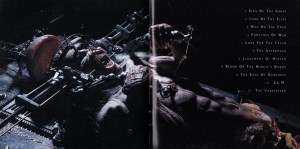
“The Aftermath” is another slow war song…but with no bass intro!  It’s a little unorthodox as it goes almost three minutes before we hit the first chorus.  It really takes a while to get to the point where they speed it up, but it finally does with a cry of “I’m just a soldier!” and another wicked Janick Gers solo.  Then it resumes its plodding pace to the close.  Not an album highlight, but a song that was performed live on The X Fac-tour.

A little peppier is “Judgement of Heaven”, another soul-searching number with lines like “I’ve been depressed so long, it’s hard to remember being happy,” and “I felt like suicide, a dozen times or more.”  That’s countered with the line, “But that’s the easy way, that’s the selfish way, the hardest part is to get on with your life.”  Then the music cranks into gear and you feel empowered by the music and Blaze’s gravelly delivery.  You got this — you can do whatever you need to.  You can survive.  That’s the message and it sounds great coming from Iron Maiden.  The uplifting chorus “All of my life, I have believed judgement of Heaven is waiting for me,” is a little Christian sounding for this band, but it does the job.  And Davey Murray then flies in with a wicked signature solo, and then Gers joins in for some harmonies.  Blaze even tries for a high note at the end!

The album dips a bit in quality at this point.  “Blood on the World’s Hands” is not of the finest moments on The X Factor.  It boasts the worst bass intro yet, and it goes on for-bloody-ever.  At some points it sounds as bad I do, just randomly hitting notes in random order.  Mercifully the song really begins at 1:15 but the damage has been done.  It’s a decent song from that point on…but see above about Steve being left to his own devices as co-producer with Nigel Green.  A different producer would have axed that intro.  Cool Murray/Gers solo though, and Nicko gets to play around with unorthodox drums patterns.

“The Edge of Darkness” feels as if we’re moving towards an ending.  A dramatic re-telling of Apocalypse Now with yet another bass intro, this is a good song.  How many war songs do you need?  Don’t worry, this is the last one.  Like most of the tunes (especially those with bass intros), it begins slowly before heavy-ing up partway.  When it gets galloping, it’s solid gold.  “I know Captain that you’ve done this work before, we’ve got a problem and you can help us I am sure.”  You know where it goes from there.  “Your mission, terminate with extreme prejudice.”  All he wanted was a mission and for his sins they gave him one.  Vocally, Blaze has his hands full here with rapid-fire lyrics and plenty of “Woah-oh” hooks.  The guitar solos are like old-school Maiden again, and the gallop recalls earlier days.  “And now I understand why the genius must die…”

The album goes dark with “2 A.M.”, the third of the contemplative songs of self-reflection.  On first listen it doesn’t stand out but it grows over time.  “Here I am again, on my own again…”  We’ve all felt that way.  This is a sparse, direct, morose tune but not without merit.  On past albums it probably would not have made the final cut, though the guitar sections are great.

The final track on disc one is “The Unbeliever”, another unorthodox tune, centered on a bassline, but at least without a bass intro!  A Gers/Harris composition of self-reflection, that has a very different rhythm and layering of instruments.  “All my life, I’ve run astray, allowed my faith to drift away.”  Interesting that there are so many songs on this album about losing faith:  “Sign of the Cross”, “Judgement of Heaven”, and “The Unbeliever”.  The three dominant themes on this album (often overlapping) are war, losing faith, and personal struggles.  Quite different from the Iron Maiden that wrote songs about mythology, killers in alleyways, and dying with your boots on.  If there was ever a time to turn inwards and reflect, it was the 1990s.  Later albums would find a stronger balance of lyrical themes, but there is no question that the music of The X Factor suits the lyrics perfectly and vice-versa.

“The Unbeliever” ends with just an audio snip of studio chatter.  “That’s the one!” somebody says after a good take.
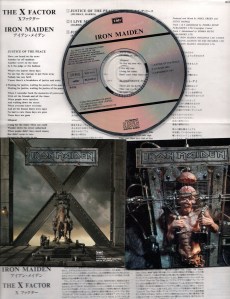
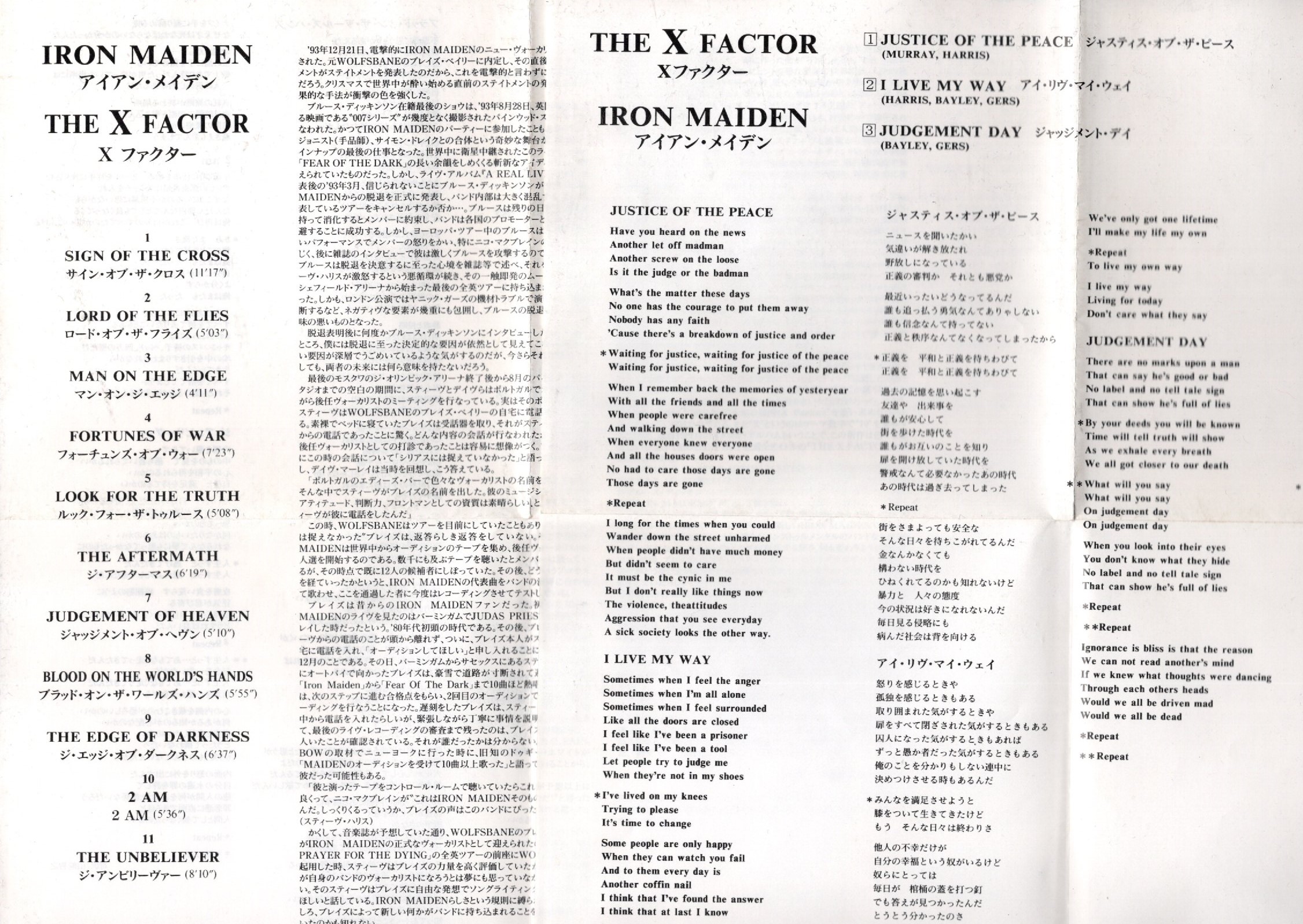
Over to disc two, exclusive to Japan:  all three tracks were available on B-sides to “Man on the Edge”, but one was exclusive to vinyl.  All three are fast songs that would have dramatically altered the complexion of the album had they been included in the regular tracklist.

The only Dave Murray co-write (with Harris) is the speedy “Justice of the Peace”.  This tune is about the decline of modern society.  “It must be the cynic in me, but I don’t really like things now.  The violence, the attitude, aggression that you see every day.  Sick society looks the other way.”  It has a similar vibe to “Man on the Edge” though not as manically paced.  Murray lays down a classic Beast-era sounding solo to top it off.  It’s over and out in just 3:34, the shortest song of them all.

“I Live My Way” is special because this is its only release on CD.  The only other way to get it is on vinyl.  Most Iron Maiden fans simply do not own a copy. As another speedy tune written by Harris/Gers/Bayley, it’s probably the least remarkable but certainly a special rarity.  You can count this as another one about self-reflection, though more headstrong and confident.

“Judgement Day”, the second song written by Blaze and Janick without involvement from Steve, is a fast blazer continuing the critique on modern society.  When the bonus tracks are considered, commentary on humanity could be considered the fourth dominant theme.  “There are no marks upon a man, that can say he’s good or bad.”  The lens is focused this time on the evil people living among us.  Musically it is most similar to a previous Maiden single called “Be Quick or Be Dead”.

The X Factor is a long album to start with, but the bonus disc here adds incredible value not only for the collector, but also for the listening experience.  The album needed more pep, less slow songs and fewer bass intros.  You could make a pretty incredible vintage-sounding X Factor “greatest hits” CD by including some of these B-sides, and capping the run time off at 45 minutes.

Japanese releases often got bonuses but this one has more than just extra music.  The old style “fat” CD case conceals additional booklets, some not included in the international releases; four in total.  They include:

  • Japanese lyric sheet for the album.
  • Japanese lyric sheet for the bonus disc.
  • Regular CD booklet, same as the international release.
  • Bonus 22 page full colour booklet exclusive to this release.

This bonus booklet is a real treat, featuring tons of album and single art, with band photos.  It includes a discography and list of Japanese tours, including the setlists.  It’s great even if you can’t read the notes in Japanese; all the titles are in English.

The X Factor is a deeply personal album that Steve Harris is very proud of and considers one of his best.  Fans have been split on this, with most considering it inferior to almost all the prior albums.  That’s not fair.  It’s very different, less aggressive, darker and slower.  It was an experimental evolution made possible by lineup changes and the shifting sands of the musical tastes of the 1990s.  There are deeper songs and the material fit the downbeat mood of the time.  Many of the songs were more energetic live.  Overall, not one of Maiden’s top five, and not a commercial success, but it can be a rewarding if overly long listen.  The inclusion of the B-sides on the Japanese set dramatically improves the experience.

3.75/5 stars


REVIEW: Rush – A Farewell to Kings (2017 super deluxe edition)

RUSH – A Farewell to Kings (2017 Anthem 3CD/1 Blu-ray/4 LP super deluxe edition, originally 1977)

And the men who hold high places,
Must be the ones who start,
To mold a new reality,
Closer to the heart,
Closer to the heart.

Today’s rock fans have a new reality of their own:  a market flood of “anniversary” or “deluxe” reissues far and wide.  The floodwaters are murkier when multiple editions of the same reissue are available, or when reissues are deleted in favour of new reissues!

2017 represents 40 years of Rush’s fine sixth album A Farewell to Kings.  An anniversary edition was guaranteed, but choose wisely.  For those who need the brilliant new 5.1 mix by Steven Wilson, you will have to save up for the 3CD/1 Blu-ray/4 LP super deluxe edition.  Only that massive box set contains the Blu-ray disc with Wilson’s mix.

To frustrate fans even further, A Farewell to Kings had a 5.1 reissue back in 2011, as part of the Sector 2 box set.  That 5.1 mix (by Andy VanDette) has received heavy scrutiny from audiophiles.  Steven Wilson, however, is well known for his work in the 5.1 field, and his work on the 40th anniversary mix lives up to his reputation.  His crisp mix is deep but unobtrusive.  It is occasionally surprising but always stunning, and over seemingly way too soon.  The separation of instruments is done with care, and without robbing the music of its power.  Rush albums were fairly sparse back then but Wilson managed to make a full-sounding mix out of it.

Powerful is A Farewell to Kings indeed.  Though the title track opens with gentle classical picking, before long you’re in the craggy peaks of Mount Lifeson, with heavy shards of guitar coming down.  Young Geddy’s range and vibrato are remarkable, though for some this is the peak of Geddy’s “nails on a chalkboard” period.

11 minutes of “Xanadu” follows the trail of Kublai Khan.  “For I have dined on honeydew, and drunk the milk of paradise!”  Neil Peart’s lyrics rarely go down typical roads, and “Xanadu” surely must be listed with Rush’s most cherished epics.  Volume swells of guitar soon break into new sections unfolding as the minutes tick by.

“Closer to the Heart” is the most commercial track, never dull, never getting old, never ceasing to amaze.  “Woah-oh!  You can be the captain and I will draw the chart!”  Poetry in motion.  “Closer to the Heart” may be the most timeless of all Rush songs.

“Cinderella Man” and “Madrigal” live in the shadow of “Closer to the Heart”, always there but not always remembered.  (Ironically enough, both these tracks were covered by other artists in the bonus tracks.)  “Madrigal” acts as a calm before the storm:  a cosmic tempest called “Cygnus X-1”.  Another great space epic by Rush cannot be quantified in language.  As it swirls around (even better in 5.1), you’re transported across the universe by the black hole Cygnus X-1.  Peart hammers away as Lifeson and Geddy riff you senseless.


The blacksmith and the artist,
Reflect it in their art,
They forge their creativity,
Closer to the heart,
Yes closer to the heart.

Next, Rush forged their creativity on the road.  They recorded their London show on February 20, 1978 at the Hammersmith Odeon.  Previously, 11 songs from this show were released as a bonus CD on the live Rush album Different Stages.  This newly mixed version adds intro music, the missing three songs and the drum solo.  (The missing songs were “Lakeside Park”, “Closer to the Heart”, and all 20 minutes of “2112”.)  Because this set has all the songs in the correct order, the old Different Stages version is obsolete.

Opening with “Bastille Day”, the London crowd is into the show from the start.  They cheer for the familiar “Lakeside Park”, which is followed by “By-Tor & the Snow Dog”.  This early Rush material is as squealy as Geddy has ever sounded.  He’s pretty shrill but Rush are tight.  It gets more adventurous when “Xanadu” begins, and from there into “A Farewell to Kings”.  Hearing Rush do all this live helps drive home just how talented they are.  The powerful set rarely lets up, as it relentlessly works its way through early Rush cornerstones.  “Working Man”, “Fly By Night” and “In the Mood” are played in quick succession, but is “2112” that is the real treasure here.  Anthems of the heart and anthems of the mind; classics all.


Philosophers and plowmen,
Each must know his part,
To sow a new mentality,
Closer to the heart,
Yes, closer to the heart.

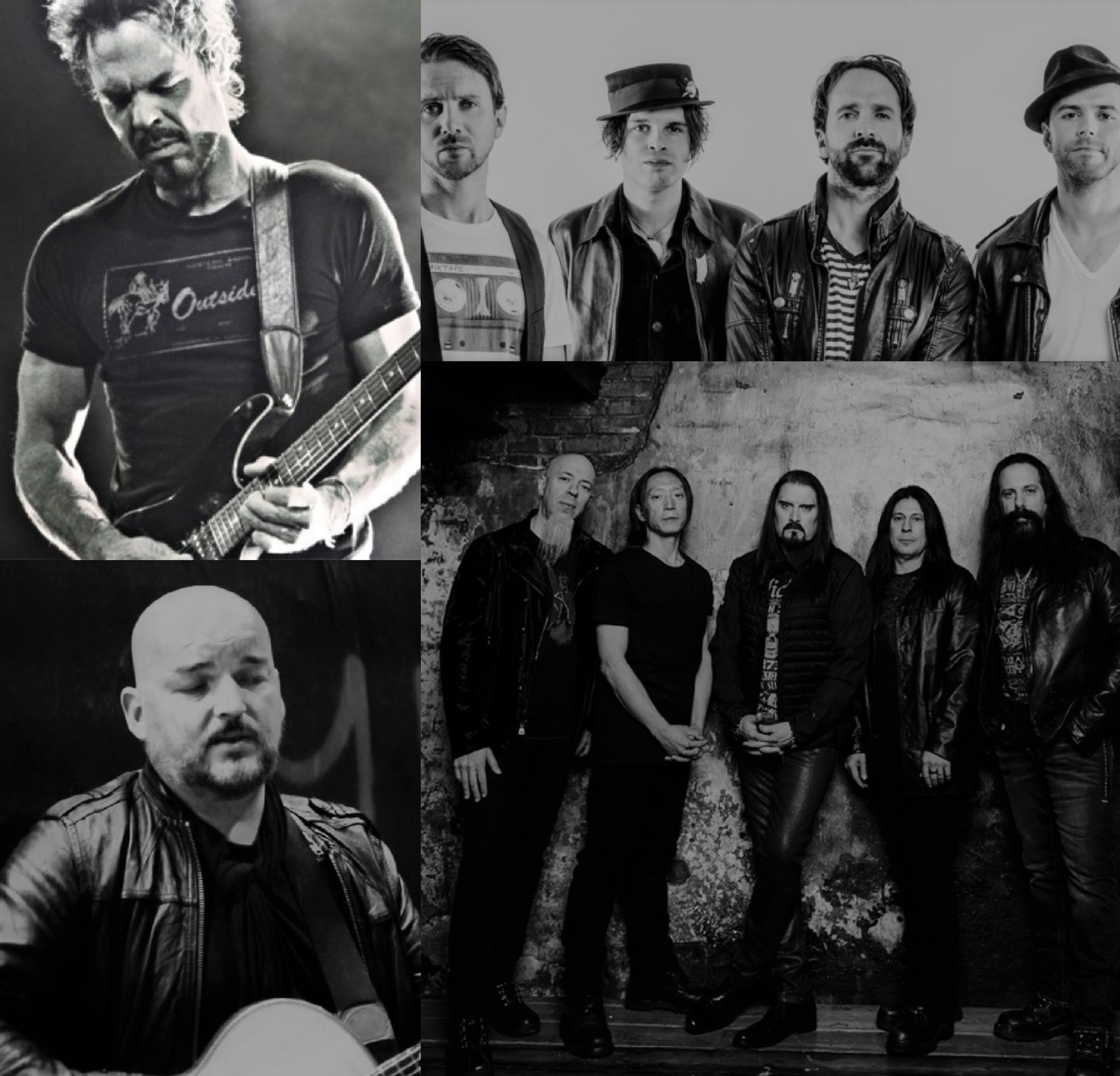
What about bonus tracks?  You got ’em.  As they did for 2112, Rush invited guests to contribute bonus covers, and each does their part.  Headlining these are progressive metal heroes Dream Theater with their own version of “Xanadu”.  Dream Theater really don’t do anything small, so why not an 11 minute cover?  Mike Mangini is one of the few drummers who could do justice to such a song — well done!  Big Wreck do a surprisingly decent take on “Closer to the Heart”.  Not “surprisingly” because of Big Wreck, but “surprisingly” because you don’t associate Big Wreck with a sound like that.  Ian Thornley ads a little banjo and heavy guitars to “Wreck” it up a bit.  His guitar solo is shredder’s heaven.  The Trews’ take on “Cinderella Man” is pretty authentic.  Did you know singer Colin MacDonald could hit those high notes?  He does!  Alain Johannes goes last with “Madrigal”, rendering it as a somber tribute to the kings.

The last of the bonus tracks is a snippet of sound called “Cygnus X-2 Eh”.  This is an extended and isolated track of the ambient space sounds in “Cygnus X-1”.  Steven Wilson speculated it might have been intended for a longer version of the song.


Whoa-oh!
You can be the captain,
And I will draw the chart,
Sailing into destiny,
Closer to the heart.

Box sets like this always come with bonus goodies.  The three CDs are packaged in a standard digipack with extensive liner notes and photos.  Four 180 gram LPs are housed in an upsized version of this, with the same booklet in massive 12″ x 12″ glory.  The LP package alone is 3/4″ thick!

A reproduction of the 1977 tour program is here in full glossy glory.  This contains an essay called “A Condensed Rush Primer” by Neil.  Additionally, all three members have their own autobiographical essay and equipment breakdown.  Alex Lifeson’s is, not surprisingly, pretty funny.  Things like this make a tour program more valuable and as a bonus, this is a great addition to a box set.  Digging further, there are two prints of Hugh Syme pencil sketches.  These works in progress are interesting but it’s unlikely you’ll look at them often.  The turntable mat is also just a novelty.  Perhaps the goofiest inclusion is a little black bag containing a necklace with a Rush “king’s ring” attached to it.  Wear it to work next casual Friday!


Whatever edition of A Farewell to Kings you decide to own (the most logical is the simple 3 CD anniversary set), you can rest assured you are buying one of the finest early Rush albums.  If you have the wherewithall to own the super deluxe with 5.1 Steven Wilson mix, then let the photo gallery below tempt you.

4.5/5 stars

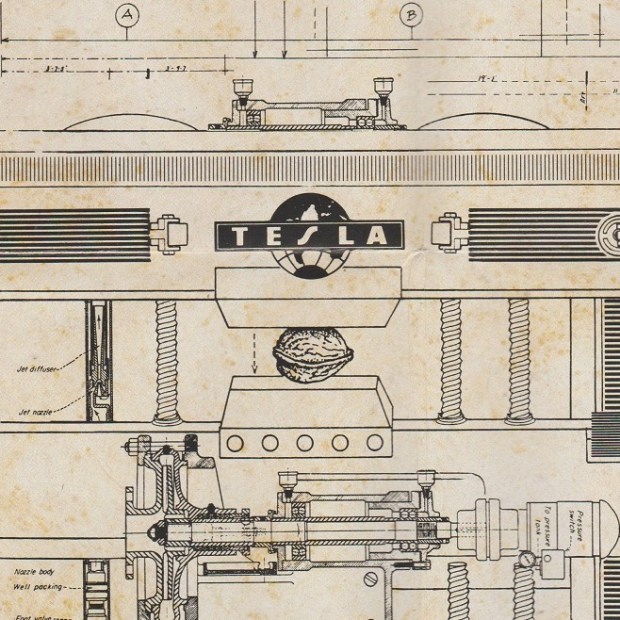
REVIEW: Tesla – Bust a Nut (1994)

TESLA – Bust a Nut (1994 Geffen)

During my first few weeks at the Record Store, one of the new releases I got to deal with was the new Tesla, Bust a Nut.  My boss cracked open a copy to play in store, but he wasn’t impressed.

“It sounds the same…” he remarked.  “It’s just the same.”

Gosh, Tesla didn’t go grunge or rap in 1994?  What a crime.  No, instead Tesla stubbornly continued, as they always have, without bowing to trends.  Bust a Nut wasn’t a successful album, but it was a damn good one.  To call Bust a Nut “the same” sells it short.  It sounded like Tesla, but a tad heavier and more diverse.  Of course, this being Tesla, there must be ballads too.

“The Gate” invites you in via chugging guitars and squealing six-strings.  It merges into “Invited”, a hell of a fine introduction.  “Invited” reflects the light and shade of Tesla in one song:  the mournful acoustic verses, the heavy and catchy choruses, all grounded in a solid classic rock vibe.  Tommy Skeoch and Frank Hannon made one fine guitar duo, and the layers of instrumental goodness will keep you interested and digging for more.  Heavier still is “The Solution”, which is about as metal as Tesla have ever been.  Songs about environmental conservation are more relevant than ever:  “Mother nature’s on her knees, and we’re the reason for her disease.”  Very true, Jeff Keith.  “If we’re gonna make it through tomorrow, the solution is to make a change today.”  Tesla have never used such a grinding, detuned riff like this before.  What’s this about it being “just the same”?  Tesla didn’t go grunge, but they were able to go harder within their own style.

A brilliant track called “Shine Away” uses the soft/loud dynamic popularized by grunge, but that chorus is brighter than the sun.  Enjoy some patented Tesla guitar harmonies which always sound as if inspired by Thin Lizzy, though this time verging on Iron Maiden!  Time to cool things down with a ballad, and “Try So Hard” is a lovely one in the acoustic mold.  A good variety of tunes occupy the rest of side one, but the next obvious standout is “Action Talks”.  This is as angry as Tesla get, even dropping a “fuck you!” in the lyrics.  It’s difficult to imagine that the same band can do “Action Talks” and “Try So Hard”!

Bluegrass and heavy bluesy rock collide on “Mama’s Fool”, as Tesla have never been afraid to mix genres.  Sharp fans will recognize the opening and closing acoustic patterns as the same as “Government Personnel” from Psychotic Supper (1991).  A slamming beat drives the tense “Cry”, a killer track based on a simple riff.  Dig that theremin!  “Rubberband” returns to the soft/loud format, and the loud part is fucking killer.  The chorus goes on for days and sticks like glue.  Another heavy groove called “Earthmover” earns its title, but some of the best tracks on side two are the ballads.  “A Lot to Lose” is likeable, and “Wonderful World” begins with a southern acoustic flavour.  Best of all is the fun closer, the old Joe South hit “Games People Play”.  It’s Tesla-fied, and the sitar is ditched in favour of more traditional rock instrumentation.  It’s transformed into a soul-gospel-rock and roll good time.

Tesla fired Tommy Skeoch (too many drug problems) and went down to a quartet before splitting up.  Thankfully they have enjoyed a long and quality-driven reunion since 2001.  Bust a Nut is an unsung highlight of their catalogue, and an album you’d be well advised to pick up.

4/5 stars

REVIEW: Big House – Big House (1991 BMG)

STRAT

Thanks for joining us for Canadian Rawk Week!


BIG HOUSE – Big House (1991 BMG) Not to be confused with the country band also called Big House.

BIG HOUSEBig House hit the ground running out of Edmonton, Alberta in 1991, but it was hard to take them seriously at the time.  The hair and headbands were pretty silly, and they had annoying song titles such as “Refuse 2 Run” and “Nothing Comes 4 Free”.  I acknowledged they had a pretty cool single “Dollar in My Pocket (Pretty Things)”.  This was lifted from a prior EP called Pretty Things, very hard to find.  They also claimed to be former punk rockers.  Drummer Sjor (pronounced Shore) Throndson once stated that the band used to have mohawks when they were teenagers, but shaved them off and had a change of musical direction.  With that, the silly hair and the dumb name, it was pretty easy to ignore Big House.

Then a co-worker at the Record Store named Kam talked me into listening to it.  The year was 2005 and my feelings quickly turned from indifference to delight.  Big House, for all their flaws, were actually pretty good!  Every song on this album has swagger. It doesn’t sound like a debut album at all, and perhaps that’s due to the experience of having done a prior EP. The band, and singer Jan Ek in particular, make this sound like a second or third album.

“Dollar in My Pocket” made for a good first single, but what a cheesey video. I still cringe at the 30 second mark, when Sjor glances flirtingly down towards his pants on the line, “I got a dollar in my pocket for you.” Fortunately, just a taste of their punk background shine through in the melodies, making this song a bit more unique than the crowd in 1991. Jan Ek has a good scream going on, and lungs of power. They had a knack for writing catchy guitar licks like the one in “Dollar in My Pocket”. The song is all about attitude, so “come along, you can have it if you want it, baby.”

The first chunk of the CD was top-loaded with singles. “All Nite” was a minor hit, a Motley-Poison mixture of rock thrills. Generic, but with that knack for melody once again, not to mention the leathery lungs of Jan Ek. Those two factors elevate the song beyond the morass of crap swimming in the seas of cheese in 1991. Another decent rocker, the Kiss-like “Refuse 2 Run” stays the course before you’re up for the next single, the ballad “Baby Doll”. Generic acoustic sentimental tacky stuff is this, but why do I like it? Maybe that quiet moaning slide guitar? Sounds a lot like Cinderella. Truthfully it’s not bad, but it’s really not that different from any of a hundred ballads. Thankfully “Can’t Cry Anymore” has some noisy guitar and plenty of attitude, especially in the punk rock blowout ending. Once again, it’s remarkable what a handle Big House had on writing great rock melodies. “Can’t Cry Anymore” is one of many on this disc.

Scan_20160220 (3)

“Devil’s Road” sounds like the opening of a second side, and a strong opening it is. “So make the music faster, for the spells we’re castin'” sings Jan Ek on the fine choruses. None of these songs are particularly fast, but they all rock in one way or another. For example “Nothing Comes 4 Free” is slow, but has a menacing vibe and the requisite hooks on the chorus. The closest they get to filler is “Happiness” but even that is not bad. It’s an unusual cross of pop melody with classic rock guitars — Cheap Trick meets Kiss, perhaps?

Final track “Angel on My Arm” is a celebratory tough little rocker, but the penultimate track “L.A.” is my favourite of them all. It seems Mr. Ek’s girl has left to go to L.A. and a be big movie star, and isn’t coming back. But then Jan gets a long distance call from L.A. It seems she mis-dialed and got Jan when she expected to get “Jack”.  He responds incredulously, “Jack who?! Jack Palance? Jack Nicholson? Jack…Jack who?!” It’s great fun! Listen to that bouncy bass. That’s pop punk, baby. So are those unabashed “la-la-la-la” pop hooks. Just a killer, instantly likeable fun song is this. “I been drinkin’ with every damn girl in town,” sings Ek after the disappointing phone call. “If I seem a bit too forlorn, I’ve been loving her too long.” People, I’m serious: This song is a triumph of songwriting and execution. You are free to disagree, but all I know is that I have played this song on repeat countless times. In fact I’m doing it now. I’m already on spin #3 for this session.

Silly name and album cover aside, I suppose it all works as a package. It’s no wonder the band never made it big with a cover this horrible; imagine my shock when I saw that it was done by none other than Hugh Syme, master of many Rush records. And this faceless cover conceals within it one of the best hard rock albums of the era. Sadly that era died before Big House could make a second album, but let’s celebrate that we have this one. Just like we are glad for the first two Skid Row albums, or New Jersey by Bon Jovi, I’m happy now to have Big House in my, err, house.

4.5/5 stars

Scan_20160220 (4)

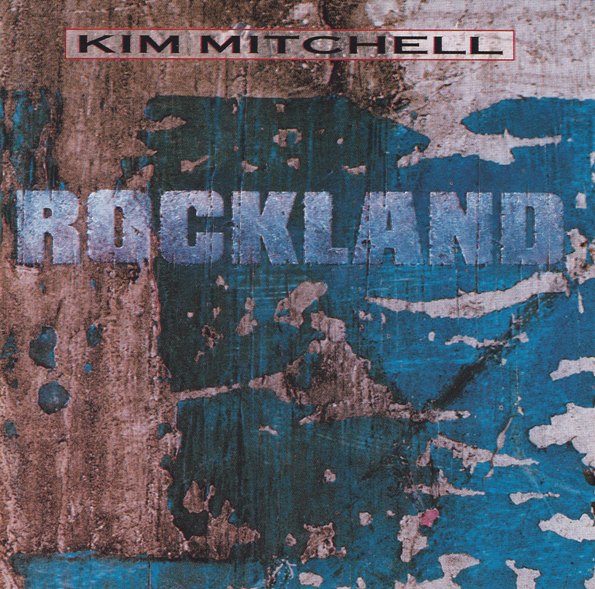
REVIEW: Kim Mitchell – Rockland (1989)

KIM MITCHELL – Rockland (1989 Alert)

This album was huuuuge in 1989. In Canada, summer time is Mitchell time. Cottages, brewskies, BBQ and Mitchell. That’s what it was all about! Shakin’ Like a Human Being was also a huge success for Kim, but he expressed a desire to use less keyboards and programming. Kim recorded in the US this time, and for budget reasons, did not bring along lyricist Pye Dubois with him. Pye had been in the studio with Kim for every album prior, and this caused a rift between the two that took years to heal. This was the last time they collaborated until 1994’s Itch.

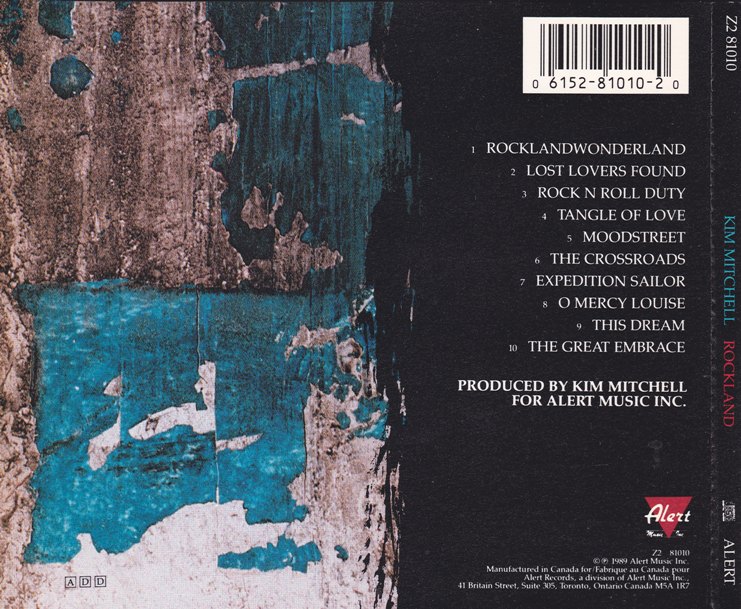
The pseudo-title track, “Rocklandwonderland” refers to the “concert bowl” at Canada’s Wonderland.  “Listen to the music, listen to the voices, listen to my guitar,” sings Kim, although the song is a little light on guitar. “Rocklandwonderland” was a big hit for Kim, and although it’s not a heavy rock, his guitar playing on it is stellar. Perhaps he shouldn’t have followed a slow rock tune with a ballad, although “Lost Lovers Found” is a hell of a ballad, with just a hint of twang. Some felt that Rockland was too soft compared to Kim’s progressive rock past, but a Kim ballad has more integrity than most. Kim’s backup singer extraordinaire, Peter Fredette, is present here and he also serves to class up any song by several notches.

Other ballads on the record include “Tangle of Love”, which is quirky and experimental but not great. “O Mercy Louise”, which has a rocking chorus, is a fine song with cool lyrics. The “big one” however was the single “Expedition Sailor”. This introspective acoustic song is sparse and effective. Kim’s buddy Rik Emmett from Triumph drops by to play an excellent solo on classical guitar. “Expedition Sailor” is top drawer stuff.  (The music video received a remix, which you can get on Kim’s Greatest Hits album.)

The “big” song on the album, still getting airplay today, is the anthem “Rock N’ Roll Duty”.  The tougher direction of the song is exemplified by a “live” style music video in a seedy bar.  As a fan I really wanted Kim to come out with a tough rocking tune, with a killer chorus, and he did.

“I’m just doing my rock n’ roll duty,
Creating a buzz buzz buzz,
Some say I’m in it for the money,
Man, I’m in it for love love love!”

The phrase “I’m just doing my rock n’ roll duty,” is now commonly heard among music fans in Canada. The song just hits the spot, and the riff is now synonymous for summer in my mind.

Other highlights on Rockland include the joyful “The Crossroads” which opens side two. The guitar-heavy “This Dream” is another favourite. I could always identify with the lyrics. It’s just a stellar song, an also-ran that could have been a fourth single. The record is rounded out by “Moodstreet” and “The Great Escape”, two decent but unremarkable tunes.

MVP:  Drummer Lou Molino, a near legend in these parts.  Curiously, when you Google images of Lou Molino, you will also get hits for Lou Ferigno.

Overall I was pleased with the direction of Rockland, going a bit more raw and rocking. Unfortunately with the exception of a few tracks like “Rock N’ Roll Duty”, it feels very tame. Except for quirky moments within guitar solos, it doesn’t possess enough of Kim’s humour and idiosyncrasies. It feels as if it’s on a leash, but it’s also not straining to get off it. It feels like Rockland hits the mark in many respects, but plays it too safe.

3/5 stars

ROCKLAND_0004

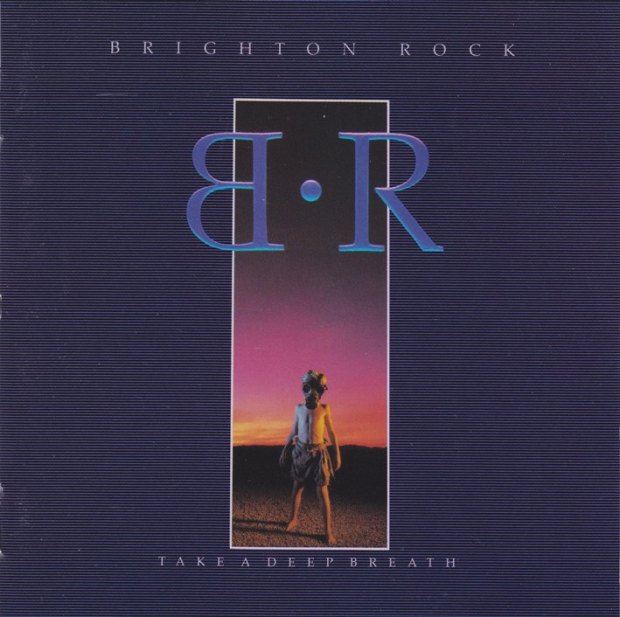
REVIEW: Brighton Rock – Take a Deep Breath (1988)

BR TADB_0001BRIGHTON ROCK – Take A Deep Breath (1988 WEA)

Legend has it that Brighton Rock hated this album. Singer Gerald McGhee was on record saying that record company pressure forced his band to soften up the songs and his singing style. Yet, Take A Deep Breath is actually an excellent 80’s rock album, with unusual quality. Everything you loved about 80’s rock is here.

Brighton Rock’s sound was different from the crop of hair bands at the time. They always had a classier feel in their commercial rock. Witness, from the first LP, “We Came to Rock”. The synth strings made it different, a little more refined. Johnny Roger’s tasteful keyboard parts have always provided an interesting background texture to their vocal and guitar melodies. Gerald McGhee’s vocals were emotional and he had a powerful range. On this album, he doesn’t scream (that record company pressure), but that’s OK. It works out fine with these songs. His voice is strong enough, he didn’t need to show off how high he could go.

Strong songs:

  • “Can’t Stop The Earth From Shaking” (poppy, catchy and upbeat rocker)
  • “Outlaw” (dark and moody, great keyboards providing background texture)
  • “Rebels With A Cause” (guitars upfront, a good groove)
  • “Power Overload” (another guitar rocker with a great shout-chorus)
  • “Who’s Foolin’ Who” (best song on the album, sounds like we have some fretless bass here, a moody dark rocker)
  • “Love Slips Away” (dark and moody ballad, second best track here)
  • “Unleash The Rage” (the dark, metallic song that sounds more like the rockers on the first album)

Drivel:

  • “One More Try” (the unfortunate first single, a ballad…look at those doe eyes!)
  • “Ride the Rainbow” (the pop song Gerald says he wished he never wrote)

As you can tell, dark moods dominate Take A Deep Breath. You could probably tell that by the cover. Hugh Syme (best known for his work with Rush, although he’s also done Iron Maiden, Megadeth, Queensryche, and dozens more) did the picture of the little boy with the gasmask in the post-nuclear landscape. Because of this dark feel, Take A Deep Breath is unlike most of the pop rock records out at the time. Its darkness allows it to stand up to scrutiny today. When Brighton Rock ditched keyboardist Johnny Rogers so they could “heavy it up” for their next album Love Machine, it didn’t work. They lost that special quality and became just another band trying to sound like it was from LA.

Don’t listen to Gerald McGhee: Take A Deep Breath was an album for him to be proud of, not embarrassed by. It was the high point of this band’s discography.  Heck, Jack Richardson produced it — the same guy who recorded Universal Juveniles and the better Guess Who albums.   There is a level of quality here underneath the keyboards that is audible, even today.

4/5 stars

REVIEW: Queensryche – Promised Land (Japanese import)

QUEENSRYCHE – Promised Land (1994 EMI, Japanese import)

I’m sure the pressure was on to top Empire, so what did Queensryche do? They retreated to an isolated but luxurious cabin on an island, and wrote & recorded an introspective atmospheric masterpiece of a record.  Far from record companies and hangers-on, the band focused on the art. By their own admission, the isolation (plus smoking pot and drinking wine) were catalysts for this great album.

I spoke to bassist Eddie Jackson about 13 years ago regarding this album, and I told him I thought it had a lot in common with Rage For Order. He didn’t see it at first, but both albums feature loads of sound effects and atmospherics. Neither album is a true concept album, but both have recurring themes and ideas that run the course of the CD. Promised Land is a deeply personal CD, mostly slower-paced, and one that must be listened to with headphones on.

Drummer Scott Rockenfield came up with the opening piece, “9:28 a.m.”, which is a collage of tones and sounds, ending with some shattering chimes and a baby’s birth. This melds into the first song, “I Am I”, not a typical Queensryche rocker by any stretch but certainly one of the most brilliant things they’ve ever composed. Tate’s lyrics begin the introspective theme of the album, backed by odd percussion instruments, voices, sitar, cello (by guitarist Chris DeGarmo) and droning power chords. There is so much going on beneath the surface of this song; that is why I say that headphones are required.

A skipping CD sound leads straight into the next song, the heavy and dark “Damaged”. “Damaged” is about psychological damage, the effect that bad relationships and experiences have on the self. At various times, Tate’s voice doubles and triples and quadruples, seemingly indicating multiple personalities, or perhaps voices in head. At one point it sounds like his voice has short circuited. Eddie Jackson told me that effect was a total accident in the studio that they couldn’t duplicate.

DeGarmo’s “Out Of Mind” follows, an acoustic piece regarding mental illness. It is a nice quiet composition with spare drumming and a beautiful DeGarmo guitar solo. This break in the pace continues with the next acoustic song, “Bridge”. DeGarmo’s shattered relationship with his father is the theme here. He has hinted before at issues with his father, (“Are you my father? The one that was promised?” from “Screaming In Digital”) but here we get more of the story. His father wishes to mend bridges, but DeGarmo tells him, “You never built it, dad.” A sad tale, and an odd choice for a single, but a single it was.

Side one ended with the powerful epic title track which is nearly 9 minutes long. Anchored by Eddie Jackson’s rumbling bass and Geoff Tate’s atmospheric sax, this is a mindblowing song. The lyrics deal with the fact that as youths, we are told that the world is our oyster, and a promised land is waiting for us. But it doesn’t pan out that way for everybody. There are many voices and sound effects in the background of this song, and Tate’s vocal is wracked with feeling. You can hear that this is taking place in a bar (“Drinks for all my friends!) Again, use headphones!

RYCHE FULLYou hear a person leaving the bar, walking across a gravel lot. This melds into industrial city sounds. Soon the next track has begun, “Disconnected” (writted as “Dis con nec ted” in the lyric sheet). Tate’s vocal is spoken, to great effect. When he speaks in a staggered manner (“I must…release…my…rage…”) it is so understated; yet another mindblowing moment. Again, this song is anchored by Eddie Jackson’s deep bass lines, underscoring.  Due to the odd staggered vocal, this song will not be for everybody. On the surface, it sort of resembles “Della Brown” from Empire. This song seems to be about feeling disconnected from the world around us, despite the technology that supposedly brings us together.

“Lady Jane” follows, revisting the mental illness theme. This is a dramatic piano-based song; the piano is played by Chris DeGarmo. The next track is the most straightforward song on the album, “My Global Mind”. A rocker with few frills, this is perhaps the most Empire-sounding of all the tracks. The plaintive “One More Time” comes next, with some amazing melodies and a fairly standard song structure.

All this leads into one epic final song, “Someone Else?” which is simply piano and voice. The lyrics, as with all of Promised Land, are incredible and Tate’s vocal is among the best he’s ever sung. Looking back, the person he is seems to have been someone else all along. This look back ends the album, which of course started with the birth sequence. Very nice bookends.

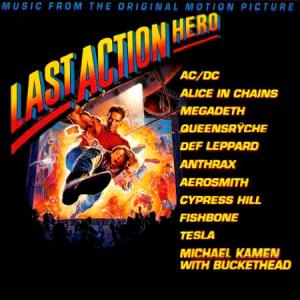
LASTThe Japanese got bonus tracks (of course), one of which is “Real World” from the Last Action Hero soundtrack. Strings are the main feature here, by the late Michael Kamen. The arrangement is a little too saccharine for me, but that’s Kamen for you. Then we also have the “full band” version of “Someone Else?” which adds an entire verse, but loses the piano arrangement that made the song special in the first place.

The remastered edition of Promised Land (which I don’t have and don’t need) has two additional live tracks, which were “Damaged” and “Real World” recorded in ’94. There were, of course, lots more live tracks available on singles at the time, but for those you will have to track down the actual singles. Some of them, such as “Dirty Lil’ Secret” which was issued with the Empire remaster, for whatever reason.  And of course there was the ultimate rarity, an acoustic song called “Two Mile High” which was recorded specifically for the Queensryche’s Promised Land video game.  This too is not included on the remastered CD, leaving the song frustratingly unavailable today.

On a final note, when I saw ‘Ryche live in Toronto on the final date of the Promised Land tour, they played the entire album live (albeit not in order), a good 10-15 years before doing so was in vogue. That’s how strong this album is, and that’s how good this band is.

Headphones are a must. Multiple listens are a must. Queensryche have never been deeper or more trippy. A masterpiece.

5/5 stars
PROMISED LAND_0003

Gallery of CD singles below!