janick gers

50 Years of IRON MAIDEN bonus episode: Run For Your Lives Dream Setlists

50 Years of IRON MAIDEN bonus episode: Run For Your Lives Dream Setlist


GRAB A STACK OF ROCK bonus episode

Welcome to our very first “bonus episode” of 50 Years of Iron Maiden!  These bonus episodes will feature shorter videos on a variety of topics.  With Maiden’s 2025 tour beginning in May, we wanted to get ahead of the pack and speculate on the setlist.

Harrison and I set two rules for these setlists, based on what we know from Iron Maiden themselves.  1) Each one of the first nine albums will be represented in the set, and 2) They will at least one song that has never been played live before.  From there we let our imaginations run wild!

What songs do you think Maiden will play this year?  What’s on your wishlist?  Tell us in the comments below, and UP THE IRONS in 2025!

Past episodes:

Please “like” and subscribe, and help us keep going this year with 50 Years of Iron Maiden, on Grab A Stack of Rock!

Monday March 17 at 7:00 P.M. E.S.T. / 8:00 P.M. Atlantic.   Enjoy on YouTube.


#1173: I Like Iron Maiden…A Lot

RECORD STORE TALES #1173: I Like Iron Maiden…A Lot

In 1984, I “rebooted” my musical taste and started from ground zero.  Out went Styx for almost two decades.  Out went Joey Scarbury, and Kenny Rogers.  In came KISS, W.A.S.P., and of course, Iron Maiden.  I don’t think there was ever a time that Iron Maiden were my #1 favourite band, because Kiss almost always held that spot.  It is safe to say that Maiden were always in the top five.

In grade school, I rocked Iron Maiden while being scolded by Catholic school teachers for doing so.  It didn’t stop me.  Through highschool, I proudly had their posters in my locker.  It didn’t matter that Maiden weren’t hip with the cool kids.  I was never cool, and never really intended to be.  I was happy to be one of the Children of the Damned, not having to fit my personality into any particular shoebox.

There was a time I wavered, which I shall now admit to you.  There was one Iron Maiden album that I didn’t intend to own.  I reversed my decision within four months, but it was in the fall of 1990 that Iron Maiden may have faltered in my eyes.  The album was the “back to basics” No Prayer For the Dying.  My favourite member, Adrian Smith was out.  I loved Janick Gers’ work with Bruce Dickinson, but I don’t think he quite fit with Maiden immediately.  I also didn’t like the growly, un-melodic way that Bruce Dickinson was singing.  I thought maybe this time, I would just buy the CD singles, and not worry about the album.  I came to my senses.  No Prayer wasn’t bad, but it wasn’t the return that we hoped for.  I didn’t really want Maiden to get “back to basics” but was willing to go along for the ride.

My enthusiasm returned in 1992 with Fear of the Dark, a partial return to form with some solid tracks.  It could have been better, but I was happy.  Then the roof fell in.  Suddenly, Bruce Dickinson was out.  Meanwhile, the entire world had been sent into a grunge upheaval.  Bands like Iron Maiden were dismissed as irrelevant in this new angry world.  Bands who played their instruments with seasoned pride were being replaced by groups with punk aesthetics.  Maiden seemingly had no place in this new world, and now the lead singer was gone.  Just like Motley Crue, who were suffering a similar fate.

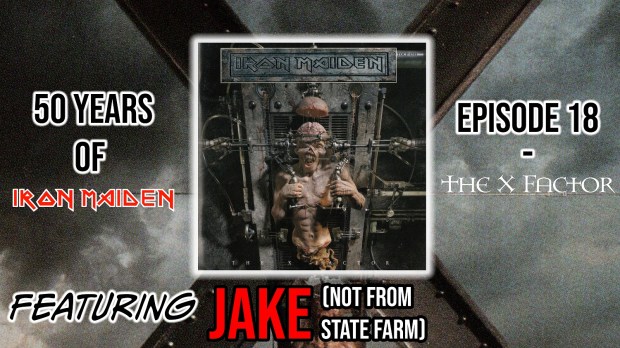
Blaze Bayley was the audacious name of the new singer, from Wolfsbane, and a different one he was.  A deep baritone, he was little like Bruce.  Immediately, I loved The X Factor.  My girlfriend at the time ridiculed me by telling me that Iron Maiden would “never be cool again”.

Oh, how wrong she was.

By the year 1999, Bruce was back.  And so was Adrian.  Maiden have never been bigger.  They have continued to issue albums, never being shy to play new material and deep cuts live.

That’s why I’m telling you this story.  2025 marks 50 Years of Iron Maiden, and there will be a lot happening.  2025 will launch the Run For Your Lives tour, and Bruce has promised that they will play some songs they’ve never done before.  It will also be the debut of new drummer Simon Dawson, from Steve Harris’ British Lion.  Nicko McBrain, on the drum stool since 1983, has finally taken a bow from the live stage.  It can’t be easy doing what he does.

2025 will also mark the launch of a new Martin Popoff book on Maiden (more on that in the coming weeks) and most importantly…tomorrow, January 10, Harrison Kopp and I will launch our own video series, 50 Years of Iron Maiden.

I have “only” been a fan for 40 years, but I’m all here for it.  Up the Irons.  Let’s give ‘er in 2025!


IRON MAIDEN SERIES ANNOUNCEMENT! Grab A Stack of Rock Celebrates 50 Years of Iron Maiden

Coming in 2025, right here on WordPress and YouTube.

M – Hi!  This is Mike!

H – And this is Harrison, from Grab A Stack of Rock

M – And we just wanted to let you know we have something very exciting cooking up for 2025.

H – That’s right.  2025 is the 50th Anniversary of the formation of Iron Maiden, and we are going to mark the occasion with a series of deep dives.

M – Right here on Youtube, we plan on discussing every studio, and every song, in detail.  We’re also bringing in a slate of special guests to help us.

H – Not just studio albums, but we will also be talking about the official live records too.

M – Live records, B-sides, the history, the artwork…we plan on doing Iron Maiden right.

H – I guess it will be my job to talk about the tours, correct?

M – That’s right buddy.  You’re an expert on the setlists, so we’ll have to touch on what songs were played, and which ones never were.

H – We have our work cut out for us my friend.

M – We sure do, but it’ll be a labour of love.  I’m really looking forward to this, especially some of the guests that will be joining us.

H – Let’s not spoil everything just yet.

M – You’re right Harrison.  So like, subscribe, and share the Grab A Stack of Rock Youtube channel for 50 Years of Iron Maiden.

H – Coming in 2025.

#ironmaiden #nickomcbrain #brucedickinson #pauldianno #steveharris #eddie #derekriggs #martinpopoff #martinbirch #davemurray #adriansmith #paulmarioday #denniswilcock #blazebayley #janickgers #adriansmith #cliveburr #dennisstratton #grabastackofrock

Make An Album Better Vol. 1: Iron Maiden’s Fear of the Dark (1992)

In 1992, we gave Iron Maiden’s Fear of the Dark album a generous 3.75/5 star rating.  Fear was the second in a row of underwhelming Iron Maiden albums.  After losing melodic songwriter Adrian Smith, the band struggled to achieve the heights of Seventh Son of a Seventh Son.  New member Janick Gers was also a songwriter, but Maiden struggled to match their previous mojo.  Several songs from Fear were never played live:   “Fear Is the Key”, “Childhood’s End”,  “The Fugitive”,  “Chains of Misery”,  “The Apparition”, “Judas Be My Guide”, and “Weekend Warrior”.  Meanwhile, the title track is a concert staple, played on almost every tour since.

What can we do to improve this album?

1. Tone down the keyboards

As the last Maiden album co-produced by Martin Birch, perhaps the metal maven was getting a little tired.  Fear isn’t as punchy as past albums.  Since Somewhere in Time, Maiden had become increasingly reliant on synths or keyboards.  Even the back-to-basics No Prayer for the Dying had keyboards.  Let’s not get rid of all the keyboards, let’s just tone them down.  On some tracks, such as “Afraid to Shoot Strangers”, they are little more than sonic wallpaper.  Let’s mix them a little lower for this experiment, and bring the drums up in the mix.

2. Remix the drums

Something about Nick McBrain’s drums on this album sound a little dead.  A tad too much like they’re in the back of a cave.  We should try making them a little more lively, and maybe just a tad louder in the mix.  Aim for something more like the Piece of Mind era drums sound.

3. Edit the album down, and re-sequence it

Let’s go for a nine track song list.  Clearly, the 12 on Fear were too many since they didn’t play the majority live.  Fear was a long album.  As the CD rose to dominance, albums grew longer.  CDs were initially made to be 74 minutes long so you could put long classical pieces on it without breaks.  74 minutes was never intended to be the standard album length, though Fear is shy of that at 58:34.  Still too long for a single record.  Classic Maiden albums were shorter than this.  We’ll go with nine songs.  Number of the Beast had eight, and Piece of Mind had nine.  Fear already had the perfect openers and closers, so we won’t touch those.

Side one

  1. “Be Quick or Be Dead”
  2. “Chains of Misery”
  3. “From Here to Eternity”
  4. “Judas Be My Guide”
  5. “Wasting Love”

Side two

  1. “Afraid to Shoot Strangers”
  2. “The Fugitive”
  3. “Weekend Warrior”
  4. “Fear of the Dark”

It was a real struggle to include “Weekend Warrior”, as I don’t think this ode to soccer hooliganism is a particularly good song.  However, I committed to nine, and I find “Fear is the Key” and “The Apparition” a tad dull.  “Childhood’s End” is the other deleted song, and really it could have been one or the other.  I went with “Weekend Warrior” because it’s different for Maiden.  (Not that “The Apparition” isn’t, but these songs aren’t really that great.  That’s why they weren’t played live.)

We maintain the kicking opener, high speed and going for the throat of big business.  Then we have anthemic shout-along rock in “Chains of Misery”.  “Wasting Love” acts as a side closer as it does on the proper album.  Kicking off side two with “Afraid to Shoot Strangers” is a bit of a risk, as it is a bit ballady to start, and coming off a ballad gives you two in a row.  However, it would work brilliantly as a side opener.  “Fear of the Dark” of course should close.  That’s what it’s built for.

This makes the album a perfect 44 minutes and 24 seconds!

4. Get rid of the tree Eddie!

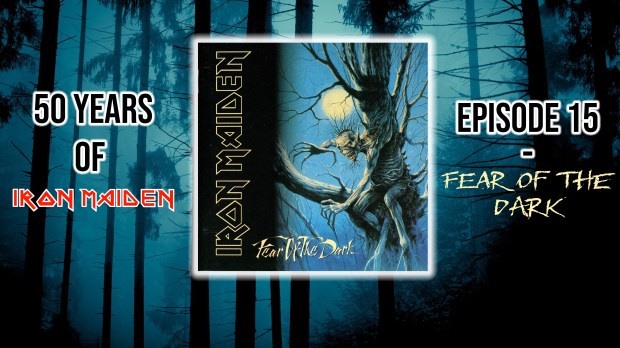
Regular Maiden artist Derek Riggs had a falling out with Maiden’s management over his sketches for this album.  Instead, for the first of many times, Maiden went with the legendary sci-fi and fantasty artist Melvyn Grant, who didn’t really understand Eddie yet, or the continuity established on prior album covers.  From Number of the Beast to No Prayer for the Dying, there seemed to be an ongoing story with Eddie being manipulated, captured, and killed.  He is reborn, borgified, and gives birth, only to be reborn again.  Then, suddenly he’s a tree.  The lightning from Eddie’s eyes is gone, replaced by evil red peepers.  For our improved version of this album, the cover has to go.  Cover art is so important to Iron Maiden, and Fear had one of their most disappointing covers to date (with No Prayer by Riggs coming in second).

In Sum

Little can be done to improve some of the actual songs on this album.  Fear had filler, and a lot of it.  Even at nine songs, tracks like “The Fugitive” and “Weekend Warrior” are dangerously close to filler material.  Perhaps our hypothetical remix can liven them up, but shortening the album will do it some wonders.  Maiden rarely record original material for B-sides, and don’t put cover songs on their records.  There is no extra material we can substitute.

Doing the best with what we have at hand, what would you do to improve Fear of the Dark?

RE-REVIEW: Iron Maiden – The X Factor (1995 2 CD Japanese import)

IRON MAIDEN – The X Factor (1995 EMI Japan 2 CD limited edition)

For this revisit, we will take a deep dive on the Japanese version of Iron Maiden’s controversial 1995 album The X Factor.  As the first new studio album in three years, anticipation ran high.  There was also a minor problem that needed sorting out.  Longtime vocalist Bruce Dickinson quit to go solo after more than a decade in Iron Maiden, leaving the remaining band with an air raid siren-sized hole to fill.  The band had already been rocked by the 1990 departure of guitarist Adrian Smith, whose songwriting and melodic solo construction was missed.  That’s not a knock on the guy who replaced him, Janick Gers.  Gers was a different kind of player, and the elements that Smith used to bring to the band were gone.  Fans had to endure an even more serious change when Wolfsbane vocalist Blaze Bayley was chosen to replace Bruce.

Virtually unknown in North America, Blaze Bayley was a powerhouse baritone who wasn’t known for hitting the highs of Bruce Dickinson.  However, Maiden seemed to like change and the 1990s were a darker time.  In that context, Bayley was a better fit.  Bruce’s style of singing was on its way out, while Bayley could have fronted a grunge band had he chosen to go that way.  At the same time, Steve Harris was dealing with losses in his life, and Bayley’s voice suited the more pensive tone of the new music.  In another major change, producer Martin Birch stepped down leaving Steve Harris and co-producer Nigel Green to their own devices, for better or for worse.  You’ll notice the mix is quite bass-heavy….

The X Factor was released in October of 1995 to a lot of indifference.  Even the new cover art by Hugh Syme turned off some fans.  It was the longest Maiden album so far by a long shot at over 70 minutes.  In Japan, the CD came with a bonus disc of three original B-sides, boosting the length to over 82 minutes.  Maiden rarely recorded original material for B-sides (“Total Eclipse” notwithstanding), but this time they had 14 tracks to choose from in total.  A bumper crop of creativity.

“Sign of the Cross” has to be one of Maiden’s most impactful openers, though it takes a minute to get going.  If you thought you bought a CD of Gregorian chants (very big in 1995; even Van Halen used ’em), then that’s forgivable.  Maiden jumped on the chant bandwagon for the 11 minute epic opener, a very unique track in the catalogue.  A bass intro begins the song proper, and if there’s one flaw on The X Factor, it’s too many bass intros (see above comment about “left to their own devices”).  The clean guitars backing the bass are a nice touch, and there is no question that The X Factor is a brilliant sounding album.  The vocals finally kick in almost three minutes into the song, kicking the song into a slow determined march.  The evocative imagery recalls dark corners of Catholic history while the music goes through multiple thrilling sections, from speedy manic solos (Janick proving his worth to a song like that) to more complex rhythms.  The song eventually resolves as it began, in quiet contemplation accompanied by bass.  “Sign of the Cross” was considered good enough to keep in the set even after Dickinson returned to Iron Maiden at the end of the 90s.

Wisely picking up the pace for the next track, the single “Lord of the Flies” kicks it into higher gear.  The speedy riff rocker barrels along steadily, with a slamming chorus.  Co-written by Gers, you can hear his influence.  Blaze sinks his teeth into the meaty verses and the chorus delivers the kind of hooks that we’re used to from Iron Maiden.  Once again, Bruce sang this song when he returned.  In this case, Dickinson was able to elevate the tune by using his air raid siren to boost the chorus.  That’s not a knock on Blaze, who owns the tune with grit and bite.

“Man on the Edge” is an interesting song not because it was the poorly chosen first single.  It’s interesting because just six years earlier, the song could never have been written.  As a co-write between Gers and Bayley, it’s entirely composed by the newest members.  Based on the excellent film Falling Down, the song depicts the character of “D-Fens” gradually losing it over the course of a day.  It’s just not up to the quality of the prior two songs, but Bruce still performed it on the 1999 tour.  Be forewarned:  excluding the bonus disc, this is pretty much the last time Iron Maiden pick up the pace on The X Factor.

That’s not to say the rest of the songs are junk.  “Fortunes of War” (another bass intro) begins soft and ballady, although it does get moving towards the end.  In the 1990s, Steve Harris really leaned into repeating sections of his songs, and “Fortunes of War” is certainly one of those.  It’s also one of many tunes on the album based on, or including, war imagery.  There’s a neat guitar part stuffed between bass sections, but too many bass sections!  It’s not that interesting an instrument, Steve.  Janick Gers and Dave Murray lay down a pair of nice solos, and drummer Nicko McBrain plays it fairly straight.  Not a lot of elaborate drum rolls on this album.  Nicko lays back with the songs.

The last song on side one was “Look For the Truth”, a dark contemplative song about personal struggles.  The bass intro this time is at least accompanied by guitar.  “Look For the Truth” begins slowly but then slams into heavy.  Blaze really has this one firmly in his grasp, as he spits out the words.  “It’s my final stand, I make a fist out of each hand.  To the shadows of the past, take a breath and I scream attack.”  This is the first of four co-writes between Harris, Gers and Bayley.  (Gers has seven credits on the first disc, Bayley has five, and Harris ten.)  The main hook here is a simple “Woah oh oh,” which works fine and dandy, and did so in concert.

“The Aftermath” is another slow war song…but with no bass intro!  It’s a little unorthodox as it goes almost three minutes before we hit the first chorus.  It really takes a while to get to the point where they speed it up, but it finally does with a cry of “I’m just a soldier!” and another wicked Janick Gers solo.  Then it resumes its plodding pace to the close.  Not an album highlight, but a song that was performed live on The X Fac-tour.

A little peppier is “Judgement of Heaven”, another soul-searching number with lines like “I’ve been depressed so long, it’s hard to remember being happy,” and “I felt like suicide, a dozen times or more.”  That’s countered with the line, “But that’s the easy way, that’s the selfish way, the hardest part is to get on with your life.”  Then the music cranks into gear and you feel empowered by the music and Blaze’s gravelly delivery.  You got this — you can do whatever you need to.  You can survive.  That’s the message and it sounds great coming from Iron Maiden.  The uplifting chorus “All of my life, I have believed judgement of Heaven is waiting for me,” is a little Christian sounding for this band, but it does the job.  And Davey Murray then flies in with a wicked signature solo, and then Gers joins in for some harmonies.  Blaze even tries for a high note at the end!

The album dips a bit in quality at this point.  “Blood on the World’s Hands” is not of the finest moments on The X Factor.  It boasts the worst bass intro yet, and it goes on for-bloody-ever.  At some points it sounds as bad I do, just randomly hitting notes in random order.  Mercifully the song really begins at 1:15 but the damage has been done.  It’s a decent song from that point on…but see above about Steve being left to his own devices as co-producer with Nigel Green.  A different producer would have axed that intro.  Cool Murray/Gers solo though, and Nicko gets to play around with unorthodox drums patterns.

“The Edge of Darkness” feels as if we’re moving towards an ending.  A dramatic re-telling of Apocalypse Now with yet another bass intro, this is a good song.  How many war songs do you need?  Don’t worry, this is the last one.  Like most of the tunes (especially those with bass intros), it begins slowly before heavy-ing up partway.  When it gets galloping, it’s solid gold.  “I know Captain that you’ve done this work before, we’ve got a problem and you can help us I am sure.”  You know where it goes from there.  “Your mission, terminate with extreme prejudice.”  All he wanted was a mission and for his sins they gave him one.  Vocally, Blaze has his hands full here with rapid-fire lyrics and plenty of “Woah-oh” hooks.  The guitar solos are like old-school Maiden again, and the gallop recalls earlier days.  “And now I understand why the genius must die…”

The album goes dark with “2 A.M.”, the third of the contemplative songs of self-reflection.  On first listen it doesn’t stand out but it grows over time.  “Here I am again, on my own again…”  We’ve all felt that way.  This is a sparse, direct, morose tune but not without merit.  On past albums it probably would not have made the final cut, though the guitar sections are great.

The final track on disc one is “The Unbeliever”, another unorthodox tune, centered on a bassline, but at least without a bass intro!  A Gers/Harris composition of self-reflection, that has a very different rhythm and layering of instruments.  “All my life, I’ve run astray, allowed my faith to drift away.”  Interesting that there are so many songs on this album about losing faith:  “Sign of the Cross”, “Judgement of Heaven”, and “The Unbeliever”.  The three dominant themes on this album (often overlapping) are war, losing faith, and personal struggles.  Quite different from the Iron Maiden that wrote songs about mythology, killers in alleyways, and dying with your boots on.  If there was ever a time to turn inwards and reflect, it was the 1990s.  Later albums would find a stronger balance of lyrical themes, but there is no question that the music of The X Factor suits the lyrics perfectly and vice-versa.

“The Unbeliever” ends with just an audio snip of studio chatter.  “That’s the one!” somebody says after a good take.

Over to disc two, exclusive to Japan:  all three tracks were available on B-sides to “Man on the Edge”, but one was exclusive to vinyl.  All three are fast songs that would have dramatically altered the complexion of the album had they been included in the regular tracklist.

The only Dave Murray co-write (with Harris) is the speedy “Justice of the Peace”.  This tune is about the decline of modern society.  “It must be the cynic in me, but I don’t really like things now.  The violence, the attitude, aggression that you see every day.  Sick society looks the other way.”  It has a similar vibe to “Man on the Edge” though not as manically paced.  Murray lays down a classic Beast-era sounding solo to top it off.  It’s over and out in just 3:34, the shortest song of them all.

“I Live My Way” is special because this is its only release on CD.  The only other way to get it is on vinyl.  Most Iron Maiden fans simply do not own a copy. As another speedy tune written by Harris/Gers/Bayley, it’s probably the least remarkable but certainly a special rarity.  You can count this as another one about self-reflection, though more headstrong and confident.

“Judgement Day”, the second song written by Blaze and Janick without involvement from Steve, is a fast blazer continuing the critique on modern society.  When the bonus tracks are considered, commentary on humanity could be considered the fourth dominant theme.  “There are no marks upon a man, that can say he’s good or bad.”  The lens is focused this time on the evil people living among us.  Musically it is most similar to a previous Maiden single called “Be Quick or Be Dead”.

The X Factor is a long album to start with, but the bonus disc here adds incredible value not only for the collector, but also for the listening experience.  The album needed more pep, less slow songs and fewer bass intros.  You could make a pretty incredible vintage-sounding X Factor “greatest hits” CD by including some of these B-sides, and capping the run time off at 45 minutes.

Japanese releases often got bonuses but this one has more than just extra music.  The old style “fat” CD case conceals additional booklets, some not included in the international releases; four in total.  They include:

  • Japanese lyric sheet for the album.
  • Japanese lyric sheet for the bonus disc.
  • Regular CD booklet, same as the international release.
  • Bonus 22 page full colour booklet exclusive to this release.

This bonus booklet is a real treat, featuring tons of album and single art, with band photos.  It includes a discography and list of Japanese tours, including the setlists.  It’s great even if you can’t read the notes in Japanese; all the titles are in English.

The X Factor is a deeply personal album that Steve Harris is very proud of and considers one of his best.  Fans have been split on this, with most considering it inferior to almost all the prior albums.  That’s not fair.  It’s very different, less aggressive, darker and slower.  It was an experimental evolution made possible by lineup changes and the shifting sands of the musical tastes of the 1990s.  There are deeper songs and the material fit the downbeat mood of the time.  Many of the songs were more energetic live.  Overall, not one of Maiden’s top five, and not a commercial success, but it can be a rewarding if overly long listen.  The inclusion of the B-sides on the Japanese set dramatically improves the experience.

3.75/5 stars


REVIEW: Iron Maiden – Senjutsu (2021)

IRON MAIDEN – Senjutsu (2021 Parlophone)

Out of the wild blue yonder, Iron Maiden have returned with a new album to allow us to temporarily escape from our pandemic woes.  Once again, it is a 2 CD monster, boasting 82 minutes of music.  With only 10 songs, you can do the math and figure out that most are long-bombers.  The tunes recall all sorts of flavours of Iron Maiden, from Seventh Son to Virtual XI and the Dickinson reunion era.  New influences emerge as well, on this beefy but steadfast Maiden album.  Maiden turned a corner on The X Factor, incorporating quieter atmospheric sections with the riffing, and Senjustu utilizes this technique on many of the tunes.  Senjutsu might be the most Blaze-era-like of the Dickinson albums.

This time Maiden have gone for a Samurai motif with the album artwork, and this is reflected in the opening title track “Senjutsu” (Smith/Harris).  Only the second time, after The Final Frontier, that Maiden have opened with a title track.  It actually has a similar vibe at first to that opener, with stomping drums (which tie into the lyrics).  Nicko McBrain is a superstar on this album.  Then Bruce Dickinson heralds his own return with an exotic melody and still powerful lungs.  Range be damned, he goes for it on every song.  “Senjutsu” is a varied track that relies mostly on a pounding rhythm and is a little different from typical Maiden.

Onto a short 5:00 firecracker, “Stratego” (Gers/Harris) is like a Brave New World song.  To the point, steady gallop, heavy on melody.  Heavy keyboard backing, which is consistent on Senjutsu.  An album highlight if only because there are so few short songs, but strong regardless.

First single “The Writing On the Wall” (Smith/Dickinson) opens with a western motif, a new side to Iron Maiden.  It’s a little drawn out for a single, and takes a few listens to digest.  You could almost say it’s closer to Led Maiden.  In the latter half, Adrian Smith rips out one of those solos that is almost a song unto itself.

Long bomber “Lost In A Lost World” (Harris) unfortunately recalls Spinal Tap’s “Clam Caravan” at the outset.  At the 2:00 mark it drops the Tap and gets to the riff, which is a kicker.  The song meanders a bit, perhaps a little too much, recalling some the Blaze-era’s musical excesses.

“Days of Future Past” (Smith/Dickinson) sounds like reunion-era Maiden, hooky and wailing.  It’s the shortest tune at only four minutes and wastes no time getting to the point.  The effective Smith riff forms the bones of the song, in the tradition of something like “Wicker Man”.

The closer on disc one is called “The Time Machine” (Gers/Harris) and is not based on the movie, nor is it typical Iron Maiden, at least until the gallop returns.  The vocal melody is quite different and keyboards are prominent.  This track could work really well live for those times they want to get the crowd bouncing.

The sound of seagulls and crashing ocean set the stage for “Darkest Hour” (Smith/Dickinson).  Dark, understated, and brilliantly performed by Bruce.  Summoning all the panache he can muster.  The chorus goes full power, and Smith’s solo is something else, a mini composition.  Then Dave Murray comes in with a complementary one, as good as any the duo did in the 80s.

Senjutsu might be defined by its closing trio of songs, all in excess of 10 minutes and all written by Steve Harris.  Indeosyncratic Harris songs, and if you know Iron Maiden then you know what to expect.  Bass intros, soft keyboards, gentle guitar and bashing riffs!

“Death of the Celts” sounds like a sequel to “The Clansman” from Virtual XI (both songs written by Harris).  It lacks the unforgettable cry of “freedom!” but instead has a glorious long instrumental section, and some incredible guitar solo work from Janick Gers, Dave Murray and Adrian Smith in a single row.

A different kind of dark bass intro brings us “The Parchment”, then WHAM!  A riff blasts you in the face.  It’s a little exotic and a lot Iron Maiden.  Think “To Tame a Land” without the Kwisatz Haderach.  Of the Steve epics on this album, “The Parchment” might be the most perfect.  It is definitely the longest.  A big part of its being is a series of great Janick guitar solos, but also a sense of tension.

Finally, “Hell On Earth” is a remarkable closer, as the music goes on and on for a while before Bruce starts singing.  But that music is awesome — textured, powerful, and memorable.  Then Bruce delivers a melody a little left of center, and the song becomes another Maiden classic to be enjoyed years from now, every single time.  So much packed into 11 minutes.  The Maiden March, some wicked Murray soloing, riffs and more.  The total package.  It fades out, and that’s the album.

Janick Gers really shines on this album, as his solos repeatedly jump out of the speakers on tracks like “Stratego”, “The Parchment” and “Death of the Celts”.  Sadly there are no Dave Murray co-writes this time.  Dickinson continues to impress, as he staves off the ravages of time better than many of his contemporaries.  Nicko is a relentless machine, and Adrian and Steve turn in performances as good as the ones they are famous for.

Senjustu, the surprise album that we didn’t see coming, is Iron Maiden doing what they do.  There are a few twists and turns, but this is the album we would have expected from them if we knew they were making one!  There are fans who miss the old days and wish Maiden would put out an old fashioned heavy metal album one more time.  They tried that once with No Prayer for the Dying and it didn’t work.  Maiden have been a metal band with a foot in progressive rock for a long time now, and they show no interest in abandoning this direction.  Long songs with Maidenesque writing and structure is what you will get.  And most of us will just be grateful for it.

4.5/5 stars

REVIEW: Iron Maiden – Nights of the Dead – Legacy of the Beast – Live in Mexico City (2020)

IRON MAIDEN – Nights of the Dead – Legacy of the Beast – Live in Mexico City (2020 Parlophone)

I feel a bit like a jackass reviewing this, because so many people I know caught this tour, or at least one of the recent tours, and I’ve never seen Maiden live.  I only have these live albums to go by.  But what I like about Iron Maiden is that they take the time to document almost every single tour since the Bruce reunion era began.  (Only three tours did not receive a live album.)  The Legacy of the Beast tour was in support of a video game, and featured a sort of “legacy” setlist, heavy on the old classics with a small smattering of more recent material.  This prevents too much crossover with the prior live album, The Book of Souls – Live Chapter.

Without going track by track, I can tell you that Nights of the Dead was pieced together from three shows in Mexico City, much like Live After Death in Long Beach and Hammersmith.  Even so, Bruce’s voice only tends to get stronger as they go further down the setlist.  By “Hallowed” and “Run to the Hills”, it sounds like the man is just warming up!

The setlist is a delightful mix of hits, deeper cuts and the odd recent classic.  “Where Eagles Dare” from Piece of Mind whips the throng into immediate hysteria.  “Revelations” from the same LP has a certain contemplative gravity that it brings to any live album, and hearing it here is sheer nostalgic delight.  Two Blaze-era songs return to the set in “Sign of the Cross” and “Clansman”, both lengthy epics.  Enhanced by the three-guitar lineup and the Air Raid Siren, can we say these versions challenge the originals for supremacy?  Though it wasn’t written for Bruce, “Sign of the Cross” has more dynamics with him at the microphone — he adds a few high notes for embellishment.  Not to mention the depth that the third guitar adds to a song that was always a bit thin sounding.

Reunion era Maiden is cut back, leaving only “Wicker Man” and the always welcome “For the Greater Good of God”.  Both deserving songs.  Stuff like “Wicker Man” (and the earlier “Flight of Icarus”) really pump up the adrenaline levels by keeping it short, sharp and unshackled.

Then you have the stuff that you have to call “the hits”:  songs like “Aces High”, “2 Minutes to Midnight”, “Trooper”, “Beast”, “The Evil that Men Do”, “Iron Maiden”, “Fear of the Dark” and “Run to the Hills”.  These are the Maiden standards; a serving of essentials that everybody has connected with at some point in their life.  Some of them float in and out of setlists, and some always remain.

A word should always be said about the packaging and artwork of any Iron Maiden album.  The Mexican-themed Eddie can be found in a couple pieces of art inside and out.  Manager Rod Smallwood wrote the included liner notes, explaining that the live album came to be when the world came to a halt due to Covid-19.  Yay Covid?  Joking aside, Smallwood’s notes are always informative to read while rocking along to the CD.  There is even a mini 2021 tour poster (let’s hope!) included, with the Trooper version of Eddie surrounded by iconic imagery from prior Maiden artwork.  Icarus, the mushroom cloud from “2 Minutes to Midnight”, a crashed Spitfire…have a look.  Finally, a sticker sheet is an added bonus though most of us will be keeping the stickers intact, I reckon.

Perhaps it’s just giddy glee that there’s a new Maiden live album to cap off this year, but Nights of the Dead is so good that I wouldn’t change a thing.

5/5 stars

RE-REVIEW: Iron Maiden – Virtual Lights Strikes Over France (1998 bootleg CD)

Merry Christmas, Harrison!


IRON MAIDEN – Virtual Lights Strikes Over France (1998 bootleg CD)

I took some flak when I first reviewed this.  “So funny, you guys bashing on a Maiden album,” said a disbelieving Aaron.   “Compared to contemporaries, you gotta know they still kick ass and take names over any of the pretenders to the throne.”  If only it were that simple.  More recently, Blaze Bayley-devotee Harrison has questioned my 1/5 star score.  It’s time to revisit the album after seven years and see if it sounds any better.


Ever wonder why Blaze only lasted two albums with Iron Maiden?  Most people assume it’s because they were more popular with Bruce, which is true.  But there was more to the story than that.  The evidence is here on Virtual Lights Strikes Over France, a live bootleg from the 1998 tour.  A handful of tracks aside, Blaze’s voice was in rough shape.  He struggles to hit and hold notes, on his own material no less.  He’s not as bad as Vince Neil, mind you.  He sings all the words and gives it all he’s got.  He’s just continually flat or sharp on key notes.

“Futureal” starts things in a promising manner, powerful and solid.  The struggle begins on “Angel and the Gambler”, missing notes here and there.  He begins “Lightning Strikes Twice” prematurely.  He does OK through the verses, but the chorus is a lost cause.  This is the tipping point.

“Man on the Edge” from The X Factor should be a slam dunk.  The problem is when Blaze hits a bad note, he really commits to it.  When the first Bruce Dickinson song is up, “Heaven Can Wait”, it’s all over.  No matter how good Iron Maiden are, this version is as close to unlistenable as the storied metal band ever gets.  Bayley recovers for a while on “Clansman”, but “Two Worlds Collide” must be tougher to sing.  “Murders in the Rue Morgue” is a slaughter.  Shame, since it’s a rarely performed Paul Di’Anno tune.  “2 Minutes” is marginally better.

In general, Blaze fares better on his own songs, but that doesn’t mean they’re exempt from problems.  You have to be a patient fan to listen to the entire set in one sitting, and you’ll absolutely wince multiple times.

The second CD has three bonus tracks from a show two years prior, from the X-Factour.  On these, Blaze is tops!  The difference is striking.  Here, he’s got the power necessary to accompany Iron Maiden on stage.  You can at least buy this CD for definitive live versions of “Fortunes of War”, “Blood on the World’s Hands” and “The Aftermath”.  It’s clear Blaze’s voice had changed between the two tours.

Am I being harsh?  Admittedly, yes, but for two reasons.

  1. Iron Maiden and Steve Harris have higher standards than this.
  2. I paid $60 for this goddamn thing.

The main point though is 1.  Obviously this situation was not going to be sustainable and Harris made the necessary change.  If he hadn’t, Iron Maiden might have risked being known as one of those bands who are hit and miss in concert, like Kiss and Motley Crue today.

I am going to revise the score higher.  It is live, and it’s not all terrible.  But few songs are free from some seriously sour notes, and for that reason, Virtual Lights will remain the least played Maiden CD in my collection.

2.25/5 stars

VHS Archives #70: Iron Maiden’s Dave Murray and Janick Gers live interview (1992)

I’ll let the video do the talking.  It’s a big one:  Iron Maiden’s Dave Murray and Janick Gers went live with Teresa Roncon to divulge the details of the new album, Fear of the Dark.  Live calls are answered, new artwork is discussed, and Bruce’s new son is named!

REVIEW: Iron Maiden – The Book of Souls: Live Chapter (2017)

IRON MAIDEN – The Book of Souls: Live Chapter (2017 Universal)

Not many bands can get away with releasing so many live albums so late in their career.  Iron Maiden can.  They can for three main reasons:

1: They still kick enormous amounts of ass.
2: Their setlist changes tour after tour and there will always be songs you won’t get to hear again.
3: See #1.

It doesn’t hurt that their new albums are as acclaimed as their old. Ever since Maiden’s 1999 reunion with Bruce Dickinson and Adrian Smith, we have been treated to an abnormally solid stream of brilliant records. Deal with the devil, perhaps? Faustian bargain #666?

The atmospheric and shadowy intro to “If Eternity Should Fail” is a perfect way to begin an Iron Maiden concert.  This track is magnificent.  It also serves as a dramatic way to open what is sure to be the greatest live experience on Earth. “Scream for me, Sydney!” yells Bruce to rile up the crowd. Yes, The Book of Souls: Live Chapter is taken from a number of different shows, which is a format Maiden have succeeded with before.

Another thing Maiden do successfully is top-load their live set with new songs.  The first two songs here are the same two as The Book of Souls itself.  Single “Speed of Light” really kicks up the excitement level.  To go from the epic drama of the opener to the taut single immediately causes an energy surge.  From there, we travel back to 1981 with “Wrathchild”.  It’s like a time machine to the London stages that young Maiden once trod upon.  Bruce’s scream is unholy.

Jump cut to Canada and “Children of the Damned”.  Bruce speaks French for the raving Montreal crowd, a nice touch of respect for the province of Quebec.  Maiden never sagged in popularity there.  In Quebec, Maiden’s 1995 album The X Factor (with lead singer Blaze Bayley) went Top 10.  Back to new material, “Death or Glory” is another energetic shorty.   The triple guitar solo slays.   Then it goes to epic, “The Red and the Black”, 13 minutes and the longest track on the album.  Riff overload!  Unabated, we launch into “The Trooper” and “Powerslave”, both old classics that remain as amped up as they were in the 80s.  It is pure joy to listen.  (Only qualm: backing vocals on “Powerslave” sound like tape.)

A pair of top-notch new songs, “The Great Unknown” and “The Book of Souls” kick off the second CD.  These are not short tracks.  In a way this is the “meat” of the set.  It is a run of 17 combined minutes of epic Maiden, and it’s a lot to swallow.  Savour every bite; this is prime stuff.  And will they ever be played live again?  Who can say?

You know the show is drawing to a close when you hear the opening chords to “Fear of the Dark”.  This favourite has been in the set since 1992.  It’s the crowd’s chance to really sing along and be a part of it.  More favourites follow:  “Iron Maiden” and “The Number of the Beast”.  (Absent is “Run to the Hills” which is on plenty of other live Maiden albums of recent vintage.)  “Blood Brothers” from the reunion album Brave New World seems oddly placed in the second-to-last slot.  The crowd at Download festival are thrilled to sing along.  On CD, you can hear Steve on backing vocals clearly, and appreciate how he and Bruce complement each other.  Then finally, it’s a terrific “Wasted Years” from underdog favourite Somewhere in Time.

The mix here is just dandy.  There are variances in sound from track to track and city to city, but these are minor and only natural.  You can clearly pick apart the instruments in the stereo field, and it’s pure delight to do so.  Once again, Iron Maiden have released a quality product.  You cannot go wrong by investing in any version of The Book of Souls: Live Chapter.

4.5/5 stars;