

DEEP PURPLE – Shades 1968-1998 (Rhino 1999 box set)
I was really excited about this 1999 box set when it came out, but what it came down to was this: I paid “x” amount of dollars for just two songs that I didn’t have on other recent Deep Purple CDs. One song, “Slow Down Sister” by Deep Purple Mk 5 was only available here. It’s since been reissued on the Slaves and Masters deluxe edition. The other is a very rare and very great 1971 live version of “No No No” from a compilation called Ritchie Blackmore/Rock Profile Vol. 1. So there’s your bait.
Unfortunately, the booklet and discography is loaded with errors. This was disappointing. The packaging is nice, with that sheet metal looking embossed cover. It opens kind of awkwardly though, making it hard to handle. And man, there are so many Deep Purple box sets out there now! I have Listen, Learn, Read On which is six CDs dedicated entirely to just 1968-1976. Obviously you can’t squeeze Deep Purple’s career onto just four discs. This set covers 1968-1998, which is a huge chunk. It’s almost the entire Jon Lord tenure. It skimps in some places and confounds me in others. Usually, Rhino do such a great job, but I felt this one didn’t live up to their other products.
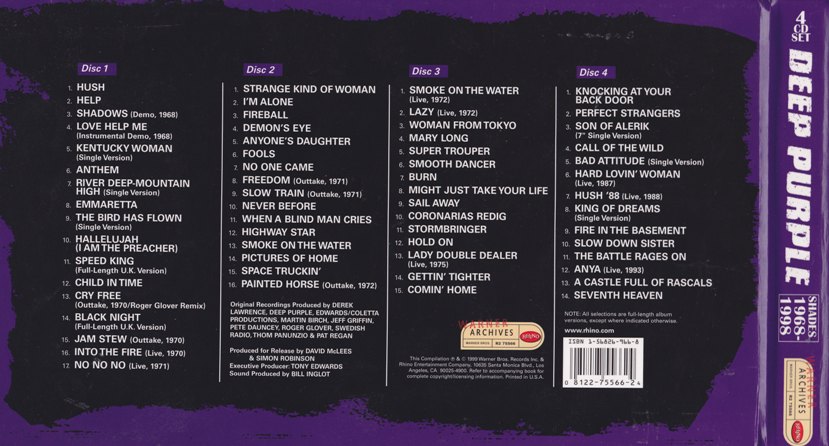
 Disc one covers 1968 to 1971 (Shades Of to Fireball). The tracks listed here as demos or rarities are from the Deep Purple remastered CDs, all except for the aforementioned “No No No” which really is awesome. If you have the great Singles A’s & B’s and the Deep Purple remasters, you have all this stuff. Except maybe the edit version of “”River Deep, Mountain High”, I’m not certain about that one. You get a good smattering of favourites on here, like “Kentucky Woman”, “Speed King”, “Child In Time” and so on, but it’s not really sequenced all that well. The slow-ish Deep Purple Mk I material fits awkwardly with the Mk II. Other songs of note include non-album singles and B-sides such as “Hallelujah” (first recording with Ian Gillan) and “The Bird Has Flown”. The version of “Speed King” included is the full UK cut, with the crazy noise intro.
Disc two is 1971 to 1972: more Fireball, and Machine Head. All these tracks can be found on Deep Purple remasters. There are some excellent tracks here, such as the rare “Painted Horse” and “Freedom”. “Painted Horse”, a personal favourite, has been available for decades on an album called Power House. I guess Blackmore didn’t like them at the time, so they languished until the band broke up before the record label released them. “I’m Alone” was rare for a long time, and “Slow Train” was completely undiscovered until the Fireball remaster. I like that “Anyone’s Daughter” is on here, a very underrated song. Of course you will hear all the big hits on this disc: The studio versions of “Smoke on the Water”, “Fireball”, Highway Star” and “Space Truckin'”. This will be many people’s favourite disc.
The third CD continues with Mk II. It starts off with the Made In Japan live version of “Smoke” which is fine, but now you’ve heard it twice. Soon, it’s “Woman From To-kay-yo”, “Mary Long”, and the scathing “Smooth Dancer”. Then Gillan and Glover are out, and in comes Coverdale and Hughes One rarity on this disc is the instrumental “Coronarias Redig”, which dates from the Burn period. It also includes some of Mk III’s most impressive work, including two of the best tunes from Come Taste The Band. Conspicuous by their absence is the epic “You Keep On Moving”, and Blackmore-era fave “Gypsy”. You will, however get “Burn”, and “Stormbringer” from Stormbringer itself.
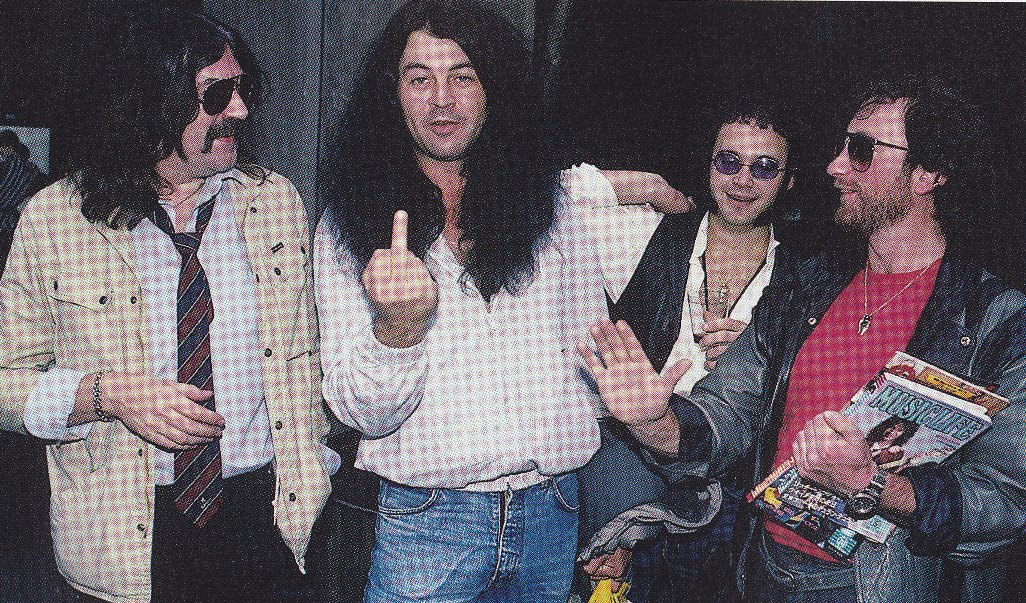 The fourth CD is the one that ticks me off the most. This covers the reunion era, from 1984 to the then-most recent album Abandon in 1998. The hits are here, “Perfect Strangers” and “Knocking’ On Your Back Door”, as well as some singles from the Joe Lynn Turner era. What ticks me off here is the song selection. “Fire In The Basement”? What? That song kind of sucks, why not “The Cut Runs Deep”? Only one song from The Battle Rages On is included, only one from the excellent Purpendicular, and only one from the recent Abandon? And not even the best songs? That makes no sense.
To short-change the later era of Deep Purple only serves to short-change the listener. The band were revitalized and rejuventated by Steve Morse, and made some really good, well received music. I saw them live with Morse in 1996.
From The House of Blue Light era, a single edit of “Bad Attitude” is included, which is probably rare. What you won’t get is the full, 10 minute + version of the instrumental “Son Of Aleric”. This is one of the best lesser known tunes from the reunion era. Instead, you get the truncated 7″ single version. That makes the 10 minute version frustratingly hard to get. It was originally released on a 12″ single, which you may be able to find. You might have better luck finding it on the European version of Knocking at Your Back Door: The Best of Deep Purple in the 80’s. It was included there, replacing “Child In Time” from the US version. I managed to get it thanks to my mom & dad who bought it for me at an HMV store in Edinburgh (along with Restless Heart by Whitesnake).
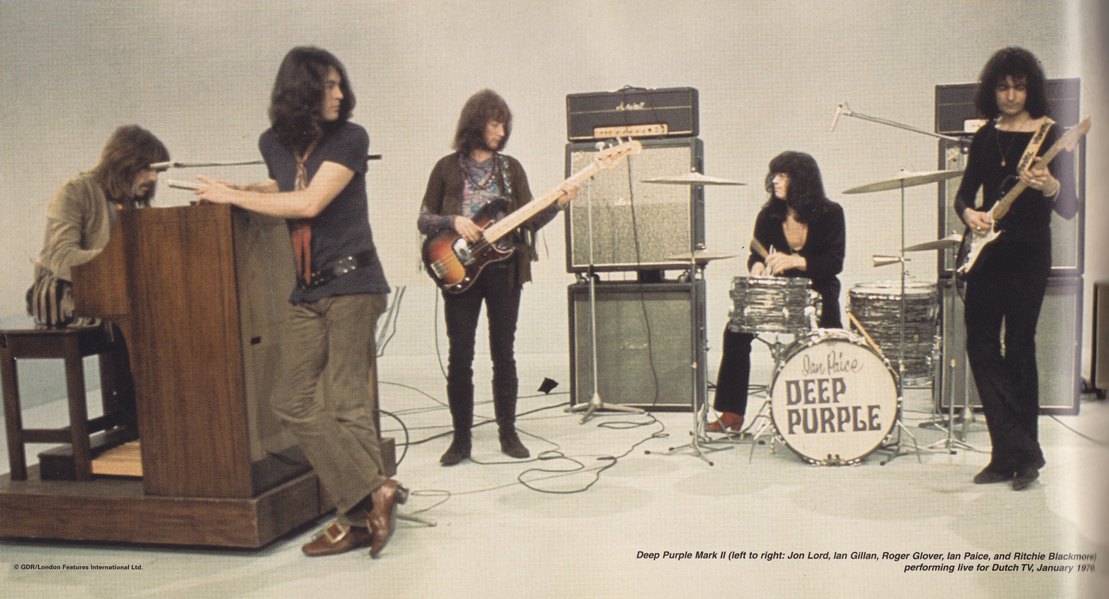 Mick Wall’s liner notes offer the Morse years a mere mention, and end on a nostalgia note of “bring back Blackmore.” Come on. Let’s focus on the present of a band that shows no signs of slowing down, shall we? But this box set short changes the present, and by picking it up you won’t hear such awesome later songs as “Sometimes I Feel Like Screaming” or “Fingers to the Bone”.
I know many reviews of this set are glowing, and each reviewer has their own reasons for doing so. I can’t. This band is too important, too vital, and dammit, still alive! This box set simply doesn’t do them justice. I was ticked off when I bought it and realized I owned almost all the “rare and unreleased” material. Collectors won’t find much here worth the coin spent, and rock fans who just want a great box set of Deep Purple won’t get to hear enough Morse.
Somebody dropped the ball on this one! 2/5 stars.




 mikeladano.com