remaster

RE-REVIEW: Def Leppard – High ‘n’ Dry (The Early Years Disc 2)

Part Two of the Def Leppard Review Series

Original review: High ‘n’ Dry (1981)


DEF LEPPARD – High ‘n’ Dry (The Early Years Disc 2) (Originally 1981, 2019 remaster)

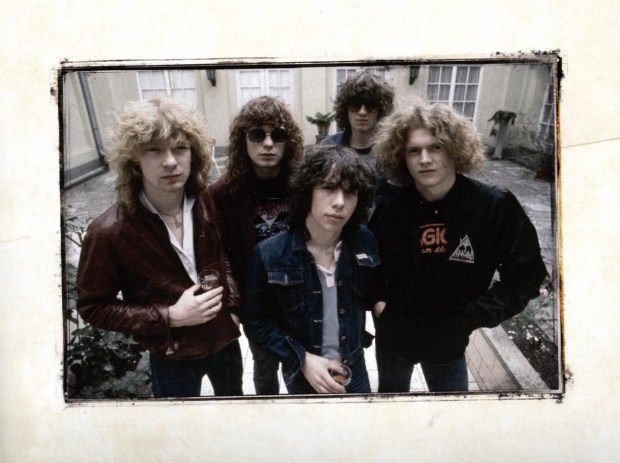
Leppard’s pride in their debut album only extended so far.  They knew that the sound they heard in their heads was not captured on tape.  So they waited, and waited, and waited, until AC/DC producer Robert John “Mutt” Lange was available.  When he had completed the recording of Foreigner’s 4 (six million copies sold), they got to work on Leppard’s second record.  And work they did, with the band members unsure after many takes if they could even play it any better.  They could, and they did.  With Lange on hand to help refine the songs they had written, Leppard had never sounded better.

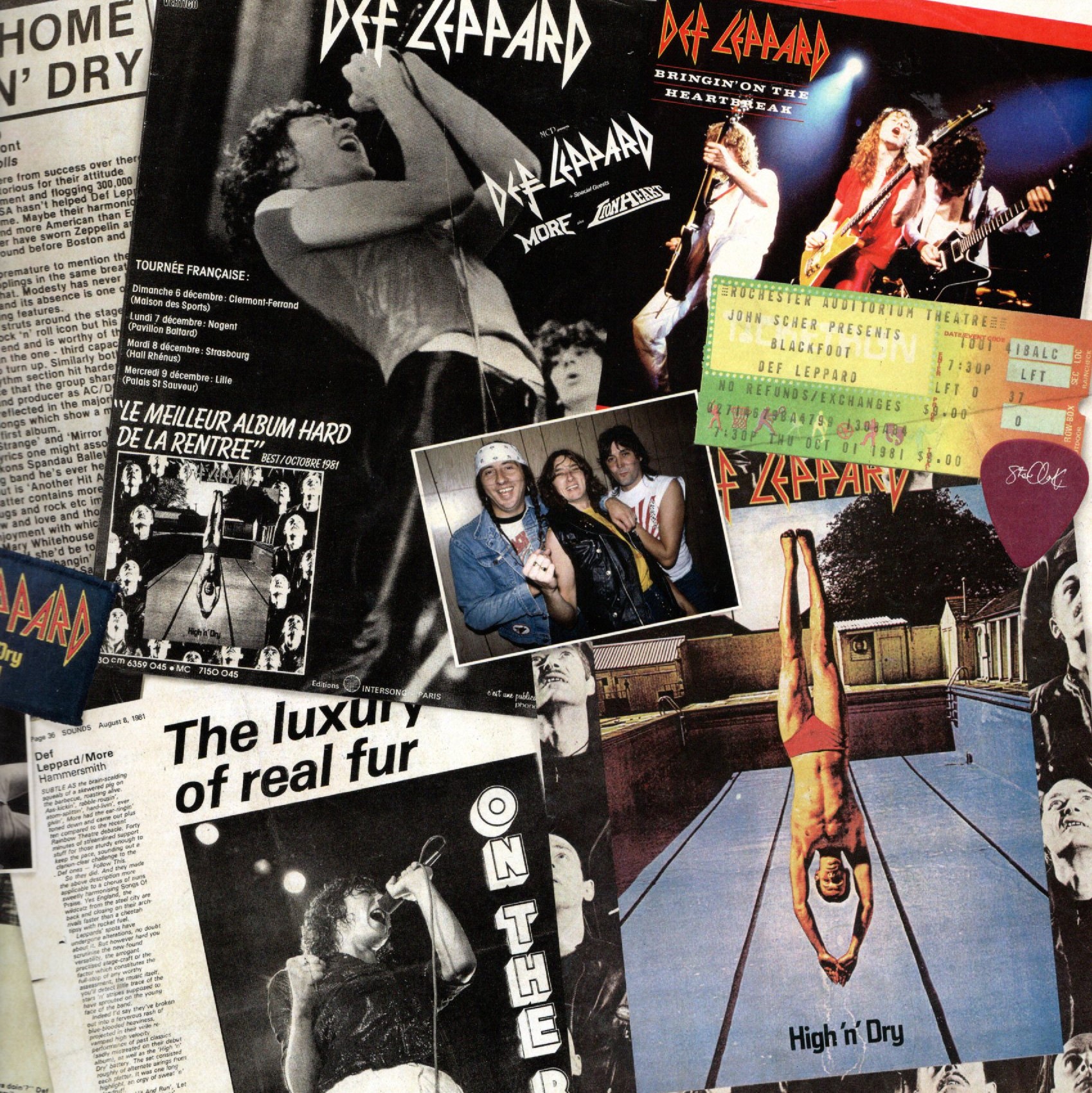
Today, High ‘n’ Dry is often cited by diehards as the band’s best record.  It bares the teeth of AC/DC, but the attention to melody and harmony was typical of more commercial bands.  It was a winning combination; High ‘n’ Dry has no filler songs.

The sharp opener “Let It Go” makes the changes apparent.  A better recording, a more confident (and screamy) Joe Elliott, and an incessant bass groove propels it.  The guitars cleverly lay back until necessary for the big rock chorus.  All dynamics missing from On Through the Night.  This time, they could afford a real cow bell — no more tea kettle!  With “Let It Go” opening on such a solid, fast note, where do we go from here?  No letting up!  “Another Hit and Run” is even better, with quiet parts contrasting with the increasingly heady!  Joe has found his voice, and uses it to rip and shred.  Don’t try to follow the lyrics — it’s all about how the frontman screams them at you.

Finally, Rick Allen is permitted to slow down for the sleek, slower groove of “High ‘N’ Dry (Saturday Night)”.  This tenacious track takes its time to blow you away.  It was also one of three they recorded in a single session for music video purposes.

Another video from that session was the hit ballad “Bringin’ on the Heartbreak”, although MTV aside, it didn’t really have the intended impact until later.   Originally titled “A Certain Heartache”, with Mutt’s help they steered it away from its Zeppelin-y origins and honed it closer to a hit.  Sad verses are coupled with a chuggy riff at the chorus, which is beefed up by the backing vocals of Mutt and the band, gradually finding that sound step by step.  The lyrics are nothing to write home about with, “You got the best of me,” predictably rhyming with “Oh can’t you see.”  But then the track ends not with a total fade, but with the urgent pulse of a new bass track.  It’s the brilliant instrumental “Switch 625”, paired with the ballad as if to say “don’t worry folks, we haven’t lightened up.”  Leppard were, after all, a part of the New Wave of British Heavy Metal bands.  “Switch 625” is something that would have generated melting heat on that scene.  Written solely by Steve Clark, this is one instrumental that is not filler in any way.  It’s a song.

So ended side one, but side two commenced with the crash of “You Got Me Runnin'”, a single-worthy number that scorches the skin with its burning tower of riffs.  Joe bemoans a girl that he don’t trust, while Steve Clark and Pete Willis do their best Angus and Malcolm.  Rick Allen, all of 17 years old now, keeps the beat minimal while Rick Savage maintains the pulse on bass.  When Pete breaks in with his guitar solo, it’s one of the best of his time with Leppard.  But it’s the crucial chorus that keeps you coming back, a singalong brute with gang vocals that could have been lifted from an era past.

Then things get eerie with “Lady Strange”, hurling multiple riffs at the speakers, and boasting a chorus to back it all up.  Tough guy Joe claims to have never needed love before meeting his “Lady Strange”.  This is the only track with a Rick Allen co-writing credit, and features a scorcher of a Clark guitar solo.  Elliott’s screams have never sounded more tormented.  Brilliant stuff.

Without a break, we plow “On Through the Night”, and one of the fastest tracks on the album.  There’s a surprising, quiet Zeppelin-y middle breakdown that’s welcome, but otherwise this track is built for speed.  “Rock n’ roll is no safety net!” screams Joe.  If there were any single track to delete from High ‘n’ Dry, you could make an argument for “On Through the Night”.  However, fact is you need it to set up “Mirror, Mirror (Look Into My Eyes)”.

Displaying their penchant for parentheses, “Mirror, Mirror (Look Into My Eyes)” takes Def Leppard back to dark territory.  A single spare Clark riff carries the song while Allen and Savage lay back.  It’s the kind of brilliant construction that Clark was becoming the master of.  Tension building riffs, stinging solos, topped with another perfect Joe Elliott vocal melody.

Finally it’s the all-out chaos of “No No No”, a memorable way to close out a hell of an album.  Breakneck pacing, top lung screaming, and a blitz of a Willis riff.  Melody?  Unimportant!  If the guitars weren’t so obviously well arranged, this could have been punk rock.

Different versions of “No No No” run different lengths.  This one is 3:12 with a slight fade and then abrupt stop.  One can never go wrong with an original vinyl LP, featuring an infinite groove at the end, with Joe Elliott shouting “No!” over and over again, until you either stop the record yourself, or wait until the ultimate end of the universe — your choice.  Another variation of interest is the the 1984 reissue of High ‘n’ Dry, with two remixed bonus tracks.  We will discuss those later as they are included on Disc Four of this set.

Praise today for High ‘n’ Dry is fairly universal.  Martin Popoff rated it higher than Pyromania.  It truly is a remarkable photograph (pun intended) of a brief period in Def Leppard when they were still solidly riff-focused, but with the moderate temperance of Mutt Lange.  A period that has never and can never be repeated.

5/5 stars

Previous:  The Early Years Disc One – On Through the Night 

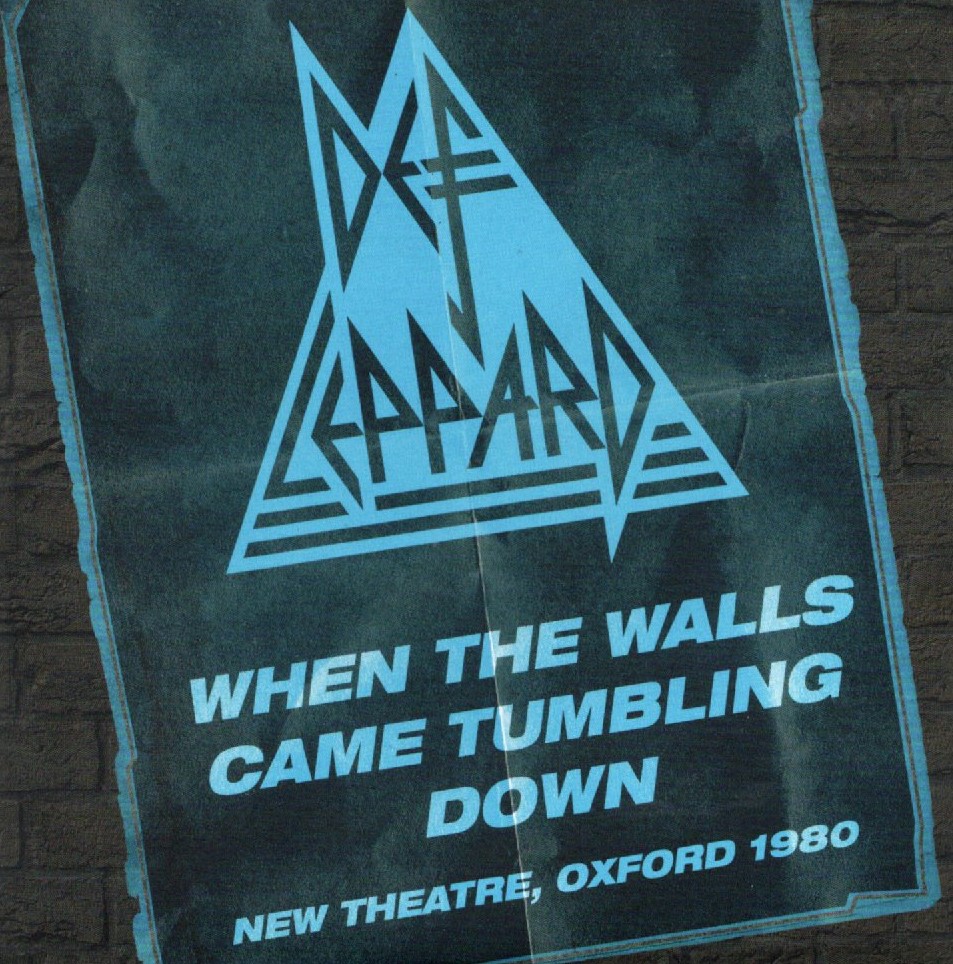
Next:  The Early Years Disc Three – When The Walls Came Tumbling Down: Live at the New Theater Oxford – 1980

REVIEW: Vandenberg (1982)

VANDENBERG – Vandenberg (Originally 1982, 2011 Rock Candy remaster)

I must the only person in the world who doesn’t care about the first Vandenberg album.

There’s nothing wrong with it. I can’t say anything too critical about it. A track or two aside, it just fails to click.

Of course the standout is “Burning Heart”, the song that Whitesnake rehearsed but never released on Slip of the Tongue as they should have. This hot ballad would have been a hit for the ‘Snake, had Adrian Vandenberg not got hurt and replaced on album by Steve Vai. It’s a truly remarkable song that, honestly, deserved the Coverdale treatment. (Fortunately, you can get a rough version of the song by Whitesnake.) It was good enough to use as an effective side one closer.

On another highlight, Adrian plays some stunning classical acoustic stuff on “Wait”. It transforms into a slow, cool dark rocker but has the unfortunate chorus of “Wait, wait, wait, ’til the shit hits the fan.”

“Your Love Is In Vain” is fine, B-level hard rock, akin to Helix, or Talas, or any band of that nature. Bert Heerink is a somewhat generic singer who doesn’t help elevate the track higher. Kind of a Derek St. Holmes style singer. “Back On My Feet” sounds like a Quiet Riot B-side, right down to the high notes that the bass occasionally hits. “Ready For You” could have been a Van Halen-like speed rocker but lacks the teeth that superior production can bring. “Too Late” has a cool riff and boogie, also recalling Van Halen. Wicked neoclassical, finger-tappin’ solo work too. “Nothing to Lose” is a decent song, with a good chorus that sounds like Talas. “Lost in a City” and “Out in the Streets” are not memorable at all and the production does them no favours.

Let’s say three keepers:

  • “Burning Heart”
  • “Wait”
  • “Nothing to Lose”

Whitesnake should have re-recorded “Burning Heart” properly on the road, when Adrian returned to the band after his injury. They blew a huge opportunity for a timeless hit by not doing so.

The best thing about this album is the guitar work. The songs are secondary.

2.5/5 stars

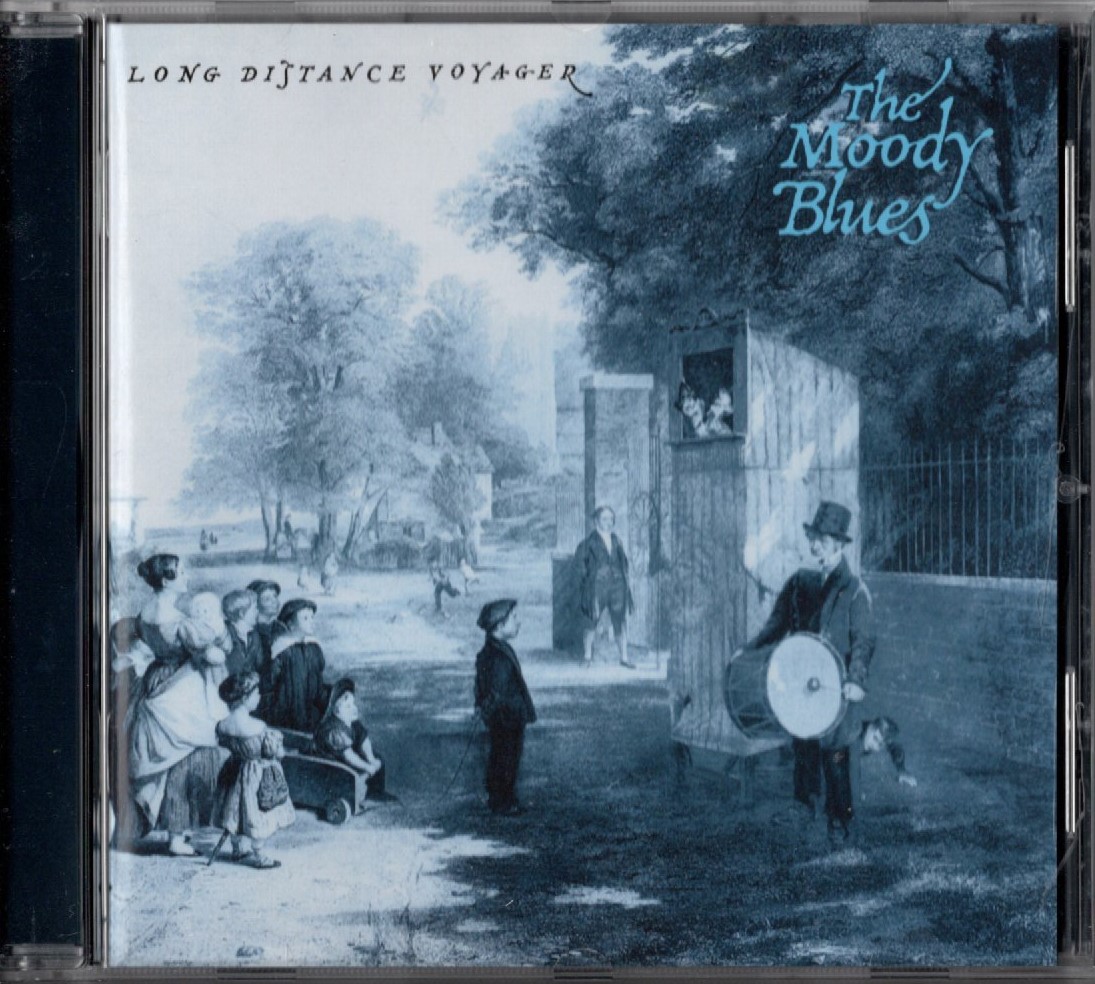
REVIEW: The Moody Blues – Long Distance Voyager (1981 Remastered)

By request of Eric Litwiller

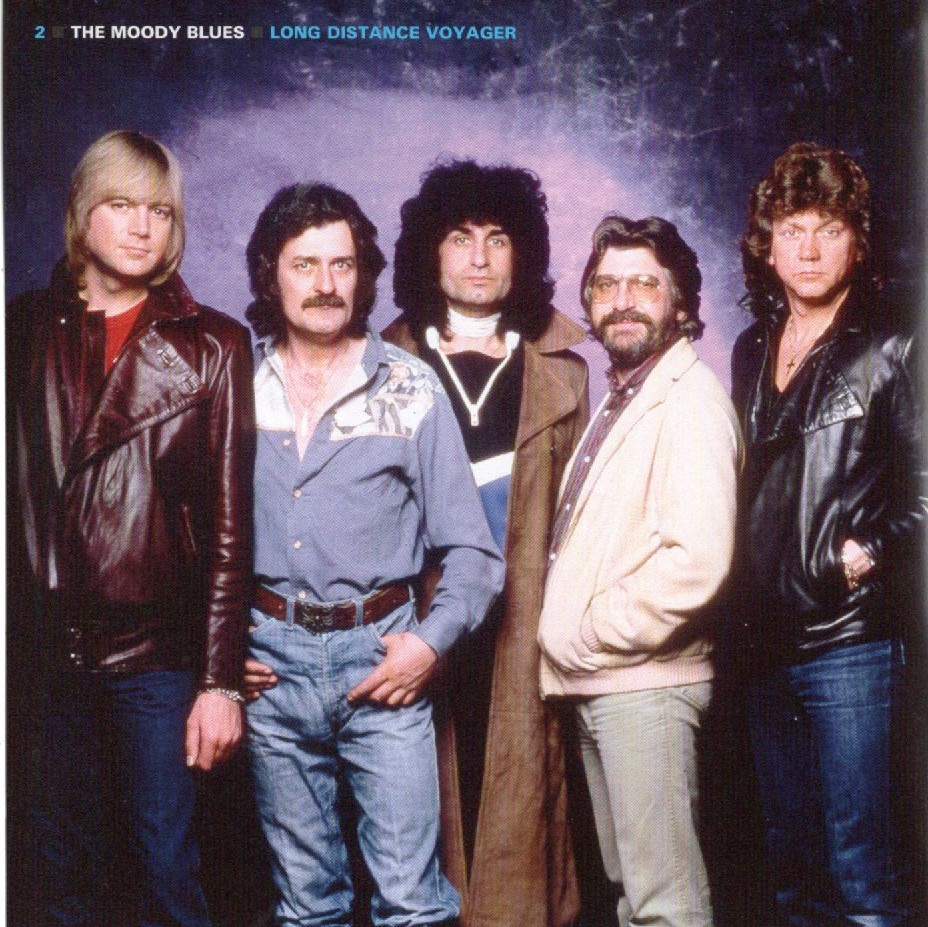
THE MOODY BLUES – Long Distance Voyager (Originally 1981, 2008 Decca remaster)

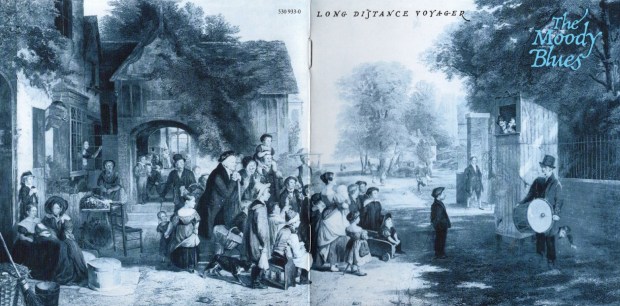
On album #10, The Moody Blues took it to the #1 slot.  Let’s take a dive and see what makes Long Distance Voyager work so magnificently.

Opening with a crash of soundtrack-like synthesizer, “The Voice” soon enters a comfortable 80s groove — think “The Highwayman” by Cash, Jennings, Kristofferson and Nelson.  But it’s not country, it’s science fiction-like progressive rock.  Justin Hayward’s dreamlike vocal and the the vintage keyboards create an instant atmosphere.  A brief but killer guitar solo adds the right accents.  What a song!  A masterpiece indeed, “The Voice” personifies perfect in every way, from mood to melody to majesty.

Lush strings and tinkling computers mesh on “Talking Out of Turn”, which goes Lennon/Beatles on the first verse.  Bassist John Lodge sings on this lengthy study, which was still a successful single despite its length.  If the Beatles survived intact into the 1980s, perhaps they could have recorded “Talking Out of Turn”.  In other words:  high praise.

The omnipresent Disco movement has its impact on “Gemini Dream”, a dance able rocker with a killer beat and vocal melodies to match.  Expertly constructed, and one of the best examples of a rock band stepping outside their comfort zone into the dimension of dance.

Acoustic guitars ring out on “In My World”, the side one closer and an extensive song with many guitar textures, including some delicate pedal steel.  Long and deliberate, but an instrumental tour-de-force.

The second side commenced on the upbeat “Meanwhile”, a short song with quaint keyboards and irresistible Justin Hayward vocal melodies.  An uplifting chorus, and you are hooked.  Then it’s the wicked “22,000 Days”, like a synthed-up sea shanty!  Awesome song unlike most you will hear.  Trans-Siberian Orchestra ripped off this vocal style much later on.

The acoustic “Nervous” starts very early-Pink Floyd without the THC.  It transforms into a big, bold ballad powered by strings.  Awesome song that doesn’t care that it’s pompous and overblown, nor should it.  Ray Thomas’ “Painted Smile” has an old fashioned big-top style, a bit circus-like, with rich accompanying singing and an outstanding lead vocal slot.

A final song with a big bold chorus called “Veteran Cosmic Rocker” ends the album leaving you wanting more.  A bouncing progressive rock and roll anthem, this would make a great theme song for anybody looking for a corny yet spacey cue.  “He struts, he strolls, his life is rock and roll.”

Since that last tune leaves you hungry, the 2008 remastered disc includes a single edit of “The Voice” as dessert.  It actually bookends the album quite brilliantly.  Those big Dr. Who keyboards return one last time to make sure you leave this album satisfied.

I got to hear this CD because it was Ray Litwiller’s favourite album, and that was good enough for me.

5/5 stars

REVIEW: Brant Bjork – Jalamanta (Remixed and Remastered 2019)

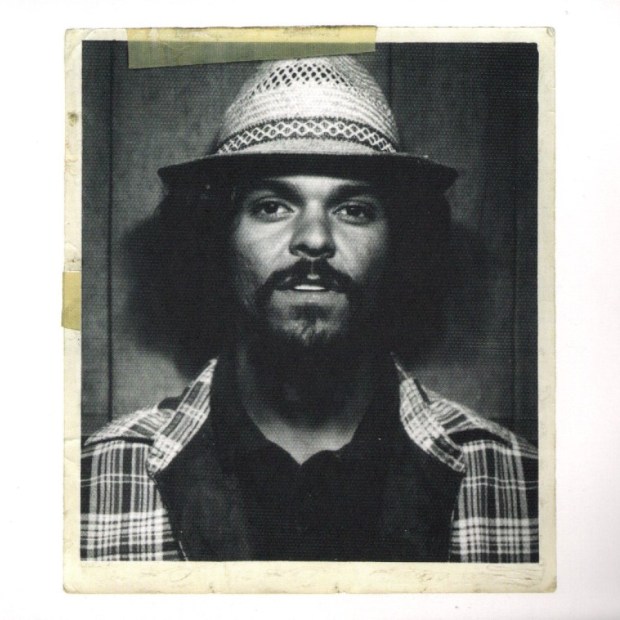
BRANT BJORK – Jalamanta (Originally 1999, Remixed and Remastered 2019 Heavy Psych Sounds)

When the needle hits wax it won’t be long,
You got your radio tuned but it won’t play this song.

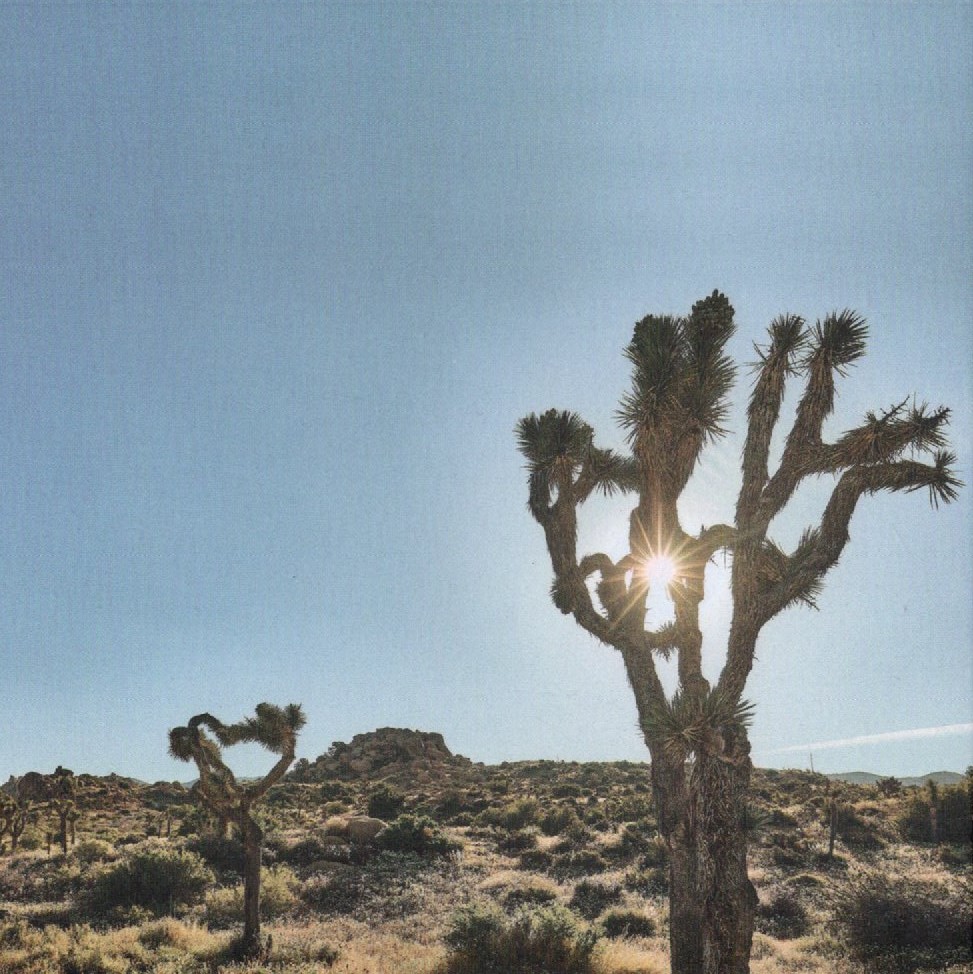
20 years ago, Jalamanta was one of my favourite albums in the world.  This is my third copy.  Partly instrumental, partly vocal, but 100% Brant Bjork.  It was his first solo album, and he played virtually everything himself.  The laid-back desert vibes are perfect for a summer evening chill-out.  Humid, sparse, exotic, varied compositions take you across a hazy landscape.

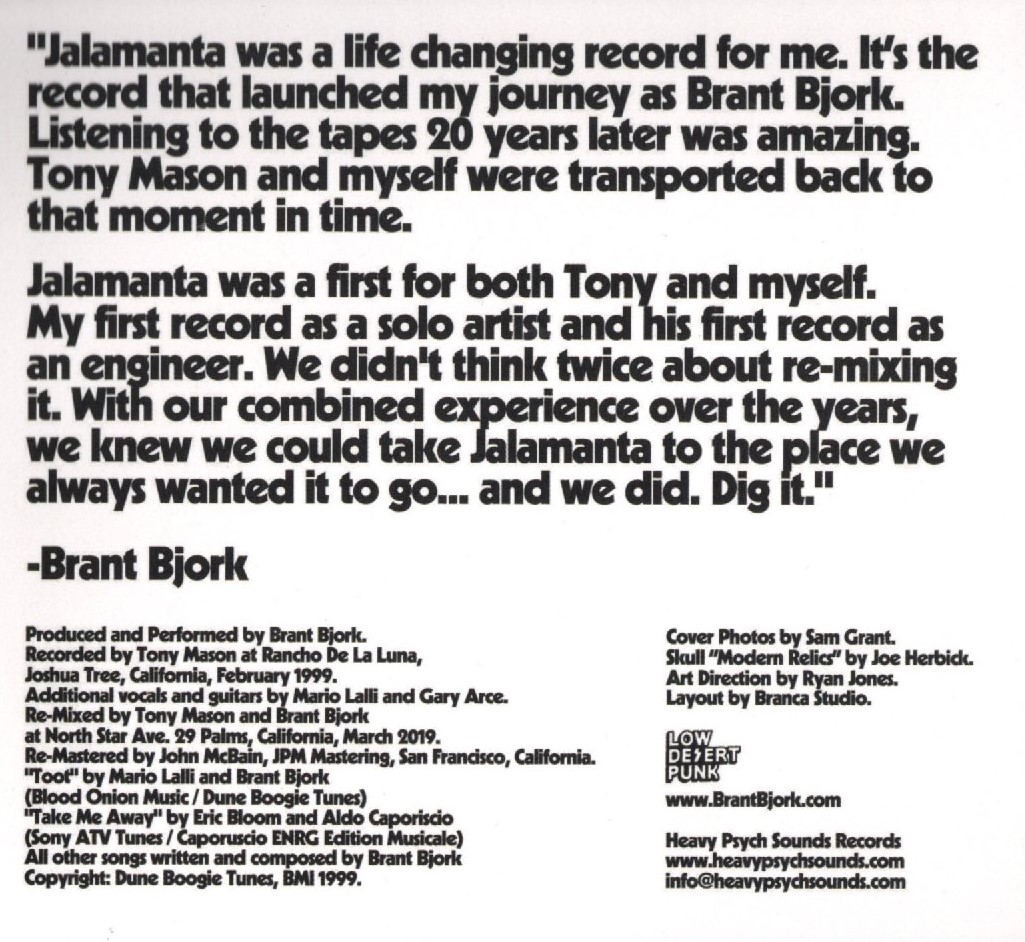
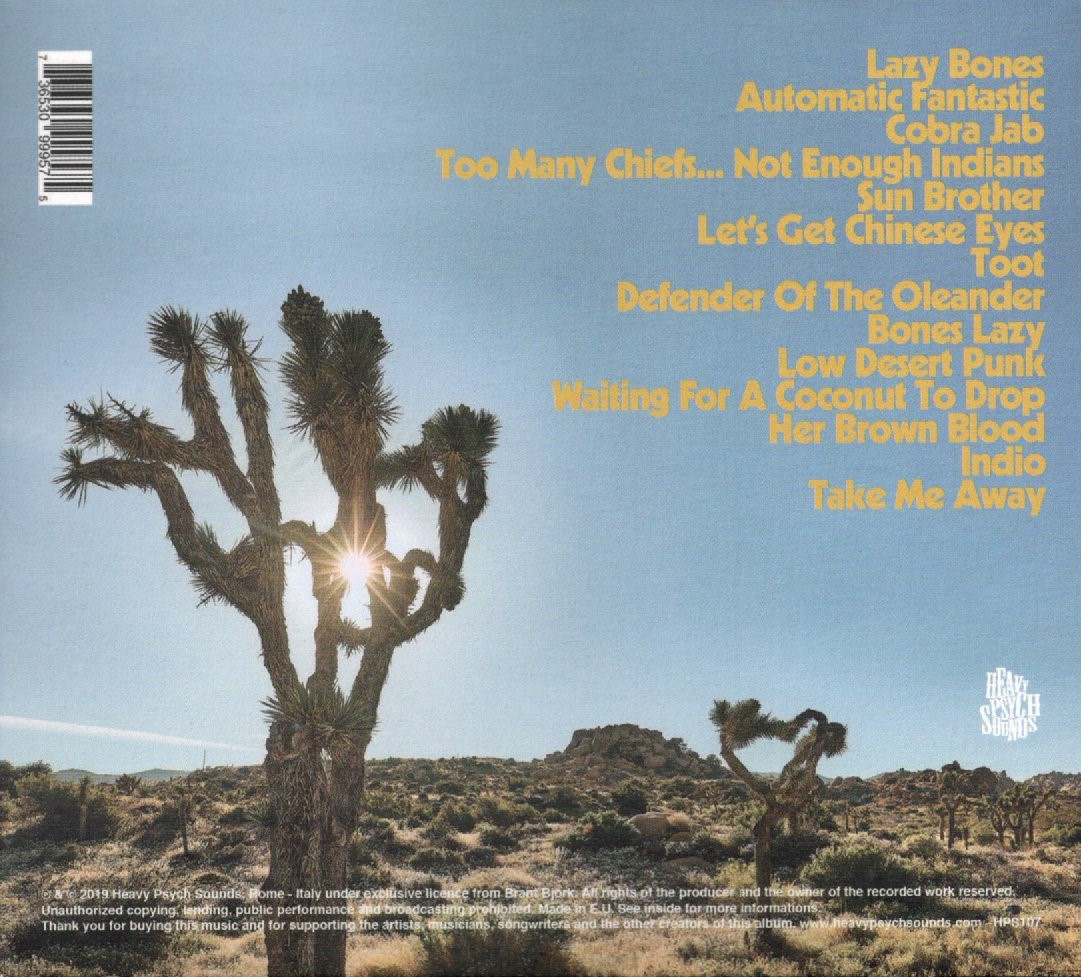
In 2019, Brant and engineer Tony Mason remixed Jalamanta, to take it the place they “always wanted it to go”.  The remixes are largely subtle, just making the album sound bigger in your ears.  The vocals might be a little less buried.  It’s still raw, and sparse, and all the things you always liked about Jalamanta.  Some songs have more noticeable differences.  More guitar on “Toot”.  Tracks tend to run longer than their previous fade-outs.  But there are things I enjoyed about the original that aren’t here.  The echoey lead vocal on “Toot” — “Cat scan, cat scan…”  That echo is gone, maybe so the sonic field wouldn’t be too crowded with that louder backing guitar?

This remix will never replace an original, especially when it was one of my favourites 20 years ago.  What is “Jalamanta” made of that makes it so tasty?  Only the most basic of ingredients.  Rolling bass and drums, simple unaffected guitar parts, and Brant’s laid back singing style.

Yeah, the man shakes me down and that’s why I’m broke.
The rich man’s got all the green but it ain’t the kind you smoke.
So we turn up the rock, and we roll it slow.
We’re always flying high, and the ride is always low.

Snakey guitars jab in and out of the speakers — one song is even called “Cobra Jab”.   Other tunes are more aggressive.  “Too Many Chiefs… Not Enough Indians” has a relentless and simple riff, with the snakey guitars carrying the melody over it like a wave.  Brant’s quiet vocal is hypnotic.  By contrast, “Defender of the Oleander” has a barely-there main riff while the snakey licks do all the brilliant melodic work.  Brant goes for hypnotic again on “Her Brown Blood”, a speedy run through the desert, with a cool monotone vocal right in the middle of your head.

Whichever version of Jalamanta you happen upon, you are guaranteed an incredible listening experience.  The new remix is certainly more three-dimensional, and will sound better on your big system.  But you will lose some of the charm of the original.  The 2009 vinyl used to be the way to go, with a beautiful full-colour booklet and Blue Oyster Cult cover “Take Me Away”.  But now you can get “Take Me Away” here on CD, albeit remixed.  Another bonus is exclusive to this CD — “Bones Lazy”, which segues out of “Defender of the Oleander” into the brilliant rocker “Low Desert Punk”.  And with the title “Bones Lazy”, you won’t be surprised that it is “Lazy Bones” backwards!  Like you’re watching Tenet.  Cool though.  Even though I knew what was likely coming, I felt like it fit right in.

Get a load of this, man.

Well I’m gettin’ up when the sun goes down,
And I shine ’em up and I hit the town.
Well I trim it clean and I roll it up,
And then I take it nice and slow…so what the fuck, man.

Jalamanta makes me feel that California sun way more than any Desert Sessions CD ever has.  You can taste it.  Let it sink into your lazy bones.   And as great as this new CD is sonically, it also makes me want to hear the original.  Nothing can truly upgrade a 20 years love affair with Jalamanta.  As a complimentary piece, I don’t regret owning or listening to it at all.  Hearing guitar parts that used to be beyond the fade is the kind of bait that we nerds line up for.  The 2009 vinyl, with the gorgeous embossed cover and all that delicious photography inside, will remain my preferred way to experience Jalamanta.  The 2019 remix will be the one to play when you want to examine it in more thorough detail.

(still) 5/5 stars


Original CD and vinyl releases seen below.

REVIEW: Judas Priest – Defenders of the Faith – Part Two – Special 30th Anniversary Deluxe Edition and 2001 Remaster

For yesterday’s review of the original album, click here.  

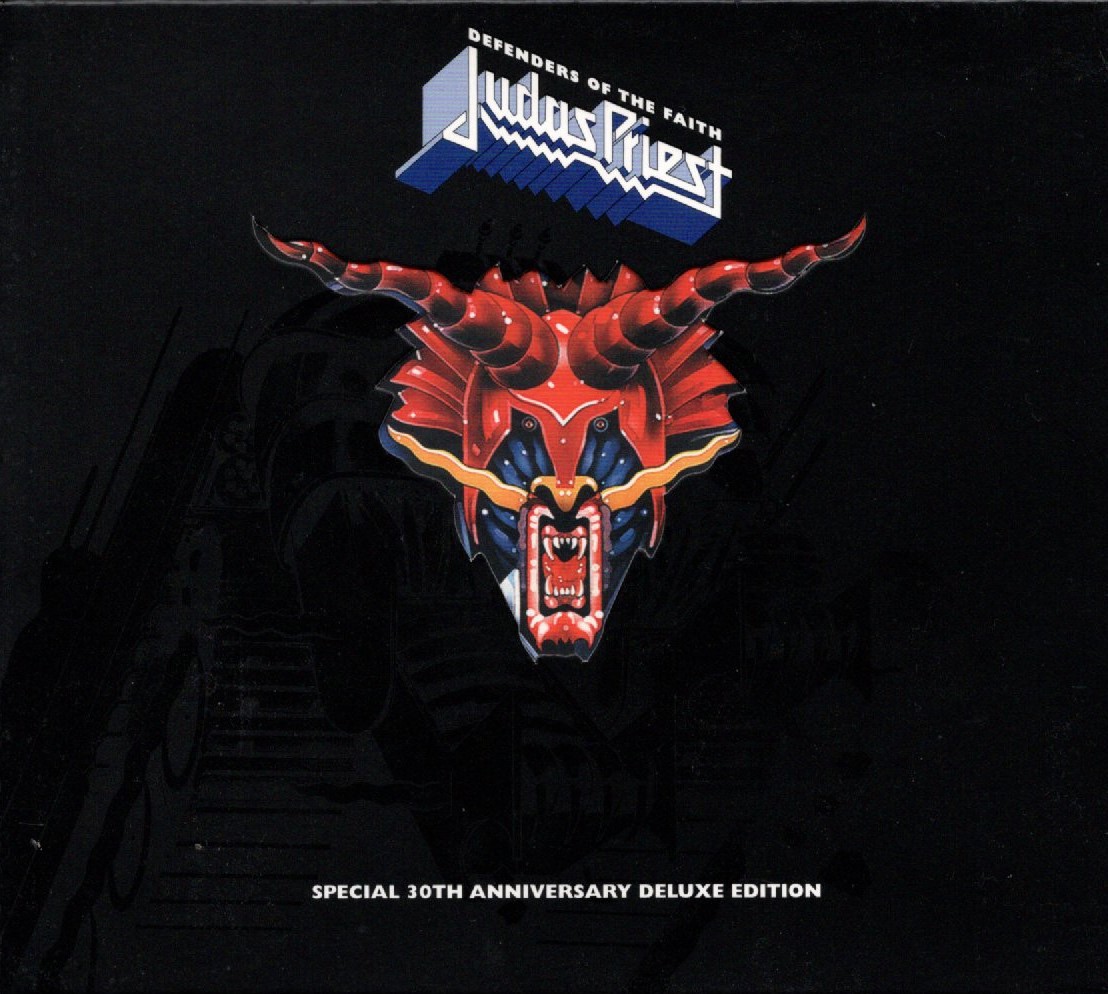
JUDAS PRIEST – Defenders of the Faith (2001 Sony reissue, 2014 Special 30th Anniversary Deluxe Edition)

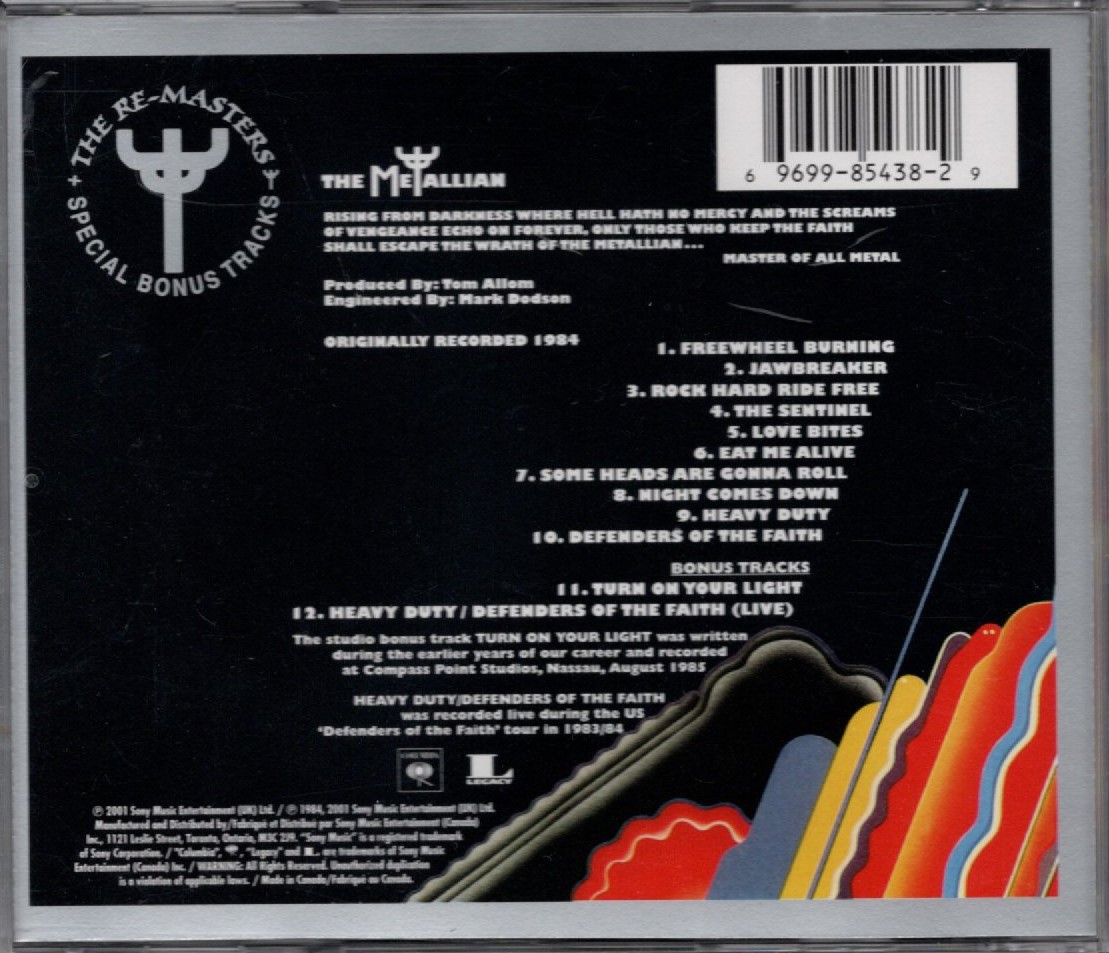
Let’s start this review by taking a quick look at the bonus tracks that were added to the 2001 Sony remastered CD.  The first is an acoustic ballad called “Turn On Your Light”.  With lead guitars overdubbed later on, this spare acoustic ballad would have been a sharp left turn for the band had it come out on the next album (Turbo).  It’s very light, even more so than the material that made the album.  On the other hand, given the musical climate of the era, maybe it could have been a hit that propelled Priest to heights previously unseen.  We’ll never know.  The second bonus track comes from Long Beach on the Defenders tour.  It is the duo of “Heavy Duty” and “Defenders of the Faith”, but we’ll get into it later as it’s also included (albeit remixed) in the 30th Anniversary Deluxe Edition we’re about to discuss.  Important to note:  the 30th Anniversary does not include “Turn On Your Light”.  If you want to get that song, you have to get the 2001 version.

When I was a kid, around the time of Defenders of the Faith, I can remember listening to a live Priest concert with the next door neighbour George.  We were on his picnic table in the side yard, listening to it on the radio.  That must have been Long Beach, May 5 1984, the show included in the Anniversary Deluxe set.  Spread over two discs, it’s a full Priest show with nine of the ten new songs played.  Only the controversial “Eat Me Alive” was not played.

“Love Bites” is an unusual set opener, but of course they did use “Out in the Cold” on the following tour too.  The mix is bass-heavy with Ian Hill up front for some reason.  Barking Rob spits out the words like bullets.  Sticking with new material, it’s “Jawbreaker”, the second track on Defenders, performed at light speed.  Rob says hello to 13,000 heavy metal maniacs and then dives into the oldies.  Three well-received number from British Steel in a row:  “Grinder”, “Metal Gods”, and “Breaking the Law”.  Though robotic in tempo these songs were and still are landmarks for the band.  “Breaking the Law” is the most lively, with Rob acting as the cheerleader in concert.

They reach way back for “Sinner”, which again suffers from the Dave Holland treatment on drums.  It’s too fast and stiff.  Fortunately, Halford belts out the chorus in scream-form with earnest.  “Desert Plains” comes next, a song for which there are few live versions available.  It’s a bit too fast, with pulse of the original song lost, but strong nonetheless.

Another batch of new songs follow, all awesome in their own right:  “Some Heads are Gonna Roll”, “The Sentinel”, “Hard Hard Ride Free” and “Night Comes Down”.  It speaks to the strength and popularity of the album that the set looks like this.  These are ably performed, though Rob’s voice sounds very raw on “The Sentinel”.  The crowd goes completely nuts when, before “Rock Hard Ride Free”, he announces that five million people are listening live on the radio!  Unfortunately due to his sore-sounding voice, the version on Priest…Live makes for better listening.  “Night Comes Down” (issued in an alternate live mix on the Ram It Down 2001 remaster) is one of Priest’s most unsung triumphs, a ballad of sorts set in the dusk.  Try listening to it when the sun is going down some time.

Strangely, “Electric Eye” is the first song from the previous hit album Screaming For Vengeance, an album that is largely ignored here in favour of the new one.  Next it’s a last gasp of new songs in the form of “Freewheel Burning” and the anthemic duo “Heavy Duty” and “Defenders of the Faith”.  These are a treat.  Rob uses “Defenders” to get the crowd to do a singalong.  “Freewheel” is pretty manic, and then it’s into the set-ending classics.

“Victim of Changes” can’t help but be the centrepiece of the set.  It’s a serious Priest epic and isn’t rushed through like other songs.  This version is just a little bit different.  “Green Manalishi” is dutifully tough, though every version with Dave Holland is intrinsically and unfortunately inferior to the one with Les Binks.  The guitar solos are note perfect and full of sparks.  Moving on to “Living After Midnight”, it’s big blockheaded fun.  “Hell Bent for Leather” is a high speed thrill as always, and then Priest finally end it on “You’ve Got Another Thing Coming” and the inevitable and annoying “Oh-oo-oh-oo-oh-yeah” crowd singalong.

The 30th Deluxe has a booklet with several live pictures — none of former drummer Dave Holland however.  (If you don’t know why, Google him and guess.)  The remastering of the album itself may be new, but the real emphasis is on the complete concert.  The fact that the setlist contained almost all the new album makes it unique among Priest releases.  It’s a show worth returning to and playing again.  If Rob’s voice was less rugged that night, it might have been a live album in its own right.

3.5/5 stars


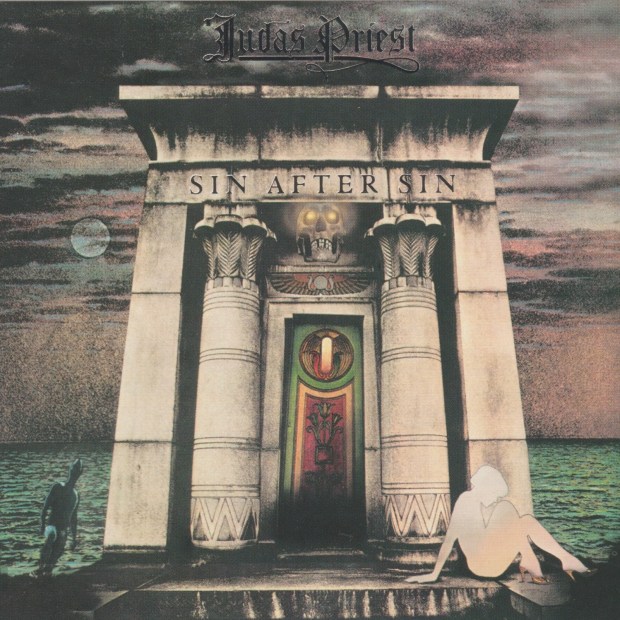
REVIEW: Judas Priest – Sin After Sin (1977)

JUDAS PRIEST – Sin After Sin (Originally 1977, 2001 Sony reissue)

“SIN AFTER SIN, I have endured, but the wounds I bear are the wounds of love.”

This lyric from “Genocide” on 1976’s Sad Wings of Destiny would have been little more than a throwaway, if Priest didn’t recycle the words “sin after sin” for their next album title.  Though the song may have appeared to be the same, much had actually changed.  For the first time, they had a producer that understood that kind of aggressive rock that the young band were trying to create:  Roger Glover, ex-Deep Purple, who had already recorded several albums for Elf, Ian Gillan and Nazareth.  Perhaps even more significantly, for the first time they had a serious drummer creating the beats:  the not-yet-legendary Simon Phillips, who had still already played on a Jack Bruce album.  This was just a session for Phillips, but it enabled Priest to break the shackles of rhythm and really start exploring.

Opener “Sinner” might have been the same kind of tempos that Priest were working with before, but there is a new slickness to the drums; an effortless drive with increasingly interesting accents.  With a solid backing, Priest sound more vicious.  “Demonic vultures stalking, drawn by the smell of war and pain.”  The apocalypse has never sounded cooler.  As Phillips drops sonic bombs left and right, KK Downing goes to town on what would become his live showcase solo.  His growls and trills sound like a beast inflicting wounds on a struggling combatant.  At almost seven minutes, “Sinner” is the album epic, and it’s the opening track!

Priest previously recorded a cover of Joan Baez’ “Diamonds and Rust” for Gull records; that early version can be acquired on The Best of Judas Priest or Hero, Hero.  The Glover-produced track is the more famous and better of the two.  Radio play for “Diamonds and Rust” helped push the album to eventually sell 500,000 copies.  Rob Halford’s high pitched harmonies gleam like polished silver.

Ironic observation:  I hope by now we all know a light year is a measurement of distance, not time.  It is the amount of distance that light can travel in one year (9.46 trillion kilometres).  So, really really far.  Joan Baez playfully used it as a melodramatic measure of time in “Diamonds and Rust”.  (“A couple of light years ago”.)  On the next track “Starbreaker”, Halford refers to “light year miles away”, a crudely worded hyperbole for distance.  So with Sin After Sin, you get it both ways.  Regardless of scientific accuracy (or not) “Starbreaker” is a good track with a slightly flat riff.  Though Phillips is brilliant, it could just use a little more pep.

Like with Sad Wings of Destiny, you gotta have a ballad in there somewhere, and on side one that’s “Last Rose of Summer”.  This softie isn’t bad, though Priest have done and will do better.  Using a ballad to close a side isn’t always wise either, but on CD nobody really notices except us nerds.

“Let Us Prey/Call For the Priest” is a pretty epic side two opener, with harmony guitars playing an opening instrumental anthem.  Then a choir of Halfords joins in, and the band break in to what could be their fastest song yet.  From the wickedly fast dual guitar solos to the powerful rhythm, this song is a blitzkrieg of metal trademarks.  It’s relentless and all over the board, something that 80s Priest rarely was.

Side two keeps getting better with the groove of “Raw Deal”, which was Rob’s real “coming out” to fans in the know.  Today he calls it a “heavy metal gay rights song”.  It’s actually one of Halford’s best lyrics.  Instead of mashing together science fiction words and singing about battlefields, this time Halford paints a hazy picture of what is probably a gay club in Fire Island, New York.  It’s vivid but vague:  “The mirror on the wall was collecting and reflecting, all the heavy bodies ducking, stealing eager for some action.”  It’s also backed by some seriously cool Priest music, almost funky but always heavy.  “The true free expression I demand is human rights – right?”  It was all there in the lyrics all along.

A second ballad, the dirge “Here Comes the Tears” brings a cloudier mood.  An ode to loneliness, “Here Comes the Tears” is the one to play when you just can’t take it anymore.  When Halford starts givin’ ‘er at the end with the wildest screams in history, it sounds like an exorcism.  The guitars howl, a hint of piano can be heard, and there is an underlying choir of Robs singing sadly in unison.  Finally “Dissident Aggressor”, famously covered by Slayer, concludes the album on a violently fast note.  “Stab!  Fall!  Punch!  Crawl!”  This song is not for amateurs and might be the heaviest thing Priest have ever done.  There are plenty of contenders, but “Dissident Aggressor” must be in the Top Five Heaviest Priest Songs Ever.  But that being said, they still have the balls to end the song with another multi-layered harmony of Halfords.

The 2001 Sony remastered CD has two bonus tracks, and the first is the best in the entire series:  “Race With the Devil”, a cover of a track by The Gun.  This version, recorded for the next album Stained Class (Les Binks on drums) could easily have been a B-side all this time.  Why it went unreleased until 2001 is unknown.  Perhaps it was lost, but now that it has gotten a proper mastering job it is available on CD.  This is un-retouched, which cannot be said for other unreleased tracks in the Priest Remasters series.  “Run With the Devil” is raw, riffy, fast, and wicked.  All it really needed to make it album quality is a better guitar solo.  The second bonus track is a live “Jawbreaker” (Dave Holland on drums) from the Defenders of the Faith tour.  Out of place, but an excellent song regardless.
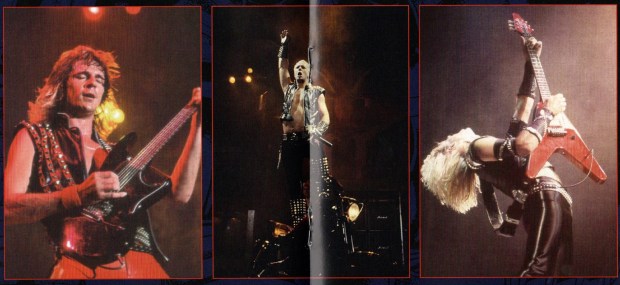
Incidentally, Sin After Sin is the last album before Priest adopted the first version of their current logo design.

4/5 stars

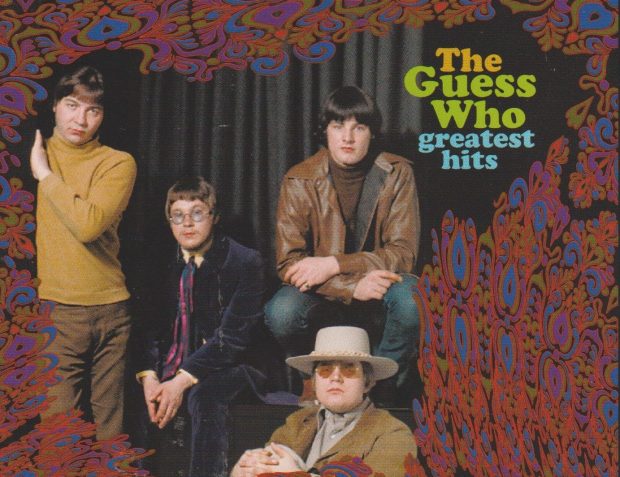
REVIEW: The Guess Who – Greatest Hits (1999)

THE GUESS WHO – Greatest Hits (1999 RCA)

Fun fact:  every Canadian citizen in good standing is issued a Guess Who album when they turn voting age.  Instead of that one, I upgraded to the remastered Greatest Hits in 1999.  The timing for a new compilation was right for the Canadian institution.  Though they never broke up, they had a big reunion tour in 2000.  Burton Cummings (Guess Who singer/pianist 1966-1975) and guitarist  Randy Bachman (1962-1970) had been out of the band a long time.  There was a 1983 reunion but even that was far in the past.  It was the Guess Who’s time in Canada once again, and in talking to Record Store customers, they couldn’t have been more excited if it was the Beatles.

18 tracks of Guess Who hits cover most of the well known bases.  Opening with the dramatic ballad “These Eyes” (made famous once again by Canadian Michael Cera in the movie Superbad) I’m reminded what a tremendous singer Burton Cummings is.  From the ballads to rockers like “No Time”, he could do it soulful or raspy.  Whatever the songs required.

And let’s not forget ex-James Gang six-stringer Domenic Troiano.  The Italian-Canadian guitar wiz was brought in on in 1974 and quickly aided and abetted the group in songwriting.  Only one Troiano-penned track is included here (“Dancin’ Fool”) but his slick riff is totally tasty.  (Unfortunately, Troiano is probably best known as the guy who Gavin Rossdale had to pay off to call his band “Bush” instead of “Bush X”.  Troiano had a band called Bush in 1970.)

The Guess Who were a remarkable band in their day, with a firm hand on both ballads and slick boogie rockers.  Yet their best known song, 1969’s “American Woman” is one of their least remarkable.  Written while tuning up at a curling club (look it up) in Kitchener (says Bachman) or Scarborough (says Cummings), it’s just sledgehammer rock.  Which is fine — there is nothing wrong with that kind of rock.  It’s just bizarre that it’s “American Woman” that people remember when The Guess Who had 20 or so better songs.   Check out “Albert Flasher”, a piano boogie that rivals the best of the genre.

This set is a fine listen from start to finish, and I can only really think of one rocker that’s not present — “Bus Driver”.  Otherwise it covers all the important stuff from the beginning to Cummings’ departure.*  It’s not an album for deep cuts or obscurities.  If you’ve spent extended periods of time listening to Canadian radio, you’ll know 50-80% of these songs.  If not, you hopefully already know “These Eyes” and “American Woman”.  Maybe even “Laughing” or “Undun”.  The Guess Who were always solid with just a little bit of quirk to them.  Solid bouncy musicianship, clever arrangements and lyrics, and a killer voice.  That’s Greatest Hits by The Guess Who.

4.5/5 stars

* The Guess Who continues today with a lineup including original drummer Garry Peterson and Quiet Riot’s Rudy Sarzo.

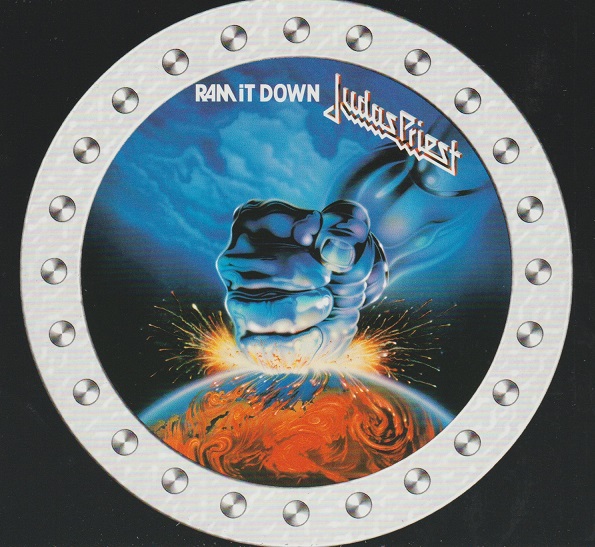
REVIEW: Judas Priest – Ram It Down (Remastered)

JUDAS PRIEST – Ram It Down (Originally 1988, 2001 Sony remaster)

Judas Priest seemed pretty lost in the late 80s.  They were bigger than ever, but they lost focus of their musical direction.  Producer Tom Allom had cursed them with a robotic plod, far removed from the lively firepower of yesteryear.  When they released Turbo in 1986, they had gone as far down those roads as possible.  It was am ambitious departure, but 100% a product of the 1980s.

For Turbo, Priest had written enough songs for a double album.  Twin Turbos, as it was to be called, was supposed to reflect all facets of metal, but the record comany got cold feet and a single disc was issued.  It contained the most techno-commercial tracks, while Priest held onto the rest for another day.  That day came in 1988 when Priest (again with producer Tom Allom) released Ram It Down, largely made up of Turbo outtakes.  The album was hyped as a return to the heavy Priest of yore, and this was at least partly true, but fans were unconvinced by it.  In comparison with Turbo, yes, Ram It Down was heavier.  But Priest had gone as far as they could with Allom.  Ram It Down was too sterile and bogged down with filler.

Certainly the title track opens Ram It Down on a thrash-like note.  As if to silence to critics, it was a proud metal statement with an opening Rob Halford scream that curdles the brain.  The weakness is drummer Dave Holland on his final Priest outing.  Only when Scott Travis joined Priest in 1990 did they acquire a drummer who could play the kind of beats at the speed they needed.  On Ram It Down, Priest were held back by the drummer and clunky production, two mistakes they fixed on 1990’s Painkiller.  The lyrics also seem dumbed-down for the 80s.  “Thousands of cars, and a million guitars, screaming with power in the air,” is cool but cliche.

“Heavy Metal” is more of the same lyrically, an ode to the power and glory of power chords.  Rob Halford’s performance is fantastic, and the man has rarely sounded as fantastic as he does on Ram It Down.  You can’t say the same for the words, the highschool equivalent of poetry.  On the music front, Priest were now following rather than leading.  They were on the same clunky metal trip as bands such as Scorpions at the same time.  There audible Kiss and Whitesnake influences on the album, with Rob sometimes sounding like he was trying to write a Gene Simmons tune.  “Love You to Death” on side two sounds right out of the Demon’s closet.  The embarrassingly terrible  “Love Zone” and “Come and Get It” both sound as if Coverdale co-wrote them on the sly.  Whether Priest were consciously copying other bands or just lost, who knows.  (“Love Zone” is one of the few songs that Halford almost seemed to write gender specific.  “With your razor nails and painted smile” are not specifically referring to a female, but certainly that was the general assumption.)

There are definitely a few cool tracks that deserve mention.  The first is “Hard as Iron” which had to be one of the fastest Priest songs to date.  It’s still held back by the production, but has some serious energy to it.  Like metal espresso injected right into the brain!  The other standout is “Blood Red Skies”, a forgotten highlight of this album and indeed of the Priest catalog in general.  (I actually used “Blood Red Skies” in a poetry project for school.  A girl liked it so much she asked for a copy of the lyrics.)  Using the synth effectively, “Blood Red Skies” paints a Terminator-like future with humans hunted by beings with “pneumatic fingers”, “laser eyes” and “computer sights”.  Halford  pours power and anguish into it, as a human freedom fighter.  “As I die, a legend will be born!”  Cheesey?  Absolutely.  Priest perfection?  Yes indeed!

There are also two mis-steps on Ram It Down that must be addressed.  The first and most obvious is “Johnny B. Goode”, from the 1988 movie Johnny Be Good starring Anthony Michael Hall and some guy named Robert Downey Something.  This track should have been kept off the album.  As a novelty single, sure, you can dig it.  It’s a stereotypical cliche-ridden metal cover, and that’s fun for a goof.  As a Priest album track, it only serves to completely destroy any momentum that Ram It Down managed to build.  Then there is “Monsters of Rock”.  This awful excuse for a song is only 5:31 long, but seems twice that.  It is the prototype for the even more awful “Loch Ness” from Angel of Retribution.  Most buyers probably didn’t finish listening to the album because of this bloated and aimless track.

The Priest Re-masters collection had two bonus tracks per studio album.  Ram It Down provides two completely unrelated but great tracks:  live versions of “Bloodstone” and “Night Comes Down”.  The liner notes don’t state when they were recorded, but live versions of either are always welcome in any Priest collection.  It’s interesting that bonus tracks from these actual sessions, such as “Red, White and Blue”, were used on other CDs but not Ram It Down.

Priest may have known Ram It Down wasn’t the metal album they hoped to make.  They cleared house afterwards.  Dave Holland and Tom Allom were done, and there is no question that Painkiller was superior to Ram It Down because of that.

2/5 stars


REVIEW: Judas Priest – Turbo 30 (2017 deluxe 3 CD set)

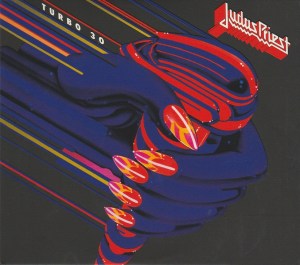
JUDAS PRIEST – Turbo 30 (2017 Sony Legacy 3 CD set)

It is sheer delight to see Judas Priest’s once maligned Turbo to finally see some vindication.  There was a time this album was shied away from completely.  They played no tracks from it on the 1990-91 Painkiller tour.  In 1990, Priest finally pulled themselves out of a slide into dangerously commercial territory.  For a long time, Turbo was considered a musical detour that did more harm than good.  However the frost thawed quickly and Priest began to put the title track back into the set around 2001 for their Demolition tour with Tim “Ripper” Owens.  Today there is no longer any shame in cranking Turbo while hoisting a tall cool one.

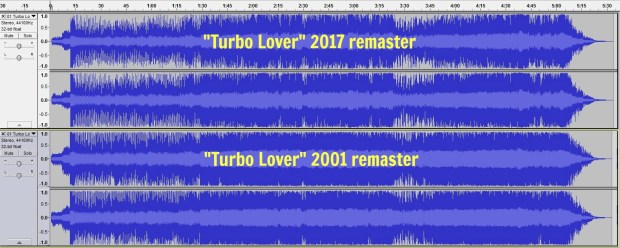
The 30th anniversary edition of Turbo contains a freshly remastered edition and two live discs.  The sound is greatly improved from the 2001 version from the Priest Re-masters series.  As you can see by the waveform below, the 2001 version at bottom was a victim of the “loudness wars”, and much of the dynamic range was lost by pushing it to overdrive.  The 2017 version at top has more peaks and valleys.  The new version wins for overall for having more warmth.

What the 2017 version does not have are the two bonus tracks included on the Priest Re-masters version.  They were a live version of “Locked In” (which would be somewhat redundant here) and an unreleased studio track called “All Fired Up” which sounds like a Ram It Down outtake.  For a complete review of Turbo and these bonus tracks, please refer to our review of the Turbo 2001 CD edition.  The rest of this review will focus on the two live CDs inside Turbo 30.

The Fuel For Life tour that followed Turbo was one of Priest’s biggest.  Their stage featured a riser that “transformed” from a race car to a robot that would lift Glenn Tipton and KK Downing in the air with its claws.  It was commemorated by an album (Priest…Live!) and a separate home video from a concert in Dallas, Texas.  This new double live comes from a show in Kansas on May 22 1986.  It is 100% superior to Priest…Live! by every measure and could supplant that 30 year old album in your collection.

The set list varies a little from Priest…Live! but hits the same key tracks.  The ballsy synth ballad “Out of the Cold” still opens the set, a brave move even in 1986.  It is certainly the most unexpected of all Priest’s openers, so bravo.  “Locked In” is restored to its spot in the set; it was not on Priest…Live!  A version from an unknown concert (the liner notes are vague) was on the prior edition of Turbo as a bonus track.  “Locked In” isn’t a major track but still important due to its place as part of the “Turbo Lover” music video duology.  This live version is the best yet, loaded heavy with plenty of guitar thrills not present on the studio original.  From there it’s on to “Heading Out to the Highway”, nicely in the pocket.  Rob Halford’s screams are ferocious.  Next is the march of the “Metal Gods”, another version far more lively than the one on Priest…Live!  Seems there is much less mucking around with the recordings this time.

“Breaking the what?  Breaking the what?  Breaking the what?”  It’s that silly yet tried and true song intro.  Post-British Steel, you just can’t have a Priest live concert without “Breaking the Law”.  But always remember, that in the dead of night, “Love Bites”.  From 1984’s Defenders of the Faith, “Love Bites” was very different for Priest but still a set highlight.  (Incidentally, British Steel and Defenders of the Faith are the other Priest albums that had recent triple disc deluxe editions with live albums.)  Then more from Defenders:  Two killers in a row, “Some Heads are Gonna Roll” and “The Sentinel”.  Two songs that fans never tire of, and some credit must be given to the mighty guitar duo of Tipton and Downing.  Their trade-offs are sublime, and Halford curdles the blood.

Back into new material, “Private Property” was one of Priest’s more obvious grasps for a hit.  It’s far from a must-have, but better at least than the version on Priest…Live!  A mere five minutes later you will be transported to the “Desert Plains”, a Point of Entry deep cut that was excluded from Priest…Live!  It is far faster live and stay tuned for a long voice-shredding breakdown by Halford.  (Rob was clean at this point in his life.  Rob Halford recommends vocal rest between shows, menthol eucalyptus gum, and herbal tea to maintain a strong voice.)  A frantic “Rock You All Around the World” from Turbo ends the first disc with a filler track that is again better here than on the prior live album.

Screaming for Vengeance brings the fury for disc two, “The Hellion” (taped intro) and “Electric Eye” bring the focus clearly back to heavy metal, just in time to go for a spin with “Turbo Lover”.  This song is now a beloved classic, finally appreciated for its sharp songwriting and adventurous production.  Downing and Tipton pushed synths into heavy metal in a big way, but with integrity and ingenuity.  Better run for cover indeed, and fast…for next is “Freewheel Burning”, a natural for keeping with the theme of turbos and the like.

As the disc roars to its close, we are treated to some serious historic Priest.  The oldest track is “Victim of Changes”, from the immortal Sad Wings of Destiny (1976).  This most dramatic of Priest compositions is always welcome in the set, yet was not on Priest…Live! probably to avoid overlap with 1979’s Unleashed in the East live album.  This one boasts a blazing hot guitar solo and some of Rob’s most impassioned wailing.  This stretches out for nearly nine minutes of pure metal brilliance at its most vintage.  But the vintage metal gift-giving is not over, because “The Green Manalishi” (1979’s Hell Bent for Leather, via Peter Green’s Fleetwood Mac) delivers the greatest of all riffs.

It’s nothing but the hits from there:  “Living After Midnight”, “You’ve Got Another Thing Coming”, and “Hell Bent for Leather”, the standards that everyone knows.  “Another Thing Coming” is stretched out with Rob’s annoying back-and-forth with the crowd, but it is what it is.  “Heavy metal communication”, he calls it.  Nobody is buying this CD for another version of that song anyway.

“You don’t know what it’s like!”  So get this package, the triple CD set, and you will!

5/5 stars


REVIEW: Poison – Look What the Cat Dragged In (remaster)

POISON – Look What the Cat Dragged In (1986, 2006 Capitol remaster)

I remember seeing this album in the racks of our local Zellers store.  I didn’t know the band.  I thought CC Deville was pretty cute.

Taking the gender-bending makeup of the mid-80’s to its logical end point, Poison stormed out of Hollywood and onto the charts.  They did this with a handful of great singles, including “Talk Dirty to Me”, “Cry Tough”, and “I Won’t Forget You”.  Also huge, but barely tolerable as a song, was the singalong “I Want Action”.

Bass "rapin'?" Good god!

Bass “rapin’?” Good god!

Armed with just $23,000, Poison recorded Look What the Cat Dragged In with producer Ric Browde (Ted Nugent, W.A.S.P.) in less than two weeks.  What they emerged with was a fun, raunchy and terrible sounding album with some big hits and plenty of filler.

“Cry Tough” was a tight little opener, a hot and bright rocker about going out and givin’ er.  “You gotta cry tough, out on the streets, to make your dreams happen!” sings Bret Michaels in full-on cheerleader mode.  Unfortunately the sonics of the album leave much to be desired.  The guitar, drum and vocal sounds are demo quality at best, but that’s what you get for $23,000 and Ric Browde.

The other singles were all huge.  “Talk Dirty to Me” is now minor staple, and “I Want Action” (annoying as it is) is another.  The ballad “I Won’t Forget You” is an album highlight, well before Bret & co. had mastered the art of writing hit ballads.  Low key, basic and electric, “I Won’t Forget You” is very different from “Every Rose” and some of the later broken-hearted Poison love songs. Paul Stanley has a cameo in the road-ready music video, which didn’t hurt.

That leaves a hell of a lot of room for filler, and Look What the Cat Dragged In has plenty.  Of the album tracks, the decent ones include the saucy glam-slam rawking title track, and another song called “Want Some, Need Some”.  Both tunes could have used some last-minute tightening up, but neither are as bad as the dreck on the tail end of the album:  “#1 Bad Boy”, “Blame it on You” and the horrid “Mama Let Me Go to the Show” all suck absolutely.  “Play Dirty” on side one is also pretty awful.

Even with the quality issues in sound and songwriting, Look What the Cat Dragged In sold over 3,000,000 copies.  20 years later, it was given a fresh remastering and three bonus tracks.  The remastering could not fix the audio issues, but the bonus tracks are pretty good.  Single remixes of “I Want Action” and “I Won’t Forget You” are marginally better than the original album tracks.  Somebody realized that they were sonically deficient, and the remixes help a teeny tiny bit.  Then Jim Croce’s “You Don’t Mess Around With Jim” is added to the end, a song that got more exposure on the covers album Poison’d!  The bonus tracks go a long way towards making the album a little more listenable from start to end.

2/5
stars

Scan_20151117 (4)