
Previously on mikeladano.com….
Faith No More’s deluxe edition reissue program began in 2015. Two years prior to that, we reviewed two editions of Angel Dust: An Australian 2 CD set with a bonus EP called Free Concert in the Park, and the 2 LP version with a “MidLife Crisis” remix. For this Angel Dust deluxe edition review, we will be incorporating old text from that review into this new one. We also reviewed the 2 CD single for “Everything’s Ruined”. Those tracks are also on this deluxe, and we will borrow text from that review as well.
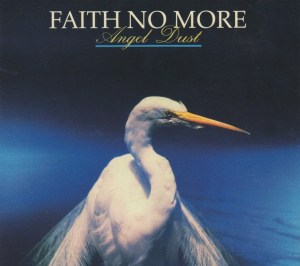 FAITH NO MORE – Angel Dust (originally 1992, 2015 Slash deluxe edition)
Incredibly anticipated, and massively misunderstood: Angel Dust separated the fans from the wannabes. Reviews were mixed. M.E.A.T Magazine’s Drew Masters awarded it 2/5 M’s and failed to grasp the genius that is the chaos within. It certainly is an ugly duckling and will take more than a listen to reel in anyone. Faith No More wearied of the “funk metal” tag and sought to distance themselves from it. Importantly, Mike Patton dropped the nasal tone he utilized on The Real Thing. Instead he unleashed his full voice in all its extremes. With enviable range and power, Patton pushed his capabilities to their furthest limits. Meanwhile, guitarist Jim Martin and the band were butting heads, and most of the songs were written without him. Mike Bordin, Roddy Bottom and Billy Gould would send him virtually complete songs, which he then “grafted” guitar parts onto. In a guitar magazine interview, Martin stated that he thought some of the songs were better before he added his own parts.
Angel Dust commenced with double shot of weirdness: “Land of Sunshine” and “Caffeine”. Patton pieced together the lyrics to “Land of Sunshine” from a collection of fortune cookies. Musically it is dramatic, keyboard heavy and foreboding. “Caffeine” is dark and aggressive, but is Patton’s first bonafide knockout vocal on the album. From the ominous, gravelly lows to off the wall screams, Patton delivers it. His voice knew no limits on Angel Dust. A year prior, he released the debut album by Mr. Bungle. There is little question that this must have demolished any vocal inhibitions he had with Faith No More.
The first single “MidLife Crisis” was about as close as it got to a commercial track. You can certainly hear every nu-metal band in the world (Korn! I’m looking at you Jonathan Davis!) ripping off Patton’s gutteral vocal stylings. But he lets it soar in the choruses. The bizarre pseudo-rapped verses, the samples, and the anthemic, layered choruses all pointed to new directions for Faith No More. The ingredients had never really combined like “MidLife Crisis” before, although 1991’s “The Perfect Crime” hinted at some of these elements.
Perhaps the most bizarre song (there are many more coming) is “R.V.” The lullaby-like piano backs a grizzly soliloquy from Patton, via Tom Waits, playing a trailer park trash character. “Somebody taps me on the shoulder every five minutes. Nobody speaks English anymore! Would anybody tell me if I was gettin’…stupider?” Once the novelty value wears off, it’s still a memorable tune due to the powerful choruses. Patton nails another awesome lead vocal. “Smaller and Smaller” returns somewhat to more conventional song arrangements. A repetitive piano hook backs a hypnotic Patton vocal. The choruses are a bit on the insane side, and then the song deviates into a sample-laden section of challenging rhythms. Yet somehow the song remains memorable and catchy. This is followed by the single “Everything’s Ruined”. It must have been chosen because it is a solid mix of aggressive rapping with a memorable soul-influenced chorus. While it doesn’t sound like it would have been on The Real Thing, it’s about as close as Angel Dust gets.
“Malpractice” is one of the most delightfully messed-up tunes on the album, a mixture of disjointed sections, noisy guitars, smooth keyboards, feedback, all simmered to perfection. By the time Patton’s screaming, “Applause, applause, applause, APPLAAAAAUUUUUUSSSSE!” we’re already clapping. This song was a Patton baby, which explains it. Certainly, the lullaby after the two minute mark is designed to lull you in before they hammer you with more guitars, samples and screams. This closed side one.
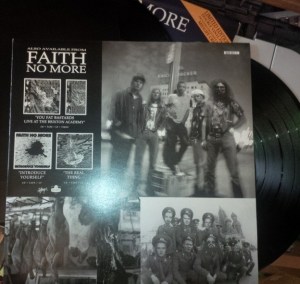
“Kindergarten” introduced side two with the sound of Patton barking thoughts about the ol’ schoolyard. There’s no guitar solo, but Mike Patton muttering musically into a megaphone fills the void where the solo would go. This is followed by Billy Gould throwing down a bass solo, and into the final verse. The weak-willed will shudder before “Be Aggressive”, a graphic series of metaphors about swallowing. This discourse is accompanied by a cheerleader chorus. Jim Martin turns in a sloppy, Pagey guitar solo, the only one on the album.
After assaulting the listener with a song like that, “A Small Victory” is a welcome respite. Its simple but bountiful melodies are perfect to soothe the ear canal. This is also to prepare you for “Crack Hitler”, another bizarre sensory overload. Funky bass meets distorted rapping, until it swerves into this weird, evil march. Patton’s vocals run the gamut from light, to dark and monstrous. Even so, Jim Martin’s contribution “Jizzlobber” is the most extreme song of them all. It has those creepy Friday the 13th keyboards, heavy guitar riffs and pounding drums, and Patton’s most aggressive lead vocal yet. You don’t know what the hell he’s singing without the lyric sheet, so just be enveloped. It’s just a pummeling assault, and unprepared listeners may find themselves overwhelmed and perhaps turned off from the album by this point.
The standard album ended with “Midnight Cowboy” supposedly because of some obsession that Billy Gould had with its storyline. It’s a perfectly appropriate ending given the rollercoaster ride that preceded it. It’s you, wandering off into the sunset, too wasted to really know if you’re headed in the right direction. Just keep walking. Some editions of the album (including this deluxe) added the cover of The Commodores’ “Easy” as the final track. There are a couple different mixes of “Easy” out there, and this is one is from The Very Best Definitive Ultimate Greatest Hits Collection. The horns are missing, the drums have more echo added, and Mike Patton speaks at the beginning. The song is rendered remarkably straight, and it’s a performance like this that truly demonstrates Mike Patton’s vocal mastery. The original version (the “Cooler Version”) with horns opens disc two, the bonus tracks. It can also be found domestically on the EP Songs To Make Love To.

Also from that EP is the bizarre German-language speed-polka “Das Schutzenfest”. This is a novelty track, shits n’ giggles, nothing more. A good laugh but unimportant. The Dead Kennedys’ “Let’s Lynch the Landlord” was also released on the Songs To Make Love To, but it was originally on a compilation called Virus 100. Jim Martin wasn’t there and the song is performed as a quartet. An underwhelming acoustic performance, it sounds a little like the Faith No More of the future as Patton adopts a lower singing style.
The real treasure on disc two and rarest of the all is “As the Worm Turns”, a Japanese bonus track for that long out of print edition of Angel Dust. “As the Worm Turns” was one of the most stunning songs on Faith No More’s debut We Care A Lot, with Chuck Mosely on lead vocals. A full-throated Mike Patton re-recorded it for this bonus track. Sacrilege? It is the superior version now.
A couple included remixes are only a sampling of what is actually available on singles. The “Scream Mix” of “MidLife Crisis” is the extended, bass-heavier mix from the 2 LP edition of the album. The “Revolution 23 (Full Moon) Mix” of “A Small Victory” is only one of four versions from a remix EP they released. Then it is on to the live material, and there are some treasures there. The live EP Free Concert in the Park, (recorded in Munich) is expanded from four to six tracks. Mike Patton dedicates “Easy” to “everyone with hemorrhoids this evening!” The guitar solo spot in “Easy” remains a Jim Martin favourite. Even heavier and more chaotic versions of “Be Aggressive” and “Kindergarten” follow, replete with surprises. The early obscurity “Mark Bowen” is another Mosely song given the Patton treatment live, adding his own spin and abilities. Two tracks are added to the proceedings: “A Small Victory” and “We Care a Lot” from the same show. These live versions really hit the spot, as they are really cranked up, and “We Care a Lot” contains a segue into “Jump Around” by House of Pain. It’s a shame the live recording is so tinny. These tracks were also released on CD singles for “Easy” in Europe.
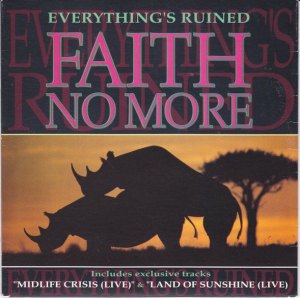
Up next are the four live songs taken from the double “Everything’s Ruined” single, all recorded in September 1992. “MidLife Crisis” is growly and impressive, and “Land of Sunshine” is amped. “Edge of the World” is the point when the audience is asked to sing along, with Patton yelling “Fuck me harder!” The trailer-trash-talk of “R.V.” sounds a little laid back live; something’s missing. It would be much better with the full visuals of a Mike Patton performance.
The deluxe edition concludes with an outtake finally restored to the album it was written with: “The World is Yours”. It was originally made available on Who Cares A Lot? The Greatest Hits in 1998. Like Angel Dust itself, it is sample heavy. Marching soldiers and trumpeting elephants join Roddy Bottom’s ominous keyboards in a symphony of WTF. It is a fully formed recording, with effects-laden vocals fully mixed and finished. It would have fit the more experimental and anti-commercial direction of the album perfectly, but not without making the album overlong.
Angel Dust, unlike the more successful The Real Thing, has a timeless sound. It is a once in a lifetime album, a perfect meeting of disparate elements. Jim Martin was ejected after this, and never again would his heavy metal guitars be grafted onto the sonic experiments of Faith No More. A pity, but they have since moved on even more expansive sounds. Angel Dust in some respects can be considered the real debut of Mike Patton in Faith No More. A triumphant one it is.
5/5 stars


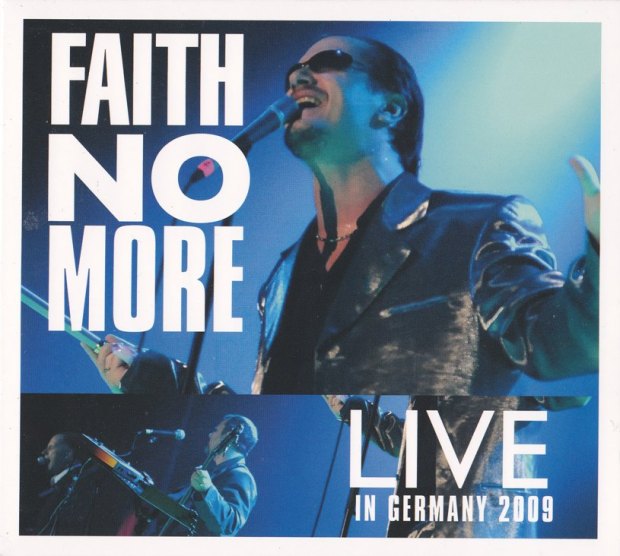


 Side Two was introduced by “Kindergarten”, Patton barking thoughts about the schoolyard. There’s no guitar solo, but Mike Patton provides something shouted through a megaphone that amounts to a solo. This is followed by Billy Gould throwing down a bass solo, and into the final verse. The weak-willed will shudder before “Be Aggressive”, a graphic series of metaphors about swallowing. This discourse is accompanied by a cheerleader chorus. Jim Martin turns in a sloppy, Pagey guitar solo, the only one on the album.
 The Australian 2 CD version that I also have contains the Commodores’ “Easy” as its bonus track. This is the same version that came out here domestically on the Songs to Make Love To EP. It’s rendered remarkably straight, and its a performance like this that truly demonstrates Mike Patton’s vocal mastery.


 mikeladano.com