Scotland

#779: Loch Ness

GETTING MORE TALE #779: “Loch Ness” – A Lyrical Analysis

Judas Priest are known not just for their incendiary riffing, but also vivid lyricism.  It’s often a winning combination.  Witness such metal concoctions as “Blood Red Skies” or “Metal Gods”.  When it works, it works.  When it fails, it fails gloriously.  Let’s have a look at Judas Priest’s most epic failure.  That would be the 13:28 long “Loch Ness”, from 2005’s reunion album Angel of Retribution.

Musically, “Loch Ness” is utter garbage; lethargic rock for the sleepy.  The lyrics are a little better, though not enough to save the song.

Judas Priest usually create their own mythology.  Characters such as the Painkiller, the Sentinel and the Jugulator are three such examples.  This time, Priest dipped into cryptozoology and Scottish legends for their subject matter.  Today, the general consensus is that there is no monster in the depths of Loch Ness.  It’s still fun to speculate and imagine what might have been.

The first verse of “Loch Ness” sets the scene.  The loch is the largest (by volume) in the UK, with an incredible depth of 755 feet.  Because of the loch’s depth and murkiness, long has there been uncertainty about what may be down below.  Using sonar and other modern technologies, nothing of any great size has ever been found.  Though legends remain strong today, it is highly unlikely that a large monster lives in Loch Ness.  What say Judas Priest?

Grey mist drifts upon the water,
The mirrored surface moves,
Awakened of this presence,
Dispelling legends proof.

Stories of a beast in the loch date back almost 1500 years.  A definitive modern day sighting would indeed be the proof needed to move the monster from legend to reality.  Rob Halford references the grey mists, and how the movements of the “mirrored surface” can look like a creature is swimming beneath.  This is how most sightings begin.  Then “Nessie” rises from the water:

A beastly head of onyx,
With eyes set coals of fire,
It’s leathered hide glides glistening,
Ascends the heathered briar.

Physical descriptions of “Nessie” the monster vary wildly.  A head attached to a long neck is a defining characteristic.  It is usually described as dark, which Halford here exaggerates as “onyx” (black) in colour.  It’s eyes being “coals of fire” seems to be a Halford invention.  Likewise the hide, which is usually not described in much detail.  Out of necessity, Rob had to elaborate on the myth in order to describe the beast.  An interesting line is “ascends the heathered briar”.  Indeed, in some of the older sightings, the beast is seen climbing onto land – once even crossing a road.  When seen in full, the creature is often described as similar to a plesiosaur.

This legend lives through centuries,
Evoking history’s memories,
Prevailing in eternities,
On and on and on.

More interesting than the physical descriptions of the beast are the old legends. Water beast legends were not uncommon.  Why was Loch Ness always such a hotspot for such tales?  There is no simple answer.  Recently, large eels were filmed in the loch.  A mistaken sighting of an eel could account for many of the stories.  With the advent of modern media in the 1900s, tales of the monster spread worldwide and stories were reported with more frequency.  Proponents of the monster theory point to the oldest legends as proof that there was always something mysterious about the loch, though there is no proof that there is any connection to the “Nessie” of today.

Loch Ness confess,
Your terror of the deep,
Loch Ness distress,
Malingers what you keep,
Loch Ness protects monstrosity,
Loch Ness confess to me.
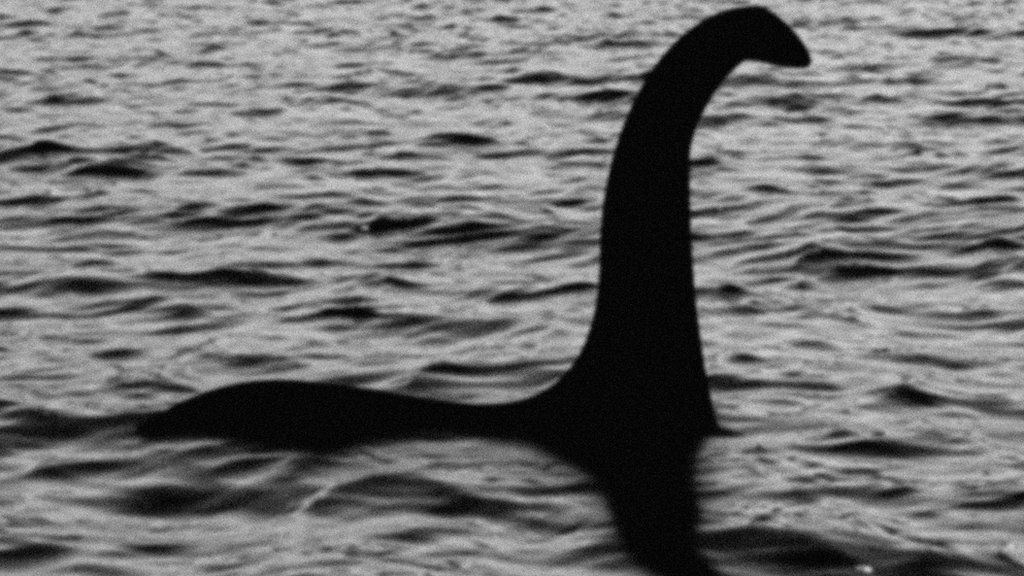
This chorus is a contender for the worst on any Judas Priest album.  There is nothing here to sing along to.  The words are awkward and juvenile with overly simple rhymes.

The speaker is addressing the loch itself; asking the loch to give up its secrets.  But “Terror of the deep”?  Few today find the idea of the Loch Ness monster to be terrifying .  True, early sightings would have been quite scary. Even if the creature spotted was only an otter or an eel, in the dusk or fog it could have been startling.  As you’ll see, however, it is implied this song takes place in the modern age.

The most interesting word choice here is “malingers”, meaning to pretend to be sick in order to avoid something.  It’s possible the word is being intentionally misused because it simply sounded good.  Insofar as meaning goes, “distress”, “malinger” and “protect” all imply the creature isn’t actually threatening.  Perhaps it or its young need protection.  Halford begs the beast for the truth, but the truth is not to be found.

Somehow it heeds the piper,
From battlements that call,
From side to side it ponders,
In passion in the skirl.

Scottish imagery here, implying that the monster will appear if a piper plays its song.  “Skirl” refers to the shrill sound of bagpipes.  “From side to side it ponders, in passion in the skirl” is a variation of the old saying that music soothes the savage beast.  Otherwise, the connection between the pipes and the monster seem to be a Halford construction.  There is also an old joke:  “Bagpipes and the Loch Ness Monster have two things in common – they both attract tourists and terrify little children.”

This highland lair of mystery,
Retains a lost world empathy,
Resilient to discovery,
On and on and on.

“Resilient to discovery” isn’t the most accurate phrasing.  “Resilient” means to recover quickly.  The Loch Ness monster is more “resistant” to discovery than “resilient”, though the legend certainly is resilient.  It goes on and on regardless of a narrowing scope of possibilities.  “Retains a lost world empathy” probably refers to the age of the beast.  It is so old that it comes from a simple time when people had more empathy than today.

This legend lives through centuries,
Evoking history’s memories,
Prevailing in eternity,
Your secret lies safe with me.

These lines simply refer to the age of the old legends, which will live forever.  Rob assures the beast that if it reveals its secrets, he will not tell.

This creature’s peril from decease,
Implores to mankind for release,
A legacy to rest in peace,
On and on and on.

Finally the last verse goes back to the idea that the creature is in some sort of distress.  It’s unclear what the peril is, but mankind is a part of it.  Is it the call of the pipers?  The monster simply wants to be at peace. Perhaps this is a hint of an environmental message, for conservation.

The lyrics to “Loch Ness” are not overly complex. Their simplicity, combined with slow monotonous music, make the 13 minute song seriously drag.  A few unusual word choices tend to obscure meaning, but “Loch Ness” is otherwise a fairly straightforward Judas Priest lyric.  When sung aloud, it begins to sound a little foolish.  “Loch Ness, confess, your terror of the deep” is not poetry.  It’s something you would have written in highschool English class.  While the words mostly stand up to analysis, they are not resilient to singing aloud.  In this manner (perhaps the only manner in which rock lyrics really matter), “Loch Ness” flounders.

“Loch Ness” has never and will never be played live.  It’s a shame that one of the greatest cryptids in all of legend has been given such a weak heavy metal song!

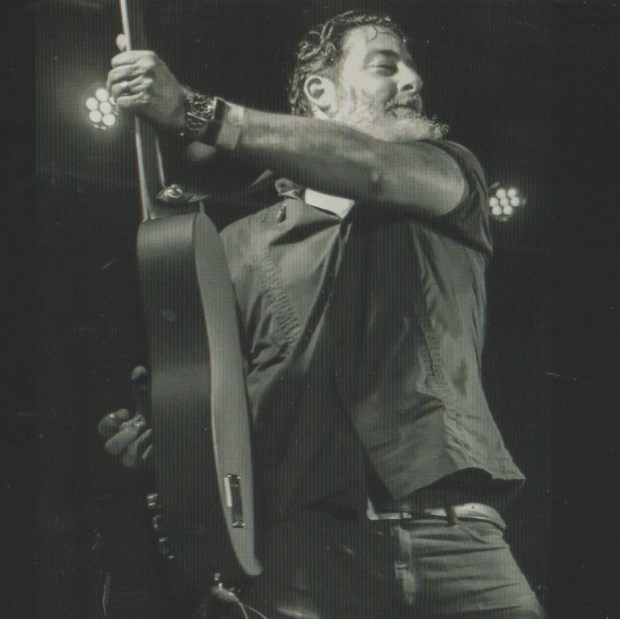
 

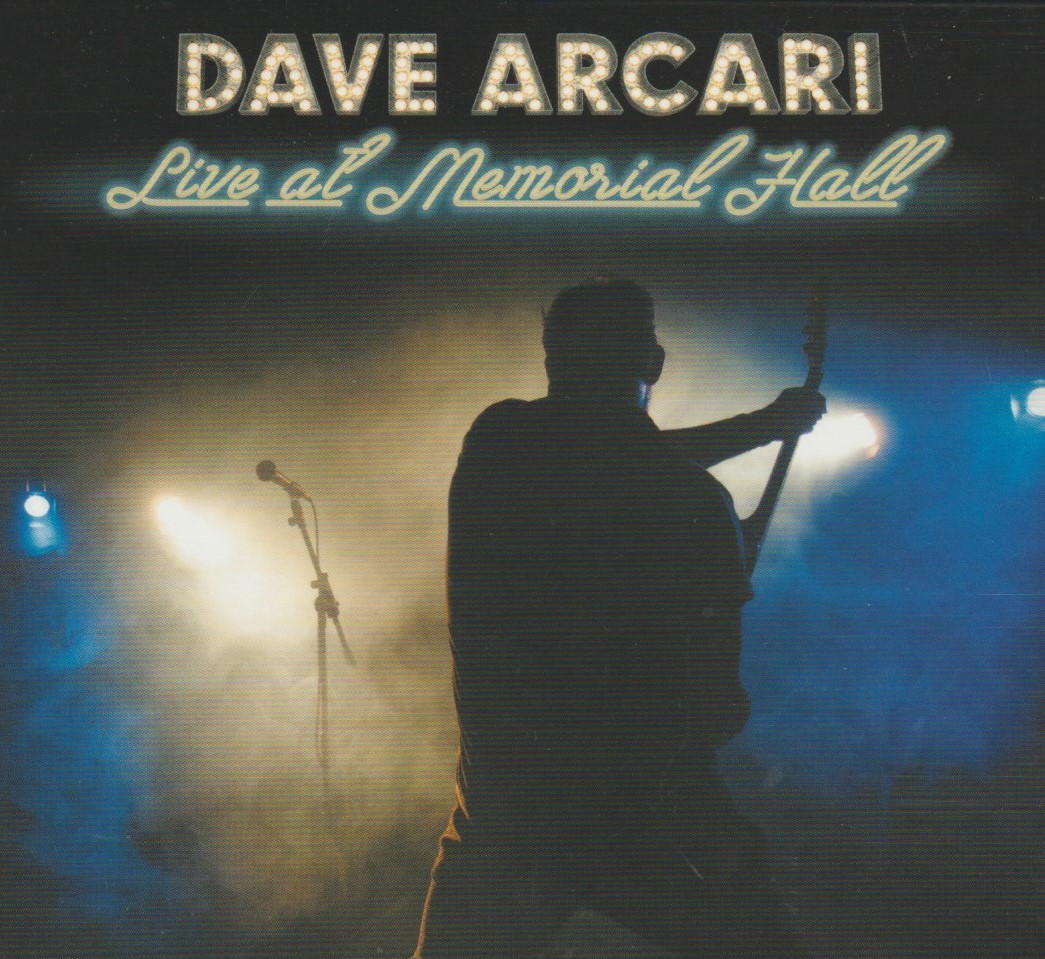
REVIEW: Dave Arcari – Live at Memorial Hall (2017)

DAVE ARCARI – Live at Memorial Hall (2017 Buzz Records)

The most wonderful thing about this community of writers is the chance to hear new music.  I think I can safely say I have bought new music at the recommendation of just about every writer I follow.  One such writer is J from Resurrection Songs, an amazing musician in his own right.  I’m not sure exactly how it happened, but through following him, I also ended up following his fellow countryman, Scottish singer/songwriter Dave Arcari.

Arcari has an engaging social media presence, so after following for a while and checking out his videos and live clips, I decided to finally buy an album.  I chose 2017’s Live at Memorial Hall, and a wise choice it was.  I had an inkling that an Arcari live album would be the way to go.

Dave Arcari is an “alt/blues troubadour” and that description works as well as any.  Hammering away on his steel guitar with a bottleneck slide on one finger and a wee dram of Scotch, Arcari has his own brand of storytelling.  The sandpaper vocals sound like they’ve walked a million miles.  Up there alone on the stage, Dave commands attention.  You tend to associate a steel guitar with the American south and the bluegrass that came with it.  You rarely think of a Scottish storyteller.  Yet here he is, so enjoy.

I didn’t really know many of Dave’s originals, and only a couple of the traditionals, but this is a very enjoyable album even so.  Live albums shouldn’t be mucked with, and this sounds 100% live.  Some tracks are mellow and contemplative, others are fast and rambunctious.  It doesn’t matter to the crowd who hoot n’ holler after every song.

Favourite songs?  Sure, how about “Dreamt I Was 100”, “Bring My Baby Back”, “Devil’s Left Hand” and “Whiskey in My Blood”?  The fast ones are my favourites!  There are 24 songs so I’ll wager nobody’s going home disappointed.

Dave Arcari just returned home from a fall US tour.  If he ever comes to Canada, I wouldn’t want to miss it.  This CD will have to do for now.

4.5/5 stars

Oh!  And the CD came with an autograph, and I’m pretty sure he mailed it from the US tour, since it’s postmarked from Michigan!  That’s dedication!

DVD REVIEW: Billy Connolly – Live in New York (2010)

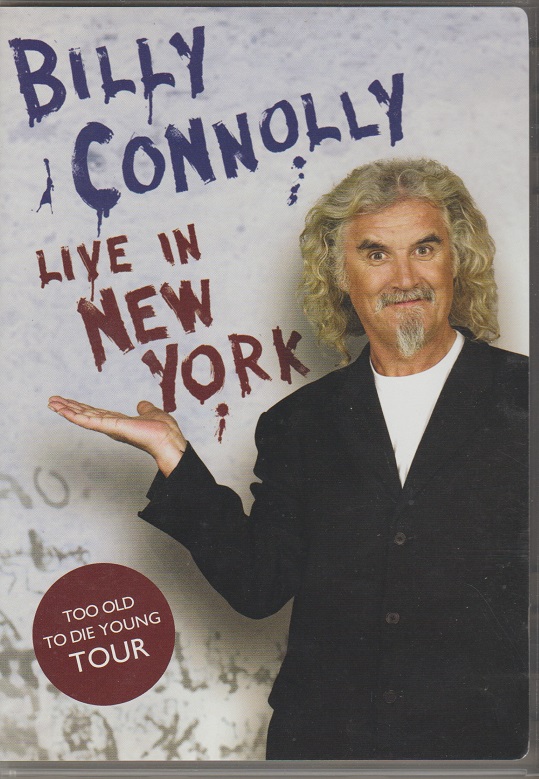
BILLY CONNOLLY – Live in New York (2010 Rykodisc DVD)

There are few funnier than singer/comedian Billy Connolly.  My theory is that it’s the Scottish accent.  Live in New York is the funniest comedy DVD that I own. I don’t buy a lot of them, because I find they have a limited lifespan before they get old. I have another Billy as well (Erect For 30 Years), which combines his old standup plus interview and documentary footage. From his Too Old to Die Young tour, Live in New York is the one to get; it’s pure gold.

There isn’t much “standing” in Billy’s stand-up.  He’s mobile, acting out his scenes, rarely stationary.  This was recorded in 2005, before Billy’s Parkinson’s disease diagnosis.  What storytelling ability!  Like a big beast, every story is recreated on stage for your entertainment.

Even though I have seen some of these bits before (Billy scaring his sister is classic), they all come across as if Billy is telling the stories for the first time. Halfway through a story, he will go off on a tangent. He’ll stop his story mid-breath, pause, and then say, “I just have to tell you about something…” Then he’ll tell another story, and come back to his original story 10 minutes later, to much laughter and applause.

Everything’s funny, but some bits here were absolutely hilarious. They include:

  • The afforementioned “sister” story which takes 10 times as much time to set up as the story itself.
  • The stories about his dad who had a stroke. If you have ever had a family member who’s had a severe stroke, then you’ll know. Billy nailed this one on the head, hilariously.
  • The “thistle” tattoo.
  • And best of…opera. You’ll know what I mean when you see it. Billy nails everything I love and hate about opera!

Audio is plain stereo, format is full screen.  No special features; just the show. Billy may be getting old, his hair may be white, but his humour has lost absolutely nothing over the years. This is, in my humble opinion, the very best DVD that Billy has to offer.

5/5 stars and 1 thistle tattoo.

Sunday Chuckle: A Scottish Concussion

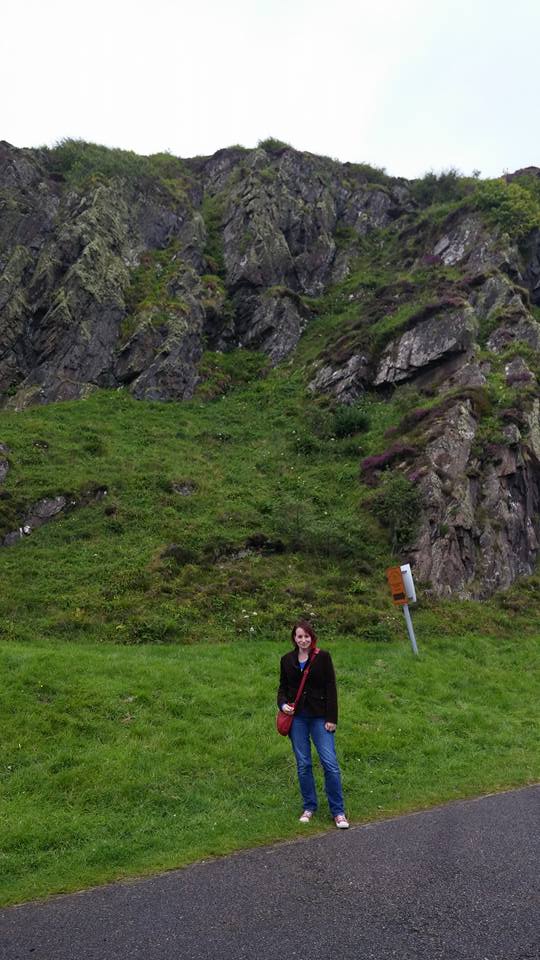
My sister, world-travelling bass clarinetist Kathryn Ladano, is in Scotland!

This should surprise no-one, but one of the things she is doing in Scotland is drinking beer.

As luck should have it, on her first day, she had a fall at a pub. I am assuming alcohol was involved, but that’s not important to the story. She spotted a black Scottish Schnauzer, and jumped up to see it.  She bumped her head and injured her shoulder. In her email to the family, she said, “I have a lump, but I didn’t have to go to the hospital.” Glad she’s OK!

My dad read this email first, and he immediately announced to the family that “Kathryn had a great start to her vacation…got a concussion, dislocated a shoulder. In a hospital.”

Talk about misreading! My dad has been known to 1) stretch the truth, and 2) immediately go to worst-case scenario, but I’ve never seen anything like this before!  She specifically said she didn’t have to go to the hospital, and she made sure to put that up front so my dad wouldn’t worry too much.  Well shit!


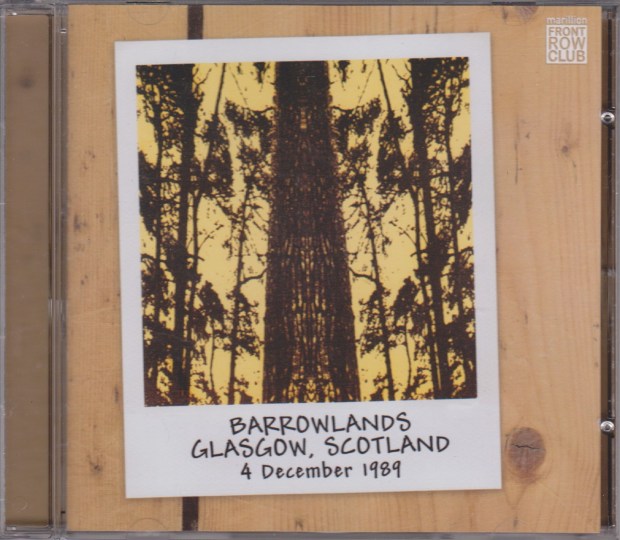
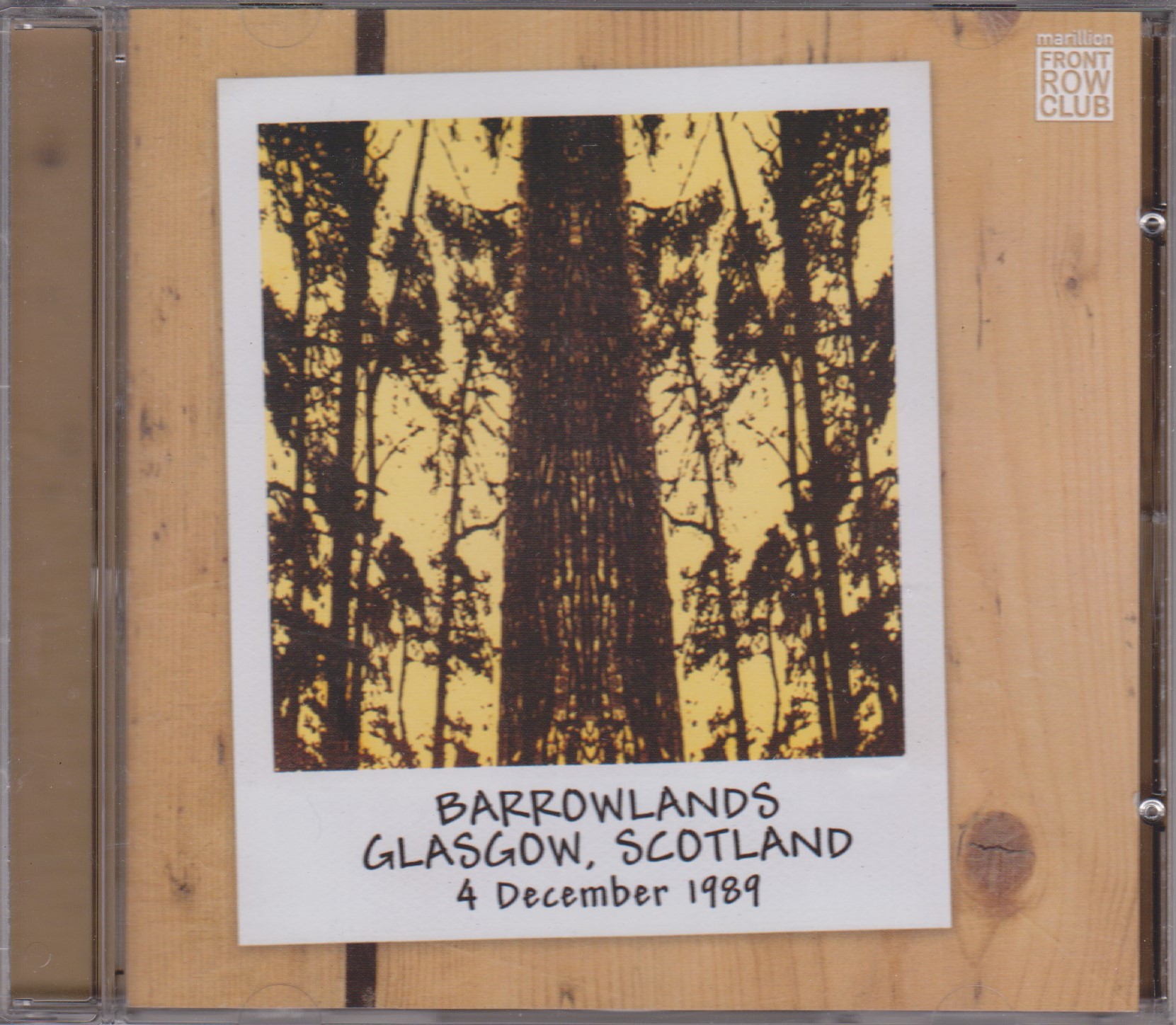
REVIEW: Marillion – Barrowlands, Glasgow, Scotland. 4 December 1989. (FRC-005)

By request of J.

Scan_20160615MARILLION – Barrowlands, Glasgow, Scotland. 4 December 1989. (FRC-005 – 2002 Racket Records)

Marillion have always been an innovative band, not just musically, but also the ways they interact with their fans.  In 1992, they started offering mail-order exclusive live albums to the diehards.  The first one, Live in at the Borderline sold out quickly.  Live in Caracas took a few years to sell out; I have an original copy of that one.  The third, Live in Glasgow, also sold out quickly.  Today I own a remastered and reissued version, Barrowlands, Glasgow, Scotland, released in 2002 as part of Marillion’s Front Row Club.

The Front Row Club was a subscription service.  Sign up for a year, and Marillion would mail you a live album every two months.  Some were single discs, like Barrowlands, and some were doubles.  They were sourced from all parts of Marillion’s history.  Subscribers could choose to opt out of releases they didn’t want, for example I didn’t need a second copy of Caracas.  There were 43 Front Row Club releases in total, and I have them all (excepting the optional Caracas).  (For a review of FRC-006:  River, click here.)

In 1989, Marillion were showing off the new guy, Steve “H” Hogarth on vocals, guitars and keyboards.  If they were to get a cold reception, Scotland would have been the place.  After all, former singer Fish was a proud Scot, and replacing a singer is always dicey.  Fortunately for Marillion, fans embraced Steve H very much, and the Barrowlands show is evidence of that.

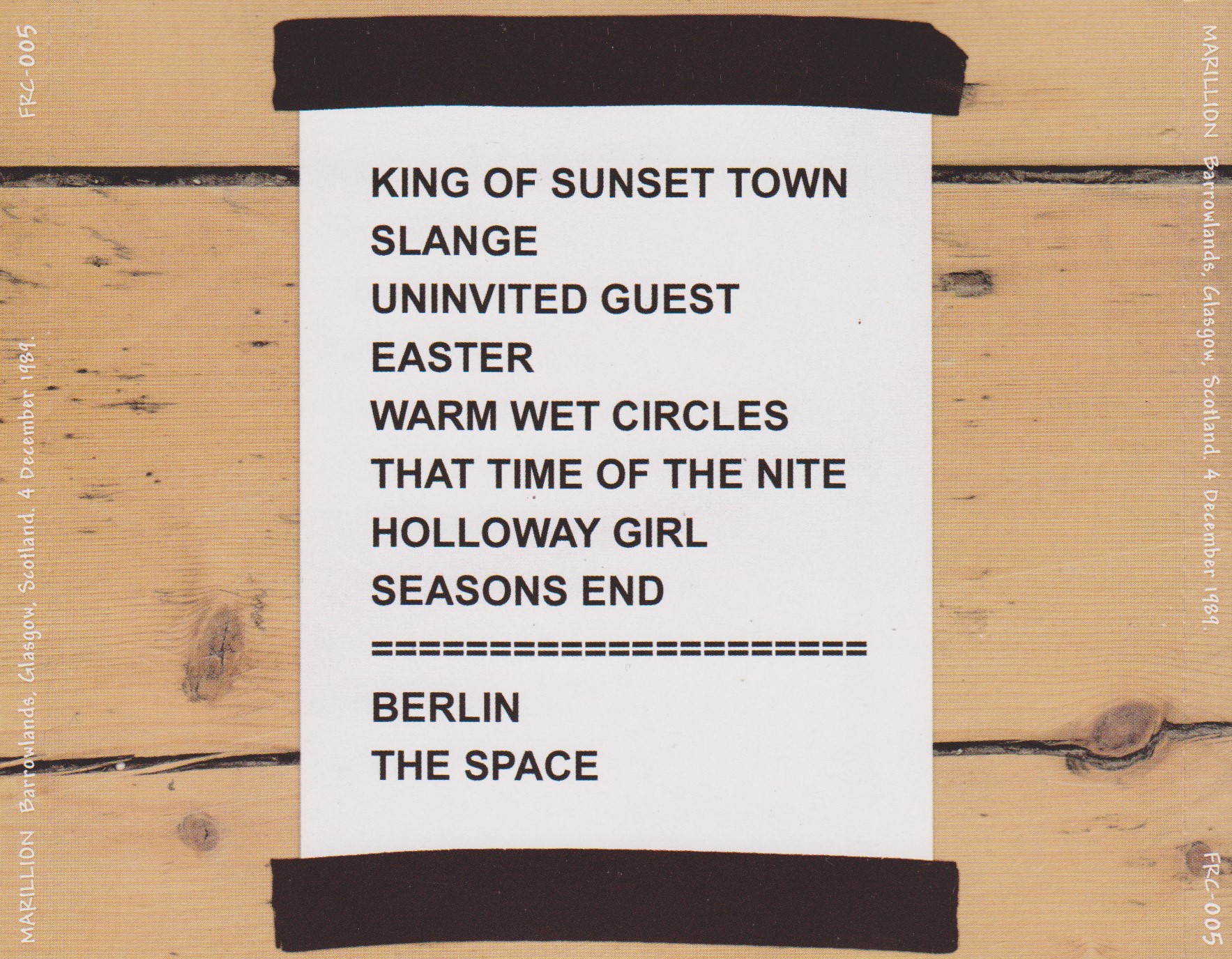
Opening with the brand new classic, “King of Sunset Town”, it sounds like Marillion had them in the palms of their hands from the first notes.  This releases was recorded from the desk onto cassette tape, and it sounds remarkably good considering!  “Sunset Town” has the instrumental adventures that fans expect, but with a passionate vocal very unlike Fish.  Singing along, the fans were already familiar with the new material.  The drums sound amazing in the Barrowlands, and Steve Rothery’s solo had the fans screaming.

There are only eight tracks from Barrowlands — apparently, somebody forgot to flip the tape as the band played.  Instead, two songs from a show in Bradford were added to the end.

“Slàinte Mhath” (or “Slange” as it is spelled phonetically on the back cover) is a beloved fan favourite. It was one of the songs that H felt more comfortable singing.  The crowd grew quiet.  This was an important song to get right.  No worries there.  “And you listen, with a tear in your eye, to their hopes and betrayals, and your only reply is slàinte mhath.”  (Cheers, good health.)  The line is greeted with a few excited screams.  While he was nothing like Fish, H managed to raise the hair on my arms.

“Good evening Glasgow!  It’s very nice to meet you.  We waited a long time for this!”  It must have been a tremendous relief for H to be accepted in Glasgow.  Two new singles follow “Slàinte”: “Uninvited Guest” and the ballad “Easter”. These are songs that remained in the setlist for tour after tour, and they do not vary much from other live takes. It is interesting to listen to these fresh versions, new to the band as they were to the crowd. “Easter” is youthful and beautiful.

Hogarth seemed drawn towards the Clutching at Straws material. “Warm Wet Circles”/”That Time of the Night” were performed for a few tours after, and Steve did them very well.  It’s a 10 minute slab of progressive rock with labyrinthine lyrics as only Fish could write.  Hogarth nailed it.

“On promenades where drunks propose to lonely arcade mannequins,
Where ceremonies pause at the jeweller’s shop display,
Feigning casual silence in strained romantic interludes,
‘Til they commit themselves to the muted journey home.”

I mean come ON!

And that’s it for old songs.  More were played that night, but the tape didn’t get them.  Too bad, because they included “Market Square Heroes”, “Incommunicado”, “Kayleigh” and lots more.  Barrowlands goes on with “Holloway Girl”, which boils with a dark intensity.  Marillion and Mark Kelly are very good at using keyboards for texture, and this is a good example.  Also dark and powerful is “Seasons End”, introduced by the Christmas carol “Oh Come Emmanuel”.  This early warning about global warming is a reminder that this is not some new theory.  We’ve known about global warming for decades.  Marillion turned that into a pretty epic quality track.

That’s it for the Barrowlands tracks.  “Berlin” and “The Space” are added to make it an even 10.  There’s a shift in sound quality as it gets a little clearer, but it’s not obtrusive.  “The Space” is a very apt way to end a CD.

Rating something like this…it’s almost “What’s the point?”  There are 43 of these bloody Front Row Club albums.  You can’t get them anymore.  You have to look at this as a good but incomplete set of some of the earliest live Marillion with Hogarth.  When we’re talking about a band with probably 100 live albums or more, it all becomes a little hard to see the forest for the trees!

3.5/5 stars?

Scan_20160615 (2)

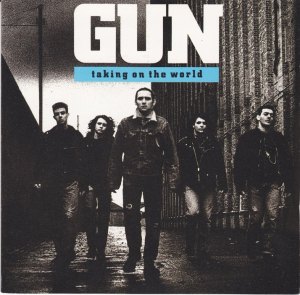
REVIEW: Gun – Taking on the World (1989)

TAKING ON THE WORLD_0002GUN – Taking on the World (1989 A&M)

Haven’t heard of Gun?  That’s OK, I hear that a lot.  You might know Gun best from their 1994 cover of Cameo’s “Word Up” which was a minor hit here on MuchMusic.

I first read about this band in 1990, and first picked up the debut CD in ’96.  I don’t actually know a lot about them except that they are Scottish and this is the first of several albums.  “Better Days” was the first single I heard.  Its bright, sparse rock wasn’t quite what was happening with the mainstream in 1989.  It’s very melodic, but in an unconventional way for hard rock bands at the time.   The vocals of Mark Rankin were unlike other rock singers on the scene at the time; he’s understated.  They also had an unusual image feature two short haired dudes and a frontman with his hair in a ponytail — you didn’t see that in 1989 unless you were INXS.  Musically too, they kind of rode a line between hard rock and 80’s alternative.  These are some of the qualities that attracted me to the band in the first place.  “Better Days” is a stand-out track, possessing a rhythmic base, a chorus that kills and a soulful vibe that helps sell it.

Second in line is “The Feeling Within” which is harder.  It still has the sparse vibe and understated vocals, but with a harder guitar riff.  It too boasts a winning chorus (reminding me of late-80’s Rush actually).  Once again I think Rankin is a highlight of the song, and he is accompanied on the chorus by Sharleen Spiteri, of Texas fame.   Then “Inside Out” takes us to an upbeat, sunshiny place.  While Gun remain undoubtedly guitar based, the guitars are not oppressive like most hard rock, and the song has plenty of room to the breathe.  It’s another standout song.

The first song that I dislike is “Money (Everybody Loves Her)”.  It has a vibe similar to “Way Cool, Jr.” by Ratt, but without any balls.  I’ll pass on this one.  Fortunately the best song is next: the title track “Taking on the World”.  Quiet acoustics back Rankin’s laid-back voice.  Outstanding melody and song construction here!  It gradually picks up steam, electric guitars slowly drawing in.  The bass provides a steady pulse  as the song builds.  It closes side one on a strong note.

“Shame on You”, side two’s opener, is similarly constructed upon the pulse of the rhythm section.  It has a drone-y but catchy riff, not to mention chorus.  Darker tones shade “Can’t Get Any Lower”, still a good song, but lacking the punch of a memorable chorus.  Unfortunately the title “Something to Believe In” is well overused, and this isn’t really a great song.  It’s probably the weakest so far, though it does have some great vocal moments.  But then there’s the funky “Girls in Love” which I have a strong dislike for.  At least it’s the shortest song, but this sounds like a bad Bootsauce song or something.  After a couple tunes like these, you need a strong album closer.  Gun fail to deliver with “I Will Be Waiting”.  It’s too laid back.  It would have been better elsewhere on the disc, but it’s not that strong.

In summation, Taking on the World has a pretty damn good first side, but takes a hard slide on the second.  Too bad.  There’s enough goodness here to warrant:

3/5 stars

MOVIE REVIEW: Incident at Loch Ness (2004)

“I’ve always been interested in the difference between fact and truth, and I would call it the ecstatic truth.” — Werner Herzog


INCIDENT AT LOCH NESS (2004 20th Century Fox)

Directed by Zak Penn, written and produced by Zak Penn and Werner Herzog

Joe has a knack for recommending movies that I end up liking.  We have a very similar sense of humour, we both find amusement in the absurd.  Joe got me to buy Werner Herzog’s Grizzly Man as well as Incident at Loch Ness, both from his bargain bin at the price of $5.99 each.  While Incident at Loch Ness has all the appearances of a Herzog film, it’s actually a documentary within a documentary within a mockumentary directed by Zak Penn (The Grand).   Incident At Loch Ness is a wry, smart rib-tickler that many just won’t get.  But I do, and I have watched it a couple dozen times over the years.

Here’s the setup: A camera crew is filming a documentary on noted filmmaker Werner Herzog called Herzog in Wonderland. At the same time, Herzog is embarking on own documentary film called Enigma of Loch Ness.   He will be shooting on location on the loch itself, and he plans to investigate the mythos surrounding it. Herzog is more interested in why people want to believe in monsters, rather than the monster itself. His producer, Zak Penn (Penn, as himself) has different ideas, and will resort to unethical trickery in order to get the blockbuster film he envisions.  The pair travel to Scotland with a film crew, but Herzog is unaware of Penn’s duplicity.

Penn hires a sexy sonar operator (Kitana Baker, as herself) with no sonar experience, and a strange cryptozologist (Michael Karnow, as himself) for comedic relief. Penn makes absurd demands of the crew, such as having the engines on the boat replaced by significantly weaker ones in order to get better sound coverage.  Through the chaos, Herzog just wants to make his movie, but the project is doomed to fail.

Incident At Loch Ness doesn’t try to be profound. Herzog (the character) never finds out just why people want to believe in a modern dinosaur. Herzog (the actor) plays it straight while Penn and Karnow play it for laughs.  The style is largely improvised, and I would rate Incident at Loch Ness equal to some of the better Christopher Guest films.

I also loved the DVD bonus features, which shed a little light (but not too much) on the making of the film. There is a comedic audio commentary track with Zak Penn that takes the gag even further as well, before cutting out abruptly mid-movie. Incident at Loch Ness is a low budget classic that I hope will appeal to those who are sick and tired and the same old comedies. It will especially appeal to fans of Herzog.  As the straight man, he’s absolutely perfect.

5/5  stars

Werner Herzog … Himself/Writer/Producer
Kitana Baker … Herself
Gabriel Beristain … Himself
Russell Williams II … Himself
David A. Davidson … Himself
Michael Karnow … Himself
Robert O’Meara … Himself
Zak Penn … Himself/Writer/Producer/Director
Steven Gardner … Himself

NSS