EPIC REVIEW TIME. Image heavy! Step inside, walk this way.


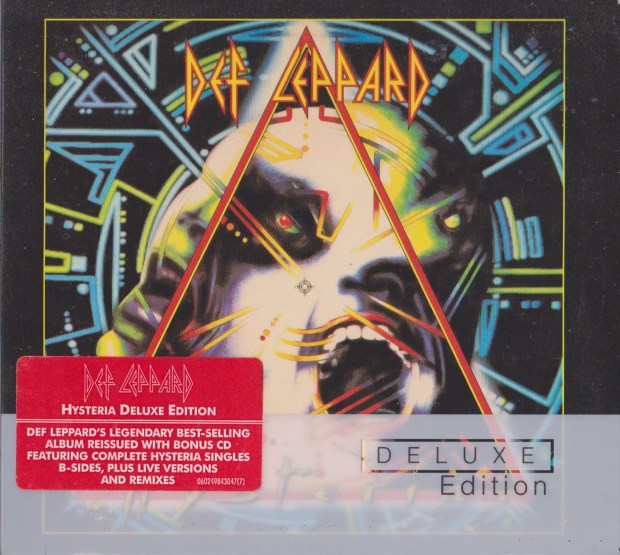
DEF LEPPARD – Hysteria (1987, 2006 Mercury deluxe edition)
25 million copies sold. Seven hit singles. A two year world tour. All done under the most difficult circumstances. Def Leppard’s Hysteria is one of rock’s greatest triumphs.
Although the album was released in 1987, the Hysteria story really begins on December 31, 1984. Drummer Rick Allen lost control of his speeding Corvette, and was thrown from the vehicle due to improper use of seatbelts. His left arm was severed. Doctors attempted to re-attach the arm, but infection set in and it could not be saved. It would be understandable if people thought Rick’s career in music was finished. While many artists from Django Reinhardt to Tony Iommi had dealt with physical disabilities, nobody had ever seen a one-armed rock drummer before.
Undaunted, Allen began working on a way around his disability. The band never considered a future without him, and were disappointed by “ambulance chasers” looking for a gig. Rick Allen wasn’t about to allow himself to go down or dwell in his misery. With an electronic kit triggered by his feet and right hand, Allen eventually regained his ability to not only play drums, but play live. This resulted in an inevitable stylistic change. Allen’s drumming style became more staggered, with emphasis on bigger, spaced out snare hits. His electronic kit was no crutch: singer Joe Elliott said he could play it “and make it really sound terrible”.
The next album was supposed to be a big deal. It was Phil Collen’s first Def Leppard LP as a writer, and Rick’s chance to prove he wasn’t out. Unfortunately, when the band started to record, producer Robert John “Mutt” Lange was not available. Instead the band began to work with Jim Steinman (Meat Loaf), but were underwhelmed by the results they were getting. Leppard’s ambition was not just to make another album, but to make something seriously good, memorable and special. Something with the potential to be as big as Pyromania was. Steinman was let go and the band started working with Nigel Green with no progress being made.
The band were taking so long, and suffered so many setbacks and delays, that eventually Mutt Lange was available again, and together they finally began work on the new Def Leppard LP. Co-writing every song with the band, Mutt provided the focus and intense discipline. The stated goal, following the template of Michael Jackson’s Thriller, was to make an album with 12 potential singles.
The long story of this difficult album (false starts, illnesses, studio problems) is only overshadowed by its success. But it took a while to get there.
The first single “Women” did well enough, but failed to kickstart the mega album sales needed to recoup the losses. “Women” was an odd choice for a first single: a slow robotic rock track, with a killer comic book-based music video. It was incredible just to see how Rick Allen played drums with his new setup. Apparently, video directors asked how they should shoot Rick? The band answered “Just the same as you would any other drummer.” It was simple as that.
“Women” introduced the new Def Leppard groove. A simple one or two note bass line, layers upon layers of vocals and chiming guitars, but none of the full-speed-ahead New Wave of British Heavy Metal that Leppard were founded on. The year was 1987 and Def Leppard were on the cutting edge. To get those chiming bell-like chords, Mutt had them recorded one note at a time! This is very apparent on “Animal”, the second single. It too was mildly successful, but not enough to push the album into orbit. Listen to the guitar chords and you will hear something that sounds more like chimes than strings. This is down to the incredibly detailed and overdubbed recordings. “Animal” was a stellar pop rock track, and a fine example of what Hysteria sounds like.
Refusing to give up, a third single was dropped: the ballad title track “Hysteria” and possibly the finest song on the album. The fact that these singles were not the hits the band hoped for at the time has not diminished them. Today they are all concert classics, radio staples, and beloved fan favourites. Leppard even re-recorded the song in 2013 for release on iTunes. (While the re-recorded version is impressive, it is impossible to exactly recreate the magic on this album.)
Finally, the success that the band and record label were waiting for happened. The track was “Pour Some Sugar On Me” and the North American version of its music video showcased the band’s stunning live show. Def Leppard were playing “in the round” to rave reviews. “Pour Some Sugar”, a retro glam rock tune with a contemporary sound, was a summer smash hit. It was cool, it was catchy, and Joe’s verses almost sounded like rap, although really they had more in common with Marc Bolan of T-Rex.
On a roll, nothing would stop Def Leppard now. Though the goal was an album with 12 potential singles, Hysteria eventually yielded seven. Most rock bands were lucky to squeeze three out of a hit album. Though the album was now becoming a bonafide hit, some critics and fans lamented the death of the original Def Leppard. Others embraced their pop success. The raw edgy guitars were gone and replaced by bright, precise parts working as a whole, in a gigantic pop rock juggernaut. Joe wasn’t screaming out every line, but actually singing now. It hardly matters. With the success of Hysteria, Def Leppard had embarked on a whole new journey and have rarely looked back to their origins.
The singles carried on, through the rest of 1988 and into 1989. “Love Bites” was fifth up, which originated as a country ballad that Mutt wrote and the band Leppardized into something different. It was a hit for the autumn of ’88, a slightly dark ballad for the fall. The victorious glam rock of “Armageddon It” was next, simple and pleasant enough for radio and video, and another huge hit. These were songs that had pep, but wouldn’t frighten mom and dad.
The seventh and final single was a surprise choice: “Rocket”. On album, “Rocket” was 6:37 long, and featured a long experimental middle section. The ambitious mid-section featured loads of NASA samples and sound effects, all backed by the African inspired drum loops of Rick Allen. The song was based a drum beat by Burundi Black, brought in by Joe Elliott, played by Rick Allen and looped. Eventually lyrics were added, inspired by the glitter groups of the 70’s that Leppard grew up with. Lange also used backwards vocals for some of the hooks. The line that opens the track and repeats through the song is the chorus from “Gods of War”, backwards: “Raw fo sdog eht rof gnithgif er’ew.” It was a sharp track to be used as a single, but that unforgettable beat was beyond question. It was remixed and brought down to 4:25 for the single release.
It is unfortunate that Mercury stopped at seven singles, because they could have released at least nine. Many fans had counted on a “Gods of War” release, certainly before “Rocket”. “Gods of War” had become a fan favourite for those who bought the album, and it could have been used as a “serious” themed single towards the end of the album’s life. Dark in tone but more epic in quality, it really could have been a valiant single. It has since become heavily associated with late guitarist Steven Maynard Clark, who was responsible for much of its guitar thunder.
The final track that shoulda woulda coulda been released as a single was the album closer, “Love and Affection”. As good as any of the actual singles, “Love and Affection” had its own charm and hit potential. It’s long been one of my album favourites, just under “Hysteria” and “Gods of War”.
Rounding out the LP are “Run Riot” and “Don’t Shoot Shotgun”, two rock tracks that help keep the album afloat. Neither are clearly as brilliant as the hits, but both solidly get the job done with guitar thrills. Finally there is “Excitable”, the only song I’ve never particularly dug. It strikes me as gimmicky and very 80’s, much like “Social Disease” by Bon Jovi. Too reliant on sound effects and gimmicks. So out of 12 tracks, only one was really a dud. That’s not bad by any measure.
So Hysteria rode the charts, recouped its costs, and then some. The tour in the round was legendary and resulted in a live video In the Round: In Your Face. Def Leppard were, for a short while anyway, the biggest rock band in the world.
Obviously, Def Leppard have continued to suffer ups and downs since Hysteria. Steve Clark died. Rick Savage has Bell’s Palsy. Vivian Campbell fought cancer. Yet they have continued to soldier on, never topping Hysteria of course, leaving it as the magnum opus that it is.

The album inspired a book and a movie. An album of Hysteria’s stature deserves a killer deluxe edition too. This one is nearly perfect.
As discussed in greater detail in Record Store Tales Part 4: A Word About B-Sides, this album and its singles really clicked with the collector in me. Def Leppard prepared a number of B-sides for Hysteria, and perhaps because these were not produced with Mutt, they all have a harder edge. “Tear It Down” was a speedy but basic rock track considered good enough to include on the next album, and so it was. The B-side version remains its superior, because it is tougher than the one on Adrenalize. “Ring of Fire” was even heavier, clearly too heavy for what Hysteria became. Along the same lines is “Ride into the Sun”, an old track from Leppard’s first EP, re-recorded here and in fine form. “Ride into the Sun” is a stellar track and perhaps should have received some acclaim. Even though the song has been remixed and reissued on other things, it remains a rarely heard gem. Yet the most impressive B-side was probably “I Wanna Be Your Hero”. This B-side from the “Animal” EP has the Hysteria vibe and sound. It easily could have replaced “Excitable” as an LP track, but if it had perhaps Hysteria wouldn’t have sounded as diverse. Dig that false ending!
This deluxe edition includes all the live B-sides and almost all the bonus tracks associated with singles for the album, and then some. “Women” is a live classic from the home video. Anyone who has seen it will remember this version and Joe’s intro. “We got everything we need! We got the band, the crowd, the lights, the cameras, the action! There’s only one thing that we ain’t got…” Women! (I doubt that, Joe!) “Elected”, the live Alice Cooper cover, was recorded during this period but released in 1993 on the “Heaven Is” single.
From the same gig as “Elected” came a lively cut of “Love and Affection”, which was also utilised as the album’s Japanese bonus track. It’s very rare to hear this song done live, and definitely rare to hear a great vintage version done live. Then there’s a so-so “Billy’s Got a Gun” (same gig again), and a fascinating “Rock of Ages” medley. This medley seamlessly captures some bits of classic rock tunes within itself: “Not Fade Away” (Buddy Holly), “My Generation” (The Who), “Radar Love” (Golden Earring), “Come Together” (The Beatles) and “Whole Lotta Love” (Zeppelin). This is all done to the tempo and style of “Rock of Ages”, and quite well, too. When this was originally released on the “Rocket” single, there was no mention of the medley part. It was a total surprise when Leppard broke into these other songs, some of which I’d never heard before.
Leppard released a few remixes during this period too. Extended versions of “Animal”, “Pour Some Sugar”, “Armageddon It”, “Rocket” and even “Excitable” all come from 12” singles. What’s missing is the single edit of the “Rocket”, the short version of the “lunar mix” . The single mix of “Pour Some Sugar” is also missing, but that track is on so many albums including the five-million-selling Vault, so we’re not going to worry about it. These extended remixes are, not surprisingly, pretty much for the fans and collectors.


Finally, and most importantly, is the last B-side “Release Me”. This track was initially released on the “Armageddon It” picture disc single, but not credited to Def Leppard. Much like their later acoustic B-sides credited to the Acoustic Hippies from Hell, “Release Me” is credited to Stumpus Maximus and the Good Ol’ Boys. Engelbert Humperdinck is responsible for the most famous version of “Release Me”, but Stumpus Maximus is definitely responsible for the most twisted. Featuring Def Leppard’s roadie Malvin Mortimer on lead vocals and the rest of the band goofing around, “Release Me” is a hoot. Mortimer breaks all known sound barriers with his screaming (and burping) of the lyrics. I was absolutely confused beyond belief upon hearing this for the first time, since I didn’t catch on to this actually being Def Leppard in disguise. They absolutely fooled me; I thought whoever they were, Stumpus Maximus and the Good Ol’ Boys absolutely sucked! For the time it was a novelty release, but it’s now a wonderful tongue in cheek finale to this great deluxe edition.
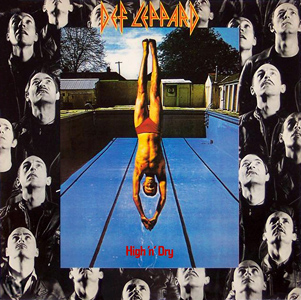
Some, including renowned rock journalist Martin Popoff, have dismissed Hysteria as lifeless and dismally underwhelming sell-out pop. Keeping in mind where they came from (High ‘n’ Dry, Pyromania) there is no question that Hysteria was a clear and intentional turn towards the mainstream. Where Def Leppard rose above a simple pop foray is in the detail and care given to the recordings. With Mutt Lange keeping his eye on the goalposts, he drove Leppard not to make an album without a soul, but one that offered flawlessly assembled guitar based songs. The passion and heart can still be heard; they are not buried. It’s a unique combination of studio sterility with Leppard’s brand of glam rock, and nobody (not even Leppard) have been able to duplicate the magic of Hysteria.
You might not “need” the full-on deluxe edition, but considering the quality of the B-sides and live material, you’d be positively missing out.
5/5 stars


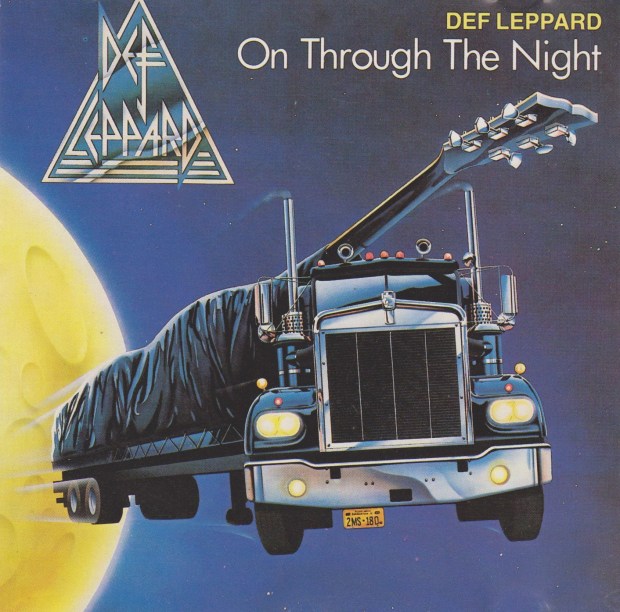
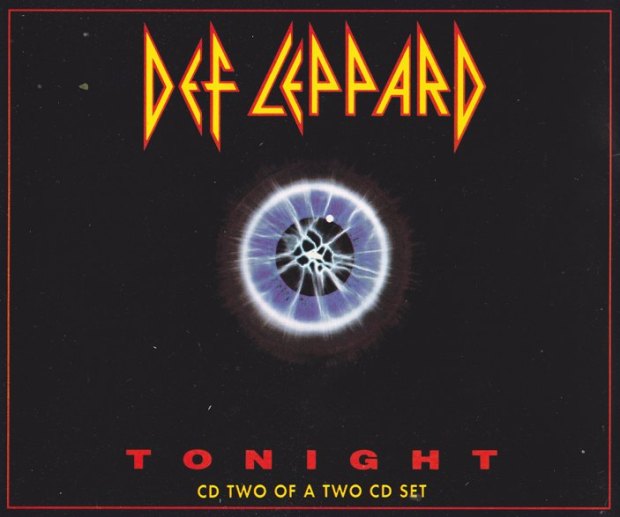
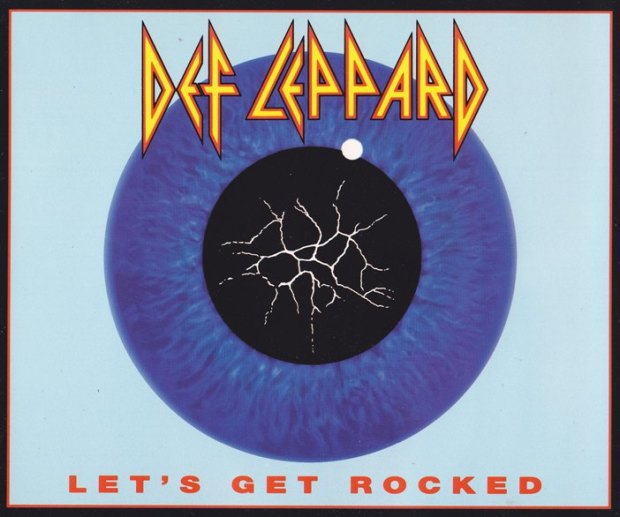
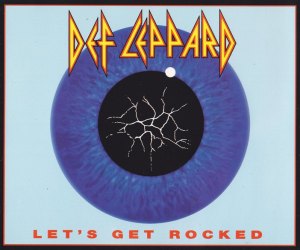
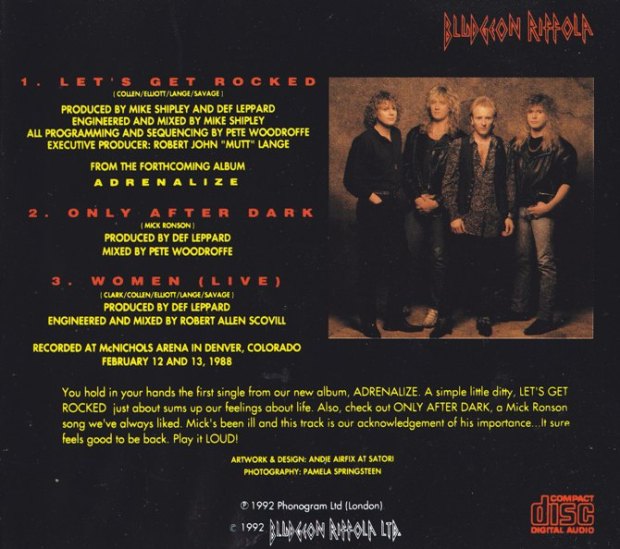
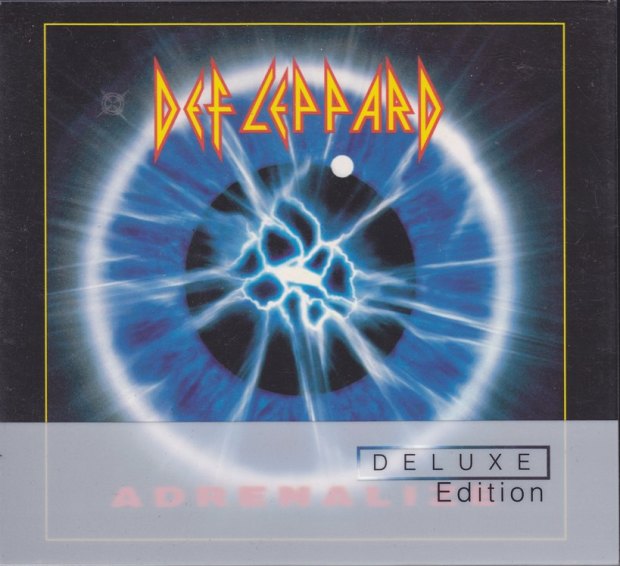
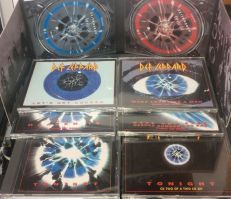
Gallery of single covers












 My favourite feature of this DVD is actually in the bonus material. It’s the chapter that covers the first shows that Leppard played after Rick Allen’s accident. Originally, Jeff Rich from Status Quo was tapped to play a second drum kit alongside Allen on stage, just in case Allen got tired, slipped out of time, or couldn’t finish the show. There were so many variables that nobody knew what would happen during what really amounted to Allen’s comeback shows. Well, for one show in the middle of nowhere, Jeff Rich was late. If he had turned up on time, maybe Rick Allen would never have found out that he could play a full Def Leppard show on his own. Allen did the show with no help on the drums, and he nailed it. Rich told Allen that he didn’t need any more help, and that was it! Jeff Rich is there to talk about that day, which was a nice touch.


 mikeladano.com