wolf hoffmann

REVIEW: Accept – Blind Rage (2014 Japanese import)

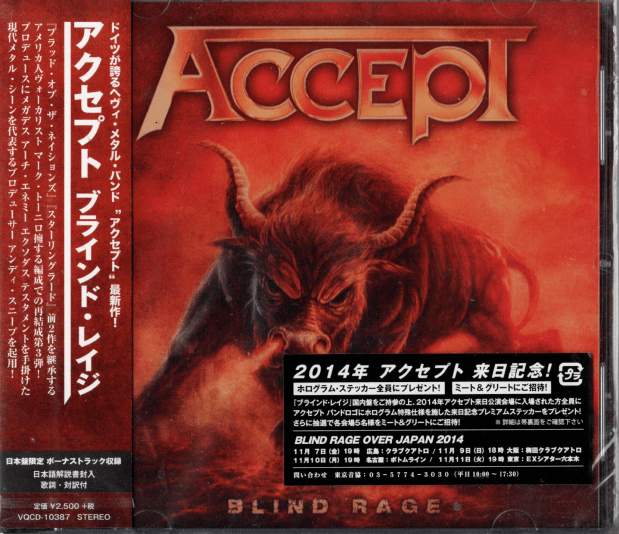
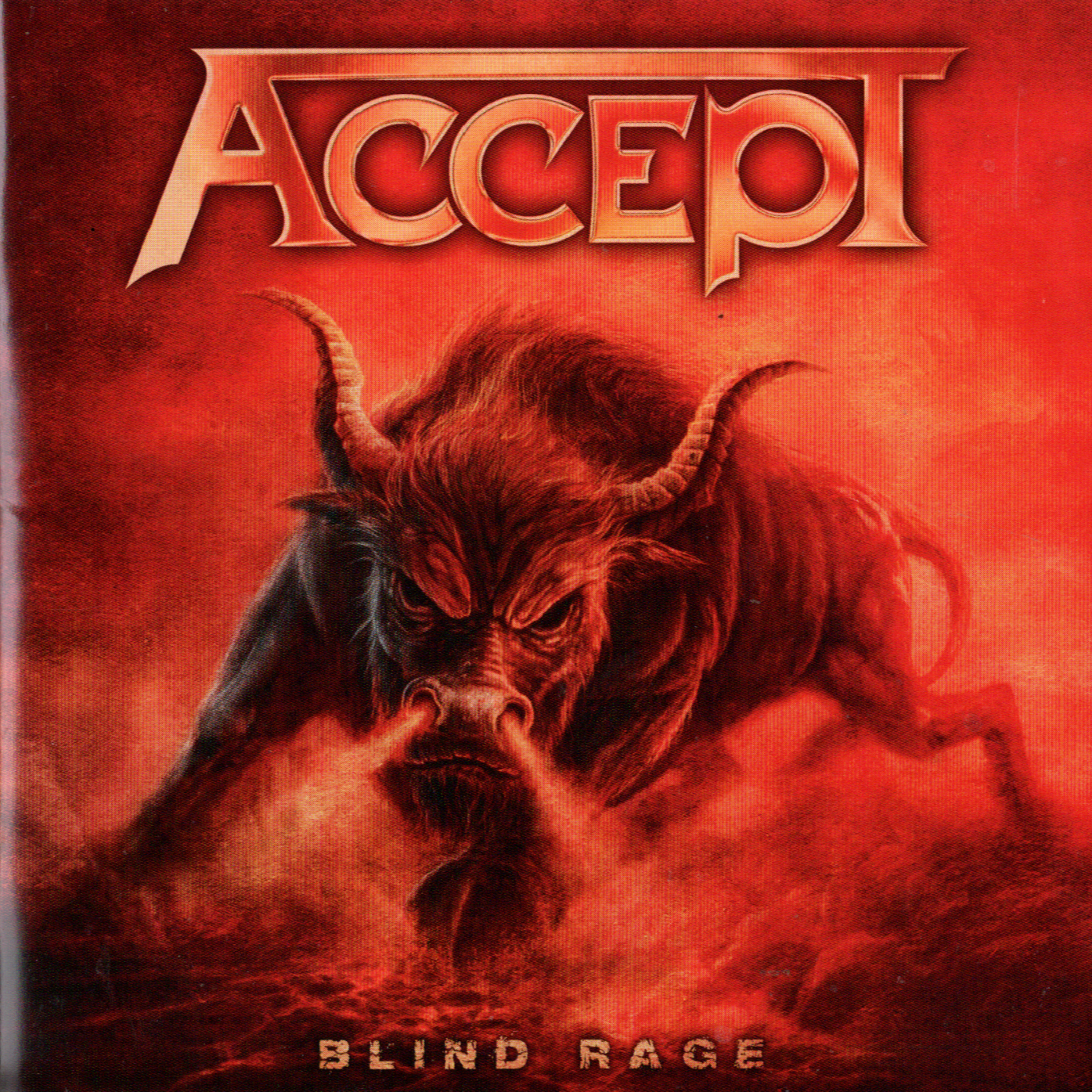
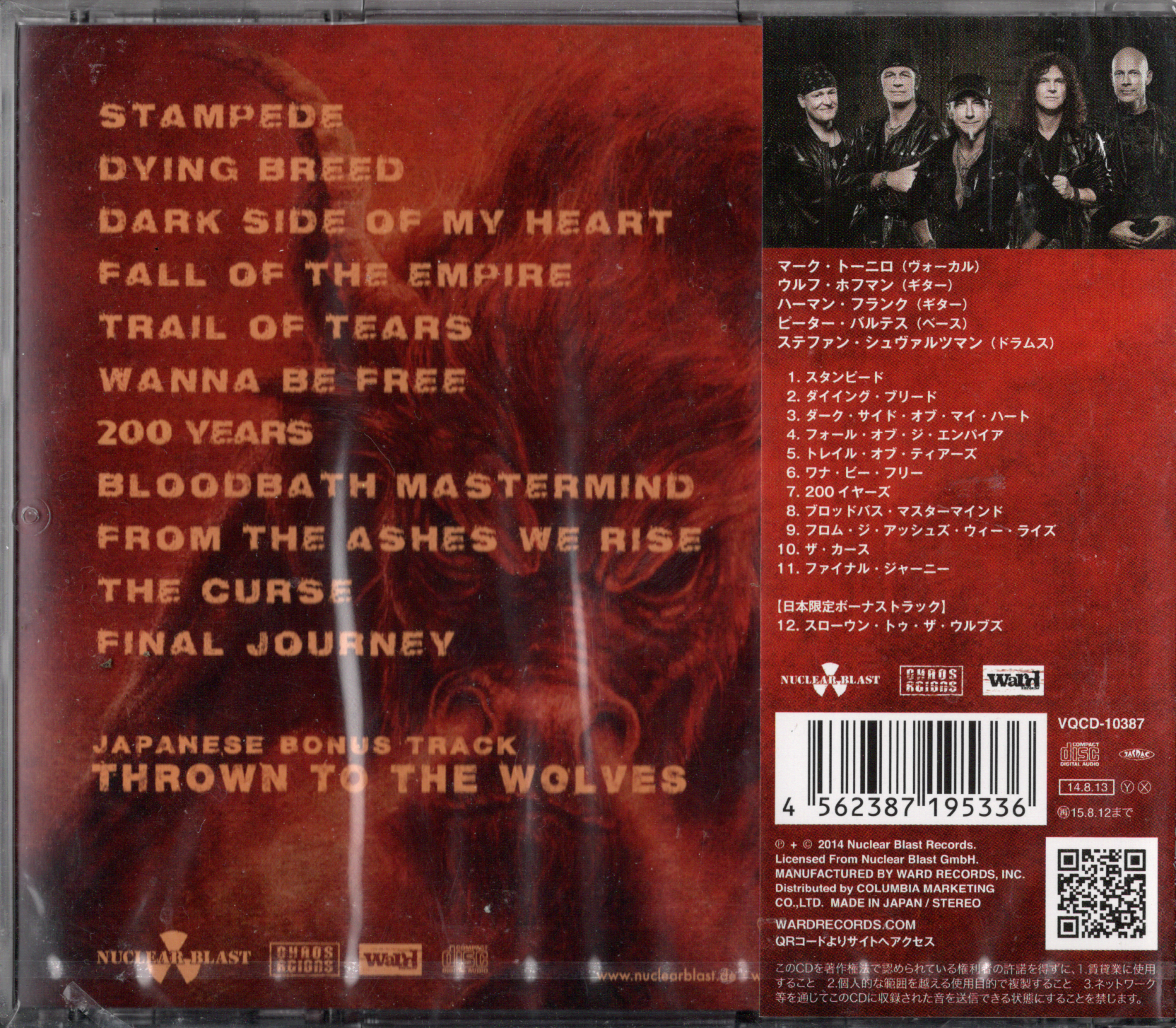
ACCEPT – Blind Rage (2014 Nuclear Blast / Japanese bonus track)

Accept finally proved they didn’t need Udo Dirkschneider with Mark Tornillo.  He has had a steady run of reliable albums that continues to this day.  2014’s Blind Rage was his third with the German metal legends.  Blood of the Nations and Stalingrad are hard to beat, and Blind Rage comes in third.

The album debuted at number one on the German albums chart.  It Accept’s last album with guitarist Herman Frank and drummer Stefan Schwarzmann, and produced generically by Andy Sneap.  Sneap gets a great sound, but as we’ll see, there’s too much formula and same-sameyness to the songs as the album goes on.  Fortunately, the album gets off to a good start.

“Stampede” is a quintessential opener!  Breakneck speed, but with melodic harmonies on guitar.  Wolf Hoffman certainly knows how to write riffs and guitar melodies.  Mark Tornillo is in great voice, growling low before hitting you with those screams, punctuated sparingly.  A tad generic with that shouted “Stampede!,” chorus but the screams and the tempo make it worthwhile.

The lyrics on “Dying Breed” are cringe worthy, I’m so sorry to say.  Some sample lines so you get the idea:

  • “Long ago a sabbath black cut through the purple haze.”
  • “Screaming with a vengeance that we will forever hear.”
  • “The zeppelin led it’s voyage thru skies of purple deep.”
  • “And in a land down under highway to hell was paved.”
  • “An iron fist cut the deck and drew the ace of spades.”

I am on record as disliking these kinds of references within lyrics.  Fortunately, Mark sings it with conviction, and the song itself is pretty awesome.  Guitar melodies are very much like a national anthem.  There’s another shouted chorus, “We’re the last of a dying breed!” but let’s hope metal doesn’t die prematurely.  Wolf throws in some classical-influenced guitar thrills to compensate.
The best song on the album is the desperation-drenched “Dark Side of My Heart”  Melancholy metal with a stunning chorus.  You can’t help but sing along, and all this is augmented by stunning guitar melodies by Wolf.  Accept always keep things moving, but it’s so much better when it’s melodic, and this is the most melodic song on the album.

The first slow song on the record is track #4, “Fall of the Empire”.  It takes a little longer to sink in, but the chorus is melodic enough.  However, Accept’s penchant for those low pitched gang choruses is already starting to wear.  Wolf’s solo here is really different, with a nice dry tube-y tone and some really unusual melodic choices.

Crank up the afterburners for “Trail of Tears”, a song about the trials of the Native American.  “Who are the savages now?” asks Tornillo.  The drums by Schwarzmann are phenomenal.  Another high speed blur of modern metal, and one that sticks in the brain afterwards.  Classical influences can still be heard in Wolf’s melodies.

Guitar harmonies take center stage for “Wanna Be Free”.  Slower, more deliberate, dark and with a message.  “No more crime and poverty,” “No more human trafficking”.  Fairly simple, but that’s often the goal of these kinds of songs.  Keep it positive, and not political.  Though the guitars are always enticing, this might be the first one you feel like skipping.

Nuclear war is always a hot topic for metal bands, ever since Black Sabbath popularized it in the 1970s.  In “200 Years”, nuclear war has devastated the planet to population zero:  “200 years after mankind”.  We’re back to the stone age just as prophesied.  “I do not know with what weapons World War III will be fought, but World War IV will be fought with sticks and stones.”  That’s a quote often attributed to Albert Einstein.  Great topic, great song, with a neat little exotic interlude by Wolf in the middle before the solo.

Skipworthy “Bloodbath Mastermind” is just generic metal.  Yes, it bangs, but there are no exceptional hooks.  Pass.
Ear fatigue setting in, “From the Ashes We Rise” repeats the grooves that are becoming monotonous.  We realize now that the Japanese 12 song track listing is just too long.  This album should have been a simple, traditional 10 songs.  Having said that, at least “From the Ashes We Rise” has melody, while “Bloodbath Mastermind” did not. Ultimately it sounds like a knockoff of another song on the album.  A good knockoff, at least.

Back to quality, “The Curse” is a little more unique, and focused once again on melody.  It’s a little somber, which is a nice change of pace after so much defiant headbanging.  Some memorable hooks; different from the rest of the album.  A highlight.

The closing track on the standard album is the Priest-like “Final Journey”, the guitar solo of which creatively features a very recognizable melody lifted from Grieg’s “Morning Mood”.  Good closer, lots of building tension in the guitars.

The Japanese closer is “Thrown to the Wolves” which is fine, just like many of the album tracks, though like many of them, plagued with generic riffing and melodies.  Catchy enough, just…not unique enough.

Blind Rage is a solid album, but Accept’s repeated use of certain elements such as those low-pitched choruses makes some songs really hard to remember and differentiate.  Of the 12 songs, there are probably 10 keepers.  It’s not a bad album by any means, but the formula is starting to set in and it takes many listens to really separate the songs in your mind.  A little editing would have been wise.

3.5/5 stars


My Music Corner: Up to the Limit Episode 14 – Accept: Blind Rage (2014)

NOTE: My text review of Blind Rage by Accept will go up in the coming days.

Johnny Metal and John the Music Nut have been breaking down, in detail, every Accept studio album.  I jumped on board with Blind Rage, the third album with Mark Tornillo.  I chose this album since I had the Japanese import and I wanted the two Johns to have a chance to cover a rare bonus track on their show.

In this episode, we break down the album track by track, with a high level of agreement between us.  The Music Nut then goes through the tour in detail, discussing all the songs that were played live, and how often.  Some are still played live today.

If you want a sneak preview into my Blind Rage review, watch this episode, as I tried something new here:  reading my review aloud (not easy).  I may have even done some singing.

Check out the show, and look for my text review in a few days.

REVIEW: Accept – Symphonic Terror – Live at Wacken 2017 (2018)

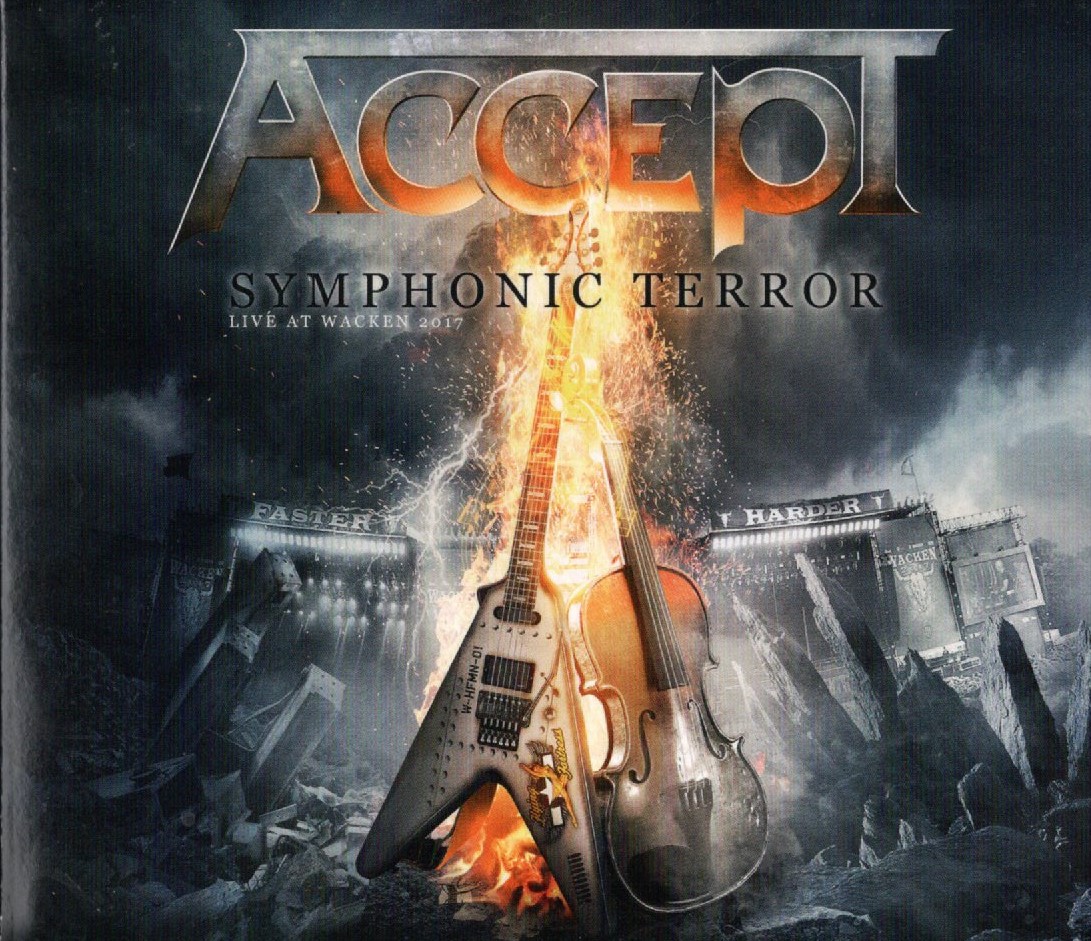
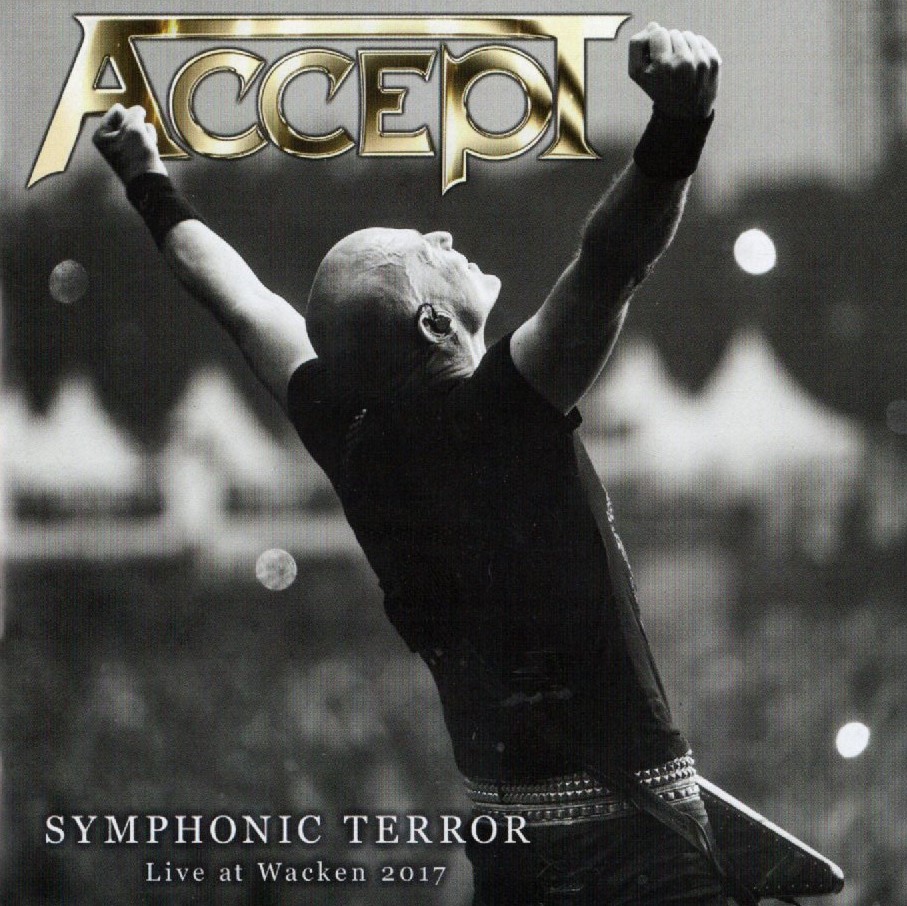
ACCEPT – Symphonic Terror – Live at Wacken 2017 (2018 Nuclear Blast)

They weren’t the first, but they did it with their own twist.  It was inevitable that even a band with the heavy metal roots of Accept would eventually go symphonic.  Guitarist/leader Wolf Hoffman released his first classical album in the 90s, and in 2016 made the Headbanger’s Symphony record, adapting classical pieces to metal with Czech National Symphony Orchestra.  Accept’s Symphonic Terror combines their own metal masterpieces with the classical/metal hybrid Headbanger’s Symphony at Wacken 2017, to create a unique musical experience.

Like Kiss with their symphonic detour, Accept chose to break the set into sections.  The first consists of five Accept songs, mostly new, performed straight by the band with no extras.

“Die by the Sword” was the logical opener, also being the starting track on Accept’s newest album The Rise of Chaos.  The biting riff storms the Wacken stage.  It is vocalist Mark Tornillo who proves his worth over and over again through the entire show.  With voice set to full-grit he delivers all the power and melody that Accept’s material demands.  Not an easy gig.  Second, it’s the riffy “Restless and Wild” from Accept’s 1982 album of the same name (an album that they return to more than once on this night).  It’s singing the old Udo material that people will judge Tornillo by, and he does the job.  By necessity, it’s done with his own twist.  Another sharp Rise of Chaos standout, “Koolaid” is rolled out to great effect.  They dig back to the first album with Mark for “Pandemic”, riding the Peter Baltes bass groove to heavy effect.  Finally it’s the speed metal of “Final Journey” from the Blind Rage album.  Not the finest song of the set, but a banger indeed.

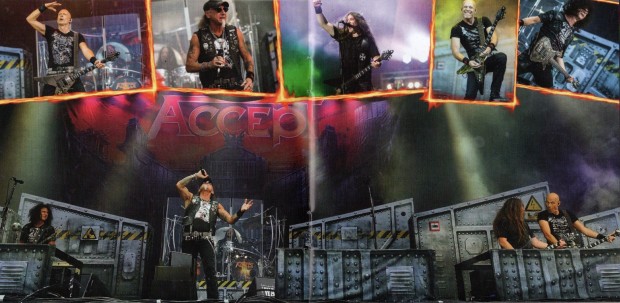
The Headbanger’s Symphony featuring the Czech National Symphony Orchestra has a different set of musicians in the front.  Wolf Hoffman and drummer Christopher Williams remain, while Mark Tornillo, Peter Baltes and Uwe Lulis are replaced by keyboardist Melo Mafali, guitarist Phillip Shouse and bassist Daniel Silvestri.  With the full might of the orchestra behind them, they take on  the tempests of “Night on Bald Mountain” (Mussorgsky). It’s not a pure adaptation, but more a thrash metal version with an orchestra.  “Scherzo” (Beethoven’s Ninth Symphony) is fully enjoyable and a better melding of the two styles.  Moving on to Prokofiev, “Romeo and Juliet” is slow and plodding.  Even with a burning hot Hoffman solo, it’s the least interesting.  I don’t think Beethoven envisioned the heavy riffing of “Pathétique” but you never know.  Did Beethoven invent speed metal?  Judging by this, he might have.  Vivaldi is next, the metal shredder’s favourite.  “Double Cello Concerto In G Minor” is less familiar but continues to combine the heavy and delicate music with an emphasis on the heavy.  Mozart closes the Headbanger’s Symphony set with “Symphony No. 40 In G Minor”, a familiar favourite made heavy enough to sound eerily similar to Queensryche’s “The Needle Lies”.

The orchestra stays on stage for the remainder of the show, peppered with new and old Accept classics.  Accept’s music works well with the orchestra behind, arguably better than Metallica’s does.

Back to 1982 and “Princess of the Dawn”, an awesomely enhanced Udo-era metal classic.  However it is “Stalingrad” that is the show stealer, a song clearly suited to the orchestral treatment.  It sounds as if the string section is charging into battle with the band.  Blind Rage‘s “Dark Side of My Heart” comes to life in this new form, a superior track to the original.  The punchy horns, the silky strings — everything comes together to raise the track to a higher level.

Back to 1981, the classical musicians may have had a difficult time keeping up with the speed metal of “Breaker”!  They get a “break” on the more deliberate pace of “Shadow Soldiers”, an excellent tune adapted well to the orchestra.  Another album highlight.  “Dying Breed” is a heavy track from Blind Rage, a little same-same sounding to other tracks like “Stalingrad”.

“Fast as a Shark” is the last of the speed metal tunes that the symphony has to try and keep up with.  They sure sound wonderful together on the neoclassical guitar solo section.  “Metal Heart” (with classical interlude) and “Teutonic Terror” both work well enhanced, but “Balls to the Wall” is surprising.  It’s always been a bit silly, but it sounds great with an orchestra.  Too bad Mark couldn’t nail that “sign of victory” part, but the absurdity of “Balls to the Wall” with a symphony is not lost.

Symphonic Terror was the second live album with Mark Tornillo on vocals.  Only about half overlaps with the previous one, and when you consider the differences offered by the symphony, not much overlap at all.

4/5 stars

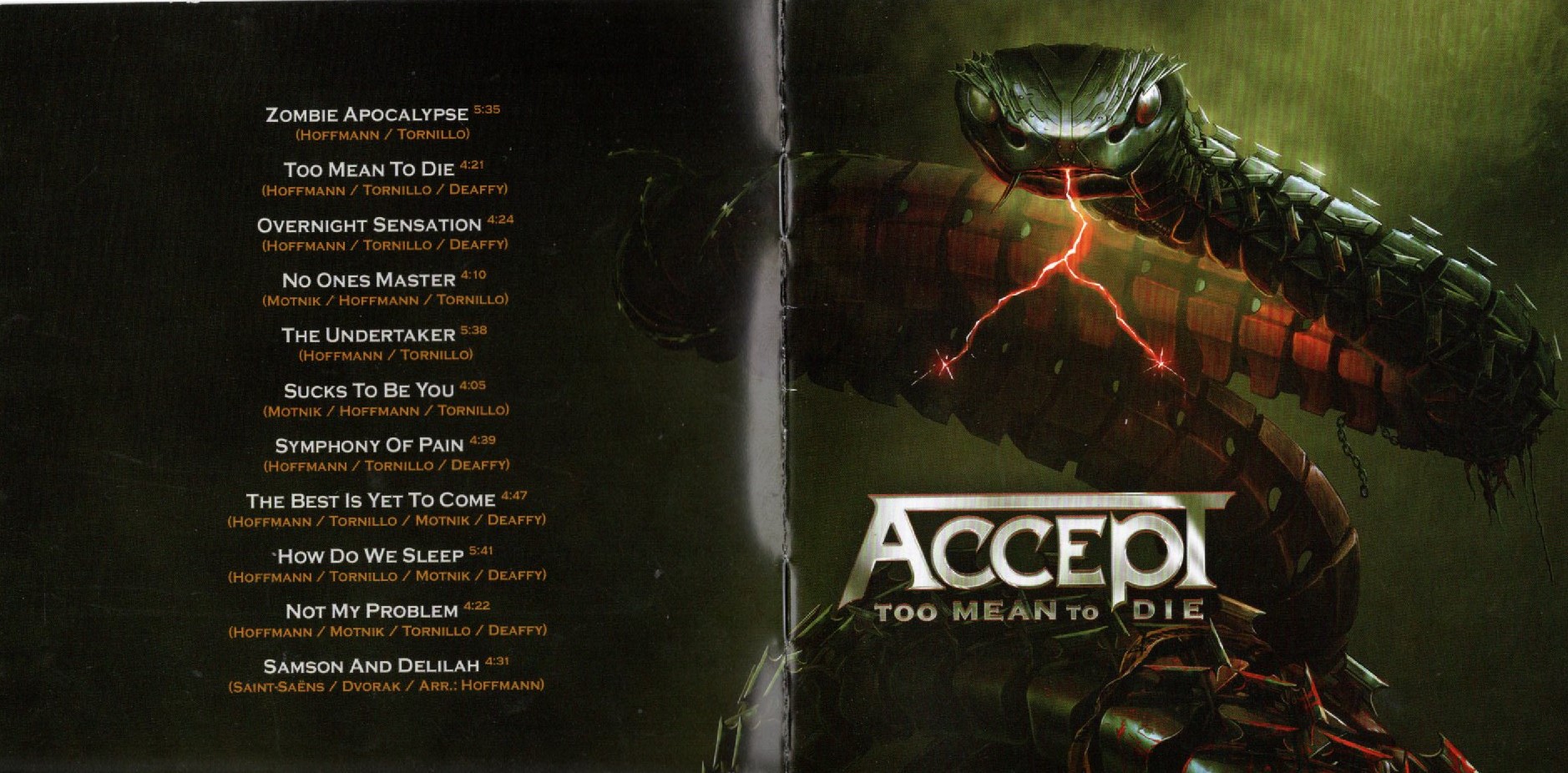
REVIEW: Accept – Too Mean to Die (2021)

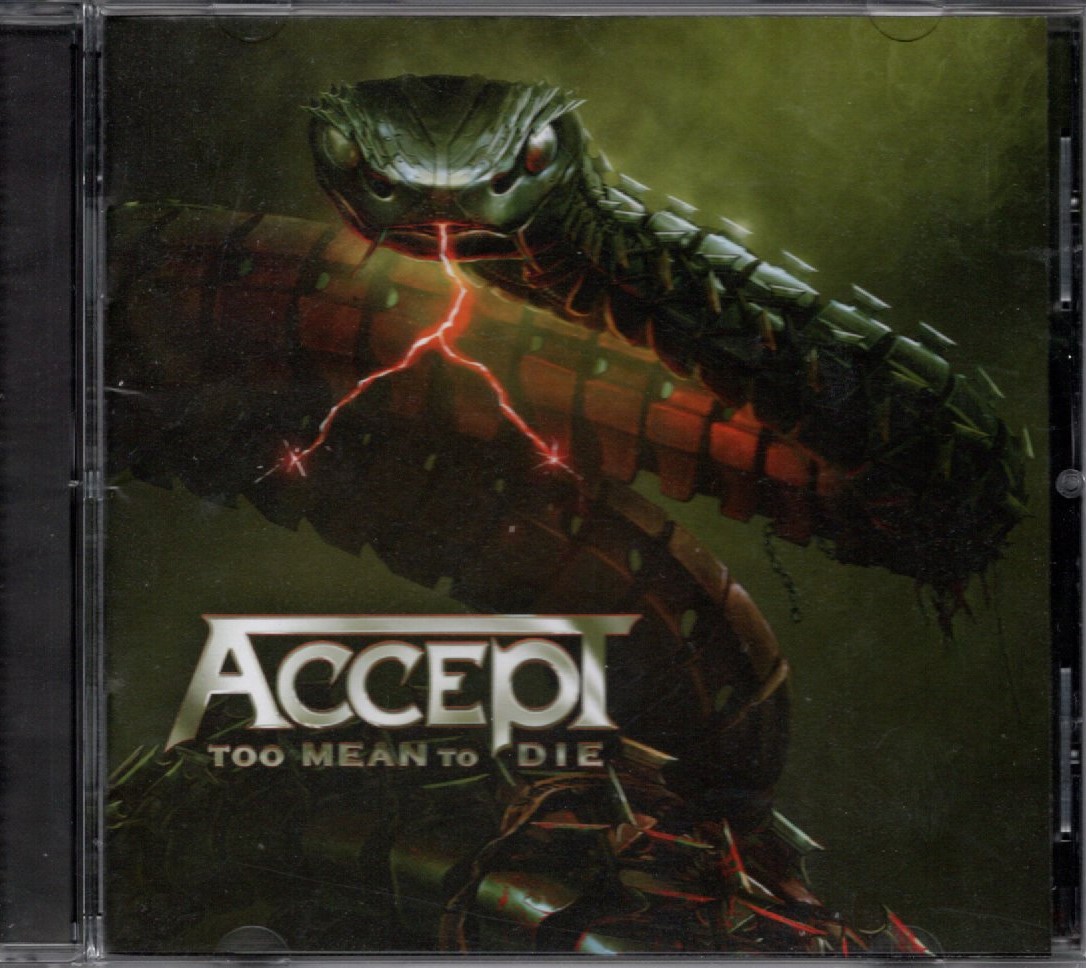
ACCEPT – Too Mean to Die (2021 Nuclear Blast)

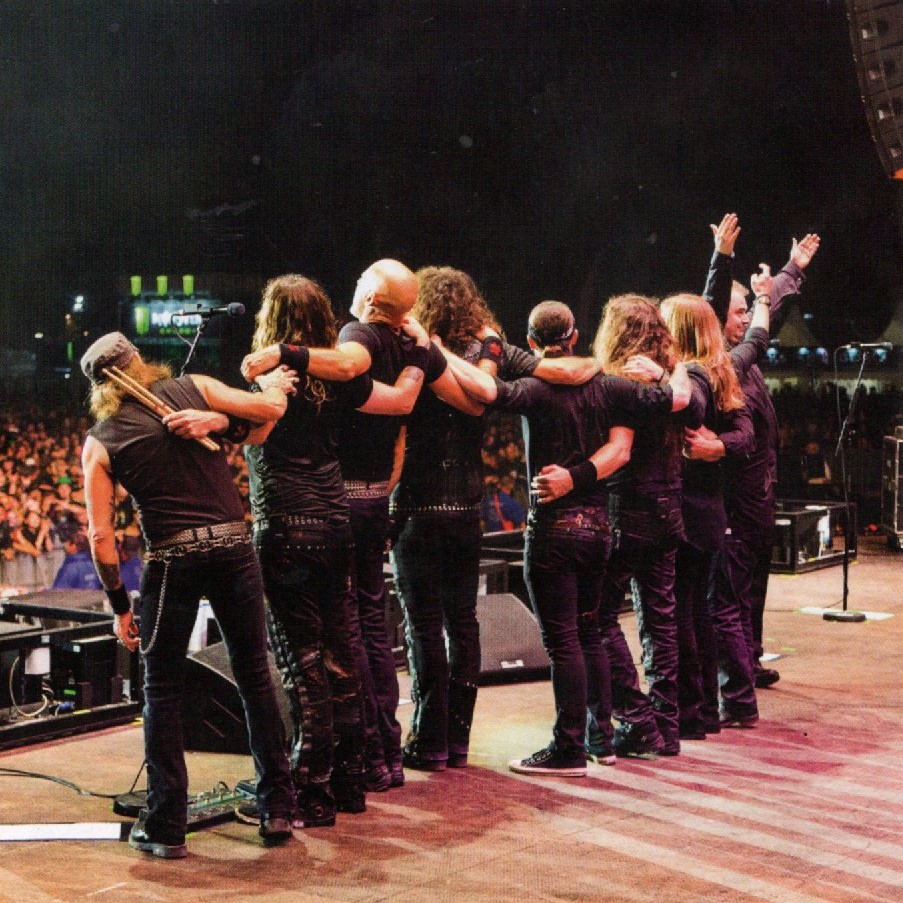
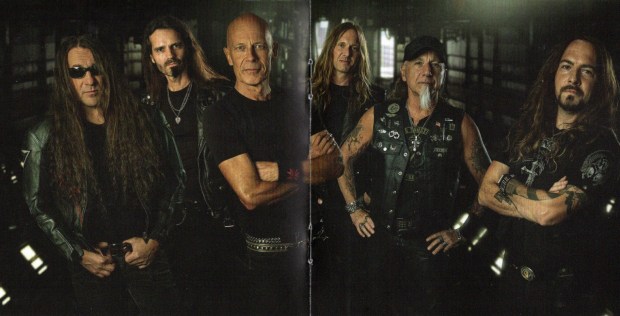
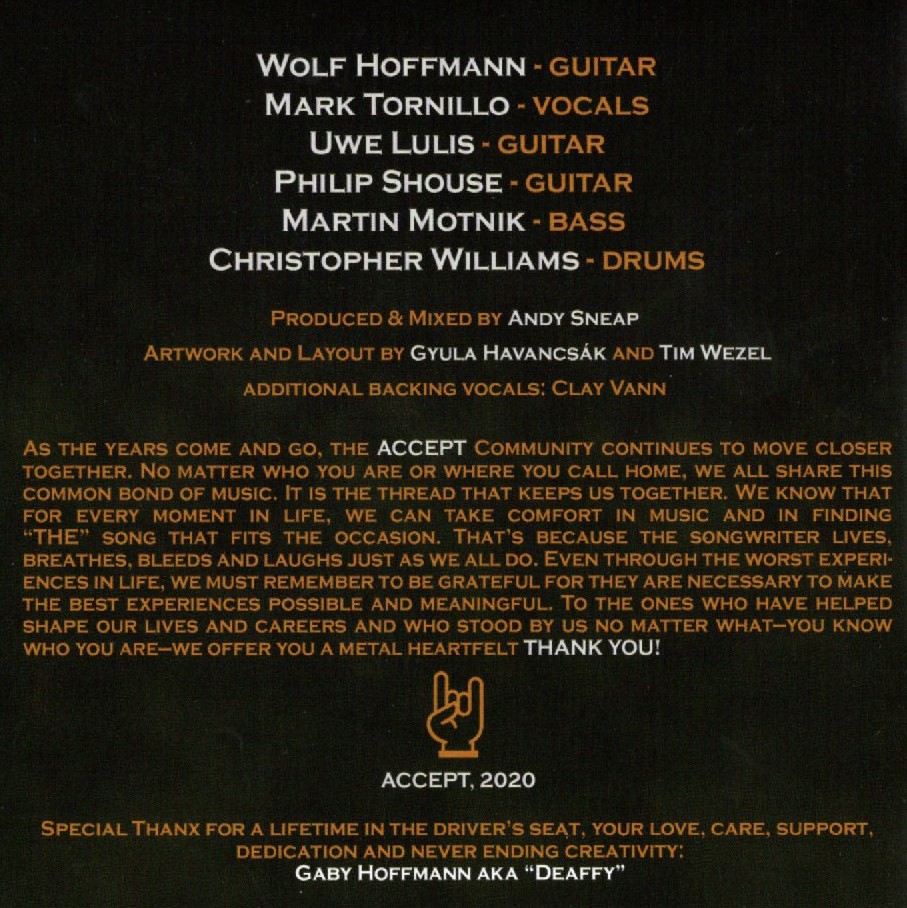
Tornillo-era Accept has been a pretty even field; a level grid of Sneap-sharp production and Hoffmann’s razor-riffs.  If you expected change just because there’s a new bass player for the first time ever, you’d be wrong.  Accept may be down to just one original member (Wolf Hoffmann himself) but it doesn’t matter much.  What Accept deliver on Too Mean to Die is the same as they have done for every album since 2010’s Blood of the Nations.  Reliable, like AC/DC…or a comfortable leather jacket.

Nothing wrong with this.  Accept found a formula that works in their post-Udo world and it works well.  It’s difficult to remember what songs are from what albums, but Accept haven’t stopped putting out solid quality metal.

There’s the song about zombies (“Zombie Apocalypse”), one about never giving up (“Too Mean To Die”), the mid-tempo one (“Overnight Sensation”), the one about the media (“No Ones Master”), the single* (“The Undertaker”), the one with the funny title (“Sucks to be You”), the classical influence (“Symphony of Pain”), the ballad (“The Best is Yet to Come”), the one about the state of the world (“How Do We Sleep”), the angry one (“Not My Problem”), and the instrumental (“Samsom and Delilah”).

The riffs keep hammering in the capable hands of Wolf, and Mr. Tornillo on lead vocals never stops givin’ ‘er.  Hooks on every track.  The energy is no less than their first together.  Wolf’s guitar tone remains as tasty as it has been for over four decades.  One more album to add to your collection, as the Tornillo era blends together like a monolithic five-CD box set.  Too Mean To Die could have been titled Disc Five, so if you need to complete your set, do it now.

4/5 stars

* The single for “The Undertaker” features a non-album live track on its B-side, of a non-album single called “Life’s a Bitch”!


#877: Accept Your Fate

GETTING MORE TALE #877:  Accept Your Fate

George, rest his soul, was a bit of a know-it-all.  He was the oldest kid on the block.  He was already living there when my parents moved in.  He was burning the nipples out of Playboy magazines with a magnifying glass when the rest of us were playing dinky cars.  Logically, he was into music before the rest of us as well.  The only one in the neighbourhood that was into Kiss before George was Sean Meyer.  George got into Kiss through Sean.  But he had a bit of a superiority complex, because Sean didn’t hang out with us, which made George the de facto senior of the group.

I remember him strutting his superior robot knowledge when we were really young kids.  It was him, myself, and Bob in the back yard with our Lego.  (George stole a piece of my Lego by the way, and a piece Bob’s too.  But we stole them back.)  George had been into a show called Force Five and built a robot made of Lego based on what he’d seen.  We admired it, and each of us came back with our own robots of Lego.  We made some design improvements over George, but he was not impressed.

In a condescending voice, George explained, “Yours are good but they’re not what mine is.  You built yours based on the concept of ‘robot’.  I built mine based on ‘Force Five'”.

Just the way he was.  As the youngest of three siblings, perhaps that contributed to his need to be better than us at childhood activities.  Or maybe it was just that he was the senior of the group.  But he did.  He even ranked all the neighbourhood kids in our baseball abilities.  We played “Pop 500” in the ball park.  According to George:

“Bob’s the best,” which honestly was indisputable, but then he went on.  “Then there’s me, and Rob Szabo, and John, and Todd Meyer, and Scott Peddle and Mike Ladano at the bottom.”  Hey, dude spoke his mind.  You can see why he made it difficult to like him sometimes.

We blamed George the time they were playing catch, and broke a window.  They were playing catch in the school yard.  Either Bob or John threw a solid one to George, who chickened out and ducked, thus breaking the window.  He got the blame, anyway.  When it came down to the actual hierarchy of the group, he was often Scapegoat.

Naturally George was into Kiss, and rock and roll, before Bob and I.  He had a growing Kiss collection.  We heard those albums first via George.  But he was such a know-it-all.  He bought a bass, and would play around in the back yard going, “Name this tune.”

One day, Bob came to me and said “I think I have a way to trick George on a music question.”

It was the very same Masters of Metal Vol. 2 cassette tape that started me on my own rock journey.  There was a band on the tape that we were sure that George had never heard of:  Accept.  And to our young ears, Udo Dirkschneider sounded exactly like Brian Johnson from AC/DC — the shriek.

“I’m going to play him this song ‘Balls to the Wall’ and we’re going to ask him who the band is.”

I enthusiastically agreed to play along.  Bob’s prediction was that he would think it was AC/DC.  It was a gamble, given that George was more experienced.  But he needed to be taken down a peg.

And so, in my back yard, gathered around a boom box, Bob challenged George to “name that band.”  Masters of Metal Vol. 2 was cued up to track five on side one:  “Balls to the Wall”.

George was quiet for the first minute of the track.

Then, “Watch the damned!” screamed Udo Dirkschneider from the speakers of that boom box.

Immediately George answered, “AC/DC”.  And just as immediately, Bob and I stood up and laughed!

“No!  It’s Accept!”  exclaimed Bob in victory.

“Sign of victorrrrryyyy!” sang Udo behind us.

George was flabbergasted.  He immediately struck out with explanations for his incorrect answer.  The quality of my boom box may have been drawn into question.  There were reasons that he answered AC/DC, but they weren’t his fault!

But Udo had spoken, “sign of victory,” and Bob and I declared ourselves the winners of this particular contest.  It was a very memorable way to cement Accept into my grey matter.  A momentous occasion in terms of neighbourhood history.  We made sure we told the tale of how we bested George in rock knowledge one afternoon.

Listen to both Udo and Johnson at that point in the 80s.  They both had such a deep, full bodied shriek.  The fact that George thought it was Johnson isn’t really a patch on George.  It was an honest mistake.  Our pride in fooling him was simply because George acted like he knew absolutely everything about rock.  And we had proven that he did not.  That’s all we wanted.  It was kind of like being the guy who took down James from his winning streak on Jeopardy.

As a coda to this story, it’s interesting to note that none of us knew what most of these bands looked like.  There were no picture inside that little cassette cover.  Then, one day I was in my basement watching one of the very first episodes of the Pepsi Power Hour.  On came Accept with “Balls to the Wall”.  I glued myself to the screen.

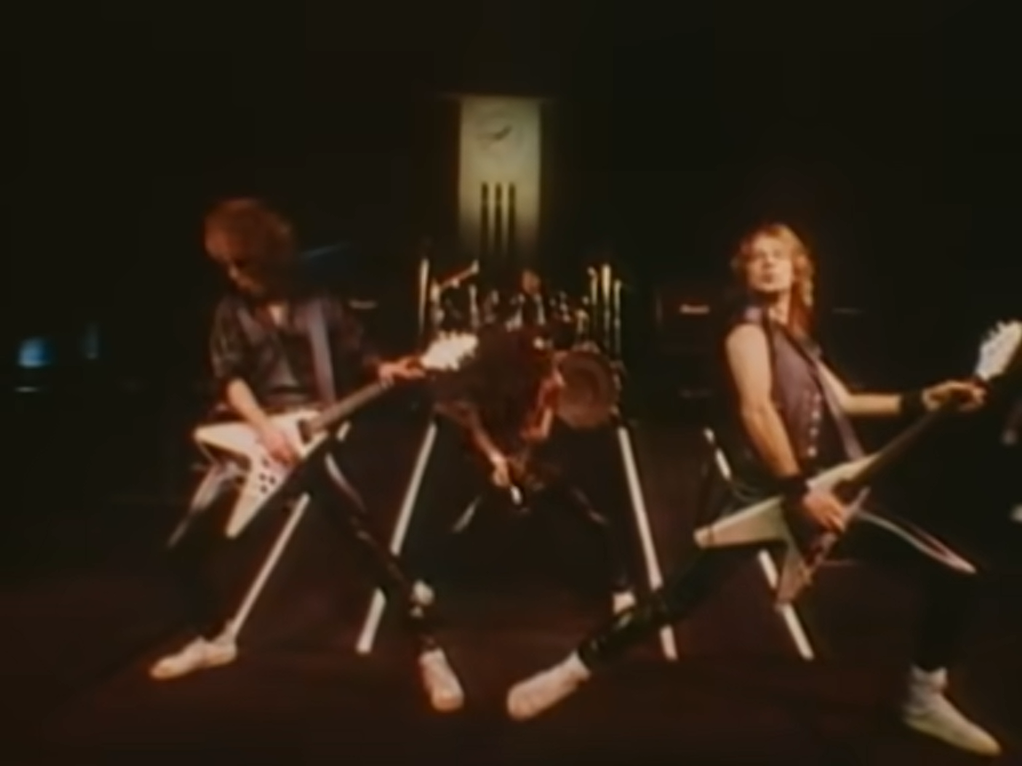
As the three guys with the axes in the front made cool knee-bending poses in sync with the music, I said that “Accept look pretty cool.”  Wolf Hoffmann in the front with the white Flying V” had a blonde, wind-swept mane.  I envied him.  The video lingered on the three axe-wielders for some time, before the vocals finally begin.

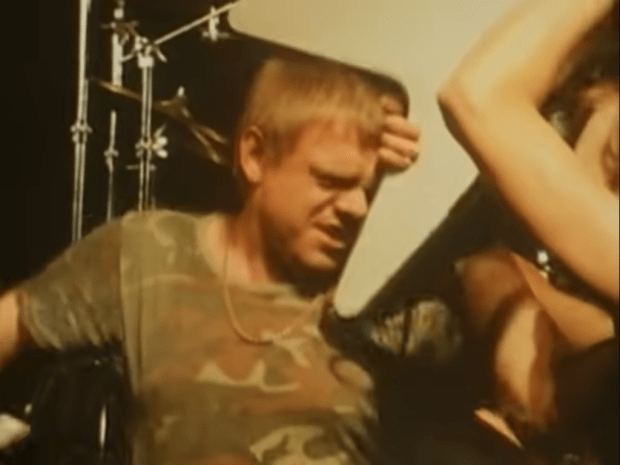
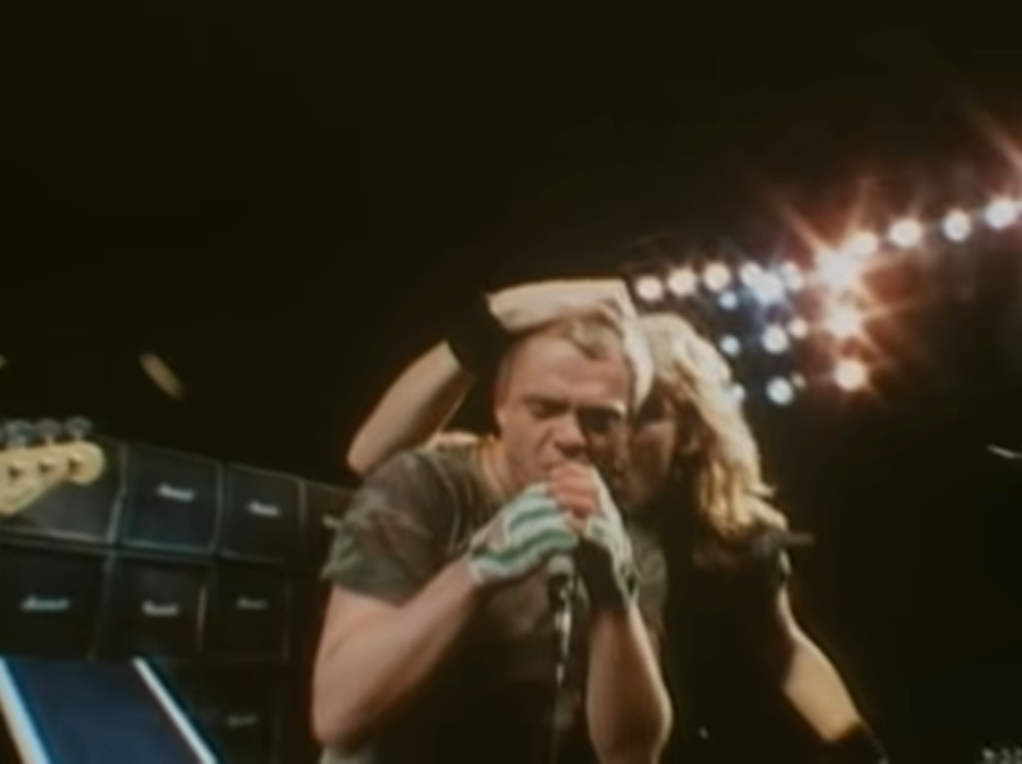
And then, suddenly appeared this little, tiny guy in head-to-toe camouflage.  He was slightly rotund, and he had… short hair?  This man with the monstrous screaming voice was a tiny guy with short hair and camo pants?  It was completely incongruent with the sound coming from his lungs.  How could this be?  It seemed, from the video, that the band were sort of highlighting or even mocking his short stature in their stage act.  A close-up shot of Udo’s head within the gap of Wolf Holfmann’s Flying V was simultaneously hilarious and bizarre.  In another shot, Wolf is covering Udo’s head and face with his hands as if he’s just a little GI Joe doll.

Obviously my first priority was telling Bob about this fresh discovery.  In our next conversation, I told him of the Accept video and the startlingly short (and short-haired) lead singer.  He was astonished to see it for himself.  I think seeing what Udo looked like may have soured him on Accept.  I don’t recall him being into them as much anymore, and I’m pretty sure he never owned any of their albums.

Fortunately Accept redeemed themselves in my eyes with a video from their next album Metal Heart.  I taped this video off the Power Hour in early 1986.  It didn’t feature Udo being used as a prop so much.  Scott Peddle found the spinning effect to be dizzying, as did I, but a cool effect it was.  (In hindsight it actually looks quite similar to the “bullet time” effect from the Matrix films.)  “Midnight Mover” was the song that kept me interested in Accept.  It proved you could have a little guy in camouflage (now with additional leather military utility belt) at the front and center, and still have it look cool enough for the kids.

Bob agreed that “Midnight Mover” was a cool video but was never really won over to Accept like I was.  By 1989, any prejudice either of us had about Udo’s appearance were rendered irrelevant when Accept parted with him and brought in an American singer named David Reece.  They came out with an intriguing new sound with “Generation Clash”, the first single/video.  Reece was a normal looking blonde singer dude, totally ready for MTV play.  He also had pipes to spare.  He could nail the screams but he was more versatile, and able to do more commercial music.  And it seemed like that was the direction that Wolf wanted to go in.

Ultimately the Reece lineup didn’t survive, but their story certainly didn’t end there.  Where I was concerned, I liked “Generation Clash”.  I still think the guitar solo alone is a tremendous and diverse piece of music.  The Accept/Reece experiment didn’t really fail for me, and I think their Eat the Heat album is pretty heavy for the year 1989.

Still, when they make the movie of my life, it’s the Accept scene with George getting schooled that I hope makes the final cut.