Wu-Tang Clan

#659: Once Upon a Time in Shaolin

GETTING MORE TALE #659: Once Upon a Time in Shaolin

It is one of a kind, but it wasn’t the first of its kind. Jean-Michel Jarre made one copy of his Musique pour Supermarché album, for an art exhibit. He then destroyed the master plates. To this day, the only music that exists from that album are poor quality bootlegs from an AM radio broadcast. So, the Wu-Tang Clan were not the first to press up only one copy of an album.

The big difference is that Wu-Tang never intended to destroy Once Upon a Time in Shaolin. They intended to sell it as a one-off work of art.

Wu-Tang leader RZA made Once Upon a Time in Shaolin as a statement of the devaluation of music in the Spotify generation. The single copy would be made available by auction to a fortunate buyer, who then had to sign a contract agreeing that the album could not be sold commercially for 88 years. There is an unconfirmed and bizarre clause in the contract that only the Wu-Tang Clan or Bill Murray could rightfully steal the album back. It sounds like one massive publicity stunt, except that it wasn’t. The 88 year clause ensured that nobody would be getting rich off this for a long, long time (if ever).

Wu-Tang spent six years recording the double album. The tracklist has never been confirmed, nor the artists appearing on it. The auction house, Paddle8, assembled a list of working titles: 26 tracks spread over two CDs. Reportedly, Cher sings on two songs. It is assumed all the living members of Wu-Tang appear on it too. The packaging is an elaborate silver box with a key lock built in. The Guinness Book of World Records calls it the most valuable album of all time, exceeding even Bob Dylan’s original Freewheelin’ LP with the four removed tracks still intact, or the Beatles’ “butcher cover”.

Wikipedia

How much is the “most valuable”? Once Upon in Shaolin was purchased for $2 million US by “Pharma Bro” and general scumbag Martin Shkreli.  Shkreli bought the CD before he became notorious for raising the price of a life saving AIDS drug by 5000%. Had this happened before, Shkreli would likely not have passed the vetting process. Wu-Tang wanted to ensure the album went to a fan who would appreciate and honour its value. Instead it went to one of the most despicable human beings on the planet.

Shkreli thought about destroying the album, or putting it somewhere so hard to get that hearing it would amount to a religious pilgrimage. According to the contract, Shkreli could have broadcast the album for free. Instead he taunted fans and played a couple snippets online. Wu-Tang member Ghostface Killah called him a “shithead”. In an act of what surely must be bad comedy, Shkreli then made a video with three masked thugs appearing to threaten Ghostface.  “You’ll be a ghost for real, motherfucker!” says one of the henchmen.


“Dennis…I’m going to call you by your ‘government name’. You’re not a ‘ghostface killah’. I’m sorry.” — Martin Shkreli

Is Shkreli a fan or just a rich troll? He says he bought the album because he loves hip-hop but also relishes being a musical “villain”. He claims he hasn’t played the whole thing. Shkreli tried to sell the album on Ebay, where he wrote: “I decided to purchase this album as a gift to the Wu-Tang Clan for their tremendous musical output. Instead I received scorn from at least one of their (least-intelligent) members, and the world at large failed to see my purpose of putting a serious value behind music.”  There was a winning bid on Ebay of over a million dollars, but it is not clear if the sale went through.

Speaking of “intelligent”, someone should tell Martin Shkreli that threatening people on video is not very bright.  Nor is committing fraud, of which he was convicted.  He followed this by stupidly offering anyone $5000 for a lock of Hillary Clinton’s hair.  The judge presiding over his case saw that as a threat of assault, and sent Shkreli to jail.  Do not pass “Go”, do not collect $2 million dollars.

In a twist of karma, Martin Shkreli now has to forfeit the album as part of his fraud convictions, if he still owns it.  He may also face 15 years in jail.  It couldn’t happen to a nicer guy, but what the hell are the Feds going to do with a Wu-Tang album?

Stay tuned!


Once Upon a Time in Shaolin

DISC ONE – Shaolin School

“Entrance (Intro)” (1:57)
“Rivals” (4:12)
“Staple Town Pt. 1 (Interlude)” (0:44)
“Ethiopia” (7:55)
“Handkerchief” (0:49)
“Staple Town Pt. 2 (Interlude)” (1:10)
“The Pillage of ’88” (6:52)
“Centipedes” (7:14)
“The Widow’s Tear” (3:55)
“Sorrow” (5:45)
“Shaolin” (6:14)
“The Saga Continuous” (6:58)
“Shaolin Soul (Exit)” (3:41)

DISC TWO – Allah School

“Sustenance (Intro)” (0:43)
“Lions” (6:08)
“Since Time Immemorial” (2:32)
“The Slaughter Mill” (6:31)
“The Brute” (3:24)
“Iqra” (7:23)
“Flowers” (5:49)
“Poisoned Earth” (4:34)
“Freedom (Interlude)” (2:25)
“The Sword Chamber” (4:05)
“Unique” (2:32)
“The Bloody Page” (5:09)
“Salaam (Outro)” (1:31)


Part 219: Parental Advisory – Explicit Lyrics

Thanks to 80smetalman for the inspiration.

RECORD STORE TALES Part 219:  

Parental Advisory – Explicit Lyrics

Remember the PMRC? If you were around in the 1980’s you might. The Parents’ Music Resource Center was an organization cofounded by Tipper Gore. They caused a lot of grief for musicians and fans alike. The PMRC wanted albums to have ratings, much like a movie, and to restrict certain albums to certain age groups.

PARENTALBoth Dee Snider and Frank Zappa raked them over the coals in a Senate hearing, but much damage was done. The PARENTAL ADVISORY – EXPLICIT CONTENT logo has defaced many rock albums. Sometimes it’s just a sticker, but almost as often, it’s printed over the cover art.  Frank Zappa’s instrumental album Jazz From Hell was even stickered “explicit content” – an album that has no words at all!  Huge chains such as Walmart refused to carry many albums such as this, and this eventually led to the rise of “clean” and “dirty” versions of albums.  It was one way to get the records in the stores.  This way, grandma can buy little Johnny the “clean” version of Eminem for Christmas.

This had an impact on us, an independent chain, as well. In the senate hearing, Dee Snider advised that if a parent is concerned about the music their kids are listening to, “I think a parent could take it home, listen to it. And I do not think there are too many retail stores that would deny them the ability to return the album for something different.”

Dee was 100% right. That was the policy that we had. If a parent wasn’t happy with the lyrical content of their kid’s purchase, we had no problem returning it.  Even though there were times that I’d been yelled at for doing a refund instead of an exchange, we made exceptions when it came to explicit lyrical content.  In those cases we often offered a full refund, and normally getting a refund out of us was about as easy as Steve-O removing this snapping turtle from his ass.

Some parents used to get upset that I would knowingly sell an album with swearing on it to their kid. Now, to be clear, we wouldn’t sell 2 Pac to a 10 year old. We didn’t do that. We would tell the 10 year to come back with a parent, and they’d whine and leave. However when a kid is in their mid-teens, and it’s harder to tell their age (or if their parents have a pickle up their behinds), we’d sell them the disc. And that’s when some parents would get mad. “Isn’t it illegal to sell this to a kid?”

No, it wasn’t illegal, thankfully. I would have hated to live in a world where I couldn’t hear Twisted Sister until my 18th birthday. But I was smart enough to know fantasy from reality, and my parents were trusting enough to give me that much credit.

Once you give the parents a refund, they were always happy. You never know what a parent would be offended by. One guy refused to buy Nirvana for his son, because Kurt committed suicide. One parent refused to allow her kid to listen to “black music” such as Backstreet Boys. No shit.

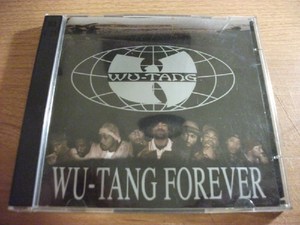
WU

Very hard to tell just from this if it’s “clean” or “dirty”

For us, selling used CDs, I think the biggest problem was the “clean” and “dirty versions”. On some discs, it was nearly impossible to tell by the cover if it was censored or not, because often those kinds of stickers would be on the plastic shrinkwrap. Once the shrinkwrap was off, and the CD made it into a used shop like ours, the only way to tell would be to listen.

I spent a lot of time sampling Wu-Tang Clan albums to see if they were clean or dirty. Thankfully I knew where on the disc to check easily without spending too much time on it. We had to sell clean versions for less, because the majority didn’t want them. We had to exchange a lot of clean versions for something else too, when it wasn’t obvious by the packaging.

Looking back at the kind of music people used to get upset about, it seems hilariously blown out of proportion. I’ll end today’s tale with a quote from Dee Snider’s testimonial at the senate hearing:

“The PMRC has made public a list of 15, of what they feel are some of the most blatant songs lyrically. On this list is our song “We’re Not Gonna Take It,” upon which has been bestowed a “V” rating, indicating violent lyrical content.

”You will note from the lyrics before you that there is absolutely no violence of any type either sung about or implied anywhere in the song. Now, it strikes me that the PMRC may have confused our video presentation for this song with the song with the lyrics, with the meaning of the lyrics.

”It is no secret that the videos often depict story lines completely unrelated to the lyrics of the song they accompany. The video “We’re Not Gonna Take It” was simply meant to be a cartoon with human actors playing variations on the Roadrunner/Wile E. Coyote theme, Each stunt was selected from my extensive personal collection of cartoons.

”You will note when you watch the entire video that after each catastrophe our villain suffers through, in the next sequence he reappears unharmed by any previous attack, no worse for the wear.

”By the way, I am very pleased to note that the United Way of America has been granted a request to use portions of our “We’re Not Gonna Take It” video in a program they are producing on the subject of the changing American family. They asked for it because of its “light-hearted way of talking about communicating with teenagers.

“It is gratifying that an organization as respected as the United Way of America appreciates where we are coming from. I have included a copy of the United Way’s request as part of my written testimony. Thank you, United Way.”