Journey began life as a progressive rock band that plied instrumentals and vocals. Keyboardist Gregg Rolie (ex-Santana) was in charge of vocalizin’, and Look Into the Future is the second album from this era. Guitarist George Tickner left the band after their debut, leaving Journey a quartet with Neal Schon (also ex-Santana) handling all guitars himself. Tickner still has writing credits on two songs.
There are hints towards the rock and roll machine that Journey would one day become, most notably the Beatles cover “It’s All Too Much” which they adapted to their style. By and large you can look forward to a decent, soulful album with a focus on musicianship. All songs on this album are vocal, ranging from slower blues ballads (“Anyway”) to long blow-outs (“I’m Gonna Leave You”). Songwriting is a tricky craft to master, and at this point Journey’s songs were more prototypes than full-fledged compositions. There are even fledgling metal riffs, such as “She Makes Me (Feel Alright)”, probably the best track on the album besides the Beatles cover.
While this album will never be as highly esteemed as Escape or Frontiers, check it out if you’ve wondered what Journey were like before Steve Perry.
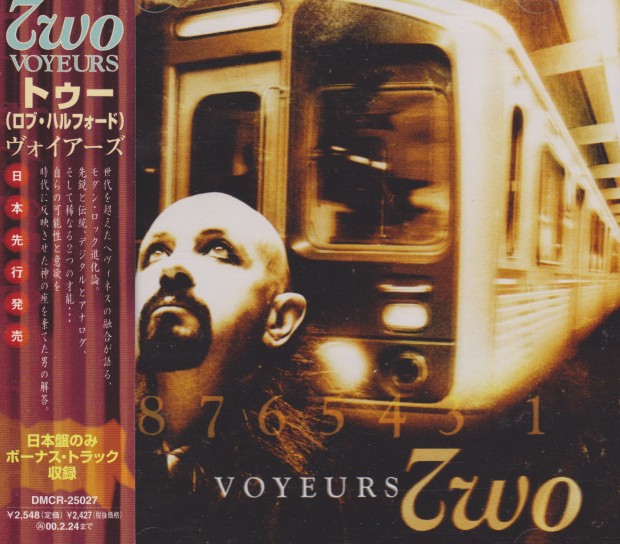
Rarity acquired! After many years of searching, I snagged a mint condition Japanese copy of Rob Halford’s album as Two with John 5. It was priced affordably and included the obi strip, always important to collectors. The Japanese copy has a second booklet with pictures of the band, missing from the original CD. Rob and John casually enjoying coffee in front of a wall of X-rays? It’s in here!
The bonus track is called “In My Head” and it’s surprising how different it is from the album at large. It still sounds like the industrial metal of Two, but criss-crossed with dirty blues. It’s like Two meets the Black Keys, in a wormhole from before the Black Keys even existed. Rob has occasionally shown a penchant for mixing the blues in with his heavy metal. Witness “A Little Crazy” from the first Fight album. John takes a really cool and inventive solo break on this track complete with plenty of slide. Had this track been on the original album, it might have had more appeal with the rockers, though that’s admittedly a long shot.
It’s not easy to find, but worth finding for the industrial blues of “In My Head”.
It’s the #200wordchallenge! Rock journalist Mitch Lafon has challenged me to up my game. Back in his print days, Mitch used to have a strict 200 word quota — no more no less.* It separated the wheat from the chaff. Click the link to see all the entries.
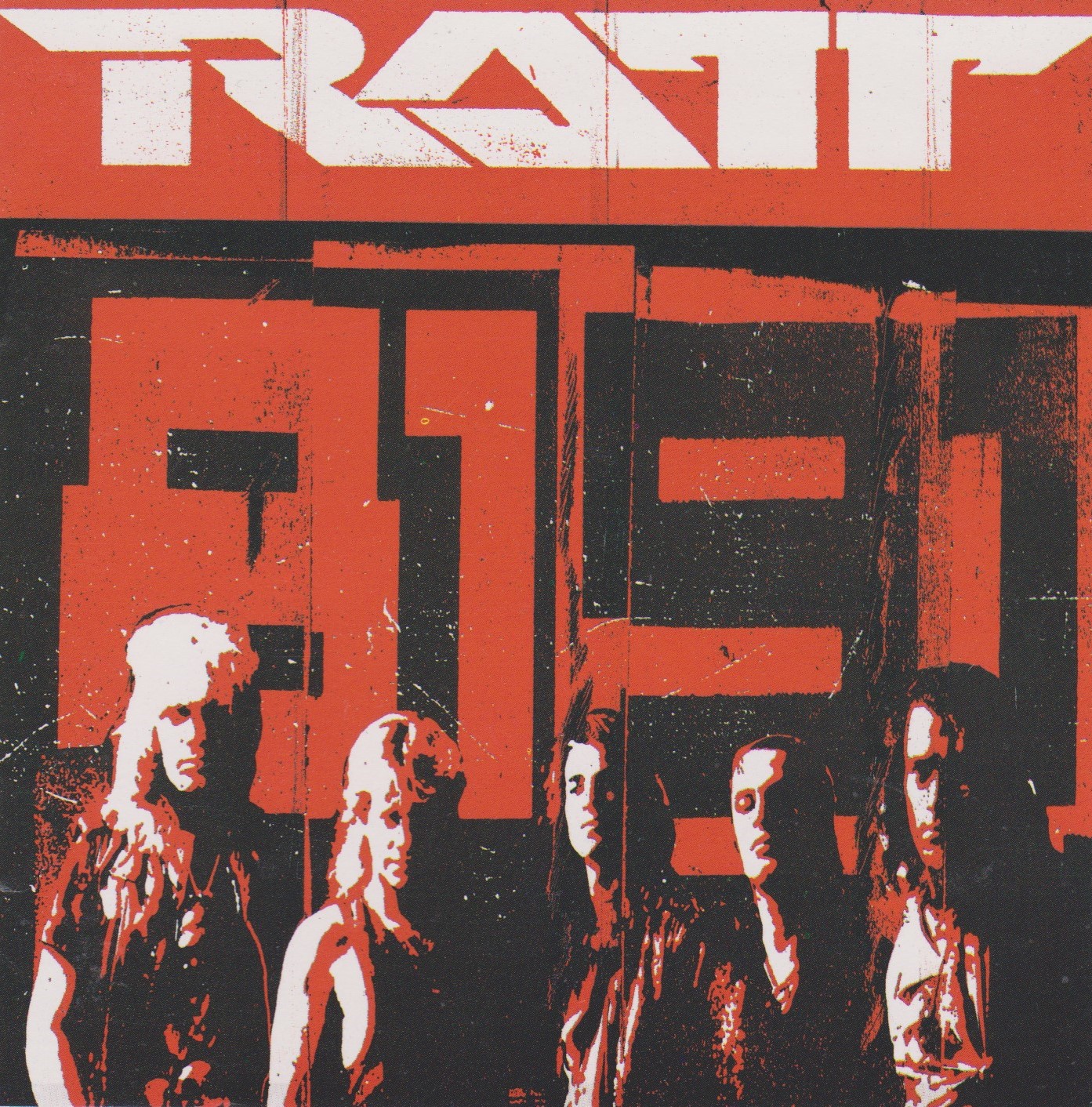
RATT – Ratt & Roll 8191 (1991 Atlantic)
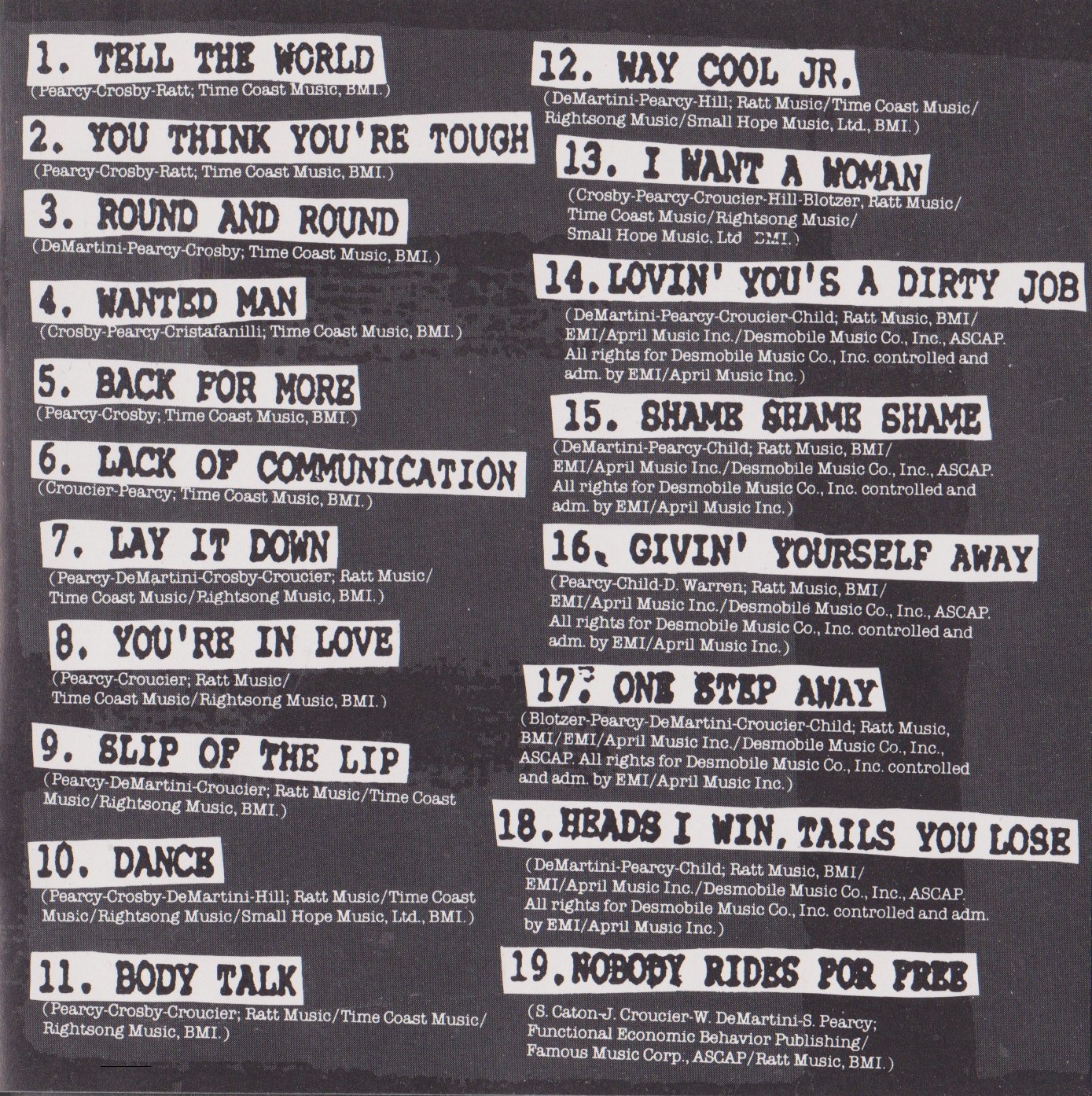
Ratt used to claim that their music was so unique that it deserved the title “Ratt n’ Roll”. This 19 track compilation is the one to get to test that theory. With all the key songs, including two from the first EP and a newbie, Ratt & Roll 8191 (Yes, that’s the actual title) will provide all the spills, thrills and chills that Ratt are known for. And in fact, it makes for a heck of a 77 minute CD. You’d think that would be overkill. You’d be wrong. Sleezy hard rock, flashy 80’s guitars, big drums and hooks are in store for you.
So “You Think You’re Tough”? Spin this CD “Round and Round”. Before you know it, “You’re in Love”. Get down and “Dance” just like “Way Cool Jr.”! Soon you’ll be “Back For More”, in fact it’s only “One Step Away”. Or one click away, rather, but keep in mind that “Nobody Rides For Free”. Still, Ratt & Roll can be found affordably. If you’re loaded with cash, look for a Japanese version with a 3″ bonus EP from MTV Unplugged featuring guest Michael Schenker!
If you don’t pick up this album, “Shame Shame Shame” on you.
AC/DC – Live (1992, 2003 Epic remastered collector’s edition)
AC/DC and their label did something very clever for their first live album with Brian Johnson in 1992. Instead of putting out a full-on and expensive double live album (well over $30 on CD in the 90’s) they allowed fans to choose a more economic option. A single “highlights” version of AC/DC Live was released simultaneously with 14 of the 23 tracks on one disc. AC/DC must have been one of the first bands to release a “collector’s edition” of an album with an extra CD at a higher price.
Of course to a real AC/DC fan, the single disc is for rookies. Sure, its firepower can’t be denied, but anybody with the dollars and a hard-on for AC/DC shelled out for the double. Their last live release was 1978’s If You Want Blood You’ve Got It with Bon Scott, a mere single disc.
Here’s the only serious flaw with AC/DC Live (either version). Like The Razors Edge, it was produced by Bruce Fairbairn. Why would AC/DC need a studio guy like Fairbairn to produce a live album? Astute fans have picked apart the release and compared it to bootleg recordings from the same shows. Like most live albums, even AC/DC succumbed to post-concert studio overdubs. This is not particularly obvious on one listen, but it was always suspected due to the clean and near-perfect sound of AC/DC Live. Where is the raunch? Mixed out and overdubbed. That’s unfortunate. More bands should just pick the version of a song they like best, suck it up and put it on the album as-is.
Since 1992, AC/DC have released a lot of live material, both current and from the Bon era. Notable is Live at River Plate(2012), another double, with Phil Rudd on drums. A valid question would be, “How badly does a fan really need AC/DC Live in 2016?” With so much to choose from, especially on DVD, AC/DC Live serves today as an historic document. The Razors Edge album was a huge comeback for a band that never stopped, the tour was massive, and the resultant album is a document of this period. With period hits like “Moneytalks” and “Heatseeker”, there are a few songs you won’t get live on some other releases. (These two are even on the single CD version.) There are also a couple nice long extended Angus jams, if you’re into the solos. Lastly, AC/DC Live is the only live album with then (and present) drummer Chris Slade. While no one will deny that Phil Rudd is “the man” when it comes to AC/DC, Chris Slade is well-liked and deserves his place in history. He’s even on the album cover.
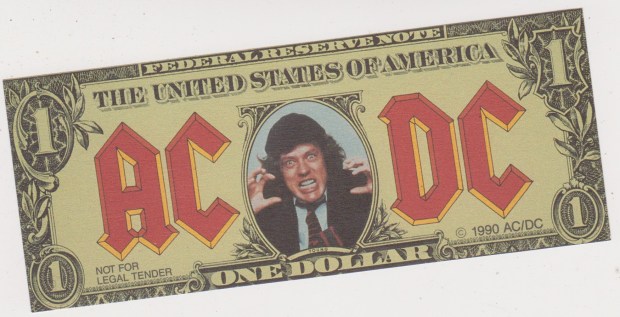
Of note, the original (non-remastered) printing of AC/DC Live came with a neat bonus: a little Angus $1 bill, like the ones they used to drop on the crowd during “Moneytalks”. This memento was not included in the remaster, so when I traded my original copy in for a remaster I said “fuck it” and kept the $1 bill. It’s too cool to throw away, and I’m sure many of those old Angus bills have been lost or destroyed since.
Ever so lucky, the Japanese fans received a bonus track: “Hell Ain’t A Bad Place to Be”. Fear not, everyone else. This track was included on the live 1992 “Highway to Hell” single, which is fairly common. Worth tracking down; it’s also on the Backtracks box set.
LIONHEART – Hot Tonight (1984 CBS, 2008 Kreshendo reissue)
Are you fan of Iron Maiden? The early stuff, circa their first LP? If so, read on — but don’t get your hopes up.
If you’re a long-time reader, you may remember Lionheart from Record Store Tale Part 133: Die For Love. A used copy, a Japanese import, came into the store in 1996, and I stupidly passed on it. The story went:
“$20 used, but with my discount more like $15. Still, I ended up passing on it. I only really liked the one song, and I had other stuff to buy that week including the new Scorpions and King’s X. So, I made a judgement call and threw it on the shelves. I put a sticker on it that said “Dennis Stratton ex-Iron Maiden” and it sold in a couple weeks.
What I forgot to mention in that Record Store Tale was that some customer who claimed to be a “huge Iron Maiden fan”, who had “all the albums” didn’t know who Dennis Stratton was. He saw the sticker on the disc and claimed we had it wrong. Little did he know, he was shopping in the store managed by LeBrain. And LeBrain was not wrong.
Yes, Dennis Stratton was in Iron Maiden for a little while. He played on the legendary first album, and Lionheart was hyped as a “New Wave of British Heavy Metal” supergroup because the guy that was in Def Leppard before Rick Allen (Frank Noon) was also in Lionheart for a little while. There were stupid amounts of lineup changes before and after the album, which also featured Rocky Newton who later ended up in M.S.G. The singer was a hearthrob named Chad Brown who had a voice, though not a particularly unique one.
Their debut album release was a keyboard-inflected 80’s rock record with lots of attempts at concert-ready songwriting. That means lots of synth. The drums are hot, echoey samples and the keyboards are ubiquitous. It’s all very sterile and smacks of ambitions unachieved. There are attempts at Queen-like harmony vocals, but underwhelming attempts. They were clearly trying to write songs with epic qualities that would impress the musically inclined. The opening track “Wait for the Night” has shades of Phenomenon (particularly a song called “Kiss of Fire”), another “metal” supergroup from around the same time. Phenomenon however had Glenn Hughes singing. Chad Brown can sing, but his voice doesn’t have enough character. He sounds exactly like a guy singing in a Foreigner tribute band, or perhaps Coverdale-Lite.
The best song is, by far, the single “Die For Love”. The music video is legendary cheese. I love videos where bands have to embark on some kind of adventure. Remember when Queensryche had to defeat the Queen of the Reich? Or Grim Reaper vs. a man-beast in “Fear No Evil”? (For more on this subject, check out Record Store Tales Part 206: Rock Video Night.) Lionheart had something like this for their “Die For Love” clip. I know if I ever need somebody to rescue a damsel in distress from a weird creepy doctor, I’m picking the rescue team with no shirts under their jumpsuits! Look at Dennis fucking Stratton! He takes a dude out with a kick, while riffing on his guitar. Talk about multi-tasking; where do you see this kind of skill set today?
Unintentionally funny video aside, “Die For Love” wins as a song. With an unforgettable chorus, backed with a memorable riff and great performance, the track gets full marks. Just like a stopped clock must be right twice a day, everything clicked on “Die For Love”. For most people, it won’t make buying the album worthwhile. Given my history with the song, and then letting the Japanese import slip through my fingers in ’96, I don’t regret buying this album for one song.
Even the title track, the decent and hard rocking “Hot Tonight” doesn’t save the album. Ultimately, when you put the album away and try to recall how the songs went, they have completely evaporated. Only “Die For Love” and parts of “Hot Tonight” and “Nightmare” still linger in my memory banks. No focus. Everything on this disc has been done by someone else, only better. Whether it be Styx, Night Ranger, Whitesnake or any of the other bands that Lionheart sometimes sounds like, it’s all been done.
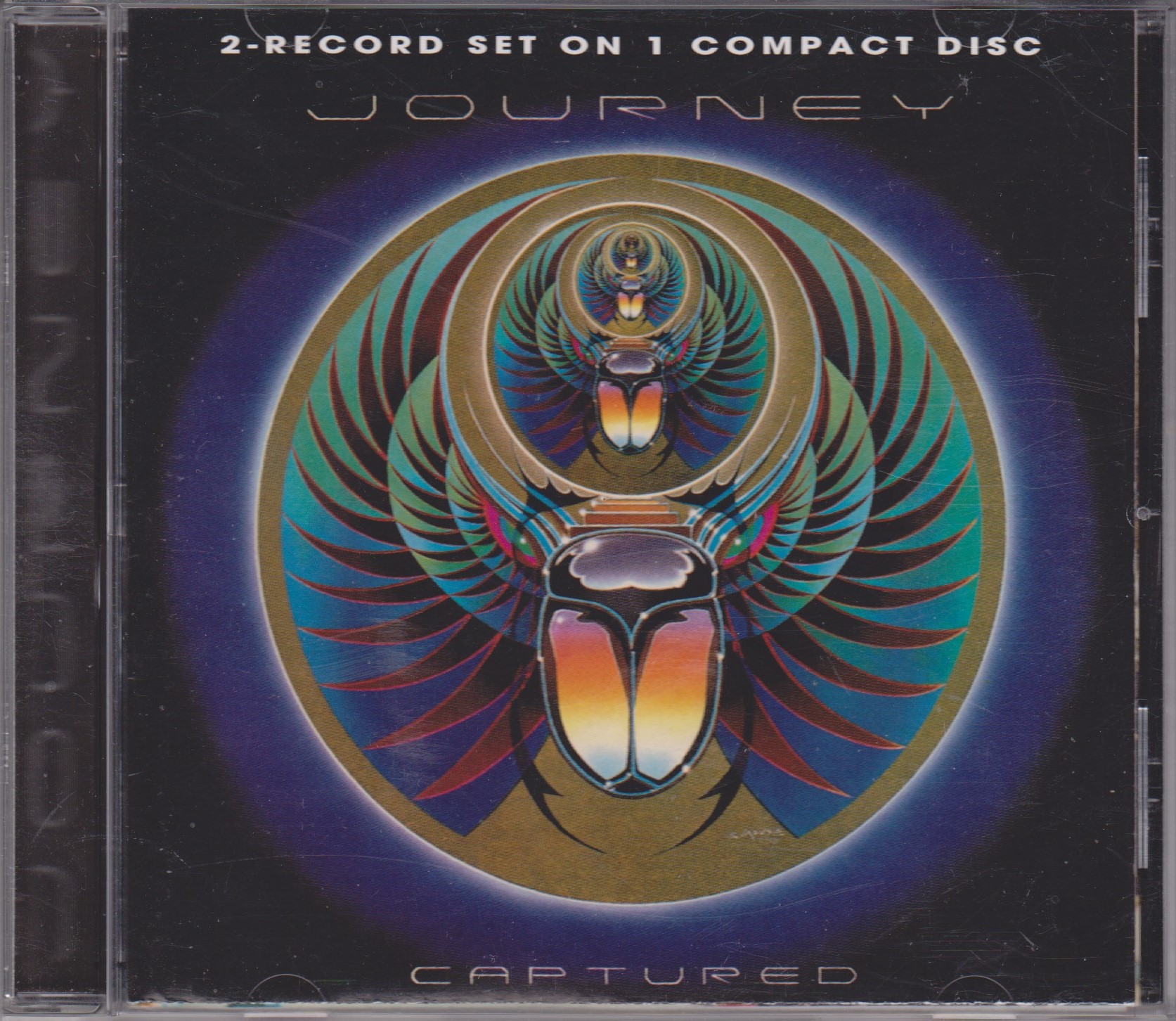
JOURNEY – Captured (1981 Columbia, 1996 Sony SBM remaster)
Captured was a turning point for Journey. After this, they went from mega to uber-mega. It was their first live album, and their last with founding keyboardist and singer Gregg Rolie (who actually sang lead in Journey on their first three albums, before they discovered Steve Perry). When Rolie left and Journey hired on Jonathan Cain, they went in an even more radio-friendly direction. The live album captured (pun intended) the end of the Rolie era with basically every hit they had. They were more of a rock and roll band back then, and this album shows it.
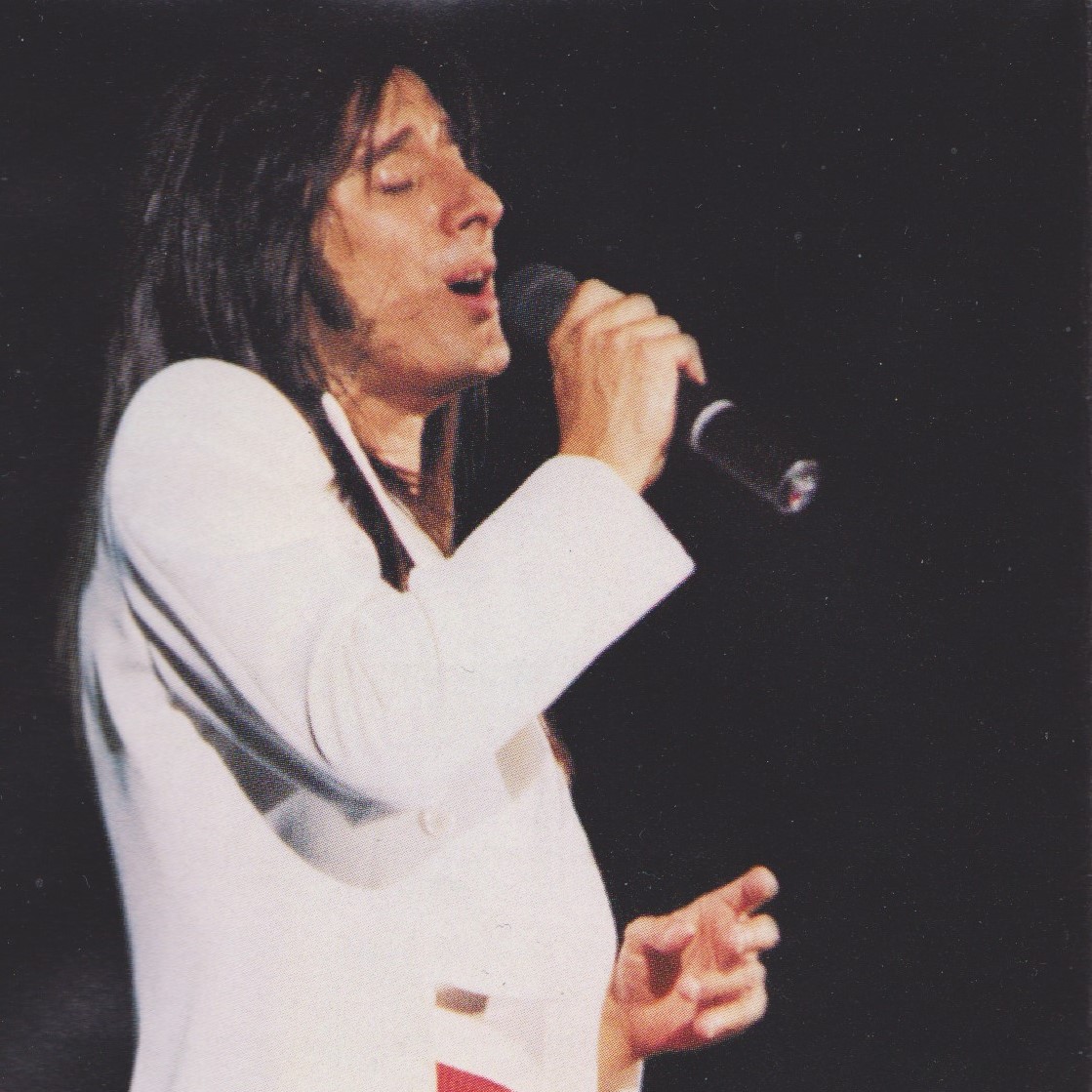
The scorching heat of “Where Were You” is the perfect track to prime the rock n’ roll BBQ. Journey’s brand of rock is driving, but polished to a shimmery gleen. This is partly due to the impeccable pipes of Steve Perry. I’m not sure if Steve has even heard of a bum note, let along sung one. But Perry was only one of two singers in Journey, and Rolie has his first lead on the mid-tempo pleaser “Just the Same Way”. Although he is not comparable to Perry, he’s no slouch and the different singers gave Journey more dimension.
Blazingly fast, the gleeful “Line of Fire” is the hardest rocker on the album. “So don’t go sayin’ Stevie’s a liar!” he sings, and the crowd goes nuts. But Journey are probably better associated in the public eye with tender ballads. “Lights” live is a definitive version. It merges into another beautiful ballad, “Stay Awhile”. Perry’s singing here is so splendid, so perfect, so soulful and powerful that it’s hard not to just be amazed. Not to be outdone is Neal Schon with one of his most memorable guitar solos on “Lights”. A pretty version of “Too Late” makes it a trilogy.
One of the coolest treats on Captured is a new song, “Dixie Highway”, that was never recorded on a studio album. Boogie with Journey down the Dixie Highway and listen to that blazing musicianship, more progressive rock at times than radio friendly AOR. Then it’s the Rolie/Perry duet “Feeling That Way”, an out-and-out classic. The combined sheer lung power on that stage that night could not be measured by science. It is said by some that all the canines within the city of Detroit suddenly perked their ears simultaneously at that moment, with a spill-off effect happening in areas of close proximity across the border in Canada. The University of Marysville is currently investigating these reports, hoping to calculate numerically just how much Steve and Rolie sang their fucking balls off that night.
Rolling right into “Anytime” and “Do You Recall”, the listener is treated to some lesser-recognized Journey classics that are as good or better than their biggest hits. “Do You Recall” in particular boasts the kind of melodies and smooth rock grooves that radio hits are made of. With that out of the way for now, they go into a blues jam with “Walk Like a Lady”. According to Steve Perry, “We got two of the best blues players in the whole world here tonight. Two of the best! We got Mr. Gregg Rolie on the Hammond B-3 and Mr. Neal Schon on the Stratocaster!” After a blazing Schon solo, Journey blast into “La Do Da”, another one of their lesser-known rock blitzes. Bass solos! (By Ross Valory!) Drum solos! (by Steve “Machine Gun” Smith!) And then the listener is rewarded for their patience with a string of their biggest hits: “Lovin’, Touchin’, Squeezin'”, “Wheel in the Sky”, and “Any Way You Want It”.
That’s a hell of a double live album right there. No, Journey’s Captured is not remembered on the same level as Live and Dangerous, Frampton Comes Alive, or Kiss Alive (I or II). Captured is certainly great, but somehow falls ever so shy from achieving the same lofty heights as the aforementioned. It’s difficult to pinpoint exactly why it’s not quite up there. Perhaps it’s the perfectionist style of the band, because it’s certainly not Steve Perry.
It’s not over though: Journey included a new song, and their first ever without Gregg Rolie on keys. Studio cat Stevie “Keys” Roseman filled in, on the ironically piano-based “Hopelessly in Love”. This unsung classic is one of the strongest Journey songs in the canon. It’s too bad that it rarely gets pulled out for compilations, instead residing at the end of a near-forgotten live album.
YES! Now this is what I’m talking about. Metallica haterz can leave the room now, because there is nothing here they will enjoy.
“Hardwired” is the first single from the forthcoming album Hardwired…To Self Destruct due in November. There’s plenty here for the fans to sink their teeth into. A very punk-like metal track, “Hardwired” is promising. Even Lars sounds on top of it. The drums are one of the hooks of the song. Jaymz drops an F-bomb for that street cred, but what matters most is that this is pure rock. Call it metal, call it thrash, whatever — doesn’t matter. What does matter is that Metallica are rocking the fuck out with a great, heavy and blazingly fast track. I love how Jaymz just spits out the words. “We’re so fucked — shit out of luck.” Metallica’s worldview is just as rosy as it was in 1984!
I don’t think anybody reasonably expects Metallica to turn back the clock, or discover some crazy new direction with this album. Fans will dig it, haterz won’t listen with an open mind, but where the single could succeed is bringing in young metal fans who might never have bought a Metallica album before. It sounds just as energetic as a new band.
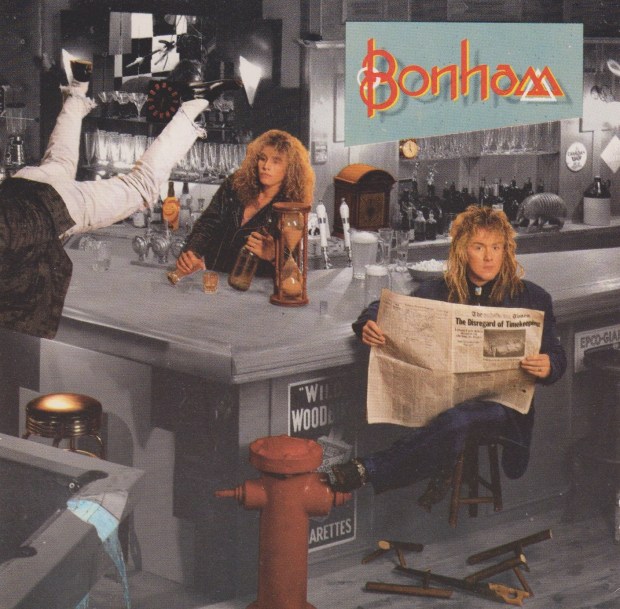
The rock press went nuts for Bonham in ’89. Finally, after long wait, the son of legendary Led Zeppelin drummer John Bonham finally made his move into the music world. Fans had seen him in The Song Remains the Same. Some knew that Jason Bonham jammed with Zeppelin in 1988 at Atlantic’s 40th anniversary bash. It was a much more successful reunion than 1985’s Live Aid.
The music world in 1989 was far removed from the days of Zeppelin. Pretty boys with big hair and flashy videos were the norm. Bands who could get up there and jam for 20 minutes or more on a single track were few. With much naiveté, the magazines drooled over Jason Bonham’s new band, simply and obviously called Bonham. The singer, a young Canadian named Daniel MacMaster, had the youthful curls and range of a young Robert Plant. The bassist, John Smithson, was a talented multi-instrumentalist just like John Paul Jones. The band had to be a quartet; there could be no other way. They tapped Bob Ezrin to produce, a guy who has never done anything that sounded like Led Zeppelin, but someone who was able to take young bands and push them ahead a few levels.
The resultant album The Disregard of Timekeeping attained a lot of attention, making many magazines’ year end lists. Best new group, best new album, etc. etc. And while it is an ambitious record for a debut, it does fall very short of those lofty marks.
Going for the bombastic, the CD opens with a two minute instrumental of keyboards, guitars, violins and the odd burst of drums. It makes little impact besides setting up the first single “Wait For You”. Conceptually, it sounds as if they collectively said, “Right, so let’s write a song that sounds like something that could have been on the next Zeppelin album after In Through the Out Door.” So it’s big, echoey and loaded with keyboards and effects. It does recall Zeppelin, particular the remarkable pipes of MacMaster. It has the necessary big chorus that you needed to have in 1989, and the two sides of rock that Bonham inhabited were melded together in fine fashion. “Wait For You” is a success, but Ezrin’s production in the late 80’s seemed hollow.
Is the Bonham DNA present? Yes, of course. It comes out most naturally via the drum parts, but a lot of the material sounds intentionally contrived. Still, there were a number of really good tracks on the album, enough to make it worth buying. Young Jason, sounding exactly like his dad, counts in the quality track “Guilty” with a “One, two, ha ha ha!” It sounds less like Led Zeppelin, and more like late-80’s Deep Purple. Which is fine of course; we’re talking about quality comparisons. Especially great though is John Smithson’s violin solo. I’m especially fond of the violin in rock music. I like out of the box thinking, and it’s this kind of experimentation that made Bonham more like Zeppelin in the long run. Smithson nails it with the perfect tone.
Another pretty decent tune is “Holding on Forever” which has a Zep funk, with a modern 80’s chorus. “Dreams” though is nearly tanked by a long intro, featuring a guy coming home, brushing his teeth, setting his alarm and going to bed. Yes, that is correct. You have to listen to a guy coming home, brushing his teeth, and going to bed. You gotta blame Bob Ezrin for that mistake. Who wants to buy a rock album and sit through a guy brushing his teeth…only to get a ballad out of it? At least “Dreams” is a decent, progressive sounding ballad, but in the CD/mp3 age, how many people are gonna hit “skip” before the actual song, while the guy hasn’t finished brushing his teeth?
Having unloaded their best songs on side one, the second side is a bit of a chore to complete. Songwriting was not the band’s strongest suit. The two best songs (“Wait For You” and “Guilty”) were co-written by Bob Ezrin, and I don’t think that’s insignificant. Other songs on the album, such as “Playing To Win”, “Cross Me and See”, and “Just Another Day”, are competent. What they lack is the magical ingredient that makes a song stay with you forever. Bonham embraced the past and present, modern production and old-fashioned playing, but that alone was not enough to forge a truly great album.
Finally the album left one of the most impressive songs for the end, “Room For Us All”, an ambitious track over seven minutes long. Soft and anthemic, “Room For Us All” has subtlety that is missing elsewhere on the album. It’s an impressive end…but too little, too late.
Skid Row had the songs, but most importantly, they had the frontman. Only once in a blue moon does a congenital entertainer like Sebastian Back happen upon the scene. Born in the U.S. but raised in Canada, Bach had it all: the looks, the youth, the charisma, and most importantly the voice. He was a bull-headed bastard in those days too, but that is often a part of the frontman package. Bach was a dynamo, always “on”, and with that voice on his side, people paid attention.
Without Bach, would Skid Row ever have made the impact they did? Not to that degree, no. Sure they had Jon Bon Jovi in their corner (and to take them out on tour) but without Bach, Skid Row would have been just another hard rock band in 1989, the peak year for the genre. It can’t be understated how important the voice was. Bach had the power, range and unique style required, but he had it right out of the gate! The band was good too: Dave “Snake” Sabo, Rachel Bolan and Scotti Hill wrote some great, bone-shaking cock rocking tunes. Rob Affuso (today in Four by Fate with members of Frehley’s Comet) has long been an underrated drummer capable of some serious steppin’. With Michael Wagener in the producer’s chair, everything aligned and came up platinum.
Three major hit singles made the album a must-have. They were, of course, “Youth Gone Wild”, “18 and Life” and “I Remember You”. These have become their career-defining songs, particularly the ballad. “I Remember You” may have misled more than a few listeners when it first came out. This is not a ballad album, but a very hard rockin’ record. This wasn’t Bon Jovi. It was heavier than everybody else on the radio that summer: Motley, Warrant, Aerosmith, Van Halen, Def Leppard. Though it rocks hard, it’s still memorable.
With the benefit of hindsight, we know Skid Row were capable of so much more, and they delivered on the next album Slave to the Grind. Once they let the thrash metal and punk influences come out, the real Skid Row sound was conceived. Their debut is good, but the next two were even better.
Whether they know it or not, everybody has their first Wes Anderson movie. Mine was Rushmore, an easy entry point, and I had never seen anything like it before. It has a genuine quality, an old-fashioned look, and a killer soundtrack — all Wes Anderson trademarks.
The Criterion Collection (“a continuing series of important classics and contemporary films”) deliver some of the best colour transfers, and that is necessary for any Wes Anderson film. Soaked in dark but rich colours, Anderson fills his work with vibrancy. His visual trademarks are apparent right from the first scene, a hilarious fantasy sequence introducing our main protagonist Max Fischer (Jason Schwartzman). Max is more than a dreamer though. He is a doer. He dreams things and makes things happen. As such he is the founding (and sometimes sole) member of multiple clubs at Rushmore Academy. He writes, produces and directs lavish school plays with no thought given to compromise, or safety. Unfortunately, Max doesn’t dream much of his own schoolwork, and never seems to get it done. He is on notice. Fail one more class, and he’s expelled from the school he loves so much. Brian Cox (Super Troopers) is excellent as Dr. Guggenheim, the school principal.
Max soon meets steel magnate Herman Blume (Bill Murray), to the tune of “Making Time” by The Creation (1967). The retro music and formal dress at Rushmore Academy gives the movie a timeless feel. Could it be the 90’s? The 80’s? The 70’s? Sure, why not. Instead of working at getting his grades up, Max continues to dream. He dreams of saving the Latin program in school (for no real reason other than just to do it), and of new teacher Miss Cross (Olivia Williams). He’s a charmer, but often with ulterior motives. He and Blume manage to find a bond together. That is, before Blume himself falls for Miss Cross.
This leads to a strange rivalry between Max and Blume, with each jockeying for position in the Miss Cross stakes, with little thought given to how she feels about the whole thing. It also sets up some pretty amusing situations, such as Max trying to build a school aquarium for Miss Cross. He almost succeeds, too. Max is a hard character to read, as he often wants to make certain impressions. Blume, on the other hand, is clearly depressed, living in a sham of a marriage with two barbarian sons he doesn’t even seem to like. As their rivalry grows in intensity, so does the music, culminating in The Who’s epic live version of a “A Quick One While He’s Away” from the deluxe version of Live at Leeds. Wes Anderson has a knack for a musical montage too, and Cat Stevens’ “Here Comes My Baby” is host to one such montage. (Stevens also appears later on with “The Wind” in another song-appropriate scene.) The Stones’ “I Am Waiting” is more great music for marking the passage of time.
Max might not have been the best student, but genius does not always get good grades. His plays have an epic scope, and his aquarium does too: $35,000 cost, just for the initial plans. (Some of the aquatic movie footage that Max views may foreshadow a future Anderson film, The Life Aquatic with Steve Zissou, starring Bill Murray). He’s also a perfectionist. When it comes to his plays, every line matters. “Don’t fuck with my play!” he screams to the star of his version of Serpico, right before getting punched right in the nose. Finally young Max possesses a razor sharp wit, which he uses at will especially when it comes to those he considers love rivals, like Peter Flynn (Luke Wilson).
Rushmore is an ode to the creative mind. After some humbling experiences, Max learns to use his inventiveness to bring people together. His final triumph, to the strains of “Ooh La La” (The Small Faces), is to bring all the film’s characters (even the bully student Magnus) together in solidarity. It’s all done with plenty of laughs, smiles and a few tears.
Wes Anderson utilizes a cast of talents he would work with repeatedly, with Bill Murray being the most obvious. Kumar Pallana as Mr. Litteljeans, the groundskeeper, was an Anderson regular. Brian Cox, who also participated in The Fantastic Mr. Fox, brings a sour delight to Dr. Guggenheim. Secret weapon in this movie however is Mason Gamble as Max’s ally Dirk Calloway. Another Anderson trademark is that each frame possesses astonishing detail and visual information. Like beautifully painted and impossibly detailed storyboards, his scenes have a life and tell a million stories in the background. Much like one of Max’s plays, actually.
Without a doubt, one of the best special DVD features is a selection of play adaptations by the Max Fischer Players, from the 1999 MTV Movie Awards. The players do their own on-stage takes of: Armageddon, The Truman Show, and Out of Sight. MTV were producing some very funny bits for their movie award shows at the time, and these are some of the best. Utilizing the original cast and familiar music from the film, these feel like a fairly natural extension of Rushmore.
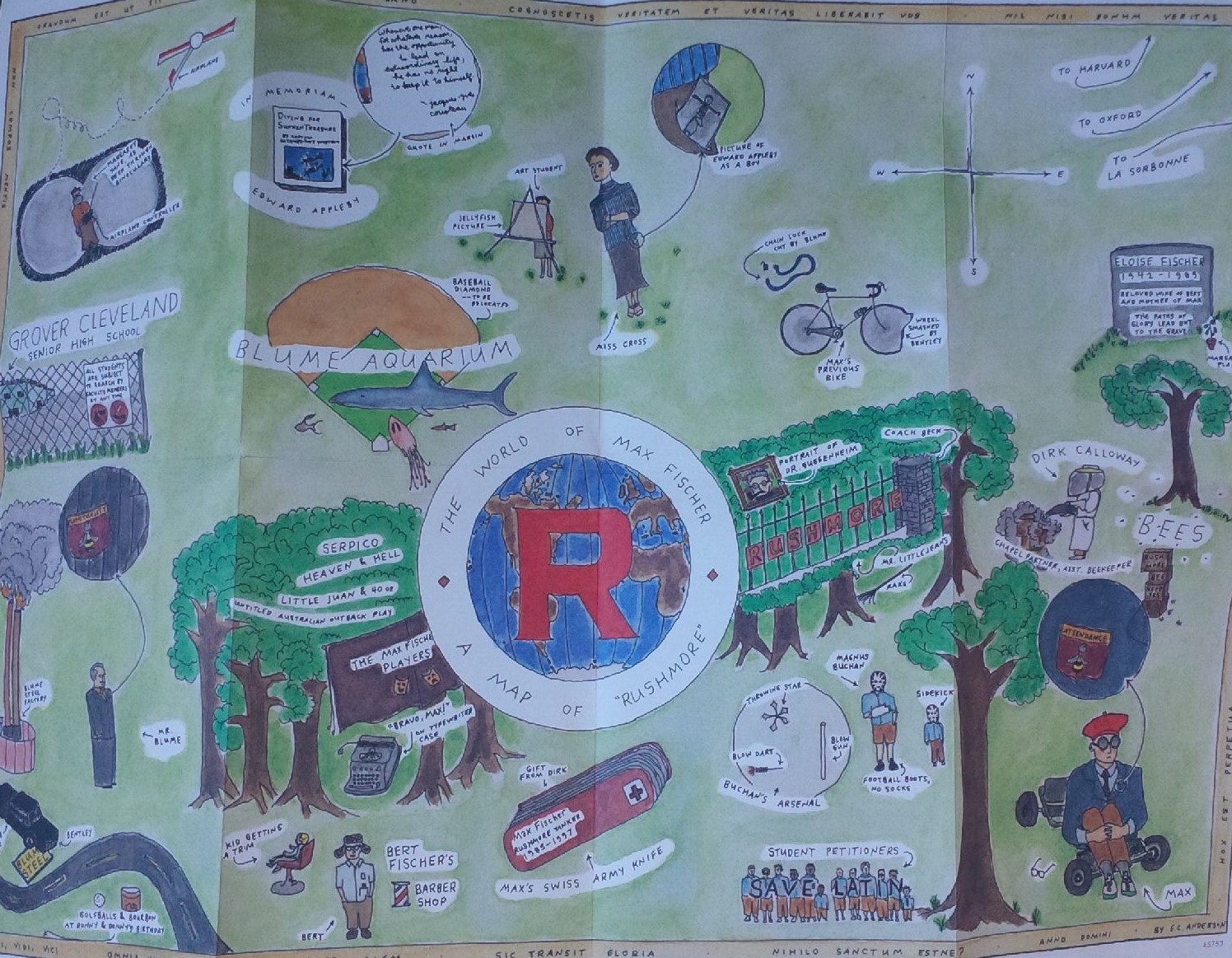
Other valuable trinkets include an on-screen program for Max’s Vietnam drama Heaven & Hell, and his adaptation of Serpico. Of course there must be an audio commentary and that is by Wes Anderson, co-writer Owen Wilson, and star Jason Schwartzman. There are also the requisite making-of featurettes and supplements. The biggest selling feature of this Criterion edition for those who value physical products is the giant fold-out map. From here you can follow the events of the movie on a delightful full colour sketch by movie artist (and director’s brother) E.C. Anderson. In fact all the packaging for this DVD was designed by Anderson.


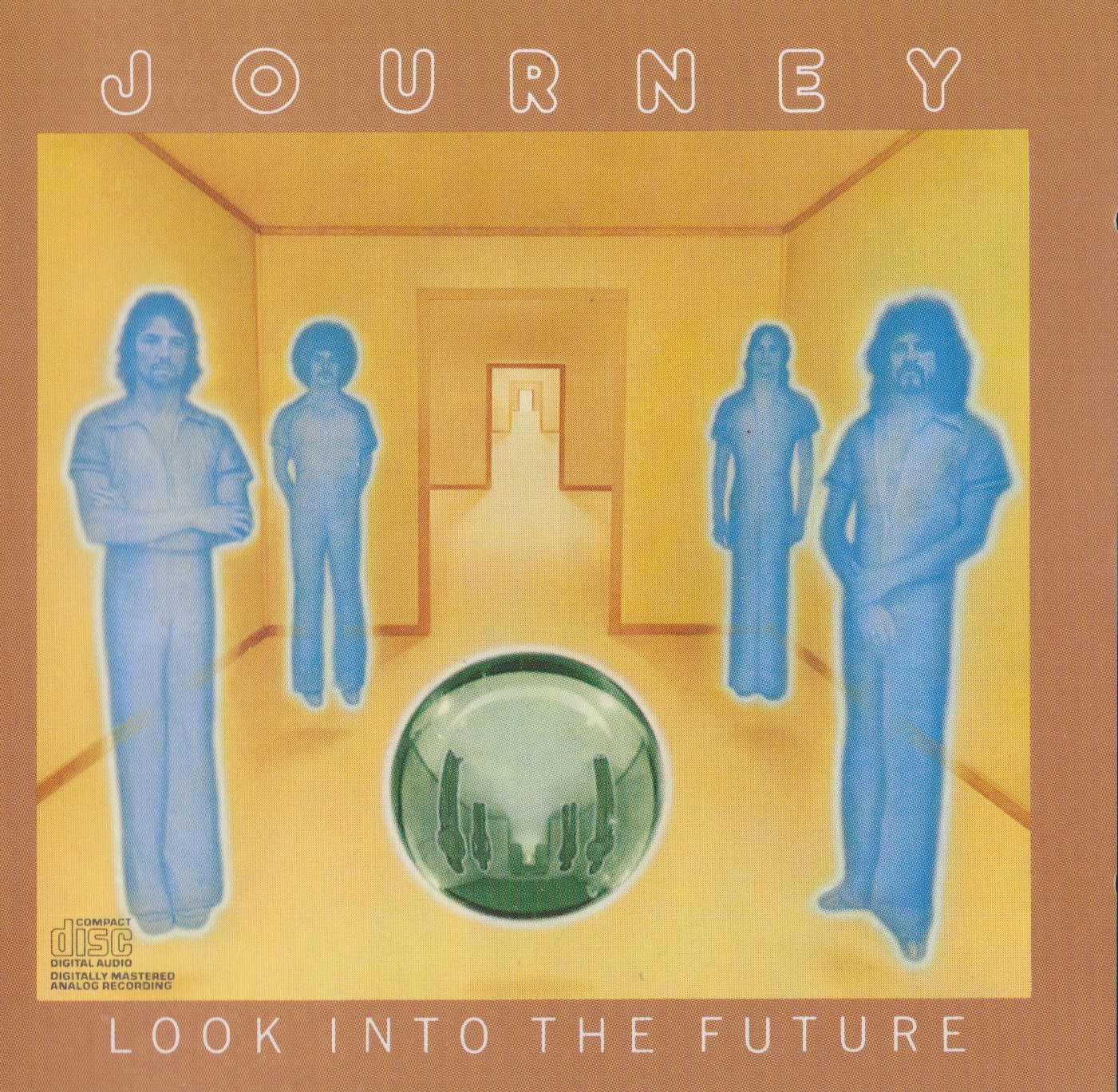 JOURNEY – Look Into the Future (1976 CBS)














 mikeladano.com