It’s not unfair to suggest that I might be a little J-J-Jaded when it comes to 2000-era Aerosmith. People ask me when I think the decline hit. I answer, the abomination that is “I Don’t Want to Miss a Thing”. Nine Lives was a good album. It might not be an Aerosmith classic, but it was good, no two-ways about it. By the time Aerosmith hit 2001 with Just Push Play, the co-writers and love ballads had taken over completely.
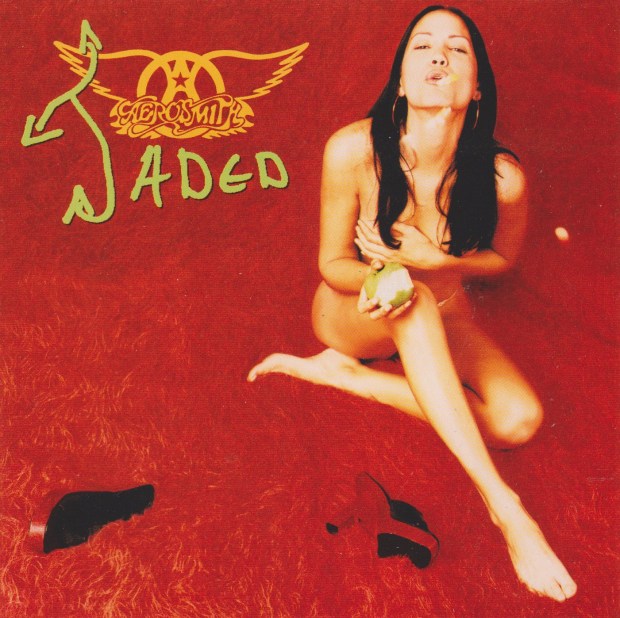
That said, the first single from Just Push Play, “Jaded”, was a pretty good song. Joe Perry didn’t write that guitar hook, but it’s more the drum part that I am drawn to. Joey Kramer was capable of turning crap into class (not that “Jaded” is crap), he is so talented. “Jaded” boasts both catchy verses and choruses, and is firmly ensconced in acoustic-electric-pop land. I think it’s a great track actually, but in the context of its album, it was one of very few. You can handle something like this as a commercial track on a single. On an album where each song is more sold-out than the last, “Jaded” was a very minor victory.
But wait, there’s more! There is an acoustic and a “guitars mix” of “Jaded” as well. The stripped down acoustic version is pretty cool although it lacks punch. If you want to hear the song taken back to the basics without embellishment, here it is, and it’s still a good song. It just misses the soft/loud contrast of the album version. The guitar mix is the opposite. It’s the album track with the electric guitar parts turned up in lieu of the strings. So with the three tracks, you kind of get it in the full spectrum, from the light to the heavy. (Incidentally, there’s also a radio remix of “Jaded” out there, on a 2 CD version of Just Push Play from Japan that I don’t have.)
“Angel Eye” is a non-album track from the Charlie’s Angels soundtrack, saving you from buying that CD for one song. Thankfully it’s a heavy song, but without any serious hooks. The guitar riff is devastating, but once again, Joe didn’t write it. When it comes to this aeon of Aerosmith, perhaps we should just be grateful for a heavy song, period?
The final track is a bit of a throw-away at a mere 1:00. “Under My Skin” sounds like an album outro, or a piece of incidental music recorded for a soundtrack. I guess it’s a teaser for the full-length song that appeared on the album? Too bad because “Under My Skin” is one of the most irritating songs on Just Push Play. I don’t recognize this bit from the song, but I also don’t really want to investigate any further.
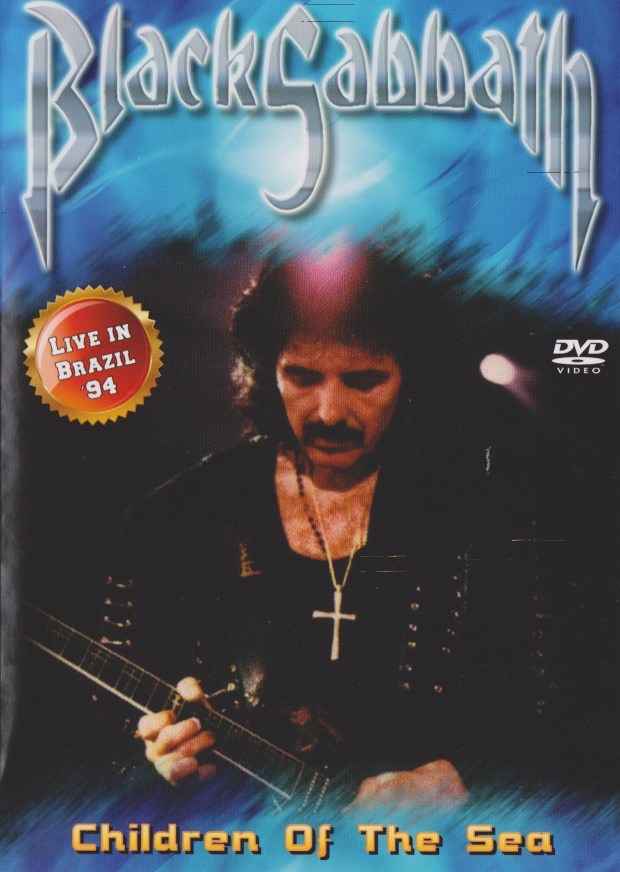
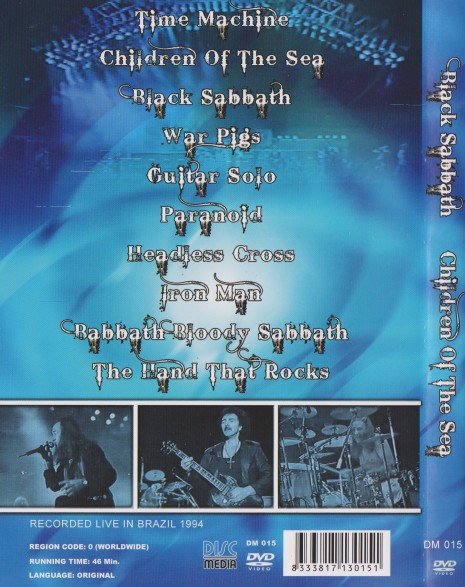
BLACK SABBATH – Children of the Sea – Live in Brazil ’94(Disc Media)
The Cross Purposes tour was not a happy time in Black Sabbath. Geezer Butler had felt that this band (featuring himself, Tony Iommi, Tony Martin, and new drummer Bobby Rondinelli) should have had a new name and not been billed as Black Sabbath. Rondinelli left mid-tour, so Tony and Geezer called up the original Sabbath skinsman Bill Ward. With this historic lineup, 3/4 of the original band were intact (the same ratio as today’s Sabbath). They went to South America to play five shows. Then Butler quit after a furious standoff with Iommi.
This broadcast footage is all that remains of this very short-lived lineup of Black Sabbath.
The set opens with “Time Machine”, a Dio-era song that neither Tony Martin nor Bill Ward originally appeared on. The sound is pretty horrendous, coming in slightly better than bootleg quality. The crowd noise is too high, and the backing keyboards of Geoff Nicholls actually drown out the lead guitar. Nicholls’ backing vocals are also more audible than they should be. As a frontman, Martin does his best, which involves spreading his arms wide and shaking his hair. A long haired Ward has a completely different rhythm on this track than Vinnie Appice gave it. Another Dio number is next, “Children of the Sea”. Ward at least played on this Heaven and Hell classic. Haters would be critical of Martin’s version of Dio songs, but Dio quit. Ozzy wasn’t ready to come back. Iommi carried on, and that’s how it went down. Martin had to sing the old songs to the best of his talents and he helped keep the ship afloat during these difficult years. Having Bill Ward on this track lends it a required authenticity.
There are certain songs that Sabbath has never dropped from the set, that are very difficult for most singers to perform. “Black Sabbath” is top of the list. Ozzy’s possessed original can never be duplicated or imitated. A big part of that, however, is that Bill Ward’s primitive drum fills were such a big part of it, and Bill’s back on this one. With 3/4 of the original Sabbath there, this version actually works out. It’s one of the most true to the original of the versions released by any post-Ozzy lineup of Black Sabbath…except it is edited! It halts abruptly at the half-way point, to awkwardly go into “War Pigs”. This concert was clearly cut down to fit into a one hour (with commercials) time slot. Why half of “Black Sabbath” was sacrificed instead of something else, I don’t know. Shoddy. At least “War Pigs” is intact, with Bill (shirtless now) providing the loose backbone it always had on album. It acquires a jazzy feel during the slow outro.
Iommi gets a guitar solo (could have edited this out instead of “Black Sabbath”, but what do I know?) which has shades of “Too Late” from Dehumanizer. Then it’s “Paranoid”, with Bill behind the beat as it should be. Martin bites into every word, doing a fantastic job of it. I have several live versions of Martin doing “Paranoid”, but this one is the best and most true.
When it’s time for “Headless Cross”, the rhythm section are not the ones who recorded it (Lawrence Cottle on bass and Cozy Powell on drums). It’s weird to think of Bill Ward playing drum parts that Cozy Powell wrote. Geezer sounds more at home, and is able too bring his trademark slink to the bass. Offstage, Geoff Nicholls quite obviously provides the high notes in the chorus that Tony Martin can no longer hit, whether by voice or sample I do not know. There’s another awkward edit into “Iron Man”, a song most singers except Ozzy struggle with. This could have been excised. We finally blast into “Sabbath Bloody Sabbath”: better, even though nobody can hit the unholy notes that Ozzy did on the studio version.
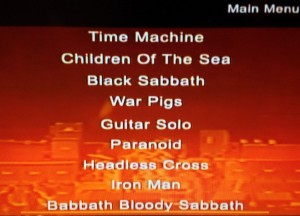
That’s the last track.. The back cover claims that “The Hand that Rocks the Cradle” is next, but there is no such track. Bastards! To compound the error, they got the song title wrong by just having “The Hand that Rocks”. Not that this is the only mistake on the track list. “Babbath Bloody Sabbath” is pretty funny, especially since this title carried over to the song menu on the DVD!
Wardrobe wise, I like Geezer’s sweater with the crosses on it; that’s nice. Tony Martin has a cool, steel plated leather jacket, which looks as if raided from Rob Halford’s closet. Iommi sports silver cross center-chest, while Bill Ward is right out of 1975 with the long hair and track pants.
There are issues with the audio sync on this DVD, probably originating from the broadcast but carried over even though it would be easily fixed. Sloppy release. I’m sure that this is ripped from a VHS recording of the broadcast, due to the obvious spots where commercial breaks are edited out.
Maybe the original uncut tapes are out there somewhere. If so, somebody should release them. This concert could have been a great little DVD release, but the various audio and editing flaws make it a difficult viewing.
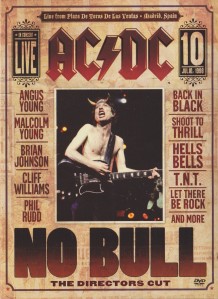
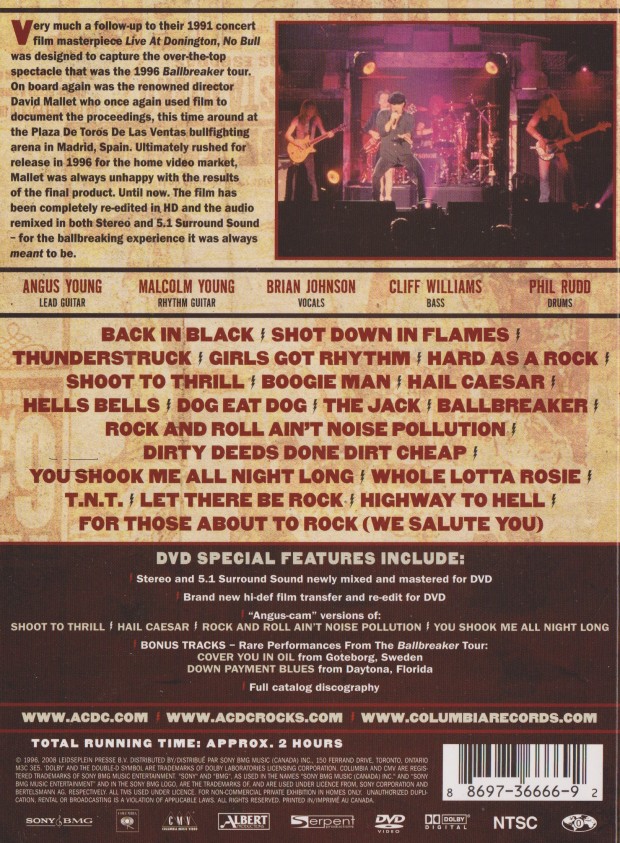
AC/DC – No Bull: The Director’s Cut (originally 1996, DVD 2008 Sony)
The Plaza de Toro in Madrid is an incredible looking venue. “Nice place you got here!” understates Brian Johnson. To film a concert video here seems an easy decision. A crane and giant wrecking ball dominate the scene. The ball swings and bowls over the backdrop! Enter: Angus Young!
“Back in Black”* is a natural opener: Everybody knows it, and the groove is impossible to ignore. Johnson’s voice is ragged and weak compared to the old days, although I think Brian sounds better in general today. A pre-crystal meth Phil Rudd dons spectacles, and hammers out the beat that, truthfully, he invented and does best. Having Phil back for that period of the band was a coup. It’s back to the Bon Scott years then, with “Shot Down in Flames”. Now Brian sounds more in his element, somehow seeming more in control on a Bon song. As if it took them one song to warm up, everything feels in gear now. Then, “Thunderstruck” is an interesting take, because Phil didn’t play this song before. Chris Slade was in the band at that time, and Phil doesn’t even try to imitate his style. He plays “Thunderstruck” his own way, which is fine. There’s a live version, with Slade, on AC/DC Live. With Phil on the kit, “Thunderstruck” is no longer filled with nervous energy, but is more in the pocket. It’s an interesting evolution. Contrast this with any live video of the current lineup playing the song with Slade today.
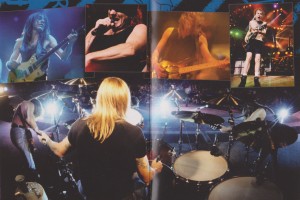
“Girls Got Rhythm” is an easy classic, which warms the crowd up with a newbie: “Hard as a Rock”*, the single from Ballbreaker. All but instantly, it sounds like a familiar classic. This is high quality rock, with Johnson’s voice in full shred. Colourful lights illuminate the stage, but only Brian and Angus are really mobile. Cliff Williams and Malcolm Young rock steadily, sticking to their respective sides, and stepping up to the mic for the big chorus. The crowd goes nuts when Angus himself speaks. The stage is huge, but Brian Johnson runs across every inch, interacting with the massive crowd as a veteran frontman can. Then AC/DC knock ’em down (down down) easily on “Shoot to Thrill”. There is a rock and roll purity to this show: A bunch of guys in jeans (Angus excepted), playing hard rock and roll, but contrasted with that is the massive stage. AC/DC can do it because people love the personalities of the band. Angus doesn’t miss a note, no matter where he’s running off to next.
Phil smokes a cigarette during the blues number “Boogie Man”. Starting sluggishly, “Boogie Man” nails it as soon as Brian gets screaming. I’m sure AC/DC can play this kind of thing in their sleep! Angus has an extended solo during which he gets the crowd riled up and ready with his strip-tease moment. When he finally drops his drawers, his undies have the Spanish flag on them. Madrid eats every bit of it up. AC/DC clustered a bunch of new songs close to each other at this point, and “Hail Caesar”** is next. It’s time for a heavy prowler, and Caesar brings it on.
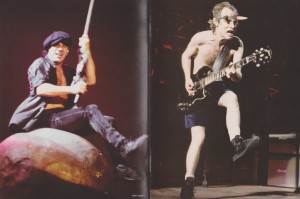
When the bell tolls, you know what’s happening. “Hell’s Bells”! Songs like this, “Dog Eat Dog”** and “The Jack” require no commentary. The sight of Johnson descending from a giant iron bell is pretty cool.
Last newbie of the night is “Ballbreaker”* itself, a blast of “shut the fuck up and listen t0 this” right in the face. This time, Brian is swinging from the wrecking ball, singing the whole time, kicking his feet in the air. AC/DC have crushed it…but there’s still lots more to go. “Rock and Roll Ain’t Noise Pollution”, “Dirty Deeds”, “You Shook Me All Night Long”**, “Rosie”*, “T.N.T.”…it’s all a good time, and you know them all. The only real critique is there is a gap in the setlist, with no songs from 1983-1988 appearing anywhere.
“Let There Be Rock” is, as usual, extended to epic length with Angus’ brilliant solo. First of all, it’s incredible that Angus still has this much energy after playing and stomping through a show this long. What’s really amazing is that everybody in the band is fully fueled for this full-speed song. Malcolm sips from a water bottle — that’s the key, folks. Hydration.
The cool part here is when Angus departs the stage (band playing on), to re-emerge atop the massive shoulders of a bodyguard and taken to a flying platform in the middle of the crowd! Many thrills later, Brian says goodnight, but you know he’s teasing. “Highway to Hell” commences with explosions, flames and Angus’ devil horns. And then, finally,the cannons” “For Those About to Rock” is the salute to Madrid , who witnessed an absolutely incredible AC/DC concert.
The DVD bonus features are cool, as you should expect. The “Angus Cam” versions of four songs is plenty fun, by focusing solely on Angus in the edit. It’s quite incredible to just watch the man play, because it seems as if he is entranced, on auto-pilot, but totally in command. If there wasn’t a guitar around his neck you might think he’s having a seizure! Then come the moments when he looks the crowd in the eye, and the playing only gets more intense! Like I said: this is plenty fun.
Then we have two bonus tracks not included in the Madrid set: “Cover You in Oil” (Sweden) and “Down Payment Blues” (Florida). “Cover You in Oil” is raw and sweaty. I don’t think the song is particularly strong, sounding a bit like a Blow Up Your Video outtake. Still, it’s always nice to get another new song on the DVD, since it’s doubtful a track like this will ever re-enter the setlists. The stupid music video footage that is edited into the tracks is annoying, however. Instead of watching Angus take a solo live, I’m watching him doing it in a music video. Bad editing decision. I like how Brian introduces “Down Payment Blues”: “This is from one of the albums…back in the 70’s…” Shit, he doesn’t know, he wasn’t there! But he gets the job done anyhow. And guess what? Brian Johnson is wearing the same damn blue shirt and hat at every show! His snarl adds to this version of the song.
What’s with the “Director’s Cut”? It seems the original 1996 VHS release (which I never saw) was rushed out for the Christmas season to the dissatisfaction of award winning director David Mallet. He did a new edit, and new stereo and 5.1 mixes for the DVD release.
4/5 stars
*Indicates this version is available in audio form on the 2 CD edition ofStiff Upper Lip.
**Indicates this version is available in audio form on the deluxeBacktracksbox set.
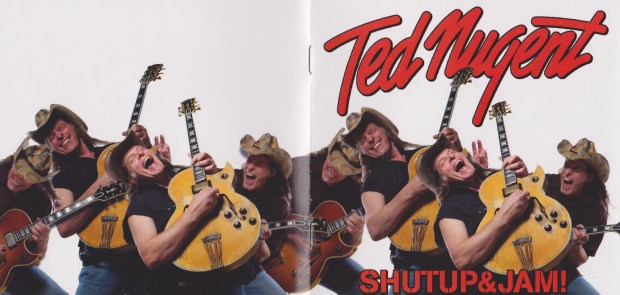
Some rock fans have a love/hate thing with Ted Nugent. He’s a proud hunter (“kill ’em and grill ’em”), but a conservationist. He loves the right wing of the political spectrum and has nothing but loathing for the left, all the while taking great glee in offering his opinions. The second amendment is sacred to him…but so is rock and roll. It’s hard to outright hate a guy who has rocked so damn hard over the years, and non-stop at that. You gotta give him credit for the tunes.
Upon first listen, it is clear that the years have done nothing to Ted. The opening title track is faster, meaner and more fun than 99% of the flock. The great Gonzo still shreds a chaotically perfect solo as if the studio is Cobo Hall. “There just comes a time when you just gotta rock,” he sings. Sounds good to me Ted, I’m on board for that! Ted keeps it rolling with a vicious riff on the excellent “Fear Itself”. What a killer song. The message is pretty straightforward: he got nothing to fear but fear itself. “I get up every day, with a smile on my face, happy to be alive and I’m back in the race.” Ted offers no apologies, but tries to keep it positive. “Positive energy makes me smile,” he sings, but “victory makes it all worthwhile.”
Old pal Derek St. Holmes lends lead vocals to “Everything Matters”. A whole album of Ted’s shrieking has never been easy to swallow, so I’m always glad to hear Derek’s smooth pipes. By the slippery bluesy rock, you might think it’s ZZ Top. Early ZZ Top, at that! Somehow, Derek and Terrible Ted found a time machine back to 1972 and captured the sound on “Everything Matters”!
Speaking of old friends, Sammy Hagar (who is friends with everyone, except the current members of Van Halen) shows up to sing lead on “She’s Gone”. It’s a ball-crusher of a song (basically just a variation on “Going Down”), but I road tested the guitar solo, wailing with the car windows down this summer. It passed the rock test. Sammy haters are gonna hate, but I don’t how you can hate him when he’s rocking like this with the Nuge. Even better though is the pure fucking joy in the riff for “Never Stop Believing”. Ted has been quite a riff merchant over the years, but “Never Stop Believing” is another triumph, as big as ever. Strap on your air guitars, folks: you’re gonna need ’em. The song ends on some really nice laid back picking from Ted, reminding me that he is one of the most underrated players from the classic rock era.
“I Still Believe” indicates to me that Ted really wanted to get his point across when he said he’d “Never Stop Believing”. The opening riff apes “Helter Skelter” shamelessly, but the rest of the track is pure Ted…with twang. I like that Nuge is singing fairly tame things like “I still believe in America” and “I believe in liberty” rather than “fuck the Democrats”. The sentiments are more inclusive.
My favourite track has turned out to be the silly titled “I Love My BBQ”. I do love to barbecue, and I absolutely dig the shout-out to us Canucks: “I love my Barbeque, it’s what Canadians do, pull up a chair I’ll get a beer for you,” sings Ted in the first verse! A small minority may be offended but my mouth is drooling. But I really don’t think it’s Ted’s primary intention to upset you. He’s just being funny on this one. I mean, come on: “Tofu might just kill you babe, a tossed salad’ll make you weak.” Nudge nudge, wink wink. Poking the bear a bit. “Well the animals, they got rights…right next to my mashed potatoes, baby.” It is obviously intended as comedy, and that’s fine.
This slideshow requires JavaScript.
I love my BBQ, too.
Kicking ass is Ted’s business and “Throttledown” is a full-throttle, pedal-to-the-metal rock instrumental. As always though, there is a twang to Ted’s dexterous picking. That’s what makes this different, and better, than middle of the road rock. Having said all that, I have no idea what “Do-Rags and a .45” is about. It sounds like Anvil, except for that title. Keeping the pace fast, “Screaming Eagles” doesn’t give up an inch, guitars fueled and ablaze. None of these songs overstay their welcome. Shutup & Jam features five songs in the 2 minute range in a row! “Semper Fi” is the last of these five, a stomper rather than a screamer. I come from a military family so I have no issues with Ted paying tribute to those in uniform. Some might find it all a bit too much; that’s up to you. Fear not, the song has just as much guitar shred as it does singing. Ted then tells us he’s going to “Trample the Weak Hurdle the Dead”. “War is not the answer,” sings Ted. “I only know evil has got to go.” It’s a great tune and it’s not hard to swallow. And that’s the key. All of these tunes are immensely catchy with lyrics you can sing without having to worry about being considered a right-wing radical by your neighbours.
A bluesy reprise of “Never Stop Believing” closes the album; a rough recording appropriate for the gritty blues approach. It’s a bit of a throw-away compared to the regular version, decent but not nearly as special. Ted’s playing is always the main reason to listen.
I have maintained that if only I heard Shut Up & Jam in the year 2014, it would have been a contender for the Top Five list that year. It’s not hard to understand why — it’s a killer record showing Ted is still in fine form today and hasn’t let the politics get in the way of a good rock song.
The occasion: It was Helix’s 25th anniversary. How about an album, and some classic returning band members, for a good time?
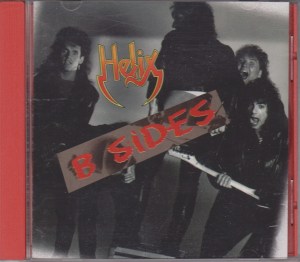
The title B-Sides here is misleading; a B-side is a track that appears on the flipside of a single, and is often not on the album. No tracks on this album appeared on the flipside of any singles, at least not these versions. However, the misleading title does not mar the excellent music contained within.
B-Sides contains songs written and/or demo’d for various Helix albums from 1990 onwards. Some of these have been re-recorded, such as “Love Is A Crazy Game”, which appeared as an acoustic version on the Business Doing Pleasure CD. This version is electric and is much heavier. I could imagine this version fitting right in on an Aerosmith album. “S.E.X. Rated” has also been re-recorded. It’s the only song that actually appeared as a B-side, but it’s not the same version as on that single.
Various versions of the Helix band appear on this album, but most interesting is the lineup on the bonus tracks. “Like Taking Candy From A Baby” and “Thinking It Over” are both from the sessions from Helix’s excellent first album (Breaking Loose), left unreleased until now. “Thinking It Over”, a terrific pop rock song, is a Del Shannon cover. Helix worked as Shannon’s backing band during an early 70’s Canadian tour. There are also three songs by a reunited “80’s Helix”, and it’s great to hear that version of the band again.
In a way, it’s a shame that this album was given the title and terrible album cover that it has. Brian Vollmer and Co. could have simply put this out as the next Helix album, which may have given it the respect it deserves. From the ballads to the heavy stuff, this Helix CD has a bit of everything you already liked about the band, with a modern edge. Every song kicks, there’s not a weak track in the bunch. By the time you get to the bonus tracks, Helix have already pummelled your eardrums.
Helix fans absolutely need to hear this music; not B-sides but in fact some of Helix’s best stuff. Along the way, there are appearances from pretty much every major Helix member from the indi days to the mid-90’s. You will even hear songs written and performed by Paul Hackman, the late Helix guitarist who was tragically killed in a 1992 auto accident. The major selling point of the disc was that three songs featured a reunion of the surviving members of the classic 80’s Helix. With Hackman gone, that consisted of leader singer Brian Vollmer, guitarist Brent “the Doctor” Doerner, bassist Daryl Gray, and drummer Greg “Fritz” Hinz.
Personal faves:
“Thinking It Over” which my wife thinks sounds like Sloan.
“Devil’s Gate”, hard and hammering.
“You Got Me Chained”, with killer horn section.
“Take It Or Leave It”, moody and dark but catchy as hell.
Final bonus: a booklet absolutely chock full of never before seen photos. A real treat!
In 1989, I bought this album as soon as it came out, based on hype alone — never heard a note. Put it on, and felt immediately that this was a middle-of-the-road hard rock album with little of their own to bring to the genre. That didn’t stop me from becoming a big fan, of course. I haven’t played Dirty Rotten Filthy Stinking Rich in about a decade. I wonder what it sounds like today?
I hate to speak ill of the dead, but I think one of the reasons my love of Warrant didn’t last was Jani Lane. I’m sorry, Warrant fans. I don’t think Jani’s voice was anything special. He had an ability to deliver pop hooks, but he always seemed to live in the shadow of other singers who had more character to their voices. I mean no disrespect to Jani, but that is the way my ears have always heard it.
Things sure started on a great note. “32 Pennies” is just fun hard rock, with loads of hook and that glam rock riff that Motley Crue mastered a few years prior. Beau Hill’s production is bland but not bad. There is a vague Aerosmith vibe, crossed with Motley and Poison — 1989 in a nutshell (or should I say a Ragu jar?). “32 Pennies” is still good for rocking out to, and I have to admit that the guitar solos smoke. Similar is “Down Boys”, the first single and video. Even today, this is probably the catchiest thing Warrant have ever done. It’s pure nonsense, of course:
Where the down boys go? Go! Where the down boys go? Go-oh-oh-oh! Where the down boys go? Ya, I wanna go where the down boys go, baby!
“Big Talk” was a single too, and I had forgotten all about this one. It boasts some fun lite-Lizzy guitar harmonies and a great chorus. Count this as another good Warrant tune. None of these songs will challenge the listener in any way, but they have enough guitar and hooks to keep you engaged. But what happens when you throw a ballad into the mix?
Dirty Rotten Filthy Stinking Rich had two ballads, the first of which was the electric “Sometimes She Cries”. A solid chorus made this one a hit, although you’d be hard pressed to tell the difference between this and a Bon Jovi song. There are a few cheesy key changes and some absolutely ball-busting notes that Jani hits, and it’s all not too bad. Side one ended on a speedy rocker: “So Damn Pretty (Should Be Against the Law)”. It could be a Motley Crue outtake from Theater of Pain, but it’s not. Faceless, with turgid sounding drums, all it really had going for it is velocity. Fun, but derivative. The guitar solos are the best part.
The title track “D.R.F.S.R.” is pure crap. Lyrically, musically, and production-wise, this sucks. I really can’t believe how bad the drums sound. This was once considered acceptable! “In the Sticks” isn’t bad. It sounds vaguely like another song that I can’t quite think of right now. But that goes for the whole album! It’s still a very enjoyable song, with that late-80’s good time slow riding vibe. Cruisin’ with the windows down.
The big hit, the one everybody remembers today, was the acoustic ballad “Heaven”. It’s really hard to be objective about this song, because I used to be so into it, but it makes me cringe today! Let’s just move on.
“Ridin’ High” brings the thrills back. Sounding a heck of a lot like their future tourmates Poison, Warrant found the gas pedal again. The closing track “Cold Sweat” is much in the same vein. You gotta give Warrant credit for one thing, they wore their influences on their sleeves. The only problem was, it was the same bunch of bands that influenced every other band on the Sunset Strip in 1989. When you buy this Warrant album, you are at least getting what you think you’re getting.
Sony threw on two bonus tracks for this edition. Both are 1988 demos that failed to make the cut. Ironically, for demos, the drums actually sound better! They don’t sound like samples on these demos. “Only A Man”, an acoustic ballad, sounds entirely more sincere and classic than “Heaven” does. It’s harder edged and resembles Skid Row, who had yet to release their first album. “All Night Long” is a slow rocker, but it’s no better or worse than the rest of the album. Both songs could have been on the album originally had it not been limited to just 10 tracks.
Conclusion: What stood out in 1989 fades into the woodwork today.
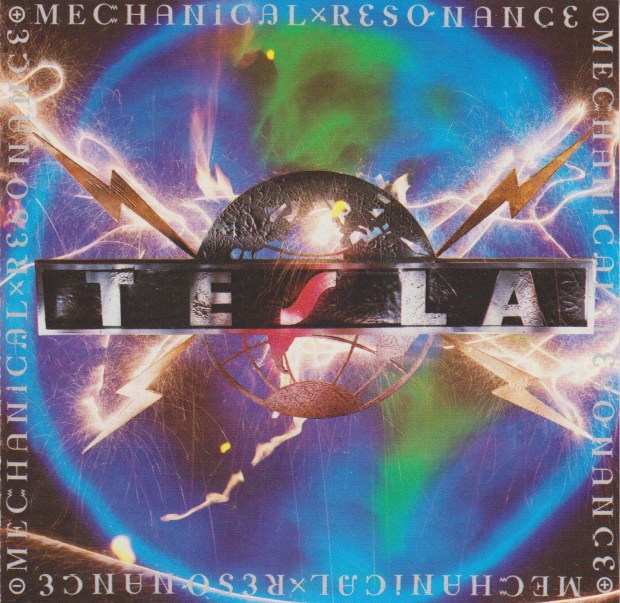
Tesla came out of the gates with everything in its right place: a good label (Geffen), great producers (Thompson & Barbiero) and the best management you could ask for (Q Prime). The band were and are all top drawer musicians, and they had a batch of killer rootsy hard rock ready to record. Ready, set, go!
Tesla have never done anything wimpy. Whatever they do, they inject muscle into, even the ballads. “EZ Come EZ Go”, the opening salvo, is surprisingly tough for the era. Starting dark and ominous, it only takes a verse before it turns to scorch mode. Singer Jeff “JK” Keith proved his versatility immediately on this track. From whimpering tones to belting at the top of the lungs, JK did it with rasp and incredible lung power. Backing him are the underrated guitar duo of Frankie Hannon and Tommy Skeoch, a six-string tag team to rival the big boys.
“Cumin’ Atcha Live” starts with Van Halen-esque blitzing, except with two guitarists instead of one, fretboards ablaze. It takes almost a minute for the song itself to ignite! “I’m a mean machine, I’m the kind you don’t wanna meet,” warns Jeff, but I don’t believe him. Tesla were known as one of the “nice guy” bands of rock, in contrast to bad boys like Motley Crue. Troy Luccketta is a drummer with a recognizable style. You can hear it in the way he rides the cymbals. On bass, the bearded Brian Wheat, the backbone of the group. There is no let up, only a full-on rock assault.
The album generated quite a few single/videos, and “Gettin’ Better” was an easy selection. The mellow, ballady (but soulful) opening is just a feint. This turns into a good time rocker in no time. A message of positivity and perseverance is good on the ears, and it’s nice to hear a kick-ass but optimistic rock song that isn’t sung by Jon Bon Jovi. It gets heavier from here. “2 Late 4 Love” is not a Def Leppard song, nor Prince. It is however pure metal. Early Tesla seemed to be a bit more metallic in nature. With a Motley chug and a Dokken vibe, it’s not really representative of where Tesla was headed, but it’s good enough. “Rock Me To the Top” occupies a similar chug with high quality results. Finally, ending the first side is “We’re No Good Together” which actually has some soft, Cars-like synth in the background. This slow, bluesy number sure picks up at the ending. Jeff Keith really turned in an excellent lead vocal, especially for the slow, soulful parts. What a singer!
“Modern Day Cowboy” is one of Tesla’s trademark tunes today. There’s that cowboy motif, so popular in the 80’s that you’d think we all rode steel horses. Although it is now a Tesla classic, I actually don’t think it’s one of the better tunes on the album. It’s a fine, serviceable hard rocker, with edge, drama, acoustics and the works thrown in, but it doesn’t have the melodic sensibilities that most of the album has. The guitars sure do smoke.
Nothing wrong with a little piano in a rock ballad, is there? “Changes” is a great, heavy ballad with loads of guitars and tasteful keys too. I don’t even think I should be calling this a ballad. It burns rubber like there’s no tomorrow when it’s time for it.
Since this time, Tesla have become known for performing some amazing covers, both hits and obscure. “Little Suzi” is the first, and I’d never heard of the band Ph.D. of whom this is a cover. Even if I had, Tesla’s version of the song is diametrically opposed to the dramatic synthpop original, which was titled “Little Suzi’s on the Up”. Tesla do it as a folksy, bonfire acoustic/electric rocker complete with a pretty acoustic intro. It is instantly likeable. Bon Jovi once said “the way to tell if a song is good is to see if it works acoustically.” If that is true, then Tesla have proven this of “Little Suzi”.
Similarly upbeat and irresistible is “Love Me”, featuring a juicy talkbox solo by Tommy Skeoch. The song has a nice big riff and plenty of hooks to go around. Even though that’s 10 songs and plenty enough for an album, it ain’t over next. “Cover Queen” is a smoky rocker with ammunition to spare, but it is “Before My Eyes” that is the pièce de résistance. It’s risky to close an album with a slow, trippy long bomber (5:31, longest on the album). “Before My Eyes” is not an instant love, but over time it grows and grows. The psychedelic voices at the end can be heard to be saying “Is it a dream?” over and over, very trippy indeed!
What a debut, and as incredible as it is, some would say that the follow-up The Great Radio Controversy was even better.
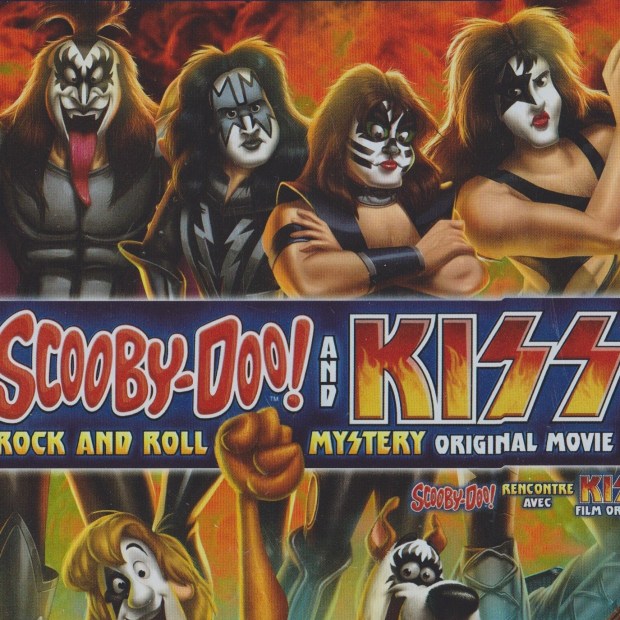
KISS – “Don’t Touch My Ascot” (2015 Warner, from the movie Scooby-Doo! and KISS: Rock and Roll Mystery)
The lovely Mrs. LeBrain got me a surprise gift a few weeks ago for our anniversary. This is a blu-ray movie called Scooby-Doo! and KISS: Rock and Roll Mystery. I haven’t watched it yet…I will some day…but it was a thoughtful gift idea because I’m a collector. It features the voices of Paul, Gene, Eric and Tommy, and hey…that counts for something, right?
According to the back cover, the story takes place at KISS-World. Sharp minded fans will remember that in 1979, Gene Simmons wanted to do a travelling amusement part/rock concert called Kiss World. Then there’s something about a witch and alternate dimensions and something called The Destroyer. I think the bonus feature, a Kiss blooper reel, will probably be better than the feature, but we shall see.
The main thing I’m interested is the new original Kiss song “Don’t Touch My Ascot”, a reference to Fred’s neckware. Kiss’s producer Greg Collins co-wrote this for the movie, and all four Kiss members sing on it. “Don’t Touch My Ascot” is a cute, old-tyme acoustic number with barbershop-like vocals. Paul Stanley goes first, but his voice is a mere whisper. Gene Simmons’ lines are next, and he sings in an exaggerated nasal voice. Cute, because he doesn’t normally sing like that on record. Please note though, the guy can actually sing! Take off the nasal intonation and that would be a pretty impressive bit of singing! Eric Singer goes next with the bridge and another verse, in that rasp he does so well. Here he reminds me of David Lee Roth! (Think: “Big Bad Bill”.) After a brief acoustic solo, Tommy Thayer goes last. He has the blandest voice of the four, but since everybody is harmonizing behind him, it all works out OK.
There are two catches. 1) The song is only 1:13 long. 2) You can’t buy it anywhere. It’s only in the movie (and on youtube). There’s the rub. You can make an mp3 file from the youtube video, but the fidelity is pretty iffy.
A rating for a track like this is pretty meaningless, especially without the context of the movie, but whatever. It’s Kiss and I love Kiss.
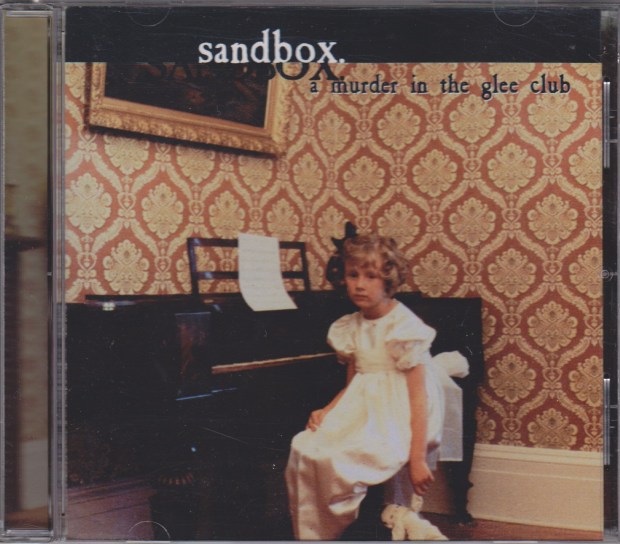
This is a fascinating album. Sandbox (parsed as “sandbox.” on the album) had come out with a successful enough debut, but what we didn’t know then was how much ambition they had. For their second CD, they did what most bands usually wait to do, much later on: the dreaded concept album! It is such a gamble to go for a concept album at all, let alone on your second record.
Setting the scene is the title track, “A Murder in the Glee Club”; but is all what it appears to be? The liner notes state:
“Recorded as in introduction to a play in 1932 by Freddie Corn and the Ohioans, the song has sat dormant on a shelf for the past 65 years. Shortly after it was recorded, the production was cancelled and the song was never released or published. The version you hear on this record is the original recording, sonically enhanced and embellished using mordern technology.”
Hmmm.
An online search for “Freddie Corn and the Ohioans” reveals only one hit: an old interview with Mike Smith from the University of Western Ontario, which is only quoting the liner notes.
I always wondered if Sandbox were trying to pull the wool over our eyes a little bit with those liner notes. You can draw your own conclusions but “A Murder in the Glee Club” does lull you in to the concept of the album: Altered states of consciousness and mental illness eventually lead to murder. Then, the murderer becomes haunted by the crimes he has committed. That “1932 recording” really sets the mood right.
“…to red” is the first proper song on the album, and this is lyrically connected to the final track on Sandbox’s first album, Bionic. It’s immediately obvious that the production, this time by Don Fleming, is far superior. “…to red” is a vast improvement sound-wise over anything on the first album. Performance-wise too; the band no longer sound stiff. Singer Paul Murray seems less shy, and willing to stretch out his voice. “…to red” is a fantastic up-beat start, with enough twangy-crunchy guitars to compensate for the pure pop that is the melody. “I woke up with a different life, I was wondering where I’d been,” and the disoriented lead character is introduced. This track was written by the uber-talented Mike Smith. “Spin”, by Jason Archibald continues the story. “I can’t believe you ran, I can’t believe you wanted out.” When the character sings, “The Devil was my name,” then I get a bad feeling. The music is darker, but driving. The excellent guitar chops of Sandbox really make it enticing. They leave a lot of space between the instruments so you can really hear what is going on.
“Spin” fades softly into “The Garden Song”, and it is clear that something bad has happened. “They found you in the garden, arranged smile stained your face.” While the lyrics are poetic it’s difficult to pay attention to them, because of the imagery they evoke. The music is absolutely lovely, almost uplifting at times, but this has to be the darkest moment in the story. “The Spectre”, faster and loaded with tasty backwards guitar, begins to deal with the haunted thoughts of the killer. This is a duet with Mike Smith on second vocals. You can picture this guy wandering through some a cold field somewhere, arguing with himself. It’s an electrifying song, leading into the blitzkrieg of “Melt”. This is the heaviest song Sandbox have ever done, blasting with a heavy chunk-tastic riff. “Better stories, a better plan, this guy thinks he’s Superman, I think I’d like to smash his face with Kryptonite.” I love that line. There’s an intense feeling of anger.
Forwarding the story, “If I Tell” reveals regret, and delusions. The killer now wishes he could bring his victim back, but he certainly isn’t willing to confess. He justifies this by saying that he’s just protecting those whose lives would be impacted by his confession, perhaps family or friends. Jason Archibald plays what sounds like electric sitar recorded backwards. Then, “Self-Contained”, the best track on the album steps forth with a powerful, catchy riff. This was the first song to really jump out on first listen. “I hate the way I’m self-contained,” sings Paul Murray, wishing he could escape the insanity. But the really crazy thing is, even though we know what’s gone on before, taken individually anybody can relate to the lyrics. “I wanna feel the rush, of an electric song, I wanna be in love, it turns me on.” On first listen, you’re not going to follow the concept of the album completely. This song jumped out at me, and I always loved the lyrics, even though I hadn’t pieced it together with the rest of the album yet.
“Carry” was a the lead single/video, and an upbeat pop rocker it is. Guitar jangle and steady beats provide what you need for a hit, only it wasn’t. (For shame.) Perhaps it just wasn’t edgy enough for rock fans in 1997, I don’t know and I don’t understand why Sandbox were not absolutely huge. Jason Archibald’s “Missed the Day” is a beautiful, softer ballad. The guitar and vocal melodies are ace, but I also like listening to the drums of Troy Shanks. Brilliant song with its own hit potential, untapped and wasted.
I remember visiting the Calgary Zoo when I was younger. The most haunting image in my mind was a polar bear named Snowball who paced back and forth, back and forth, back and forth…endlessly. (Read more here.) When Snowball finally died, I am sure I was not the only Canadian who believed that he was probably better off. Watching that bear, having long ago gone insane in that tiny enclosure, pacing back and forth was one of the most difficult lessons Young Me had to learn about our relationship with nature. “Bear Bear” was not inspired by Snowball, but by a similar bear at the Metro Toronto Zoo. It fits into the concept of the album only metaphorically. Musically, it’s quite jagged and drony, in a strangely catchy way. This is a powerful song!
According to the liner notes, “How I Feel” was written by Mike Smith, and was lyrically inspired by seeing the Spice Girls on Saturday Night Live one night. He pulls no punches: “I’ve been watching all the sheeple of the world, Masses flocking to the mindless shit they’ve heard.” Musically, it’s brilliant and very 1960’s in vibe. The electric piano brings me back a few decades. On this song, the lead character simply cannot connect with people — he is baffled by their behaviour, their words and beliefs. And he resents them. “Will you even notice when I go? I’ll be leaving here when I say so.”
The final track for this dark concept album is “A Question of Faith”, with sparse echoey guitars and a plaintive melody. What you hear and what someone else hears may be two different endings altogether. You decide what it all means. The song is brilliant, and emotionally heavy. Yet it also feels like release. A great weight lifting. “A Question of Faith” is as well crafted as everything else on A Murder in the Glee Club.
I have said in the past, that if I had only bought this album in the year 1997, it would have made my top albums list (published in our store newsletter) that year. Alas, I did not get it until early in the new year. If I had got the CD in time, it definitely would have been on that list. It’s truly a shame, but this second CD proved to be Sandbox’s last album. Mike Smith had no problem finding fame elsewhere, as his career as Bubbles from Trailer Park Boys has certainly skyrocketed!
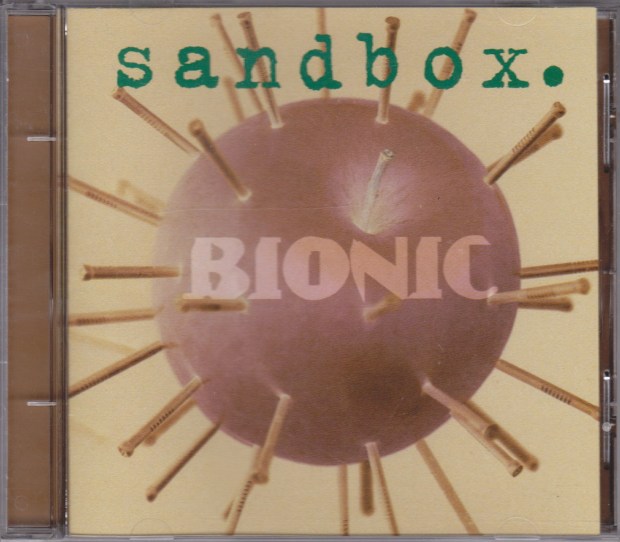
Because it was the 1990’s, and you had to do stuff like this, Sandbox referred to themselves as “sandbox.” with the period at the end. This being 2015, in this review we’re just going to call them Sandbox. Sandbox were very, very 1990’s with some melancholy music and an abstract album cover of an apple with nails in it. There is no reason for this that I can tell. It may well have just been, “Hey, let’s make this apple look like the guy from Hellraiser.”
Sandbox were from Nova Scotia, and have two really interesting connections. One, the lead singer Paul Murray is the nephew of Anne Murray, who made “Snowbird” a national treasure back in the 70’s. Two, the lead guitar player was a talented fellow named Mike Smith. Unless you’ve been living under a rock for the last 10 years, then you know Mike Smith as his Trailer Park Boys alter-ego, Bubbles. I saw these guys opening for the Barenaked Ladies back in 1996 and was impressed by the six tunes they played.
The big hit was “Curious” and it’s still fantastic once you get past the trendy 90’s-isms. (By that I’m referring to the watery, distorted vocals, lack of a solo, and simple construction.) But damn, what a song. All the right parts are there. The guitar riff works its way into your brain effortlessly, and the band provide all the necessary backing. Paul Murray is not a singer of remarkable range or power, but his voice works with the music to create a a wave that washes over you. Mike Smith and the band are more than capable of providing melodic backing vocals.
The problem with the Bionic album was that it had a couple really strong, powerful songs and a lot that didn’t have the same impact. “Collide” is a good song, but it plods along without enough excitement. It doesn’t get you moving. I think a few of these tunes worked better live. The studio can be a stifling environment, and it took Sandbox an album to really grow in the studio. “For You” boasts a strong chorus hook, but again not enough spark.
“Decisions”, dark quiet and slow, boasts a great chorus and impassioned lead vocals. It is augmented by a nice cello part, which works so well for dark tracks such as this. “Decisions” is a standout on the album, with a big part of that being due to the cello. More songs on Bionic would have done well with some augmentation like that. “Grief” is similarly dark, but edgy. I dig the backwards guitar solo, a touch I have always loved in rock music. “Three Balloons and a Trapdoor” is the kind of song title I find annoying, but the cello is back. It’s a sparse little acoustic song without much else going on with it besides the cello. It sounds like a side closer, and that’s the exact position it occupies on the CD running order. Coincidence? I don’t think so.
“Here and There” is the first song that rocks in a while, and it’s very welcome. It could have used more hooks, but it gets the job done well enough. It takes advantage of the jangling guitar chords of Mike Smith and Jason Archibald. Then, “Live” is a fantastic song. Where sometimes, Sandbox’s songs seem to lack sufficient passion and memorable melody, “Live” completely delivers. I feel the sadness, and I can swim in the melodic vocals like a river. “Flux” and “Weatherman” are both OK. “Flux” has a nice hard beat and a chorus I can get into. “Weatherman” is sparse, acoustic and intimate.
The last amazing tune, on a par with “Curious”, is the incredible “Lustre”. A simple guitar lick coupled with another killer chorus is all it takes. A classy acoustic guitar solo just makes it all so perfect. It’s hard to describe just what makes the song click, but it has clicked with me for almost 20 years, so there must be something good going on here.
The final track is the slow and dull “And the Mood Changes…”, followed by silence and then a strange distorted spoken word bit that always struck me as another 90’s gimmick. I was wrong, it is actually the first part of the second Sandbox album, which was a concept album called a murder in the glee club. This spoken word bit is meant to lead directly into the beginning of that album, a story of a killer who is tormented by what he has done. And speaking of that second album, what an album it was! Sandbox obviously benefited from the studio experience on Bionic, because what they achieved on a murder in the glee club was something quite special and fantastic. But that’s another review.
 AEROSMITH – Jaded (2001 Sony EP)



















You must be logged in to post a comment.